“60 Minutes” Reports COVID May Have Leaked From Wuhan Lab, Slams “Curated” WHO Report

“60 Minutes” Reports COVID May Have Leaked From Wuhan Lab, Slams “Curated” WHO Report

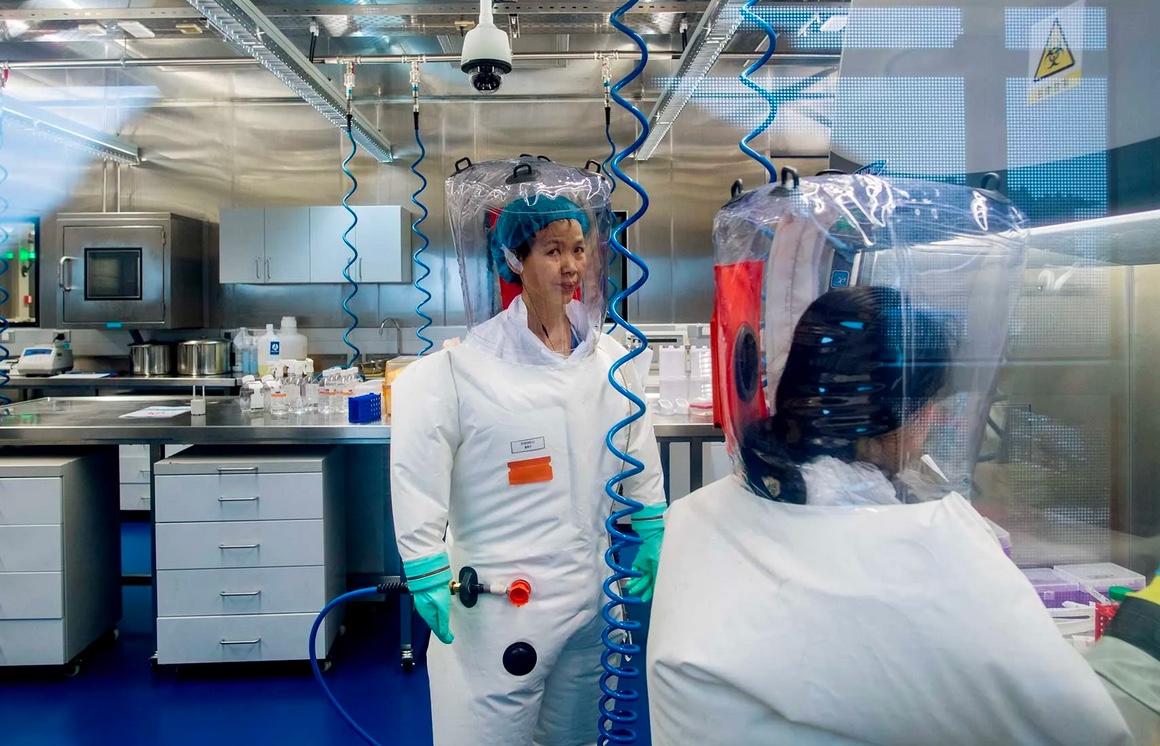
Roughly one year ago, Zero Hedge was “permanently” banned from Twitter for daring to suggest that the novel coronavirus outbreak rocking the globe might have originated with a lab called the Wuhan Institute of Virology, a Level 4 Biosafety facility where scientists were – as fate would have it – researching coronaviruses, including viruses gleaned from bats.

When Chinese authorities identified a massive “wet market” in the city as ground zero for infections, suggesting the virus originated with some of market’s wares, which including live civets and bats, considered delicacies by many Chinese, it was a scientist who first pointed out the lab’s proximity to the market, and noted the likelihood that the virus had probably leaked from the lab via an unsuspecting scientists.
What followed was a barrage of US media stories claiming the lab leak hypothesis was “unsubstantiated” and a “conspiracy theory”. NPR went so far as to publish a piece quoted a handful of scientists (almost all of whom had deep financial and professional ties to China) talking up China’s lab-security protocols and dismissing the theory as completely baseless. Yet, reporting since then has confirmed official complaints about safety at the lab.

Yet, here we are, one year later, and after at least two attempts to send teams of WHO scientists to investigate the origins of the virus, no foreigners were ever allowed to freely investigate.

Despite this, the team compiled a report on the origins of the coronavirus – a report that essentially confirms the “official narrative” that was reported early last year: that the virus likely originated in bats with an unknown “intermediary” (some have suggested a civet) likely transferring it to humans. The report, which was reviewed and, according to reports, heavily censored by Chinese authorities, insists that a lab leak was “extremely unlikely,” according to an advanced copy leaked to the AP.

Well, after taking Beijing’s word for it (with a few notable exceptions) for the last year, the American press is finally showing some skepticism about the virus’s origins. Case in point: on Sunday night, CBS’s “60 Minutes” ran a feature story questioning the offiicial narrative about the virus’s origins, citing the latest delay of the WHO report (which, again, was leaked last night), as suspicious.

Lesley Stahl interviewed Jamie Metzl, who complained Friday that the report was “compromised”, and Wuhan Lab-affiliate Peter Daszak, as she poked holes in the official narrative more efficiently than any mainstream reporter we have seen.

Metzl started by claiming that the WHO “investigation” was completely useless, comparing it to a “study tour” where scientists only saw “what the CCP wanted them to see.”

Jamie Metzl: I wouldn’t really call what’s happened now an investigation. It’s essentially a highly-chaperoned, highly-curated study tour.

Lesley Stahl: Study tour?

Jamie Metzl: Study tour. Everybody around the world is imagining this is some kind of full investigation. It’s not. This group of experts only saw what the Chinese government wanted them to see.

As 60 Minutes points out, Metzl, a former NSC official in the Clinton administration and member of a WHO advisory committee on genetic engineering, is one of more than two dozen scientists and officials (including virologists) who signed an open letter earlier this month calling for a new investigation to return to China. Obviously, at this point, Beijing has had more than a year to effectuate a cover-up.

During their converstaion, Metzl explained just how much control Beijing has had over what the investigators saw and weren’t allowed to see.

Jamie Metzl: We would have to ask the question, “Well, why in Wuhan?” To quote Humphrey Bogart, “Of all the gin joints in all the towns in all the world, why Wuhan?” What Wuhan does have is China’s level four virology institute, with probably the world’s largest collection of bat viruses, including bat coronaviruses.

Lesley Stahl: I had seen that the World Health Organization team only spent 3 hours at the lab.

Jamie Metzl: While they were there they didn’t demand access to the records and samples and key personnel.

That’s because of the ground rules China set with the WHO, which has never had the authority to make demands or enforce international protocols.

Jamie Metzl: It was agreed first that China would have veto power over – over who even got to be on the mission. Secondly –

Lesley Stahl: And WHO agreed to that.

Jamie Metzl: WHO agreed to that. On top of that, the WHO agreed that in most instances China would do the primary investigation.

And then just share its findings –

Lesley Stahl: No.

Jamie Metzl: – with these international experts. So these international experts weren’t allowed to do their own primary investigation.

Lesley Stahl: Wait. You’re saying that China did the investigation and showed the results to the committee and that was it?

Jamie Metzl: Pretty much that –

Lesley Stahl: Whoa.

Metzl followed this up with a powerful comparison: Imagine if the US had let the Soviets run an international investigation into Chernobyl? Metzl added: despite evidence of past deadly lab leaks in China, Metzl said no one on the team was trained to identify signs of a lab leak.

Also, while the team went on a four-week mission, two of those weeks were spent holed up at this hotel in quarantine. Once out, they had some tense exchanges with their counterparts, a team of Chinese experts, over their refusal to provide raw data. If the virus originated in animals, the key unanswered question is: how did the virus travel the thousand miles from the bat caves in southern China to Wuhan?

Unsurprisingly, the WHO team thinks it has an alternative explanation for this that doesn’t involve a lab leak. Infected animals were simply captured at farms near the bat caves, and shipped the stock to the Huanan market in Wuhan.

To argue the other side, 60 Minutes brought in Peter Daszak, a member of the WHO team. Daszak has close ties to Chinese labs, and has frequently appeared in the American press to argue against the leak narrative. But after several minutes of equivocating, Stahl forced Daszak to admit the incontrovertible truth: that the WHO has no real evidence to disprove the lab leak. Essentially, the team is just taking China’s word for it, according to Daszak. What choice did they have?

What’s more, Daszak said Chinese government “minders” were in the room with the investigators at all times.

Peter Daszak: We met with them. We said, “Do you audit the lab?” And they said, “Annually.” “Did it you audit it after the outbreak?” “Yes.” “Was anything found?” “No.” “Do you test your staff?” “Yes.” No one was–

Lesley Stahl: But you’re just taking their word for it.

Peter Daszak: Well, what else can we do? There’s a limit to what you can do and we went right up to that limit. We asked them tough questions. They weren’t vetted in advance. And the answers they gave, we found to be believable– correct and convincing.

Lesley Stahl: But weren’t the Chinese engaged in a cover-up? They destroyed evidence, they punished scientists who were trying to give evidence on this very question of the origin.

Peter Daszak: Well, that wasn’t our task to find out if China had covered up the origin issue.

Lesley Stahl: No, I know. I’m just saying doesn’t that make you wonder?

Peter Daszak: We didn’t see any evidence of any false reporting or cover-up in the work that we did in China.

Lesley Stahl: Were there Chinese government minders in the room every time you were asking questions?

Peter Daszak: There were Ministry of Foreign Affairs staff in the room throughout our stay. Absolutely. They were there to make sure everything went smoothly from the China side.

Lesley Stahl: Or to make sure they weren’t telling you the whole truth and nothing but the truth–

Peter Daszak: You sit in a room with people who are scientists and you know what a scientific statement is and you know what a political statement is. We had no problem distinguishing between the two.

To be sure, Metzl acknowledged that the WHO theory is “plausible,” and that his own theory has some holes (“it’s incomplete” he says, adding that he would need more data from Beijing, which the CCP has been reluctant to turn over). But most importantly, Daszak has a conflict of interest, Metzl said, because of his long-time collaboration with the Wuhan lab.

“60 Minutes” also interviewed Matt Pottinger, the former Trump Administration national security official and head of Asia policy who has been one of the most vocal skeptics of the official narrative. Beijing didn’t share the genetic sequences of the virus from the WIV. Pottinger also said Beijing had ordered scientists to destroy all viral samples.

Now, none of that is in itself evidence that the virus leaked from the lab. But it’s a clear sign that a major cover-up has taken place. And the US media’s unwillingness (until now) to reckon with that has been difficult to explain.

Tyler Durden
Mon, 03/29/2021 – 12:20

via ZeroHedge News https://ift.tt/3wcIa0X Tyler Durden
Why NFTs Are More Than Just Digital Art

Why NFTs Are More Than Just Digital Art

As even SNL has embraced the idea of NFTs…

Decrypt’s Matt Hussey explains that while NFTs have transformed the art industry, other industries could benefit from the technology too (music and gaming are actively exploring using NFTs, and other things are beginning to be tokenized too).

The cryptocurrency press, and indeed the world’s biggest media companies have been racing to cover the NFT art craze that has captured the imagination of plaudits and critics alike. 

In addition, a slew of celebrities and brands have lept into the space to try and cash in. The likes of Pizza Hut, Pringles, Taco Bell, and even toilet paper manufacturer Charmin have all announced their version of NFTs.

Elon Musk, Twitter founder Jack Dorsey, Cristiano Ronaldo, Lindsey Lohan, and NFL player Rob Gronkowski have all released their own versions of the digital collectibles. 

In the past month alone, more than $240 million has been spent on pieces of digital art according to market tracker NonFungible.com. Established art-sellers Sotheby’s and Christie’s have also got involved to help bring digital art to its wealthy clientele.

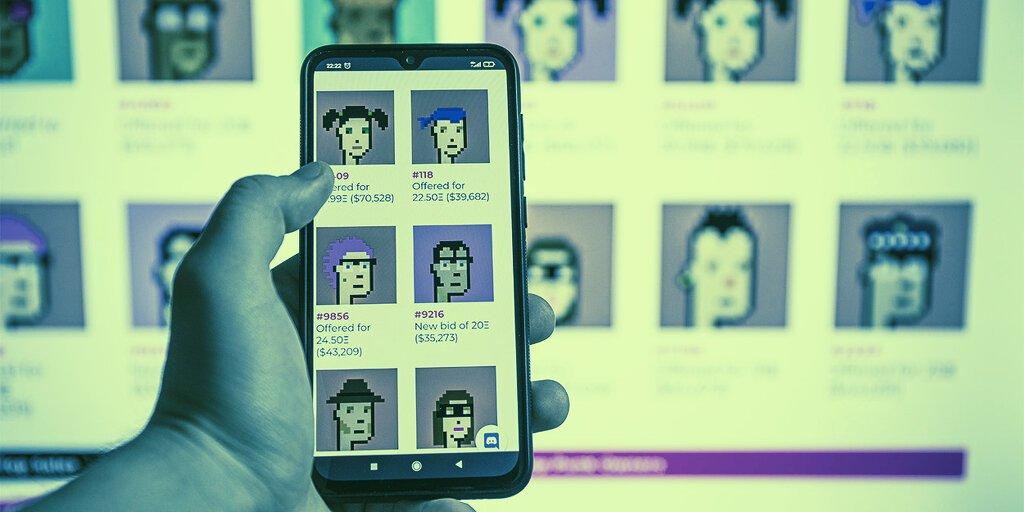
But while NFTs have become synonymous with art – the technology that makes them possible has the potential to change not just images, but any digital product.   

What are NFTs? 

NFTs, or non-fungible tokens are essentially digital deeds attached to the blockchain. When an NFT is created, a unique identifier, typically a string of numbers and letters records the creation date, and is added to a blockchain’s historical record. 

It’s this information that makes each NFT unique, and as such, they cannot be directly replaced by another token. They cannot be swapped like for like, as no two NFTs are alike. Banknotes, in contrast, can be simply exchanged one for another; if they hold the same value, there is no difference to the holder between, say, one dollar bill and another. Hence the moniker ‘non-fungible’.

Bitcoin, by contrast, is a fungible token. You can send someone one Bitcoin and they can send one back, and you still have one Bitcoin. (Of course, the value of Bitcoin might change during the time of exchange.) You can also send or receive smaller amounts of one Bitcoin, measured in satoshis (think of satoshis as cents of a Bitcoin), since fungible tokens are divisible.

Non-fungible tokens are not divisible, in the same way that you cannot send someone part of a concert ticket. Part of a concert ticket wouldn’t be worth anything on its own and would not be redeemable.

Ticketing and Music 

While NFTs have found an affinity in art circles, thanks to their ability to prove scarcity, they are also being used in other places. Concert tickets and other accouterments of the music industry rely on non-fungibility to help prevent fraud, making it a prime candidate for NFT adoption. 

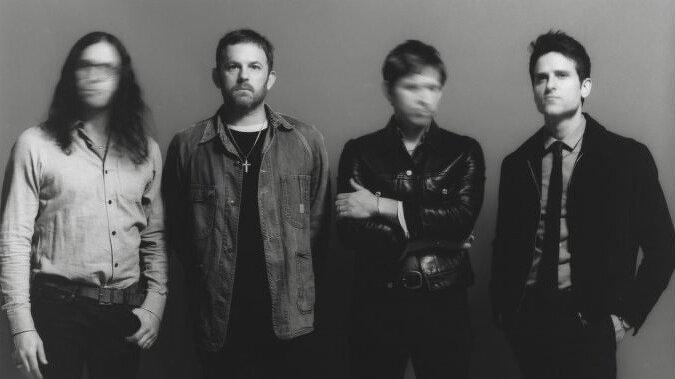
Kings of Leon. Credit: Matthew Followill

Earlier this month, rock band the Kings of Leon released an NFT to commemorate the release of its latest album. As part of the sale, the band released three tokens – the most limited of which included an NFT that could be used as a ticket to a concert performed by the band. 

The company that made that possible, Yellowheart, is trying to help record labels have tighter control over tickets and merchandise by using NFTs. There are other companies trying to do this too. NFT.Kred allows any event organizer to create an NFT as a ticket in just a few clicks. 

Gaming 

The gaming industry has been adept at offering players the opportunity to customize their in-game experience. 

Fortnite’s 350 million players spent an average of $82 on in-game content in 2019, buying clothes and accessories to adorn their avatars. In 2020, that number grew to approximately $30 million spent every month worldwide. But the gaming industry has struggled to combat fraud

Stories of buyers being miss-sold items, or users being subject to phishing attacks are common. NFTs however, offer a layer of protection against fraud as they can provide a secure way of verifying ownership and keeping player accounts more secure.

As a result, over the last 12 months, gaming titles have begun offering players the opportunity to make in-game NFT purchases. One of the most popular use cases has been buying virtual land. 

Last month, a group of gamers paid $1.6 million for Citadel of the Stars, a large kingdom in the unreleased fantasy role-playing game Mirandus. That purchase topped the $1.5 million paid for nine adjacent plots in the virtual pet universe Axie Infinity.

The increased security and verifiability has brought big money to smaller titles, too. CryptoKitties, the digital collectible game that allows users to create their own digital kittens uses NFTs. These collectibles have fetched as much as $170,000 in some cases. 

Time

While much of the focus on NFT use cases has been on creating a secure version of a product, some see the technology’s potential as a way of tokenizing people’s time. 

With the explosion of freelance work across the world – freelancers are set to represent as much as 80% of the global workforce by 2030 – companies have made millions by creating marketplaces for employers to hire casual workers. 

Upwork – a popular freelancer site – generated $301 million in revenue connecting freelancers and employers in 2020. That’s led to the emergence of projects like microsponsors, which use NFTs as a way for freelancers to get hired without paying middlemen for the privilege. 

The company allows freelancers to tokenize their work, and allows potential employers to bid for the NFT that represents a chunk of a contractor’s time. 

It also creates immutable records of what work can be done – meaning any agreements around projects or money would be immutably locked on the blockchain. 

Tyler Durden
Mon, 03/29/2021 – 12:02

via ZeroHedge News https://ift.tt/3ryH2Bs Tyler Durden

“Right Now I’m Scared” – CDC Director Chokes Back Tears As She Fearmongers “Impending Doom”

“Right Now I’m Scared” – CDC Director Chokes Back Tears As She Fearmongers “Impending Doom”

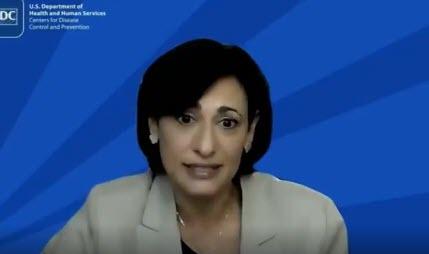
In a stunningly emotional outburst during this morning’s COVID-19 Response press conference, new CDC Director Rochelle Walensky went “off-script” (though if one watches here eyes it appears she is very much reading a script) to warn the public about her “impending doom” following a rise in COVID cases.

“Right now, I’m scared,” she exclaimed.

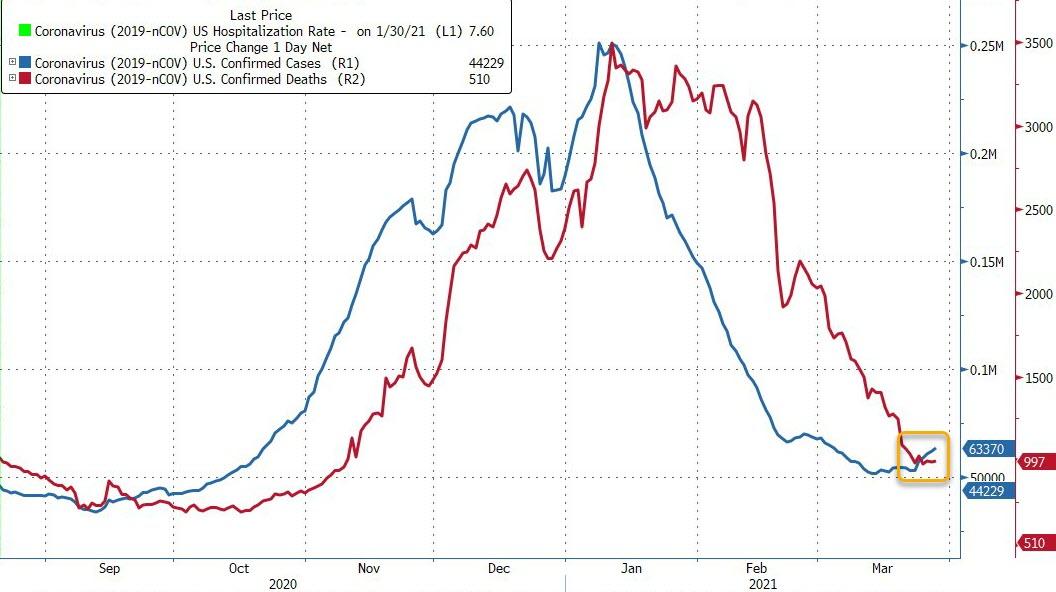
Here is what Walensky is freaking out about… (could that simply be a rise in testing around Spring Break as responsible Americans check their health before traveling? Or is it remnants of the vaccines being picked up by the RT-PCR tests being run at 35 Ct?)

Source: Bloomberg

“I’m speaking today not necessarily as your CDC director, but as a wife, as a mother, as a daughter to ask you to just please hold on a little while longer,” she implored, urging Americans to mask up, socially distance, etc., etc. and she is worried about a new wave “if rules are lifted” too soon.

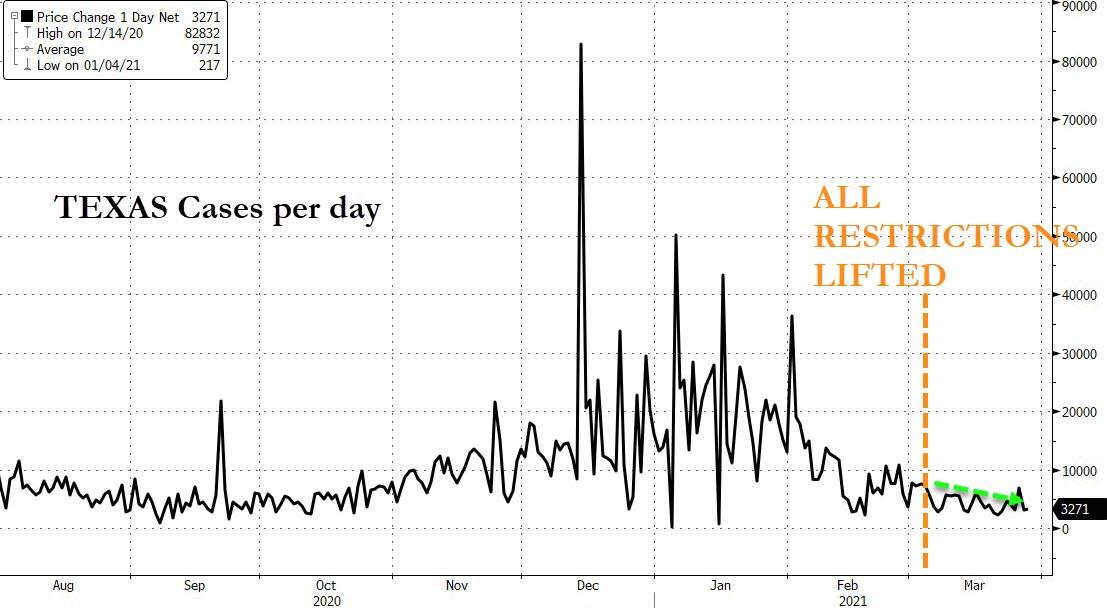
Finally, just in case you were wondering, here’s what is happening in Texas since all those federally-mandated restrictions were lifted…

Source: Bloomberg

This level of fearmongering is disgusting and disingenuous and the American people are growing more and more insensitive to such evocations.

Tyler Durden
Mon, 03/29/2021 – 11:38

via ZeroHedge News https://ift.tt/2PHfbS5 Tyler Durden

Democrats Cannot Erase The History Or Hypocrisy Of The Filibuster: Turley

Democrats Cannot Erase The History Or Hypocrisy Of The Filibuster: Turley

Authored by Jonathan Turley via johnathanturley.org (emphasis ours)

Below is my column on the ongoing Democratic effort to get rid of the Senate filibuster. There are good-faith arguments against filibusters but there is a new campaign to declare the rule as racist. Once again, many in the media are ignoring both the history and hypocrisy surrounding the filibuster, including in the press conference last week with President Joe Biden. Biden was not asked in multiple questions on the filibuster about his defense of a rule that he now dismisses as a racist relic. In 2005 he stated:

The Senate ought not act rashly by changing its rules to satisfy a strong-willed majority acting in the heat of the moment…Proponents of the ‘nuclear option’ argue that their proposal is simply the latest iteration of a growing trend towards majoritarianism in the Senate. God save us from that fate, if it is true…Adopting the ‘nuclear option’ would change this fundamental understanding and unbroken practice of what the Senate is all about. Senators would start thinking about changing other rules when they became “inconvenient.” …Altering Senate rules to help in one political fight or another could become standard operating procedure, which, in my view, would be disastrous.”

Here is the column:

President Biden has come out this week against the Senate filibuster as a “relic” of the Jim Crow era. In these times, it is a virtual mantra on Capitol Hill that the filibuster is synonymous with racism and people supporting it are presumptively racist. That very point was noted by cable news host Al Sharpton, who threatened to denounce members as racist if they support the rule. The only thing more dramatic than such historical revisionism is the political revisionism underlying this new national campaign.

The filibuster is more a “relic” of the Julius Caesar era than the Jim Crow era. In ancient Rome, the filibuster was used to force the Senate to hear dissenting voices, including an opposition of Cato the Younger to Julius Caesar returning to Rome. The foundation for the filibuster today can be traced to an argument by former Vice President Aaron Burr that led to a change in the early 1800s. The minority has used versions of the rule to block or force consensus on controversial legislation, ranging from war actions to oil mandates. It was not created in the Jim Crow era.

But Biden is correct that some of the most abusive uses of the filibuster was by segregationists in the 1950s, as embodied in Strom Thurmond, a South Carolina Democrat, who set the record with filibustering the Civil Rights Act for over 24 hours.

The filibuster was designed as a protection for the minority in what is often called “greatest deliberative body.” It is not inherently racist. If that were the case, every majority rule would be racist because all of our racist legislation was passed by majority votes, including bills that supported slavery or target minority groups.

A few years back, Democrats cried foul over the notion of eliminating the filibuster. They did not argue the rule was the embodiment of racism but rather the heart of the Senate. Biden spoke in the Senate in 2005 against ending the filibuster. So did Charles Schumer, who said it put the Senate “on the precipice” of a constitutional crisis, as “the checks and balances which have been at the core of this republic are about to be evaporated by the nuclear option.” Now as Senate majority leader, Schumer decries the same filibuster as the racist rule forged by segregationists.

Other leading Democrats also denounced prior moves to end the rule as destroying any hopes for political consensus. Barack Obama denounced the rule as a racist device back when he was a member in the Senate and condemned its elimination as an obvious effort to establish party control by shifting “the rules in the middle of the game so that they can make all the decisions while the other party is told to sit down and keep quiet.” He added, “If the majority chooses to end the filibuster and if they choose to change the rules and put an end to democratic debate, then the fighting and the bitterness and the gridlock will only become worse.”

Obama served in a Senate where Republicans had a clear majority. The Senate is now divided right down the middle for a split that allows Vice President Kamala Harris to break ties. That is in effect the party control feared by Obama. Harris denounced the idea just a few years back and asked Mitch McConnell, at the time Senate majority leader, to preserve the filibuster to protect the “rules, practices, and traditions” supporting members in the minority. She opposed “any effort to curtail the existing rights and prerogatives for members to engage in robust and extended debate as we consider legislation in this body in the future.”

There was no mention about Jim Crow or the filibuster as racist. Yet it has transformed into a rule that only Bull Connor, the enforcer for segregation in Birmingham, would embrace, at least according to the perspectives by Sharpton. In reference to Joe Manchin and Kyrsten Sinema, who back the filibuster as a traditional rule protecting the minority, Sharpton has vowed “the pressure that we are going to put on” them is for calling the filibuster “racist and saying that they are, in effect, supporting racism.”

So members are now on notice that the rule designed to protect minority rights in the Senate will now be viewed as trying to deny minority votes in elections. It is that simple. Yet a great irony is that this original purpose of the filibuster has never been more essential. While one can make the case against the rule on purely democratic or majority grounds, such concerns previously raised by Obama and others are magnified today.

The rule of consensus offers a vital balance to political interests opposed to working across the aisle. It hands Democrats a badly needed excuse to engage Republicans and seek middle ground. Without it, as Obama noted, “the fighting and the bitterness and the gridlock will only become worse.” For a country with violence on both sides, that fighting is now a literal and increasing danger. It is no accident that the filibuster has played the more dominant role during our periods of greatest division. It was used to try to forge consensus despite rising lethality of political rhetoric.

Ultimately, the rule does not save us from ourselves. Caesar made it into Rome, only to be murdered by some of the men debating his arrival. Jim Crow laws were state laws but the Senate allowed that disgraceful era of discrimination to happen. In the end, our laws are no better than we are, but we are worse off when there is little need for consensus.

Jonathan Turley is the Shapiro Professor of Public Interest Law at George Washington University. You can find his updates online @JonathanTurley.

Tyler Durden
Mon, 03/29/2021 – 11:20

via ZeroHedge News https://ift.tt/3rGC8T7 Tyler Durden

A Puzzling Thing about American Culture and Racial Identity

As I continue to work on my forthcoming book on racial classification law in modern America, I often notice tangential but fascinating issues.

Here’s one. Consider an American who grows up with two white parents, “looks” white, always considers himself white, and assumed all his ancestors were European. He gets into genealogy and in the course of his research discovers that a great-grandfather was a light-skinned, mixed-race-by-descent African-American who “passed” as white and married a woman of European descent. This upends his entire sense of identity. He begins reading up on black history and culture and, over time, starts going out of his way to make black friends, attends a predominately African-American church, and eventually considers himself part of the African-American community and identifies himself as an African American. My sense is that while some people would find this transformation strange, few would consider his new identity fraudulent or illegitimate.

Then consider the case of Rachel Dolezal. She grew up with two white parents, looked white, and so on, but she had adopted black siblings with whom she commiserated, did not get along with her parents, and decided to adopt an identity as an African-American woman. From all accounts I’ve read, she adopted this identity sincerely, not to game affirmative action or otherwise take advantage of the system. Unlike my first example, she was widely denounced and mocked as a fraud.

I’ve been puzzling over whether there is some reason beyond racial essentialism (i.e., that your racial ancestry ‘matters’ in some concrete way, a view generally considered racist) why these cases are different. Is it because Dolezal hid her background? Because she worked for the NAACP and thus took a job away from a “real” black person?

If so, let’s say neither of these things were true. Let’s say we were talking about James McBride’s (The Color of Water–an excellent book, by the way) mother, a white woman who married a black man and, judging from the book, fully integrated into the African-American community. If over time she had come to consider herself an African American, does the fact that she didn’t happen to have a black ancestor important? If she discovered that she had a distant African-American ancestor, would that make things different? If so, why?

from Latest – Reason.com https://ift.tt/39pBVx8
via IFTTT

A Puzzling Thing about American Culture and Racial Identity

As I continue to work on my forthcoming book on racial classification law in modern America, I often notice tangential but fascinating issues.

Here’s one. Consider an American who grows up with two white parents, “looks” white, always considers himself white, and assumed all his ancestors were European. He gets into genealogy and in the course of his research discovers that a great-grandfather was a light-skinned, mixed-race-by-descent African-American who “passed” as white and married a woman of European descent. This upends his entire sense of identity. He begins reading up on black history and culture and, over time, starts going out of his way to make black friends, attends a predominately African-American church, and eventually considers himself part of the African-American community and identifies himself as an African American. My sense is that while some people would find this transformation strange, few would consider his new identity fraudulent or illegitimate.

Then consider the case of Rachel Dolezal. She grew up with two white parents, looked white, and so on, but she had adopted black siblings with whom she commiserated, did not get along with her parents, and decided to adopt an identity as an African-American woman. From all accounts I’ve read, she adopted this identity sincerely, not to game affirmative action or otherwise take advantage of the system. Unlike my first example, she was widely denounced and mocked as a fraud.

I’ve been puzzling over whether there is some reason beyond racial essentialism (i.e., that your racial ancestry ‘matters’ in some concrete way, a view generally considered racist) why these cases are different. Is it because Dolezal hid her background? Because she worked for the NAACP and thus took a job away from a “real” black person?

If so, let’s say neither of these things were true. Let’s say we were talking about James McBride’s (The Color of Water–an excellent book, by the way) mother, a white woman who married a black man and, judging from the book, fully integrated into the African-American community. If over time she had come to consider herself an African American, does the fact that she didn’t happen to have a black ancestor important? If she discovered that she had a distant African-American ancestor, would that make things different? If so, why?

from Latest – Reason.com https://ift.tt/39pBVx8
via IFTTT

Small Caps Are Puking, Erase Friday’s Panic-Buying Ramp

Small Caps Are Puking, Erase Friday’s Panic-Buying Ramp

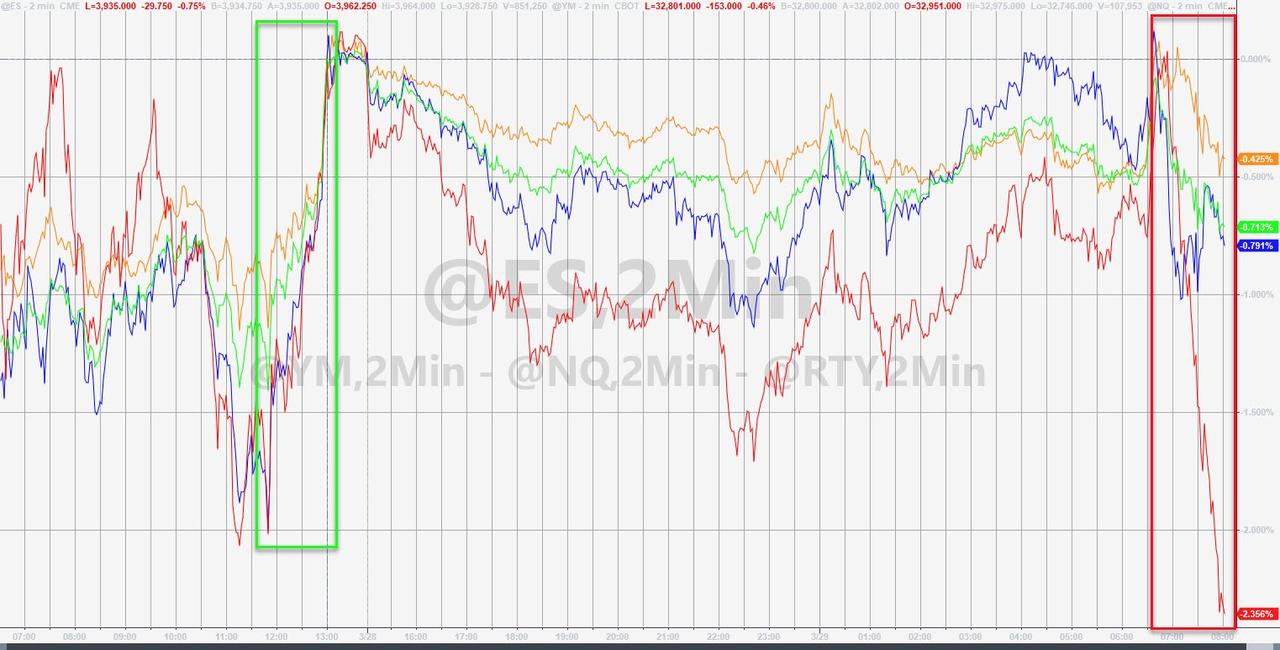
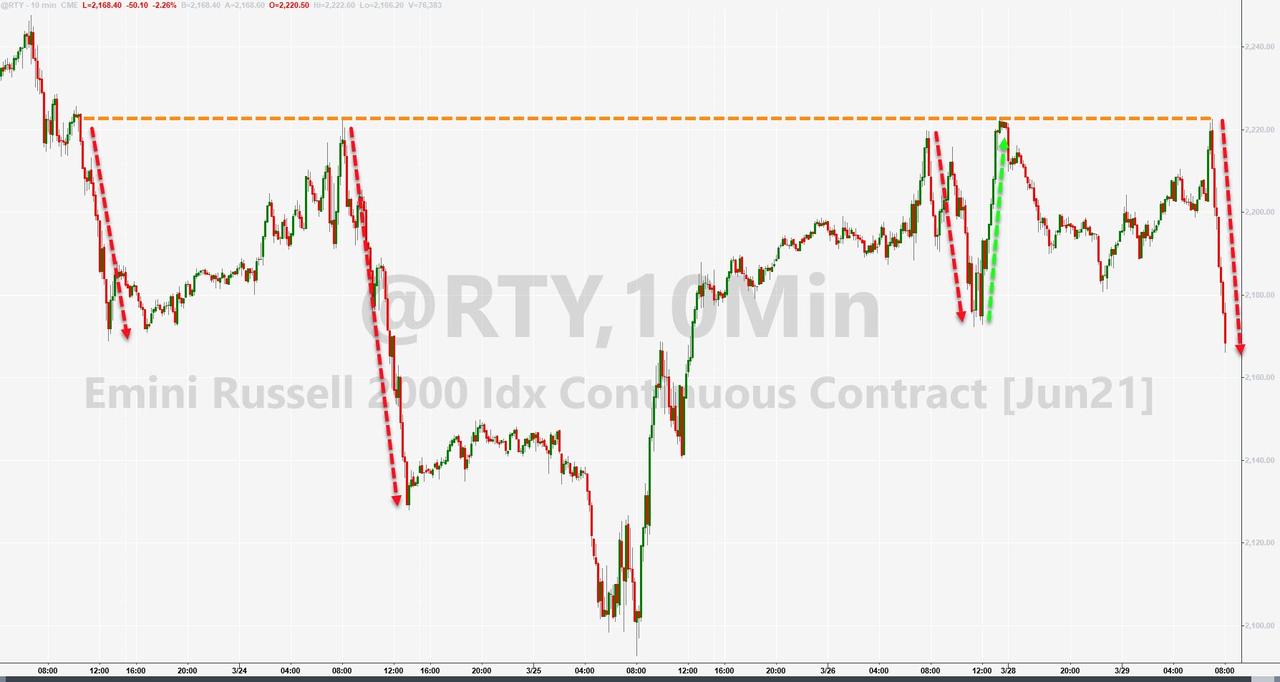
Friday’s ridiculous last hour ramp in Russell 2000 has been erased as weakness across US equities has been focused in the Small Caps…

All the indices have been dumped since the cash open…

But Small Caps appear to have stalled again at key resistance…

Which just happens to be the 50-day moving-average…

But don’t worry, SEC says it is “monitoring” the situation.

Tyler Durden
Mon, 03/29/2021 – 11:04

via ZeroHedge News https://ift.tt/39pvTwo Tyler Durden

Seems Like Old Times for the Sixth Circuit at SCOTUS

There was a time not so long ago when the Supreme Court would routinely reverse the U.S. Court of Appeals for the Sixth Circuit, most frequently in habeas cases in which the Sixth Circuit had granted the petition. These decisions were usually unanimous, and often made without oral argument. It happened often enough that court-watchers speculated whether the Sixth Circuit was becoming the “new Ninth” because of the inability or unwillingness of some Sixth Circuit judges to follow the Supreme Court’s instruction.

Thus it seemed like old times this morning when the Supreme Court summarily reversed the Sixth Circuit’s grant of a habeas petition in Mays v. Hines. The Court issued a brief per curiam opinion over a single noted dissent.

In the opinion below (which was curiously unpublished), a divided panel of the Sixth Circuit granted Tennessee death-row inmate Anthony Darrell Dugard Hines’ habeas petition on the grounds that the state court had unreasonably rejected Hines’ ineffective assistance of counsel claim. The panel’s majority of Judge’s Cole and White issued a lengthy per curiam opinion. Judge Kethledge dissented.

This morning’s opinion in Mays concludes it was the Sixth Circuit, not the Tennessee state courts, that were unreasonable. Here is how the Court’s per curiam opinion begins:

A Tennessee jury found Anthony Hines guilty of murdering Katherine Jenkins at a motel. Witnesses saw Hines fleeing in the victim’s car and wearing a bloody shirt, and his family members heard him admit to stabbing someone at the motel. But almost 35 years later, the Sixth Circuit held that Hines was entitled to a new trial and sentence because his attorney should have tried harder to blame another man. In reaching its conclusion, the Sixth Circuit disregarded the overwhelming evidence of guilt that supported the contrary conclusion of a Tennessee court. This approach plainly violated Congress’ prohibition on disturbing state-court judgments on federal habeas review absent an error that lies “‘beyond any possibility for fairminded disagreement.'” Shinn v. Kayer, 592 U. S. ___, ___ (2020) (per curiam) (slip op., at 1); 28 U. S. C. §2254(d). We now reverse.

The opinion makes clear that the panel opinion simply failed to engage in the proper legal analysis. Describing the lower court’s arguments as “unreasonable,” “untenable,” and of “little merit,” the per curiam scarcely disguises the Court’s impatience with the Sixth Circuit panel’s approach. (Recall that most of the justices have seen this sort of thing from the Sixth Circuit before.)

More from the opinion:

Had the Sixth Circuit properly considered the entire record, it would have had little trouble deferring to the Tennessee court’s conclusion that Hines suffered no prejudice regarding his conviction or sentence. Again, the critical question was not whether the Sixth Circuit itself could see a “‘substantial’ . . . likelihood of a different result” had Hines’ attorney taken a different approach. Cullen, 563 U. S., at 189. All that mattered was whether the Tennessee court, notwithstanding its substantial “latitude to reasonably determine that a defendant has not [shown prejudice],” still managed to blunder so badly that every fairminded jurist would disagree. Knowles v. Mirzayance, 556 U. S. 111, 123 (2009).

It did not. The Tennessee court reasonably looked to the substantial evidence of Hines’ guilt. Hines, 2004 WL 1567120, *27–*28. And it reasonably rejected the “‘farfetched'” possibility that Jones committed and self-reported a gruesome murder, in the presence of a witness, at a place where he was well known to the staff. Ibid. In light of this straightforward, commonsense analysis, the Sixth Circuit had no license to hypothesize an alternative theory of the crime in which Jones became a suspect 35 years after the fact—much less rely on that fanciful theory to grant relief . . .

The Sixth Circuit had no reason to revisit the decision of the Tennessee court, much less ignore the ample evidence supporting that court’s conclusion.

Justice Sotomayor noted her dissent from today’s decision, but did not author a dissenting opinion.

from Latest – Reason.com https://ift.tt/3w7FnGo
via IFTTT

Rabo: Everything In Markets Has Become Political

Rabo: Everything In Markets Has Become Political

By Michael Every of Rabobank

As we stumble towards the end of Q1, markets continue to ask themselves which is the fairest of them all –stocks, bonds, commodities, and/or gold/bitcoin– with the answer depending on one’s view of what is going on. And when I say what is going on, I mean *structurally*.

Today is likely to be whippy due to the forced sale of some stocks by Archegos Capital Management fund – but that’s a one-off. It’s no guide to who is the fairest of them all.

One can forget about following cyclical data too. Consider Australia. Large parts of that economy are red hot: there are no yachts, or property with views of yachts, or fancy cars to drive you to your property with a view of yachts to be had; house prices are up around 20-30% y/y, anecdotally; tradies are minting it like US day-traders when stonks are up that much. Unemployment data are back around where they were pre-Covid – the end of the government’s JobKeeper scheme yesterday aside. I don’t pay attention to those jobs data because they are silly; but it seems the RBA don’t either. Local gossip is that rather than tightening monetary policy, the RBA is likely to extend its QE bond buying even further, maybe doubling it from AUD50bn to AUD100bn. So what’s the point in tracking data? Central banks don’t seem to care.

Arguably, the better guide is now structural – which one needs to ‘be political’ to understand. Who is able to stimulate? That’s political. Who is willing to stimulate? That’s political. Within each economy, where will stimulus flow? That’s very political. What will the reaction be? That’s political too. “We don’t do politics,” an economist once explained to me. So tell me how you forecast GDP then, when everything is political?

In Australia, the RBA is willing and able, but the government is able but no longer willing. Where stimulus then flows is the housing market (“because Australia”); and what happens next is probably “the same as in New Zealand”, where the central bank and government are getting serious about property prices – though it still seems downright un-Australian to consider the RBA being forced to change its mandate the way the RBNZ just has. If that is the case, it’s still a better guide to playing the AUD-NZD than data-watching.

On a larger scale, can the US pass more fiscal stimulus? Can Europe (as the German constitutional court blocks the Covid recovery fund)? If so, does it go into wages or, like Suez, is that channel blocked (as the FT says of Germany: “IG Metall pay talks tell us inflation won’t spiral”)? If so, into whose pockets will the money go, and in which country? Who is the fairest of them all is all political.

If that weren’t head-scratching enough for economists/markets, politics has an international dimension of ever-greater importance. China has just sanctioned US, British, and Canadian academics, think-tanks, and politicians: one US individual is the newly-promoted wife of key ‘swing’ Democratic Senator Manchin, which surely helps guarantee a harder US line. There are also suggestions from Chinese media Beijing will sanction the Better Cotton Initiative (BCI) and, somehow, The Quad (US, Japan, India, and Australia). Businesses who ‘don’t do’ politics didn’t see how this could impact them: now US and EU clothing firms are boycotted and/or closed in China; and a Wall Street Journal editorial states businesses need to make a choice of where they operate – a tail risk I have been warning of since 2017.

As this is happening, China just signed a multi-year investment deal with Iran: that after friendly diplomatic activity with Russia and North Korea. (Yet recall China wants cheap oil and a larger Middle East presence; Russia likes expensive oil and its own large Middle Eat presence: it’s not just within the Western camp that division lies.)

Against that backdrop, the US has floated the idea of building a “democratic” rival to China’s Belt and Road Initiative; USTR Tai has stated US tariffs on China won’t be coming down as they are a point of “leverage”; and the US is talking about a massive infrastructure scheme funded by a suddenly-politicised central bank; and on-shoring supply chains; and keeping control of key technologies via a new R&D surge. Perhaps even politics-blind businesses and markets can see the rough outline of lines in the geographical sand?

Which block is then the fairest of them all to businesses? At the very least, for those who still refuse to answer, can they see there is serious policy mirroring going on? (Which was also a logical US policy stance projected here as far back as 2017.)

Meanwhile, for those thinking the only politics required to call markets right is the “Build Back Better” mantra, the White House has invited the leaders of 40 countries to a global climate conference on 22-23 April. That includes China’s Xi Jinping, publicly dubbed “an autocrat” by Biden, leading a state the US says it is in “extreme competition” with, and whose economy has an enormous focus on coal power; and Russia’s Vladimir Putin, just called “a killer” on TV by Biden, leading a country seen as a major threat to the US, and whose economy is entirely energy- and resource-dominated.

Recall what happened in Alaska recently, which in diplomatic terms was seen as a debacle. The normal procedure is to hold lots of lower-level ‘Sherpa’ meetings to establish points of  agreement, before the heads of state then roll up to smile for the cameras and sign on the dotted line. No such work has been done, it seems, and straight into the deep end we go in just over three weeks.

While we are waiting, read this article in the Globe and Mail. The author underlines his own experience in trying to tackle the climate crisis within a corporate ESG framework, and (echoing Polanyi) argues:

No “free market” truly exists. A market economy is, at its core, a collection of rules. No rules mean no market. Nor is there one set of standard rules. Every rule, including corporate tax rates, patent protection and fines against pollution, is a deliberate decision that has an impact on the system. If a government changes the rules, we get different results – all of which can be defined as market outcomes. Changing rules is no more an “intervention on the free market” than creating them in the first place….Business leaders need to take a stand: If you believe in capitalism, then you know that market failures cannot be addressed with silly markets-self-correct theories. Claiming so in 2021, 13 years after the financial crisis and decades after we’ve been told that climate change is the great market failure in history, is an abdication of our responsibilities to the youngest and the poorest in society, who will bear most of the burden of continued inaction.

So take a look in the mirror, Mr. Market: it’s all going to get very political ahead whatever happens.

Tyler Durden
Mon, 03/29/2021 – 10:50

via ZeroHedge News https://ift.tt/3wcpbDJ Tyler Durden

Seems Like Old Times for the Sixth Circuit at SCOTUS

There was a time not so long ago when the Supreme Court would routinely reverse the U.S. Court of Appeals for the Sixth Circuit, most frequently in habeas cases in which the Sixth Circuit had granted the petition. These decisions were usually unanimous, and often made without oral argument. It happened often enough that court-watchers speculated whether the Sixth Circuit was becoming the “new Ninth” because of the inability or unwillingness of some Sixth Circuit judges to follow the Supreme Court’s instruction.

Thus it seemed like old times this morning when the Supreme Court summarily reversed the Sixth Circuit’s grant of a habeas petition in Mays v. Hines. The Court issued a brief per curiam opinion over a single noted dissent.

In the opinion below (which was curiously unpublished), a divided panel of the Sixth Circuit granted Tennessee death-row inmate Anthony Darrell Dugard Hines’ habeas petition on the grounds that the state court had unreasonably rejected Hines’ ineffective assistance of counsel claim. The panel’s majority of Judge’s Cole and White issued a lengthy per curiam opinion. Judge Kethledge dissented.

This morning’s opinion in Mays concludes it was the Sixth Circuit, not the Tennessee state courts, that were unreasonable. Here is how the Court’s per curiam opinion begins:

A Tennessee jury found Anthony Hines guilty of murdering Katherine Jenkins at a motel. Witnesses saw Hines fleeing in the victim’s car and wearing a bloody shirt, and his family members heard him admit to stabbing someone at the motel. But almost 35 years later, the Sixth Circuit held that Hines was entitled to a new trial and sentence because his attorney should have tried harder to blame another man. In reaching its conclusion, the Sixth Circuit disregarded the overwhelming evidence of guilt that supported the contrary conclusion of a Tennessee court. This approach plainly violated Congress’ prohibition on disturbing state-court judgments on federal habeas review absent an error that lies “‘beyond any possibility for fairminded disagreement.'” Shinn v. Kayer, 592 U. S. ___, ___ (2020) (per curiam) (slip op., at 1); 28 U. S. C. §2254(d). We now reverse.

The opinion makes clear that the panel opinion simply failed to engage in the proper legal analysis. Describing the lower court’s arguments as “unreasonable,” “untenable,” and of “little merit,” the per curiam scarcely disguises the Court’s impatience with the Sixth Circuit panel’s approach. (Recall that most of the justices have seen this sort of thing from the Sixth Circuit before.)

More from the opinion:

Had the Sixth Circuit properly considered the entire record, it would have had little trouble deferring to the Tennessee court’s conclusion that Hines suffered no prejudice regarding his conviction or sentence. Again, the critical question was not whether the Sixth Circuit itself could see a “‘substantial’ . . . likelihood of a different result” had Hines’ attorney taken a different approach. Cullen, 563 U. S., at 189. All that mattered was whether the Tennessee court, notwithstanding its substantial “latitude to reasonably determine that a defendant has not [shown prejudice],” still managed to blunder so badly that every fairminded jurist would disagree. Knowles v. Mirzayance, 556 U. S. 111, 123 (2009).

It did not. The Tennessee court reasonably looked to the substantial evidence of Hines’ guilt. Hines, 2004 WL 1567120, *27–*28. And it reasonably rejected the “‘farfetched'” possibility that Jones committed and self-reported a gruesome murder, in the presence of a witness, at a place where he was well known to the staff. Ibid. In light of this straightforward, commonsense analysis, the Sixth Circuit had no license to hypothesize an alternative theory of the crime in which Jones became a suspect 35 years after the fact—much less rely on that fanciful theory to grant relief . . .

The Sixth Circuit had no reason to revisit the decision of the Tennessee court, much less ignore the ample evidence supporting that court’s conclusion.

Justice Sotomayor noted her dissent from today’s decision, but did not author a dissenting opinion.

from Latest – Reason.com https://ift.tt/3w7FnGo
via IFTTT