“An Absolute Car Crash” – Deliveroo Shares Tumble 31% In London IPO

“An Absolute Car Crash” – Deliveroo Shares Tumble 31% In London IPO

In what some might take to be the latest sign of exhaustion in global equity markets, shares of Deliveroo tumbled 31% in their market debut Wednesday after pricing at the lower end of their range.

Despite pricing near the bottom of its range, Deliveroo’s opening valuation of about £7.6 billion ($10.5 billion) was the highest in London since resources group Glencore’s 2011 IPO, according to Dealogic data.

But traders quickly wiped more than £2 billion ($2.8 billion) off its market cap as shares plunged. It’s a start contrast to the debut of DoorDash, which IPO’d in the US back in December. Its shares soared more than 86% at the open. One equity capital markets banker who was not involved in the deal described the debut to the FT as “absolute car crash”. In recent days, Deliveroo and its bankers had continued to insist that the offering had seen “very significant demand” from investors, even as its debu tprice range started to slip.

Of course, after the offering failed so spectacularly, a flurry of Wall Street analyst reports hit the tape offering explanations for the flop. Despite the lingering hype for ‘stay at home’ stocks (although the restrictions in England have started to unwind, it will be months before people and businesses can function normally), analysts cited ‘ESG concerns’ as the primary reason for the epic flop.
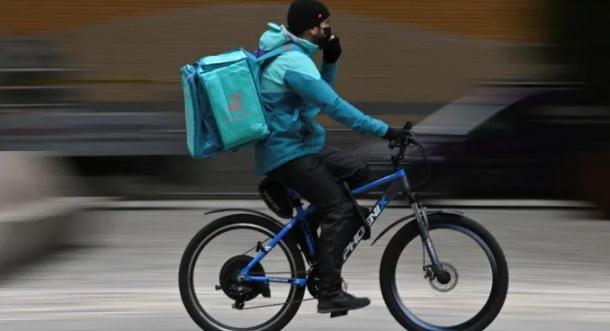
Institutional investors are apparently worried about “the sustainability of food delivery growth post-pandemic” as concerns about labor-market reforms saddling it with more costs eat away at investor interest. The firm also faces stiff competition from rivals like Just Eat Takeaway and Uber Eats.

After a series of legal entanglements involving Uber, investors fear food-delivery startups face rulings requiring them to treat drivers like full-time workers. Following a critical union vote at an Amazon fulfillment center in Bessemer, Ala., it’s clear that the movement for workers rights in the digital age isn’t going away.

Investors also balked at Deliveroo’s ownership structure, specifically the outsize voting power held by Deliveroo CEO Will Shu. While exceedingly common in Silicon Valley, the dual-class share structure will prevent the company from being included int he FTSE 100 index (for now, at least – although Chancellor Rishi Sunak is working on tweaking these rules).

The selloff in Deliveroo shares spilled over to other delivery stocks, including Just Eat Takeaway and Delivery Hero. Shares of the former fell as much as 2.9%, while Delivery Hero slipped as much as 2.2%. Investors will be keeping a close eye on shares of Uber, GrubHub and Doordash to see if the selling pressure spreads to the US.

Deliveroo sold shares worth £1.5 billion ($1.76 billion) in the offering, raising gross proceeds of about £1 billion (almost $1.4 billion), with the money intended to finance growth initiatives such as its Editions network of delivery kitchens, while existing investors cashed out £500 million ($690 million).

Shu claimed in a statement that Deliveroo is exactly the type of locally grown tech startup that London capital markets are desperate to keep.

But that didn’t stop a group of institutional investors from sitting out the offering. As Neil Campling from Mirabaud Securities told Bloomberg: “ESG is one of the largest pools of capital and ESG funds will avoid such controversial issuances given the concerns on workers rights etc. in the gig/app economy,” Campling said. Expanding on these concerns, another analyst pointed out that if Deliveroo is forced to offer more traditional employee benefits, like company pension contributions, then its already thin margins would struggle to climb and the road to profitability would look “very tough indeed”. To be clear, the company lost £224 million last year even as its revenue jumped 54%.

If that’s true, then we suspect London capital markets won’t be seeing any more of these companies going public in the City.

Tyler Durden
Wed, 03/31/2021 – 07:00

via ZeroHedge News https://ift.tt/3cCCdTc Tyler Durden

Beijing Bullies German Publisher To Censors Childrens’ Book That Said COVID Started In China

Beijing Bullies German Publisher To Censors Childrens’ Book That Said COVID Started In China

Authored by Paul Joseph Watson via Summit News,

A publisher in Germany has censored a children’s book that said COVID-19 originated in China after Beijing demanded the book’s removal and an apology.

Yes, really.

The book, which was originally published a year ago, is called ‘A Corona Rainbow for Anna and Mortiz’ and serves as a guide for elementary schools and daycare centers to follow COVID-safe procedures.

However, Beijing reacted with fury because the book had the nerve to tell the truth – that the virus originated in China.

The Hamburg-based Chinese consulate threatened the publishing company with criminal charges if it didn’t remove the book from circulation and issue a groveling apology.

“Carlsen publishing house complied with the demand,” reports DW, adding that the company has “stopped delivery of the book” and “a new edition with a different wording regarding the origins of the virus is already in the making.”

The company explained that it had been working on assumptions at the time the book was published, but that “today we would no longer use this wording, as its meaning has proven to be far more open to interpretation than we had intended.”

DW expressed shock that China had sought to interfere in a children’s book which ran to just a few thousand copies and why the publishing company was so eager to cave in to a government located 4,600 miles away.

Chinese journalist Shi Ming explained how Beijing was overseeing a global propaganda campaign in an effort to absolve themselves of blame for the pandemic.

“In the beginning, the Chinese propaganda itself said that the disease had first started in China. It even referred to it as ‘Wuhan pneumonia.’ But now, it wants to erase the memory of the virus’ origins with a worldwide political correctness campaign,” he said.

Political expert Ralph Weber says China is trying to create the false narrative that its only role in the pandemic was to successfully fight it off, adding, “For a long time now, China has been influencing cultural life in Europe, and perhaps we haven’t noticed that so far.”

Beijing’s efforts to memory hole the fact that COVID-19 originated in China has been aided in no small part by the mainstream media.

Legacy media outlets have attempted to frame a supposed anti-Asian hate crime wave as being caused by white supremacy and Donald Trump referring to COVID as the “China virus.”

In reality, white people are statistically underrepresented when it comes to committing crimes against Asians.

The coronavirus pandemic originated in China. Period.

*  *  *

In the age of mass Silicon Valley censorship It is crucial that we stay in touch. I need you to sign up for my free newsletter here. Support my sponsor – Turbo Force – a supercharged boost of clean energy without the comedown. Also, I urgently need your financial support here.

Tyler Durden
Wed, 03/31/2021 – 06:30

via ZeroHedge News https://ift.tt/39wwKvl Tyler Durden

Europe Tells H&M To “Lay Low” On Chinese Virtue Signaling Until Anger Blows Over

Europe Tells H&M To “Lay Low” On Chinese Virtue Signaling Until Anger Blows Over

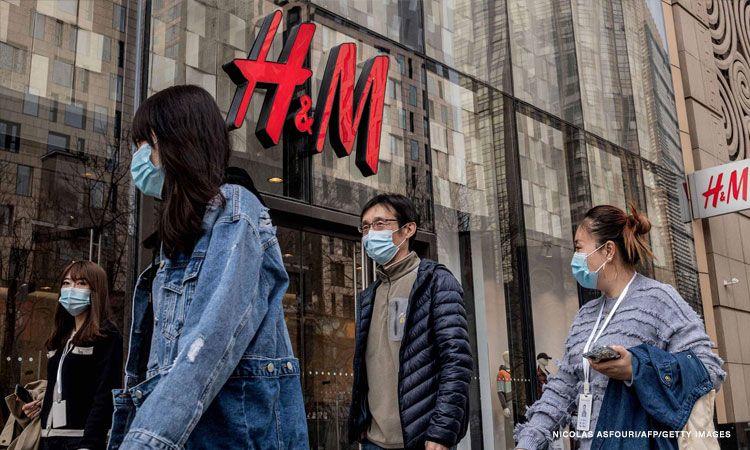
Swedish fashion brand H&M has been told by the head of the EU Chamber of Commerce in China to bear down and “let it happen” – referring to Chinese anger at the company over their supposed refusal to use cotton picked by alleged forced labor in the country’s Xinjiang region, according to Bloomberg.

You really have to just let it happen, lay low and see when it blows over and then come back again,” said Chamber president Jörg Wuttke in a Tuesday statement to Bloomberg TV, adding: “Chinese customers love European products and brands, so I guess it will be the same for textiles.”

H&M was the subject of a massive boycott by Chinese social media users last week after someone found an undated statement from the company saying they would not use cotton from Xinjiang over forced labor concerns. They were swiftly condemned by the Communist Youth League and the People’s Liberation Army – while Apple and Baidu Maps searches immediately ghosted H&M from their service. In smaller cities, H&M stores were shuttered by nervous landlords according to the report.

Wutkke’s response – instead of offering to explore China’s alleged human rights violations – is yet another reason why corporations are terrified of China. Last week, Nike and Adidas also came under fire for previously saying they wouldn’t use labor from the region over similar forced labor concerns.

A post on the official Weibo page of Beijing Youth Daily dated Thursday noted foreign apparel brands including Adidas and Inditex-owned Zara have previously made remarks about boycotting Xinjiang cotton, while The Global Times, a communist-party tabloid,  also mentioned Burberry while noting that Spain’s Inditex, owner of Zara, had “quietly removed” a statement on Xinjiang from its English and Spanish-language websites. Shortly after, calls to boycott the Swedish retailer spread to include Nike, which has previously said it won’t source products from the region due to labor concerns.

Chinese Foreign Ministry spokeswoman Hua Chunying sidestepped a question over whether the government was behind boycotts of H&M and other companies during a regular press briefing on Tuesday in Beijing.

“Some Chinese netizens have expressed their anger over Xinjiang cotton, including on H&M,” she said. “Chinese consumers have the freedom of choice.” -Bloomberg

Internet users, meanwhile, also targeted the Better Cotton Initiative (BCI), a group that promotes sustainable cotton production which said in October it was suspending its approval of cotton sourced from Xinjiang for the 2020-2021 season, citing human rights concerns. BCI members include Nike, Adidas, H&M and Japan’s Fast Retailing. The Xinjiang region supplies some 80% of China’s cotton.

“If you boycott Xinjiang cotton, we’ll boycott you. Either Adidas quits BCI, or get out of China,” one internet user wrote. Nike, Adidas and the BCI did not respond to requests for comment.

The United States and several Western allies have accused the CCP of running internment camps housing up to one million Muslim Uighurs, while China claims it’s combating religious extremism, providing employment, and offering education to improve the ethnic minority group’s lives.

China, meanwhile, punished the EU last week with a list of retaliatory sanctions over the Xinjiang issue – targeting 10 individuals and four entities, including the Mercator Institute of China Studies where Wuttke sits on the board.

On Tuesday, Wuttke said that while the Chinese market “saved” many companies last year as the country rebounded from the pandemic, “at the same time there’s this kind of political pressure.”

Either way, “China definitely doesn’t come out of this looking very pretty.”

Tyler Durden
Wed, 03/31/2021 – 05:45

via ZeroHedge News https://ift.tt/2PeiOzr Tyler Durden

Turkey Prosecutes French Journalists For Cartoon Mocking Erdogan

Turkey Prosecutes French Journalists For Cartoon Mocking Erdogan

Authored by Jonathan Turley,

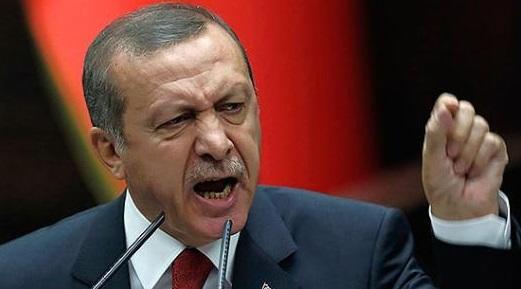
In 2015, I wrote a Washington Post column criticizing the world leaders who marched for free speech and the free press after the massacre of editors with from the satirical weekly Charlie Hebdo, particularly the vehemently anti-free speech and anti-free press president of Turkey Recep Tavyip Erdogan. The editors were murdered because the magazine published a cartoon of Mohammad. Seeing the authoritarian Erdogan at the front of the march was the ultimate mocking of these deaths and proof that world leaders cared little for these rights or the 12 dead. Not only did Erdogan’s government follow the march by prosecuting a cartoonist, but now it is seeking long prison sentences for four Hebdo journalists for a cartoon mocking Erdogan.

Erdogan’s authoritarian impulse is only matched by his vanity and sensitivity to criticism.  In this case, Hebdo published a cartoon last year depicting Erdogan looking up a woman’s skirt while drinking beer in his underwear and saying “Ooh, the Prophet.” His government is now seeking four years sentences.

The four journalists have been identified as cartoonist Alice Petit and three managers of the famous magazine – Gerard Biard, Julien Serignac and Laurent Sourisseau. They are charged with the crime of publishing an image that is  “vulgar, obscene and insulting.”

Such publications, even cartoons, are deemed exceptions to free speech or the free press by Erdogan’s government – an exception that obviously swallows both rights.

We have followed the rapid destruction of the secular government and civil liberties in Turkey under the authoritarian rule of Turkish President Recep Tayyip Erdogan. Erdogan used a failed coup to push his effort to create a de facto Islamic regime and to complete his work in arresting his critics, including forcing the resignation of thousands of secular academics, and suspending all civil liberties in a proclaimed state of emergency.

While he has been embraced as an ally, Erdogan opposes the core rights that define our nation. Unfortunately, since the 2015 massacre, many in the United States have move closer to Erdogan’s view of free speech and the free press in calling for greater censorship and speech regulation. Indeed, leading academics had the integrity recently to declare that they believe that “China is right” about censorship.

This prosecution is the true face of not just Erdogan but the growing movement against free speech.

Tyler Durden
Wed, 03/31/2021 – 05:00

via ZeroHedge News https://ift.tt/3dkJLJt Tyler Durden

Getting Rid of the SAT Won’t Diversify Higher Ed. Expanding School Choice Will.


Screen Shot 2021-03-31 at 12.41.12 AM

Did you take the SATs to try to get into college? Your kids may not have to.

More than 1,300 schools have become “test optional,” meaning students need not submit SAT scores. Some, like the entire University of California system, now won’t even look at scores.

There are seemingly legitimate reasons to oppose the tests. Richer kids often get tutoring that gives them an advantage.

Critics claim the tests are culturally biased and say that’s why Blacks and Latinos don’t score as well. But that doesn’t explain why Asians do so well. In fact, Asians get the best SAT scores.

I assume it’s more about culture and parenting. Kids raised in front of the TV do poorly. Those encouraged to read do better. Kids who spend time talking to adults do better.

Bob Schaeffer, executive director at FairTest, an advocacy group that helped persuade colleges to dump tests, says testing companies just want to make money.

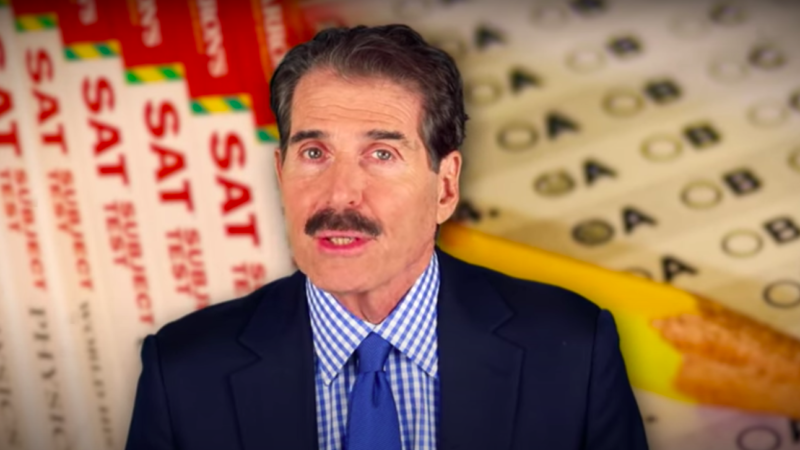
“These are businesses selling products,” Schaeffer says in my new video. “The College Board is a billion dollar a year business.”

I ask him what’s wrong with the tests themselves. He replies, “The SAT and ACT are inferior predictors of college performance.”

It is true that high school grades predict 33 percent of college grades, while tests predict 32 percent. But that is just barely “inferior.” Combining grades and SATs predicts 42 percent of college grades, which makes the tests useful.

Also, tests can help the smart student who, for whatever reason, doesn’t do well in high school.

“It’s the diamond in the rough argument,” Schaeffer responds. “There are actually very few examples of that being true.”

I believed him until I looked at College Board data. It shows that students with C grades in high school, but great SAT scores, do better in college than A+ students with low SAT scores.

Without tests, schools often choose students based on parental connections or donations.

Tiwalayo Aina, a black student at MIT, got good SAT scores. He tweeted, “The SAT is fairer than the alternative: needing my parents to connect me with a…professor.”

I say to FairTest’s Schaeffer, “By eliminating tests, you’re screwing the minority student who is really smart, but goes to a lousy high school, has family problems, and got low grades.”

“That student would have shown brilliantly in her high school classes,” is Schaeffer’s reply.

Wall Street Journal columnist Jason Riley says colleges scrapped tests to make it easier for administrators to control how many people from each racial group attend their college. Without an objective standard, who’s to say an administrator’s admission picks are wrong?

“It really is about making these campuses look right.…It’s not about learning,” says Riley.

“If you want more diversity,” he adds, “open up more of these charter schools [like the ones that are] able to prepare kids for these tests.”

Some charters, the Success Academies, do that well. Sadly, those charters are criticized and limited by politicians because they are not under the control of teachers unions.

Ending limits on charters and allowing school choice, says Riley, would do much more to close the race gap than dropping SATs. “Eliminate the test, you’re just going to delay where it shows up elsewhere in this child’s life. You’re not doing that child any favor.”

What’s wrong with these schools saying we want a more diverse student body?

“There’s this assumption,” says Riley, “we just get these kids in the door and they’ll be fine. No, they won’t! They’re being set up to fail. I see no progress in getting a bunch of black kids admitted to MIT, and then having them flunk out or struggle. They don’t need to be struggling. They could go be going to another school and doing quite well.”

But woke educators want to eliminate tests.

And these days, what the woke want, the woke get.

COPYRIGHT 2021 BY JFS PRODUCTIONS INC.
DISTRIBUTED BY CREATORS.COM

from Latest – Reason.com https://ift.tt/3weUAp9
via IFTTT

Getting Rid of the SAT Won’t Diversify Higher Ed. Expanding School Choice Will.


Screen Shot 2021-03-31 at 12.41.12 AM

Did you take the SATs to try to get into college? Your kids may not have to.

More than 1,300 schools have become “test optional,” meaning students need not submit SAT scores. Some, like the entire University of California system, now won’t even look at scores.

There are seemingly legitimate reasons to oppose the tests. Richer kids often get tutoring that gives them an advantage.

Critics claim the tests are culturally biased and say that’s why Blacks and Latinos don’t score as well. But that doesn’t explain why Asians do so well. In fact, Asians get the best SAT scores.

I assume it’s more about culture and parenting. Kids raised in front of the TV do poorly. Those encouraged to read do better. Kids who spend time talking to adults do better.

Bob Schaeffer, executive director at FairTest, an advocacy group that helped persuade colleges to dump tests, says testing companies just want to make money.

“These are businesses selling products,” Schaeffer says in my new video. “The College Board is a billion dollar a year business.”

I ask him what’s wrong with the tests themselves. He replies, “The SAT and ACT are inferior predictors of college performance.”

It is true that high school grades predict 33 percent of college grades, while tests predict 32 percent. But that is just barely “inferior.” Combining grades and SATs predicts 42 percent of college grades, which makes the tests useful.

Also, tests can help the smart student who, for whatever reason, doesn’t do well in high school.

“It’s the diamond in the rough argument,” Schaeffer responds. “There are actually very few examples of that being true.”

I believed him until I looked at College Board data. It shows that students with C grades in high school, but great SAT scores, do better in college than A+ students with low SAT scores.

Without tests, schools often choose students based on parental connections or donations.

Tiwalayo Aina, a black student at MIT, got good SAT scores. He tweeted, “The SAT is fairer than the alternative: needing my parents to connect me with a…professor.”

I say to FairTest’s Schaeffer, “By eliminating tests, you’re screwing the minority student who is really smart, but goes to a lousy high school, has family problems, and got low grades.”

“That student would have shown brilliantly in her high school classes,” is Schaeffer’s reply.

Wall Street Journal columnist Jason Riley says colleges scrapped tests to make it easier for administrators to control how many people from each racial group attend their college. Without an objective standard, who’s to say an administrator’s admission picks are wrong?

“It really is about making these campuses look right.…It’s not about learning,” says Riley.

“If you want more diversity,” he adds, “open up more of these charter schools [like the ones that are] able to prepare kids for these tests.”

Some charters, the Success Academies, do that well. Sadly, those charters are criticized and limited by politicians because they are not under the control of teachers unions.

Ending limits on charters and allowing school choice, says Riley, would do much more to close the race gap than dropping SATs. “Eliminate the test, you’re just going to delay where it shows up elsewhere in this child’s life. You’re not doing that child any favor.”

What’s wrong with these schools saying we want a more diverse student body?

“There’s this assumption,” says Riley, “we just get these kids in the door and they’ll be fine. No, they won’t! They’re being set up to fail. I see no progress in getting a bunch of black kids admitted to MIT, and then having them flunk out or struggle. They don’t need to be struggling. They could go be going to another school and doing quite well.”

But woke educators want to eliminate tests.

And these days, what the woke want, the woke get.

COPYRIGHT 2021 BY JFS PRODUCTIONS INC.
DISTRIBUTED BY CREATORS.COM

from Latest – Reason.com https://ift.tt/3weUAp9
via IFTTT

Influential UK Standards Watchdog Targets Cameron’s Greensill Lobbying

Influential UK Standards Watchdog Targets Cameron’s Greensill Lobbying

By now, the British media has been inundated with reports about the special access afforded Greensill Capital, the trade-finance firm that collapsed and filed for administration three weeks ago after its main insurer declined to renew policies on some of Greensill’s assets, setting off a chain reaction that ensnared some of Europe’s biggest banks (including the embattled Credit Suisse, which is simultaneously fighting off another scandal in the Archegos Capital blowup).

And many of these stories have focused on the firm’s relationship with former Prime Minister David Cameron, who was hired as a senior advisor by the firm after he left No. 10 Downing Street. Cameron continued to lobby on the firm’s behalf, even after the michegas at GAM a few years back that led to the departure of star trader Tim Haywood, one of the most high-profile investors in London. It was reported that alleged misconduct attributed to Haywood had to do with his investments in Greensill paper – paper that was reportedly tied to Sanjay Gupta’s GFG Alliance group of companies, who have also emerged as main characters in the collapse of a group of Credit Suisse funds (the bank is now tallying client losses and even weighing the possibility of reimbursing some of its more important clients who have threatened to take their business elsewhere).

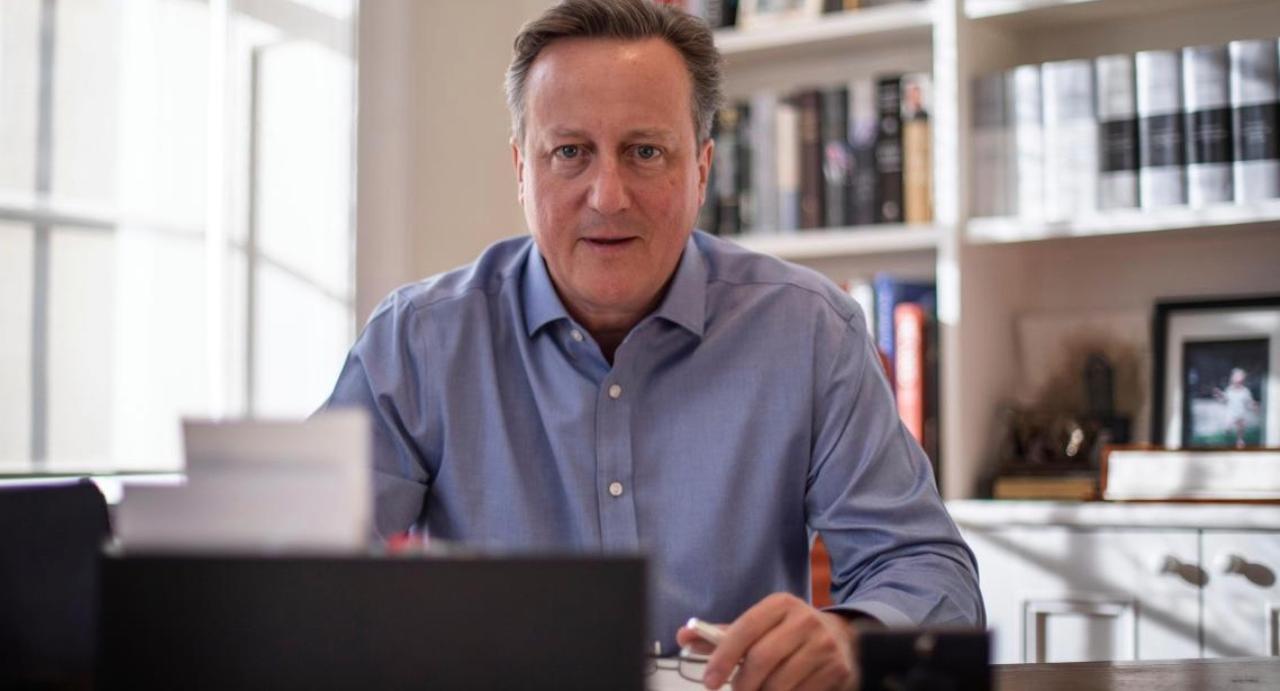
A few days ago, it was revealed that Cameron is facing an official investigation over whether he violated lobbying “anti-sleaze” laws he himself helped create. Now, in addition to the office in charge of enforcing the lobbying rules, Cameron is facing a far more serious investigation by the Committee on Standards in Public Life. That investigation will allow for input from the Labour Party, which has demanded an investigation into how Greensill obtained a desk and a pass inside the former prime minister’ Cabeint Office a decade ago, years before it hired Cameron.

The committee will also investigate Cameron’s lobbying of senior government officials, including Chancellor Rishi Sunak, in an effort to secure access for Greensill to COVID-related financing for small and medium businesses.

Sir Alistair Gaham, a former chair of the Committee on Standards in Public Life, an influential standards watchdog, described the Greensill situation and Cameron’s involvement as “a genuine scandal”.

Chiefly, the committee will be tasked to investigate how Cameron lobbied on Greensill’s behalf after he was hired by the firm in 2017. But it will also look into suspicious ties between the former PM and the company from Cameron’s time at No. 10. Some of the access afforded Greensill under the auspices of being an official “advisor on supply chain financing” during Cameron’s government are genuinely baffling. According to the FT, Lex Greensill, the Australian founder of the eponymous firm, had access to at least 11 government departments before he was given a formal role as “crown commissioner” in 2014, the FT reports.

But there are even more egregious examples of favoritism, including Greensill’s involvement in a government loan scheme.

In 2012 Cameron signed off a loan scheme for NHS-linked pharmacies even though an official report had rejected a proposal by Greensill himself. Greensill Capital took over the running of the scheme in 2018.

Cameron had an enormous financial stake in Greensill which would have been worth $70MM had the company gone public. The lobbying register, a regulator we mentioned above, examined Cameron’s conduct last week, but concluded that the case was outside its remit since Cameron was an “in house” employee not a third-party agent, a detail that seems suspiciously technical.

Shadow chancellor Anneliese Dodds and shadow Cabinet Office secretary Rachel Reeves wrote to the committee on Monday asking it to examine Greensill’s links to Cameron and whether the lobbying register, set up by the former leader’s government in 2014, was fit for purpose.

Reeves said the stories about Greensill were “extremely worrying” and part of a “growing catalogue of allegations of cronyism” by the Tory government.

“Taxpayers deserve to know the true extent of government access given to Greensill Capital through the former Conservative prime minister,” she said.

Fortunately for Cameron, the standards investigation doesn’t put him personally at risk. However, it does have the power to record its findings, and the Labour Party’s complaints in an upcoming report on standards in public life, entitled “Standards Matter 2”. The committee, which refused to comment on reports of the inquiry, has reportedly already taken evidence from Eric Pickles, chair of the Advisory Committee on Business Appointments, who called for a “review of lobbying” inspired by the allegations against Cameron. “Prime ministers and ex-prime ministers are powerful people,” he said. “It is important that the system is resistant to powerful people.”

Of course, if Cameron is named and shamed in the report, it wouldn’t be the first time: the former PM’s family wealthy has already been targeted for public criticism following the Mossack Fonseca leaks, which exposed the family’s use of offshore tax shelters. But lawmakers or others could use the report as cause to take things a step further.

Tyler Durden
Wed, 03/31/2021 – 04:15

via ZeroHedge News https://ift.tt/3sF3SJ1 Tyler Durden

Brickbat: We Are Here to Help


eldercuffs_1161x653

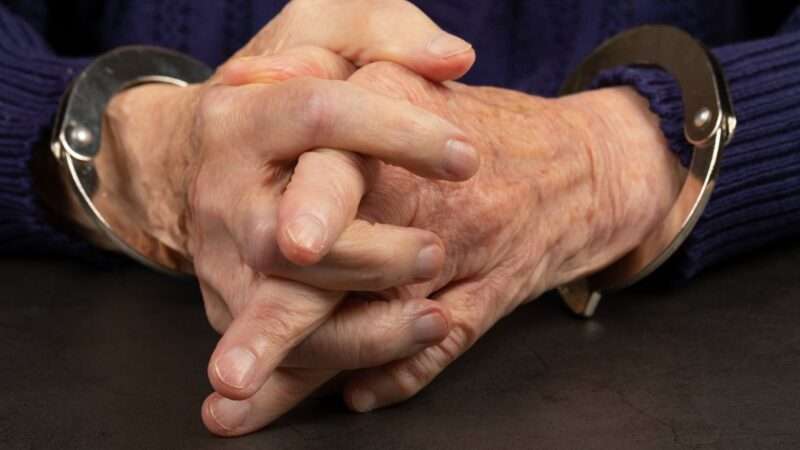
Bodycam video showed several Seattle police officers as they wake Howard McCay from a nap in his home and order him at gunpoint to lift his shirt up to show he has no weapons then to kneel on the floor with his hands on his head, where they handcuff him. McCay asked the officers why they are there and “What did I do?” He gets no answer. It turns out that someone had seen the door to his house open and called 911 for a welfare check. McCay has filed a lawsuit against the city.

from Latest – Reason.com https://ift.tt/3djspwN
via IFTTT

Brickbat: We Are Here to Help


eldercuffs_1161x653

Bodycam video showed several Seattle police officers as they wake Howard McCay from a nap in his home and order him at gunpoint to lift his shirt up to show he has no weapons then to kneel on the floor with his hands on his head, where they handcuff him. McCay asked the officers why they are there and “What did I do?” He gets no answer. It turns out that someone had seen the door to his house open and called 911 for a welfare check. McCay has filed a lawsuit against the city.

from Latest – Reason.com https://ift.tt/3djspwN
via IFTTT

NATO Pushes For Creation Of “Democratic Resilience Center”

NATO Pushes For Creation Of “Democratic Resilience Center”

Via Southfront.org,

In NATO, the creation of the Center for Democratic Resilience has surfaced, yet again.

According to the idea, it will have to monitor the facts of violation of democracy in the member countries of the alliance and help the allies to develop democratic institutions more effectively.

For the first time, the initiative to create this office was voiced in 2019, then it was noted in the concept for the development of the NATO alliance 2030 and, finally, in the NATO Parliamentary Assembly a working group was created that will try to translate this idea into reality.

Suffice to say that the main purpose of the Center is to presumably deal with censorship of the information space and discrimination against ethnic minorities in the Baltic States, the constant accusations of human rights violations against Turkey by Greece, as well as Poland’s undemocratic attitude towards abortion and the LGBT community in the European sense.

The top priority for the NATO PA is to help the Alliance rededicate itself to its democratic foundations.

“The assault on the US Capitol on 6 January has demonstrated that democracy, while resilient, is also fragile. And the evidence released recently of Russia’s interference in our elections highlights the threat which the global march of autocracy poses to our democracies,” noted Congressman Connolly. “We must constantly strengthen and protect democracy against attempts to undermine it – both from within and from without.”

Importantly, members and the invited speakers discussed how to advance the Assembly’s recommendation to establish a NATO Democratic Resilience Centre.

“NATO has a well-oiled machinery focused on military matters, but it lacks a body which is fully focused on defending our democracies,” the President stressed.

Congressman Connolly first proposed the idea for such a Centre in 2019. It has since been backed up by the Assembly as a whole as well as the independent Group of Experts appointed by the NATO Secretary General for the NATO 2030 process.

Back in January 2021, NATO PA President Connely also spoke of the centre with NATO Secretary General Jens Stoltenberg.

Its aim is to assist members and partner nations to strengthen their democratic institutions.

The Assembly advocates for NATO to rededicate itself to the shared democratic foundations. As part of these efforts, the Standing Committee set up a Working Group to refine a concept of a Centre for Democratic Resilience within NATO – an idea Congressman Connolly introduced in 2019 on the occasion of NATO 70th anniversary and since backed by the Assembly as a whole.

“NATO has a well-oiled machinery focused on military matters, but it lacks a body which is fully focused on defending democracy. This must change.” President Connolly stresses. “Establishing a Democratic Resilience Center inside NATO Headquarters would show that NATO is truly serious about defending our democratic model.”

The Working Group was charged with gathering insights from key stakeholders and independent experts, garnering broad support within the Assembly and, ultimately, putting together a strong and concrete proposal for submission to Allied parliaments and governments.

The Working Group will be governed by the Assembly’s Bureau, together with the Chairperson of the Committee on the Civil Dimension of Security. President Connolly will lead the group and his predecessor Attila Mesterhazy (Hungary), currently serving as Assembly Vice-President, will serve as Rapporteur.

In short, the US is pushing for NATO to become the world’s premier proponent of the democratic and liberal world order.

Still, the alliance of the unwilling needs reviving, and every members agrees on that. The NATO mouthpiece, Atlantic Council supports this movement.

“Reviving the transatlantic partnership, however, will require more than the traditional close diplomacy, warm rhetoric, and lofty white papers. It will demand bold action that proves the United States and Europe can still accomplish major feats together. A unified vision is a good start, but ultimately insufficient: America and Europe must set out to do big things and then execute on them, creating a new legacy of joint triumphs that their citizens can rally around and upon which future generations can build. It is only with such foundational touchstones, which galvanize a fresh political consensus in favor of the transatlantic bond, that real trust and all the benefits that it brings can be restored.

Creating these new touchstones will require investments of time, resources, and political capital. There is a significant list of issues on which deep transatlantic cooperation could make a major difference. Attempting to boil the ocean, however, would be a recipe for failure. US and European leaders must prioritize. The key is to select a small number of urgent and tangible projects with good odds of success. Three projects—ending the COVID-19 pandemic, reinvigorating transatlantic security, and reconciling US and European policies on technology—should rise to the top of the agenda.”

Democracy is important, but a united front on censorship in technology, and not letting Russia and China do as they please comes first.

It should also be noted that NATO intends to use force even if the aggression against its member countries is committed with the use of non-military means. NATO Secretary General Jens Stoltenberg issued such a warning at a webinar at the University of South Florida.

“We will never grant our potential adversary the privilege of knowing exactly when we [NATO Allies] use Article 5. But we have made it clear that we will use Article 5 when we deem it necessary. In addition, we can use Article 5. when we see aggression using other means than conventional military means,” Stoltenberg said.

He was referring to Article 5 of the North Atlantic Treaty signed in Washington in 1949. It enshrines the principle of collective defense of the North Atlantic Treaty Organization. The article provides for a collective response in the event of an “armed attack on one or more” NATO member countries.

“We saw that aggressive actions were taken [in the recent past] by other countries against NATO allies, when not traditional military means, but non-military means were used to try to undermine our positions, split us, attack us,” the secretary general argued, not going into details.

According to him, “this is exactly what NATO should adapt to.” And the alliance makes the necessary decisions, Stoltenberg said. He recalled that now, for example, NATO is ready to apply Article 5 in response to cyber-attacks. “We decided a few years ago that an attack in cyberspace, a cyberattack, could trigger Article 5. This is a completely new signal [to a potential adversary],” Stoltenberg said.

In addition, he called for NATO to begin more actively “countering disinformation” and protecting the “critical infrastructure” of the alliance.

Tyler Durden
Wed, 03/31/2021 – 03:30

via ZeroHedge News https://ift.tt/3fu2pBm Tyler Durden