Brickbat: Which Came First, the Chicken or the Nosy Neighbor?


chickens_1161x653

In Bulverde, Texas, Brian Johnson decided his daughters Indiana, 10, and Phoenix, 8, should learn about business and start saving money. During the February snow storm that shut down much of the state, the girls gave the extra eggs laid by chickens they raise to neighbors. After it was over, their father set up a bank account and the girls began selling the eggs and saving their money. Well, until someone ratted them out and they got a cease-and-desist letter from the city. “The selling of chicken eggs or any other animal products produced on the property, from a residentially zoned lot is a violation of city ordinance, regardless of the age of the person conducting the sales,” the city said in a statement sent to a local TV station.

from Latest – Reason.com https://ift.tt/3t3wT08
via IFTTT

The Middle East Is Reorganizing

The Middle East Is Reorganizing

Authored by Thierry Meyssan via VoltaireNet.org,

The Middle Eastern states, divided not by themselves but by the powers that colonised the region, are reorganising themselves according to their own logic. Of course these new alliances are still fragile, but the West will have to deal with them…

hat makes the Middle East difficult to understand is that it comprises a multitude of actors with different logics who, depending on the circumstances, make or break alliances. We often think we know the region politically, who our friends and enemies are. But when we return to the same place years later, the landscape has changed dramatically: some of our former friends have become enemies, while some of our former friends want us dead.

This is what is happening now. In a few months, everything will have changed.

1) First of all, we have to understand that some of the protagonists, who lived in desert regions, organised themselves into tribes by force of circumstances. Their survival depended on their obedience to the chief. They are alien to democracy and have communitarian reactions. This is the case, for example, of the Saudi and Yemeni tribes, the Iraqi Sunnis who come from the latter and the Kurds, the Israeli and Lebanese communities or the Libyan tribes. These people (except the Israelis) were the main victims of the US military project: the Rumsfeld/Cebrowski strategy of destroying state structures. They did not understand what was at stake and now find themselves without a solid state to defend them.

2) A second category of actors is driven by self-interest. They are only interested in making money and have no empathy for anyone. They adapt to all political situations and always manage to be on the winning side. It is this category that provides the contingent of die-hard allies of the imperialists of all stripes who have dominated the region (recently the Ottoman Empire, then the British and French Empires, now the United States).

3) Finally, the third category acts to defend its nation. It has the same courage as the tribal populations, but is able to perceive things in a broader way. It is this group that, over the millennia, has created the notions of the city and then the state. Typically, this is the case of the Syrians, who were the first to form states and are now dying to keep one.

Seen from the West, we often think that these people are fighting for ideas: liberalism or communism, Arab unity or Islamic unity, etc. But this is always false in the case of the Syrians. But this is always wrong in practice. For example, the Yemeni communists have now become almost all members of al-Qaeda. Above all, we judge these people as if they were not capable of being on our level. The opposite is true: Westerners, who have lived in peace for three quarters of a century, have lost touch with simple realities. The world is full of dangers and we need alliances to survive. We choose to join a group (tribal or national) or to go it alone among our enemies, abandoning our friends and family. Ideologies exist, of course, but they are only to be considered after we have positioned ourselves against these three categories.

Since the end of the Second World War, the political landscape of the Middle East had become fixed around a few crises: The expulsion of the Palestinians from their land (1948), the weakening of the British and French empires in comparison to the USA and the USSR (Suez, 1956), the surveillance of Gulf oil by the USA (Carter, 1979), the disappearance of the USSR and the hegemony of the USA (Desert Storm, 1991), the Rumsfeld/Cebrowski strategy (2001), and finally the return of Russia (2015).

All political and military events, including the Iranian revolution or the ’Arab Spring’, are only epiphenomena in this framework. None of them have created new alliances. On the contrary, all have strengthened existing alliances in a vain attempt to give one or the other a victory.

President Donald Trump, whose sole task in the Middle East was to stop the Rumsfeld/Cebrowski ’war without end’, did not have time to complete his project. He did, however, succeed in convincing the Pentagon to stop using jihadis as mercenaries in its service (although the Department of Defense is now going backwards). Above all, he turned the tables by questioning the validity of the Palestinian cause.

Contrary to what one might say at first glance, it was not a question of favouring Israel, but of acknowledging the lessons of the past: the Palestinians have lost five successive wars against Israel. During this time, they tried twice to move and to conquer by force new lands (Jordan and Lebanon). Finally, they signed an agreement with Israel (Oslo). Under these conditions, how can we still talk about their inalienable rights when they themselves have violated them?

Whether one agrees or not with this reasoning, it is clear that it is shared within the Arab world, although nobody admits it. Everyone can see that the powers that pay lip service to the Palestinian cause do absolutely nothing for it; that it is a legal posture to keep things as they are, to their benefit. It so happens that President Trump has managed to get the United Arab Emirates, Bahrain and Israel to sign the “Abraham Accords”. Yesterday’s enemies have agreed to make peace. Contrary to popular belief, it was not easier for Israel than for its Arab partners. Indeed, peace forces Israel to stop being a colonial state inherited from the British Empire, but a nation like any other called to live in harmony with its environment.

These changes, if they can be sustained, will take time. However, the United Arab Emirates and Israel on the one hand, and Saudi Arabia and Iran on the other, are now facing a new question: should they not all be prepared for a new danger: the expansionism of Turkey and Qatar?

This is why the United Arab Emirates and Israel have formed an alliance with Greece and Cyprus, while Saudi Arabia and Iran have entered into secret talks. Egypt (representing the Arab League, of which some of these countries are members) and France (representing the European Union, of which the other participating countries are members or partners) were involved in a preparatory meeting, the Athens Philia Forum. This complete and brutal reversal of alliances is being done as quietly as possible. But it is happening.

The most important event is the military alliance between Greece and Israel on the one hand and the United Arab Emirates and Saudi Arabia on the other. The totality of the agreements is unknown, but it is known that the Israel Defense Forces will train the Greek military aviation for 1.65 billion dollars, while Greece will send Patriot missiles to Saudi Arabia and the Emirates may hand over some of their fighter planes to Greece.

Relations between Israel and the UAE have been formalised since a so-called Israeli “representation” at a UN office in Abu Dhabi was opened, unofficially acting as an embassy. While those between Israel and Saudi Arabia date from their secret negotiations in 2014-15.

The negotiations between Saudi Arabia and Iran demonstrate once again that the Sunni/Shiite opposition is perfectly artificial. Let us remember that in 1992, far from hating each other, the two countries fought together under US command to support Muslim Bosnia-Herzegovina against Orthodox Serbia.

Tyler Durden
Thu, 04/29/2021 – 03:30

via ZeroHedge News https://ift.tt/3nvMwMQ Tyler Durden

How Old Are Europe’s Tech Companies?

How Old Are Europe’s Tech Companies?

In a previous infographic, we provided an overview of the age of the world’s (mostly American) tech giants. Then we had a look at a selection of Asian tech companies, showing that some are dinosaurs of the tech age while others have just about hatched, but already have taken over worldwide markets, such as Toshiba, Huawei or ByteDance. But, Statista’s Claire Jenik asks, what about the European technology companies?

Infographic: How Old Are Europe's Tech Companies ? | Statista

You will find more infographics at Statista

Founded about a century and a half ago, telecom equipment manufacturers Ericsson and Nokia are making their mark among Europe’s tech oldies.

The Swedish telecommunications pioneer, founded in 1876, was one of the first companies to manufacture and market telephones. As for the Finnish Nokia, its history is a little different: once a manufacturer of toilet paper, the company became a conglomerate in the 20th century and then turned to the electronics industry in the 1960s, before becoming a leader in mobile telephony in the late 1990s.

With about half a century on the clock, we then find IT and software giants, such as Capgemini, created in 1967 in Grenoble, and the German SAP, born in 1972. Much younger but born more than a decade ago, the music streaming services Spotify and Deezer, as well as the electronic payment platform Adyen. They are among the winners of the digital revolution and are today heavyweights in their respective industries. Finally, among the European “youngsters”, we can cite the Franco-German specialist in teleconsultation, Doctolib, who will be celebrating his 8th birthday this year as well as the 8 year-old British online food delivery service Deliveroo.

Tyler Durden
Thu, 04/29/2021 – 02:45

via ZeroHedge News https://ift.tt/3e1sw1p Tyler Durden

Another Navalny Drama Fizzles Despite Hungry Western Media

Another Navalny Drama Fizzles Despite Hungry Western Media

Authored by Finian Cunningham via The Strategic Culture Foundation,

The indulgence and fawning must have given Navalny a sense of impunity, reinforcing his megalomania and attention-seeking…

After three weeks allegedly on a hunger strike, the Western-lionized Russian blogger Alexei Navalny has thrown the towel in. The decisive factor was the Russian authorities refusing to kowtow to a Western orchestrated drama.

Another factor is that Navalny is a conman and stooge of Western intelligence services. To carry out a real hunger strike is perhaps one of the most traumatic, mentally excruciating feats of self-sacrifice. To witness yourself wasting away to death must summon the deepest convictions of righteousness.

I remember living through the Irish Republican hunger strike 40 years ago which resulted in the death of 10 prisoners in a British state prison. The first one of those men to die was Bobby Sands who at the age of 27 passed away in a coma on May 5 after 66 days of refusing food. It was one of the grimmest periods in the 30-year conflict with Britain that ravaged Ireland.

Few political prisoners undertake hunger strike, and fewer still see it through to the horrendous end.

Only those dedicated to a righteous cause could ever contemplate overcoming the gravest challenge.

That’s why everything about Navalny’s supposed hunger strike reeks of a sham aided and abetted by the fawning Western corporate media.

The apparent collaboration in this drama also indicates the relationship of a stooge orchestrated by Western state intelligence.

When the 44-year-old convicted embezzler declared that he was going on a death-fast on March 31, the Western media kept pace with sensational headlines detailing his supposed declining health. We were told about pains, aches, and numbness, “torture”, “imminent death” and so on. Even though the Russian prison authorities released video footage of Navalny swaggering around his shared dormitory remonstrating with a guard over some petty issue.

The British state-owned BBC reported that prison authorities were using dastardly tricks such as putting savory meals beside Navalny’s bed. The BBC never gave any such concerned coverage to Bobby Sands and his Republican comrades who were abused inhumanely by British prison guards. Indeed, the British media portrayed the then Margaret Thatcher government as justified in its treatment of “Irish terrorists”.

Instead of the grim fate supposedly facing Navalny, the Western media reported his social media statements with an air of jocularity. “My friends would laugh if they saw me now walking around like a skeleton,” said Navalny in one of his Instagram posts. How is it that a purportedly persecuted prisoner has the liberty to use social media and generate Western headlines? The inappropriate humor also betrays a lack of credibility in his supposed journey of death.

All the while, the Russian authorities were monitoring Navalny’s health and maintaining that his condition was “satisfactory”.

U.S. President Joe Biden and German Chancellor Angela Merkel were reportedly impressing on Russian President Vladimir Putin their concern over Navalny. Again, such high-profile intervention is a reflection of the political orchestration going on. It is so disproportionate to the reality that it is an absurd giveaway of scripted drama.

It soon became clear, however, that the Russian state would not be bullied by psycho-drama. Its laws and sovereign affairs are not open for hypocritical Western lecturing.

Navalny was arrested on January 17 after spending five months in Germany in flagrant violation of his parole terms for a suspended jail sentence over a fraud conviction in 2014. While in Germany, Navalny cooked up the outlandish drama that he had been poisoned with a military nerve weapon on the direct orders of Putin. No evidence has ever been provided to support his claims but the Western media and governments have endorsed the narrative as if gospel truth.

The indulgence and fawning must have given Navalny a sense of impunity, reinforcing his megalomania and attention-seeking. He was therefore shocked when he was arrested on returning to Russia from Germany and again when the Russian federal authorities ordered in February that his suspended sentence be converted to two-and-half-years behind bars.

While in prison, Navalny began demanding the “right” to have his private doctors visit him over alleged leg numbness and back pain. How’s that for arrogance!

One wonders how the BBC would have reported it if Irish Republican prisoners were making such a demand from the British state.

In any case, Russian authorities faced down the intense Western media campaign aiming to make a hero out of the “starving” Navalny. Prison doctors maintained that he was being adequately cared for. One may speculate that the Russian authorities spotted the fake drama from an early stage. You can’t pull off a harrowing hunger strike without an iron will – which Navalny and his handlers do not have because their cause is a fake pretext for destabilizing Russia’s internal politics and undermining the government.

Realizing that the battle of wills – and shills – was not going to be won, the next necessary ploy was to create an off-ramp for Navalny in order to avoid farcical embarrassment.

His personal doctors started “warning” on April 18 through obliging Western media headlines that Navalny “could die any day” due to his deteriorating condition. That was after 19 days of supposed hunger strike. Strangely, Navalny’s doctors were somehow able to give such a dire prognosis without actually examining him personally.

Then on April 23, the BBC and other Western media outlets ran headlines such as: ‘Navalny urged to end hunger strike’.

Within hours, the convicted conman declared that he was coming off his alleged fast to the death.

So, there you have it. The end of another drama in which the Western-lionized hero cheats death twice in only a matter of months. First, from alleged poisoning with a deadly nerve agent, and secondly, from an anguish-filled three-week hunger strike (at least according to Western media).

At this point, Navalny’s intel scriptwriters and Western media are the only ones going hungry.

Tyler Durden
Thu, 04/29/2021 – 02:00

via ZeroHedge News https://ift.tt/3nD13X5 Tyler Durden

Joe Biden Just Outlined the Most Expensive Agenda in Modern History. Progressives Want More.


rollcallpix132327

In a joint address to Congress on Wednesday night, President Joe Biden outlined what can accurately be described as the most expensive and expansive agenda in modern American history.

Biden has proposed $6 trillion in new spending since taking office and has already signed $1.9 trillion in emergency spending related (loosely) to the COVID-19 pandemic. He wants to follow that with a huge infrastructure bill, a $15 national minimum wage, Buy American rules that offer protectionism for unions, and new entitlement programs—including a new child subsidy program for parents and a permanent expansion of Obamacare health insurance subsidies. He promised to raise taxes on the wealthy and to sic the IRS on rich people who don’t pay “their fair share.”

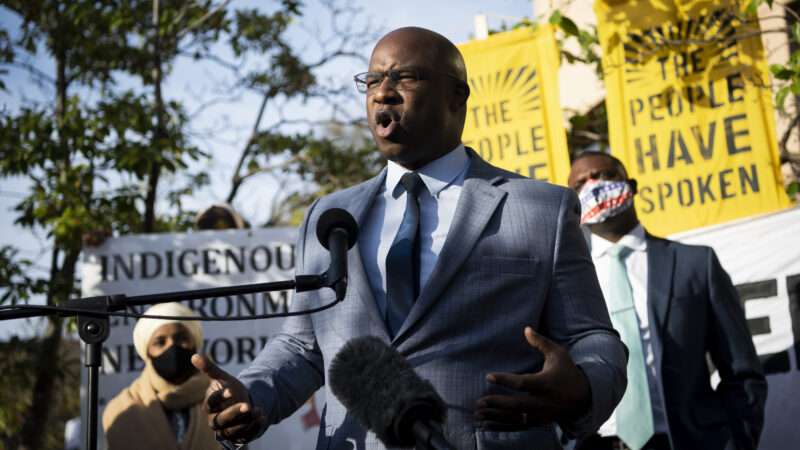
A few minutes after Biden wrapped up his remarks, Rep. Jamaal Bowman (D–N.Y.) said that’s not nearly enough.

“The proposals that President Biden has put forward over the last few weeks would represent important steps—but don’t go as big as we’d truly need in order to solve the crises of jobs, climate, and care. We need to think bigger,” said Bowman, who was speaking on behalf of the Working Families Party, a progressive third party that frequently caucuses with Democrats.

Thinking bigger, in some cases, means pushing for greater accountability from law enforcement and other individuals in the public sector. Biden made some vague promises about that during his remarks but Bowman was right to be more pointed in specifically calling “to end qualified immunity,” the court-created legal doctrine that often shields police from civil liability when they harm civilians.

“Whether you’re a clerk, a teacher, or a member of congress you should be held accountable for your actions. Police cannot be above the law,” Bowman said. That’s a marked and welcome departure from the Biden administration’s lukewarm perspective.

Mostly, however, going bigger means spending a lot of money on just about everything. It means passing the Green New Deal to combat climate change, Bowman said. But not just that. “We need a Green New Deal for Public Housing,” he said. “We need a Green New Deal for Cities…and we need a Green New Deal for Public Schools.” The Green New Deal might not succeed as a piece of legislation or as a template for ending global warming, but it certainly has succeeded as a branding exercise.

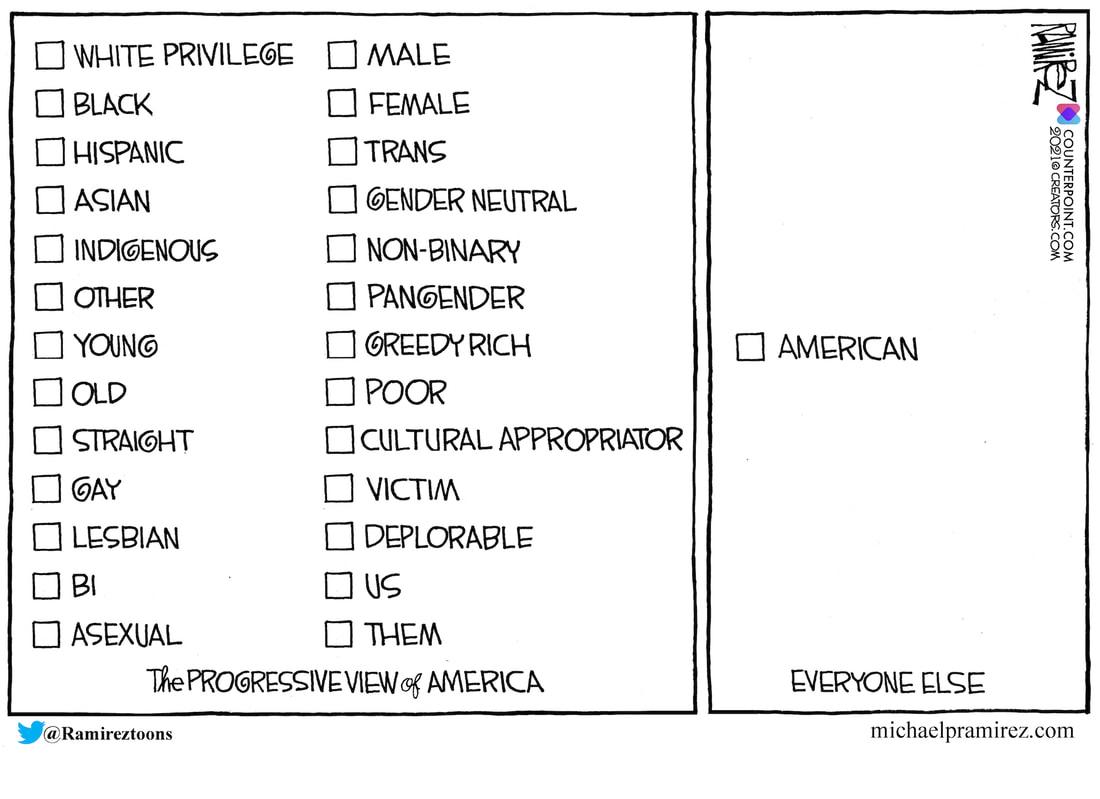
More than anything else, Bowman’s response illustrated the extent to which the progressive image for America is one in which government has greater control over just about every aspect of life.

“Every part of our society must become part of the answer,” he said, “because this crisis is urgent.” It’s not entirely clear which supposed crisis he was referencing.

Biden has already embraced the governing-by-crisis approach and has adopted other progressive ideas into his first-year agenda. Like Bowman, Biden called for passage of the Protecting the Right to Organize (PRO) Act, a union-backed bill that would kill state-level right-to-work laws and force workers in some professions to contribute to unions whether they want to join or not. Like Biden, Bowman suggested that billionaires should be targeted with higher taxes because they’ve seen their wealth increase during the pandemic.

Still, progressives are unlikely to be satisfied with Biden’s agenda no matter how aggressively profligate it gets. That’s in their nature. What’s more worrying is how far they’ve already managed to push Biden—with the notable exception of criminal justice reform—and how much more they intend to squeeze out of him.

from Latest – Reason.com https://ift.tt/3u4aiCb
via IFTTT

Critical Race Theory Is About To Face Its Day(s) In Court

Critical Race Theory Is About To Face Its Day(s) In Court

Authored by John Murawski via RealClearInvestigations.com,

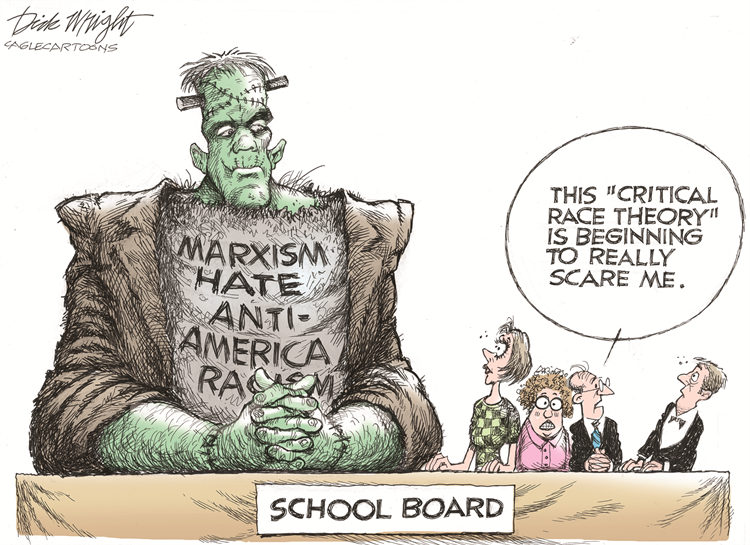
As recently as last summer, few people outside academia had heard of critical race theory, whose central claim is that racism, not liberty, is the founding value and guiding vision of American society. Then, President Trump issued an executive order last September banning the teaching of this “malign ideology” to federal employees and federal contractors.
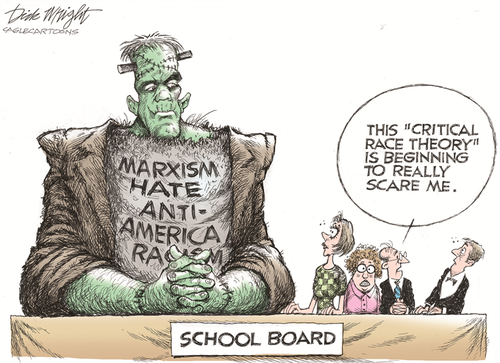
Trump’s ban was blocked by a federal judge in December and immediately revoked by Joe Biden upon occupying the White House in January. Since then, federal agencies and federal contractors have resumed staff training on unconscious bias, microaggressions, systemic racism and white privilege – some of the most common but also most disputed concepts associated with the four-decade-old academic theory.
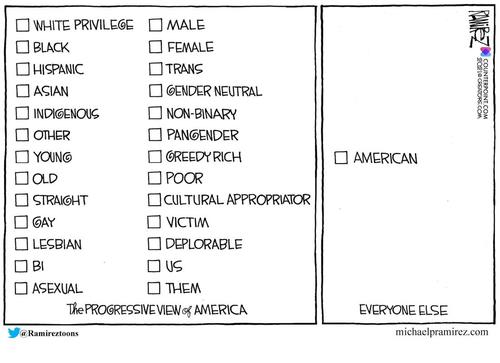
Now critical race theory is about to face a major real-world test: a spate of lawsuits alleging that it encourages discrimination and other illegal policies targeting whites, males and Christians. But unlike Trump’s executive order, which ran into First Amendment problems by prohibiting controversial speech, the lawsuits name specific policies and practices that allegedly discriminate, harass, blame and humiliate people based on their race.  
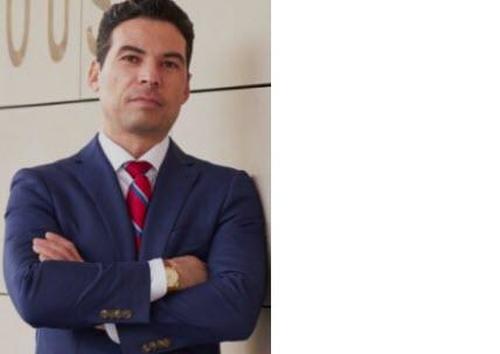
David Pitvorak, plaintiffs’ attorney: Equity “is a euphemism for race-based outcomes.”

The common thread of these legal challenges is the inescapable logic that making accommodations for critical race theory will erode the nation’s anti-discrimination law as it has developed since the 1960s. This would mean replacing the colorblind ideal of treating all people equally, which has been widely viewed as the crowning achievement of the civil rights movement, with a contrary strategy: implementing race-based policies, which can range from affirmative action to reparations for compensating African Americans for the injustices of the past and for producing equitable outcomes in the future.

“Critical race theory is a Trojan horse of sorts,” said David Pivtorak, a Los Angeles lawyer representing two white men who are suing two California state environment agencies.

“It disguises itself as the gold standard of fairness and justice but, in fact, relies on vilification and the idea of permanent oppressor and oppressed races. Its goal is not ensuring that all people play by the same rules, regardless of race, but equity, which is a euphemism for race-based outcomes.”

About a dozen lawsuits and administrative complaints have been filed since 2018, with another wave planned this summer by conservative public interest law firms and private attorneys. Their goal is to draw attention to some of the more pronounced practices and win court judgments to slow down the spread of CRT in K-12 schools, government agencies other organizations.

A pair of lawsuits filed in 2019 by four white women against the New York City public school system allege that a diversity trainer told employees, “White colleagues must take a step back and yield to colleagues of color,” and that they should “recognize that values of White culture are supremacist.” The California suit filed last year by the two white men alleges that the state hosted a discussion series in 2020 in which speakers stated “that any disparate outcomes in society must be the result of white supremacy.”

A 2019 complaint filed by an Illinois public school teacher led to a finding that as part of a year-long course on equity and diversity, seventh- and eighth-graders participated in a white privilege awareness exercise that required them to remain “in silence” and with “eyes lowered” as they responded to a facilitator’s prompts. A 2020 lawsuit filed by a 12th-grade biracial student and his African American mother says that a civics class in a Nevada charter school taught that “reverse racism doesn’t exist” and that “people of color CANNOT be racist.”

Margaret Burnham, critical race scholar: “Part of being an employee or a public official or a school teacher requires you to appreciate your own standing – your identity and your positionality.”

Critical race theory scholars assured RealClearInvestigations that white people should never be fired, penalized or gratuitously humiliated for the historical accident of being born white. But organizations should be granted wide leeway in adopting diversity training and equity policies, they say, even if asking white people to acknowledge their unearned privilege and think about their complicity in white supremacy makes them feel singled out and induces anxiety.

“Part of being an employee or a public official or a school teacher requires you to appreciate your own standing – your identity and your positionality,” said Margaret Burnham, a law professor at Northeastern University and a former Massachusetts state judge, using CRT terms that describe racial and gender power hierarchies.

“Anything that is about the education of the person so that they can do a better job is fair game,” Burnham said. “Just like you have to learn new technologies, new languages, I consider this part of being an employee, part of being in a public space where you’re going to interact with other people.”

Proponents of critical race theory say the lawsuits are a form of white denialism that confirms the pervasiveness of the problem that CRT exposes. Many critical race theorists believe that the United States has functioned as an elaborate affirmative action scheme to empower and enrich white males, a strategy that depends on a certain degree of coverup.

“I see these lawsuits as a last gasp attempt of those who benefit from the racial hierarchy to cling to the power and the privileges that have been associated with whiteness from the beginning of the country,” said andré douglas pond cummings (who writes his name in lowercase letters), a business law professor at the University of Arkansas at Little Rock who has taught courses on corporate justice and “Hip Hop & the American Constitution.”

andré douglas pond cummings, critical race proponent: “Treating people with dissimilar histories equally … can lead to unjust results and outcomes.”

“Critical race theory challenges the very legitimacy of the legal system in which these lawsuits are situated,” cummings said.

“Treating people with dissimilar histories equally, where some have been historically oppressed, can lead to unjust results and outcomes, thereby requiring a focus on results and outcomes, not on blind process, with the goal being equal economic opportunity and equity.”

The central unifying insight of critical race theory is that racism is embedded in the U.S. legal system and social structures, “so that you don’t have to think about it anymore and you can have racism without racists at this point,” said Robert Westley, a Tulane University law professor who specializes in critical race theory and reparations.

“You don’t have to be an avowed racist in order for there to be race-based outcomes in this society,” Westley said, noting that confronting these matters “is going to entail talking about things that make a lot of people very uncomfortable.”

CRT rejects the foundational premises of classical liberalism – such as legal neutrality and individual rights – and from that perspective, colorblindness is not understood as a strategy to overcome racism but as a method to perpetuate it.

“It’s a white ideology,” Burnham said.

“Colorblindness really comes into fashion as a means of denying the persistence of racial stratification in the United States.” 

The lawsuits face a number of challenges, a point borne out by early setbacks some of the claims have experienced so far, including the defeat of Trump’s executive order on free-speech grounds. In another case, lawyers dropped the discrimination allegations in one of the first such lawsuits, filed in 2018 against the Santa Barbara Unified School District in California, because, they said, students and staff who supported the lawsuit were “deathly afraid” of repercussions if they spoke out and came forward publicly as plaintiffs. 

Claimants generally have to prove the alleged discrimination is severe and pervasive. They also have to overcome the freedom-of-speech rights of those who are professing to be dismantling systemic racism. What’s more, lawyers on both sides say that courts traditionally defer to employers and educators to set policy on workplace training and classroom curricula, a built-in restraint on activist judges.

Perhaps the biggest wild card in these lawsuits is the staggering cultural shift of the past five years, during which many of the precepts of CRT have become widely accepted, especially among many in the nation’s intelligentsia and the professional managerial class.

President Biden has adopted the language and made equity part of his platform, including a proposal to establish an Equity Commission “to support the rights of Black, Brown and Native farmers.” Immediately upon taking office, he issued an “Executive Order on Advancing Racial Equity” to address systemic racism and “affirmatively” promote equity and racial justice in the federal government.

“Our Nation deserves an ambitious whole-of-government equity agenda that matches the scale of the opportunities and challenges that we face,” the executive order states.

Biden’s Education Department cited the 1619 Project among proposed new priorities for education.

And last week, Biden’s Education Department proposed new priorities for its American History and Civics Education programs in recognition that the Covid-19 pandemic and “the ongoing national reckoning with systemic racism have highlighted the urgency of improving racial equity throughout our society.” The priorities include incorporating diverse perspectives and anti-racist practices into the teaching of history, with The New York Times 1619 Project cited as an example.
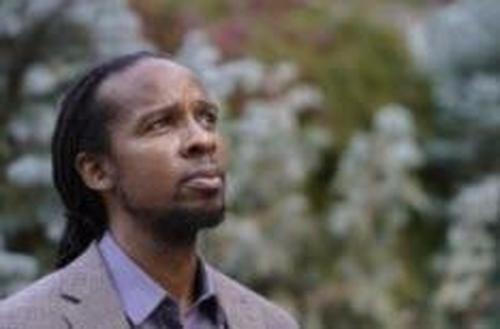
Ibram X. Kendi: “The only remedy to past discrimination is present discrimination. The only remedy to present discrimination is future discrimination.”

This paradigm shift has catapulted “anti-racist” experts like diversity trainer and best-selling “White Fragility” author Robin DiAngelo into the stratosphere of fame. Another beneficiary of the zeitgeist is Ibram X. Kendi, the Andrew W. Mellon Professor in the Humanities at Boston University who runs the school’s Center for Antiracist Research. Kendi is the author of the 2019 bestseller “How to Be an Antiracist,” which contains a succinct antiracist formula that rests on the distinction between bad discrimination (racism) and good discrimination (antiracism): “The only remedy to racist discrimination is antiracist discrimination. The only remedy to past discrimination is present discrimination. The only remedy to present discrimination is future discrimination.”

The nation’s current anti-discrimination law does not make such a distinction, and would read Kendi’s proposal as absurd as claiming that there’s a meaningful difference between good theft and bad theft; instead, all discrimination is wrong in the existing legal framework, with the exception of limited, narrowly tailored exemptions that are subject to strict scrutiny by the courts.

A sampling of recent lawsuits and complaints shows how critical race theory practices have played out in a variety of circumstances.

The suit against the New York City Department of Education alleges that employees were told at a diversity retreat that “there is White toxicity in the air and we all breathe it in.” Examples given included the Protestant work ethic and being socialized to be “defensive.” Such messages about “interrogating Whiteness” were repeated over the course of a year, during which time four white employees who later filed suit were accused of privilege, shamed, demoted and replaced by African Americans. The pair of lawsuits, filed in 2019, are in the discovery phase as the Department of Education and the lawyers for the four white women suing exchange documents and evidence.

A fall 2020 civics curriculum at a Nevada charter school encouraged students to “unlearn” the oppressive structures within their families, their religion and their intersectional identities. The teacher, who identified herself in class materials as a bisexual agnostic with a mental health disability, asked 12th-graders to reflect on the parts of their identity that “have privilege attached to it.” according to a discrimination suit filed by the biracial male student and his black mother who allege he was coerced to affirm a political ideology against his conscience and his Christian faith. The case, filed last December, is headed for trial after a judge, saying the allegations raise “some serious constitutional issues,” refused to toss it out.  

Featured speakers: Blacks don’t use the outdoors in proportion to their population due to white racism.

In the California lawsuit brought by the two white men, a discussion hosted by the state Department of Fish & Wildlife featured speakers who said that black people don’t use the outdoors in proportion to their population because of white racism, generational trauma and a historical fear of lynching. White employees were instructed on the country’s deeply racist legal system and advised that “silence is complicity” when it comes to racial injustice. According to the lawsuit, employees were subjected to implicit bias training that amounted to compelling staff to take “loyalty oaths” to CRT ideology. The lawsuit, filed last October, is in the early procedural stage; the state’s lawyers are seeking to have the case dismissed.

In one of the more unusual cases, the Department of Education’s Office of Civil Rights agreed in early January with an Illinois public school teacher that her school district violated anti-discrimination law when it implemented a discipline policy that explicitly directed staff to consider a student’s race when evaluating behavioral and disciplinary issues.

The case offers indications that different judges will likely reach opposite conclusions in such disputes: Just two weeks after ruling for the schoolteacher under the Trump administration, the Department of Education put the case on hold when President Biden took office and issued the “advancing racial equity” executive order.

Jonathan O’Brien, Nevada plaintiffs’ attorney: “The ideology is so patently stupid and racist to the common person that the only way you can implement it or teach it is with an element of coercion, otherwise it would just be laughed at.”

The Department of Education initially found that the K-8 school district engaged in illegal stereotyping when administrators and staff were invited to write down “some defining aspects of white culture” in a white privilege awareness exercise. The materials provided several examples of “common white reasoning,” including: “we [whites] haven’t had to develop the skills, perspectives or humility that would help us engage constructively” in cross-racial conflicts. The agency also flagged a segregated “affinity group” for white students that served as a “safe space” for students to learn about white privilege, internalized dominance, microaggressions and how to act as an ally for students of color.

Hovering in the background of these lawsuits is the unresolved question: To what extent does truth provide a defense against charges of discrimination? It will come as no surprise that to conservatives and other critics of CRT its fatal flaw is its factual wrongness.

“The ideology is so patently stupid and racist to the common person that the only way you can implement it or teach it is with an element of coercion, otherwise it would just be laughed at,” said Jonathan O’Brien, the lawyer representing the student and mother who filed the Nevada lawsuit. “That’s why the training sessions are like pressure cookers.”

But if critical race theory is true, as its adherents believe, then labeling the truth as discriminatory smacks of censorship.

The lawyers who successfully challenged Trump’s executive order last year, for example, claimed truth as a defense when they argued that their clients offer instruction about systemic racism and white privilege as an essential part of their social justice mission to provide equitable health care services. Systemic racism is understood as the totality of social institutions operating in such a way as to generate disparate outcomes for people of color in criminal justice, health care, education and other areas.
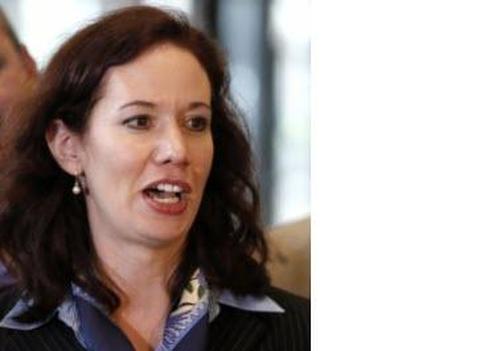
Camilla Taylor, Lambda Legal: “We’re talking about a structure, a system, that was set up to benefit white people.”

“We’re talking about a structure, a system, that was set up to benefit white people. Whether people realize it or not, they’re often continuing that system in a way that hurts people of color,” said Camilla Taylor, director of constitutional litigation for Lambda Legal, which calls itself the nation’s oldest and largest LGBTQ rights group.

“And to undo that structure you need to be able to name who it benefits and who it disadvantages.” 

Lambda Legal represented the NO/AIDS Task Force, Los Angeles LGBT Center and Dr. Ward Carpenter, the Los Angeles center’s co-director of health services who specializes in transgender medicine and personally treats 200 patients. Their successful legal challenge argued that the restrictions in Trump’s executive order “not only run afoul of First Amendment protections, but they ignore verifiable and truthful information, and therefore restrict highly protected professional speech.”

In a phone interview, Taylor cited medical research published in 2019 in the Proceedings of the National Academy of Sciences that contended when African American newborns are cared for by African American physicians, their mortality rate is cut by half. There is no explanation for the disparity in death rates but the race of the provider, she said.

“Implicit bias is a problem that is greater in white people than it is in people of color,” Taylor said.

“To prevent people from talking about these facts, because they make you feel some sense of personal responsibility or guilt that you don’t want to feel, is not only wrong but it hurts people in real time.”  

The stakes of this dispute couldn’t be higher, at least judging by the rhetoric expressed by both sides.

One of the conservative groups planning to file lawsuits, the Upper Midwest Law Center in Golden Valley, Mich., is in talks with prospective clients who include non-whites, said the center’s president, Douglas Seaton.

Seaton described the abandonment of the colorblind idea as giving up on the nation itself.

“You can’t have a country as diverse as ours without equality before the law,” Seaton said. “It’s a recipe for communal violence, tribalism. You can’t simply proceed that way. You’d be doomed to internecine battles between groups.”

Tyler Durden
Thu, 04/29/2021 – 00:00

via ZeroHedge News https://ift.tt/2S1OU27 Tyler Durden

Joe Biden Just Outlined the Most Expensive Agenda in Modern History. Progressives Want More.


rollcallpix132327

In a joint address to Congress on Wednesday night, President Joe Biden outlined what can accurately be described as the most expensive and expansive agenda in modern American history.

Biden has proposed $6 trillion in new spending since taking office and has already signed $1.9 trillion in emergency spending related (loosely) to the COVID-19 pandemic. He wants to follow that with a huge infrastructure bill, a $15 national minimum wage, Buy American rules that offer protectionism for unions, and new entitlement programs—including a new child subsidy program for parents and a permanent expansion of Obamacare health insurance subsidies. He promised to raise taxes on the wealthy and to sic the IRS on rich people who don’t pay “their fair share.”

A few minutes after Biden wrapped up his remarks, Rep. Jamaal Bowman (D–N.Y.) said that’s not nearly enough.

“The proposals that President Biden has put forward over the last few weeks would represent important steps—but don’t go as big as we’d truly need in order to solve the crises of jobs, climate, and care. We need to think bigger,” said Bowman, who was speaking on behalf of the Working Families Party, a progressive third party that frequently caucuses with Democrats.

Thinking bigger, in some cases, means pushing for greater accountability from law enforcement and other individuals in the public sector. Biden made some vague promises about that during his remarks but Bowman was right to be more pointed in specifically calling “to end qualified immunity,” the court-created legal doctrine that often shields police from civil liability when they harm civilians.

“Whether you’re a clerk, a teacher, or a member of congress you should be held accountable for your actions. Police cannot be above the law,” Bowman said. That’s a marked and welcome departure from the Biden administration’s lukewarm perspective.

Mostly, however, going bigger means spending a lot of money on just about everything. It means passing the Green New Deal to combat climate change, Bowman said. But not just that. “We need a Green New Deal for Public Housing,” he said. “We need a Green New Deal for Cities…and we need a Green New Deal for Public Schools.” The Green New Deal might not succeed as a piece of legislation or as a template for ending global warming, but it certainly has succeeded as a branding exercise.

More than anything else, Bowman’s response illustrated the extent to which the progressive image for America is one in which government has greater control over just about every aspect of life.

“Every part of our society must become part of the answer,” he said, “because this crisis is urgent.” It’s not entirely clear which supposed crisis he was referencing.

Biden has already embraced the governing-by-crisis approach and has adopted other progressive ideas into his first-year agenda. Like Bowman, Biden called for passage of the Protecting the Right to Organize (PRO) Act, a union-backed bill that would kill state-level right-to-work laws and force workers in some professions to contribute to unions whether they want to join or not. Like Biden, Bowman suggested that billionaires should be targeted with higher taxes because they’ve seen their wealth increase during the pandemic.

Still, progressives are unlikely to be satisfied with Biden’s agenda no matter how aggressively profligate it gets. That’s in their nature. What’s more worrying is how far they’ve already managed to push Biden—with the notable exception of criminal justice reform—and how much more they intend to squeeze out of him.

from Latest – Reason.com https://ift.tt/3u4aiCb
via IFTTT

India’s COVID-19 Crisis Leads To Black Market Price Explosion

India’s COVID-19 Crisis Leads To Black Market Price Explosion

India recorded another 320,000 Covid-19 infections on Tuesday as the country struggles to cope with a deadly surge of the disease. Hospitals in Delhi and many other cities have run out of beds and oxygen and patients are being turned away. Countries have scrambed to assist India with the United States, France, Germany and the United Kingdom among the governments sending aid. The first ventilators and oxygen have touched down in India but more aid is desperately needed.

The situation, as Statista’s Niall McCarthy notes, in Indian hospitals has seen the price of essential medical supplies skyrocket, according to an investigation carried out by the BBC.

Infographic: India's Covid-19 Crisis Leads To Black Market Price Explosion | Statista

You will find more infographics at Statista

They found that the $80 price for a standard 50 liter oxygen cylinder has climbed as high as $1,330 on the black market while the cost of an oxygen concentrator has nearly tripled.

Likewise, the cost of essential drugs has also risen dramatically.

For example, the highest price for 100mg of Remdesivir in India was quoted by the BBC as $53 and this has climbed as high as $1,000 on the black market.

Tyler Durden
Wed, 04/28/2021 – 23:40

via ZeroHedge News https://ift.tt/32YxKF6 Tyler Durden

California Already Tried Biden’s Ghost Gun Ban. It Didn’t Work.


Screen Shot 2021-04-28 at 8.09.05 PM

In President Joe Biden’s address to Congress tonight, he repeated his intention to, in a manner still unspecified, ban so-called “ghost guns” made from kits that have no serial numbers and which you can buy without the background checks required in buying assembled guns from licensed dealers.

In a recent Reason TV video, Cody Wilson, a major entrepreneur in this currently legal space with Defense Distributed, guesses that the method Biden will go for is requiring serialization and background check for buying more of the component parts that go into making these finished homemade weapons.

This would mean that people dedicated to anonymously making homemade guns would have a harder time acquiring materials, yet the proliferation of home milling tools and software to guide them means that while Biden might be able to make home fabricating harder and more expensive (depending on the price of aluminum blocks), he cannot eliminate it. At a certain point, the feds could complicate the homemade scene such that people go back to just buying on the black market, which is stocked with non-homemade weapons.

California is ahead of Biden’s game in banning ghost guns, having since 2018, as the Center for American Progress summed up, “require[d] all self-assembled firearms to contain a unique serial number from the California Department of Justice. Furthermore, owners of newly serialized firearms must provide identification information to the California Department of Justice. Under California law, self-assembled firearms cannot be sold or transferred.”

At the same time, California has remained a place media calls on to scare you about the still growing threat of ghost guns, such as the claim made to ABC News last year by Carlos A. Canino, the special agent in charge of the A.T.F. Los Angeles field division, that “Forty-one percent, so almost half our cases we’re coming across, are these ‘ghost guns.” Last year was two years after California banned them in just the way Biden plans to. Not a promising sign for the efficacy of his bold initiative.

Various cities have reported scary-sounding percentage increases in captured ghost guns in the past few years as the hobby has spread, though, again, one could eliminate every homemade gun and still have plenty of traditional firearms to go around for both crooks and peaceful citizens. As J.D. Tuccille and Jacob Sullum have argued at Reason, Biden’s effort might make life harder on hobbyists and conceivably make punishing someone for a crime already committed easier in some marginal cases, but it can’t possibly be expected to make a serious dent in overall gun violence. Likely it’s the only real goal is to satisfy some of Biden’s political constituents.

from Latest – Reason.com https://ift.tt/3t1iT7a
via IFTTT

Nondelegation Doctrine Lessons from State Experience

Several justices on the Supreme Court are interested in reviving the nondelegation doctrine. Three justices joined Justice Gorsuch’s Gundy dissent calling for a nondelegation revival, and two other justices have expressed at least some support for the endeavor.

Precisely how to revive the nondelegation doctrine is an interesting question. There is an active academic debate on what lessons can or should be drawn from the founding era, and serious efforts to develop judicially manageable standards for implementing a limit on legislative delegation.

Two recent papers on SSRN suggest there are some lessons to be learned from the states. Given the interest in the nondelegation doctrine among VC readers, I thought I would flag these two papers.

Nondelegation in the States by Benjamin Silver.

American public law is on the precipice of a nondelegation revival. Yet scholars have largely ignored the greatest wellspring of American nondelegation law: that of the states. As a result, the nondelegation literature is badly in need of a broad and deep examination of state nondelegation. This article takes up that task by describing the kaleidoscope of contexts in which states apply the nondelegation doctrine. Significantly, state nondelegation reaches deep into public law and covers far more than the legislature-to-agency delegations that preoccupy the discussion at the federal level. This article analyzes this mess of state nondelegation jurisprudence, arguing that it can be explained coherently by two theories underlying nondelegation: the separation of powers and sovereignty. While these theories overlap to an extent, each supplies a distinct logic to nondelegation, thus motivating the doctrine’s disparate and varied applications.

Finally, the article argues affirmatively that the Supreme Court ought to consult state nondelegation jurisprudence when it revives the federal nondelegation doctrine. The states’ experience counsels important lessons for the federal doctrine. For nondelegation supporters, state nondelegation indicates that a strong doctrine may require revising vast expanses of public law, especially the separation of powers. As a result, a revived doctrine may prove difficult to administer, though in a way few have recognized. Fortunately, where the nondelegation doctrine might overreach into other areas of public law, relatively straightforward doctrinal guardrails can be established so that a strong doctrine doesn’t prove to be an obstacle to effective governance.

Decoding Nondelegation After Gundy: What the Experience in State Courts Tells Us About What to Expect When We’re Expecting by Daniel Walters (forthcoming in the Emory Law Journal).

The nondelegation doctrine theoretically limits Congress’s ability to delegate legislative powers to the executive agencies that make up the modern administrative state. Yet, in practice, the Supreme Court has, since the New Deal, shied away from enforcing any limits on congressional delegation. That may all change in the near future. In Gundy v. United States, the Court narrowly upheld a delegation, and a dissent signaled deep doubts about the Court’s longstanding “intelligible principle” standard and offered a new framework to replace it. Subsequent events strongly suggest that the Court is poised to move in the direction contemplated by the dissent in Gundy, drawing a line between policy discretion, which cannot be delegated, and authority to fill in details or find facts triggering policies, which can. Whether observers’ view of the prospect of Court-imposed limits on delegation is apocalyptic or euphoric, virtually everyone expects it to be highly consequential.

While these opinions about the nondelegation doctrine are understandable, they are ultimately speculative. This article offers a more data-driven evaluation of what implementation of the Gundy dissent’s line drawing would portend for administrative law. Using the underexamined laboratory of the nondelegation doctrine in the states, where the doctrine has always had more life than at the federal level, I show that states that adhere closely to the lines drawn by the Gundy dissent are no more or less likely to invalidate statutes passed by state legislatures than are states that adhere to the intelligible principle formulation. The lack of a relationship between doctrinal formulation and outcomes suggests we will only know whether a revolution is afoot based on what the Court actually does over a series of cases, not in what it says it is going to do. Moreover, it suggests significant limitations in the ability of the Gundy dissent’s approach to provide any ex ante guidance to Congress, the lower courts, or even future Supreme Courts about what the nondelegation doctrine prohibits—an observation that suggests significant logistical and institutional problems inherent in the entire project of resuscitating the doctrine.

from Latest – Reason.com https://ift.tt/3ufcjv6
via IFTTT