Philadelphia Safe Injection Site Hits Another Legal Roadblock


Safehouse PC

The fight in Philadelphia to open the nation’s first facility for intravenous drug users to safely inject drugs faced another setback last week when a federal court declined to reconsider a ruling that put a halt to the site’s opening.

A “safe injection facility” (SIF) is an indoor location where people can use intravenous drugs under medical supervision and safe from arrest. Proponents of these facilities say they save lives by treating overdoses, offering guidance for people seeking addiction treatment, and providing drug users with a sterile and safe environment.

Several SIFs exist in other countries, but none operate openly in the United States. There have been pushes to allows SIFs in cities with high numbers of people who inject drugs in public, like San Francisco, Seattle, and Philadelphia.

Last year, a district court ruled in favor of Safehouse, the nonprofit attempting to open a SIF in Philadelphia. But this past January, a three-judge panel of the U.S. Court of Appeals for the 3rd Circuit issued a 2–1 decision against Safehouse. The court ruled that opening the facility would be in violation of a provision of the federal Controlled Substances Act known as the “crackhouse statute.” This provision makes it illegal to “knowingly open, lease, rent, use, or maintain any place, whether permanently or temporarily, for the purpose of manufacturing, distributing, or using any controlled substance.”

“Congress has made it a crime to open a property to others to use drugs,” the opinion said. “And that is what Safehouse will do.”

On March 24, the same court dismissed a motion for the case to be retried before a full panel of circuit court judges.

Ronda Goldfein, an attorney and the vice president of Safehouse, tells Reason that there are still legal avenues available to continue the fight for a SIF in Philly.

“We can go to the Supreme Court [to challenge the application of the crackhouse statute],” says Goldfein. “We can also go back to the district court because one of our original claims is that, as people of faith and conscience, we are compelled [to do this work] by our religious beliefs.”

Safehouse’s board of directors includes two members of the clergy and a former seminarian. Goldfein says that these members became involved because their religious convictions motivate them to save lives. She argues that, by preventing Safehouse from opening, the court has substantially burdened their exercise of religion and has therefore violated the Religious Freedom Restoration Act.

Goldfein says she hopes to get tacit support from the Biden administration similar to the Cole Memo, an Obama-era document that instructed federal agencies not to prosecute most marijuana-related offenses.

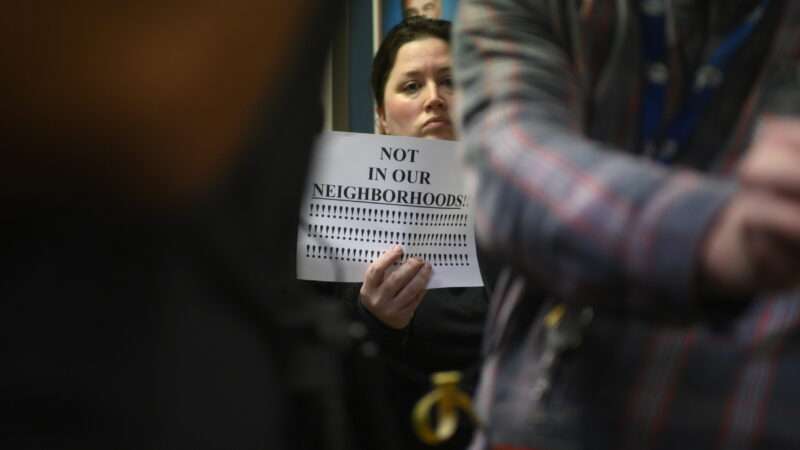
Safehouse has had to endure more than just legal battles in its effort to open the country’s first SIF. The project has also faced backlash from residents near the proposed site.

In South Philadelphia, the announced location of the facility, some residents felt blindsided and accused Safehouse of trying to sneak the injection site in under their noses. The first public meeting that Safehouse held regarding opening a SIF there was a press conference announcing the facility would open in a week.

“We were told, not asked,” says Billy Lanzilotti, a local Republican ward leader who helped organize protests against the proposed injection site. “They just told us a week before. That’s not how we do things in South Philly.”

Lanzilotti tells Reason that he and other residents were concerned about the injection facility’s close proximity to several daycares and schools, including some housed in the same building as the proposed site.

“After they get high where are they going to go? They are going to wander out into the street and past the three daycares within two blocks [of the site].”

Goldfein denies the characterization that Safehouse acted surreptitiously. She says that board members, like former Pennsylvania Gov. Ed Rendell, had been talking to local politicians and community leaders about a South Philadelphia location for some time before the announcement.

“If we were trying to sneak this in,” says Goldfein. “We would not [have had] a press conference to tell [the community] what we were doing.”

Eventually, Safehouse’s landlord caved in to pressure from the community and canceled the organization’s lease.

from Latest – Reason.com https://ift.tt/3ui9EAB
via IFTTT
The CDC Says Vaccinated People Can Safely Travel, But Please Don’t


maphotoseight864851

The Centers for Disease Control and Prevention (CDC) has announced that vaccinated people are extremely unlikely to spread COVID-19 to others, and thus can safely travel with minimal risk.

But also, it’s theoretically possible for the vaccinated to infect others, and people still shouldn’t travel, according to…the CDC.

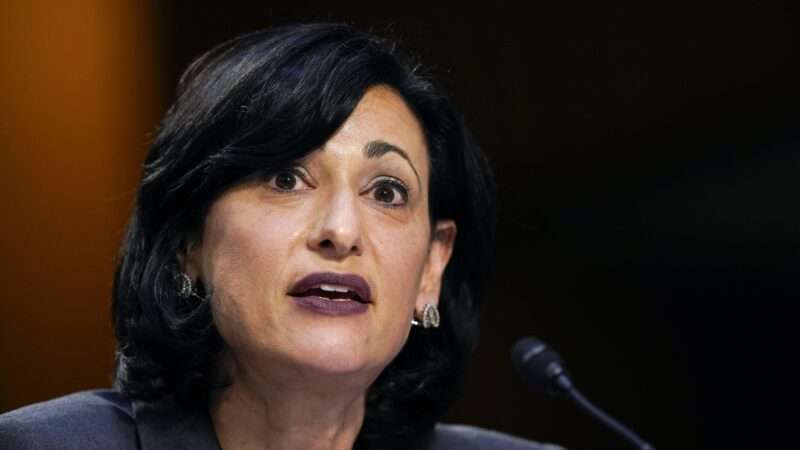
Confused? Blame CDC Director Rochelle Walensky, who constantly delivers good news about the amazing efficacy of the vaccines and then undercuts this seconds later by asserting that the fully vaccinated should continue to wear masks, socially distance, and avoid travel if they can.

At a public briefing on Friday, Walensky said that vaccinated people “can resume travel at low risk to themselves.” She even conceded that the vaccinated do not need to take COVID-19 tests or quarantine after travel.

“Fully vaccinated grandparents can fly to visit their healthy grandkids without getting a COVID-19 test or self-quarantining, provided they follow the other recommended prevention measures while traveling,” she said.

But just because vaccinated folks can travel doesn’t mean they should travel.

“While we believe that fully vaccinated people can travel at low risk to themselves, CDC is not recommending travel at this time due to the rising number of cases,” said Walensky.

This may sound contradictory, but it’s standard fare for the CDC, which doesn’t want people to do anything that carries even a slight of risk of harm. Indeed, Walensky admitted earlier this week that all available evidence suggests “vaccinated people do not carry the virus” at all, meaning the risk of transmission from the vaccinated to the unvaccinated is likely quite low. Fearful that this terrific news might make people less cautious, the CDC immediately walked back the guidance.

“Dr. Walensky spoke broadly during this interview,” a panicked CDC spokesperson told The New York Times. “It’s possible that some people who are fully vaccinated could get Covid-19. The evidence isn’t clear whether they can spread the virus to others. We are continuing to evaluate the evidence.”

To close off the possibility that someone, somewhere might conclude that vaccination is good because it offers a ticket back to normality, the Times story added quotes from other alarmist health officials:

“There cannot be any daylight between what the research shows — really impressive but incomplete protection — and how it is described,” said Dr. Peter Bach, director of the Center for Health Policy and Outcomes at Memorial Sloan Kettering Cancer Center in New York.

“This opens the door to the skeptics who think the government is sugarcoating the science,” Dr. Bach said, “and completely undermines any remaining argument why people should keep wearing masks after being vaccinated.”

That door is open, and it’s because of the science. There is little reason to think that people who are fully vaccinated do need to continue wearing masks in most circumstances: Given that COVID-19 does not spread easily outdoors, and it likely doesn’t spread from the vaccinated to the unvaccinated except in rare cases, health officials could just admit that post-vaccination outdoor–mask wearing is safety theater.

They never will. At best, experts will admit the science shows virtually no transmission between unmasked, vaccinated people who congregate outdoors—but still insist that everyone follows all the same mitigation protocols. It’s not the Centers for Disease Control and Prevention, it’s just the Center for Control.

from Latest – Reason.com https://ift.tt/31JcUJc
via IFTTT

Philadelphia Safe Injection Site Hits Another Legal Roadblock


Safehouse PC

The fight in Philadelphia to open the nation’s first facility for intravenous drug users to safely inject drugs faced another setback last week when a federal court declined to reconsider a ruling that put a halt to the site’s opening.

A “safe injection facility” (SIF) is an indoor location where people can use intravenous drugs under medical supervision and safe from arrest. Proponents of these facilities say they save lives by treating overdoses, offering guidance for people seeking addiction treatment, and providing drug users with a sterile and safe environment.

Several SIFs exist in other countries, but none operate openly in the United States. There have been pushes to allows SIFs in cities with high numbers of people who inject drugs in public, like San Francisco, Seattle, and Philadelphia.

Last year, a district court ruled in favor of Safehouse, the nonprofit attempting to open a SIF in Philadelphia. But this past January, a three-judge panel of the U.S. Court of Appeals for the 3rd Circuit issued a 2–1 decision against Safehouse. The court ruled that opening the facility would be in violation of a provision of the federal Controlled Substances Act known as the “crackhouse statute.” This provision makes it illegal to “knowingly open, lease, rent, use, or maintain any place, whether permanently or temporarily, for the purpose of manufacturing, distributing, or using any controlled substance.”

“Congress has made it a crime to open a property to others to use drugs,” the opinion said. “And that is what Safehouse will do.”

On March 24, the same court dismissed a motion for the case to be retried before a full panel of circuit court judges.

Ronda Goldfein, an attorney and the vice president of Safehouse, tells Reason that there are still legal avenues available to continue the fight for a SIF in Philly.

“We can go to the Supreme Court [to challenge the application of the crackhouse statute],” says Goldfein. “We can also go back to the district court because one of our original claims is that, as people of faith and conscience, we are compelled [to do this work] by our religious beliefs.”

Safehouse’s board of directors includes two members of the clergy and a former seminarian. Goldfein says that these members became involved because their religious convictions motivate them to save lives. She argues that, by preventing Safehouse from opening, the court has substantially burdened their exercise of religion and has therefore violated the Religious Freedom Restoration Act.

Goldfein says she hopes to get tacit support from the Biden administration similar to the Cole Memo, an Obama-era document that instructed federal agencies not to prosecute most marijuana-related offenses.

Safehouse has had to endure more than just legal battles in its effort to open the country’s first SIF. The project has also faced backlash from residents near the proposed site.

In South Philadelphia, the announced location of the facility, some residents felt blindsided and accused Safehouse of trying to sneak the injection site in under their noses. The first public meeting that Safehouse held regarding opening a SIF there was a press conference announcing the facility would open in a week.

“We were told, not asked,” says Billy Lanzilotti, a local Republican ward leader who helped organize protests against the proposed injection site. “They just told us a week before. That’s not how we do things in South Philly.”

Lanzilotti tells Reason that he and other residents were concerned about the injection facility’s close proximity to several daycares and schools, including some housed in the same building as the proposed site.

“After they get high where are they going to go? They are going to wander out into the street and past the three daycares within two blocks [of the site].”

Goldfein denies the characterization that Safehouse acted surreptitiously. She says that board members, like former Pennsylvania Gov. Ed Rendell, had been talking to local politicians and community leaders about a South Philadelphia location for some time before the announcement.

“If we were trying to sneak this in,” says Goldfein. “We would not [have had] a press conference to tell [the community] what we were doing.”

Eventually, Safehouse’s landlord caved in to pressure from the community and canceled the organization’s lease.

from Latest – Reason.com https://ift.tt/3ui9EAB
via IFTTT
Middle-Aged Millennials Succumb To The American Dream: Taking On Debt And Buying A House

Middle-Aged Millennials Succumb To The American Dream: Taking On Debt And Buying A House

The stereotype of the typical millennial renter living at home in mom’s basement may turn out to be not entirely accurate. 

While we’re sure there is still a fair share of stereotypical millennials, there’s also many – some of whom are getting close to turning 40 – who are middle aged homeowners, looking to pay down debt and improve their financial situation by contributing to their retirement. 

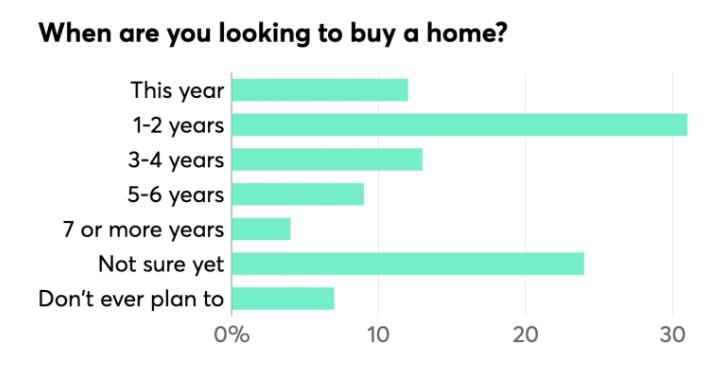
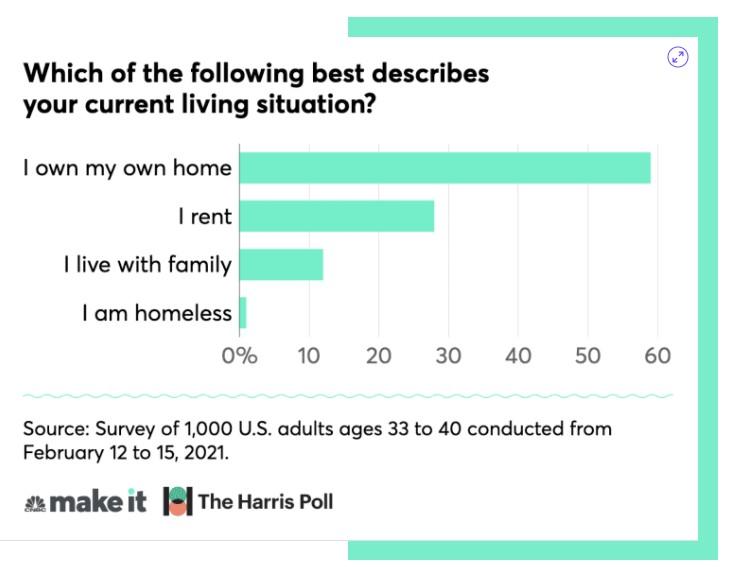
A new CNBC survey revealed that despite millennials constantly being painted as renters, many are actually now homeowners. The data comes as a result of a survey that polled 1,000 U.S. adults ages 33 to 40. 

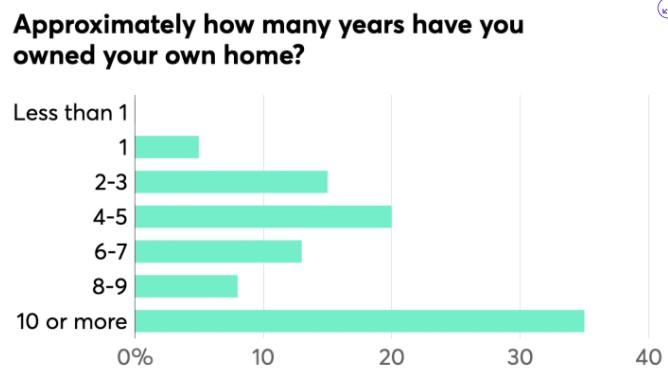
“Most older millennials have owned their home for several years,” the survey found, with over half of them buying their home more than 5 years ago. 40% have owned their home one to five years. 

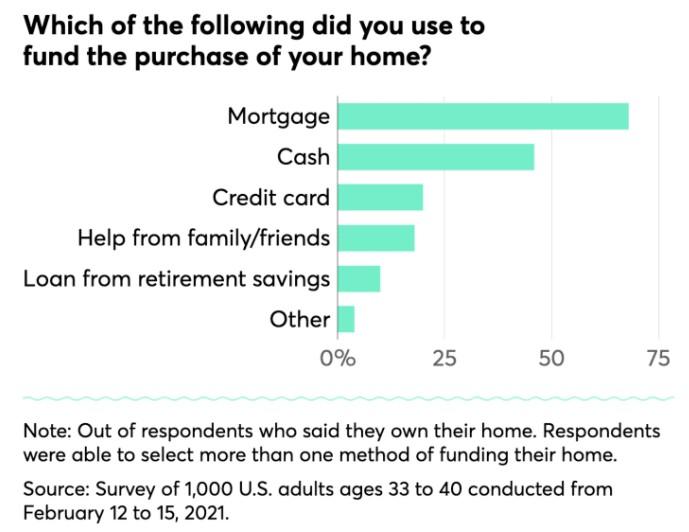
And despite this data, homeownership wasn’t always easy. About 10% of millennials reported taking loans from retirement accounts. 20% of millennials said they used a credit card to help with home purchase and/or closing costs. “When it comes to achieving homeownership, older millennials were just scrappy and very resourceful,” Harris Poll CEO John Gerzema told CNBC.

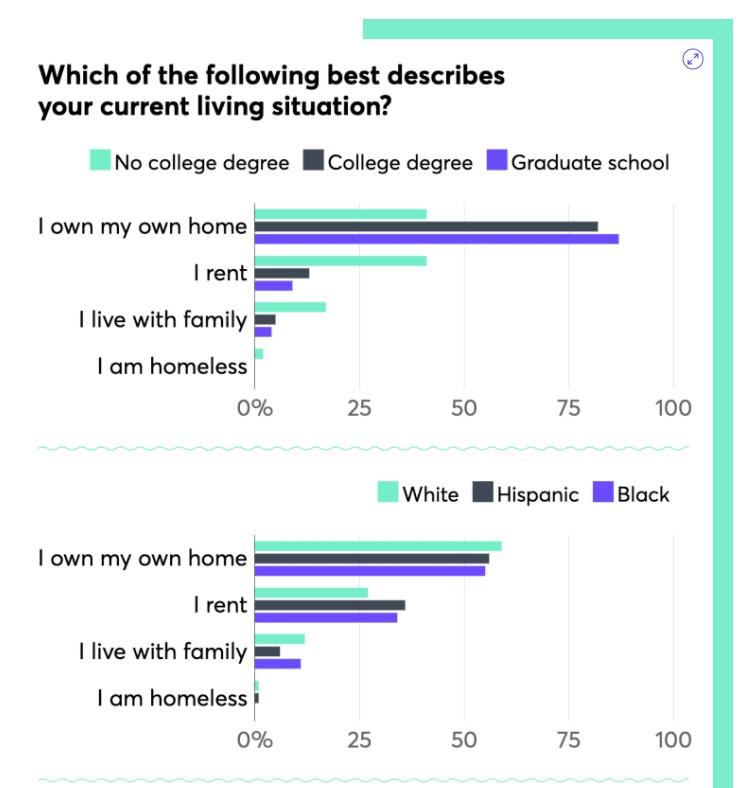
About 28% of millennials still rent and about 12% are living with parents or family members, the survey revealed. 

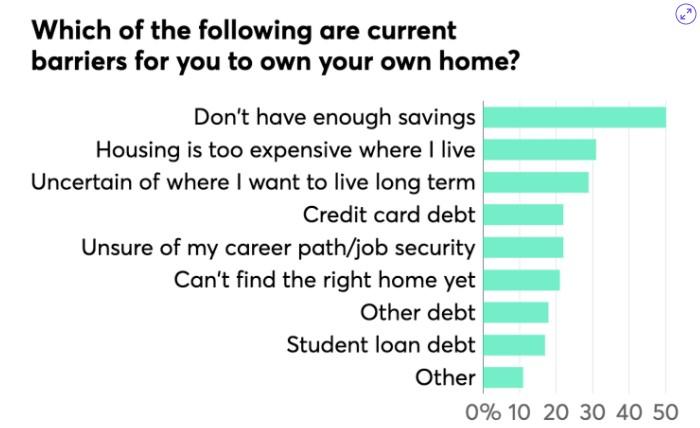
About 17% of millennials say that loans of debt present a barrier to them owning a home. Jung Hyun Choi, a senior research associate with the Housing Finance Policy Center at the Urban Institute commented: “With higher debt, it became more difficult for millennials to save.”

Additionally, lower savings rates – being attributed to a poor job market during 2007/2008 – have held many back from buying homes. “At that time, the unemployment rate was significantly high, so it meant that a lot of them faced difficulty finding jobs,” Choi continued.

St. Louis Federal Reserve economist Bill Emmons also said that Dodd-Frank was making it harder to get a mortgage: “The underwriting process for mortgage lending changed a lot from the pre- to the post-bubble period — and it would be groups like young people who would be most affected by that.”

Despite Covid presenting a tailwind for many who were considering buying a home, only about 5% of older millennials bought a home over the past year, the survey revealed. The lack of a home can negatively affect people’s financial stability going forward, Choi said. “Having a home does not just give you an opportunity to access wealth and build wealth, but it also gives you more stability.”

And Emmons thinks a small “delay” from Covid that pushes home ownership back for millennials isn’t all that bad: “If it’s just a little bit of a delay, then maybe it’s not such a problem. Particularly if people are living longer, if they’re working longer or staying healthy longer, perhaps it’s not necessarily all bad.”


Tyler Durden
Fri, 04/02/2021 – 14:20

via ZeroHedge News https://ift.tt/3dmGKs4 Tyler Durden

Ramming Attack Sends Capitol Into Lockdown, Massive Police Response, Officers Critically Injured

Ramming Attack Sends Capitol Into Lockdown, Massive Police Response, Officers Critically Injured

Chaos has unfolded outside the Capitol building after a vehicle smashed into police that were guarding a barricaded entrance. It’s also being described as a possible shooting incident which left at least one officer critically injured. The Capitol complex is now on lockdown as a huge emergency response is underway, according to breaking reports. 

According to a US Capitol Police statement, it is currently “responding to the North Barricade vehicle access point along Independence Avenue for reports someone rammed a vehicle into two USCP officers. A suspect is in custody.”

The statement adds “Both officers are injured. All three have been transported to the hospital.”

It doesn’t appear Congressional members were present or near the site of the apparent attack, which seems to be over as police and emergency vehicles have taken over the scene. 

The AP reported that gunfire rang out in the area, before police with sirens blaring descended on the site.

It appears the suspect vehicle failed to stop before police opened fire according to the emerging details.

VOA News White House correspondent Steve Herman writes that “The suspect was shot after getting out of the car with a knife, according to media reports.”

developing…

Tyler Durden
Fri, 04/02/2021 – 14:08

via ZeroHedge News https://ift.tt/2OeWll0 Tyler Durden

The CDC Says Vaccinated People Can Safely Travel, But Please Don’t


maphotoseight864851

The Centers for Disease Control and Prevention (CDC) has announced that vaccinated people are extremely unlikely to spread COVID-19 to others, and thus can safely travel with minimal risk.

But also, it’s theoretically possible for the vaccinated to infect others, and people still shouldn’t travel, according to…the CDC.

Confused? Blame CDC Director Rochelle Walensky, who constantly delivers good news about the amazing efficacy of the vaccines and then undercuts this seconds later by asserting that the fully vaccinated should continue to wear masks, socially distance, and avoid travel if they can.

At a public briefing on Friday, Walensky said that vaccinated people “can resume travel at low risk to themselves.” She even conceded that the vaccinated do not need to take COVID-19 tests or quarantine after travel.

“Fully vaccinated grandparents can fly to visit their healthy grandkids without getting a COVID-19 test or self-quarantining, provided they follow the other recommended prevention measures while traveling,” she said.

But just because vaccinated folks can travel doesn’t mean they should travel.

“While we believe that fully vaccinated people can travel at low risk to themselves, CDC is not recommending travel at this time due to the rising number of cases,” said Walensky.

This may sound contradictory, but it’s standard fare for the CDC, which doesn’t want people to do anything that carries even a slight of risk of harm. Indeed, Walensky admitted earlier this week that all available evidence suggests “vaccinated people do not carry the virus” at all, meaning the risk of transmission from the vaccinated to the unvaccinated is likely quite low. Fearful that this terrific news might make people less cautious, the CDC immediately walked back the guidance.

“Dr. Walensky spoke broadly during this interview,” a panicked CDC spokesperson told The New York Times. “It’s possible that some people who are fully vaccinated could get Covid-19. The evidence isn’t clear whether they can spread the virus to others. We are continuing to evaluate the evidence.”

To close off the possibility that someone, somewhere might conclude that vaccination is good because it offers a ticket back to normality, the Times story added quotes from other alarmist health officials:

“There cannot be any daylight between what the research shows — really impressive but incomplete protection — and how it is described,” said Dr. Peter Bach, director of the Center for Health Policy and Outcomes at Memorial Sloan Kettering Cancer Center in New York.

“This opens the door to the skeptics who think the government is sugarcoating the science,” Dr. Bach said, “and completely undermines any remaining argument why people should keep wearing masks after being vaccinated.”

That door is open, and it’s because of the science. There is little reason to think that people who are fully vaccinated do need to continue wearing masks in most circumstances: Given that COVID-19 does not spread easily outdoors, and it likely doesn’t spread from the vaccinated to the unvaccinated except in rare cases, health officials could just admit that post-vaccination outdoor–mask wearing is safety theater.

They never will. At best, experts will admit the science shows virtually no transmission between unmasked, vaccinated people who congregate outdoors—but still insist that everyone follows all the same mitigation protocols. It’s not the Centers for Disease Control and Prevention, it’s just the Center for Control.

from Latest – Reason.com https://ift.tt/31JcUJc
via IFTTT

The Changing Faces of George Floyd Square: Dispatch from Minneapolis


polspphotos761754

In the living room of his home 15 blocks from George Floyd Square, Zane Spang talks about something that happened to him and his 3-year-old daughter several weeks earlier.

“I had [her] on the back of my bike and we need to go through the Square, but they’ve got it barricaded off, right?” says Spang. “This white lady, I think she was from inside one of the checkpoints they got there, she’s like, ‘You can’t ride through here.’ I’m like, ‘I live here and my daughter’s school is here.’ She’s saying something about how I’m being disrespectful and I should go around on another street.”

Spang, a full-blooded Native American (half Crow, half Northern Cheyenne) rode through anyway, as he has for the four years he’s lived in the South Minneapolis neighborhood.

“There’s an influx of qualities there for [the Square] to be really peaceful,” he said. “But me and my daughter also walked through there one time and there’s ‘Fuck the Police,’ all these signs and people spray paint that, and she’s trying to read and asking, ‘What does that say?’ I’m like, ‘People don’t like the cops?’ I don’t know how to explain stuff like that.”

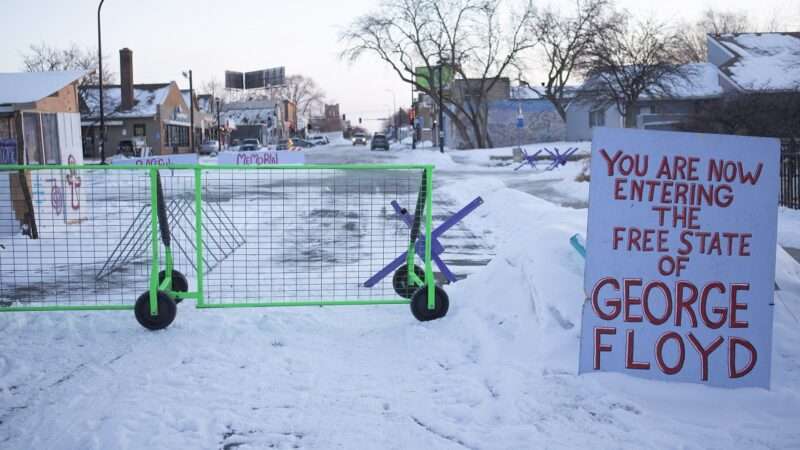
After work in a machine shop across the border in Wisconsin, Spang talks about what he sees as the complicated relationship the city has with the memorial set up at and around the site where George Floyd was killed by former Minneapolis Police Officer Derek Chauvin, whose murder trial started the day Spang and I spoke. [Disclosure: Spang and I know each other from when we both lived in Portland, Oregon, in the mid-2010s.] Comments have been edited for length and clarity.

Reason: You were saying George Floyd Square presents differently at different times.

Zane Spang: As far as the presentation, it’s kind of back and forth with a lot of people in this neighborhood. If you’re at that specific part of the square at a certain time, it feels very vibrant. But then, when it lines up differently, when some shit’s going down over there, we had a homicide a couple of months ago. And I was working on a house one time and someone got shot a half-block away and medical guys were barely able to get to the person shot.

What was the shooting about?

I don’t even know because the cops never were [allowed in]; the cops don’t go there.

A Minneapolis Police officer told me George Floyd Square has become a dumping spot for stolen vehicles, that it’s basically the final destination for anyone involved in a police chase because cops aren’t welcome in there.

The amount of traffic we get through here now, literally people will fly through all these stop signs, go 50 miles per hour on 38th Street [which bisects the Square]. I’ve seen an influx of crime and just people shooting guns out the window.

An influx of crime since George Floyd was killed?

Yeah. Our neighbor one house over, her friend was waiting for her and these three girls robbed her, right in front of her house. I leave for work at 5 a.m. Down the street, some guy tried to grab me out of my car. He was trying to pull the door open. I had a crowbar and I was like, “Get the fuck out of here!” I have the wherewithal to prepare myself in that realm, but a lot of people don’t.

You were here when George Floyd was killed. What was it like? Was it mayhem?

It still pretty much is. When it was happening it was so surreal. The first night after it happened, you could not find a parking spot in this neighborhood, it completely filled up with cars.

With people who drove from outside the neighborhood?

Yeah. And we had people just dumping signs all over everywhere, just everywhere.

Signs that said what?

“I Can’t Breathe.” “Justice for George.” All that stuff. It was pretty insane. And then that evening, when they did the protest, it was pretty peaceful. I remember watching them go down here. I wasn’t really part of it. I don’t really get too involved with protests anymore, especially when I have a kid, you know?

Going off on the tangent, I would say I agree that the way Minneapolis cops deal with a lot of people of color, it’s shitty, especially around this area. And anywhere. The only time I’ve ever gotten a gun pulled on me was by a cop, and it was because I was walking on the streets with my hands in my pockets. He told me to never walk up on a cop with your hands in your pockets. That was a few blocks away from here.

[My ex] used to joke because I drive kind of like a grandma, but I look at it differently. I’ve been stopped by cops a lot and they give me some BS reason. I said [to my ex], “You don’t understand how many people of color in the city that happens to.” I understand those dynamics. When it comes to people protesting and it’s peaceful, in that realm, I understand that, based off my own experience.

But I think what’s going on in George Floyd Square now, I think about how it’s really affecting the community. In my personal opinion, I think they should make it a roundabout or something. The city should put the money in for people to open that. It feels like it’s a clogged artery in the city. It feels like a lot of people are gasping for air. 

There’s positive days that you go down there. But I don’t know how long we can last with the dynamics of what’s going on there. I support George Floyd and all the stuff, but I think the people are kind of missing the point. People are just so reactive.

Like the woman who yelled at you when you were on the bike?

Yeah. I had gone through there every day and just some random day it’s like, “You can’t do this.” It’s just all impulsive. That’s not what I think is justice. How is that us supporting this guy that got shot? All the stuff that you see there, all that stuff is so important, you see all the names [of people killed by police] rolled out there, it makes me cry. I think how powerful walking through there actually is.

Do you see the goodness of it, or the potential goodness of it, getting hijacked?

That’s what I’m starting to realize. That’s why I think, if they let it open up and let the world in on this area, instead of it being barricaded and, “You can’t come here.” I think certain people are taking advantage of it and then other people are enabling that.

Enabling because they think they’re doing the right thing or because it helps a particular cause?

Yeah. There was a time we went down there, within the first couple of months. There’s these two young white girls, and they’re walking and [saying], “You feel the energy coming in here.” They’re being mystical about it. Then this other girl started saying [to them], “You need to feel bad about your whiteness.” The girls were really young and as a person of color, I would never…I don’t know. There’s such a weird dynamic when people approach me, as being a Native American. They bad-mouth themselves as to who they are. They feel like they need to make themselves less human to feel accepted by me, a person of color. There’s something about that I don’t enjoy. It’s like, “You don’t have anything to prove to me.” It’s great that you acknowledge stuff but, that’s where I feel the conversation needs to keep going, let’s talk about other stuff rather than, “Fuck white people.”

That kind of approach, it’s just so weird. I’ve seen it so much my whole life, when people start being really self-deprecating. I went to a school where I was the only Native, me and my sister, so I went from people constantly beating me up because I’m Native to people now that are covering their tracks, sometimes it feels like, because they feel so bad about it. I don’t know; either/or, but I think it’s just like, chill.

My daughter, who as you know is half-Native, doesn’t like that stuff either. I explained to her what BIPOC stood for, and the sort of uniqueness it implied, and she said, “Mom, I can only apologize for my generation so much.” 

People really try to put you on this pedestal. There’s no mysticism; I’m just a person that is Native. I could tell you my perspective, which is, there’s a lot of bullshit going on here.

Bullshit surrounding the Square?

The city kind of gave the reins to people where there’s no foundation. Everyone’s in these subgroups that have slightly different opinions. There’s some people that are more outraged than others, and some who want to feel accepted. I think there’s a lot of traumatized people in this world and a lot of people that take advantage of traumatized individuals. That place sometimes feels like a hub for people to just feel triggered, constantly. You’re creating a bubble at George Floyd Square. I’m about the cause, but…

What would you say “the cause” is?

Well, it’s not just always talking about all these really harsh things that have happened. As a Native, I don’t want to either be the default or the trendy thing. And I think that’s where we’re stuck.

from Latest – Reason.com https://ift.tt/3fDj0TA
via IFTTT

Big Oil Beats NYC Appeal On Climate Change Lawsuit

Big Oil Beats NYC Appeal On Climate Change Lawsuit

Authored by Charles Kennedy via OilPrice.com,

A federal appeals court on Thursday ruled in favor of five of the world’s biggest oil companies in an appeal over a climate lawsuit that New York City was seeking re-opened.

The United States Court of Appeals for the Second Circuit ruled that New York City can’t hold the five firms – Exxon, Chevron, ConocoPhillips, BP, and Shell – responsible for damages caused by global warming under New York tort law.

The city sued the five companies in 2018, and then a federal district judge also dismissed NYC’s lawsuit arguing that problems pertaining to climate change should be tackled by Congress and the executive branch.  

In today’s ruling, in which NYC’s appeal was dismissed again, the court judges said “We affirm for substantially the same reasons as those articulated in the district court’s opinion.”

“Global warming presents a uniquely international problem of national concern. It is therefore not well-suited to the application of state law,” U.S. Circuit Court Judge Richard J. Sullivan wrote in Thursday’s ruling.

“The City of New York has sidestepped those procedures and instead instituted a state-law tort suit against five oil companies to recover damages caused by those companies’ admittedly legal commercial conduct in producing and selling fossil fuels around the world. In so doing, the City effectively seeks to replace these carefully crafted frameworks – which are the product of the political process – with a patchwork of claims under state nuisance law,” Judge Sullivan noted.

The appeals court dismissing the case of New York City is a setback for communities and other cities looking to hold the biggest oil corporations accountable for damages related to climate change. The court today said in no uncertain terms that states and cities do not have jurisdiction to sue oil companies for their contribution to global warming because emissions are under federal regulation.

Tyler Durden
Fri, 04/02/2021 – 14:00

via ZeroHedge News https://ift.tt/39CqKkZ Tyler Durden

The Changing Faces of George Floyd Square: Dispatch from Minneapolis


polspphotos761754

In the living room of his home 15 blocks from George Floyd Square, Zane Spang talks about something that happened to him and his 3-year-old daughter several weeks earlier.

“I had [her] on the back of my bike and we need to go through the Square, but they’ve got it barricaded off, right?” says Spang. “This white lady, I think she was from inside one of the checkpoints they got there, she’s like, ‘You can’t ride through here.’ I’m like, ‘I live here and my daughter’s school is here.’ She’s saying something about how I’m being disrespectful and I should go around on another street.”

Spang, a full-blooded Native American (half Crow, half Northern Cheyenne) rode through anyway, as he has for the four years he’s lived in the South Minneapolis neighborhood.

“There’s an influx of qualities there for [the Square] to be really peaceful,” he said. “But me and my daughter also walked through there one time and there’s ‘Fuck the Police,’ all these signs and people spray paint that, and she’s trying to read and asking, ‘What does that say?’ I’m like, ‘People don’t like the cops?’ I don’t know how to explain stuff like that.”

After work in a machine shop across the border in Wisconsin, Spang talks about what he sees as the complicated relationship the city has with the memorial set up at and around the site where George Floyd was killed by former Minneapolis Police Officer Derek Chauvin, whose murder trial started the day Spang and I spoke. [Disclosure: Spang and I know each other from when we both lived in Portland, Oregon, in the mid-2010s.] Comments have been edited for length and clarity.

Reason: You were saying George Floyd Square presents differently at different times.

Zane Spang: As far as the presentation, it’s kind of back and forth with a lot of people in this neighborhood. If you’re at that specific part of the square at a certain time, it feels very vibrant. But then, when it lines up differently, when some shit’s going down over there, we had a homicide a couple of months ago. And I was working on a house one time and someone got shot a half-block away and medical guys were barely able to get to the person shot.

What was the shooting about?

I don’t even know because the cops never were [allowed in]; the cops don’t go there.

A Minneapolis Police officer told me George Floyd Square has become a dumping spot for stolen vehicles, that it’s basically the final destination for anyone involved in a police chase because cops aren’t welcome in there.

The amount of traffic we get through here now, literally people will fly through all these stop signs, go 50 miles per hour on 38th Street [which bisects the Square]. I’ve seen an influx of crime and just people shooting guns out the window.

An influx of crime since George Floyd was killed?

Yeah. Our neighbor one house over, her friend was waiting for her and these three girls robbed her, right in front of her house. I leave for work at 5 a.m. Down the street, some guy tried to grab me out of my car. He was trying to pull the door open. I had a crowbar and I was like, “Get the fuck out of here!” I have the wherewithal to prepare myself in that realm, but a lot of people don’t.

You were here when George Floyd was killed. What was it like? Was it mayhem?

It still pretty much is. When it was happening it was so surreal. The first night after it happened, you could not find a parking spot in this neighborhood, it completely filled up with cars.

With people who drove from outside the neighborhood?

Yeah. And we had people just dumping signs all over everywhere, just everywhere.

Signs that said what?

“I Can’t Breathe.” “Justice for George.” All that stuff. It was pretty insane. And then that evening, when they did the protest, it was pretty peaceful. I remember watching them go down here. I wasn’t really part of it. I don’t really get too involved with protests anymore, especially when I have a kid, you know?

Going off on the tangent, I would say I agree that the way Minneapolis cops deal with a lot of people of color, it’s shitty, especially around this area. And anywhere. The only time I’ve ever gotten a gun pulled on me was by a cop, and it was because I was walking on the streets with my hands in my pockets. He told me to never walk up on a cop with your hands in your pockets. That was a few blocks away from here.

[My ex] used to joke because I drive kind of like a grandma, but I look at it differently. I’ve been stopped by cops a lot and they give me some BS reason. I said [to my ex], “You don’t understand how many people of color in the city that happens to.” I understand those dynamics. When it comes to people protesting and it’s peaceful, in that realm, I understand that, based off my own experience.

But I think what’s going on in George Floyd Square now, I think about how it’s really affecting the community. In my personal opinion, I think they should make it a roundabout or something. The city should put the money in for people to open that. It feels like it’s a clogged artery in the city. It feels like a lot of people are gasping for air. 

There’s positive days that you go down there. But I don’t know how long we can last with the dynamics of what’s going on there. I support George Floyd and all the stuff, but I think the people are kind of missing the point. People are just so reactive.

Like the woman who yelled at you when you were on the bike?

Yeah. I had gone through there every day and just some random day it’s like, “You can’t do this.” It’s just all impulsive. That’s not what I think is justice. How is that us supporting this guy that got shot? All the stuff that you see there, all that stuff is so important, you see all the names [of people killed by police] rolled out there, it makes me cry. I think how powerful walking through there actually is.

Do you see the goodness of it, or the potential goodness of it, getting hijacked?

That’s what I’m starting to realize. That’s why I think, if they let it open up and let the world in on this area, instead of it being barricaded and, “You can’t come here.” I think certain people are taking advantage of it and then other people are enabling that.

Enabling because they think they’re doing the right thing or because it helps a particular cause?

Yeah. There was a time we went down there, within the first couple of months. There’s these two young white girls, and they’re walking and [saying], “You feel the energy coming in here.” They’re being mystical about it. Then this other girl started saying [to them], “You need to feel bad about your whiteness.” The girls were really young and as a person of color, I would never…I don’t know. There’s such a weird dynamic when people approach me, as being a Native American. They bad-mouth themselves as to who they are. They feel like they need to make themselves less human to feel accepted by me, a person of color. There’s something about that I don’t enjoy. It’s like, “You don’t have anything to prove to me.” It’s great that you acknowledge stuff but, that’s where I feel the conversation needs to keep going, let’s talk about other stuff rather than, “Fuck white people.”

That kind of approach, it’s just so weird. I’ve seen it so much my whole life, when people start being really self-deprecating. I went to a school where I was the only Native, me and my sister, so I went from people constantly beating me up because I’m Native to people now that are covering their tracks, sometimes it feels like, because they feel so bad about it. I don’t know; either/or, but I think it’s just like, chill.

My daughter, who as you know is half-Native, doesn’t like that stuff either. I explained to her what BIPOC stood for, and the sort of uniqueness it implied, and she said, “Mom, I can only apologize for my generation so much.” 

People really try to put you on this pedestal. There’s no mysticism; I’m just a person that is Native. I could tell you my perspective, which is, there’s a lot of bullshit going on here.

Bullshit surrounding the Square?

The city kind of gave the reins to people where there’s no foundation. Everyone’s in these subgroups that have slightly different opinions. There’s some people that are more outraged than others, and some who want to feel accepted. I think there’s a lot of traumatized people in this world and a lot of people that take advantage of traumatized individuals. That place sometimes feels like a hub for people to just feel triggered, constantly. You’re creating a bubble at George Floyd Square. I’m about the cause, but…

What would you say “the cause” is?

Well, it’s not just always talking about all these really harsh things that have happened. As a Native, I don’t want to either be the default or the trendy thing. And I think that’s where we’re stuck.

from Latest – Reason.com https://ift.tt/3fDj0TA
via IFTTT

Did Cuomo Aides Violate Ethics Rules To Help Their Boss With His Memoir?


freeport-ny-july-30-2014andmdashnew-york-gov-andrew-cuomo-held-a-news-conference-ed38e9-1600

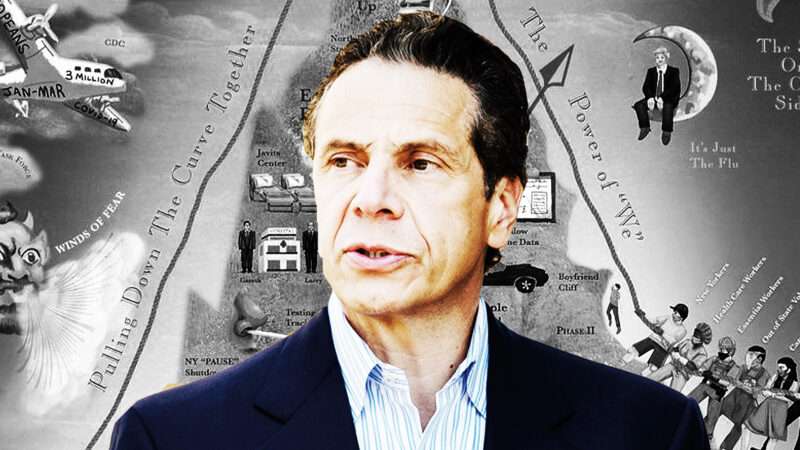
On Wednesday, The New York Times reported that New York Gov. Andrew Cuomo, a Democrat, used office staff to work on his memoir, American Crisis: Leadership Lessons from the COVID-19 Pandemic—which garnered a $4 million dollar book deal—in potential violation of ethics rules.

The Albany Times Union reports that when the governor had communicated plans to earn outside income from publishing a book, Judith Mogul, Cuomo’s special counsel, had advised him that no “state property, personnel or other resources may be utilized” according to New York’s long-standing ethics rules, which he had agreed to. Still, top aides like Melissa DeRosa (whose name might ring a bell if you’ve followed some of the many Cuomo scandals from earlier this year) were heavily involved in editing and pitching the book, and more junior aides were involved in typing notes for the governor and transcribing things he said, since he voice-dictated many parts of the book. The New York Times also reports that “a top aide to the governor, Stephanie Benton, twice asked assistants to print portions of the draft of the book, and deliver them to Mr. Cuomo at the Executive Mansion in Albany, where he lives.”

Cuomo spokesman Rich Azzopardi told the Times Union that the Cuomo staffers who worked on the governor’s memoir had volunteered their own time to do so, adding that there is “nothing in law or regulation that speaks to a ban on state workers volunteering for a for-profit venture — this simply is not legally a ‘thing.'” (Cuomo’s office did not respond to Reason‘s request for comment by time of publication.)

But those heading up the Cuomo impeachment investigation have decided to look into this further to discern whether state resources were improperly used for the governor to line his own pockets.

The governor has had waves of scandal washing over him in quick succession for the last few months; most recently, Cuomo got roundly lambasted when news surfaced that he had secured special treatment for his own family members and other well-connected VIPs during the early days of the pandemic. There’s the most famous scandal—the March 25, 2020, directive which required nursing homes to admit or re-admit COVID-19 patients regardless of whether they’d tested negative for the virus—and the way the administration subsequently hid the true nursing home death count, which was about 40 percent higher than they had claimed. There’s the much more underground scandal, that the governor issued an April 10 directive, in parallel to the March 25 one, which similarly prohibited residential facilities for adults with intellectual disabilities from turning away COVID-positive patients. There are the sexual harassment scandals that have emerged in recent weeks as nine women have come forward with allegations of inappropriate behavior, ranging from unwanted sexual comments all the way to groping and kissing. And, of course, the vaccine scandal where medical providers in the state were forced to throw away precious vaccine doses due to the threat of $1 million fines being levied if providers allowed anyone to hop the state-mandated vaccination line.

This guy is unsinkable. But then again, we’re talking about someone who had both the extraordinary gall and terrifyingly large ego to write a book on just how great of a pandemic leader he was and make a fat advance off of it, while his state-employee “volunteers” scurried around to do his book bidding.

Maybe the real American Crisis is the fact that, though we tally up the manifold transgressions (maybe even crimes) of Andrew Cuomo, corrupt and inept leaders like him get to remain in office—and sell some books while they’re at it.

from Latest – Reason.com https://ift.tt/3dv18r3
via IFTTT