Officials at Bigelow High School in Arkansas ripped out two pages from the 2020-2021 yearbook before delivering copies to the students who paid for them. The pages had a timeline of major events from the school year, including the first U.S. death from COVID-19, riots following the death of George Floyd, the death of Alex Trebek, Apple’s market valuation topping $2 trillion, and NASA flying a drone on Mars. East End School District Superintendent Heidi Wilson justified the move by citing “community backlash.” In response to an open records request by the Arkansas Times, the school system said there were no emails or other records related to complaints about the pages.
from Latest – Reason.com https://ift.tt/3DDC2CF
via IFTTT
As the world becomes increasingly connected, smartphones have become an inseparable tool to get by – with over 60% of the world’s population owning one.
And while there are dozens of brands to choose from, smartphones across the board include roughly 80% of the stable elements on the periodic table.
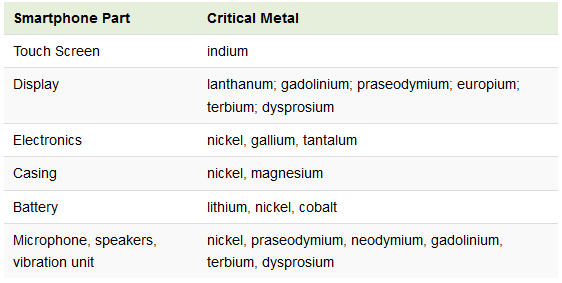
This infographic based on data from the University of Birmingham details all the critical metals that you carry in your pocket with your smartphone.
1. Touch Screen
Screens are made up of multiple layers of glass and plastic, coated with a conductor material called indium which is highly conductive and transparent.
Indium responds when contacted by another electrical conductor, like our fingers.
When we touch the screen, an electric circuit is completed where the finger makes contact with the screen, changing the electrical charge at this location. The device registers this electrical charge as a “touch event”, then prompting a response.
2. Display
Smartphones screens display images on a liquid crystal display (LCD). Just like in most TVs and computer monitors, a phone LCD uses an electrical current to adjust the color of each pixel.
Smartphones employ multiple antenna systems, such as Bluetooth, GPS, and WiFi.
The distance between these antenna systems is usually small making it extremely difficult to achieve flawless performance. Capacitors made of the rare, hard, blue-gray metal tantalum are used for filtering and frequency tuning.
Nickel is also used in capacitors and in mobile phone electrical connections. Another silvery metal, gallium, is used in semiconductors.
4. Microphone, Speakers, Vibration Unit
Nickel is used in the microphone diaphragm (that vibrates in response to sound waves).
Alloys containing rare earths neodymium, praseodymium and gadolinium are used in the magnets contained in the speaker and microphone. Neodymium, terbium and dysprosium are also used in the vibration unit.
5. Casing
There are many materials used to make phone cases, such as plastic, aluminum, carbon fiber, and even gold. Commonly, the cases have nickel to reduce electromagnetic interference (EMI) and magnesium alloys for EMI shielding.
6. Battery
Unless you bought your smartphone a decade ago, your device most likely carries a lithium-ion battery, which is charged and discharged by lithium ions moving between the negative (anode) and positive (cathode) electrodes.
What’s Next?
Smartphones will naturally evolve as consumers look for ever-more useful features. Foldable phones, 5G technology with higher download speeds, and extra cameras are just a few of the changes expected.
As technology continues to improve, so will the demand for the metals necessary for the next generation of smartphones.
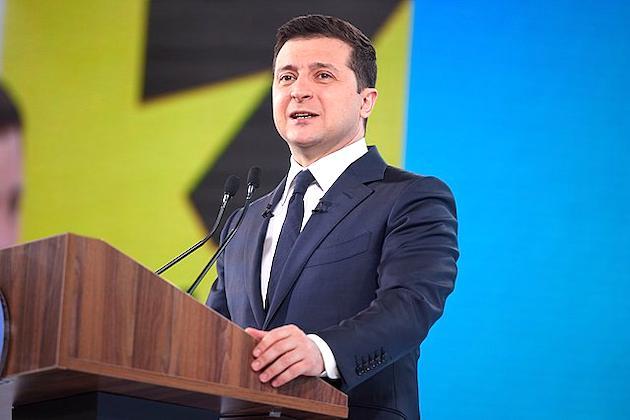
The Biden administration has pledged to provide Ukraine with an additional $60 million in military aid ahead of Ukrainian President Volodymyr Zelensky’s first face-to-face meeting with Biden, which is scheduled for Wednesday.
The weapons package includes Javelin anti-tank missiles, small arms, ammunition, and first aid kits. Earlier this year, the Pentagon approved a $125 million aid package for Ukraine that included two armed Mark VI patrol boats.
Congress approved a total of $275 million in lethal aid for Ukraine for the 2021 fiscal year, so more packages could be approved this year. Since the US-backed coup in Ukraine in 2014, the US has provided Kyiv with over $2 billion in military aid, stoking tensions with Moscow.
In a notification on the new $60 million aid package, the Biden administration said it was necessary due to “Russia’s buildup along the Ukrainian border.” CNN describes the assurances Zelensky will seek from Biden:
A source at a US-based firm that engages closely with the Ukrainian government said the Ukrainians are seeking a substantive Defense Security Cooperation Agreement — including more lethal assistance from the US — as a way to counter Russia both practically and symbolically.
Russia’s military movements in the region are in part due to the increase in US and NATO naval activity in the Black Sea, but to Washington, Russia is always viewed as the “aggressor.”
Zelensky will be only the second European head of state to visit Biden in the Oval.
When Zelensky arrives at the White House on Wednesday, he will be just the second European head of state to sit with Biden in the Oval Office — a sign, admin. officials say, of the importance Biden places on protecting Ukraine from Russian aggression. https://t.co/tjBjuTdKLm
Tensions were high in the region earlier in the year due to a flare-up of violence in Ukraine’s eastern Donbas region, a war that was sparked by the 2014 coup, in which some members of the Biden administration played an integral role.
For the past 24 hours, I was carefully monitoring the Supreme Court’s docket. I awaited an order in Whole Woman’s Health v. Jackson. When midnight arrived on Texas Standard time, the Court was silent. It seemed the die was cast, but the Justices were finishing off their dissents. That order would arrive late Wednesday evening, nearly 24 hours after the law went into effect. The Court split 5-4. Justices Thomas, Alito, Gorsuch, Kavanaugh, and Barrett denied all relief. Chief Justice Roberts dissented, joined by Justices Breyer, Sotomayor, and Kagan. Justice Breyer wrote a dissent, joined by Justices Sotomayor and Kagan. Justice Sotomayor dissented, joined by Justices Breyer and Kagan. And Justice Kagan dissented, joined by Justices Breyer and Sotomayor. (The last time I recall the Court had four separate dissents was Obergefell, but I may be missing a case).
I’ll break down each opinion in turn.
Per Curiam Opinion
The majority understands the writ of erasure fallacy, which played a central role in California v. Texas.
The applicants now before us have raised serious questions regarding the constitutionality of the Texas law at issue. But their application also presents complex and novel antecedent procedural questions on which they have not carried their burden. For example, federal courts enjoy the power to enjoin individuals tasked with enforcing laws, not the laws themselves. California v. Texas, 593 U. S. ___, ___ (2021) (slip op., at 8).
I’m sure Justices Alito and Gorsuch chuckled with the citation to California. But this proposition is foundational: Courts enjoin individuals, and not laws.
And it is unclear whether the named defendants in this lawsuit can or will seek to enforce the Texas law against the applicants in a manner that might permit our intervention. The State has represented that neither it nor its executive employees possess the authority to enforce the Texas law either directly or indirectly.
This appeal was only lodged against a single state court judge and a single court clerk. The District Court had not yet certified a class. Mark Lee Dickson’s brief accurately explained the dynamics:
There is no certified class of state-court judges that can be enjoined, and there is no certified class of court clerks either, because the district court did not rule on class certification before the defendants appealed its jurisdictional ruling. The plaintiffs never address this problem, and they pretend as though their requested injunction can somehow extend beyond the named defendants to every other judge and court clerk in Texas—even though none of those individuals have ever been parties to this case.
Even if the Applicants received all of the relief they sought, every other judge in the state could entertain suits under S.B. 8. This case was a terrible vehicle for emergency injunctive relief. The dissenters elide over this problem.
Chief Justice Roberts’s dissent
Chief Justice Roberts would “grant preliminary relief” to maintain the status quo. What is that relief? Roberts does not say.
The State defendants argue that they cannot be restrained from enforcing their rules because they do not en- force them in the first place. I would grant preliminary relief to preserve the status quo ante—before the law went into effect—so that the courts may consider whether a state can avoid responsibility for its laws in such a manner.
A remedy to preserve the status quo would be impossible in this case, which only concerned one state court judge and one clerk. Roberts seems to recognize that the proposed remedy is impossible.
Defendants argue that existing doctrines preclude judicial intervention, and they may be correct. See California v. Texas, 593 U. S. ___, ___ (2021) (slip op., at 8).
But he finds the “statutory scheme” to be “unprecedented.” And unprecedented laws call for unprecedented remedies.
But the consequences of approving the state action, both in this particular case and as a model for action in other areas, counsel at least preliminary judicial consideration before the program devised by the State takes effect. . . . I would accordingly preclude enforcement of S. B. 8 by the respondents to afford the District Court and the Court ofAppeals the opportunity to consider the propriety of judicial action and preliminary relief pending consideration of the plaintiffs’ claims.
But what does it mean to “precluded enforcement” of a statute the named parties do not enforce. Not even the great and powerful Oz can blot out a statute from the books. The Supreme Court has no power to enter relief to parties who are not named in the case. And the named parties have no power to enforce this law.
Roberts did raise one legal question that law professors will study carefully..
These questions are particularly difficult, including for example whether the exception to sovereign immunity recognized in Ex parte Young, 209 U. S. 123 (1908), should extend to state court judges in circumstances such as these.
But now that the law is in effect, there is no need to sue judges.
Justice Breyer’s dissent
Justice Breyer, like the Chief, does not explain exactly what relief he would grant.
The procedural posture of this case leads a majority of this Court to deny the applicants’ request for provisional relief. In my view, however, we should grant that request.
“Provisional relief” doesn’t clarify what the applicants would actually receive. Justice Breyer also recognizes that this unprecedented law calls for an unprecedented remedy:
I recognize that Texas’s law delegates the State’s power to prevent abortions not to one person (such as a district attorney) or to a few persons (such as a group of government officials or private citizens) but to any person. But I do not see why that fact should make a critical legal difference. That delegation still threatens to invade a constitutional right, and the coming into effect of that delegation still threatens imminent harm.
And he proposes several potential remedies:
It should prove possible to apply procedures adequate to that task here, perhaps by:
permitting lawsuits against a subset of delegatees (say, those particularly likely to exercise the delegated powers)
or perhaps by permitting lawsuits against officials whose actions are necessary to implement the statute’s enforcement powers.
There may be other not-very new procedural bottles that can also adequately hold what is, in essence, very old and very important legal wine: The ability to ask the Judiciary to protect an individual from the invasion of a constitutional right—an invasion that threatens immediate and serious injury.
In short, there must be some way to mount a pre-enforcement challenge to a law. Breyer ever cites Marbury!
Normally, where a legal right is “‘invaded,'” the law provides “‘a legal remedy by suit or action at law.'” Marbury v. Madison, 1 Cranch 137, 163 (1803) (quoting 3 W. Blackstone Commentaries *23).
Contra Marbury, not every right has a remedy. As I recall, William Marbury did not receive a remedy because the Court lacked jurisdiction.
Finally, Justice Breyer writes that the law runs afoul of Roe and Casey. S.B. 8 expressly incorporates the Roe and Casey standards. Defendants are expressly permitted to raise as an affirmative defense that the law, as enforced in a particular case, violates Roe and Casey. And that affirmative defense remains available until the Court overrules Roe and Casey. The six-week ban would only become operational if those precedents are overruled. At present, a suit against Whole Woman’s Health premised on a six-week abortion would be barred. Thus, it is not technically accurate to say, as Justice Breyer does, that Texas’s law runs afoul of Roe and Casey. Virtually every media outlet, and three Supreme Court Justices, have botched this distinction.
Justice Sotomayor’s dissent
Justice Sotomayor makes no effort to recognize the writ of erasure fallacy. She writes that the law itself can be enjoined!
The Court’s order is stunning. Presented with an application to enjoin a flagrantly unconstitutional law engineered to prohibit women from exercising their constitutional rights and evade judicial scrutiny, a majority of Justices have opted to bury their heads in the sand.
Courts cannot enjoin laws, no matter how unconstitutional they are. Justice Sotomayor also misstates the nature of relief sough:
At a minimum, this Court should have stayed implementation of the Act to allow the lower courts to evaluate these issues in the normal course. Ante, at 2 (ROBERTS, C. J., dissenting).
The applicants did not seek a stay of the “implementation of the Act.” That remedy would be impossible. Instead, they sought a stay of the Fifth Circuit’s stay of the District Court’s proceedings. Again, courts cannot stay the implementation of an act. Courts can only enjoin specific named parties from enforcing the law. If the progressives want a fifth vote, they should learn to speak the lingo. No fortune cookies or paper bags are needed.
Justice Sotomayor also faulted the Court for not ruling on Tuesday before midnight.
Last night, the Court silently acquiesced in a State’s enactment of a law that flouts nearly 50 years of federal precedents. . . . The applicants requested emergency relief from this Court, but the Court said nothing. The Act took effect at midnight last night.
If I had to guess, the majority’s per curiam order was ready before midnight yesterday. The delay was needed to give the dissenters time to polish their separate writings. Indeed, Justice Sotomayor’s dissent cites news articles published after midnight. This “silence” criticism rings hollow.
Justice Kagan’s dissent
Justice Kagan uses the phrase “shadow docket” for the first time in Supreme Court history. (Justice Breyer used the phrase “shadow docket” in an interview last week). And, she is not a fan.
Today’s ruling illustrates just how far the Court’s “shadow-docket” decisions may depart from the usual principles of appellate process. That ruling, as everyone must agree, is of great consequence . . . . In all these ways, the majority’s decision is emblematic of too much of this Court’s shadow-docket decisionmaking—which every day becomes more unreasoned, inconsistent, and impossible to defend.
Now the focus returns to the Fifth Circuit. This case may get back to the Supreme Court in the next week or so.
I did several TV interviews on Wednesday about the Texas case, including Special Report on Fox News. I will embed them after the jump.
You can see the difference between my hair at 10:00 a.m and 7:00 p.m.
from Latest – Reason.com https://ift.tt/3BOaQ2D
via IFTTT
For the past 24 hours, I was carefully monitoring the Supreme Court’s docket. I awaited an order in Whole Woman’s Health v. Jackson. When midnight arrived on Texas Standard time, the Court was silent. It seemed the die was cast, but the Justices were finishing off their dissents. That order would arrive late Wednesday evening, nearly 24 hours after the law went into effect. The Court split 5-4. Justices Thomas, Alito, Gorsuch, Kavanaugh, and Barrett denied all relief. Chief Justice Roberts dissented, joined by Justices Breyer, Sotomayor, and Kagan. Justice Breyer wrote a dissent, joined by Justices Sotomayor and Kagan. Justice Sotomayor dissented, joined by Justices Breyer and Kagan. And Justice Kagan dissented, joined by Justices Breyer and Sotomayor. (The last time I recall the Court had four separate dissents was Obergefell, but I may be missing a case).
I’ll break down each opinion in turn.
Per Curiam Opinion
The majority understands the writ of erasure fallacy, which played a central role in California v. Texas.
The applicants now before us have raised serious questions regarding the constitutionality of the Texas law at issue. But their application also presents complex and novel antecedent procedural questions on which they have not carried their burden. For example, federal courts enjoy the power to enjoin individuals tasked with enforcing laws, not the laws themselves. California v. Texas, 593 U. S. ___, ___ (2021) (slip op., at 8).
I’m sure Justices Alito and Gorsuch chuckled with the citation to California. But this proposition is foundational: Courts enjoin individuals, and not laws.
And it is unclear whether the named defendants in this lawsuit can or will seek to enforce the Texas law against the applicants in a manner that might permit our intervention. The State has represented that neither it nor its executive employees possess the authority to enforce the Texas law either directly or indirectly.
This appeal was only lodged against a single state court judge and a single court clerk. The District Court had not yet certified a class. Mark Lee Dickson’s brief accurately explained the dynamics:
There is no certified class of state-court judges that can be enjoined, and there is no certified class of court clerks either, because the district court did not rule on class certification before the defendants appealed its jurisdictional ruling. The plaintiffs never address this problem, and they pretend as though their requested injunction can somehow extend beyond the named defendants to every other judge and court clerk in Texas—even though none of those individuals have ever been parties to this case.
Even if the Applicants received all of the relief they sought, every other judge in the state could entertain suits under S.B. 8. This case was a terrible vehicle for emergency injunctive relief. The dissenters elide over this problem.
Chief Justice Roberts’s dissent
Chief Justice Roberts would “grant preliminary relief” to maintain the status quo. What is that relief? Roberts does not say.
The State defendants argue that they cannot be restrained from enforcing their rules because they do not en- force them in the first place. I would grant preliminary relief to preserve the status quo ante—before the law went into effect—so that the courts may consider whether a state can avoid responsibility for its laws in such a manner.
A remedy to preserve the status quo would be impossible in this case, which only concerned one state court judge and one clerk. Roberts seems to recognize that the proposed remedy is impossible.
Defendants argue that existing doctrines preclude judicial intervention, and they may be correct. See California v. Texas, 593 U. S. ___, ___ (2021) (slip op., at 8).
But he finds the “statutory scheme” to be “unprecedented.” And unprecedented laws call for unprecedented remedies.
But the consequences of approving the state action, both in this particular case and as a model for action in other areas, counsel at least preliminary judicial consideration before the program devised by the State takes effect. . . . I would accordingly preclude enforcement of S. B. 8 by the respondents to afford the District Court and the Court ofAppeals the opportunity to consider the propriety of judicial action and preliminary relief pending consideration of the plaintiffs’ claims.
But what does it mean to “precluded enforcement” of a statute the named parties do not enforce. Not even the great and powerful Oz can blot out a statute from the books. The Supreme Court has no power to enter relief to parties who are not named in the case. And the named parties have no power to enforce this law.
Roberts did raise one legal question that law professors will study carefully..
These questions are particularly difficult, including for example whether the exception to sovereign immunity recognized in Ex parte Young, 209 U. S. 123 (1908), should extend to state court judges in circumstances such as these.
But now that the law is in effect, there is no need to sue judges.
Justice Breyer’s dissent
Justice Breyer, like the Chief, does not explain exactly what relief he would grant.
The procedural posture of this case leads a majority of this Court to deny the applicants’ request for provisional relief. In my view, however, we should grant that request.
“Provisional relief” doesn’t clarify what the applicants would actually receive. Justice Breyer also recognizes that this unprecedented law calls for an unprecedented remedy:
I recognize that Texas’s law delegates the State’s power to prevent abortions not to one person (such as a district attorney) or to a few persons (such as a group of government officials or private citizens) but to any person. But I do not see why that fact should make a critical legal difference. That delegation still threatens to invade a constitutional right, and the coming into effect of that delegation still threatens imminent harm.
And he proposes several potential remedies:
It should prove possible to apply procedures adequate to that task here, perhaps by:
permitting lawsuits against a subset of delegatees (say, those particularly likely to exercise the delegated powers)
or perhaps by permitting lawsuits against officials whose actions are necessary to implement the statute’s enforcement powers.
There may be other not-very new procedural bottles that can also adequately hold what is, in essence, very old and very important legal wine: The ability to ask the Judiciary to protect an individual from the invasion of a constitutional right—an invasion that threatens immediate and serious injury.
In short, there must be some way to mount a pre-enforcement challenge to a law. Breyer ever cites Marbury!
Normally, where a legal right is “‘invaded,'” the law provides “‘a legal remedy by suit or action at law.'” Marbury v. Madison, 1 Cranch 137, 163 (1803) (quoting 3 W. Blackstone Commentaries *23).
Contra Marbury, not every right has a remedy. As I recall, William Marbury did not receive a remedy because the Court lacked jurisdiction.
Finally, Justice Breyer writes that the law runs afoul of Roe and Casey. S.B. 8 expressly incorporates the Roe and Casey standards. Defendants are expressly permitted to raise as an affirmative defense that the law, as enforced in a particular case, violates Roe and Casey. And that affirmative defense remains available until the Court overrules Roe and Casey. The six-week ban would only become operational if those precedents are overruled. At present, a suit against Whole Woman’s Health premised on a six-week abortion would be barred. Thus, it is not technically accurate to say, as Justice Breyer does, that Texas’s law runs afoul of Roe and Casey. Virtually every media outlet, and three Supreme Court Justices, have botched this distinction.
Justice Sotomayor’s dissent
Justice Sotomayor makes no effort to recognize the writ of erasure fallacy. She writes that the law itself can be enjoined!
The Court’s order is stunning. Presented with an application to enjoin a flagrantly unconstitutional law engineered to prohibit women from exercising their constitutional rights and evade judicial scrutiny, a majority of Justices have opted to bury their heads in the sand.
Courts cannot enjoin laws, no matter how unconstitutional they are. Justice Sotomayor also misstates the nature of relief sough:
At a minimum, this Court should have stayed implementation of the Act to allow the lower courts to evaluate these issues in the normal course. Ante, at 2 (ROBERTS, C. J., dissenting).
The applicants did not seek a stay of the “implementation of the Act.” That remedy would be impossible. Instead, they sought a stay of the Fifth Circuit’s stay of the District Court’s proceedings. Again, courts cannot stay the implementation of an act. Courts can only enjoin specific named parties from enforcing the law. If the progressives want a fifth vote, they should learn to speak the lingo. No fortune cookies or paper bags are needed.
Justice Sotomayor also faulted the Court for not ruling on Tuesday before midnight.
Last night, the Court silently acquiesced in a State’s enactment of a law that flouts nearly 50 years of federal precedents. . . . The applicants requested emergency relief from this Court, but the Court said nothing. The Act took effect at midnight last night.
If I had to guess, the majority’s per curiam order was ready before midnight yesterday. The delay was needed to give the dissenters time to polish their separate writings. Indeed, Justice Sotomayor’s dissent cites news articles published after midnight. This “silence” criticism rings hollow.
Justice Kagan’s dissent
Justice Kagan uses the phrase “shadow docket” for the first time in Supreme Court history. (Justice Breyer used the phrase “shadow docket” in an interview last week). And, she is not a fan.
Today’s ruling illustrates just how far the Court’s “shadow-docket” decisions may depart from the usual principles of appellate process. That ruling, as everyone must agree, is of great consequence . . . . In all these ways, the majority’s decision is emblematic of too much of this Court’s shadow-docket decisionmaking—which every day becomes more unreasoned, inconsistent, and impossible to defend.
Now the focus returns to the Fifth Circuit. This case may get back to the Supreme Court in the next week or so.
I did several TV interviews on Wednesday about the Texas case, including Special Report on Fox News. I will embed them after the jump.
You can see the difference between my hair at 10:00 a.m and 7:00 p.m.
from Latest – Reason.com https://ift.tt/3BOaQ2D
via IFTTT
Amid Hyperinflation And Economic Ruin, A Humanitarian Crisis Breaks Out In Afghanistan
Two weeks ago, when the world was still transfixed by the historic US foreign policy failure which allowed the Taliban to overrun Afghanistan in a matter of hours which has made the Biden administration the laughing stock of both the developing and developed worlds, we said that “for all the focus on the humanitarian crisis unfolding at an unprecedented pace in Afghanistan, many are forgetting that an even worse economic disaster awaits the “Islamic Emirate” of Afghanistan now that the Taliban are in charge.”
So today, as the Taliban were celebrating and parading in their brand new US military hardware, behind the scenes a far more catastrophic scene was unfolding: the economic disaster we warned would happen within weeks.
As Reuters reports, now that the initial adrenaline rush is gone, Afghanistan’s new Taliban rulers are struggling to keep the country functioning after the final withdrawal of U.S. forces, with foreign donors alarmed about an impending humanitarian crisis. Indeed, two weeks since the Taliban’s sweep into Kabul brought a chaotic end to 20 years of warfare, the Islamist militants have yet to name a new government or reveal how they intend to rule.
In the administrative vacuum, prices have soared, the currency has crashed, commercy has ground to a halt, and crowds have gathered at banks to withdraw cash. Meanwhile, as heavily armed fighters imposed control on the capital, Taliban officials were grappling with keeping hospitals and government machinery running following the end of a huge airlift of foreigners and Afghans who had helped Western forces.
The Taliban, which enforced harsh fundamentalist rule from 1996 to 2001 and fought an insurgency in which thousands of Afghans died, returns to power after U.S.-led forces withdrew. Images from 1996 to today: https://t.co/7sJasnZrlIpic.twitter.com/eXYEuEdETH
The new, Taliban-appointed central bank head – who has no formal experience but after all, how difficult can it be to hit CTRL P – has sought to reassure banks the group wants a fully functioning financial system, but has so far given no detail on how it will supply funds for it.
Amid the chaos, Qatar’s Al Jazeera television reported that Qatari technical experts had arrived at the Taliban’s request to discuss resuming operations at Kabul airport, currently inoperable. The foreign minister of neighbouring Pakistan, which has close ties to the Taliban, said he expected Afghanistan to have a new “consensus government” within days. Then again, this is
In Washington, where the end of America’s longest war has sparked the biggest crisis of President Joe Biden’s administration, Undersecretary of State Victoria Nuland said the United States is looking at all possible options and routes to continue to help Americans and legal permanent residents leave Afghanistan.
Washington would keep having conversations with the Taliban that serve U.S. interests, she told reporters, adding the United States would look at how it could give aid to Afghanistan without benefiting any government that it forms. This is the same Victoria Nuland who said “Fuck the EU” during the CIA’s botched Ukraine coup.
Meanwhile, with the airport now in Taliban hands, people fearful of life under Taliban rule rushed to the borders. In Panjshir province, members of local militias and remnants of former military units were still holding out under the leadership of Ahmad Massoud. Senior Taliban leader Amir Khan Motaqi called on them to put down weapons and negotiate.
“The Islamic Emirate of Afghanistan is home for all Afghans,” he said in a speech, apparently forgetting the brutal scenes of murder of Afghani allies just days earlier, and which were caught on video.
Amusingly, the Taliban have declared an amnesty for all Afghans who worked with foreign forces, calling on Afghans to return home and help rebuild – of course some or all of those gullible enough to believe this call may be killed, and even though the Taliban have promised to protect human rights in an effort to present a more moderate face than their first government, which enforced a strict version of sharia law, including banning women from education and employment, so far this has all been a farce.
But while rounding up the population under false pretenses will take time, the Talibans’ more immediate concern is staving off economic collapse. Afghanistan desperately needs money, and the Taliban are unlikely to get swift access to the roughly $10 billion in assets mostly held abroad by the Afghan central bank.
The acting central bank governor, Haji Mohammad Idris, met members of the Afghanistan Banks Association and other financiers this week, said two bankers who attended the meeting. The militant group was working to find solutions for liquidity and rising inflation, they quoted Idris as saying.
“They were very charming and asked banks what their concerns were,” said one of the bankers who requested anonymity.
Maybe they should try crypto while they still have some hard currency?
Until then, however, Afghanistan has hyperinflation to look forward to. Long lines have formed at banks, the currency is sinking, inflation is rising and many offices and shops remain shut. “Everything is expensive now, prices are going up every day,” said Kabul resident Zelgai. Someone should tell him it’s all “transitory.”
Hilariously, the Taliban have ordered banks to reopen, but strict weekly limits on withdrawals have been imposed. And it’s not like the banks have cash.
Outside the capital, humanitarian organizations have warned of impending catastrophe as severe drought has hit farmers and forced thousands of rural poor to seek shelter in the cities. But foreign donors are unsure about whom to speak to. Taliban officials have said the problems will ease once a new government is in place, and have urged other countries to maintain economic relations, by which they mean crates of inbound cash. That however is unlikely.
Some have finally grasped the enormity of the situation – there is simply nobody within the Taliban population who is capable of running a monetary system, let along a country. Bankers outside Afghanistan said it would be impossible to get the financial system running again without the bank specialists who joined the exodus. “I don’t know how they will manage it because all the technical staff, including senior management, has left the country,” one banker said.
There is the additional problem that many foreign governments view the Taliban as terrorists: the European Union will need to engage with the Talibanbut will not rush into formally recognizing them as the new rulers of Afghanistan, a senior EU official said.
Meanwhile, more than 123,000 people were evacuated from Kabul in the U.S.-led airlift after the Taliban seized the city in mid-August, but tens of thousands of Afghans at risk remained behind. With Kabul’s airport out of action, efforts to help Afghans fearful of the Taliban focused on arranging safe passage across the borders with Iran, Pakistan and central Asia.
Afghan men in uniform board buses to a refugee processing center after landing at Dulles International Airport in Virginia. More images of the thousands of evacuees arriving in America: https://t.co/gLbYAKpzxL 📷 Kevin Lamarque pic.twitter.com/ayHb1GL70O
At Torkham, a crossing with Pakistan just east of the Khyber Pass, a Pakistani official said: “A large number of people are waiting on the Afghanistan side for the opening of the gate.” Uzbekistan’s border with northern Afghanistan remained shut.
Britain and India held separate talks with Taliban officials in Doha amid fears that up to half a million Afghans could flee.
The U.N. refugee agency, UNHCR, said on Wednesday that Afghans had so far largely stayed within Afghanistan and only small numbers had fled to neighbouring countries. It called for $300 million in international funding for the humanitarian emergency.
Sayed Sadaat used to be communications minister in the Afghan government before moving to Germany last September in the hope of a better future. Now he is a delivery man in the eastern city of Leipzig. Read more: https://t.co/8RZF3b7fjl 📷 Hannibal Hanschke pic.twitter.com/vcWiDj35GB
The Taliban said they had surrounded forces in Panjshir, the only province still resisting, and called on them to negotiate a settlement.
Meanwhile, some Taliban leaders mocked the United States.
“Your power is gone, your gold is gone,” Anas Haqqani, a Taliban leader, said on Twitter, posting a photo of himself holding discarded shackles as he toured Bagram prison, where he was held for years by U.S. forces.
انس ته د مرګي ګواښونه مه کوه باګرامه
ستا زور له منځه تللی دی ستا زر له منځه تللی
ـــــــــــــ https://t.co/AUlUYbKSU8
Ever since Edward Snowden received asylum from Russia in 2013, Obama officials have repeatedly maligned his motives and patriotism by citing his “choice” to take up residence there. It has long been clear that this narrative was a lie: Snowden, after meeting with journalists in Hong Kong, intended only to transit through Moscow and then Havana on his way to seek asylum in Latin America. He was purposely prevented from leaving Russia — trapped in the Moscow airport — by the very Obama officials who then cynically weaponized his presence there to imply he was a civil-liberties hypocrite for “choosing” to live in such a repressive country or, even worse, a Kremlin agent or Russian spy.
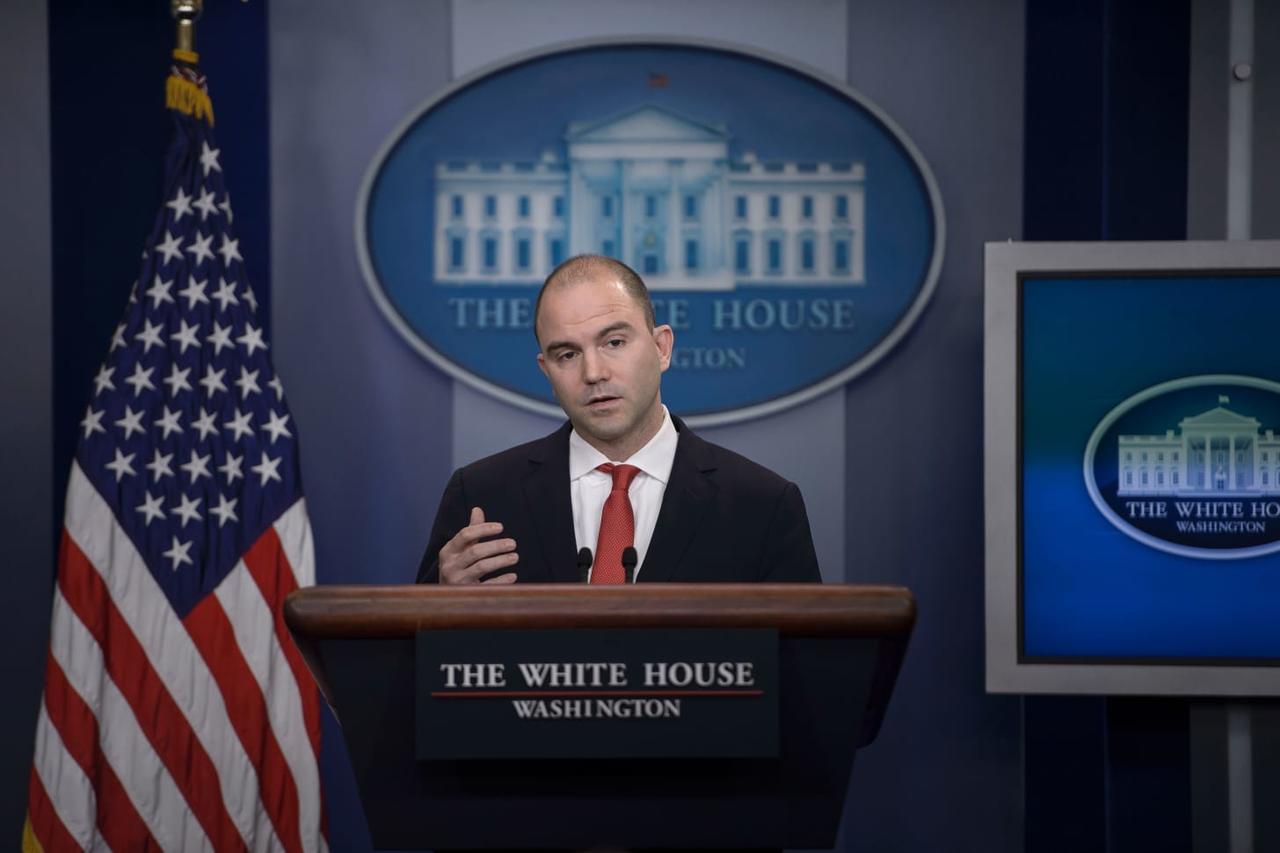
But now we have absolute, definitive proof that Snowden never intended to stay in Russia but was deliberately prevented from leaving by the same Obama officials who exploited the predicament which they created. The proof was supplied unintentionally in the memoir of one of Obama’s senior national security advisers, Ben Rhodes, entitled The World as It Is: A Memoir of the Obama White House. It is hard to overstate how dispositively Rhodes’ own book proves that Obama officials generally, and Rhodes specifically, lied blatantly and cavalierly to the public about what happened: a level of sustained and conscious lying that can be explained only by sociopathy.
The memoir of Rhodes, now appropriately an MSNBC contributor, is an incredibly self-serving homage to himself that repeatedly attempts to demonstrate his own importance and accomplishments. The passage about Rhodes’ conduct regarding Snowden is very much aligned with those goals. While repeatedly emphasizing how traumatic the Snowden revelations were for the Obama administrations, Rhodes boasts of the crucial role he played in preventing Snowden from leaving Russia as the NSA whistleblower was desperately attempting to do so — exactly the opposite of what people like Rhodes and Hillary Clinton were telling the public about Snowden.
It is really beyond words how willing these people are to lie. One chapter of Rhodes’ book is devoted to the Obama administration’s efforts to normalize relations with Cuba. Rhodes explains that the deep distrust between the countries that had endured for decades began to subside due to two events which he helped engineer. The first was the two countries’ agreement to improve the prison conditions for two prisoners: an American imprisoned by Cuba, the other a Cuban imprisoned by the U.S. The second even “more important signal” sent by Cuba showing its genuine desire to improve relations was their capitulation to Rhodes’ threats that they had better withdraw the permission they had granted Snowden to allow him to pass through Havana once he left the Moscow airport as planned, on his way to Latin America where he intended to seek asylum.
In other words, Rhodes — who has spent years insinuating that Snowden is a Russian spy and traitor given his “choice” to flee to Russia — knew in real time that Snowden never planned to stay even one day in Russia. He had only flown to Moscow from Hong Kong with the intent to immediately fly from Moscow to Havana, and then on to either Ecuador or Bolivia to obtain asylum. Prior to landing in Moscow, Snowden and his representatives had secured a commitment from the Cuban government to allow him safe passage through Havana on his way to South America.
The only reason Snowden is in Russia is because of the actions of Rhodes and his fellow Obama officials to deliberately trap him there: first by invalidating his passport so that he could not board any international flights, and then by threatening the Cuban government that any chance for normalization with the U.S. would be permanently destroyed unless they withdrew their guarantee to Snowden of safe passage through Havana, which they then did. Here’s Rhodes in his own words, boasting about what he regards as his success:
There was one other, more important signal. Around the time of our second meeting, Edward Snowden was stuck in the Moscow airport, trying to find someone who would take him in. Reportedly, he wanted to go to Venezuela, transiting through Havana, but I knew that if the Cubans aided Snowden, any rapprochement between our countries would prove impossible. I pulled Alejandro Castro aside and said I had a message that came from President Obama. I reminded him that the Cubans had said they wanted to give Obama “political space” so that he could take steps to improve relations. “If you take in Snowden,” I said, “that political space will be gone.” I never spoke to the Cubans about this issue again. A few days later, back in Washington, I woke up to a news report: “Former U.S. spy agency contractor Edward Snowden got stuck in the transit zone of a Moscow airport because Havana said it would not let him fly from Russia to Cuba, a Russian newspaper reported.”I took it as a message: The Cubans were serious about improving relations.
Could this admission be any clearer? From the very beginning, Obama officials including Rhodes knew that Snowden had not traveled to Russia with the intention of staying there, but instead was — in Rhodes’ own words — “stuck in the Moscow airport” and was “trying to find someone who would take him in.” (Leave aside Rhodes’ other lie that Snowden intended to “go to Venezuela”; the NSA whistleblower’s plan was to travel from Moscow through Havana to Bolivia or Ecuador, but Rhodes, knowing how Americans view Caracas, purposely replaced Venezuela as the intended destination to further impugn Snowden’s motives). Rhodes then tells us how proud he is of himself for having successfully bullied Cuba out of allowing Snowden to fly through Havana as he intended, thus — in Rhodes’ own words — causing “Snowden [to] get stuck in the transit zone of a Moscow airport.”
And yet, countless Obama officials — including, most amazingly, Rhodes himself — have spent years lying to the public by claiming exactly the opposite. Over and over, they impugned Snowden’s patriotism and strongly implied he was a Russian spy and a traitor as evidenced by his “choice” to go to Russia. As but one example, listen to the player embedded below to hear what Rhodes told his fellow former Obama national security official Tommy Vietor in February of 2017, on Vietor’s Pod Save America program (where Rhodes is now also a co-host). For a full hour, Rhodes impugned Snowden’s patriotism and motives, repeatedly citing his choice to flee to Russia as his primary proof (along with the fact that Snowden went to meet with journalists in “China” — by which Rhodes means Hong Kong):
Cause again like, a whistleblower doesn’t conspicuously pass through China to Russia, you know, reporters are always saying ‘Are you telling me that you know that he was working for the Russians?’, or what have you, I’m like, I’m not, I’m telling you what I see, which is this guy went to China and Russia, the two most adversarial intelligence competitors to the United States; he could’ve gone to some very liberal European country that probably would’ve taken him in, or he could have faced the music here; the choice of those destinations speaks volumes.
Does lying get any more flagrant or deliberate than this? Rhodes knows for certain that what he’s saying here about Snowden is an absolute lie. He knows that Snowden did not “choose” Russia as his “destination.” He knows that Snowden did exactly what Rhodes said he should have done: sought refuge in other countries. He knows that the only reason Snowden is in Russia is because Rhodes himself trapped him there by preventing him from leaving. We know that Rhodes knows all of this because he boasted about all of it in his book, in the above-quoted passage. And yet, over and over, Rhodes told the public the exact opposite of what he knew to be the truth.
As indicated, Rhodes was far from alone in knowingly disseminating this lie to the American public. In 2014, Hillary Clinton, in a Guardian interview, condemned Snowden by falsely claiming that he flew from Hong Kong to Russia with the intention of seeking asylum from Putin. Listen to her flagrantly lie:
From the perspective of the twenty-four-hour news cycle, this may not be the timeliest revelation. But it is only within the last several days that I read Rhodes’ book and could barely believe how clearly he laid out his own lies and those of his Obama administration colleagues. This level of conscious lying — spending years implying that Snowden was a traitor or Russian spy because he fled to Russia when you know that he wanted to leave and did everything possible to do so but it was your actions that trapped him there against his wishes — requires an unlimited willingness to lie the moment one’s interests are served by doing so.
We do not usually have a case where the evidence of lying is this conclusive — where it is offered by the liars in the first place — but this behavior is far from uncommon. This is what the National Security State of the U.S. breeds, and it is vital always to remember that when listening to these people speak.
(Our request to Rhodes for comment and an attempt to reconcile with public claims with this passage in his book was not answered at the time of publication; it will be added if one is supplied.)
To support the independent journalism we are doing here, please subscribe and/or obtain a gift subscription for others
WHO Places ‘Mu Variant’ Under Close Scrutiny Over Fears Of Vaccine Resistance
As the US prepares to roll out booster shots for its citizens, depriving the developing world of badly needed supplies, scientists have continued to warn about new COVID variants emerging in various corners of the world. Yesterday, we focused our attention on a new variant emerging in South Africa that scientists fear may be capable of surpassing vaccine-produced antibodies.
But the WHO revealed during its weekly briefing on Tuesday that it’s monitoring a new variant that was first identified in Colombia back in January. Known alternatively as “Mu” and B.1.621, the variant has been classified as a “variant of interest”, according to WHO’s weekly pandemic bulletin, making it one of a small handful of mutant strains that are actually at risk.
Certain mutations identified in the variant suggest it could be resistant to vaccines and stressed that further studies were needed to better understand it.
“The Mu variant has a constellation of mutations that indicate potential properties of immune escape,” the bulletin said.
Concerns about new variants emerging have intensified as infection rates have continued to climb globally, with the highly transmissible delta variant taking hold. Since first emerging in Colombia back in January, the Mu variant has spread to other South American nations, as well as some parts of Europe. Despite adding ‘Mu’ to its monitoring list, the WHO says the strain only has a 0.1% global prevalence among sequenced cases.
The addition of the Mu strain to the list of ‘variants of interest’ marks the first time a mutated version of the virus has been added to the list since June, when the Lambda mutation – which was also initially detected in South American (this time in Peru) – was added.
Presently, the WHO has identified four strains as “variants of concern,” including Alpha, which has spread to 193 countries, and Delta, which has fueled a rise in cases across the globe. Five strains, now including Mu, are being monitored as “variants of interest.”
The WHO currently identifies four Covid-19 variants of concern, including Alpha, which is present in 193 countries, and Delta, present in 170 countries. Five variants, including Mu, are to be monitored.