Where Heating The Home Breaks The Budget

Where Heating The Home Breaks The Budget

More than one quarter of the Bulgarian population isn’t able to properly heat their homes according to data from Eurostat. With a share of 27.5 percent, the Balkan state tops the EU average by almost 20 percent as the following chart shows.

Infographic: Where Heating Breaks the Budget | Statista

You will find more infographics at Statista

Bulgaria is followed by Lithuania with 23.1 percent and Cyprus with 20.9 percent. As Statista’s Florian Zandt notes, most countries on this top list are among the lower rungs of the ladder when it comes to economic power, but there are two major exceptions: Spain and Germany. While the former had a GDP of 1.3 trillion euros in 2020, one in ten residents isn’t able to properly heat their home due to financial reasons. Even Germany, the biggest economy in the EU, has a share of nine percent of the population who couldn’t afford proper heating in 2020.

While these numbers might seem high at first glance, the percentage shares of people not being able to afford heating have actually gone down in most countries. For example, Bulgaria stood at almost 40 percent in 2016. A similar development can be seen in Greece, which almost halved the share of its population who can’t afford proper heating from 29.1 percent in 2016 to 16.7 percent in 2020.

On the other side of the spectrum, Spain and Germany again stand out on this list. In 2019, 2.5 percent of Germans and 7.5 percent of Spaniards assessed they didn’t have the finances to properly heat their home.

While there’s no way to pinpoint one reason for the jump in these two countries, the coronavirus pandemic likely played a big part due to the job insecurities it created even in richer nations around the globe.

With the energy price hike in 2021 and the fallout of Russia’s aggression towards Ukraine, the numbers for last year and this year are bound to rise again across the EU.

Tyler Durden
Wed, 03/02/2022 – 04:15

via ZeroHedge News https://ift.tt/Zyr9jkU Tyler Durden

Brickbat: Bad Medicine


slapped_1161x653

A doctor at the University of Florida Health-Leesburg Hospital has been charged with three counts of battery after nurses and an emergency room technician said he repeatedly struck a patient. Dr. Onyekachi Nwabuko accused the woman, who was semi-conscious, of faking her condition and struck her on her face several times with her own hand before a nurse stopped him.

The post Brickbat: Bad Medicine appeared first on Reason.com.

from Latest https://ift.tt/bExNatq
via IFTTT

Big Oil Is Turning Its Back On Russia

Big Oil Is Turning Its Back On Russia

By Haley Zaremba of OilPrice.com

  • Oil and gas supermajors are pulling the plug on Russian energy projects despite massive costs.

  • The West has remained reluctant to sanction Russia’s energy sector, fearing a worsening energy crisis.

  • Europe’s reliance on Russian natural gas to keep the lights on and the economy running has weakened the continent’s bargaining power with Putin.

As an invasion unfolds in Eastern Europe, the reverberations from heavy shelling in Ukraine are rippling across the world. As Putin’s Russia invades the sovereign country and the gears of war begin to turn, there are more questions than answers about the impact that the tragedy unfolding in Ukraine will have on the rest of Europe and the global economy. For one thing, as a critical lynchpin for the European continent’s energy security, conflict in Russia and Ukraine will have far-reaching consequences for the average resident in the European Union. 

Already, the attacks have caused oil prices to soar above $100 a barrel for the first time in nearly a decade, and have also sent renewable energy stocks surging as the liquefied natural gas market takes a major hit. Russia historically provides around 40% of the European Union’s natural gas supply and approximately 50% of Germany’s. All of which is to say that the Kremlin has considerable leverage in Europe, and this codependence has created a geopolitical nightmare as Russia has ignored the West’s pleas not to enter Ukraine.

Since well before the Russian invasion of Ukraine, Europeans have been struggling under the weight of runaway energy bills. In Germany, some residents are now paying as much for one month of energy as they used to pay for an entire calendar year. In the United Kingdom, the government raised the price cap for energy bills by a whopping 54%. 

And while the individual stories of financial strife, stress, and sacrifice are heartbreaking, the impact on local businesses and industries is nothing short of frightening. All kinds of small businesses across Europe have been forced to cease their operations as energy costs outweigh profits. Large industries have not been immune to sticker shock either. “Almost two-thirds of the 28,000 companies surveyed by the Association of German Chambers of Commerce and Industry this month rated energy prices as one of their biggest business risks,” the New York Times recently reported. “For those in the industrial sector, the figure was as high as 85 percent.” 

As European politicians have tried to respond to the energy crisis, their efforts have amounted to a bandaid where a tourniquet is needed. “European governments have spent tens of billions of euros trying to shield consumers from record high energy prices, and themselves from voters’ wrath, but the measures look set to fall short,” Reuters reported last month. For policymakers, the volatility of the energy markets has been nothing short of a nightmare, especially for poorer countries with little financial buffer. In Poland, for example, hospitals reliant on embattled public budgets are left wondering if they’ll be able to keep the lights on. 

Critically, Europe’s reliance on Russian natural gas to keep the lights on and the economy running has weakened the continent’s bargaining power with Putin. As the West imposes sanctions on Russia in light of this week’s Ukrainian invasions, world leaders have been hesitant to hit Russia where it can hurt them the most – energy exports. “The sanctions that are being imposed today, as well that could be imposed in the near future, are not targeting and will not target oil and gas flows,” an anonymous U.S. official was quoted by Reuters on Tuesday. “We would like the market to take note that there’s no need for increasing the price at the moment.” 

Over the weekend, the world tightened its financial sanctions on Russia, cutting many Russian banks out of the international monetary system SWIFT. And while political leaders continue to drag their feet over energy-focused sanctions, for fear of making their own citizens vulnerable to soaring gas and electricity prices, the private sector has taken matters into its own hands. BP and Shell have both abandoned Russian projects, taking a stand on the side of Ukraine and making strong statements condemning Putin’s aggression. The way that the world has rallied to defend Ukraine has been stunning – even Switzerland has taken a side –  and the manner in which the private sector has stepped up to do what the government would or could not do is history in the making. It must be pointed out, however, that for Shell and BP, higher oil prices are not necessarily a problem. 

Ironically, the West and Russia have returned to a context of mutually assured destruction. This time it’s not nuclear holocaust, but economic devastation that’s on the line if energy sanctions are placed on Russian exports at the same time that energy supplies are already devastatingly tight. If Europe is unwilling to go further than placing sanctions on Russian banks and freezing oligarch’s assets, however, the Kremlin will have little reason not to continue a reign of terror in Ukraine.

Tyler Durden
Wed, 03/02/2022 – 03:30

via ZeroHedge News https://ift.tt/1PJX4iK Tyler Durden

Germany Weighs Extending Nuclear Plants Lifespans In Major Russia-Inspired Reversal

Germany Weighs Extending Nuclear Plants Lifespans In Major Russia-Inspired Reversal

As fighting involving Russia and Ukraine enters its sixth day, Germany is starting to reconsider its decision to dial back its reliance on nuclear power in an effort to secure its energy supply, which is presently dependent on natural gas imports from the Russian Federation.

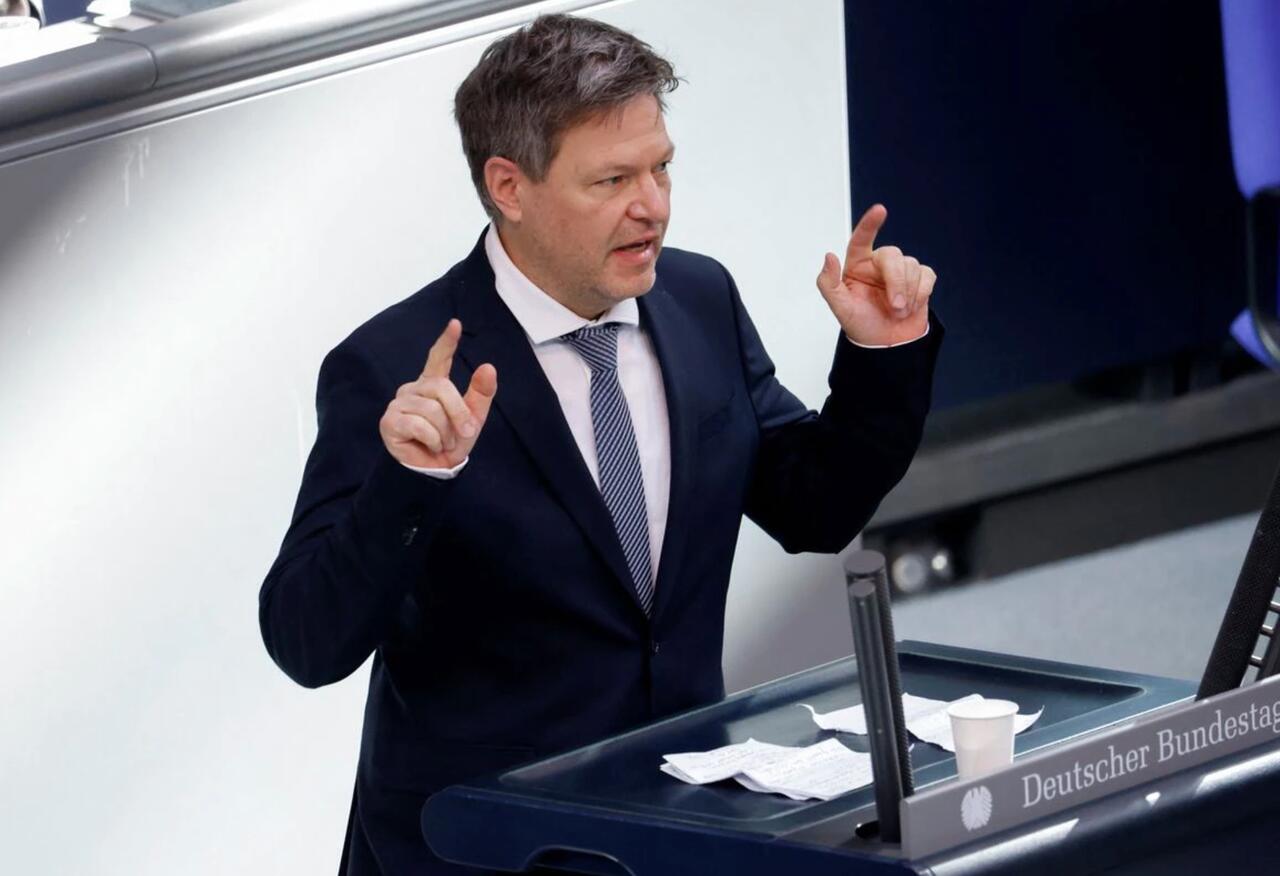
Economy Minister Habeck

Reversing an earlier policy adopted under former Chancellor Angela Merkel, Germany has decided to extend the lifespan of its remaining nuclear power plants, according to Economy Minister Robert Habeck. It’s part of a broader plan for Germany to derive 100% of its energy from “renewable” sources by 2035.

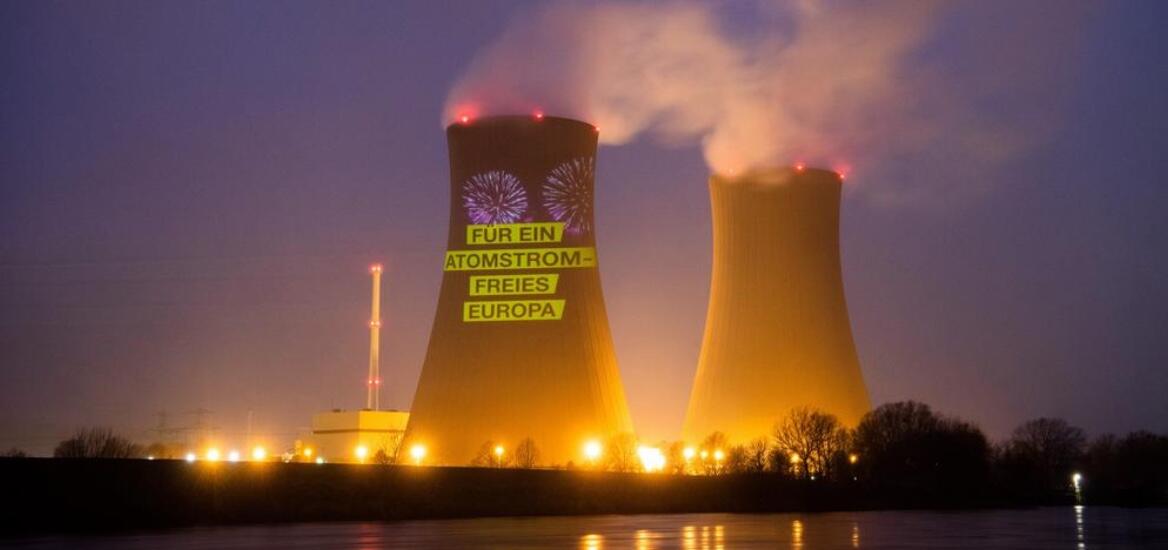
Previously, Germany had planned to shutter its nuclear plants by the end of 2022. Isar 2, Emsland and Neckarwestheim 2 remain the last nuclear plants that produce power in Germany following the country’s decision a decade ago to phase out nuclear power in the wake of Japan’s disaster at Fukushima.

Here’s more from Reuters:

Germany is weighing whether to extend the life-span of its remaining nuclear power plants as a way to secure the country’s energy supply in the face of uncertainty over Russian gas supplies, the country’s economy minister said.

Asked by German broadcaster ARD whether he could imagine letting nuclear plants run longer than planned under Germany’s exit plan, which foresees shutting down the country’s three remaining plans by the end of 2022, Robert Habeck said: “It is part of my ministry’s tasks to answer this question. I would not reject it on ideological grounds – but the preliminary examination has shown that it does not help us.”

The three plants are owned by German energy firms E.ON, RWE and EnBW, respectively. Habeck said the three operators have already informed the government that extending their lifespans won’t impact energy production during the 2022-2023 winter season.

“Because the preparations for the shutdowns are already so far advanced that the nuclear power plants could only continue to operate under the highest safety concerns and possibly with fuel supplies that have not yet been secured,” Habeck said. “And that is certainly not what we want.”

Here’s how Habeck described Germany’s other plans for improving its reliance on renewables to 100%, according to Reuters.

According to the paper, the corresponding amendment to the country’s Renewable Energy Sources Act (EEG) is ready and the share of wind or solar power should reach 80% by 2030.

By then, Germany’s onshore wind energy capacity should double to up to 110 gigawatts, offshore wind energy should reach 30 GW – arithmetically the capacity of 10 nuclear plants – and solar energy would more than triple to 200 GW, the paper showed.

As CNBC pointed out, both Germany and Japan have recently reclassified nuclear power as “clean” energy, opening the door to potentially trillions of dollars in ESG-driven investment.

German Finance Minister Christian Lindner has described renewable electricity as “the energy of freedom”. And it becomes increasingly attractive for every dollar increase in the price.

Tyler Durden
Wed, 03/02/2022 – 02:45

via ZeroHedge News https://ift.tt/lFUcdDW Tyler Durden

Russia Says Heightened Nuclear Alert Was Entirely The Fault Of UK’s Foreign Secretary

Russia Says Heightened Nuclear Alert Was Entirely The Fault Of UK’s Foreign Secretary

Authored by Dave DeCamp via AntiWar.com,

The White House said Monday that the US sees “no reasons” to change its nuclear alert levels after Russian President Vladimir Putin placed Russia’s nuclear forces on a “special” alert.

According to Interfax, Russia’s Defense Ministry said Monday that its nuclear missile forces in its Northern and Pacific fleets have been placed on “enhanced combat duty” in response to Putin’s order.

Nuclear football aboard “Marine 1” via Reuters

“We are assessing President Putin’s directive and at this time, we see no reasons to change our own alert levels,” White House Press Secretary Jen Psaki told reporters.

Later in the day, President Biden was asked if Americans should worry about nuclear war, to which he simply replied, “no.” Psaki claimed that the US and NATO had no “appetite or desire” for a conflict with Russia even as the Western powers are pledging to funnel more weapons into Ukraine and have imposed a series of harsh sanctions on Russia.

According to BBC, the Kremlin later explained its change in nuclear forces posture was due to comments made by UK Foreign Secretary Liz Truss:

Kremlin spokesman Dmitry Peskov said “unacceptable” remarks were made about possible “clashes” between Nato and Moscow over Russia’s attack on Ukraine.

It is unclear precisely which comments by Ms Truss Russia objects to.

On Sunday, she said if Russia was not stopped, other states may be threatened and it could end in conflict with Nato.

A Foreign, Commonwealth and Development Office source told the BBC: “I don’t think anything Liz has said warrants that sort of rhetoric or escalation.”

Peskov said Monday: “Statements were made by various representatives at various levels on possible altercations or even collisions and clashes between Nato and Russia.”

“We believe that such statements are absolutely unacceptable. I would not call the authors of these statements by name, although it was the British foreign minister.”

Putin has made clear that a key demand for a ceasefire in Ukraine is for Kyiv to declare its neutrality, but the increased US and NATO support makes that less likely to happen.

Tyler Durden
Wed, 03/02/2022 – 02:00

via ZeroHedge News https://ift.tt/RdPbGya Tyler Durden

SCOTUS Needs to Clarify the Line Between Doctors and Drug Dealers


pain-pills-k-state-flickr

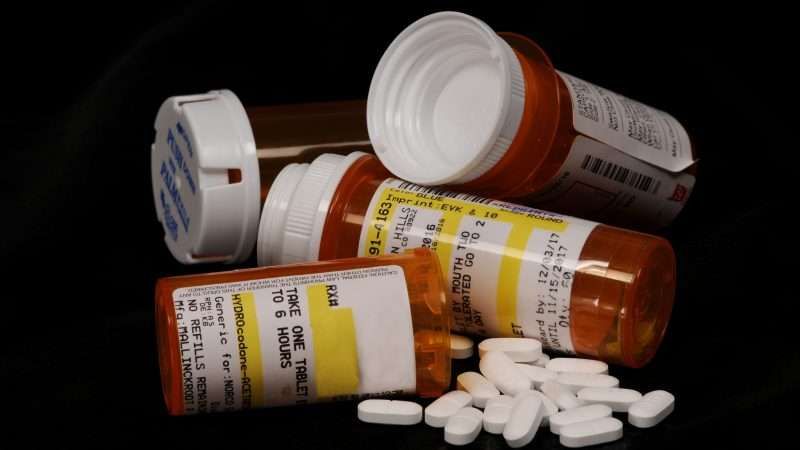
Xiulu Ruan, a board-certified Alabama pain specialist, was sentenced to 21 years in federal prison for prescribing opioid analgesics “outside the usual course of professional medical practice.” According to the appeals court that upheld his conviction, it did not matter whether he sincerely believed he was doing what a physician is supposed to do.

That ruling, which is the focus of a case the Supreme Court heard on Tuesday, conflates negligence with criminal liability, invites the Drug Enforcement Administration (DEA) to usurp state medical regulators, and encourages prosecutions that have a chilling effect on pain treatment. If it is allowed to stand, doctors who already face intense pressure to curtail opioid prescriptions will be even more inclined to elevate drug control above pain control.

Ruan’s trial featured the usual battle of experts. Defense witnesses portrayed him as a conscientious physician doing his best to serve patients in dire need, while prosecution witnesses portrayed him as careless and blind to “red flags” indicating abuse or diversion of the drugs he prescribed.

Some of this disagreement stemmed from dueling interpretations of Ruan’s practices and lapses. Some of it stemmed from ongoing debates on issues such as the risks and benefits of long-term opioid therapy for chronic pain and, more generally, how to balance patients’ needs against the government’s demand that physicians prevent misuse of pain medication.

That demand puts doctors in a difficult position, since pain cannot be objectively verified. If they trust their patients, some people will take advantage of that trust; if they reflexively treat their patients with suspicion, some people will suffer needlessly from pain that could have been relieved safely and effectively.

The threat of regulatory sanctions and malpractice lawsuits already forces clinicians to weigh the risk to their licenses and livelihoods if they make questionable prescribing decisions. The threat of criminal prosecution ups the ante, because it means that doctors also can lose their liberty if they make decisions that the DEA, a law enforcement agency with no medical expertise, views as medically inappropriate.

Criminal penalties traditionally are reserved for people who knowingly break the law. But the U.S. Court of Appeals for the 11th Circuit has held that a physician’s “good faith belief that he dispensed a controlled substance in the usual course of his professional practice is irrelevant” to the question of whether he violated the Controlled Substances Act (CSA).

Based on that reading of the law, the 11th Circuit rejected Ruan’s argument that he was entitled to a jury instruction precluding a guilty verdict if the evidence indicated that he honestly thought his prescriptions were “for a legitimate medical purpose” and that he was “acting in the usual course of his professional practice,” as required by CSA regulations. As the appeals court saw it, Ruan could be sent to prison for decades even if he unintentionally fell short of those ambiguous standards.

Doctors defending themselves against CSA charges in other circuits face obstacles that are nearly as daunting. In a case that was consolidated with Ruan’s, the trial court told the jury that good faith “connotes an attempt to act in accordance with what a reasonable physician should believe to be proper medical practice.”

While that standard might make sense in a malpractice lawsuit, it falls short of the culpability that is usually required for a criminal conviction. Worse, when the U.S. Court of Appeals for the 10th Circuit considered the same case, it held that good faith, however defined, does not matter in deciding whether a prescription was written in “the usual course of professional practice,” which must be determined “objectively.”

As two health law professors note in a brief supporting Ruan’s appeal, uncertainty about which practices may provoke federal prosecution hurts patients as well as physicians. It provides yet another reason to turn away or abandon patients who already are suffering from the indiscriminate crackdown on pain medication, sacrificing their welfare on the altar of the war on drugs.

© Copyright 2022 by Creators Syndicate Inc.

The post SCOTUS Needs to Clarify the Line Between Doctors and Drug Dealers appeared first on Reason.com.

from Latest https://ift.tt/xrSWzJD
via IFTTT

SCOTUS Needs to Clarify the Line Between Doctors and Drug Dealers


pain-pills-k-state-flickr

Xiulu Ruan, a board-certified Alabama pain specialist, was sentenced to 21 years in federal prison for prescribing opioid analgesics “outside the usual course of professional medical practice.” According to the appeals court that upheld his conviction, it did not matter whether he sincerely believed he was doing what a physician is supposed to do.

That ruling, which is the focus of a case the Supreme Court heard on Tuesday, conflates negligence with criminal liability, invites the Drug Enforcement Administration (DEA) to usurp state medical regulators, and encourages prosecutions that have a chilling effect on pain treatment. If it is allowed to stand, doctors who already face intense pressure to curtail opioid prescriptions will be even more inclined to elevate drug control above pain control.

Ruan’s trial featured the usual battle of experts. Defense witnesses portrayed him as a conscientious physician doing his best to serve patients in dire need, while prosecution witnesses portrayed him as careless and blind to “red flags” indicating abuse or diversion of the drugs he prescribed.

Some of this disagreement stemmed from dueling interpretations of Ruan’s practices and lapses. Some of it stemmed from ongoing debates on issues such as the risks and benefits of long-term opioid therapy for chronic pain and, more generally, how to balance patients’ needs against the government’s demand that physicians prevent misuse of pain medication.

That demand puts doctors in a difficult position, since pain cannot be objectively verified. If they trust their patients, some people will take advantage of that trust; if they reflexively treat their patients with suspicion, some people will suffer needlessly from pain that could have been relieved safely and effectively.

The threat of regulatory sanctions and malpractice lawsuits already forces clinicians to weigh the risk to their licenses and livelihoods if they make questionable prescribing decisions. The threat of criminal prosecution ups the ante, because it means that doctors also can lose their liberty if they make decisions that the DEA, a law enforcement agency with no medical expertise, views as medically inappropriate.

Criminal penalties traditionally are reserved for people who knowingly break the law. But the U.S. Court of Appeals for the 11th Circuit has held that a physician’s “good faith belief that he dispensed a controlled substance in the usual course of his professional practice is irrelevant” to the question of whether he violated the Controlled Substances Act (CSA).

Based on that reading of the law, the 11th Circuit rejected Ruan’s argument that he was entitled to a jury instruction precluding a guilty verdict if the evidence indicated that he honestly thought his prescriptions were “for a legitimate medical purpose” and that he was “acting in the usual course of his professional practice,” as required by CSA regulations. As the appeals court saw it, Ruan could be sent to prison for decades even if he unintentionally fell short of those ambiguous standards.

Doctors defending themselves against CSA charges in other circuits face obstacles that are nearly as daunting. In a case that was consolidated with Ruan’s, the trial court told the jury that good faith “connotes an attempt to act in accordance with what a reasonable physician should believe to be proper medical practice.”

While that standard might make sense in a malpractice lawsuit, it falls short of the culpability that is usually required for a criminal conviction. Worse, when the U.S. Court of Appeals for the 10th Circuit considered the same case, it held that good faith, however defined, does not matter in deciding whether a prescription was written in “the usual course of professional practice,” which must be determined “objectively.”

As two health law professors note in a brief supporting Ruan’s appeal, uncertainty about which practices may provoke federal prosecution hurts patients as well as physicians. It provides yet another reason to turn away or abandon patients who already are suffering from the indiscriminate crackdown on pain medication, sacrificing their welfare on the altar of the war on drugs.

© Copyright 2022 by Creators Syndicate Inc.

The post SCOTUS Needs to Clarify the Line Between Doctors and Drug Dealers appeared first on Reason.com.

from Latest https://ift.tt/xrSWzJD
via IFTTT

Criminal Justice Campaign Promises Absent From Biden’s State of the Union Speech


biden sotu

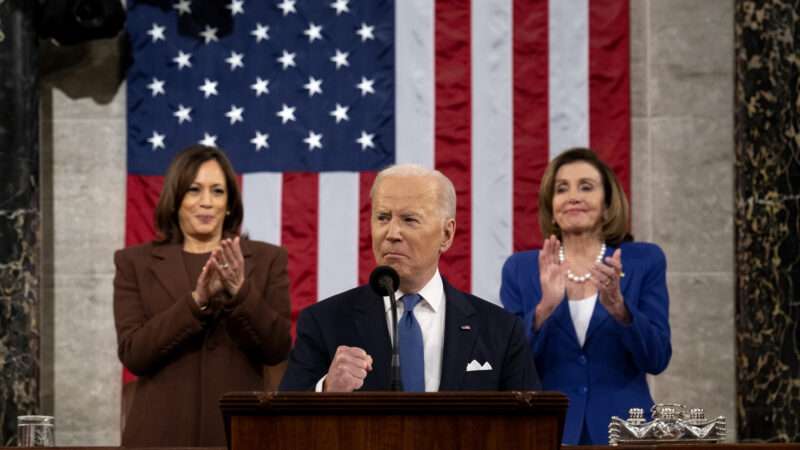
Absent from President Joe Biden’s State of the Union speech tonight was almost any mention of the criminal justice reforms that Biden had promised on the campaign trail.

The White House press office pushed out voluminous “fact sheets” throughout the day touting the Biden administration’s successes in improving U.S. infrastructure, fighting gun crime, and its plans to curb inflation, but neither the White House nor Biden had much to say about the sweeping criminal justice platform that he ran on.

“Let’s come together to protect our communities, restore trust, and hold law enforcement accountable,” Biden said in the sole reference to police reforms in his speech. “That’s why the Justice Department required body cameras, banned chokeholds, and restricted no-knock warrants for its officers.”

Biden’s campaign platform included ending the federal death penalty and solitary confinement, decriminalizing marijuana, and using clemency to free federal inmates serving sentences for some nonviolent and drug crimes. More than a year into the new administration, few of those promises have been fulfilled, frustrating criminal justice reform advocates.

It’s not particularly surprising that these issues weren’t more prominently featured. Biden and Vice President Kamala Harris were both reluctantly dragged by their party to the left on criminal justice issues, and rising murder rates have made many Democrats hesitant to stray too close to any “defund the police” rhetoric. (One of Biden’s bipartisan applause lines of the night was calling for putting more police on the streets: “The answer is not to defund the police. The answer is to FUND the police with the resources and training they need to protect our communities.”) But the administration’s effort to forget some of the more tangible reforms it promised is not a profile in courage.

The Biden campaign prom­ised to “broadly use [the] clem­ency power for certain non-viol­ent and drug crimes,” but the White House has obfuscated and dodged when pressed on when that would happen. Many presidents wait until the final years of their terms to flex their clemency powers. Obama’s large-scale clemency initiative didn’t really gear up until then. In the meantime, though, there are still federal inmates serving sentences in understaffed, dangerous prisons for nonviolent drug offenses—something that Biden supposedly thinks is an outrage.

Biden halted federal executions last July so the Justice Department could review its death penalty protocols. That moratorium remains in place while the review, apparently, continues.

Other parts of the federal criminal justice apparatus continue to be neglected. A January report from the Brennan Center for Justice noted that the U.S. Sentencing Commission, which sets federal guidelines, has lacked quorum since 2019 because of vacancies on its appointed roster.

Part of Biden’s platform to “ensure humane prison conditions” included ending solitary confinement, “with very limited exceptions such as protecting the life of an imprisoned person.” Last June, more than 150 organizations sent a joint letter urging the administration to fulfill that campaign promise. As The Appeal reported, a little-noticed section of a draft executive order from the White House leaked last fall would instruct the Justice Department to ensure that inmates were housed in the least restrictive setting necessary. However, other sections of the draft outraged law enforcement groups, and nothing more has been heard about that executive order since.

Criminal justice advocates were successful in convincing the Biden administration to reverse a policy that would have sent federal inmates released on home confinement during the COVID-19 pandemic back to prison, but other wins have been harder to come by.

Qualified immunity reforms died a slow death in Congress and took any chance of a bipartisan policing bill with them. And the Equal Act, which would finally eliminate the sentencing disparity between crack and powder cocaine, is still waiting for a vote on the Senate floor.

The disparity was, of course, created by a bill spearheaded by then–Sen. Joe Biden.

The post Criminal Justice Campaign Promises Absent From Biden's State of the Union Speech appeared first on Reason.com.

from Latest https://ift.tt/Oral5bG
via IFTTT

Criminal Justice Campaign Promises Absent From Biden’s State of the Union Speech


biden sotu

Absent from President Joe Biden’s State of the Union speech tonight was almost any mention of the criminal justice reforms that Biden had promised on the campaign trail.

The White House press office pushed out voluminous “fact sheets” throughout the day touting the Biden administration’s successes in improving U.S. infrastructure, fighting gun crime, and its plans to curb inflation, but neither the White House nor Biden had much to say about the sweeping criminal justice platform that he ran on.

“Let’s come together to protect our communities, restore trust, and hold law enforcement accountable,” Biden said in the sole reference to police reforms in his speech. “That’s why the Justice Department required body cameras, banned chokeholds, and restricted no-knock warrants for its officers.”

Biden’s campaign platform included ending the federal death penalty and solitary confinement, decriminalizing marijuana, and using clemency to free federal inmates serving sentences for some nonviolent and drug crimes. More than a year into the new administration, few of those promises have been fulfilled, frustrating criminal justice reform advocates.

It’s not particularly surprising that these issues weren’t more prominently featured. Biden and Vice President Kamala Harris were both reluctantly dragged by their party to the left on criminal justice issues, and rising murder rates have made many Democrats hesitant to stray too close to any “defund the police” rhetoric. (One of Biden’s bipartisan applause lines of the night was calling for putting more police on the streets: “The answer is not to defund the police. The answer is to FUND the police with the resources and training they need to protect our communities.”) But the administration’s effort to forget some of the more tangible reforms it promised is not a profile in courage.

The Biden campaign prom­ised to “broadly use [the] clem­ency power for certain non-viol­ent and drug crimes,” but the White House has obfuscated and dodged when pressed on when that would happen. Many presidents wait until the final years of their terms to flex their clemency powers. Obama’s large-scale clemency initiative didn’t really gear up until then. In the meantime, though, there are still federal inmates serving sentences in understaffed, dangerous prisons for nonviolent drug offenses—something that Biden supposedly thinks is an outrage.

Biden halted federal executions last July so the Justice Department could review its death penalty protocols. That moratorium remains in place while the review, apparently, continues.

Other parts of the federal criminal justice apparatus continue to be neglected. A January report from the Brennan Center for Justice noted that the U.S. Sentencing Commission, which sets federal guidelines, has lacked quorum since 2019 because of vacancies on its appointed roster.

Part of Biden’s platform to “ensure humane prison conditions” included ending solitary confinement, “with very limited exceptions such as protecting the life of an imprisoned person.” Last June, more than 150 organizations sent a joint letter urging the administration to fulfill that campaign promise. As The Appeal reported, a little-noticed section of a draft executive order from the White House leaked last fall would instruct the Justice Department to ensure that inmates were housed in the least restrictive setting necessary. However, other sections of the draft outraged law enforcement groups, and nothing more has been heard about that executive order since.

Criminal justice advocates were successful in convincing the Biden administration to reverse a policy that would have sent federal inmates released on home confinement during the COVID-19 pandemic back to prison, but other wins have been harder to come by.

Qualified immunity reforms died a slow death in Congress and took any chance of a bipartisan policing bill with them. And the Equal Act, which would finally eliminate the sentencing disparity between crack and powder cocaine, is still waiting for a vote on the Senate floor.

The disparity was, of course, created by a bill spearheaded by then–Sen. Joe Biden.

The post Criminal Justice Campaign Promises Absent From Biden's State of the Union Speech appeared first on Reason.com.

from Latest https://ift.tt/Oral5bG
via IFTTT

Whitehead: “These Are Dangerous Times For America And The World”

Whitehead: “These Are Dangerous Times For America And The World”

Authored by John W. Whitehead & Nisha Whitehead via The Rutherford Institute,

“Never has our future been more unpredictable, never have we depended so much on political forces that cannot be trusted to follow the rules of common sense and self-interest—forces that look like sheer insanity, if judged by the standards of other centuries.”

 – Hannah Arendt, The Origins of Totalitarianism

Let me tell you about the state of our nation: things are getting worse, not better.
Easily distracted by wall-to-wall news coverage of the latest crisis and conveniently diverted by news cycles that change every few days, Americans remain oblivious to the many governmental abuses that are still wreaking havoc on our freedoms: police shootings of unarmed individuals, invasive surveillance, roadside blood draws, roadside strip searches, SWAT team raids gone awry, the military industrial complex’s costly wars, pork barrel spending, pre-crime laws, civil asset forfeiture, fusion centers, militarization, armed drones, smart policing carried out by AI robots, courts that march in lockstep with the police state, schools that function as indoctrination centers, and bureaucrats that keep the Deep State in power.

These are dangerous times for America and the world.

Yet while you may hear plenty about the dangers posed by Russia and COVID-19 in President Biden’s State of the Union address, it’s still the U.S. government that poses the gravest threat to our freedoms and way of life.

Consider for yourself.

Americans have little protection against police abuse. The police and other government agents have been generally empowered to probe, poke, pinch, taser, search, seize, strip and generally manhandle anyone they see fit in almost any circumstance, all with the general blessing of the courts. It is no longer unusual to hear about incidents in which police shoot unarmed individuals first and ask questions later. What is increasingly common, however, is the news that the officers involved in these incidents get off with little more than a slap on the hands.

Americans are little more than pocketbooks to fund the police state. If there is any absolute maxim by which the federal government seems to operate, it is that the American taxpayer always gets ripped off. This is true, whether you’re talking about taxpayers being forced to fund high-priced weaponry that will be used against us, endless wars that do little for our safety or our freedoms, or bloated government agencies with their secret budgets, covert agendas and clandestine activities.

Americans are no longer innocent until proven guilty. We once operated under the assumption that you were innocent until proven guilty. Due in large part to rapid advances in technology and a heightened surveillance culture, the burden of proof has been shifted so that the right to be considered innocent until proven guilty has been usurped by a new norm in which all citizens are suspects. Indeed, the government—in cahoots with the corporate state—has erected the ultimate suspect society. In such an environment, we are all potentially guilty of some wrongdoing or other.

Americans no longer have a right to self-defense. While the courts continue to disagree over the exact nature of the rights protected by the Second Amendment, the government itself has made its position extremely clear. When it comes to gun rights in particular, and the rights of the citizenry overall, the U.S. government has adopted a “do what I say, not what I do” mindset. Nowhere is this double standard more evident than in the government’s attempts to arm itself to the teeth, all the while viewing as suspect anyone who dares to legally own a gun, let alone use one in self-defense. Indeed, while it still technically remains legal to own a firearm in America, possessing one can now get you pulled over, searched, arrested, subjected to all manner of surveillance, treated as a suspect without ever having committed a crime, shot at, and killed.

Americans no longer have a right to private property. If government agents can invade your home, break down your doors, kill your dog, damage your furnishings and terrorize your family, your property is no longer private and secure—it belongs to the government. Likewise, if government officials can fine and arrest you for growing vegetables in your front yard, praying with friends in your living room, installing solar panels on your roof, and raising chickens in your backyard, you’re no longer the owner of your property.

Americans no longer have a say about what their children are exposed to in school. Incredibly, the government continues to insist that parents essentially forfeit their rights when they send their children to a public school. This growing tension over whether young people, especially those in the public schools, are essentially wards of the state, to do with as government officials deem appropriate, in defiance of the children’s constitutional rights and those of their parents, is at the heart of almost every debate over educational programming, school discipline, and the extent to which parents have any say over their children’s wellbeing in and out of school.

Americans are powerless in the face of militarized police forces. With local police agencies acquiring military-grade weaponry, training and equipment better suited for the battlefield, Americans are finding their once-peaceful communities transformed into military outposts patrolled by a standing military army.

Americans no longer have a right to bodily integrity. The debate over bodily integrity covers broad territory, ranging from abortion and euthanasia to forced blood draws, biometric surveillance and basic healthcare. Forced vaccinations, forced cavity searches, forced colonoscopies, forced blood draws, forced breath-alcohol tests, forced DNA extractions, forced eye scans, forced inclusion in biometric databases: these are just a few ways in which Americans continue to be reminded that we have no control over what happens to our bodies during an encounter with government officials.

Americans no longer have a right to the expectation of privacy. Despite the staggering number of revelations about government spying on Americans’ phone calls, Facebook posts, Twitter tweets, Google searches, emails, bookstore and grocery purchases, bank statements, commuter toll records, etc., Congress, the president and the courts have done little to nothing to counteract these abuses. Instead, they seem determined to accustom us to life in this electronic concentration camp.

Americans no longer have a representative government. We have moved beyond the era of representative government and entered the age of authoritarianism, where all citizens are suspects, security trumps freedom, and so-called elected officials represent the interests of the corporate power elite. This topsy-turvy travesty of law and government has become America’s new normal.

Americans can no longer rely on the courts to mete out justice. The U.S. Supreme Court was intended to be an institution established to intervene and protect the people against the government and its agents when they overstep their bounds. Yet through their deference to police power, preference for security over freedom, and evisceration of our most basic rights for the sake of order and expediency, the justices of the Supreme Court have become the architects of the American police state in which we now live, while the lower courts have appointed themselves courts of order, concerned primarily with advancing the government’s agenda, no matter how unjust or illegal.

I haven’t even touched on the corporate state, the military industrial complex, SWAT team raids, invasive surveillance technology, zero tolerance policies in the schools, overcriminalization, or privatized prisons, to name just a few, but what I have touched on should be enough to show that the landscape of our freedoms has already changed dramatically from what it once was and will no doubt continue to deteriorate unless Americans can find a way to wrest back control of their government and reclaim their freedoms.

This steady slide towards tyranny, meted out by militarized local and federal police and legalistic bureaucrats, has been carried forward by each successive president over the past seventy-plus years regardless of their political affiliation.

The more things change, the more they stay the same.

Big government has grown bigger, and the rights of the citizenry have grown smaller.

We are walking a dangerous path right now.

Having allowed the government to expand and exceed our reach, we find ourselves on the losing end of a tug-of-war over control of our country and our lives. And for as long as we let them, government officials will continue to trample on our rights, always justifying their actions as being for the good of the people.

Yet the government can only go as far as “we the people” allow. Therein lies the problem.

The pickle we find ourselves in speaks volumes about the nature of the government beast we have been saddled with and how it views the rights and sovereignty of “we the people.”

Now you don’t hear a lot about sovereignty anymore. Sovereignty is a dusty, antiquated term that harkens back to an age when kings and emperors ruled with absolute power over a populace that had no rights. Americans turned the idea of sovereignty on its head when they declared their independence from Great Britain and rejected the absolute authority of King George III. In doing so, Americans claimed for themselves the right to self-government and established themselves as the ultimate authority and power.

In other words, in America, “we the people”— sovereign citizens—call the shots.

So when the government acts, it is supposed to do so at our bidding and on our behalf, because we are the rulers.

That’s not exactly how it turned out, though, is it?

In the 200-plus years since we boldly embarked on this experiment in self-government, we have been steadily losing ground to the government’s brazen power grabs, foisted upon us in the so-called name of national security.

We have relinquished control over the most intimate aspects of our lives to government officials who, while they may occupy seats of authority, are neither wiser, smarter, more in tune with our needs, more knowledgeable about our problems, nor more aware of what is really in our best interests.

The government has knocked us off our rightful throne. It has usurped our rightful authority. It has staged the ultimate coup. Its agents no longer even pretend that they answer to “we the people.”

Worst of all, “we the people” have become desensitized to this constant undermining of our freedoms.

How do we reconcile the Founders’ vision of the government as an entity whose only purpose is to serve the people with the police state’s insistence that the government is the supreme authority, that its power trumps that of the people themselves, and that it may exercise that power in any way it sees fit (that includes government agents crashing through doors, mass arrests, ethnic cleansing, racial profiling, indefinite detentions without due process, and internment camps)?

They cannot be reconciled. They are polar opposites.

We are fast approaching a moment of reckoning where we will be forced to choose between the vision of what America was intended to be (a model for self-governance where power is vested in the people) and the reality of what it has become (a police state where power is vested in the government).

We are repeating the mistakes of history—namely, allowing a totalitarian state to reign over us.

Former concentration camp inmate Hannah Arendt warned against this when she wrote:

“No matter what the specifically national tradition or the particular spiritual source of its ideology, totalitarian government always transformed classes into masses, supplanted the party system, not by one-party dictatorships, but by mass movement, shifted the center of power from the army to the police, and established a foreign policy openly directed toward world domination.”

So where does that leave us?

Aldous Huxley predicted that eventually the government would find a way of:

“making people love their servitude, and producing dictatorship without tears, so to speak, producing a kind of painless concentration camp for entire societies, so that people will in fact have their liberties taken away from them, but will rather enjoy it, because they will be distracted from any desire to rebel by propaganda or brainwashing, or brainwashing enhanced by pharmacological methods. And this seems to be the final revolution.”

The answer? Get un-brainwashed. Stop allowing yourself to be distracted and diverted.

Learn your rights. Stand up for the founding principles.

Make your voice and your vote count for more than just political posturing.

Never cease to vociferously protest the erosion of your freedoms at the local and national level.

Most of all, do these things today.

Ultimately, I make clear in my book Battlefield America: The War on the American People and in its fictional counterpart The Erik Blair Diaries, we need to shift the center of power back to “we the people.”

Tyler Durden
Tue, 03/01/2022 – 23:25

via ZeroHedge News https://ift.tt/r5q7JaI Tyler Durden