Biden’s State of the Union Offers More Useless Solutions to Gun Violence


v5

President Joe Biden had a few words to say in his State of the Union address about how he intends to curb gun violence—definitely on the rise in the past couple of years—that meet the usual Democratic presidential standard of offering solutions that will largely harass the mostly innocent or do very little to save lives.

“I will keep doing everything in my power to crack down on gun trafficking and ghost guns you can buy online and make at home,” he insisted. “They have no serial numbers and can’t be traced.” True, but the technologies that allow the making of such guns (as well as the old-fashioned wiping numbers off existing ones) are not able to be curbed. Experience in California, which instituted such a ban a few years, ago already shows the futility of such laws, except in making life harder for hobbyists who would never harm anyone with their guns.

Even theoretically traceable guns used by criminals are, in the majority of cases, stolen or not obtained legally, so police rarely have information on file about them that would allow them to be easily traced to a shooter.

“I ask Congress to pass proven measures to reduce gun violence,” he added. “Pass universal background checks. Why should anyone on a terrorist list be able to purchase a weapon?” Burdening every private citizen who wants to sell a weapon with all the paperwork hoops a licensed gun dealer must go through seems sensible to many people, but, with a 2016 Survey of Prison Inmates finding only 25 percent of guns possessed by prisoners obtained from friends or family in a transaction would theoretically fall under that law, and how hard the law would be to enforce on such friends or family, the effect on guns in the hands of criminals is likely to be marginal.

Speaking of marginal effects, Biden also insisted he would like to “ban assault weapons and high-capacity magazines.” Although he ended his brief gun discussion insisting that “These laws don’t infringe on the Second Amendment. They save lives,” a federal court decision (since overturned) did present convincing arguments that the banning of a very commonly used item with relevance to self-defense in the home such as “high-capacity magazines” does violate the Second Amendment, and the current Supreme Court would probably agree if the issue came before them.

Rifles of all sorts, of which so-called “assault weapons” are a subcategory based mostly on cosmetic features some legislators and activists find scary, are used in a tiny percentage of gun murders; previous attempts to ban the sale of new “assault weapons” from 1994-2004 had no apparent effect on gun murders. Biden is wrong to expect anything but massive civil unrest and disobedience from an attempt to actually take them from overwhelmingly innocent American gun owners’ hands.

Biden also insisted he will “repeal the liability shield that makes gun manufacturers the only industry in America that can’t be sued”—a severe misstatement of the facts. The law he references, the Protection of Lawful Commerce in Arms Act, merely makes it more difficult to sue manufacturers for harms caused not by any actual error or negligence related to how they made or sold the gun, but by criminal acts of their customers. Not being able to hold people liable for things not their actual fault is a fine legal principle, and Biden’s call to end it is a backdoor call to harm the Second Amendment by driving legal manufacturers and sellers of weapons out of business.

That proposal is of a piece with all his SOTU gun rhetoric, pleasing to his constituents but based more in hostility to overwhelmingly innocent private gun sales and ownership than any effective public policy likely to curb those who use guns to kill.

The post Biden's State of the Union Offers More Useless Solutions to Gun Violence appeared first on Reason.com.

from Latest https://ift.tt/QLV0FgB
via IFTTT
If COVID-19 Is Over for Congress, It Should Be Over for School Children Too


v2

When members of Congress, the Cabinet, and the Supreme Court entered the U.S. House Chamber for President Joe Biden’s State of the Union address on Tuesday night, they were almost entirely unmasked. Cursory attempts at social distancing were quickly abandoned—and after Biden finished his speech, the country’s highest elected officials shook hands and hugged and breathed in each other’s faces like it was 2019.

In the remarks themselves, Biden heralded an end to the era of COVID-19.

“Thanks to the progress we have made this past year, COVID-19 need no longer control our lives,” said Biden.

It’s fascinating that the president would even make this concession; as recently as one month ago, many Democrats and their allies in the mainstream media assailed Republican-controlled municipalities for easing up on pandemic restrictions. But then some focus group polling convinced Democratic strategists that the American people were losing patience, and the party abruptly changed course. (The fact that the vaccines held up well against the omicron surge, at least in terms of severe cases, also helped.)

But it’s worth repeating that even now—with the Biden administration heralding a nearly universal return to normal, and Democratic officials celebrating with few masks in sight—there remains a key U.S. demographic languishing under strict mask mandates: school children in some cities controlled by Democrats.

Indeed, in Washington D.C., Mayor Muriel Bowser announced on Tuesday that students would no longer be required to wear masks while outside. This means, of course, that masks are still required inside the schools.

It’s gratifying that children can finally discard their masks while playing sports or enjoying outdoor recess; it’s also infuriating that it took this long for officials to throw in the towel. But most of the school day is spent indoors, where D.C. students are still expected to wear masks.

There is no justification for this whatsoever. Young people are not at serious risk of a negative COVID-19 health outcome: Unvaccinated kids and teens are safer from the disease than older Americans who are vaccinated. They are much safer than members of the U.S. House of Representatives (average age: 57), Senate (average age: 62), or Supreme Court (average age: 64). If Biden’s State of the Union guests don’t have to mask indoors, why should kids?

Biden appeared to understand that schools can and should drop pandemic restrictions immediately.

“Our schools are open,” he said. “Let’s keep it that way. Our kids need to be in school.
And with 75 percent of adult Americans fully vaccinated and hospitalizations down by 77 percent, most Americans can remove their masks, return to work, stay in the classroom, and move forward safely.”

This category—most Americans—must certainly include young people. School districts still clinging to forcible masking should take note.

The post If COVID-19 Is Over for Congress, It Should Be Over for School Children Too appeared first on Reason.com.

from Latest https://ift.tt/6Fog8Ap
via IFTTT

Biden’s State of the Union Offers More Useless Solutions to Gun Violence


v5

President Joe Biden had a few words to say in his State of the Union address about how he intends to curb gun violence—definitely on the rise in the past couple of years—that meet the usual Democratic presidential standard of offering solutions that will largely harass the mostly innocent or do very little to save lives.

“I will keep doing everything in my power to crack down on gun trafficking and ghost guns you can buy online and make at home,” he insisted. “They have no serial numbers and can’t be traced.” True, but the technologies that allow the making of such guns (as well as the old-fashioned wiping numbers off existing ones) are not able to be curbed. Experience in California, which instituted such a ban a few years, ago already shows the futility of such laws, except in making life harder for hobbyists who would never harm anyone with their guns.

Even theoretically traceable guns used by criminals are, in the majority of cases, stolen or not obtained legally, so police rarely have information on file about them that would allow them to be easily traced to a shooter.

“I ask Congress to pass proven measures to reduce gun violence,” he added. “Pass universal background checks. Why should anyone on a terrorist list be able to purchase a weapon?” Burdening every private citizen who wants to sell a weapon with all the paperwork hoops a licensed gun dealer must go through seems sensible to many people, but, with a 2016 Survey of Prison Inmates finding only 25 percent of guns possessed by prisoners obtained from friends or family in a transaction would theoretically fall under that law, and how hard the law would be to enforce on such friends or family, the effect on guns in the hands of criminals is likely to be marginal.

Speaking of marginal effects, Biden also insisted he would like to “ban assault weapons and high-capacity magazines.” Although he ended his brief gun discussion insisting that “These laws don’t infringe on the Second Amendment. They save lives,” a federal court decision (since overturned) did present convincing arguments that the banning of a very commonly used item with relevance to self-defense in the home such as “high-capacity magazines” does violate the Second Amendment, and the current Supreme Court would probably agree if the issue came before them.

Rifles of all sorts, of which so-called “assault weapons” are a subcategory based mostly on cosmetic features some legislators and activists find scary, are used in a tiny percentage of gun murders; previous attempts to ban the sale of new “assault weapons” from 1994-2004 had no apparent effect on gun murders. Biden is wrong to expect anything but massive civil unrest and disobedience from an attempt to actually take them from overwhelmingly innocent American gun owners’ hands.

Biden also insisted he will “repeal the liability shield that makes gun manufacturers the only industry in America that can’t be sued”—a severe misstatement of the facts. The law he references, the Protection of Lawful Commerce in Arms Act, merely makes it more difficult to sue manufacturers for harms caused not by any actual error or negligence related to how they made or sold the gun, but by criminal acts of their customers. Not being able to hold people liable for things not their actual fault is a fine legal principle, and Biden’s call to end it is a backdoor call to harm the Second Amendment by driving legal manufacturers and sellers of weapons out of business.

That proposal is of a piece with all his SOTU gun rhetoric, pleasing to his constituents but based more in hostility to overwhelmingly innocent private gun sales and ownership than any effective public policy likely to curb those who use guns to kill.

The post Biden's State of the Union Offers More Useless Solutions to Gun Violence appeared first on Reason.com.

from Latest https://ift.tt/QLV0FgB
via IFTTT
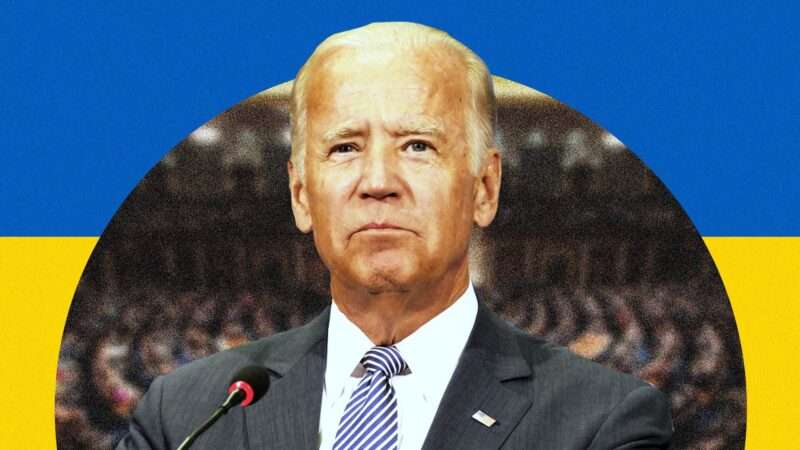
If COVID-19 Is Over for Congress, It Should Be Over for School Children Too


v2

When members of Congress, the Cabinet, and the Supreme Court entered the U.S. House Chamber for President Joe Biden’s State of the Union address on Tuesday night, they were almost entirely unmasked. Cursory attempts at social distancing were quickly abandoned—and after Biden finished his speech, the country’s highest elected officials shook hands and hugged and breathed in each other’s faces like it was 2019.

In the remarks themselves, Biden heralded an end to the era of COVID-19.

“Thanks to the progress we have made this past year, COVID-19 need no longer control our lives,” said Biden.

It’s fascinating that the president would even make this concession; as recently as one month ago, many Democrats and their allies in the mainstream media assailed Republican-controlled municipalities for easing up on pandemic restrictions. But then some focus group polling convinced Democratic strategists that the American people were losing patience, and the party abruptly changed course. (The fact that the vaccines held up well against the omicron surge, at least in terms of severe cases, also helped.)

But it’s worth repeating that even now—with the Biden administration heralding a nearly universal return to normal, and Democratic officials celebrating with few masks in sight—there remains a key U.S. demographic languishing under strict mask mandates: school children in some cities controlled by Democrats.

Indeed, in Washington D.C., Mayor Muriel Bowser announced on Tuesday that students would no longer be required to wear masks while outside. This means, of course, that masks are still required inside the schools.

It’s gratifying that children can finally discard their masks while playing sports or enjoying outdoor recess; it’s also infuriating that it took this long for officials to throw in the towel. But most of the school day is spent indoors, where D.C. students are still expected to wear masks.

There is no justification for this whatsoever. Young people are not at serious risk of a negative COVID-19 health outcome: Unvaccinated kids and teens are safer from the disease than older Americans who are vaccinated. They are much safer than members of the U.S. House of Representatives (average age: 57), Senate (average age: 62), or Supreme Court (average age: 64). If Biden’s State of the Union guests don’t have to mask indoors, why should kids?

Biden appeared to understand that schools can and should drop pandemic restrictions immediately.

“Our schools are open,” he said. “Let’s keep it that way. Our kids need to be in school.
And with 75 percent of adult Americans fully vaccinated and hospitalizations down by 77 percent, most Americans can remove their masks, return to work, stay in the classroom, and move forward safely.”

This category—most Americans—must certainly include young people. School districts still clinging to forcible masking should take note.

The post If COVID-19 Is Over for Congress, It Should Be Over for School Children Too appeared first on Reason.com.

from Latest https://ift.tt/6Fog8Ap
via IFTTT

Biden Says No Troops to Ukraine, Is Silent on Ukrainian and Russian Refugees


thumbnail-1

President Joe Biden opened his first State of the Union address on a relatively rare foreign policy note, as conflict raged across the world in Ukraine.

“Vladimir Putin sought to shake the foundations of the free world thinking he could make it bend to his menacing ways,” Biden declared. “But he badly miscalculated.”

After praising the resolve of Ukrainian citizens and President Volodymyr Zelenskyy, Biden outlined a series of measures intended to bolster the Ukrainian resistance and punish Russia for its brutal campaign. Key among them were mentions of NATO unity, plans for “a dedicated task force” that would “go after the crimes of Russian oligarchs,” and the closure of American airspace to Russian flights. Sanctions took center stage, while immigration relief was nowhere to be seen.

Thankfully, Biden has opted to pursue measures beyond introducing American soldiers to the fight in Ukraine. “Let me be clear,” Biden said. “Our forces are not engaged and will not engage in conflict with Russian forces in Ukraine.” Given that politicians have been agitating for a U.S.-enforced “no-fly” zone over Ukraine in recent days, this is a critical reassurance. Biden seems to recognize that maintaining a “no-fly” zone would involve direct conflict with Russia. The consequences of such engagement—combat between two nuclear-armed superpowers—could be grave.

There was, however, ample talk of sanctions. As Reason‘s Christian Britschgi recently noted, “an inherent feature of this strategy is harming ordinary Russians who aren’t responsible for their dictatorial government’s war and who have few options for influencing its behavior.” Russia’s rich will likely remain rich, even as Russian citizens feel the heat. Large numbers of Russians have taken to the streets to demonstrate their disdain for Putin’s war in Ukraine even so, faced with both shuttered international services and a regime that is arresting them for protesting.

Though Biden was quick to describe the benefits America conveys as a military presence in Eastern Europe—emphasizing the readiness of “American ground forces, aid squadrons, and ship deployments” to protect NATO countries like “Poland, Romania, Latvia, Lithuania, and Estonia”—he was less forthcoming about the benefits the U.S. can offer as a landing pad to Ukrainians hoping to flee their war-torn country and Russians looking for an escape from Putin’s regime.

This would have been the perfect opportunity for Biden to announce immigration protections for Ukrainians—those already on American soil and those hoping to reach it. Immigration advocates have been pushing for a temporary protected status designation for Ukraine, which would prevent Ukrainian nationals from being deported back there. Biden’s Department of Homeland Security could also implement special student relief for Ukrainians, a classification that would protect those who are studying in the U.S. on F-1 student visas. These two measures are simple additions to preexisting immigration infrastructure.

For all the harsh rhetoric against the Russian regime, Biden did not express a willingness to offer immigration relief to Russian citizens. The president spent a fair amount of time in his address outlining ways for America to stay competitive economically and technologically. “Brain drain” immigration measures—offering green cards to Russians with technical degrees, as well as those studying in American universities—could deprive Putin and the already-depopulating Russia of the individuals fueling the Russian economy.

Biden promised just over a year ago that “the United States [would] again lead not just by the example of our power but the power of our example.” Though he was adamant tonight that “a Russian dictator, invading a foreign country, has costs around the world,” he was correct to note that those costs must not be enforced by American guns. That said, Biden’s first State of the Union address could have laid out pragmatic immigration measures based in “the power of our example” that would offer refuge to the people of both Ukraine and Russia.

The post Biden Says No Troops to Ukraine, Is Silent on Ukrainian and Russian Refugees appeared first on Reason.com.

from Latest https://ift.tt/mzX9kSw
via IFTTT

Biden Says No Troops to Ukraine, Is Silent on Ukrainian and Russian Refugees


thumbnail-1

President Joe Biden opened his first State of the Union address on a relatively rare foreign policy note, as conflict raged across the world in Ukraine.

“Vladimir Putin sought to shake the foundations of the free world thinking he could make it bend to his menacing ways,” Biden declared. “But he badly miscalculated.”

After praising the resolve of Ukrainian citizens and President Volodymyr Zelenskyy, Biden outlined a series of measures intended to bolster the Ukrainian resistance and punish Russia for its brutal campaign. Key among them were mentions of NATO unity, plans for “a dedicated task force” that would “go after the crimes of Russian oligarchs,” and the closure of American airspace to Russian flights. Sanctions took center stage, while immigration relief was nowhere to be seen.

Thankfully, Biden has opted to pursue measures beyond introducing American soldiers to the fight in Ukraine. “Let me be clear,” Biden said. “Our forces are not engaged and will not engage in conflict with Russian forces in Ukraine.” Given that politicians have been agitating for a U.S.-enforced “no-fly” zone over Ukraine in recent days, this is a critical reassurance. Biden seems to recognize that maintaining a “no-fly” zone would involve direct conflict with Russia. The consequences of such engagement—combat between two nuclear-armed superpowers—could be grave.

There was, however, ample talk of sanctions. As Reason‘s Christian Britschgi recently noted, “an inherent feature of this strategy is harming ordinary Russians who aren’t responsible for their dictatorial government’s war and who have few options for influencing its behavior.” Russia’s rich will likely remain rich, even as Russian citizens feel the heat. Large numbers of Russians have taken to the streets to demonstrate their disdain for Putin’s war in Ukraine even so, faced with both shuttered international services and a regime that is arresting them for protesting.

Though Biden was quick to describe the benefits America conveys as a military presence in Eastern Europe—emphasizing the readiness of “American ground forces, aid squadrons, and ship deployments” to protect NATO countries like “Poland, Romania, Latvia, Lithuania, and Estonia”—he was less forthcoming about the benefits the U.S. can offer as a landing pad to Ukrainians hoping to flee their war-torn country and Russians looking for an escape from Putin’s regime.

This would have been the perfect opportunity for Biden to announce immigration protections for Ukrainians—those already on American soil and those hoping to reach it. Immigration advocates have been pushing for a temporary protected status designation for Ukraine, which would prevent Ukrainian nationals from being deported back there. Biden’s Department of Homeland Security could also implement special student relief for Ukrainians, a classification that would protect those who are studying in the U.S. on F-1 student visas. These two measures are simple additions to preexisting immigration infrastructure.

For all the harsh rhetoric against the Russian regime, Biden did not express a willingness to offer immigration relief to Russian citizens. The president spent a fair amount of time in his address outlining ways for America to stay competitive economically and technologically. “Brain drain” immigration measures—offering green cards to Russians with technical degrees, as well as those studying in American universities—could deprive Putin and the already-depopulating Russia of the individuals fueling the Russian economy.

Biden promised just over a year ago that “the United States [would] again lead not just by the example of our power but the power of our example.” Though he was adamant tonight that “a Russian dictator, invading a foreign country, has costs around the world,” he was correct to note that those costs must not be enforced by American guns. That said, Biden’s first State of the Union address could have laid out pragmatic immigration measures based in “the power of our example” that would offer refuge to the people of both Ukraine and Russia.

The post Biden Says No Troops to Ukraine, Is Silent on Ukrainian and Russian Refugees appeared first on Reason.com.

from Latest https://ift.tt/mzX9kSw
via IFTTT

Biden Praises Ukrainian ‘Iron Will’, Refuses To Use Ukrainian Iron in Infrastructure Projects


reason-biden10

In his first State of the Union address tonight, President Joe Biden praised the “iron will” of the Ukrainian people. He also promised no Ukrainian iron—one of the country’s primary exports—will end up in all the infrastructure he’s hoping to build.

“I’m announcing that this year we will start fixing over 65,000 miles of highway and 1,500 bridges in disrepair,” said the president to Congress tonight. “When we use taxpayer dollars to rebuild America, we are going to Buy American. Buy American products to support American jobs.”

The $1.2 trillion infrastructure bill that Biden signed into law in November 2021 expanded requirements that the new roads, bridges, buses, and trains that it would fund would be made in America from American-sourced materials. Those same Buy American provisions ensure we won’t get nearly as much infrastructure for the money as we otherwise could.

That’s because domestically manufactured materials and products often cost more than foreign alternatives. Otherwise, you wouldn’t have to require that project sponsors use them.

Buying American steel for infrastructure projects costs around twice as much as importing it from China, according to a 2019 Congressional Research Report. That requirement cost American roadbuilders an additional $2 billion from 2009 to 2011, back when then-Vice President Biden was overseeing the spending of stimulus dollars on infrastructure projects.

Procuring American-made buses means that we pay twice as much as Japan and Korea do for their rolling stock. Our train cars cost as much 34 percent more because we insist on buying domestically.

Because these requirements can be so onerous, federal departments often grant exemptions to Buy American rules when they make projects economically infeasible. Biden is making sure fewer projects get those cost-saving exemptions.

An executive order he signed in January 2021 creates a Made in America Office within the Office of Management and Budget tasked with enforcing Buy American laws.

In his infrastructure protectionism, Biden is a lot like his predecessor. One of Donald Trump’s early acts in office was to sign Buy American and Hire American executive orders. Trump likewise tried to get a $1 trillion infrastructure bill through Congress.

Biden’s infrastructure bill succeeded where Trump’s failed. Their shared Buy America enthusiasm shows both men were more concerned with how much money they could spend than the value they actually got from those infrastructure dollars.

The post Biden Praises Ukrainian 'Iron Will', Refuses To Use Ukrainian Iron in Infrastructure Projects appeared first on Reason.com.

from Latest https://ift.tt/38js9eS
via IFTTT

Hollywood Studios Pause New Film Releases In Russia

Hollywood Studios Pause New Film Releases In Russia

Over the last seven decades, Hollywood has served as the unofficial — but massively influential — propaganda arm of the US government. If national interests are so required, film studios will create wartime propaganda and or even, like we’re witnessing today, pause theatrical releases in Russia. 

The Walt Disney Company announced Monday that “given the unprovoked invasion of Ukraine and the tragic humanitarian crisis, we are pausing the release of theatrical films in Russia, including the upcoming Turning Red from Pixar.” Dinsey is the first major studio to protest Russia amid the invasion of Ukraine five days ago. 

“We will make future business decisions based on the evolving situation. In the meantime, given the scale of the emerging refugee crisis, we are working with our NGO partners to provide urgent aid and other humanitarian assistance to refugees,” the studio continued. 

WarnerMedia, a division of AT&T Inc., followed next by announcing it would delay the release of “The Batman.” 

“In light of the humanitarian crisis in Ukraine, WarnerMedia is pausing the release of its feature film ‘The Batman’ in Russia,” the studio said in a statement. “We will continue to monitor the situation as it evolves. We hope for a swift and peaceful resolution to this tragedy.”

 And Sony is delaying all of its theatrical releases in the country, including the upcoming “Morbius.”

The Motion Picture Association (MPA) said in a statement Monday that it “stands with the international community in upholding the rule of law and condemning Russia’s invasion of Ukraine.” 

“On behalf of our member companies, who lead the film, TV and streaming industry, we express our strongest support for Ukraine’s vibrant creative community who, like all people, deserve to live and work peacefully,” MPA said. 

So whatever the US government is committed too, such as collapsing the Russian economy via a series of sanctions, you can bet Hollywood wouldn’t be too far behind. And maybe as studios pause theatrical releases in the country, it’s only a matter of time before studios gears up for pro-NATO-themed propaganda. 

Tyler Durden
Tue, 03/01/2022 – 23:05

via ZeroHedge News https://ift.tt/qEPYzd4 Tyler Durden

Biden Praises Ukrainian ‘Iron Will’, Refuses To Use Ukrainian Iron in Infrastructure Projects


reason-biden10

In his first State of the Union address tonight, President Joe Biden praised the “iron will” of the Ukrainian people. He also promised no Ukrainian iron—one of the country’s primary exports—will end up in all the infrastructure he’s hoping to build.

“I’m announcing that this year we will start fixing over 65,000 miles of highway and 1,500 bridges in disrepair,” said the president to Congress tonight. “When we use taxpayer dollars to rebuild America, we are going to Buy American. Buy American products to support American jobs.”

The $1.2 trillion infrastructure bill that Biden signed into law in November 2021 expanded requirements that the new roads, bridges, buses, and trains that it would fund would be made in America from American-sourced materials. Those same Buy American provisions ensure we won’t get nearly as much infrastructure for the money as we otherwise could.

That’s because domestically manufactured materials and products often cost more than foreign alternatives. Otherwise, you wouldn’t have to require that project sponsors use them.

Buying American steel for infrastructure projects costs around twice as much as importing it from China, according to a 2019 Congressional Research Report. That requirement cost American roadbuilders an additional $2 billion from 2009 to 2011, back when then-Vice President Biden was overseeing the spending of stimulus dollars on infrastructure projects.

Procuring American-made buses means that we pay twice as much as Japan and Korea do for their rolling stock. Our train cars cost as much 34 percent more because we insist on buying domestically.

Because these requirements can be so onerous, federal departments often grant exemptions to Buy American rules when they make projects economically infeasible. Biden is making sure fewer projects get those cost-saving exemptions.

An executive order he signed in January 2021 creates a Made in America Office within the Office of Management and Budget tasked with enforcing Buy American laws.

In his infrastructure protectionism, Biden is a lot like his predecessor. One of Donald Trump’s early acts in office was to sign Buy American and Hire American executive orders. Trump likewise tried to get a $1 trillion infrastructure bill through Congress.

Biden’s infrastructure bill succeeded where Trump’s failed. Their shared Buy America enthusiasm shows both men were more concerned with how much money they could spend than the value they actually got from those infrastructure dollars.

The post Biden Praises Ukrainian 'Iron Will', Refuses To Use Ukrainian Iron in Infrastructure Projects appeared first on Reason.com.

from Latest https://ift.tt/38js9eS
via IFTTT

Biden Tries To Twist His Domestic Agenda Into a Form Joe Manchin Will Support


thumbnail (5)

During his first year in office, President Joe Biden tried and failed to get Sen. Joe Manchin (D–W.Va.) and other moderate Democrats in the Senate on board with his expensive domestic agenda.

In Year Two, Biden is promising to market that agenda in a way that seems carefully calibrated to appeal to the objections Manchin had raised about how Biden’s plans would add to America’s record-high national debt and trillion-dollar annual deficit.

“My plan will not only lower costs to give families a fair shot; it will lower the deficit,” Biden said during Tuesday’s State of the Union address.

A fine thesis—a welcome one, even—but Biden declined to fill in many details about how he intends to do that. The only specific plan announced on Tuesday was a new office within the Department of Justice to investigate and prosecute waste, fraud, and abuse within the pandemic relief bills passed over the past two years—bills that, in fairness, were wracked by waste, fraud, and abuse.

Other than that, Biden’s domestic agenda sounds about the same as it did last year: Protectionist “Buy American” provisions, a bigger social safety net including tax credits for parents, and a crackdown on the businesses that Democrats increasingly (and bizarrely) are trying to scapegoat for runaway inflation.

Going after waste is laudable, of course, if perhaps two years too late. But the fundamental drivers of the federal budget deficit are a structural disconnect between spending and revenue and unstable long-term costs in entitlement programs. A promise to reduce the deficit that doesn’t address those two things isn’t a serious plan.

Biden’s plan doesn’t appear to be a serious plan.

As he made clear a few moments later, promising that “by the end of this year, the deficit will be down to less than half what it was before I took office,” and following up by claiming that he would be “the only president ever to cut the deficit by more than one trillion dollars in a single year.”

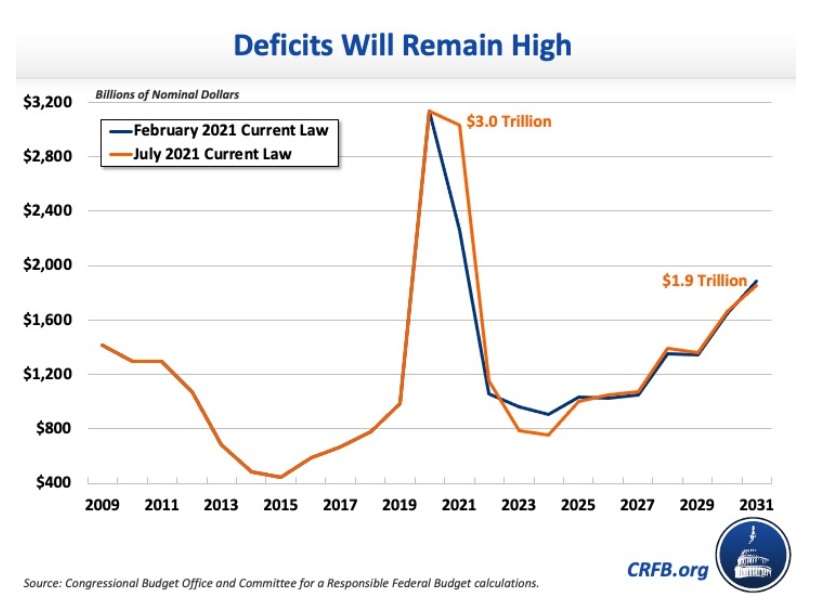
That’s a clever little game. Thanks to pandemic spending, the federal budget deficit ballooned to over $3 trillion during 2020 and rang in at $2.8 trillion last year. As the pandemic passes and all that emergency spending comes off the books, the deficit is projected to fall to about $1.1 trillion this year before leveling off and then rising again:

That decline is not the result of anything Biden is proposing to do—and it doesn’t mean that the underlying problems with the federal budget have been addressed.

Biden is setting the lowest possible goal for deficit reduction, setting himself up to take credit for achieving it, and hoping that’s enough to convince moderate Democrats to vote for more spending.

Because that’s absolutely the other shoe here. Biden’s “Build Back Better” plan died in the Senate last year because Manchin and other moderate Democrats refused to vote for more spending. Manchin was very explicit about this: “This is a recipe for an economic crisis,” he said of Biden’s plan in November.

Even after the White House tried to reconfigure the package to hide half its actual cost, Manchin correctly derided it for being full of “shell games” and “budget gimmicks.”

So Biden is promising to change the shells and announce new gimmicks, this time gift-wrapped specifically for Manchin. But this isn’t deficit reduction; it’s just more of the same.

The post Biden Tries To Twist His Domestic Agenda Into a Form Joe Manchin Will Support appeared first on Reason.com.

from Latest https://ift.tt/VAzc7Xb
via IFTTT