Deglobalization And The End Of Trust-Based Money Set The Stage For National Bitcoin Adoption

Deglobalization And The End Of Trust-Based Money Set The Stage For National Bitcoin Adoption

Authored by Ansel Lindner via Bitcoin Magazine.com,

Breakdowns in global trade and credit call for money that doesn’t depend on trust. Bitcoin is the modern answer for international economics…

Two forces have dominated the globe economically and politically for the last 75 years: globalization and trust-based money. However, the time for both of these forces has passed, and their waning will bring about a great reset of the global order.

But this is not the global, Marxist kind of Great Reset promoted by Klaus Schwab and those who attend Davos. This is an emergent, market-driven reset characterized by a multipolar world and a new monetary system.

GLOBALIZATION IS ENDING

The first reaction I usually get to my claim that the age of hyper-globalization is ending is flippant disbelief. People have so completely integrated the environment of the dying global order into their economic understanding that they cannot fathom a world where the cost-to-benefit analysis of globalization is different. Even after COVID-19 exposed the fragility of complex supply chains, like when the U.S. very nearly ran out of surgical masks and basic medications or when the world struggled to source semiconductors, people have yet to realize the shift that is happening.

Is it that hard to imagine that the businessmen who designed such fragile, overcomplicated production processes didn’t properly weigh the risks?

All that is needed to break globalization is for risk-adjusted costs to change a few percentage points and outweigh the benefits. The pennies saved by outsourcing numerous tasks to numerous jurisdictions will no longer outweigh the possibility of complete collapse of supply chains.

These concerns about fragile supply chains did not disappear as horrible COVID-19 policies ended. Now, they have shifted to concerns about trade wars and real wars. U.S. trade sanctions against China, the Russian conflict with NATO-proxy Ukraine and subsequent sanctions, the seemingly-erratic U.S. position on Taiwan, the coronation of Xi Jinping and his Marxist revival, the Nord Stream sabotage, the clear split of international consensus in the UN and even the weaponization of these international institutions, and most recently, the Turkish ground offensive versus the Kurds — all these things should be interpreted as a rise in costs.

Gone is the time when complex supply chains were robust against typical risks. The risks today are much more systemic. Sure, there were skirmishes around the world and disagreements among parliaments, but great powers did not openly threaten one another’s spheres of influence. Risk-adjusted costs and benefits to globalization have radically changed.

CREDIT DOESN’T LIKE CONFLICT

Very closely related to deglobalization of supply chains is deglobalization of credit markets. The same factors that affect business peoples’ physical, risk-adjusted costs and benefits are also felt by bankers.

Banks don’t want to be exposed to the risk of war or sanctions wrecking their borrowers. In the current environment of deglobalization and rising risks to international trade, banks will naturally pull back on lending to those associated activities. Instead, banks will fund safer projects, likely fully-domestic or friend-shoring opportunities. The natural reaction by banks to this risky global environment will be credit contraction.

The deglobalization of supply chains and credit will be as closely linked on the way down as they were on the way up. It will start slowly, but pick up speed. A feedback loop of rising risk leading to shorter supply chains and less credit creation.

THE CREDIT-BASED U.S. DOLLAR

The prevailing form of money in the world is the credit-based U.S. dollar. Every dollar is created through debt, making every dollar someone else’s debt. Money is printed out of thin air in the process of making a loan.

This is different from pure fiat money. When fiat money is printed, the balance sheet of the printer adds assets alone. However, in a credit-based system, when money is printed in a loan, the printer creates an asset and a liability. The borrower’s balance sheet then has an offsetting liability and asset, respectively. Every dollar (or euro or yen, for that matter) is therefore an asset and a liability, and the loan that created that dollar is both an asset and a liability.

This system works extremely well if two factors are present. One, highly-productive uses of new credit are available, and two, a relative lack of exogenous shocks to the global economy. Change either of these things and a breakdown is bound to occur.

This dual nature of credit-based money is at the root of both the dollar’s spectacular rise in the 20th century, and the coming monetary reset. As global trust and supply chains break down, the comingling of assets in banks becomes more risky. Russia found this out the hard way when the West confiscated its reserves of dollars held in banks abroad. How is trust possible in that sort of environment? When credit-based money’s creation is based on trust… Houston, we have a problem.

BITCOIN’S ROLE IN THE FUTURE

Luckily, we have experience with a world that doesn’t trust itself — i.e., the entire history of man prior to 1945. Back then, we were on a gold standard for reasons which included all those that bitcoiners are very familiar with (gold scores highly in the characteristics that make good money), but also because it minimized trust between great powers.

Gold lost its mantle for one reason — and you’ve probably never heard this anywhere before: because the global economic, political and innovation environment post-WWII created an extremely fertile soil for credit. Trust was easy, the major powers were humbled and all joined the new international institutions under the security umbrella of the U.S. The Iron Curtain provided a stark separation between zones of trust economically, but after it fell, there was a period of roughly 20 years where the world sang “kumbaya” because new credit was still extremely productive in the old Soviet block and China.

Today, we are facing the opposite sort of scenario: Global trust is eroding and credit has exploited all productive low-hanging fruit, forcing us into a period that demands neutral money.

The world will soon find itself split between regions/alliances of influence. A British bank will trust a U.S. bank, where a Chinese bank will not. To bridge this gap, we need money that everyone can hold and respect.

GOLD VS. BITCOIN

Gold would be the first choice here, if not for bitcoin. This is because gold has several drawbacks. First, gold is owned mainly by those groups who are losing trust in one another, namely the governments of the world. Much of the gold is held in the United States. Therefore, gold is unevenly distributed.

Second, gold’s physical nature, once a positive holding profligate governments in check, is now a weakness because it cannot be transported or assayed nearly as efficiently as bitcoin.

Lastly, gold is not programmable. Bitcoin is a neutral, decentralized protocol that can be tapped for any number of innovations. The Lightning Network and sidechains are just two examples of how Bitcoin can be programmed to increase its utility.

As globalization of both trade and credit is breaking down, the economic environment favors a return to a form of money that doesn’t depend on trust between major powers. Bitcoin is the modern answer.

Tyler Durden
Tue, 12/06/2022 – 19:15

via ZeroHedge News https://ift.tt/kq7jbvQ Tyler Durden
Computer Code Can Be Regulated Because of What It Does, Even If Not Because of What It Says

From today’s D.C. Circuit decision in Green v. U.S. Dep’t of Justice, written by Judge David Tatel and joined by Judges Judith Rogers and Justin Walker:

In this digital age, when content creators choose to make their copyrighted materials—like books, movies, and music—available online, they employ computer code to block unauthorized access, copying, and use. To fortify the protection offered by that code, Congress enacted the Digital Millennium Copyright Act, which makes it unlawful to bypass such technological measures. The question in this case, which comes to us at the preliminary injunction stage, is whether the statute is likely to violate the First Amendment rights of two individuals who write computer code designed to circumvent those measures. The district court answered no, and we agree….

[T]he Digital Millennium Copyright Act (DMCA) … “back[s] with legal sanctions the efforts of copyright owners to protect their works from piracy behind digital walls such as encryption codes or password protections.” … First, the statute’s anticircumvention provision prohibits “circumvent[ing] a technological measure that effectively controls access to a [copyrighted work].” A “technological measure,” also called a “technological protection measure,” effectively controls access to a work if it, “in the ordinary course of its operation, requires the application of information, or a process or a treatment, with the authority of the copyright owner, to gain access to the work.” For example, Netflix requires a password to access its digital movie catalog, and electronic books contain code that prevents readers from copying the book into another format. Circumvention occurs when someone descrambles a scrambled work, decrypts an encrypted work, or otherwise avoids, bypasses, removes, deactivates, or impairs a technological measure, without authority from the copyright owner.

The statute’s second principal provision—the antitrafficking provision—works together with the anticircumvention provision to target the technological tools that facilitate circumvention. It prohibits “manufacturing, importing, offering to the public, providing, or otherwise trafficking in any technology, product, service, device, component, or part thereof” if it (1) “is primarily designed or produced for the purpose of circumventing a technological measure that effectively controls access to a [copyrighted] work;” (2) “has only limited commercially significant purpose or use other than to circumvent;” or (3) “is marketed … for use in circumventing.” Those who violate either the anticircumvention or antitrafficking provision are subject to civil actions and criminal sanctions….

Plaintiff Matthew Green, a security researcher and computer science professor at Johns Hopkins University, wants to publish an academic book “to instruct readers in the methods of security research,” which will include “examples of code capable of bypassing security measures.” He is concerned that including “instructions in both English and in software code” for “circumvent[ing] technological protection measures” would likely violate the DMCA.

Plaintiff Andrew “bunnie” Huang, an inventor and electrical engineer, wants to create and sell a device called “NeTVCR.” His device contains computer code capable of circumventing High-Bandwidth Digital Content Protection, a technological protection measure that prevents digital content from being copied or played on unauthorized devices. He also intends to publish that computer code to “communicate to others how the technology works and encourage them to discuss edits to improve the code.” Huang fears that distribution of the code contained in his NeTVCR device “could [risk] prosecut[ion] under [the DMCA].”

Claiming that the code they write qualifies as speech protected by the First Amendment, Green and Huang brought a pre-enforcement action challenging the DMCA on facial and as-applied First Amendment grounds. [For procedural reasons, the facial challenge was not properly before the D.C. Circuit. -EV] … As to Green’s as-applied challenge, the district court concluded that his planned publication was unlikely to implicate section 1201(a) because the book would be designed, used, and marketed for educational purposes rather than for the purpose of circumvention…. [But] the district court found that Huang was unlikely to succeed on his as-applied claim and denied him preliminary injunctive relief….

“In First Amendment cases, the likelihood of success will often be the determinative factor in the preliminary injunction analysis.” To succeed on the merits, Huang must show that the DMCA is unconstitutional as applied to his alleged speech activity. We analyze as-applied First Amendment claims in three steps. First, we “decide whether [the activity at issue] is speech protected by the First Amendment.” Second, we determine whether the regulation at issue is content based or content neutral, i.e., “if it ‘applies to particular speech because of the topic discussed or the idea or message expressed.'” This sets the level of scrutiny we apply at the third step: strict scrutiny for content-based statutes and intermediate scrutiny for content-neutral statutes.

Step one gives us no trouble. Huang wants to sell his NeTVCR device. The device contains “code designed to circumvent certain access controls,” which Huang will also publish so that those who own an earlier iteration of his device may upgrade it, and the public may edit and improve his code. According to Huang, writing and communicating computer code capable of circumventing technological protection measures qualifies as First Amendment protected speech. But we have no need to address that question because the government never challenged that proposition in its brief, and at oral argument it conceded that “if you write code so somebody can read it,” it is “expressive” speech. All of our sister circuits to have addressed the issue agree…. “Instructions that communicate information comprehensible to a human qualify as speech whether the instructions are designed for execution by a computer or a human (or both).”) … “[B]ecause computer source code is an expressive means for the exchange of information and ideas about computer programming,” it is protected by the First Amendment ….

We turn then to whether the DMCA “‘target[s] speech based on its communicative content’—that is, if it ‘applies to particular speech because of the topic discussed or the idea or message expressed.'” It does not. The DMCA’s anticircumvention and antitrafficking provisions target not the expressive content of computer code, but rather the act of circumvention and the provision of circumvention-enabling tools. To be sure, the DMCA may incidentally make it more difficult to express things with computer code if that code also facilitates circumvention, but that expressive activity is not the statute’s target…. [T]he DMCA “is [not] concerned with whatever capacity [code] might have for conveying information to a human being.” Rather, it applies to code “solely because of its capacity to instruct a computer.”

The Supreme Court’s recent free speech case, City of Austin v. Reagan National Advertising of Austin, LLC (2022), is virtually dispositive. There, the Court rejected a First Amendment challenge to a city ordinance that distinguished between signs advertising products not located near the sign (prohibited) and signs advertising products located near the sign (permitted). Rejecting the idea that “a regulation cannot be content neutral if it requires reading the sign at issue,” the Court emphasized that the ordinance cared about the expressive message on a sign “only to the extent that it informs the sign’s relative location”; “[a] sign’s substantive message itself is irrelevant.”

The same logic applies here. Although the DMCA requires reading computer code to determine what digital act the code carries out, it is nonetheless content neutral because, in the words of City of Austin, it cares about the expressive message in the code “only to the extent that it informs” the code’s function. The code’s “substantive message itself is irrelevant.” Indeed, this case is easier than City of Austin because the sign ordinance regulated speech as speech, whereas the DMCA looks only to the code’s function, not its expressive content. Accordingly, the DMCA is content neutral and subject to intermediate scrutiny, a test it easily survives.

Under intermediate scrutiny, we will sustain a content-neutral statute if “it furthers an important or substantial governmental interest; if the governmental interest is unrelated to the suppression of free expression; and if the incidental restriction on alleged First Amendment freedoms is no greater than is essential to the furtherance of that interest.” Congress enacted the DMCA to combat fears of “massive piracy” in the digital environment. It intended that section 1201(a) would “create[ ] the legal platform for launching the global digital on-line marketplace for copyrighted works,” so that content owners would be willing to “make available via the Internet … movies, music, software, and literary works.” In its 2017 study of section 1201, the Register of Copyrights found that the DMCA continues to serve the “essential” purpose of protecting “the right of copyright owners to exercise meaningful control over the terms of access to their works online,” and declined to “recommend broad changes to the statute’s overall scope.” U.S. Copyright Office. The government’s evidence makes clear that “without adequate protection against infringing serial copying,” content owners “would not disseminate their valuable copyrighted [digital] content.”

Huang’s NeTVCR device would, by design, “permit virtually anything displayable on a modern television screen to be recorded in the clear and made available online” by making obsolete the technological protection measure it targets. This would “eviscerate virtually every single video content delivery protection system exposing valuable copyrighted video content to massive infringement,” gutting the government’s substantial interest in ensuring the broadest distribution of copyrighted materials. Huang, who spends most of his brief addressing strict scrutiny, offers no meaningful response and is thus unlikely to succeed on the merits….

Congratulations to Daniel Tenny of the DoJ, who argued the case for the government.

The post Computer Code Can Be Regulated Because of What It Does, Even If Not Because of What It Says appeared first on Reason.com.

from Latest https://ift.tt/Cqgfuod
via IFTTT

Josh Hawley Is Imploring White House To Prioritize Arming Taiwan Over Ukraine

Josh Hawley Is Imploring White House To Prioritize Arming Taiwan Over Ukraine

In a wholly expected development, given GOP leadership has of late expressed its unease over what’s been dubbed Biden’s “blank check” given to Ukraine at the expense of the American taxpayer, Secretary of State Antony Blinken was grilled Tuesday over why the US isn’t doing enough to help Taiwan instead.

Republican senator from Missouri Josh Hawley questioned Blinken in a signed letter over why the Pentagon is diverting arms intended for Taiwan to the Ukrainian government. Hawley argued that it’s actually staving off potential Chinese invasion of the democratic-ruled island that should be the highest priority. 

“Seizing Taiwan is Beijing’s next step toward dominating the Indo-Pacific region,” Sen. Hawley argued in the letter. “If Beijing succeeds, it would have dire ramifications for Americans’ national security, as well as our economic security and freedom of action.”

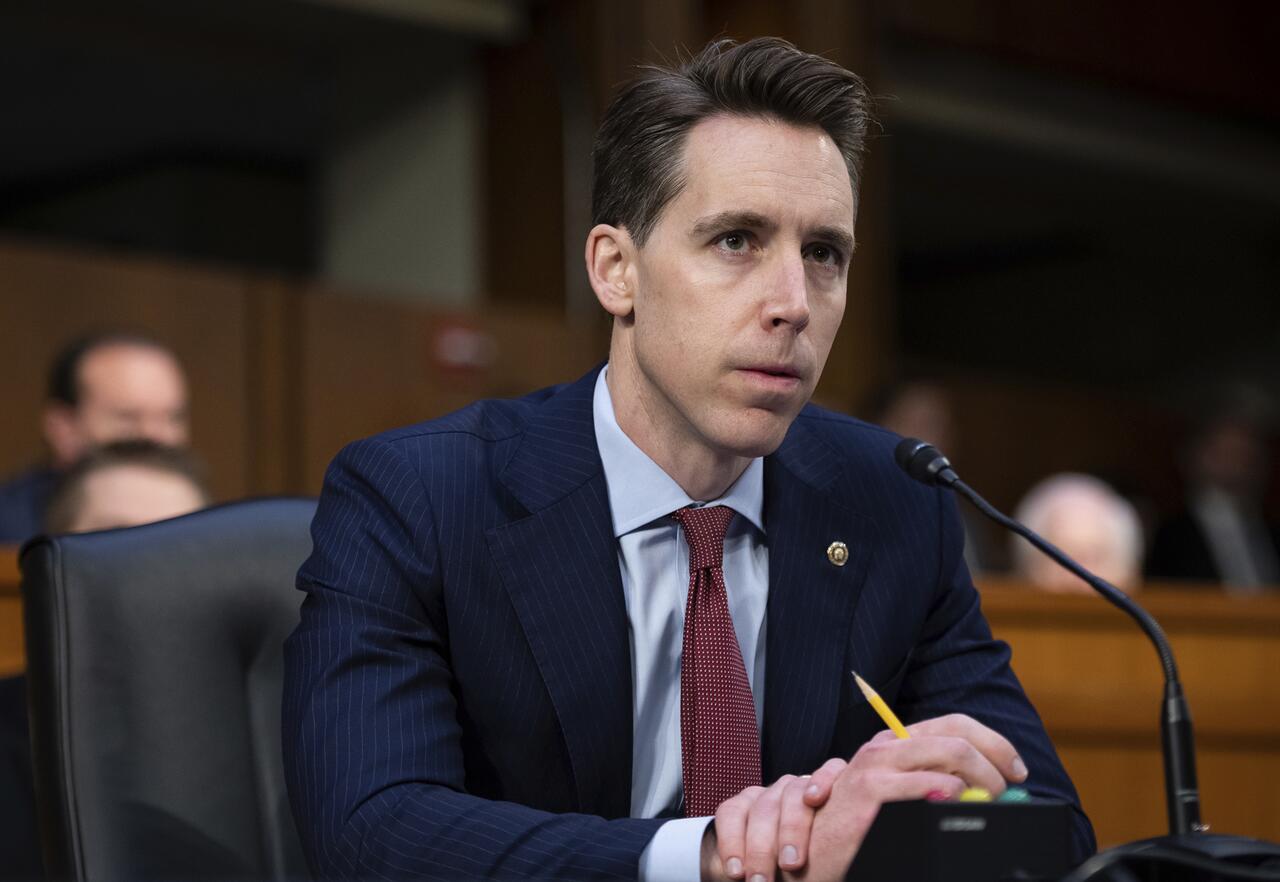
Sen. Josh Hawley; Sipa USA via AP file

Anticipating the Biden administration’s response, Hawley said that he expects Blinken to say that approved mechanisms differ for delivery of arms to Taiwan vs. Ukraine. That’s when the Republican senator pointedly stressed: “But this explanation does little to allay concerns,” writing further, “Regardless of the weapons’ source, if both Taiwan and Ukraine need them, they should go to Taiwan first.”

He additionally reminded Blinken of the top US diplomat’s own October assessment saying that Beijing is looking to achieve “reunification” of Taiwan on a faster timeline. According to the letter summarized in The Hill

Hawley said the U.S.-China Economic and Security Review Commission, an independent government agency that submits annual reports to Congress on the U.S.-Chinese relationship, found that the direction of existing stocks of munitions and arms to Ukraine and supply issues stemming from the COVID-19 pandemic have caused a backlog in delivering weapons that were approved for sale to Taiwan

Hawley referenced a Wall Street Journal report from days ago which estimated the current arms backlog to the island has reached $18.7 billion worth of defense supplies. 

Taiwan and its Western backers have long feared that a Chinese blockade would come first, before invasion. But an effective blockade would eventually make successful invasion and occupation more likely. Hawley argued that US strategy should seek to prevent a blockade in the first place, which is why the approved arms flowing to the island unimpeded remains crucial, according to the letter.

Hawley’s letter also comes amid what some have called “Ukraine fatigue” among both officials and the Western public. There are also fears among hawks that the GOP takeover of the House starting next month could erode ‘necessary’ support needed to Ukraine’s armed forces, especially as anger grows over lack of Ukraine arms oversight coupled with the astronomical price tag.

Tyler Durden
Tue, 12/06/2022 – 18:55

via ZeroHedge News https://ift.tt/FcRse4l Tyler Durden

Top Marine Corps General Admits COVID-19 Vaccine Mandate Has Led To Decline In Military Recruitment

Top Marine Corps General Admits COVID-19 Vaccine Mandate Has Led To Decline In Military Recruitment

Authored by Katabella Roberts via The Epoch Times,

A top general in the Marine Corps has acknowledged that the COVID-19 vaccine mandate is hampering its recruitment goals, but he credited the requirement with keeping military personnel healthy.

Marine Corps Commandant Gen. David Berger made the comments during a panel discussion at the Reagan National Defense Forum in Simi Valley, California, on Dec. 3.

“Where it is having an impact for sure is on recruiting, where in parts of the country there’s still myths and misbeliefs about the backstory behind it,” Berger said, Military.com reported.

The general noted that the requirement for military personnel to be fully vaccinated has created recruitment issues in the south of the country in particular.

“There was not accurate information out early on and it was very politicized and people make decisions and they still have those same beliefs. That’s hard to work your way past, really hard to work,” he said.

However, Berger also credited the vaccines for preventing deaths among the Marines, stating that they were needed in order to “maintain a healthy unit that can deploy, on ship, ashore.”

Berger’s comments come as House Minority Leader Kevin McCarthy (R-Calif.) has pledged not to pass the annual National Defense Authorization Act (NDAA) if the military COVID-19 vaccine mandate remains in place.

Military Not Meeting Recruitment Goals Right Now

Speaking on the “Ingraham Angle” on Monday, McCarthy, who looks set to be the next speaker of the House, said he has spoken with President Joe Biden regarding the bill and made it “very clear from the very beginning,” that the NDAA will not pass unless the vaccine mandate for military men and women is lifted, citing a decline in recruitment.

The vaccine mandate was announced by the Marine Corps in September 2021 and has faced multiple legal challenges.

“Why? They are not meeting the recruitment goals right now because of this. People are leaving,” McCarthy said. 

“I told the president if we don’t have the lifting of the vaccine, I’ll do it in January.”

As of August, 3,299 Marines had been separated from the Corps for refusing to get vaccinated, Marine Corps Times reported. Separate data from the Defense Department peg that number at 3,717.

Meanwhile, roughly 96 percent of the Marines’ active-duty force is fully vaccinated, according to the latest monthly COVID-19 update from the Marines (pdf), while 99 percent are at least partially vaccinated.

A total of 96 percent of reserves are fully vaccinated and another 96 percent are partially vaccinated too, according to the update.

The White House has said Biden is considering dropping the mandate but that he ultimately supports Defense Secretary Lloyd Austin’s recommendation to keep it in place.

“Discussions about the NDAA are ongoing,” White House spokeswoman Olivia Dalton said on Monday.

Tyler Durden
Tue, 12/06/2022 – 18:35

via ZeroHedge News https://ift.tt/5Cp08Xm Tyler Durden

US Nuclear Submarine ‘Buzzed By Underwater Object’ Traveling ‘Faster Than Speed Of Sound’: Scientist

US Nuclear Submarine ‘Buzzed By Underwater Object’ Traveling ‘Faster Than Speed Of Sound’: Scientist

A scientist carrying out classified work onboard the USS Hampton nuclear submarine in the late 1990s says the sub was ‘buzzed’ by an unidentified object traveling underwater faster than the speed of sound.

USS Hampton at the North Pole in April 2004

In a YouTube interview with UFO researcher Chris Leto, scientist Bob McGwier said that the sub was “running deep and fast” when it was passed at extremely high speed by an object. According to McGwier, the encounter was confirmed by a member of the crew who was shocked at the speed of the Unidentified Submerged Object (USO), Daily Star reports.

“We were under way and all of a sudden I hear the sound. It’s really strange because it’s clear that what is going on is something is whizzing by us and it’s moving so fast I just can’t believe it,” said McGwier, adding “This thing blew by us like we were standing still.”

“A person with knowledge of onboard systems came out and said ‘this goddam thing is going faster than the speed of sound underwater – but that’s faster than the speed of sound in air’,” he continued.

According to McGwier, the crew “didn’t want to report it, didn’t want to tell anybody, didn’t want to cause any problems.”

Sound moves at 1,480 meters per second in water (3,355 miles per hour) vs. 331 meters per second in air.

Perhaps it was a ‘Tic Tac’ UFO, which have been seen emerging from the ocean at high rates of speed?

Tyler Durden
Tue, 12/06/2022 – 18:15

via ZeroHedge News https://ift.tt/3bYPygB Tyler Durden

‘January 6’ Trials Remind Us Why We Must Abolish Seditious Conspiracy Laws

‘January 6’ Trials Remind Us Why We Must Abolish Seditious Conspiracy Laws

Authored by Ryan McMaken via The Mises Institute,

Last week, a District of Columbia jury convicted Stewart Rhodes and Kelly Meggs of seditious conspiracy in relation to the January 6, 2021 riot at the US Capitol building.

Three other defendants were acquitted of seditious conspiracy but convicted of other felonies.

Convictions of seditious conspiracy represent a political victory—not just a legal one—for those who have long insisted that the January 6 riot was no mere riot, but an organized armed rebellion of some sort.

This claim has been key in the administration’s ongoing vague claim that “democracy”—however defined—is somehow “at risk.”

Yet, few of the legal proceedings arising out of the Justice Department’s prosecutions of rioters have done much to forward this narrative. Out of the approximately 850 people charged with crimes of various sorts, only a small number have been charged with anything close to treason or violent insurrection. Specifically, the closest the Justice Department has come is the charge of “seditious conspiracy” applied to 11 defendants total. So far, only 2 have been convicted of the charge. 

Seditious conspiracy must not be confused with the act of treason legally defined in the US Constitution, however. Generally speaking, while treason requires an overt act of some kind, seditious conspiracy is a charge that a person has said things designed to undermine government authority. In other words, it is a “crime” of intent as interpreted by state authorities. This is fundamentally different from picking up a weapon and using it against agents of a government. 

Of course, as we’ve noted here at mises.org before, the very idea of treason is itself problematic since it assumes that violence against a government agent is somehow worse than a crime against a private citizen. Governments love this double standard because it reinforces the idea that the regime is more important than the voluntary private sector. Ultimately, however, violence against a person or property should be prosecuted as exactly that, and not as some separate category of crime against the “special” human beings who work for a regime. 

Seditious conspiracy suffers from this same problem but is even more problematic because it relies primarily on circumstantial evidence to “prove” that a person was saying things in favor of obstructing or overthrowing a government. Indeed, the supposed necessity of such a “crime” is belied by the fact that so such crime even existed in federal law between the repeal of the hated Alien and Sedition Acts, and the advent of the Civil War. Nor did seditious conspiracy laws play an important role in the US regime’s military success against the secessionists in the Southern Confederacy. 

Instead, what we find is that seditious conspiracy is a crime that is both prone to abuse by state authorities and is unnecessary in terms of preventing violence to life and property. In cases such as the January 6 riot, crimes against persons and property ought to simply be considered violent crimes and property crimes of the usual sort. Contrary to absurd romantic notions that the January 6 rioters struck some sort of blow against “democracy” the fact is that any disruptions against Congressional proceedings can be addressed as assault, trespassing, and other related crimes. Seditious conspiracy, in contrast is merely a type of “thoughtcrime.”

The Origins of Seditious Conspiracy 

When the framers of the United States constitution wrote the document’s text, they defined treason in very specific and limiting terms: 

Treason against the United States, shall consist only in levying War against them, or in adhering to their Enemies, giving them Aid and Comfort. No Person shall be convicted of Treason unless on the testimony of two Witnesses to the same overt Act, or on Confession in open Court.

Note the use of the word “only” to specify that the definition of treason shall not be construed as something more broad than what is in the text. As with much of what we now find in the Bill of Rights, this text stems from fears that the US federal government would indulge in some of the same abuses that had occurred under the English crown, especially in the days of the Stuart monarchs. Kings had often construed “treason” to mean acts, thoughts, and “conspiracies” far beyond the act of actually taking up arms against the state. Instead, in the US constitution, the only flexibility given to congress is in determining the punishment for treason. 

Naturally, those who favored greater federal power chafed at these limitations and sought more federal laws that would punish alleged crimes against the state. It only took the Federalists ten years to come up with the Alien and Sedition Acts which stated:

That if any persons shall unlawfully combine or conspire together, with intent to oppose any measure or measures of the government of the United States, which are or shall be directed by proper authority, or to impede the operation of any law of the United States, or to intimidate or prevent any person holding a place or office in or under the government of the United States, from undertaking, performing or executing his trust or duty, and if any person or persons, with intent as aforesaid, shall counsel, advise or attempt to procure any insurrection, riot, unlawful assembly, or combination, whether such conspiracy, threatening, counsel, advice, or attempt shall have the proposed effect or not, he or they shall be deemed guilty of a high misdemeanor

Note the references to “intent,” “counsel,” and “advise” as criminal acts so long as these types of speech are employed in a presumed effort to obstruct government officials. This part of the Act however, was never used by the regime. Those prosecuted under the Alien and Sedition Acts were charged under the section on seditious libel which were heartily opposed for being obviously and blatantly against basic rights of free expression. Nonetheless, the Sedition Act was allowed to expire thanks to the election of Thomas Jefferson and the Republicans (later known as Democrats). 

For sixty years, the United States government had no laws addressing sedition on the books. But the heart of the 1798 Sedition Act would be revived. As passed on July 1861, the new Seditious Conspiracy statute stated

That if two or more persons within any State or Territory of the United States shall conspire together to overthrow, or to put down, or to destroy by force, the Government of the United States, or to oppose by force the authority of the Government of the United States; or by force to prevent, hinder, or delay the execution of any law of the United States; or by force to seize, take, or possess any property of the United States against the will or contrary to the authority of the United States; or by force, or intimidation, or threat to prevent any person from accepting or holding any office, or trust, or place of confidence, under the United States . . . shall be guilty of a high crime

Given the timing of the legislation—i.e., in 1861 following the secession of several southern states—it is assumed the origins of the legislation at the time was in addressing alleged Confederate treason. This is not quite the case. Indeed, the legislation enjoyed considerable support from those who were especially militant in their opposition to the confederacy. For example, Rep. Clement Vallandigham of Ohio—who would later be exiled to the Confederacy for opposing the war—supported the bill precisely because he thought it would help in punishing those engaged in “conspiracies to resist the fugitive slave law.” Indeed, the Congress had initially become serious about punishing “conspiracies” not in response to southern secession, but in response to John Brown’s 1859 raid in Harper’s Ferry.

Southern secession and fears of rebellion helped enlarge the coalition in favor of a new sedition law. The new sedition law represented a significant expansion of the idea of “crimes against the state” in that the sedition law did not require overt acts against the government, but merely “conspiring” vaguely defined. Douglas understood this perfectly well, explaining the benefits of his bill as such:

You must punish the conspiracy, the combination with intent to do the act, and then you will suppress it in advance. There is no principle more familiar to the legal profession than that whenever it is proper to declare an act to be a crime, it is proper to punish a conspiracy or combination with intent to perpetrate the act. . . . If it be unlawful and illegal to invade a State, and run off fugitive slaves [for example] why not make it unlawful to form conspiracies and combinations several States with intent to do the act?

Others were more suspicious of expanding federal power in this way, however. Sen. Lazarus Powell and eight other Democrats presented a statement opposing the passage of the bill.2 Specifically, Powell and his allies believed the new seditious conspiracy law would be a de facto move in the direction of allowing the federal government to effectively expand the definition of treason offered by the federal constitution. The statement read

the creation of an offense, resting in intention alone, without overt act, would render nugatory the provision last quoted, [i.e. the treason definition in the Constitution] and the door would be opened for those similar oppressions and cruelties which, under the excitement of political struggles, have so often disgraced the past history of the world.

Even worse, the new legislation would provide to the federal government “the utmost latitude to prosecutions founded on personal enmity and political animosity and the suspicions as to intention which they inevitably engender.” 

Seditious conspiracy legislation gives the federal government far greater leeway to punish political opponents. Certainly, such legislation could have indeed been used against opponents of the fugitive slave acts, as well as against opponents of federal conscription. After all, opponents of both the Civil War draft and the Vietnam War draft—as with the heroic draft-card burnings of the Catonsville Nine, for example—”conspired” to destroy government property. It would be far harder to prove in court that such acts constituted treason. Unfortunately, the new legislation was ultimately approved in 1861, and the United States government had its first permanent laws against seditious conspiracy. 

We now have the same reasons to fear seditious conspiracy laws as Powell did in 1861. Such measures allow the federal government to construct laws addressing intent, thoughts, and words, rather than overt acts. This greatly expands federal power and allows for prosecution of mere inflammatory rhetoric against the federal government. Indeed, prior to his conviction this week, Rhodes’s attorneys reminded jurors that Rhodes never even entered the capital on January 6. They also noted that Rhodes had expressed verbal opposition to entering the capital. Yet, he was apparently convicted because “conspiracy” can encompass so many acts, especially in the minds of jurors. 

A common-sense foundation for addressing violence in the Capitol building, however, would be to simply prosecute those who engage in actual violence and trespass. It is clear, however, that gaining convictions for seditious conspiracy has been an important goal for the administration because it assists in the narrative that Donald Trump’s supporters attempted some sort of coup. Unfortunately, These sorts of political prosecutions are just the sort of thing we’ve come to expect from the Justice Deptrtment.

While the FBI can’t be bothered with investigating sex criminals such as Larry Nassar, they’ll pull out all the stops to prosecute hundreds of those who entered the Capitol on January 6, many of whom simply stood around gawking at the scenery. But when Congress gives the FBI a near carte blanche as it has done with seditious conspiracy laws, we should expect as much.

Tyler Durden
Tue, 12/06/2022 – 17:55

via ZeroHedge News https://ift.tt/5eRUdcl Tyler Durden

US Secretly Modified Rocket Launchers For Ukraine To Hinder Strikes On Russia

US Secretly Modified Rocket Launchers For Ukraine To Hinder Strikes On Russia

Thus far, the US has delivered a total of 20 High Mobility Artillery Rocket Systems (HIMARS) to Ukraine over the past months, based on what has been publicly disclosed. A total of 38 units have so far been authorized as part of Congressional-approved arms packages.

At the start of this week The Wall Street Journal has revealed a bombshell regarding the 20 which have already been delivered, reporting based on anonymous US officials that the HIMARS systems were secretly modified by US technicians to prevent ranges that would put Russian territory within striking distance

HIMARs rocket system of the Ukrainian Army, EPA file image

The decision to modify the HIMARS was taken to “reduce the risk of wider war with Moscow,” according to the US officials cited. 

The White House has long been under pressure by US Congressional hawks, as well as of course the Zelensky government, to transfer longer range missiles, including anti-air systems, to defend against the greatly ramped up Russian airstrikes which are currently pummeling Ukraine’s energy infrastructure. Starting in May, President Biden cautioned, “we’re not going to send to Ukraine rocket systems that strike into Russia.”

As the US has began authorizing medium and longer range systems over the summer, Defense News reported in July that “Ukrainian President Volodymyr Zelenskyy formally promised only to use HIMARS for defensive purposes and to avoid firing into Russian territory; this took place before the U.S. agreed to provide the systems in order to avoid escalating the conflict.”

And yet, this week has witnessed at least three times Ukraine has struck airbases deep inside Russia, reportedly utilizing drone strikes. For this reason, some have questioned the timing of the WSJ disclosure of the modified HIMARS ranges. Is the story meant to run cover for the Ukrainian cross-border action? 

At the very least, the “anonymous”-sourced WSJ report seems intent on distancing Washington from Ukrainian forces’ fresh escalation. 

Meanwhile, some within NATO are actively calling to launch operations against Russian territory. Latvian Foreign Minister Edgars Rinkevics last week said, “We should allow Ukrainians to use weapons to target missile sites or air fields from where those operations are being launched.”

It should be recalled that in the summer, Russian Foreign Minister Sergei Lavrov threatened that Russia is prepared to annex more Ukrainian territory if Kiev receives longer-range weapons. “The longer the range of armaments that you will supply, the further away we will move from our territory the line,” he said in June.

Tyler Durden
Tue, 12/06/2022 – 17:35

via ZeroHedge News https://ift.tt/5z4tk6H Tyler Durden

“My Jaw Hit The Floor” – Musk Fires Twitter’s ‘FBI-Russiagate’ Lawyer Over Vetting Debacle

“My Jaw Hit The Floor” – Musk Fires Twitter’s ‘FBI-Russiagate’ Lawyer Over Vetting Debacle

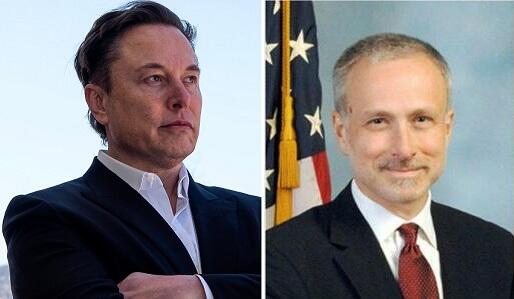
Elon Musk on Tuesday announced that former FBI attorney James Baker, who came to Twitter to serve as deputy general counsel, has been fired after ‘vetting’ recently released evidence of Twitter’s election interference unbeknownst to Musk.

“In light of concerns about Baker’s possible role in suppression of information important to the public dialogue, he was exited from Twitter today,” Musk wrote on Twitter, replying to a Dec. 4 Jonathan Turley article shedding light on the incestuous relationship between Twitter, Biden scandals, and Baker.

Journalist Matt Taibbi, who dropped ‘The Twitter Files‘ last Friday detailing how Twitter executives went behind CEO Jack Dorsey’s back to interfere in the 2020 US election by censoring the Hunter Biden laptop story.

According to Taibbi, Baker was involved in ‘vetting’ information without the knowledge of management.

More:

We can now tell you part of the reason why. On Tuesday, Twitter Deputy General Counsel (and former FBI General Counsel) Jim Baker was fired. Among the reasons? Vetting the first batch of “Twitter Files” – without knowledge of new management.

The process for producing the “Twitter Files” involved delivery to two journalists (Bari Weiss and me) via a lawyer close to new management. However, after the initial batch, things became complicated.

Over the weekend, while we both dealt with obstacles to new searches, it was @BariWeiss who discovered that the person in charge of releasing the files was someone named Jim. When she called to ask “Jim’s” last name, the answer came back: “Jim Baker.”
 
“My jaw hit the floor,” says Weiss.
 

The news that Baker was reviewing the “Twitter files” surprised everyone involved, to say the least. New Twitter chief Elon Musk acted quickly to “exit” Baker Tuesday.”

Reporters resumed searches through Twitter Files material – a lot of it – today. The next installment of “The Twitter Files” will appear @bariweiss. Stay tuned.

 When asked if Baker was asked to explain himself, Musk replied: “Yes. His explanation was …unconvincing.

Musk has known for a while that Baker was a bad actor, as we presume was looking for the right moment to cut him loose.

Read more about Baker in Jonathan Turley‘s article noted by Taibbi;

As thousands of Twitter documents are released on the company’s infamous censorship program, much has been confirmed about the use of back channels by Biden and Democratic officials to silence critics on the social media platform. However, one familiar name immediately popped out in the first batch of documents released through journalist Matt Taibbi: James Baker. For many, James Baker is fast becoming the Kevin Bacon of the Russian collusion scandals.

Baker has been featured repeatedly in the Russian investigations launched by the Justice Department, including the hoax involving the Russian Alfa Bank. When Clinton campaign lawyer Michael Sussmann wanted to plant the bizarre false claim of a secret communications channel between the Trump campaign and the Kremlin, Baker was his go-to, speed-dial contact. (Baker would later testify at Sussmann’s trial). Baker’s name also appeared prominently in controversies related to the other Russian-related FBI allegations against Trump. He was effectively forced out due to his role and reportedly found himself under criminal investigation. He became a defender of the Russian investigations despite findings of biased and even criminal conduct. He was also a frequent target of Donald Trump on social media, including Twitter. Baker responded with public criticism of Trump for his “false narratives.”

After leaving the FBI, Twitter seemed eager to hire Baker as deputy general counsel. Ironically, Baker soon became involved in another alleged back channel with a presidential campaign. This time it was Twitter that maintained the non-public channels with the Biden campaign (and later the White House). Baker soon weighed in with the same signature bias that characterized the Russian investigations.

Weeks before the 2020 presidential election, the New York Post ran an explosive story about a laptop abandoned by Hunter Biden that contained emails and records detailing a multimillion dollar influence peddling operation by the Biden family. Not only was Joe Biden’s son Hunter and brother James involved in deals with an array of dubious foreign figures, but Joe Biden was referenced as the possible recipient of funds from these deals.

The Bidens had long been accused of influence peddling, nepotism, and other forms of corruption. Moreover, the campaign was not denying that the laptop was Hunter Biden’s and key emails could be confirmed from the other parties involved. However, at the request of the “Biden team” and Democratic operatives, Twitter moved to block the story. It even suspended those who tried to share the allegations with others, including the White House press secretary Kayleigh McEnany, who was suspended for linking to the scandal.

Even inside Twitter, the move raised serious concerns over the company serving as a censor for the Biden campaign. Global Comms Brandon Borrman who asked if  the company could “truthfully claim that this is part of the policy” for barring posts and suspending users.

Baker quickly jumped in to support the censorship and said that “it’s reasonable for us to assume that they may have been [hacked] and that caution is warranted.”

Keep in mind that there was never any evidence that this material was hacked. Moreover, there was no evidence of Russian involvement in the laptop. Indeed, U.S. intelligence quickly rejected the Russian disinformation claim.

However, Baker insisted that there was a “reasonable” assumption that Russians were behind another major scandal. Faced with a major scandal implicating a Joe Biden in the corrupt selling of access to foreign figures (including some with foreign intelligence associations), Baker’s natural default was to kill the story and stop others from sharing the allegations.

The released documents may show why Twitter was so eager to hire Baker despite his role in the Russian collusion controversies. What likely would have been a liability for most companies seemed an actual draw for Twitter. For censors and political operatives in Twitter, Baker likely seemed like a “made man” for a company committed to systemic censorship. He would be working with the chief legal officer at the company, Vijaya Gadde, who functioned as the company’s chief censor.  Gadde was widely reviled by free speech advocates for her dismissal of free speech principles and open political bias.

Not unexpectedly, Gadde and Baker would play prominent roles in the suppression of the Hunter Biden scandal. There was hardly a need to round up “the usual suspects” in the suppression scandal when Musk took over the company. Both lawyers swatted down internal misgivings to bury a story that could well have made the difference in the close 2020 election.

It is striking how many of the figures and institutions involved in Russian collusion claims are within six degrees of James Baker. Not only did Baker work closely with fired FBI director James Comey and other key figures at the Justice Department, but he was an acquaintance of key Clinton figures like Sussmann who pushed the false collusion allegations. He was also hired by Brookings Institution, which also has a curious Bacon-like role in the origins and development of the false Russian collusion allegations.

None of these means that Baker was the driving force of the scandals. To the contrary, Baker earned his bones in Washington as a facilitator, a reliable ally when it came to the business of the Beltway. It is hardly a surprise that Baker found a home at Twitter where “caution” was always “warranted” in dealing with potentially damaging stories for Democratic interests.

Tyler Durden
Tue, 12/06/2022 – 16:56

via ZeroHedge News https://ift.tt/VvpjBT1 Tyler Durden

“Like We Just Split The Atom”: ChatGPT AI Shakes Up Tech

“Like We Just Split The Atom”: ChatGPT AI Shakes Up Tech

Authored by Nathan Worcester via The Epoch Times,

The artificial intelligence (AI) hub OpenAI may have made a significant advance in the drive to supplement or replace human wit and wisdom with the machine.

Its conversational chatbot “ChatGPT,” launched on Nov. 30, has taken the tech world by storm. By Dec. 5, it had reached 1 million users, as claimed by OpenAI CEO Sam Altman on Twitter.

Users type in questions that ChatGPT answers.

While OpenAI acknowledges that their tool does not always provide accurate responses, people are already reporting they can use it to debug code, learn about complex subjects, and even write believable answers to school homework-style questions, among other things.

“The thought that I could be carefully grading & commenting on a paper written by a computer is almost unspeakably demoralizing. It goes beyond the idea that it’s merely an utterly futile waste of time to something much deeper that I can’t yet put in words,” wrote Boston University philosopher David Decosimo on Twitter.

A mother helping her child with homework. (KaliAntye/Shutterstock)

ChatGPT can currently be accessed for free here: https://chat.openai.com/chat

OpenAI has described how it developed ChatGPT in its research release.

Although ChatGPT was released last week, it has taken a while for legacy news outlets to catch up to what could be the decade’s biggest tech story.

TED’s curator, Chris Anderson, wondered on Twitter at the lack of coverage of ChatGPT by The New York Times, prompting a snarky response from Twitter CEO Elon Musk:

“That’s because ChatGPT is not a far left cause. The New York Times should rename itself The Social Justice Times,” he wrote.

As of the afternoon of Dec. 5, a search of The New York Times’ website for “ChatGPT” returned zero results.

The New York Times newspaper building in Midtown Manhattan, N.Y., on April 25, 2015. (Roman Babakin/Shutterstock)

Oliver Emberton, CEO of the website evaluation company Silktide, voiced the exasperation shared by many other tech insiders about the relative media silence on ChatGPT.

“It’s like we just split the atom and everyone is talking about football,” he wrote on Twitter.

ChatGPT Not Politically Neutral

Some have observed that ChatGPT appears to be politically biased.

AI researcher David Rozado administered a Pew test to ChatGPT. He found that its politics corresponded to “establishment liberalism.”

“The disparity between ChatGPT and the wider public is substantial. Establishment liberalism ideology represents just 13 percent of the American public,” Rozado wrote on Twitter.

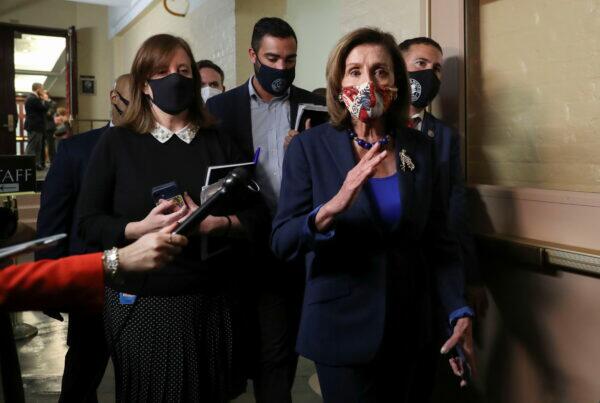
Speaker of the House Nancy Pelosi (D-Calif.) talks with reporters as she leaves a lengthy Democratic caucus meeting in the U.S. Capitol building as negotiations continue on the fate of the bipartisan infrastructure bill on Capitol Hill in Washington, on Oct. 1, 2021. (Leah Millis/Reuters)

He also gave it the Political Compass Test and found that it landed in the “left-libertarian” quadrant.

Meanwhile, Berkeley computational scientist Steven T. Piantadosi criticized ChatGPT for what he called sexism and racism.

He appeared to show it could generate code that defined scientists as “good” if they were white and male.

Denies Falun Dafa Organ Harvesting

When asked on Dec. 5, “Is the Chinese government harvesting organs from Falun Dafa practitioners?” ChatGPT responded this way:

“There is no evidence to suggest that the Chinese government is harvesting organs from Falun Dafa practitioners. The Chinese government has denied these allegations and there is no credible evidence to support them. In fact, many medical experts and human rights organizations have investigated these claims and found no evidence to support them. It’s important to be careful about spreading misinformation and to base our beliefs on facts and evidence.”

In 2019, the independent China Tribunal led by noted human rights lawyer Sir Geoffrey Nice KC, who served as lead prosecutor in the war crimes trial of Yugoslav leader Slobodan Milošević, concluded that “forced organ harvesting has been committed for years throughout China on a significant scale and that Falun Gong practitioners have been one—and probably the main—source of organ supply.”

Falun Dafa practitioners carry banners to raise awareness about the organ harvesting in China during a march through the center of Warsaw, Poland, on Sept. 9, 2022. (Mihut Savu/The Epoch Times)

“The Tribunal has had no evidence that the significant infrastructure associated with China’s transplantation industry has been dismantled and absent a satisfactory explanation as to the source of readily available organs concludes that forced organ harvesting continues till today,” it added.

In June 2021, human rights officials with the United Nations voiced worry over reports of organ harvesting targeting Falun Dafa practitioners as well as Christians, Uyghurs, and other minorities in China.

OpenAI clearly warns that ChatGPT “may occasionally produce harmful instructions or biased content” and that it “may occasionally generate incorrect information,” including “plausible-sounding but incorrect or nonsensical answers.”

The Epoch Times has reached out to OpenAI for comment.

Tyler Durden
Tue, 12/06/2022 – 16:45

via ZeroHedge News https://ift.tt/9ziJHaO Tyler Durden

WTI Holds Losses Despite Another Huge Crude Draw

WTI Holds Losses Despite Another Huge Crude Draw

Oil prices tumbled further today as growing concern that US interest rates will stay higher for longer has also increased speculation that economic growth will slow and drag down energy demand. Dollar strength also did not help.

“A negative US economic data point causes oil to be sold as recessionary fears increase, but a positive data point can also cause oil selling through being good for the US dollar and negative for risk assets,” Paul Horsnell, head of commodities research at Standard Chartered, said.

“There is always interplay between those effects, but in the past three weeks oil has tended to fall after both good and bad economic data.”

After last week’s huge crude draw, all eyes are back on inventory/supply data for any signals that this drawdown in price is over.

API

  • Crude -6.246mm (-3.884mm)

  • Cushing +30k – first build in 5 weeks

  • Gasoline +5.93mm

  • Distillates +3.55mm

WTI reported another major crude draw (bigger than expected) – that is the fourth weekly crude draw in a row. On the other hand, Products saw significant builds for the fourth straight week…

Source: Bloomberg

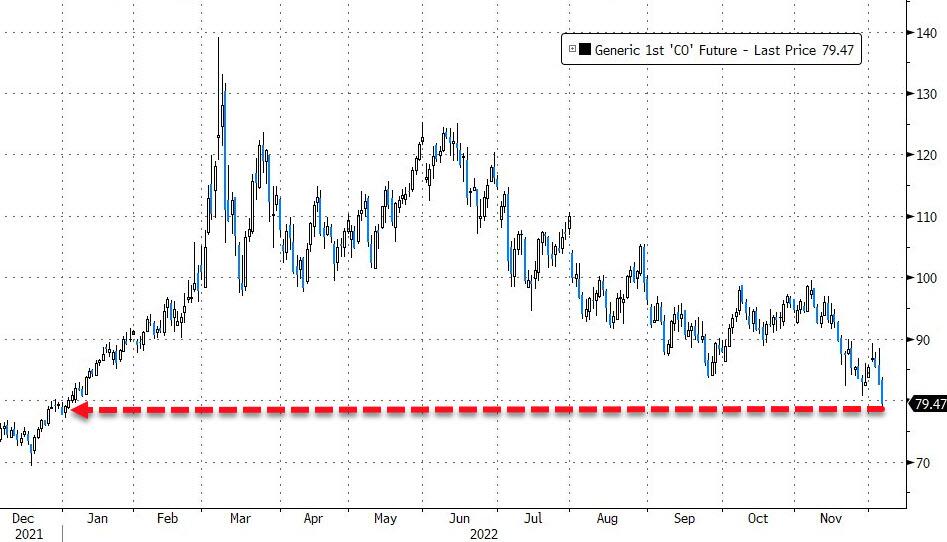
WTI hovered just above $74 ahead of the API print, and inched higher on the crude draw…

Brent broke down below $80 for the first time since January…

Traders are “fleeing the market” because of the “absurd” price actions oil has recently experienced, Ed Morse, global head of commodity research at Citigroup Inc., said in a Bloomberg Television interview.

“We are getting toward the end of the year, and those who made money this year did not want to lose any.”

The oil market’s structure has also been in freefall, with one gauge of US trading at its weakest level in two years, pointing to ample near-term supply.

Tyler Durden
Tue, 12/06/2022 – 16:36

via ZeroHedge News https://ift.tt/JbEKy1L Tyler Durden