No, America Does Not Owe The World Climate ‘Reparations’

No, America Does Not Owe The World Climate ‘Reparations’

Authored by Stephen Moore via The Epoch Times,

I’ve made the case in previous columns that the climate change movement is mostly a climate change hustle.

Let’s be real. None of this is about changing the temperature of the Earth. Even the most naïve environmental activist can’t really believe that building windmills and driving Teslas is going to cool the planet.

This is all about money. Hundreds and hundreds of billions of dollars of government handouts.

That was never more blatantly transparent than at this year’s sham COP27 climate conference in Egypt, which was attended by more than 20,000 delegates and activists from more than 100 countries. The only agreement that the delegates could reach was a hollow “commitment” from the rich Western nations—by that they mean the United States—to give “reparation” money to the poor nations of the world.

If you’ve never heard of this loony concept before, the theory is that America owes the rest of the world money for burning fossil fuels over the last hundred or so years.

Huh? These were the fossil fuels that provided America with the energy to save humanity from fascism and communism during World War I, World War II, and the Cold War. These energy sources are what have powered the industrial age, bringing light, heat, and air conditioning. And they have powered our infrastructure, factories, an abundant food supply, and a technology revolution. Add to that our drugs and vaccines, which have saved many hundreds of millions of lives globally.

It was the fossil fuel energy revolution of the last century that supplied America with the wealth and financial resources to provide some half a trillion dollars of disaster and foreign aid to seemingly every area of the rest of the world. And now, President Joe Biden’s dunces are agreeing with foreigners that we owe them money?

America should be getting reparation payments. Not the other way around.

Oh, and did I mention that China and India skipped out on the conference this year?

These are by far the two largest polluting nations, and they want no part of this global handshake “agreement.” This would be like celebrating that we have reached a peace agreement during World War II, except the bad news is that Germany and Japan aren’t on board.

The sliver of good news here is that Republicans are about to run the House of Representatives, and one of their first policy declarations will be to declare we are not sending a penny of climate foreign aid to other nations when we have mammoth problems here to solve at home.

It’s almost sinister that at a time when many third-world countries lack basic health care, adequate food production, clean water, affordable/reliable electric power, and basic schooling for the young (especially girls), the European and American delegation is giving sermons on the dangers of climate change. With a fraction of the money the climate fanatics want to spend on green energy, the world could save millions of lives simply by ensuring the poor have access to clean drinking water and save millions of lives over the decades to come.

What all of this means is that the United States is under no moral or legal obligation to pay reparations to any nation. The U.S. is running a $1.2 trillion budget deficit, so there is no extra money in the bank vaults to spend right now on foreign aid. Perhaps when we’ve balanced the budget and we have surpluses.

That would be around the third Wednesday of never.

Tyler Durden
Tue, 12/06/2022 – 16:20

via ZeroHedge News https://ift.tt/GcySbUl Tyler Durden

Stocks Puke Back All Post-Powell Gains As Yield Curve Inversion Deepens

Stocks Puke Back All Post-Powell Gains As Yield Curve Inversion Deepens

Weakening exports prompted a wider trade deficit in the US, but aside from that, there was little of note to driven today’s significant market moves – aside from a realization that Powell really didn’t say anything new last week and FOMO is all we have left to rely to ignite momentum and allow 0DTE traders to earn a buck (or lose $10).

Most notably today was the pessimism from several bank CEOs who all suggested varying levels of recession in 2023 (and a weakening consumer).

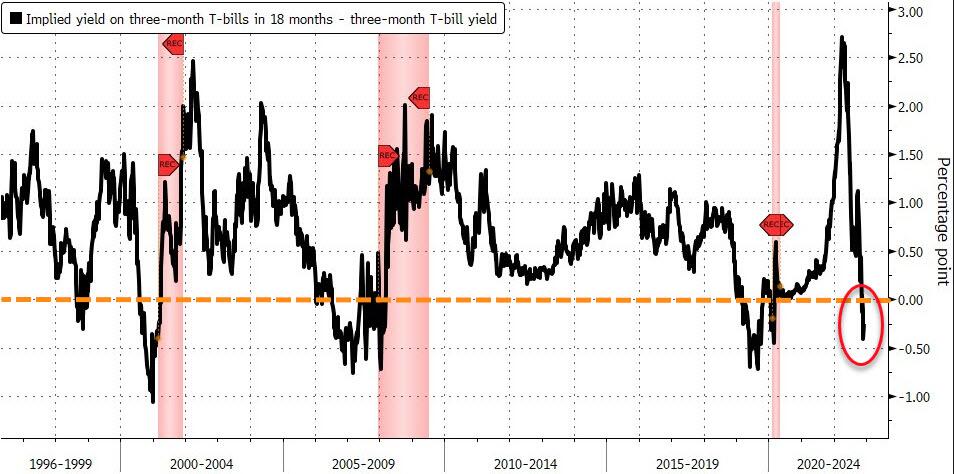
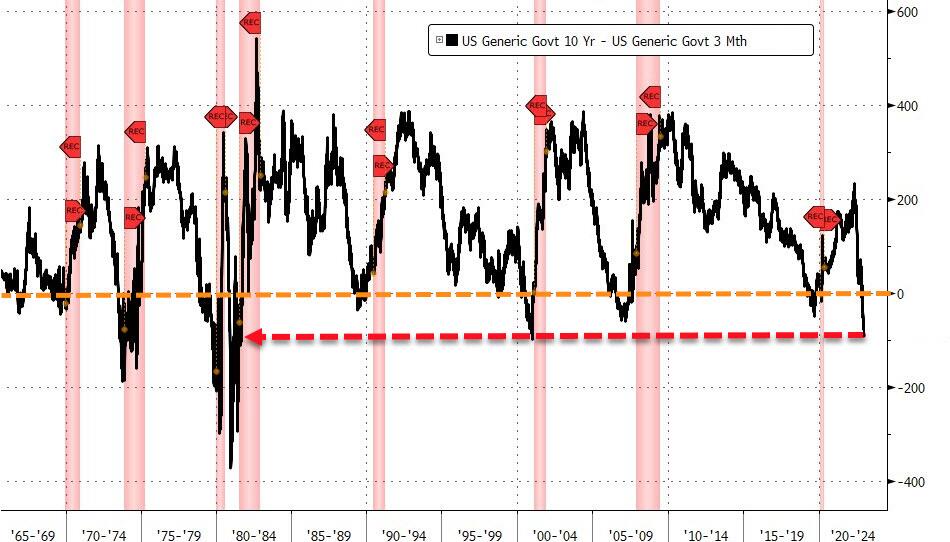
The yield curve continues to flatten deeper and deeper into inversion with The Fed’s most proven recessionary signal (3m10y) now is most inverted since 1981

Source: Bloomberg

NOTE – it’s never inverted without a subsequent recession.

Even more specifically, Jay Powell’s favorite curve indicator – 18m fwd 3m bill yield spread to spot 3m bill yield is now notably inverted…

Source: Bloomberg

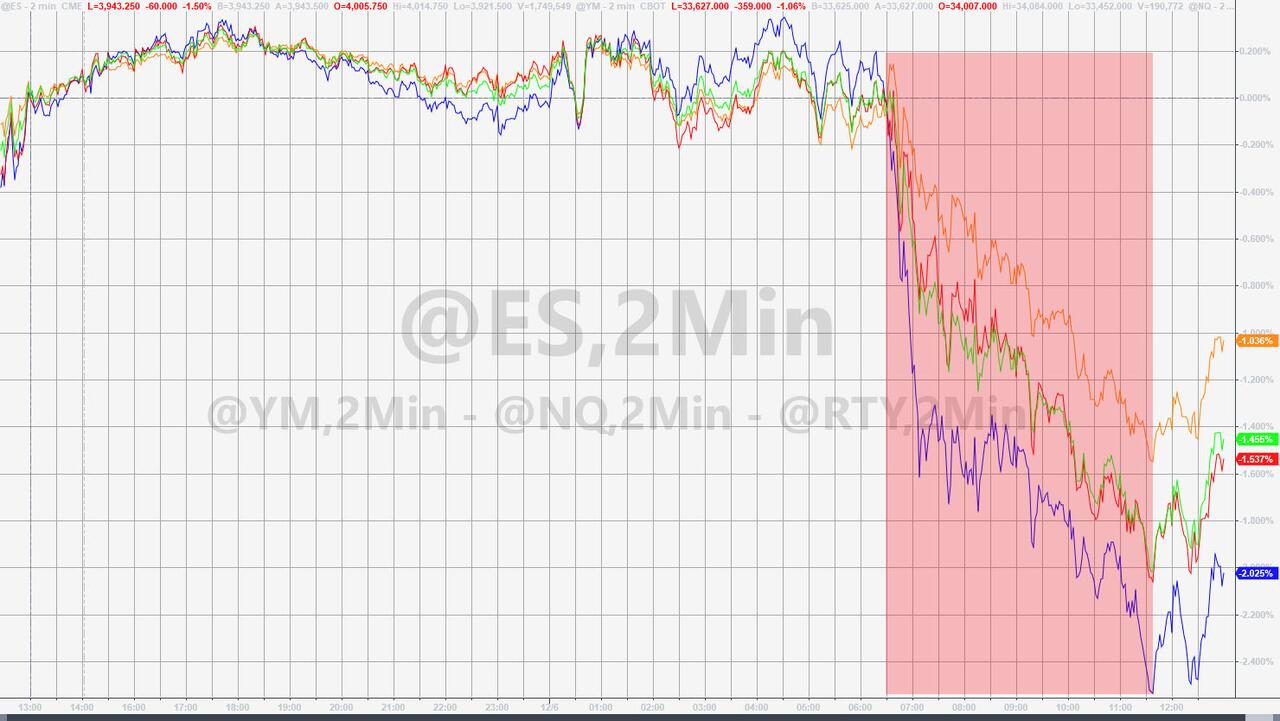
All the US majors puked hard today with Nasdaq down 2.5% at its worst (Dow was the prettiest horse in today’s glue factory). A late day profit-taking snatch put some lipstick on the ugly pig of a day…

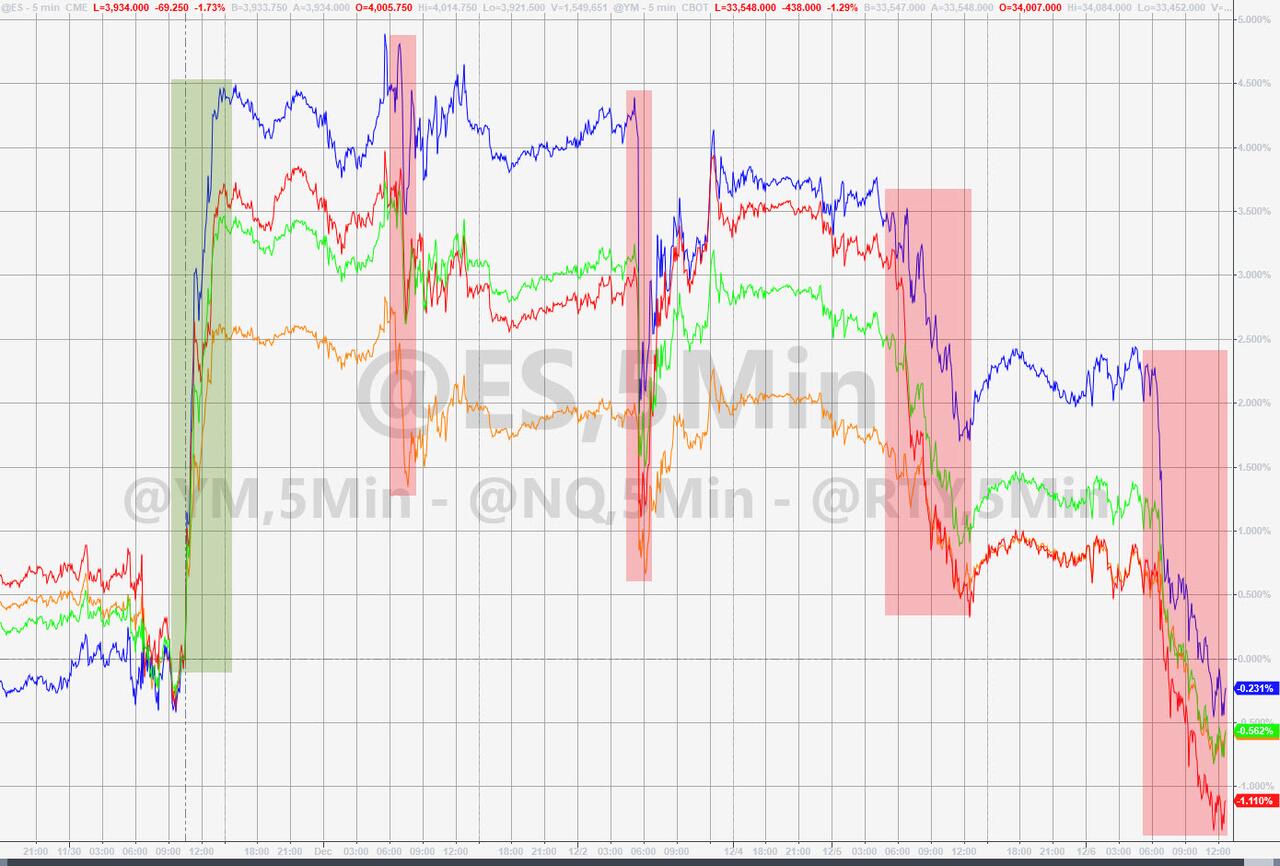
The US majors are down in 7 of the last 8 days – the only up-day was during Powell’s address last Wednesday.

All of the post-Powell gains have been wiped out rather aggressively…

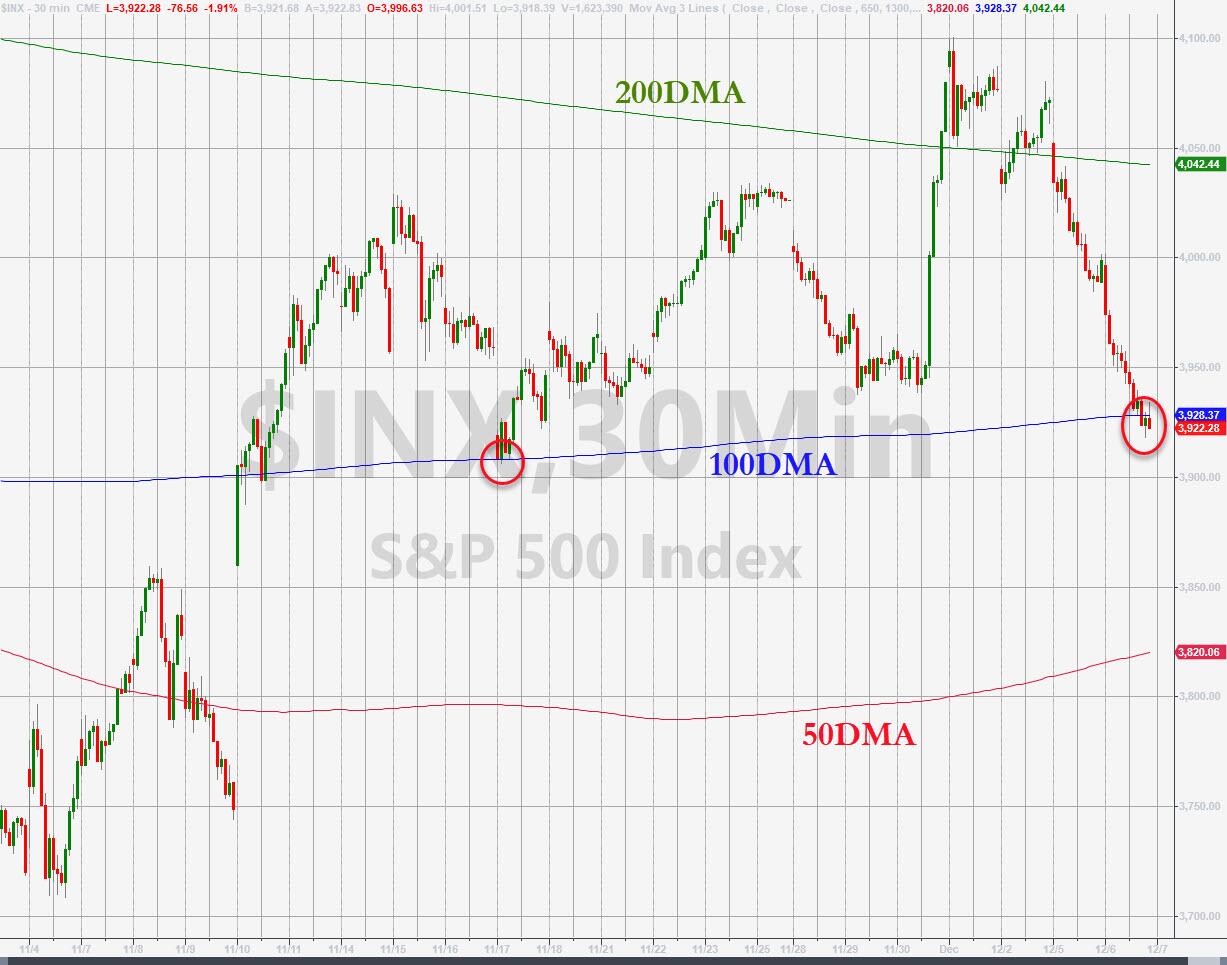
The S&P tumbled back to its 100DMA and found some support…

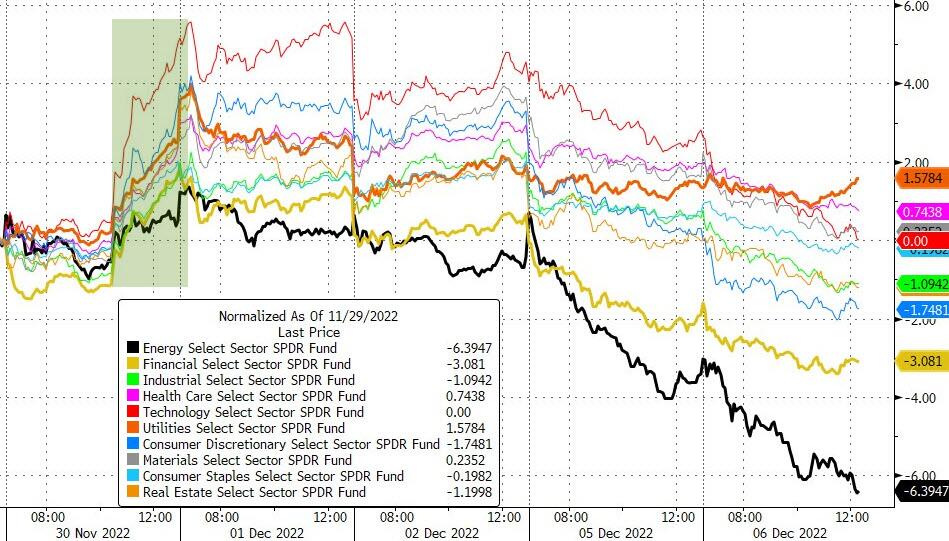
At the sector level, Energy and Financials are down the most since before Powell while Utes are holding gains…

Source: Bloomberg

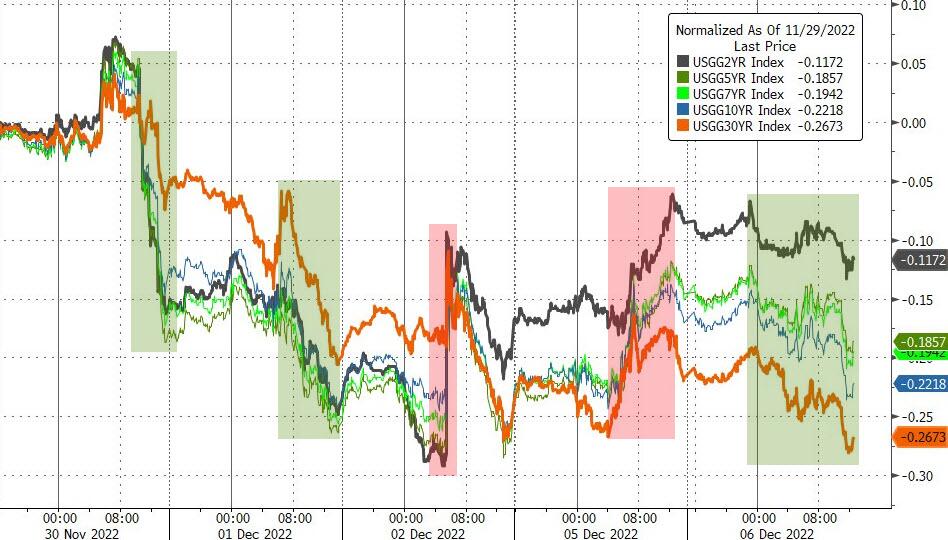
Treasury yields were lower across the curve with the long-end outperforming (30Y -6bps, 2Y -3bps). Since Powell’s speech, the long-end is outperforming (30Y -27bps, 2Y -12bps)…

Source: Bloomberg

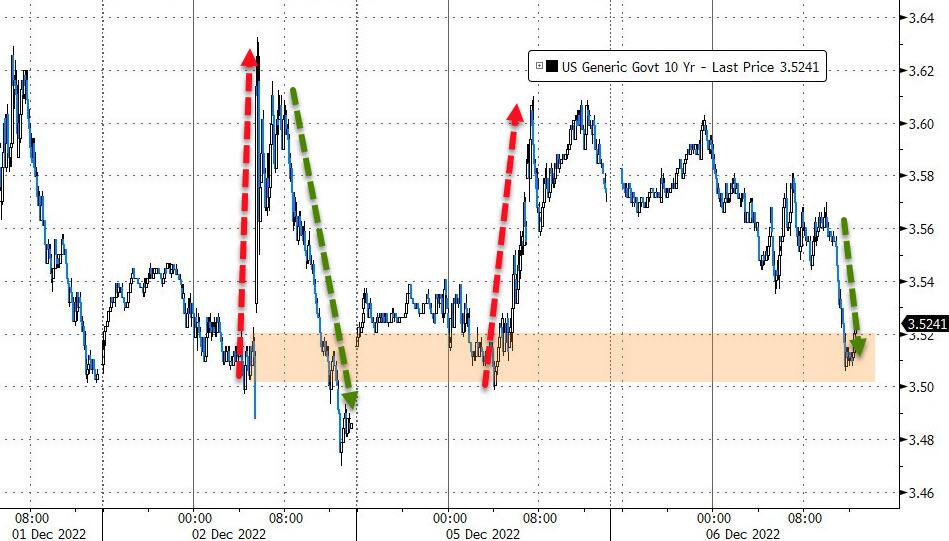
The 10Y yields is back testing down to 3.50%, the pre-payrolls levels from Friday…

Source: Bloomberg

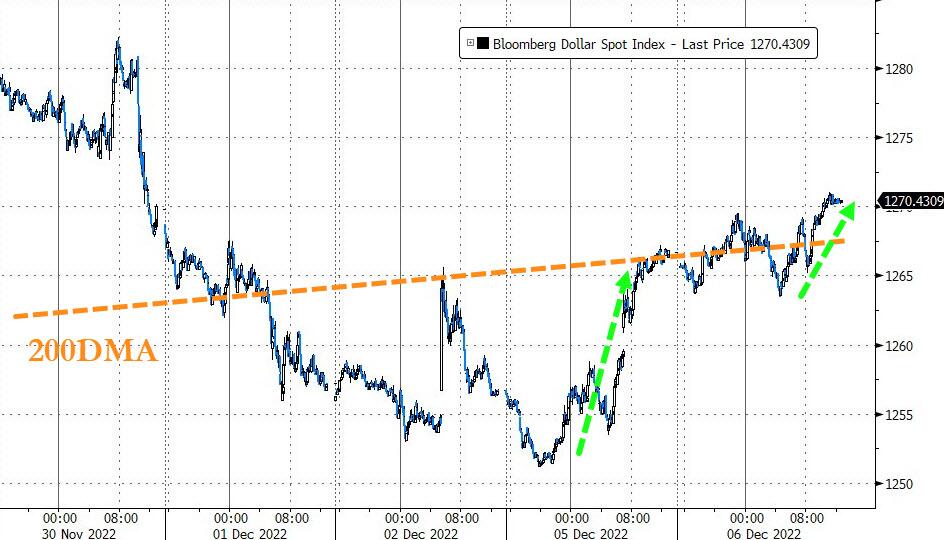
The dollar extended gains, back above its 200DMA…

Source: Bloomberg

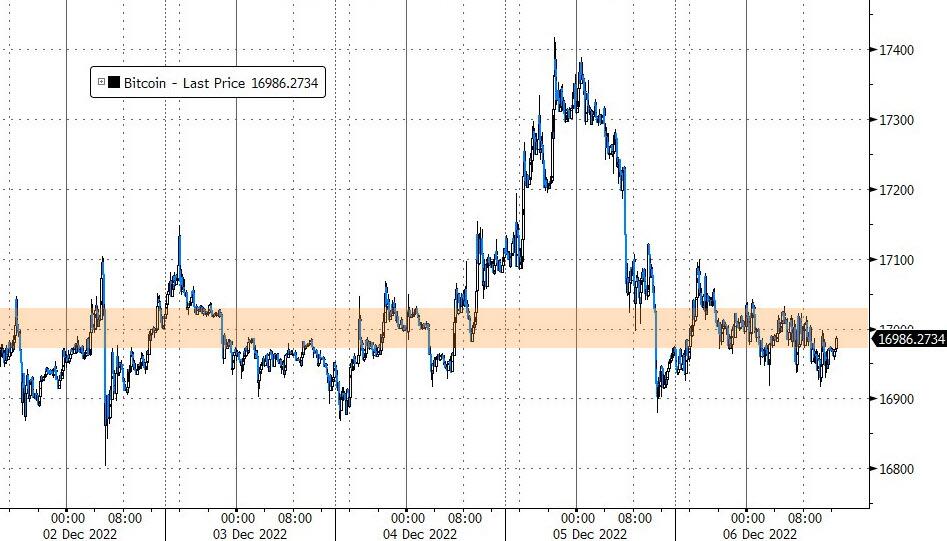
Bitcoin was quiet for once, hovering around $17,000…

Source: Bloomberg

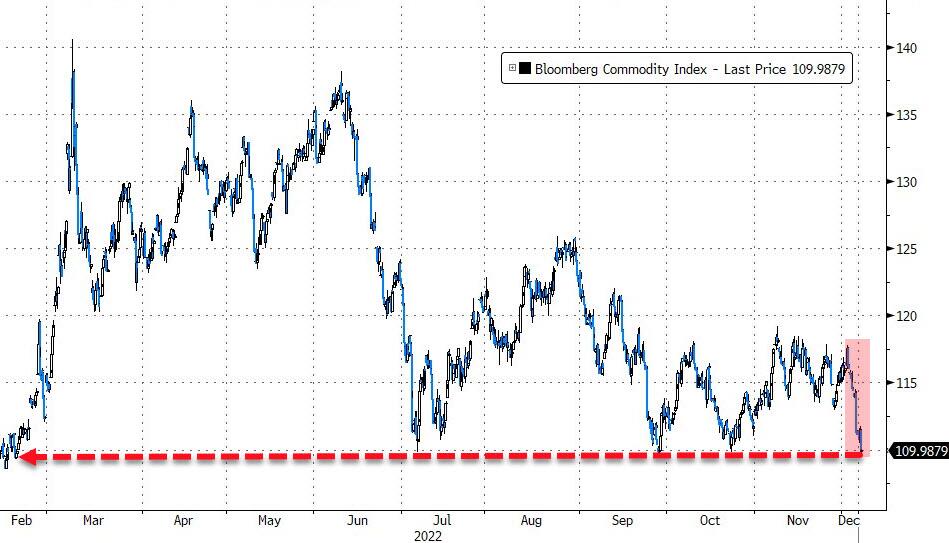
The Bloomberg Commodity Index fell for a 3rd day hitting its lowest since February…

Source: Bloomberg

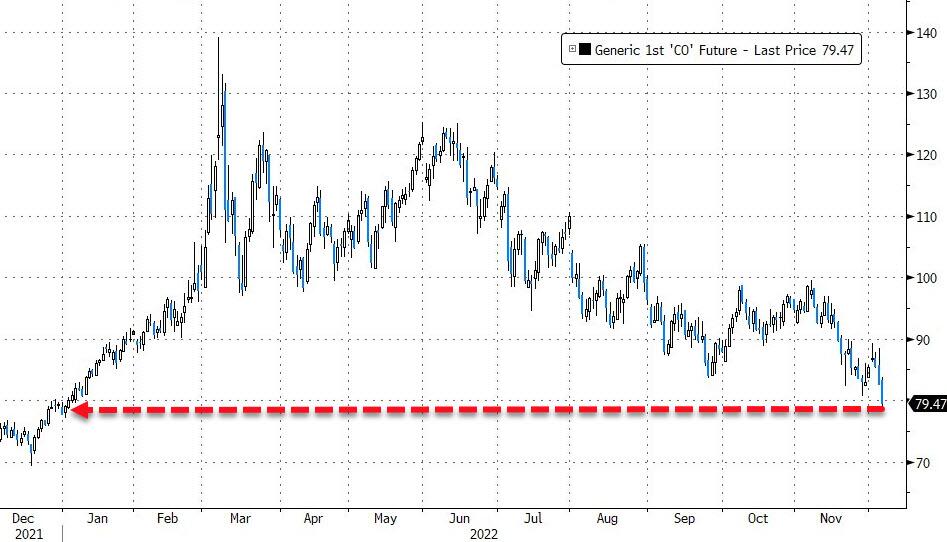
Brent crude fell back below $80 (for the first time since early January) despite Russia’s discussions of a price floor to counter G-7’s price-cap…

Source: Bloomberg

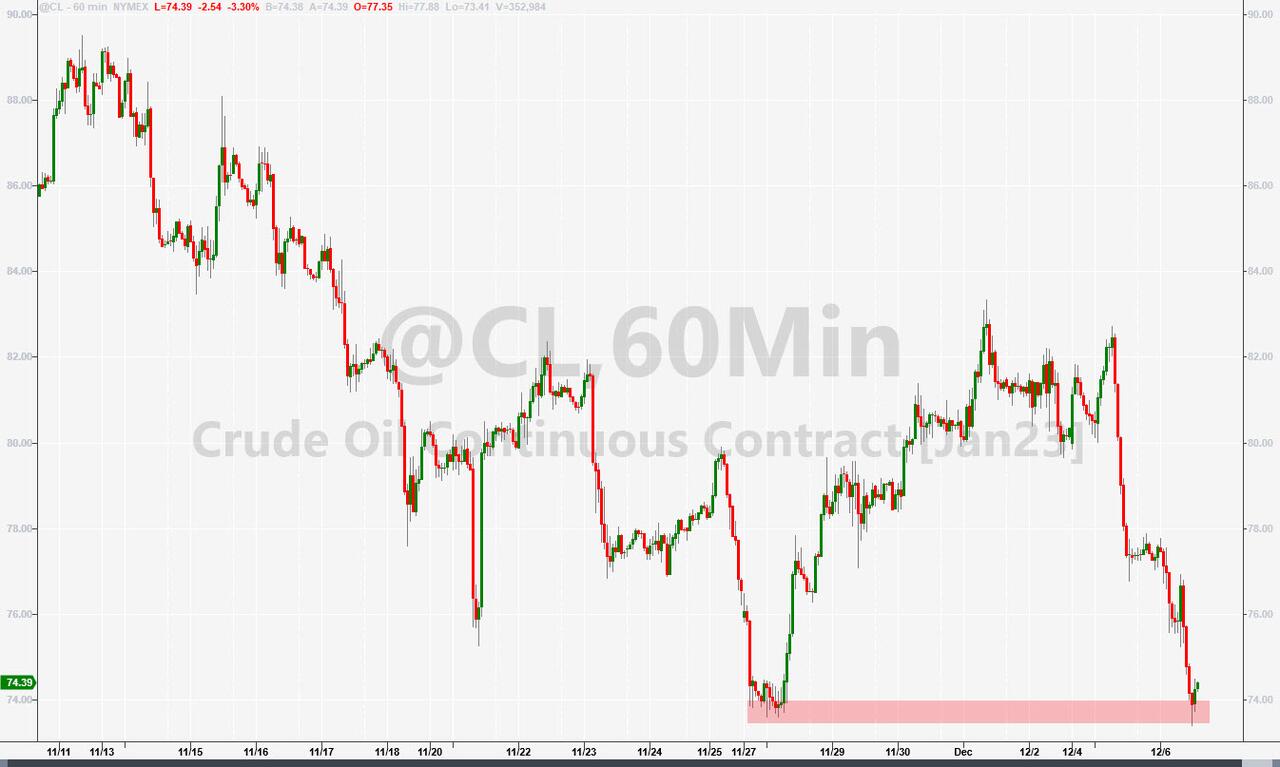
WTI crashed to a $3 handle as US boosted its 2023 oil production forecast (in what can only be seen as a politically-driven move given the previous forecast drop)…

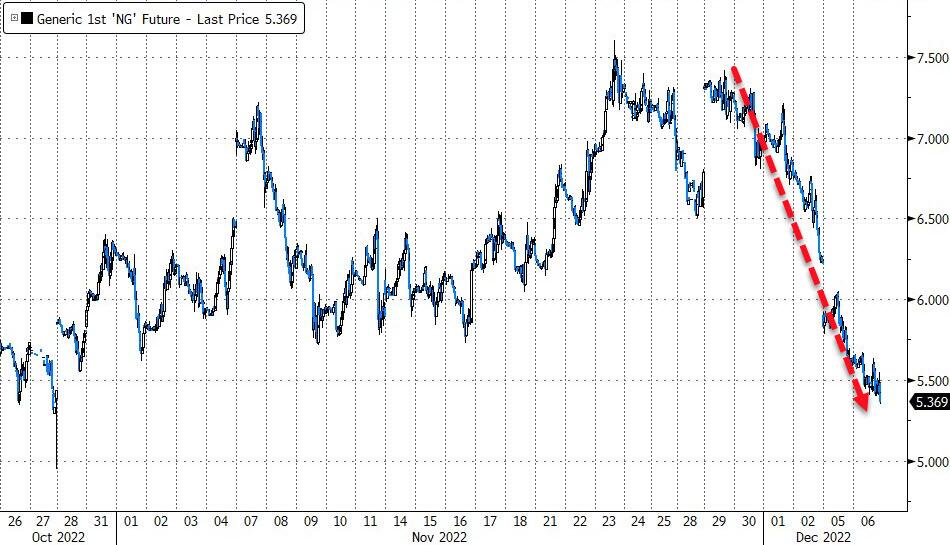
NatGas tumbled for the 6th straight day (down almost 30% in that time)…

Source: Bloomberg

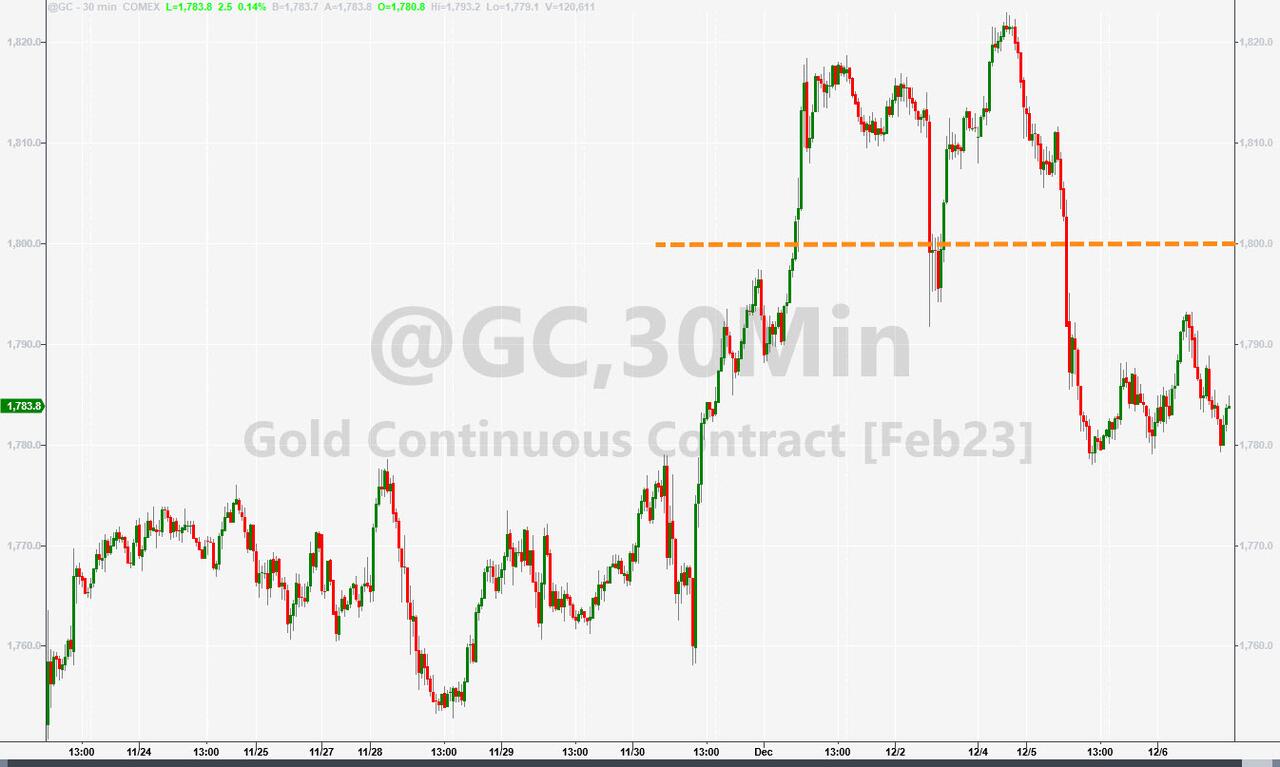
Gold was flat on the day, holding just below $1800…

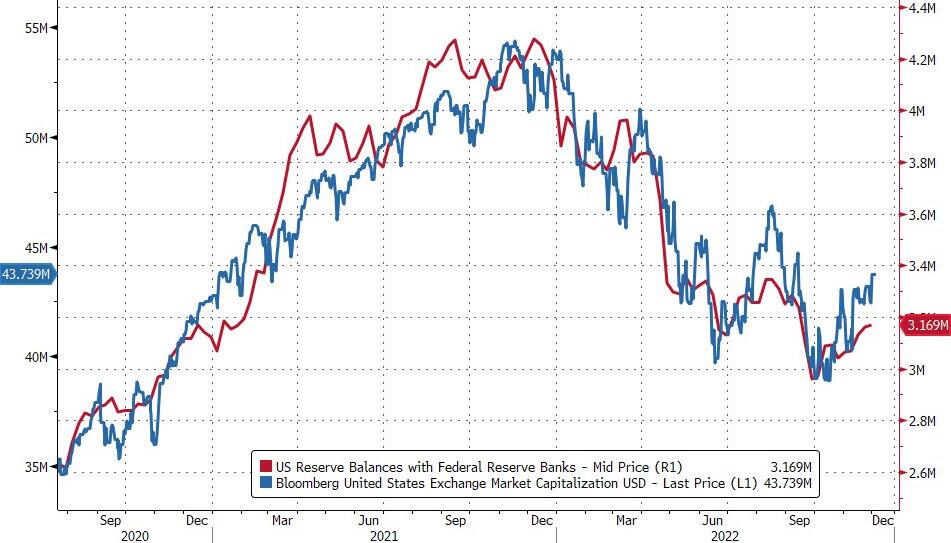
Finally, the US equity market capitalization continues to track the Fed balance sheet (reserves), and Powell shows no signs of reducing QT any time soon…

Source: Bloomberg

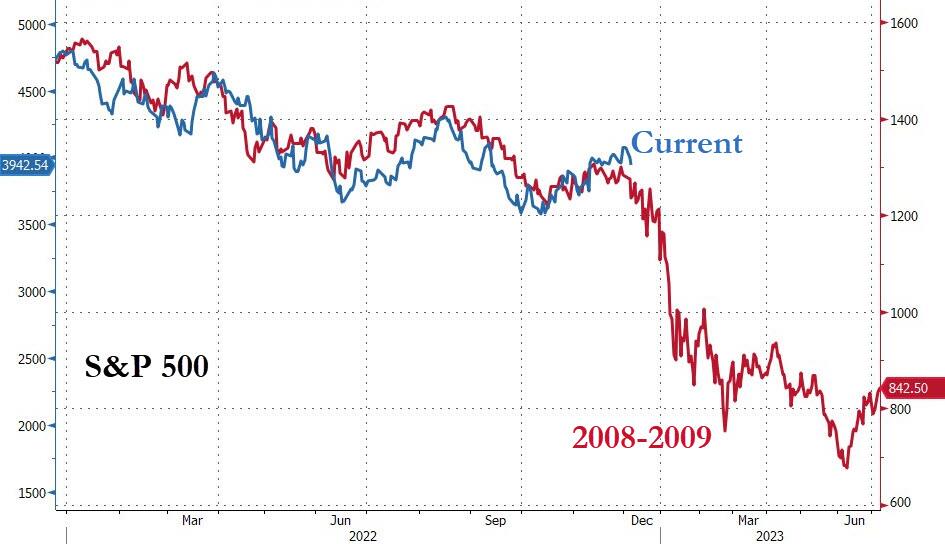
Is this the rollover we’ve been waiting for?

Source: Bloomberg

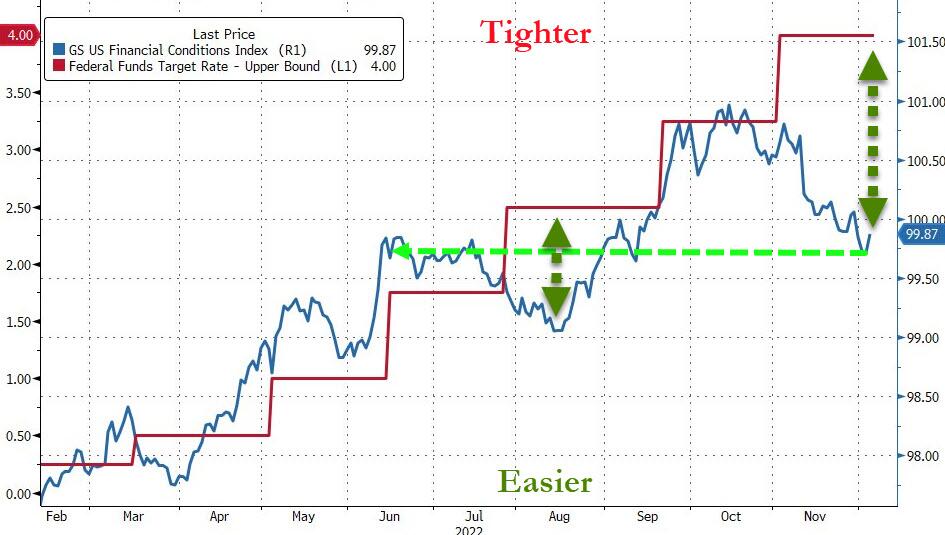
Maybe that catch down will normalize financial conditions with The Fed’s rate-hikes (as Goldman warns “ultimately we think the recent market moves could prove self-defeating”)…

Source: Bloomberg

As painful as that maybe, it is perhaps the only thing that will allow Powell to pivot.

Tyler Durden
Tue, 12/06/2022 – 16:00

via ZeroHedge News https://ift.tt/q5bTmJX Tyler Durden

Jury Finds Trump Organization Guilty In Tax Fraud Trial

Jury Finds Trump Organization Guilty In Tax Fraud Trial

A Manhattan jury has found the Trump Organization guilty of tax fraud, after the corporation and the Trump Payroll Corp. were charged with criminal tax fraud and falsifying business records. Trump himself was not charged in the case.

The former President’s real estate company was accused of scheming to defraud tax authorities by paying the personal expenses of executives without reporting the income, and paying bonuses to executives as if they were independent contractors.

The Trump Organization pleaded not guilty, and said that its former CFO, Allen Weisselberg, single-handedly carried out the scheme to benefit himself.

The financial penalty is expected to be around $1.6 million.

Before deliberations began on Monday, Justice Juan Merchan instructed them that companies are only responsible for criminal actions taken by executives as long as the acts did not solely benefit said execs.

Bloomberg, of course, is making this out to be some nail in some coffin.

It is the first time a Trump business has been convicted of criminal conduct and comes as the former president is running for a second term. The momentous verdict also comes as he faces a raft of other legal perils, including criminal probes of his handling of classified documents and of efforts by Trump and his allies to overturn the 2020 election. -BBG

During the trial, Manhattan DA Alvin Bragg showed that Trump executives often disguised holiday bonuses as consulting fees.

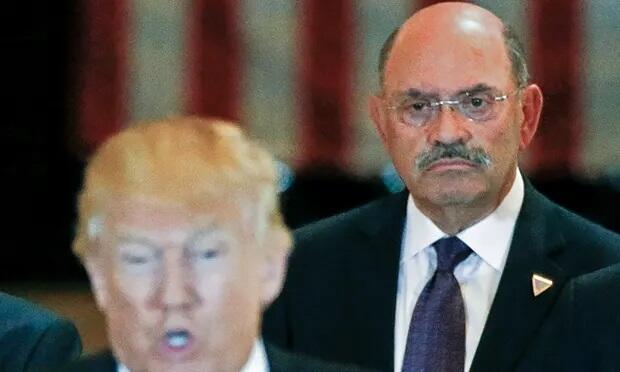
Allen Weisselberg stands behind Donald Trump

Meanwhile, New York Attorney General Letitia James is pursuing a $250 million civil suit against the Trump Organization, claiming that the former president and three of his children inflated the value of the firm’s assets. She is seeking penalties which include a permanent ban on the four currently-operating companies in the state.

As Bennett Gersham, a professor at Pace University’s law school noted, the Trump Organization now faces a “host of intangibles.”

“The parent company, as a felon, could be barred from having contracts with government agencies, and it could make it more difficult to do business with banks,” he said, adding “This is a big deal.”

If you say so Bennett.

Tyler Durden
Tue, 12/06/2022 – 15:52

via ZeroHedge News https://ift.tt/WIPfpXN Tyler Durden

Another Blackstone Fund Just Hit Redemption Limits

Another Blackstone Fund Just Hit Redemption Limits

Investment advisors and portfolio managers who plowed money into Blackstone’s giant real estate fund were greeted with an unexpected email last week from the investment management company to keep clients calm as redemption limits on the fund were hit. Now a similar investment trust focused on corporate debt has also hit the redemption limit. 

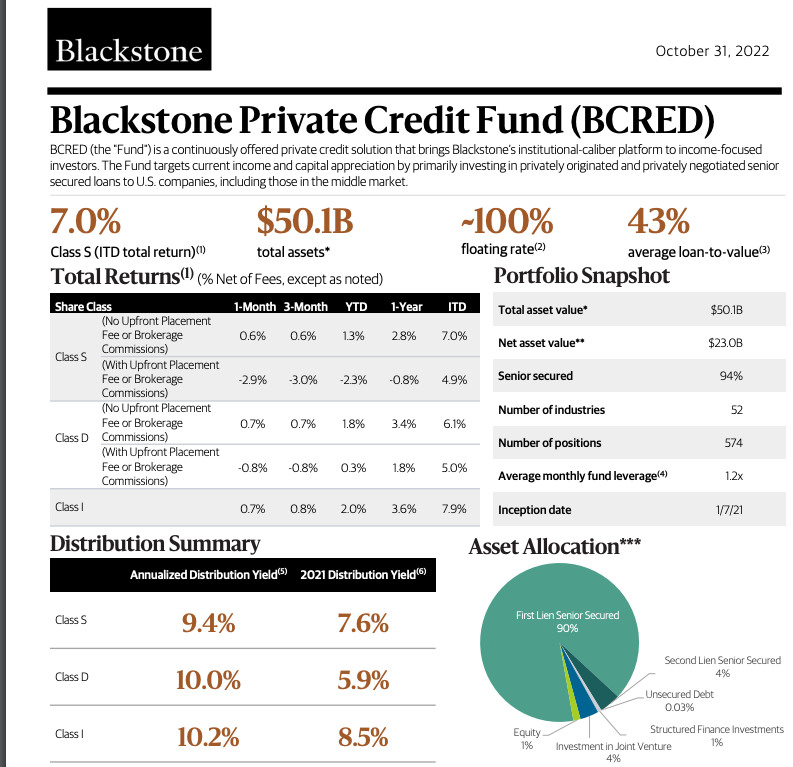
While Blackstone Real Estate Income Trust (BREIT) buys commercial real estate, the Blackstone Private Credit Fund (BCRED) is one the largest investment vehicle with a portfolio of corporate loans. At the end of October, BCRED had net assets of $23 billion and total assets of $50.1 billion.

The focus last week was on BREIT. The $69 billion real estate fund faced withdrawal requests exceeding its quarterly limit. The selling, according to Blackstone, has been from investors in Asia.

Now BREIT-style contagion has spread. About 5% of the BCRED’s outstanding shares were tendered for redemption in the three months ending Nov. 30, and it “will be honoring 100% of this quarter’s shares tendered,” according to a filing. That’s about $1 billion in withdrawal requests in the three months. 

Both BCRED and BREIT have 5% quarterly redemption limits to prevent runs on the funds. 

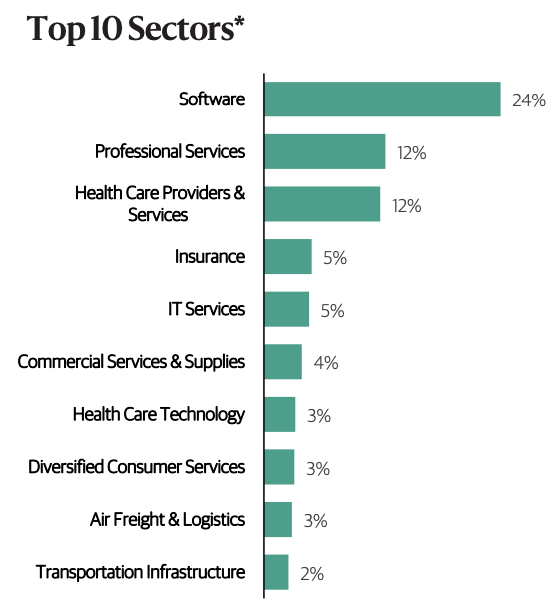
Most of BCRED’s loans are first lien and senior secured. About 29% of the fund is allocated to software and IT, which is a significant problem considering the Federal Reserve’s most aggressive tightening in decades has led to a downturn in the tech sector. Then there are rising fears over a recession, and the turning credit cycle could be one reason investors are exiting the fund. 

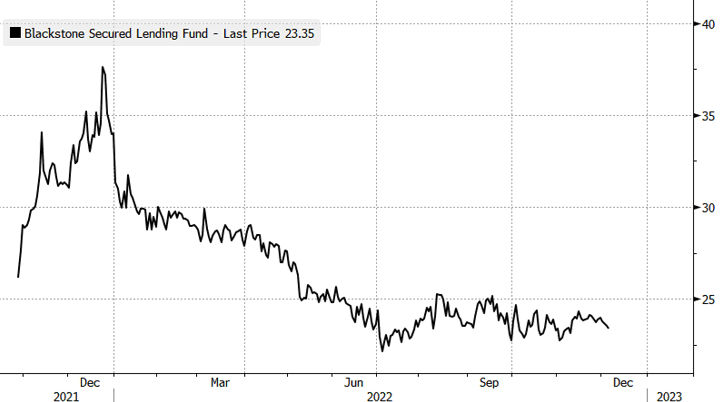
BCRED’s total returns are up 7% this year, while a tradeable Blackstone Secured Lending (BXSL) is down more than 30% year-to-date. 

JPMorgan analyst Kenneth Worthington wrote to clients that “issues in BREIT could also weigh on BCRED somewhat.”

Blackstone has gated investors in two large funds to prevent runs. Is more contagion likely? 

Tyler Durden
Tue, 12/06/2022 – 15:40

via ZeroHedge News https://ift.tt/GIt23jz Tyler Durden

FTX’s Bankman-Fried Hires Ghislaine Maxwell’s Defense Attorney

FTX’s Bankman-Fried Hires Ghislaine Maxwell’s Defense Attorney

While FTX founder and former CEO Sam Bankman-Fried has been doing the ‘simple jack’ routine in recent interviews, saying at last week’s DealBook conference “I don’t personally think that I have [criminal liability],” his recent legal move suggests otherwise.

On Tuesday, Reuters reported that SBF has hired white collar defense attorney Mark S. Cohen to represent him, as US authorities probe the implosion of SBF’s crypto exchange. Cohen, a former assistant US attorney for the Eastern District of New York, recently defended Ghislaine Maxwell in her sex trafficking trial.

Regulators around the world, including in the Bahamas where FTX is domiciled, as well as in the United States, are looking into FTX’s top executives at the time of its collapse. FTX filed for bankruptcy last month following a liquidity crisis that caused roughly $1 billion of customer funds to evaporate, after secretly transferring customer funds to its affiliate, Alameda Research, to try and plug the hole before its collapse.

Also consulting on the matter is Stanford Law School professor, David Mills. Notably, SBF’s father – a Stanford professor, has withdrawn from teaching an upcoming class, reportedly in anticipation of helping in his son’s defense.

Bankman-Fried had previously hired Martin Flumenbaum of law firm Paul, Weiss, Rifkind, Wharton & Garrison, but the law firm said last month it was no longer representing him due to conflicts.

In recent weeks, U.S. authorities have sought information from investors and potential investors in FTX, according to two sources with knowledge of the requests. Federal prosecutors in New York are asking for details on any communications such firms have had with the crypto firm and its executives, including Bankman-Fried, the sources said. Bloomberg previously reported the information requests.

The Securities and Exchange Commission has been asking for similar information from investors as well, one of the sources said. -Reuters

According to anonymous sources, US authorities are likely looking for evidence of material misrepresentations to investors.

“I didn’t ever try to commit fraud,” SBF said during the DealBook conference.

Tyler Durden
Tue, 12/06/2022 – 15:22

via ZeroHedge News https://ift.tt/jm8Fnu9 Tyler Durden

Peter Schiff: You Think Inflation Is Bad Now? Wait Until Next Year!

Peter Schiff: You Think Inflation Is Bad Now? Wait Until Next Year!

Via SchiffGold.com,

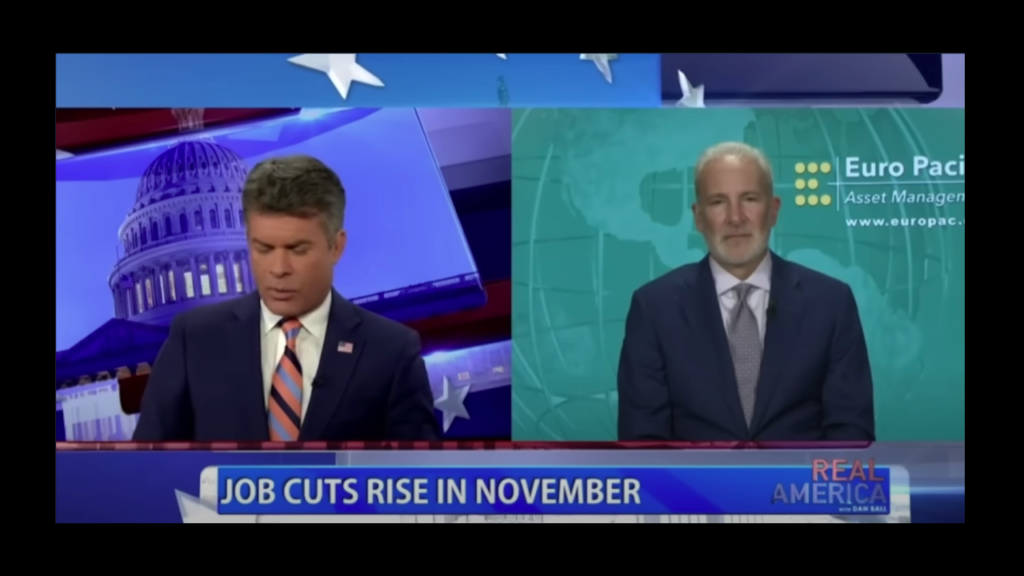
Peter Schiff recently appeared on Real America with Dan Ball to talk about the economy, energy prices, and inflation. Peter said if you think inflation was bad this year, wait until next year with a much weaker dollar.

Dan set the interview up with a list of tech firms set to lay off employees. He asked how people can say the economy is just fine when you have tens of thousands getting laid off, nobody has any savings, and when the housing market is tanking.

Peter said they’re going to keep saying that, but it simply isn’t true. He pointed out that the entirety of the Q3 GDP increase was from a decrease in the trade deficit.

It’s not like it went away. It just got slightly less enormous than it had been. And that was for two reasons. The strong dollar enabled us to buy imports cheaper. But also, all that oil that was released from the Strategic Petroleum Reserve, we got to export that, so that increased our exports and reduced our deficit. And so that helped us out.”

But those impacts are already starting to reverse. The dollar is tanking.

And all of the economic data that’s come out so far on the fourth quarter suggests that GDP in the fourth quarter is going to be negative again.”

That would mean a drop in GDP in three of the four quarters in 2022. And Peter said the Q4 drop could be the biggest yet.

As far as the petroleum reserves, Peter said we’re going to run out sometime next year.

And I think in California, by the time Biden finishes his first term, and hopefully his only term, I bet you guys in California will be paying $10 a gallon for gas.

Currently gas in California is just over $5 a gallon. People feel better because earlier this year it was over $6 a gallon. Dan said “the new normal sucks.”

Peter said that if he is right about the dollar going down, the price of oil will go way up.

We’ve had the benefit of a strong dollar for the last year or two. So, if you thought inflation was bad this year, wait until you get a load of it next year when we have a weak dollar.”

Dan accurately pointed out that these price increases due to inflation are a tax. Peter said, “absolutely!”

Every dollar that the government spends must be paid for by the public, one way or another. There are two ways the government gets money from the public. One is honestly, through taxation, where it takes our money and then spends it. But the other way is dishonest. They just print money. They don’t tax us. They print money, and then they spend that into circulation. But when they do that, the price of everything we buy goes up. And so, instead of taking our money, they take our purchasing power. Every time you go to the supermarket and you’re paying a higher price, you’re paying a tax. Those higher prices are the cost of big government. And the more government spends, the higher prices are going to rise.”

Peter and Dan wrapped up the discussion by talking about Biden’s attempt to forgive student loans. A court recently struck the plan down. Peter said that it is hopefully dead in the water because it was a terrible decision.

It would cause tuition prices to rise much faster in the future than they had in the past. And all of it was going to be financed with the inflation tax. What we need is to end completely government’s involvement in education. No more guaranteed loans. No more direct loans. We need to get the government out of education so we can get the free market in, and that will bring prices way down and quality way up.”

Dan summed up the discussion.

Get the government out of every damn thing!”

Tyler Durden
Tue, 12/06/2022 – 15:00

via ZeroHedge News https://ift.tt/cRd72z0 Tyler Durden

After 12 Years of False Starts, D.C. Metro Once Again Plots Return of Automated Trains


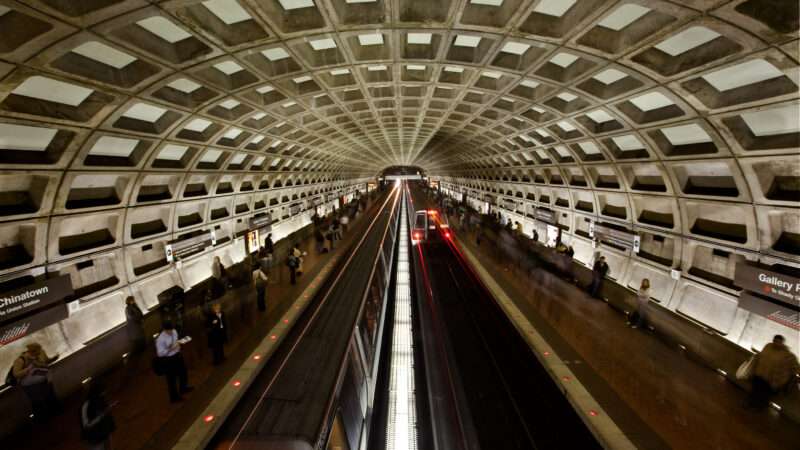
Inside a DC metro station

Self-driving cars are perennially just a few years away. The same seems to be true for the return of automated trains in Washington, D.C.

After over a decade of false starts, the Washington Metropolitan Area Transit Authority [Right?] (WMATA) has a new timeline for phasing in the return of safer, smoother, automatic train operations, WJLA first reported.

Come Thursday, the WMATA Board of Directors’ Safety and Operations Committee will consider a new timeline for testing computer-driven trains on the system’s Red Line beginning September 2023. The hope is to return to automatically controlled trains on all lines by March 2024.

When it started operations in 1976, D.C.’s then-cutting-edge Metro rail system made use of automatic train control to drive its trains.

That stopped in 2009, after a deadly train collision near the Fort Totten station in the northeast part of the district. The post-accident investigation revealed that a malfunctioning track circuit didn’t report the presence of an idling train at the platform to an incoming train, which then didn’t stop. The resulting crash killed nine people.

The same track circuit issue had caused a near-collision a few years prior. WMATA had developed a maintenance procedure to fix it, but staff wasn’t told about it.

In the aftermath of the disaster, Metro spent $106 million replacing 1,700 track circuits, but the revival of automated train operations never followed.

A brief return of computer-controlled trains was piloted in 2015. That effort was abruptly shelved after a deadly track fire that same year revealed a bunch of other higher-priority safety and maintenance issues WMATA needed to work on. Ongoing maintenance problems led the agency to scrap any plans for returning to automated trains in 2017. A briefly revived 2018 effort to bring them back by the following year also fell through.

But WMATA staff say Metro’s infrastructure is at last at a place where it could start the process of bringing back automated trains. They also say that Metro has wrung every possible safety improvement out of manual operations.

Returning to automated operations would provide a lot of benefits. Human train operators would have no opportunities to blow through stop signals or travel above recommended speed limits.

Computer-controlled trains would mean an end to the jerky start-stop motion as trains pull into the platform that all WMATA riders are familiar with. Trains wouldn’t need to pause for “schedule adjustments” either, speeding up operations. The opening and closing of doors could also be automated, which would speed up boardings at stations.

Automated trains would also lessen the overall system’s dependence on Metro’s Rail Operations Control Center, which is frequently the subject of scathing audits for failing to follow safety procedures and having a toxic workplace environment.

This would all be a nice change of pace for long-suffering Metro riders. There’s always reason to suspect WMATA won’t be able to pull it off.

An August 2021 safety audit found that WMATA staff working on the return of automated trains weren’t following safety protocols and weren’t communicating effectively across departments. Another 2022 audit found many stations’ train control rooms—which house equipment needed for automated train operations—weren’t being properly cleaned.

Those reports were produced by the Washington Metrorail Safety Commission, WMATA’s interdependent safety regulator, whose approval is needed for automated trains to return.

As the debacle over Metro’s 7000-series trains shows, there’s no ruling out the possibility that some other disaster will occur within a few months that requires WMATA to put the return of automated trains on ice yet again.

Only time will tell.

The post After 12 Years of False Starts, D.C. Metro Once Again Plots Return of Automated Trains appeared first on Reason.com.

from Latest https://ift.tt/nYRiyVI
via IFTTT

Ninth Circuit Orders Press Pass for The Gateway Pundit, Pending Appeal

From the Ninth Circuit’s order yesterday in TGP Communications, LLC v. Sellers; the order was issued by the merits panel that will hear the case (though it’s not signed by particular judges because the panel has not yet been publicly identified), so it offers an important (though not definitive) clue as to the judges’ likely eventual conclusions:

On November 8, 2022, the United States held its mid-term elections. Nearly a month later, Maricopa County continues to count those cast ballots. As a result, press attention remains fixed on Arizona, the election results and the ballot counting. To balance the demand for access with logistical and security requirements, Maricopa County began requiring members of the press to obtain a press pass to enter its facilities to cover election-related events. Jordan Conradson, a reporter for The Gateway Pundit, the trade name of TGP Communications, LLC …, sought a press pass to attend press briefings about the election. Maricopa County and individual Appellees denied Conradson a press pass because, in their view, he is not a reputable journalist under their press-pass guidelines and had reported false information about Arizona elections.

Plaintiffs sought a temporary restraining order, arguing that the press-pass criteria were unconstitutional. They sought, among other forms of relief, access to the County press briefings. After an evidentiary hearing, the district court denied injunctive relief.

The court granted an injunction pending appeal, largely because “At least at this preliminary stage, Appellants have shown a likelihood of success on the merits”:

Appellants claim that, as applied, the denial of a press pass to Conradson was impermissibly content- and viewpoint-based. The First Amendment does not provide a right of free and unconditional access to all government properties or events. Further, “[t]he existence of a right of access to public property and the standard by which limitations [placed] upon such a right must be evaluated differ depending on the character of the property at issue.”

In traditional public forums—such as parks, streets, and other spaces traditionally held open for public speech—”the government may impose reasonable time, place, and manner restrictions on private speech, but restrictions based on content must satisfy strict scrutiny, and those based on viewpoint are prohibited.” And even in limited public forums where the government opens a traditionally private place for speech on limited topics, such as opening the County facilities for press conferences as the County did here, the First Amendment’s protections against content-based and viewpoint-based restrictions are robust.

Content-based restrictions “are presumptively unconstitutional and may be justified only if the government proves that they are narrowly tailored to serve compelling state interests.” And the First Amendment provides even stronger protection against viewpoint discrimination, which “is an egregious form of content discrimination and occurs when the specific motivating ideology or the opinion or perspective of the speaker is the rationale for the restriction on speech.” A restriction on speech is unconstitutional if it is “an effort to suppress expression merely because public officials oppose the speaker’s view.” In evaluating claims of viewpoint discrimination, “[w]e thus look to the government’s purpose as the threshold consideration.”

The County denied Plaintiffs’ September application for a press pass because of its conclusion that Plaintiffs “(a) do not avoid real or perceived conflicts of interest and (b) are not free of associations that would compromise journalistic integrity or damage credibility,” and because it determined that Conradson is “not a bona fide correspondent of repute in [his] profession.” But despite these stated reasons, the evidence put before the district court—including that presented by the County itself—strongly suggests that a predominant reason for the County denying Plaintiffs a press pass was Conradson’s political views.

The County, for example, noted that “Conradson participates in political party events and associates with people and groups that demonstrate an inability to avoid real or perceived conflicts of interest.” Relying on a reporter’s attendance at political party events is weak grounds—and a poor measuring stick—for determining a journalistic conflict of interest. No other evidence placed before the district court— nor the arguments made to us on appeal—supports the assertion that Conradson fails to “avoid real or perceived conflicts of interest,” and is not “free of associations that would compromise journalistic integrity or damage credibility.”

{The County also failed to establish that, at the time of the denial in September, Conradson had violated the press-pass restrictions by having any journalistic ethics problem. In the district court proceedings, the County noted that after being denied a press pass, “Conradson appeared at press conference on October 13, 2022, with a hidden camera. On November 10, 2022, he showed up at [the Maricopa County Tabulation and Election Center] under the guise of being there to pick up his credentials.” He allegedly became disruptive, and the County had to remove him from the facility. Such conduct is troubling. None of these subsequent acts, however, could have influenced the County’s previous denial of the press pass.

And a restriction on an individual’s First Amendment rights may not be justified with post hoc explanations.}

Moreover, the evidence before the district court strongly suggests that the County considered Conradson’s political leanings. The County’s own witness, Roy Moseley, stated at the evidentiary hearing that, beyond not avoiding conflicts of interest, Conradson’s press pass was denied because “[h]e doesn’t seek the truth and his articles have led to direct threats to Board of Election officials and employees.” Permitting “truth” to be determined by the County violates our foundational notions of a free press.

{There is no evidence that Conradson ever threatened County employees. Certainly, such evidence would be relevant to the issuance of a press pass as a justification wholly independent of Conradson’s viewpoint. But—in the absence of any evidence that Conradson himself called for violence—the fact that third parties who may have read Conradson’s articles engaged in threatening behavior is not such relevant evidence.}

The County’s own evidence only underscores that the press-pass denial, as applied to Conradson, was not viewpoint neutral; the County’s evidence indeed highlights its reliance on Conradson’s political views. Before the district court, the County argued:

As part of the application process, Mr. Conradson submitted three links to work examples. Those three articles … do little more than proselytize The Gateway Pundit’s views. Each article germinates from a news report or press release (such as the County’s announcement of Press Pass criteria). Mr. Conradson then expresses an opinion about the news report or press release and supports that opinion by referencing like-minded social media posts, prior articles by The Gateway Pundit, and allying websites that express the same viewpoints. Moreover, each article uses inflammatory and/or accusatory language, such as “Fake News Media,” “globalist elitist establishment,” and “highly flawed 2022 Primary Elections.” And while Mr. Conradson is certainly entitled to express his opinions, his poorly sourced, researched, and reported work lacks the journalistic integrity and credibility required by the Press Pass criteria.

The district court rightly found this evidence to be a “fraught consideration.” Yet the district court held that the County was furthering its legitimate interest in disseminating accurate information to the public in a manner “reasonably related to the viewpoint-neutral goal of increasing journalistic integrity by favoring media that avoid real or perceived conflicts of interest or entanglement with special interest groups, or those that engage in advocacy or lobbying.”

In so concluding, the district court relied heavily on the Seventh Circuit’s analysis of similar press pass restrictions in John K. MacIver Institute for Pub. Policy, Inc. v. Evers (7th Cir. 2021). In MacIver, however, the court noted that there was no evidence that the government had “manipulate[d] the[] neutral criteria in a manner that discriminate[d]” against the applicant. The MacIver court further found that the applicant’s “other naked assertions of bias” were “unsupported by references to the record.” That is not the case here.

The evidence supports, at least at this preliminary stage of the review, the conclusion that a predominant reason for the County denying Conradson a press pass was the viewpoint expressed in his writings. It is the County’s politically-tinged assessment of Conradson’s prior reporting that appears to have led it to deny him a press pass. That type of viewpoint-based discrimination is exactly what the First Amendment protects against. Because it appears at this preliminary stage that the County engaged in viewpoint discrimination, it is likely that the County’s denial of a press pass will not survive review when considering Conradson’s as-applied challenge. Appellants have thus shown a likelihood of success on the merits….

“The loss of First Amendment freedoms, for even minimal periods of time, unquestionably constitutes irreparable injury.” Despite this likely constitutional violation, the district court noted Conradson could watch live streams of press conferences, even if he could not attend in person, and delayed 41 days from the denial to seek injunctive relief. Neither the availability of live streams nor Conradson’s delay sufficiently allay the irreparable harm from a likely constitutional violation….

The district court found that watching the press conference live streams, rather than attend in person, was a “de minimis” harm because County officials would be under no obligation to “interact with” Conradson, even if they were granted access. We disagree. The constitutional harm of viewpoint discrimination, expressed here by the County’s exclusion of Plaintiffs from its limited forum, cannot be rendered de minimis or otherwise mitigated by requiring Plaintiffs to avail themselves of a less desirable, even if somewhat effective, alternative.

As the U.S. District Court for the District of Columbia has persuasively explained, “[w]hile it is perfectly true that reporters do not have an unrestricted right to go where they please in search of news … the elimination of some reporters from an area which has been voluntarily opened to other reporters for the purpose of news gathering presents a wholly different situation.” For this reason, “[a]ccess to news, if unreasonably or arbitrarily denied …, constitutes a direct limitation upon the content of news.” … “[T]he First Amendment ‘provides at least some degree of protection for gathering news and information, particularly news and information about the affairs of the government,’ [so] Plaintiffs’ attendance at the Governor’s press conferences certainly is protected.” … Viewpoint discrimination as to in-person access to such conferences is not a de minimis injury….

{Our grant of an injunction pending appeal, which requires Appellees to grant Conradson temporary press credentials until the merits of Plaintiffs’ appeal are decided, does not preclude Maricopa County from revoking Conradson’s press credentials in the future—or declining to grant those credentials—so long as the County does so consistent with Conradson’s First Amendment rights.}

For more on the District Court’s decision, see this post from two weeks ago. Thanks to the Media Law Resource Center (MLRC) MediaLawDaily for the pointer, and congratulations to Marc Randazza and David Gingras, who represent TGP.

The post Ninth Circuit Orders Press Pass for The Gateway Pundit, Pending Appeal appeared first on Reason.com.

from Latest https://ift.tt/yOrsb5d
via IFTTT

Semiconductor Manufacturers Don’t Need More Subsidies. They Need Less Government.


sfphotosfive271450

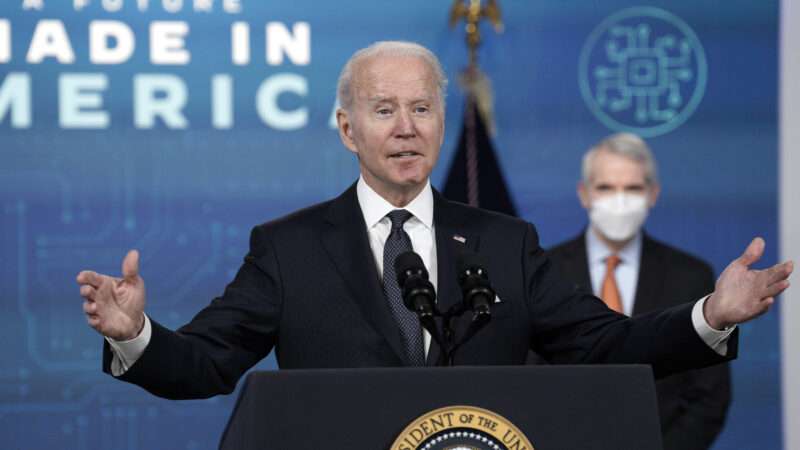
President Joe Biden will visit the site of a new semiconductor manufacturing facility in Arizona on Tuesday afternoon to tout what the White House sees as proof that it is solving global worries about high-tech supply chains with expensive subsidies and new industrial policy.

In reality, however, semiconductor manufacturers don’t need more government handouts. They need less government getting in the way.

Biden’s trip to Arizona will mark the first piece of equipment being installed within the massive facility that the Taiwan Semiconductor Manufacturing Company (TSMC) is building near Phoenix. The president will use the occasion to once again tout the passage of the CHIPS Act, which Congress passed and he signed earlier this year.

From the White House’s perspective, the bill is literally responsible for the existence of tech manufacturing jobs in the United States. “He is going to continue to talk about…the CHIPS and Science Act,” White House Press Secretary Karine Jean-Pierre said Monday when asked about the president’s upcoming trip. She went on to describe the bill as “a bipartisan piece of legislation that is going to continue making sure that we have manufacturing jobs right here in the U.S.”

But that ignores the fact that TSMC’s plans for a new manufacturing plant in Arizona predate the CHIPS Act by more than two years. And there is no indication that TSMC or other top semiconductor makers are in need of handouts from taxpayers. Despite the pandemic-induced supply chain issues that caused headaches across huge swaths of the economy in recent years, all indications are that demand for semiconductors continues to boom and the industry is doing just fine.

But that doesn’t mean there’s not a role for government to play in helping to boost domestic chip production. It’s just not the one that Biden has been pushing.

Indeed, it’s not hard to find out what kind of help companies like TSMC are seeking. In a letter to the Commerce Department last month, the company said that the “real barrier” to expanding high-tech manufacturing in the U.S. “is [the] comparative cost to build and operate” facilities here vs. in Taiwan and other countries. Specifically, the letter pointed to “federal regulatory requirements” that have slowed construction and added unexpected costs, The Wall Street Journal reported this week.

If that sounds familiar, it’s because those are the same complaints that just about everyone who tries to build anything in the United States has right now. For example, the renewable energy industry—another sector of the economy that the Biden administration is working to heavily subsidize at the taxpayers’ expense—is similarly hamstrung by permitting requirements and expensive regulations.

Despite those problems, TSMC is committing to its American expansion. It announced last week that it plans to break ground on a second facility in Arizona that will manufacture the next generation of top-line chips. Filling those plants with workers, however, would be a lot easier if America’s immigration system wasn’t so screwed up.

About 40 percent of America’s semiconductor engineering jobs belong to foreign-born workers, according to a 2020 report from Georgetown University. Any large-scale expansion of that work force is necessarily going to involve allowing more skilled foreign workers into the U.S.—and that’s true no matter how many times Biden and other politicians wrap these projects in the language of economic nationalism.

The fact that U.S. immigration policy requires most foreign-born STEM workers to leave the country after completing grad school—unless they can win a visa lottery—is already being blamed for suffocating an Intel chip plant in Ohio. “To achieve the long-sought goal of returning high-end manufacturing to the United States, the country must, paradoxically, attract more foreign workers,” Politico reported in July.

The great thing about easing federal regulatory burdens and expanding immigration is that it’s not only high-end semiconductor manufacturers who will benefit. Pretty much every American business would be better off if it had to do less paperwork and could have access to a larger pool of potential talent.

If he was so inclined, Biden could use events like Tuesday’s visit to the TSMC plant in Arizona to promote a radical rethinking of what it means to boost domestic manufacturing jobs: one that recognizes the reality of a global marketplace in which capital is highly mobile and a worker’s country of birth shouldn’t matter.

Instead, we’ll get another round of praise for unnecessary, wasteful subsidies that help a handful of wildly successful corporations while failing to address the problems that those same companies say are holding back further investment in America.

The post Semiconductor Manufacturers Don't Need More Subsidies. They Need Less Government. appeared first on Reason.com.

from Latest https://ift.tt/twyT5LQ
via IFTTT

Apple Lifts Pedal On Self-Driving Car, Delays Debut Until 2026

Apple Lifts Pedal On Self-Driving Car, Delays Debut Until 2026

Apple Inc. has postponed the target launch of its self-driving car by about a year to 2026, Bloomberg reports, citing people familiar with the matter. The project, known internally as Titan, has been in limbo for several months as executives reconcile the project’s vision with the fact that current technology simply isn’t advanced enough to pull it off.

To cope, Apple is now planning a less-ambitious design that will include a steering wheel and pedals for driving around town, while fully autonomous driving will be done only on the highway, according to the anonymous sources.

The latest changes underscore the challenge Apple faces in pushing into an entirely new product category and taking on technological obstacles that have bedeviled some of the world’s biggest companies. The secretive project, underway for years, is meant to provide Apple with another major moneymaker, but it also could test the limits of the iPhone maker’s capabilities.

Apple currently plans to develop a vehicle that lets drivers conduct other tasks — say, watch a movie or play a game — on a freeway and be alerted with ample time to switch over to manual control if they reach city streets or encounter inclement weather. The company has discussed launching the feature in North America initially and then improving and expanding it over time. -Bloomberg

The original vision for the car included “Level 5” autonomy – the highest level, which no automaker has been able to pull off. The decision to lower this comes after years of turnover within the Apple car team’s executive ranks. Current boss Kevin Lynch – who also heads up the company’s Apple Watch operating system and health software group – is now focusing more on practical goals in order to move the project forward successfully.

The core of Apple’s self-driving car is their powerful onboard computer, Denali, as well as an advanced array of sensors. Denali’s processing power is equivalent to around four of Apple’s highest-end Mac chips, according to the report. The chip is now considered almost ready for production, however Apple may need to scale it down before launch in order to contain costs.

In addition to the onboard hardware, the system has a cloud-based component for some artificial-intelligence processing. Apple is relying on Amazon Web Services for hosting, costing the iPhone maker about $125 million per year. But that’s just a sliver of the roughly $1 billion the company is spending on the car project annually.

Apple is exploring the idea of a remote command center to assist drivers and control cars from afar during emergencies. The company is also discussing offering its own insurance program to customers. -Bloomberg

Cost-wise, Apple planned to sell each car for over $120,000, however they are now aiming to bring that below $100,000 according to the sources. This would place it in-range of the Tesla Model S and the Mercedes-Benz EQS.

As far as the design roadmap, the vehicle is currently considered to be in the “pre-prototype” stage, while Apple intends to have it ready for design and features by the end of 2024. Then, 2025 will be all about extensive testing.

Looks-wise, the original plan was for something that has a limousine-like interior where passengers could face each other, similar to Canoo, Inc’s Lifestyle Vehicle.

Now, however, Apple will aim for a more traditional design with a driver’s seat. 

Apple also needs to secure an automotive supplier for a basic chassis, known as a “skateboard,” which will serve as the electric-vehicle’s platform. It will provide the underlying base of the car, the wheel system and the battery.

Design work is being led by former Canoo CEO Ulrich Kranz, along with former managers from Tesla, Lamborghini and Porsche, while software is being headed up by former Tesla manager Stuart Bowers. Safety and engineering will be handled by former Ford executive Desi Ujkashevic.

There are approximately 1,000 employees in Apple’s car organization spread across campuses in Sunnyvale, California, Arizona, Zurich and Ottawa – with most of the engineering work being done in Sunnyvale.

Tyler Durden
Tue, 12/06/2022 – 14:46

via ZeroHedge News https://ift.tt/48lkBp3 Tyler Durden