“Fool Me Once…” – Why The Public Is Not Buying The Latest Media Campaign Against Twitter

“Fool Me Once…” – Why The Public Is Not Buying The Latest Media Campaign Against Twitter

Authored by Jonathan Turley,

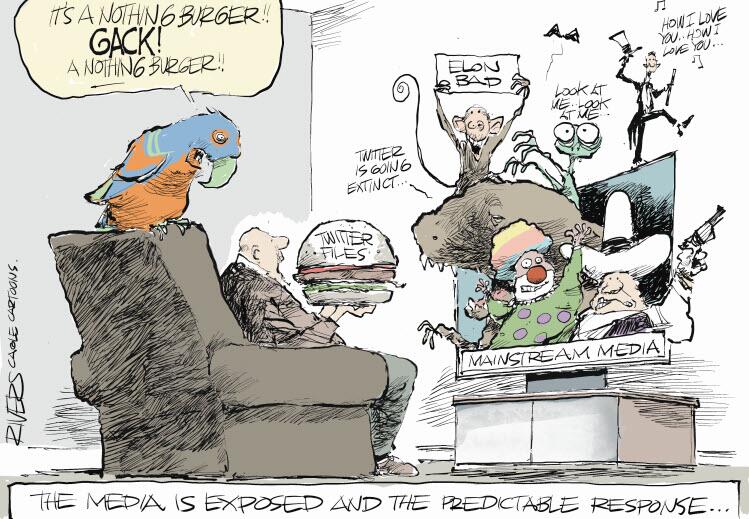
Below is my column on the media response to the “Twitter Files,” including misleading narratives being repeated across various media platforms. The effort is to assure the public that there is “nothing to see here” but it may backfire. After Twitter employed one of the most extensive censorship systems in history to prevent people from reading opposing views on subjects from Covid to climate change, media figures are now insisting that the public should really not be interested.

The public, however, is not buying it. They are buying Twitter. With users signing up to Twitter in record numbers, a majority supports Musk’s efforts to restore free speech protections and to force greater transparency despite an unrelenting counter campaign in the media. Some of the media claims would meet the very definition of disinformation used by Twitter and its allies previously to censor information and discussions.  Indeed, the Wall Street Journal has noted that it turns out that the greatest purveyors of disinformation turned out to be former intelligence officials who worked to kill the story before the election as “Russian disinformation.” The public seems to be following the old adage “Fool me once, shame on you; fool me twice, shame on me.”
Here is the column:

In the aftermath of the release of the “Twitter Files,” the media and political establishment appear to be taking a lesson from Karl Marx who said, “history repeats itself, first as tragedy, second as farce.”

The censoring of the Hunter Biden scandal before the 2020 election by Twitter and others was a tragedy for our democratic system. That tragedy was not in its potential impact on a close election, but the massive (and largely successful) effort to bury a story to protect the Biden campaign. It has now ended in farce as the same censorship apologists struggle to excuse the implications of this major story.

The Twitter Files confirmed that Twitter never had any evidence of a Russian disinformation campaign or hacking as the basis for its decision to censor the New York Post story. Indeed, some at Twitter expressed concern over preventing the sharing of the story. Former Twitter Vice President for Global Communications Brandon Borrman asked if the company could “truthfully claim that this is part of the policy” for barring posts and suspending users.

Those voices were few and quickly shouted down as the company barred the sharing of the story, including evidence of a multimillion-dollar influence peddling scheme by the Biden family. The back channel communications between Biden campaign and Democratic operatives show a willing use of the company to suppress political discussion of the scandal before the election. It was an all-hands-on-deck moment for the media and Twitter was eager to lend a hand.

Over a year ago, I discussed how the brilliance of the Biden campaign was to get the media to become invested in the suppression of the story. After two years, major media finally but reluctantly admitted that the laptop was authentic as well as the emails detailing massive transfers of money from foreign interests (including some with foreign intelligence links).

Many have responded by shrugging that influence peddling is not necessarily a crime, ignoring that it is still a massive corruption scandal with serious national security concerns. After all, as Heather Digby Parton argued in Salon on December 5, “There is nothing there other than a man making money by trading on his family name.”

After the release of the “Twitter Files,” many of these same figures have shifted to excuse the censorship done at the request of Biden campaign or Democratic operatives.

For some of us who come from long-standing liberal Democratic families, it has been chilling to see the Democratic Party embrace censorship and denounce free speech, including organizing foreign and corporate interests to prevent Musk from restoring free speech protections.

Beyond personally attacking Elon Musk and Matt Taibbi, many have resorted to two claims that are being widely repeated in the media to avoid discussing the coordinated censorship efforts between this company and Democratic operatives.

What Censorship?

One of the old saws of censorship apologists is that without a government directing the suppression of free speech, it is not censorship.

That is clearly untrue.  Many groups like the ACLU stress that “censorship can be carried out by the government as well as private pressure groups.”

The same figures insist that if, there is not a violation of the First Amendment (which only applies to the government), there is no free speech violation. The First Amendment was never the exclusive definition of free speech. Free speech is viewed by many of us as a human right; the First Amendment only deals with one source for limiting it. Free speech can be undermined by private corporations as well as government agencies.

Corporations clearly have free speech rights. Ironically, Democrats have long opposed such rights for companies, but they embrace such rights when it comes to censorship. It is also worth noting that this censorship (and these back channels) continued after the Biden campaign became the Biden administration — a classic example of censorship by a surrogate. Moreover, some of the pressure was coming from Democratic senators and House members to silence critics and bury the Hunter Biden influence peddling scandal.

To his credit, Democratic Rep. Ro Khanna of California reached out to Twitter’s leading censor, Vijaya Gadde, and tried to get the company to reconsider this action even though he identified himself as a “total Biden partisan.” He noted that “[t]his seems a violation of the First Amendment principles.”

It is a violation of free speech principles and Khanna was one of the few on the left unwilling to discard those principles for politics in this controversy.

“It is all about the Dirty Pictures”

Another claim is that this was not an effort to censor the story but merely to block the vulgar images that Hunter took of himself having sex with prostitutes or exposing himself.

This claim adds the specter of propaganda to that of censorship. As the Twitter files reveal, Twitter officials discussed whether the whole story might be Russian disinformation or hacking. For former Deputy FBI General Counsel Jim Baker (who was hired by Twitter after the Russian collusion scandal) it is all about supporting others from sharing the story because “caution is warranted.”

Even at the time of the suppression, it was clear to many on the left that the move was being justified by the false claim of a hack.

Rep. Khanna noted in his letter to Gadde that “a journalist should not be held accountable for the illegal actions of the source unless they actively aided the hack. So, to restrict the distribution of that material, especially regarding a presidential candidate, seems not in the keeping of [the Supreme Court case] New York Times vs. Sullivan.”

More importantly, it was not lost on Twitter employees including one who said that “They just freelanced [the censorship]. . .  hacking was the excuse, but within a few hours, pretty much everyone realized that wasn’t going to hold. But no one had the guts to reverse it.”

Moreover, Twitter later admitted that it was a mistake to suppress the story and allowed such sharing, including articles with the pictures. While the “Biden team” did want the company to censor any tweets containing references like “Hunter Biden porn,” it was not the explicit pictures that caused the company to suppress the story before the election.

However, there is a brilliant, if counterintuitive, spin of this argument. As stated in Salon, “mostly what the Hunter Biden laptop ‘scandal’ is about is the dirty pictures.” If the scandal is all about dirty pictures, it is not about dirty politics or influence peddling. It is also not about censorship. End of discussion.

The effort to dismiss these disclosures will not work — any more than earlier efforts to suppress the story itself.

We are still expecting more files to be released. Moreover, the House is expected to investigate the use of these companies to carry out censorship for Democratic allies.

That investigation is important because there is always the risk that Twitter officials (who were long aware of the threat of such inquiries) may have avoided or even destroyed written communications.

Indeed, the increasingly shrill chorus that “there is nothing to see here” may only prompt a closer look from many skeptical citizens.

After all, nothing draws a crowd as much as a farce.

Tyler Durden
Tue, 12/06/2022 – 14:21

via ZeroHedge News https://ift.tt/P6vy73N Tyler Durden
Goldman, BofA, JPM CEOs Paint Grim Picture Of US Economy, Market In 2023

Goldman, BofA, JPM CEOs Paint Grim Picture Of US Economy, Market In 2023

Notorious Wall Street DJ and occasional Goldman Sachs Chief CEO David Solomon struck a downbeat note about the economic outlook saying smaller bonuses and even potential job cuts should come as no surprise in 2023.

“You have to assume that we have some bumpy times ahead,” Solomon said in a Bloomberg Television interview Tuesday. “You have to be a little more cautious with your financial resources, with your sizing and footprint of the organization.” That would mean a heightened focus on costs (layoiffs) and a slowdown in hiring, which the bank has already undertaken. “That might also come from pruning in certain areas,” Solomon said.

The business of Goldman, whose sellside research has turned increasingly bearish in recent weeks and sees a flat market in 2023, is closely linked to the economy, and the bank has forecast slowing growth ahead. That would mean the firm will have to make some tough decisions, Solomon said, especially since a soft landing is far from assured. Solomon said the US could see a recession in 2023, even though the firm’s economists (still) say it could still avoid one. Then again, it’s the same economists whom we mocked as recently as a year ago for predicting inflation would be transitory,

“It shouldn’t be surprising to people — watching the performance of the business this year — that 2021 was an exceptional year,” the 60-year-old CEO said. “2022 is a different year, and so naturally compensation will be lower.”

The Vampire squid is also facing a tricky balancing act to keep a lid on total spending while rewarding its top performers. Solomon told Bloomberg he’s surprised by how resilient the competition for talent still is. Goldman has been cutting costs to protect profits from a costlier-than-expected foray into consumer banking as well as the global economic slowdown, which is taking a toll on dealmaking. After announcing a pivot in his retail operations and scaling down its ambitions, Solomon said that he’s now focused on achieving scale and profitability for the new streamlined business line called Platform Solutions. That unit includes the New York-based firm’s nascent credit-card business, as well as the installment-lending operation GreenSky.

“We will pay people based on the overall performance of the firm,” Solomon said. “And especially for our senior people, we consider the overall performance of the firm as we go through our compensation process.”

Another downbeat statement came from Bank of America CEO Brian Moynihan who spoke at the Goldman financials conference, and said that while consumers are still spending more now than a year ago, the “rate of growth in spending is starting to slow” and “deposits balances are starting to come down.” Moynihan also said that his bank sees three quarters of negative growth in 2023 – i.e., a recession – but the slowdown will be “mild” whatever that means.

The BofA CEO also predicted that while trading revenues will be up 10-15% Y/Y, investment banking revenues will be down 50-60%. No surprise then why BofA stocks is sliding 3% this morning.

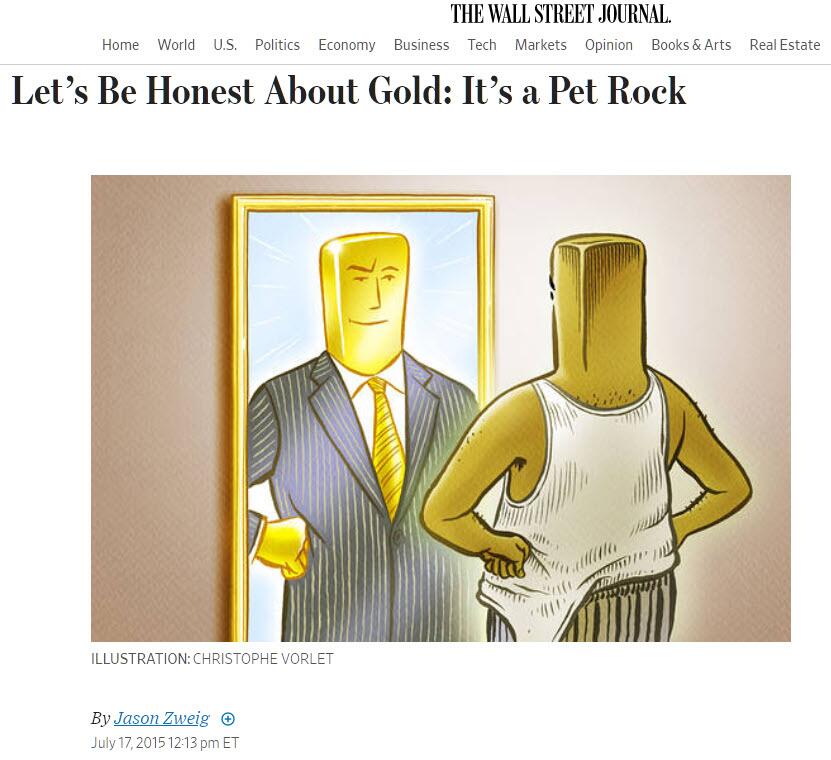
Finally, completing the gloomy trifecta was none other than JPM CEO Jamie Dimon who told CNBC that we could have a “mild to hard recession” next year. And it wouldn’t be Jamie if he didn’t take a pot shot at crypto where he said tokens are like “pet rocks“, or verbatim what the WSJ called gold 7 years ago, in a call which we are confident the newspaper would gladly retract

Tyler Durden
Tue, 12/06/2022 – 14:00

via ZeroHedge News https://ift.tt/QebN5nM Tyler Durden

Did Trump Really Call For Termination Of The Constitution?

Did Trump Really Call For Termination Of The Constitution?

Authored by Mark Fitzgibbons via AmericanThinker.com,

Following Twitter’s release last Friday of shocking revelations of collusion between the Deep State and Big Tech to censor news about Hunter Biden’s “Laptop from Hell,” Donald Trump took to Truth Social, and what followed may have been another Charlottesville moment among the media, other Trump haters, and more.

From CNN:

“Trump calls for the termination of the Constitution in Truth Social post.”

 Over at Axios:

“‘A few hours ago the leader of the republican party donald trump called for destroying the Constitution and making himself dictator,’ Rep. Bill Pascrell (D-N.J.) tweeted.”

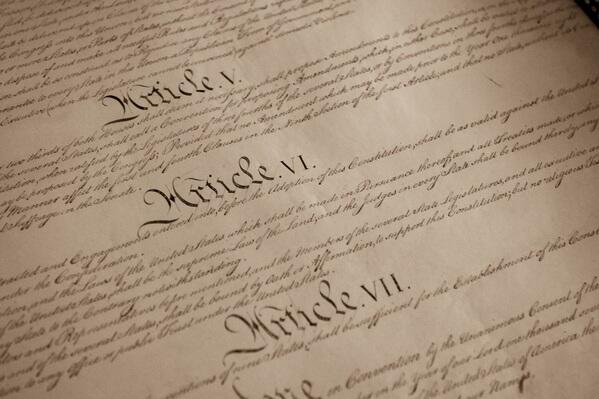
The offending language from Trump’s social media post was, “A Massive Fraud of this type and magnitude allows for the termination of all rules, regulations, and articles, even those found in the Constitution.” Trump also included the admonition that “[o]ur great ‘Founders’ did not want, and would not condone, False and Fraudulent Elections!”

Those who believe Trump is evil and ignorant will of course read what they want into his post regardless of his intent and the actual meaning.

Had Trump actually called to terminate the Constitution — as anti-Trumpers would lead the gullible to believe — he would have lost his constitutional conservative base, and he knows that.

Monday, however, a more level-headed journalist, @ByronYork, tweeted instead, “Question: What do you think is the most accurate way to describe what Trump called for in the Truth Social post below? truthsocial.com/@realDonaldTru… pic.twitter.com/58OUiXRUpW.”

The predisposed anti-Trump crowd chose to read “allow for” as advocating termination of laws governing elections. Those governing laws include Article 2, Section 1 of the United States Constitution, which provides for the unique role of state legislatures (not state bureaucrats) setting the presidential election laws.

Indeed, constitutional arguments presented before January 6, 2021 — which unfortunately have been largely misreported by the corporate press and overshadowed by other issues — are grounded in efforts to prevent false and fraudulent elections. (“Nothing was more to be desired than that every practicable obstacle should be opposed to cabal, intrigue, and corruption. These most deadly adversaries of republican government might naturally have been expected to make their approaches from more than one quarter, but chiefly from the desire in foreign powers to gain an improper ascendant in our councils.” Federalist 68.)

That key states violated Article 2, Section 1 by bypassing state legislatures in making new rules for the 2020 election did result in election law violations that swayed the outcome.

Another common reading of “allow” for is “to make (something) possible,” as in, “[t]o leave your house unlocked allows for theft.”

It means to give the necessary time or opportunity for something to happen.

Reading Trump’s comment in that context brings a much different meaning to his social media post than a call by him to terminate the Constitution. This reading is more plausible when one knows that Trump was briefed by some brilliant constitutional lawyers about the state fraud and constitutional issues under Article 2, Section 1, whether one agrees with their constitutional arguments or not.

It was the acts of others that “terminated” the laws governing the 2020 elections. The Twitter revelations about collusion with Big Tech aiders and abettors such as those who lied and said the laptop was Russian disinformation. That collusion enabled (allowed for) a false and fraudulent election in 2020. The lies skewed votes, polls reveal.

Leftists and establishment Republicans have been systematically “terminating” the Constitution for decades. In Federalist 44 James Madison wrote about how the United States may eventually be prone to usurpation of constitutional law by elected officials, “[yet] in the last resort a remedy must be obtained from the people who can, by the election of more faithful representatives, annul the acts of the usurpers,” he wrote.

Madison didn’t even envision what we now face with collusion between the Deep State and mega-corporations.

Federalist 53 refers to the “Constitution [as] paramount to the government,” and John Marshall called it our “fundamental and paramount law.” Had Trump actually called for the Constitution to be broken — when the Biden administration and Democrats in Congress break it every day — he’d have sealed his fate for 2024.

Anti-Trumpers are more than happy to use this new Charlottesville hoax moment to distract from Elon Musk’s release of the Twitter censorship files.

Tyler Durden
Tue, 12/06/2022 – 13:40

via ZeroHedge News https://ift.tt/9wTjmhX Tyler Durden

CNN Boss Beefs Up Security After Mass Layoffs

CNN Boss Beefs Up Security After Mass Layoffs

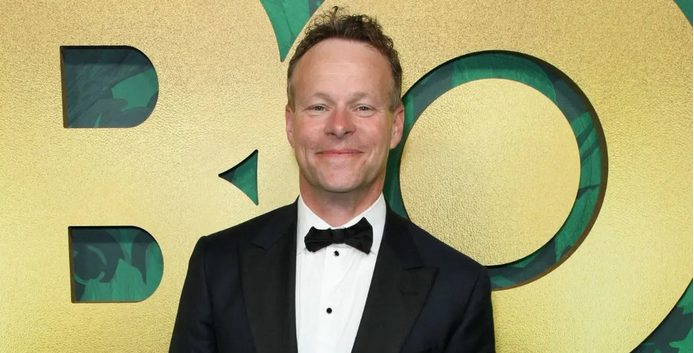
Extra security personnel were spotted outside CNN CEO Christ Licht’s 17th floor office last week after he handed pink slips to nearly 10% of the failing network’s staff in highly anticipated layoffs, according to Radar.

The beefed up security presence was spotted on Thursday, in what the outlet described as an ‘effort to diffuse any angry CNN employees who met the chopping block’ after the 51-year-old executive announced the next round of layoffs. Hundreds of additional staffers were reportedly let go, including both on-air talent and off-camera employees.

Some notable names who were let go from the struggling news network included CNN contributors like Preet Bharara and Paul Begala; commentators like Chris Cillizza; and correspondents such as Dan Merica and Alison Kosik.

But while Licht axed hundreds of employees, and hired extra security detail to prevent any unwanted escalations, some CNN employees praised the network chairman for choosing to keep his office doors open all Thursday so his 4,000 remaining staffers could speak with him about the latest round of layoffs. -Radar

But while Licht reportedly kept his office doors open (and his security tight), some employees threw shade.

“What were we supposed to talk about?” said one staffer.

Another staffer located in DC said that “everyone’s depressed” following the layoffs, which began last Thursday when Licht executed on “part of continued cost-cutting by parent company Warner Bros. Discovery” that was telegraphed in a Wednesday memo.

“It will be a difficult time for everyone,” said CEO Chris Licht in a Wednesday memo, who noted that paid contributors will learn their fate on Wednesday, while full-time employees would be informed of their status on Thursday.

“Our people are the heart and soul of this organization,” Licht added. “It is incredibly hard to say goodbye to any one member of the CNN team, much less many. I recently described this process as a gut punch, because I know that is how it feels for all of us.”

The cuts are not a surprise, with Licht warning employees in late October that the news division would be undergoing a restructuring, citing “widespread concern over the global economic outlook.”

But they do come amid decreasing morale at CNN, which has already seen significant turnover this year since the Discovery merger. One of the first moves made after the merger closed was to shut down the CNN+ streaming service, laying off a couple hundred employees in the process. -Hollywood Reporter

Meanwhile, Radar reports that the next round of layoffs at the network could come as early as the first week of December.

“There are huge nerves about that,” said one insider. “It wasn’t clear from that town hall who they’re going to fire. We’re waiting for answers on that.”

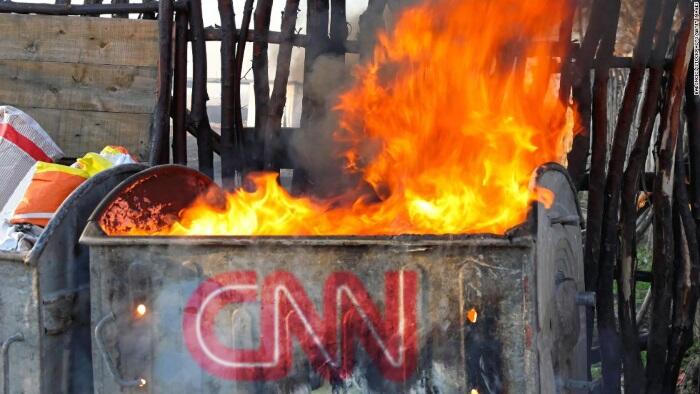
Is Licht actually putting out the dumpster fire?


Tyler Durden
Tue, 12/06/2022 – 13:20

via ZeroHedge News https://ift.tt/I9aVCnX Tyler Durden

A 10-Year-Old Boy Shot and Killed His Mother. Wisconsin Is Charging Him As an Adult.


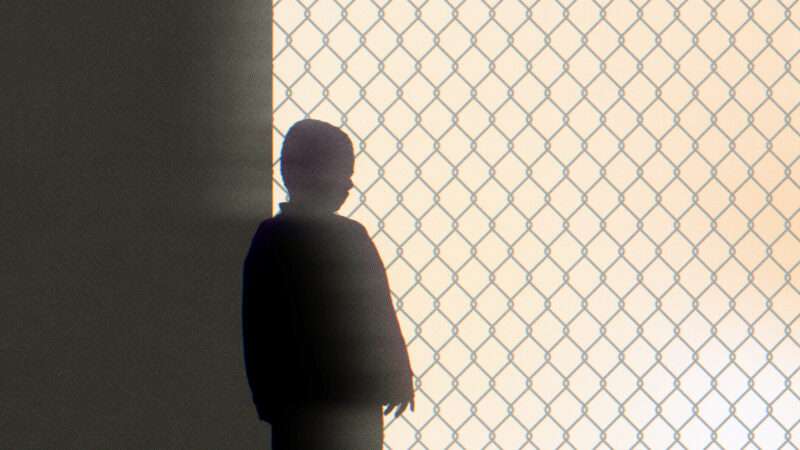
Silhouette of a child behind a chain link fence

On November 21, Wisconsin 44-year-old Quiana Mann was killed when her 10-year-old son shot her, apparently in a dispute over a virtual reality headset. While the case is tragic, a strange feature of Wisconsin law is making a terrible situation even worse.

In the state, children as young as 10 charged with certain serious crimes must be charged as adults. This means that Mann’s son—at only 10 years old—was charged as an adult in his mother’s killing.

According to NBC, the 10-year-old whose name has been withheld from the media, was charged with first-degree reckless homicide in Mann’s death. If convinced, the boy faces up to 60 years in prison—notably six times greater than his current age.

This latest case is far from the first time Wisconsin preteens have been charged as an adult in a homicide case. Most recently, a 10-year-old girl was charged as an adult on homicide charges in 2018, after she apparently beat a 6-month-old baby to death. The girl, who had recently been placed in foster care and suffered from PTSD, was eventually ruled incompetent to stand trial.

Higher profile cases, like the 2014 “Slender Man” stabbing, resulted in two girls, who were 12 at the time of the attack, being charged as adults, though both were later found not guilty by mental disease or defect and later sentenced to lengthy confinements in state psychiatric hospitals.

Thankfully, defense lawyers can motion to move cases like this to juvenile court. However, attempts to do so have failed to convince judges even with very young defendants. For example, a 13-year-old girl with a history of trauma and sexual abuse unsuccessfully attempted to move her homicide trial to adult court in 1999. She was eventually convicted and sentenced to life in prison.

In this most recent case, as with many others, the child at the center of this case clearly needs intensive psychiatric care, not decades in prison. It is obvious that young children who commit terribly violent acts are universally troubled. In this most recent case, the boy’s sister claimed in a criminal complaint that he has experienced serious mental health problems for much of his young life. According to NBC, the boy had apparently been given a “concerning diagnosis” by a therapist, and the boy’s mother had installed cameras in the home to monitor him.

Charging disturbed children as adults—and possibly sending them to prison for many decades longer than their age when they committed the crime—doesn’t make people safer and doesn’t provide justice to crime victims. When a young child commits a horrific act of violence, their tender age indicates the need for intensive mental health, not a purely punitive sentence.

The post A 10-Year-Old Boy Shot and Killed His Mother. Wisconsin Is Charging Him As an Adult. appeared first on Reason.com.

from Latest https://ift.tt/Gm7r8Lc
via IFTTT

California Law Strips Licenses from ‘Misinformation’-Spreading Doctors


CA-Medical-Misinfo-Thumbnail-v3

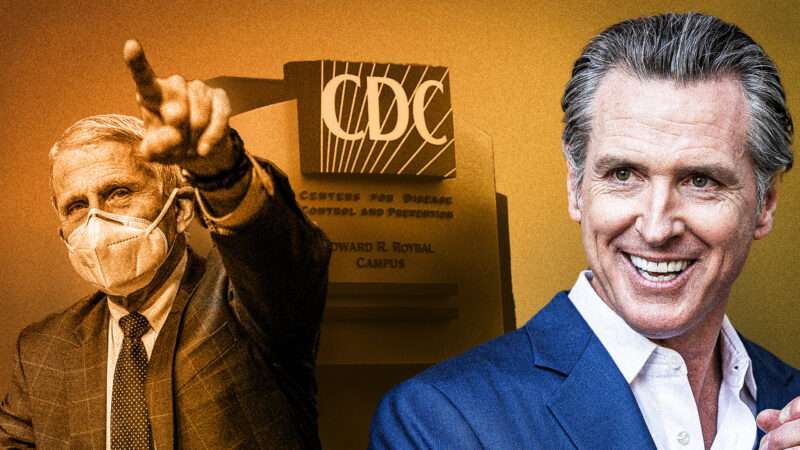
A new California law gives the state unprecedented control over what doctors can say to their patients about COVID-19.

“We’ve got to stop the disinformation pipeline,” an emergency physician supporting California’s AB 2098 told the California Assembly in April.

Stanford economist and medical school professor Jay Bhattacharya, a leading critic of the law, says that it “puts the [Center for Disease Control] in the same room with the doctor and the patient,” violating a basic trust.

Governor Gavin Newsom signed AB 2098 into law in September, meaning that starting in 2023, doctors who disseminate what the state defines as “misinformation or disinformation related to the SARS-CoV-2 coronavirus” can face disciplinary action by the California Medical Board, including being stripped of their licenses.

“It essentially ends your ability to combat bad ideas put out by public health because you have this looming power that over you that essentially can end your career,” says Bhattacharya.

He was one of several scientists whose work NIH Director Francis Collins said needed a “quick and devastating published takedown” in an email to Anthony Fauci that was obtained through a FOIA request, after Bhattacharya had participated in the Great Barrington Declaration, an October 2020 open letter calling for an immediate end to the lockdowns and use of an alternative COVID-19 mitigation strategy called “focused protection.”

Collins called Bhattacharya—an M.D. and Stanford professor—a “fringe epidemiologist,” along with his co-signers, Harvard’s Dr. Martin Kulldorff, and Oxford University’s Dr. Sunetra Gupta.

“This kind of campaign essentially put the government in the role of suppressing legitimate public policy debate,” says Bhattacharya about Fauci and Collin’s actions. “The idea was to create this illusion of consensus around the lockdowns that didn’t actually exist.”

That same illusion of consensus, Bhattacharya says, is what California is leveraging to quash dissent among doctors across the entire state with this new law.

AB 2098 defines COVID-19 “misinformation” as medical advice “contradicted by contemporary scientific consensus,” though does not specify how to define such a consensus.

“Regardless of your views on the state of California’s coronavirus response policies or their public health policies, I think any person—left, right, liberal, conservative—who goes to their physician and asks them a question about COVID treatment…wants to actually know what their physician thinks,” says Aaron Kheriaty, a psychiatrist and former professor who taught bioethics at the University of California, Irvine’s medical school. “No one wants a doctor who’s just reading from a script that was written by the California Department of Public Health.”

U.C. Irvine fired Kheriaty after he refused to comply with the university’s vaccine mandate and published an essay critical of the policy. He’s also a co-plaintiff in a lawsuit filed by the New Civil Liberties Alliance, a nonprofit law firm that “views the Administrative State as an especially serious threat to constitutional freedoms.” The suit, which has yet to be heard, is challenging the California law on the grounds that it violates free speech and due process rights.

“Science and censorship are, in fact, incompatible,” says Kheriaty. “[Science] has to be an ongoing, open conversation where debate, where novel perspectives, where challenges to orthodoxy or conventional thinking are not only permitted, but welcomed and then tested against the empirical evidence.”

Kheriaty worries that AB 2098 will “lock” whatever the current consensus happened to be into law as “something cannot be challenged.” The bill’s authors didn’t reply to our interview requests, but Democratic Assemblyman Evan Low said this when introducing the bill: “The definition of misinformation is malicious intent. It is very specific, very direct. And it’s important that we help the California Medical Board to have these tools and provide an opportunity to save lives.”

Bhattacharya points out that medical malpractice laws, which he views as “completely legitimate,” already exist to protect patients against malicious or negligent doctors. But he says AB 2098 goes much further by preventing “doctors from dissenting against reigning ideas in public health, even when public health is wrong.”

To address these concerns, Governor Gavin Newsom added a signing statement that “this bill does not apply to any speech outside of discussions related to COVID-19 treatment within a direct physician patient relationship.” But Bhattacharya says supporters of the law from the very beginning expressed eagerness to use it to silence doctors on social media.

The lawsuit against the new law alleges that one of the groups that lobbied for the law—No License for Disinformation, whose representatives didn’t reply to our interview request—regularly threatened dissenting physicians in the lead-up to AB 2098’s passage, with one member of the group tweeting at a plaintiff, “I look forward to reporting you to your medical board once a certain law is passed in California.” When we reached out, he told us via Twitter DM that “I hope their suit gets tossed” and “they all deserve to lose their licenses.”

During testimony in favor of the bill, Nick Sawyer, an emergency medicine doctor and founder of No License for Disinformation, didn’t focus on a physician dispensing misinformation to a patient, but rather on a group calling themselves American’s Frontline Doctors, who held a press conference in July 2020 promoting treatments such as hydroxychloroquine, which Sawyer described as “the most prolific public showing of misinformation to date.”

Regardless of how one feels about the message put forth by this particular group of doctors, Bhattacharya says that mentioning them during the debate of the bill is evidence that the law’s target is not only, or even primarily, physicians in practice, but any public dissent from medical doctors.

“The effect of the law will be to suppress free discussion by doctors who are afraid of losing their license if they disagree with public health online and elsewhere,” says Bhattacharya.

The rationale written into the text of the law is that COVID-19 has “claimed millions of lives worldwide,” including tens of thousands in California and that “the safety and efficacy of COVID-19 vaccines have been confirmed through evaluation by the Federal Food and Drug Administration.” Kheriaty says this latter claim was “plausible” early on but that the waning efficacy of the vaccine calls for a more nuanced discussion that physicians should be free to have with their individual patients.

“A doctor’s recommendation has to be tailored to the needs of this specific patient in front of me,” says Kheriaty. “So it’s not necessarily the case that a doctor who’s recommending the vaccine for an 80-year-old with diabetes would also want to recommend the same vaccine for a six-year-old or a 16-year-old.”

Kheriaty says that this law is the latest example of a trend towards an increasingly centralized, bureaucratic health system that prioritizes control and surveillance over individual patient needs, a topic he covers at length in his book The New Abnormal: The Rise of the Biomedical Security State, which he says describes the “melding of public health, digital technologies of surveillance and police powers of the state.”

To reverse the trend of increasingly bureaucratic and centralized public health, Kheriaty recommends first ending the declared state of emergency at all levels of government. He also favors decentralizing research funding so that less of it is directed by federal officials like Anthony Fauci and Francis Collins at the National Institutes of Health—both of whom can make or break the career of a scientist by funding or denying them grant money.

The lawsuit against California was filed in November and has yet to be heard by a judge. If no ruling is issued in the coming weeks, AB 2098 will become California law starting January 1.

“Public health should not rule over the public,” says Bhattacharya. “Public health should be partners with the public in promoting health. I think ‘humility’ would be the watch word in my reform of the public health world.”

Produced by Zach Weissmueller; edited by John Osterhoudt; camera by Jim Epstein and Osterhoudt; graphics by Regan Taylor; additional graphics by Lex Villena.

Photo credits: Ken Cedeno/UPI/Newscom; Paul Kitagaki Jr./ZUMAPRESS/Newscom; Beverly Willis Architects, Inc., CC BY-SA 3.0, via Wikimedia Commons; Envato; CNP/AdMedia/Newscom; CNP/AdMedia/Newscom; Brett Raney; Hector Amezcua/TNS/Newscom; gbdeclaration.org; BylineStefani Reynolds—Pool via CNP/MEGA/Newscom; Tom Williams/CQ Roll Call/Newscom; CNP/AdMedia/SIPA/Newscom; CNP/AdMedia/SIPA/Newscom; Dominick Sokotoff/ZUMAPRESS/Newscom; Ron Lyon/ZUMAPRESS/Newscom; Ron Lyon/ZUMAPRESS/Newscom; Ron Lyon/ZUMAPRESS/Newscom; Ron Lyon/ZUMAPRESS/Newscom; Paul Kitagaki Jr./ZUMAPRESS/Newscom; Paul Kitagaki Jr./ZUMAPRESS/Newscom

The post California Law Strips Licenses from 'Misinformation'-Spreading Doctors appeared first on Reason.com.

from Latest https://ift.tt/JbBZ8C9
via IFTTT

China’s President To Visit Saudi Arabia This Week

China’s President To Visit Saudi Arabia This Week

Authored by Tsvetana Paraskova via OilPrice.com,

Chinese President Xi Jinping will visit Saudi Arabia this week in a sign that the world’s top crude oil importer looks to further strengthen trade and investment relations with the top crude oil exporter and other major Gulf oil producers.

Xi is expected to travel to Saudi Arabia from Wednesday to Friday, the Saudi Press Agency (SPA) reported today. The Chinese president will hold meetings with the top rulers, including King Salman and Crown Prince Mohammed bin Salman, and take part in a Riyadh Gulf-China Summit for Cooperation and Development with the participation of leaders of other Arab Gulf countries, the Saudi agency said.

China – the world’s largest importer of oil and a major customer of Saudi Arabian crude – and the Kingdom have deepened ties in recent years, including in the energy sector.

In October, Saudi Arabia and China jointly stressed the importance of stable long-term crude supply to the market. Saudi Arabia’s Energy Minister, Prince Abdulaziz bin Salman, and Zhang Jianhua, the director of China’s National Energy Administration (NEA), have also agreed to continue cooperation in their efforts to keep the global crude oil market stable.

Xi’s visit to Saudi Arabia at a time of major turmoil in the oil market and geopolitics with the Russian invasion of Ukraine signals China’s intention to increase its influence in the Middle East, where the U.S. was, until recently, the world superpower with the biggest influence. The Chinese president’s visit also suggests that Saudi Arabia considers its relationship with China one of strategic importance.

While the Chinese and the Saudis are strengthening their relations, U.S.-Saudi relations are at a low point, especially after the U.S. Administration slammed in October Saudi Arabia and the OPEC+ group for what it described as a “short-sighted” and “misguided” decision to reduce their target oil production by 2 million barrels per day (bpd) as of November.    

Tyler Durden
Tue, 12/06/2022 – 13:00

via ZeroHedge News https://ift.tt/ZtQXlFn Tyler Durden

White House: Elon’s ‘Twitter Files’ On Hunter Laptop Coverup Are ‘Haphazard Distraction’

White House: Elon’s ‘Twitter Files’ On Hunter Laptop Coverup Are ‘Haphazard Distraction’

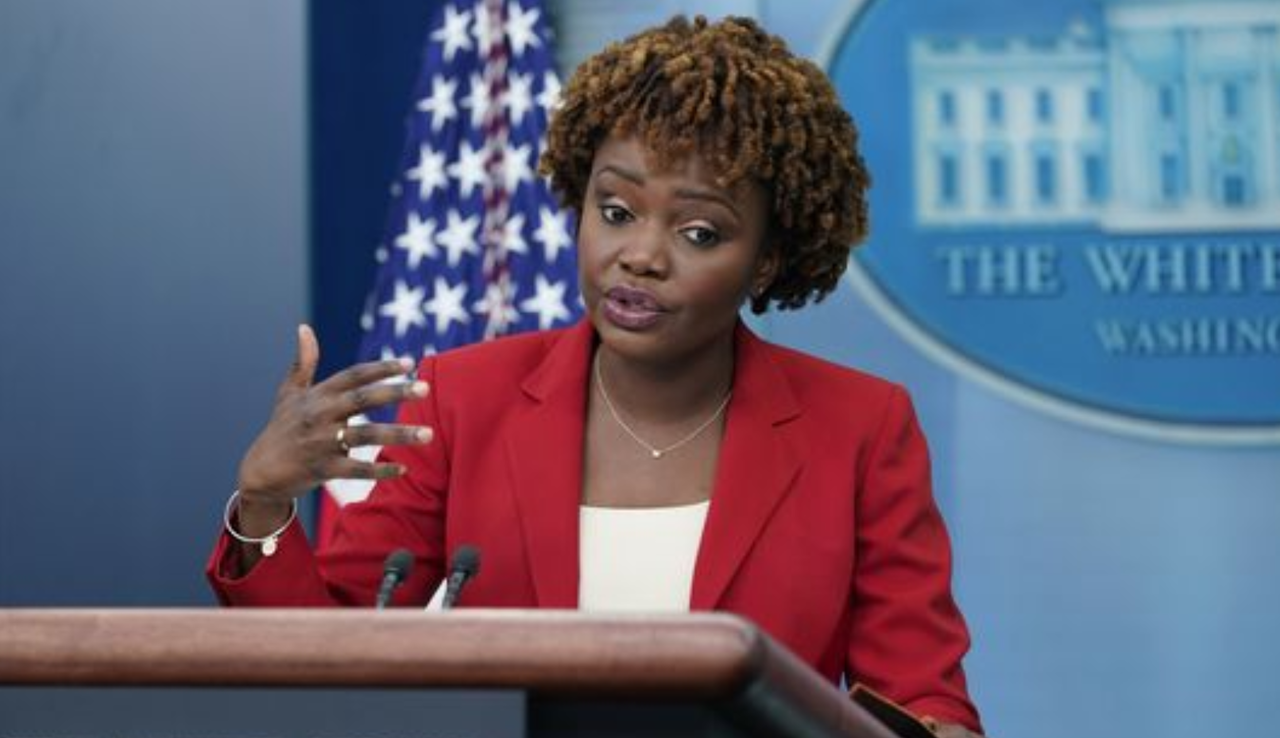
White House press secretary Karine Jean-Pierre on Monday tap-danced around the issue of Twitter’s censorship of the Hunter Biden laptop story right before the 2020 US election, calling it “not healthy” because it doesn’t do anything to improve Americans’ lives (like the inflation which has gripped the nation since Biden took office?).

What is happening — it’s frankly, it’s not healthy. It won’t do anything to help a single American improve their lives. And so look, we see this as an interesting, you know, coincidence, and you know, it’s a distraction,” said Jean-Pierre at the end of her Monday briefing, where she offered a lengthy rebuke of Musk’s Friday reveal on how Twitter execs worked behind CEO Jack Dorsey’s back to censor the New York Post‘s bombshell report.

We see this as an interesting, or a coincidence, if I may, that he would so haphazardly — Twitter would so haphazardly push this distraction that is full of old news, if you think about it,” Biden’s spox continued, downplaying the politically motivated censorship and denial of free speech revealed in Musk’s release, the NY Post notes.

“And at the same time, Twitter is facing very real and very serious questions about the rising volume of anger, hate and anti-Semitism on their platform and how they’re letting it happen,” she continued.

Watch:

Jean-Pierre got into a fierce exchange with Fox News‘ Jacqui Heinrich.

“On Twitter, because you guys said you’re keeping a close eye on Elon Musk’s ownership and this is the first time we’ve talked to you since he released the files a few days ago — is it the White House view that decisions at Twitter were made appropriately in terms of decisions to censor this reporting ahead of the election?” asked Heinrich.

To which Jean Pierre shot back: “You mischaracterize actually what I actually said and took it out of context when you asked your question,” adding “Look, when I answered the question and I already actually already addressed this about how the White House and the administration is seeing what’s happening on Twitter.”

“We follow also what’s going on, just like you guys are reporting it, just like you guys are seeing. And what I was commenting to is like yes, we’re seeing what is happening, just like you all are seeing what’s happening with Twitter. So just want to clear that up because you definitely mischaracterized what I said or put it out of context. And so can you ask your question again?”

To which Heinrich replied: “My question was that you had said I think six or so days ago to the White House was watching closely the situation at Twitter after Elon Musk’s ownership of it with respect to misinformation. And because these files were released on the basis of ‘hacked materials’ clause at Twitter where decisions were made to censor reporting leading up to the election. My question was, is it the White House view that these decisions were made appropriately in light of what has come out?”

“Which decisions? By whom?” Jean-Pierre shot back, playing dumb.

“By Twitter,” Heinrich replied.

Twitter suspended the NY Post‘s account following the release of the Hunter Biden laptop story, and banned users from sharing links to it – both publicly and in private messages. The laptop contains damning evidence of Joe Biden’s involvement with his son Hunter and brother James’ business dealings in Ukraine and China.

Twitter hid behind their “hacked materials” policy in their decision to interfere in the 2020 US election, despite there being no evidence of hacking, and the Post clearly explaining how the laptop was abandoned by Hunter Biden at a Delaware repair shop.

Tyler Durden
Tue, 12/06/2022 – 12:40

via ZeroHedge News https://ift.tt/mzwLnov Tyler Durden

Europe Can’t Count On US Shale To Make Up For Russian Crude

Europe Can’t Count On US Shale To Make Up For Russian Crude

By Irina Slav of Oilprice.com

OPEC+ yesterday decided to leave its production quotas where they are, at 2 million bpd lower than they were in October, which is an effective cut of 1 million bpd of production. Three days earlier, the European Union reached an agreement to set a price cap on Russian crude oil at $60 per barrel—lower than market prices but not as low as some EU members, such as Poland and Estonia, would have liked the cap to be.

Russia responded by reiterating that it will not sell oil to countries enforcing a price cap. According to Reuters, a decree to that effect is already being prepared.

Amid all this, U.S. oil production growth is slowing down. The shale revolution, as we knew it until a few years ago, is no longer in full-growth mode. And it may never return to it.

On the face of it, all looks good. U.S. output has rebounded from a low of 9.7 million bpd, which was recorded in May 2020, to 12.3 million bpd this September, Reuters’ John Kemp wrote last week, noting that this year’s high was still below the pre-pandemic record of 13 million bpd, hit in late 2019.

What’s more, oil production in the country was not rising steadily. For two of the last seven months, it has actually declined, according to EIA data. And the rate of growth when it grew was half the growth rate recorded during the boom years in U.S. shale.

There are numerous reasons for this slowdown, driven, like output growth, by the shale patch. In many parts of the patch, for instance, drillers are running out of so-called sweet spots—low-cost acreage that has driven much of the shale boom.

Yet oil companies are also rearranging their priorities under an administration that is much less favorable to their industry than previous ones. Returning cash to shareholders has become priority number one, replacing production growth.

There have also been lingering problems from the pandemic lockdowns, such as shortages of things like frac sand and steel tubing, as well as a labor shortage. On top of all that, the industry has had to deal with the same inflation that has hit all other industries, pushing costs up by some 20 percent.

All this means that as it curbs its own supply of Russian oil with the price cap and its oil embargo on the commodity, the European Union cannot really rely on higher oil imports from the United States as it has relied on stronger gas imports.

The outlook is not very encouraging, either. According to a Reuters report from last week, spending in the shale oil industry in the U.S. is far from what it was during the boom years.

The report cited numbers for research and engineering spending at Schlumberger, for instance, now renamed SLB, which fell to 2.3 percent of revenues in the nine months to September.

It also said another large player in the industry, Helmerich & Payne, only planned to increase its R&D spend by $1 million for next year this year’s level, and cited Morgan Stanley analysts as saying that spending on new production was “modest at best”.

“Shale can’t come back to become a swing producer,” said the former head of Parsley Energy, Bryan Sheffield, echoing a very similar statement by Hess Corp.’s John Hess that he made last month.

“Shale was thought of as a swing producer, the Saudis and the OPEC have waited this out. Now, really OPEC is back in the driver’s seat where they are the swing producer,” Hess said at an investor conference.

He was quoted in a Reuters report that also cited other industry executives complaining about lower-than-expected well productivity and a substantially revised production growth forecast for 2021 by the EIA.

Hess went even further, warning that some companies in the shale patch only had a decade or so of life left in them and that “A lot of companies have already hit the wall,” missing their production and investment targets.

Meanwhile, the EU has become the biggest export market for U.S. crude oil, taking in more than Asia since the start of the year, Bloomberg reported in July, in a repeat of the redirection of natural gas flows.

But with U.S. oil output growth on the wane, if OPEC is back in the driving seat, that’s even worse news for Europe than the production growth slowdown in the United States. OPEC has signaled repeatedly in recent months that it has its own agenda, and it is not the same as the EU’s agenda.

On the contrary, the two agendas are very much at odds with the EU’s transition plans and OPEC’s plans to continue marketing hydrocarbons for as long as possible. In the immediate term, however, the two groups’ interests are aligned: the EU will need more oil from OPEC, and OPEC will probably be only too happy to supply it. At market prices, of course.

Tyler Durden
Tue, 12/06/2022 – 12:23

via ZeroHedge News https://ift.tt/Dw6hea4 Tyler Durden

Walker Vs. Warnock: Georgia Runoff To Settle Last Senate Seat

Walker Vs. Warnock: Georgia Runoff To Settle Last Senate Seat

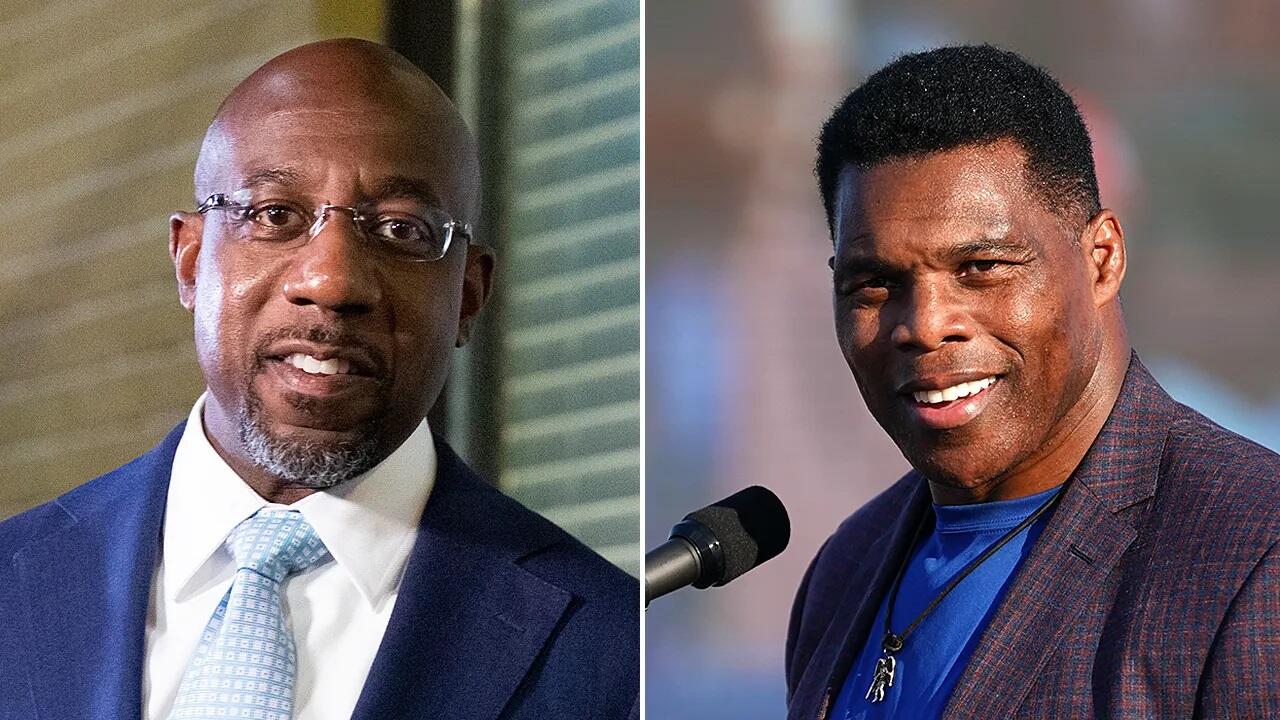
Georgia voters will head to the polls on Tuesday to settle the final Senate contest in the country between Democratic Sen. Raphael Warnock and football legend Herschel Walker, following a four-week runoff that has attracted a flood of outside spending.

The outcome of Tuesday’s vote will determine whether Democrats will have a 51-49 Senate majority, or will maintain the 50-50 control of the chamber which often resulted in the party kowtowing to centrist Democratic Sens. Joe Manchin (WV) and Kyrsten Sinema (AZ).

Atlanta voters were greeted Tuesday morning with 40-degree weather with rain.

The contest between Walker and Warnock pits the state’s first black senator and senior minister against Walker, who has the support of former President Donald Trump. If Warnock wins, it would solidify Georgia’s status as a battleground state heading into the 2024 election, AP reports. If Walker wins, it would reflect limited Democratic gains in the state – particularly in light of Republicans marking wide-ranging victories across the state in last month’s midterm elections.

In that election, Warnock led Walker by about 37,000 votes out of almost 4 million cast but fell shy of a majority, triggering the second round of voting. About 1.9 million votes already have been cast by mail and during early voting, an advantage for Democrats whose voters more commonly cast ballots this way. Republicans typically fare better on voting done on Election Day, with the margins determining the winner.

Last month, Walker, 60, ran more than 200,000 votes behind Republican Gov. Brian Kemp after a campaign dogged by intense scrutiny of his past, meandering campaign speeches and a bevy of damaging allegations, including claims that he paid for two former girlfriends’ abortions — accusations that Walker has denied. -AP

On Monday Walker campaigned with his wife, Julie, where he thanked supporters and backed off the attacks on Warnock.

“I love y’all, and we’re gonna win this election,” he told supporters at a winery in Ellijay, adding “I love winning championships.”

As far as campaign spending, Warnock’s has spent around $170 million vs. Walker’s $60 million or so, according to federal disclosures. Their respective party committees have spent more, according to the report.

During the campaign Warnock attacked Walker’s rocky past – claiming the ex-NFL star paid for two former girlfriends abortions, while Walker was forced to admit during the campaign that he fathered three children out of wedlock whom he had never publicly acknowledged.

Walker, a multi-millionaire and successful businessman, has campaigned on his business achievements and philanthropic activities – though he was caught exaggerating, saying he employed hundreds of people and grossed tens of millions of dollars in sales, when in fact he employed eight people and had around $1.5 million in average annual sales.

Tyler Durden
Tue, 12/06/2022 – 12:00

via ZeroHedge News https://ift.tt/M2ZJw0f Tyler Durden