Supply Disruption From Russia Price Cap Is Here: Tanker Jam Forms Off Turkey

Supply Disruption From Russia Price Cap Is Here: Tanker Jam Forms Off Turkey

The EU and G7 price cap on Russian oil went into effect on Monday, but it’s already causing disruptions in global supply chains.

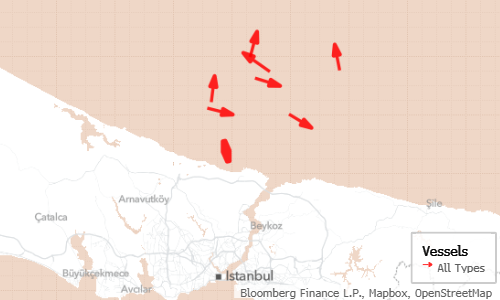
The first manifestation comes from Turkey, where the Financial Times reports that a tanker traffic jam is stacking up in Turkish waters as the country’s authorities demand proof that the vessels have insurance coverage: 

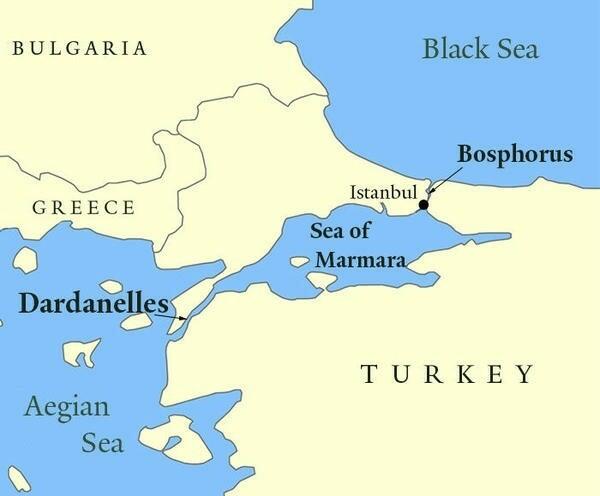
“Around 19 crude oil tankers were waiting to cross Turkish waters on Monday, according to ship brokers, oil traders and satellite tracking services. The vessels had dropped anchor near the Bosphorus and Dardanelles, the two straits linking Russia’s Black Sea ports to international markets.”

Here are some of the vessels in queue off Turkey. 
In a striking demonstration of the price cap’s potential to disrupt markets, most of the oil in the delayed ships isn’t even subject to the sanction regime: It’s from Kazakhstan and has merely transited Russian ports after arriving there via pipeline. 

One oil industry insider said Russian shippers have transited with relative ease — it’s shippers covered by western insurers that are anchored and now destined to deliver their cargo late.   
Last week, the G-7 (Canada, France, Germany, Italy, Japan, the UK, and the US) and the EU agreed to cap the price of Russian crude oil at $60 a barrel. The idea is to keep some Russian oil flowing while reducing Russia’s profit potential.
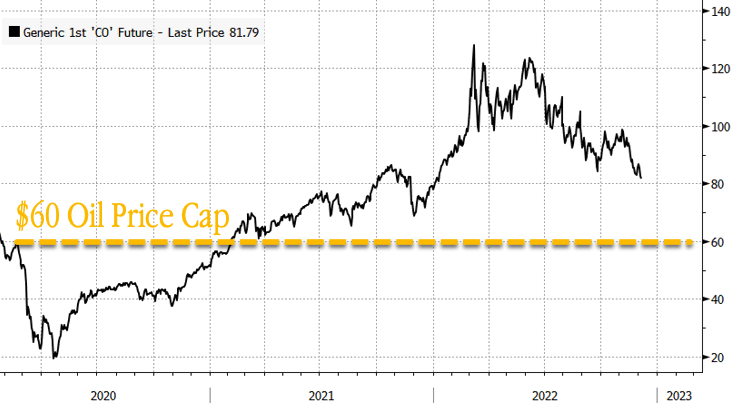
However, the cap “does not hurt Russia at all,” according to economist and fund manager Daniel Lacalle. “The agreed cap, at $60 a barrel, is higher than the current Urals price [and] above the five-year average of the quoted price.”

The cap is imposed by barring Western businesses from insuring, financing or shipping Russian oil unless the price is at or under the cap. The insurance aspect is particularly meddlesome, as maritime insurance is dominated by western firms, most notably Lloyd’s of London. 

According to the International Group of P&I Clubs, which represents 13 insurers covering some 90% of the world’s shipping, Turkey’s request to tankers goes “well beyond” the standard information requested.

Per the Times“It was not possible for P&I providers to guarantee cover even in the case of a sanctions breach, the group said in a statement by one of its members.” The group’s CEO, Nick Shaw, told the Times that his organization was in “ongoing constructive discussions with the relevant authorities to try and resolve the situation.”

A US Treasury official said the American government is “aware of how the government of Turkey’s new policy could complicate ships’ movement through the Turkish straits” and raised “concerns,” as UK officials did. 

As we explained Saturday, Russia has been quietly amassing a “shadow fleet” of tankers to sidestep Western targeting of its exports. 

Tyler Durden
Tue, 12/06/2022 – 06:55

via ZeroHedge News https://ift.tt/TLWeOxj Tyler Durden
Will Berlin’s Debt-Bomb Explode?

Will Berlin’s Debt-Bomb Explode?

Authored by John Cody via Remix News,

Berlin is known for some of the most generous social programs in the entire country, and many hold the German capital up as an example of progressive policies that should be implemented elsewhere. However, there are some major catches.

For one, Berlin benefits from wealthier areas of Germany, with taxpayer money funneled into Berlin at the expense of states like Hessen or Bavaria. In fact, Bavaria alone pays up to €9 billion into the state fiscal equalization scheme, while Berlin takes in €3.6 billion. These payments are partially related to Berlin and other Eastern German states’ economic setback following the end of communism, which served as a major economic shock to the east of Germany at the time.

This money, in part, helps Berlin afford free daycare and schools along with free school lunches. “Afford” is a term used loosely though, as the city is currently sitting on a time bomb of debt amounting to €66 billion, with few signs of this debt slowing. From 2019 to 2021, the total debt level rose €8.3 billion, moving up 13 percent.

Berlin’s detractors point out that the “luxuries” the city enjoys, such as free day care, can only be dreamed of in other states in Germany, even if the residents of those states are paying for Berlin’s “free lunch.”

Berlin’s public transportation ticket is also the most generous subsidized transportation ticket in Germany. It still costs only €9 for the poor and €29 a month for everyone else. The cost will be subsidized by a relief package worth €3 billion, with the package also offering protection against tenants being evicted and an extra energy allowance.

“Berlin was the first federal state to decide on a comprehensive €3 billion relief package, including: €29 ticket for everyone, €9 euro ticket for the poor, termination and rent freezes for municipal tenants, further energy aid, and insolvency protection for business,” wrote Julius Betschka, who works for Germany’s Tagesspiegel.

However, the response from the Dr. Peter Tauber, a former parliamentary state secretary and Christian Democratic Union (CDU) member, said wryly that the “Hessians will be happy to pay…”

Berlin’s mayor, Franziska Giffey, has responded to claims from other cities by saying that they are simply “envious” of Berlin’s generous programs.

“Sounds like (they) envy Berlin! Hesse could have launched such a relief package,” responded Giffey. She argues that her city is growing faster than Bavaria, and larger tax receipts due to inflation mean the city is giving back to ts residents.

On a per capita basis, Berlin is the most indebted state in all of Germany, amounting to €17,000 per person, whereas the rest of Germany only has €7,700 on average. Berlin had made some progress in paying off its debts; for example, in 2018, it debt fell below €60 billion for the first time in years, but Covid-19 and the current war in Ukraine, have only led to a massive increase in debt since then.

It should also be noted that Berlin’s argument that being an eastern city is the basis for its massive debt levels does not entirely hold up to scrutiny. Dresden, for instance, located in Saxony, featured the lowest debt levels of any German city in the entire country, both east and west, amounting to only €1,478 per person.

In Berlin’s defense

Those defending Berlin’s programs point to their widely shared social benefit. Unlike spending on military, opera houses, or film projects, the introduction of free day care and school lunches widely benefits the entire population, encourages family formation, and gives residents concrete examples of how their taxes are being put to work, even if those taxes are partly a transfer of wealth from other, wealthier German states.

Nevertheless, Berlin’s debt problems are not going away, and as tensions grows over rising inflation and energy prices, the city’s generous social programs may attract more criticism.

Tyler Durden
Tue, 12/06/2022 – 06:30

via ZeroHedge News https://ift.tt/3XLJydp Tyler Durden

France Bans Short-Haul Domestic Flights… Because ‘Climate Change’

France Bans Short-Haul Domestic Flights… Because ‘Climate Change’

France is banning short-haul domestic flights when there is a regular and frequent train option that takes less than two and a half hours, after a 2021 climate law, No 2021-1104, received permission from the European Commission (EC).

Article 145.I of the law prohibits passenger flights “on all air routes within French territory for which there are several direct rail connections per day of less than two and a half hours,” according to the European Union decision report (pdf).

The proposal, which has been hailed by the French Greens and environmental lobbyists in Brussels alike, will directly affect three major air routes between Paris-Orly and Lyon, Nantes, and Bordeaux.

Remix News’ Thomas Brooke reports that an intention to improve rail services and decrease the journey duration could see routes from Paris and Rennes to Lyon and Marseille also axed.

The measure is expected to take several months to enter into force and should last initially for three years, with a review of its effectiveness undertaken after two.

In its decision, published on Dec. 2, the European Commission dismissed the protestations of French airports and airline lobbyists, who claimed that the ban would fall foul of competition laws.

It claimed, however, that “the negative impacts on European citizens and connectivity of any restriction of traffic rights must be offset by the availability of affordable, convenient and more sustainable alternative transport modes.”

France’s Transport Minister Clément Beaune called the move a “major step forward,” adding:

“I am proud that France is a pioneer in this area.”

Karima Delli, a French Green MEP, hailed the European Commission’s approval of the ban, calling it a “victory” for environmental campaigners, but insisted that “the threshold must be raised to four hours, and above all, include private jets in the ban.”

A four-hour threshold would effectively see the abolition of all internal flights across France.

“The French ban on short-haul flights where quick train connections exist is a baby step, but it’s one in the right direction,” said Thomas Gelin, Greenpeace’s EU climate campaigner. 

However, some Green Party politicians want to extend the ban to cover four-hour train journeys, while other European lawmakers are hoping to expand the coverage to the whole continent with upcoming new railway lines like the European Uunion’s TEN-T project.

As The Epoch Times’ Naveen Anthrapully points out, detractors of the new rule, like the Net Zero Watch, commented in a tweet, “Just another freedom Net Zero will be taking away. #CostOfNetZero.”

Perhaps most notably,  The EC noted that the new rule will not have much of an impact on the environment because air traffic on the routes had considerably declined since the pandemic shutdowns.

Banning those routes will therefore not lead to an actual reduction in emissions. However, unquantifiable environmental benefits may nonetheless be generated since air carriers potentially interested in operating these routes will be prevented from doing so,” said the commission in the report.

“Expect much more of this,” tweeted Canadian conservative scholar Jordan Peterson in response to the news.

Tyler Durden
Tue, 12/06/2022 – 05:45

via ZeroHedge News https://ift.tt/acEX5Qs Tyler Durden

“Starmer Says UK Is “Broken Model” As Labour Unveils Replacement For House Of Lords

“Starmer Says UK Is “Broken Model” As Labour Unveils Replacement For House Of Lords

Authored by Chris Summers via The Epoch Times,

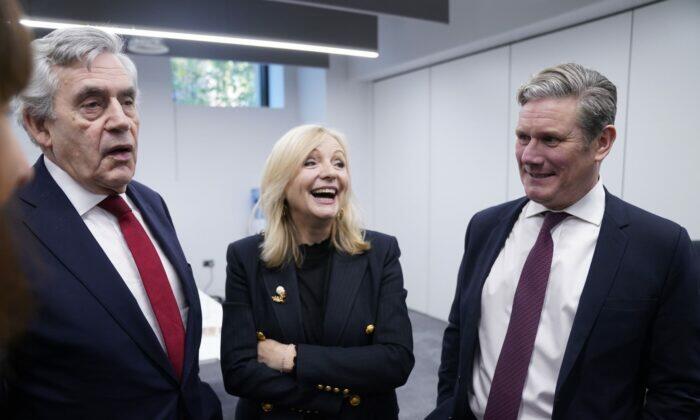
The leader of the opposition Labour Party, Sir Keir Starmer, has described Britain as a “broken model” and said the country was “crying out for a new approach.”

Speaking in Leeds at the launch of a report (pdf) by Labour’s Commission on the UK’s future, headed by ex-premier Gordon Brown, Starmer said the country needed “higher standards in public life, a wider spread of power and opportunity, and better economic growth.”

Although he campaigned for Remain during the 2016 referendum, he said said he understood why people voted for Brexit:

“They wanted more control over their lives, more control over their country. They wanted to create opportunities for the next generation—build communities they felt proud of, have public services they could rely on.”

Starmer said people were fed up of “navel gazing” and he said Britain must set its sights higher.

He said currently the government “hoards power in Westminster” and other parts of the country are left out, both politically and economically.

The Labour government of former Prime Ministers Tony Blair and Gordon Brown oversaw the introduction of devolution to Scotland, Wales, and Northern Ireland and the report suggests similar decentralisation for regions of England.

Brown said the commission was proposing “the biggest transfer of power out of Westminster and Whitehall” that has ever been seen in Britain.

The report suggests scrapping the House of Lords, which dates back to the 14th century, and replacing it with a democratic assembly of the nations and regions.

It goes on to suggest giving towns and cities more devolved power over matters like planning, transport, skills, and culture.

Starmer said Labour wanted to get rid of the House of Lords within its first term and he said an unelected second chamber was “indefensible.”

The House of Lords Act 1999 removed the right of most hereditary peers to sit and vote, but an amendment allowed 92 hereditary peers to remain.

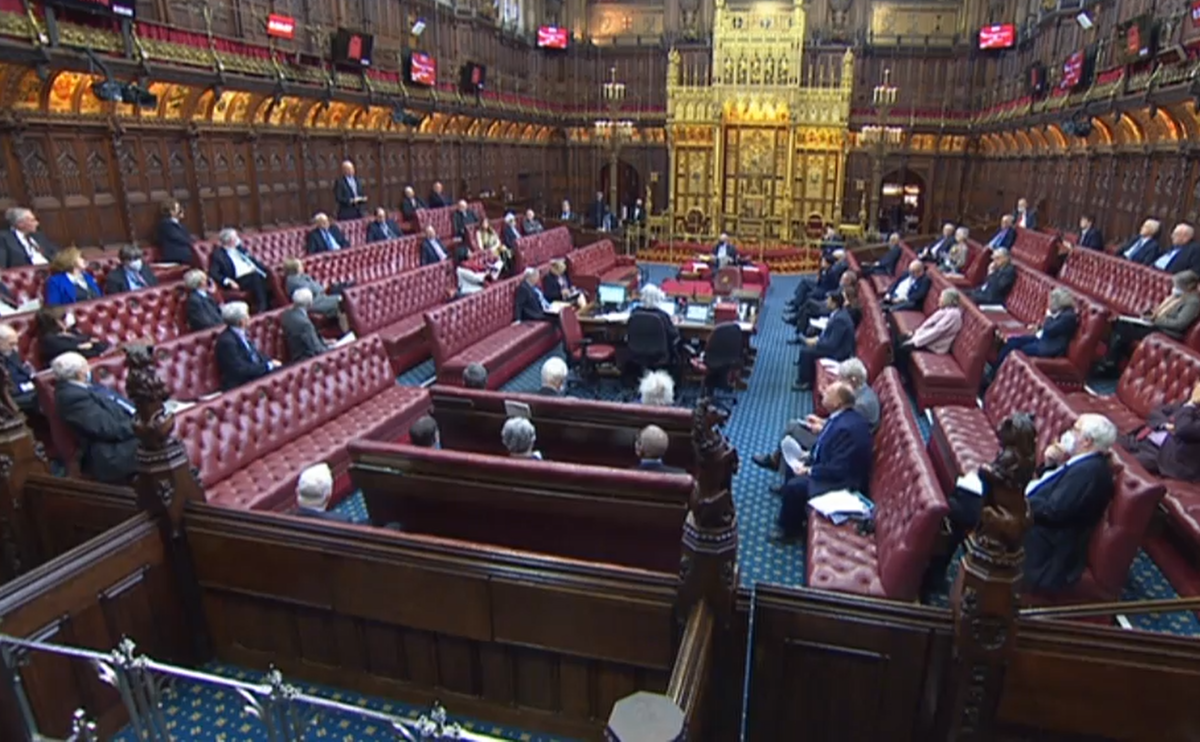
An undated image of peers in the House of Lords debating the Elections Bill at report stage in the Palace of Westminster in London. (PA)

In 2009 the UK Supreme Court replaced the Law Lords as the supreme arbiter of legal matters and the following year the Conservative–Liberal Democrat coalition government said it would bring forward plans for an elected upper chamber, although it never happened.

The House of Lords remains an unelected chamber, with new peerages created occasionally.

In October there was controversy when the former deputy leader of the Labour Party, Tom Watson, was nominated for a peerage by Starmer.

Row Over Nomination of Tom Watson to House of Lords

Watson, who stepped down as a Labour MP in 2019, has been criticised for his role in promoting the claims of Carl Beech, who said a huge paedophile ring had been run out of Dolphin Square in London by senior politicians and army officers.

In July 2019 Beech—whose allegations led to a massive and ultimately fruitless police investigation—was jailed for 18 years.

The former Chancellor, Lord Lamont, accused Watson of having “destroyed” lives, and Lord Fowler said the nomination underlined the need for reform of the system.

Brown said the commission had identified 288 “new economic clusters,” the majority of which were outside London, which were capable of creating tens of thousands of well-paid jobs.

Labour’s report says investment in research and development (R&D) is not spread equally around the country.

The report says: “London and the South East [of England] attract 72 percent of new R&D-intensive jobs, and 45 percent of all private investment, and enjoy double the average UK infrastructure spend per head. And in the absence of new investment, only London out of every major city has higher than average productivity.”

Starmer said: “I’m fed up to the back teeth with sticking plasters for the problems we have got. The underlying problem is our economy isn’t working.”

The report also proposed a ban on second jobs for MPs and a “powerful” new anti-corruption commissioner.

Starmer said of the commission’s report: “This is a strong, compelling set of recommendations that do what politicians have all agreed needs to be done, but nobody has actually done it, which is to be bold enough to say, ‘We’ve got to stop those in Westminster and Whitehall pretending that they know best about the communities that desperately want to play their part in the future.’”

The report ignores demands for a second referendum on independence in Scotland but says there should be more powers devolved to Scotland, Wales, and Northern Ireland.

The government of Prime Minister Rishi Sunak has not commented on the report, but Conservative MP Simon Clarke said, “Anyone who has looked at the institutionalised gridlock in U.S. politics can see the utter stupidity it would be to create an elected upper house.”

Liz Saville Roberts, the leader of the Welsh nationalist Plaid Cymru at Westminster, said: “This report is a damp squib for Wales. The message from Gordon Brown to the people of Wales: if you want a democracy equipped with the powers to do a proper job, vote Plaid Cymru.”

Tyler Durden
Tue, 12/06/2022 – 05:00

via ZeroHedge News https://ift.tt/LjqsAcZ Tyler Durden

Big Tech, Big Fines

Big Tech, Big Fines

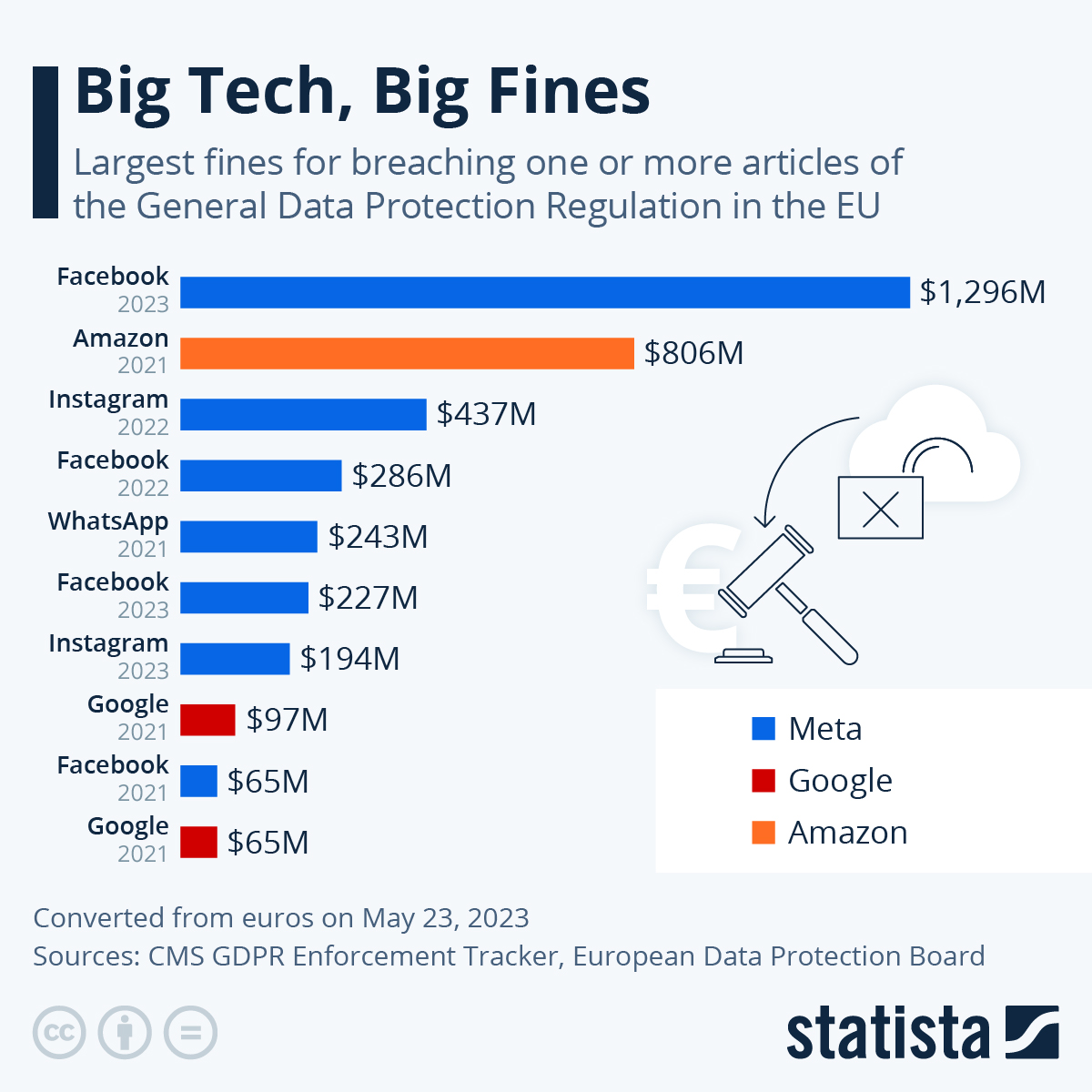
Ireland’s Data Protection Commissioner (DPC) has decided to fine Facebook 265 million euros or $275 million for violating the General Data Protection Regulation (GDPR) by enabling the scraping of sensitive user data between May 2018 and September 2019. This fine marks the fourth for platforms owned by Facebook’s parent company Meta. Even though it might seem like a considerable sum, it’s not the most significant amount of money a company had to pay in the history of the GDPR.

As Statista’s Florian Zandt shows in the chart below, that questionable honor goes to Amazon, another member of GAFAM.

Infographic: Big Tech, Big Fines | Statista

You will find more infographics at Statista

In July of 2021, Luxembourg’s data watchdog issued the European branch of the multi-billion dollar tech firm a fine of roughly $774 million in current prices for the “non-compliance with general data processing principles” according to the GDPR Enforcement Tracker by CMS Law. The fourth place on the list of highest fines goes to WhatsApp, followed by three counts of Google, Facebook, and Swedish fashion company H&M violating the GDPR.

The regulatory framework of the GDPR aims to give users more control over their data – and lays the groundwork for fining companies offering their services in the EU for breaching its articles. The GDPR was instated on May 25, 2018, as a replacement for the EU’s Data Protection Directive from 1995 and contains 99 articles.

So far, the GDPR Enforcement Tracker lists 1,507 individual breaches of the GDPR, although the data is most likely incomplete since not all fines are made public.

Tyler Durden
Tue, 12/06/2022 – 04:15

via ZeroHedge News https://ift.tt/PKEUe3B Tyler Durden

Czechia Admits EU’s EV Charger Network Plan Will Probably Fail

Czechia Admits EU’s EV Charger Network Plan Will Probably Fail

Via Remix News,

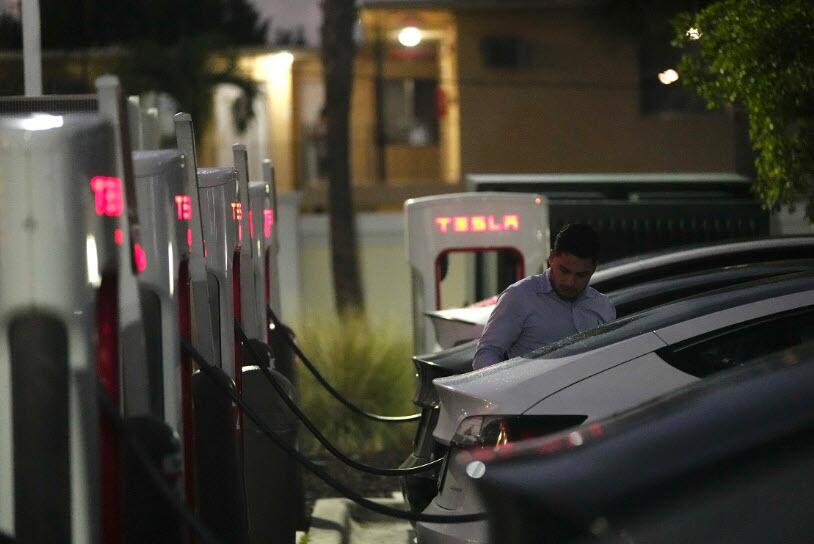
The European Parliament (EP) requires that by 2026 there should be at least one charging station for electric cars every 60 kilometers on all major road routes in the EU. In the Czech Republic, however, this will plan will probably fail, according to the Czech Ministry of Transport.

According to the MEPs’ proposal, which should be enacted between 2021 and 2026, each station should also have an output power of at least 300 kilowatts and include at least one charger with an individual output of 150 kilowatts.

Currently, chargers with a power of 50 kilowatts are most often used at Czech stations.

The proposed rule, approved by the European Parliament in late October, is part of the Fit for 55 climate package, which aims to achieve a 55 percent reduction in greenhouse gas emissions. The regulation now heads to the European Council.

Construction is not worth it

Czechia already is, in terms of the ratio of electric cars to one charging station, in a flattering eighth place among EU states. However, the Czech Ministry of Transport and the main potential operators of chargers consider the European Parliament’s requirement to be difficult to fulfill even despite around 5 billion korunas (€205 million) in subsidies from the EU to support construction.

“Like most other member states, we consider the European Parliament’s proposal to be completely unrealistic,” František Jemelka, spokesperson for the Ministry of Transport, told Právo daily. The original proposal of the European Commission was already very complicated from the point of view of the Ministry, mainly because it is not at all possible to ensure the construction of chargers with such a capacity in the given period, especially when it comes to capacity from Czechia’s energy network.

“Given that the majority of member states have a similar position to the Czech Republic, we do not expect that the European Parliament will succeed in enforcing this request during the negotiations with the Council, which began during our presidency but will continue under the next Swedish presidency,” added Jemelka.

Even the current operators of public charging stations think that it would be difficult to achieve the goal requested by the European Parliament.

“Achieving this goal will certainly not be easy. Indeed, a certain core of a charging infrastructure that can be built on already exists, but in this case, we are talking about hundreds of kilowatts to units of megawatts of charging power in one location, which represents a complex and particularly time-consuming solution,” said Martin Schreier from the ČEZ Group, which operates around 470 public charging stations throughout the Czech Republic.

According to him, the problem lies primarily in ensuring the necessary electrical input.

“At the same time, the construction of the stations itself is not yet commercially profitable and is only possible with the help of investment subsidies, such as CEF programs or funds distributed from the Transport Program,” added Schreier.

“Currently, the construction of stations is not profitable, and it will not be in the next few years either. The reason is the low number of electric cars in our market,” confirms Martin Klíma, CEO of E.ON Drive Infrastructure.

“Under the current conditions for building permits and the possibility of acquiring land, the stated goal is very difficult to achieve. According to our belief, it is necessary to revise the set rules,” says PRE’s spokesperson Karel Hanzelka.

According to data from the Ministry of Transport, there are currently more than 13,000 electric cars in the Czech Republic, which use over 2,600 chargers. The national clean mobility action plan assumes that between 19,000 and 35,000 charging points should be built by 2030.

Tyler Durden
Tue, 12/06/2022 – 03:30

via ZeroHedge News https://ift.tt/aMUIqBu Tyler Durden

Brickbat: Our Final Offer


Pulled plug

Christine Gauthier, a paraplegic former member of the Canadian army, told members of the House of Commons that she contacted Veterans Affairs Canada trying to find out why it was taking so long to get a wheelchair ramp in her home. She said she got a letter back offering her assisted suicide instead. “I have a letter saying that if you’re so desperate, madam, we can offer you MAID, medical assistance in dying,” said Gauthier. Gauthier said she has been trying to get the ramp for five years.

The post Brickbat: Our Final Offer appeared first on Reason.com.

from Latest https://ift.tt/oXUc9MZ
via IFTTT

Putin Drives Mercedes To Closest Point He’s Ever Been To Ukraine Front Lines

Putin Drives Mercedes To Closest Point He’s Ever Been To Ukraine Front Lines

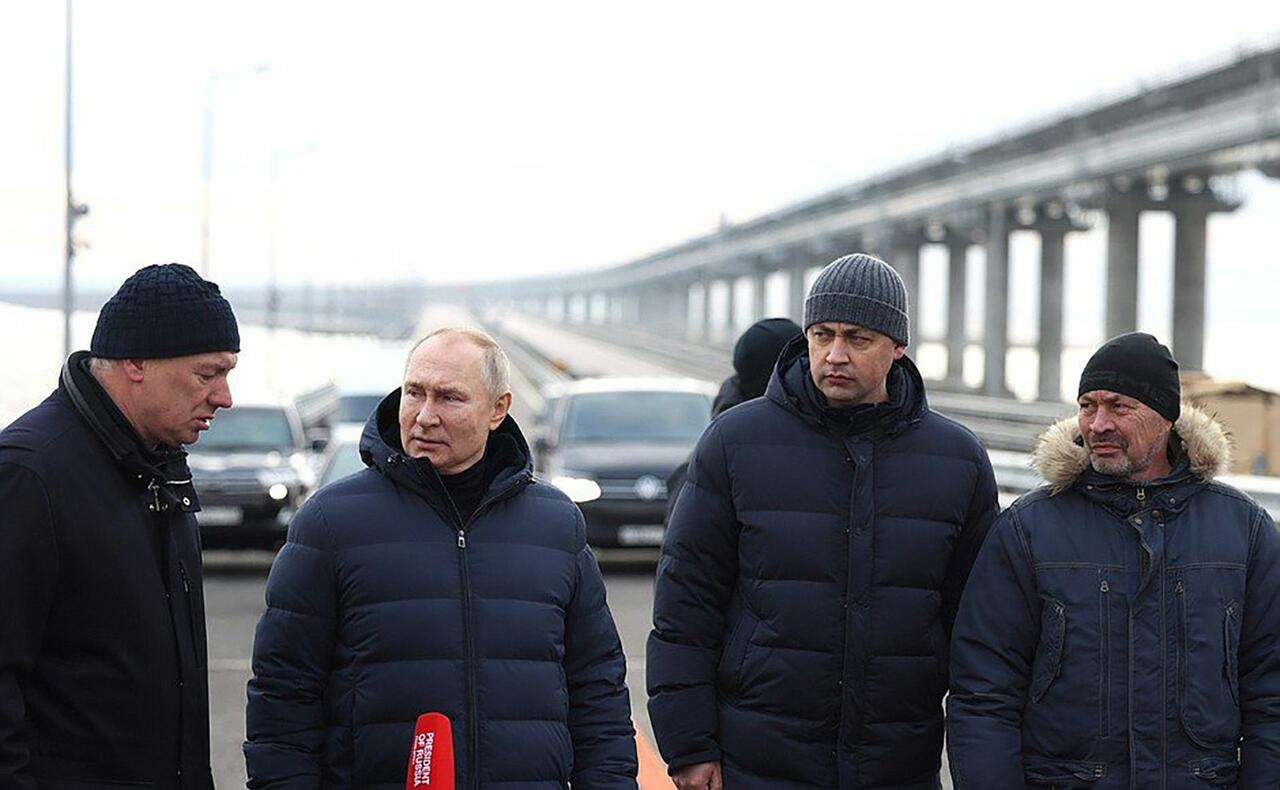
Russia’s President Vladimir Putin took a drive in a Mercedes on Monday, as part of a surprise televised event wherein he traversed the partially destroyed key bridge linking Crimea to the Russian mainland in order to inspect it. 

“We’re driving across the right side” of the Kerch Strait Bridge (or also simply called the Crimean Bridge), Putin told Deputy Prime Minister Marat Khusnullin during the tour which brought the Russian leader the closest point he’s ever been to the front lines of ongoing fighting in nearby Ukraine.

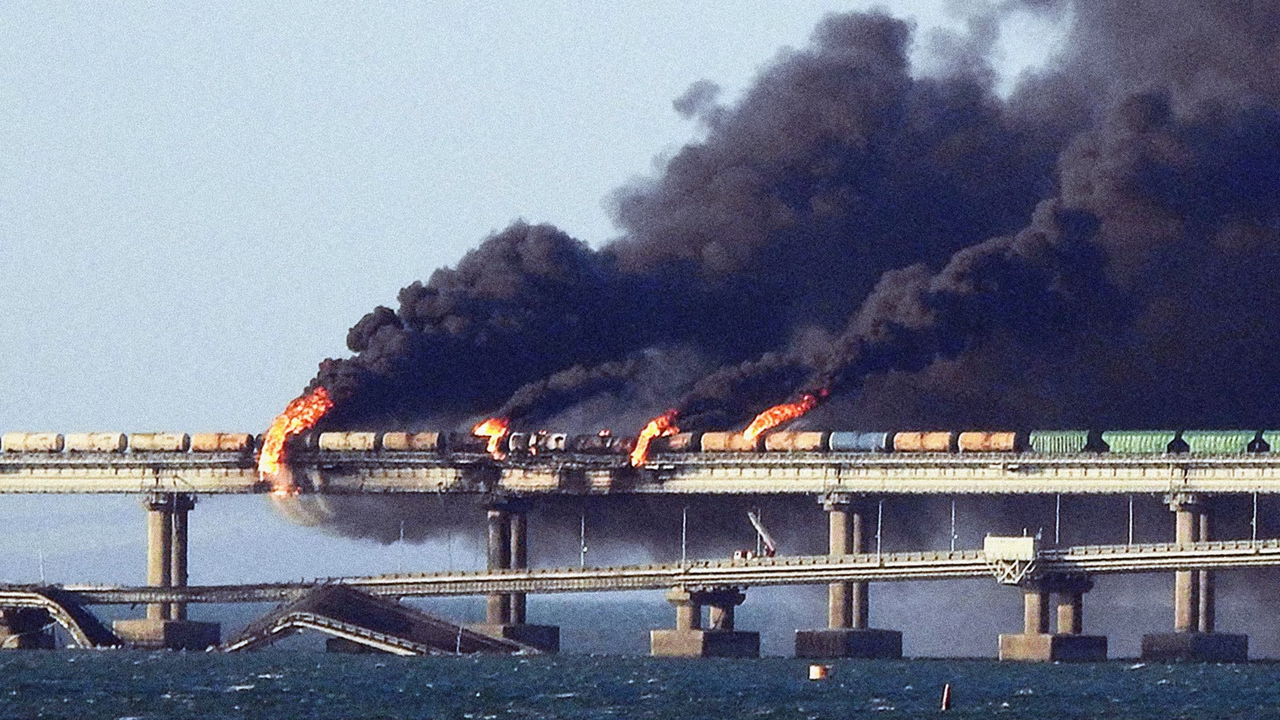
The October 8th blast which ripped apart large chunks of the bridge’s roadway – making an entire set of lanes on one side untraversable (as well as the utter destruction of the rail line portion) – had marked a turning point in the conflict, demonstrating the reach of Ukrainian forces, also resulting in Russian forces unleashing greater and more devastating airstrikes on Ukrainian cities in response. 

The Kremlin has since vowed to degrade and destroy Ukraine’s national energy infrastructure just ahead of the frigid winter months. The same day as Putin’s drive, Russia pummeled Ukrainian cities with dozens or possibly over one hundred airstrikes. 

During the televised trip across the bridge with Putin at the wheel, he said further, “The left side as far as I understand is in working condition but it needs to be fully restored.” According to a description in Bloomberg

At one point, Putin pulled up to the location where the Oct. 8 blast took place and got out of the car to discuss repairs to the road and rail span across the Kerch Strait, which he ordered built after annexing Crimea in 2014.

 Putin pictured on the Kerch Bridge on Monday, Kremlin photograph

Deputy Prime Minister Khusnullin then updated Putin regarding continued repair work and what is still needed following the “act of terrorism” by Ukrainian forces. It’s believed a truck bomb was responsible, in a likely operation by Ukraine’s intelligence services. Putin in the ceremonial act ordered full repairs of the bridge while standing at the scene. 

Khusnullin explained that “metal was available for bridge parts, so the metal was brought over to build these structures, and within two weeks all the 1,214 tons were assembled and brought here.” And Putin asked: “How many people worked on the repairs?” To which Khunsnullin replied that there were “500 people, three floating cranes, four barges and 31 pieces of equipment around the clock.”

AFP/Getty Images

Given there’s still a war raging, now after more than 9 months since the initial Feb.24 invasion, it’s very unexpected to say the least that the Russian president would make a trip to a place only very recently targeted in a huge blast. Ukrainian forces have lately showed capability of striking inside Crimea or even mainland Russian territory, making Putin’s in-person tour perhaps dangerous and a bit risky.

Tyler Durden
Tue, 12/06/2022 – 02:45

via ZeroHedge News https://ift.tt/tc0pM6Y Tyler Durden

Reject “Centralist Tyranny”: Polish PM Says Europeans Must Choose Republicanism

Reject “Centralist Tyranny”: Polish PM Says Europeans Must Choose Republicanism

Authored by Grzegorz Adamczyk via Remix News,

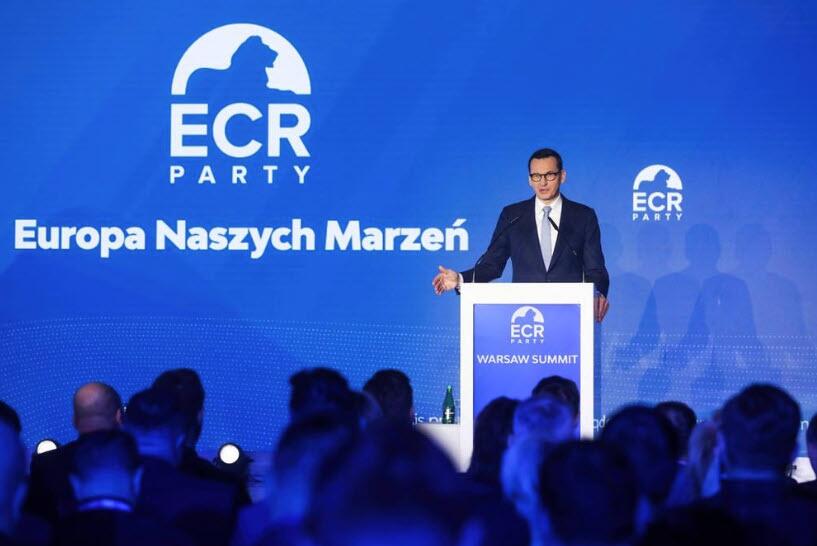
As Europe attempts to tackle the great challenges ahead, its choice lies between the republican way or that of bureaucratic centralism, Poland’s Prime Minister Mateusz Morawiecki said during the final session of the European Conservatives and Reformists (ECR) summit in Warsaw.

Morawiecki assessed that Europe has to make the “fundamental choice of the republican way, the direction of community that combines freedom and solidarity” or it will turn into a “centralized, bureaucratized behemoth with the tyranny of bureaucracy.”

He claimed the continent is currently experiencing a “breakthrough, the kind that happens once a few decades, sometimes even a century,” comparing the moment to the Congress of Vienna of 1815 and the Treaty of Versailles after World War I.

“Today, Europe must also answer the question of whether it wants to be a great, important, global, transatlantic player or a subject to the games of world’s great powers,” said Morawiecki.

According to the Polish prime minister, the condition of European power and sovereignty is the cooperation of “strong, sovereign countries” and their opposition to the plans of implementation of the “centralist tyranny.”

“Europe of states, nations does not contradict a very close cooperation based on what should be the foundation of the EU — economic cooperation, free competition,” said Morawiecki.

The event in Warsaw was organized by the European Conservatives and Reformists group. Italy’s Prime Minister Giorgia Meloni and the leader of Spanish Vox party, Santiago Abascal, also attended the meeting via video link.

Tyler Durden
Tue, 12/06/2022 – 02:00

via ZeroHedge News https://ift.tt/A1w6C5P Tyler Durden

Mapped: Global Energy Prices By Country

Mapped: Global Energy Prices By Country

For some countries, energy prices hit historic levels in 2022.

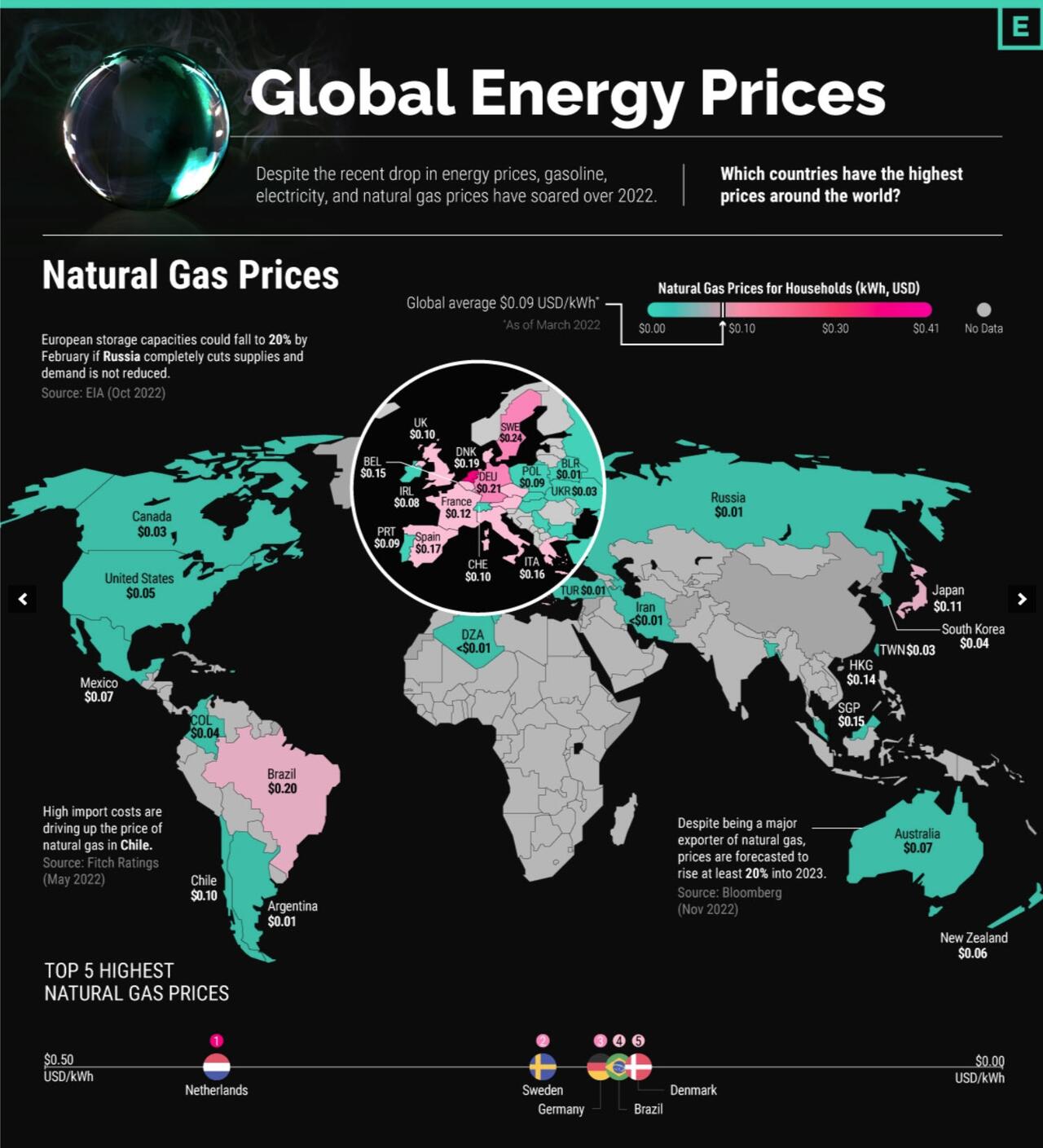
Gasoline, electricity, and natural gas prices skyrocketed as Russia’s invasion of Ukraine ruptured global energy supply chains. Households and businesses are facing higher energy bills amid extreme price volatility. Uncertainty surrounding the war looms large, and winter heating costs are projected to soar.

Given the global consequences of the energy crisis, Visual Capitalist’s infographics below shows the price of energy for households by country, with data from GlobalPetrolPrices.com.

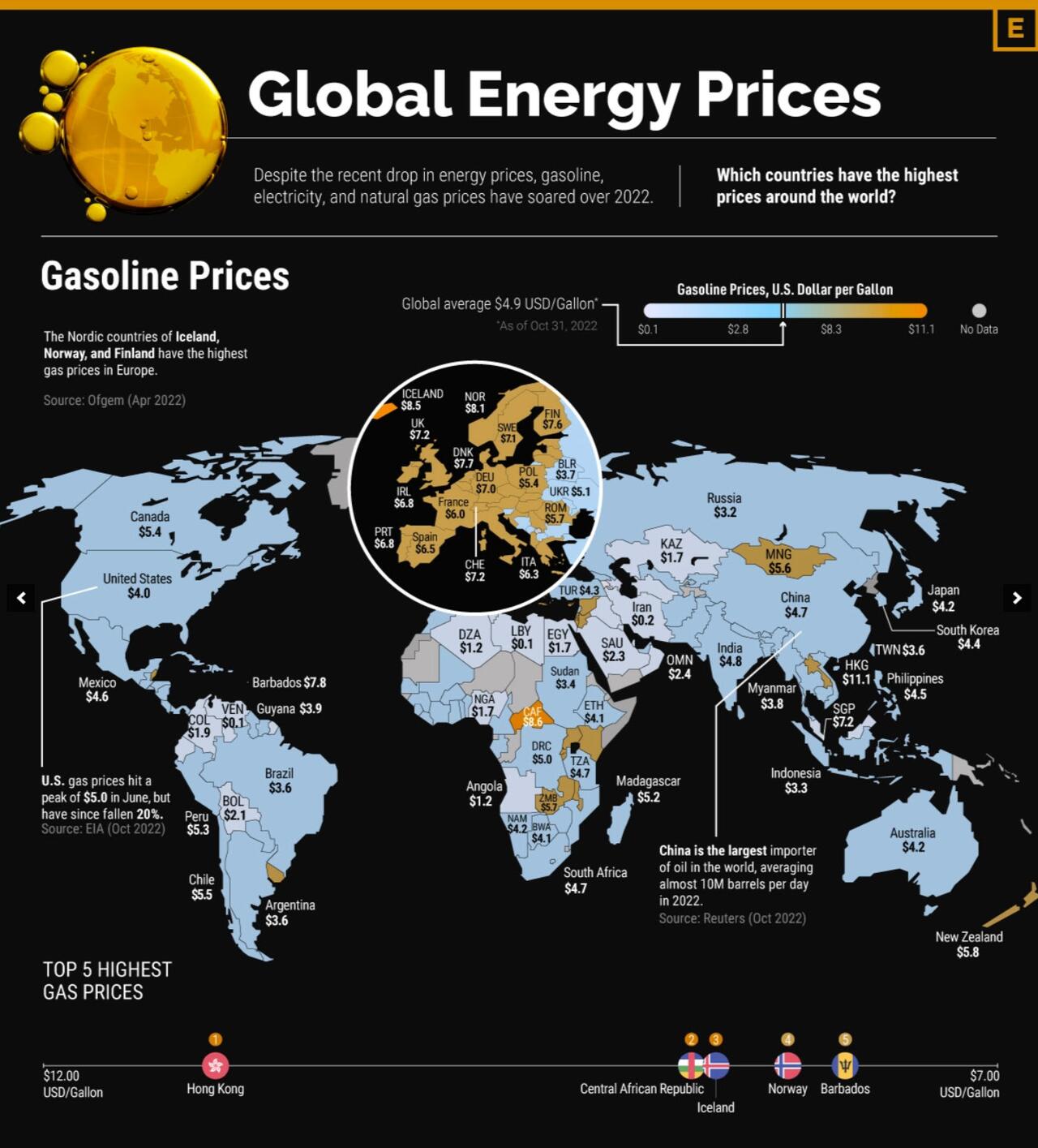
1. Global Energy Prices: Gasoline

Which countries and regions pay the most for a gallon of gas?


Source: GlobalPetrolPrices.com. As of October 31, 2022. Represents average household prices.


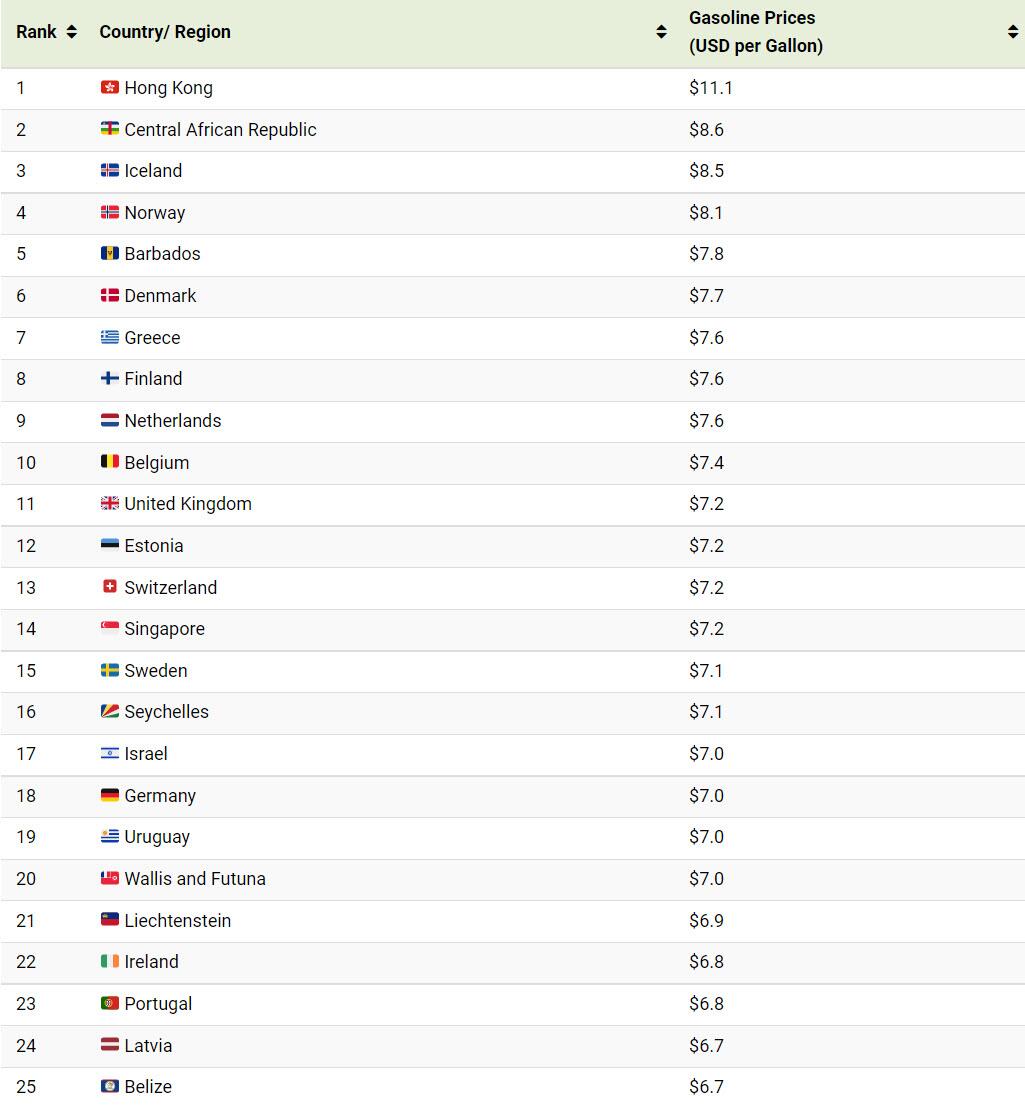
At an average $11.10 per gallon, households in Hong Kong pay the highest for gasoline in the world—more than double the global average. Both high gas taxes and steep land costs are primary factors behind high gas prices.

Like Hong Kong, the Central African Republic has high gas costs, at $8.60 per gallon. As a net importer of gasoline, the country has faced increased price pressures since the war in Ukraine.

Households in Iceland, Norway, and Denmark face the highest gasoline costs in Europe. Overall, Europe has seen inflation hit 10% in September, driven by the energy crisis.

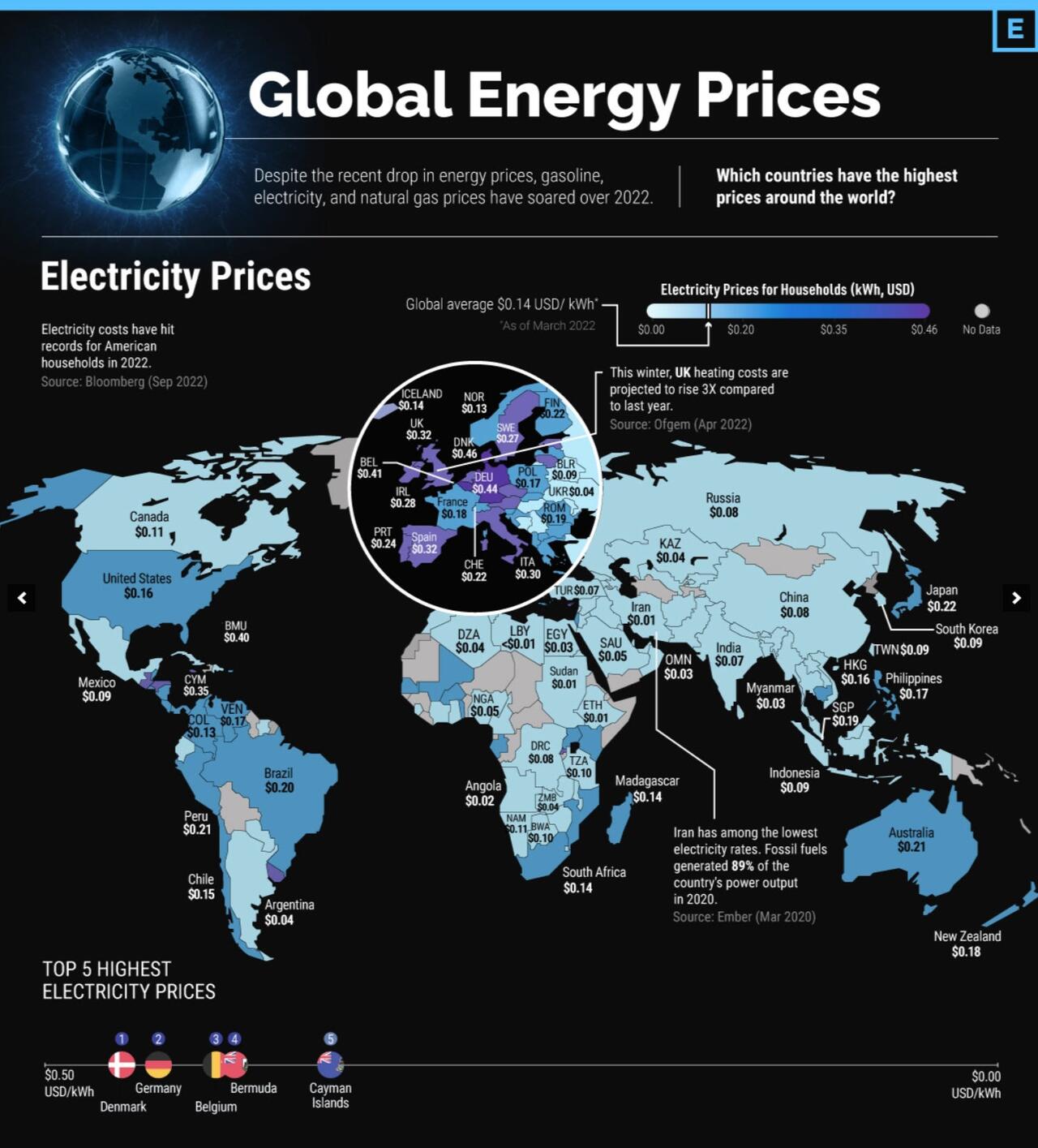
2. Global Energy Prices: Electricity

Extreme volatility is also being seen in electricity prices.

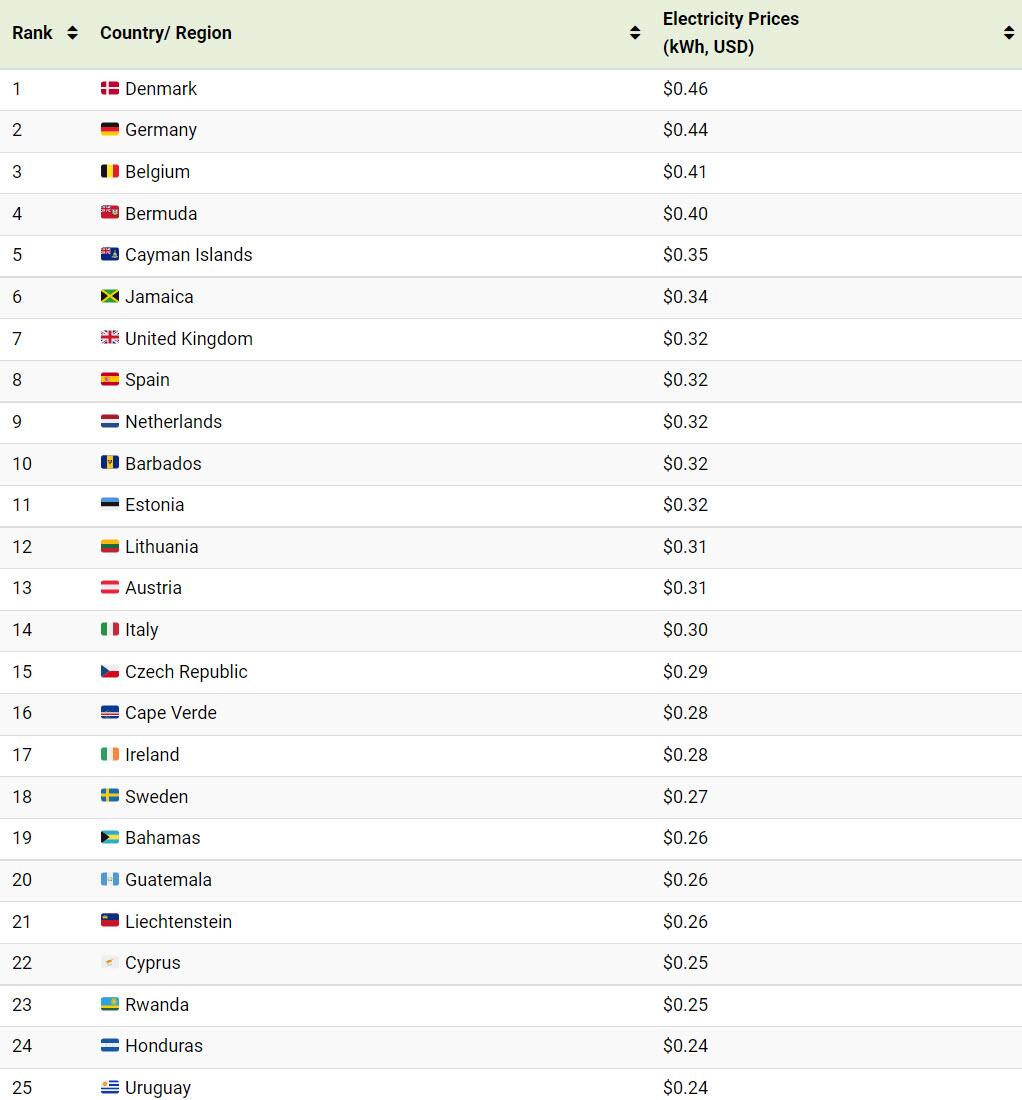
The majority of the highest household electricity prices are in Europe, where Denmark, Germany, and Belgium’s prices are about double that of France and Greece. For perspective, electricity prices in many countries in Europe are more than twice or three times the global average of $0.14 per kilowatt-hour.

Over the first quarter of 2022, household electricity prices in the European Union jumped 32% compared to the year before.

Source: GlobalPetrolPrices.com. As of March 31, 2022. Represents average household prices.

In the U.S., consumer electricity prices have increased nearly 16% annually compared to September last year, the highest increase in over four decades, fueling higher inflation.

However, households are more sheltered from the impact of Russian supply disruptions due to the U.S. being a net exporter of energy.

3. Global Energy Prices: Natural Gas

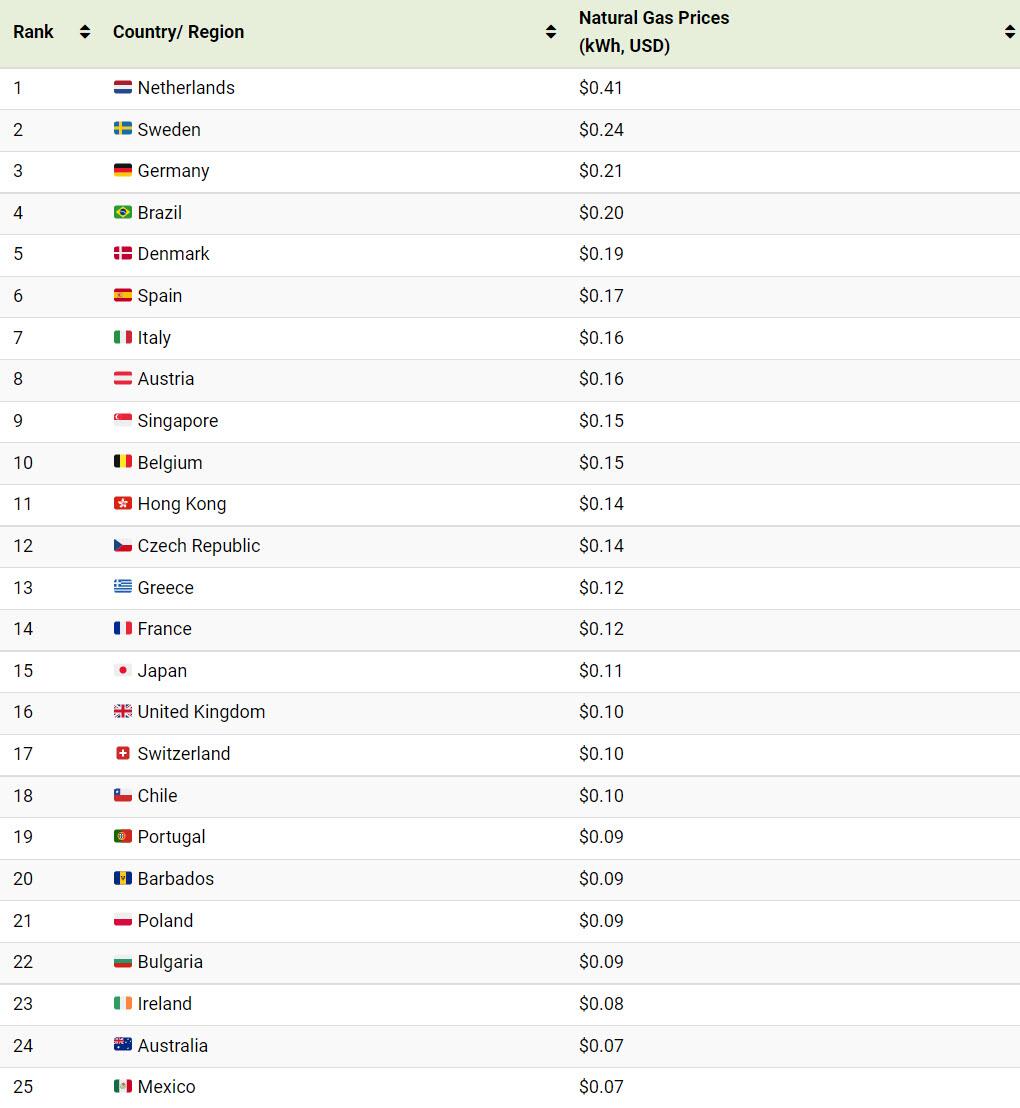
Eight of the 10 highest natural gas prices globally fall in Europe, with the Netherlands at the top. Overall, European natural gas prices have spiked sixfold in a year since the invasion of Ukraine.

Source: GlobalPetrolPrices.com. As of March 31, 2022. Represents average household prices.

The good news is that the fall season has been relatively warm, which has helped European natural gas demand drop 22% in October compared to last year. This helps reduce the risk of gas shortages transpiring later in the winter.

Outside of Europe, Brazil has the fourth highest natural gas prices globally, despite producing about half of supply domestically. High costs of cooking gas have been especially challenging for low-income families, which became a key political issue in the run-up to the presidential election in October.

Meanwhile, Singapore has the highest natural gas prices in Asia as the majority is imported via tankers or pipelines, leaving the country vulnerable to price shocks.

Increasing Competition

By December, all seaborne crude oil shipments from Russia to Europe will come to a halt, likely pushing up gasoline prices into the winter and 2023.

Concerningly, analysis from the EIA shows that European natural gas storage capacities could sink to 20% by February if Russia completely shuts off its supply and demand is not reduced.

As Europe seeks out alternatives to Russian energy, higher demand could increase global competition for fuel sources, driving up prices for energy in the coming months ahead.

Still, there is some room for optimism: the World Bank projects energy prices will decline 11% in 2023 after the 60% rise seen after the war in Ukraine in 2022.

Tyler Durden
Mon, 12/05/2022 – 23:20

via ZeroHedge News https://ift.tt/um4cdw0 Tyler Durden