South Dakota Governor Tells Higher Education Board To Remove Mandates On Preferred Pronouns

South Dakota Governor Tells Higher Education Board To Remove Mandates On Preferred Pronouns

Authored by Mimi Nguyen Ly via The Epoch Times,

South Dakota Gov. Kristi Noem issued a letter on May 25 to the governing board that oversees the six public universities in the state. In it, she lamented about the situation of higher education in the country, and challenged the board to a series of actions to “show the nation what quality higher education is supposed to look like.”

Among several points, the Republican governor told the board it should ban drag shows on university campuses, and, separately, remove all preferred pronouns in school materials, as well as remove all mandates that compel people to use preferred pronouns.

However, what appears to be the priority is the first point of action she raised, which is that the board should aim to raise graduation rates across its six universities to 65 percent by 2028, compared to the current graduation rate of 47 percent. Meanwhile, in 2020, the national graduation rate was 63 percent.

“At the K-12 level, we are taking steps to improve our standards and expand school choice in South Dakota so that all kids have access to a high-quality education that prepares them for whatever comes next after high school,” Noem told the board in her letter (pdf).

“For those who choose to start attending a university after graduating, less than half are graduating. We must do better than that. I look forward to working with you all on ideas to improve our graduation rates.”

The Epoch Times has emailed the Board of Regents for comment.

‘State of Crisis’

Noem said that higher education across the United States is in a “state of crisis.”

For the last several decades, many states have allowed liberal ideologies to poison their universities and colleges. Once a hotbed of ideological diversity, debate, and the pursuit of truth and discovery, many institutions have become one-sided, close-minded, and focused on feelings rather than facts,” she wrote.

Professors have discarded reason and logic in favor of subjectivity and relativism. Higher education leaders have rejected universal truth and knowledge and replaced it with ‘individual truth.’”

She said that students on campuses across the United States “have been taught the importance of diversity and equity and given access to ‘safe spaces’ instead of learning to tolerate the disagreement, discomfort, and dissent that they will experience in the real world.”

“In many cases, students and their parents are not even aware of the damage these ideas have caused,” she said.

Regarding drag shows, she wrote: “Just as other dangerous theories have been allowed to thrive on college campuses, gender theory has been rebranded and accepted as truth across the nation.

“These theories should be openly debated in college classrooms, but not celebrated through public performances on taxpayer-owned property at taxpayer-funded schools.”

Regarding preferred pronouns, she wrote that mandating them at some campuses has “compelled and coerced” some students to “provide speech they do not agree with.”

“Students should have the ability to exercise their right to free speech. Colleges and universities should never compel students to speak or take a position on any issue,” the governor said.

Noem also told the board her administration has created a new whistleblower hotline where students, faculty members, parents, or taxpayers, can report concerns at institutions of higher education in the state, by calling 605-773-5916.

“Our children are our future, and South Dakota universities and technical colleges should best prepare them for our future,” Noem said in a post on Twitter.

The governor noted that she recently appointed two members to the board, and will be making more appointments soon.

Five Other Points

Besides raising graduation rates, banning drag shows, and removing preferred pronouns and their enforcement, Noem noted that some universities have restricted speech on topics some people find “offensive.”

“The Board of Regents should remove any policy or procedure that prohibits students from exercising their right to free speech,” she said.

“Black Hills State University was recently challenged on and ultimately removed a policy that allowed administrators to silence opinions they disagreed with,” the governor noted, adding that colleges and universities should review and revise all policies that infringe on students’ right to free speech. The colleges should also adopt policies that “develop and strengthen resiliency among students” for when they encounter opposing ideas.

Noem also wanted the Board of Regents to “take more steps to partner with businesses on registered apprenticeship programs and offer the lowest possible credit rates.” She noted that roughly 43 percent of students who graduated still found themselves unemployed or underemployed.

The other three action points she presented to the board were: to cut costs to make higher education more affordable; to require a course in American Government and a course in American history as part of graduation requirements; and to remove any monetary influence, whether by funding or donations, from the Chinese Communist Party (CCP).

“The [CCP] has been known to fund Confucius Institutes and other similar centers at American universities in order to provide skewed Chinese cultural training for U.S. students,” said Noem.

“This is part of a multi-faceted propaganda effort, and money from the CCP has no place in South Dakota. The Board of Regents should reject any donations from sources and any other government that is hostile to the United States.”

Tyler Durden
Mon, 05/29/2023 – 17:10

via ZeroHedge News https://ift.tt/kca6gFY Tyler Durden
Liberal US Cities Top Global List For Highest Homelessness Problem

Liberal US Cities Top Global List For Highest Homelessness Problem

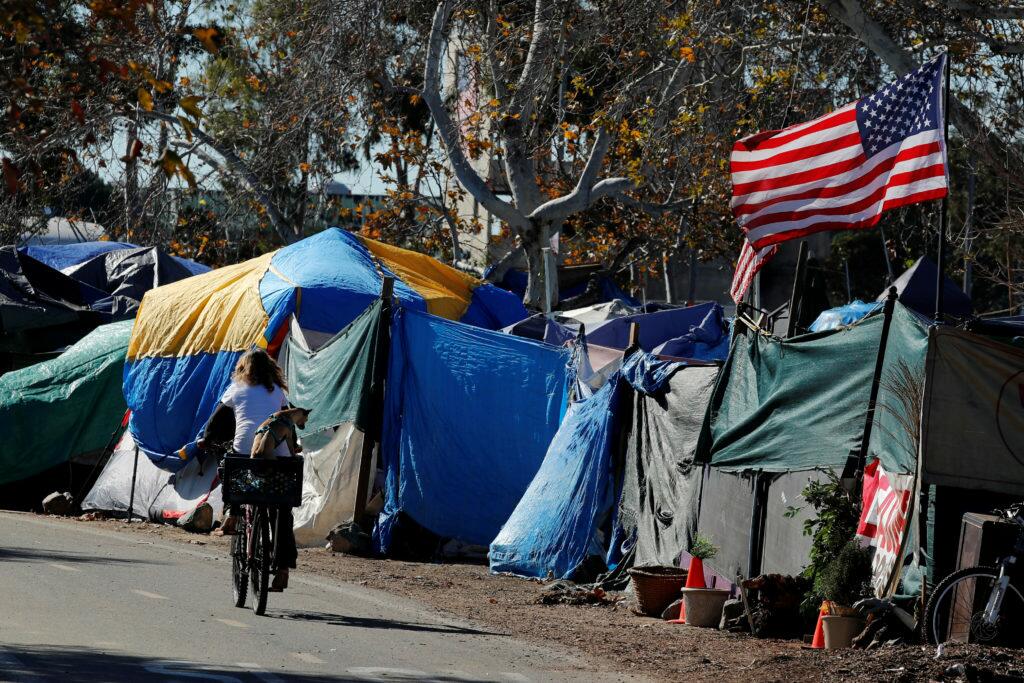
Insider Monkey, a finance website, revealed a list of the top 30 cities worldwide with the highest homeless population. Notably, a handful of the US cities on the list are governed by progressive leadership, which may not surprise readers. While it is evident that some unfortunate individuals are facing homelessness, a trend exacerbated by recent inflationary pressures and a drug addiction crisis, some liberal policies have enabled others to sustain their nomadic lifestyles with taxpayer funds. 

Insider Monkey found New York City is number 5 on the list, with a homeless population of about 69,000. Next is Chicago, at number 7 with 65,611. Washington, DC, is number 8 with 57,416, Los Angeles number 13 with 41,980, and San Fransisco number 14 with 38,000. 

Even with the US government spending $54 billion on several programs to tackle the homelessness crisis, hundreds of thousands of Americans are still wandering the streets. This has been made worse by inflation in recent years and an out-of-control drug addiction crisis. 

As for the rest of the world, Manila, Philippines, ranks number 1 with a staggering 3 million homeless. Buenos Aires, Argentina, is number 2 with 198,000. Moscow, Russia, is number 3 with 100,000, and Kanpur, India, is number 4 with 81,000.

Here’s the partial list of 6 through 30:

6. Kolkata, India

Estimated Number of Homeless People: 68,798

Kolkata is one of India’s largest cities. It has played a crucial role in the country’s history due to its port.

7. Chicago, United States

Estimated Number of Homeless People: 65,611

Chicago is one of the largest cities in the U.S. in terms of population and one of the largest business hubs in the country.

8. Washington, D.C., United States

Estimated Number of Homeless People: 57,416

Washington D.C. is one of the most expensive places to live in America – making it unsurprising that it also has a high number of homeless people.

9. Mumbai, India

Estimated Number of Homeless People: 57,415

Mumbai is India’s financial hub, but it is also famous for generations of homeless who are born and die on the streets.

10. Lagos, Nigeria

Estimated Number of Homeless People: 50,000

Lagos is one of the largest cities in the world with more than 24 million people living in the city.

11. Damascus, Syria

Estimated Number of Homeless People: 50,000

Damascus is the capital of Syria and one of the oldest cities in the world as it has been inhabited for thousands of years.

12. Delhi, India

Estimated Number of Homeless People: 46,724

Delhi has more than ten million residents and is one of the most historic cities in the world.

13. Los Angeles, United States

Estimated Number of Homeless People: 41,980

Los Angeles is the second largest city in America in terms of population. It is a cultural center place for its state and the U.S.

14. San Francisco, United States

Estimated Number of Homeless People: 38,000

San Francisco is a cultural and economic hub and a city that is notorious for high housing costs.

15. Surat, India

Estimated Number of Homeless People: 36,144

Surat is a Western Indian city in the state of Gujrat. It is the second largest city in its state and a hub for the global diamond industry.

16. Sao Paulo, Brazil

Estimated Number of Homeless People: 31,884

Sao Paulo is the largest city in Brazil in terms of both its population and economic output.

17. Mexico City, Mexico

Estimated Number of Homeless People: 30,000

Mexico City is the capital of Mexico. It is one of the largest cities in the world with a population of 9.2 million people.

18. Athens, Greece

Estimated Number of Homeless People: 20,000

Athens is one of the most historical cities in the world and the capital of Greece.

19. Auckland, New Zealand

Estimated Number of Homeless People: 18,417

Auckland is the largest city in New Zealand and has a population of 1.4 million people. It is an economic hub in its country and accounts for a large portion of New Zealand’s economic output.

20. Tampa, United States

Estimated Number of Homeless People: 16,000

Tampa is a coastal Floridian city with one of the biggest ports in its state.

21. Seattle, United States

Estimated Number of Homeless People: 11,751

Seattle is a highly developed city in the U.S. state of Washington.

22. San Jose, United States

Estimated Number of Homeless People: 10,028

San Jose is an economic hub in the U.S. with a large presence of the technology industry.

23. Budapest, Hungary

Estimated Number of Homeless People: 10,000

Budapest is the capital and largest city of Hungary with nearly a million residents.

24. Oakland, United States

Estimated Number of Homeless People: 9,747

Oakland is a Californian city. It is one of the busiest port cities in America.

25. Dublin, Ireland

Estimated Number of Homeless People: 8,523

Dublin is the capital of Ireland and the largest city in terms of population. It is also a hub for global multinational firms.

26. San Diego, United States

Estimated Number of Homeless People: 8,427

San Diego is one of the most populous cities in America with a population of more than a million people

27. Rio De Janeiro, Brazil

Estimated Number of Homeless People: 7,865

Rio De Janeiro is the second largest city in Brazil. It also has the second largest economy in the country.

28. Rome, Italy

Estimated Number of Homeless People: 7,709

Rome is the capital city of Italy and one of the largest cities in the world with a population of more than 2.8 million people.

29. Denver, United States

Estimated Number of Homeless People: 6,888

Denver is the capital city of the U.S. state of Colorado. It has a population of more than seven hundred thousand people and is an economic hub in its state.

30. Lisbon, Portugal

Estimated Number of Homeless People: 3,780

Lisbon is the capital city of Portugal. It is also the largest city in the country, with more than half a million people living in its boundaries.

Tyler Durden
Mon, 05/29/2023 – 16:35

via ZeroHedge News https://ift.tt/WybiXuw Tyler Durden

The Great Silence

The Great Silence

Authored by Jeffrey Tucker via DailyReckoning.com,

The kids are two years behind in education. Inflation still rages. White-collar jobs are disappearing thanks to the reversal of Fed policy. Household finances are a wreck. The medical industry is in upheaval. Trust in government has never been lower.

Major media too is discredited. Young people are dying at levels never seen. Populations are still on the move from lockdown states to where it is less likely. Surveillance is everywhere, and so is political persecution. Public health is in a disastrous state, with substance abuse and obesity all at new records.

Each one of these, and many more besides, are continued fallout from the pandemic response that began in March 2020. And yet here we are 38 months later and we still don’t have honesty or truth about the experience.

Officials have resigned, politicians have tumbled out of office and lifetime civil servants have departed their posts, but they don’t cite the great disaster as the excuse. There is always some other reason.

This is the period of the great silence. We’ve all noticed it. The stories in the press recounting all the above are conventionally scrupulous about naming the pandemic response much less naming the individuals responsible.

Maybe there is a Freudian explanation: things so obviously terrible and in such recent memory are too painful to mentally process, so we just pretend it didn’t happen. Plenty in power like this solution.

Everyone in a position of influence knows the rules. Don’t talk about the lockdowns. Don’t talk about the mask mandates. Don’t talk about the vaccine mandates that proved useless and damaging and led to millions of professional upheavals.

Don’t talk about the economics of it. Don’t talk about collateral damage. When the topic comes up, just say, “We did the best we could with the knowledge we had,” even if that is an obvious lie.

Above all, don’t seek justice.

Where’s the National Commission?

There is this document intended to be the “Warren Commission” of COVID slapped together by the old gangsters who advocated for lockdowns. It is called Lessons from the Covid War: An Investigative Report.

The authors are people like Michael Callahan (Massachusetts General Hospital), Gary Edson (former deputy national security adviser), Richard Hatchett (Coalition for Epidemic Preparedness Innovations), Marc Lipsitch (Harvard University), Carter Mecher (Veterans Affairs), and Rajeev Venkayya (former Gates Foundation and now Aerium Therapeutics).

If you have been following this disaster, you might know at least some of the names. Years before 2020, they were pushing lockdowns as the solution for infectious disease. Some claim credit for having invented pandemic planning. The years 2020–2022 were their experiment.

As it was ongoing, they became media stars, pushing compliance, condemning as disinformation and misinformation anyone who disagreed with them. They were at the heart of the coup d’etat, as engineers or champions of it, that replaced representative democracy with quasi-martial law run by the administrative state.

The first sentence of the report is a complaint:

We were supposed to lay the groundwork for a National COVID Commission. The COVID Crisis Group formed at the beginning of 2021, one year into the pandemic. We thought the U.S. government would soon create or facilitate a commission to study the biggest global crisis so far in the 21st century. It has not.

That is true. There is no National COVID Commission. You know why? Because they could never get away with it, not with legions of experts and passionate citizens who wouldn’t tolerate a coverup.

The public anger is too intense. Lawmakers would be flooded with emails, phone calls and daily expressions of disgust. It would be a disaster. An honest commission would demand answers that the ruling class is not prepared to give. An “official commission” perpetuating a bunch of baloney would be dead on arrival.

This by itself is a huge victory and a tribute to indefatigable critics.

‘We Didn’t Crack Down Hard Enough’

Instead, the “COVID Crisis Group” met with funding from the Rockefeller and Charles Koch foundations and slapped together this report. Despite being celebrated as definitive by The New York Times and The Washington Post, it has mostly had no impact at all.

It is far from obtaining the status of being some kind of canonical assessment. It reads like they were on deadline, fed up, typed lots of words and called it a day.

Of course it is whitewash.

It begins with a bang to denounce the U.S. policy response: “Our institutions did not meet the moment. They did not have adequate practical strategies or capabilities to prevent, to warn, to defend their communities or fight back in a coordinated way, in the United States and globally.”

Mistakes were made, as they say.

Of course the upshot of this kvetching is not to criticize what Justice Neil Gorsuch calls “the greatest intrusions on civil liberties in the peacetime history of this country.” They hardly mention those at all.

Instead they conclude that the U.S. should have surveilled more, locked down sooner (“We believe that on Jan. 28 the U.S. government should have started mobilizing for a possible COVID war”), directed more funds to this agency rather than that and centralized the response so that rogue states like South Dakota and Florida could not evade centralized authoritarian diktats next time.

The authors propose a series of lessons that are anodyne, bloodless and carefully crafted to be more-or-less true but ultimately structured to minimize the sheer radicalism and destructiveness of what they favored and did. The lessons are clichés such as we need “not just goals but road maps,” and next time we need more “situation awareness.”

There is no new information in the book that I could find, unless something is hidden therein that escaped my notice. It’s more interesting for what it does not say. Some words that never appear in the text: Sweden, ivermectin, ventilators, remdesivir and myocarditis.

‘Look, Lockdowns and Mandates Worked!’

Perhaps this gives you a sense of the book and its mission. And on matters of the lockdowns, readers are forced to endure claims such as “all of New England — Massachusetts, the city of Boston, Connecticut, Rhode Island, New Hampshire, Vermont, and Maine — seem to us to have done relatively well, including their ad hoc crisis management setups.”

Oh really! Boston destroyed thousands of small businesses and imposed vaccine passports, closed churches, persecuted people for holding house parties, and imposed travel restrictions. There is a reason why the authors don’t elaborate on such preposterous claims. They are simply unsustainable.

One amusing feature seems to me to be a foreshadowing of what is coming. They throw Anthony Fauci under the bus with sniffy dismissals: “Fauci was vulnerable to some attacks because he tried to cover the waterfront in briefing the press and public, stretching beyond his core expertise—and sometimes it showed.”

Ooooh, burn!

“Trump Was a Comorbidity”

This is very likely the future. At some point, Fauci will be scapegoated for the whole disaster. He will be assigned to take the fall for what is really the failure of the national security arm of the administrative bureaucracy, which in fact took charge of all rule-making from March 13, 2020, onward, along with their intellectual cheerleaders. The public health people were just there to provide cover.

Curious about the political bias of the book? It is summed up in this passing statement: “Trump was a comorbidity.”

Oh how highbrow! How clever! No political bias here!

Maybe this book by the Covid Crisis Group hopes to be the last word. This will never happen. We are only at the beginning of this. As the economic, social, cultural, and political problems mount, it will become impossible to ignore the incredibly obvious.

The masters of lockdowns are influential and well-connected but not even they can invent their own reality.

Tyler Durden
Mon, 05/29/2023 – 16:00

via ZeroHedge News https://ift.tt/lUFR5HY Tyler Durden

World’s First “Battery Tanker” Slated For 2026 Sea Trials

World’s First “Battery Tanker” Slated For 2026 Sea Trials

Tesla CEO Elon Musk made a bold prediction in 2017: “Everything will go fully electric, apart from (ironically) rockets. Ships are the next easiest to solve after cars.” Six years later, the world’s second-richest person might be right about the next battery boom in ships. 

Japanese battery startup PowerX Inc. revealed a 140-meter-long electric propulsion vessel capable of transporting stored electricity across oceans. The “battery tanker” will be equipped with 96 containerized marine batteries that can haul renewable energy worldwide, connecting grids, islands, and offshore wind farms. The completion of the vessel is slated for 2025, with sea trials in 2026. 

“For instance, in Japan, a battery tanker can carry power from regions with high renewable energy supply potential, such as Kyushu and Hokkaido, to high-demand areas of Honshu or for inter-island power transmission,” the company explained.

While electric propulsion vessels might be the future to decarbonize the shipping industry, there appears to be a need to haul stored renewable power to other grids worldwide via a new tanker class. 


Tyler Durden
Mon, 05/29/2023 – 15:25

via ZeroHedge News https://ift.tt/aqoK1tv Tyler Durden

Taiwan Says It’s In Talks On Being Brought Under US Nuclear Umbrella

Taiwan Says It’s In Talks On Being Brought Under US Nuclear Umbrella

Authored by Dave DeCamp via AntiWar.com,

Taiwan’s foreign minister said last week that the US and Taiwan are in talks on the possibility of the island being brought under Washington’s nuclear umbrella, a step that would make a catastrophic war between the US and China much more likely.

Taiwanese Foreign Minister Joseph Wu made the comments before Taiwan’s parliament, the Legislative Yuan. Wu declined to detail the talks when pressed if Taiwan had asked the US to bring the island into its nuclear umbrella.

US military file image

“Regarding the discussion of this issue with the United States, it is not suitable for me to make it public here,” Wu said, according to The South China Morning Post.

Many of the US’s allies are considered to be under the protection of the US nuclear umbrella, including Japan, South Korea, and every member of NATO.

Giving such a guarantee to Taiwan would mean the US could use nuclear weapons if China invades the island or if war breaks out by other means. According to the SCMP report:

As Washington and Beijing ramp up their military signaling on Taiwan, the self-ruled island has started to discuss what was once unthinkable – to come under the US nuclear umbrella that has successfully protected Japan, South Korea and Australia for decades.

The debate was set off after Taiwanese Foreign Minister Joseph Wu suggested on Monday that the island had been in talks with the United States on the nuclear umbrella issue.

Such a guarantee is unlikely to happen in the near term as it would require a radical change to US policy. While President Biden has vowed to send troops to intervene if China attacks Taiwan, the official policy on how the US would react to a Chinese invasion is still ambiguous.

But the fact that the idea is being discussed will be viewed as a major provocation in Beijing. China has a no-first-use policy for its nuclear arsenal, but US policy leaves open the option to use nukes in response to a conventional attack.

Tyler Durden
Mon, 05/29/2023 – 14:50

via ZeroHedge News https://ift.tt/qrkfPlM Tyler Durden

Prof. Rick Garnett (Notre Dame) Guest-Blogging About Justice Breyer’s Establishment Clause Approach

I’m delighted to report that Prof. Rick Garnett (Notre Dame) will be guest-blogging this week about his forthcoming First Amendment Law Review article,  “Justice Breyer and the Establishment Clause: Notes on ‘Appeasement’, ‘Legal Judgment’, and Divisiveness'”. I’ve long found Justice Breyer’s Establishment Clause approach to be interesting (though ultimately on balance mistaken), and I’m particularly looking forward to Prof. Garnett’s analysis.

The post Prof. Rick Garnett (Notre Dame) Guest-Blogging About Justice Breyer's Establishment Clause Approach appeared first on Reason.com.

from Latest https://ift.tt/2n0cfvL
via IFTTT

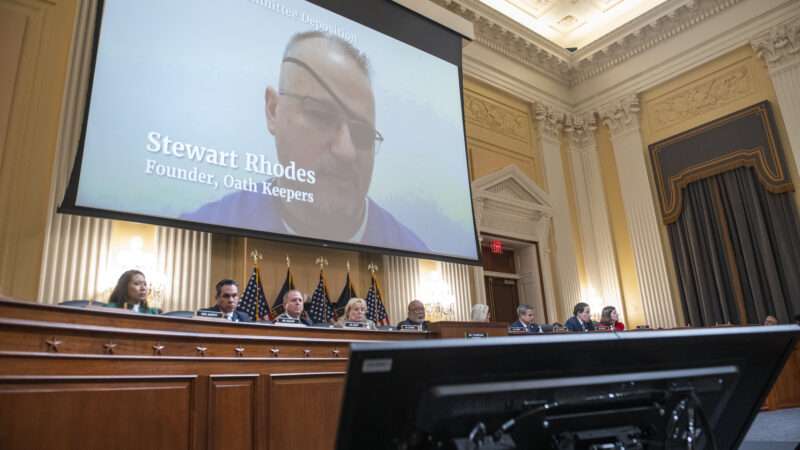
Stewart Rhodes Gets 18 Years After the DOJ Reiterates a Conspiracy Claim That Jurors Rejected


Oath Keepers founder Stewart Rhodes received an 18-year sentence for seditious conspiracy and two other charges.

A federal judge in Washington, D.C., last week sentenced Oath Keepers leader Stewart Rhodes to 18 years in prison for seditious conspiracy, obstruction of an official proceeding, and tampering with records. The New York Times says Rhodes was sentenced for “the role he played in helping to mobilize the pro-Trump attack on the Capitol on Jan. 6, 2021.” It adds that the sentence is “the most severe penalty so far in the more than 1,000 criminal cases stemming from the Capitol attack.”

Contrary to that gloss, Rhodes’ role in the breach of the Capitol, which forced a delay in the congressional ratification of President Joe Biden’s election, remains unclear. Rhodes was at the Capitol grounds that day, and during his trial a federal prosecutor described him as “a general surveying his troops on the battlefield.” But unlike other members of his group, he did not enter the Capitol or participate in the violence or vandalism. Notably, the jury found him not guilty of conspiring to obstruct an official proceeding, a puzzling verdict if he did in fact direct his followers to assault the Capitol.

The Justice Department’s sentencing memo, which recommended a 25-year sentence for Rhodes, said he and other Oath Keepers “led a conspiracy that culminated in a mob’s attack on the United States Capitol while our elected representatives met in a Joint Session of Congress.” It also said Rhodes “led a conspiracy to oppose by force the lawful transfer of power following the 2020 U.S. Presidential Election,” a vaguer description that better fits the facts that the jury accepted.

Prosecutors urged U.S. District Judge Amit P. Mehta to take into account acquitted conduct in punishing Rhodes, as federal sentencing rules allow, and hold him responsible for the actions of his co-conspirators. They also recommended a sentencing enhancement based on “terrorism,” defined as conduct “calculated to influence or affect the conduct of government by intimidation or coercion, or to retaliate against government conduct.” Although Rhodes “did not engage in violence,” the Justice Department said, his rhetoric inspired others to do so.

Based on evidence cited in the sentencing memo, it is clear that Rhodes saw violence as a legitimate response to what he perceived as a stolen election. “We’re very much in exactly the same spot that the founding fathers were in like March 1775,” he said during a conference call after the election. “Patrick Henry was right. Nothing left but to fight. And that’s true for us, too. We’re not getting out of this without a fight.”

Rhodes was more explicit a December 14 open letter to Donald Trump that was posted on the Oath Keepers website. “If you fail to act while you are still in office,” he wrote, “we the people will have to fight a bloody civil war and revolution.”

Rhodes reiterated that sentiment in chat group messages that day. “Trump has one last chance to act,” he said. “He must use the insurrection act. Unless we fight a bloody civil war/revolution.”

In Rhodes’ fantasy, the Oath Keepers would rise up after Trump invoked the Insurrection Act, which authorizes the president to call upon “the militia” to suppress “any insurrection, domestic violence, unlawful combination, or conspiracy” that “opposes or obstructs the execution of the laws of the United States or impedes the course of justice under those laws.” If Trump “doesn’t use the Insurrection Act to keep a ChiCom [Chinese Communist] puppet out of the White House,” Rhodes warned, “we will have to fight a bloody revolution/civil war to defeat the traitors.”

In a December 19 exchange with a member of the Proud Boys, Oath Keeper Roberto Minuta described Rhodes as “pretty disheartened.” Based on a conversation with Rhodes the previous night, Minuta added that “he feels like it’s go time” and that “the time for peaceful protest is over in his eyes.”

In a series of messages to an Oath Keepers chat group on December 25, Rhodes complained that Trump’s advisers were “acting as if his only option is to hope Congress does the right thing.” He said that was “extremely unlikely,” adding, “I think Congress will screw him over. The only chance we/he has is if we scare the shit out of them and convince them it will be torches and pitchforks time is they don’t do the right thing.”

Such rhetoric was not enough to persuade jurors that Rhodes specifically planned the attack on the Capitol. In arguing that Mehta nevertheless should assume that Rhodes did have such a plan, the Justice Department noted that he had described January 6 as a “hard constitutional deadline,” which it said confirmed “the group’s knowledge of Congress’s process for certifying the election results” and “improper purpose in later breaching the Capitol building.”

The sentencing memo also cited a 90-second phone call between Rhodes and Meggs before the latter led a group of Oath Keepers who pushed their way into the Capitol. Although the content of that conversation is unknown, the Justice Department said, witnesses “testified that Meggs appeared to be receiving direction from whomever he was talking to on the phone.” Again, the jury did not view that inference, even when combined with Rhodes’ violent rhetoric, as sufficient to find him guilty of conspiring to attack the Capitol.

What about the “quick reaction force” (QRF) that stockpiled weapons at a Comfort Inn in Arlington, Virginia, prior to the riot? The sentencing memo noted that Rhodes “claimed he was unaware that there was a QRF for January 6,” saying he knew that Oath Keeper Edward Vallejo had stashed guns at the hotel but “did not know that there was anybody sitting on them to do anything with them.” In a message introduced at trial, however, Rhodes agreed with Meggs that a QRF was appropriate. “Okay,” he said. “We will have a QRF. The situation calls for it.”

The QRF ultimately did not do anything. But what did Rhodes think its purpose was? Oath Keeper Michael Greene, who in March was found guilty of a misdemeanor in connection with the Capitol riot, testified that Rhodes “wanted an armed QRF in Virginia because he heard people talking about they were going to forcefully storm the White House and remove Trump because Trump was refusing to leave the White House.” According to the sentencing memo, Rhodes “instructed his co-conspirators to be prepared, if necessary, to secure the White House and use force against any government actors attempting to remove President Trump as a result of the presidential election.”

Rhodes manifestly was ready to violently oppose the peaceful transfer of power, and he took steps in that direction, including the QRF and weapon purchases after the Capitol riot. That conduct, the jury evidently concluded, fit comfortably within the legal definition of seditious conspiracy, which includes plots to forcefully oppose the authority of the U.S. government or hinder the execution of its laws. But that conspiracy did not necessarily entail a plan to violently disrupt the electoral vote count on January 6. On that charge, the jury deemed the evidence insufficient to convict Rhodes.

The jury “made the confusing decision to acquit Mr. Rhodes of planning in advance to disrupt the certification of the election yet convict him of actually disrupting the certification process,” the Times reported after the verdicts. “That suggested that the jurors may have believed that the violence at the Capitol on Jan. 6 erupted more or less spontaneously, as Mr. Rhodes has claimed.”

Whatever you make of Rhodes’ intent, it seems clear that the violence, by and large, did erupt “more or less spontaneously.” According to the Justice Department, the Oath Keepers conspiracy involved 20 or so people. A handful of Proud Boys also were convicted of seditious conspiracy.

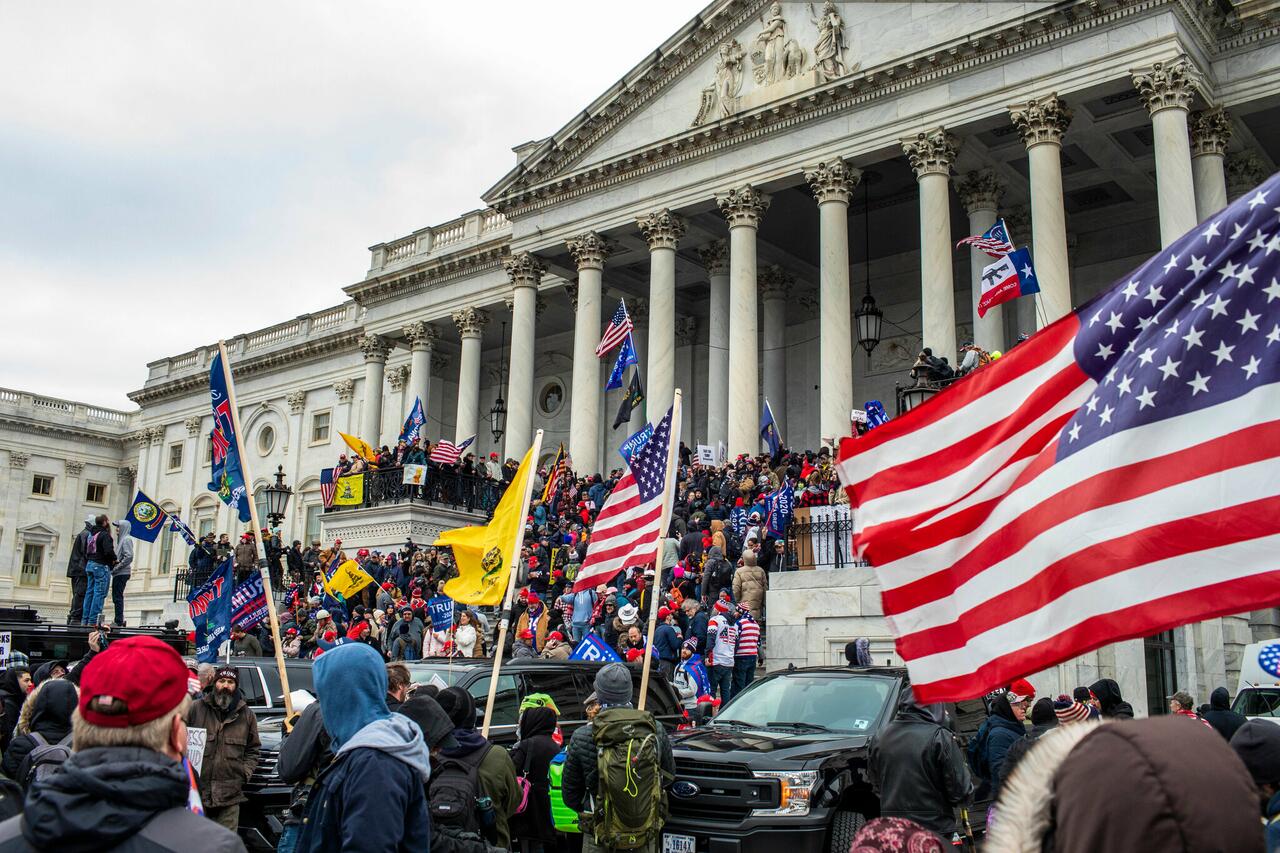
These relatively organized rioters represented a tiny fraction of the angry Trump supporters who trespassed on the Capitol grounds or entered the building itself. The 1,000 or so who have been arrested so far typically have been charged with misdemeanors such as “entering or remaining in a restricted building or grounds,” “disorderly and disruptive conduct in a restricted building or grounds,” “disorderly conduct in a Capitol building,” and “parading, demonstrating, or picketing in a Capitol building.” Roughly a third have been charged with violent crimes, and only a few have been accused of acting based on plans hatched prior to January 6.

When the Justice Department says Rhodes “led a conspiracy that culminated in a mob’s attack on the United States Capitol,” it is not only making an allegation that jurors rejected. It is implying that, but for that conspiracy, there would have been no Capitol riot. Given the emotional energy unleashed by Trump’s pre-riot speech, that counterfactual supposition seems highly implausible. But it fits the narrative favored by Democrats who reflexively portray the riot as an “insurrection,” a term that does not reflect the chaotic reality of what happened that day.

The post Stewart Rhodes Gets 18 Years After the DOJ Reiterates a Conspiracy Claim That Jurors Rejected appeared first on Reason.com.

from Latest https://ift.tt/zSli4FO
via IFTTT

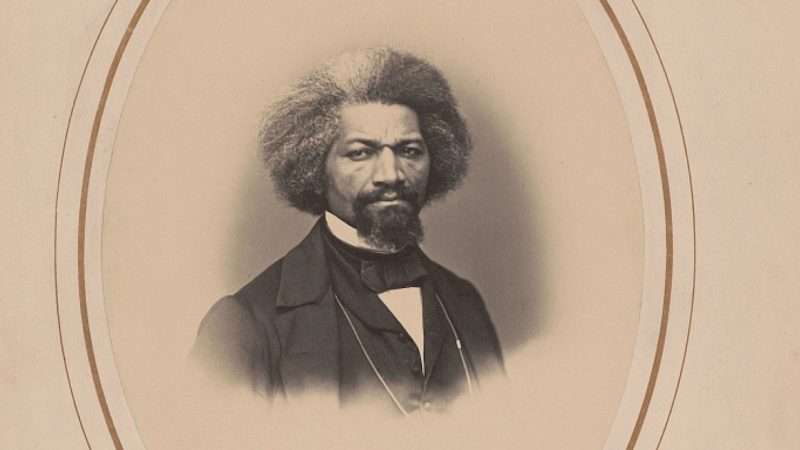
Frederick Douglass’s Classic 1871 Decoration Day Speech


Frederick-Douglass-LOC
Frederick Douglass (Library of Congress).


Today is Memorial Day, when we honor members of the armed forces who have fallen in battle. Memorial Day originated as Decoration Day, an occasion to honor soldiers who died in the Civil War. Frederick Douglass’s 1871 Decoration Day speech, delivered at Arlington National Cemetery, may be the greatest-ever address associated with this occasion. In the process, he also offered valuable thoughts on how we should remember the Civil War. Check it out! Here’s an excerpt:

Dark and sad will be the hour to this nation when it forgets to pay grateful homage to its greatest benefactors. The offering we bring to-day is due alike to the patriot soldiers dead and their noble comrades who still live; for, whether living or dead, whether in time or eternity, the loyal soldiers who imperiled all for country and freedom are one and inseparable….

When the dark and vengeful spirit of slavery, always ambitious, preferring to rule in hell than to serve in heaven, fired the Southern heart and stirred all the malign elements of discord, when our great Republic, the hope of freedom and self-government throughout the world, had reached the point of supreme peril, when the Union of these states was torn and rent asunder at the center, and the armies of a gigantic rebellion came forth with broad blades and bloody hands to destroy the very foundations of American society, the unknown braves who flung themselves into the yawning chasm, where cannon roared and bullets whistled, fought and fell. They died for their country.

We are sometimes asked, in the name of patriotism, to forget the merits of this fearful struggle, and to remember with equal admiration those who struck at the nation’s life and those who struck to save it, those who fought for slavery and those who fought for liberty and justice.

I am no minister of malice. I would not strike the fallen. I would not repel the repentant; but may my “right hand forget her cunning and my tongue cleave to the roof of my mouth,” if I forget the difference between the parties to that terrible, protracted, and bloody conflict….

The essence and significance of our devotions here to-day are not to be found in the fact that the men whose remains fill these graves were brave in battle. If we met simply to show our sense of bravery, we should find enough on both sides to kindle admiration….

But we are not here to applaud manly courage, save as it has been displayed in a noble cause. We must never forget that victory to the rebellion meant death to the republic….  [I]f now we have a united country, no longer cursed by the hell-black system of human bondage…, we are indebted to the unselfish devotion of the noble army who rest in these honored graves all around us.

The Decoration Day speech is just one of several Douglas speeches that deserve to be better-known. I gave a few other examples here.

The post Frederick Douglass's Classic 1871 Decoration Day Speech appeared first on Reason.com.

from Latest https://ift.tt/tDhuBHQ
via IFTTT

DOJ, Prosecutors Trying To Claw Back Donations Made To J6 Defendants

DOJ, Prosecutors Trying To Claw Back Donations Made To J6 Defendants

While BLM protesters got a Kamala Harris-endorsed bail fund during the violent and destructive mostly peaceful George Floyd riots, the Department of Justice is trying to claw back donations made to January 6th political prisoners.

According to AP, the DOJ is trying to seize over $25,000 raised by Texas resident Daniel Goodwyn, who appeared on Tucker Carlson’s former Fox News show where he promoted a website for political donations.

The AP looked at over 1,000 criminal cases from Jan 6., and noted that prosecutors have been asking judges to enhance fines on top of prison sentences to offset donations from supporters.

Dozens of defendants have set up online fundraising appeals for help with legal fees, and prosecutors acknowledge there’s nothing wrong with asking for help for attorney expenses. But the Justice Department has, in some cases, questioned where the money is really going because many of those charged have had government-funded legal representation.

Most of the fundraising efforts appear on GiveSendGo, which bills itself as “The #1 Free Christian Fundraising Site” and has become a haven for Jan. 6 defendants barred from using mainstream crowdfunding sites, including GoFundMe, to raise money.

Were any of the BLM-linked fundraisers, or BLM itself, subject to DOJ scrutiny?

As the AP notes, the success many J6 prisoners have had fundraising “suggests that many people in the United States still view Jan. 6 rioters as patriots and cling to the baseless belief that Democrats stole the 2020 presidential election from Donald Trump.”

Virginia resident Markus Maly, who is set to be sentenced next month for assaulting police at the Capitol, raised over $16,000 from an online campaign. Prosecutors have requested a $16,000 fine, noting that he had a public defender and didn’t owe any legal fees.

“He should not be able to use his own notoriety gained in the commission of his crimes to ‘capitalize’ on his participation in the Capitol breach in this way,” wrote a prosecutor in a court filing.

A jury convicted romance novel cover model John Strand of storming the Capitol with Dr. Simone Gold, a California physician who is a leading figure in the anti-vaccine movement. Now prosecutors are seeking a $50,000 fine on top of a prison term for Strand when a judge sentences him on Thursday.

Strand has raised more than $17,300 for his legal defense without disclosing that he has a taxpayer-funded lawyer, according to prosecutors. They say Strand appears to have “substantial financial means,” living in a home that was purchased for more than $3 million last year. -AP

So far in 2023, prosecutors have sought to levy $390,000 in fines against at least 21 defendants, with amounts ranging from $450 to over $71,000, per AP. Of that, Judges have imposed at least $124,127 in fines against 33 riot defendants YTD, while in the past two years, over 100 defendants have been ordered to pay more than $240,000 in fines.

Separately, hundreds of convicted rioters have been ordered to pay over $524,000 in restitution to the government to offset over $2.8 million in damage to the Capitol and other J6 related expenses.

We don’t recall BLM protesters being ordered to help pay to clean up cities they set on fire. Wonder why?


Tyler Durden
Mon, 05/29/2023 – 14:15

via ZeroHedge News https://ift.tt/Tw5SpUj Tyler Durden

25,000 Traders Bet On ChatGPT’s Stock Picks

25,000 Traders Bet On ChatGPT’s Stock Picks

Authored by Andrew Fenton via CoinTelegraph.com,

Almost 25,000 investors have signed up to trade alongside ChatGPT as they follow the GPT Portfolio experiment from copy trading firm Autopilot.

The traders have bet a combined $14.7 million on the AI’s stock picks, which would average about $600 each if they all invested after signing up. They’re hoping to take even a small slice of a purported 500% return from one of the strategies backtested in academic research.

The GPT Portfolio gets the AI to analyze 10,000 news articles and 100 company reports to select 20 stocks for the $50,000 portfolio, updated each week. The initial picks included Berkshire Hathaway, Amazon, D.R. Horton and Davita Health. After two weeks, the portfolio is up around 2%, which is pretty much the same as the stock market. 

Interestingly the bottom five picks lost more in percentage terms than the top five gained — Dollar Tree lost 17% after it missed earnings — so it might be more sensible in future to only invest in GPT-4’s best five or 10 ideas, but we’ll see how it works out.

The smaller-scale ChatGPT Crypto Trader account is tweaking a similar strategy that gets GPT-4s advice on when to go long on Ethereum. He says it shows a profit of 11,000% backtested to August 2017, but in the real-world experiment since January, the portfolio is up by a third, while the Ethereum price has gained 60%.

It’s worth being careful using AI for trading, however. Crypto derivatives platform Bitget recently abandoned its experiment of using AI on the platform due to the potential for misinformation. A survey of its users found 80% of users had a negative experience with the AI, including false investment advice and other misinformation. 

Bitget Managing Director Gracy Chen says:

“AI tools, while robust and resourceful, lack the human touch necessary to interpret market nuances and trends accurately.”

Tyler Durden
Mon, 05/29/2023 – 13:40

via ZeroHedge News https://ift.tt/ClmNKAP Tyler Durden