Dramatic Video Shows Rogue Pack Of Teens Beating Up Marines In California

Dramatic Video Shows Rogue Pack Of Teens Beating Up Marines In California

A shocking video out of California, where Democrats have failed to enforce law and order, shows a rogue pack of teenagers assaulting at least two Marines. 

Hunter Antonino, one of the victims who self-identified as a Marine, told local media KCAL-TV that he and two other Marines asked a large group of “belligerent” teenagers to stop lighting off fireworks at San Clemente Pier Bowl area on Friday evening because debris hit him in the face. He said the teens also annoyed other beachgoers. 

Antonino said he politely asked the teens to leave, and that’s when the wild pack attacked him and his buddies. The shocking video shows at least two Marines in the fetal position on the ground while they were kicked and stomped. 

“This is considered an assault with a deadly weapon because of the amount of suspects we are investigating,” said Orange County Sheriff’s Department Sgt. Frank Gonzalez. 

Sgt. Mike Woodroof, an OCSD public information officer, said the Marines were treated for numerous injuries at the scene but refused to be hospitalized for additional treatment. 

“The Orange County Sheriff’s Department will continue investigating this matter until all individuals responsible are identified and prosecuted to the fullest extent of the law,” OCSD said in a social media post.

San Clemente Mayor Chris Duncan told KCAL, “Marines are always welcome here, always gonna be celebrated, always be taken care of. And that’s why this is so particularly tragic.” 

Instances of wild packs of teens wreaking havoc have been spotted in other liberal states this spring, where progressive lawmakers fail to enforce law and order. This has been seen in San Francisco, Chicago, and Baltimore

Out-of-control teenagers have been such a problem in Baltimore City that the mayor just enforced a curfew for kids

Americans who would like law and order restored need to vote out progressives in the next election cycle who have caused nothing but chaos across major metro areas with backfiring social justice reforms. 

Tyler Durden
Tue, 05/30/2023 – 15:05

via ZeroHedge News https://ift.tt/ovnJX7u Tyler Durden

Retail Sector Is The “Soft Underbelly” Of The Economy

Retail Sector Is The “Soft Underbelly” Of The Economy

Authored by Bruce Wilds via Advancing Time blog,

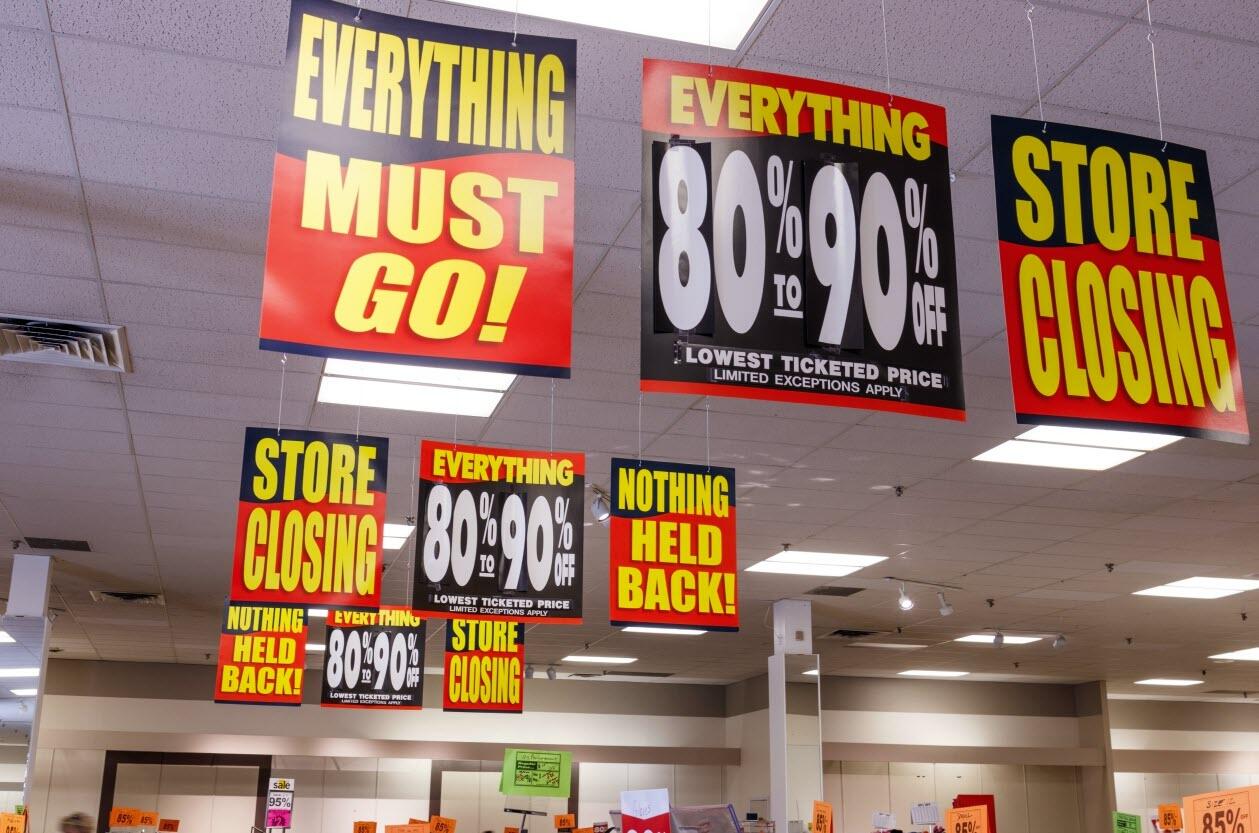
Prepare for Retail Apocalypse Part II. While this could be considered a continuation of a trend that started years ago the number of closures about to occur will take things to a whole new level. “Soft underbelly” is a phrase that refers to the most vulnerable part of something, whether it be an organization, a system, or a physical object. This phrase was famously used by Winston Churchill to describe his idea of attacking Germany through Italy during World War II.

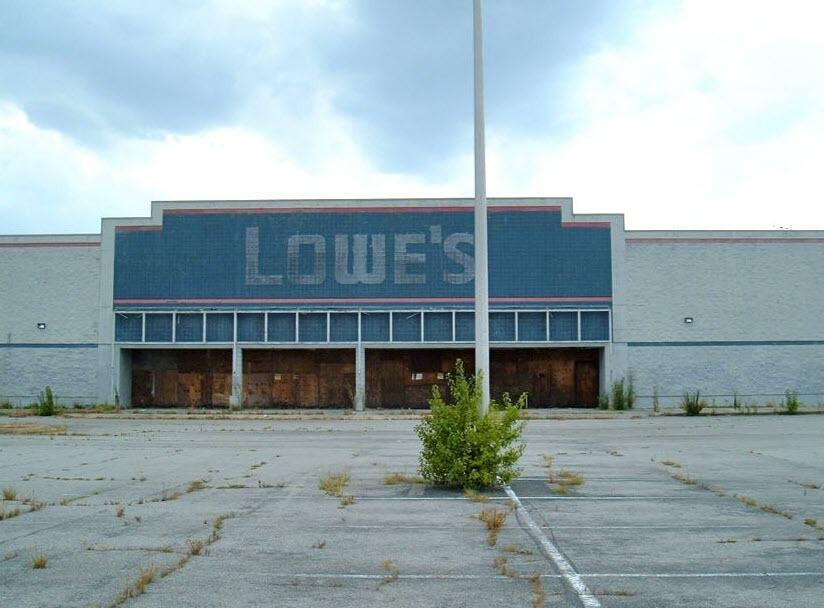
Today retailers closing locations across America are about to show retailing is a sector of the economy that has been given far less attention than it merits. Once these locations go empty, many may never again be occupied. This is a continuation of what started prior to the pandemic in response to Amazon and online commerce. The reality of this, for me, comes front and center when I think about the mall across the street from my office losing its last two anchor stores, Macy’s and JCPenny. Without them, the mall will be in dire straits.

While the news is focused on Artificial Intelligence, the drums of war, raising the debt ceiling, and speculation on who might run for President in 2024 few people are talking about the coming wave of retail closures. This round of forecloses will be far more devastating than what we saw in the first wave. Analysts estimate that by the end of 2023, the national brick-and-mortar footprint may be reduced by up to 20%. This is due to many retailers leveraging up when interest rates were low. This is exacerbated by the idea a recession is just around the corner.

Where money flows and who it enriches is a key component of economics, the failure to consider this is a blind spot many people have. Already many big box retailers, grocery stores, apparel chains, home goods companies, and big-name businesses like Burger King, GameStop, and Sephora have announced mass store closings in 2023. These companies are rushing to close under-preforming locations in an effort to limit the bleeding on their balance sheets.

Even while they may deny it, consumers are notorious for wasting much of the money they spend on frivolous unnecessary purchases. This means many consumers could cut their spending in a big way without drastically reducing their standard of living. When looking at the policies flowing out of Washington it is clear many politicians seem to have no idea that all consumer spending and purchases are not created equal. The fact is, consumers should take a long look at how their purchases will impact the economy over time.

Empty Buildings Harm Communities

This environment is where the predatory monster known as Amazon comes back to haunt communities. Online purchases in illiquid hard to find specialty items have a lot of merits. It expands our options, however, when used as a way to avoid visiting and buying from local merchants many negative ramifications come home to roost. While touting Amazon as a model of efficiency what people often forget is that its overall business model is far from efficient. Simply put, it is only after many local stores are gone that people will realize the hidden cost of buying online.  

Fans of Keynesian economics that encourage government spending to stabilize the economy during a downturn tend to discount the importance that where and how money is spent matters a great deal. While many readers may already be telling themselves, I don’t go or shop there anyway, retail closings will result in lots of other small businesses closing their doors. Not only will the retail employees lose their jobs but these stores support many local businesses. The ugly reality is that store retail store closures have a huge impact on communities. This is a cancer that will soon become apparent as rents fall, mortgages go unpaid, commercial real estate values fall, and the local tax base shrinks away. Defaults on loans and bonds in conjunction with the reduced local property taxes will also add to the pain. 

Two recent videos warn we are likely to surpass the number of closures seen during the pandemic when thousands of businesses collapsed. In the first, Clayton Morris delves into some of the chains shuttering locations. He focuses on 20 big retailers in the process of closing down:

In the other video is from City Prepping, it comes with the warning this will be big. The fella does an excellent job of putting into focus the many issues about to descend upon much of the retailing sector. 

Expect To See Less New construction

To make matters worse, this comes at a time when the boom in new restaurant construction based on easy cheap money is coming to an end. High labor cost, sluggish sales, shoplifting, and higher interest rates are all taking their toll on retailers. These factors have many retailers on their heels. Adding to the problem is the Fed’s high-interest rates have put pressure on small, or should we say most, banks in a position where they are cutting back on loaning out money to marshal their funds. These challenges also extend deep into the small business environment and communities. 

When all is said and done, this is an area that is vulnerable as consumer spending continues to weaken. This is not about having enough places to buy goods. It is about the sustainability of real estate prices, jobs, and the overall financial health of our communities. Considering retailing accounts for roughly 10 million jobs this is significant. When coupled with the current glut of office space it is easy to see that this is a harbinger of things to come. 

Tyler Durden
Tue, 05/30/2023 – 14:45

via ZeroHedge News https://ift.tt/IRlO1Y4 Tyler Durden

German Police Investigate Roger Waters Over Concert Wardrobe


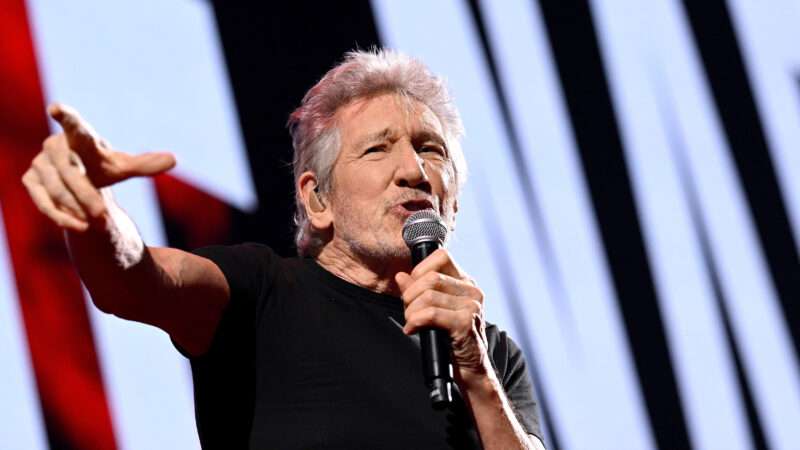
Roger Waters performs in Munich

Rock musician Roger Waters, founder and onetime frontman of Pink Floyd, performed concerts in Berlin on May 17 and 18. During a couple of his former band’s classic songs, Waters donned a black military-style uniform with a red armband and fired a prop machine gun into the crowd. The costume bore more than a passing resemblance to a Nazi SS uniform, though with two crossed hammers instead of a swastika.

Last week, Berlin police announced an investigation into Waters’ sartorial choices and whether they constitute incitement to violence. Unfortunately, the investigation is part of a trend among European nations that cuts against the principles of a free society.

Several European nations criminalize both Holocaust denial and the display of Nazi iconography. Under German law, anyone who displays “flags, insignia, uniforms and their parts, slogans and forms of greeting” of the Nazi regime can face up to three years in prison.

Announcing the investigation against Waters, police spokesperson Martin Halweg told The Guardian, “The context of the clothing worn is deemed capable of approving, glorifying or justifying the violent and arbitrary rule of the Nazi regime in a manner that violates the dignity of the victims and thereby disrupts public peace.”

The Wall, the 1979 album that Waters wrote, tells the semi-autobiographical story of a fictional rock star named Pink and his descent into madness. Near the end of the album, a drug-addled Pink imagines himself as a fascist dictator and his concert as a Nazi rally. He foments racist violence, siccing his audience on ethnic and sexual minorities, but when his hallucination passes, he realizes what he’s done and begs them to stop.

Waters has worn the same uniform for years when performing songs from The Wall—including in Berlin. He insists that the performance is satirical. In a statement after the recent shows, Waters contended that his “depiction of an unhinged fascist demagogue” is “quite clearly a statement in opposition to fascism, injustice, and bigotry in all its forms.”

Bans on the display of Nazi propaganda are surely well-intended, especially in the European nations where those sentiments had such devastating consequences. But such blanket bans have downstream consequences and clamp down on legitimate free expression. After all, the government with the authority to ban offensive speech also has the authority to decide what speech to consider offensive.

In 1961’s Rockwell v. Morris, the New York Supreme Court affirmed that a neo-Nazi could not be prevented from speaking publicly. “The unpopularity of views, their shocking quality, their obnoxiousness, and even their alarming impact is not enough,” wrote Justice Charles Breitel. “Otherwise, the preacher of any strange doctrine could be stopped; the anti-racist himself could be suppressed, if he undertakes to speak in ‘restricted’ areas; and one who asks that public schools be open indiscriminately to all ethnic groups could be lawfully suppressed, if only he choose to speak where persuasion is needed most.”

In 2014, Russia passed a law that criminalized the “rehabilitation of Nazism,” including the display of swastikas. The following year, a journalist was convicted and fined for posting a historical photo depicting German troops in her neighborhood during World War II. Bookstores pulled the Pulitzer Prize–winning graphic novel Maus from shelves because, although it tells the story of author Art Spiegelman’s father as a Polish Jew during the Holocaust, the cover photo includes a swastika.

Regardless of the artistic merit of Waters’ performance, free societies should refrain from criminalizing speech and expression, even when it’s thoroughly hateful or indefensible.

The post German Police Investigate Roger Waters Over Concert Wardrobe appeared first on Reason.com.

from Latest https://ift.tt/Mdfs6g5
via IFTTT

DOJ Says That Cops Who Killed Autistic Teenager May Have Violated His Civil Rights


Eric Parsa footage

An autistic teenager died in 2020 after Louisiana police officers sat on him and placed him in a chokehold for several minutes. According to a statement of interest from the Department of Justice, the officers’ actions could have violated the boy’s civil rights. 

In January 2020, Eric Parsa, a “severely autistic” teenager, began having an “acute sensory episode” in the parking lot of a New Orleans–area laser tag center. According to a lawsuit filed by Parsa’s parents in 2021, Parsa “began to experience a sudden sensory outburst or ‘melt-down'” and began hitting himself and his father. At Parsa’s parents’ request, an employee at the laser tag center called the police for help.

When Jefferson Parish Sheriff’s Office (JPSO) police arrived, Parsa slapped one officer, who responded by forcibly taking Parsa to the ground, where he was held in a prone position for over nine minutes. During this time, officers placed Parsa “on his stomach, handcuffed, shackled, arms and legs held down, head, shoulder and neck encircled by the arm of a deputy, with JPSO deputies applying their own body weight as a restraint.” Officers only stopped and placed Parsa in a “recovery position” when they noticed that he had “gone limp and he had urinated.” An unconscious Parsa was then taken to a nearby hospital, where he was pronounced dead.

Parsa’s family filed a lawsuit against the officers in January 2021, alleging that the officers’ conduct violated Parsa’s civil rights under the Americans with Disabilities Act (ADA) and the Rehabilitation Act of 1973. Last year, the couple made further allegations of wrongdoing after JPSO officers attempted to, without probable cause, obtain warrants for Parsa’s school records detailing past misbehavior, seemingly to justify the officers’ fatal use of force against Parsa.

Earlier this month, the Department of Justice released a statement of interest—which DOJ officials often use to persuade judges to take a preferred interpretation of a given legal issue—that tentatively agreed with Parsa’s parents, stating that the officers’ conduct may have violated Parsa’s rights under the ADA.

“Here, the record is replete with facts showing that several Defendants knew about E.P.’s disability before or on arrival to the scene and that others learned of his disability during the encounter,” reads the 21-page statement. “E.P.’s behavior, such as slapping his head, and failure to say anything other than ‘firetruck,’ could be construed as ‘clear signals’ of E.P.’s disability-related limitations and need for reasonable modifications,” as required by the ADA. 

Instead of pinning him to the ground, the statement notes that officers should have accommodated Parsa’s disability by “using de-escalation strategies; removing distractions and providing time and space to calm the situation when the child poses no significant safety threat; and avoiding or minimizing touching a child whose disability makes them sensitive to touch.”

But while this intervention from the DOJ is good news for Parsa’s parents—particularly because of a recent motion from the JPSO attempting to toss the Parsas’ ADA claims—as long as police officers retain qualified immunity protections, actually holding government actors accountable is still an uphill battle.

The post DOJ Says That Cops Who Killed Autistic Teenager May Have Violated His Civil Rights appeared first on Reason.com.

from Latest https://ift.tt/9SwO12E
via IFTTT

Leftists Make Accusations Of ‘Economic Terrorism’ As Conservative Boycotts Succeed

Leftists Make Accusations Of ‘Economic Terrorism’ As Conservative Boycotts Succeed

The concept of retail boycotts is far more often addressed among activists on the political left, primarily because they operate under the notion that they are the “underdogs” fighting against the system.  In reality, the political left is the system.  When almost every major corporation, every globalist foundation and every western government is funding and and enforcing your ideology, you are the oppressor, not the oppressed.

Conservatives, on the other hand, are finally learning that focusing solely on politics is a losing battle and that the “culture war” is in fact the most important issue of our era.  It’s sad that it took this long for the liberty minded to change strategies.  This doesn’t mean that they should give up on trying to put honest and sane leaders in government, it just means that relying on politicians is a gamble and taking direct action whenever possible is going to get better results.

In the past, leftists have tried to apply the mindset of strength in numbers to their own boycotts, almost always resulting in complete failure.  A recent example would be the highly publicized effort by woke activists to boycott Harry Potter writer J.K. Rowling’s media products.  Rowling is a well known progressive who probably helped to create the very intersectional social justice movement that is now trying to burn her at the stake.  But this is how these things usually go with Marxists – One day you are useful to them, the next day you are a threat to them and they’re putting you up against a wall.  

Leftists tend to rank individuals in terms of their “platforms,” meaning a person’s value to them is measured by their reach in legacy media and social media.  When someone with extensive reach (which they believe is the same as influence) suddenly disagrees with one of their tenets, they become enraged and viciously attack.  That person was just a tool they could use to spread their propaganda; that person is not allowed to have their own viewpoints.

Rowling committed the sin of sticking to her 2nd Wave feminist guns and declaring that only biological women can be women, defying the bizarre trans identity narrative.  In turn she made the woke mob an enemy for life as they proceeded to burn Harry Potter books and demand she be “canceled” from any media outlet that might give her a microphone.  This movement culminated in an attempt to push a mass boycott of Hogwarts Legacy, a newly released Harry Potter video game.  

The boycott failed miserably, with the game hitting record sales.  It was incredibly embarrassing for the political left, which often argues that cancel culture is “just the free market telling businesses what the majority wants.”  In reality, cancel culture is nothing more than a tiny minority of people extorting companies into removing content made by political opponents of the left.

This is why boycotts are a double-edged sword – If the tactic is even remotely successful, a group can use it to show they are the majority and gain influence over company policy.  If they fall apart, though, then the group has just exposed themselves as a paper tiger with little to no power.  

Leftist boycotts are often astroturf movements, puffed up and artificially inflated by social media noise and activist puppet accounts.  Also, leftists tend to have far less spending money, which means they have no market power.  On the other hand, conservatives are showing they do have extensive market power.  Bud Light sales across the country have collapsed by 25%-30% after partnering with trans activist Dylan Mulvaney to market their beer.  Cases of Bud Light are now priced for almost nothing as retailers can’t even give the beer away.

Target has lost over $10 billion in market cap in 10 days after they tried to sell pride month merchandise promoting trans ideology to young children, made by a designer who is an apparent satanist.  Leftists are so furious at the success of boycotts against these corporations that they are devolving into cry-bully mode.  They now suggest that the boycotts are actually a form of economic terrorism:

The corporate media is engaging in full blown spin as they rush to demonize effective boycotts of woke propaganda, specifically trans propaganda.  The message is a familiar one:  “You must participate in the collective narrative.  If you don’t participate, this is the same as attacking society as a whole and that makes you a threat.  Silence is violence.  Voting with your wallet is violence.  Doing anything we don’t like is violence.”

Canadian PM Justin Trudeau is even getting in on the outrage, suggesting that it’s “scary what’s happening in the US,” equating the push-back against the social justice agenda in the US with “attacks on 2SLGBTQI+ people” (whatever that means), as if freedom for them means compliance and submission for everyone else. 

Target has moved many of its pride displays to the back of stores in an effort to avoid a Bud Light level crash in their sales, but has also recently doubled down on their social justice politics with claims that boycott supporters have “threatened” Target staff.  They have provided no proof of these threats so far.  Ironically, only leftist activists have used scare tactics against the company, including bomb threats, unless Target returns all of its child focused “Pride” merchandise displays to the front of stores.

Leftists argue that this amounts to censorship of LGBT products and businesses by conservatives, but of course it’s the same tactic they’ve been trying to use for years.  Conservatives just did it better.  The free market gets to decide what businesses succeed and what businesses go bankrupt; companies are not owed customer loyalty or financial survival merely because they virtue signal. 

Unlike progressive cancel culture which uses intimidation, stalking, doxxing and personalized targeting to frighten individuals and businesses into compliance, all conservatives have done is stop buying from particular corporations, and it’s working.  Whenever anti-woke efforts get good results, the goal of leftists is to then associate those efforts with some form of aggression.  

Keep in mind that the mobilization of Americans against trans concepts and social justice politics never would have happened if activists and activist corporations had simply left children alone.  But, they have decided to die on that hill instead and insist that your children are actually their children to indoctrinate as they please.  The backlash is only going to get worse for leftists from here on.

Tyler Durden
Tue, 05/30/2023 – 14:25

via ZeroHedge News https://ift.tt/JZVylQ4 Tyler Durden

Here’s Why Oil Flows Can Only Be Redirected, Not Stopped

Here’s Why Oil Flows Can Only Be Redirected, Not Stopped

Authored by Irina Slav via OilPrice.com,

  • Global crude flows have shifted completely in a relatively short period of time.

  • Because of the resilience of oil demand Russia’s oil revenues are recovering, too.

  • West-African crude flows to Asia have dropped as Chinese buyers are increasingly buying Russian and Iranian crude.

Asian oil imports were due for a marked rebound this month after the end of the maintenance season. Chances are that a lot of the additional oil would be coming from Russia, which has become one of the largest suppliers of China and India.

In fact, Russian oil flows are growing despite claims from Moscow that it has reduced its total oil production. According to Bloomberg, Russian oil exports actually hit the highest since the start of 2022 last month.

This is happening in the context of the most severe sanction push by the collective West against the country. And it is the clearest evidence yet of just how essential oil is for the functioning of the global economy.

Before the invasion of Ukraine, Russia’s biggest oil clients were European countries. For China and India, it was a minor supplier. Since last year this has changed dramatically.

Now, China and India are the two biggest buyers of Russian crude. The two together took in as much as 80% of Russia’s total oil exports last month, according to the International Energy Agency. And the total, at 8.3 million barrels daily, was markedly higher than the annual average for both last year and the year before that.

What’s more, Europe, which placed an embargo on direct Russian oil and fuel imports, has been taking in more fuels made in Asia—notably India. In fact, it seems to be taking in a lot of these fuels if the EU’s top diplomat Josep Borrell had to call publicly for an end to this practice.

Indeed, India’s fuel exports to Europe over the past 12 months have jumped by over 70%, Reuters reported earlier this month. The report also noted that there is precious little the EU could do to change this without plunging the European economy into a deep recession brought on by fuel price inflation.

So, while until a year ago, Russian crude and fuels were going mostly to Europe directly, now almost all crude oil that Russia exports ends up in China and India. From there, processed into fuels, it goes to Europe. The routes have shifted. Oil demand has not.

It is because of the resilience of oil demand that Russia’s oil revenues are recovering, too. In a recent report, Finland-based energy think tank Centre for Research on Energy and Clean Air said Moscow’s oil export revenues have rebounded to the highest since last November over the past couple of months.

The authors noted that total budget revenues were down in April on an annual basis, but added that “Russia was able to export its main crude oil variety, for the first time, at prices that were systematically above the price cap level set by the U.S., EU and allies.”

There has been a lot of reporting about how China and India were benefiting from the discount at which Russian crude sells because of the sanctions. Most of that reporting has had an optimistic spin along the following lines: sanctions and the price cap are working because Russian oil is flowing, keeping global prices in check and bringing in lower revenues for the Kremlin.

What the optimistic spin omits is that Russian oil prices remain tied to global prices, and as global prices recover, so do the prices of Russian crude, as stated by the Centre for Research on Energy and Clean Air. In other words, global oil demand, and Asian oil demand specifically, is so inelastic that no amount of sanctions can sap it.

In further evidence of this inelasticity, Bloomberg reported recently that close to a third of China’s and India’s total oil imports came from three countries: Russia, Iran, and Venezuela. That was up from a modest 12% a year ago, the report noted.

Now that bargain oil imports are so much higher, oil from other sources such as West Africa and the United States have dropped by over 40% for West African oil and 35% for U.S. oil, the report, which cited data from Kpler.

According to the U.S. Treasury Secretary, the sanctions and the price cap are working as intended, reducing Russia’s oil revenues while keeping the international market for oil well supplied. Indeed, from that perspective, they are working as intended. Yet the shift these sanctions have prompted in global oil trade routes is much more important.

It has made Russia more dependent on just two oil-importing countries, analysts have noted. At the same time, it has made Europe more dependent on China and India for its fuels, even with U.S. fuel imports at a record earlier this year.

The two Asian economies are unanimously expected to be the biggest drivers of global oil demand growth over both the short and the long term, along with other Asian nations. This secures demand for Russian crude over the long term, likely to the chagrin of the EU.

Perhaps this would motivate an even faster push to lower oil consumption in the bloc—even if the success of the current push into electrification is not exactly living up to expectations. But whatever the EU decides to push, global oil demand is going nowhere.
Tyler Durden
Tue, 05/30/2023 – 14:05

via ZeroHedge News https://ift.tt/3HoDPIc Tyler Durden

Global Debt Soars Again

Global Debt Soars Again

Authored by Daniel Lacalle,

Global debt levels soared by $8.3 trillion in the first quarter of 2023, climbing to $305 trillion, nearly the record high set in the first quarter of 2022, according to the Institute of International Finance. This means almost 335% of GDP.

Rising debt is a burden on growth, and soaring public debt means higher taxes, weaker productivity and declining real wages as governments push inflationary policies to try to dissolve part of their enormous indebtedness.

Public debt is not a reserve asset for the public sector, it is a negative factor that crowds out investment and credit and erodes purchasing power from families and earnings from businesses as taxes rise. To make public debt a reserve asset it would have to generate real economic return, just as is the debt of private businesses used for solid investments. However, governments use increasing debt for current spending with no real economic return, and this leads to lower growth trends and loss of purchasing power of its issued currency.

Private debt is paid by families and businesses, but public debt is also paid by the private productive sector. Therefore, the impact on the pattern of growth, job creation and investment are significantly more negative when public debt rises.

There is no such thing as public debt. We pay it, always. With higher taxes, higher inflation, or larger budget cuts, maybe all at the same time.

Global markets have entered a perverse incentive mechanism where consensus investors favour rising public imbalances expecting central banks to implement quantitative easing afterward. The main reason is that market participants perceive that it will benefit equity and bond valuations in relative terms. However, this is a dangerous bet. Those investors that hail public debt and quantitative easing continue to bet on an outcome that has not happened for years: Low inflation and decent growth added to equity multiple expansion. Those market participants seem to want another fix of money printing expecting 2009 to return. It is even worse. Demanding currency debasement and destruction of the middle class for a small expansion of multiples directly attacks those that invest for the long term.

Rising debt means gold remains the only de-correlated and safe asset in an environment where currency destruction is likely to continue.

Bitcoin and crypto assets are different things, in fact they are highly correlated with non-profitable tech.

Governments are not going to reduce deficit spending, and this means that public fixed income may be the riskiest asset for investors in an era of inflationism.

Investors can bet on one thing.

The inflationist policies that have been modestly implemented since 2009 are going to be accelerated. This will not be pretty if it leads to a prolonged period of stagflation. Stagflation does not create multiple expansion and equity booms. It is bad for fixed income and equity markets.

You wanted high debt, more spending and more central bank easing?

This is the consequence. Record debt, weaker growth, and inflation.

Tyler Durden
Tue, 05/30/2023 – 13:25

via ZeroHedge News https://ift.tt/po7mu4z Tyler Durden

China Rebuffs Pentagon Chief For Talks Due To Sanctions On Top General

China Rebuffs Pentagon Chief For Talks Due To Sanctions On Top General

The US confirmed Monday that Beijing continues resisting all military-to-military communications and contacts with the Pentagon. 

The latest specific is that Secretary of Defense Lloyd Austin reached out to his Chinese counterpart, Minister of National Defense Li Shangfu, offering a bilateral meeting to reestablish open dialogue. But General Li is under Washington sanctions, and Beijing stipulated that as a precondition for a meeting the Biden administration must lift the sanctions

China’s Defense Minister Gen. Li Shangfu visiting Moscow in April: Russian Defense Ministry Press Service via AP.

The US had proposed that the two military chiefs meet on the sidelines of the Shangri-La Dialogue, but the offer was a non-starter over the punitive sanctions issue – sanctions which Li has been under since 2018.

At the recent G7 summit in Hiroshima, Biden when asked had said the anti-China sanctions were “under negotiation” but there’ve been no signs of change happening since.

The Pentagon and US administration have placed sole blame on China for the collapse in dialogue among militaries, which is crucial to maintain in the interest of avoiding inadvertent conflict in regions such as in the South China Sea where both naval powers operate.

US Assistant Secretary of Defense for Indo-Pacific Affairs Ely Ratner said late last week the Pentagon “believes in the importance of open lines of communication with the PRC [People’s Republic of China] and we have sought to build out those open lines of communication. Unfortunately… we’ve had a lot of difficulty when we have proposed phone calls, meetings, dialogues.”

“The US and Department of Defense have had an outstretched hand on this question of military to military engagement, but we have yet to have consistently willing partners,” Ratner emphasized further.

“The Pentagon’s attempts to reach out to China’s military in recent months have been ignored or rebuffed,” Ratner told an audience at the DC-based Center for Strategic and International Studies.

But from the Chinese perspective, it seems only natural that if Austin wants to meet and have official dialogue with its defense chief Li, then personal sanctions on him must be dropped.

Tyler Durden
Tue, 05/30/2023 – 13:05

via ZeroHedge News https://ift.tt/xrpZuVW Tyler Durden

Liz Cheney Booed By Grads Who Turned Their Chairs Backwards At Colorado College Commencement

Liz Cheney Booed By Grads Who Turned Their Chairs Backwards At Colorado College Commencement

Via The College Fix,

‘My fellow Republicans wanted me to lie,’ Cheney said during speech

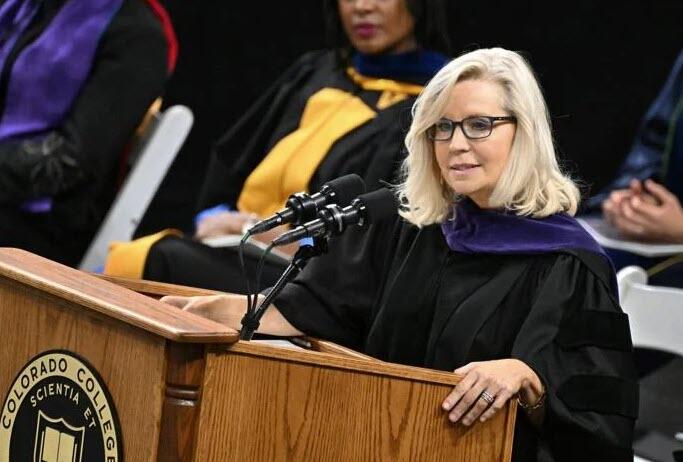
Former Republican Congresswoman Liz Cheney was booed and protested as she gave a commencement speech Sunday at her alma mater Colorado College — even though she condemned her GOP colleagues in her address.

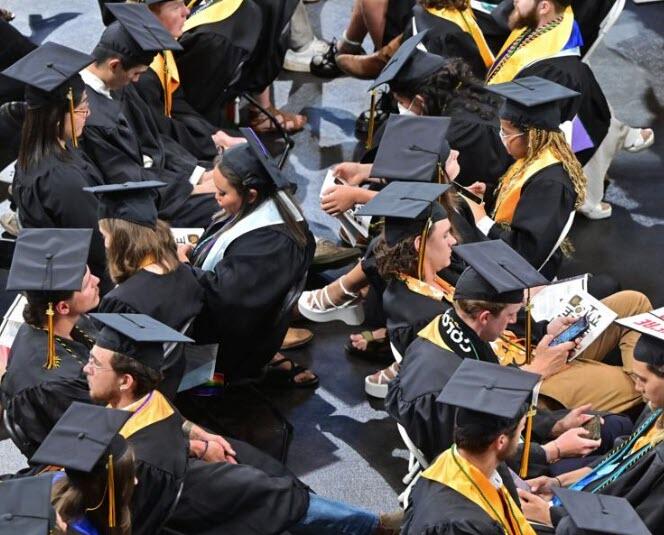
While she received some applause and support, a contingent of students booed her and turned their chairs around so their backs faced her during her speech, apparently because the former Wyoming congresswoman is Republican, according to news reports.

“When Cheney was introduced – mostly to applause – about half the graduates turned their chairs 180 degrees and sat with their backs to the former Wyoming congresswoman for the entirety of her speech,” the Gazette reported.

The Daily Mail reported Cheney was booed by some grads despite the fact that she was a vocal critic of former President Donald Trump:

“One graduate’s message to Cheney was splashed on her cap. It read: ‘Why listen to a racist, imperialist, transphobic, war monger?? Your hate is loud.’”

As The College Fix reported in March, Cheney has accepted an appointment to serve as a professor at the Center for Politics at the University of Virginia for the fall 2023 semester.

Cheney’s job will include participating in university-wide lectures, serving as a guest lecturer in student seminars, and contributing to the Center for Politics research.

During her speech, she repeated her attacks against Trump and fellow Republicans.

“After the 2020 election, and the attack of Jan. 6, my fellow Republicans wanted me to lie,” Cheney reportedly said.

“They wanted me to say that the 2020 election was stolen, that the attack of Jan. 6 wasn’t a big deal, and that Donald Trump wasn’t dangerous. I had to choose between lying and losing my position in House leadership.”

“No party, no nation, no people can defend and perpetuate a constitutional republic if they accept leaders who have gone to war with the rule of law, with the democratic process, with the peaceful transfer of power, with the Constitution itself,” Cheney said.

“You may find yourself confronting challenges that you could not have imagined, with very few allies by your side,” she said.

“And this morning I want to tell you a secret: When the path ahead is obscure and unclear, you can find your way by resolving to do the next right thing. Resolve to do what is right, even when it’s hard, you’re alone, even when you’re afraid — especially when you’re afraid.”

Tyler Durden
Tue, 05/30/2023 – 12:50

via ZeroHedge News https://ift.tt/82hs6iW Tyler Durden

Freight Carriers Look To Rebound As Retailers Finally Sell Down Post-Covid Inventories

Freight Carriers Look To Rebound As Retailers Finally Sell Down Post-Covid Inventories

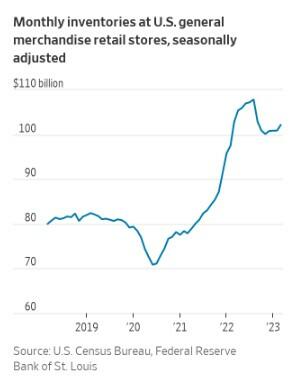
Freight carriers are in focus after a new report by the Wall Street Journal indicates that retailers – stuck with tons of inventory coming out of the Covid pandemic – have finally started to chip away at their excess goods and may be looking to take on new product this fall. 

Inventories at retailers like Walmart and Target are lower by 9% and 16% respectively from a year ago as cutting prices has helped open up space in their supply chains and make room for new product. 

Product first started to back up after retailers took on more supply to try and quench the massive increase in demand they saw during Covid, thanks to stimulus payments and pandemic relief funds. 

Walmart Chief Executive Doug McMillon said a couple weeks ago on Walmart’s conference call: “In terms of inventory, we’re in good shape. In-stock is improving, and excess inventory keeps coming down. We see it in the numbers, and I’m seeing it on store and [Sam’s Club] visits.”

At one point last year, the report says, Walmart had 100,000 shipping containers backed up at ports waiting for the company’s supply chain to open up. 

And Target Chief Operating Officer John Mulligan similarly said that overstocking was “in the rearview mirror”, though it is unclear how the recent controversy surrounding the company’s “Pride Month” merchandise may currently be affecting the company’s inventory. 

Before Target lost nearly $10 billion in value due to the recent “Pride Month” controversy, in Mid-May, Target CEO Brian Cornell said: “As we sit here, today we’re excited about back-to-school and back-to-college. We’ve got great plans for the holiday season.”

Drew Wilkerson, CEO of Charlotte, N.C.-based logistics services company RXO told The Wall Street Journal: “We’re seeing that the retailers are in a much better position than they were a year ago. Now the question is around the consumer. With everything going on with the macro economy, we still have to make sure the demand is there from the consumer.”

Hapag-Lloyd said on its most recent conference call that it is starting to send trends pick up: “I don’t think that means that we’re now going to see a very quick recovery. But I do think that underlines the point that destocking is slowly but steadily coming to an end, and at some point in time we quite likely will see a bit of pickup in demand.”

J.B. Hunt said this month that while customers are talking about restocking, larger shipping volumes have yet to materialize: “Many of them are reporting or sharing with us that they feel like, by and large, their inventory issues are or have been mostly corrected. But we’re not yet seeing that inbound flow.”

Tyler Durden
Tue, 05/30/2023 – 12:30

via ZeroHedge News https://ift.tt/9RZeLWM Tyler Durden