US Navy Sailors Caught Spying For China Accused Of Handing Over Indo-Pacific Exercise Secrets

US Navy Sailors Caught Spying For China Accused Of Handing Over Indo-Pacific Exercise Secrets

Two US Navy sailors have been arrested for passing classified or sensitive material to China, including military details on wartime exercises and strategic operations.

Jinchao Wei, a 22-year-old sailor, was arrested on espionage-related charges, specifically conspiracy to provide national defense information to Chinese officials. He is attached to the San Diego-based USS Essex, an amphibious assault ship which is known to operate in the Pacific region, and even waters off Southeast Asia.

In a separate but similar case, 26-year old Wenhen Zhao was also charged over allegations he handed off sensitive US military videos and photos to Chinese intelligence. The DOJ specified the timeframe for the alleged espionage happened between August 2021 through this May (and possibly beyond). The two sailors, especially Zhao, allegedly provided material exposing classified information related to large-scale US Navy exercise in the Indo-Pacific region.

USS Essex, DoD/US Navy image

It is as yet unclear if the two cases are directly related, or whether they were in contact with the same Chinese intelligence officer. 

According to some of the specifics, “The DOJ alleges that Wei communicated with the Chinese intelligence officer, providing him with manuals and photos of amphibious ships, such as Essex and other big deck amphibious warships. Wei was paid for the information.”

USNI News writes further that “According to the indictment, filed July 19, the Chinese intelligence officer reached out to Wei and started a handler/asset relationship.”

The DOJ says it has evidence that at one point, Wei confided to another sailor that the Chinese intelligence officer had contacted him, and that he’d been asked to spy for China

Wei has been charged under the Espionage Act, which is rare, as it involves criminally aiding a foreign government. The Chinese appeared to be after closely guarded secrets on US defense tech and operations in the South China Sea and elsewhere, per more from USNI:

The Chinese intelligence officer asked for specific items, including information on the Navy and Marine F-35 Lightning II Joint Strike Fighter “lightning carrier” concept, as well as other amphibious combat concepts. The majority of the requests focused on amphibs, with the intelligence officer also asking for the number of Marines that would be involved in international maritime exercises.

Over the course of several months, Wei also sent numerous technical and mechanical manuals that contained information about the systems on naval ships. Wei provided information on the repairs and mechanical problems that affected ship deployment as requested, according to the indictment.

And crucially…

Zhao allegedly sent the intelligence officer controlled operational plans for a large scale exercise in the Indo-Pacific region, which included naval movements that were marked CUI (controlled unclassified information) or FOUO (for official use only). 

Without doubt, all of this is likely part of stepped-up Chinese intelligence efforts to gain a strategic edge in any potential future clash over Taiwan. Beijing has drastically increased its PLA navy and air force activities near the self-ruled island. 

The two espionage cases further suggests this could be the tip of the iceberg. How many more spies does China have embedded in the US military? 

Tyler Durden
Fri, 08/04/2023 – 15:40

via ZeroHedge News https://ift.tt/80idsRe Tyler Durden
Connecticut Mom Jailed, Charged With Manslaughter After 2-Year-Old Dies From Window Fall


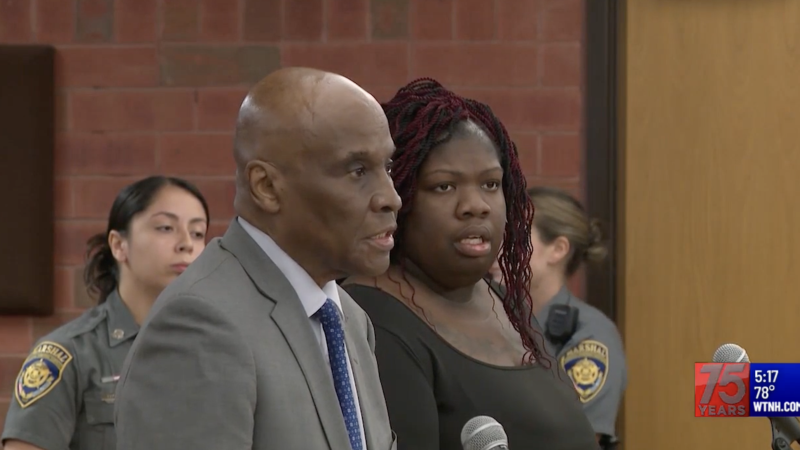
Tabitha Frank stands in court

Tabitha Frank, a Hartford, Connecticut, mom whose 2-year-old son died from falling out a window while she was on her Uber shift, has been charged with manslaughter. The boy was home with his four older sisters. Frank had called the toddler’s father to come watch the kids, but he arrived too late. The oldest child in the house was 12, an age at which many kids babysit their younger siblings.

Corneliuz Alfonso Shand Williams—called “PaPa” by his family because of his “old soul” —died two days after his July 22 fall, according to the Hartford Courant.

Frank was arrested the night of the fall and taken to jail. Her family bailed her out the next day. She appeared in court on Thursday, flanked by relatives and supporters. They filled two rows of seats.

“My baby died. My baby died, and they’re looking for someone to blame,” a grief-stricken Frank tells Reason. The authorities “want to hang me for something I’m already suffering from.”

Frank was originally charged with 10 counts of risk of injury to a minor. Each carries a maximum sentence of 10 years in prison. She was released on a $100,000 bond. When the child subsequently died and the manslaughter charges were added, the prosecutors asked for a bond increase, which could put Frank back in jail. This request will be heard on August 10.

“They’ve charged her with manslaughter in the first degree which requires ‘supreme indifference to human life,'” says Wesley Spears, an attorney for Frank. “That statute is designed for people like a drunk who goes down the highway on the wrong side of the road at a high rate of speed—that kind of thing.”

Spears took the case pro bono because he has known Frank’s father for many years.

Frank was working for Uber because of the flexibility it provided, says Spears. During surge pricing, she could make twice as much money, so she looked for those opportunities. The drivers call it purple time.

When her app went purple on July 22, she called her son’s dad to come watch the kids. He said he would be right over, according to Spears, but subsequently fell asleep. He arrived after the boy had fallen, just as the police were getting there.

Frank and her children live in public housing. (The four daughters have since been placed with relatives.) Police described their third-floor apartment as “deplorable” and said they could smell rotting food from the stairwell. But a Department of Children and Families (DCF) worker who investigated the home a month earlier had not found it in particularly bad shape, according to the Courant.

“The children were deemed safe and the home was observed to be adequate,” confirmed Ken Mysogland, a spokesperson for DCF.

But the Office of the Child Advocate, which oversees DCF, has called the death “preventable and tragic.”

Tragic? Indisputably. But preventable? Well, that requires hindsight. The impulse after an accident is always to blame someone.

“Usually it’s the mother,” says Diane Redleaf, a longtime civil rights lawyer and legal consultant to Let Grow, the nonprofit I founded. “We seem to have no tolerance for tragic accidents that don’t have a wrongdoer.”

The night before the boy fell, he had been eating ice cream outside with his sisters and playing in a kiddie pool they set up. Relatives told the Courant that Frank tried to make this summer as sweet as possible for her kids, especially after the all the confinement during COVID-19.

The funeral is planned for next week. Frank’s sister has set up a GoFundMe to cover expenses. It has raised over $600 so far.

On the phone, Frank says she could understand being prosecuted if she had been an abusive or unloving mother.

“But I kissed the top of his head, and the bottom of his feet,” she says. “You don’t have to punish me because I am already punishing myself.”

The post Connecticut Mom Jailed, Charged With Manslaughter After 2-Year-Old Dies From Window Fall appeared first on Reason.com.

from Latest https://ift.tt/JZ273wu
via IFTTT

A Possible Seventeenth Amendment Conflict Is Looming In Kentucky

The Seventeenth Amendment provides that each state shall have two senators, elected through popular elections. But what if a vacancy arises through death, resignation, or expulsion? The Seventeenth Amendment provides a two-part process. First, “When vacancies happen in the representation of any State in the Senate, the executive authority of such State shall issue writs of election to fill such vacancies.” And what happens before that election is held? Second, “the legislature of any State may empower the executive thereof to make temporary appointments until the people fill the vacancies by election as the legislature may direct.”

It is clear enough that a state legislature is not required to allow a Governor (that is, the “executive”) to make a temporary appointment. According to Pew Research, forty-six states have granted such authority. Once the state legislature vests the Governor with that power, can the state legislature constrain the Governor’s selection? Again, according to Pew, eleven of those states impose certain constraints on the selection. Specifically, the Governor must select a nominee from the previous senator’s political party. This approach makes sense from a pragmatic perspective. If the people elected a Republican/Democrat Senator for a six-year term, the people should be represented by a Republican/Democrat during a temporary vacancy.

Kentucky is one such state. Senate Bill 228 establishes an intricate framework for how a Senate vacancy can be filled:

The Governor shall fill vacancies in the office of United States Senator by appointment and the appointee shall serve until a successor has been elected and qualified under . . .   The appointee shall be selected from a list of three (3) names submitted by the state executive committee of the same political party as the Senator who held the vacant seat to be filled, shall have been continuously registered as a member of that political party since December 31 of the preceding year, and shall be named within twenty-one (21) days from the date of the list submission.

The Republican-controlled legislature passed the bill over the veto of Governor Andy Beshear, a Democrat. The veto message highlighted the federal constitutional objections to the bill:

I am vetoing Senate Bill 228 because it improperly and unconstitutionally restricts the Governor’s power to fill vacancies in the United States Senate. The purpose of the Seventeenth Amendment to the United States Constitution was to remove the power to select United States Senators from political party bosses. Senate Bill 228 violates the very purpose of this Amendment by returning that power to political parties in the case of a vacancy. . . . The Seventeenth Amendment does not authorize legislatures to direct how the Governor makes an appointment to fill vacancies, and the legislature may not impose an additional qualification on who the Governor may appoint beyond the qualifications set for a United States Senator set forth in the Constitution.

Beshear also identified a concern under the state constitution:

The bill also is unconstitutional under the Kentucky Constitution. Section 152 of the state constitution provides that the Governor “shall” fill by appointment vacancies in offices for the State at large. No conditions, qualifications, or limits are placed on that appointment power.

When the last was enacted in 2021, Professor Vik Amar highlighted constitutional objections, based on a law review article he published in 2008. (Sandy Levinson wrote on the issue as well.)

This issue, however, may not remain academic. Mitch McConnell, the longtime Senator from Kentucky, has had health issues. The Republican leader’s term will conclude in January 2027. And the Democratic Governor’s term will conclude in December 2023. If a vacancy arises over the next five months, or longer if Beshear is re-elected, Senate Bill 228 would be put to the test.

Already, a prominent Democrat attorney in Kentucky said that Beshear may not follow the law, consistent with his veto message. There are two possible paths. First, Beshear could simply ignore the list, and pick whomever he wants. Second, Beshear could go on offense and seek some sort of declaration that the statute is unconstitutional.

“Beshear either says, ‘hey, Republican Party, thank you for your list, but I’m appointing whoever I want’ and then that immediately gets challenged in court, or you could see Beshear taking the route of filing a lawsuit,” Abate said. “I mean, he’s got the guts to defy it,” Abate added.

This decision can have national implications, as McConnell is the leader of the Republican caucus. (The Washington Times offered some commentary.)

Here, I will not opine on the Seventeenth Amendment issue. (I will do so later). Rather, I want to opine on the procedural aspects of the process.

First, Beshear can simply ignore the list, and appoint whomever he wants. We could expect prompt litigation from members of the state executive committee. But what remedy would the committee seek? Beshear would have already fulfilled his authority under the Seventeenth Amendment and selected a temporary Senator. Beshear could make that appointment quietly, as soon as a vacancy arises. Before any litigation is filed, the Senator can appear at the Capitol and present his credentials. At that point, I am not certain that a judge, whether federal or state, could undo the appointment. Whether the Senator is recognized would seem to be a political question under Baker v. Carr. The United States Senate could decline to recognize the Senator, perhaps due to the Governor’s failure to comply with state law. But the Senators could determine, like Governor Beshear, that the statute itself is unconstitutional. As a matter of real politic, I suspect every Democratic Senator would gladly welcome a Democratic replacement for McConnell.

For the second option, the Governor could sue the executive committee, and argue that the constraint violates the federal and state constitutions. This suit can be brought in federal court or state court. In federal court, at least, such a suit would seem to be not-yet-ripe prior to a vacancy arising. The Governor would probably have to wait until the executive committee provides a list of names. The rules may be different in state court. If the Governor sues in state court, and there is only a claim under the state constitution, I don’t think the case could be removed to federal court under the Mottley rule.

There is a third option. Members of the executive committee can go on offense, and seek a declaration that the Governor is bound by the state law before any vacancy arises. Such a suit would not-yet-be-ripe in federal court, but it could work in state court. Again, I don’t profess to be an expert on Kentucky procedure. The upshot of this latter approach would be to avoid a stealth selection, which cannot be undone. The downside, of course, is the morbidity of the topic. Senator McConnell is still serving, and it is unsettling to even discuss a potential future vacancy. I know all too well that people were unhappy with a post I wrote about Chief Justice Roberts being unable to preside at President Trump’s impeachment. But it is far better to talk about a succession crisis before it happens, not during the process.

I hope this issue remains an academic curiosity.

The post A Possible Seventeenth Amendment Conflict Is Looming In Kentucky appeared first on Reason.com.

from Latest https://ift.tt/bZSak25
via IFTTT

Short Circuit: A Roundup of Recent Federal Court Decisions

Please enjoy the latest edition of Short Circuit, a weekly feature written by a bunch of people at the Institute for Justice.

For over 10 years, Louisiana prison officials have held more than a quarter of inmates past their release dates—an extra 525 days in the case of IJ client Percy Taylor. Next month, the Fifth Circuit will consider whether the head of the state’s prison system can be held accountable. Click here to read Taylor’s brief.

  • Group of folks is smoking pot outside a Washington, D.C. apartment building. Officer stops and sees one guy back away and raise his hands. Cop: Says show me your waistband. Defendant: Says “No. I’m cool” and shows waistband. Cop: Noticing some bulges, says do it again. Defendant: Runs away, throws gun in bushes, is charged with felon in possession. District court: The cop’s first request wasn’t a seizure, and for the second there was reasonable suspicion. D.C. Circuit: First request was a seizure, and evidence must be suppressed. First concurrence: Cops freak people out; we should construe seizures broadly. Second concurrence: Yeah, but these kinds of seizures are often OK in a “high crime area.”
  • Relying on advice from a state prosecutor, Rochester, N.Y. woman waits until after her (now-former) boyfriend, a suspected drug dealer, is acquitted on all charges to seek the return of $8k cash seized from her home. Alas! Though that may have been sound advice under state law, the money had been turned over to the feds, and under federal law she missed the deadline to file a claim. Second Circuit: Let her file a claim. Also, on the topic of civil forfeiture, we note that the practice of allowing gov’t officials to profit by enforcing the law was a “spark that lit the French Revolution.” Vacated and remanded. (This is an IJ case.)
  • Allegation: For seven years, ICE officer repeatedly rapes undocumented Honduran immigrant under threat of deportation. When he eventually leaves his job with ICE, he tells her that “[i]f you go and ruin my life, I’ll kill you.” Four years later, after revealing the abuse to a different ICE officer who advises her to retain a lawyer, she sues. District court: But the statute of limitations under the Federal Tort Claims Act is only two years. Second Circuit: Take another look; there’s an argument for equitable tolling here.
  • The family that counterfeits money together stays together . . . or something. Two brothers are convicted of doing a lot of RICOing, and the gov’t seeks to forfeit a few of their properties, including one that is partially owned by (a) one of the brothers and his wife (as tenants by the entirety) and (b) the other brother and the brothers’ sister (as tenants in common). District court: That property is forfeited except for the wife’s interest, and she gets to live in the home for the rest of her life without the gov’t’s interfering. Fourth Circuit: Nope, nope. The gov’t is free to sell the property and split the proceeds proportionally between itself and the wife.
  • Fifth Circuit (1998): “Logic and common sense dictate that if there is no duty [of an insurer] to defend, then there must be no duty to indemnify.” Fifth Circuit (2023): Actually, this insurer might have to indemnify, even though we hold it had no duty to defend. Insurance bar: [Endless screaming.]
  • Following a summer of hurricanes and tropical storms in 2020, Texas issues an order temporarily enlarging the state’s beaches and, it is alleged, giving the public access to beachfront homeowners’ curtilage. A taking or a Fourth or Fourteenth Amendment violation? District court: Hrm, perhaps, but your request for a preliminary injunction is denied. Owners: We appeal! Gov’t: We know our order says it’s effective for two years, but we’ve decided to rescind it well before that—one week before our Fifth Circuit brief is due, in fact. We can haz mootness plz? Fifth Circuit (unpublished, over a dissent): Gov’t officials are famously more trustworthy, honorable, and upstanding than ordinary citizens (see p. 7), so we have every confidence in the Texas attorney general when he says that the state’s eleventh-hour volte-face was totally above board and had absolutely nothing to do with manipulating the federal courts’ jurisdiction. Of course you can haz mootness. Appeal dismissed. (Quaere: Would the better decretal course have been something akin to Munsingwear vacatur, which at least would have spared the homeowners the indignity of having to pay the gov’t’s appellate costs?)
  • Supporters of a challenger to then-Sen. Thad Cochran sneak into Cochran’s ailing wife’s nursing home and snap a picture for an attack ad. A local lawyer implicated in the scheme is arrested, generating significant news coverage and professional fallout. He commits suicide shortly thereafter. His family sues, alleging that the prosecution was politically motivated and in retaliation for the exercise of his First Amendment rights. Fifth Circuit: ‘Twas not.
  • Federal judge: “I’m tired of this case. I’m tired of this defendant. I’m tired of getting the runaround. . . .  This guy looks like a criminal to me. This is what criminals do. This isn’t what innocent people[] who want a fair trial do.” Sixth Circuit: New trial.
  • Sixth Circuit: It is clearly established that police who make a warrantless arrest need to take steps to ensure the arrestee gets a probable-cause hearing within 48 hours. So no qualified immunity for these Michigan state troopers and detectives who arrested a grandma (for witness intimidation), who then sat in jail for 96 hours and was not brought before a judge.
  • In 1881, Robert Todd Lincoln, secretary of war, recommended that a stretch of the Mississippi River be deepened and dredged to allow for a navigable channel for commercial vessels. Congress acquiesced. After the National Environmental Policy Act was passed in 1976, the Army Corps of Engineers examined the environmental impact of the project, leading to reams of reports and much litigation. Seventh Circuit (in a decision issued on what would’ve been Robert Todd Lincoln’s 180th birthday): The guvvies win.
  • The Bail Project is a nonprofit that advocates the abolition of cash bail and, as part of its mission, pays cash bail for thousands of people nationwide (with the aim of showing that conditioning release on payment of money is a senseless exercise). Indiana passes a law saying that “charitable bail organizations” cannot deposit cash bail for people charged with crimes of violence. Bail Project: But we pay people’s cash bail to communicate the message that cash bail is actually unnecessary, so the new law violates our First Amendment rights. Seventh Circuit: Paying folks’ bail is not expressive, so the law is probably fine. Dissent: Seems pretty expressive to me, not least because the Indiana legislature seems to have grokked exactly what the group was trying to convey (and responded by passing a statute to curb its efforts).
  • Victim of underage sex trafficking sues the software company Salesforce.com, alleging that its business assistance to the now-defunct web-classifieds site Backpage.com amounted to knowing participation in a sex-trafficking venture. Does she have a claim? Seventh Circuit: She does. Salesforce knew or should have known that Backpage facilitated sex trafficking, even if it didn’t know about this particular victim. Dissent: The law requires knowledge of a specific victim. (NB: The extent to which Backpage itself knowingly facilitated trafficking is a matter of some debate.)
  • Protester tells a St. Louis officer holding pepper spray that “[i]f you put that s*** in my face, I’ll f*** you up.” He then says to “[p]ut that s*** in my face” and calls the officer a “p****a** white boy.” He gets pepper sprayed. Unlawful retaliation for the protester’s protected speech? Eighth Circuit: A jury might think so. No qualified immunity.
  • Guy transferring busses in Omaha, Neb. has a blanket wrapped around him and gives some inconsistent answers to questions. Officers pull the blanket off without consent and then see a bulge in the man’s clothing. They find contraband! Eighth Circuit: No reasonable suspicion for a Terry stop at the moment they pulled the blanket off as they hadn’t seen a bulge at that point, so evidence suppressed. Dissent: It’s not like they had to see a bulge.
  • The last known doctor providing abortions in Guam retired in 2018, leaving women to use telemedicine to obtain chemical abortifacients. But Guam requires women to meet in person with a physician before having an abortion. Ninth Circuit: Zoom is a poor substitute for in-person meetings. Guam’s laws pass the rational basis test.
  • After the Civil War, the Thirteenth Amendment outlawed slavery and gave Congress enforcement power that has since been interpreted broadly. In 2009, Congress invoked that enforcement power to pass a statute making assault a federal crime if based on race, religion, or ancestry. California man with a history of racially motivated assaults is convicted under this statute. He challenges the conviction, saying Congress lacked power to enact it. Ninth Circuit: We join all our sister circuits to consider the issue and uphold the law. Dissent: Private street violence really has nothing to do with slavery or civil rights, so Congress went too far.
  • If you file for Chapter 13 bankruptcy and later convert to Chapter 7 liquidation, but your home goes up in value in the meantime, does that additional equity belong to you or to the bankruptcy estate? Courts across the country are “heavily divided,” but the Ninth Circuit (over a dissent) holds that it belongs to the bankruptcy estate.
  • An immigration judge’s ruling that uniformed Costa Rican police were not acting under color of law when they (allegedly) beat up, raped, and jailed a man who declined to deal drugs for them “defies logic and the law,” says the Tenth Circuit. Concurrence: Though we should go en banc and hold the man didn’t file this petition on time.
  • If you’re a criminal defense lawyer in the Eleventh Circuit, watch out! At least in Alabama, where qualified immunity will let officers arrest you if you refuse to let them look through your bag for your clients’ possessions, even if they lack actual probable cause under a state statute against obstructing governmental operations. (Though at least you can still sue the prosecutors if they make defamatory statements about you to the press afterward.)

Do you want to litigate the kind of cases that made you go to law school in the first place? Good news, IJ is hiring! We are looking for attorneys for the Austin, Texas office and both attorneys and litigation fellows for IJ’s headquarters in Arlington, Virginia. We are on the lookout for energetic and entrepreneurial attorneys to work on cutting-edge constitutional cases, stop government abuses, and champion individual rights. Attorneys at IJ bring creative, intellectually challenging cases in courts around the country. Our attorneys are active outside the courtroom as well, doing media writing and appearances, public speaking, grassroots activism, and direct advocacy to policymakers and legislators. Visit the Careers section of our website to learn more and apply.

The post Short Circuit: A Roundup of Recent Federal Court Decisions appeared first on Reason.com.

from Latest https://ift.tt/EifcOMo
via IFTTT

Alabama Woman Jailed for 2 Months for Using CBD Oil While Pregnant


An outline of a pregnant woman stands in front of a multi colored rectangle with marijuana leaves outlined that is framed by black edges

In one Alabama county, women who admit to using marijuana during pregnancy often find themselves charged with a felony. Etowah County—in northeastern Alabama—charges more women with “chemical endangerment” than any other county in the state. Until recently, these women were often only granted release from jail on the condition that they enter rehab, despite not being addicted to drugs.

In 2006, Alabama enacted a “chemical endangerment” law designed to punish parents who allow their children near meth labs. However, in the years since the law’s passage, Etowah County law enforcement officials have used it to throw women in jail for months over minor drug offenses.

Women who aren’t even addicted to drugs have often found themselves trapped in jail, unable to be released unless they go to rehab yet denied entry by drug treatment facilities because of their lack of addiction.

Amanda Bradley was arrested in 2021 after she tested positive for THC after giving birth. Bradley says she had been using CBD oil to cope with chronic pain and had no idea the oil could cause a positive drug test.

“The CBD oil they sold at the store, I didn’t know it would make me fail for marijuana,” Bradley told AL.com. “It seemed like a natural, safe option. That’s why I did it. I didn’t know you could get in trouble for stuff you bought from the store.” 

Bradley couldn’t be released unless she entered a rehab facility. But Bradley’s CBD oil use didn’t count as drug addiction, so addiction treatment facilities wouldn’t take her. 

“I went back and ended up redoing the assessment and telling them I shoot up and all kinds of stuff to get to rehab and it worked,” she said. Ultimately, she spent two months in jail and six months at a drug treatment center.

Another woman, Chelsea Stewart, was arrested on a misdemeanor marijuana charge in 2019. She told AL.com that she stopped smoking after this arrest. However, she still tested positive during a random drug test several weeks later. By that point, Stewart had found out she was pregnant.

Stewart was taken to jail, and after a month, she was released to a halfway house filled with women with histories of heavy addictions to opioids and meth. She told AL.com that she had never used a substance stronger than marijuana, yet she was forced to pay for an unnecessary stay in the halfway house.

“I spent more than $3,000 on that,” she said. “I could have been saving for my daughter. I could have been saving for anything, and I wasn’t.”

In total, 257 pregnant women and new mothers were arrested for chemical endangerment between 2015 and January 2023 in Etowah County. According to Al.com, three-quarters of the people arrested for chemical endangerment (of which 93 percent are women) were too poor to hire an attorney. 

However, the situation does seem to be improving slightly. Following reporting last year, Etowah County no longer requires pregnant women to attend—and pay for—rehab in order to get out of jail.

Even without mandated rehab, Etowah County law enforcement are still using the state’s chemical endangerment law to unnecessarily punish women for minor drug offenses.

“They are the most zealous prosecutors and sheriff’s department we have encountered anywhere across the country,” one attorney told Al.com, “and the data backs that up.”

The post Alabama Woman Jailed for 2 Months for Using CBD Oil While Pregnant appeared first on Reason.com.

from Latest https://ift.tt/Rjr29D6
via IFTTT

How Wall Street Is Killing The American Dream

How Wall Street Is Killing The American Dream

Authored by James Gorrie via The Epoch Times,

Single-family home ownership is under assault by ultra-wealthy investment firms…

The biggest single aspect of the American Dream is owning a home. Not only is a single-family residence (SFR) the single biggest investment most Americans will make in their lifetimes, but home ownership also is a way for people to move within the American economy. Lower-priced starter homes help people get on the real estate ladder, and move up into larger homes, if they desire, as their incomes, wealth, and savings increase.

In short, homeownership has been the key to people entering the middle class

But that’s proving more difficult these days.

There are the usual suspects for skyrocketing home prices, such as inflation and rising interest rates. Of course, there’s often buyers that are competing for the same house. But for one in four buyers of single-family homes (SFRs) in 2022, none of those factors matter.

Wall Street Wants Your Home

That’s because one in four buyers of SFRs are Wall Street investment firms like BlackRock. Unlike you and me, Wall Street investment firms have access to massive amounts of cash, pay lower prices for the houses because they buy large numbers of SFRs at one time, and benefit from much lower interest rates than the typical American looking to provide a family home.

They also have the power to drive up home prices.

This wasn’t always the case. It wasn’t until around 2010 or so, when housing prices werecrashing, that financial institutions started buying houses in mass quantities at bulk pricing. Blackstone (and its subsidiary, Invitation Homes) isn’t the only institutional buyer and owner of thousands of SFRs in America, but it is the largest. Last year, in total, about 25 percent of SFRs were bought by Wall Street investment firms and other institutional buyers.

From the early 2010s onward, other institutional investors such as Tricon Residential, Progress Residential, and American Homes 4 Rent have acquired thousands of homes for each of their investment portfolios. Some of them are specifically intended as rental-only communities. This takes large numbers of house out of the market, creating more scarcity and leading to higher prices.

That’s potentially tens of thousands of homes under corporate ownership, with much of them in the southern states that are seeing heavy inflows of new buyers from the northern states and California.

A Disturbing Trend

A simple question needs to be asked: “Is the emerging trend of corporate ownership of SFRs good for America?”

A few key statistics can help provide context for that question.

For instance, as of 2022, 65.8 percent of Americans are homeowners. That’s a high percentage on a historical basis, and corporate and institutional apologists will argue that Wall Street ownership of houses is small compared to that.

But it’s more than just the percentage of institutional ownership that matters. It’s where the corporate ownership is taking place and its pace of growth.

That’s certainly the case in the Sunbelt, where prices and rents for detached homes are the fastest rising in the United States. Homebuyers are competing, however, with Wall Street buyers, according to the National Association of Realtors.

Rise of the Corporate Landlord

Taking ownership of tranches of SFRs at a time gives Wall Street behemoths like Balckstone monopolistic power over rents and prices. The result is rising rents, which has already become a major problem for renters in Blackstone-owned apartments in California and elsewhere, where rents have doubled in less than two years.

Why would they not do the same with SFRs?

Furthermore, according to analysts, even though today corporate ownership of SFRs in America is around 5 percent, that number is steadily rising. If the trend continues, as a a study by MetLife Investment Management indicates, institutional owners will a large share, upward of 40 percent of the rental homes by 2030.

The reality is that in some market sectors, they already do.

For example, some institutions are buying homes directly from the builder in volume. That means individual buyers don’t get the opportunity to buy. Worse, corporate owner, by owning entire subdivisions of homes, can set the rental price. Nationally, more than 30 percent of SFR inventory are already renter-occupied.

What’s more, the trend of institutional home buying is likely to accelerate this year and beyond.

No Legal Protection for Home Individual Buyers—Yet

What should be done about this disturbing trend to strip homeownership away from the average American? It’s hardly fair. Wall Street groups have profited from higher than average rent hikes in their target markets while leveraging government-backed financing and tax credits.

Several bills have been written in states such as Texas, California, and others to address this growing problem, but so far, none of them have become law.

This isn’t a screed against capitalism any more than protecting children from working in the mines or abolishing railroad monopolies were. There’s an implicit, if not explicit, social contract that obligates us—and out representatives—to protect the very fabric of our society, the American way of life, from the excesses of powerful and unaccountable corporations, of which Blackstone and other corporate landlords fit that profile to a “T.”

The reality is that every healthy idea or relationship can be twisted or expanded until it’s no longer healthy for a large amount of individuals or society. Shutting out the average Joe and Jill from homeownership is plainly unhealthy for society and un-American.

It’s time to put a stop to this dismal trend of turning average Americans into renter-serfs to Wall Street financial behemoths. It’s time to make homeownership in America great again.

Tyler Durden
Fri, 08/04/2023 – 15:20

via ZeroHedge News https://ift.tt/ZMEmtvw Tyler Durden

Meta Hit With Trifecta Of Fails: Metaverse, Smart Glasses, Threads

Meta Hit With Trifecta Of Fails: Metaverse, Smart Glasses, Threads

Under Mark Zuckerberg, Meta, previously known as Facebook, has faced a trifecta of recent failed product launches. The latest is the ‘Twitter-killer’ app “Threads,” which has already lost 80% of its daily active users. Meta’s ambitious venture into the world of creepy smart glasses has also ended in a flop, as well as its massive bet on the “metaverse.”

Let’s begin with Threads. Similarweb, a digital intelligence platform, shared new data with Gizmodo, showing active Threads users were around 49 million two days after the July 5 launch. As of Tuesday, that number stands at only 9.6 million. 

Similarweb data also showed user time spent on what some have called a ‘Twitter clone‘ app peaked on July 6 at about 14 minutes and has since collapsed to just 2.3 minutes. 

We have observed Threads’ epic boom and bust (here & here). Even Zuckerberg admitted last week in a leaked audio that Threads was failing. 

Let’s move to the next failed Meta product, which is creepy “Ray-Ban Stories” sunglasses with the ability to record video. 

The Wall Street Journal has learned that the smart glasses launched in September 2021 only have 27,000 monthly active users.  

“Among the top drivers of poor user experience were issues with connectivity, problems with some of the hardware features including battery life, inability for users to import media from the devices, issues with the audio on the product and problems with voice commands for the smart glasses,” WSJ wrote, citing a company document from February. 

The document continued:

“We’ll also need to better understand why users stop using their glasses, how to ensure we are encouraging new feature adoption, and ultimately how to keep our users engaged and retained.” 

Moving down the list of recent failures by Zuckerberg is the metaverse. Recall we have said, “The Metaverse Was A Pandemic Pipe Dream”. Meta’s latest earnings report showed that the Reality Labs division working on its virtual reality tech has been an endless money pit.  

Meanwhile, 2023 has been Zuckerberg’s “Year of Efficiency” as it axed thousands of workers and froze hiring. Business Insider reported this week that Meta hired consulting firm Bain & Co ahead of this year’s restructuring. 

Consumers aren’t ready for creepy smart glasses, the metaverse, and Threads.

Tyler Durden
Fri, 08/04/2023 – 15:00

via ZeroHedge News https://ift.tt/t6HSYF1 Tyler Durden

Trump’s Prosecution Could Be Stymied by the Blurry Line Between Deceit and Self-Delusion


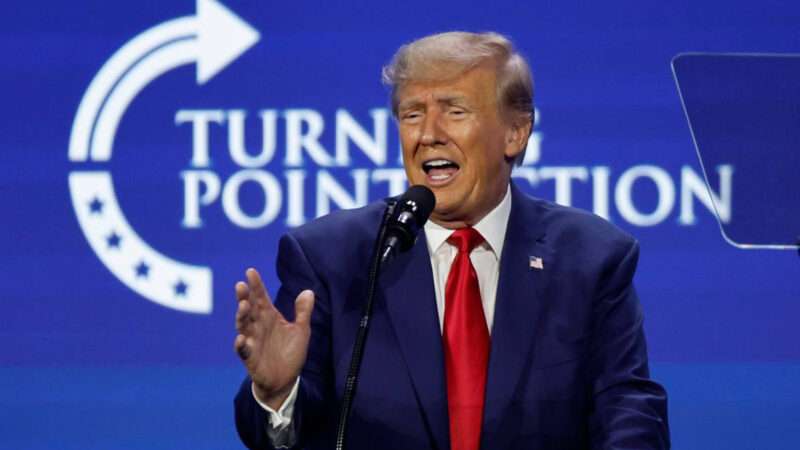
Donald Trump speaks at a Turning Point USA conference

In a CNN interview on Wednesday, former Attorney General Bill Barr weighed in on the legally crucial question of what Donald Trump was thinking when he engaged in conduct that Special Counsel Jack Smith describes as part of a criminal plot to reverse the outcome of the 2020 presidential election. “At first I wasn’t sure,” Barr said, “but I have come to believe he knew well he had lost the election.”

Michael Wolff, a journalist who wrote a trilogy of books about Trump, is much less sure about that. He argues that the main source of evidence regarding Trump’s state of mind—things he has publicly and privately said about the election—is such a confusing jumble that it may be impossible to prove criminal intent. “Does Mr. Trump mean what he says?” Wolff asks in a New York Times essay. “And what exactly does he mean when he says what he says?”

That puzzle is at the center of the case outlined in the federal indictment unsealed this week, which charges Trump with conspiring to defraud the United States, conspiring to obstruct an official proceeding, and conspiring to deprive Americans of their voting rights. Those charges hinge on the assumption that Trump’s claims about the massive fraud that supposedly had deprived him of his rightful victory were “knowingly false.” But what Trump knew is a persistent mystery, perhaps even to him.

Consider the notorious January 2, 2021, telephone conversation in which he urged Georgia Secretary of State Brad Raffensperger to “find” the votes necessary to overturn Joe Biden’s victory in that state. Like many of Trump’s conversations, Wolff notes, that exchange featured an “unmediated fire hose of verbiage, an unstoppable sequence of passing digressions, gambits and whims, more attuned to the rhythms of his voice than to any obligation to logic or, often, to any actual point or meaning at all.” In fact, it is generous even to characterize that seemingly incriminating interaction as a conversation, because Trump did not seem to comprehend or digest what Raffensperger was saying as he patiently debunked one unsubstantiated fraud allegation after another.

Wolff notes that Tony Schwartz, the ghostwriter for Trump’s 1987 book The Art of the Deal, thinks his verbal habits are best understood as a salesman’s patter. “In other words,” Wolff says, “if you took him at his word, you were the fool, and yet, perhaps even more to the point, he succeeds because he comes to believe himself, making him the ultimate fool (as well as the ultimate salesman).”

Trump’s “yearslong denial of the 2020 election may be an elaborate fraud, a grifter’s denial of the obvious truth, as prosecutors maintain, but if so, he really hasn’t broken character the entire time,” Wolff writes. “I’ve had my share of exposure to his fantastic math over the years—so did almost everyone around him at Mar-a-Lago after the election—and I don’t know anyone who didn’t walk away from those conversations at least a little shaken by his absolute certainty that the election really was stolen from him.”

Evidence to the contrary, including the evidence cited in the indictment, frequently proves to be ambiguous upon closer examination. In a 2022 interview with historians, for instance, Trump seemed to concede that Joe Biden had won the 2020 election. Bragging about pressuring South Korean President Moon Jae-in to pay more for his country’s defense, Trump said Moon must have been happy “when I didn’t win the election.” The Guardian highlighted that apparent admission under the headline “‘I didn’t win the election’: Trump admits defeat in session with historians.”

But did he? In the same interview, Trump also said the election was “rigged and lost.” On the day of the Capitol riot, he claimed, he gave a “very modest” and “very peaceful” speech to more than a “million people” who were inspired by “tremendous love” for him but outraged by an election that was “rigged,” “robbed,” and “stolen.” Those remarks are typical of Trump’s ego-flattering, reality-denying rhetoric, which blurs the line between deceit and self-delusion.

Federal prosecutors will try to clarify that line, and Barr thinks Smith has additional evidence that will help them do that. “We’re only seeing the tip of the iceberg on this,” Barr told CNN. “I think there is a lot more to come, and I think they have a lot more evidence as to President Trump’s state of mind.”

Maybe. But prosecutors have to prove their case beyond a reasonable doubt—a daunting task when you are dealing with mental processes that may be as confused, irrational, and inconsistent as the words that reflect them.

“The prosecutors’ story of [Trump’s] grand scheming will most likely require them to present a figure of the former president—calculated, methodical, knowing and cunning—that none of his supporters or anyone who has ever met him or reasonable jurors and perhaps even the world at large would recognize,” Wolff writes. “I can’t imagine what will be produced by this dynamic of strait-laced prosecutors versus a preposterous Mr. Trump, his malfeasance always on the edge of farce. But my gut tells me the anti-Trump world could be in for another confounding disappointment.”

The best chance to hold Trump accountable for his egregious post-election conduct—including his persistent promotion of the stolen-election fantasy, his attempts at persuading state and federal officials to betray their legal duties by joining his cause, his reckless pre-riot speech, and his inaction after the attack on the Capitol began—was the impeachment that the Senate rejected. Sen. Mitch McConnell (R–Ky.), then the majority leader, said convicting Trump was out of the question because it was improper to try him after he had left office.

McConnell nevertheless condemned Trump’s “disgraceful dereliction of duty,” saying he was “practically and morally responsible for provoking” the riot by pushing “increasingly wild myths about a reverse landslide election that was being stolen in some secret coup by our now-president.” And he held out the hope that Trump still could be “held accountable” by the “criminal justice system.” In light of the challenge that Wolff highlights, that hope seems pretty faint.

The post Trump's Prosecution Could Be Stymied by the Blurry Line Between Deceit and Self-Delusion appeared first on Reason.com.

from Latest https://ift.tt/t7J9hTX
via IFTTT

Ramaswamy Wins Lawsuit Against World Economic Forum After Being Labeled A ‘Young Global Leader’

Ramaswamy Wins Lawsuit Against World Economic Forum After Being Labeled A ‘Young Global Leader’

Authored by Steve Watson via Summit News,

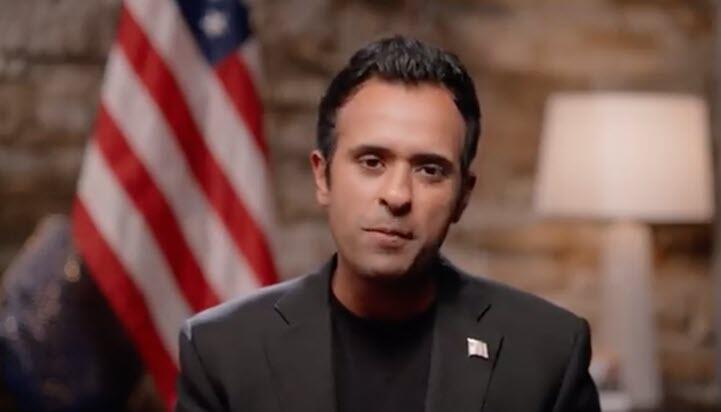
Republican Vivek Ramaswamy has recorded a victory against the World Economic Forum in court, after the globalist organisation named him one of their ‘Young Global Leaders’ against his will.

Ramaswamy, who is running a presidential campaign, explained that he “explicitly rejected their ridiculous award,” two years ago and that Klaus Schwabb’s outfit “repeatedly failed to remove my name despite escalating demands. So I sued them. And we just succeeded.”

He claimed that “I’ve been the leading opponent in America of the World Economic Forum’s agenda.”

He further noted that the WEF “met all of my demands in the lawsuit: public apology & disavowal and a commitment to never name someone again without their explicit permission.”

He also posted an image of a letter of apology sent by the WEF:

Ramaswamy promised to gift the financial settlement to the America First Policy Institute “because it stands for *American* interests against the WEF agenda.”

“The Great Uprising will defeat the Great Reset – just like we did in 1776,” Ramaswamy vowed.

Despite the candidate’s disavowal of the globalist organisation, some still don’t trust him:

At the very least this shows that American politicians do not want to be associated with the likes of the WEF and that it is actually damaging to their chances of success.

*  *  *

Brand new merch now available! Get it at https://www.pjwshop.com/

In the age of mass Silicon Valley censorship It is crucial that we stay in touch. We need you to sign up for our free newsletter here. Support our sponsor – Turbo Force – a supercharged boost of clean energy without the comedown. \

Also, we urgently need your financial support here.

Tyler Durden
Fri, 08/04/2023 – 14:40

via ZeroHedge News https://ift.tt/qu6GHno Tyler Durden

Coinbase Seeks To Dismiss SEC Lawsuit, Argues It Doesn’t Trade Securities

Coinbase Seeks To Dismiss SEC Lawsuit, Argues It Doesn’t Trade Securities

Coinbase has asked a judge to end the Securities and Exchange Commission’s frivolous lawsuit accusing the world’s largest publicly traded cryptocurrency exchange of violating federal securities laws.

In a filing in federal court in Manhattan, Coinbase said the SEC had “violated due process, abused its discretion, and abandoned its own earlier interpretations of the securities laws” in asserting certain regulatory authority over the crypto exchange, and that it had no authority to pursue its lawsuit because the digital assets and services it objected to did not qualify as securities, accusing the agency of overreach.

Coinbase’s filing disputed that transactions of the 12 tokens at issue in the SEC case met the definition of “investment contracts” under the Howey test and the exchange was operating as an unregistered broker, and argued the commission’s challenges to its staking program “fail as a matter of law.” The crypto firm has requested the court dismiss the case, arguing the SEC’s enforcement action was “punitive” and represented an overreach in its authority granted by Congress.

Coinbase also leaned on a recent Ripple ruling, in which a Manhattan judge ruled that the SEC regulator overstepped its authority by trying to regulate the sector; Coinbase said the SEC’s lawsuit hinges on the type of transactions that the judge deemed outside of the regulator’s jurisdiction.

“Our core argument is simple – we do not offer ‘investment contracts’ as that term has been construed by decades of Supreme Court and other binding precedent,” Coinbase Chief Legal Officer Paul Grewal said in a post on X, formerly Twitter.

Coinbase was sued by the SEC in June – whose boss Gary Gensler has become an attack dog for rabid Democrats-cum-Indians such as Liz Warren who is openly waging war on crypto as if that will somehow get Biden re-elected, and accused of operating illegally as a national securities exchange, broker and clearing agency without registering with the regulator, a regulator which never had issues with the Coinbase IPO filing and had never actually defined what crypto is and isn’t a security, but continues to make up rules on the fly as is politically convenient for the former Goldman banker’s political bosses.

Growing friction between the crypto sector and Democrats and their markets regulator has escalated amid a series of lawsuits the SEC has filed against the world’s largest crypto platforms.

The SEC has said the platforms needed to register and operate in a manner akin those dealing in stocks or bonds, while the crypto sector says that new legislation is needed. Firms are closely watching the litigation between the SEC and Coinbase, with some onlookers deeming it an “existential” clash.

Tyler Durden
Fri, 08/04/2023 – 14:20

via ZeroHedge News https://ift.tt/4Xh9rSc Tyler Durden