From Flores v. Bennett, decided today by Ninth Circuit Judges Kim McLane Wardlaw and Milan Smith, and District Judge Douglas L. Rayes (D. Ariz.), apropos a case I blogged about last year:
Defendants … appeal a district court order enjoining [Clovis Community College’s] “Flyer Policy” that prohibited “inappropriate or offense [sic] language or themes” in postings on interior bulletin boards. [The policy was challenged by three] then-Clovis students …, as well as the Young Americans for Freedom (“YAF”) student chapter at Clovis ….
The district court did not abuse its discretion when it concluded that Plaintiffs were likely to succeed on the merits of their claim that the “inappropriate or offense language or themes” provision was facially overbroad. To prevail on an overbreadth challenge, a party must demonstrate that the policy “‘prohibits a substantial amount of protected speech’ relative to its ‘plainly legitimate sweep,'” such that “society’s interest in free expression outweighs its interest in the statute’s lawful application.” United States v. Hansen (2023).
As the district court concluded, “a prohibition on ‘inappropriate or offense language or themes’ does not have a core of readily identifiable, constitutionally proscribable speech.” The Supreme Court has consistently held that “[s]peech may not be banned on the ground that it expresses ideas that offend,” Matal v. Tam, 582 U.S. 218, 223 (2017), including in the university context. See, e.g., Papish v. Bd. of Curators of Univ. of Missouri (1973) (holding that a graduate student could not be expelled for publishing an obscene cartoon).
The district court did not err in determining that there was likely a substantial amount of protected speech that would be potentially chilled by the Flyer Policy. What is “inappropriate” or “offensive” is a subjective determination, which would vary based on a college administrator’s personal beliefs. Political speech, for example, has a high propensity to be viewed as “offensive,” and the First Amendment “affords the broadest protection” to political expression.
On appeal, Defendants contend that, because the interior bulletin boards are a nonpublic forum and the school-sponsored speech doctrine applies, they have absolute discretion to control the content of student flyers…. [But] we require regulations on speech in nonpublic fora to be “reasonable and not an effort to suppress expression merely because public officials oppose the speaker’s view.” The district court did not abuse its discretion by assuming without deciding that the bulletin boards were located on a nonpublic forum, and then concluding that the challenged provision was likely unconstitutionally overbroad.
The school-sponsored speech doctrine likewise not does not affect our analysis…. As the district court recognized, some form of the school-sponsored speech doctrine could apply to postings that may be “reasonably perceive[d] to bear the imprimatur of the school” by members of the public. However, assuming without deciding that the school-sponsored speech doctrine applies, the Flyer Policy was nevertheless required to be “reasonably related to legitimate pedagogical concerns.” While Clovis may have been able to permissibly ban lewd and obscene flyers that included nudity or profanity, see, e.g., Bethel School Dist. No. 403 v. Fraser (1986), the district court did not abuse its discretion in determining that a ban on “inappropriate and offense language or themes” is likely too broad to be “reasonably related to legitimate pedagogical concerns.” [Presumably the court’s reference to Bethel was limited to speech that might be seen as bearing the imprimatur of the school, since Papish, cited above, doesn’t allow more general bans on college student speech that is seen as lewd. -EV] …
Nor did the district court abuse its discretion in concluding that the Flyer Policy was likely unconstitutionally vague in violation of the Fourteenth Amendment. “It is a basic principle of due process that an enactment is void for vagueness if its prohibitions are not clearly defined.” The “inappropriate and offense” provision does not “give the person of ordinary intelligence a reasonable opportunity to know what is prohibited, so that he may act accordingly.” See also Cohen v. California (“No fair reading of the phrase ‘offensive conduct’ can be said sufficiently to inform the ordinary person that . . . permissible speech or conduct would nevertheless . . . not be tolerated in certain places.”). Moreover, the provision invites “arbitrary and discriminatory enforcement” by unilaterally allowing Clovis staff to determine what flyers constitute “inappropriate or offense” speech. Indeed, emails between the Clovis administrators demonstrate that they did not understand what speech the Policy proscribed. And “when First Amendment freedoms are at stake,” Clovis was required to enact a policy with “an even greater degree of specificity and clarity.” …
Because we affirm the district court’s overbreadth and vagueness determinations, we decline to reach the Plaintiffs’ prior restraint and viewpoint discrimination claims….
Plaintiffs are represented by Daniel Ortner at the Foundation for Individual Rights and Education. Note that I have consulted for FIRE in the post, but I wasn’t involved with this case.
Several defendants, previously convicted of human smuggling, have been issued a superseding indictment for a money laundering scheme to fund a human smuggling operation in Texas amid a federal investigation.
The indictment alleges the four defendants conspired to create a network of straw men and bank accounts under the guise of payments for construction work to transport illegal aliens.
The Southern District of Texas (SDT) has issued a superseding indictment charging 32-year-old Erminia Serrano Piedra, of Elgin, Texas; 40-year-old Oscar Angel Monroy Alcibar, also of Elgin; 34-year-old Pedro Hairo Abrigo, of Killeen, Texas; and 38-year-old Juan Diego Martinez-Rodriguez, of Dale, Texas, with conspiracy to launder money.
“As alleged in the superseding indictment, the defendants conspired to engage in financial transactions designed to conceal the nature, location, source, ownership, and control of ill-gotten proceeds of illicit human smuggling and the unlawful harboring and transportation of undocumented aliens,” the press release stated.
The superseding indictment permitted the criminal forfeiture of three properties estimated at $2.275 million, $515,000, and $344,000, with money judgments of up to $2,945.027.
‘Boss Lady’
Piedra, aka “Boss Lady,” is alleged to be the leader of the human smuggling operation comprised of 14 defendants indicted in September 2022.
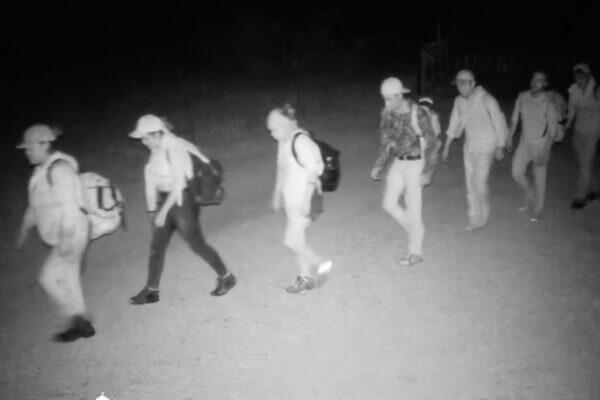
“According to the indictment, the human smuggling organization used drivers to pick up migrants near the U.S.-Mexico border and transport them into the interior of the United States, often harboring them at ‘stash houses’ along the way in locations such as Laredo and Austin, Texas,” the press release stated.
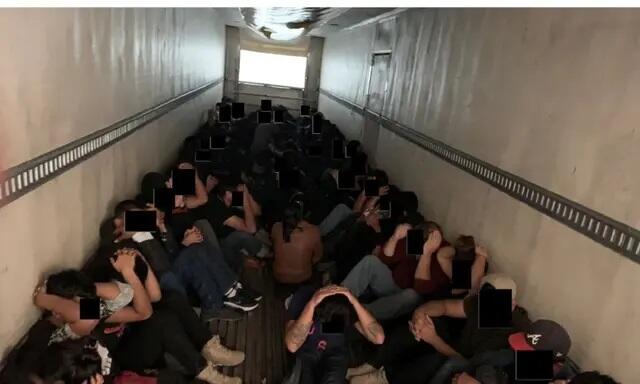
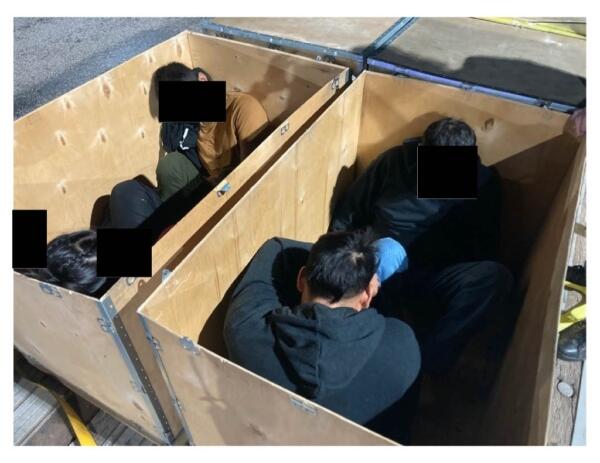
“Drivers for the human smuggling organization allegedly hid migrants in suitcases placed in pickup trucks and crammed migrants in the back of tractor-trailers, covered beds of pickup trucks, repurposed water tankers, and wooden crates strapped to flatbed trailers. These methods allegedly placed the migrants’ lives in danger, because they were frequently held in confined spaces with little ventilation, which became overheated, and they were driven at high speeds with no vehicle safety devices.”
A driver for the organization could be paid up to $2,500 for each migrant transported.
“Sadly, this case is an example of what we see in our district, too many times, especially in our border communities,” said U.S. Attorney Jennifer B. Lowery for the SDT.
“Our Laredo office works continuously with our valued partners to bring to justice those who allegedly put profits ahead of everything else. No amount of money should be a substitute for human life.”
Since January 2021, border patrol agents have estimated over 1.7 million immigrants have crossed the border, avoiding detection because of their criminal history.
These “gotaways” infiltrate local Texas communities.
“When I took office, this all started,” Brent Smith, Kinney County Attorney, told Epoch TV in the documentary “Gotaways: The Hidden Border Crisis.”
“We started having several reports of illegal aliens coming through properties damaging fences, breaking into houses, even assaulting landowners,” Mr. Smith said.
Mr. Smith recalled an elderly woman who reported escaping an illegal alien’s assault on her ATV and a mother and a child who were inside their house when illegals were trying to break in.
“And at that point, we were hoping the federal government was going to step in and do something,” Mr. Smith said. “But they didn’t.”
Christopher Roswell, a hunting ranch property owner in Maverick County, was reported in the documentary to have testified before the Texas Senate, stating that what he’s witnessed over the last two years “has been completely insane.”
“We’ve been cussed at, threatened, had rocks and sticks thrown at us, our dogs have been beaten on multiple occasions by illegals,” Mr. Roswell said. “My wife, my kids, our employees, and myself wear a pistol everywhere we go on the ranch.”
Property owners and ranch managers such as Cole Hill of Kinney County report continued harassment.
“It’s a very scary situation knowing that we’re this far out,” Mr. Hill said.
“We shouldn’t have any trespassers on our property; we are way out in the middle of nowhere. It took border patrol an hour and seven minutes to get here. We’ve been cast to the wolves to deal with this problem because nobody else wants it.”
US Intelligence Has Been Manipulating Wikipedia For Over A Decade: Wiki Co-Founder
The co-founder of Wikipedia has revealed a bombshell concerning long-running suspicions of US intelligence interference and manipulation on the world’s most well-known collaborative online encyclopedia. The site’s co-creator Larry Sanger spoke to journalist Glenn Greenwald on his “System Update” podcast, and outlined the known “information warfare” efforts of US intelligence, which have to some extend make Wikipedia a tool of “control” by the left-liberal Washington deep state.
Some observers who have long watched and carefully documented US government involvement in major social media platforms as well as Wikipedia itself have commented, “the CIA Is running Wikipedia, Wow, what a shocker. Sanger asserted during Greenwald’s show, “We do have evidence that, as early as 2008, that CIA and FBI computers were used to edit Wikipedia,” before posing: “Do you think that they stopped doing that back then?”
Sanger explained that the intelligence agencies “pay off the most influential people to push their agendas, which they’re already mostly in line with, or they just develop their own talent within the community, learn the Wikipedia game, and then push what they want to say with their own people.”
“A great part of intelligence and information warfare is conducted online,” he added, and then specified: “on websites like Wikipedia.” For that reason along with others explored in the interview, Sanger calls it “the most biased encyclopedia” in history.
He described that US intelligence manipulation of the immensely large platform and repository of information had been going on for more than a decade (Wikipedia was founded and appeared online in 2001).
In particular, Greenwald brought up Wikipedia’s entry for the topic Biden-Ukraine conspiracy theory, and pointed out that “there is a mountain of evidence showing that Hunter Biden was paid $80,000 a month by Burisma executives.” It is an established fact that Burisma executives were “getting a lot in value in the way of access to Joe Biden, the most important US official on Ukraine,” Greenwald said. “And yet, according to the Wikipedia article, this evidence doesn’t exist, it’s just a complete conspiracy theory.”
“Remember, this is supposed to be an ideology-free, neutral encyclopedia”, Greenwald then quipped sarcastically.
Watch the full interview with the Wikipedia co-founder:
Below is a section of the Sanger interview transcript wherein Greenwald lambasts Wikipedia’s treatment of the whole Biden-Ukraine scandal:
“The very first sentence reads ‘The Biden–Ukraine conspiracy theory is a series of false allegations that Joe Biden, while he was Vice President of the United States, engaged in corrupt activities relating to his son, Hunter Biden, who was on the board of the Ukrainian gas company Burisma.”
“As part of efforts by Donald Trump and his campaign in the Trump–Ukraine scandal, which led to Trump’s first impeachment, these falsehoods were spread in an attempt to damage Joe Biden’s reputation and chances during the 2020 presidential campaign,” the Wikipedia entry still reads.
“So notice: The Biden-Ukraine scandal is – according to Wikipedia – the ‘Biden–Ukraine conspiracy theory’ but the Trump controversy involving Ukraine is ‘the Trump–Ukraine scandal’. Everything is written to comport with the liberal world view and the Democratic Party talking points.”
The two also agreed that Covid entries were heavily subject to propaganda and skewed information:
“Let me tell you a fact,” Greenwald said. “The view of the leading scientists in the US Department of Energy as well as the FBI is that the most likely explanation for how the Covid pandemic emerged is through the research that was being funded by the United States and conducted in the Wuhan lab. You would have no idea that was true – on one of the most important questions of the last decade: Where the Covid pandemic came from.”
“Every word (on Wikipedia) is designed to suggest that only right-wing conspiracy theorists would invest any plausibility in the theory that the virus came from a (lab) leak and not from a naturally occurring event, even though the top virologists in the world wrote to Dr. Fauci at the start of the pandemic and were adamant that the evidence was consistent with manipulation in a lab.”
“If you asked Joy Reid to comment on the Covid pandemic, that’s exactly what she would tell you. And that’s true of almost every entry. It shocked me when I started looking at (Wikipedia) over the last six months, how blatant it has become.”
The problems that @ggreenwald identifies with @wikipedia extend to its ridiculous defamation of scientists skeptical of lockdowns. Take a look at the shameful pages of two excellent scientists, @VPrasadMDMPH and John Ioannidis. Wikipedia editors politicize science. https://t.co/20P5NQ4DrD
Sanger explained that prior to a decade ago, Wikipedia “used to be kind of anti-establishment” but then it seemed to be hijacked. “Between 2005 and 2012 or so, there was this very definite shift to Wikipedia becoming an establishment mouthpiece. It was amazing. I never would’ve guessed that in 2001,” the site’s co-founder concluded.
The third indictment of former President Donald Trump could produce unintended consequences for the U.S. Department of Justice (DOJ), one of his lawyers says.
Legal experts disagree about the strength of the Aug. 1 indictment itself. But in interviews with The Epoch Times, they concurred with Mr. Trump’s legal spokeswoman, New Jersey attorney Alina Habba, on one point: DOJ prosecutors may have difficulty proving their case.
Mr. Trump is scheduled to appear in a Washington federal court today, Aug. 3, on a four-count indictment. It alleges that the former president willfully made untrue claims that the 2020 election of Democrat President Joe Biden was fraudulent.
The election dispute culminated in a protest in Washington; a number of agitators breached the U.S. Capitol on Jan. 6, 2021, against Mr. Trump’s expressed wishes as Congress was preparing to certify Mr. Biden’s victory. More than 1,000 people, including some who committed no violence, were charged.
The DOJ is alleging that Mr. Trump orchestrated a conspiracy against the U.S. government during the two months leading to Jan. 6, 2021, the indictment says.
Under presidential immunity and free speech rights, Mr. Trump is allowed to dispute the election, Ms. Habba said. She also questions how the government can show that Mr. Trump knew he was making false assertions.
“The thing that makes this case the most weak is: How are you going to prove what he actually believed?” Ms. Habba said in an interview with The Epoch Times on Aug. 2, a day after the new indictment was filed.
Mr. Trump has never conceded defeat and has continued to assert that the election was “rigged” or “stolen” ever since Mr. Biden was inaugurated as the 46th president in January 2021.
Ms. Habba and many other lawyers are denouncing the latest indictment of Mr. Trump as an attempt to criminalize political disagreements.
Attorney Mike Allen, a legal analyst based in Cincinnati, Ohio, told The Epoch Times: “Even if what Trump said was not accurate, he’s allowed to do that; the First Amendment protects lies. It’s not a pretty thing. But that’s the way it is.”
Accused of Going Too Far
Mr. Trump and his supporters say the latest indictment is another example of a “weaponized” justice system’s disparate treatment of him.
They point out that no one was charged for the false statements that fueled the years-long and costly “Russian collusion” investigations of Mr. Trump. The FBI would never have launched that probe if it had followed its own rules, Special Counsel John Durham concluded in a May report.
Further, Mr. Trump and his allies point out that Democrats faced no repercussions for their strenuously objecting to the results of several elections and alleging that Mr. Trump “stole” the 2016 election.
A New York lawyer and former federal prosecutor, Kevin O’Brien, says that, while disputing election results “goes way back in American history,” Mr. Trump allegedly forged new territory with his alleged actions.
Despite even trusted advisers telling Mr. Trump that he lost the election, he allegedly took “steps to try to overturn that, including using force and intimidation and high-pressure tactics,” Mr. O’Brien told The Epoch Times.
“This is absolutely unique in the history of this country. And I think one of the things that’s most impressive about the indictment is it makes that point.”
But Ms. Habba says that, by bringing the latest charges against Mr. Trump, the government is taking a number of risks.
“These cases are tough to prove on a good day, but they [the DOJ prosecutors] also forget that they’ve exposed themselves,” she said.
“When you bring a lawsuit, you now open the door to subpoenas. You now open the door to us being able to ask you questions about the legitimacy of the 2020 election, for us being able to look at things like that.”
“So, you know, it’s a dangerous proposition, and I’m not sure it was well-thought-through, to be honest,” she said.
Ms. Habba called the indictment “sloppy” and said the repeated prosecutions of Mr. Trump have made federal prosecutors’ political motivations very clear. “It’s for the headline, not for the win,” Ms. Habba said.
But Mr. O’Brien praised the 45-page indictment of Mr. Trump as “a remarkable piece of work.” It is clear, well-written, and rather concisely lays out “a very, very complex fact pattern” in easily-understood language, Mr. O’Brien said.
Clear communication from prosecutors is key, he said, because criminal defendants are entitled to trials by jurors—ordinary citizens tasked with digesting complex legal circumstances.
Even with a well-explained indictment, the case against Mr. Trump poses considerable hurdles, Mr. O’Brien said.
Some aspects of the case are “vague,” he said. Also, it will be challenging to prevent jurors from getting distracted by the politics of the case, he said.
“It’s not about ‘a bad actor in the White House,’ however you define that; it’s about specific crimes as alleged, and the focus has to be on those things,” Mr. O’Brien said.
Prosecution Seems ‘Political’
Polls show Mr. Trump is the clear frontrunner for the Republican presidential nomination to challenge the Democrats’ nominee, presumably Mr. Biden, in the 2024 election.
Mr. Allen said that, to him, the prosecution seems to be “political.”
He also observed that, when Special Counsel Jack Smith announced the charges during a short news conference on Aug. 1, “he was visibly nervous.”
Mr. Allen detected that Mr. Smith’s voice was “quivering somewhat,” and “he just did not seem sure of himself.”
“I think he knows he’s out on a legal limb on this thing,” Mr. Allen said.
“You know, this is an indictment of the former president of the United States and the leading Republican candidate for the election in 2024—pretty important stuff to the American people,” Mr. Allen said. “Why wouldn’t he take questions? Again, I think it speaks volumes.”
Mr. Trump’s allies allege that his political rival’s administration prosecuting him constitutes a type of election interference. But Mr. Biden has denied influencing Mr. Smith’s pursuit of charges against the former president.
Mr. Smith has secured grand jury indictments of Mr. Trump in two separate cases.
Besides the Washington case alleging a post-election conspiracy in 2020-21, Mr. Trump is also facing 40 charges in a Florida case alleging mishandling of government records after he left the White House.
In addition, he is facing state business records charges in New York and is widely expected to be indicted for his challenge of the 2020 election results in Georgia.
Altogether, if Mr. Trump were to be convicted of all the charges, he would face a maximum of more than 600 years in prison.
Many of Mr. Trump’s allies, including Ms. Habba, say the timing of the indictments seems to be intended to deflect attention from the emerging scandal swirling around Mr. Biden.
House Republicans are making allegations of corruption. They say they found bank records showing millions of dollars from foreigners were paid to members of Mr. Biden’s family while he served as vice president under Barack Obama. They say the payments appear to have been made for access to Mr. Biden’s political influence.
Ms. Habba alleges the DOJ’s indictments have followed a pattern: “One day after a bad news cycle for the Biden family, every single indictment, exactly 24 hours later, hit Trump with an indictment. I mean, that says it all.”
For example, on July 31, lawmakers grilled Devon Archer, a friend and business associate of the current president’s son, Hunter Biden. The topic: of the closed-door session: Mr. Joe Biden’s possible involvement with his son’s foreign business dealings. The next day, Mr. Trump was indicted on the 2020 election charges.
Mr. O’Brien, however, sees those purported bombshells as duds thus far.
He acknowledges that the criticism of the DOJ’s timing of the indictments could have been avoided if the probe had been launched sooner. But he thinks that Mr. Biden had no desire to “be bothered with it” after he was inaugurated in January 2021.
“So, far from being a pet project of Joe Biden, it was exactly the opposite,” Mr. O’Brien said. “He didn’t want to have anything to do with it.”
But televised congressional hearings about the events of Jan. 6 aired in mid-2022. Revelations from those hearings apparently forced Mr. Biden’s administration to act, Mr. O’Brien said.
Attorney General Merrick Garland appointed Mr. Smith to look into Mr. Trump’s past activities in November, just a few days after the former president announced his 2024 presidential run.
At the time, Mr. Garland said Mr. Trump’s candidacy played a role in launching the investigation.
“Based on recent developments, including the former president’s announcement that he is a candidate for president in the next election, and the sitting president’s stated intention to be a candidate as well, I have concluded that it is in the public interest to appoint a special counsel,” Mr. Garland stated when he appointed Mr. Smith.
While many legal experts had predicted that Mr. Smith might pursue charges of seditious conspiracy against Mr. Trump, that charge is notably absent from his Aug. 1 indictment. His foes were salivating over the notion that a conviction on that charge would forbid Mr. Trump from holding elected office in the United States.
The seditious conspiracy charge can be used to prosecute people for conspiring “to overthrow, put down, or to destroy by force the Government of the United States.”
More broadly, the law also can be applied to two or more people who work together to “prevent, hinder, or delay the execution of any law of the United States, or by force to seize, take, or possess any property of the United States.”
Some analysts believed that a string of convictions against Jan. 6 defendants on that charge earlier this year could buttress such a prosecution of Mr. Trump.
But others said Mr. Trump’s own words, which had been held against him, could also help him defend against such a charge.
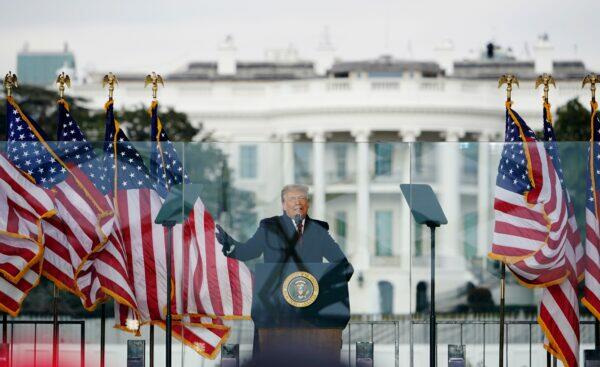
Even though Mr. Trump said people have to “fight like hell” for what they believe in, he encouraged protesters who had gathered at The Ellipse to march “peacefully and patriotically” to the Capitol, about a mile away.
It was wise for Mr. Smith to avoid unnecessarily complicating the case against Mr. Trump with seditious conspiracy charges, Mr. O’Brien said.
Instead, Mr. Smith relied on “bread-and-butter statutes” often used to prosecute conspiracies, Mr. O’Brien said. However, “obstruction of an official proceeding” is a less-commonly-used charge, he said.
Mr. Allen, the Ohio attorney, said the government might be planning to unleash the seditious conspiracy charge on Mr. Trump later in an updated indictment.
Such a superseding indictment also could be used to charge any or all of the six unnamed “co-conspirators” described in the original Aug. 1 indictment.
Just last week, Mr. Smith used a superseding indictment to add charges and a third defendant to the Florida classified-documents case against Mr. Trump.
In the 2020 election-dispute case, Mr. Allen noted that four of the six alleged co-conspirators are identified as attorneys.
That poses another obstacle for prosecutors: attorney-client privilege, which prevents lawyers from divulging information from clients.
Giuliani: Trump Had ‘Good-Faith’ Basis
Based on descriptions in the indictment, it appears that former New York City Mayor Rudy Giuliani, a longtime Trump ally, is among the four attorneys. Mr. Giuliani made a number of public statements on behalf of Mr. Trump’s crusade to challenge the 2020 election results.
Mr. Giuliani’s spokesman, Ted Goodman, would neither confirm nor deny media reports identifying Mr. Guiliani as “Co-Conspirator 1.”
But, in a text message to The Epoch Times, Mr. Goodman said: “Every fact Mayor Rudy Giuliani possesses about this case establishes the good-faith basis President Donald Trump had for the action he took during the two-month period charged in the indictment.”
“This indictment eviscerates the First Amendment and criminalizes the ruling regime’s number-one political opponent for daring to ask questions about the 2020 election results,” Mr. Goodman wrote.
The prosecution of Mr. Trump also “underscores the tragic reality of our two-tiered justice system,” he said. There is one system “for the regime in power” and another for “anyone who dares to oppose the ruling regime.”
“This indictment is particularly egregious in light of the growing evidence proving that Joe Biden and his family made millions of dollars in bribes from America’s most intransigent adversaries,” Mr. Goodman said.
DeSantis Vows To Start “Slitting Throats” Of Deep State On Day 1 As President
Ron DeSantis says he’d start ‘slitting throats’ on his first day as president, should be win the 2024 election.
“We’re going to have all these deep state people. You know, we’re going to start slitting throats on Day One,” said the Florida governor, who is currently trailing former President Donald Trump by a significant margin, according to polls.
The throat-slitting comment came after DeSantis vowed to crack down on Mexican drug cartels.
“At the border, they’re going to be shot stone, cold dead,” he said, according to New Hampshire’s NPR affiliate.
DeSantis also declared: “We’re going to make sure that the woke agenda ends up in the dustbin of history.“
DeSantis notably passed the “Stop Woke Act” in Florida, which bans schools and businesses from teaching anything that could cause people to “feel guilt, anguish or any form of psychological distress” based on race, national origin or sex.
He also signed into law the ‘don’t say gay’ Parental Rights in Education Act, which bans teaching children about gender identity through the 12th grade. It originally covered up to the 3rd grade until it was extended.
The comments were made on Sunday at a New Hampshire stump speech – which turned off at least one attendee.
“If I was in charge of his PR, I would have said, “Don’t use that terminology,” Norm Olsen told NPR, adding that he’s a “Sununu Republican” who’s exploring alternatives to Trump.
Central banks around the world have done a lot of damage in recent years trying to avoid recessions instead of their real job of keeping inflation under control.
Rather than something to be feared and avoided, recessions are an unavoidable and necessary part of any economy.
In fact, we get recessions in various industries all the time, and what shows up in GDP data as a recession is actually one where more industries are retreating than advancing.
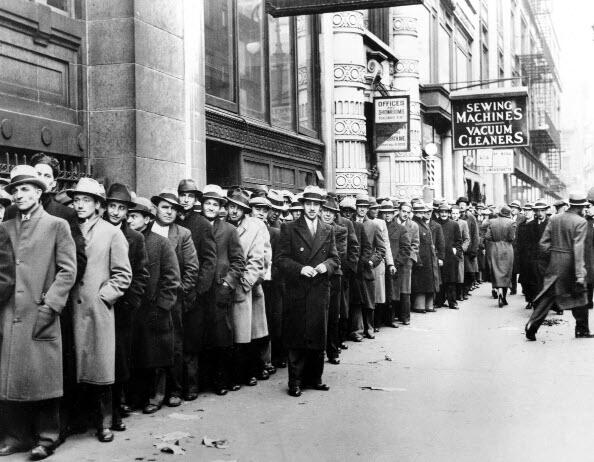
Anyone my age was raised by parents who had either first or second-hand experience of The Great Depression. This was a period of severe economic downturn that, in the case of the United States, lasted until the end of World War II.
In Australia, unemployment rates rose to 30 percent and GDP declined by roughly 24 percent over a period between 1930 and 1933.
That time certainly shaped my parents’ habits. Financial conservatism was matched by habits of frugality, like always turning the lights off when you left a room.
That shaped a period when personal and business finances were more robust than usual because of the dire experience of when they were not.
In my early years, I suffered a number of downturns—although nothing like the 1930s.
The closest was the recession of 1982, billed the “worst recession since the Great Depression,” but with an overall contraction of only 5.1 percent.
There was a negative quarter at the end of 1965 caused by drought (I actually remember a front-page image of a parched and cracked dam with the remains of a dead sheep rather than the financial stress).
Then there was the recession in 1974 caused by the Arab oil shock, followed by the one in 1977.
Unemployed people line up outside the State Labor Bureau in New York City during the Great Depression on Nov. 24, 1933. Following the crisis, Western society was deeply influenced by the theories of Keynesian economics, which advocates active state intervention and regulation of the economy by using finance. (AP Photo)
There was the December quarter of 1981 through to the March quarter of 1983, partly caused by a drought, but also a collapse in mining revenues coupled with wage rises caused by deregulation and pattern bargaining.
By now, I was working in finance and then property, both of which are particularly susceptible to recessions. In 1986 saw more negative growth, and then there was former Prime Minister Paul Keating’s “recession we had to have” in 1990-91.
Recessions Are Normal
There was a variety of reasons for these recessions and downturns, but really only one underlying cause.
Economies are stochastic, and while they tend to equilibrium, this involves overshooting and undershooting their optimal capacity.
Too much overshooting will bring at least an equal and opposite reaction as the ability of the economy to meet all demands is put under too much stress.
The Great Depression was caused by easy money that led to a stock market boom and then a bust as central bankers raised interest rates and banks failed.
The stock market bust was also probably partly a case of crowd psychology as new buyers dried up at the prices being asked, and then a fear of loss drove prices down as investors panicked and tried to exit the market all at the same time.
Measures taken to fix the situation, such as erecting tariff barriers, actually made things worse. And then there was the redirection of valuable government resources into wealth-destroying, make-work projects to keep men in work—they were unemployed as a result of government policies in the first place.
So in their desire to avoid a recession, bankers and governments made it worse.
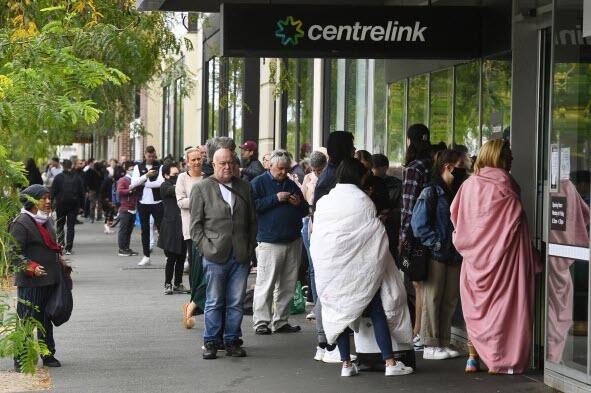
Hundreds of people queue outside an Australian government welfare centre, Centrelink, in Melbourne, Australia, on March 23, 2020. (William West/AFP via Getty Images)
This generation of central bankers isn’t driven so much by the Great Depression as by the inflation shocks of the 70s. In Australia, these shocks were driven by circumstances and politicians who had learned the wrong lessons from the Great Depression.
What our current crop of central bankers has learned is that you want to avoid bank failures at all costs and that asset price inflation is better than asset price deflation.
Neither of these is correct.
Banks that can’t fail take unacceptable lending risks, and assets that escalate in price indefinitely reduce real returns, encourage unwarranted speculation, and exclude a lot of new entrants (first home buyers, for example).
They also wrongly think that turnover in the economy equals growth, and for a moment, were seduced by Modern Monetary Theory (MMT) into thinking they could permit governments to borrow without limits.
These policies have given us below-par growth in the GDP and in productivity, and they have left us over-exposed in the event that a serious crisis occurs and with a serious housing crisis.
Why Recessions Are Good for the Economy
There are a number of reasons why recessions are necessary and beneficial, although painful at the time.
Without downturns, too many inefficient companies survive—we need what Schumpeter called “creative destruction”, where companies, or sometimes whole industries, are replaced by competitors.
Recessions test how strong your structure is. Are you overborrowed? Do you have regular, reliable, and predictable cashflows? Do you have flexible employment systems? Have you hired the best managers and professionals?
They teach investors and lenders to be realistic. They also test the real need for your products.
In a recession, unemployment rises, and wages stagnate or decrease. Consumers become more conscious of cost or value, which then transfers to you directly if you are a retailer and then all the way up the chain.
Recessions allow better companies to expand and use resources more efficiently, increasing productivity, or they give space to novel competitors who have found better ways of providing products and services, again raising productivity.
Without a recession, market power tends to get concentrated in established firms, making them complacent and lazy and often providing them with political power to make it difficult for competitors to penetrate their markets.
The pattern of bad behaviour by governments in an effort to avoid recession was set after the global financial crisis.
In Australia, we aggressively cut interest rates and spent government money on public works.
The interest rate cuts sparked an increase in housing prices which barred many young Australians from the market because they couldn’t afford a deposit. The spending was financed by government borrowing, which has ultimately fed into increased inflation.
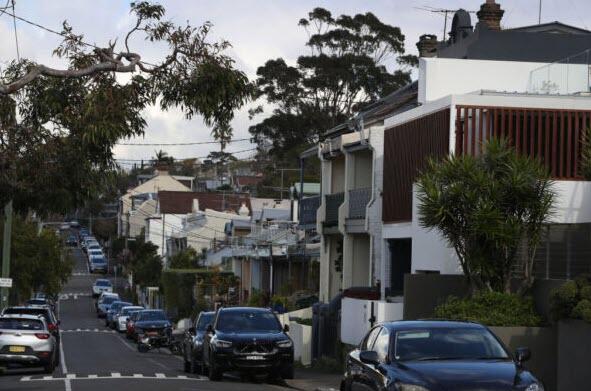
A general view of homes in the suburb of Balmain is seen in Sydney, Australia, on Sept. 7, 2022. (Lisa Maree Williams/Getty Images)
The spending arrived too late to have an impact on the actual recession itself, thus proving that the economy was actually resilient enough to self-correct without government help.
We have repeated that pattern every time since at the hint of any problem, leading to the absurdity of our response to COVID where we shut down much of the economy for 12 or more months, and borrowed more than the federal budget to keep things running as though everything was normal.
That, combined with the energy transition, expansive MMT-fuelled infrastructure construction, and record levels of immigration, is what has caused our current inflation problems. And the Reserve Bank of Australia has now hiked interest rates by four percent, which might tip us into the recession they have tried to avoid for 15 years.
But things are worse than that. Depressing interest rates to 0.15 percent meant that the price of money was much lower than it should have been.
Long-term returns on cash have historically been in the four to six percent range. This is a reasonable price.
Savers are owed a suitable return on their funds. This is actually a factor, via discount rates, in the assessment of which projects are viable enough to proceed.
Lower the cash rate and pay savers too little, and you encourage risky borrowing in low-return projects that cannot pay back their capital value over any reasonable period of time.
So by trying to avoid a recession, we’ve made things worse.
We’ve lowered the growth potential of the economy at the same time as, making it more vulnerable to shocks.
The longer we go on like this, the greater the potential for another Depression to arrive. That’s the kind of recession you don’t need to have.
“We’re Going To Take Over”: Chicago Residents Threaten To “Deal With” Influx Of Disruptive Illegals
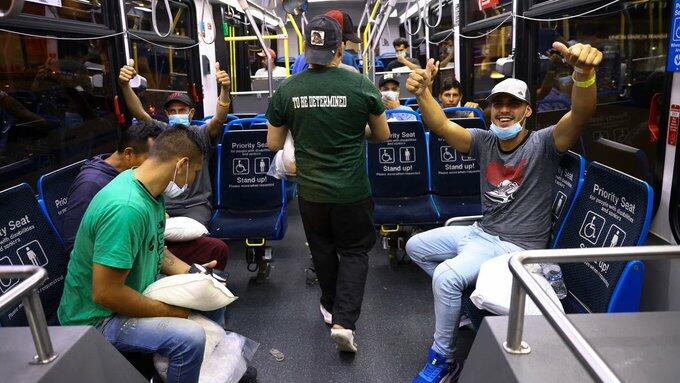
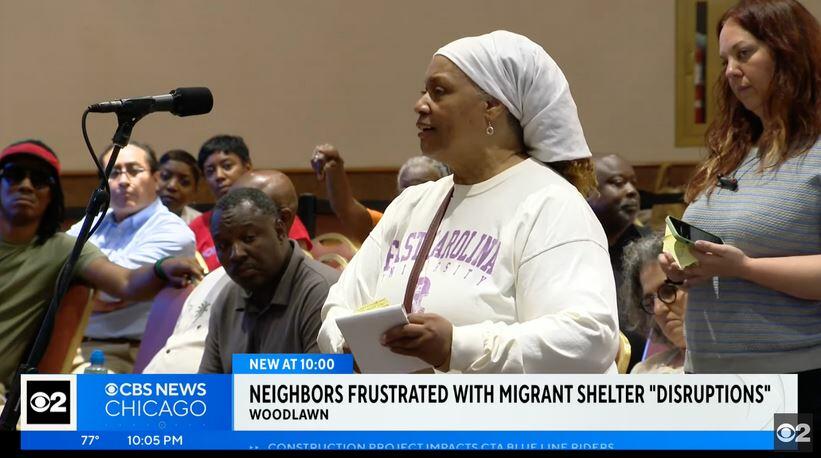
Enraged residents of a Chicago suburb sounded off over the disruptive behaviors of illegal migrants who were dropped off at a local shelter.
“I would ask you all to go out there – go out there at night, in the middle of the night – and see what goes on,” one woman said during a meeting with city leaders.
Locals say the illegals are loitering, partying late at night, littering, engaging in prostitution and there’s been at least one fight between locals and migrants, CBS News reports.
“It got a little heated,” said Chicago Deputy Police Chief Stephen Chung, adding “Objects got thrown.”
According to residents, they’re out of tolerance for asylum-seekers, and feel unsafe.
“They disrespect us, they rob us, they harass us,” said another women.
“Let me say this – they’ve got one more time to deal with it, because otherwise, next time they deal with it, they’re going to deal with it from the streets. We’re going to take over,” said one man.
Woodlawn, Chicago residents blow up over illegals in the neighborhood:
“They disrespect us, rob us, harass us”
“We’re gonna take over. Nobody is gonna be able to stop us from what we’re gonna to do them.” pic.twitter.com/8bO5u86WSX
Much of residents’ anger was directed at city officials in attendance – including Ald. Jeanette Taylor (20th), Chicago Deputy Police Chief Stephen Chung, and Department of Family & Support Services Commissioner Brandie Knazze.
At one point, police had to intervene, breaking up a quarrel during public comments.
“It absolutely is a problem,” Taylor said at the meeting.
Taylor said she has now seen some of those problems firsthand.
“The people who are keeping up the trouble are the people who are kicked out of the damn shelter,” she said. -NBC News
City officials promised residents that they’re working on solutions to improve the situation for the neighborhood, and that there will be consequences for those caught breaking the law.
Chicago is starting to look like LA with all of the migrants being housed at every police station. Ridiculous. I do remember just a couple years ago, I slept outside w/ homeless residents to get them shelter because the police station put them out. My my things have changed! pic.twitter.com/009icmk5TY
“We need to get a handle on it now,” said Taylor. “and because the city never had a real plan, it’s been an opportunity. [Mayor Brandon Johnson] hasn’t been in office 90 days yet, so they’re working as hard as they can and as much as they can to put a plan together for everybody.”
Former President Trump has pleaded not guilty to a third set of criminal charges.
Wearing his trademark blue suit, white shirt, and red tie, Mr. Trump, 77, appeared before Magistrate Judge Moxila Upadhyaya in the U.S. District Court for the District of Columbia, in the nation’s capital.
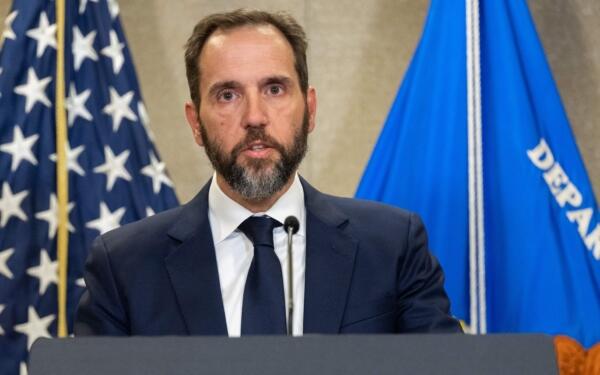
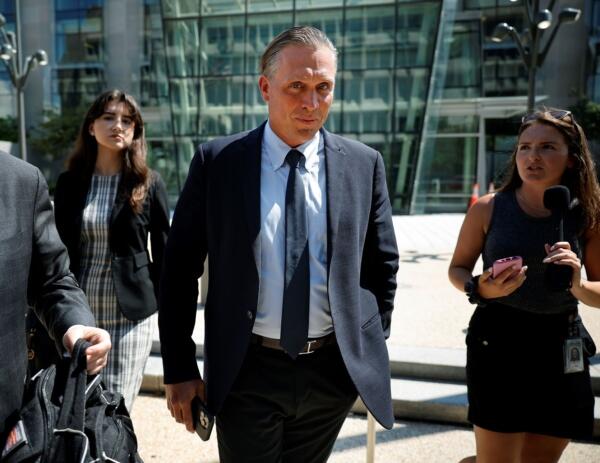
Flanked by his attorneys, John Lauro on his left and Todd Blanche on his right, Mr. Trump sat at the defense table with a serious expression, and occasionally looked at Special Counsel Jack Smith, the prosecutor who brought the charges against him.
A 45-page indictment, filed Aug. 1 by Mr. Smith, charges Mr. Trump with criminal conspiracies to defraud the United States, obstruct the certification of votes for Mr. Biden on Jan. 6, 2021, and conspiracy against citizens’ right to vote.
Mr. Trump cracked a brief smile after he was sworn in; he listened and nodded as the judge spoke, reading aloud the charges and penalties he faces. He looked at the judge and listened intently.
The former president rose to his feet and stood while Mr. Lauro went to a podium and began talking, saying that he waived the reading of the full indictment. Asked what his pleading was, Mr. Trump then responded, “not guilty.”
Unlike many other Jan. 6 defendants, Trump will not be detained under an agreement between the government and his lawyers. But, under the agreement, he is prevented from discussing the case.
Prosecutors were ordered to file a brief within seven days to suggest a trial date and predict how long the trial might take.
Assistant U.S. Attorney Thomas Windom said the government would be seeking a “speedy trial.”
The Judge replied that the trial will be “fair.”
But Mr. Lauro objected to the proposal of a speedy trial calling it “absurd.” He pointed out that the government had three years to investigate and accumulate information. Likewise, Mr. Trump’s lawyers need time to prepare a proper defense, he said.
Mr. Lauro also expressed concern over the possibility of “massive” amounts of information to digest, including electronic data, printed documents, and “exculpatory” information.
Mr. Windom said the government is prepared to produce a “substantial” amount of discovery material.
The next hearing date is scheduled at 10 a.m. on Aug. 28 before Judge Tanya Chutkan, who’s been assigned to oversee the case. Mr. Trump has been allowed to waive his appearance at this hearing.
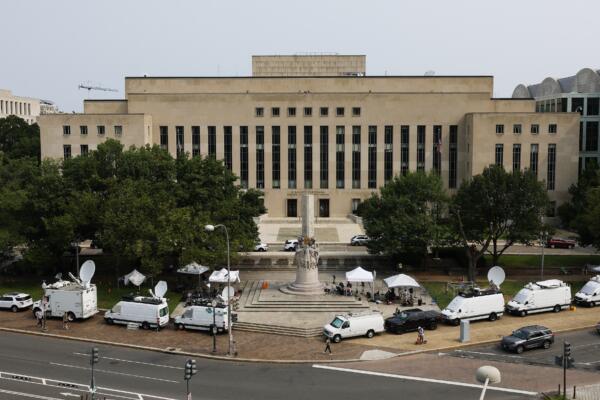
Press members gather at the E. Barrett Prettyman federal courthouse in Washington on Aug. 3, 2023. (Madalina Vasiliu/The Epoch Times)
Indictment
Mr. Trump’s attorneys argue that the indictment is an attack on the former president’s political speech, which is protected by the Constitution. They also argue the charges will be defeated because, unlike Mr. Smith’s allegations that Mr. Trump “knowingly” spread “false claims” about the election, the former president held a genuine belief in the veracity of those claims.
Reporters, security personnel, and attorneys filled the courtroom where Mr. Trump, his attorneys, and prosecutors listened as the judge followed standard procedures, with the judge reading the charges aloud and attorneys making brief remarks before the judge accepted Mr. Trump’s denial of the charges and set the next hearing date.
Mr. Trump’s appearance, which lasted 27 minutes, was historic, considering his status as a former president and current presidential candidate who alleges that the current president’s administration is overseeing two federal prosecutions against him.
Mr. Trump alleges that Democrat Joe Biden’s Department of Justice (DOJ) is “weaponized” against him for political reasons. But Mr. Biden denies directing specific DOJ actions against Mr. Trump. Based on current opinion polls, the two men appear slated for a rematch in 2024. Mr. Trump has never conceded Mr. Biden’s 2020 election victory and has maintained that the election was “stolen.” His attempts to challenge or overturn the election are now viewed as criminal conduct in a four-count indictment.
Members of the public were excluded from the courtroom. Only a few took advantage of the opportunity to view the proceedings via closed-circuit monitors in overflow rooms.
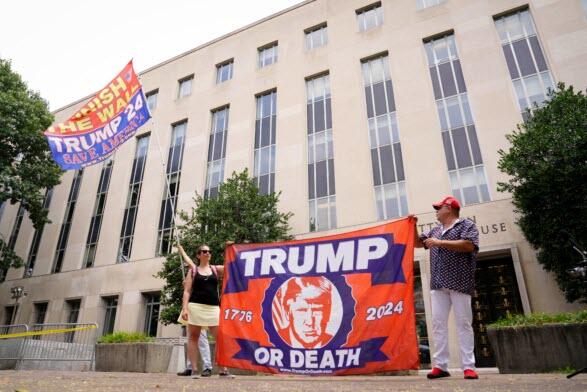
Pro-Trump protesters gather around the E. Barrett Prettyman federal courthouse in Washington on Aug. 3, 2023. (Madalina Vasiliu/The Epoch Times)
Venue
Considering that 92 percent of votes cast in the District of Columbia in 2020 went to Mr. Biden, Mr. Trump’s lawyers have already said they would be attempting to have the trial moved to more hospitable political territory, such as Virginia.
Some of Mr. Trump’s supporters have also raised concerns that, because of her past record, Judge Chutkan might be inclined to deal harshly with Mr. Trump, although judges are pledged to decide cases impartially.
She was an appointee of Democrat President Barack Obama and handed down harsh prison sentences to other defendants charged in connection with the events of Jan. 6, 2021. Ms. Chutkan met or exceeded prosecutors’ sentencing recommendations in those cases.
She also has had past dealings with Mr. Trump, and has ruled against him in multiple cases.
In 2021, she rejected Mr. Trump’s claims that executive privilege should have exempted Jan. 6-related White House documents from disclosure. In that case, she wrote that Mr. Trump’s arguments seemed to be based on “the notion that his executive power ‘exists in perpetuity’ … but presidents are not kings, and Plaintiff is not President.”
Defense
Trump’s attorney John Lauro, in an interview with The Epoch Times’ Jan Jekielek on Aug. 2, said there’s somewhat of a silver lining to this case against Mr. Trump: “This is the first time when there’ll be a full airing of all of the issues in the 2020 election.”
Further, Mr. Lauro said his client was focused on getting the truth, not blocking it, and he believed in the veracity of his claims that the election was stolen.
By disclosing six unnamed, uncharged “co-conspirators” in the indictment, Mr. Smith appeared to be attempting to discourage them from testifying on Mr. Trump’s behalf, Mr. Lauro said, because those people will likely fear they could be indicted.
Based on descriptions and context, five of the six co-conspirators can be identified.
They are believed to be former New York City Mayor Rudy Giuliani, who formerly served as Mr. Trump’s attorney; lawyers John Eastman, Sidney Powell, and Kenneth Cheseboro, and Jeffrey Clark, a former DOJ civil attorney.
Mr. Lauro asserts that Mr. Trump’s lawyers were not engaged in illegal conduct when they advised him about his challenges to the election. They were rendering legal advice, he said, and did not believe they were doing anything unlawful.
Look Ahead America (LAA), a nonpartisan organization that has been tracking the Jan. 6 cases, added Mr. Trump’s name to its database listing “over 1,000 politically persecuted Americans targeted for protesting the results of the 2020 general election.”
According to LAA, “the overwhelming majority of those arrested and imprisoned were for nonviolent charges, and nobody to date has been charged with insurrection,” despite mainstream news media’s frequent use of that term.
In addition to the Washington charges, Mr. Trump faces dozens of document-mishandling charges under state laws in New York and federal laws in Florida. He has pleaded not guilty in those cases and claims that all of the charges are intended to thwart his third bid for the presidency.
Apple Slides On Weak iPhone Sales, Inventory Surge, 3rd Straight Quarter Of Declining Revenues
With all other megatech companies reporting solid earnings, all eyes were on the results from the last giga-cap kahuna, the world’s largest company, Apple and its $3+ trillion market cap.
As previewed earlier, analysts expected Apple to report a modest revenue slowdown YoY (iPhone revenue of $49 billion, down from $50.6 billion, iPad revenue: $6.7 billion, down from $7.6 billion; Mac revenue: $7.7 billion, down from $10.4 billion; Services revenue: $21.1 billion, up from $19.8 billion and Wearables/Home/Accessories revenue: $8.5 billion, down from $8.8 billion) while EPS of 1.20 would be flat from 1.20 a year ago.
With that in mind, this is what Apple just reported for its fiscal Q2:
EPS $1.26, up from $1.20 a year ago, and beating the estimate of $1.20
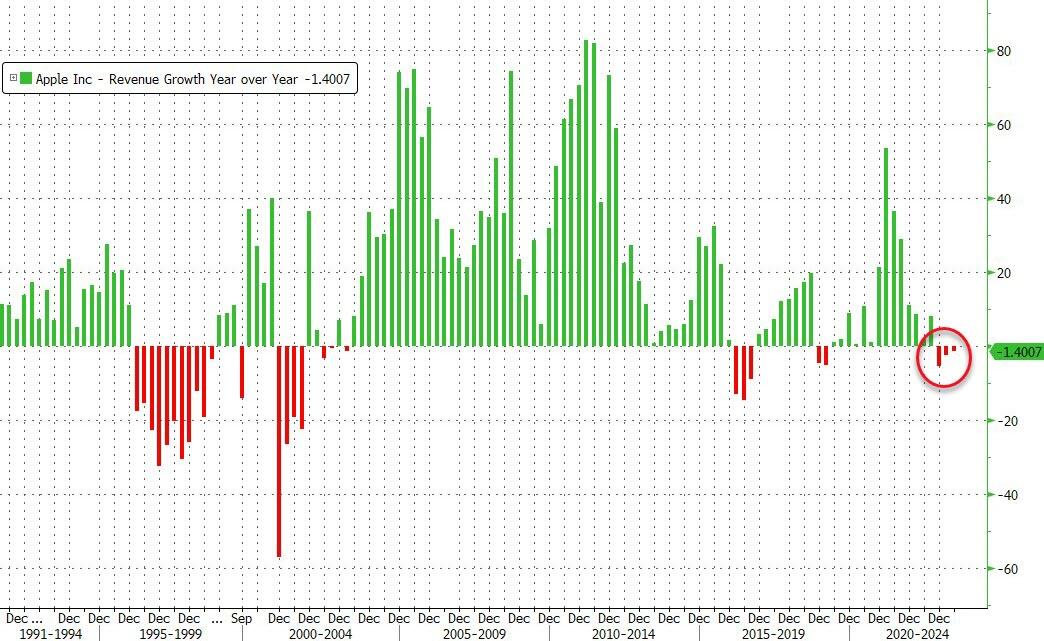
Revenue $81.80 billion, down 1.4% y/y, but also beating estimates of $81.55 billion.
Cash and cash equivalents $28.41 billion, +3.3% y/y, beating estimates of $24 billion
While the numbers were mixed, with revenue of almost $82 billion coming above expectations thanks to strong service revenue offsetting a miss in iPhone, iPad and wearables, what the market did not like is that this was the 3rd consecutive quarter of annual revenue declines: the first time for AAPL since 2016.
And while we wait for the company’s guidance during the 5pm call, the market did not surprise the market with another buyback announcement, unlike last quarter when it unveiled an additional $90 billion stock repurchase.
Looking at the revenue breakdown, Apple missed across almost all product categories, with the only exception a modest beat in Mac revenues:
iPhone Revenue $39.67B, missing estimates of $39.8B
Wearables, Home & Accessories revenue of $8.28B, missing estimates of $8.38B
Mac Revenue $6.84B, beating estimates $6.37B
iPad Revenue $5.79B, missing estimates of $6.33B
Total products Rev. $60.58B, missing estimates of $60.67B
As we noted last quarter, what markets may be concerned about is that AAPL appears to be reaching a “double top” in product revenue, and indeed with the exception of Services, almost every product class did slowdown from a year ago.
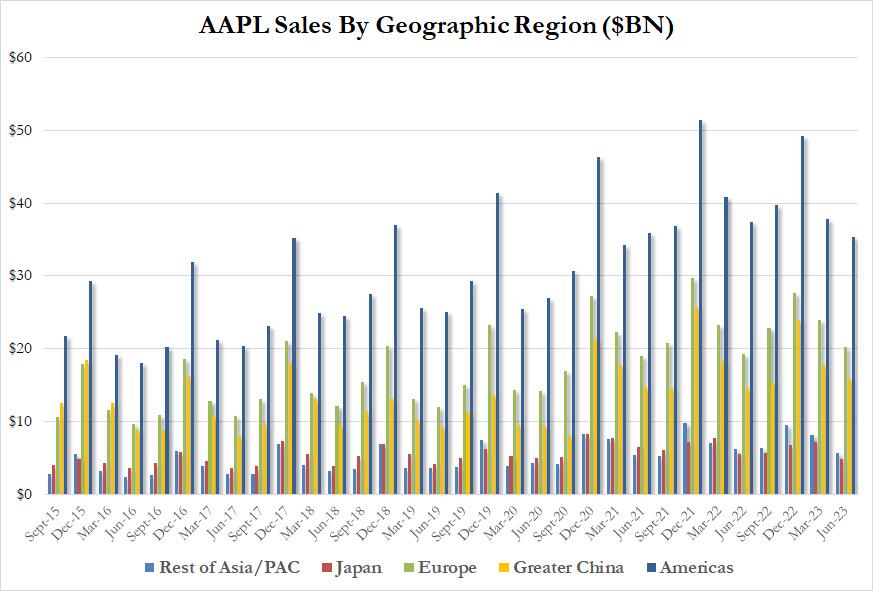
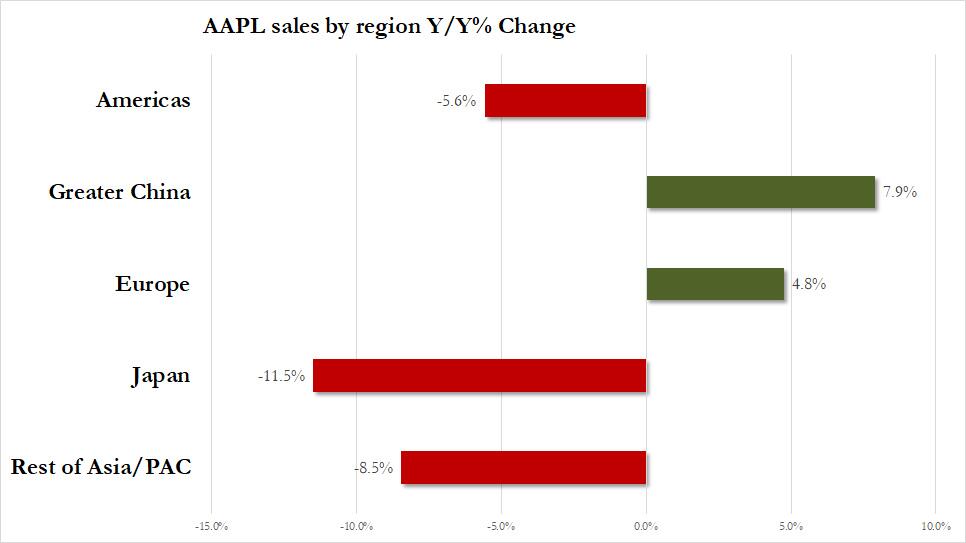
One place where investors may have been pleasantly surprised was China sales, which at $15.76 billion, beat estimates of $14.59 billion.
And while China’s YoY growth rate of 7.9% was impressive, this was more than offset by a slowdown in good old USA where revenues dropped by 5.6%, and while Europe rose 7.9%, Japan actually tumbled by double digits, sliding 11.5% perhaps as a result of the collapse in the yen’s purchasing power.
There was some more good news in Services revenue, which at a time when products continue to slowdown, printed at a fresh record high of $21.2 billion, a reversal to last quarter’s miss.
Alas, there was more bad news, and this time not so much on the income statement but the balance sheet, where inventories unexpectedly surged from where they were at the end of September, by 49%. As Bloomberg asks, “Is that a build-up ahead of a launch or a worrying accumulation of unused components?”
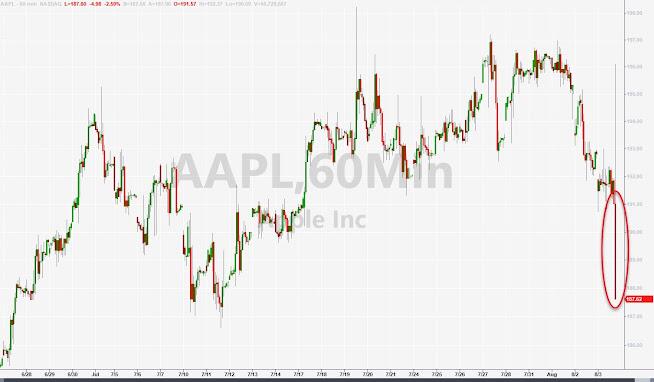
We hope to get an answer at the earnings call, but until then, the market was not happy with what Apple reported, and after kneejerking higher briefly, the stock has slumped down 1% after hours, sliding to one month lows, and reversing much of the post-Amazon euphoria.
Former President Donald Trump says the ongoing Russia–Ukraine conflict was fueled in part by attempts by political opponents to prevent him from taking office.
“Instead of having a better relationship with Russia as I worked to build, we now have a proxy war with Russia, fueled in part by the lingering fumes of Russiagate delirium. Ukraine has been utterly devastated. Untold numbers of people have been killed. And we could very well end up in World War III,” Mr. Trump wrote in a Newsweek op-ed published this week.
In it, he compares the actions taken to prevent him from taking office seven years ago to what he is facing today. Mr. Trump explained how the false claims that Russian interference won him the 2016 presidential seat have had reverberating effects still felt today.
“As savage and cruel as the Russia Hoax was for me, my family, my staff, and so many innocent bystanders, the real victims were the American People,” he wrote.
“The destruction this hoax caused to America is almost incalculable. It subverted our democracy, it threatened our security, and it endangered our freedom.
“At a critical moment when we should have been reducing tensions with Russia, the Russia Hoax stoked mass hysteria that helped drive Russia straight into the arms of China,” he wrote, adding that the result is the war in Ukraine seen today.
‘There Must Be a Reckoning’
In 2016, Mr. Trump ran on a platform that challenged the establishment, and he says the establishment retaliated in full force.
“I vowed to stop mass illegal immigration, terminate globalist trade deals, end the sellout of our country to Communist China, stand up to the permanent bureaucracy and the corporate media, and break the neocon addiction to endless foreign wars,” he wrote.
“In response, an unelected cabal in the senior ranks of our government, in concert with their chosen candidate, Hillary Clinton, and their allies in the media, launched the de-facto coup attempt known as the Russia Hoax.”
Unable to throw him out of office, the result was a three-year “massive disinformation campaign and lawless persecution based on the monstrous lie that I was a traitor to my country,” Mr. Trump wrote.
He extensively referenced the Durham report, an investigation by special counsel John Durham on intelligence activities surrounding the 2016 presidential election (pdf).
“The Durham Report proves that the key figures involved knew from the start that the Russia Collusion conspiracy theory was a lie. The FBI launched their witch hunt without a scrap of legitimate evidence—and when they came upon exonerating information time after time, they covered it up and kept the hoax going forward,” Mr. Trump continued.
He cites the report’s findings that leadership including then-FBI Director James Comey, President Barack Obama, Vice President Joe Biden, and presidential rival Mrs. Clinton were aware of the abuse of power, and that “perhaps most dangerous of all, the Russia Hoax normalized the weaponization of law enforcement against the Left’s political enemies.”
Mr. Trump makes no mention of the current troubles he is facing from federal law enforcement, but alludes to the fact, writing “they are interfering in the 2024 election before our very eyes.”
Mr. Trump is still facing a barrage of legal action tied to his time in office, include two cases special counsel Jack Smith of the Department of Justice is heading. One case, in which Mr. Trump has pleaded not guilty, relates to classified documents stored at his Mar-a-Lago residence, which he maintains he declassified as president. The other case relates to the Jan. 6, 2021, Capitol breach.
“There must be a reckoning. Accountability now lies in the hands of the voters,” Mr. Trump wrote. “The Durham Report has made the stakes abundantly clear, and now the choice is ours: either the Deep State destroys America, or we destroy the Deep State.”
Censorship
The manipulation comes not just from the federal government, but Big Tech as well, he wrote.
“As the Twitter Files have proven, the Radical Left establishment also used the Russia Hoax to attack freedom of speech. They built a sprawling domestic censorship regime under the guise of combatting so-called ‘Russian disinformation’—which they quickly defined to include any content they did not like,” Mr. Trump wrote.
Notably, Twitter permanently banned Mr. Trump on Jan. 8, 2021, as the events of Jan. 6, 2021, were still coming to light. The president had posted a video urging peace from people gathered at the nation’s capitol the day of the breach, asking them to go home, and the video was quickly suppressed while Mr. Trump was temporarily banned on Twitter and Facebook. The next day, Facebook blocked his account through Jan. 20, Inauguration Day, and Twitter followed with a permanent ban the day after.
Recently, a lawsuit brought by the states of Missouri and Louisiana revealed that the federal government under the Biden administration had instructed social media companies on how and who to censor. The case is being appealed by the Biden administration.