Usage Of Fed’s Emergency Bailout Facility Hits New High; Money-Market Inflows Continue

Usage Of Fed’s Emergency Bailout Facility Hits New High; Money-Market Inflows Continue

US Money Market funds saw a third straight week of inflows ($29 billion this past week) to a new record high of $5.15 trillion…

Source: Bloomberg

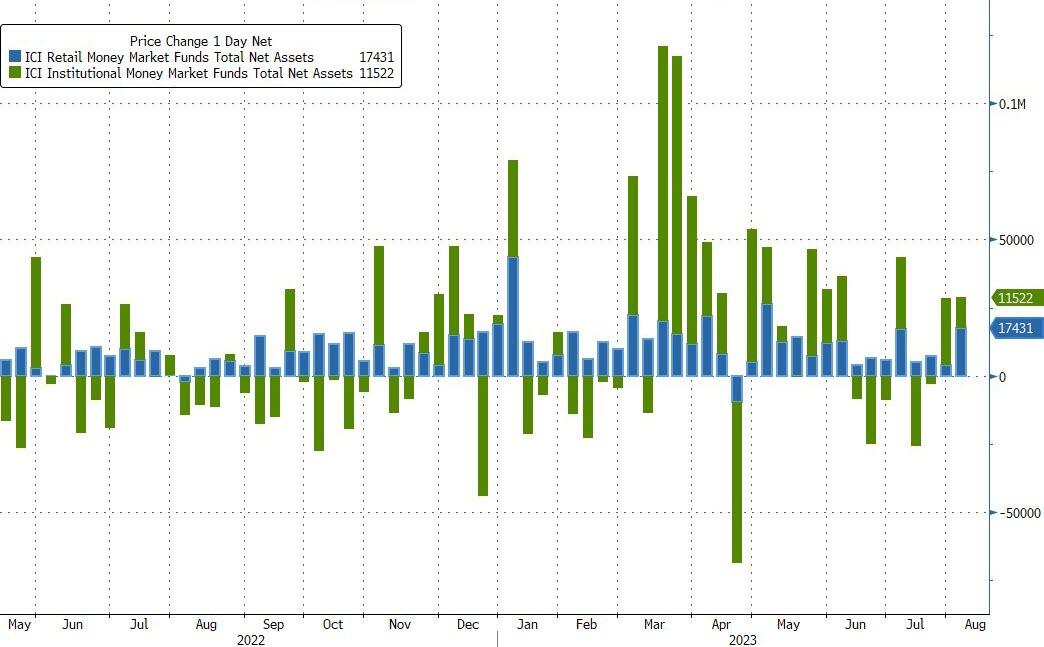
Retail money-market funds saw inflows for the 15th straight week (and institutional funds also saw a second straight week of inflows)…

Source: Bloomberg

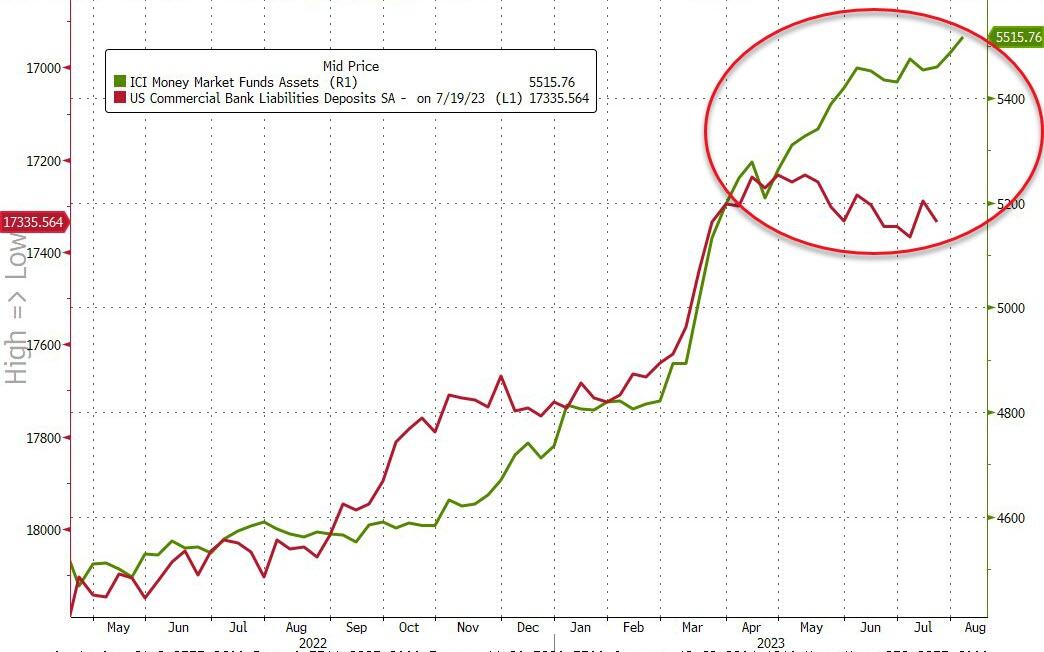
The decoupling between money-market fund inflows and bank deposits continues…

Source: Bloomberg

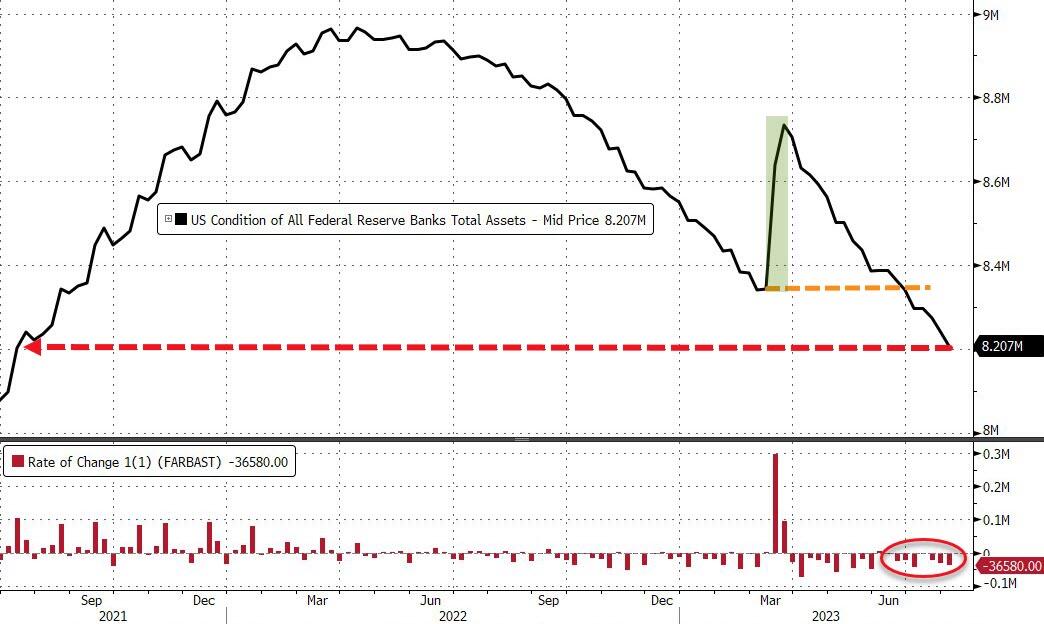
The Fed’s balance sheet shrank for the 8th straight week, tumbling $36.6 billion on the week to its lowest since July 2021…

Source: Bloomberg

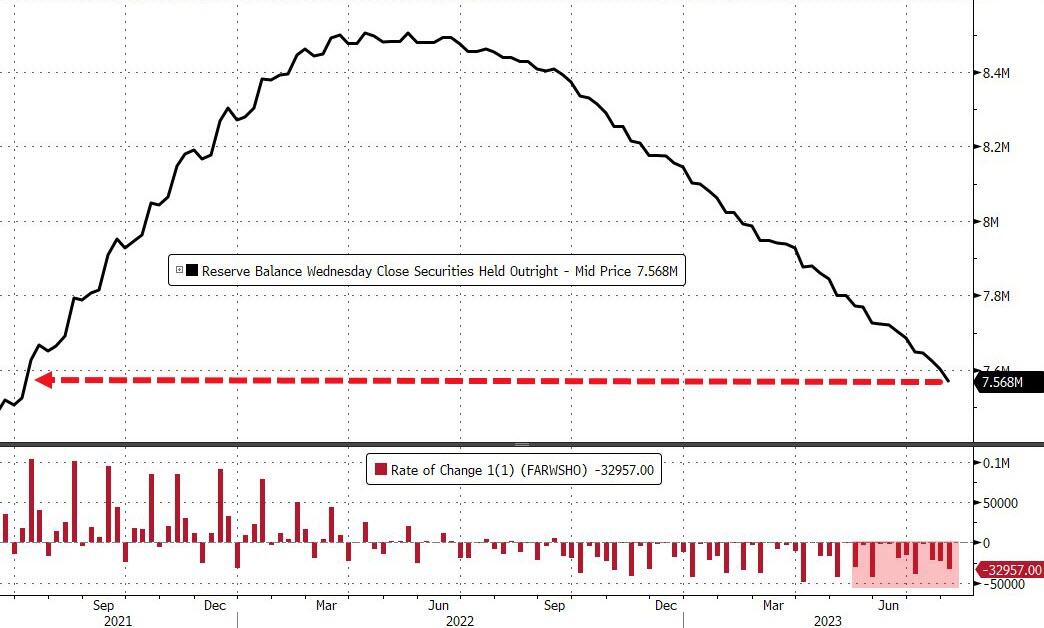
As far as QT is concerned, The Fed is back to selling with Securities down almost $33 billion on the week to its lowest since July 2021…

Source: Bloomberg

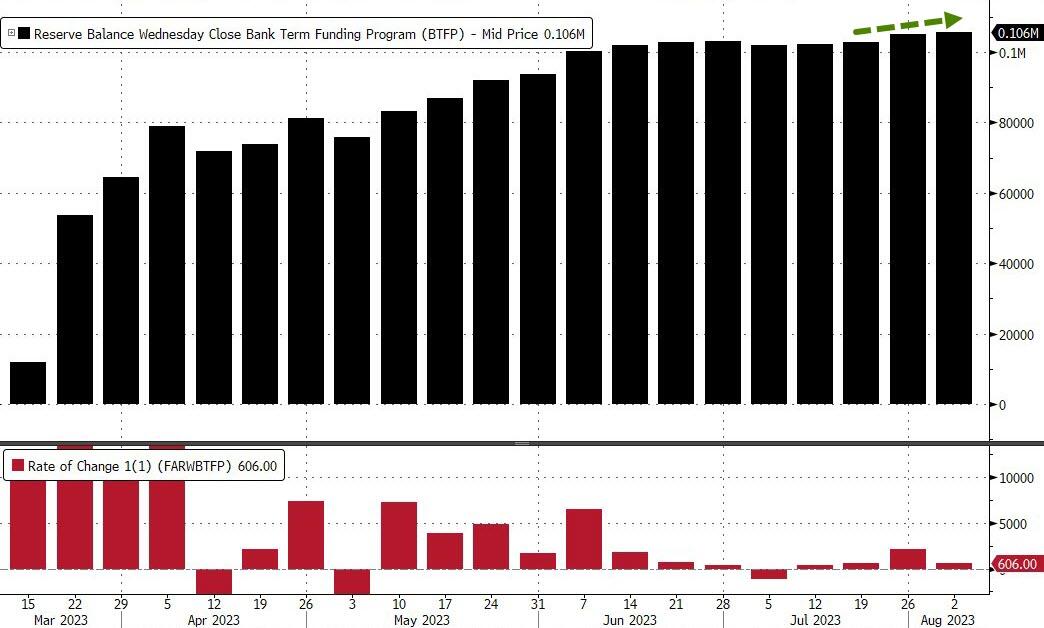
Usage of The Fed’s emergency bank bailout facility rose by $606 million to a new record high at $106 billion…

Source: Bloomberg

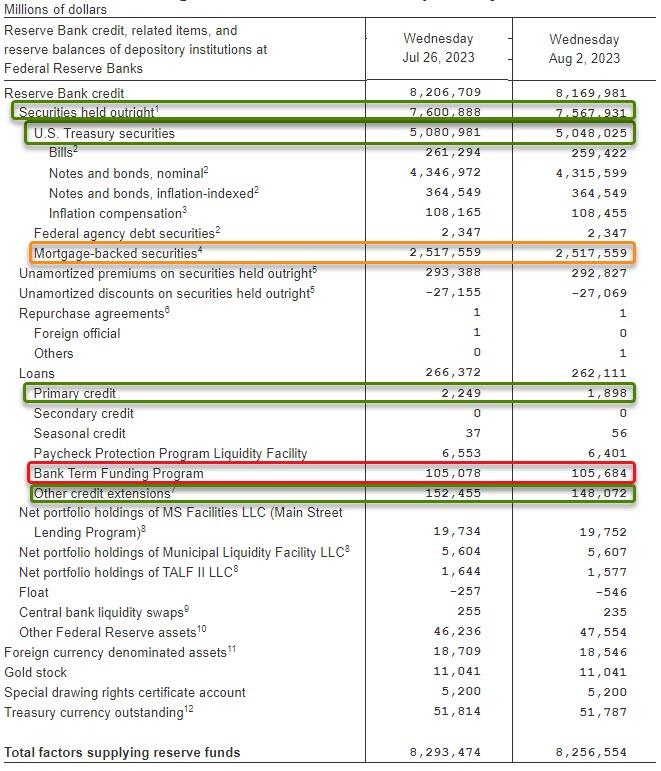
The breakdown from The Fed’s H.4.1 table

  • QT: down $33BB, dominated by $32BN sale of US Treasury, MBS flat

  • Discount Window: down $0.3BN to $1.9BN

  • BTFP: up $0.6BN to $106BN

  • Other Credit Extensions (FDIC loans): down $4BN to $148BN

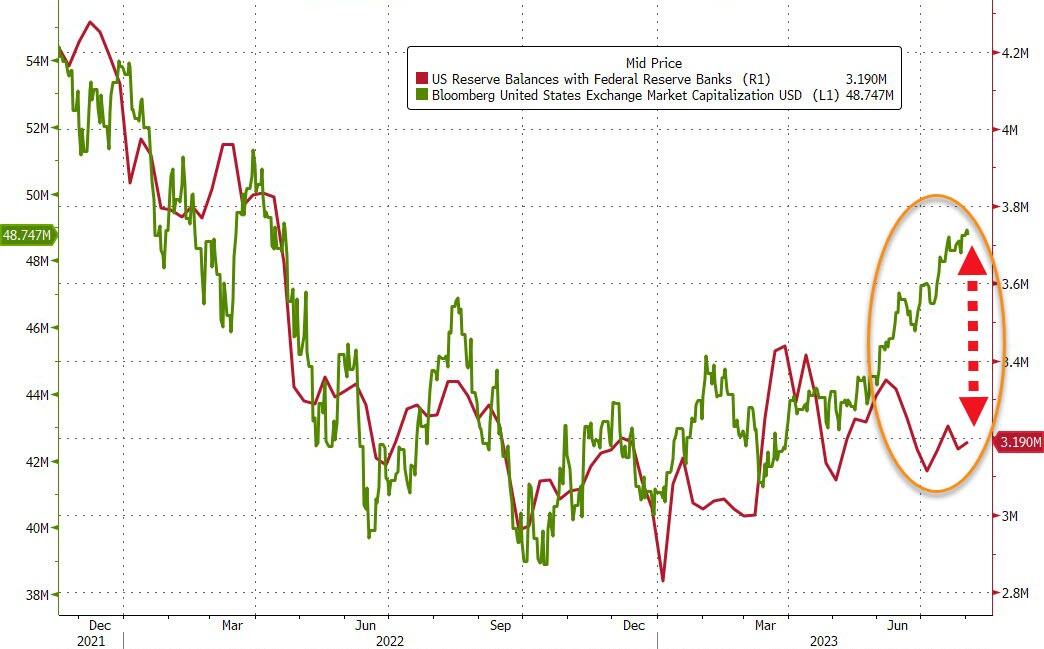
Finally, US equity markets continue to diverge significantly from bank reserves at The Fed…

Source: Bloomberg

We leave you with one thought – in 7 months and counting, America’s ‘smaller’ banks will need to find that $100-billion plus from somewhere as that is when the BTFP bailout program ends (theoretically). Will regional bank balance sheets be stabilized by then? Or will the current bloodbath in bonds be the catalyst for another round of pain?

Tyler Durden
Thu, 08/03/2023 – 16:40

via ZeroHedge News https://ift.tt/1wZKflC Tyler Durden

“This Is A Free-Speech-Killing Indictment” – Dems Move To Criminalize Political Dissent

“This Is A Free-Speech-Killing Indictment” – Dems Move To Criminalize Political Dissent

“This indictment is a really sad moment for me,” exclaimed George Washington University Law Professor Jonathan Turley during an interview with FOX News host Sean Hannity highlighting his fears that Democrats are reaching a line with the American people that will not be able to un-cross.

Turley warns that Special Counsel Jack Smith’s indictment “basically just accuses him of disinformation. This is a disinformation indictment” and charges “many” things that are protected by the First Amendment.

Reflecting further, Turley said: (emphasis ours)

This is a free speech-killing indictment. There’s no way around it. I write a great deal in academia in the free-speech area and I rarely seen a more chilling filing by the Department of Justice. The question that people have to ask themselves is, when is the price too high?

People are obviously enraged, but when is the price too high to bag Donald Trump? This indictment is that prohibitive cost. Meaning, what they are attempting to do is criminalize what they consider to be disinformation.

And I have to tell you, this indictment is really sad moment for me.

I hoped that Smith is going to indict on January 6th, that he would find unassailable evidence and unquestioned legal authority. He has neither in this indictment…

…This is a speaking indictment but it doesn’t say very much.

It basically just says that we think Trump is lying that he actually didn’t believe this. I can’t tell you how facilely ridiculous this claim is.

It starts up by saying, of course, you can say false things in the campaign, but then says that Trump knew they were false. Is that the test going forward in terms of criminalizing political speech?

Smith is just not only going to have to just bulldoze through the First Amendment, he’s going to have to bulldoze through a line of cases by the Supreme Court…”

Turley and Hannity had plenty more to say on Hunter Biden’s legal troubles and on Rep. Goldman’s constant screw-ups…

In fact, as Daniel Grenfield writes, the serial indictments and investigations of former President Trump are meant to rig the 2024 presidential election, but the latest indictment is unique in rigging even its aftermath.

Previous indictments of the former president had broken all sorts of new legal ground by turning misdemeanors into felonies and deciding that the statute of limitations is just a suggestion, but the Jan 6 indictment by Democrat special counsel Jack Smith criminalizes election challenges.

Or at least election challenges against Democrats. And along with that, all political dissent.

The Jan 6 indictment contends that Trump’s election challenges were a crime.

What does this latest indictment offer that the previous indictments did not? This one is designed to intimidate any Republicans who might seek to challenge the outcome of the 2024 presidential election.

Unsatisfied with indicting the leading GOP primary candidate in order to rig the election, Democrats are criminalizing political opposition before and after the upcoming election.

The indictment reads more like a Washington Post editorial with its contention that Trump was “determined to remain in power” and so “spread lies” that there had been fraud to “create an intense national atmosphere of mistrust and anger, and erode public faith in the administration of the election.”

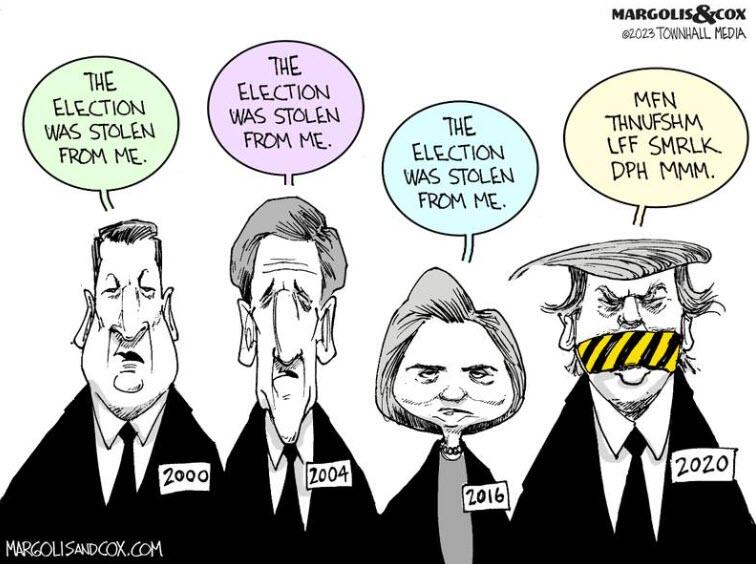
If contending that a presidential election was stolen is illegal, where is Al Gore’s indictment?

No Democrats have ever been charged for claiming that Bush was elected by hanging chads, for challenging his election both times in Congress, or for spreading lies and launching investigations for their false claims that Trump had been elected by the Russians, even when they did this in order to “create an intense national atmosphere of mistrust and anger.”

When Democrats spread lies about an election, they get book deals and evening slots on MSNBC, and sometimes, like Gore, they even get Oscars and Nobel peace prizes.

Challenging elections has been a traditional practice going back over two centuries to the 1800 presidential election. Free nations with open elections are not afraid of election challenges and the Democrats have spent a fortune on their own election challenge efforts. The Biden campaign spent $20 million on over sixty post-election lawsuits in 2020.

Smith, a longtime Democrat crony, won’t be indicting Biden or Marc Elias. Instead, he’s indicting Trump for such invented crimes as “obstructing and impeding the January 6 congressional proceeding”, a “conspiracy against the right to vote” and a conspiracy to “obstruct” the “lawful federal government function by which the results of the presidential election are collected, counted and certified by the federal government.”

Describing publicly conducted election challenges as an effort to “defraud” the United States government turns 18 U.S. Code § 371 into an open-ended tool for suppressing a wide range of political dissent. Treating lobbying or any kind of advocacy as the equivalent of witness tampering weaponizes 18 U.S. Code § 1512 against virtually anyone trying to influence a function of government. Which is to say virtually everyone who is interested in politics. And finally deploying 18 U.S. Code § 241, originally designed to fight the KKK, against Trump and anyone trying to verify legitimate election results makes election fraud into a civil right.

Beyond the malicious abuses of federal law to target a political opponent, Jack Smith’s indictment will create an unprecedented suppression of the political opposition that will not end with Trump or with the 2024 presidential election. Smith has done nothing less than to take sections of the law and use them to build a criminal infrastructure that can be used to outlaw most political parties and activities on a level with that of Communist China or Russia.

This was the totalitarian state of affairs that Russiagate had only hinted at but that is reaching its maturity with an indictment that is not merely unconstitutional, but that seeks to replace any kind of open political system with a paranoid surveillance state that ruthlessly stamps out any threat to “democracy” by abusing existing laws to selectively target and imprison political opponents.

And that is what is really at stake here.

The Jan 6 indictment leans heavily on editorializing about the threat to democracy, accusing the former president of “destabilizing lies about election fraud” which “targeted a bedrock function of the federal government” while failing to actually establish why challenging federal functions ought to be a crime. If lobbying state legislators and searching for alternate electors is a crime then virtually every single president before 1900 would have been locked up. Not to mention aspiring political figures like Alexander Hamilton. And every time Democrats lose an election, they start plotting to eliminate the electoral college and have been seeking to do it through the back door using comprehensive measures like the National Popular Vote Interstate Compact.

Should the NPVIC and the states participating in it be treated as a criminal conspiracy against a “bedrock function of the federal government”? Jack Smith’s indictment has created a precedent.

The indictment repeatedly accuses Trump and his associates of “fraud” on the presumption, self-apparent to Democrats, that Biden had won the election and therefore challenging it is fraudulent. Smith’s indictment bases its claims of fraud on his own party’s assertions, using rhetoric such as “baseless fraud claims”, “sham election investigations” and “false claims of election fraud”. All of these are the partisan opinions of the prosecutor rather than the law.

And that is what the indictment comes down to. Is it illegal to disagree with Democrats? If it is, as Smith asserts in his indictment, then all forms of political opposition are also illegal.

Democrats and their media contend that the indictment is apolitical when it is not only the product of political bias, but can only exist as a Democrat political document which has no relevance to a legal system independent of its biases. In a Democrat worldview, Trump was making “false claims” about an election that he lost.

But, like so much of politics, that’s an opinion, not a fact.

You can indict people for what they do, not for what they believe, and yet Smith obsessively hammers away at what Trump believed because without that, there’s no crime. And if there’s no crime without a belief, then there was never a crime to begin with.

Smith claims that Trump knowingly made “false claims” because, among other things, the Nevada Secretary of State had posted a “Facts vs. Myths” document. According to the indictment, it’s not possible for the President of the United States and the Nevada Secretary of State to disagree and it is illegal for the former not to bow to the authority of the latter.

Democrats who rejected the conclusions of Florida Secretary of State Katherine Harris in 2000, who was then denounced, threatened and parodied, were not put on trial. The issue is not the relative positions, but the relative politics of Republicans and Democrats.

Democrats have spent the last two generations criminalizing political dissent. Environmental activists demand that oil and gas companies face fraud charges because they “deny” global warming. Police departments face civil rights investigations when they challenge contentions of systemic racism. The Jan 6 indictment is part of a totalitarian program that rejects the idea of political dissent and the centrality of debate within the marketplace of ideas in our system.

This indictment is not just about a threat to a former president, but to the Bill of Rights.

If Jack Smith’s Jan 6 indictment succeeds, freedom dies and dissent becomes illegal.

To disagree with leftists will no longer just lead to a loss of work or arguments on social media, but arrests, trials and prison sentences. What is at stake here is whether America will survive.

*  *  *

Finally, while Jonathan and Daniel are clearly correct on the legal aspects of what this indictment could mean, we can’t help but wonder again at the timing of this 3rd indictment…

Remember, there’s no such thing as a coincidence in Washington. Distract, distract, distract!

Tyler Durden
Thu, 08/03/2023 – 16:25

via ZeroHedge News https://ift.tt/TXxBPho Tyler Durden

Amazon Soars After Smashing Expectations On AWS Strength, Guides Higher

Amazon Soars After Smashing Expectations On AWS Strength, Guides Higher

With three out of five FAAMG stocks – which of course is now known as GAMMA ever since Facebook’s ignominious rebranding to Meta (at least until the company changes its name to MetAI… or Twitter) – having already reported mostly solid results helping send the S&P to new 52 weeks highs just a few days ago (until the recent blow out in yields dented sentiment) investors are keenly looking to Amazon and Apple earnings after the close today to round out the picture for the resurgent market generals which could set the tone for the rest of 2023… or at least until the jobs report tomorrow morning.

As previewed earlier, Amazon is expected to post sales of $131.6 billion, up 9% from 2022, and EBIT of $5 billion (Amazon’s own guidance is for revenue of $127-133b, EBIT of $2.0-5.5b). Investors will be focused on the AWS revenue which is expected to rise 10% to $21.7BN (bar a bit lower post MSFT Azure print) as well as commentary on July vs June growth, the Backlog, and, of course, A.I. contribution. Attention will also be directed to continued improvements in Retail Margins (e.g. beat high-end of EBIT guide).

Why is so much attention focused on AWS? Well, cost cuts by big corporate clients who are laying off workers or trying to optimize their technology spending after IT bills surged during the pandemic. There’s also the chance that cloud computing – invented in its modern form by AWS – is maturing. Many of the companies likely to unplug their servers and data centers in favor of rented computing power already have, the thinking goes.

Demand for applications related to generative artificial intelligence may ride to the rescue and boost AWS at some point, but chief rival Microsoft seems to think demand will ramp up slowly. Expect executives to face questions about this on the analyst call.

As a reminder, the last time Amazon reported earnings, the stock reacted pretty violently. Shares rose at first, on what looked like a decent quarter. Then, on the analyst call, CFO Brian Olsavsky said Amazon Web Services’ growth rate had slowed by 5 percentage points in 2Q.

Well, it doesn’t look like the weakness stuck because moments ago Amazon reported results which blew away expectations, from the top to the bottom line, while also guiding well above sellside estimates. Here is what Amazon just reported:

  • Q2 EPS 65c, up sharply from a 20c loss YoY, and smashing estimates of $0.35
  • Q2 Net sales $134.38 billion, +11% y/y, beating estimates of $131.63 billion
    • Online stores net sales $52.97 billion, +4.2% y/y, beating estimates of $52.45 billion
    • Physical Stores net sales $5.02 billion, +6.4% y/y, beating estimates of $4.96 billion
    • Third-Party Seller Services net sales $32.33 billion, +18% y/y, beating estimates of $31.2 billion
    • Subscription Services net sales $9.89 billion, +14% y/y, beating estimates of $9.79 billion
    • North America net sales $82.55 billion, +11% y/y, beating estimates of $79.68 billion
    • International net sales $29.70 billion, +9.7% y/y, beating estimates of $29.25 billion
    • Third- party seller services net sales excluding F/X +18% vs. +13% y/y, beating estimates of +15%
    • Subscription services net sales excluding F/X +14% vs. +14% y/y, missing estimates +14.5%
    • AWS net sales $22.14 billion, +12% y/y, beating estimates of $21.71 billion
    • Amazon Web Services net sales excluding F/X +12% vs. +33% y/y, beating estimates +9.48
  • Operating income $7.68 billion vs. $3.32 billion y/y, smashing estimates of $4.72 billion
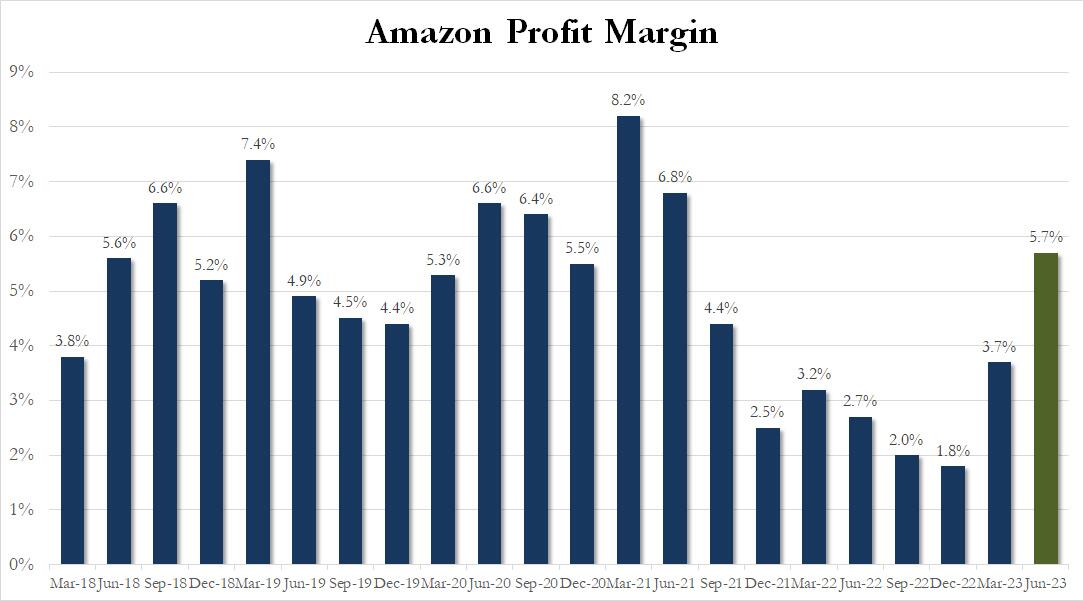
    • Operating margin 5.7% vs. 2.7% y/y, beating estimates of 3.46%
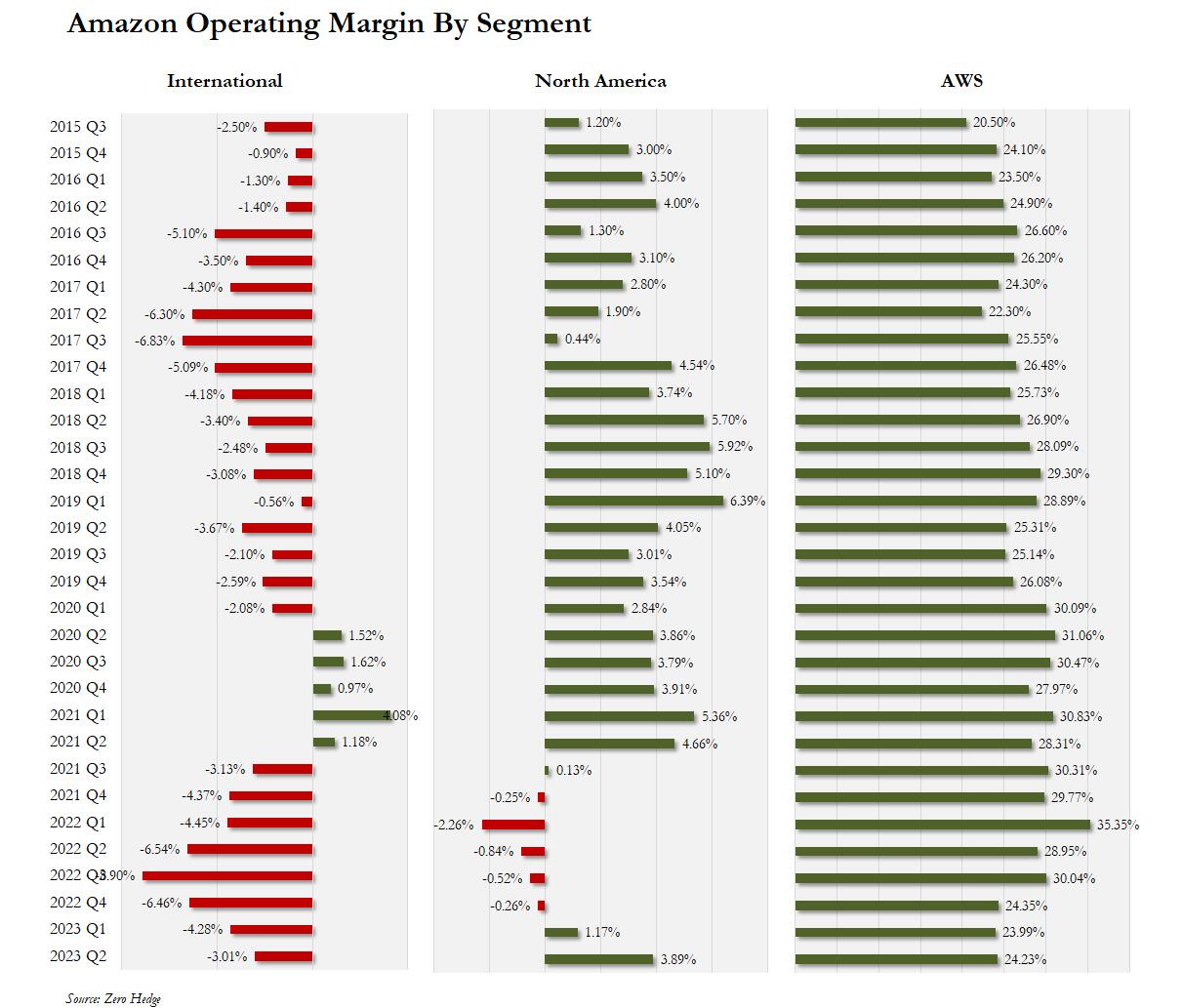
    • North America operating margin +3.9% vs. -0.8% y/y, beating estimates of +2.03%
    • International operating margin -3% vs. -6.5% y/y, beating estimates of -6.4%
  • Fulfillment expense $21.31 billion, +4.7% y/y, missing estimates of $19.01 billion
  • Seller unit mix 60% vs. 57% y/y, beating estimates of 58.3%

But while Amazon’s earnings were stellar, it was its Q3 guidance that was truly blowout:

  • The company sees net sales between $138.0 billion and $143.0 billion, or to grow between 9% and 13% compared with third quarter 2022; this is well above consensus estimates of $138.3BN
  • Sees operating income between $5.5 billion and $8.5 billion, compared with $2.5 billion in third quarter 2022. and also beating consensus estimates of $5.41 billion.

Commenting on the quarter, CEO Andy Jassy not only patted himself on the back, but also discussed AI as well, saying that “we continued lowering our cost to serve in our fulfillment network, while also providing Prime customers with the fastest delivery speeds we’ve ever recorded. Our AWS growth stabilized as customers started shifting from cost optimization to new workload deployment, and AWS has continued to add to its meaningful leadership position in the cloud with a slew of generative AI releases that make it much easier and more cost-effective for companies to train and run models (Trainium and Inferentia chips), customize Large Language Models to build generative AI applications and agents (Bedrock), and write code much more efficiently with CodeWhisperer. We’re also continuing to see strong demand for our advertising services as the team keeps innovating for brands, including the ramp up for Thursday Night Football with the ability for advertisers to tailor their spots by audience and create interactive experiences for consumers. We remain excited about what lies ahead for customers and the company.”

More importantly, Jassy is showing investors he can boost sales while also keeping a lid on costs simultaneously. The results are a good vindication of the cost-cutting measures he initiated last year.

Digging into the numbers we find that operating margins soared to 5.7%, more than double the year ago number, and smashing consensus esttimates of 3.46%. So much for that earnings recession.

While the market was clearly happy with the overall profit margin, it also appeared quite happy with the profit margin breakdown where the AWS profit margin rebounded from the lowest since 2017. At the same time, international operating margin remained negative, with US online sales generated a surprisingly strong 3.89% profit margin, the highest since Q2 2021.

While some analysts expected Amazon Web Services growth to sink into the single digits – a significant slowdown for a business that was growing by more than 30% a year ago – that hasn’t happened and AWS sales beat expectations at $22.1 billion, up 12% from 2022. Operating income, $5.3 billion, exceeded analyst estimates, too. The big question here is whether AWS growth rates have bottomed out and whether management expects any acceleration in the second half of the year.

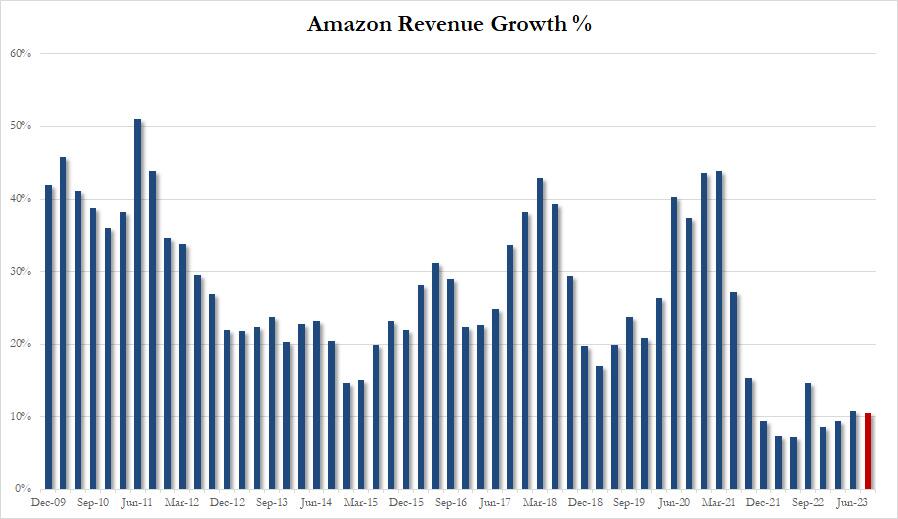
Besides AWS performance this quarter, the market was also focused the company’s revenue forecast, which came in the very solid range of $138-$143BN (midline at $140.5BN), beating the $138.3BN expected. This would put the annual growth rate at 10.5%, just below this quarter’s 10.8%.

What is notable here is that revenue grew faster than costs for a second consecutive quarter, which hasn’t happened since the company was still riding the pandemic’s online shopping boom in early 2021. As Bloomberg notes, signs of Amazon’s cost cuts are all over these results. Overall operating expenses climbed by 7%, the slowest growth since at least 2017. Sales and marketing costs rose just 6.5%, after years of hovering closer to 35%.

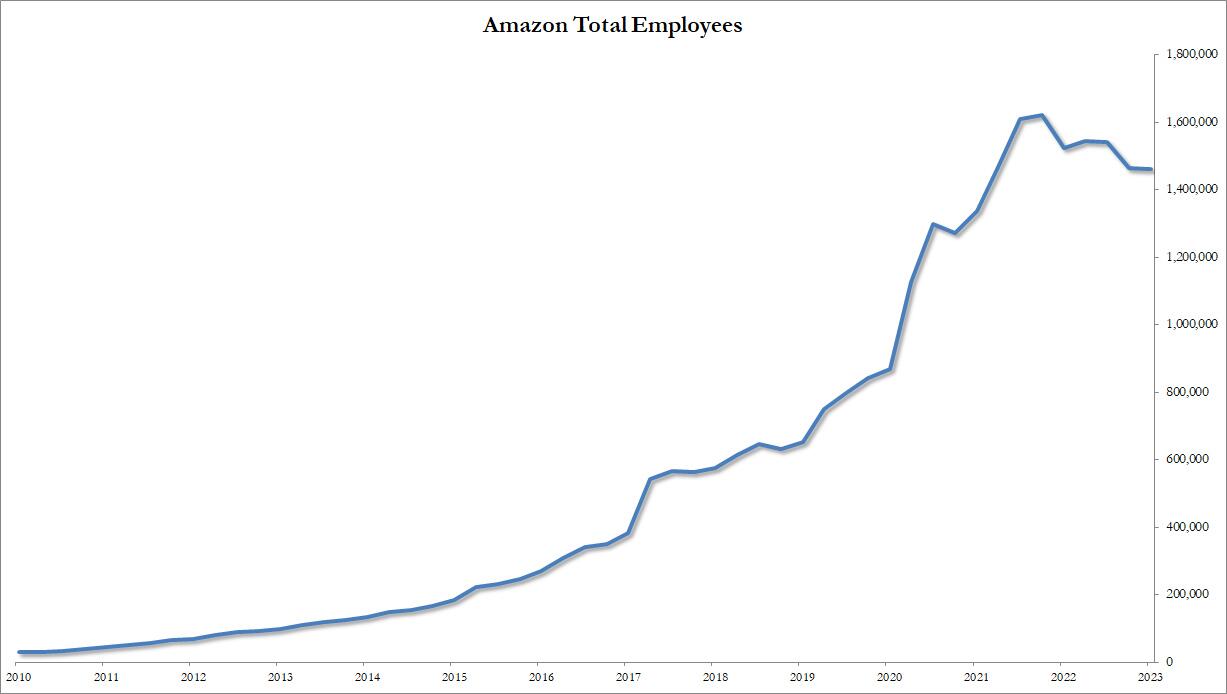
And speaking of cost cuts, Amazon’s headcount shrank by 4,000 people during the quarter. That’s a pretty modest decline for a company that employs 1.46 million workers, but it’s a third consecutive quarterly cut. That kind of consistent employee reduction hadn’t happened at Amazon since the company struggled through the Dotcom bust in 2001.

Also worth noting, Amazon said its Amazon Business unit, which lets commercial customers order office supplies and other items similar to household shopping, now has 6 million customers on track to spend about $35 billion a year.

Oh, and for those wondering, the phrase “generative AI” appears 12 times in the Amazon’s earnings release. Amazon also has 9 bullet point paragraphs explaining the work they did in AI in the quarter.

While it was self-evident thanks to the across the board beat and stellar guidance, Bloomberg Intelligence senior analyst Poonam Goyal said that Amazon’s report “looks good on all fronts” and added that “what caught by surprise was AWS, where sales came in ahead of expectations.”

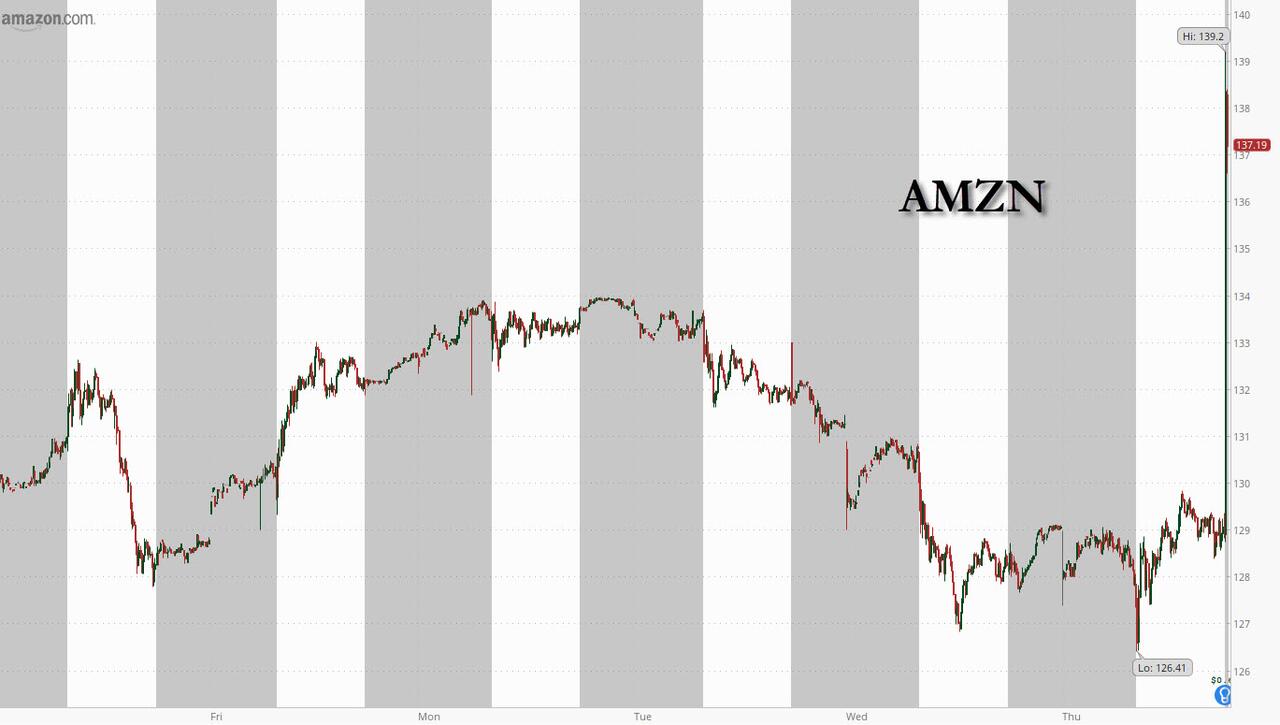
The market agreed, and in kneejerk response to the stellar results and guidance, AMZN stock has spiked, surging about 6% after hours, and roughly where the option market straddle expected it to go:

And yet, beware the earnings call: last quarter we saw a similar spike higher only to see the stock tumble during the call when the company revealed surprising contemporaneous AWS weakness.

Tyler Durden
Thu, 08/03/2023 – 16:17

via ZeroHedge News https://ift.tt/PgMzvow Tyler Durden

Did Drug Decriminalization Cause a ‘Catastrophe’ in Oregon?


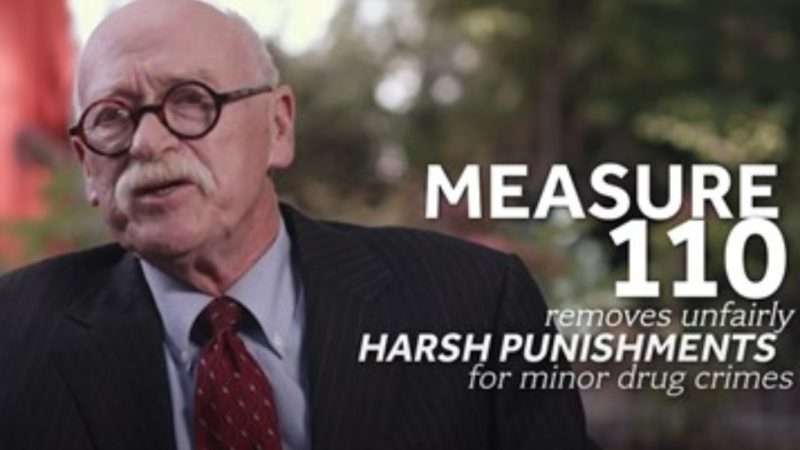
An still from an ad encouraging Oregon voters to vote yes on Measure 110

Three years ago, Oregon voters approved a groundbreaking ballot initiative that eliminated criminal penalties for low-level drug possession. The result of that “reckless experiment,” New York Times columnist Bret Stephens claims, has been a “catastrophe” featuring increases in “opioid overdose deaths,” “shooting incidents,” and public nuisances such as discarded needles, “human feces,” and “oral sex.”

Stephens’ assessment, which draws heavily on a story by Times reporter Jan Hoffman that was published on Monday, combines legitimate concerns about drug addiction and public order with misleading implications based on out-of-context statistics. And because Stephens ignores the main argument for decriminalization—that it is unjust to treat drug use as a crime—he never grapples with the morality of the policy it replaced.

It is important to keep in mind that Oregon’s Measure 110 did nothing to address the supply of illegal drugs, which remain just as iffy and potentially deadly as they were before the initiative was approved. Decriminalization was limited to drug users, and it was based on the premise that people should not be arrested merely for consuming forbidden intoxicants. This distinction between drug users and drug suppliers is similar to the policy enacted during Prohibition, when bootleggers were treated as criminals but drinkers were not.

Measure 110 changed low-level drug possession from a Class A misdemeanor, punishable by up to a year in jail and a maximum fine of $6,250, to a Class E violation, punishable by a $100 fine. Drug users who receive citations can avoid the fine by agreeing to undergo a “health assessment” that is supposed to “prioritize the self-identified needs of the client.” That assessment might result in a treatment referral, but participation is voluntary.

Despite the limited nature of Oregon’s reform, which was not designed to reduce the hazards posed by the highly variable and unpredictable composition of black-market drugs, Stephens thinks the fact that drug-related deaths continued to rise in Oregon shows that decriminalization has failed. “In 2019 there were 280 unintentional opioid overdose deaths in Oregon,” he writes. “In 2021 there were 745.”

Stephens neglects to mention that drug-related deaths rose nationwide during that period, from about 71,000 in 2019 to more than 107,000 in 2021. The number of deaths involving opioids rose from about 50,000 to about 81,000—a 62 percent increase.

To be sure, the increase in Oregon that Stephens notes was much larger. But how does it compare to trends in other jurisdictions that did not decriminalize drug use? Between 2019 and 2021, Oregon’s age-adjusted opioid overdose death rate rose from 7.6 to 18.1 per 100,000 residents. California saw a similar increase: from 7.9 to 17.8. In Washington, the rate likewise nearly doubled, from 10.5 to 20.5.

On its face, this does not look like evidence that decriminalization is responsible for Oregon’s continuing rise in opioid-related deaths. Another data point that is inconsistent with that theory: Opioid-related deaths fell sharply in Oregon last year, from 745 to something like 332, the provisional count as of December 21. (The Oregon Health Authority cautions that “mortality data for 2022 are not yet complete” and “as a result numbers for recent months may change.”) Stephens links to those numbers but does not mention the striking drop, perhaps because it does not fit the story he is telling.

While Measure 110 does not seem to have caused an increase in drug-related deaths, it manifestly did not prevent that increase. Was it supposed to?

As Stephens notes, the initiative’s supporters argued that the resulting health assessments, combined with new funding for treatment from marijuana taxes, would help people with drug problems turn their lives around. He acknowledges that defenders of Measure 110 complain of “funding shortfalls” and point out that “funds for harm reduction, housing and other services have been slow to arrive.” But he notes that the new system so far does not seem to have channeled many people toward treatment. “Of the 4,000 drug use citations issued in Oregon during the first two years of Measure 110,” he says, citing an article in The Economist, “only 40 people called the hotline [for health assessments] and were interested in treatment.”

Those numbers seem to validate the warnings of Measure 110 critics that, without the threat of jail, few drug users would be interested in treatment. But while forcing drug users to choose between jail and treatment surely boosts the number of people enrolled in such programs, there is reason to question the long-term effectiveness of that policy, which makes a difference only for people who are not yet ready to seek help on their own.

According to a systematic review of the evidence that the International Journal of Drug Policy published in 2016, research “does not, on the whole, suggest improved outcomes related to compulsory treatment approaches, with some studies suggesting potential harms.” The authors conclude that “given the potential for human rights abuses within compulsory treatment settings, non-compulsory treatment modalities should be prioritized by policymakers seeking to reduce drug-related harms.”

Notably, people with drinking problems generally are not subjected to compulsory treatment unless they commit crimes such as driving while intoxicated. Since alcohol is legal, heavy drinkers are free to ruin their health and their lives as long as they do not injure or endanger others.

Drug prohibition also blurs another distinction that is commonly applied to alcohol: the difference between use and abuse. Anyone caught with illegal drugs, whether or not he is experiencing life-disrupting problems, might be required to enroll in treatment if he wants to avoid criminal penalties. That approach is akin to requiring treatment for all drinkers, including occasional and moderate consumers.

Stephens does not pause to consider whether these differences make moral or practical sense, and he seems confused about how to classify the conduct of people with drug problems. “Addicts are not merely sick people trying to get well, like cancer sufferers in need of chemotherapy,” he says. “They are people who often will do just about anything to get high, however irrational, self-destructive or, in some cases, criminal their behavior becomes. Addiction may be a disease, but it’s also a lifestyle—one that decriminalization does a lot to facilitate. It’s easier to get high wherever and however you want when the cops are powerless to stop you.”

Viewing addiction as a disease that overrides free will is convenient for drug warriors, because it justifies forcible intervention. If addicts cannot reasonably be expected to control themselves, the argument goes, the government must step in to help them, whether or not they want that help. Their choices and preferences need not be respected, because they are illusory, a product of pharmacological slavery. At the same time, however, it seems patently unjust to punish people for behavior they purportedly cannot control.

Stephens tries to square that circle by selectively applying the disease model. Addicts are sick, he says, but they are also bad, because they have chosen a destructive and antisocial “lifestyle.” Although they are incapable of controlling their drug use, which makes compulsory treatment appropriate, they nevertheless respond to incentives, such that removing the threat of arrest changes their behavior. Their “disease” means they should not be treated as autonomous moral agents, except when it comes to holding them criminally liable for their actions.

That paradox can be avoided if we view addiction as a bad habit that is hard but not impossible to change, a pattern of behavior that cannot be explained by chemistry without also considering the psychological and environmental factors that drive self-destructive attachments to psychoactive substances. According to that view, addicts make choices all the time, albeit choices that are strongly influenced by their personal and social circumstances. There is nothing inherently illogical or unfair about holding them responsible for those choices when they impinge on other people’s rights.

That means a heavy drug user who steals to support his habit is not immune from criminal penalties. It also means the government can justifiably regulate what drug users do in public, where their actions might offend, incommode, or alarm people who have an equal right to use sidewalks, parks, and other taxpayer-funded facilities. Although Stephens implies otherwise, eliminating criminal penalties for drug possession does not require tolerating public drug use, defecation, or blowjobs.

In practice, of course, a jurisdiction that decriminalizes drug use when every other jurisdiction continues to treat it as a crime may attract people inclined to behave in the ways that Hoffman and Stephens describe. But those nuisances—which many major cities face, regardless of whether they routinely arrest people for drug possession—are a problem distinct from drug use per se.

Stephens also blames decriminalization for an increase in violent crime. “In 2019 there were 413 shooting incidents in Portland,” he writes. “In 2022 there were 1,309.” As he notes, that number now seems to be falling: There were 540 shooting incidents in the first half of this year, down from 674 in the first half of last year.

Although Stephens does not spell out the causal connection he has in mind, the reasoning presumably is that decriminalization encouraged drug use and attracted more drug users to the city, boosting demand and therefore black-market activity. But the violence that attends such activity, which is notably absent from legal markets in drugs such as alcohol, is entirely a product of prohibition. Just as Measure 110 did not improve the quality and consistency of illegal drugs, it did not solve the problem of black-market violence, which would require a more fundamental reform.

Decriminalizing drug possession, in short, is a halfway measure that reduces but by no means eliminates the harm caused by prohibition. Stephens, who assigns little or no weight to the benefits of eschewing criminal penalties for conduct that violates no one’s rights, is loath to acknowledge even that limited accomplishment.

“Some readers,” Stephens says, may argue that “we don’t want to return to the cost, violence and apparent fruitlessness of the old war on drugs. But that depends on whether the price of endless war exceeds or falls short of the price of permanent surrender.”

Prohibition, Stephens concedes, is ineffective and expensive, and it fosters violence, which is hardly an exhaustive list of its problems. In this context, “permanent surrender” counts as a victory.

The post Did Drug Decriminalization Cause a 'Catastrophe' in Oregon? appeared first on Reason.com.

from Latest https://ift.tt/Dc9o0Q3
via IFTTT
Stuck Behind an SUV? Blame Me.


SUVs in a line on a lot

I recently pulled into a store parking lot and noticed a woman with only a small bag of groceries heading to her car. She slipped behind the steering wheel of a 5,000-pound SUV, quickly cranked the turbocharged 200-horsepower engine, and drove away. Recognizing an engineering masterpiece that had evolved in a highly regulated world, I couldn’t help but think about the front-row seat I had to the events that accidentally spurred the rise of these vehicles. As the White House moves to subsidize the domestic manufacture of electric vehicles and their batteries, and as it writes regulations calling for tougher fuel economy standards, it’s worth remembering how we got to this point.

The White House has promised that this will all have a positive impact on global climate change and save us money when fueling our SUVs. Hopefully that’s true, but no one in government is systematically keeping score and reporting. The industry has become so overloaded with subsidies and regulations that it’s hard to tell what policies, if any, would reduce production costs and save consumers money, let alone help solve climate change.

Back in 1977, as a senior economist on President Jimmy Carter’s Council on Wage and Price Stability, I participated in Department of Transportation (DOT) proceedings that set the first fuel economy standards for the U.S. fleet. What transpired is a great example of what can happen when federal regulations become completely entangled with a major economic sector. The forces at play help to explain why a woman happily drives a 5,000-pound SUV to transport 10 pounds of groceries.

I can assure readers that no one in those proceedings thought the Ford F-150 pickup, beginning in 1982, would top the all-vehicle bestseller list for 41 consecutive years. And we could have never guessed that truck-like SUVs would become vehicles of choice for U.S. consumers. We couldn’t have; SUVs did not exist at the time.

We expected just the reverse. Cars would get smaller, we thought. Fuel economy would rise, and large, weighty vehicles would be a thing of the past, primarily because of the regulations being put in place.

The move to regulate fuel economy came about a few years earlier, following the 1973–74 Arab embargo that suddenly ended the flow of oil from OPEC nations. In the face of skyrocketing oil prices, Congress froze gasoline prices to protect American consumers from pocketbook shock. Then came the hard part. Elected officials sought to require U.S. automakers to build the smaller, more economical cars that unquestionably would have been built had gasoline prices been allowed to rise freely. Yet the fuel economy standards hit passenger sedans hard while leaving light trucks, which were not seen as passenger vehicles, almost untouched.

As the fuel economy standards began to bite consumers, they found that trucks provided comfort and safety no longer available in the downsized sedans. Truck sales surged, and in 1990, Ford placed a four-door body on a Ranger truck frame and introduced the Ford Explorer, a passenger vehicle that satisfied the government’s truck definition. This inspired an explosion of similar SUV production across the industry. Trucks became beautiful, expensive, and highly desirable.

All the while, the fuel economy standard for trucks remained less strict than for sedans. To make things even better for U.S. producers, almost-prohibitive tariffs on European light trucks were extended to the rest of the world. Many foreign producers eventually jumped the tariff wall and built trucks and cars here, but the home-grown industry enjoyed an early advantage.

Over the years, regulatory priorities changed. America became the world’s leading oil producer. Old fuel efficiency worries were bolstered by concerns about smog, emissions, and climate change. Electric vehicles became the politically hoped-for solution.

But instead of overhauling the aging fuel efficiency apparatus—perhaps even moving to a straightforward tax on carbon emissions—politicians added more ornaments to the fuel economy Christmas tree. It now includes requirements for producers of too many gasoline-powered vehicles to subsidize those that make electric cars. Today’s DOT-proposed fuel economy regulations can only be met by a significantly enlarged electric fleet. These are accompanied by proposed emission regulations by the Environmental Protection Agency.

Now we’re left with a maze of regulations and rules that I doubt anyone can fully explain. The industrial organization that results is so opaque that no one can tell what anything really costs when factoring for the credits, subsidies, or tax breaks paid for or enjoyed by all involved.

Perhaps it’s time to start anew.

Why not wipe the slate clean, support carbon and other offset markets to reduce undesirable emissions, and let the chips fall where they may? It may take time, but customers and automakers can respond more effectively than the regulatory state has. We should be able to learn from the 46 countries already using market forces, along with an unbiased analysis of the whole thing. This suggests calling on the Joint Economic Committee to organize a study and publish the findings. Perhaps the National Bureau of Economic Research could become involved.

It’s time we better understand why ordinary people are driving extraordinary trucks to fetch a loaf of bread and milk from the market. And if it’s time to go electric, we’ll know what not to do.

The post Stuck Behind an SUV? Blame Me. appeared first on Reason.com.

from Latest https://ift.tt/hplsrb1
via IFTTT
New Zealand Keeps Doxxing Registered Gun Owners


A handgun against the backdrop of a map of New Zealand, with data plots.

A data breach in New Zealand exposed the personal information of some of the country’s gun owners, and not for the first time. It’s another indication of how even well-intended government policies can become civil liberties nightmares.

After the 2019 mass shooting at a Christchurch mosque, the country enacted a series of reforms intended to prevent such tragedies in the future. Along with a ban on most semi-automatic firearms and a gun buyback that netted more than 50,000 weapons, one provision empowered New Zealand’s Firearms Safety Authority to “effectively regulate the legitimate possession and use of firearms.” In other words: a national “firearms registry” that will “link firearms to licence holders, so there is a clear picture of the legally held firearms in New Zealand and improved ability to trace firearms,” according to Executive Director Angela Brazier.

Last week, a joint email went out from the Firearms Safety Authority and the Auckland Central Police District to 147 registered gun owners, advising them that their addresses might need to be updated. Unfortunately, the emails were all listed in the CC field instead of the BCC field, which would be hidden. As a result, each recipient of the email not only saw every single other recipient’s email address but, in many cases, first and last names as well.

As The New Zealand Herald noted, “The visible addresses included various prominent Auckland residents, including lawyers, company directors, police officers and government officials.”

This is not the only, or even the most severe, breach of New Zealand gun owners’ data in recent memory. During the 2019 gun buyback, the government set up a website for gun owners to register their weapons for relinquishment. Police later admitted that visitors to the site could easily access other registrants’ personal information, including names, addresses, dates of birth, and bank account information. And in 2022, thieves stole as many as 400 gun owners’ records from an abandoned police precinct after police officials neglected to destroy the files before moving operations to a new building.

In the U.S., national gun owner registries are prohibited by federal law, though they do exist in some form in certain states, and some progressive lawmakers and advocates support wider adoption. Giffords, the gun control advocacy organization named for former Rep. Gabrielle Giffords (D–Ariz.) who was shot and nearly killed while in office, says registries are “a useful method of curbing illegal gun activity and encouraging responsible gun practices.” Sen. Cory Booker (D–N.J.) proposed a national licensing system for gun owners in 2019 as part of his presidential campaign platform.

Gun owners would have reason to fear that a registry today could be used to confiscate guns tomorrow. Not to mention, a plan like Booker’s would require the federal government to keep accurate and copious records so as not to accidentally arrest the wrong person—not exactly its strong suit. There’s also the issue of noncompliance: In New Zealand, it’s estimated that somewhere between one-third and one-half of all newly forbidden weapons were actually turned in. In neighboring Australia, often touted as an example of gun control done well, only about one-fifth of banned weapons are estimated to have been turned in.

But the events in New Zealand demonstrate an underappreciated downside to government registries: the possibility that such a mass of personal information could be leaked or otherwise improperly accessed. Nicole McKee, firearms spokesperson for New Zealand political party ACT, told The New Zealand Herald that the latest leak “shows once again that police are incapable of keeping licenced firearms owners’ information secure.”

The post New Zealand Keeps Doxxing Registered Gun Owners appeared first on Reason.com.

from Latest https://ift.tt/MGqmzlW
via IFTTT
No, Most High School Boys Aren’t Conservative


Tan background with red arrows across it and a cluster of three teenage boys in the foreground

High school boys are now twice as likely to identify as conservative than liberal. Girls, on the other hand, are almost three times as likely to identify as liberal than conservative. This stark gender divide—found in a 2022 University of Michigan survey of high school seniors—has sparked concern from across the political spectrum. A trend of boys becoming more conservative seems to show everything from proof that young men are becoming fascists to the likely fall in marriage rates.

But what if the survey doesn’t spell quite as much doom as it seems to? 

Many commenting on the survey failed to notice that majorities of both genders responded without identifying a partisan political identity. The source of concern is concentrated among the paltry 23 percent of boys who identified as conservative and 30 percent of girls who identified as liberal—leaving just 13 percent of boys identifying as liberal, and 12 percent of girls as conservative. But 64 percent of boys and 58 percent of girls didn’t identify as conservative or liberal—instead, they identified as “moderate,” “none of the above,” or “I don’t know.”

Yes, more boys than girls identify as conservative—about twice as much, according to the survey—and girls identify as liberal at a rate 17 percentage points higher than their male classmates. But this divide only pertains to a minority of young people.

The survey found that most high school seniors simply don’t have a strong partisan political identity—the majority of them were either unsure of their beliefs or their opinions were more complicated than a two-dimensional left-right dichotomy.

However, this hasn’t kept some from drawing overwrought conclusions from the data.

“Among liberals, the future is female,” wrote psychology professor Jean Twenge of the survey in her book Generations. “And among conservatives, the future is male.”  

A Fox News article even insisted that “girls trend overwhelmingly liberal,” despite only one in three of them identifying as such.

The fervor over the survey’s results seems to play into a larger panic around social media’s apparently pernicious influence on young people. From the left, too much Joe Rogan and Andrew Tate is pushing boys into a cycle of alt-right radicalization. And right-wing commentators argue that social media is causing girls to become depressed liberals. 

But in reality, these surveyed high school seniors don’t seem to care all that much about partisan politics, and those that do just happen to have a split along gendered lines. We shouldn’t fret over supposedly polarized young people, particularly when they seem to slightly disfavor your political side. And we certainly shouldn’t suggest, as many have, that government regulation of social media or online speech would do any good for them. 

The post No, Most High School Boys Aren't Conservative appeared first on Reason.com.

from Latest https://ift.tt/Cr6yobm
via IFTTT
Bond Bloodbath Builds, Yield Curve Steepens, Black Gold Bounces Ahead Of Payrolls

Bond Bloodbath Builds, Yield Curve Steepens, Black Gold Bounces Ahead Of Payrolls

Another day, another clubbing of bond bulls (and oil bears)…

Services surveys signaled ‘stickier’ inflation, jobless claims (and falling challenger job cuts YoY) confirmed labor market remains strong, and factory orders jumping all helped send Treasury yields to new cycle highs (and initially weighed on stocks before the ubiquitous wave of buying came back in).

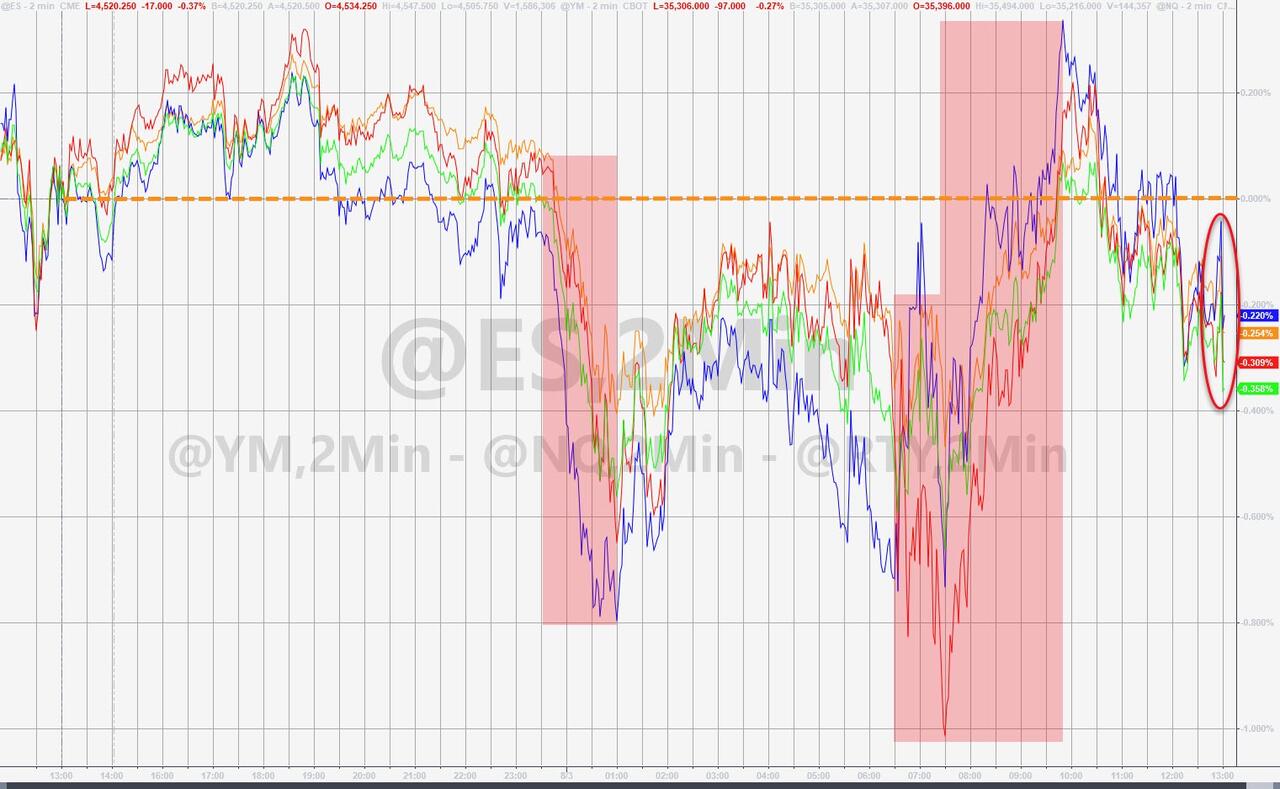
Futures were slammed around the Asia-close-Europe-open and then again at the US cash open before bouncing back aggressively after the ISM data at 10ET. Once Europe closed, stocks faded to end in the red…

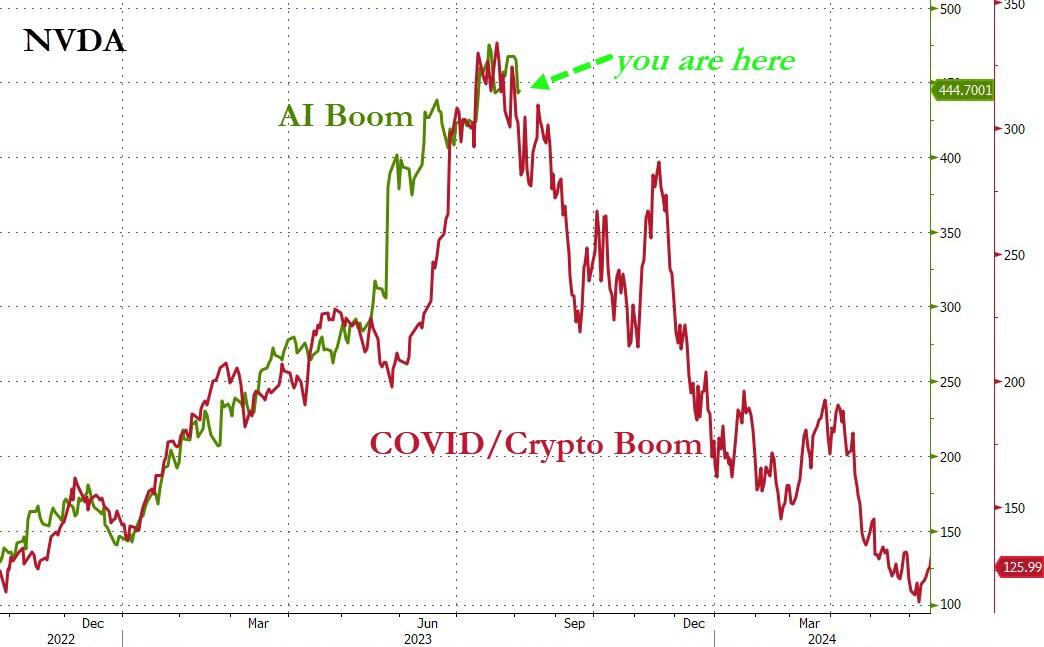
Will AMZN/AAPL mark the top?

Source: Bloomberg

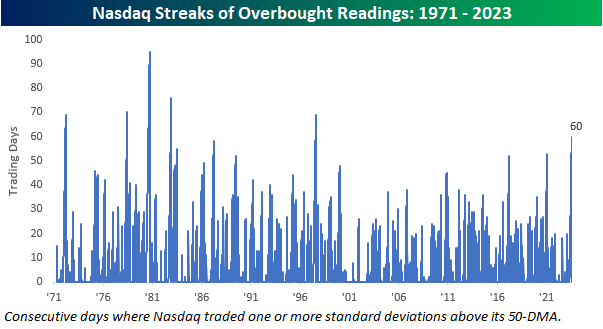
Nasdaq has now been ‘overbought’ for 60 days – its longest period since the run-up to the bursting of the dot-com bubble…

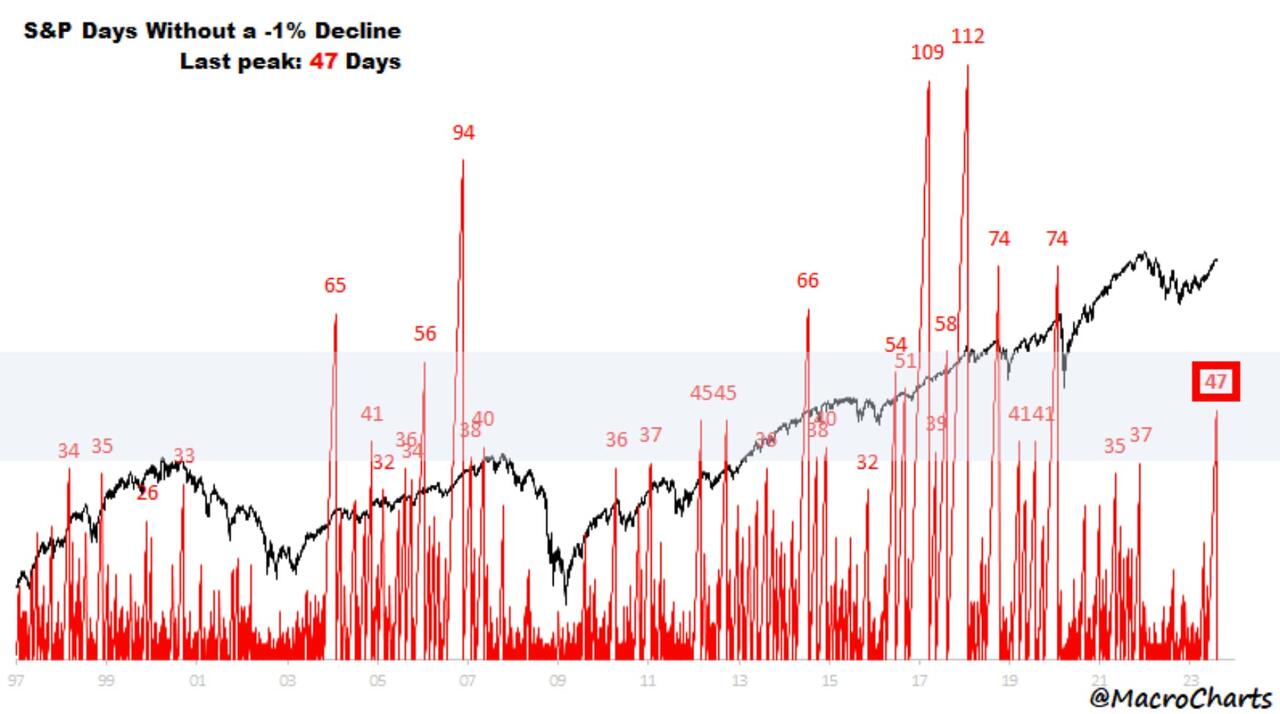
As @MacroCharts noted, yesterday’s sharp decline broke the S&P’s longest low-Volatility streak in years. Many similar breaks ended with some big Volatility spikes & Stock declines.

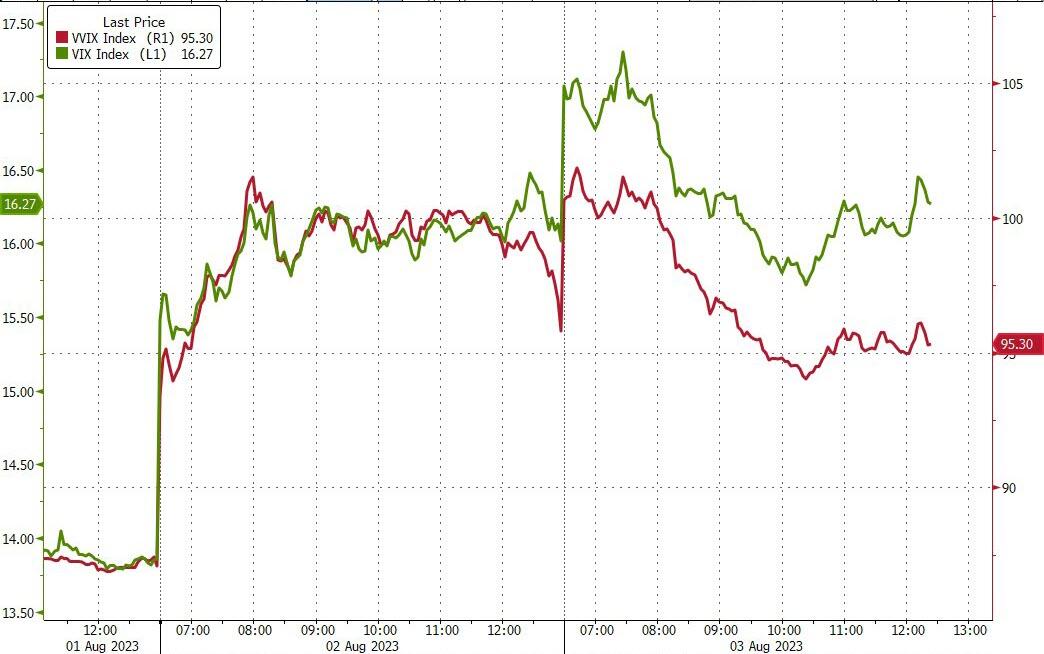
VIX remains elevated but VVIX leaked a little lower today ahead of tomorrow’s payrolls print (but VVIX is definitely still stressed)…

Source: Bloomberg

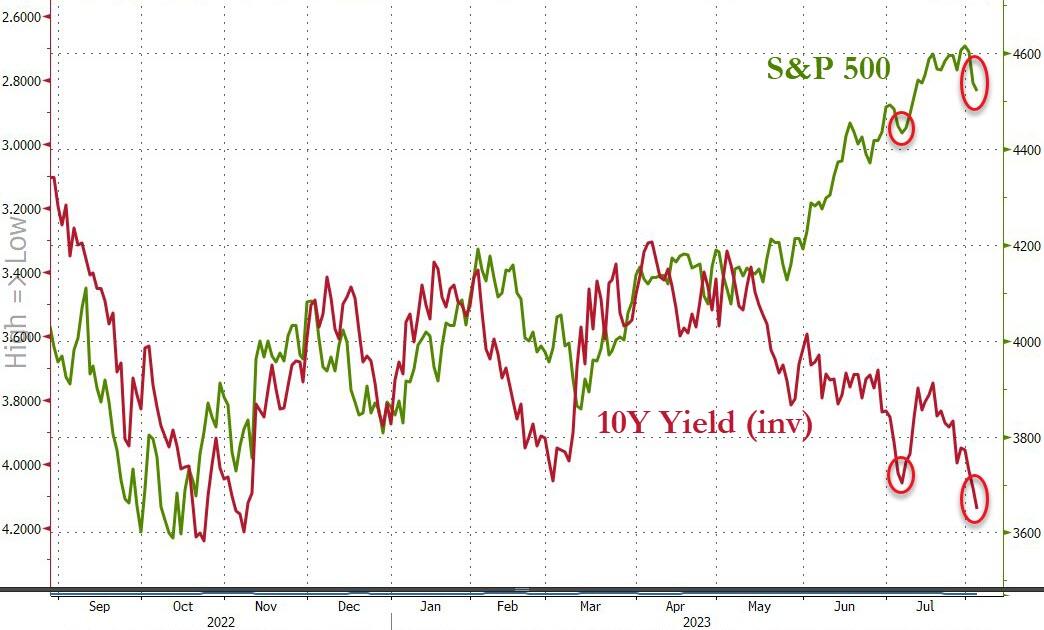
The recent acceleration in yields appears to have had an effect on long-duration risk-assets…

Source: Bloomberg

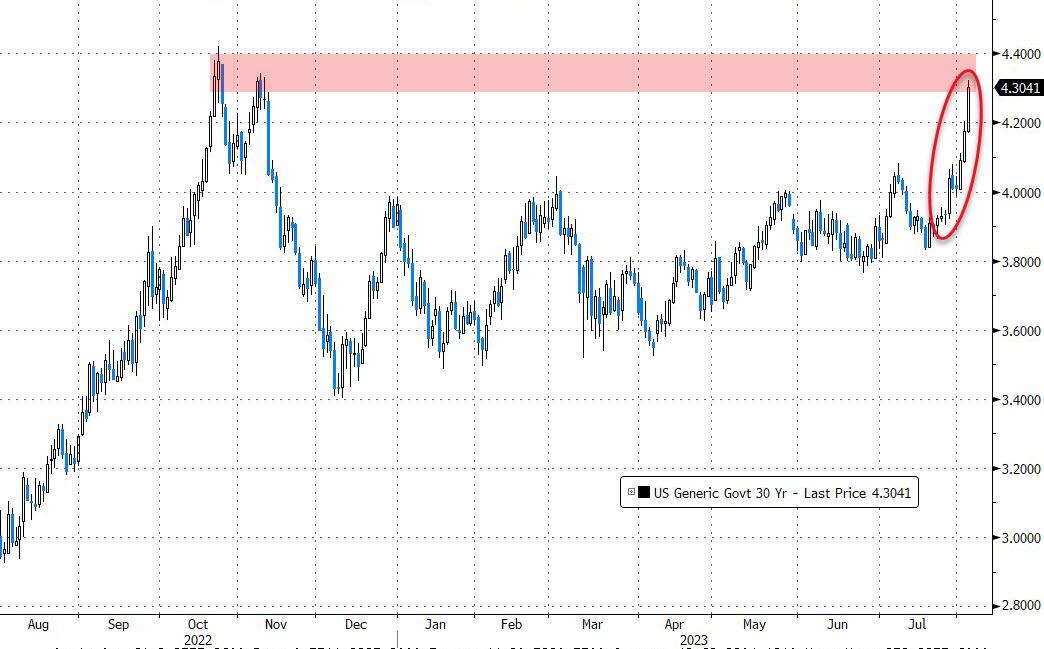
Treasuries were clubbed like a baby seal once again with the long-end the ugliest horse in today’s glue factory (30Y +13bps, 2Y +2bps). On the week, 30Y Yields are up 30bps (2Y only +2bps)…

Source: Bloomberg

30Y yields are back up near last October’s highs…

Source: Bloomberg

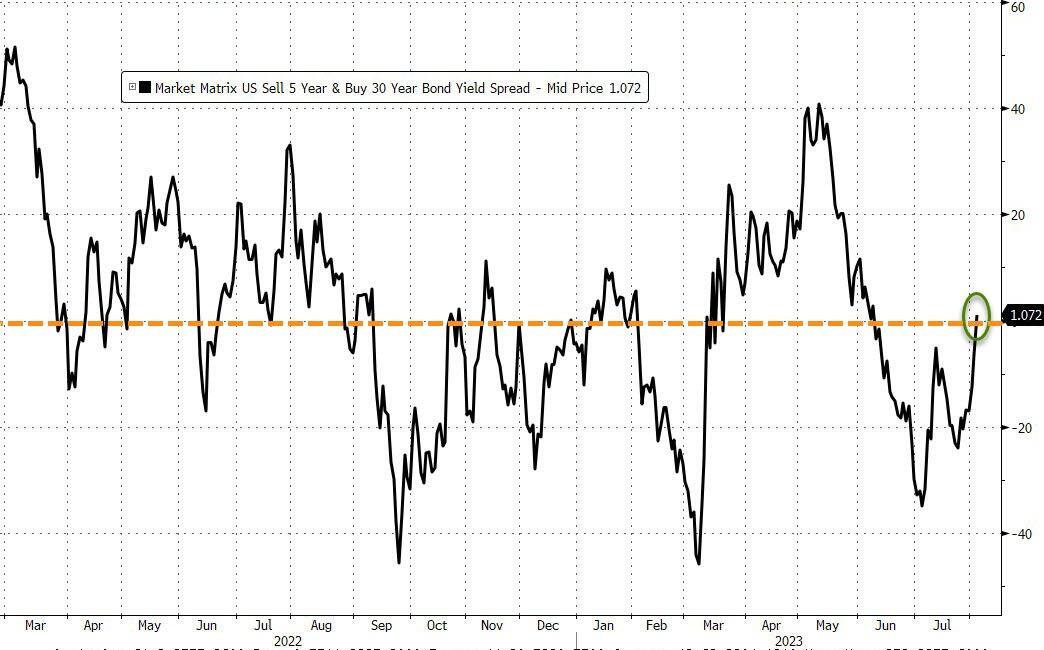
The 5s30s segment of the yield un-inverted today

Source: Bloomberg

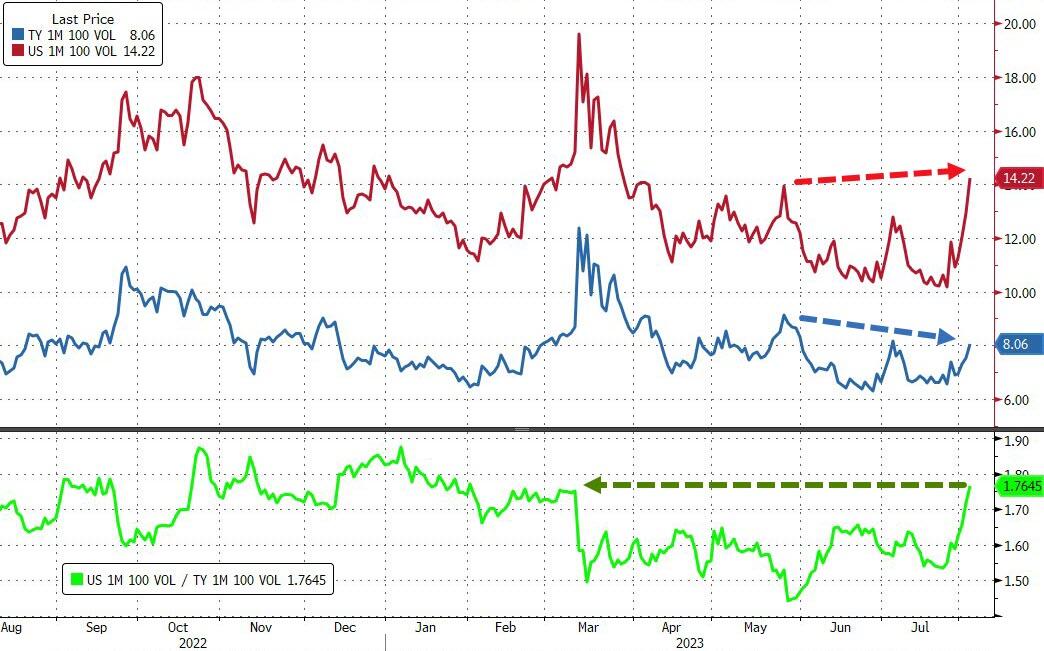
Notably, long-end futs vol has picked up significantly while 10Y Futs vol has risen only modestly…

Source: Bloomberg

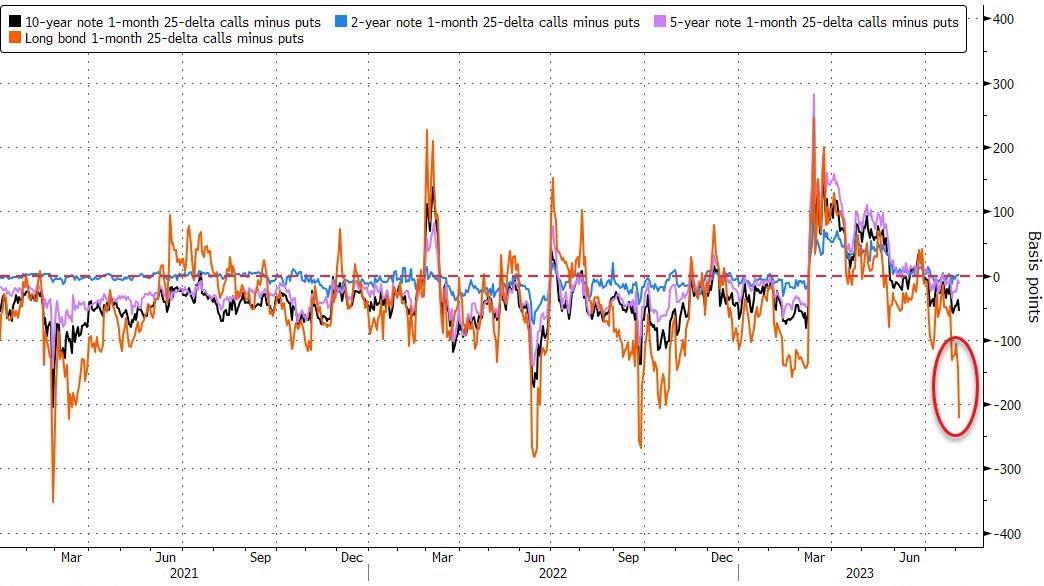
Interest-rate options traders are paying through the nose for protection against further increases in long-maturity Treasury yields that are already at their highest levels of the year.

Source: Bloomberg

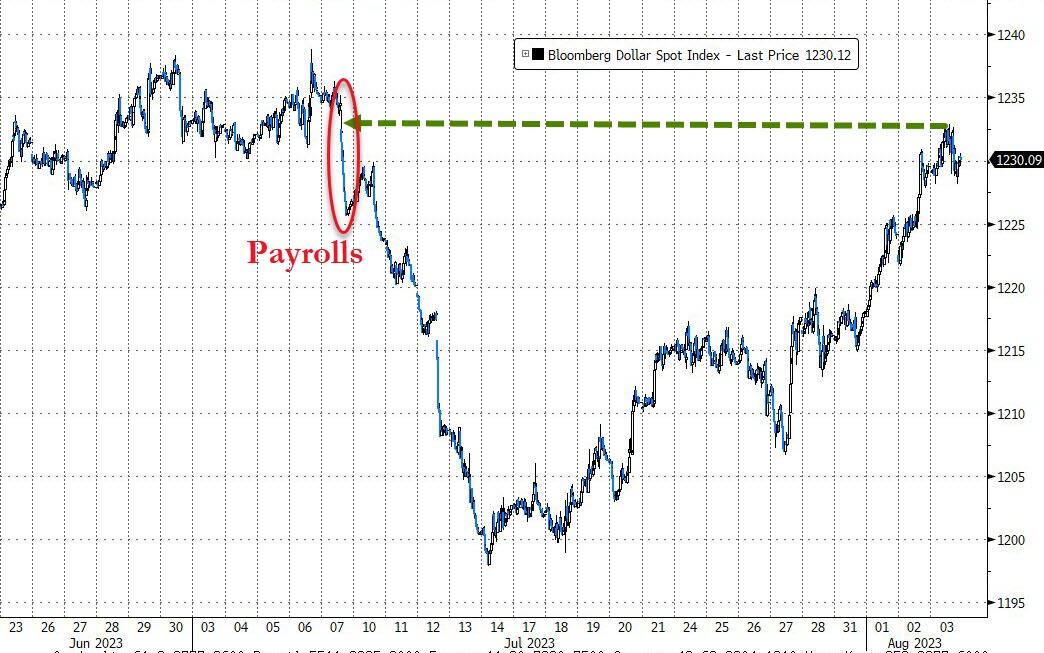
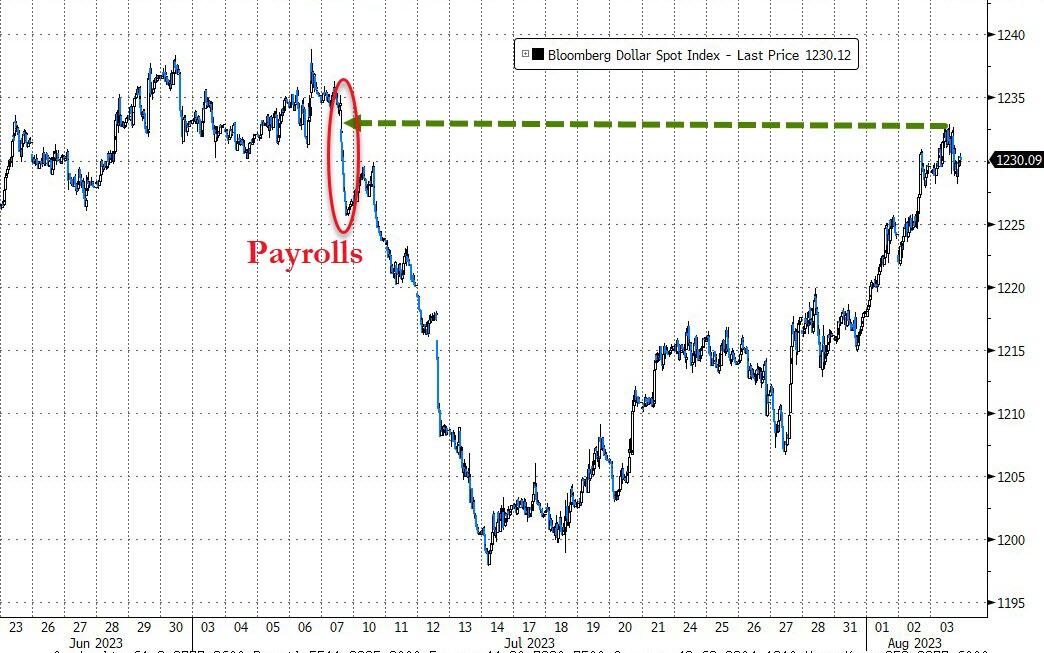
The dollar ended the day flat, having retraced July’s losses; perfectly round-tripping to the last payrolls print…

Source: Bloomberg

Oil soared back, erasing yesterday’s decline after Saudis were reported as extending their 1m,m b/d production cut through September (and could “deepen” cuts)…

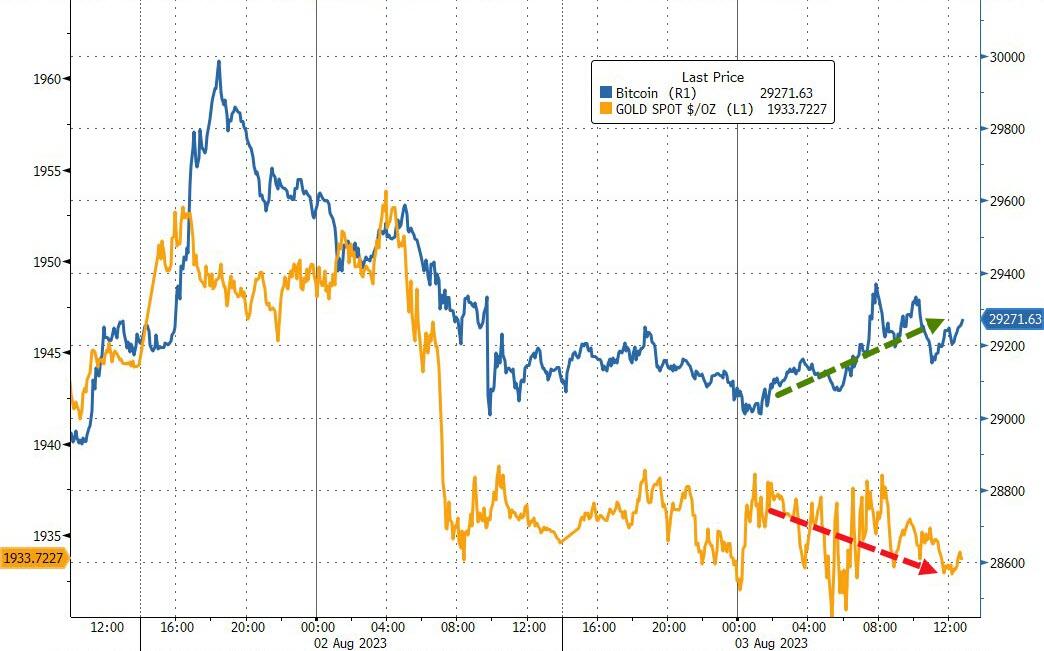
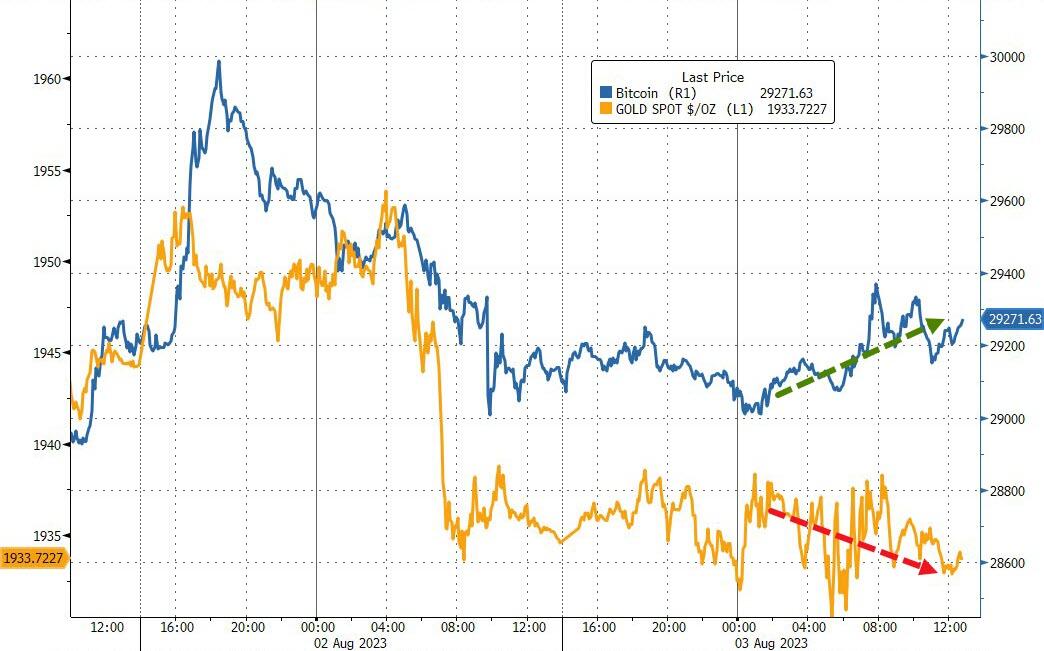
Gold and Bitcoin were noisy but quiet today, modestly lower and higher respectively…

Source: Bloomberg

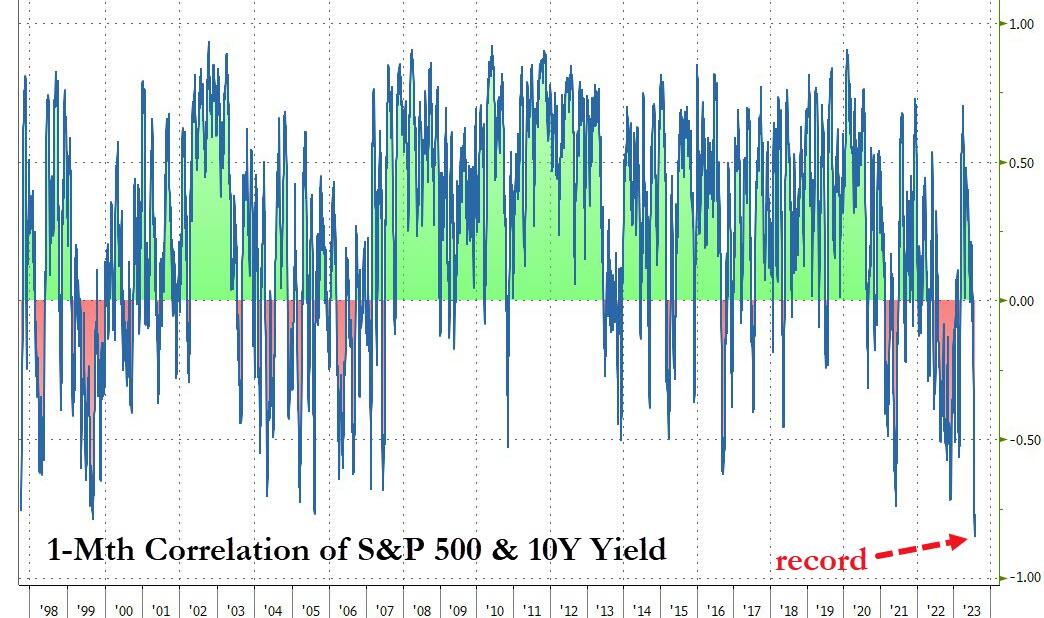
Finally, we note that the relationship between bonds and stocks is at an extreme…

Source: Bloomberg

Will tomorrow’s payrolls print break it bad?

Tyler Durden
Thu, 08/03/2023 – 16:00

via ZeroHedge News https://ift.tt/6fVNsHa Tyler Durden

Retailers Strike Back! 7-Eleven Workers Beat Brazen Mega-Shoplifter With A Stick

Retailers Strike Back! 7-Eleven Workers Beat Brazen Mega-Shoplifter With A Stick

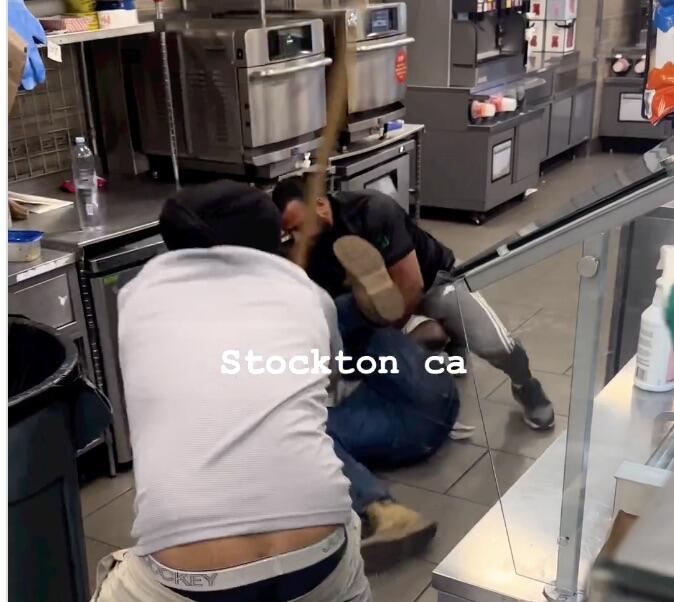
In what we hope will be looked back on as the pivotal stick-whooping heard ’round the world, two 7-11 workers in California lashed out at a mega-shoplifter who’d defiantly thrown hundreds of cigarette packs into a rolling, 55-gallon trash can. 

It’s easily the year’s most heartwarming video so far. As the action begins, we see a black man, with most of his head covered, brazenly rolling a large, trash bin along a wall full of individual cigarette packs and other nicotine products.  

As two Indian-accented store employees verbally confront him, the thief aggressively moves his right hand toward the 5-o’clock position on his waistband, which is covered by a baggy t-shirt. As he does, he exclaims, “Shut your ass up” and threatens to “put my strap on your bitch ass.” Strap is urban slang for a pistol.

With the audience temporarily left to wonder if he’s bluffing about being strapped, the thief continues muttering insults at the employees — with “bitch-ass nigga” clearly his most-practiced — as he rolls down the aisle, throwing fistful after fistful of cigarette packs, vapes and cigars into the can. 

As an employee draws close to the trash can, the criminal again motions for his waistband. This time, however, we see him pull something out before quickly putting it back. It appears to be a knife.  

As deadly force is threatened — this time more credibly — the narrator casually requests a small portion of the plunder, in the form of a pack of Swisher Sweets cigarillos. “Hey, can I get a Swisher? Let me get a Swish?”

Embracing the standard procedure that’s pretty much universally imposed on store employees — to simply let thieves stroll out the door with stolen goods — the narrator says, “Just let him go. There’s nothing you can do. They’re not gonna do nothing.”   

Next the narrator asks a question sure to grate on the nerves of ZeroHedge readers: “Do you have insurance?” Thrown about every time a leftist mob burns a building to the ground or loots a retail store, the question carries a casual disregard for insurance companies, along with ignorance of deductibles, the impact of mass thievery on business insurance premiums, and the eventual impact on retail prices. 

Technically, the narrator was spot-on with his double-negative declaration that “they’re not gonna do nothing.”  “Not doing nothing” means doing something — and these employees were about to do something we will forever cherish. 

First come the opening notes of the video’s crescendo of just violence: As the criminal wraps up his defiant pillaging, a bearded employee impedes the forward progress of the trash bin before firmly grabbing each of the thief’s forearms.

Then it happens: Respecters of property rights are treated to a sight so beautiful it should be emblazoned on t-shirts, flags and maybe even biceps. 

From off-camera, a second employee — in what appears to be a turban of the type favored by Siks — enters the frame and hits the thief on the arm with a five-foot stick. 

The bearded employee takes the criminal to the ground and then the real fun begins — 27 seconds of continuous, unbridled, full-force whacks with the stick. All the while, the criminal spews cries of pain, declarations of surrender, and pleas for mercy —  but not one “bitch-ass nigga.” 


A post shared by 5 element phd (@yo_folkers)

The narrator is impressed, shouting to the societal-predator-turned-prey, “That’s called whooping your ass!” In a second, postscript video, the narrator talks the employees into letting the thief go. In agony, the seated criminal says, “I can’t walk!” With the command voice of a personal trainer, the narrator exhorts him: “You better walk tonight. YOU BETTER WALK TONIGHT!”  


A post shared by 5 element phd (@yo_folkers)

Next comes a comic twist. As the narrator escorts him out, the limping thief asks, “Can I get a soda…please!” Even his documentarian and post-beating advocate finds the request preposterous: “What kind of sh*t you telling me? You do this sh*t and you want a soda? Get the fu*k out, man.” 

There’s something extra-wonderful about the fact that this took place in California — where the Senate passed a bill in June that would actually make it illegal to interfere with shoplifters. We’d prefer to see retailers equip their employees with five-foot sticks — though we’d supplement that with plenty of pepper spray.  

Tyler Durden
Thu, 08/03/2023 – 15:25

via ZeroHedge News https://ift.tt/nb8HhfY Tyler Durden

‘COVID-Karen’ Installed As Fauci’s Replacement At NIAID

‘COVID-Karen’ Installed As Fauci’s Replacement At NIAID

Authored by Jordan Schachtel via ‘The Dossier’ Substack,

There will soon be a new boss in town over at the Government Health insane asylum and off the books pharmaceutical lobbying outfit that is the National Institute of Allergy and Infectious Diseases (NIAID).

Her name is Dr Jeanne Marrazzo, and she has been named to replace Fauci as the new NIAID chief.

She shares many similarities with her predecessor.

Both come from the HIV/AIDS world, neither saw a patient ever again after completing their respective residencies, and neither has ever achieved anything scientifically significant.

Unsurprisingly, Dr Fauci, who is worshipped as a deity in the Government Health world, gave his blessing to Marrazzo.

Marrazzo is “very well-liked, very respected” and experienced, Fauci told STAT News on Wednesday.

“She’s going to be a good fit. It’s a great challenge that she’s going to be facing; it’s going to be exciting for her.”

Fauci is far from the only person to applaud Dr. Marrazzo’s elevation to a Government Health head honcho post.

Her appointment received much praise from the famed pseudoscientist Peter “Regional Fauci” Hotez.

She also received praise from the communist fake doctor who leads the World Health Organization.

Marrazzo is loyal to the narrative, which is why she got the job in the first place.

For example, she has continued to claim that coronavirus hysteria kicked off thanks to a bat and/or pangolin doing some weird stuff and then next thing you know, pandemic!

Another necessary “prerequisite” for the job is her complete and total allegiance to the mRNA mafia.

In advancing her apparent side gig as a pharma saleswoman, she has repeatedly promoted the false notion mRNA shots stop viruses from mutating.

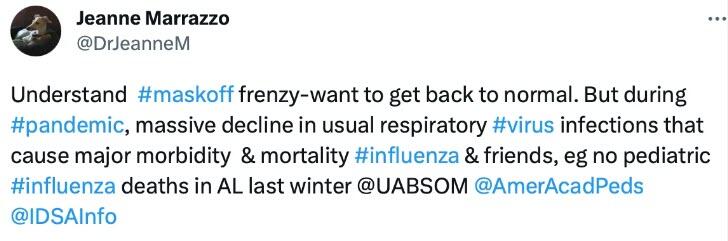
Showcasing her big brain energy during the covid hysteria era, Marrazzo made it clear that she believed masks worked magnificently to stop all viruses… except Covid of course!

And if you disagree with Dr. Marrazzo, it’s probably because you hate lesbians. What a win for diversity!

Justin Hart of Rational Ground has even more info on the troubling new appointee: This is slap in the face to those of us who really, REALLY, wanted to repair things with our healthcare institutions.

Tyler Durden
Thu, 08/03/2023 – 15:05

via ZeroHedge News https://ift.tt/NJRkHyr Tyler Durden