$4 Trillion In 2 Companies: Apple, Amazon Earnings Preview

$4 Trillion In 2 Companies: Apple, Amazon Earnings Preview

Today is the busiest day of Q2 earnings season, and the highlight of today’s earnings releases will be reports by tech gigacaps Amazon ($1.4TN) and Apple ($3.02TN mkt cap, world’s largest), which collectively have over $4 trillion in market cap, and while they may not give a strong read-through on the broader economy, certainly every investor will be watching results.

Here is a preview of what to expect, courtesy of JPM TMT trader Jack Atherton and Goldman TMT trader Peter Callahan:

AMZN reports post close on 8/3 (conf call @ 530pm ET): From AI loser to AI winner in a matter of weeks. Not only is there a sense AI creates a rising tide for all Cloud Infrastructure players, but investors are increasingly confident that OpenAI/GPT won’t be the only LLM in town with AWS well placed as an LLMagnostic platform.

  • Into the print, most focus is on the AWS: buyside looking for Q2 and July update for +9-10%, and many investors are hoping for mgmt to give a Q3 guide to demonstrate accelerating trends on easy comps (the hope being that Q2/July is the bottom). At

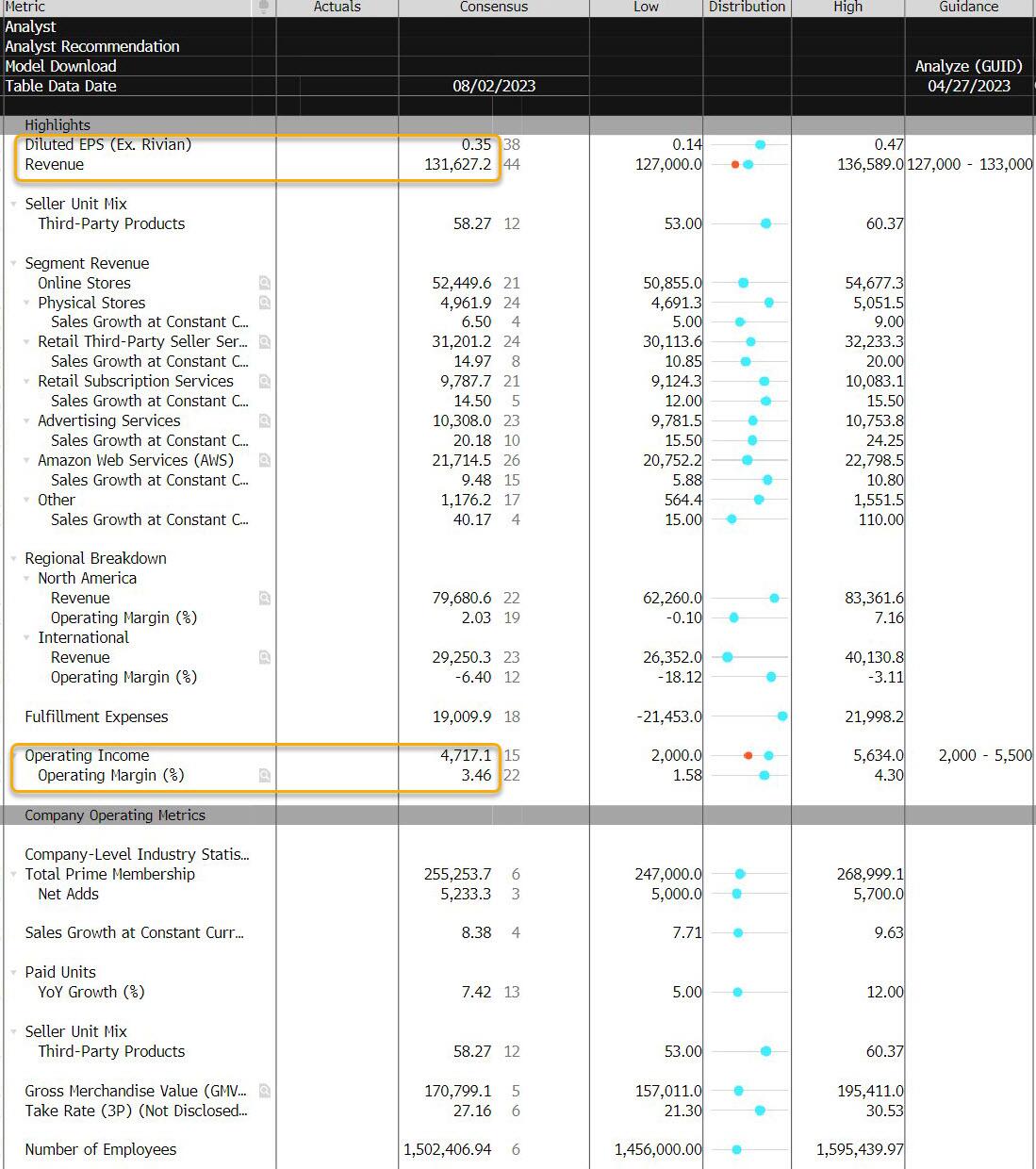
  • At group level, buyside whispers are Q2 revenue ~$131B, EBIT ~$5B (guide $127-133b, $2.0-5.5b)

    • Q3 guidance of ~$139b, EBIT ~$4.5B (both midpoints).

  • Stock +52% YTD; Options implied move 6.3%.

What to focus on:

  • AWS growth rate (bar a bit lower post MSFT Azure print, but investors still looking for greenshoots here — July vs June growth, Backlog, A.I. contribution);

  • Continued improvements in Retail Margins (e.g. beat high-end of EBIT guide.

GS desk has positing core as 8 out of 10. Stock has sold off 9 of last 11 prints T+1.

* * *

Here is what the sellside expects from AMZN, courtesy of Bloomberg:
* * *

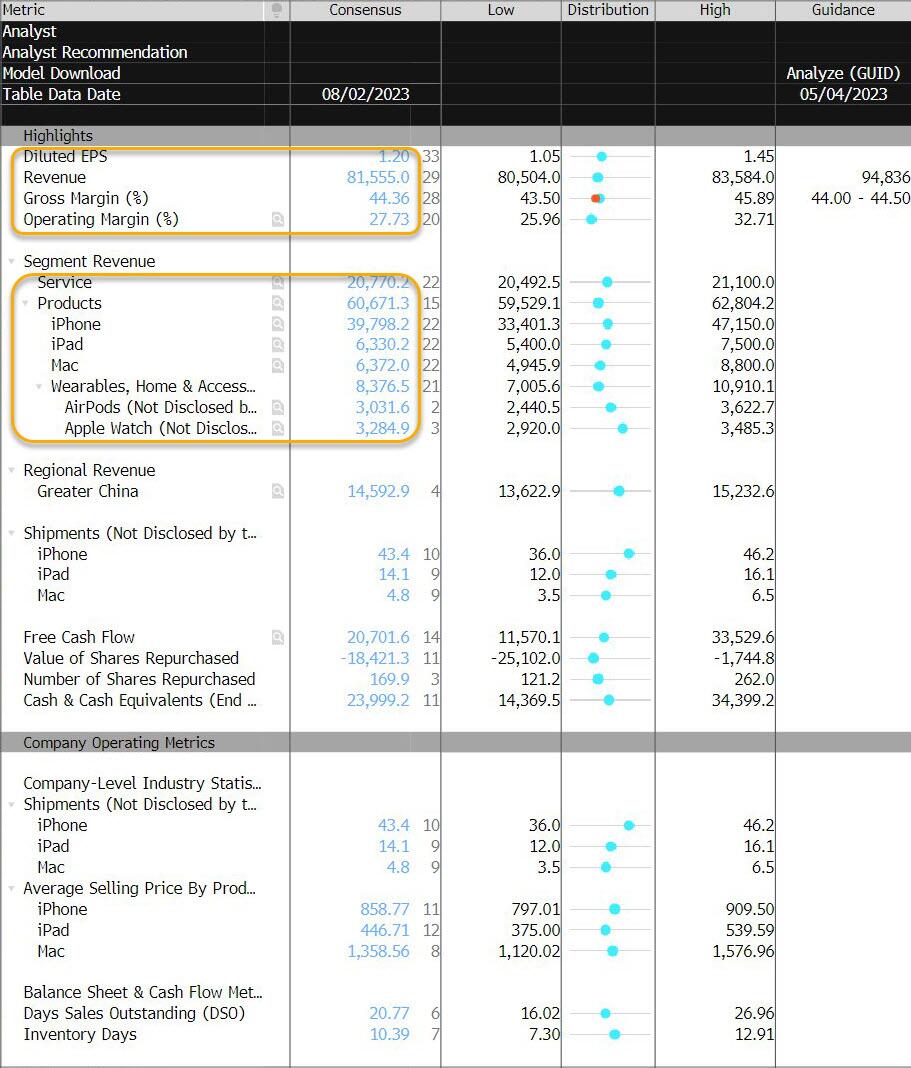
AAPL reports post close on 8/3 (conf call @ 5pm ET): There isn’t any major change to in positioning in AAPL of late – it drifts largely under the radar from an AI perspective and investors remain bearish on valuation, risks around the consumer and regulatory threats to the ~$20B annual check from GOOGL.

  • Buyside looking for FQ3 revenue ~flat y/y (guide -2-3%) with iPhone revenue $40.6b (+2% vs consensus),

    • FQ4 revenue guided to +2% y/y (in line with consensus).

  • Stock +48% YTD; Options implied move 4%.

What to focus on:

  • June quarter revenue trends (strength in Macs & Services) w/ Sept guide a bit of a moving target given it will likely be more of a reflection of iPhone launch timing, rather than end-demand trends.

GS desk has positing core as 7 out of 10. Stock has traded higher on 4 straight prints, T+1.
Tyler Durden
Thu, 08/03/2023 – 14:45

via ZeroHedge News https://ift.tt/gotcxdK Tyler Durden

What Do Federal Tax Receipts & Total Receipts Suggest About Recession?

What Do Federal Tax Receipts & Total Receipts Suggest About Recession?

Authored by Mike Shedlock via MishTalk.com,

Federal tax receipts suggest GDI numbers, not GDP numbers, are accurate. They also hint at recession…

Tax receipts from the BEA, chart by Mish

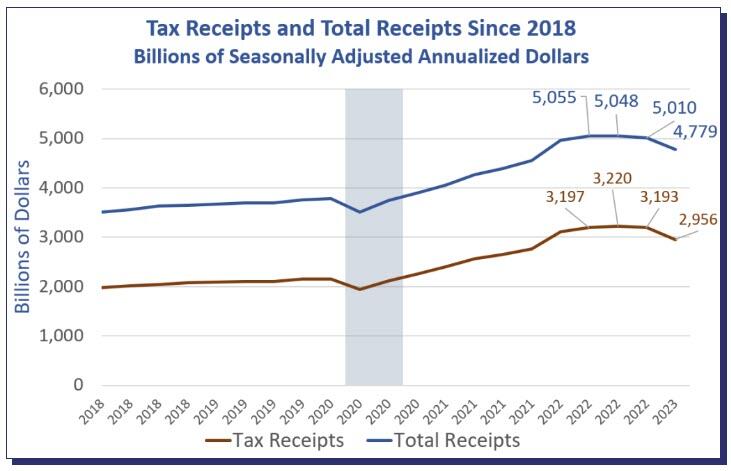
Tax receipts and total receipts are from the Bureau of Economic Analysis which also produces the government GDP estimates.

Data is through 2023 Q1 because tax data, like Gross Domestic Income (GDI) is not available in the first estimate of GDP for the quarter.

Tax Receipts and Total Receipts Since 2018

Tax receipts from the BEA, chart by Mish

Total receipts have fallen three consecutive quarters. Tax receipts have fallen two straight quarters.

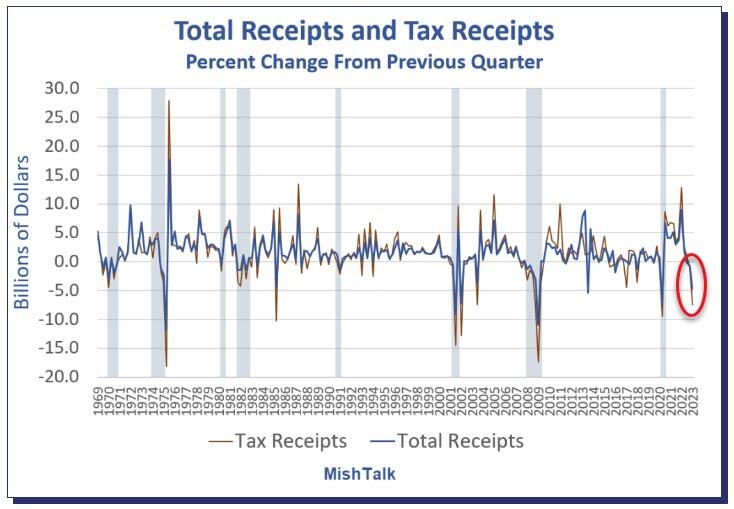
Total Receipts and Tax Receipts Percent Change From Previous Quarter

Tax receipts from the BEA, percent change calculation and chart by Mish

When tax receipts and total receipts both plunge, the economy is typically in recession. There were false signals in 1985 and 2003. There have also been recessions unconfirmed by plunging receipts so this is admittedly not the greatest of signals. But the tax data and the income data align,

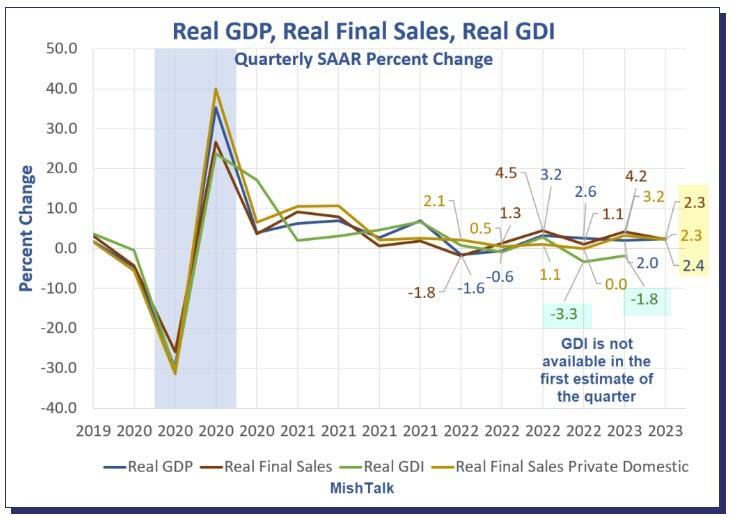
Real GDP Beats Expectations, Rises 2.4 Percent in First Estimate for 2023 Q2

On July 27, I noted Real GDP Beats Expectations, Rises 2.4 Percent in First Estimate for 2023 Q2

Nearly everyone cheered the strong report, except it was not entirely strong. GDI did not confirm GDP. GDI was negative for two consecutive quarters.

Nonfarm Payrolls and Employment Levels

Nonfarm payrolls and employment levels from the BLS, chart by Mish.

Payrolls vs Employment Since May 2022

  • Nonfarm Payrolls: +4,162,000

  • Employment Level: +2,695,000

  • Full Time Employment: +2,116,000

Of the 894,000 rise in employment in January, 810,000 was due to annual benchmark revisions. And the BLS does not say what months were revised, just poof, here you go. Again, we cannot, with strong confidence, suggest these reports portray an accurate picture of either jobs or employment.

Every month, economists and the mainstream media tout strong jobs reports. But the household survey (employment levels) have not matched nonfarm payrolls (the establishment survey).

They measure two things. The establishment survey is a count of jobs, whereas in the household survey you are either employed or not regardless of how many jobs you have.

The discrepancy between jobs and employment also lends credence to GDI not GDP. So does the index of total hours worked.

The BLS Jobs Report Falls Way Short of Stellar ADP Expectation

I discuss these discrepancies every month when the job surveys are published. For the latest report, please see The BLS Jobs Report Falls Way Short of Stellar ADP Expectation

The payroll tax data, income data, and the household survey are all in sync. GDP is the odd man out.

*  *  *

Subscribe to MishTalk Email Alerts.

Tyler Durden
Thu, 08/03/2023 – 14:25

via ZeroHedge News https://ift.tt/ZWQx1iX Tyler Durden

Hunter Biden Raked In Millions Amid ‘Nonstop Debauchery’

Hunter Biden Raked In Millions Amid ‘Nonstop Debauchery’

For two years, as Hunter Biden slid deep into substance abuse and prostitutes, he raked in $4 million from a Chinese private equity firm, a Ukrainian energy company, and other sources, according to a proposed plea agreement to federal tax charges, Bloomberg reports.

The agreement, made public Wednesday after US District Judge Maryellen Noreika ordered it unsealed following media requests, would see Hunter Biden plead guilty to misdemeanor charges, serve no jail time, and gave the First Son de facto immunity from prosecution for future crimes outside the scope of the current cases.

An exhibit incorporated into the agreement between Biden and federal prosecutors in Delaware sets out in some detail his earnings in 2017 and 2018, two years for which he failed to pay income tax. Republicans, who have criticized the proposed plea as a sweetheart deal, have seized upon the millions Hunter Biden made to argue that his father must also have benefited. -Bloomberg

In 2017, Hunter pulled in over $2.3 million – with $1 million of that coming from a company he formed with the CEO of a Chinese conglomerate. He also  took in $664,000 from a Chinese infrastructure investment firm, $500,000 from a Ukrainian energy company (we assume to be Burisma), $70,000 from a Romanian business, $48,000 from an international law firm, and $666,000 from domestic business interests.

Biden has admitted ties to Chinese energy company CEFC, Ukrainian energy giant Burisma, and the law firm Boies, Schiller & Flexner.

In 2018, Hunter made over $2.1 million according to the plea deal – which came as his drug addiction went critical. According to Biden’s memoir, cited by the document, that year saw “a spring and summer of nonstop debauchery.”

According to the agreement, Biden was well aware of his tax liabilities from an accountant he hired. The accountant prepared Biden’s returns and sent them to him for review and signature. Despite repeated encouragement by his accountant, Biden never signed or submitted his returns.

According to the agreement, Biden failed to pay his taxes despite having the money to do so. By May 2019, he had spent money he could have used for that purpose “on personal expenses, including large cash withdrawals, payments to or on behalf of his children, credit card balances, and car payments for his Porsche.” -Bloomberg

By October 2021, Biden’s tax liabilities for 2017 and 2018 had grown to $955,800 and $956,632 respectively – and were paid for by an unidentified third party. That personal also covered $45,661 and $197,372 to resolve outstanding tax issues from 2016 and 2019.

Earlier this year, the NYT reported that Hollywood entertainment lawyer Kevin ‘bong rip‘ Morris lent over $2 million to Biden to help with his taxes.

Of note, an IRS whistleblower from the agency’s criminal investigations unit told the House Ways and Means Committee in June that Hunter Biden illegally deducted tens of thousands of dollars spent on prostitutes and a sex club from his taxes, according to testimony from June 1 which was released by House Republicans.

“So some of the items that he deducted were personal no-show employees. He deducted payments that were made to who he called his West Coast assistant, but she was essentially a prostitute,” said the whistleblower, who worked directly on the IRS’s investigation into Hunter’s tax issues, speaking of the younger Biden’s 2018 return.

Another whistleblower, IRS supervisory agent Gary Shapely , told the committee on May 26 that he found several instances of Hunter expensing flights for prostitutes.

“There were multiple examples of prostitutes that were ordered basically, and we have all the communications between that where he would pay for these prostitutes, would book them a flight where even the flight ticket showed their name. And then he expensed those,” said Shapely , who noted that they were expensed to Biden’s consulting firm, Owasco, PC.

What’s more, Hunter expensed a deposit for an elite Los Angeles sex club (which he was kicked out of for ‘grabbing women’s asses‘ and ‘acting like a spoiled child’).

He made payments – there’s an $18,000 wire that is made to one of these individuals, and on the wires they say $8,000 in wage and $10,000 in golf – $10k golf club member deposit. And we know that that $10,000 went to pay for a sex club,” the anonymous IRS investigator testified.

“He went to a sex club, and we’ve talked to the person that owned that sex club, and they confirmed that he was there. And the guy has to pay $10,000, and the girl – whoever is referring him there doesn’t have to pay anything. So that was deducted on the tax return,” he continued.

According to Shapely , on his 2018 return, Hunter paid “one of his girlfriends” and recorded it as a “golf membership.”

We went out and followed that money, it was for a sex club membership in LA,” said Shapely.

Tyler Durden
Thu, 08/03/2023 – 14:05

via ZeroHedge News https://ift.tt/RuI8jGD Tyler Durden

There Is A Financial Crisis Brewing In Offshore Wind Energy

There Is A Financial Crisis Brewing In Offshore Wind Energy

Authored by Felicity Bradstock via OilPrice.com,

  • The costs associated with U.S. offshore wind projects have risen by 57% since 2021 due to inflation in components and labor costs, as well as rising interest rates, leading to a large number of canceled or renegotiated deals.

  • The recent cancellations of major offshore wind projects have erased billions of dollars in planned spending and put at least 9.7 additional gigawatts of offshore wind projects in the U.S. at risk.

  • Despite the financial crisis in offshore wind energy, the Biden administration is persevering with its goal of achieving 30 GW of offshore wind energy capacity by 2030.

A financial crisis is unfolding in the offshore wind power industry. The ultra-efficient and reliable form of clean energy production is an essential component of all of the world’s possible decarbonization pathways, but soaring inflation costs have undercut the sector’s growth and left major projects dead in the water just when their output is most needed. A major policy shift is in order, but the public and private sector are at loggerheads as to who should have to pay for the increasingly expensive development plans. 

The massive scale of offshore wind turbines – which stand taller than skyscrapers – plus the strength and consistency of wind at sea – make offshore wind a no-brainer for the global green energy transition. Offshore wind-power potential off the coast of the mainland United States alone is estimated at 4.2 terawatts – nearly four times the entire capacity of all types of generation operating today. It’s an unfathomable amount of energy. But there’s a big problem: offshore wind currently costs about two to five times more than onshore wind.

“The expense associated with a typical US offshore project, before bonus tax credits related to the Inflation Reduction Act, has increased by 57% since 2021,” Bloomberg recently reported, citing figures from BloombergNEF.

“Inflation in the cost of components and labor explain about 40% of that and the rest is tied to rising interest rates.”

This means that any developers who signed long-term development contracts before the sharp increase in costs must now either re-negotiate their deals or walk away from them entirely.

“Energy coming from these projects is desperately needed,” Helene Bistrom, the head of Vattenfall’s wind business, was recently quoted by Fortune.

But, she continued, “with new market conditions, it doesn’t make sense to continue.”

This month has seen a disastrous number of canceled and abandoned offshore wind deals which “erased billions of US dollars in planned spending” in the final week of July alone, according to Fortune. Spanish utility Iberdrola SA agreed to pay $48.9m in fines to cancel a wind power contract off the coast of Massachusetts. In Rhode Island, Danish developer Orsted A/S’s bid to produce offshore wind power was rejected due to rising operational and development costs. And a plan for a wind farm off the shore of the United Kingdom has also been culled by Swedish state-owned utility Vattenfall AB, who – you guessed it – blamed inflation. “Together, the three affected projects would have provided 3.5 gigawatts of power — more than 11% of the total offshore wind fleet currently deployed in the waters of the US and Europe,” reports Fortune. And at least 9.7 additional gigawatts of offshore wind projects are at risk of cancellation in the United States alone.

The current trend in offshore wind power marks a shocking turnaround from what has been a sharp and virtually unceasing decline in renewable energy costs. Since 2008, wind and solar prices have dropped by nearly 70%, and new onshore wind power is the cheapest form of clean energy production in the United States today. “Offshore wind is an outlier though because, unlike onshore wind and solar power, it was still at the high end of the cost curve before this financial shock,” reports Bloomberg. This means that investing in offshore wind must be the project of governments, rather than the private sector. In the long term, offshore wind is an essential investment for meeting climate goals, but in the short term it’s an economic failure. 

The Biden administration is pushing ahead with its ambitious goal of achieving 30 GW of offshore wind energy capacity by 2030. Just last month, the United States Bureau of Ocean Energy Management’s (BOEM) announced three new Wind Energy Areas (WEAs) off the coasts of Delaware, Maryland, and Virginia. Together, the areas could potentially host 4 to 8 gigawatts (GW) of clean energy production. But there’s still the big question of financing. 

Indeed, the 30 GW by 2030 plan is looking more far-fetched by the minute. So far, the country has installed about 0.1% of that goal, and as much as one-third of the planned projects are currently in dispute according to energy analytics firm ClearView. 

Tyler Durden
Thu, 08/03/2023 – 13:45

via ZeroHedge News https://ift.tt/SwtIL3e Tyler Durden

Obama-Nominated Judge In Trump Case Is ‘Toughest Punisher’ Of J6 Rioters

Obama-Nominated Judge In Trump Case Is ‘Toughest Punisher’ Of J6 Rioters

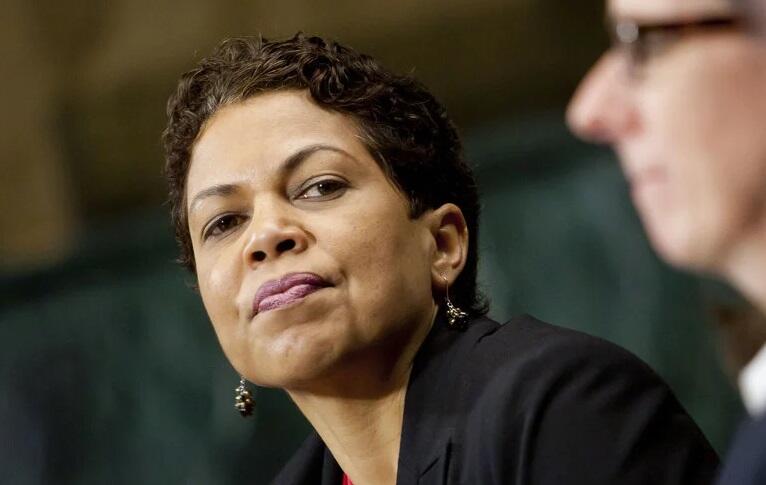
The judge slated to oversee former President Donald Trump’s latest criminal case was once called the “toughest punisher” of Jan. 6 rioters and formerly represented fraudulent Democrat-run blood-testing company Theranos while working at a firm associated with the first son, Hunter Biden, according to the NY Post.

In short, Trump couldn’t have gotten a worse pick than DC federal Judge Tanya Chutkan.

Chutkan has handed out tougher sentences than the [Justice Department] was seeking in seven cases, matched its requests in four others and sent all 11 riot defendants who have come before her behind bars,” AP wrote of her last year.

“In the four cases in which prosecutors did not seek jail time, Chutkan gave terms ranging from 14 days to 45 days.”

In one such case, Chutkan jailed – despite prosecutors never asking her to do so – “an Ohio couple [who] climbed through a broken window of the U.S. Capitol and livestreamed a video of themselves inside[, a] Texas mortgage broker [who] posed for a selfie in front of rioters breaching the building [and an] Indiana hair salon owner celebrated on Facebook a day after she joined the pro-Donald Trump mob,” according to AP.

The 61-year-old judge was nominated by President Barack Obama and was technically confirmed by the Senate without opposition after a more contentious 54-40 cloture vote.

Chutkan was born in Jamaica and graduated from the University of Pennsylvania’s law school. She is married to former DC Superior Court Judge Peter Krauthamer.

Her resume includes a previous job likely to attract significant attention from Trump allies. She worked at the law firm Boies Schiller Flexner from 2002 until she was confirmed as a federal judge in 2014, according to a biography she submitted to the Senate Judiciary Committee. -NY Post

Boies Schiller is known as a Democrat law firm, and notably had Hunter Biden as ‘of counsel’ at the firm from 2009 to 2014, according to OpenSecrets. Among her high profile cases while working there were Theranos, the blood-testing scam company run by Elizabeth Holmes. Chutkan helped Theranos sue a business enemy who allegedly shared “confidential and proprietary” information.

Trump was indicted on Tuesday on four counts related to his attempts to reverse his 2020 election loss, as well as conspiracy to defraud the United States, conspiracy to obstruct an official proceeding, obstruction of and attempt to obstruct an official proceeding, and conspiracy against rights.

Trump, who polls indicate is neck-and-neck against Biden, 80, also faces federal charges in Miami for allegedly mishandling classified records and state charges in New York related to 2016 hush money payments. He may also be charged locally in Georgia for his efforts to reverse his narrow 2020 defeat in that state. -NY Post

Following his latest indictment, Trump wrote on Truth Social, ““Why didn’t they bring this ridiculous case 2.5 years ago? They wanted it right in the middle of my campaign, that’s why!”

Chutkan is also overseeing special counsel Jack Smith’s prosecution.

Tyler Durden
Thu, 08/03/2023 – 13:25

via ZeroHedge News https://ift.tt/Osbc0ym Tyler Durden

Elizabeth Warren, Bernie Sanders Demand Closure Of “$50 Billion Crypto Tax Gap”

Elizabeth Warren, Bernie Sanders Demand Closure Of “$50 Billion Crypto Tax Gap”

Authored by Tom Mitchellhill via CoinTelegraph.com,

United States senators, including Elizabeth Warren and Bernie Sanders, have claimed that crypto tax evaders are siphoning off billions from the government…

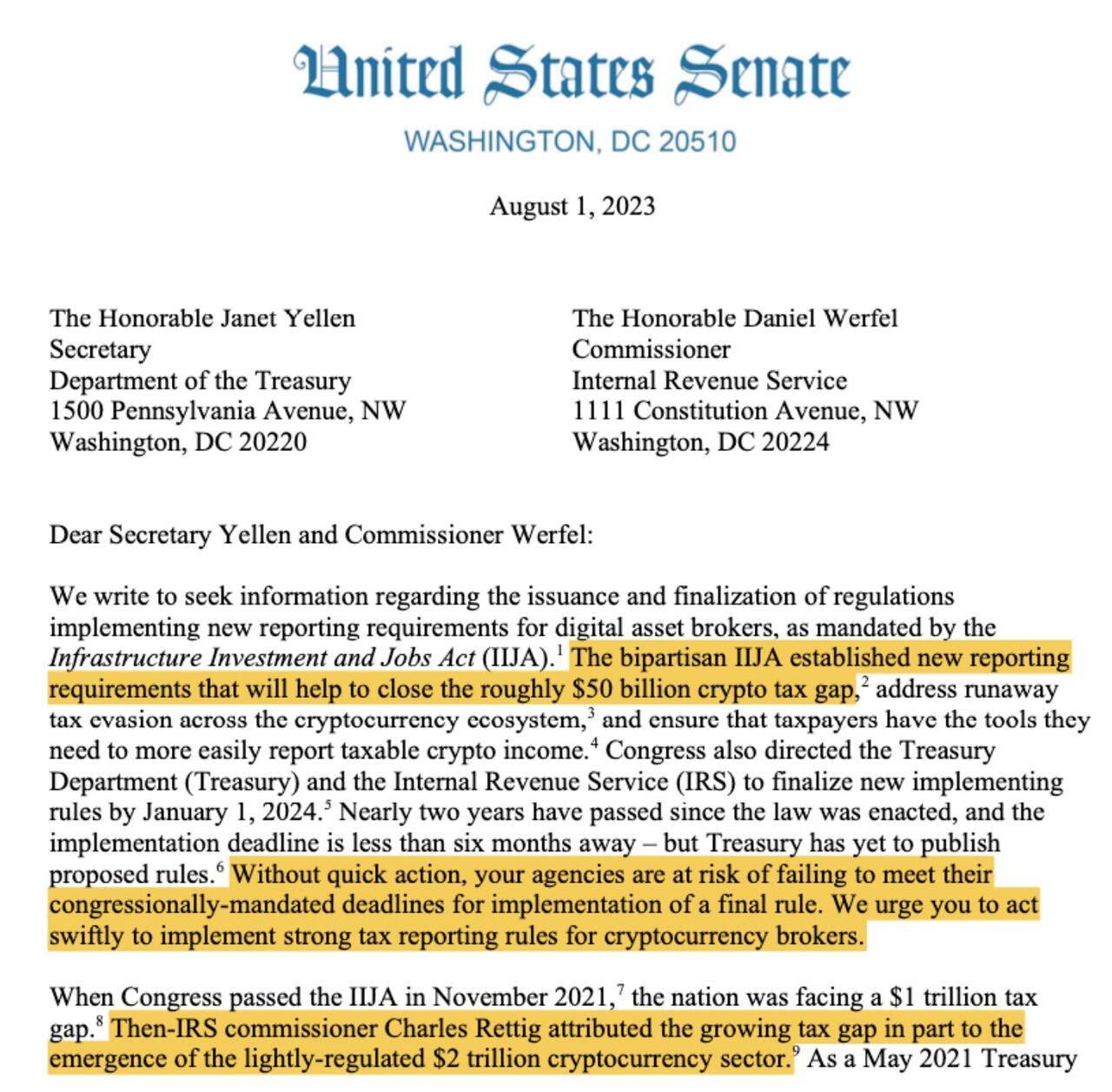
A number of United States lawmakers have urged the Internal Revenue Service and the Treasury to speed up the closure of tax loopholes being exploited by “crypto tax evaders.”

In an Aug. 1 letter, Democratic Senators Elizabeth Warren, Bernie Sanders, Bob Casey and Richard Blumenthal warned the top officials of both agencies that they must swiftly act on new tax regulations.

The senators claim there is a “$50 billion crypto tax gap,” and the IRS and Treasury risk missing out on roughly $1.5 billion in tax revenue for the 2024 financial year if a tax policy update is delayed.

“Given the chance, tax evaders and the crypto intermediaries willing to aid them will continue to game the system, exploit loopholes, and siphon off billions of dollars a year from the U.S. government. You must not give them that chance.”

The senators are referring to new tax laws outlined in the Senate’s $1.2 trillion infrastructure bill passed in August 2021. The bill aimed to increase the tax reporting requirements for businesses acting as crypto brokers.

“Nearly two years have passed since the law was enacted, and the implementation deadline is less than six months away — but Treasury has yet to publish proposed rules,” the letter reads.

Letter to the Treasury and the IRS urging swifter crypto tax policy. Source: Elizabeth Warren

While the bill has been signed into law the Treasury and the IRS are yet to release their new tax rules. The agencies have until Dec. 31 to publish and implement the rules, but the lawmakers are requesting they be put in place much sooner.

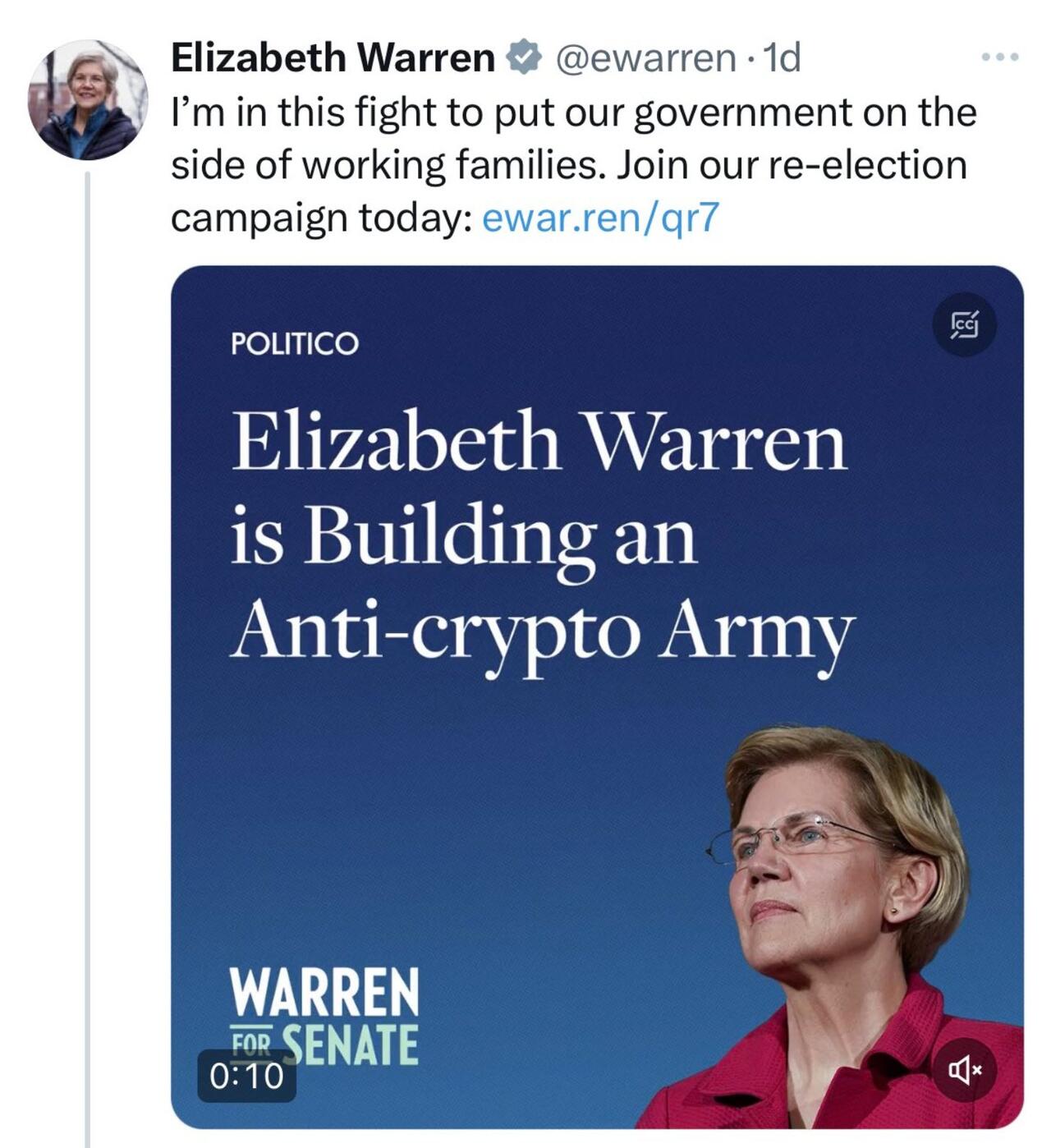
Elizabeth Warren has been an outspoken critic of the cryptocurrency industry in the U.S., going as far as forming an “anti-crypto army” as the centerpiece of her Senate re-election campaign.

Elizabeth Warren’s anti-crypto army campaign. Source: Twitter

While Sanders has been more publicly quiet on crypto compared to his Democratic counterparts, he has co-signed a number of letters headed by Warren seeking to impose tighter restrictions on the space.

A recent poll commissioned by Grayscale Investments found that 59% of Democrats and 51% of Republicans consider crypto to be the future of finance, suggesting that Warren’s stance may not prove to be a vote-winner among the majority of the population.

Tyler Durden
Thu, 08/03/2023 – 13:05

via ZeroHedge News https://ift.tt/BUiLrp4 Tyler Durden

Rising Yields Show Market Senses Inflation Risks

Rising Yields Show Market Senses Inflation Risks

Authored by Simon White, Bloomberg macro strategist,

The rising bond term premium indicates investors are starting to demand greater compensation to bear heightening risks from inflation and an increase in issuance.

Yields and the curve are rising today in a bear steepening. This comes after a tumultuous seven days for bonds, after the Bank of Japan’s policy tweak, Fitch’s downgrade, and the Treasury’s increased borrowing and issuance needs.

The rise in yields is increasingly being driven by the term premium. An implied measure that’s not everyone’s cup of tea, it nevertheless gives valuable information on what is driving yields.

It has been contained and mostly negative in this cycle, which is eye-opening given the backdrop of the most elevated inflation seen for 40 years.

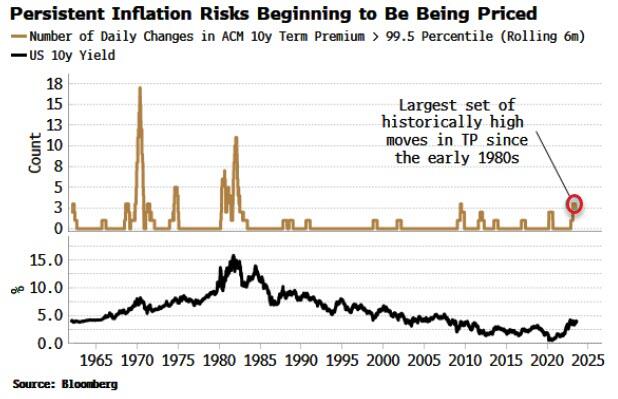
But it has been rising lately, by over 30 bps between July 28 and August 1 (the latest data point), with the 10-year yield up only about seven bps over the same period (using ACM term premium).

The term premium is still negative, but the daily moves are becoming historically large. We have seen the largest 6-month set of rises in the term premium in the top 0.5 percentile in over 40 years.

If you don’t like implied measures of term premium, such as the ACM model, it is also rising if we look at the 10-year yield versus 10-year OIS.

The bulk of term premium captures inflation risks. It is also captures liquidity risks and supply risks. Spot inflation may currently be down to 3%, but it is poised to re-accelerate, with the rise in commodity prices perhaps prompting bond holders to re-evaluate inflation risks (Bill Ackman for one).

Moreover, Fitch’s downgrade has prompted a re-focus on the US’s woeful fiscal situation, while the Treasury just announced it would have to borrow and issue more than it initially estimated, with expectations of $1 trillion of borrowing just for this quarter alone, with that to be tilted more towards longer-duration debt.

Inflation, fiscal profligacy and rising yields is a combustible mix and highlights the eventual path for the US is looking increasingly likely to be some form of yield curve control, either explicit or implicit.

Tyler Durden
Thu, 08/03/2023 – 12:25

via ZeroHedge News https://ift.tt/QwJljpG Tyler Durden

Federal Judge Warns Lawyers About Using ChatGPT, But Doesn’t Prohibit Such Use

From the standing orders of Judge Arun Subramanian (S.D.N.Y):

F. Use of ChatGPT and Other Tools. Counsel is responsible for providing the Court
with complete and accurate representations of the record, the procedural history of
the case, and any cited legal authorities. Use of ChatGPT or other such tools is not
prohibited, but counsel must at all times personally confirm for themselves the
accuracy of any research conducted by these means. At all times, counsel—and
specifically designated Lead Trial Counsel—bears responsibility for any filings
made by the party that counsel represents.

For more on such matters, see these posts. Thanks to Jake Karr for the pointer.

The post Federal Judge Warns Lawyers About Using ChatGPT, But Doesn't Prohibit Such Use appeared first on Reason.com.

from Latest https://ift.tt/KBGYb2R
via IFTTT

Why We Can’t Have Nice Things: The Great Baby Formula Shortage of 2022


baby-formula-shortage

“When you walk into the store and there you don’t see that packaging…you start to panic,” says Kenzie Jaicomo, a new mom whose child was just a few months old when a sudden shortage of baby formula hit the United States last year.

“What am I going to feed my baby?” she remembers thinking, staring at an empty shelf in a neighborhood grocery store.

In the first episode of Why We Can’t Have Nice Things, a new podcast series from Reason, we’re diving into the causes and consequences of last year’s baby formula shortage. Though it was a crisis kicked off by unexpected supply chain issues and contamination problems at a major production facility in Michigan, the roots of the shortage ran straight through Washington, D.C., where poor government policy left American infants hungry and their parents scrambling.

With domestic supply chains snarled, it would have made sense for American grocery stores to turn to foreign producers for replacement supplies of baby formula. Unfortunately, there are “absurdly high” tariffs on imported formula, explains Gabriella Beaumont-Smith, a trade policy analyst at the Cato Institute.

“There are these distribution channels that are basically not established” because the tariffs make it too costly, she says. “And we’re talking about baby formula. This is a necessity and we shouldn’t be taxing it that high or at all.”

It took last year’s crisis for Congress to consider lifting those tariffs—and only on a temporary basis. The dairy lobby and other special interests like the isolated, and fragile, American market for baby formula just the way it is.

On this week’s episode of Why We Can’t Have Nice Things, we’ll explain how this crisis unfolded, why the government’s efforts to alleviate the shortage mostly failed, and ask whether a free market might have done a better job. Spoiler alert: It would have.

Further reading/viewing for this week’s episode:

Formula for a Crisis,” by Scott Lincicome, Beaumont‐​Smith, and Alfredo Carrillo Obregon

My Baby Needed Special Formula From Europe. U.S. Trade Policy Made It Almost Unobtainable,” by Kelli Pierce

The Government Hasn’t Learned a Thing From the Baby Formula Shortage,” by Emma Camp

FDA Finally Admits It Caused the Baby Formula Shortage,” by Eric Boehm

The Mystery of the Missing Baby Formula,” by ReasonTV

Written by Eric Boehm; produced and edited by Hunt Beaty; additional editing by Ian Keyser. Additional mixing by Luke Allen. Fact-checking by Katherine Sypher.

The post <em>Why We Can't Have Nice Things</em>: The Great Baby Formula Shortage of 2022 appeared first on Reason.com.

from Latest https://ift.tt/ZOMFvI4
via IFTTT

“Providing Information About or Referring Patients to Legal Out-of-State Abortion Services” Is Protected …

From Planned Parenthood Greater Northwest v. Labrador, decided Monday by Judge B. Lynn Winmill (D. Idaho) (and already appealed):

This case involves a challenge to Attorney General Raúl Labrador’s interpretation of Idaho’s criminal abortion statute, Idaho Code § 18-622. Earlier this year, Attorney General Labrador drafted a letter interpreting this sentence of Section 18-622: “The professional license of any health care professional who … assists in performing or attempting to perform an abortion … shall be suspended ….” That letter interprets the “assisting” language to include providing information about or referring patients to legal out-of-state abortion services….

Interestingly, the State did not engage [plaintiffs’ First Amendment] argument in any way, relying instead entirely on its jurisdictional challenges [which the court rejected -EV]…. [T]he Court finds that the Medical Providers are likely to succeed on their First Amendment cause of action.

In particular, the Medical Providers contend that the Crane Letter interpretation violates the First Amendment because it impermissibly regulates speech based on content and viewpoint. The Medical Providers explain that the interpretation’s prohibition of medical providers offering “support or aid” to a woman seeking an abortion, including “refer[ring] a woman across state lines to an abortion provider[,]” is content-based because health care providers are silenced on a single topic—abortion—and is viewpoint discretionary [sic] because health care providers can provide information and referrals about out-of-state resources like anti-abortion counseling centers or prenatal care. The Medical Providers note that the interpretation is therefore subject to strict scrutiny.

The Medical Providers explain that Crane Letter interpretation “furthers no legitimate state interest, much less a compelling one.” They further contend that the State cannot prove that the interpretation is narrowly tailored to further whatever compelling interest could be found because it sweeps in a large swath of obviously protected speech. Because the State has not opposed the First Amendment claim, and because the Court finds the Medical Providers’ argument persuasive, the Court finds that the Medical Providers have shown that they are likely to succeed on the merits of their First Amendment challenge.

Plaintiffs are represented by Colleen R. Smith (Stris & Maher LLP and ACLU-Idaho Cooperating Attorney), plus too many other lawyers to list here.Fi

The post "Providing Information About or Referring Patients to Legal Out-of-State Abortion Services" Is Protected … appeared first on Reason.com.

from Latest https://ift.tt/lTKM9tN
via IFTTT