Poland Builds Up Troops On Border In Response To Alleged Belarus Combat Helicopter Breach

Poland Builds Up Troops On Border In Response To Alleged Belarus Combat Helicopter Breach

NATO members Poland says it is building up troops along its border with Belarus following allegations that two Belarusian helicopters violated Poland’s airspace on Tuesday. 

Poland’s Ministry of Defence made the allegation, which Minsk quickly denied. “There was a violation of Polish airspace by two Belarusian helicopters that were training near the border,” Poland’s military said. Further, Warsaw says it has formally notified NATO of the alleged border violation, setting the stage for possible Article 5 discussion, portending future escalation.

Illustrative file image

The Belarusian Defense Ministry immediately denied Poland’s charge, suggesting that it’s a “far-fetched” provocation meant to justify a build-up of NATO forces near Belarus. 

“Accusations of a violation of the Polish border by Mi-24 and Mi-8 helicopters of the Belarusian Air Force and air defense forces are farfetched and made by the Polish military and political leadership to justify the build-up of forces and means at the Belarusian border,” the ministry said.

The Associated Press describes that there were witnesses (and video) to helicopters being operational along the border as part of training exercises this week:

Earlier Tuesday, Polish residents in an area near the border with Belarus reported seeing helicopters with Belarusian insignia which they said flew overhead. Some posted photos of the aircraft. Poland’s military initially denied that they had crossed into Polish airspace.

What’s more is that Belarus informed its NATO neighbor it would be conducting drills in a border region, so as there would be no misunderstanding between the rival countries which recently have had disputes over migrant crossings. 

Polish Defense Minister Mariusz Błaszczak announced a troop increase at the border, also bolstering a prior presence of elite counterterror police deployed in extra units last month in relation to the Wagner mutiny in Russia and their subsequently moving into Belarus. He said combat helicopters are also being moved for border defense, and other military assets.

As for NATO jitters over the closer Wagner presence in Eastern Europe, Polish Prime Minister Mateusz Morawiecki had announced Saturday that over 100 Wagner mercenaries had approached near Poland’s Suwalki Gap, considered a sensitive and strategic border area.

PM Morawiecki had gone so far as to claim PMC Wagner fighters “may try infiltrating Poland”—though there was no evidence of any hostile action by Wagner or border breaches.

But Poland is still making a lot of noise about the alleged ‘training exercise’ helicopter border breach incident. The chargé d’affaires of Belarus in Warsaw was “immediately summoned” by Poland’s Foreign Ministry on Tuesday, and it “issued a firm protest and called on the Belarusian side to immediately and in detail explain the incident.”

“The Polish side emphasized that the incident is perceived as another element of the escalation of tension on the Polish-Belarusian border. Poland expects Belarus to refrain from such activities,” the ministry said. Interestingly, it’s been the Russia-Belarus side (or ‘Union State’) which has long charged NATO powers with escalating the situation. This indeed could very well be the next major flashpoint connected with the Ukraine war.

Tyler Durden
Wed, 08/02/2023 – 02:45

via ZeroHedge News https://ift.tt/z1ViUy3 Tyler Durden

Destruction Of Traditional Values Leads To The Hegemony Of Political Correctness, Says Senior Polish MEP

Destruction Of Traditional Values Leads To The Hegemony Of Political Correctness, Says Senior Polish MEP

Authored by Grzegorz Adamczyk via Remix News,

The destruction of traditional values and institutions in the name of freedom of pluralism is leading to the despotic rule of political correctness, guarded by liberal states, corporations and international organizations, a senior MEP for Poland’s governing party has claimed.

Professor Ryszard Legutko, a philosophy scholar and Law and Justice (PiS) MEP, told the Polish Press Agency (PAP) that mankind has a natural tendency for self-destruction because of its ability to change the world through technology, but these technological developments can be a force for good or ill.

It often leads man to hubris and pride, which, as the Greeks observed, always comes before a fall, he noted.

Legutko observed that hubris is dominant in today’s world with man feeling he can control the world, that he can experiment with gender, death, life, and family. The result is that man is becoming ridiculous in his fallibility. All systems of ethics always warn against hubris.

The professor believes that memory is crucial to overcome hubris, and the lack of memory leads to man’s downfall. Revolutions are a classic example of societies losing their memories and destroying their own experience and traditional institutions such as church, family and heritage. 

“We had hoped that communism might teach people to have respect for the experience of history. It has not. We are now moving in the direction of another revolution targeted at ending the traditional family, the nation-state and religion,” warned Legutko.

“The present cultural revolutionaries remind us of the ancient Greek shoemaker Herostratus, who burned down the Temple of Artemis in an effort to become significant by destroying something of value. “

He sees many such examples in modern society, people specializing in being offensive and blasphemous. They think they are special and on a mission to create a brave new world in which they will play God, but without memory and experience they fail to spot the long-term consequences of actions such as undermining parental control and family ties, he warned.

The paradox here is that the mania of liberation leads to slavery. The democratic liberal state is hyper-active and regulates everything; the way we behave, speak and even think. A repressive system is developing and those who do not conform are increasingly subject to punishment.

Corporations and international bodies such as the EU are actively engaged in assisting in the creation of the new despotism. 

According to Legutko, the more they say we are diverse, the more uniform we become in our behavior and thinking. It is a global fraud that spells doom for mankind.

“There is some resistance and pushback toward freedom and learning from experience, but it is not enough. Conformism and political correctness are still on the march,” the senior Polish MEP added.

Tyler Durden
Wed, 08/02/2023 – 02:00

via ZeroHedge News https://ift.tt/WIBtcPf Tyler Durden

Retribution, Deterrence, and the Case for Prosecuting Trump for Conspiring to Overturn the 2020 Election


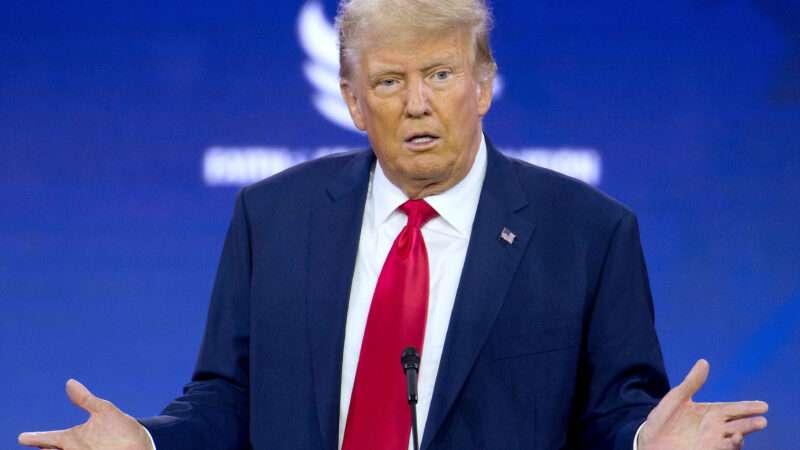
Donald Trump giving a speech
Trump
Donald Trump.


Donald Trump was recently indicted for his efforts to use fraud and coercion to overturn the result of the 2020 election and stay in power despite the fact that he had lost. The four counts in the indictment filed by Special Counsel Jack Smith all arise from various ways in which Trump conspired to nullify the election result through fraud and deception, including by conspiring to replace duly chosen electors with fraudulent ones, and pressuring state and federal officials—including Vice President Mike Pence—to illegally overturn election results.

Reason’s Mike Boehm has a helpful summary of the charges:

The first charge is focused on the attempt, allegedly organized within the White House, to have Trump-friendly state lawmakers appoint alternate slates of electors to the Electoral College as part of a scheme that would see Trump named as the winner of states where President Joe Biden received more votes.

The second and third charges are aimed at Trump’s (and his allies’) behavior on and near January 6, 2021, when Congress was scheduled to certify the election results. That includes the pressure allegedly applied to Vice President Mike Pence, who refused to go along with the Trump-backed plot to discard the electoral votes from some states.

Finally, the third alleged conspiracy includes a civil rights charge that strikes at how Trump’s machinations aimed to rob Americans of their right to choose the president.

More specifically, Trump is charged with:

a. A conspiracy to defraud the United States by using dishonesty, fraud, and deceit to impair, obstruct, and defeat the lawful federal government function by which the results of the presidential election are collected, counted, and certified by the federal government, in violation of 18 U.S.C. § 371;

b. A conspiracy to corruptly obstruct and impede the January 6 congressional proceeding at which the collected results of the presidential election are counted and certified (“the certification proceeding”), in violation of 18 U.S.C. § 1512(k);

c. A conspiracy against the right to vote and to have one’s vote counted, in violation of 18 U.S.C. § 241.

It is important to recognize that Trump isn’t being charged simply because he wrongly claimed he won the election. In and of itself, that is no crime. Rather, he went far beyond that and organized a wide-ranging conspiracy to overturn the result using fraud and deception, and by attempting to enlist state and federal officials to assist him. The indictment goes into the means he and his co-conspirators used, in great detail.

It’s worth taking a step back and asking why we punish crimes at all. The most widely accepted reasons are retribution and deterrence. In other words, we seek to punish criminals because they deserve it due to the heinous nature of their deeds, and because it’s important to deter others from engaging in similar wrongdoing.

If these are the justifications for punishment, there are many situations where inflicting it is unnecessary or unjust, even if the defendant has violated the law. That may happen if the law in question is itself unjust, or if the violation is insignificant and there is little value to deterring it. Trump’s indictment by New York prosecutors earlier this year may well be an example of such a dubious case. The later federal indictment for taking and refusing to return classified documents is a much more defensible prosecution.

Trump’s attempt to overturn the 2020 election well deserves punishment from the standpoint of both retribution and deterrence. For the head of state in a democracy, there are few more serious crimes than using fraud to try to stay in power after losing an election. If successful, such action would transform the nation into a despotism, usually a deeply illiberal one to boot.  Subversion of the republic by the very person who has a special duty to defend it is obviously deserving of severe retribution, given the extraordinarily serious nature of the crime.

It is also important to deter future presidents and other high-ranking officials from similar misconduct in the future. Here too, there is a strong case for severe punishment, given the enormous magnitude of the harm this kind of crime can cause. Strong deterrence is also necessitated by the need for a punishment great enough to outweigh the potential gains of this kind of criminal activity in the eyes of would-be perpetrators. Becoming dictator for life is a major prize for unscrupulous power-hungry politicians. To outweigh that temptation, we need an appropriately severe punishment, one that will strike fear  in the hearts of even the kinds of ruthless risk-takers who too often reach high political office.

Trump’s most obvious defense to these charges is that he didn’t engage in fraud and deception because he honestly believed he had won the election, and that the Democrats had “stolen” it from him. If so, one could argue he didn’t deserve retribution, because he didn’t know he was doing anything wrong. And, likewise, there is arguably no point to trying to deter people who don’t know they are committing a crime.

But the indictment recounts extensive evidence indicating that Trump in fact knew he had lost. Among other things, it notes numerous occasions when his own advisers, law enforcement officials, and election experts told him there was no fraud anywhere near large enough to change the election result. He also could have learned he lost from the numerous court decisions rejecting his legal challenges to the election results, including some issued by judges he himself had appointed.

In addition, there are instances where Trump himself actually admitted he had lost. For example, the indictment notes an incident in which Trump berated Vice President Pence for being “too honest” after the latter noted there was no legal basis to overturn the results. The report of the January 6 Committee (pg. 20 of the executive summary) recounts how Trump told his chief of staff that “I don’t want people to know we lost.” That obviously implies Trump himself did know he lost, but was trying to hide that fact from the public.

Even if Trump did manage to delude himself into believing he had actually won the election, his conduct was still culpable. If I steal your valuable ring because I have persuaded myself (despite overwhelming evidence to the contrary) that I am its true owner, I am still guilty of theft. The same logic applies here. Trump had every reason and opportunity to learn he had lost. If instead he chose to indulge in self-delusion, which he then used to justify his scheme to overturn the election, he is guilty for much the same reasons as the thief who—without any justification—imagines himself to be the rightful owner of the object he steals.

Perhaps that reasoning doesn’t apply to a defendant who is simply incapable of understanding the truth, as in the case of some types of mental illness. But Trump is not sick, just evil. Still, the option of pursuing an insanity defense is open to him, and perhaps he can attempt it at trial.

Some philosophers and legal theorists deny that either retribution or deterrence is a justifiable ground for punishment. If that’s your view, I’m not going to suggest you make an exception for Trump. But if, like most people, you believe that prosecution and punishment are sometimes justified on one or both of these grounds, than this case is a particularly compelling one. Jack Smith is right to prosecute Trump over his schemes to overturn the 2020 election because the man deserves severe punishment, and because it is important to deter future leaders from following in his footsteps.

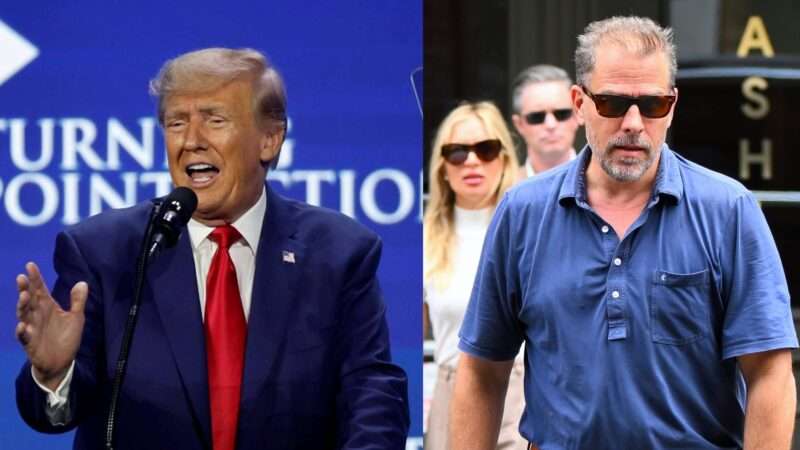
In a previous post, I have addressed claims that prosecuting Trump is an example of “banana republic” behavior, and the idea that it is wrong to go after him when others, such as Biden, Pence, and Hillary Clinton may also be guilty of wrongdoing. The points made there also apply to claims that it is wrong to prosecute Trump because President Biden’s son Hunter Biden apparently got off lightly for his own offenses. Even if it is true that Hunter Biden got an unjustified sweetheart deal, that in no way justifies letting Trump off the hook for vastly more serious crimes.

The post Retribution, Deterrence, and the Case for Prosecuting Trump for Conspiring to Overturn the 2020 Election appeared first on Reason.com.

from Latest https://ift.tt/GTnqiH7
via IFTTT

The Democratic Governor Who Wants Drug Legalization and Free Markets


John Stossel and Colorado Gov. Jared Polis

There is actually a Democratic governor who cares about economic freedom!

He’s Colorado Gov. Jared Polis. He’s the subject of my new video.

Before Polis got into the ugly field of government, he did useful work. He was an entrepreneur. He started an online flower company, modernized his parents’ greeting card company, and founded charter schools, an internet access company, Spanish-speaking movie theaters, and an aquaculture venture fund. He sold the flower and greeting card companies for more than $1 billion.

Polis says being an entrepreneur “really helped prepare me for public service in ways that people don’t expect.”

Wait. I don’t like the way he used the term “public service.”

“I think you did public service when you ran a business. Why is only government called public service?” I ask.

“I do like to think…any company that adds value, does something in a more efficient way, a better way, is certainly a form of service as well,” Polis responds.

Good. He’s right. Certainly Amazon, Starlink, Apple, Google, etc., provide more service to the public than most governments do.

Heck, government often gets in the way.

In Denver, officials shut down a kids’ lemonade stand because the kids “didn’t have a permit.” That’s typical.

I once tried to get such a permit and open a lemonade stand in New York City. The government website promised to make the process easy. It didn’t. There were mysterious acronyms like “EIN” (employee identification number). Some instructions were unintelligible. Others were just ridiculous, like making me buy a “government-approved” fire extinguisher for my lemonade stand.

“Government in general does a lot of things that aren’t necessary,” Polis admits. He signed a bill to make it legal in Colorado for anyone under 18 to run a small or occasional business without a permit.

Polis pushes other ideas meant to make it easier for people to succeed. He wants to get rid of Colorado’s income tax.

“It penalizes success,” he says. “Income is something that’s good. We’ve reduced the income tax twice in Colorado since I’ve been there.”

Not by much. It only dropped from 4.63 percent to 4.4 percent, but still, those are unusual words, especially from a Democrat.

Polis also has a different take on fighting inflation: fight it “with immigration” and “getting rid of tariffs.”

That’s something I rarely hear from politicians from either party.

“Tariffs in particular penalize trade,” says Polis. “Trade’s a good thing. If two people, willing partners, both have something and both want what the other has, they make an exchange. They’re both better off. We should not penalize trade.”

Regarding immigration, he says, “We have…an artificial labor shortage because we have people who are here today who are perfectly willing to work. They just don’t have the right federal permit to work.”

During COVID, Polis ordered statewide closures, but he lifted faster than other Democrat-run states.

“Our businesses reopened really early,” says Polis.

Not as early as Florida, Texas, or South Dakota, but sooner than blue states.

Polis also supports legalization of drugs, including, most recently, magic mushrooms.

“Your state led the country in drug legalization, marijuana and now psychedelics. This is a good thing?” I ask.

“Very good,” Polis responds. “We put a lot of the corner drug dealers out of business. It’s created jobs, tax revenue, and it’s led to a safer product.”

Polis isn’t threatened by the negative effects of drug use. “I think it’s ultimately a matter of personal responsibility. If you want to use marijuana, to drink, to smoke, that’s your prerogative. The government shouldn’t be deciding that for you.”

It’s rare and refreshing to hear a Democrat talk about individual freedom.

Unfortunately he becomes squishy on freedom when it comes to Colorado’s forcing bakers and website designers to work for events they oppose. He also expanded government-run schools; now taxpayers must pay for state preschools. I bet that doesn’t end well.

I’ll cover that and other issues where we disagree in a future column.

COPYRIGHT 2023 BY JFS PRODUCTIONS INC.

The post The Democratic Governor Who Wants Drug Legalization and Free Markets appeared first on Reason.com.

from Latest https://ift.tt/ypfxucA
via IFTTT

The Legally Authorized Charges Against Donald Trump and Hunter Biden Don’t Tell Us What Justice Requires


The legally authorized charges against Donald Trump and Hunter Biden are not a reliable indicator of what justice requires.

As Republicans see it, the Justice Department is coming down hard on Donald Trump for political reasons, while it is going easy on Hunter Biden because he is the president’s son. Although there are plausible grounds for both assessments, they glide over the question of what justice would look like in these cases.

Trump left the White House with thousands of presidential records, including hundreds that were marked as classified, and resisted efforts to recover them. Under the Presidential Records Act, he claims, he had “the absolute right to do whatever I want with them.”

That is not what the statute, which Congress passed in response to Richard Nixon’s similar assertion of complete discretion, actually says. But the law itself does not prescribe any criminal penalties.

The superseding indictment unveiled last week instead charges Trump with 32 counts of willfully retaining “national defense information,” each tied to a specific document and punishable by up to 10 years in prison. Proving those charges may be difficult, because it requires persuading a jury, based on classified information the government is loath to disclose, that Trump had “reason to believe” the records “could be used to the injury of the United States or to the advantage of any foreign nation.”

By contrast, the five obstruction charges in the indictment, each punishable by up to 20 years in prison, do not hinge on the nature of the documents. The indictment plausibly alleges that Trump deliberately concealed those records, in the process flouting one federal subpoena and attempting to evade another.

Anything like the maximum penalties for those charges, some of which are seemingly redundant, would be clearly excessive. But that does not mean there should be no criminal consequences at all for what looks like willful and repeated defiance of the law.

In Hunter Biden’s case, the original plan was that he would plead guilty to two misdemeanor tax offenses, while prosecutors would recommend probation. Under a separate agreement, Biden would have avoided prosecution for illegally buying a gun by completing a two-year pretrial diversion program.

The latter agreement, which the lawyers on both sides said was not subject to U.S. District Judge Maryellen Noreika’s approval, would have charged her, rather than the Justice Department, with deciding whether Biden had complied with its terms. It also included an ambiguous promise that Biden would not be prosecuted for certain crimes.

Noreika understandably objected to those provisions, which seemed designed to protect Biden from the possibility that his father will lose reelection next year. That highly unusual arrangement reinforced the impression that Biden was receiving preferential treatment.

Some Republicans also wondered why Biden was charged with willful failure to pay his income taxes, a misdemeanor, rather than tax evasion, a felony. But that decision could be explained by the lack of any sophisticated tax dodging scheme, the fact that Biden eventually did pay his overdue taxes, and the difficulty of proving the criminal intent required for an evasion charge, especially in light of the well-known drug problems he was experiencing at the time.

Biden’s crack habit, along with his status as a nonviolent offender with no prior criminal record, probably also figured in the decision to approve pretrial diversion on the gun charge. Yet paradoxically, it was the justification for filing that charge in the first place.

Receipt or possession of a firearm by an “unlawful user” of a controlled substance is a felony that was punishable by up to 10 years in prison at the time of Biden’s gun purchase. Violating that arbitrary, constitutionally dubious prohibition (which also applies to cannabis consumers, even if they live in states that have legalized marijuana) should not be any sort of crime, let alone one that can put you behind bars for years.

In both of these cases, the legally authorized charges and penalties are not reliable indicators of what justice requires. It’s a distinction that members of both parties should keep in mind.

© Copyright 2023 by Creators Syndicate Inc.

The post The Legally Authorized Charges Against Donald Trump and Hunter Biden Don't Tell Us What Justice Requires appeared first on Reason.com.

from Latest https://ift.tt/xW8HDzN
via IFTTT

Escobar: First We Go For Moscow, Then We Take Beijing

Escobar: First We Go For Moscow, Then We Take Beijing

Authored by Pepe Escobar,

The new multipolar order will of course not be without its own conflicts and growing pains…
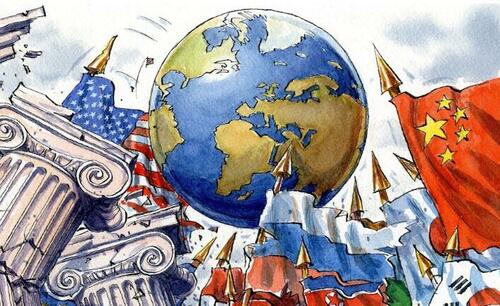
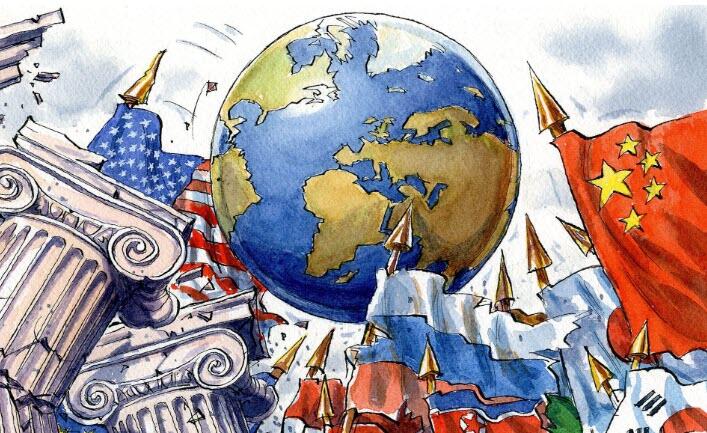
The Global Majority is free to choose two different paths to counteract the rabid, cognitive dissonant Straussian neocon psychos in charge of imperial foreign policy; to relentlessly ridicule them, or to work hard on the long and winding road leading to a new multipolar reality.

Reality struck deep at the Russia-Africa summit in St. Petersburg, with its astonishing breadth and scope, reflected in the official declaration and key facts such as Russia writing off no less than $23 billion in African debt, and President Putin calling for Africa to enter the G20 and the UNSC (“It’s time to correct this historical injustice.”)

Three interventions in St. Petersburg summarize the pan-African drive to finally get rid of exploitative neocolonialism.

President of Eritrea Isaias Afwerki:

“They are printing money. They are not manufacturing anything at all, it’s printing money. This has been one of their weapons globally – the monetary system… sanctions here, sanctions there… We need a new financial architecture globally.”

President of Burkina Faso, Ibrahim Traoré, the face of a resurgent Global South and the world’s youngest leader:

“A slave that does not rebel does not deserve pity. The African Union (AU) must stop condemning Africans who decide to fight against their own puppet regimes of the West.”

President of Uganda Yoweri Museveni:

“One facet of neo-colonialism and colonialism was Africa being confined to producing only raw materials, crops, like coffee, and minerals (…) This issue is the biggest factor why the African economies are stunted; they do not grow, because all the value is taken by other people (…) So, what I want to propose to Russia and China is to discourage as a policy the importing of raw materials from Africa, to instead work with the Africans to add value at source.”

In a nutshell: pan-Africa should go all-out creating their own brands and value-added products, without waiting for “approval” from the West.

The South African drama

South Africa is an immensely complex case. Under extreme pressure from the usual suspects, Pretoria had already succumbed to the collective West hysteria related to Putin’s attendance of the upcoming BRICS summit, settling for the physical presence of Foreign Minister Lavrov and Putin via videoconference.

Then, during a personal meeting with Putin in St. Petersburg, President Cyril Ramaphosa decided to speak in the name of all African leaders, thanking Russia for the offer of free grain, but stressing they had not come to “receive gifts; Africa proposes the return of the grain deal.”

Translation: this is not about free grain offered for several African nations; this is about Pretoria wanting to cash in on the deal, which privileges globalist oligarchs and their Kiev vassal.

Now compare it with the Russian position. Putin once again made it very clear: fulfill our demands and we return to the grain deal. Meanwhile, Russia remains a leader in wheat production – as it was before; and while prices keep rising on global markets, Moscow will share the income with the poorest African nations.

Tensions inside BRICS, as illustrated in this case, are painfully real, and come from the weakest nodes. For all the devious rhetoric, the fact is India and Brazil prefer BRICS+ to proceed slowly, as sherpas confirm off the record.

Among the over 40 nations – and counting – which are dying to become part of the club, Indonesia and Saudi Arabia are very well positioned to be accepted in the first tier of BRICS+ members, unlike Argentina (which basically paid an IMF loan so it can continue to be paying IMF loans).

Reality is dictating the slow approach. Brasilia – under extreme pressure from the “Biden combo” – has a minimalistic margin of maneuver. And New Delhi is proposing first an “observer” status for prospective members, before full admission. Very much like in the Shanghai Cooperation Organization (SCO), whose recent summit was decided by New Delhi to be held online. For a very simple reason: India did not want to sit on the same table with China.

What’s worrying is that the practical, gargantuan work schedule for both BRICS and the SCO is being slowed down by a toxic mix of internal squabbles and foreign interference. Yet the Russia-China strategic partnership must have anticipated it – and there are contingencies in place.

Essentially, broader discussions are accelerated while minor partners get their act together (or not…) What’s clear is that, for instance, Indonesia, Iran and Saudi Arabia possibly being admitted to BRICS+ will immediately change the internal balance of power, and the weak links will necessarily have to catch up.

EAEU to the rescue

St. Petersburg also demonstrated something crucial in the evolving multilateral organization front: the renewed importance of the Eurasia Economic Union (EAEU). The EAEU is fast expanding beyond Central Asia towards Southeast Asia (a free trade agreement with Indonesia is imminent), Africa and crucially, the DPRK: that was discussed in detail during Defense Minister Shoigu’s rock star welcome in Pyongyang.

All that spells out a road map like this: the EAEU in the vanguard, in parallel to China’s BRI (crucial forum coming up in Beijing in October) until BRICS+ and SCO gridlock is solved.

Only one BRICS member without which is impossible to build Eurasia integration has serious problems with China: India (and that includes rivalry for influence in Africa, West Asia and Central Asia).

Simultaneously, there’s only one BRICS member capable of influencing India: Russia.

Now that’s a challenge for the ages. Yet Moscow does have the potential – and the competence – for regulating the whole new, emerging system of international relations. The timing for implementing what will be in fact a new world system is now, and immediately ahead: from 2025 to 2030.

So Russia-India relations will arguably become the key to fully unlock BRICS+. Issues will include an iron-clad Russian oil road to India via Rosneft; solving the Afghanistan riddle (with Moscow keeping Beijing and New Delhi in sync); a more muscular presence within the SCO; closer security deliberations among the three Ministries of Defense; including Chinese and Indian observers in the Russia-Africa process; and all of the above micro-managed by Putin himself.

If China-India competition is already a big deal, we should expect it to become even more complex after 2030. So here’s Russia facing yet another primordial historical/cultural mission. This goes way beyond the Himalayas. It spans the full arc of China-India competition.

And don’t forget to call the Steel Kitten

It’s always immensely enlightening to follow BRICS-related analyses by Sergey Glazyev, the Minister of Integration and Macroeconomics at the EAEU’s Economic Commission.

Glazyev, in two major interviews, has confirmed that a “sanction-proof” BRICS digital unit of account is under discussion, based not only on BRICS national currencies but also a basket of commodities.

He also confirmed that “we” are working to establish an internal BRICS group to design and establish the new system (by the way, these discussions within the EAEU are way more advanced).

According to Glazyev, a payments system outside of SWIFT can be set up through a network of state-run digital currencies – not to be confused with cryptocurrencies backed only by private speculators.

Glazyev also forcefully defends the adoption of the digital ruble. He argues that’s the way to track blockchain transactions and prevent non-intended use of funds – as in diversion into speculative markets.

Apart from all the huge challenges, the optimal path ahead spells out EAEU and BRICS+ observing international law and slowly but surely building the payments system capable of circumventing massive imperial choke points. A new BRICS currency can wait. What matters is the evolution of so many interconnections as the new system’s infrastructure is being built.

And that brings us once again to North Korea.

The Shoigu visit de facto cleared the path for the DPRK to totally align with the Russia-China strategic partnership in the massive Eurasian integration/development/mutual security process.

Oh, the ironies of “post-everything” History. The Hegemon may have actually been trapped into destroying NATO as a credible military force just as Russia-China reinvigorated a major ally in Northeast Asia and the Far East – complete with nuclear power, ballistic missiles, and a hyper-productive industrial military complex.

So the Straussian neocon psychos want to expand their unwinnable Forever War to rabid hyena Poland and the Baltic chihuahuas? As in first we go to Moscow, then we take Beijing? Be our guest. But first be sure to place a call to Global South powerhouse DPRK. Steel Kitten Kim Yo-jong, Kim Jong Un’s younger sister, will be delighted.

Tyler Durden
Tue, 08/01/2023 – 23:40

via ZeroHedge News https://ift.tt/QZBW93t Tyler Durden

US Buyers Shy Away From China Inc. With No Regrets

US Buyers Shy Away From China Inc. With No Regrets

By George Lei, Bloomberg markets live reporter and strategist

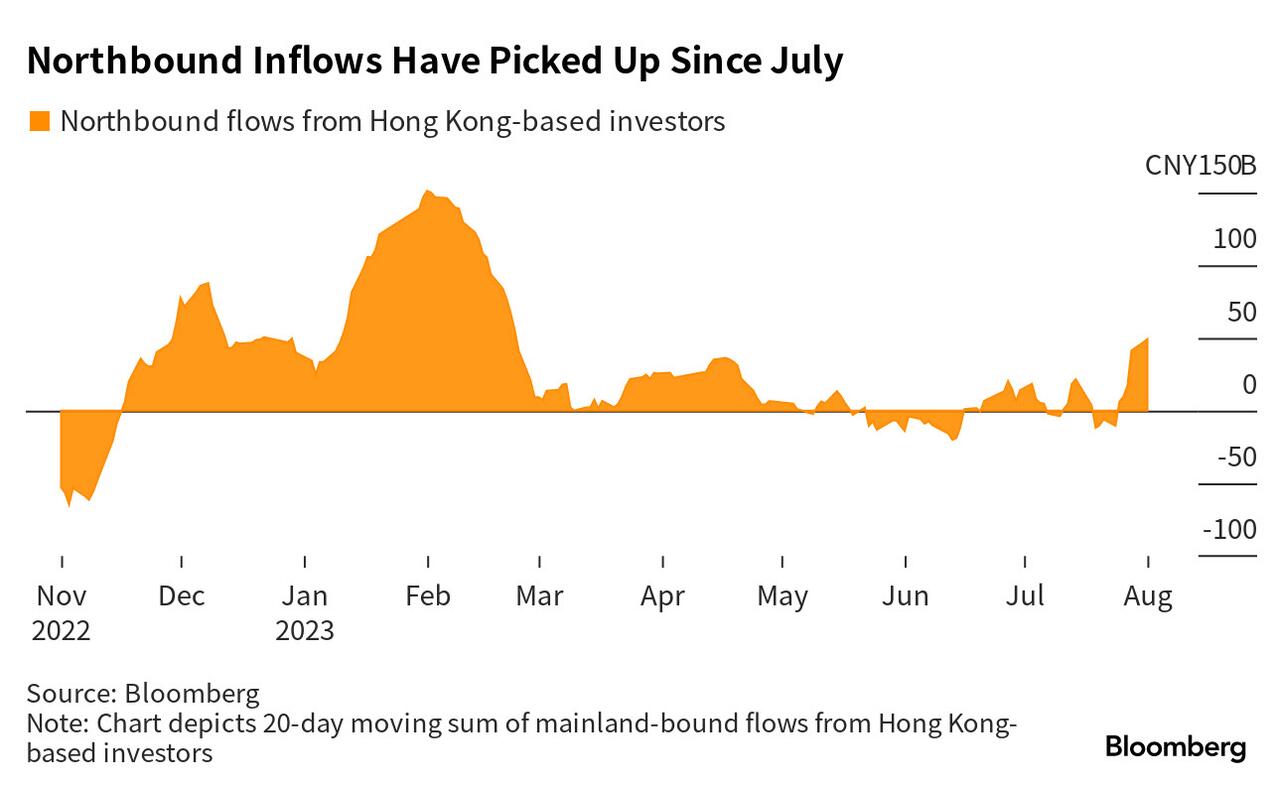
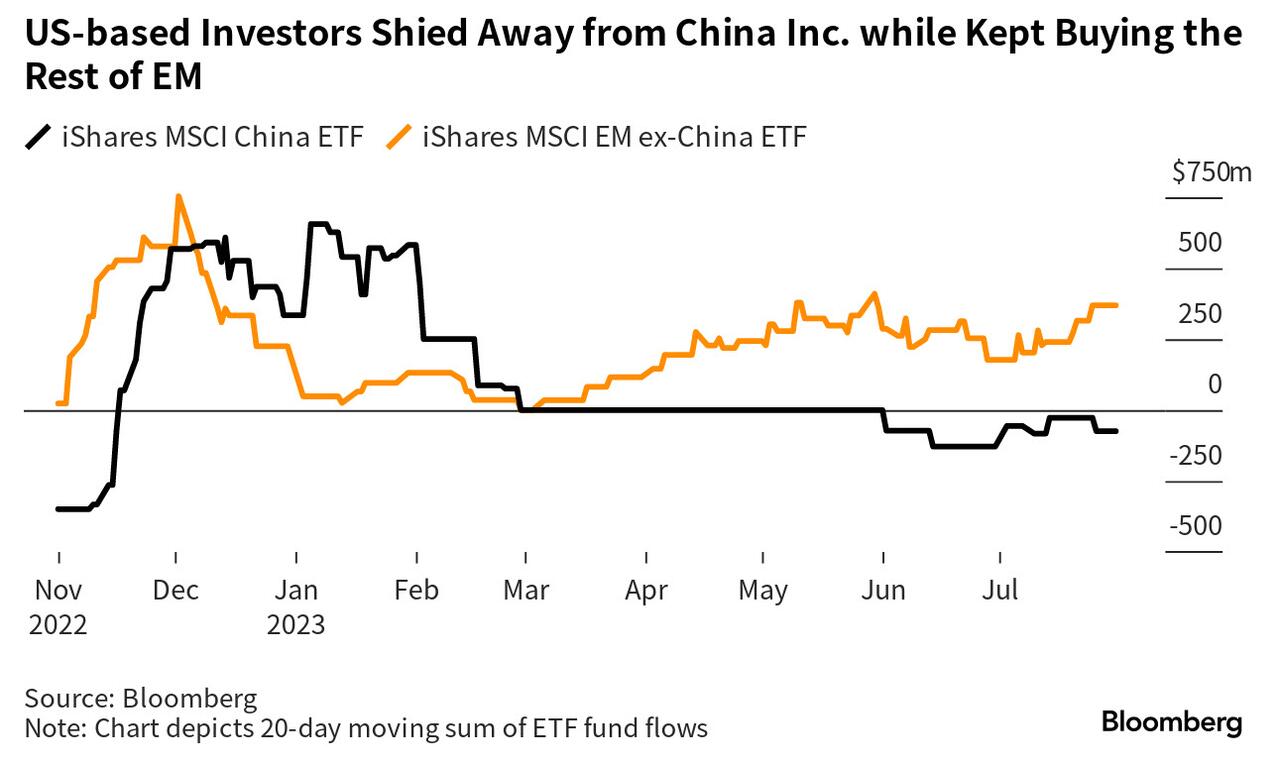
Chinese equities in July posted their best returns in six months, yet US-based investors have refrained from chasing the rally, according to data tracking flows into exchange-traded funds. They instead have bolstered stock holdings in other emerging markets, in contrast to Hong Kong-based investors whose purchases of onshore equities have reached a 23-week high.

The MSCI China Index was up 9.3% last month and rallied a total of 12.7% between June and July, the kind of performance unseen since the heyday of the reopening trade. On a 20-day basis, total purchases of mainland stocks from Hong Kong-based investors reached 49.2 billion yuan ($6.85 billion), the highest since February 23.

US buyers, in contrast, have largely soured on China Inc. since February. On a 20-day basis, the iShares MSCI China ETF saw total outflows of $75 million as of July 31, despite stimulus bets and stock-market rallies over the past two months. Meanwhile, the iShares MSCI EM ex-China ETF received constant inflows throughout the year, with the 20-day total reaching $369 million as of July 31.

MSCI’s China ETF now has assets of around $8.4 billion, 70% above that of the other fund. If present trends continue, however, the ETF dedicated to EM ex-China will eventually exceed the China fund in terms of assets under management in the coming years.

Recent rallies in Chinese stocks appear to be “mostly driven by short covering” and few global funds are “buying into China in any meaningful way yet,” Michael J. Oh, a San Francisco-based portfolio manager at Matthews Asia, told Bloomberg. “Beijing has said a lot of positive things but there’s still a lack of actions,” Oh noted.

US sanctions on some Chinese firms and other forms of regulatory crackdowns may have also scared away American investors. This week, a US House committee demanded information from BlackRock about the inclusion of Chinese companies in its funds, alleging facilitation of American investment into parts of China Inc. blacklisted by the White House. Similar requests were also made to MSCI. As President Joe Biden is reportedly planning for new curbs on US tech investment in China, American appetite for companies in the world’s second largest economy will only wane further.

Tyler Durden
Tue, 08/01/2023 – 23:00

via ZeroHedge News https://ift.tt/h8ZNCor Tyler Durden

What The Trump Indictment Left Out

I have now had a chance to read the entire 45-page indictment in United States v. Donald J. Trump. Much of this information has been published in drips and drabs over the past two years. But reading through the entire chronology, from start to finish, was a very different experience.

Here, I would like to highlight what Special Counsel Jack Smith left out.

The most significant omission was that Trump was not indicted for insurrection, 18 U.S.C. § 2383. This decision was not particularly surprising, since none of the January 6 defendants have been charged with insurrection. Stuart Rhodes and the Proud Boys were convicted of seditious conspiracy. Federal prosecutions for insurrection are extremely rare, and there were many open questions about how to obtain a conviction.

The decision not to seek an indictment for insurrection has several immediate consequences. First, the punishment for violating Section 2383 includes being “incapable of holding any office under the United States.” Seth Barrett Tillman and I wrote in early 2020 that even if Trump were convicted of violating this statute, he could not be disqualified from serving a second term as President. Now that Smith has not indicted Trump for violating this statute, we will not need to decide the scope of Section 2383.

Second, if Smith had indicted Trump for violating Section 2383, he would have had to lay out in a systematic fashion why Trump’s conduct amounted to insurrection. Regardless of whether Trump was convicted of violating that statute, state election boards could have relied on that indictment as the predicate to disqualify Trump. In other words, there would have been a common nucleus of operating facts for a Section 3 claim against Trump. Smith’s indictment could have been copied-and-pasted nationwide. But we do not have those facts. Indeed, based on my quick read, the word “insurrection” appears nowhere in the statute.

Third, what lessons should we draw from the fact that Smith did not indict Trump for insurrection? In some legal circles, advocates contend that it is so obvious that Trump committed insurrection. Yet, the special counsel, after studying the issue for months, opted not to bring that charge. Why? Perhaps Smith determined that he could not prove beyond a reasonable doubt that Trump engaged in insurrection. Or maybe Smith determined there were considerable legal questions about how to obtain such a conviction–most critically, was there an actual insurrection? (Yes, for the Supreme Court to knock Trump off the ballot, you need five votes to say that there was an insurrection as a matter of law–good luck with that!) Perhaps Smith engaged in a political calculus, and determined that he didn’t need to wade into murky insurrection waters. There were so many other ways to obtain a conviction. Indeed, I speculated that Smith’s decision to avoid “distracting fights” would counsel against bringing a Section 2383 charge. Ultimately, we don’t know why Smith brought the charges he did. Everyone who is gung-ho on disqualifying Trump for insurrection should hesitate. But they won’t, of course. They’ll say that a criminal prosecution, with the full panoply of due process, requires a much higher burden of proof than a civil disqualification proceeding. Section 3 is the new Emoluments Clause.

Now, let’s flash back to January 13, 2021. The House of Representatives adopted one article of impeachment:“incitement of insurrection.” The precise contours were left deliberately vague, but it embraced both claims of insurrection and incitement. Once again, the fact that Smith chose not to indict Trump for insurrection casts at least some doubt on the decision to impeach Trump for insurrection. Of course, the counter argument is that the burden of proof with an impeachment is lower, there are no due process protections, and impeachment can be a political process. We hashed out all those arguments in 2021. But would about incitement? Why didn’t Smith charge Trump with inciting violence?

If you read through the indictment, there are many allegations that seem perfectly suited for an indictment charge. Here is a sampling:

When that failed, the Defendant attempted to use a crowd of supporters that he had gathered in Washington, D.C., to pressure the Vice President to fraudulently alter the election results.

On December 19, 2020, after cultivating widespread anger and resentment for weeks with his knowingly false claims of election fraud, the Defendant urged his supporters to travel to Washington on the day of the certification proceeding, tweeting, “Big protest in D.C. on January 6th. Be there, will be wild!” Throughout late December, he repeatedly urged his supporters to come to Washington for January 6.

Within hours of the conversation [on January 1], the Defendant reminded his supporters to meet in Washington before the certification proceeding, tweeting, “The BIG Protest Rally in Washington, D.C., will take place at 11.00 A.M. on January 6th. Locational details to follow. StopTheSteal!”

That same day [January 5], the Defendant encouraged supporters to travel to Washington on January 6, and he set the false expectation that the Vice President had the authority to and might use his ceremonial role at the certification proceeding to reverse the election outcome in the Defendant’s favor, including issuing the following Tweet . . . .

On January 6, starting in the early morning hours, the Defendant again turned to knowingly false statements aimed at pressuring the Vice President to fraudulently alter the election outcome, and raised publicly the false expectation that the President might do so . . . .

[On January 6 at 11:56 a.m.] The Defendant repeated false claims of election fraud, gave false hope that the Vice President might change the election outcome, and directed the crowd in front of him to go to the Capitol as a means to obstruct the certification and pressure the Vice President to obstruct the certification.

Finally, after exhorting that “we fight. We fight like hell. And if you don’t fight like hell, you’re not going to have a country anymore,” the Defendant directed the people in front of him to head to the Capitol, suggested he was going with them, and told them to give Members of Congress “the kind of pride and boldness that they need to take back our country.”

During and after the Defendant’s remarks, thousand of people marched toward the Capitol.

Judge Mehta, in a detailed opinion, refused to dismiss the civil incitement lawsuits against Trump. Mehta also dealt with all of the First Amendment concerns that I (and others) raised during Trump’s impeachment trial. Right or wrong, Smith could have relied on Mehta’s First Amendment analysis to indict Trump for criminal incitement. But Smith didn’t? Why? Maybe he thought the First Amendment analysis would not hold up on appeal to the Supreme Court. Maybe he thought that he may not be able to obtain a criminal conviction with proof beyond a reasonable doubt. Or Smith worried that criminalizing what was, to some at least, a political rally, was too risky. I’ll pose a question I raised earlier: if the special counsel declined to bring an incitement charge, was this the right charge to bring in a court of impeachment? Same caveats as earlier.

Finally, six facts in particular were left out: the names of six un-indicted co-conspirators. The Washington Post speculates that Rudy Giuliani was #1, John Eastman was #2, Sidney Powell was #3, Jeff Clark was #4, Kenneth Chesebro was #5, and #6 remains unknown. Each of these five (six) individuals faces considerable legal exposure, and may still be indicted. We will see if they testify against Trump to avoid prosecution. There are also a number of lawyers mentioned throughout the report that worked in the Department of Justice and in Trump’s orbit that have exposure. Smith is not done here.

I’ll have much more to say about the prosecution in due course. These are only my preliminary thoughts.

The post What The Trump Indictment Left Out appeared first on Reason.com.

from Latest https://ift.tt/BW69D0S
via IFTTT

Hollywood Is Completely Freaked Out Over AI

Hollywood Is Completely Freaked Out Over AI

The rapid growth of artificial intelligence (AI) has put Hollywood creatives in a panic over fears that the technology will replace their jobs entirely.

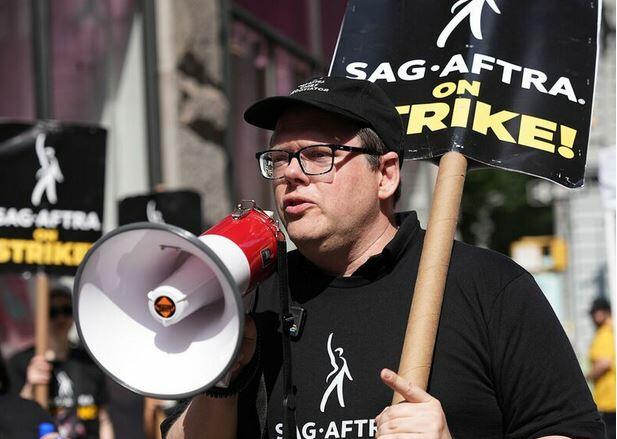
AI has become a central issue as the Writers Guild of America (WGA) and the Screen Actors Guild-American Federation of Television and Radio Artists (SAG-AFTRA) enter into labor negotiations with studios, with the WGA asking studios to commit to not using AI for generating scripts or training large language models such as ChatGPT to produce variations of their work.

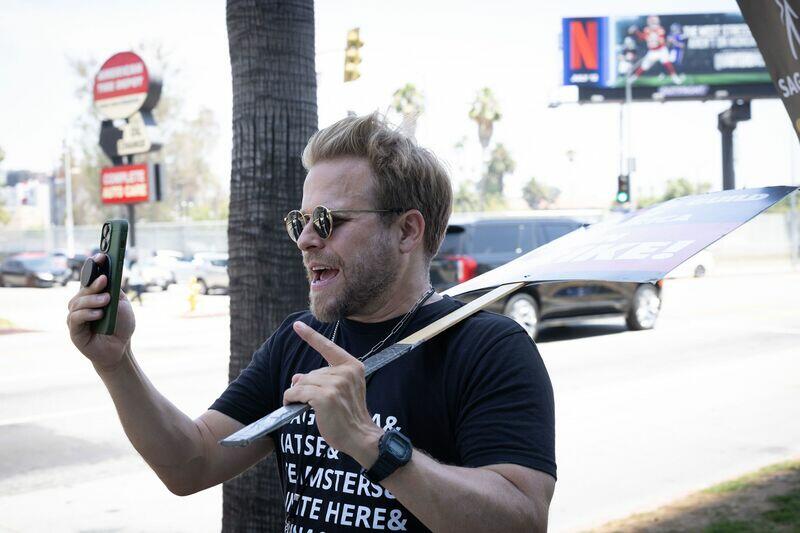
“They wouldn’t even discuss it with us, and that made us worried,” said LA comedian, Adam Conover, in a statement to Bloomberg. “It made me say, ‘Oh, these people actually are planning to use it to try to undermine us.’”

Conover picketing in front of Netflix headquarters in Los Angeles on July 17. Photographer: Sam Santos/Shutterstock

Creatives in the industry already say that they aren’t banking enough from streaming services and that technology companies exploit their labor. Now they fear AI will eliminate their jobs entirely, replacing their voices and faces with computer-generated renditions. AI is already being used to create marketing materials, eliminate swear words and reduce the cost of visual effects.

Studios, meanwhile, have been hesitant to commit to rules governing the technology.

Meanwhile, the potential for AI to replace human actors with CGI renditions has also become a major point of contention in the most significant labor dispute in 60 years, as both actors and writers strike at the same time, shutting down several TV and film productions.

Studio executives have dismissed the threat of AI as overstated, however they do acknowledge that it does offer cost savings amid declining revenue streams and efforts to cut costs. The technology can save costs in postproduction, while companies such as Flawless AI are offering AI-based solutions for ‘enhancing’ actor performances or dubbing dialogue in any language.

“Human performance will persist, but how we make content will change drastically,” said Tom Graham, co-founder of AI deepfake pros Metaphysic.

Almost every major studio already uses AI in some capacity, even if it’s not talked about. Many work with a company near the beach in Santa Monica called Flawless, which offers a suite of postproduction tools that save time and money.

DeepEditor, for example, lets filmmakers move an actor’s performance from one shot to another. If you have Margot Robbie talking behind a desk, say, you can decide to show her from a different angle without needing more takes. AI Reshoot lets filmmakers replace dialogue, as long as they have audio of the actor speaking the words. TrueSync allows for dubbing in any language; filmmakers can adjust the movement of an actor’s mouth to make it look as if they’re speaking the foreign words accurately. -Bloomberg

So with the industry shifting towards the use of AI, creatives are demanding guarantees on consent, control and compensation when it’s employed.

Another issue AI raises is that of copyrights and infringement. Both deepfake technology and generative AI (script writing) raise concerns over the unauthorized use of actors’ likenesses and intellectual property. Currently, Getty Images is suing Stability AI for allegedly using copyrighted works without permission.

Acording to Hillary Krane, chief legal officer at Hollywood talent agency CAA, people have rights to control the publicity of their name, image and likeness, but “the speed of technology is undermining our ability to effectively enforce those rights.

Tyler Durden
Tue, 08/01/2023 – 22:40

via ZeroHedge News https://ift.tt/mreikMo Tyler Durden

The Corruption Of Science By Politics

The Corruption Of Science By Politics

Authored by Jeffrey A. Tucker via The Epoch Times Newsletter,

Been to the movies lately? Maybe you are trying them out again. They seemed to have improved under the desperate desire to get audiences back.

I know there are reasonable criticisms but I found “Barbie” to be fun, if only because it completely ignored the last 20 years of gender dysphoria and asserted bracing but welcome sex binary.

“Mission Impossible” was a blast too but we’ve come to expect that from this franchise. Unexpected is “The Sound of Freedom” which is a terrifying expose of contemporary issues that, for reasons which are unclear, is a film utterly despised by the left.

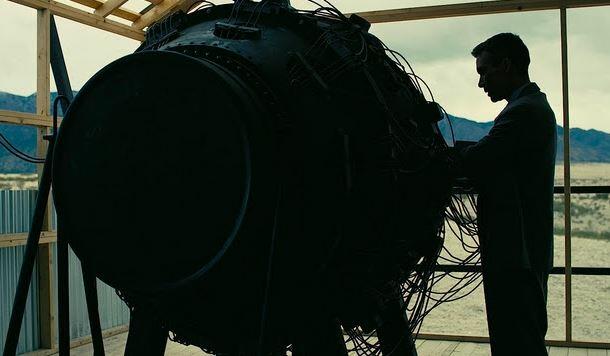
We should talk about “Oppenheimer.” It’s about many things but ultimately the theme concerns the use and abuse of science in service of state power.

The U.S. government tapped a promising physicist to build a better bomb. Once two years and $2 billion were consumed in the great project, it needed to be deployed, whether necessary to win the war or not. Germany was already defeated and Japan was ready to surrender but the chance to demonstrate to the world the superior military might of the United States was too good to pass up.

J. Robert Oppenheimer swallowed his moral scruples about the bombings in Japan—he thought the bomb would be used against Nazis—that cost hundreds of thousands of innocent lives. But he drew the line at pushing for the hydrogen bomb or building even more of the bombs he built. He became an advocate for arms control in order to avoid an escalation with the Soviet Union.

At this point, he was hounded by Washington for his personal Russian relationships that included dalliances with communists. So yes, his benefactor the state turned on him, exactly as the film depicts Albert Einstein predicting to him.

Later of course his reputation was restored. And this movie goes a very long way to memorialize him as a complicated but brilliant man.

One feature of the film I found particularly valuable was explaining the extremely strange relationship between the United States and the Soviet Union in these years. Following the Great War, there was a massive Red Scare in this country from 1918 to 1923, and that included Congressional hearings, censorship, and new sedition legislation that is today being used by the Biden administration against Trump and his supporters.

During the New Deal, which amounted to a rejection of free-enterprise dynamics of the American spirit, President Roosevelt brought into his administration many admirers of Soviet “achievements” in agriculture and housing. Among them was the hugely influential Rex Tugwell, an economist who embraced central planning and crafted much of the legislation in those years that cartelized industry, controlled prices, and embarked on Soviet-style projects.

This is one reason that champions of freedom in those days despised the New Deal. Reds were all over Washington. And despite the legend, their policies did not release the United States from the grip of depression but only prolonged it with controls, spending, regulation, and subsidies.

Yes, I know, we’ll never get rid of the myth that the New Deal saved us but the reality is that the Depression lasted through the next war and didn’t really end until peace came in 1945 and following.

But step back a few years in time. When the United States entered World War II, the U.S. and Russia became allies, and FDR and Stalin became fast friends in the effort to defeat the Nazis and Imperial Japan. It was “Roosevelt’s Road to Russia” that was completed in this alliance. During those days, there was no danger for scientists and others in having communist and Red connections but rather quite the reverse.

After the war, there was another switcheroo. President Harry Truman was facing party losses in Congress and cleverly triangulated by ramping up the Red Scare again. In 1948, the communists won an election in Greece, and this was highlighted in the United States as evidence of a growing imperialism under the influence of Moscow.

In the blink of an eye, Russia went from valiant ally to feared enemy. And this was a decade and a half after the United States went from feared enemy to valuable domestic influence. And this was only a decade and a half after Russia went from friend of the West to feared enemy. Yep, in the course of a half-century, the switch happened three times.

Did you ever wonder why George Orwell’s book “1984” was so named? It was a spin on 1948 when the Cold War began and within an instant the public mind flipped from celebrating to hating an entire nation. This is why in the book, international relations between Oceania, Eurasia, and East Asia were in continued flux. With each change, the announcement went out that we’ve always been at war with whomever the ruling class wanted war with next.

At the end of the Cold War, the United States celebrated emancipation in Russia and the demise of the Soviet Union and trade relations picked up. But sure enough, two and a half decades later, mainstream media—the same voices who once favored arms control and peace during the Cold War—is agitating for war with Russia. As in Orwell’s book, they tell us that we’ve always been at war with Russia.

The same crowd that agitated for decades for peace with Russia now wants all-out war!

In any case, this is the larger historical context in which Oppenheimer was grilled for his communist connections and why he went from friend to enemy so quickly. It was all about regime priorities. They have exerted more influence on science in modern times than we care to admit.

Let’s explore a case from the science of economics.

When the American Economic Association was founded in 1885, one of its first publications was an utterly vicious and disgraceful tract that favored segregation, white supremacy, eugenics, and much worse, not only for blacks but also for southern Italians, Jews, and Slavs, if you can believe it.

This deployment of fake science kept up for decades in all the mainstream economics textbooks and journals. It didn’t really end until after the Second World War. This is a tragic history because economics as a science began in the late Middle Ages with an emancipatory spirit. It was corrupted in the United States during the 20th century by state influence.

And so it has been throughout the century. This impacts every discipline from physics to economics to engineering to climatology.

Speaking of which, the founder of climatology in America is Harvard professor Robert DeCourcy Ward (1867–1931). He was a consummate member of the academic establishment. He was a founder of the American Restriction League, one of the first organizations to advocate a “scientific” approach to immigration rooted in Darwinian evolutionary theory and the policy of eugenics.

“Darwin and his followers laid the foundation of the science of eugenics,” Ward alleged in his manifesto published in the North American Review in July 1910. “Why,” Ward demanded, “should the breeding of man, the most important animal of all, alone be left to chance?”

By “chance,” of course, he meant choice. Ward explained that the United States had a “remarkably favorable opportunity for practicing eugenic principles.” And there was a desperate need to do so, because “already we have not hundreds of thousands, but millions of Italians and Slavs and Jews whose blood is going into the new American race.”

Thus are the thoughts of the earliest Harvard climatologist. And his successors have not distanced themselves from state priorities either, as you can easily discover by picking up today’s newspapers.

Read the rest here…

Tyler Durden
Tue, 08/01/2023 – 22:20

via ZeroHedge News https://ift.tt/cIvDlFu Tyler Durden