Decisionmakers Never Pay The Price

Decisionmakers Never Pay The Price

Authored by David Lapp-Jost via RealClear Wire,

The novel River City One tells a personal tale of a soldier long returned home, but permanently adrift. Partly the experiences of a man carrying the heavy weight of many white Middle American challenges, the story’s theme of brokenness coming from war is never too far in the background. Defying expectations, tropes, and stereotypes, River City One’s story is compelling and powerful.
A novel like this must be readable, well-paced, and strike appropriate notes of plausibility and authenticity. River City One absolutely delivers as a modern American veteran’s story. The characters feel right. Their motivations, values, foibles, jobs, and dispositions command interest and draw the reader into the book’s community while at the same time not at all seeming exaggerated or caricatured. At welcome intervals, bleak-but-enjoyable segments bring a dry, fun humor to the text, usually relating to the narrator’s tragicomic job at a law practice.

Significant stretches of the narrative reflect aspects of the white Middle American experience. White men are seen as the most privileged in our society, rightfully, but communities like the protagonist John Walker’s carry terrible burdens. Many characters have largely meaningless “Bullshit Jobs,” to cite a defining sociological book of our time, jobs that neither serve nor fulfill. Long dead is Bush-era religiosity; this is an era of secular disillusionment. The characters are driven by the harsh demands of money and work, and some are deeply lonely. People lack community and are unhealthy. While the opioid epidemic does not really make an appearance, drugs and sickness are present and a minor character lost a girl decades ago to a car accident – a painful recounting of a sort of catastrophe that claims 1 percent of American lives and hollows out people and communities, much as killing does. John is an insightful observer of brokenness, and honest about crises that others dismiss or ignore.  

The driving focus of the text is relationships and the lack thereof, and the story starkly depicts the white male experience of loneliness, told through an ex-military lens. Men in general are lonely in the U.S., often having few friends, often relying heavily on one marital partnership that these days has a 50 percent chance of failure. Middle-aged white men commit suicide at about twice the national average rate (with veterans spearheading the trend at a rate that eclipses our losses in war). Some simply “die of loneliness” – an epidemic of health issues related to isolation that are not widely or well understood. And of course, war adds another element. Twenty years ago, conservative-leaning, white middle class Americans (as well as African Americans from the South) signed up in droves to go fight in Afghanistan and Iraq. These ex-soldiers face a heightened crisis of health and human relationship, as we see in John Walker’s circle of military connections, who seem to all have relationship problems. With its strong and effective focus on relationships, River City One humanizes and compassionately depicts a hurting veteran.

In John’s life, we witness a deep loneliness, aimlessness, and a lack of friendship aside from an old war buddy and faintly sociopathic colleagues. “Friends don’t appear out of nowhere,” says Grace, John’s wife. “They develop over time – like, a long time, a lot longer than one week.” She intuitively understands the lack of human connection that drags John down. This crisis of relationship is seriously hurting our overworked, under-vacationed, “Bowling Alone” nation today, to name another relevant book. Sadly, Grace has faded away as an influence on John, and like so many men and especially men in masculine-coded sectors like the military, John doesn’t seem to have much connection with women as friends, or to have relationships with people who show him care and love.

The legacy of war is a deep and powerful undercurrent of the text… and is also elusive. John’s acquaintances wonder what it was like to kill an Iraqi or Afghan (the settings – past and present, in war or in peace – are ambiguous) or how it was to lose a comrade. John does not offer a fixed answer or take a uniform approach to the question, and he actually doesn’t have a fixed answer. Our defining memories of trauma change over time, like our national memory of 9/11 or a child’s experience of losing a parent. Like insensitive acquaintances who ask John about killing and dying, we readers are partly-unwelcome interlocutors in John’s life, witnesses of a painful inner journey, not people entitled to a juicy story. Soldiers and veterans aren’t there to fulfill our fantasies or show us deep truths about honor or heroism. Their way is hard for anyone committed to holding onto goodness, and their job is not part of the purpose we humans are for. John teaches his son to pray for souls in purgatory even though he says “doesn’t know what that means.” Perhaps he does know, more than most.

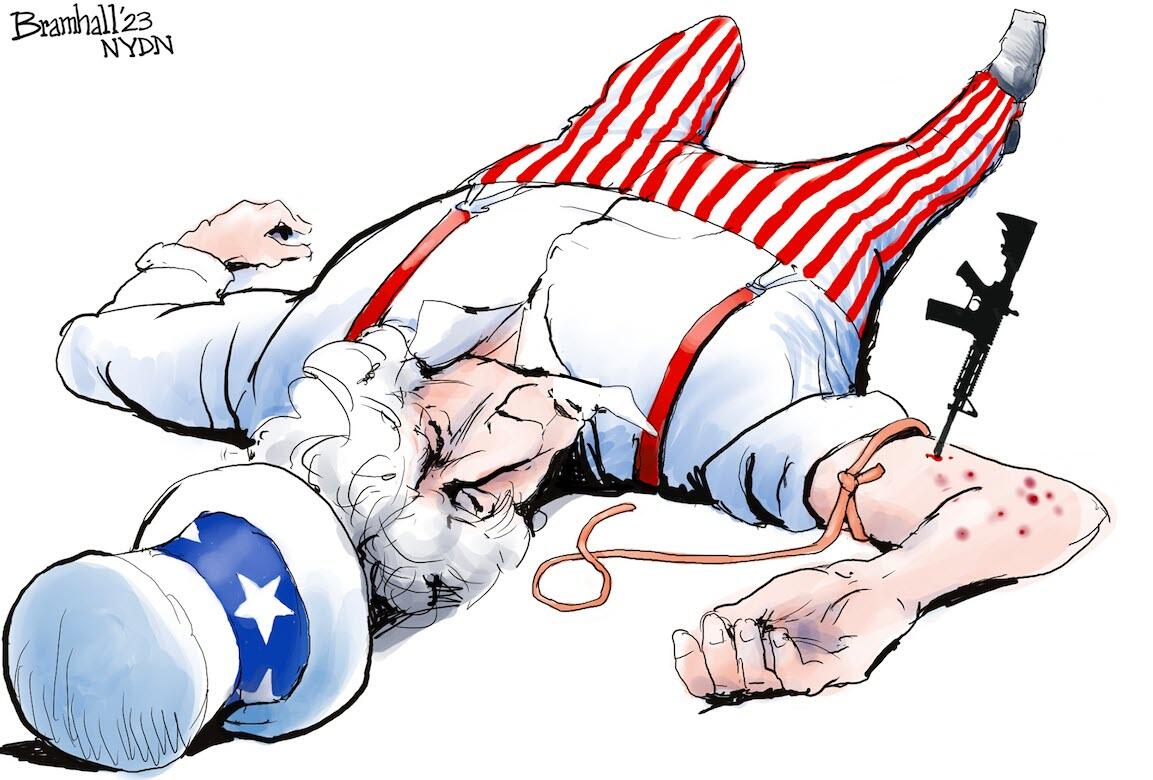
The author’s role in telling this story is a contribution to the world. But we as a society must consider the consequences of war not just for the soldier, but for the people he or she is supposed to be protecting, at home and (in theory) abroad. The perhaps $8 trillion that the United States expended on the War on Terror caused maybe a million to four-and-a-half million deaths – almost all poor people in Muslim countries – and shattered many communities, many families, many dreams. The war disillusioned millions of Americans and billions of people in the Global South.

And the cost of the war precluded building the society that John needs and longs for, one that is beautiful, healthy, and rich in relationships and free time for its residents. Let us imagine John comes from an economically average U.S. city of 500,000. Its proportional financial share in the War on Terror was over $12 billion. Especially considering that investing in human capital and healthy development yields exponential returns, those $12 billion are a huge loss. They could have addressed drug dependence, mental health, urban beautification, safe and sustainable transit. Instead, the resources went to failed wars. As veterans like the author intuitively know, we as a country misused our resources. Money, yes, and even more than that, the youth and strength of young men and women who could have served in other ways.

Those who have borne burdens for their service to our country don’t just deserve care, love, healing, and resources. As we offer support to those who have been harmed in body, mind, or soul, let us also learn from the caution of so many veterans. Do not repeat the mistakes of the past. Do not send more young people to be broken in expeditionary wars of choice. The failures of the administrations – all administrations – of the last decades must not be repeated. In the end, in this life, it is not the decision-makers who pay the price.


David Lapp-Jost (M.Ed.) is a Friedensarbeiter (Peace Worker) with the German Mennonite Peace Committee, which since World War II has worked for peace in Europe.

Tyler Durden
Tue, 11/07/2023 – 21:05

via ZeroHedge News https://ift.tt/57daUcz Tyler Durden

30,000 Pounds Of Tyson “Fun Nuggets” Hit With Recall Over Metal Shards

30,000 Pounds Of Tyson “Fun Nuggets” Hit With Recall Over Metal Shards

Tyson Foods has issued a recall for 30,000 pounds of its “Fun Nuggets,” a fully cooked chicken product targeted at children, due to concerns over potential contamination from metal fragments. 

“A limited number of consumers have reported they found small, pliable metal pieces in the product, and out of an abundance of caution, the company is recalling this product,” Tyson wrote in a press release. 

According to a release from the US Department of Agriculture’s Food Safety and Inspection Service, the nuggets were shipped to distributors in Alabama, California, Illinois, Kentucky, Michigan, Ohio, Tennessee, Virginia and Wisconsin in 29-ounce packages.

The Food Safety and Inspection Service said the problem was discovered after a number of customers complained about “small metal pieces” in the nuggets. 

“There has been one reported minor oral injury associated with consumption of this product,” the food agency said. 

Tyson’s recall was classified as “Class I,” indicating a “reasonable probability that the use of the product will cause serious, adverse health consequences or death,” according to the FSIS. 

Consumers purchasing Tyson Fun Nuggets for their children might ask this question: How did the metal get into the nuggets? 

Also, consumers should abandon the industrial-meat complex for proteins sold at local farms. There’s no telling what else could be in the nuggets.

Tyler Durden
Tue, 11/07/2023 – 20:45

via ZeroHedge News https://ift.tt/8G7d4rn Tyler Durden

Data Analyst Defends 2020 Georgia Election Rolls Challenges

Data Analyst Defends 2020 Georgia Election Rolls Challenges

Authored by Dan Berger via The Epoch Times (emphasis ours),

One of the individuals who created the data to challenge thousands of voters during Georgia’s controversial 2020 election and subsequent runoff testified to the pains taken to ensure the lists were fair.

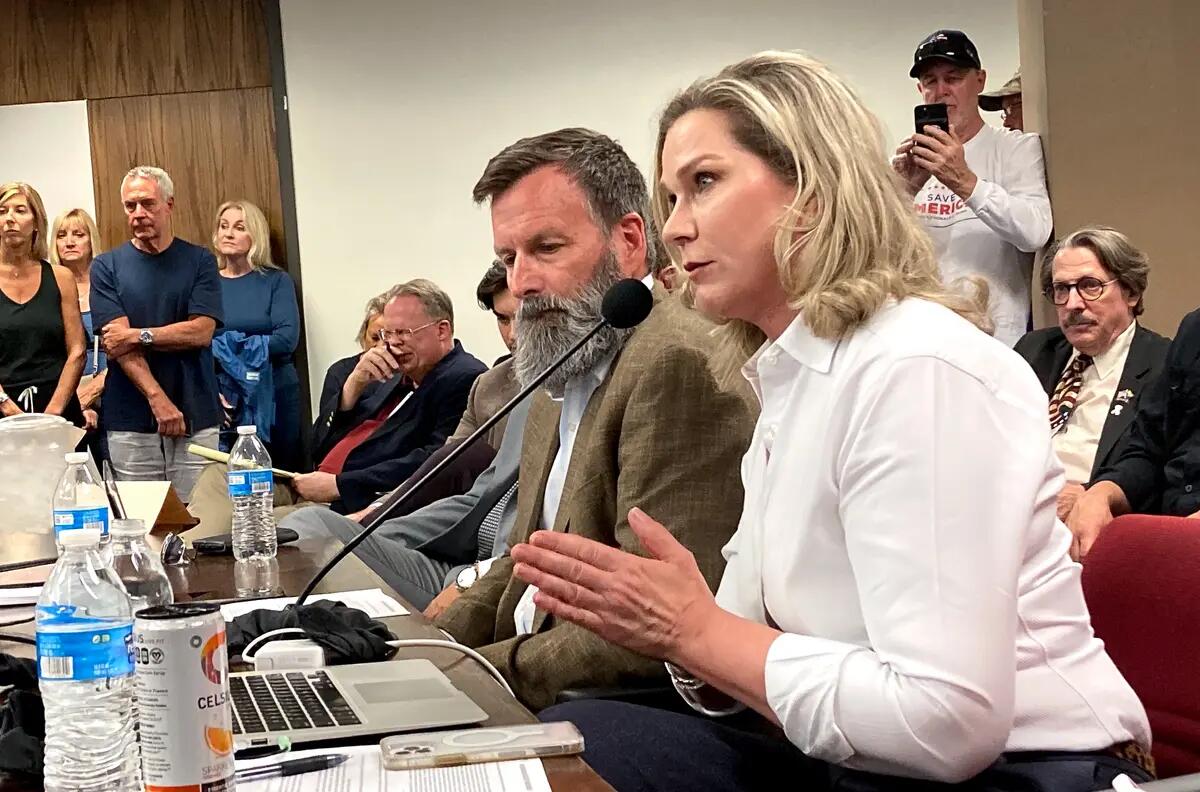
True the Vote founder and president Catherine Engelbrecht makes a point during a presentation on ballot trafficking at the Arizona statehouse on May 31, 2022. (Allan Stein/The Epoch Times)

Derek Somerville said he and data analysis partner Mark Davis used multiple databases and levels of comparison to identify Georgia voters who didn’t live where they were registered to vote and then to exclude many who were, in fact, legal voters.

They are two of six individuals named, along with the True The Vote organization, in a federal lawsuit alleging that their work intimidated minority voters and was a violation of the 1965 Voting Rights Act.

They are being sued by Fair Fight, an organization founded by two-time Democratic gubernatorial candidate Stacey Abrams to fight voter suppression. Fair Fight seeks to stop True The Vote and the co-defendants from any election integrity work in Georgia. Their non-jury trial in Gainesville, in Georgia’s Northern District, before Judge Steve Jones, began on Oct. 26.

Mr. Somerville returned to the witness stand on Nov. 3 after testifying the previous day. He testified that he and Mr. Davis compared state-published voter rolls, absentee ballot rolls, post office change of address records, and geospatial data.

They first created a list of 364,000 voters who had moved from where they were registered to vote. They then used that and other data to “funnel” it down to 39,000 voters for whom there was “probable cause” to believe they were no longer entitled to vote where they were voting.

He described some of the “funnels” they used to exclude people from the probable cause list. Those who move within 30 days of an election may vote at their old address. They went back 18 months, but no more, because federal law requires states to review and purge their rolls every two years, and that’s done after general elections.

Military service members and their families, moving from base to base, may be entitled to vote from a home address elsewhere, as are college students in dorms or apartments away from their family homes.

Arizona gubernatorial candidate Kari Lake (R) claps during a presentation of ballot trafficking by True the Vote at Arizona’s statehouse in Phoenix on May 31, 2022. Next to her is Pinal County Sheriff Mark Lamb. (Allan Stein/The Epoch Times)

They used mapping data to locate and then eliminate thousands of people in those categories, he testified. He gave Atlanta’s Morehouse College, a historically black university and the alma mater of Martin Luther King, as one location where they performed that exclusion.

They also used the mapping data to exclude those who moved within the same county, which had less effect on their voter eligibility.

Those on the final “probable cause” list weren’t intended to be automatically disqualified from voting, he said. That would be up to their county board of elections, which would need to review and investigate a case before making that determination, he said.

And, he said, in most cases being notified of a challenge to their voting status wouldn’t keep them from going to the polls because, in most counties, they were only told of the challenge if they showed up to vote.

Mr. Somerville said his work was non-partisan, not examining the data for party registration, race, or gender, and only doing so after the fact to ensure their work had been accurate. It was, he said.

Crowds of people gather as U.S. President Donald Trump speaks to supporters from The Ellipse near the White House in Washington on Jan. 6, 2021. (Mandel Ngan/AFP via Getty Images)

The defendants’ lawyers said in a trial brief that black voters represent about 29 percent of Georgia voters but only 27 percent of those on the list, showing there was no discriminatory intent.

One of their lawyers, Michael Wynne of Houston, told The Epoch Times that Mr. Davis had been studying the issue for 30 years, going back to the last century, and that Mr. Somerville shared the interest. Their work was of interest primarily to computer and statistics buffs until the closely fought election of Nov. 3, 2020, made it a hot issue.

Mr. Somerville said he had never heard of True The Vote until Dec. 15, 2020, when he was contacted by co-defendant Ron Johnson about the organization and then had dinner the same night with True The Vote co-founder Catherine Engelbrecht. That was only three weeks before the Jan. 5, 2021 runoff in which both of Georgia’s U.S. Senate seats were in play for control of the chamber. True The Vote sought to empower private citizens, who by law in Georgia can challenge voter registrations, to do so.

And part of his interest in the issue, Mr. Somerville said, was to counter some of the more far-fetched election conspiracy theories purporting to show why then-President Donald Trump was running more than 11,000 votes behind Democratic nominee Joe Biden in Georgia’s tally.

Their techniques, using public data and modern statistical analysis tools, gave those interested a more concrete and rational way to consider election results, he said. And he hoped that it would restore confidence in the system among those so disillusioned they hesitated to vote in the runoff.

Both he and Ms. Engelbrecht have testified that state governments are years behind in their techniques for keeping their data up to date.

Both have used the word “nerds” on the stand to describe themselves and each other: those who love data, computers, and what you can do with them.

We were relatively obsessive about it,” Mr. Somerville testified under direct examination by one of the defense attorneys, Cameron Powell of Houston.

Their geeky demeanor on the stand belies the intensity of what transpired three years ago.

Now-President Biden’s narrow lead in Georgia of 11,779 votes sparked recounts and not only then-President Trump’s repeated charges of electoral fraud, but his second impeachment over his efforts to overturn the state’s count and his pressuring of Secretary of State Brad Raffensperger in a lengthy telephone call alleging many irregularities in the process and how they affected the count:

“So, what are we going to do here, folks? I only need 11,000 votes. Fellas, I need 11,000 votes. Give me a break. You know, we have that in spades already.” And “Look Brad. I got to get … I have to find 12,000 votes and I have them times a lot. And therefore, I won the state.” And, “You will find you will be at 11,779 within minutes, because Fulton County is totally corrupt.”

The impeachment failed, but President Trump currently faces criminal conspiracy charges in Fulton County over the matter. Among 18 co-defendants are some who have pled guilty, making them available to testify against the former president.

The turmoil also led to the Jan. 6, 2021 breach of the Capitol, which Democrats and others have sought to label an “insurrection.”

A year ago, Ms. Engelbrecht was in jail, where she and True The Vote’s co-founder Gregg Phillips spent a week for contempt of federal court in Texas over their refusal to identify a whistleblower giving them information in a different elections case.

The trial involves a lot of fine points of federal law, including the 1965 Voting Rights Act, which makes voter intimidation easier to prove, and the 1993 National Voter Registration Act, which directs states to update voter rolls regularly.

The defense has sought to show that the defendants—True The Vote and the individual defendants—didn’t communicate with challenged voters or seek to intimidate them. After the plaintiffs rested their case in the morning, the defense moved to dismiss the case, saying the plaintiffs hadn’t supported the allegations they’d made.

At the very least, defense attorney Jake Evans of Atlanta argued to Judge Jones, four of the six co-defendants, including Mr. Somerville, Mr. Davis, Ron Johnson, and James Cooper, should be dropped from the lawsuit because little testimony had born upon them and their connection to the case was so tangential.

Judge Jones, appointed to the federal bench in 2010 by President Barack Obama, questioned plaintiffs’ attorneys, including Christina Ashley Ford and Uzoma Nkwonta, both of Washington, D.C., sharply over the four co-defendants but ended up declining to dismiss them from the lawsuit.

Tyler Durden
Tue, 11/07/2023 – 20:25

via ZeroHedge News https://ift.tt/X7UDE3P Tyler Durden

California Spent $4 Million On Gender-Affirming ‘Enhancements’ For Prisoners

California Spent $4 Million On Gender-Affirming ‘Enhancements’ For Prisoners

California is helping prison inmates cope with their stints, having forked over more than $4 million of taxpayer funds on surgical sex changes and cosmetic “gender-affirming” enhancements for 157 inmates, including four who are on death row, the Washington Free Beacon reports.

Dallas Rachael Goosen (left), Makayla Fennell and Jazzie Paradize Scott ride bikes in the prison gym at the California Medical Facility in Vacaville on June 11, 2019. (Sruti Mamidanna/KQED)

Breaking it down, the state has coughed up:

  • Over $4 million for vaginoplasties

  • $180,000 for breast implants

  • $184,141 on facial feminization surgeries

  • $224,000 on laser hair removal

  • The state has spent over $1 million removing the breasts of female prisoners

“People who think they’re transgender have rights, and they should be treated with dignity and respect, but it does not include taxpayer dollars being used to do surgeries that are experimental at best and scientifically unjustified at worst,” said attorney Harmeet Dhillon, who has represented California inmates.

California’s lack of guardrails for trans-identifying prisoners stands in sharp contrast to its rules around inmate dental care, for instance, which don’t allow for root canals on back teeth, cosmetic tooth restoration or replacement, or treatment of oral ulcers—among other services.

From 2017 through mid-July 2023, taxpayers have bankrolled at least 157 transgender procedures and treatments, spending nearly $2.5 million on vaginoplasties—the creation of artificial vaginas and vulvas—for 35 male prisoners, according to previously unreported records obtained by women’s prison advocate Amie Ichikawa and reviewed by the Free Beacon.

Four people on death row have received sex reassignment surgery.

Meanwhile, corrections officials have requested nearly $2.2 million in new funds just for transgender care, according to budget documents.

The state’s mandate to cover sex-change procedures for inmates stems from a 2016 legal settlement with convicted male murdere Shiloh Quine, who is serving a life sentence. Quine was represented by the George Soros-funded Transgender Law Center.

Quine secured the right for trans-identifying prisoners to have items typically prohibited to male inmates for security reasons—such as chains, necklaces, and scarves.

In 2014, just 131 California inmates identified as transgender. At last count this month, that number was up to 1,847, including hundreds who identify as nonbinary. A February 2021 legislative report said the corrections agency “believes that the recent growth in the transgender inmate population is due to agency efforts” to transfer inmates based on their chosen “gender identity.” -Free Beacon

Stunning and brave, and not what Californians voted for (or is it?).

Tyler Durden
Tue, 11/07/2023 – 20:05

via ZeroHedge News https://ift.tt/Ch8nBGj Tyler Durden

China’s Grand Strategy & The Four Wars

China’s Grand Strategy & The Four Wars

Authored by James Howard Kunstler via Kunstler.com,

“There has never been a protracted war from which a country has benefited.”

– Sun Tzu

China’s grand strategy to take its turn at dominance over the global scene depends on bogging down the USA in four wars at once.

How’s it working so far? Pretty darn well.

Amazingly, China hardly had to lift a finger to make it happen – though it did write some bank checks to the soulless old grifter sitting in the White House.  Our country has arranged its collapse and downfall masterfully on its own.

War No. 1: There was absolutely no need to start the war in Ukraine, you understand, which has by now not only bled Ukraine’s young male population to the bone, but drained our own military of field weapons and ammunition. After the Soviet collapse, Ukraine existed as a poor backwater in Russia’s orbit, causing no trouble for anyone — except itself, due to world-beating corruption — until the USA started a push to include it in NATO. Our neocons made it clear that the purpose of this was to hem-in and weaken Russia. (Why? “Reasons,” they said.) This policy alarmed and infuriated the Russians who made it clear that NATO membership wasn’t going to happen.

The US persisted, engineered a coup in 2014 against the Russian-leaning president Yanukovych, and spurred his replacements, first Poroshenko and then Zelensky, to pound the ethnic Russian provinces of the Donbas with rockets and artillery for years on end. Meanwhile, we trained, armed, and supplied a large Ukrainian army and refused to negotiate the NATO expansion in good faith until Mr. Putin had enough in 2022 and moved to put a stop to all this monkey business.

After some initial mis-steps, the Russians began to prevail in early 2023. Now, there is a general consensus that Russia controls the battle space with its superior ordnance and troop strength, and the conflict is close to being over. Our NATO allies are not hiding their disgust over the fiasco. Ukraine is wrecked. What remains is how the “Joe Biden” regime reacts to yet another major overseas humiliation. As I see it, Mr. Putin must do his level best to not rub it in, since our country is in the throes of a psychotic fugue and might be capable of world-ending craziness.

War No. 2: Little more than a month ago, the Middle East was thought to have reached a moment of praiseworthy stability, according to White House National Security Advisor Jake Sullivan. We awaited an upgrade of the Abraham Accords normalizing relations between Saudi Arabia and Israel. Then, the savage Hamas operation of October 7 blew it all up. The Israeli-Palestinian quandary seems to have no possible solution.

The Palestinians want their own state, of course, but they push to establish it in the entire territory that Israel occupies now. (From the River to the sea….) The Israelis have no intention of being pushed out, and they resist other possible divisions of the land there that might serve to satisfy the Palestinians’ wish for a country of their own. Israel understands that a basic tenet of jihadi Islam, expressed clearly and often, is to exterminate the Jews, and there is no way around that. Israel’s adversaries don’t seem to understand the meaning of “never again.”

Israel now must deal with the latest affront to its existence and its clear goal is to disarm and destroy the Hamas terror organization. To the world’s horror, they are going about it brutally in Gaza because Hamas is dug-in in a vast tunnel network under the civilian overlay of houses, shops, schools, and hospitals. What else might Israel do? Probably seal off the tunnel system with Hamas in it, creating a gigantic graveyard of Islamic martyrs — a recipe for future cycles of vengeance.

As you can see, there appears to be no way this ends well for anyone. Other big Islamic players wait on the sidelines, making only threatening gestures so far. I doubt that Iran will risk its oil infrastructure and its electric grid to intervene. And despite Mr. Erdogan’s drum-beating and his large army, the Turkish economy and currency (the lira) would collapse if he jumped in. Egypt has zero appetite for war. That leaves Iran’s proxy, Hezbollah, on Israel’s northern frontier. If they amp things up enough, Damascus and Beirut could become ashtrays.

So, I would expect that Israel grinds on methodically to put Hamas out of business and the region returns to its miserable stalemate status quo until the next generation of angry Palestinians starts a new cycle of violence. Meanwhile, Israel has its own fractious internal political problems to contend with. And also meanwhile, the Palestinians and Israelis compete by birth-rate to out-populate the other side — a contest that might stop suddenly with the economic collapse of the US and Europe, and the end of current global economic relations, including an orderly oil trade, that has produced nearly a century of global super-prosperity allowing populations to expand as they have. (There is also Israel’s 90-percent Covid vaccination rate to consider, with its detrimental effects on health and reproduction.) In a desperate scramble for resources that follows, things that can’t go on, stop.

Bringing us to War No. 3: The US Government’s war against its own citizens. This has been going on since Mr. Trump stepped onto the scene, and has included a semi-successful war against Mr. Trump personally — except that not only has it failed to put him out of business as a politician, it has substantiated many of the claims he made about corrupt and perfidious government that resulted in his election in 2016. All of that has only enhanced his polling numbers. And the lawless, bad faith court cases lodged against him have demonstrated the US government’s grievous fall into willful malfeasance that has the DOJ arresting and unfairly persecuting hundreds of innocent Americans that support Mr. Trump.

A big part of the government’s war against US citizens has been the bizarre Covid-19 episode and the long-running effort by public officials to deceive the population about it, including lockdowns and destruction of small businesses, the dishonest suppression of viable treatments, gross censorship about the harms of the mRNA vaccines, and trickery around the origins of the vaccines in the back rooms of our Department of Defense.

Another front of this war is the wide-open Mexican border, a lawless state of affairs created as deliberate policy by our cabinet secretaries, and done at a time when there is tremendous animus against the US from many other nations who send thousands of sketchy young men into our country with no attempt by our border officials to determine who they are.

It looks like “Joe Biden’s” hash will be settled shortly when the House, reorganized under a young and vital new speaker, reveals the Biden family’s bank records and begins the process of impeaching the president for bribery. “Joe Biden’s” party pretends that this is not happening and appears to have no plan to deal with consequences. For the moment, they still stupidly tout him as their candidate for the 2024 election, another arrant falsehood you can add to the thousand-and one affronts against the public that this party has tried to put over. Many Americans suspect there will not be a 2024 election, specifically that whoever is president in the coming year will invoke yet another national emergency order to postpone it on spurious grounds. Many are also far from persuaded that the 2020 election that installed “Joe Biden” was honest and legitimate.

Which brings us to War No. 4: The American peoples’ war against a government gone rogue. Obviously, it is not underway yet, but it’s easy to see how it might develop.

I think it could commence in the aftermath of a financial calamity that is visibly brewing in the debt markets. The net result will be a collapsed standard-of-living for everyone in the USA, the breakdown of supply lines and daily business, and a very sharp loss of legitimacy for the people who have been in charge of anything in this country.

We emerge from this catastrophe a nearly medievalized society with a steeply-reduced population, unable to resist China’s attempt to colonize us. Pretty scary, huh? Just let’s keep doing what we’re doing.

*  *  *

Support his blog by visiting Jim’s Patreon Page

Tyler Durden
Tue, 11/07/2023 – 19:45

via ZeroHedge News https://ift.tt/NESzdjt Tyler Durden

World’s Top Tractor Maker Slashes Outlook, Trims Jobs In Response To Slowing Sales 

World’s Top Tractor Maker Slashes Outlook, Trims Jobs In Response To Slowing Sales 

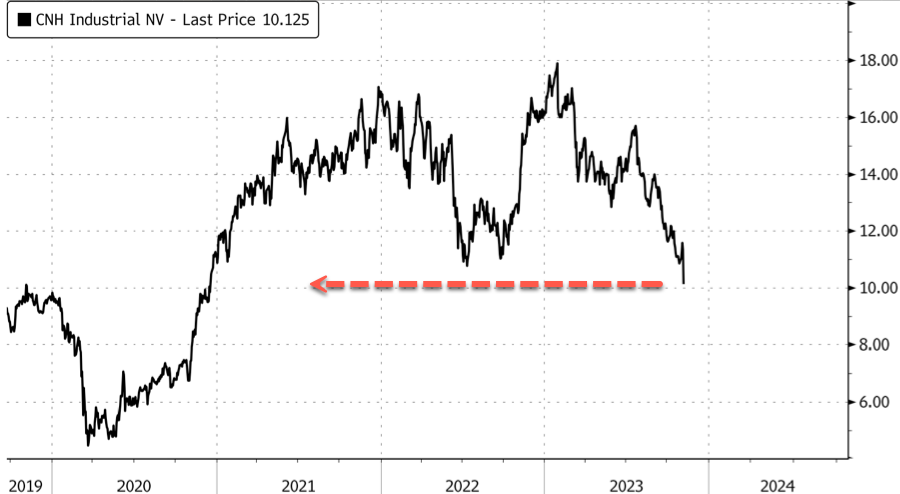
CNH Industrial, a global leader in farm equipment with top brands such as Case, New Holland, and Steyr, saw its stock prices tumble on Tuesday – the largest intraday drop since June 2020. The decline followed the company’s decision to cut its revenue outlook for 2023, attributing the downward revision to a global deceleration of agricultural machinery demand. Also, the company announced an immediate restructuring program that will result in a cut of 5% of its salaried workforce. 

A quick look at the Italian-American company’s yearly forecast reveals net revenue forecast from industrial activities will be between 3-6% this year, down from a previous forecast of 8-11%. It also revised its free-cash-flow estimate lower to be between $1-1.2 billion from $1.3-$1.5 billion. 

YEAR FORECAST 

  • Sees industrial net sales +3% to +6%, saw +8% to +11% 

  • Sees industrial free cash flow $1 billion to $1.2 billion, saw $1.3 billion to $1.5 billion

Sales for the third quarter fell 1% to $5.33 billion, below Bloomberg’s estimate of $5.8 billion. 

THIRD-QUARTER RESULTS

  • Adjusted EPS 42c, estimate 43c (Bloomberg Consensus)

  • Industrial net sales $5.33 billion, estimate $5.8 billion

  • Industrial Sales Constant Currency -3%

  • Agriculture net sales $4.38 billion, estimate $4.77 billion

  • Construction net sales $948 million, estimate $975.9 million

  • Agriculture Adj. Ebit $672 million, estimate $708.8 million

  • Construction adj. Ebit $60 million, estimate $49.3 million

  •  Agriculture adj. Ebit margin 15.3%, estimate 14.8%

  • Construction adj. Ebit margin 6.3%, estimate 5.04%

The decline in sales is primarily due to falling tractor demand across South America and Europe: 

In North America, industry volume was up 19% year over year in the third quarter for tractors over 140 HP and was down 7% for tractors under 140 HP; combines were down 4% from prior year. In EMEA, tractor and combine demand was up 4% and down 18%, respectively. Industry volume in Europe alone was down 7% for tractors and down 40% for combines. South America tractor demand was down 16% and combine demand was down 47%. Asia Pacific tractor demand was down 10% and combine demand was up 33%.

As a result of the slowdown, the company announced an “immediate restructuring program targeting a 5% reduction in salaried workforce cost” and will be “coupled with a comprehensive rightsizing of the Company’s cost structure to be implemented early next year.” 

Shares in Milan were repeatedly halted, while shares in the US fell 12%. 

The news follows Caterpillar’s earnings seven days ago, where it warned about a more cautious fourth quarter and said order backlogs fell

A softening in worldwide tractor sales could serve as a harbinger for a global slowdown, signaling growing economic turbulence due to the Federal Reserve’s aggressive monetary tightening. 

Tyler Durden
Tue, 11/07/2023 – 18:45

via ZeroHedge News https://ift.tt/ASshzlb Tyler Durden

State-Licensed Pot Suppliers Say Federal Prohibition Is Unconstitutional As Applied to Them


cannabis buds | MIS Photography

A lawsuit filed late last month in the U.S. District Court for the District of Massachusetts argues that the federal marijuana ban is unconstitutional as applied to the intrastate operations of state-licensed cannabis suppliers. That claim is similar to one that the U.S. Supreme Court decisively rejected in the 2005 case Gonzales v. Raich, which involved state-authorized medical use of marijuana. But the plaintiffs in Canna Provisions v. Garland—a pot shop chain and three other Massachusetts marijuana businesses—argue that several developments since then undermine the logic of that ruling.

In the 2005 case, Angel Raich and Diane Monson, two patients who used marijuana for symptom relief in compliance with California law, argued that Congress exceeded its authority “to regulate commerce…among the several states” when it purported to ban noncommercial production and possession of cannabis that never crossed state lines. Monson grew her own marijuana, while Raich relied on two caregivers who grew it for her.

It may seem obvious that the power to regulate interstate commerce does not cover conduct that is neither commercial nor interstate. But the Supreme Court had held otherwise in the 1942 case Wickard v. Filburn, which involved an Ohio farmer who exceeded his wheat quota under the Agricultural Adjustment Act of 1938. Although Roscoe Filburn planned to use the extra wheat “wholly for consumption on the farm,” the Court unanimously ruled that the collective impact of such decisions on interstate commerce was enough to justify the rule he violated.

When farmers grow wheat for their own consumption, the justices reasoned, that has “a substantial influence” on the interstate “price and market conditions” that Congress sought to regulate. “Even if appellee’s activity be local and though it may not be regarded as commerce,” Justice Robert H. Jackson wrote for the Court, “it may still, whatever its nature, be reached by Congress if it exerts a substantial economic effect on interstate commerce.”

Writing for the majority in Gonzales v. Raich, Justice John Paul Stevens applied similar reasoning to the federal ban on marijuana. “Our case law firmly establishes Congress’ power to regulate purely local activities that are part of an economic ‘class of activities’ that have a substantial effect on interstate commerce,” Stevens wrote. Wickard, he said, “establishes that Congress can regulate purely intrastate activity that is not itself ‘commercial,’ in that it is not produced for sale, if it concludes that failure to regulate that class of activity would undercut the regulation of the interstate market in that commodity.”

Like Filburn, Raich and Monson “are cultivating, for home consumption, a fungible commodity for which there is an established, albeit illegal, interstate market,” Stevens wrote. He perceived a “likelihood” that marijuana produced for medical use in California would be diverted to the interstate market, thereby evading the “closed regulatory system” that Congress had established through prohibition.

“While the diversion of homegrown wheat tended to frustrate the federal interest in stabilizing prices by regulating the volume of commercial transactions in the interstate market, the diversion of homegrown marijuana tends to frustrate the federal interest in eliminating commercial transactions in the interstate market in their entirety,” Stevens wrote. “In both cases, the regulation is squarely within Congress’ commerce power because production of the commodity meant for home consumption, be it wheat or marijuana, has a substantial effect on supply and demand in the national market for that commodity.”

Justice Clarence Thomas was dismayed by the majority’s position. “Respondents Diane Monson and Angel Raich use marijuana that has never been bought or sold, that has never crossed state lines, and that has had no demonstrable effect on the national market for marijuana,” Thomas wrote in his dissent. “If Congress can regulate this under the Commerce Clause, then it can regulate virtually anything—and the Federal Government is no longer one of limited and enumerated powers.”

Whatever you think of Stevens’ reasoning, the four Massachusetts marijuana businesses argue in Canna Provisions v. Garland, it is outdated for several reasons.

First, the plaintiffs say, “the regulated market in Massachusetts, and the dozens of intrastate markets like it, have substantially reduced interstate commerce in marijuana by providing a regulated alternative for consumers.” From 2012 to 2022, the complaint notes, “the amount of illicit marijuana seized by U.S. Customs and Border Protection declined by almost 95%,” which means “marijuana consumers are getting their marijuana less and less from the interstate channels that Congress sought to prohibit.” That “steep decline in marijuana imports,” Canna Provisions et al. add, “deprives criminal organizations of a major source of illicit revenue.”

Second, the lawsuit says, “today’s regulated marijuana is not fungible like wheat.” State-regulated marijuana products “are distinguishable (from each other and from illicit interstate marijuana) based on the labelling and tracking requirements that states impose,” the plaintiffs note. “Regulated marijuana in Massachusetts is subject to a strict tracking and labelling system that applies at every stage of the supply chain from seed to sale. As a result, far from being a fungible mass commodity, each marijuana product sold under Massachusetts’ regulations is traceable to its origin and distinct from illicit interstate marijuana.”

Third, Canna Provisions et al. argue, “the federal government has abandoned any goal of eliminating marijuana from interstate commerce.” Since 2014, congressional spending riders have barred the Justice Department from interfering with the implementation of state medical marijuana laws. And even when it comes to recreational marijuana, the Justice Department has taken a hands-off approach, declining to prosecute cannabis suppliers as long as they comply with state law. Congress has allowed legalization of medical and/or recreational marijuana in Washington, D.C., and in territories such as Guam, Puerto Rico, the U.S. Virgin Islands, and the Northern Mariana Islands.

“The federal government no longer operates under any assumption that banning intrastate marijuana is necessary to policing interstate marijuana,” the complaint says. “What was once a single-minded federal crusade against the cannabis plant has been replaced with an ambivalent set of inconsistent policies, some aimed at reducing federal interference with state efforts to regulate marijuana.” In other words, the “closed regulatory system” aimed at “eliminating” interstate marijuana commerce no longer exists.

The plaintiffs are seeking “a declaratory judgment that the Controlled Substances Act is unconstitutional as applied to the intrastate cultivation, manufacture, possession, and distribution of marijuana pursuant to state law.” They also want an injunction barring the Justice Department from “enforcing the CSA (either alone or in conjunction with any other federal law such as the Bank Secrecy Act) in a manner that interferes with the intrastate cultivation, manufacture, possession, and distribution of marijuana, pursuant to state law.”

Although those remedies would not allow interstate transactions or shipments, they would help relieve several of the hardships that businesses like Canna Provisions face as a result of continuing federal prohibition. “If plaintiffs get what they’re asking for it would be enormously helpful,” marijuana lawyer Vince Sliwsoki writes. “State-legal marijuana businesses would be treated more like other businesses, outside of the frustrating prohibition on marijuana crossing state lines. They would get similar access to banking, [Small Business Administration] loans, and federal tax treatment, for starters.”

How likely are the plaintiffs to get what they’re asking for? Not very, I think, given the flexibility of the Commerce Clause analysis that Stevens applied in Gonzales v. Raich.

Canna Provisions et al. argue that state-legal marijuana businesses like theirs actually reduce interstate commerce in cannabis. But the same could have been said of the homegrown medical marijuana used by Raich and Monson: Since they were producing or obtaining it locally, there was no need for them to buy marijuana imported from Mexico or other states (leaving aside the implausibility of that scenario in a state like California, which has long been a major marijuana producer). Stevens nevertheless worried about “diversion” to the interstate market, and the same risk exists in states with licensed dispensaries.

Visitors can and do buy marijuana products from those stores and take them home, either for personal consumption or to share with friends and acquaintances, sometimes in exchange for financial compensation. To the extent that a lack of “fungibility” matters, it favors such interstate transportation, since people who live in states where marijuana is still prohibited may prefer the regulated, reputable, and reliable products sold in states where it is legal.

Finally, the plaintiffs argue that the federal government, which in 2005 was manifestly determined to stamp out the interstate marijuana market, nowadays is “ambivalent” and “inconsistent.” Yet the halfway tolerant policies and practices cited in the complaint do not necessarily signify that Congress “has abandoned any goal of eliminating marijuana from interstate commerce.” Officially, it has not, and supporters of that goal could argue that the federal government is advancing it by continuing to oppress state-licensed cannabis suppliers in various ways while stopping short of sending them to prison.

That position may be dubious, but it makes at least as much sense as Stevens’ conclusion that regulation of interstate commerce extends to a bag of homegrown marijuana in a cancer patient’s nightstand. “This unjustified intrusion of federal power,” Canna Provisions et al. argue, “lacks any rational purpose.” But as Stevens noted in a classic understatement, “We have never required Congress to legislate with scientific exactitude.”

The post State-Licensed Pot Suppliers Say Federal Prohibition Is Unconstitutional As Applied to Them appeared first on Reason.com.

from Latest https://ift.tt/5wE07nJ
via IFTTT

Behind Mike Bloomberg’s $500 Million Donation To ‘Finish The Job On Coal’

Behind Mike Bloomberg’s $500 Million Donation To ‘Finish The Job On Coal’

Authored by Kevin Stocklin via The Epoch Times (emphasis ours),

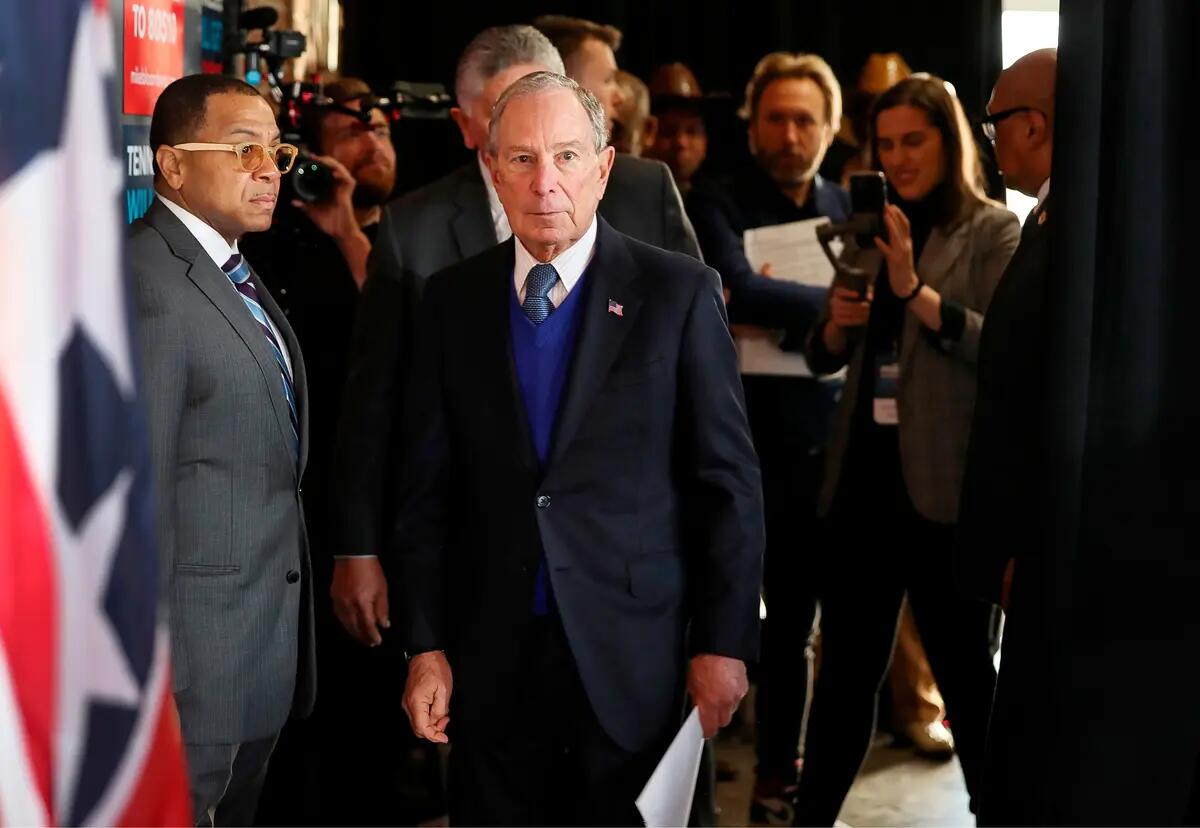
Billionaire philanthropist and former New York Mayor Michael Bloomberg pledged $500 million in September toward shifting electricity production in the United States to wind and solar energy and shutting down its coal- and gas-fired plants.

However, some experts say that Bloomberg’s millions, together with the billions being spent by the Biden administration, are paving a road to ruin.

The donation from Bloomberg Philanthropies, which adds to the $500 million Mr. Bloomberg pledged in 2019, aims to “finish the job on coal” and “accelerate the clean energy transition to reach the goal of 80 percent of total electricity generation” from renewables, according to an official statement.

With 372 of 530 coal plants announced to retire or closed to date—more than 70 percent of the country’s coal fleet—this next phase will shut down every last U.S. coal plant,” Bloomberg Philanthropies stated.

The effort also aims to “slash gas plant capacity in half, and block all new gas plants.”

Many of those who study America’s electric infrastructure say this is taking us down a dangerous path.

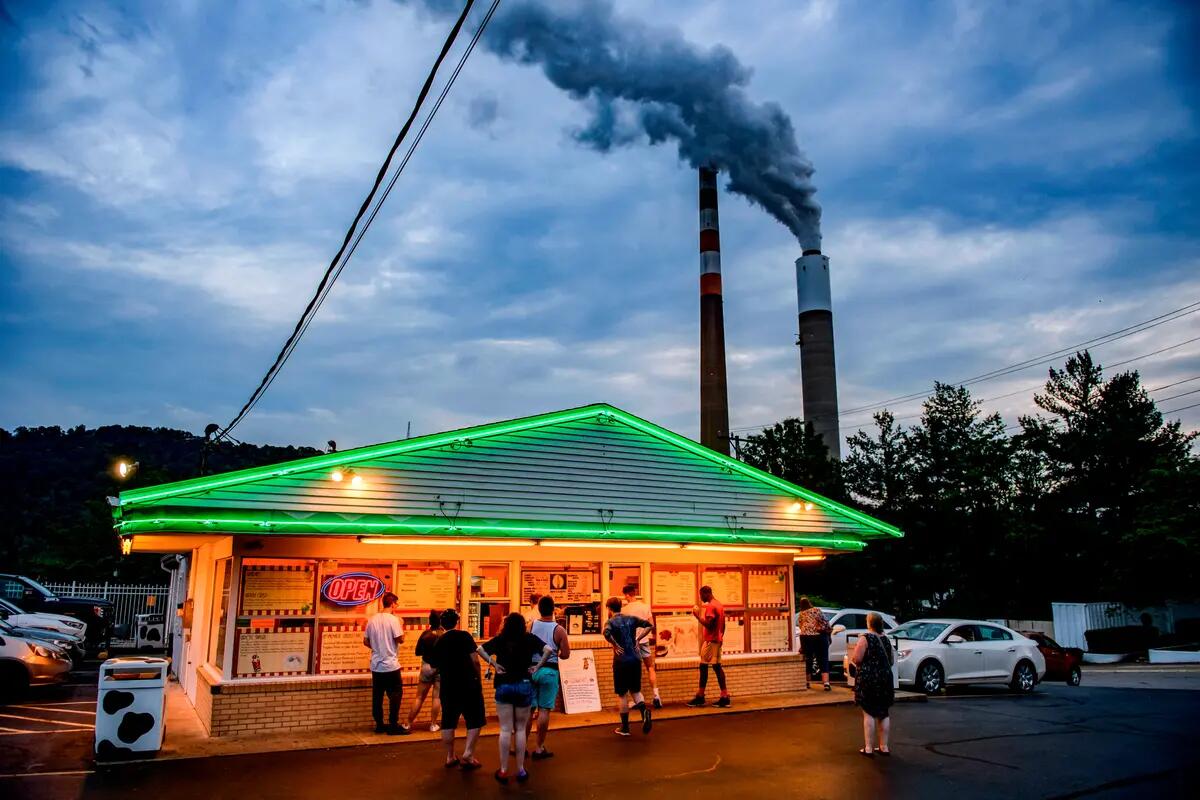
Then-Democratic presidential candidate and former New York City Mayor Mike Bloomberg waits to be introduced during a campaign rally held at Minglewood Hall in Memphis, Tenn., on Feb. 28, 2020. (Joe Raedle/Getty Images)

We’re following people here that are pied pipers,” physicist and energy analyst John Droz told The Epoch Times, referring to the literary character who led children to their doom through delusive enticement.

“This whole business of promoting renewables as a solution is completely unproven, scientifically.”

The transition is destabilizing America’s power grid, which could damage transformers and cause long-term outages, according to Steven Milloy, energy expert, news commentator, and publisher of Junkscience.com.

We are in this nonsensical, headlong rush to wreck our grid,” he told The Epoch Times.

What’s overlooked in this drive to close coal and gas plants is America’s ability to keep the lights on. And while neither the Biden administration nor Mr. Bloomberg has produced a cost-benefit analysis for their plans, analysts say we can look to places such as Germany and Texas, which have taken the lead in transitioning to wind and solar, for a preview of what’s in store.

German energy economist Lars Schernikau has assessed the results of his country’s “Energiewende” (energy transition) and warns Americans to not follow Germany’s example.

Wind and solar do not seem to work; otherwise, after 20 years of ‘Energiewende,’ power prices would be lower and Germany would not be in trouble,” he told The Epoch Times.

Germany spent hundreds of billions of euros to build wind and solar facilities since 2002, doubling its power generation capacity and boosting the share of renewables to 60 percent from about 10 percent. However, its electricity production has been flat, while the cost of electricity skyrocketed.

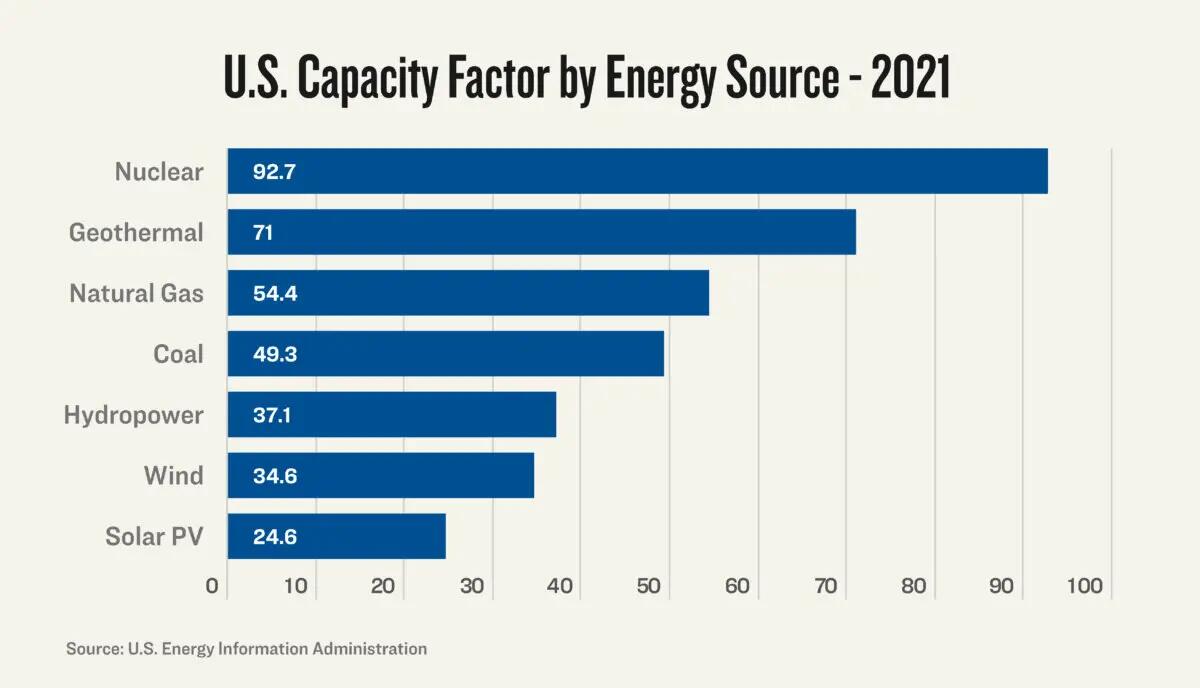
Wind and solar don’t increase output proportionately because of their significantly lower “capacity factor,” or the percentage that’s actually generated versus capacity built.

The capacity factor for wind and solar is significantly lower than that for nuclear or fossil fuels. (Energy Information Administration)

The capacity factor for wind and solar is about 35 percent and 25 percent, respectively, compared to roughly 92 percent for nuclear and 50 percent for coal and natural gas. That many utilities prioritize buying power from wind and solar facilities rather than from coal and gas plants artificially inflates the capacity factor for wind and solar, even from these low levels.

For all the billions spent, Germany’s “Energiewende” has delivered an increasingly unreliable electric system at a cost to consumers that’s higher than virtually every other developed country.

The process of shuttering coal and nuclear plants has left the country at the whim of the weather and unfriendly neighbors, such as Russia, and also dangerously short of dependable power that can be adjusted to meet fluctuations in demand.

The capacity factor for wind and solar is significantly lower than that for nuclear or fossil fuels. (Energy Information Administration)

Before the current trend of closing coal plants, electric utilities in the West typically ran their power generation systems with a 20 percent installed reserve margin over expected peak demand, to ensure that they could always meet consumers’ needs.

That margin ensured that the electric grid would still function even during unpredicted events, such as a winter freeze in Texas or a summer heat wave in California.

Depleting Reserves to Balance Renewables

The transition to renewables is now eroding that safety margin. Germany, where peak demand is around 80 gigawatts, once had about 100 gigawatts of reliable, dispatchable capacity; now, reliable capacity is down to 80 to 85 gigawatts, according to Mr. Schernikau.

“That means they are actually at the margin,” he said. “As soon as you get close to the margin, whether your reliable power supply equals or is barely above your peak power demand, you’re running into trouble, which is exactly what Texas has done.”

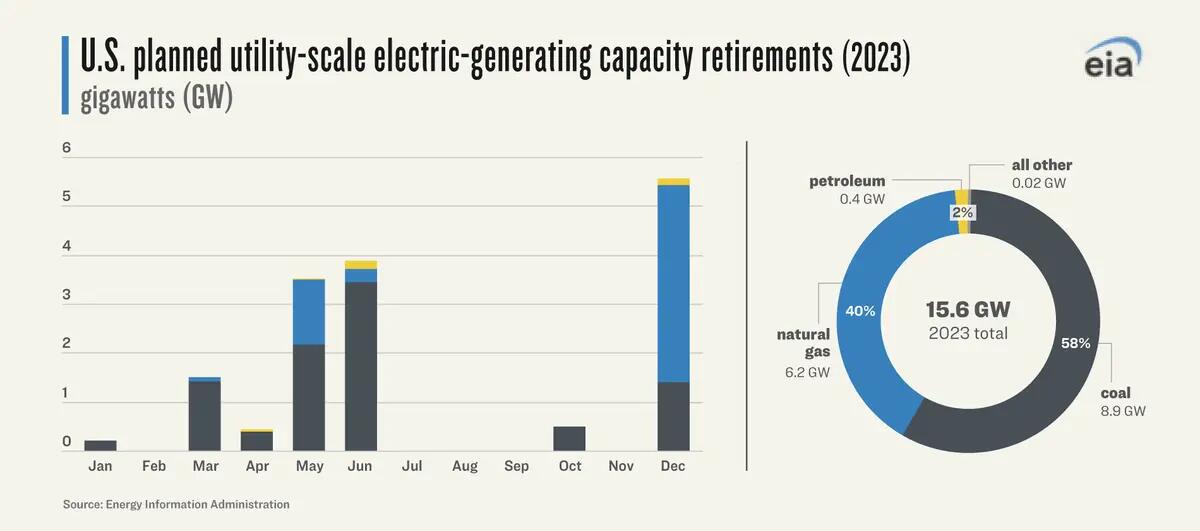
Electric utilities in the United States, one by one, are following in Germany’s footsteps, and we’re already seeing similar results. The U.S. Energy Information Administration reported that coal and natural gas plants will account for 98 percent of plant closures in 2023 and that U.S. utilities have halted an average of 11 gigawatts of coal-fired capacity per year since 2015. 

Utilities are rapidly shutting down coal and gas plants. (Energy Information Administration)

The problem for the electric grid as a whole is that the electricity supply must always match the demand. If the system goes out of equilibrium, substantial damage to the grid’s hardware could result, leading to long-term outages.

“Wind comes and goes, and you can’t operate off of something that’s an unpredictable source; you need an auxiliary source of power to balance it out,” Mr. Droz said. “Something like 99 percent of that balancing power is gas.

“When these people say wind, that is deceptive because there is no such thing as wind by itself. What they should be saying is a wind-plus-gas package.”

What many U.S. utilities are doing is expanding their wind and solar capacity but not adding reliable backup facilities to match it, he said. Instead, the utilities “just dump any excess need for balancing onto the system,” hoping that they can draw on other regions when there’s a shortfall.

Increasingly, they’re also drawing on the emergency reserve.

The wind developers are using the reserve as the auxiliary, and that’s not supposed to be what happens,” Mr. Droz said. “They should not be allowed to take from the emergency reserve to balance their wind projects.”

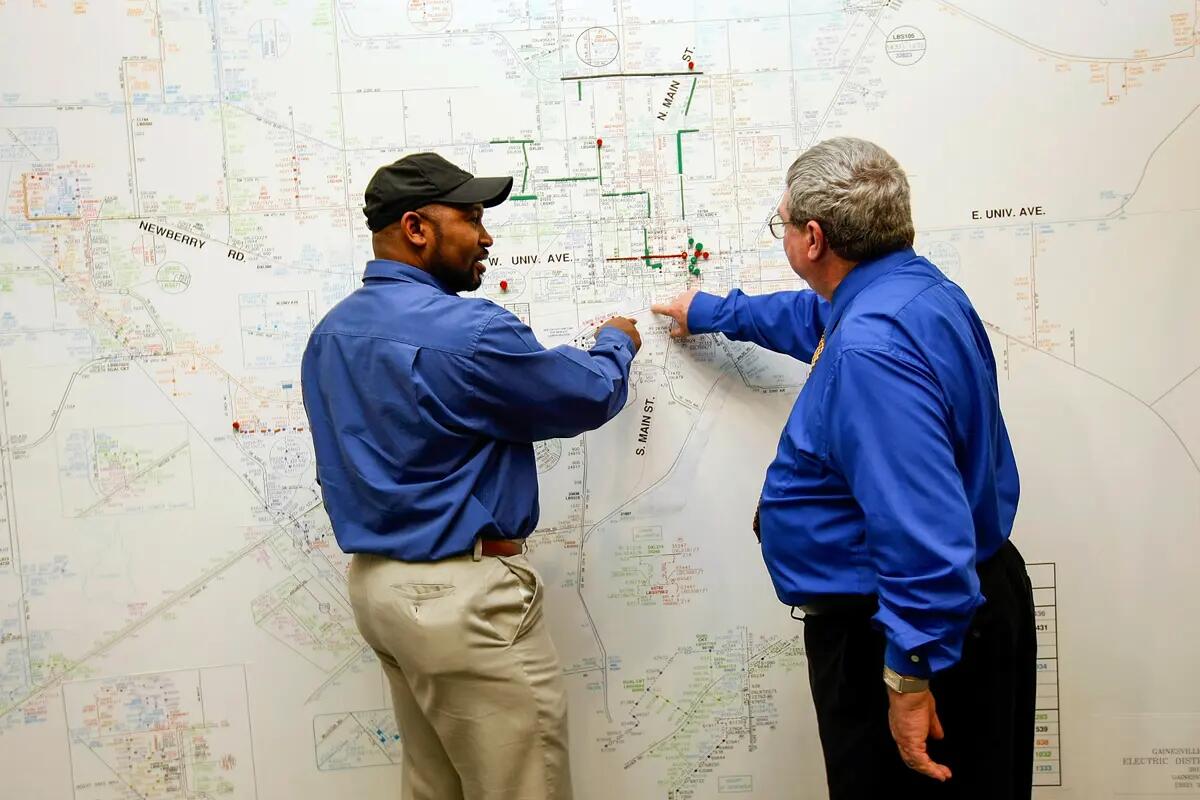
Workers at Gainesville Regional Utilities pinpoint a solar panel installation on the city’s electrical grid map, in Gainesville, Fla., on April 15, 2009. That year, the city of Gainesville became the first city in the nation to have a solar feed-in tariff ordinance, allowing owners of solar photovoltaic systems to receive 32 cents per kilowatt hour of electricity produced by the system over the next 20 years. (Joe Raedle/Getty Images)

‘Reliability Chicken’

Brent Bennett, policy director at the Texas Public Policy Foundation, refers to this process as “reliability chicken.”

“They’re having to play a lot of games now in order to justify building more wind and solar,” he told The Epoch Times.

Among the utilities, Mr. Bennett said, “everybody is pointing at each other and saying, ‘We’re going to get energy back from these guys,’ and these guys over here say, ‘We’re going to get energy back from those guys.’”

As long as there’s only a small percentage of wind and solar in the system, “they can get away with that,” according to Mr. Droz.

“But when you get a more severe case, like the Texas freeze, all of a sudden that reserve that was built in for emergencies is completely gone,” he said.

Texas’s winter storm Uri in 2021 caused hundreds of deaths, many from hypothermia, when power outages prevented Texans from heating their homes. In that case, utilities in the state came within minutes of collapsing the grid for weeks or longer.

Karla Perez and Esperanza Gonzalez warm up by a barbecue grill during a power outage caused by winter storm Uri in Houston on Feb. 16, 2021. (Go Nakamura/Getty Images)

Ultimately, Texas electricity operators were able to implement emergency rolling blackouts and shed enough load to rebalance the system in time to prevent an even greater catastrophe. However, experts warn that operating so close to the margin is a very dangerous game to play.

Testifying before the U.S. Senate in 2015, former CIA Director James Woolsey was asked what would happen to Americans if the electric grid went down for an extended period.

“There are essentially two estimates on how many people would die from hunger, from starvation, from lack of water, and from social disruption,” he said.

One estimate is that within a year or so, two-thirds of the United States population would die. The other estimate is that within a year or so, 90 percent of the U.S. population would die.”

Despite that risk, government policies are pushing utilities to move faster to shut down coal and gas plants.

“All the incentives are for utilities to build more wind and solar,” Mr. Bennett said.

Read the rest here…

Tyler Durden
Tue, 11/07/2023 – 18:25

via ZeroHedge News https://ift.tt/nS0QZjz Tyler Durden

Biden Briefed On China’s Plans For First Military Base In The Middle East

Biden Briefed On China’s Plans For First Military Base In The Middle East

China is reportedly seeking to establish a permanent military base in the Middle East for the first time, which Washington will certainly see as a significant ‘challenge’ – also given the planned base would be in the Arab Gulf region, where the US also has major bases, as in the case of the Navy Central Command installations in Qatar and Bahrain. 

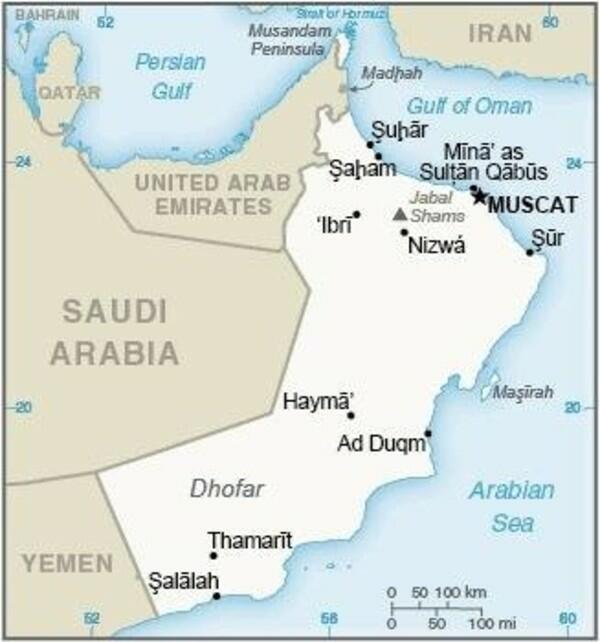
“President Joe Biden has been briefed on what his advisers see as a Chinese plan to build a military facility in Oman, people familiar with the matter said, amid a broader effort by Beijing to deepen defense and diplomatic ties with the Middle East,” Bloomberg writes in its major Tuesday story.

“Biden was told that Chinese military officials discussed the matter last month with Omani counterparts, who were said to be amenable to such a deal, said the people, who asked not to be identified discussing private deliberations. They said the two sides agreed to more talks in the coming weeks,” the report continues.

It’s as yet unknown precisely where the potential Oman base would be located. Just last August, Oman and China held a formal celebration for their 45 years of official diplomatic relations. 

The Chinese and Omani militaries have in the recent past coordinated events and exercises, with Oman’s port of Muscat semi-regularly hosting Chinese PLA warships. Last month, the Omani and PLA militaries held joint drills, and pledged to work “to expand their naval defense and military cooperation.”

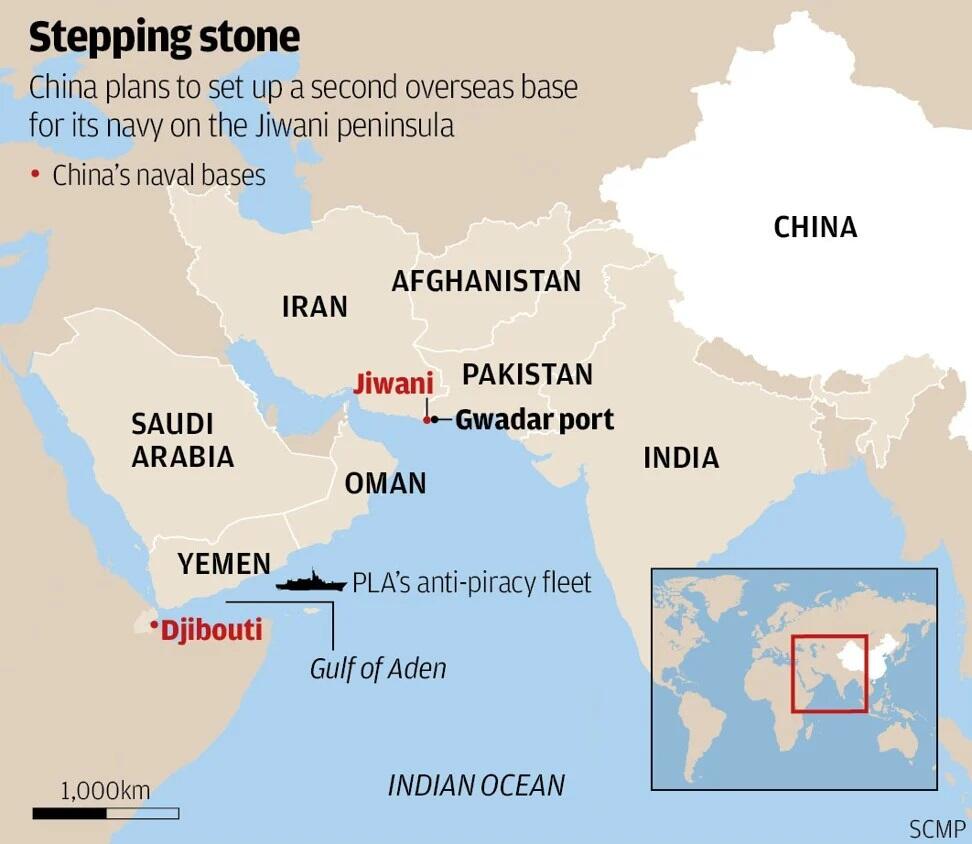
China is also believed to have long eyed the United Arab Emirates (UAE) as a possible host country for another base. Currently, Beijing’s only other significant overseas military base is in the East African country of Djibouti

Bloomberg suggests the deepened military ties between China and Oman parallels energy ties:

Oman is sometimes referred to as the Switzerland of the Middle East given that it follows a policy of neutrality and regularly acts as a mediator, including between the US and Iran. It’s also sought to balance between maintaining its partnership with the US and nurturing ties with China, which imports the bulk of its crude output. China also invested in the first stage of Oman’s Duqm special economic zone, which will be the site of the Middle East’s biggest oil-storage facility.

The US itself doesn’t have a permanent, stand-alone military base inside Oman; however, it has a key agreement with the government to use Omani bases when needed for a variety of operations. 

For example, the US Air Force uses RAFO Thumrait airbase, a military airport located near Thumrait in the country’s south. The US Navy also frequently patrols waters off Oman’s coast, looking for Iranian weapons and sanctioned oil or other shipments. One military publication has described of the Pentagon’s minimal presence (compared to other Gulf nations) in Oman as follows

The U.S. maintains an ability to use Omani bases through the Oman Facilities Access Agreement, originally signed in 1980, and most recently renewed in 2010.55 This accord made Oman the first country among the Persian Gulf States to explicitly partner militarily with the U.S.56 According to the agreement, the U.S. can request access to these facilities in advance for a specified purpose. Some of the bases listed in this section are those the U.S. may access, but not necessarily where a presence is maintained. Oman has allowed 5,000 aircraft overflights, 600 landings, and 80 port calls annually. 

Starting in 2021, US Africa Command (AFRICOM) began warning that China is not content with its Djibouti base on the continent’s east coast, but is looking to establish a military presence on the Atlantic. The US has long seen China as the top threat to the so-called “rules-based international order” (alongside Russia)–but Beijing very obviously lacks a global military presence like Washington has.

China also has a small naval outpost at Pakistan’s major Indian Ocean port.

Lately, every Chinese move to expand militarily is seen as a serious “threat” by US officials, and this is even more acute now with the Ukraine and Gaza wars happening, given Beijing often takes stances opposite Washington’s when it comes to these raging conflicts.

Tyler Durden
Tue, 11/07/2023 – 18:05

via ZeroHedge News https://ift.tt/oEIBsM6 Tyler Durden

Escaping The Socioeconomic Bullseye

Escaping The Socioeconomic Bullseye

Authored by Jeff Thomas via InternationalMan.com,

Imagine that it’s 5th August 1945 and you’re the only person in Hiroshima who knows that, the following day, the US will drop an atom bomb in your back yard.

It goes without saying that you’d choose the fastest form of transportation available to you and head out of the city as quickly as possible.

Where would you go? It wouldn’t matter very much. The goal would be to get as far as possible from Hiroshima, since you wouldn’t know how far out the damage would extend.

For many years, I’ve been advising people on what I’ve perceived as a coming economic crisis that would carry with it both a political crisis and a social crisis of epic proportions.

These three arrows would be concurrent, with each one exacerbating the other two.

Not surprisingly, many people have been either unwilling or unable to accept that such a major series of events might take place.

However, the writing is now very much on the wall and even those who don’t really understand the crisis have a feeling in the pit of their stomachs that unfolding events will end very badly.

So, we’re at the Hiroshima moment – that brief time prior to the collapse stage of the crisis when it may still be possible to “get out of Dodge.”

And much like Hiroshima, the devastation will have its epicentres. They will be the major cities of those countries that will be most greatly impacted.

We can expect that New York City, London, Toronto, Tokyo, Melbourne and others will experience dramatic decline in quality of life. In fact, this is already under way and people have begun exiting the affected cities, not planning to return.

We can imagine these epicentres as the bullseye in the image above. They represent the worst places to be caught in the coming years of crisis.

But like Hiroshima, the areas immediately outside the city will be the second-riskiest places to be. We might see them as the red ring on the target in the image above.

What locations might they be?

Well, the fact that some of the world’s most prominent cities will be the epicentre tells us that the countries in which they exist have devolved to the point that their economies are deeply in trouble.

Therefore, after an initial hit in the major cities, the remainder of each country will experience economic turmoil, which will generate political and social turmoil.

And again, this has already begun in such countries as the US, UK, Canada, the EU and Australia.

Therefore, those who were located in, say, New York, may have already left for perceived greener pastures in Colorado, Texas or Florida.

But this solution may well prove to be very temporary, as the same governments that created the strife in the cities will impact those who have sought to escape but who remain within the country’s borders. Also, these locations are now filling up with “refugees” from cities, who often find themselves unwelcome by longtime residents.

What locations, then, would constitute the white band above – the next band away from the bullseye?

Well, that might be those countries that are not part of the former Free World, the host of countries that followed the US into prosperity after World War II, then followed it into destructive debt decades later.

They would be the countries that have existed on a lower economic tier – failing to get on the A-team, but still having ridden on the coattails of the US, via trade agreements.

Such countries would be heavily impacted by the collapse, but with less distance to fall. They would therefore not experience such dramatic change.

Such countries might include Mexico, Spain, Colombia and a host of others.

Then, even further from the epicentre would be the outer rings – those countries that have taken on a minimum of trade and/or other forms of dependence upon the US and its main partners.

They would include Thailand, Uruguay and other far-flung “under-achievers.”

Uruguay, for example, imports only about ten percent of what it consumes and almost all of that comes from other Spanish-speaking countries. It also exports only about ten percent of what it produces. Whilst this has caused Uruguay to remain a sleepy little country with minimal dynamics, it has allowed it to sit out major events elsewhere in the world. (In the last century, it sat out both World Wars and the Great Depression.)

Therefore, those who recognize that their home country and its population centres may soon become less than livable, may find that, by moving to Cafayate, Argentina, Chiang Mai, Thailand, or Lake Chapala, Mexico, may dramatically decrease the odds of becoming a casualty of the unfolding crisis.

But there’s another, final ring on the target above: the white ring. This one goes one step further.

In times of crisis, wealth does not vanish. It simply changes hands and, often, geographical location.

Therefore, as wealth exits the more troubled countries of the world, it will gravitate to the less-troubled jurisdictions. As the old saying goes, “Money flows to where it’s treated best.”

When this occurs, the target jurisdictions will experience development, prosperity and trickle-down advances in social conditions. There will, therefore, be locations in the world that are on the rise, as other locations are in decline.

In the West, there are only a handful of jurisdictions that stand to rise as a result of the crisis. However, in Asia, there are many. Indeed, in each of the more productive countries of Asia, the mood on the street is one of opportunity. In Korea, Malaysia, Vietnam and others, the mood is buoyant. Asians fully understand that this is their century.

On any evening out with Asian businessmen, we find that the former perception of playing second fiddle to the West is gone, that the only obstacle remaining to Asians is China. Asian industrialists regard their main objective to be building up factories and exports to raise their position against their one great local rival.

Over the coming decades, Asia will be in a literal gold rush as nations compete to challenge China’s present lead.

The world is therefore a series of concentric circles of opportunity. The outer rings afford the greatest likelihood of prosperity.

Conversely, the closer the individual is to the epicentre of the crisis, the poorer his chances are to thrive in what is certain to be a period of dramatic change.

At such a time, it might be advisable for the reader to ponder which of the rings would best represent the one in which he presently resides and whether it might be advantageous or even necessary to choose another.

*  *  *

The political and economic climate is constantly changing… and not always for the better. Obtaining the political diversification benefits of a second passport is crucial to ensuring you won’t fall victim to a desperate government. That’s why Doug Casey and his team just released a new complementary report, “The Easiest Way to a Second Passport.” It contains all the details about one of the easiest countries to obtain a second passport from. Click here to download it now.

Tyler Durden
Tue, 11/07/2023 – 17:45

via ZeroHedge News https://ift.tt/v768qrD Tyler Durden