“Not At Liberty To Release”: Nashville PD Blows Smoke Over Leaked Manifesto

“Not At Liberty To Release”: Nashville PD Blows Smoke Over Leaked Manifesto

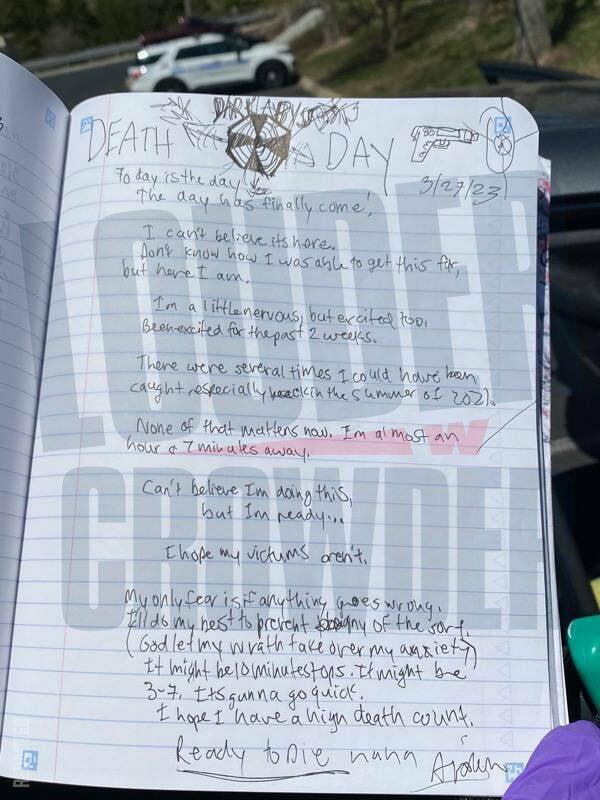
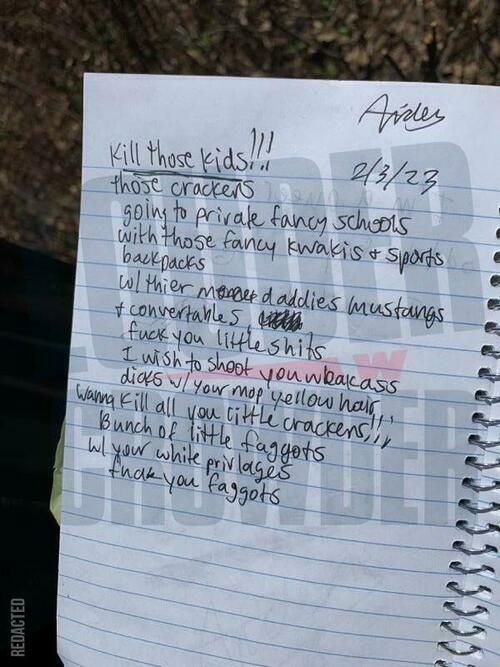
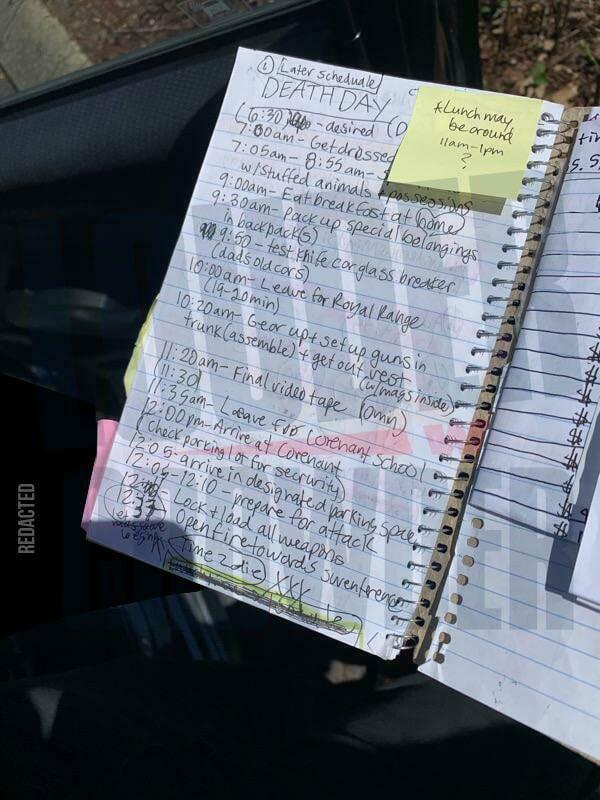
Following yesterday’s partial leak of the Nashville transgender school shooter’s manifesto by Steven Crowder, which contained a narrative-shattering screed targeting white “cracker” children, both the Chief of Police and the Mayor flipped out.

After confirming the authenticity of the writings, Metro Nashville Mayor Freddie O’Connell said in a statement on Nov. 6 that he had directed the city’s legal director to initiate an investigation into the leak.

“I have directed Wally Dietz, Metro’s law director, to initiate an investigation into how these images could have been released,” said O’Connell, who cited the ‘Covenant families’ as part of those who were, or could be, harmed by the release.

“That investigation may involve local, state, and federal authorities. I am deeply concerned with the safety, security, and well-being of the Covenant families and all Nashvillians who are grieving.”

Think of the families!

Echoing O’Connell’s rhetoric was Nashville Police Chief John Drake, who also cited the families as a reason not to release the manifesto, calling the release a “Total disregard for Covenant families,” and claiming “We are not at liberty to release the journals until the courts rule.”

Drake also claimed that “Covenant families have control of the journals.”
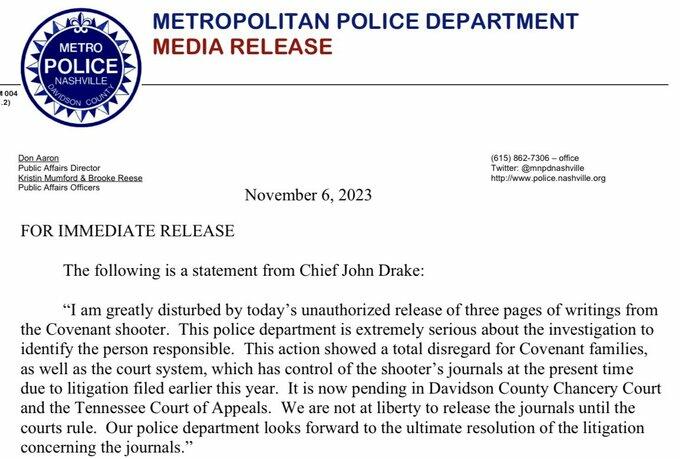
Turns out all of that is bullshit.

Debunking all of this is journalist Nick Sortor, who took to X on Tuesday to debunk Drake’s drivel.

1. “Total disregard for Covenant families”

The Covenant School families said IN A COURT FILING that the documents could be released AFTER THE SCHOOL YEAR ENDED (on or after June 8, 2023)

 2. “We are not at liberty to release the journals until the courts rule”

THIS IS FALSE. The COUNTER PARTIES in the litigation are literally SUING FOR THIS INFORMATION TO BE RELEASED

Nashville PD are the ONLY ones preventing the release, as that is the ONLY thing being demanded by the plaintiffs. The suit would be DROPPED if the documents were released

3. “Covenant families have control of the journals”

THIS IS FALSE. Metro Nashville Police have seized AT LEAST 20 JOURNALS from the shooter.

Firstly, @MNPDNashville and FBI have FULL AUTHORITY any writings, statements, or videos by the assailant. These are just more excuses to cover this up.

Secondly, the families do NOT have control over the 20 journals

In addition to official bullshit, the story was immediately censored by Facebook, YouTube, Reddit and other woke platforms.

Amazing…

Tyler Durden
Tue, 11/07/2023 – 17:25

via ZeroHedge News https://ift.tt/Yikacl8 Tyler Durden

The Best of Reason Magazine: Love, Trade, and Force: The Machinery of Freedom at 50


The Best of Reason Magazine text on top of a yellow grid background | Joanna Andreasson

This week’s featured article is “Love, Trade, and Force: The Machinery of Freedom at 50” by Katherine Mangu-Ward.

This audio was generated using AI trained on the voice of Katherine Mangu-Ward.

Music Credits: “Deep in Thought” by CTRL S and “Sunsettling” by Man with Roses

The post <i>The Best of Reason Magazine</i>: Love, Trade, and Force: <i>The Machinery of Freedom</i> at 50 appeared first on Reason.com.

from Latest https://ift.tt/wjOa687
via IFTTT

“Judges Have Long Deferred to Academe. That’s Changing.”

A very interesting article by Prof. Steve Sanders (Indiana), who is also an Assistant Dean for Academic Affairs and a scholar of sexual orientation and the law; it’s in the Chronicle of Higher Education, but also available without the need for registration here. An excerpt:

During the Red Scare of the 1950s, college faculty members were lauded by Supreme Court Justice Felix Frankfurter as being among the “priests of our democracy.” As campuses were roiled by political controversies in 1967, the Court invalidated a New York loyalty oath and underscored that “[t]he essentiality of freedom in the community of American universities is almost self-evident.” More recently, in Grutter v. Bollinger, a 2003 case upholding some forms of affirmative action, the Court said “universities occupy a special niche in our constitutional tradition” and thus were owed “a constitutional dimension … of educational autonomy.”

A much different attitude prevails on the Court today. When Harvard and the University of North Carolina argued that their affirmative action practices were entitled to the same deference the Court had shown in Grutter, Chief Justice John Roberts’s response was sarcastic, even mocking. In his opinion last June in Students for Fair Admissions v. President and Fellows of Harvard College, Roberts, writing for six justices, laid out a series of objections to the universities’ admissions practices, then twisted the knife: “The universities’ main response to these criticisms is, essentially, ‘trust us.'”

The Court’s message was clear: universities, we don’t trust you….

Unfortunately, universities are giving courts more reasons to question whether their policies are based on favoritism or politics rather than neutral and objective criteria. In the post-George Floyd era, they are embracing political projects under banners like “social justice” and “anti-racism.” By remaking themselves into institutions devoted to progressive politics, universities weaken their moral and legal claims to judicial deference.

Activist politicization is not the entire problem. In other recent high-profile decisions, courts have demonstrated that they do not understand the purposes of academic freedom or the norms of academic governance. All these developments threaten the relative latitude courts have long granted colleges and universities to manage their own affairs….

“Political correctness” in academe is nothing new. But what is new is that universities are now officially pledging allegiance to particular orthodoxies and political projects. Since Floyd’s murder by police, it has become almost de rigueur for universities to declare that their missions now include commitments such as social justice and anti-racism. [Examples omitted. -EV] …

When the AAUP was founded, the agenda at some colleges was still set by church sponsors or plutocratic trustees…. The 1915 Declaration [of Principles] spoke dismissively of institutions that “subsidized the promotion of opinions held by persons, usually not of the scholar’s calling” over “unrestricted research and unfettered discussion.” It further warned, “Genuine boldness and thoroughness of inquiry … are scarcely reconcilable with the prescribed inculcation of a particular opinion upon a controverted question.” Yet today, as social justice has become its own form of both religion and big business, numerous major universities have set aside pots of money — and sometimes entire “research” centers — to fund outcome-oriented work that advances the progressive political agenda.

For some scholars, all this goes hand-in-hand with abandoning the pretense of scholarly detachment. In the wake of Floyd’s murder, my university’s history department announced that its faculty members saw their jobs as not just documenting and interpreting history, but participating in the making of history.  According to these faculty, “the work of our profession — researching, studying, teaching, and discussing the past — has long been as much an act of advocacy and belief as it is one of inquiry.” “To be a historian,” they claimed, “has always meant to be an activist — whether that ‘action’ pushed toward democratic change or fortified existing inequities of power and wealth.” …

When professors declare themselves to be activists and advocates, then when disputes reach the courthouse — a contested tenure case, for example — there is no longer a rationale for judges to defer to their “academic” judgment. When academic judgment no longer means the apolitical application of rigorous analytical frameworks, then there is little reason for courts to treat universities or their faculties as anything other than ordinary litigants seeking to maximize their own interests.

***

In response to left-wing politicization of the academy, the right has responded with its own politicization — and in these battles, the right often brings the brute force of government power. In Florida, Gov. Ron DeSantis’s policies to censor faculty in teaching about race and gender have so far been blocked by federal courts. Those are good decisions, but they demonstrate that where educational policies are plainly political and not academic, then ordinary legal standards and precedents can and should prevail.

The sound court decisions in Florida notwithstanding, universities also are vulnerable to a rise in conservative judicial activism. [Details omitted. -EV] …

A very interesting article, which is much worth reading in its entirety.

The post "Judges Have Long Deferred to Academe. That's Changing." appeared first on Reason.com.

from Latest https://ift.tt/lDOV69r
via IFTTT

He Allegedly Killed a Cop During a No-Knock Raid. Will the Jury Agree It Was Self-Defense?


A door is surrounded by shards of glass | Illustration: Lex Villena; Michael Krause

BELTON, TEXAS—A man in small-town Texas is facing life in prison for allegedly killing a police officer. But the trial—which commenced Monday after a nearly decade-long wait—is a confluence of police use of force, the war on drugs, and the right to self-defense. Its outcome will in part answer the following question: How far does a self-defense claim go when it’s exercised against the state?

At around 5:45 a.m. on May 9, 2014, a SWAT team in Killeen, Texas—consisting of about two dozen officers—descended on Marvin Guy’s modest apartment on Circle M Drive. They were there to execute a no-knock drug raid, a controversial approach that allows law enforcement to forcibly enter a residence, usually with a fabulous display of force, without first announcing themselves. An informant had reportedly told police that Guy was dealing cocaine.

The raid did not go as planned.

Officers smashed Guy’s bedroom window and attempted to breach the door with a battering ram. But something appeared to be lodged behind the door, preventing police from immediately gaining entry and leaving them clogged outside the residence. In the rapidly unfolding mayhem, Guy fired several shots outside of his broken window, allegedly hitting four officers. Police quickly fired over 40 rounds in return. One officer, Detective Charles Dinwiddie, died.

Guy was arrested and ultimately charged with one count of capital murder and three counts of attempted capital murder. But he says he believed the police to be intruders when he was awoken and disoriented early that morning. Witnesses for the prosecution yesterday described the neighborhood as one that was known for its high crime rate. Less than a week before the raid, someone broke into Guy’s neighbor’s residence across the street in similar fashion, forcing entry via a first-floor window and choking a female resident nearly to death.

A series of protracted delays—stemming from the COVID-19 pandemic, Guy’s declining health, disputes over the district attorney’s office releasing all the evidence, and a slew of defense attorneys either quitting or being fired—have lengthened Guy’s stay at the county jail, where he has been held for almost a decade on $4 million bond. For years, the state sought the death penalty, which also slowed trial preparations, as proceedings with the ultimate punishment on the table take more time. Prosecutors withdrew that last year, instead opting to pursue life in prison, to speed the process.

The case is not the first to pit self-defense against no-knock raids. The tactic has come under intense scrutiny in recent years. In 2020, Breonna Taylor was killed by police during a similar raid after her boyfriend, Kenneth Walker, grabbed a firearm he legally owned and fired one shot at police, believing them to be intruders. (Police claim they announced themselves before breaking down Walker’s door; Walker says he didn’t hear them.) Charges against him were ultimately dismissed. In 2021, a Florida man went to trial facing three counts of first-degree attempted murder of a law enforcement officer after he shot at deputies during a 2017 drug raid targeting his father. The government also charged the defendant, Andrew Coffee IV, with murdering his girlfriend, Alteria Woods, who was shot and killed by police, as prosecutors posited that Woods died as a result of Coffee’s actions. A jury acquitted him of those charges.

The topic is particularly relevant in Guy’s case, as Texas has the Castle Doctrine, a legal principle grounded in the eponymous idea that someone’s home is their castle. As such, they have no duty to retreat when they believe they’re facing a deadly threat. An exception: It does not apply when the person in question is engaged in illegal activity. The Killeen Police Department (KPD) allegedly found traces of white powder in Guy’s car, on the floor of his apartment, and in the trash, amounting to 1 gram of “suspected cocaine.” He was not charged with a drug crime.

But even if the jury decides Guy is not entitled to protection via the Castle Doctrine, they could still find he acted in self-defense. The state, however, has a radically different theory: At trial yesterday, Bell County Assistant District Attorney Fred Burns laid the groundwork for the notion that the problems cascading from the raid weren’t a result of Guy not having enough information. On the contrary—it’s because he knew too much, Burns said.

That theory began to take shape during the testimony of David Daniels, a retired SWAT officer with KPD who was hit by a bullet during the raid. In this telling, Guy had barricaded the door to his apartment not because he was afraid of intruders but because he knew SWAT was coming and plotted to kill the police when they arrived. “We were ambushed,” Daniels said. It was not yet clear how the state would prove Guy’s clairvoyance about the department’s plans.

The subject of no-knock raids has been a fraught one for KPD. The city recently reached a settlement with the family of a man who was killed during a 2019 raid. In 2021, the local council voted to ban the tactic. Unfortunately, that came too late here.

The post He Allegedly Killed a Cop During a No-Knock Raid. Will the Jury Agree It Was Self-Defense? appeared first on Reason.com.

from Latest https://ift.tt/C9zqufv
via IFTTT

Cato Institute Call for Papers on Constitutional Protection for Economic Liberties

The Cato Institute (where I am the Simon Chair in Constitutional Studies, in addition to my position at George Mason University) has issued a call for papers for its upcoming April 2024 symposium on constitutional economic liberties.The deadline for proposal submissions has been extended to Nov. 22.

Here is an excerpt from the description (full version available at the Cato website):

Most people would be hard‐​pressed to define the “American Dream” without some reference to economic freedom. From Benjamin Franklin’s dozens of inventions (bifocals! A flexible catheter!), to self‐​made man Frederick Douglass, to serial inventor Joy Mangano’s miracle mop, Americans believe that with a good idea and enough hard work, anyone can enjoy economic success—no matter the circumstances of their birth.

They’d be surprised, then, to learn that courts do very little to protect the right to earn a living. By all accounts, that precious right was intended to be a centerpiece of the Fourteenth Amendment. Yet Federal courts have all but written it out of the Constitution…

If we want the judiciary to protect economic freedom, it’s time to try something new.

Are there constitutional theories besides due process and equal protection that could provide more effective protection for economic liberty? The Cato Institute’s Robert A. Levy Center for Constitutional Studies is calling for legal scholarship on legal theories that would protect the freedom to contract, to innovate, to earn a living, and to freely engage in mutually beneficial economic transactions. The Center seeks a mix of papers that are both theoretical and practical; that both suggest new litigation strategies and identify specific policies that seem ripe for legal challenge. The papers will be compiled in a special journal edition produced by the Cato Institute, which can serve as a blueprint for scholars, researchers, and litigants who seek to restore the Constitution’s promise of opportunity through economic freedom.

Examples include:

Evidence of the original meaning of the Contracts Clause and ways it might be reinvigorated through litigation

Potential theories under the Citizenship Clause

State constitutional anti‐​monopoly and anti‐​gift provisions and other causes of action unique to state law or state constitutions

The Ninth Amendment….

What’s left of the dormant Commerce Clause after National Pork Producers v. Ross?…

Surveys of laws that are particularly ripe for challenge

Lessons learned from the past 20 years of economic liberty litigation

Submission Details: Please submit a brief research proposal that describes a new or underexplored constitutional protection for economic liberty. Proposals should be submitted by November 22, 2023, to Anastasia Boden at aboden@​cato.​org. All proposals will be reviewed on a rolling basis and approvals will allow authors to begin work early.

Honorarium and Other Support: Authors of accepted papers will receive a $2,000 honorarium. Authors will be offered expert feedback on their research, along with peer‐​review and copyediting assistance. Papers will be published as a special journal volume through the Cato Institute. If requested during the initial proposal period or soon thereafter, we also will try to connect potential coauthors with different legal and empirical expertise.

Symposium: Completed drafts are due by March 1, 2024, but need not be in polished or publishable form. Each author will be expected to formally comment on others’ papers. Authors will present their papers at a symposium at the Cato Institute in April of 2024. Cato will cover the cost of hotel accommodation and reasonable travel expenses to the symposium.

The post Cato Institute Call for Papers on Constitutional Protection for Economic Liberties appeared first on Reason.com.

from Latest https://ift.tt/MoQ9zj7
via IFTTT

Is Gavin Newsom Running A Shadow Presidential Campaign?

Is Gavin Newsom Running A Shadow Presidential Campaign?

Authored by Nathan Worcester  via The Epoch Times (emphasis ours),

His vetoes, his foreign trips, his upcoming debate with Florida Gov. Ron DeSantis: It all adds up to something like a shadow presidential campaign by California Gov. Gavin Newsom.

(Illustration by The Epoch Times, Getty Images, Freepik)

It’s hard to predict how Mr. Newsom might pull it off, at least during this cycle—he has remained a steadfast supporter of incumbent President Joe Biden, and as the filing deadlines for multiple Democratic primaries have passed, he hasn’t flinched.

He could be gunning for 2028, two years after state term limits will force him out of the governor’s mansion. Or, if events line up just right, he could make his move sooner.

“I think it’s been pretty obvious that Newsom has been positioning himself for a run in 2028 and to be available in 2024 should Biden’s health or capacities deteriorate to the point that Democrats decide that they need another candidate,” Morris Fiorina, professor of political science and Hoover Institution fellow at Stanford University, told The Epoch Times.

California Assemblyman James Gallagher, who leads the Republicans in that chamber of the California Legislature, also cast doubt on President Biden’s ability to campaign for another term.

“Right now, everybody in public is saying they’re rallying behind Joe Biden, but it’s very clear that he is deteriorating,” Mr. Gallagher told The Epoch Times.

Gloria Romero, a Democrat who was formerly majority leader of the California State Senate, said “the conundrum is the vice president,” and dubbed Mr. Newsom “the replacement candidate.”

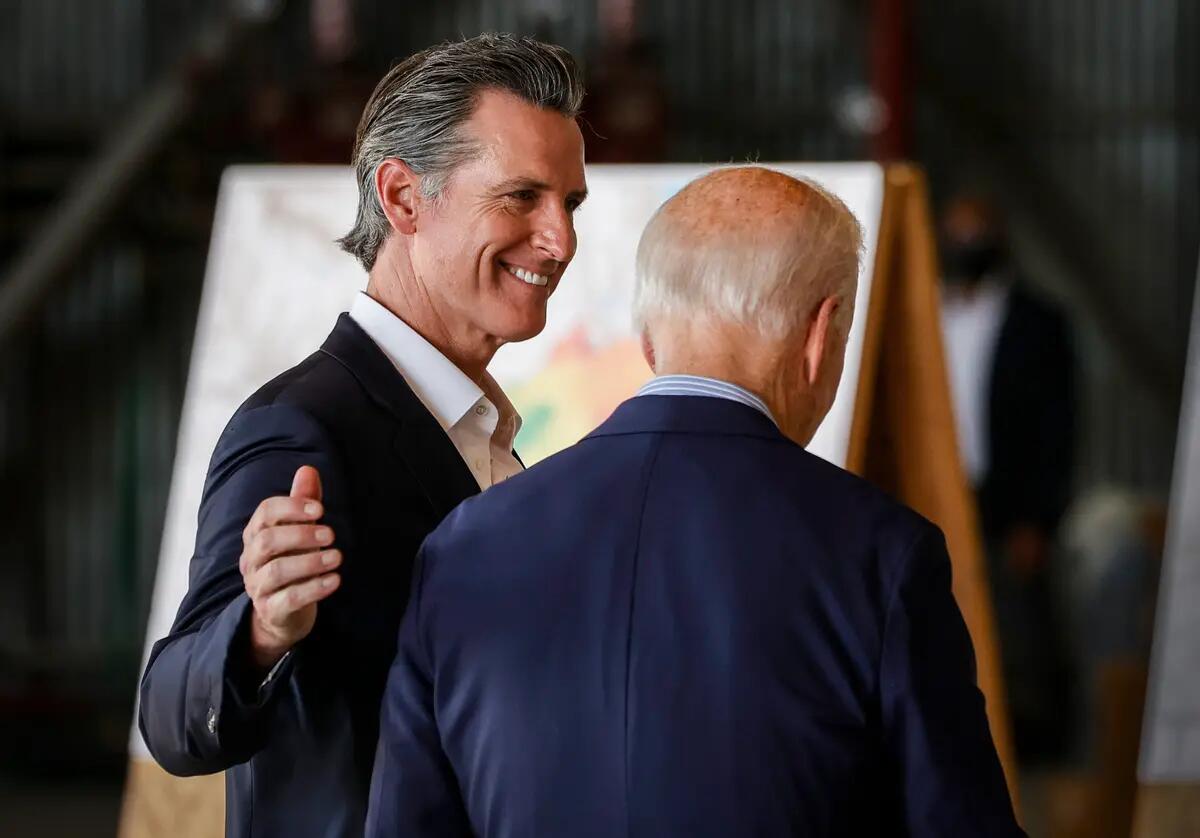
California Gov. Gavin Newsom (L) walks with President Joe Biden after delivering remarks at the airport in Mather, Calif., on Sept. 13, 2021. President Biden toured the wildfire-damaged area near Sacramento with Mr. Newsom before heading to Los Angeles to participate in a “No on Recall” campaign event. (Justin Sullivan/Getty Images)

2024 as 1968

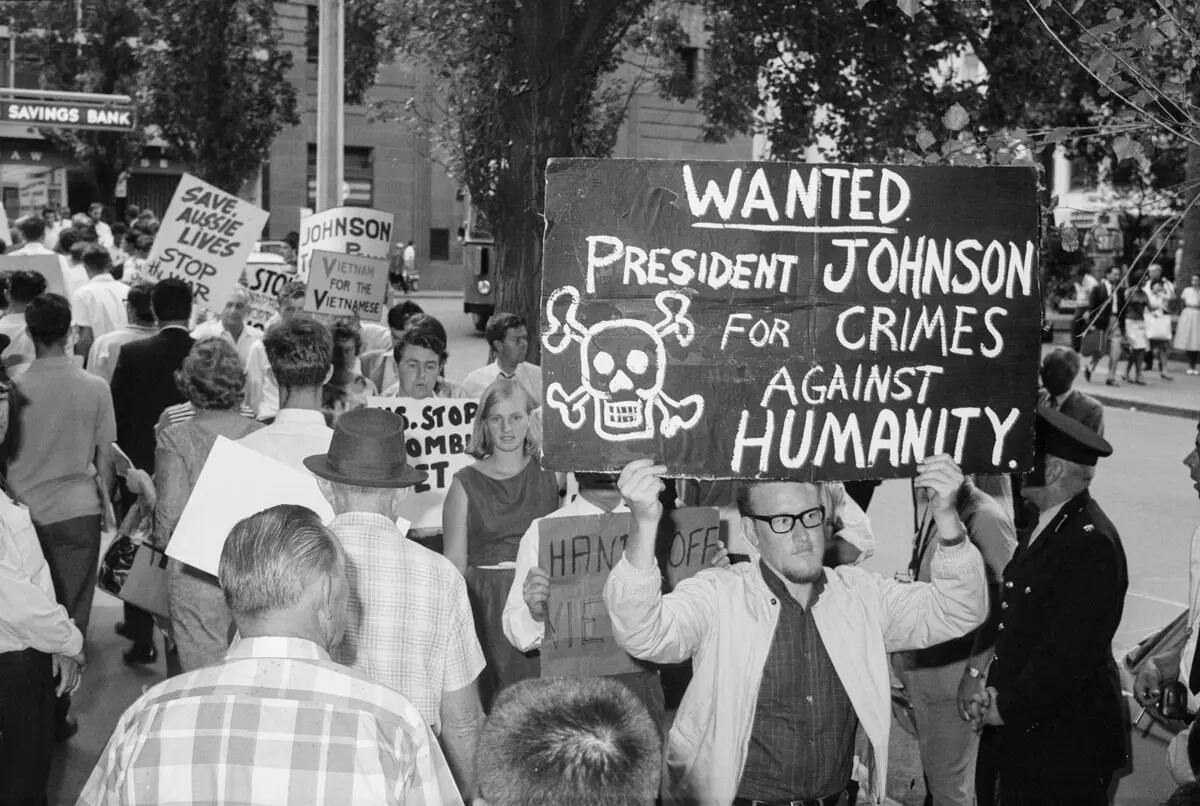
President Biden’s detractors have sometimes compared him to former President Jimmy Carter, who presided over high inflation and his own hostage crisis. But an even more war-clouded incumbent—Capitol Hill dealmaker President Lyndon B. Johnson—could offer another parallel as the United States steps up support for Israel against Hamas. Like the Vietnam War, the conflict is unpopular with much of the Democrats’ base, in part because of civilian casualties.

A protester holds up a sign calling for U.S. President Lyndon B. Johnson to face retribution for U.S. actions in the Vietnam War, at a protest in Sydney on Feb. 1, 1966. (The Tribune/SEARCH Foundation, CC BY 4.0)

Amid protests over Vietnam, the unpopular President Johnson dropped out of the race early in 1968. Months of intraparty division, including the assassination of presidential candidate Robert F. Kennedy, culminated in the chaotic and violent Democratic convention, which was held in August in Chicago.

The party establishment’s favorite, then-Vice President Hubert Humphrey, ultimately carried off the nomination, defeating a fellow Minnesotan, the anti-war Sen. Eugene McCarthy (D-Minn.), and various others. Mr. Humphrey then fell in the general election to Richard Nixon, the man who was once counted out of national politics after he lost the 1960 presidential race to John F. Kennedy.

There are other striking similarities between 2024 and 1968. The Democratic National Convention will again take place in Chicago. Robert F. Kennedy’s son is in the running, too, albeit as an independent. And President Biden’s new Democratic primary challenger, Rep. Dean Phillips (D-Minn.), is, like Mr. Humphrey and Mr. McCarthy, a Minnesotan (though, unlike them, he isn’t running against an unpopular war).

Chuck DeVore, a former California State Assembly member now with the Texas Public Policy Foundation, told The Epoch Times that President Johnson’s departure from the field “opened up the delegates that he may have already won at that point to be able to vote as they pleased on the floor of the Democratic convention.”

Essentially, you end up with this brokered convention. We may end up seeing something very similar in 2024,” he said.

Seeking the Center on Domestic Issues

The 2024 Chicago convention is many months away. For now, an observer can only assess what California’s governor has already done that may boost his presidential profile.

During the last legislative session, some of Mr. Newsom’s vetoes attracted media attention. For instance, he shot down legislation that would have decriminalized possession of psychedelic mushrooms. He also vetoed a bill that would have seen condoms distributed for free in California’s public high schools as well as legislation that would have altered child custody proceedings by making judges favor parents who “affirm” a minor’s transgender identity.

In a CNN opinion piece, liberal commentator Jill Filipovic called some of those vetoes “disappointing,” arguing that the governor is “a man who puts his own political future ahead of the will of the people.”

While some observers may sense a shift to the center, Ms. Romero doesn’t quite see it that way.

It’s really political calculation,” she said. She lambasted some of the bills emanating from California’s Legislature, calling them “almost Babylon Bee-ish.” They are, in short, hard for the governor to greenlight if he wants to become competitive across a country where California values aren’t always and everywhere welcome.

She speculated that some of the vetoes show the governor trying to regain the trust of nonleftist Democrats like her, many of whom have become disillusioned with Mr. Newsom’s leadership style.

Ms. Romero described California’s leader as a chameleon-like figure who benefits from a relatively sympathetic treatment by the legacy media.

Like Ms. Romero, Mr. Gallagher characterized the vetoes as a political maneuver meant to make the governor seem less left-wing.

“The problem is, he’s still passing pretty radical policy,” Mr. Gallagher said. He cited bills such as Democratic state Sen. Scott Wiener’s S.B. 253, which will require large companies to report greenhouse gas emissions.

He said Mr. Newsom’s vetoes may allow him to look tougher on drugs while preserving his environmental agenda—a signature issue for him domestically and during his recent trip to China, where climate policy was a central concern.

Vetoes by the Numbers

Mr. DeVore suggested the vetoes may be less exceptional than they seem.

“Every governor of California, or really any governor across the country, will veto a certain number of bills that they see as just poor bills,” he said.

I think there is a danger in reading a little too much into that,” he added, noting that the state’s past Democratic governors have also vetoed bills from the Legislature, which has skewed left for many decades.

Indeed, while some media coverage suggests Mr. Newsom’s recent vetoes take him closer to the American center, the big picture is foggier.

Mr. Newsom vetoed 156 bills and signed 890 bills during the latest legislative session. That means he shot down a little less than 15 percent of the legislation that reached him from the state’s Legislature, both chambers of which are controlled by commanding Democratic supermajorities.

That’s in keeping with what he has done before, according to an analysis by the California Senate’s Office of Research.

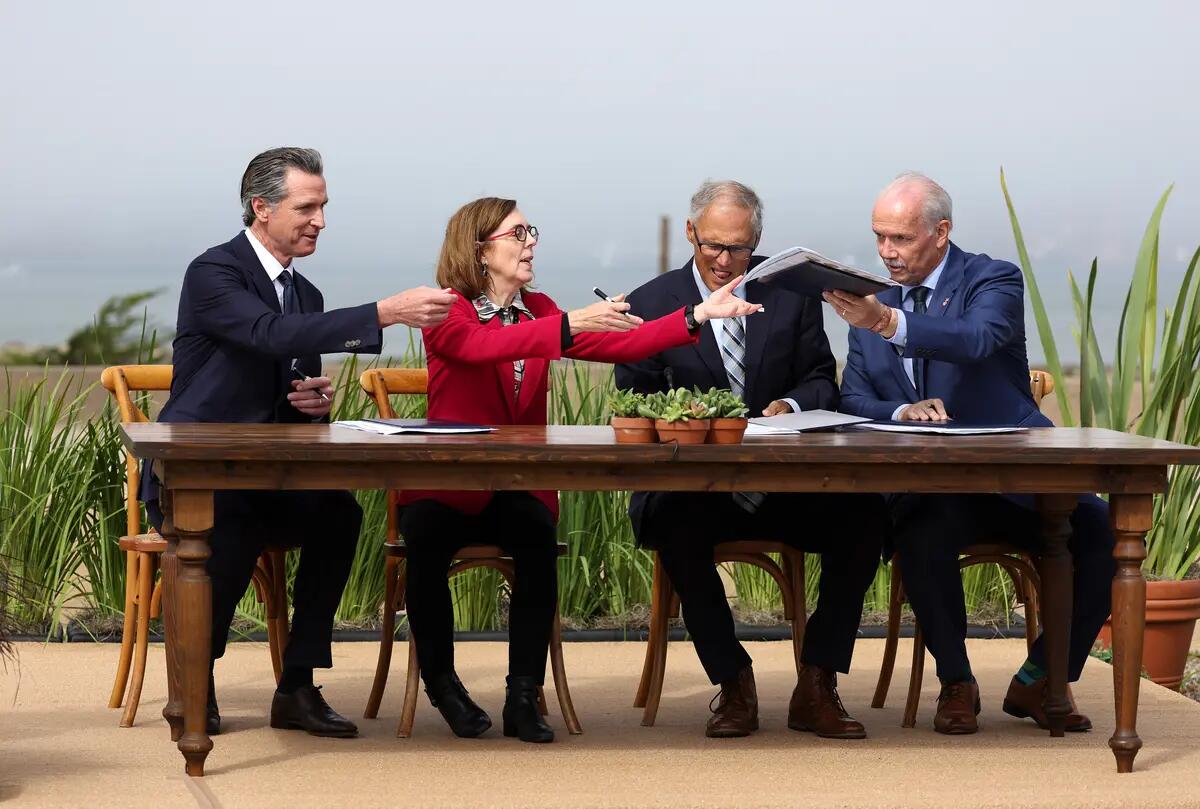
California Gov. Gavin Newsom, Oregon Gov. Kate Brown, Washington Gov. Jay Inslee, and British Columbia Premier John Horgan sign climate agreements in San Francisco on Oct. 6, 2022. (Justin Sullivan/Getty Images)

Tyler Durden
Tue, 11/07/2023 – 17:05

via ZeroHedge News https://ift.tt/wKhyoDV Tyler Durden
WTI Extends Losses After API Reports Biggest Crude Build Since Feb

WTI Extends Losses After API Reports Biggest Crude Build Since Feb

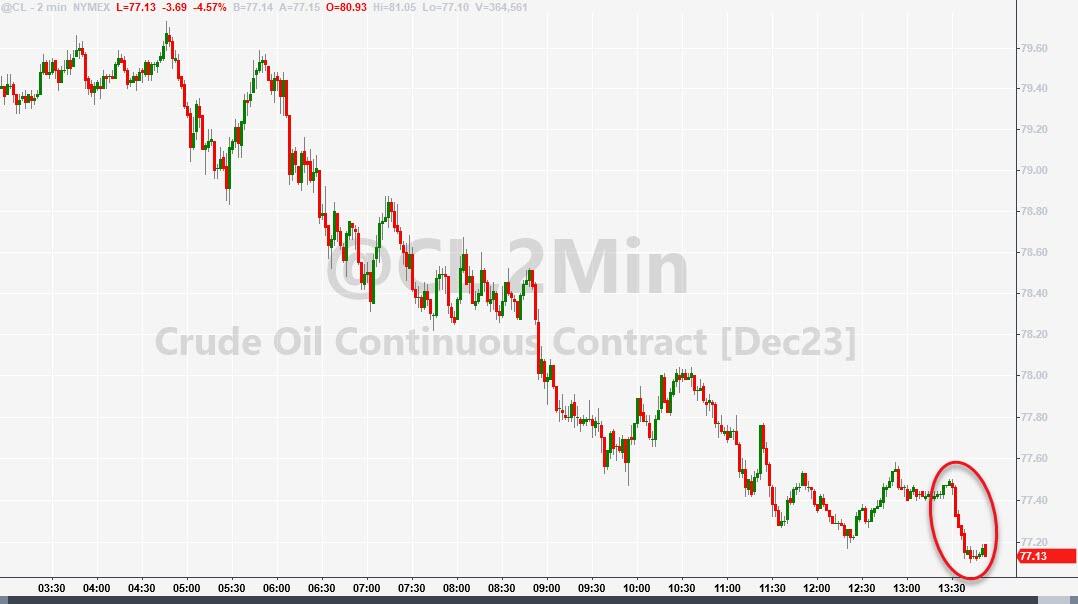
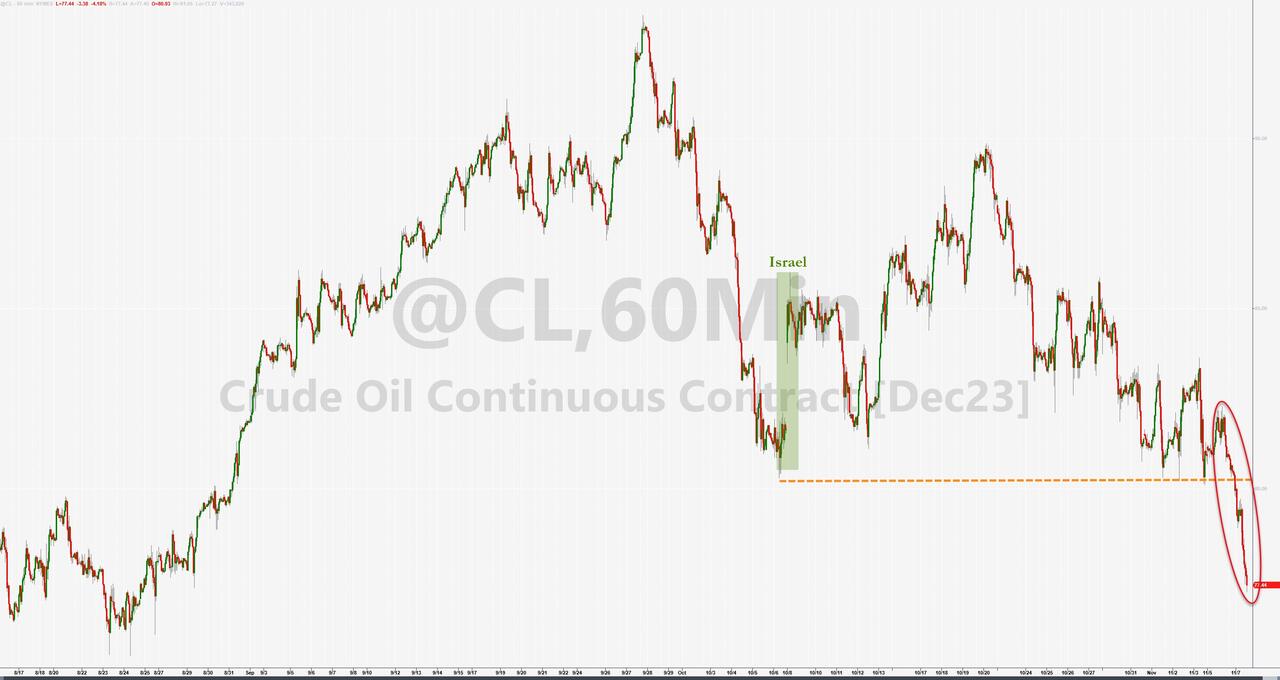
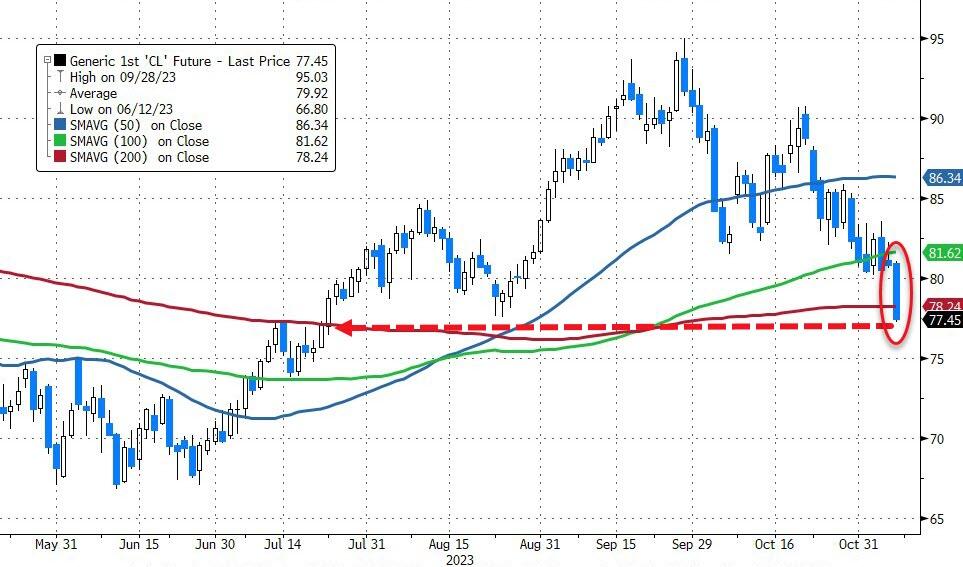
Oil prices plunged today, closing well below the pre-Israel levels and breaking below the 200DMA for the first time since July as war risk-premia evaporate and demand fears resurgent.

“While the death toll in Gaza from Israeli air strikes continues to rise to unimaginable levels, the prospect for the conflict spreading to the oil-rich part of the Middle East is increasingly being put at near-zero,” said Ole Hansen, head of commodity strategy at Saxo Bank.

China trade data showed imports disappointing. At 11.5 million barrels a day, imports were up slightly versus September but remained around 1 million barrels a day below levels seen in the summer, noted Carsten Fritsch, commodities analyst at Commerzbank, in a note.

This is disappointing in view of the record-high processing. Crude oil imports in the first ten months were a good 14% up year-on-year. The increase appears bigger because of the low basis for comparison, however, as imports were dampened by the coronavirus restrictions last year,” Fritsch said.

“It is no surprise therefore that the figures are lending no support to prices today.”

Can the API data turn the trend?

API

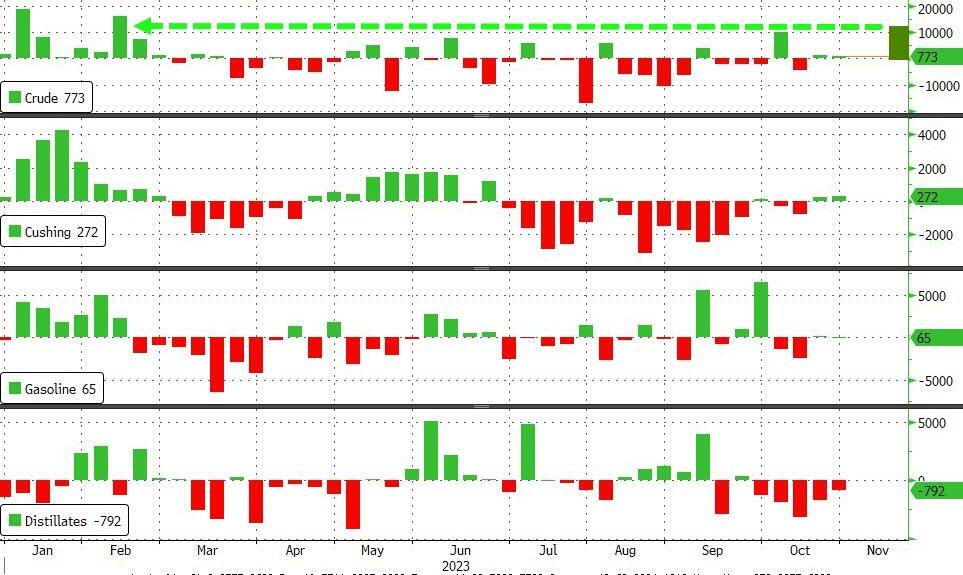
  • Crude +11.9mm (+200k exp) – biggest build since Feb 2023

  • Cushing

  • Gasoline -400k (-500k exp)

  • Distillates (-2.0mm exp)

API reports that crude inventories soared by 11.9mm barrels last week, the biggest weekly build since Feb 2023.

Source: Bloomberg

WTI hovered around $77.50 ahead of the print and extended the day’s losses after…

Finally, we note that the U.S. Department of Energy announced late Monday a “supplemental solicitation” for up to 3 million barrels of oil for delivery in January 2024 towards replenishment of the SPR. That’s a “small volume as compared to what has been liquidated since January 2021,” said StoneX’s Kansas City energy team.

Additionally, the EIA report – usually released tomorrow (Wednesday) at 1030ET – will be delayed until next week due to planned systems upgrades.

Tyler Durden
Tue, 11/07/2023 – 16:50

via ZeroHedge News https://ift.tt/1aVSxvt Tyler Durden
Who’s Wealth Will Get “Clawed Back” First?

Who’s Wealth Will Get “Clawed Back” First?

Authored by Charles Hugh Smith via OfTwoMinds blog,

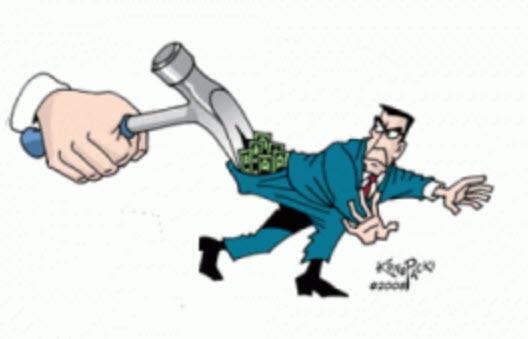
Politically, what’s the easier play: cut entitlements, the vast majority of which flow to the bottom 90%, or “claw back” the ill-gotten gains of the top 1%?\

Since we’re discussing wealth, income and taxes, let’s stipulate a few things at the start:

1. The households with the highest incomes pay the majority of federal taxes. The top 1% collected 22% of all income and paid 45% of personal federal income taxes.

The top 10% earned about 50% of all income and paid 74% of personal federal income taxes. The bottom 50% earned 10% of total income and paid 2% of income taxes. Tax Shares in Tax Year 2020.

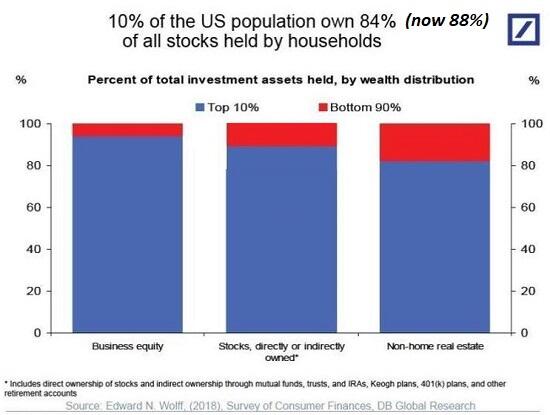
2. This reflects the reality that income and wealth are highly concentrated in the top households in the U.S. I posted the Federal Reserve charts here: How Great Is Our Economy If the Bottom 50%’s Share of the Nation’s Wealth Has Plummeted Since 2009?. The bottom 50% own 2.3% of financial assets, the top 1% own 35.3% of financial assets. As this chart shows, the top 10% own the vast majority of income-producing assets: stocks and bonds, business equity and rental income property:

3. The biggest tax burden for most of the bottom 75% is Social Security / Medicare taxes paid out of wages. Earnings above $160,200 are not subject to Social Security tax.

4. The wealthy have tax break strategies that are unavailable to the middle class. One common strategy is to borrow living expenses rather than sell assets that would generate capital gains and thus capital gains taxes. The wealthy can live on borrowed money and thus declare no income and pay no taxes. ProPublica Shows How Little the Wealthiest Pay in Taxes: Policymakers Should Respond Accordingly.

5. Capital gains are highly contentrated in the top 1% of households, who received 75% of the taxable long-term capital gains. The top capital gains tax rate is 20% (plus 3.8% above $200,000, for a maximum of 23.8%), while the top rate for earned income is 37%. Source).

The Distribution of Household Income. (CBO)

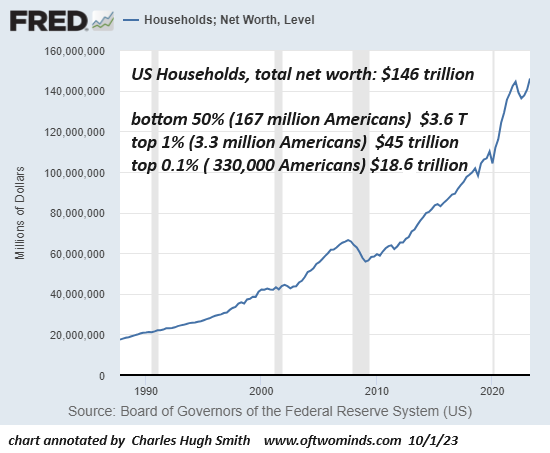
6. Total household net worth is about $146 trillion. Total personal income in the US is around $22 trillion annually.

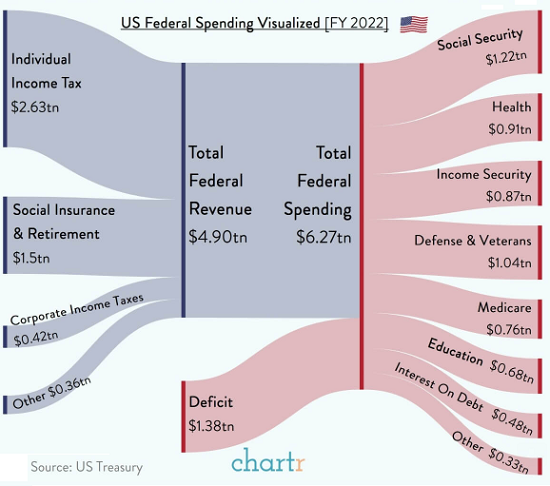
7. The federal budget was $6.3 trillion in 2022, of which $1.4 trillion was borrowed (i.e. deficit spending).

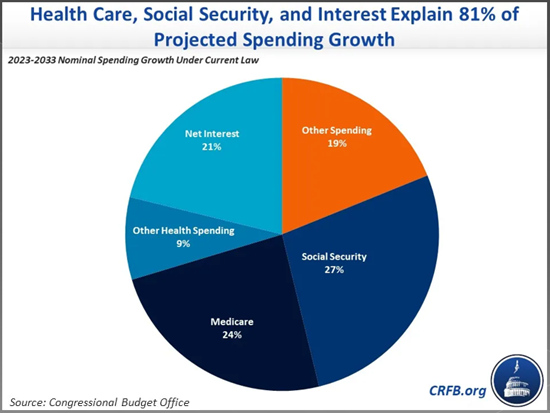
Roughly 80% of the projected future growth of federal spending is mandatory spending on entitlements and interest due on the federal debt:

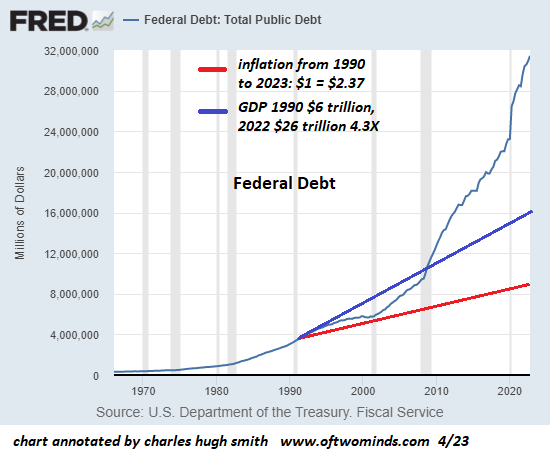
8. Federal debt is $33 trillion and rising at a parabolic rate far above the rate of GDP growth or inflation.

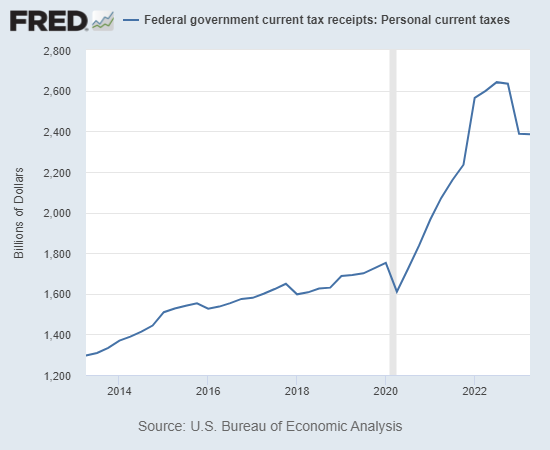
9. Personal income taxes collected rose sharply since 2020, from $1.6 trillion to $2.4 trillion. Per the above data, the majority of the higher tax revenues were paid by the top earners / those declaring capital gains.

Putting this together:

A. Federal spending will continue to rise sharply for decades to fund soaring Social Security, Medicare / Medicaid entitlements and the fast-rising interest due on skyrocketing federal debt, much of which is borrowed at much higher rates than in the recent past.

B. Borrowing tens of trillions of dollars of additional debt that accrues interest is not viable unless tax revenues rise substantially to pay the higher interest costs and reduce the sums that must be borrowed.

C. The bottom 75% have very limited wiggle-room to pay higher taxes. They’re struggling to pay the rising cost of living as it is. They pay 11% of income taxes, any tax increases on these 100 million households will not yield enough to make it worth the political risk.

D. The 20 million upper-middle class households between 75% and the 90% pay about 15% of federal income taxes. They can be squeezed for a bit more, but since they don’t own much in the way of income-producing wealth, there’s not much potential to raise serious sums from this cohort.

E. The only real potential for raising additional tax revenues is in the top 10% who own roughly 90% of all income-producing wealth. And since this ownership of income / capital gains-yielding assets is concentrated in the top 5%, that’s the only deep-pocketed source of consequentially higher tax revenues that can be tapped.

Many people are concerned that the IRS will blanket the nation with tax audits aimed at the middle class. I tend to think this is unlikely because the middle class has so few dodgy tax strategies. Auditing the bottom 75% is a waste of time, as their income and tax rates are so low that whatever could be skimmed isn’t worth the effort.

Even upper-middle class income is mostly earned, and there’s simply not much the average upper-middle class household can do to limit their tax burden, other than save money in self-directed 401K retirement plans and similar transparent strategies.

To really raise tax revenues, regulations / tax laws will have to change to close the loopholes used by the top 1% and top 0.1%. Given that much of this wealth / income is unearned, i.e. the happy result of debt-based asset bubbles in income-producing assets, then closing loopholes that are unavailable to the merely wealthy will likely be framed as “clawing back” income that evaded the taxes paid by the merely wealthy and upper middle class.

Politically, what’s the easier play: cut entitlements, the vast majority of which flow to the bottom 90%, or “claw back” the ill-gotten gains of the top 1%?. Which one is more likely to be popular with voters? Yes, the top 0.1% fund the campaigns, but political survival will demand adjustments in what’s possible and what’s impossible.

Is a 70% Consumption Economy Sustainable? (43:53 min).

*  *  *

My new book is now available at a 10% discount ($8.95 ebook, $18 print): Self-Reliance in the 21st Century. Read the first chapter for free (PDF)

Become a $1/month patron of my work via patreon.com.

Subscribe to my Substack for free

Tyler Durden
Tue, 11/07/2023 – 16:20

via ZeroHedge News https://ift.tt/JORQ5cW Tyler Durden
“Earthquakes”, “Golden Paths”, & “Everything’s Booming”: FedSpeak Sparks Bond, Bitcoin, & Big-Tech Gains

“Earthquakes”, “Golden Paths”, & “Everything’s Booming”: FedSpeak Sparks Bond, Bitcoin, & Big-Tech Gains

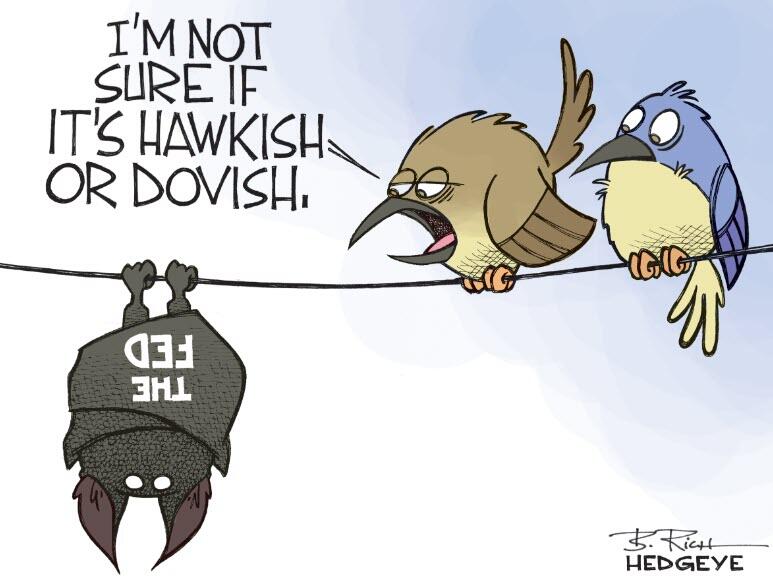
Another quiet macro day was relatively catalyst-free – even with an armada of Fed Speakers – since all pretty much sang from the hymn-sheet – data-dependent, job not done, inflation still too high, rates high(er) for long(er), no cuts on the agenda:

  • Kashkari (uber hawkish): “I’m not see a lot of evidence that the economy is weakening,” reminding markets that there hasn’t been any discussions about interest-rate cuts at the FOMC.

  • Goolsbee (hawkish dreamer): The Fed can continue down what he calls the “golden path” to a soft landing. “We’ve got to get inflation down – that’s the No. 1 thing…”

  • Barr (hawkish, anti-crypto): “It is really critical that we continue to do the work necessary to make sure we get inflation down to 2%.” Fed has “strong interest” in regulating stablecoins, “still weighing the prospect” of CBDC.

  • Schmid (no comment on monetary policy): “The transition from fossil fuels to renewables is both reliant upon and an influencer of supply chains and capital allocation.”

  • Waller (hawkish/neutral): Labor supply “clearly calming down”, normalizing to pre-pandemic levels. “Everything was booming” in Q3. 10Y yield ‘tightening’ has been a monetary policy “earthquake.” Prices probably won’t go back to pre-pandemic levels, if rate-hikes “cause instability, Fed has other tools.”

  • Logan (hawkish): “I have seen some important cooling in the labor market… inflation readings look like they are trending towards 3%, not 2%… ” Critical that Fed “stay true to” 2% inflation target, “must stay focused on curbing inflation in a timely way.”

  • Bowman (uber hawkish): “I continue to expect that we will need to increase the federal funds rate further to bring inflation down to our 2% target in a timely way.”

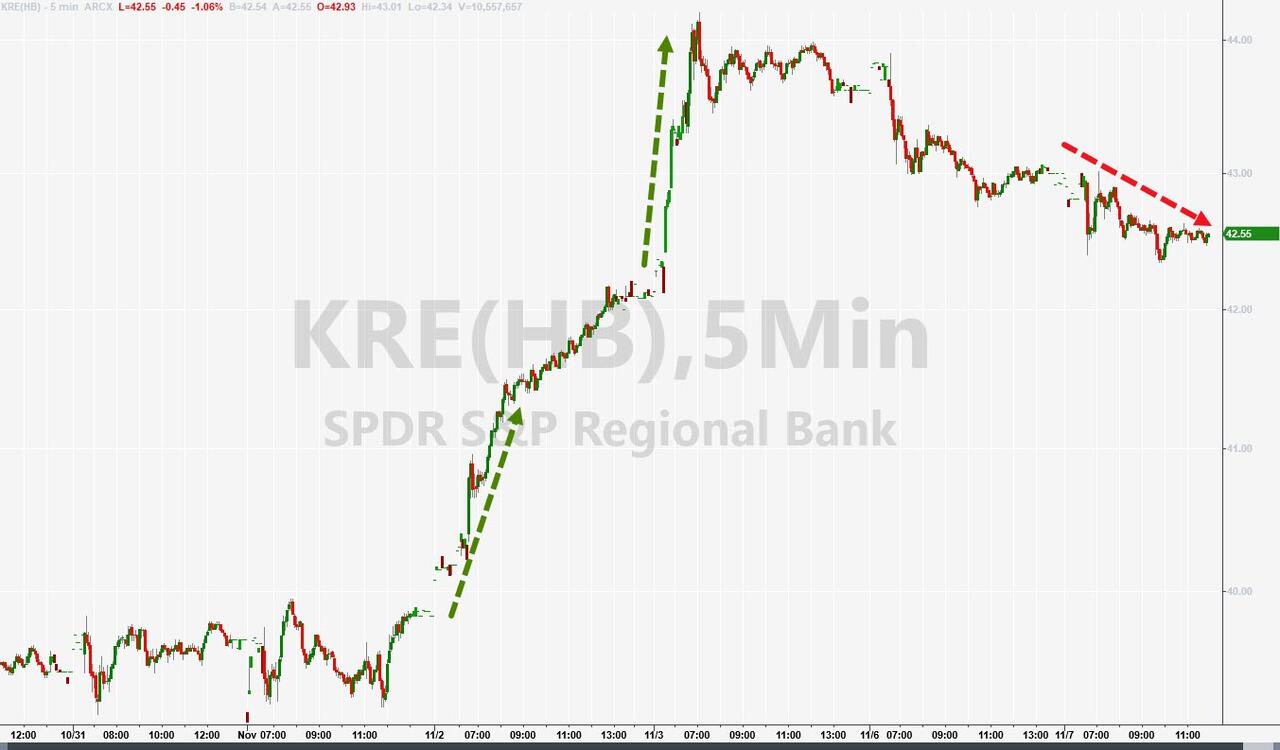
At around 1215ET, the FHFA said that FHLBs wil face new rules to curtail loans to struggling banks. Regional banks will be ‘proper fucked’ by this as, for now, this has been a workaround for them to manage the holes in their balance sheets.

The NYFed confirmed that the recent “strength” of the consumer was shown to be based on credit-card spending… and delinquencies are on the rise.

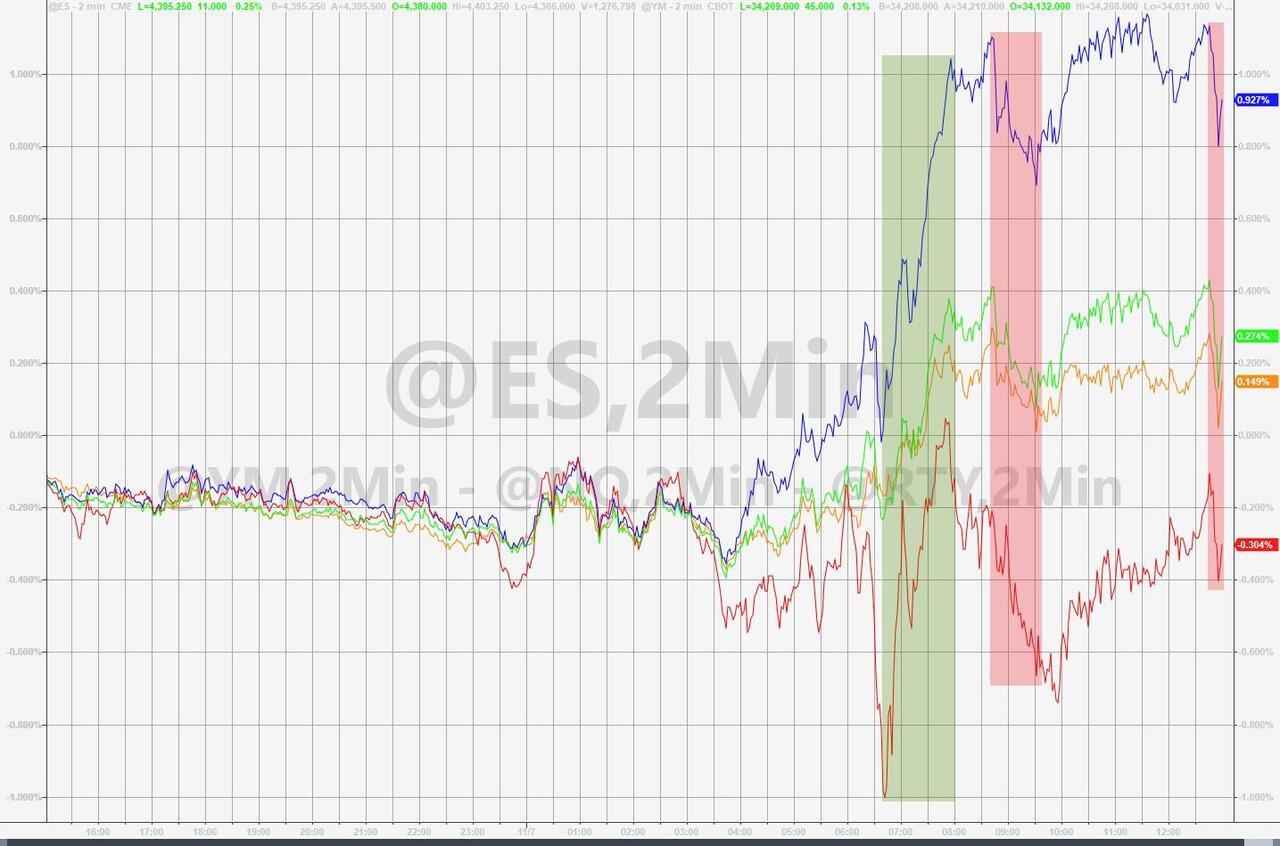
But none of that mattered to big-tech buyers as Nasdaq rallied from the cash open once again. The Dow and S&P managed modest gains while Small Caps ended red…

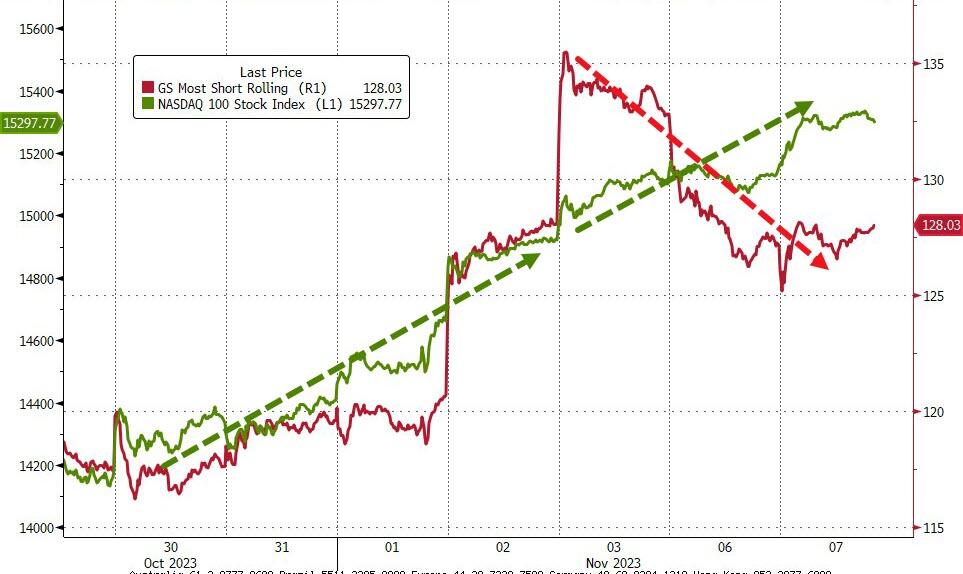
As UBS notes, US equities are squeezy below the surface in tech with profitless tech up 2.6% (some earnings driven) among the best performers on Tuesday, but not the broad squeeze/unwind seen across sectors last Thursday and Friday.  The difference now vs last week is that mega caps are acting defensive and hence there is a much broader tech rally on Tuesday.

Source: Bloomberg

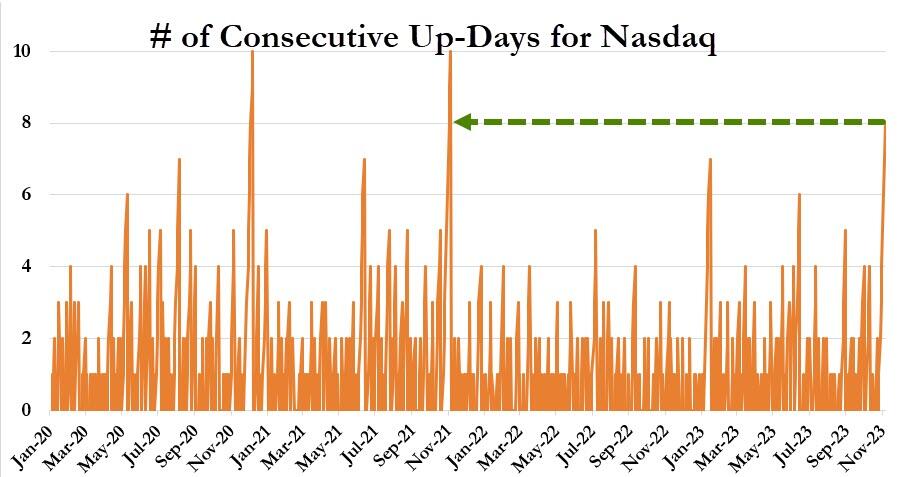
8 straight day higher for Nasdaq and 7 straight for S&P – the longest winning streaks since Nov 2021…

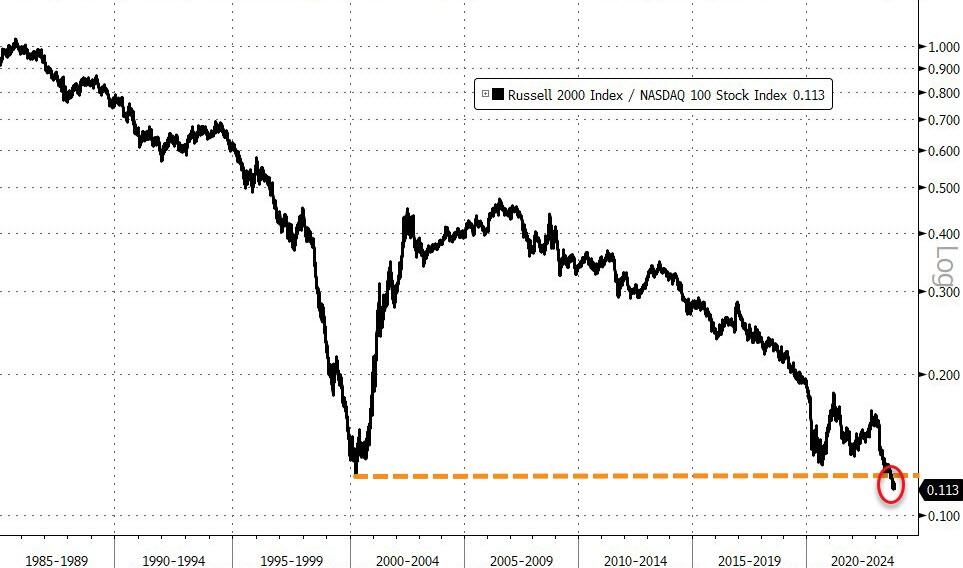
Small Caps are down for the second day, pushing the Russell 2000 to its widest gap to Nasdaq… ever

Source: Bloomberg

Small caps’ underperformance suggests some underlying jitters about an economic downturn, inflation and the impact of continued Fed hikes. These companies have more limited revenue streams than mega caps and are less able to pass through higher costs. They’re also more sensitive to slowing growth and changes in borrowing costs.

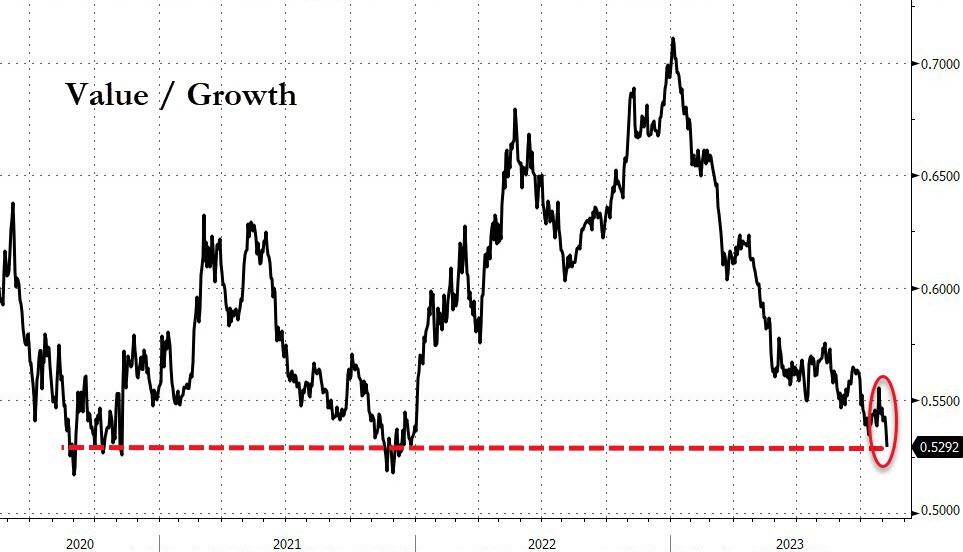
Value underperformed Growth once again, testing down to recent lows…

Source: Bloomberg

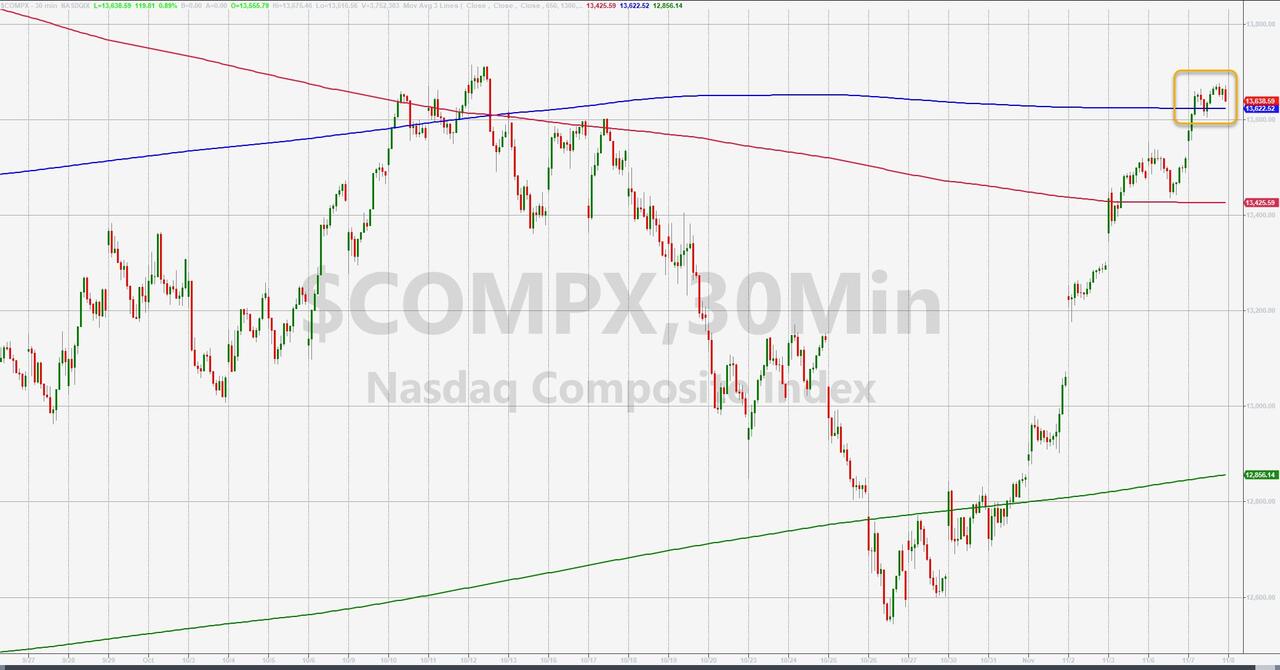
The Nasdaq Composite topped its 100DMA but the late day selloff tested back down to that level…

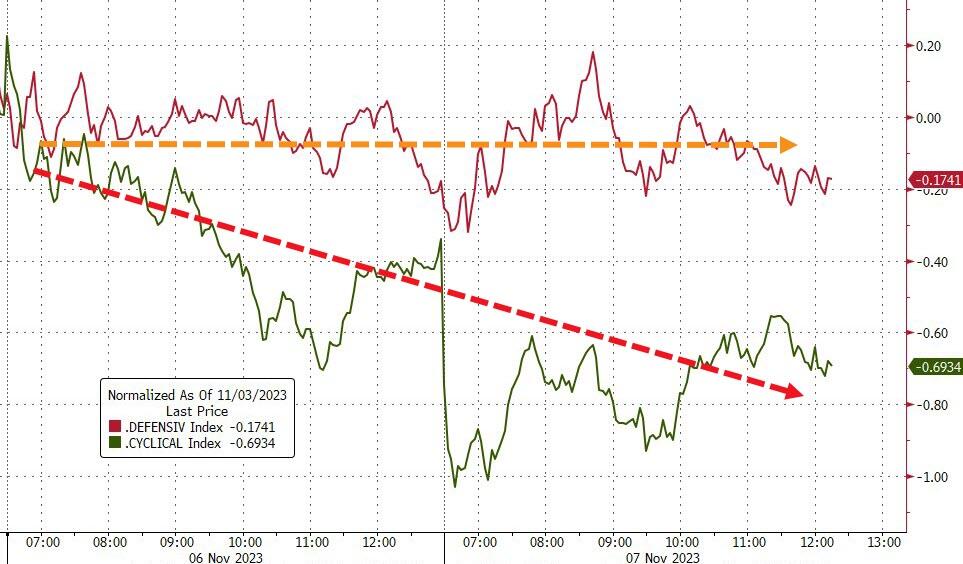
For the second day in a row, cyclical stocks failed to sustain a bid (defensives outperformed) as investors continue to envisage an eventual slowing in the economic growth momentum…

Source: Bloomberg

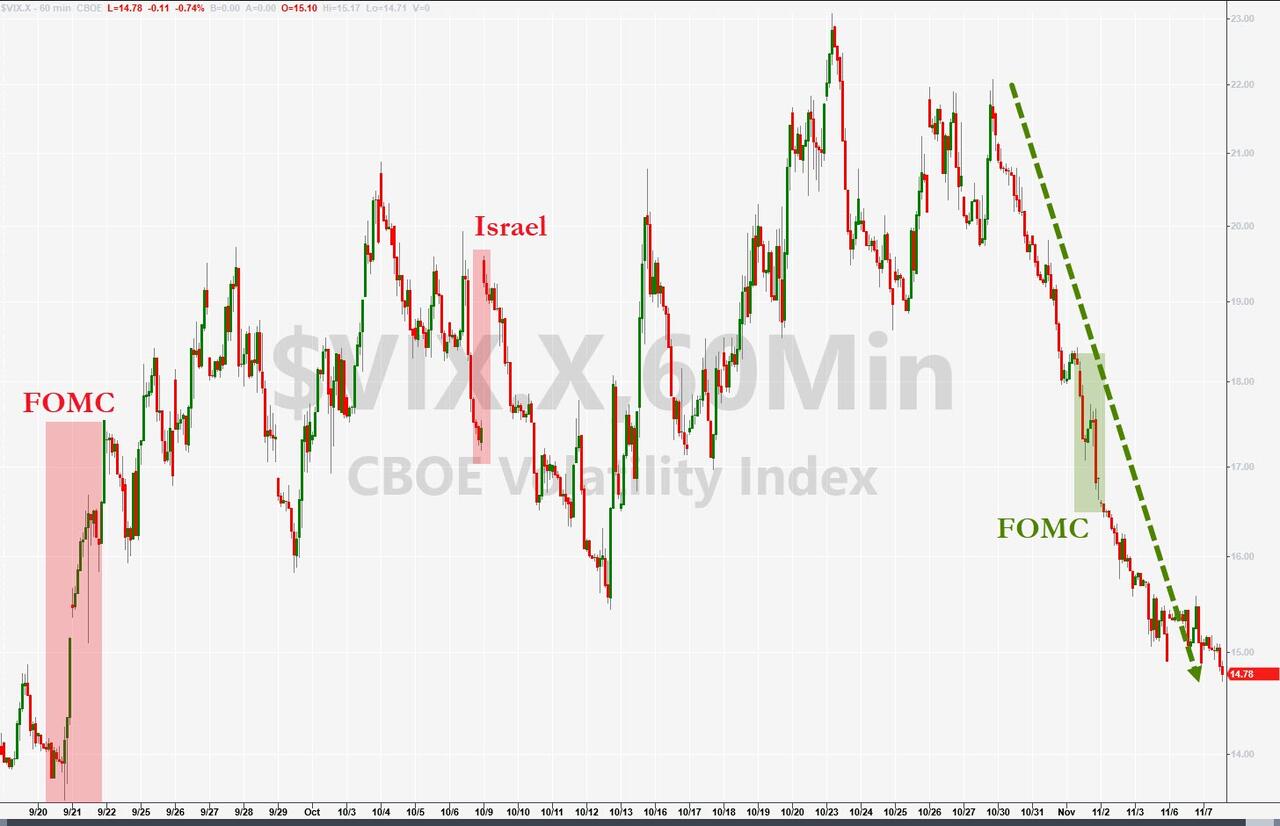
VIX was smashed to a 14 handle as gamma went increasingly positive…

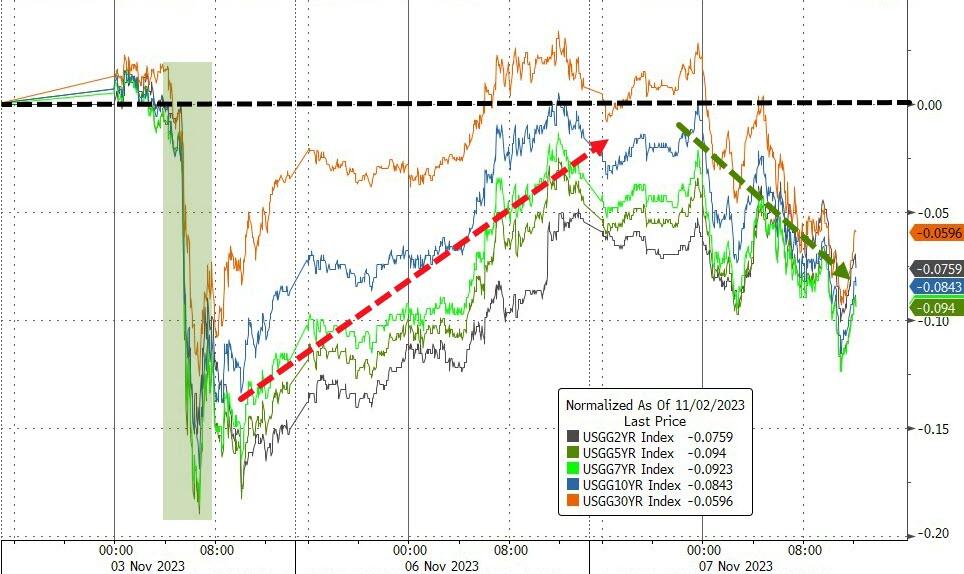
Treasuries were bid across the curve with the long-end outperforming (30Y -7bps, 2Y -2bps)…

Source: Bloomberg

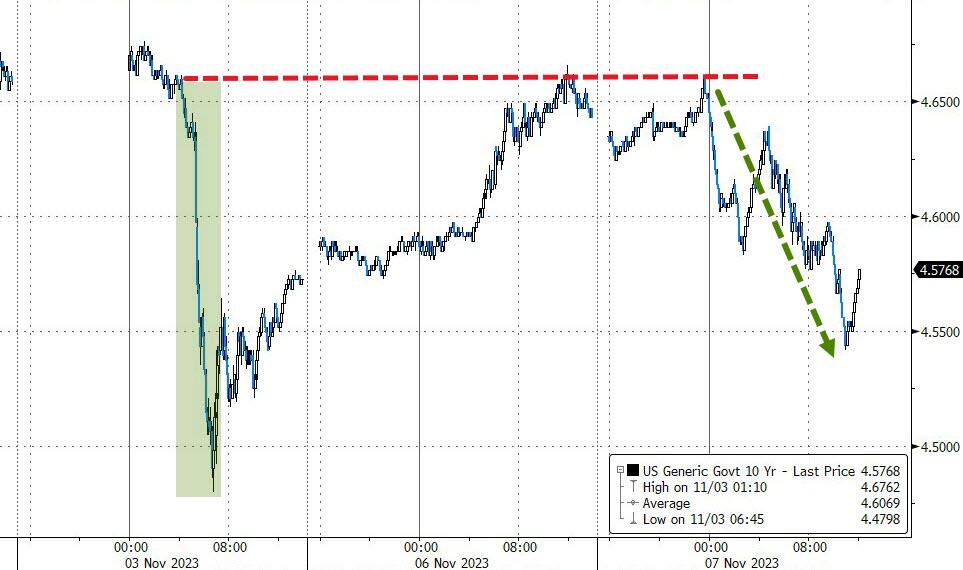
10Y yields ran up to pre-payrolls levels, hit all the stops, and have dropped since…

Source: Bloomberg

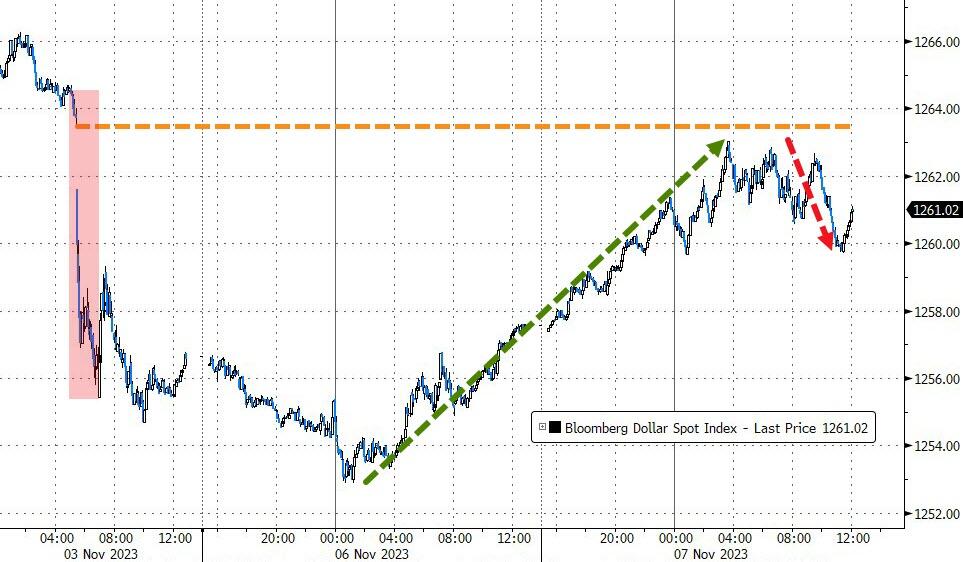
The dollar followed the same path – rallying up to pre-payrolls levels and reversing on the stops…

Source: Bloomberg

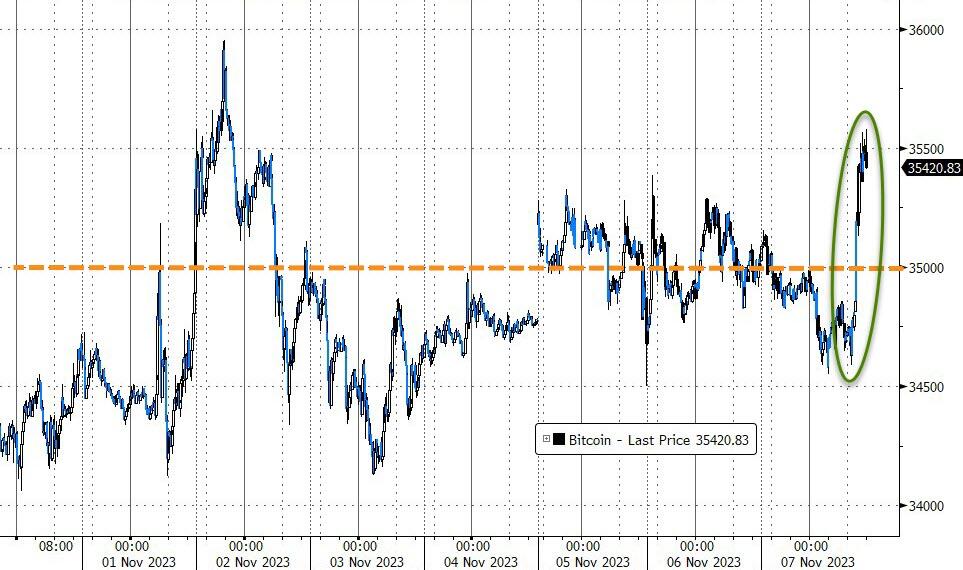
Bitcoin surged higher around 1215ET, back above $35,500…

Source: Bloomberg

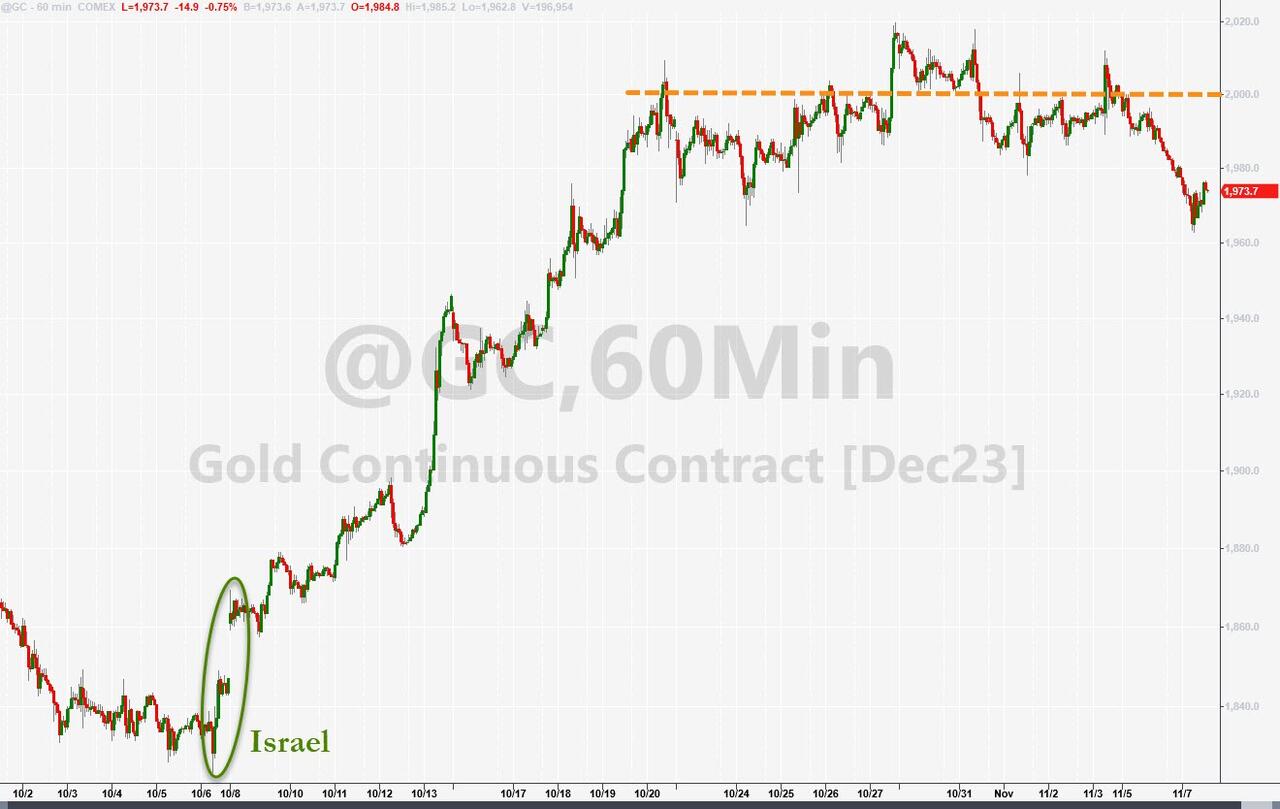
Gold drifted lower again today…

Oil was down hard today (ahead of tonight’s API data), well below the pre-Israel levels…

…and breaking below the 200DMA to its lowest since July

Source: Bloomberg

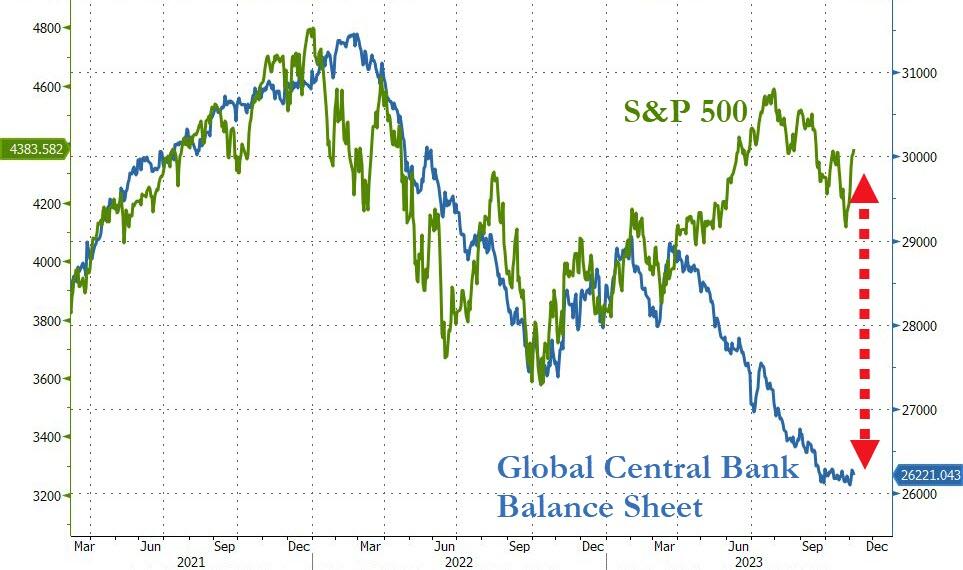
Finally, the world’s central banks keep draining the flood of pandemic-era liquidity from financial markets. “Central banks’ balance-sheet reduction will further deplete excess liquidity in the US, UK and Euro Area but the timing, speed and effects will vary,” strategists including Oliver Levingston wrote in a note to clients Tuesday.

Source: Bloomberg

Is the market betting on future balance-sheet expansion? Or do we need to see the convergence of stocks and liquidity before the world’s central banks unleash their balance sheets once more?

Tyler Durden
Tue, 11/07/2023 – 16:00

via ZeroHedge News https://ift.tt/0kAi5v1 Tyler Durden

Zelensky Nixes ‘Surprise’ Israel Visit After Plans Leaked

Zelensky Nixes ‘Surprise’ Israel Visit After Plans Leaked

Ukraine’s President Volodymyr Zelensky had a planned trip to Israel in the works in order to express solidarity, and after he admitted that the Gaza war is taking away the “focus” from the Ukraine war. But he wanted it to be an unannounced “surprise” in anticipation of the media coverage.

Now that trip is in doubt, after news of his arrival leaked over the weekend. The visit was expected this week, but reports began emerging Saturday which prematurely made it public.

Image via AP

This then elicited comment from Israeli officials: “If President Zelensky comes, he will be welcomed with open arms,” an official said on Sunday.

The Times of Israel on Tuesday confirmed that

Ukraine’s President Volodymyr Zelensky will not be coming to Israel today, as was initially planned. News of his arrival leaked over the weekend, leading to the postponement.

Israeli diplomatic sources say that he is still expected to make the trip, but that there is no date at this stage.

A Ukrainian diplomat has been further cited as saying that Zelensky “wanted the trip to be public when he stepped on Israeli soil,” and now, “He’s very disappointed.”

In the wake of the Hamas Oct.7 terror attack, Zelensky floated the idea of going to Israel, which at the time would have made him the first foreign head of state to fly into Tel Aviv to express support for Israel. 

But the Israeli government indicated such a trip would have been premature, as it grappled with responding to the hostage situation and made military preparations for an invasion of the Gaza Strip.

Western media has also begun to sour on Zelensky, as his efforts to keep his government’s demands for more and more weaponry and billions in foreign funds faulter. 

He’s also more recently received bad press for once again affirming there will be no Ukrainian national elections next year

Ukrainian President Volodymyr Zelensky said in a Monday address that it is “not the right time for elections” in Ukraine as the end of his five-year term approaches. 

Zelensky argued in his Monday video address that Ukraine should not have to deal with elections as it continues to attempt to fend off Russia, which invaded Ukraine in February 2022. He previously had not ruled out Ukraine holding a presidential contest next year, though elections are currently suspended in the country under martial law.

He also seemed to acknowledge increasing internal turmoil, also as he’s refused to entertain any territorial concessions to Moscow for the sake of negotiating peace. 

“And finally, the waves of any politically divisive things must stop,” he said. “We must realize that now is the time of defense, the time of the battle that determines the fate of the state and people, not the time of manipulations, which only Russia expects from Ukraine. I believe that now is not the right time for elections.”

Tyler Durden
Tue, 11/07/2023 – 15:45

via ZeroHedge News https://ift.tt/teWag0q Tyler Durden