Birthday Present Filled With Grenades Kills Aide To Ukraine’s Top Commander

Birthday Present Filled With Grenades Kills Aide To Ukraine’s Top Commander

An entirely bizarre story is widely circulating in international headlines on the ‘accidental’ death of a high-ranking Ukrainian military commander. 

A top aide to Ukraine’s armed forces commander-in-chief, Gen. Valery Zaluzhny, has died Monday after what was initially reported as an “unknown explosive device” went off inside a birthday present he was handed

Illustrative image: example of a realistic looking heavy metal replica grenade, source: KIRO 7 News

He’s been identified as Major Hennadii Chastiakov, and details have since emerged saying he was given a gift box full of grenades. An urgent Telegram post from Ukraine’s minister of internal affairs Ihor Klymenko might be among the strangest war time announcements out of Kiev yet.

The post was translated by the Washington Post as follows:

Gen. Valery Zaluzhny said that his assistant, Maj. Hennadii Chastiakov, was killed under “tragic circumstances” while celebrating his birthday with relatives when “an unknown explosive device went off in one of the gifts.” His 13-year-old son was also seriously injured, the National Police of Ukraine said. 

The below image is now circulating on Ukrainian news sites and social media. The Washington Post commented:

In one photo, what appear to be several grenades or grenade-shaped items are scattered across the floor. On social media, some jumped to the conclusion that Chastiakov’s death had been an assassination rather than a mistake.

“I pray to God that this was a tragic coincidence and not a targeted attack,” wrote Dana Yarova, member of the Defense Ministry’s anti-corruption council.

Via Ukrainska Pravda

Regional reports have filled in some further alleged details, but there’s much that remains unclear and somewhat contradictory, also given the very strange nature of the top officer’s death:

Chastiakov’s wife said the item that exploded was a grenade inside a gift bag, Ukrainska Pravda reported, citing an unnamed law enforcement source. The gift bag also contained a bottle of alcohol and shot glasses that looked like grenades, per the report.

The same report suggests the dangerous gift was given to Maj. Chastiakov by a lower-ranking soldier:

Klymenko said in a Telegram message that an exchange between Chastiakov and his son led to the accidental detonation of one of the grenades. Police later found five more unexploded grenades at his residence and identified a Ukrainian soldier who gave them to Chastiakov. The soldier’s office has been searched, and more grenades were found there, Klymenko said.

As for the above narrative account, it’s hard to imagine a “shot glass” resembling a grenade would lead to confusion with real “grenades” also present in the same gift. And why would a pin then be pulled? Possibly, he thought they were realistic looking ‘toy grenades’ or some type of gag gift.

It’s also obviously a major question as to why someone would wrap up grenades in a present in the first place (unless the intent is to actually blow up the recipient). 

One initial theory has been that it was no accident at all, but a targeted assassination of a key military decision-maker. Inside Russia, there’s been a string of assassinations by Ukrainian intelligence, with among the most notable being the car-bombing of Darya Dugina in August of 2022 outside Moscow. Perhaps this was a retaliatory Russian intelligence operation on Ukrainian soil?

Or else, could this have been the work of an internal rival faction within Ukraine? Has the night of the long knives begun in Ukraine? One thing is for sure–this is an incredibly strange story.

Tyler Durden
Tue, 11/07/2023 – 07:45

via ZeroHedge News https://ift.tt/SPRjHJK Tyler Durden
Amazon Earned More Than $1 Billion Through Secret Price-Raising Algorithm: FTC

Amazon Earned More Than $1 Billion Through Secret Price-Raising Algorithm: FTC

Authored by Aaron Pan via The Epoch Times (emphasis ours),

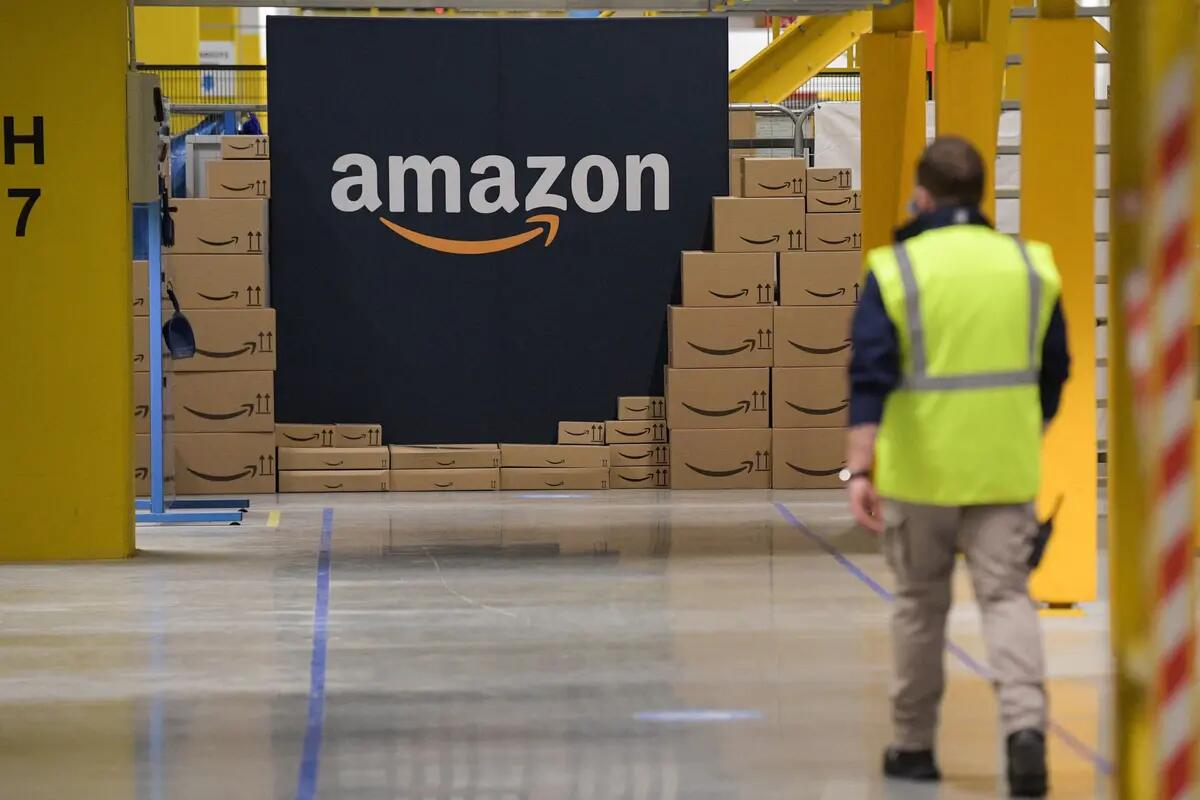
Amazon created a secret algorithm that helped the e-commerce giant generate an extra $1 billion dollars, the U.S. Federal Trade Commission (FTC) alleged in a new court filing on Nov. 2.

An Amazon employee passes by the company’s logo on the opening day of the new distribution center in Augny, France, on Sept. 23, 2021. (SEBASTIEN BOZON/AFP via Getty Images)

In September, the FTC and 17 states filed an antitrust lawsuit against Amazon, but many details were withheld until Nov. 2, when a version of the lawsuit with fewer redactions was made public in the U.S. District Court in Seattle.

According to the new, less redacted complaint, Amazon allegedly deployed a secret algorithm, internally known as “Project Nessie,” that raised the prices of items on its online store and, in turn, across the market accordingly.

Knowing that many websites set their prices to match Amazon’s, the company allegedly developed Nessie to increase prices on products that other retailers would follow.

After outside retailers began matching or increasing their own prices, Amazon would continue to sell the product at an inflated price, the FTC alleged, which resulted in $1 billion in excess profit.

The FTC accused Amazon of turning on and off Project Nessie to avoid scrutiny.

Aware of the public fallout it risks, Amazon has turned Project Nessie off during periods of heightened outside scrutiny and then back on when it thinks that no one is watching,” it stated in the complaint.

“Project Nessie generated enormous profits for Amazon even though its higher prices caused Amazon’s unit sales to decrease. In 2015, for example, Project Nessie’s higher prices reduced Amazon’s gross sales revenue while increasing Amazon’s profits on those reduced sales by an extra $363 million. In 2018, Amazon estimated that Project Nessie increased Amazon’s yearly profits by $334 million.”

The FTC called the algorithm an “unfair method of competition” because it manipulates other online stores into raising prices, allowing Amazon to do the same.

“The sole purpose of Project Nessie was to further hike consumer prices by manipulating other online stores into raising their prices,” the FTC alleged.

The Epoch Times reached out to Amazon for comment but received none by press time.

Amazon spokesperson Tim Doyle told Reuters that the FTC “grossly mischaracterizes” the pricing tool and that the company stopped using it several years ago.

Nessie was used to try to stop our price matching from resulting in unusual outcomes where prices became so low that they were unsustainable,” Mr. Doyle said.

According to the regulator, Amazon claims that it has currently paused the project, but the company can turn it on at any time, as last year, fearing inflation could hurt Amazon’s profitability, Doug Herrington, CEO of Worldwide Amazon Stores, allegedly asked to turn on the company’s “old friend Nessie, perhaps with some new targeting logic” to boost profits for Amazon’s retail unit.

The FTC complaint also accused Amazon of seeking to hide information about operations from antitrust enforcers by using the Signal messaging app’s disappearing message feature and stated that the company destroyed communications from June 2019 to early 2022.

‘Anti-Discounting Tactics’ and Pushing Junk Ads

The agency accused Amazon of using a variety of “anti-discounting tactics to prevent rivals from growing by offering lower prices” and of using “coercive tactics,” particularly with its order fulfillment service, to prevent competitors from achieving the necessary scale to compete effectively.

“When Amazon detects elsewhere online a product that is cheaper than a seller’s offer for the same product on Amazon, Amazon punishes that seller. It does so to prevent rivals from gaining business by offering shoppers or sellers lower prices,” the complaint reads.

The FTC also alleged that under then-CEO Jeff Bezos’s direction, the company flooded its online store with “pay-to-play advertisements” and “irrelevant junk ads” despite knowing that these junk ads were “defects.”

The FTC alleged that Amazon executives know that the practice creates “harm to consumers” by displaying less relevant search results.

“Mr. Bezos instructed his executives to ‘accept more defects’ because Amazon can extract billions of dollars through increased advertising despite worsening its services for customers,” the complaint reads.

Targeting Sellers

Amazon also required sellers under the company’s Prime feature to use its logistics and delivery services even though many would prefer to use a cheaper service or one that would also service customers from other platforms where they sell, according to the FTC.

The FTC alleged that an unnamed Amazon executive who headed global fulfillment realized that letting sellers be on Prime without using Fulfillment by Amazon was “fundamentally weakening (Amazon’s) competitive advantage” by encouraging sellers “to run their own warehouses.”

Reuters contributed to this article.

Tyler Durden
Tue, 11/07/2023 – 07:20

via ZeroHedge News https://ift.tt/khPs1wa Tyler Durden

WeWork Files For Bankruptcy, Roiling Already-Stressed Office CRE Market

WeWork Files For Bankruptcy, Roiling Already-Stressed Office CRE Market

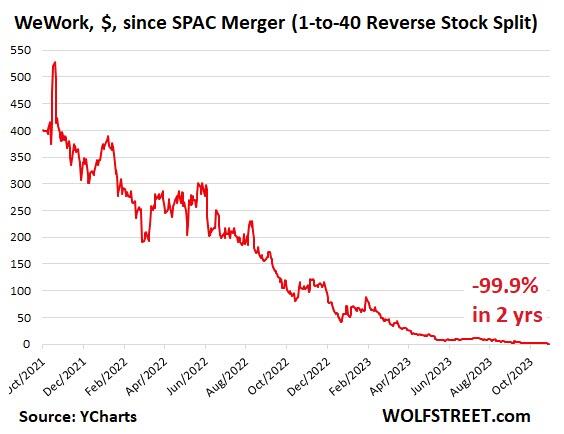
Almost exactly two years after going public via SPAC, WeWork, the struggling co-working start-up that once held a valuation as high as $47 billion, filed for Chapter 11 bankruptcy protection in New Jersey federal court Monday, having, as Wolf Richter reports, spent its entire life burning huge amounts of cash raised from investors – a total of $13.8 billion raised in 22 rounds, much of it from SoftBank and SoftBank’s Vision fund.

In a press release, the company said it struck a “Restructuring Support Agreement” with creditors to “drastically” reduce the company’s “existing funded debt and expedite the restructuring process.” 

The bankruptcy is limited to only WeWork’s locations in the US and Canada, the company said. It reported liabilities ranging between $10 billion to $50 billion.

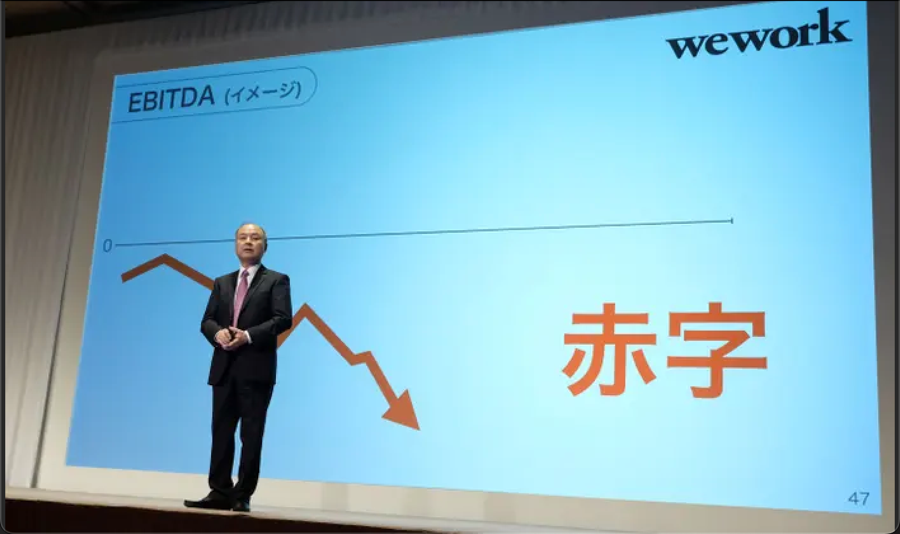
“Now is the time for us to pull the future forward by aggressively addressing our legacy leases and dramatically improving our balance sheet,” WeWork CEO David Tolley said in a press release.

Tolley continued, “I am deeply grateful for the support of our financial stakeholders as we work together to strengthen our capital structure and expedite this process through the Restructuring Support Agreement.” 

In recent months, WeWork provided numerous signals of its imminent demise.

The first was in August, when it stated in a 10-Q filing that “substantial doubt exists about the company’s ability to continue as a going concern.” 

As the company hemorrhaged cash and liquidity was running thin, Tolley said in September that the company “would seek to negotiate terms with our landlords” and “part of these negotiations, we expect to exit unfit and underperforming locations and to reinvest in our strongest assets as we continuously improve our product.”

Then, in early October, WeWork skipped interest payments totaling $95 million on five of its bonds, which triggered a 30-day grace period. 

As of June, the company was leasing 20 million square feet of office space, more than any other company in the US. This also comes as the office market is in a severe downturn due to remote and hybrid work trends, plus companies are panic exiting imploding progressive metro cities for safer areas. 

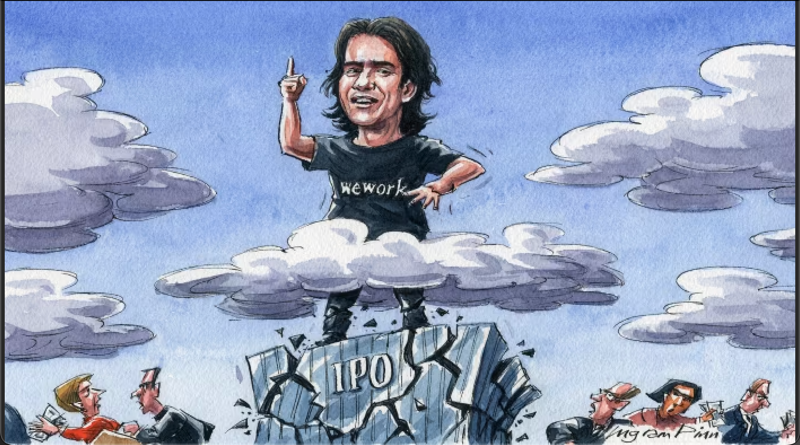
In 2019, WeWork was valued at $47 billion in a round led by Masayoshi Son’s SoftBank. The company attempted to go public but miserably failed

Despite the bankruptcy, Financial Times quoted WeWork as saying its office spaces were still “open and operational.”

Adam Neumann, the founder of WeWork, issued a statement on Monday ahead of the bankruptcy that said the impending news was “disappointing.” Remember, Neumann once said he aspired to be the world’s first trillionaire. 

WeWork might come out of bankruptcy with a much smaller office footprint across North America. This scenario could spell trouble for the already struggling office space market, potentially unleashing a wave of additional supply.

Tyler Durden
Tue, 11/07/2023 – 06:55

via ZeroHedge News https://ift.tt/YFBAdkx Tyler Durden

LNG Trading Made The Difference For Oil Supermajors In Q3

LNG Trading Made The Difference For Oil Supermajors In Q3

By Tsvetana Paraskova of OilPrice.com,

The European oil and gas majors, which are also the world’s top LNG traders, reported a mixed bag of third-quarter results, with some beating or meeting estimates and others missing expectations amid diverging gas trading opportunities in Europe and Asia. 

Shell and TotalEnergies, the world’s largest and second-largest LNG traders, respectively, reported strong gas trading earnings thanks to the open arbitrage to Asian markets in the third quarter. But BP, another major with a typically strong gas trading business, saw weak results in the division between July and September, which dragged overall earnings below analyst estimates.  

The difference between BP, on one hand, and Shell and TotalEnergies, on the other hand, was that BP is more exposed to the European and U.S. markets where inventories were high while volatility was not.

Shell reported last week adjusted earnings of $6.224 billion for the third quarter, generally in line with expectations. The higher adjusted earnings and EBITDA for the third quarter compared to the second quarter reflected favorable trading and optimization results combined with higher realized liquids prices, offset by lower volumes. Shell had already said a month ago that it expects its third-quarter earnings to receive a boost from stronger trading results in its natural gas and products divisions compared to the second quarter.

“Shell delivered another quarter of strong operational and financial performance, capturing opportunities in volatile commodity markets,” Shell’s CEO Wael Sawan said in a statement.

TotalEnergies, for its part, reported a third-quarter net income above expectations, thanks to higher oil prices, strong trading, and stronger refining margins in the summer.

“The Asian buyers are back in the LNG business: today, the JKM is at TTF plus $2 to $3, which means that they are ready to buy. And today, most of the cargoes are going to Asia because the spot market is in favor of Asia,” TotalEnergies chief executive Patrick Pouyanné said on the earnings call, commenting on the natural gas prices in Europe and Asia and their differentials. 

“So you might have in this type of market, more call for LNG coming from Asia, so it puts an additional tension on this LNG market.”

While Shell and TotalEnergies benefited from the open arbitrage to the Asian market, BP said that its gas trading performance was weak in the third quarter. 

BP reported lower-than-forecast earnings for the third quarter as weak gas marketing and trading and a charge in offshore wind weighed on the results and couldn’t offset a strong oil trading business. 

“If you think back to the year, in the first quarter we had an exceptional performance, in the second quarter we had exceptional performance, and then in the third quarter – we’re calling it weak. That was really due to lack of structure in the market,” BP’s interim CEO Murray Auchincloss said on the earnings call

“So there was a little bit of volatility in the prompt, but the actual structure of the market as you looked out across multiple months wasn’t moving around.”

Auchincloss noted that “It’s just a situation where inventories are very full in Europe, inventories are quite full in the United States, and that just means there’s much less money to make on volatility.” 

With the bigger exposure to Europe’s gas market, BP’s trading was weaker than the similar divisions at Shell and TotalEnergies, which took full advantage of the return of Asian buyers and the open arbitrage this summer. 

Looking forward, BP’s Auchincloss said “volatility will tell” how the gas trading division would perform in the fourth quarter. 

“Weather will determine it, outages will determine it, and you know that our business is poised to do well when volatility occurs,” he said. 

Tyler Durden
Tue, 11/07/2023 – 06:30

via ZeroHedge News https://ift.tt/OiHs82F Tyler Durden

Putin To Seek Re-Election In 2024 For 5th Term: Reuters

Putin To Seek Re-Election In 2024 For 5th Term: Reuters

It should not come as a shock to anyone that Russian President Vladimir Putin has decided to run again in Russia’s 2024 presidential election, according to a Reuters report on Monday which cited six anonymous sources, given especially the war (or rather, ‘special military operation’) that he authorized in Ukraine is still in full swing.

“The decision has been made — he will run,” one source was quoted in Reuters as saying. A 2024 run would mark his fifth term as president, and the legal path was paved when in 2020 the Russian population voted to overwhelmingly approve an overhaul to the national constitution. 

Assuming he would again win by a landslide, this means that 71-year old Putin could theoretically stay in power until 2036 (assuming two more back-to-back terms). He would be 83-years old that year.

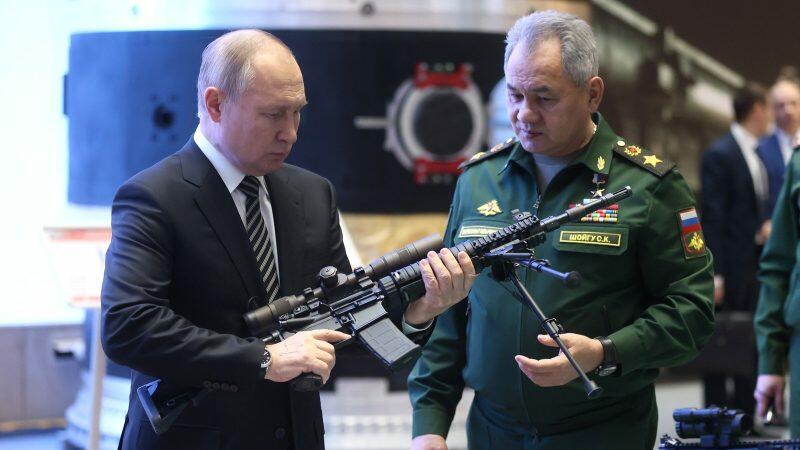
Image source: Kremlin.ru

In power since 2000, those prior changes to the law allow him to run for two more terms in the Kremlin once his current term ends in 2024. The law now in effect basically “resets” his number of terms already served, which considerably stretch all the way back to 2000 (excepting Dmitry Medvedev’s stint as president, 2008-2012). 

According to some key quotes in the new Reuters report:

As Moscow faces increased pressure from its protracted war in Ukraine and Western sanctions, “major change [in political leadership] would not be expedient,” one of Reuter’s sources said, adding that “Russia is facing the combined might of the West.”

“The world we look out upon is very dangerous,” said another source, who like the others was granted anonymity due to the sensitive nature of Kremlin politics.

An anonymous foreign diplomatic source said Putin’s announcement would come “soon.”

One early indicator of Putin’s intentions was on display all the way back in 2020, when he told reporters while discussing at that time the proposed constitutional changes, “I do not rule out the possibility of running for office, if this comes up in the Constitution. We’ll see.” He has also said at the time, “I have not decided anything for myself yet,” according to the prior state television interview statements.

Very likely, the Russian population will rally around desiring a ‘strong’ and ‘proven’ leader that can stand up to the West, and to Washington and NATO in particular, again especially given the proxy war nature of what’s happening in Ukraine. But it remains that among some sectors, the war is unpopular given reports of a huge Russian death toll. The numbers of young men coming back either in coffins or severely maimed from war has certainly had an impact among many common Russian families.

It’s been many years since Putin actually had any significant challengers who had major name recognition in Russia (even during Medvedev’s rule, Putin was seen as the ‘real power’ while in the prime minister’s role). The West would chalk this up to the Kremlin oppressing or locking up any political rivals or oppositionists (like Navalny, who never actually polled very high regardless) – while many Russians would see in Putin national unity and strength. 

Tyler Durden
Tue, 11/07/2023 – 05:45

via ZeroHedge News https://ift.tt/zvbRO6p Tyler Durden

The Eurozone Disaster – Between Stagnation & Stagflation

The Eurozone Disaster – Between Stagnation & Stagflation

Authored by Daniel Lacalle,

The Eurozone economy is more than weak. It is in deep contraction, and the data is staggering.

The Eurozone Manufacturing purchasing managers’ index (PMI), compiled by S&P Global, fell to a three-month low of 43.1 in October, the sixteenth consecutive month of contraction. However, European analysts tend to ignore the manufacturing decline using the excuse that the services sector is larger and stronger than expected, but it is not. The Eurozone Composite PMI is also in deep contraction at 46.5, a 35-month low, and the services sector plummeted to recession territory at 47.8, a 32-month low.

Some analysts blame the energy crisis and the ECB rate hikes, but this makes no sense.

The eurozone should be outperforming the United States and China because the energy crisis reverted almost immediately. Between May 2022 and June 2023, all commodities, including natural gas, oil, and coal, as well as wheat, slumped and fell to pre-Ukraine war levels. A mild winter and the impact of monetary contraction created a strong stimulus that should have helped the eurozone, and there were no supply disruptions. In fact, the contribution of the external sector to GDP helped the area avoid a recession, as exports remained healthy while imports declined.

Blaming the eurozone recession on the ECB’s monetary policy is also unfair. The eurozone inflation is unacceptable, and, as the studies of Borio (BIS, 2023) and Congdon and Castañeda (2022) prove, inflation was caused by excessive money growth. Furthermore, the ECB’s monetary policy remains hugely accommodating. In fact, the misguided anti-fragmentation program continues to support the debt of fiscally irresponsible countries. The ECB’s balance sheet is more than 50% of the GDP of the euro area, compared to the Federal Reserve’s 30%.

Fiscal and monetary policy remain expansionary. Governments can spend at will, as the fiscal rules and limits have been suspended. Therefore, fiscal and monetary conditions are a Keynesian dream. There is more, because the much-trumpeted EU Next Generation Fund, a €750 billion stimulus package aimed at strengthening growth and productivity, is in full swing.

Now put all this together. Massive stimulus packages, deficit spending, accommodative monetary policy, and the external support of cheap natural gas and coal… And there is no growth. Blaming it on China’s slowdown is lazy. If eurozone growth was driven by exports to China, Germany would not have been on the verge of recession, with France and Italy delivering zero growth in 2019, for example. Furthermore, the poor growth of the eurozone between 2011 and 2019 coincided with a period of extraordinary expansion in China.

The problem of the eurozone is not China, rate hikes, or the Ukraine war. The curse of the eurozone is central planning. Subsidizing obsolete sectors and zombie firms, bloating government spending, and massively increasing taxes on the most productive sectors are driving away technology, industry, and high-productivity sectors. Government current spending is now the main component of GDP in countries like France or Belgium and is rising all over the eurozone. Implementation of politically imposed economic decisions has crippled euro area opportunities, and energy policy is a key area of stagnation in the economy. A misguided energy policy makes industry less competitive and the economy more vulnerable as power and natural gas prices for households and industries are significantly more expensive than in China or the U.S. due to the accumulation of taxes and regulatory burdens.

The ECB does not have to decide between inflation and growth. This is a false dilemma. There is plenty of growth without inflation in high-productivity economies. The problem is that European governments believe all their fiscal imbalances will be disguised by monetary policy and demand negative real rates and constant monetization of debt. Thus, the ECB will have to choose between stagnation and stagflation because governments are forcing it.

Tyler Durden
Tue, 11/07/2023 – 05:00

via ZeroHedge News https://ift.tt/x3Q65rM Tyler Durden

Prolific Wanker Known As ‘The Sperminator’ Creates ‘Unvaxxed Sperm’ Group On Facebook After Requests Skyrocket

Prolific Wanker Known As ‘The Sperminator’ Creates ‘Unvaxxed Sperm’ Group On Facebook After Requests Skyrocket

A man known as ‘The Sperminator’ has created an offshoot of the largest sperm donation group in the United States which only provides sperm from men who have refused to take the Covid shot.

Jonathan David Rinaldi (The Sperminator himself), was a frequent donor to a Facebook group called ‘Sperm Donation USA,’ however after noticing a “massive increase” in requests for unvaxxed sperm, he started his own splinter group, the Daily Mail reports.

Women searching for ‘unvaccinated sperm donors’ specify ‘no Covid vaxx’ on their posts looking to find a baby-making partner

Rinaldi’s group boasts nearly 250 members who have helped many people successfully start families, according to the report. Most members are offering their sperm for free.

Rinaldi, 44, is one of the millions of Americans who has been captured by the theory that the Covid vaccines somehow damage the reproductive system.

I don’t trust big government, big pharma, I don’t trust them, and I don’t need to inject myself with things that I don’t even know what it is,’ Mr Rinaldi told DailyMail.com.

Users of Mr Rinaldi’s group share this false idea, with posts linking the Covid shot to sperm death and other vaccine-related misinformation.

Cryos, one of America’s largest sperm bank, told DailyMail.com it has had ‘very few clients requesting information about unvaccinated donors.’

But anecdotally, DailyMail.com has seen new interest in unvaccinated sperm donors on Facebook groups in the US.

Women searching for ‘unvaccinated sperm donors’ specify ‘no Covid vax’ on their posts looking to find a baby-making partner. -Daily Mail

A woman posted in the Sperm Donation USA Facebook group in July 2021 looking for unvaccinated sperm donors. ‘AI’ refers to artificial insemination, which involves a donor providing his sperm in a cup or shipping it to a recipient
Another post in the Sperm Donation USA Facebook group from August 2021 

Men in the group identify themselves with descriptors such as “unvaccinated man (sperm not modified by mRNA).”

One recipient of said unvaxxed sperm posted a photo of her positive pregnancy test with the caption: “One more ‘farm-raised’, ‘not Pharma-raised’ baby on its way!”

According to Rinaldi, he began questioning vaccinations in general after having his own child.

“I’ve had no flu shots, no Covid shots. Nothing since I was a baby,” he said. “My best friend growing up was not vaccinated at all. And he is totally fine and healthy.”

“When I had my first child, I started reading the inserts and the ingredients. And when the school started saying my son had to have them… I really don’t like being told what to do by the government, so it made me think and do the opposite.”

More screenshots via the Daily Mail:

Rinaldi, who lives in Forest Hills, NY, first began donating sperm at the request of a lesbian friend. Now, he has three children with his ex-partner and has donated sperm to conceive another 16 more.

Tyler Durden
Tue, 11/07/2023 – 04:15

via ZeroHedge News https://ift.tt/R9nQvCz Tyler Durden

Brickbat: Have a Scooby Snack and Chill


The Mystery Machine | Pat Loika/Wikimedia

A teacher at Sutter Elementary School in Antioch, California, who wasn’t named by the media, has been placed on administrative leave because of her Halloween costume. The teacher came to school wearing a box painted as the Scooby Doo Mystery Machine, her face painted dark to represent the night, and a green moon over her head. Some at the school reportedly found her costume offensive. “We know that there’s a long cultural, historical background to people putting dark makeup on, and there’s a lot of context there that we know is harmful to particular students of color and very particular to the black community,” said school board member Antonio Hernandez. “Regardless of what the intention was, we know what kind of feelings that image can provoke in parents, students and in the community.”

The post Brickbat: Have a Scooby Snack and Chill appeared first on Reason.com.

from Latest https://ift.tt/MYpKhzg
via IFTTT

Watchdog: Afghanistan Has Received $11 Billion In Aid From US Since Withdrawal

Watchdog: Afghanistan Has Received $11 Billion In Aid From US Since Withdrawal

Authored by Eric Lundrum via American Greatness,

A new watchdog report reveals that the country of Afghanistan has received a staggering $11 billion in foreign aid from the United States since the country’s collapse in August of 2021.

As Breitbart reports, the Special Inspector General for Afghanistan Reconstruction (SIGAR), John Sopko, issued his report on Monday.

Sopko says that the U.S. and its allies have been sending “cash shipments” of about $80 million to Afghanistan “every 10-14 days” since the Taliban took over the country shortly before the withdrawal of all American forces.

Sopko said that the United Nations has assured him that all of the money has been “placed in designated U.N. accounts in a private bank,” and is not being “deposited in the central bank or provided to the Taliban.”

The U.N. Assistance Mission in Afghanistan (UNAMA) similarly claimed that all of the cash shipments are being “carefully monitored, audited, inspected, and vetted in accordance with U.N. financial rules and processes.”

Despite these claims, Sopko’s report noted that the Taliban has stolen foreign aid before, and has also been able to prevent the poorest elements of a foreign population from receiving aid that has been designated for them; some of the Taliban’s methods for stealing foreign aid include “siphoning cash from U.N. shipments, or collecting royalties, or charging fees on cash shipments.”

“The U.N., NGOs (non-governmental organizations), and other entities involved in aid efforts have paid administrative fees to various Taliban ministries, and these fees were recorded by the Taliban as inland revenue,” the SIGAR report continued.

The Biden Administration’s foreign aid decisions, particularly with regards to the Middle East, have come under greater scrutiny in recent weeks following the decision to give Iran $6 billion in exchange for the release of five American hostages; the subsequent mass terrorist attacks against Israel led many to speculate that Iran could have used some of that money to fund the attacks.

Tyler Durden
Tue, 11/07/2023 – 03:30

via ZeroHedge News https://ift.tt/2cujh7E Tyler Durden