Trump Admin Pushing For More AI, Energy, & Pharma Corporate Deals Ahead of Midterms

Trump Admin Pushing For More AI, Energy, & Pharma Corporate Deals Ahead of Midterms

As part of America’s Industrial Policy transformation, Thetrump administration is pressing companies across nearly 30 industries to strike deals that advance national and economic security goals, Reuters reported.

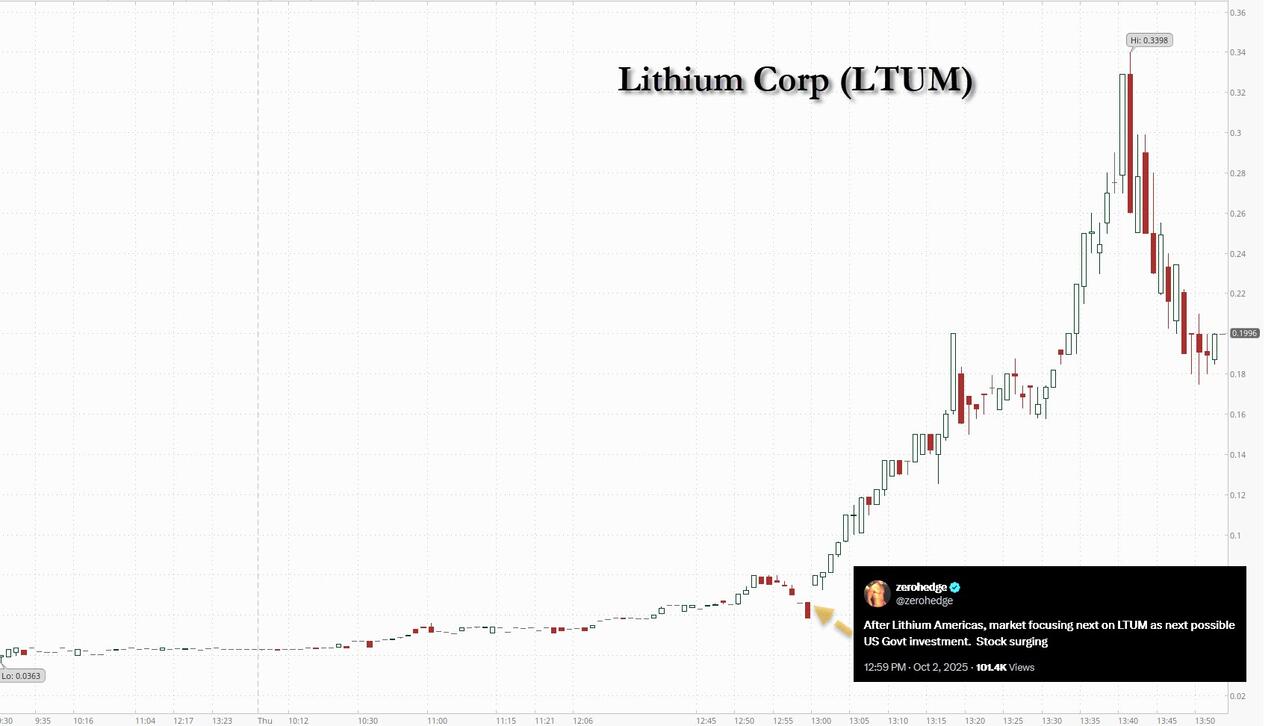
Officials are offering tariff relief, revenue guarantees, and even government equity stakes in exchange for concessions. The rapid pace of negotiations is aimed at securing political wins for President Donald Trump before the 2026 midterm elections, the sources said. Stocks like USA Rare Earth (USAR), Lithium Corporation (LTUM), Centrus (LEU) and other appear to be moving higher mid-day Thursday on the news and speculation of which companies could be targeted.

Commerce Secretary Howard Lutnick has emerged as the administration’s lead dealmaker, overseeing government stakes in Intel and Nippon Steel’s purchase of U.S. Steel. “If we’re going to give you the money, we want a piece of the action,” Lutnick said in August. He is building out a Wall Street-heavy team under a new U.S. Investment Accelerator, seeded in part with $550 billion from Japan as part of its trade commitments.
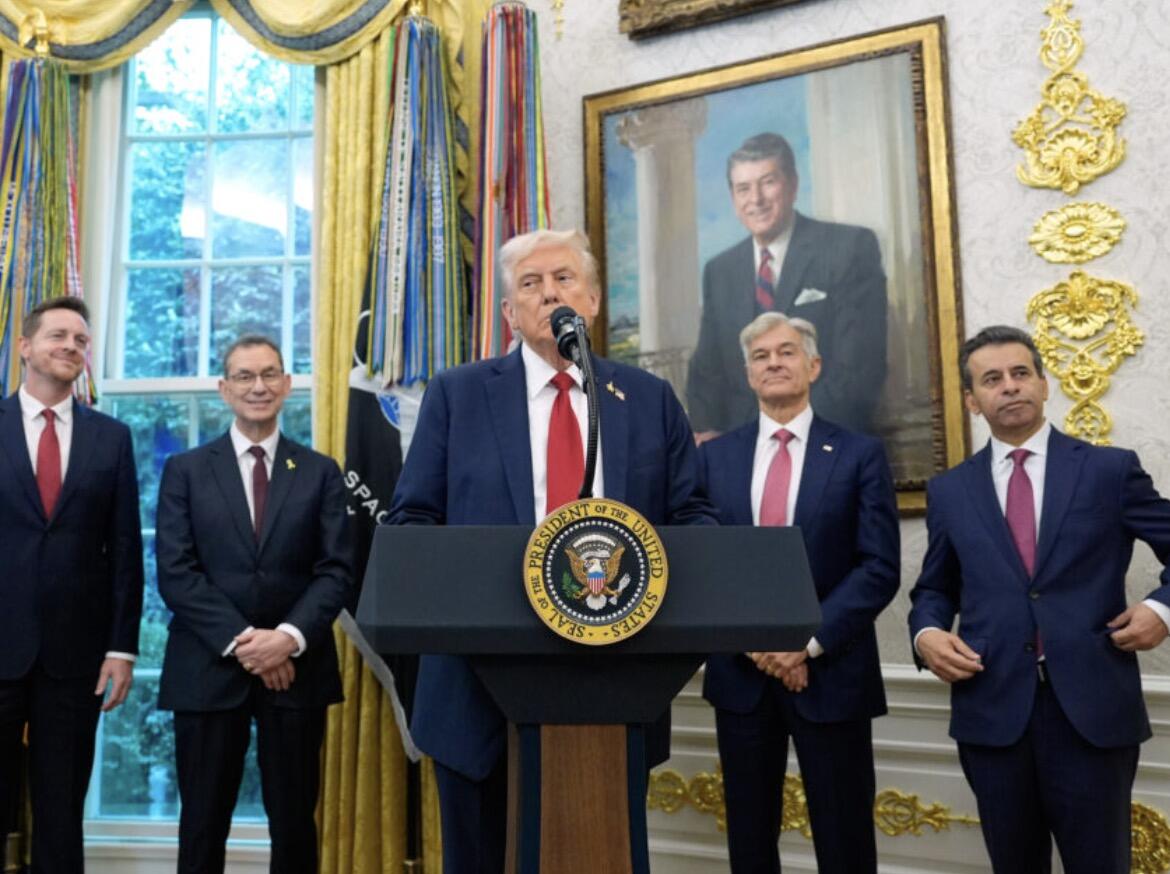
The International Development Finance Corporation, originally tasked with overseas projects, is also central to the strategy. A June proposal before Congress would expand its mandate and increase its firepower to $250 billion, creating an equity fund to support critical supply chains, energy, minerals, and infrastructure.

Reuters reports that the administration’s outreach spans semiconductors, AI, shipbuilding, critical minerals, energy, and pharmaceuticals. On Tuesday, Trump announced a White House deal with Pfizer to cut drug prices in exchange for tariff relief, declaring: “The United States is done subsidizing healthcare of the rest of the world.”

Companies are learning the optics are as important as the agreements. Eli Lilly was pressed by the administration after announcing new U.S. plants without including Trump. “As an American company, Lilly is committed to expanding manufacturing capacity in the U.S.,” a spokesperson said. Pfizer and AstraZeneca declined comment.

Some executives view the strategy as a chance to tap government support, while others fear strings attached. One minerals executive said industry peers worry about being told: “We need 10% of your company.” Lawyers caution that deals could unravel if the next administration reverses course.

Just today speculation about who may be next under the Trump admin’s spotlight sent microcap US Lithium miner Lithium Corp soaring as much as 500%.
Supporters – and even some critics – say the approach is pragmatic, aiming to de-risk vital sectors, ensure taxpayer returns, and bring jobs back to the U.S. “They want to see projects that are credible and where there are viable partnerships,” said Mark Jensen, CEO of ReElement Technologies, after meeting officials on rare earth supply chains.

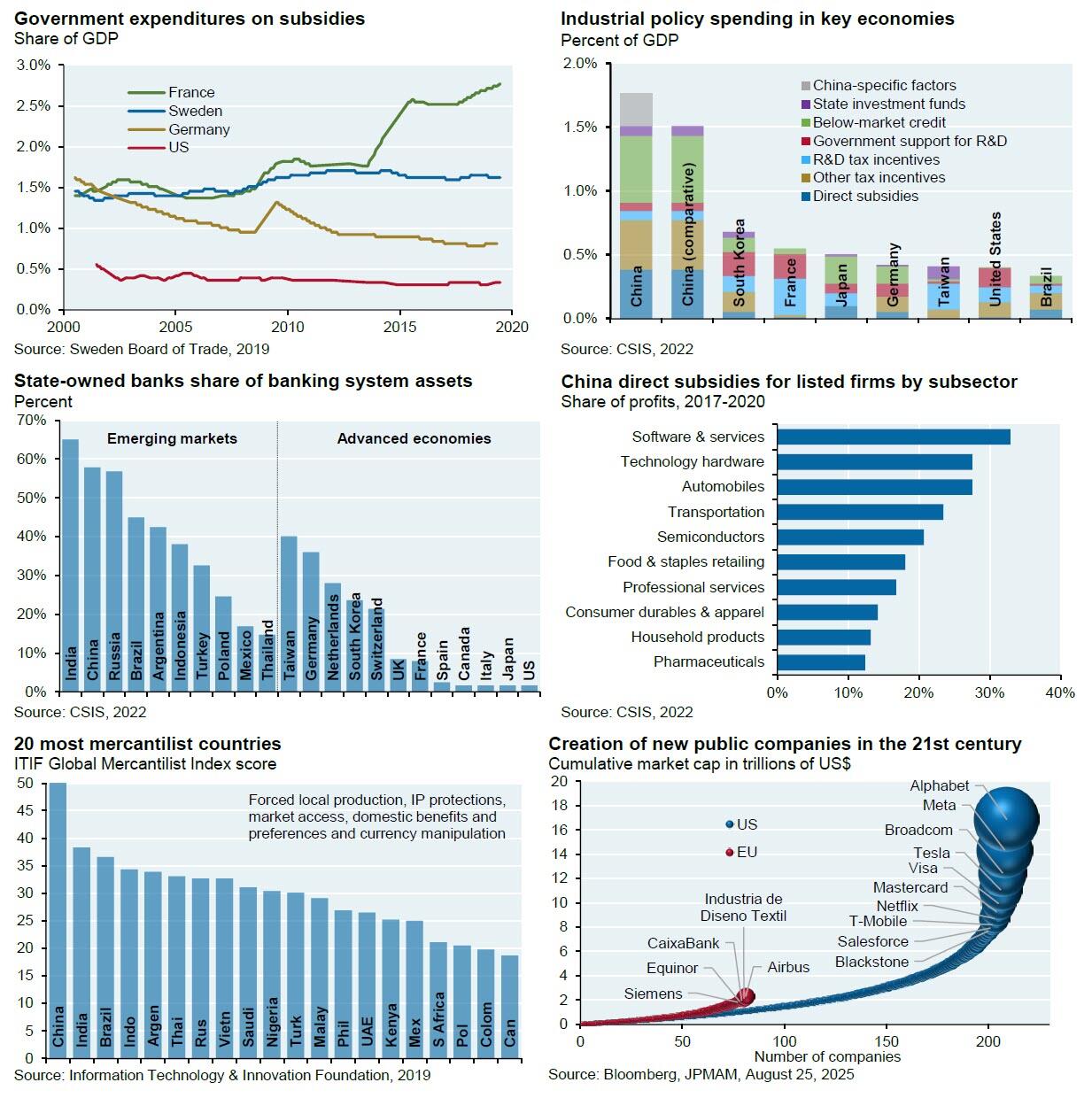
In his latest report, JPM’s Michael Cembalest, hardly a fan of the Trump admin, discussed how the recent purchases of stakes in companies like Intel is actually a good idea, to wt:

Bottom line: it’s a really mercantile world out there. While the US has a stellar track record in creating new companies compared to Europe (see bubble chart), the rest of the world often provides a lot more in the way of tax, loan, grant and other subsidies to its manufacturing industries than the US4F5. In China, the world’s most mercantile country, such subsidies can reach 15%-35% of industry profits. Providing a Federal government lifeline to Intel may have been the least bad option in the world illustrated below
More in the full JPM note available to pro subs.

Tyler Durden
Fri, 10/03/2025 – 07:15

via ZeroHedge News https://ift.tt/XE835jD Tyler Durden

The Heritage Guide to the Constitution: Essay Nos. 151–175

To continue my preview of The Heritage Guide to the Constitution, which will ship on October 14, here are the authors of essays 151–175.

Essay No. 151: Prohibition On Amendment—Migration, Importation, And Apportionment —Robert G. Natelson

Essay No. 152: Prohibition On Amendment—Equal Suffrage Of The States —Robert G. Natelson

Essay No. 153: The Debts And Engagements Clause —Judge Paul B. Matey

Essay No. 154: The Supremacy Clause —Gary S. Lawson

Essay No. 155: The Oath Or Affirmation Clause —Judge Gregory G. Katsas & Andrew W. Smith

Essay No. 156: The Religious Test Clause —Gerard V. Bradley

Essay No. 157: The Ratification Clause —John P. Kaminski

Essay No. 158: The Attestation Clause —John P. Kaminski

Essay No. 159: The Establishment Clause —Stephanie Barclay

Essay No. 160: The Free Exercise Of Religion Clause —Vincent Phillip Muñoz

Essay No. 161: The Freedom Of Speech And Of The Press Clause —Eugene Volokh

Essay No. 162: The Freedom Of Assembly Clause —Tabatha Abu El-Haj

Essay No. 163: The Freedom Of Petition Clause —David E. Bernstein & R. Trent Mccotter

Essay No. 164: The Right To Keep And Bear Arms Amendment —Nelson Lund

Essay No. 165: The Quartering Troops Amendment —Andrew P. Morriss

Essay No. 166: The Unreasonable Searches And Seizures Clause —Orin S. Kerr

Essay No. 167: The Warrant Clause —Judge Elizabeth L. Branch, Francis Aul, & Austin Mayron

Essay No. 168: The Grand Jury Requirement Clause —Judge Julius N. Richardson

Essay No. 169: The Grand Jury Exceptions Clause —Judge Gregory E. Maggs & Robert Leider

Essay No. 170: The Double Jeopardy Clause —Judge Timothy M. Tymkovich & Adam Steinhilber

Essay No. 171: The Self-Incrimination Clause —Paul G. Cassell

Essay No. 172: The Due Process Clause —Gary S. Lawson

Essay No. 173: The Takings Clause —William Baude & Sarah Leitner

Essay No. 174: The Speedy Trial Clause —Judge Andrew Brasher & Jack Tucker

Essay No. 175: The Public Trial Clause —Judge Patrick R. Wyrick & Tyler Shannon

The post The Heritage Guide to the Constitution: Essay Nos. 151–175 appeared first on Reason.com.

from Latest – Reason.com https://ift.tt/IOgXmN5
via IFTTT

Review: A Godzilla Movie About Bureaucracy


Godzilla | Toho Pictures

When a strange aquatic creature appears in Tokyo Bay, Japanese officials assure the public that there is no reason to worry that it could wreak havoc on shore.

Moments later, the creature is demolishing part of Tokyo.

Shin Godzilla, an acclaimed 2016 film that was briefly re-released in American theaters in August, is an unusual entry in the 71-year kaiju franchise. Directors Hideaki Anno and Shinji Higuchi reimagined the traditional Godzilla-stomps-Japan story as a biting satire of bureaucracy, with much of the action centered on government officials who hold meeting after meeting after meeting to discuss what to do—all while Tokyo gets wrecked in the background. The heroes, a group of outcast scientists, must overcome both the red tape and the green monster.

When it was first released, Shin Godzilla was a timely commentary on the Japanese government’s response to the 2011 earthquake, tsunami, and subsequent crisis at the Fukushima power plant. (Godzilla’s first emergence here powerfully recalls the tsunami’s horror.) But it contains a timeless lesson too: When incompetent leaders face unexpected emergencies, expect chaos and calamity.

The post Review: A Godzilla Movie About Bureaucracy appeared first on Reason.com.

from Latest – Reason.com https://ift.tt/YWfQ8NE
via IFTTT

Review: Is Weapons a Metaphor for School Shootings?


minisweapons | <em>Weapons</em>/Warner Bros. Pictures

Weapons, the new horror film from writer-director Zach Cregger, is fascinatingly oblique. Unlike so much message-heavy, highly politicized modern horror, it lacks a single dominant metaphor. But the big idea it circles is clear enough.

Weapons tracks a classroom full of kids who run away from home in the middle of the night. The movie then reveals all the ways that adult authority figures—cops, school officials, parents—have failed those kids, using them for their own ends, ignoring their duty to protect them, or just box checking bureaucratic requirements so they can go back to their own lives. We see tense town meetings with angry parents who cannot process the terrifying mystery of the disappearance.

At times the movie seems to hint that it’s a metaphor for school shootings. At other moments it seems to nod to pandemic-era school closures. The big mystery is: What happened to all those kids? In the end the answer is that they’ve been weaponized, in a metaphorical way that the movie literalizes to terrifyingly creepy effect. And what’s been done to them can never really be undone.

The post Review: Is <i>Weapons</i> a Metaphor for School Shootings? appeared first on Reason.com.

from Latest – Reason.com https://ift.tt/xCSXo1H
via IFTTT

Economic Freedom Begins Recovery From COVID-Era Government Meddling


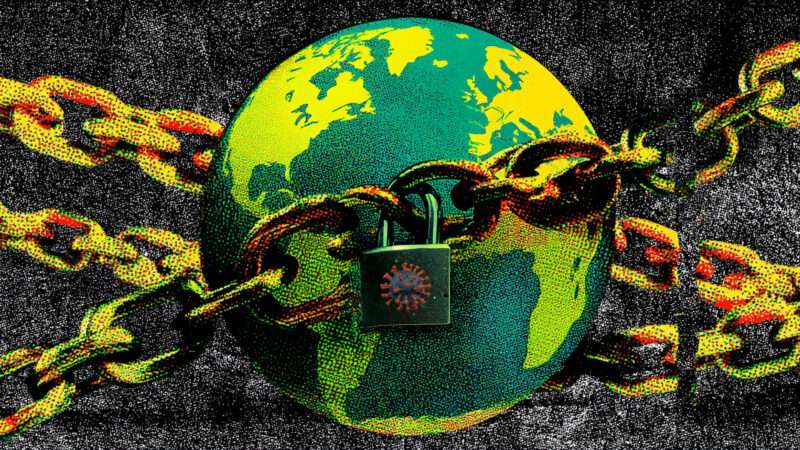
The globe, bound in chains, with a lock that bears the COVID-19 molecule. On one side, the chains are breaking. | Illustration: Eddie Marshall | Midjourney

The good news is that the first 20 years of the millennium saw overall increases in economic freedom around the world—with continuous improvement through the second decade. The bad news is that not just the United States but most of the world lost ground during the massive government interventions of the COVID-19 pandemic. That’s unfortunate for individual liberty, but also for prosperity since the economic freedom of a country strongly correlates with higher incomes and lower poverty. The world appears to be recovering freedom and wealth, but it lost years of progress to government meddling.

The World Starts To Regain Lost Ground

The latest edition of the Economic Freedom of the World report, published by Canada’s Fraser Institute, the Cato Institute, “and more than 70 think tanks around the world” is out, and it finds the world digging itself out of a hole that started in 2020.

“Overall, the index shows that economic freedom has increased since 2000, but fell precipitously following the coronavirus pandemic, erasing nearly a decade of progress,” the authors note. “We take no position on the efficacy of the various public-health policies designed to deal with the coronavirus pandemic; they very well may have saved millions of lives, or they may have been completely ineffectual….Our concern is economic freedom, and on that margin, there is no question that government policies responding to the coronavirus pandemic have reduced economic freedom.”

While global economic freedom has started to improve again as the pandemic and its interventions fade into memory, the average across nations is back to where it was in 2012. Weighted for population, which accounts for large countries with statist governments including China, the world’s economic freedom is just a hair better than it was in 2013 and has yet to start recovery from the COVID-era dip.

The index shows North America experiencing the largest decline over the measured period, with Latin America, the Caribbean, the Middle East, and North Africa following. “The latter region’s decline is especially tragic given its low starting point,” comment the authors.

“In 2023—the latest year for which data are available—the 10 highest scoring nations were Hong Kong, Singapore, New Zealand, Switzerland, the United States, Ireland, Australia and Taiwan (tied for 7th), Denmark, and the Netherlands.”

Even High-Scoring Jurisdictions Suffer From Interference

Hong Kong has consistently been at or near the top of the index for economic freedom, but that’s a sign of a relative position rather than an absolute one. The Chinese government’s growing interference in the territory’s civil and economic life is doing real damage. “The deterioration in the territory’s regulation and legal system and property rights areas is no doubt due to a notorious 2020 security law that seems to have ended China’s promise of ‘one country, two systems,'” per the report.

Hong Kong isn’t the only place suffering from government meddling. As a chapter of the report released early as a standalone publication (“U.S. Economic Freedom in a Trade War”) makes clear, America’s reborn protectionism under the Trump administration continues to threaten economic freedom:

Due to the President’s trade war, US citizens will soon pay some of the highest tariffs in the world. We use these tariffs to offer an estimated preview of US economic freedom in 2025. They cause the country’s trade freedom rank to fall from 56th to 76th place, and the US’s overall economic freedom rank to fall from 5th to 10th.

Economic Free Countries Have Better Quality of Life

These declines in economic freedom are enormously important not just because they represent an erosion in people’s ability to guide their own lives (not that this should be minimized in any way). As the report shows, countries with greater economic freedom have higher per-person gross domestic product (GDP) than less-free countries. More-free countries have lower poverty rates, higher life expectancy, and reduced infant mortality as well. Also, economically free countries have greater personal freedom than unfree countries.

It’s interesting to see how closely the COVID-era decline in economic freedom coincides with other misfortunes during the same period of time.

According to the Human Freedom Index, which measures “a broad measure of human freedom, understood as the absence of coercive constraint” and was published in 2024 by the Cato Institute and the Fraser Institute, “87.4 per cent of the world’s population lost freedom from 2019 to 2022.”

The Economist Intelligence Unit’s Democracy Index 2024 reports that “four years after the start of the covid-19 pandemic, which led to a rollback of freedoms around the globe, the 2024 results point to a continuing democratic malaise.”

In economic terms, the Human Progress Simon Abundance Index, which “quantifies and measures the relationship between resources and population” and finds that “resources have become 509.4 percent more abundant over the past 43 years” parallels the findings of Economic Freedom of the World. It reports a strong recovery for resource abundance “after a sharp downturn between 2021 and 2022, which was caused by the COVID-19 pandemic, government lockdowns and accompanying monetary expansion, and the Russian invasion of Ukraine.”

And the number of people living in poverty is once again shrinking, according to the World Bank. It had alarmingly jumped from 840 million in 2019 to 890 million in 2021 after decades of steady decrease (it was 2.23 billion in 2000). The 2025 figures put the number of the world’s poor at 831 million.

Economic Freedom Is Worth Fighting For

So, there’s good reason to regret the ground the world lost when government interference in economic activity made the world’s economies less free. At the same time, people around the world lost personal and political freedom. People also became poorer as their freedom to buy, sell, own property, and enter into contracts was compromised by presumptuous officials.

By the same token, we should celebrate the seeming return to growth in economic freedom. That freedom is essential to our personal autonomy. We also need it for human flourishing, to defeat poverty and misery. That makes economic freedom something worth fighting for.

The post Economic Freedom Begins Recovery From COVID-Era Government Meddling appeared first on Reason.com.

from Latest – Reason.com https://ift.tt/KUjB79Z
via IFTTT

California Mask Ban Puts Federal Agents, Families On Edge

California Mask Ban Puts Federal Agents, Families On Edge

Authored by Brad Jones via The Epoch Times (emphasis ours),

A new California law banning federal law enforcement officers from wearing masks while on duty has left agents and their families fearing for their safety.

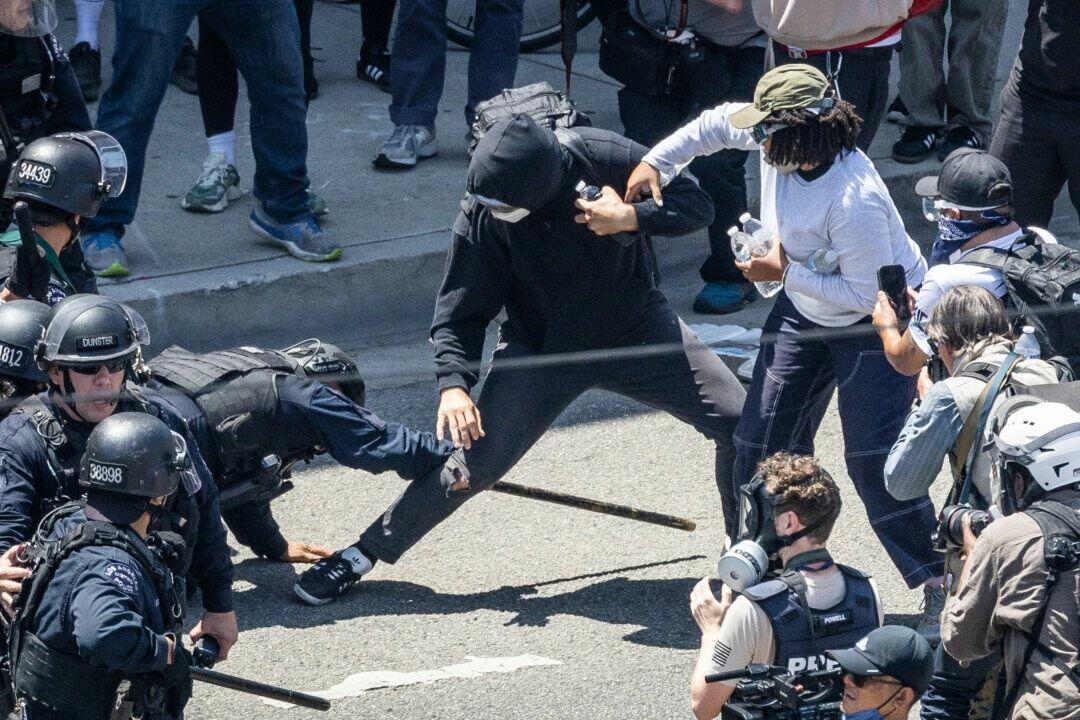
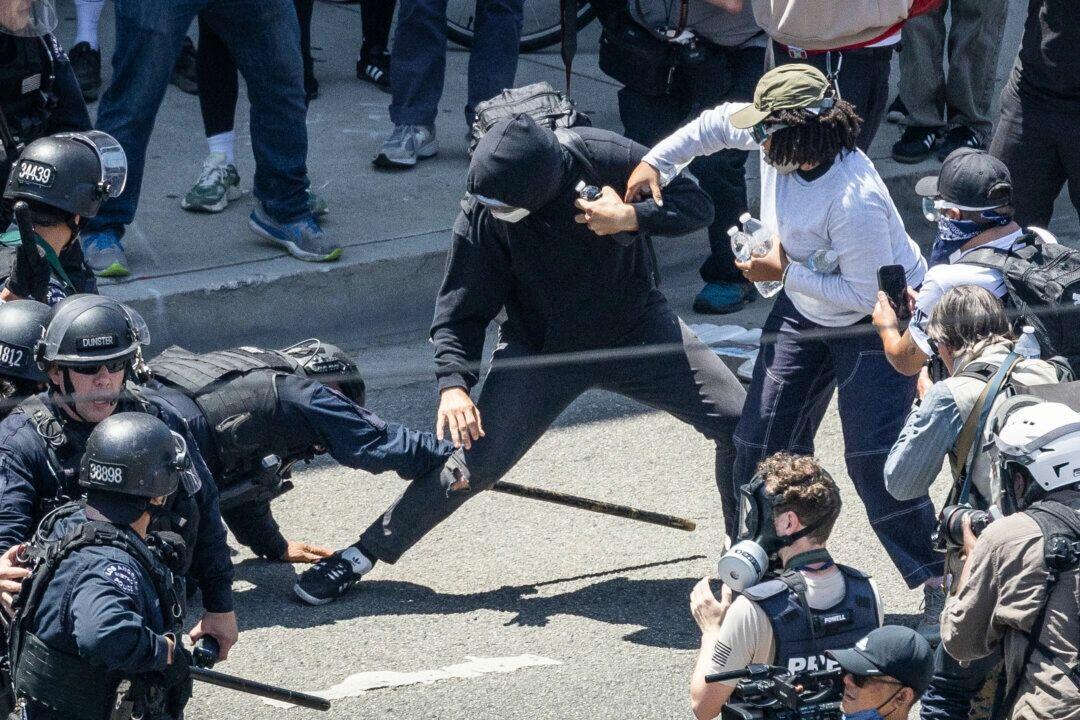
LAPD officers prepare to confront immigration protesters in Los Angeles, Calif., on June 8, 2025. John Fredricks/The Epoch Times

California Gov. Gavin Newsom signed legislation into law on Sept. 20 that makes it a misdemeanor crime for local and federal law enforcement officers to wear face coverings on the job. The law takes effect Jan. 1, 2026.

The legislation, Newsom said, is about saying “enough” to federal agents, including Immigration and Customs Enforcement and Border Patrol agents.

Unmask,” he said. “What are you afraid of?”

U.S. Attorney Bill Essayli has told federal law enforcement to ignore California’s law.

Federal agents have been wearing masks to protect their identities because they and their families fear being doxxed by activists.

Doxxing a federal agent by posting their personal information on social media or other channels is a felony.

The wife of a Border Patrol agent in California called the state law “disheartening.”

“It’s already a high-risk, dangerous job,” she said, speaking to The Epoch Times on the condition of anonymity for fear of retaliation.

I agree with the [Trump] administration that these agents should be protected,” she said.

She said agents are labeled as Nazis and their children are bullied at school.

“Being called a Nazi is heartbreaking,” she said. “It’s not true.”

Children either “go home thinking their parent is this horrible person,” or they know it’s not true but are afraid to say anything about it at school, she said.

Meanwhile, teachers and school board officials calling for the abolishment of ICE and Border Patrol on social media aren’t helping to diffuse the situation, she said.

Protesters should stop blaming agents for doing their jobs and take their grievances to the politicians who create the policies, the wife said.

“This is a policy issue. It’s not an agent issue,” she said. “They’re making it personal, and it’s not personal.

“We see how groups like Antifa or protesters are making sure that they get pictures or videos and then they’re posting them online,” she said.

“We … have to protect our children first … and living like this right now, where our own governor is against us, is very scary. It’s frightening.”

A masked protester wearing all black stands out from the colorful crowd at the No Kings protest at Los Angeles City Hall on June 14, 2025. Brad Jones/The Epoch Times

Earlier in September, Newsom downplayed concerns about doxxing, saying such claims are unfounded and unproven, and that the Department of Homeland Security (DHS) hasn’t provided the data to substantiate the alleged increase in violence against federal agents.

All they have provided is misinformation and misdirection,” Newsom said.

In July, a DHS memo said assaults on federal agents were up 830 percent from last year. Two months later, DHS reported a 1,000 percent increase in assaults.

Agents have been ambushed, shot at, and attacked with rocks, glass bottles, and other objects.

In Portland, an agitator allegedly hurled an incendiary device at officers during a demonstration. In Southern California, an agent serving a criminal warrant at a marijuana grow site was sent to the hospital for stitches after being attacked by protesters. And in late September, a deadly shooting attack at a Dallas ICE facility was carried out by a gunman who engraved “Anti-ICE” on bullet casings.

California law allows protesters to wear face masks, although California Code, Section 185 makes it illegal to wear a mask to avoid being identified while violating the law.

On Sept. 26, a federal grand jury indicted three women—two from Southern California and one from Colorado—for following an ICE agent home, livestreaming their pursuit, and then posting the agent’s home address on Instagram.

The accused—Cynthia Raygoza, 37, of Riverside; Sandra Carmona Samane, 25, of Panorama City; and Ashleigh Brown, 38, of Aurora, Colorado, face a maximum sentence of five years in federal prison if convicted of conspiracy and publicly disclosing the personal information of a federal agent.

On Sept. 20, before signing the masking bill into law, Newsom accused the Trump administration of using “secret police” tactics and sending “masked men” to “terrorize” immigrant communities.

The impact of these policies all across this city, our state, and nation, are terrifying. It’s like a dystopian sci-fi movie—unmarked cars, people in masks, people quite literally disappearing, no due process, no rights,” he said.

“Immigrants have rights, and we have the right to stand up and push back, and that’s what we’re doing.”

Manny Bayon, National Border Patrol Council union president in San Diego, told The Epoch Times that doxxing has been a real safety threat for agents and their families.

“How do you delete from social media? You don’t,” he said. “We’ve had incidents where they’ve identified an agent, they’ve identified a wife, they’ve identified where the kids go to school—that kind of thing. So that’s concerning.”

Federal agents with US Customs and Border Patrol (CBP) ride on an armored vehicle driving slowly down Wilshire Boulevard in Los Angeles, Calif., on July 7, 2025. Patrick T. Fallon/AFP

White House border czar Tom Homan said in June that he is living separately from his family due to death threats.

“The death threats against me and my family are outrageous,” he told Fox News.

“I don’t see my family very much; my wife’s living separately from me right now … mostly because of the death threats.”

There is even less security for rank-and-file agents, Bayon said.

When doxxing is reported, it is documented, and credible threats are passed up the chain of command.

“Then we take precautionary measures for the family,” he said.

Agents Told to Ignore Law

U.S. Attorney Bill Essayli sent a memo to all federal law enforcement agency heads in the Central District of California on Sept. 26 telling them to ignore the state’s masking law.

He posted the two-page memo on X, stating Newsom is “confused” about his role under the U.S. Constitution.

He oversees California, not federal agencies. He should review the Supremacy Clause,” Essayli wrote.

“California’s law to ‘unmask’ federal agents is unconstitutional, as the state lacks jurisdiction to interfere with federal law enforcement.

“I have directed federal agencies to disregard this state law and adhere to federal law and agency policies.”

Essayli wrote in the memo that Newsom has “made clear” the new law is “targeting federal law enforcement officers who wear masks during immigration enforcement operations in order to protect their safety and their families’ safety.”

The governor’s office did not provide a comment in response to an inquiry about Essayli’s memo, but said Newsom’s earlier statements “still stand.”

Jack Philips contributed to this report.

Tyler Durden
Fri, 10/03/2025 – 06:30

via ZeroHedge News https://ift.tt/4TclpBy Tyler Durden

Putin Blasts French ‘Piracy’ After ‘Russia-Linked’ Tanker Boarded, Captain Arrested

Putin Blasts French ‘Piracy’ After ‘Russia-Linked’ Tanker Boarded, Captain Arrested

“The tanker was seized in neutral waters without any justification, and they were apparently looking for some kind of military cargo, drones, or something else,” Putin said Thursday at the Valdai Discussion Club meeting in Sochi, condemning the French takeover of an oil tanker suspected of being part of Russia’s so-called “shadow fleet” which seeks to evade Western energy sanctions as an act of “piracy”.

“There’s nothing there, there never was, and there can’t be anything,” Putin asserted of the boarding action which took place earlier this week. The tanker was under the flag of a third country and the crew is international, Putin described, adding he doesn’t know “how much it’s related to Russia.”

AFP via Getty Images

French authorities revealed details for the first time on Thursday, confirming that they arrested the captain, a Chinese national. He’s accused of disobeying orders of the French navy.

Another crew member, the First Officer, was also arrested, as Reuters details of French statements:

French police have arrested the captain and first officer of a sanctioned tanker suspected of operating for Russia’s “shadow fleet,” authorities said on Thursday, after the navy boarded the vessel, which may have been involved in recent drone incidents around Denmark.

The vessel, the Boracay, was approximately 50 nautical miles south of Copenhagen on September 22 when drone activity forced the closure of the city’s airport around 1830 GMT, according to data from MarineTraffic.

It was also observed heading south along Denmark’s western coast on the evening of September 24 when drones were reported flying north of Esbjerg and near several nearby airports.

The tanker appeared on on an EU sanctions list for transporting Russian oil, but the whole Denmark drone incursion linkage aspect to it seems highly coincidental, and a big stretch, assuming there’s no further evidence and that no actual drones were found upon searching the vessel

French authorities would be presenting any such evidence very quickly, but instead they just issued ambiguous statements remotely suggesting the linkage to the Denmark drone sightings.

French authorities say that the Boracay has a history of changing names and flags, and is currently flying under Benin’s registry. It’s believed this is part of intentional sanctions-dodging. The Boracay is now anchored off France’s coast near Saint-Nazaire, south of Brest.

It had initially set sail from the Russian port of Primorsk outside Saint Petersburg on September 20 and had actually been at one point detained Estonian authorities earlier this year for sailing without a valid country flag. International law allows countries to intercept such vessels which are believed to be stateless, typically if there is suspicion of wrong-doing like smuggling.

Tyler Durden
Fri, 10/03/2025 – 05:45

via ZeroHedge News https://ift.tt/1yMWjnL Tyler Durden

Review: A Godzilla Movie About Bureaucracy


Godzilla | Toho Pictures

When a strange aquatic creature appears in Tokyo Bay, Japanese officials assure the public that there is no reason to worry that it could wreak havoc on shore.

Moments later, the creature is demolishing part of Tokyo.

Shin Godzilla, an acclaimed 2016 film that was briefly re-released in American theaters in August, is an unusual entry in the 71-year kaiju franchise. Directors Hideaki Anno and Shinji Higuchi reimagined the traditional Godzilla-stomps-Japan story as a biting satire of bureaucracy, with much of the action centered on government officials who hold meeting after meeting after meeting to discuss what to do—all while Tokyo gets wrecked in the background. The heroes, a group of outcast scientists, must overcome both the red tape and the green monster.

When it was first released, Shin Godzilla was a timely commentary on the Japanese government’s response to the 2011 earthquake, tsunami, and subsequent crisis at the Fukushima power plant. (Godzilla’s first emergence here powerfully recalls the tsunami’s horror.) But it contains a timeless lesson too: When incompetent leaders face unexpected emergencies, expect chaos and calamity.

The post Review: A Godzilla Movie About Bureaucracy appeared first on Reason.com.

from Latest – Reason.com https://ift.tt/YWfQ8NE
via IFTTT

Review: Is Weapons a Metaphor for School Shootings?


minisweapons | <em>Weapons</em>/Warner Bros. Pictures

Weapons, the new horror film from writer-director Zach Cregger, is fascinatingly oblique. Unlike so much message-heavy, highly politicized modern horror, it lacks a single dominant metaphor. But the big idea it circles is clear enough.

Weapons tracks a classroom full of kids who run away from home in the middle of the night. The movie then reveals all the ways that adult authority figures—cops, school officials, parents—have failed those kids, using them for their own ends, ignoring their duty to protect them, or just box checking bureaucratic requirements so they can go back to their own lives. We see tense town meetings with angry parents who cannot process the terrifying mystery of the disappearance.

At times the movie seems to hint that it’s a metaphor for school shootings. At other moments it seems to nod to pandemic-era school closures. The big mystery is: What happened to all those kids? In the end the answer is that they’ve been weaponized, in a metaphorical way that the movie literalizes to terrifyingly creepy effect. And what’s been done to them can never really be undone.

The post Review: Is <i>Weapons</i> a Metaphor for School Shootings? appeared first on Reason.com.

from Latest – Reason.com https://ift.tt/xCSXo1H
via IFTTT