Reversing The Burger Court

In my new Civitas column, I explain how President Trump is, in many regards, refighting the war that was waged against President Nixon. In the process, Trump is butting against many precedents of the Burger Court, including United States v. Nixon and Train v. United States. I suspect that both of these cases would no longer command a majority of the Court.

Taking a step back, it is striking how many of the decisions by the Burger Court have been overturned in recent years, even as precedents of the Warren Court remain inviolable.

Consider some highlights (or lowlights, depending on your perspective).

  1. Roe v. Wade (1973) was reversed by Dobbs v. Jackson Women’s Health Organization  (2022).
  2. Board of Regents of California v. Bakke (1978) largely upheld the use of affirmative action policies. This decision was (basically) reversed by Students for Fair Admission v. Harvard (2024).
  3. Lemon v. Kurtzman (1971) prohibited any “entanglement” between church and state. Kennedy v. Bremerton School District (2022) effectively overruled the Lemon test.
  4. Abood v. Detroit Board of Education (1977) upheld the power of public sector unions to mandate certain dues from employees. Janus v. AFSCME (2018) overruled Abood.
  5. Chevron v. NRDC (1984) ruled that courts should defer to administrative agencies when a statute is “ambiguous.” Loper Bright v. Raimondo (2024) overruled Chevron deference.
  6. Ramos v. Louisiana (2020) overruled Apodaca v. Oregon (1972).
  7. Franchise Tax Board of California v. Hyatt (2019) overruled Nevada v. Hall (1979).
  8. Knick v. Township of Scott (2019) overruled Williamson County (1985).
  9. Rucho v. Common Cause (2019) overruled Davis v. Bandemer (1986)

Most of the current Justices came of age when the Burger Court was in power. They perhaps see this Court as prone to reversal. I think Justice Thomas stated the issue well:

“At some point we need to think about what we’re doing with stare decisis,” Thomas said Thursday, referring to the legal principle of abiding by previous decisions. “And it’s not some sort of talismanic deal where you can just say ‘stare decisis’ and not think, turn off the brain, right?”

The Court’s senior conservative suggested that some members of the Court over the years have blindly followed prior judgments, comparing them to passengers on a train.

“We never go to the front see who’s driving the train, where is it going. And you could go up there in the engine room, find it’s an orangutan driving the train, but you want to follow that just because it’s a train,” Thomas said.

“I don’t think that I have the gospel,” he said, “that any of these cases that have been decided are the gospel, and I do give perspective to the precedent. But it should — the precedent should be respectful of our legal tradition, and our country, and our laws, and be based on something, not just something somebody dreamt up and others went along with.”

So who is the “orangutan” driving those trains?

I’ve heard it said that Chief Justice Burger could have done more on the Court if he had more conservative votes. I’m not so sure. Burger was in the majority of most of the overruled cases. He assigned Roe to Justice Blackmun and wrote the majority opinion in Lemon. Justice Rehnquist, appointed around the same time, was often the lone voice of reason.

To pile on a bit more, former-Chief Justice Burger described an individual Second Amendment right as “one of the greatest pieces of fraud, I repeat the word fraud, on the American public.” The Supreme Court emphatically rejected Burger’s glib comment in District of Columbia v. Heller (2008).

Chief Justice Burger stepped down from the Court in September 1986. His resignation allowed President Reagan to promote William Rehnquist to Chief Justice, and appointed Antonin Scalia to the Supreme Court. In many regards, Burger’s departure ushered in the modern originalist revolution. If only Justice Powell had stepped down earlier, we would likely have never known of a Justice Kennedy.

The post Reversing The Burger Court appeared first on Reason.com.

from Latest – Reason.com https://ift.tt/Edr9Icq
via IFTTT

Young People Are Richer Than Boomers Were

Have you heard how young people suffer now?

Scroll TikTok, Instagram, etc., you see the same message: “Young people today can’t get ahead!”

One popular meme says when baby boomers like me were young, “A family could own a home, a car, and send their kids to college, all on one income.”

“That’s a fantasy,” says economist Norbert Michel. “We are much better off than we were.”

My new video takes the meme’s claims one by one, starting with “a family could own a home.”

On social media, many young people say things like, “Most people don’t live in houses because it’s too expensive.”

Yes, homes cost more now, but census data show more Americans own their homes now than when I was a kid.

And today’s homes are much bigger and twice as likely to have central air, dishwashers, garbage disposals, etc.

We want more now.

Also, young people can afford more now.

Today, Americans actually spend a smaller percentage of our money on food, clothing, and housing than we used to, according to Bureau of Labor Statistics survey data.

“We have a lot more things and we don’t have to work as hard to get them,” says Michel. “Now it’s the norm to go out for dinner.”

When I was young, few people did that.

Few people flew places for vacation. They didn’t have the money, and flying cost much more. Adjusted for inflation, a cross-country flight cost $1,000. Now it’s about $300.

“People did not just go on vacation,” says Michel, “did not fly all across the country.”

But the popular narrative circulates.

It’s part of progressives’ campaign for socialism. They tell young people: Not only does capitalism foster greed, inequality, etc., but it doesn’t even deliver the goods.

Columbia Business School Professor Jeremy Ney tells me, “The game changed on the younger generations. Hard work alone is not enough because the deck is stacked against so many folks.”

“The idea that nobody had to work hard, that everybody had job security,” replies Michel, “is absolutely ridiculous. My dad would’ve laughed at that and should have. Income is definitely higher, jobs are more plentiful, opportunities are more plentiful.”

They sure are. Unemployment today is 4.3 percent. It was almost twice that when I was young.

Gen Z, overall, is doing better than young people once did. A typical 25-year-old Gen Zer has annual household income that’s 50 percent above Baby Boomers’.

On to the meme’s claim that when I was young, “a family could afford to send their kids to college.”

Well, yes, some could, because college was much cheaper then. Tuition in 1963 averaged $10,542 (adjusted for inflation) versus $39,307 now.

Even so, “Most people didn’t go to college,” says Michel. “Roughly half of the labor force didn’t even finish high school.”

Finally, yes, it’s true—a family could own a car. But it wasn’t anything like today’s cars. It wasn’t as safe or comfortable, and it broke down sooner. Today’s cars last more than twice as long as cars did then.

Why do people spread misinformation about today’s generations being worse off when they’re clearly so much better off?

“Politically, it sells,” says Michel. “It makes it really easy for a politician to say, ‘I’m going to fix it.'”

Maybe that’s why President Donald Trump campaigned saying, “We don’t have a great country anymore! We’re going back to the old days.”

“We always have a tendency to believe in the things that are wrong and that are bad,” says Michel. “That’s unfortunate, because overall most people have been doing much, much better.”

That internet meme should really say:

“Once upon a time, a family who rarely ate out, or flew anywhere, could afford a smaller home, a lousy car, and they didn’t send their kids to college. All on one income.”

COPYRIGHT 2025 BY JFS PRODUCTIONS INC.

The post Young People Are Richer Than Boomers Were appeared first on Reason.com.

from Latest – Reason.com https://ift.tt/PgULHlV
via IFTTT

Democrats Shut Down the Government to Obscure Obamacare’s Failures

Milton Friedman liked to quip that there’s nothing more permanent than a temporary government program.

We’re seeing more evidence for this adage as the government shut downs following Democrats’ refusal to vote for a spending bill that did not include an extension of “temporary” Affordable Care Act (ACA), aka Obamacare, subsidies passed during the pandemic.

Those enhanced subsidies were passed as a temporary measure as part of the $1.9 trillion American Rescue Plan Act in March 2021, and then extended through the end of 2025 by the so-called Inflation Reduction Act (IRA).

Obamacare always provided subsidies for individuals to purchase insurance plans on ACA marketplaces set up by the law. The 2021 Act passed enhanced subsidies eliminated the income eligibility caps for those subsidies and also made them more generous for current recipients.

Making these subsidies permanent would not be cheap. The Congressional Budget Office estimates that it would cost $340 billion a year.

On the flip side, letting the tax credits expire would result in about 1.6 million higher-income earners losing subsidies completely. Millions more would continue receiving a smaller subsidy and see their premiums rise as a result.

With their sunsetting deadline approaching and their votes necessary in the Senate to pass a spending bill, Democrats attempted to use what leverage they had to pass a more permanent extension of the “temporary” subsidies.

Republicans were not inherently opposed to extending four-year-old “temporary” subsidies, with some GOP lawmakers proposing to extend them by at least one year. But Republican leadership in the Senate insisted on funding the government first and then negotiating on health care subsidies.

With the federal government partially shuttered for the time being, both parties are now rolling out their well-worn attack lines. Democrats complain Republicans are trying to take away people’s health care. Republicans say Democrats are trying to give health care to illegal immigrations.

That the expiration of “temporary” ACA tax credits resulted in a government shutdown shouldn’t surprise anyone, says Michael Cannon, director of health policy studies at the Cato Institute.

“The fact that [the temporary subsidies] create a phony crisis every couple of years when they expire, from a political perspective, is a feature, not a bug. This is how spending grows,” he says.

Democrats are particularly insistent on preserving subsidies that were pitched as a temporary COVID measure because they help hide the costs of Obamacare, he says.

The 2010 law required health insurance companies to cover certain “essential health benefits.” It also forbade them from refusing to cover, or charging higher premiums to, people with more expensive medical conditions.

The twin effect of these mandates has been to raise premiums generally, particularly for healthier people. Ge Bei, a professor of accounting and health policy at Johns Hopkins University, notes in The Wall Street Journal that premiums have increased 80 percent since 2014, when the ACA went fully into effect.

The 2021 expansion of the ACA subsidies attempts to mask the cost of rising premiums by shifting more of the expense onto taxpayers as a whole.

Those expanded subsidies have been successful at reducing the cost of ACA individual plans, for policyholders at least if not for taxpayers.

The health policy research outfit KFF says that since the enhanced subsidies were passed, enrollment in the ACA marketplace plans has increased from 11 million to 24 million, the vast majority of whom are benefiting from the post-2021 subsidy enhancements.

Cannon says the increased post-2021 enrollment in Obamacare marketplace plans merely shows how unpopular the insurance products created by the law really are.

Only through extensive subsidization of high-income earners are people willing to participate in ACA marketplaces.

Without the subsidies, many people would simply not purchase the high-cost ACA marketplace plans. (The penalty for not purchasing health insurance was zeroed out in 2019.)

The CBO says extending the subsidies will lead to nearly 3.8 million more insured people by 2035. KFF estimates that ACA marketplace premiums would more than double if the expanded subsidies were allowed to lapse.

The immediate increase in policyholders’ premiums helps explain why Democrats felt this was an issue they could get political mileage out of during a shutdown fight. It also explains why plenty of Republicans are willing to negotiate on yet another extension of “temporary” enhanced subsidies to prop up a law the party uniformly opposed when it was passed.

Cannon, in contrast, says the subsidies should be allowed to lapse. That would force policymakers to actually deal with the regulations driving up the cost of health insurance premiums, as opposed to just hiding the cost in the federal budget.

“Everything in U.S. health care is a fiscal illusion. They want to keep hiding the cost of Obamacare’s health insurance regulations,” says Cannon.

The post Democrats Shut Down the Government to Obscure Obamacare's Failures appeared first on Reason.com.

from Latest – Reason.com https://ift.tt/QeUOH82
via IFTTT

Defend Speech Even When Your Side Hates It

This week’s guest host on The Reason Interview with Nick Gillespie is Billy Binion, who talks with Jenin Younes, a civil liberties attorney who first gained national attention when she sued the Biden administration for pressuring social media companies to censor content it didn’t like. That case, Murthy v. Missouri, ultimately reached the Supreme Court.

A former New York City public defender, Younes is now national legal director at the American-Arab Anti-Discrimination Committee, where she is preparing to sue the Trump administration. She and Binion discuss her path to civil liberties advocacy, the threats to free speech coming from both the left and the right, and why defending the First Amendment should be a universal cause—even when that speech is offensive.

0:00—Introduction
1:00—Younes’ commitment to civil liberties
3:38—The state of free speech in America
7:34—Opposing COVID restrictions
12:33—Jimmy Kimmel, the FCC, and Murthy v. Missouri
27:39—Donald Trump’s record on free speech
39:41—Noncitizens and constitutional rights
42:23—Censorship in the aftermath of Charlie Kirk’s assassination
48:33—Pam Bondi and “hate speech”
57:52—How can we protect free speech?

Upcoming Reason Events

Reason Versus: Mass Immigration Is Good for America, October 2

The post Defend Speech Even When Your Side Hates It appeared first on Reason.com.

from Latest – Reason.com https://ift.tt/am8uDvL
via IFTTT

Repeated Sex Assault Accusations Can Lead to Washington “Antiharassment Protection Order” even Without Court Finding They’re False

From Bobick v. Fernandes, decided yesterday by the Washington Court of Appeals Judge Janet Chung, joined by Judges Michael Diaz and Lori Smith; I’d love to hear what others think about this:

In December 2023, Bobick petitioned for an antiharassment protection order protecting him from Fernandes. Bobick alleged that Fernandes, whom Bobick did not know personally, had been making false claims online that Bobick sexually assaulted a woman named R.H. in 2015. He also alleged that Fernandes had been “harassing [him] online for more than one year.”

Bobick specifically described two recent incidents. First, on November 27, 2023, Fernandes published a petition on the Change.org website targeting the Mountaineers, a Seattle-based climbing organization. According to Bobick, the petition demanded that the Mountaineers “change their policies in vetting volunteers and how they handle behavior complaints.” Bobick provided a screenshot with text from the petition, which included the following statement: “Documents from a former member of the Mountaineers reported two sexual assaults in 2016. Stephen Bobick was accused of touching a woman inappropriately as she slept in a tent on a Mountaineers Climb.” Second, Bobick alleged that Fernandes and R.H. collaborated on two public events to show a video that included a photograph of Bobick and R.H. with the caption, “Was sexually assaulted twice … by leaders in The Mountaineers I trusted.” According to Bobick, Fernandes “rang a bell and yelled ‘shame’ repeatedly as the image … was on screen” and later published the video online.

The superior court issued the antiharassment protection order based on findings that (I combine here rulings from the superior court judge and a superior court commissioner):

“… Fernandes wants to make her accusations of sexual assault against … Bobick to the public as a warning to other people who may have any type of social relationship with [him] now or in the future.” …

“[B]ased on a preponderance of the evidence … Bobick has offered sufficient evidence to support his request for a protection order.” …

“… [T]here is a basis for a protection order in this matter … [a]nd … there is not an appropriate use of free speech by [Fernandes].” …

“[Bobick] supports [his] account of events with a sworn declaration that [Fernandes] made unproven accusations of sexual assault against [him] using his name and photograph for over 12 months. [Fernandes] agreed—or did not seriously dispute—[Bobick]’s description of her activities and time frame is accurate, and that [Bobick] has experienced substantial emotional distress….”

“[T]he actions of [Fernandes] constituted harassment … and [are] not protected free speech. [Fernandes]’s actions may, per her perspective, constitute[ ] a legitimate purpose—this Court disagrees….”

The appellate court affirmed:

Under [Washington law], a court “shall issue a[n antiharassment] protection order if it finds by a preponderance of the evidence … that the petitioner has been subjected to unlawful harassment by the respondent.” “Unlawful harassment” means, as relevant here, “[a] knowing and willful course of conduct directed at a specific person that seriously alarms, annoys, harasses, or is detrimental to such person, and that serves no legitimate or lawful purpose.” “The course of conduct must be such as would cause a reasonable person to suffer substantial emotional distress, and must actually cause substantial emotional distress to the petitioner.” … In determining whether a course of conduct serves any legitimate or lawful purpose, a court should consider whether

(i) Any current contact between the parties was initiated by the respondent only or was initiated by both parties;

(ii) The respondent has been given clear notice that all further contact with the petitioner is unwanted;

(iii) The respondent’s course of conduct appears designed to alarm, annoy, or harass the petitioner;

(iv) The respondent is acting pursuant to any statutory authority including, but not limited to, acts which are reasonably necessary to:
(A) Protect property or liberty interests;
(B) Enforce the law; or
(C) Meet specific statutory duties or requirements;

([v]) The respondent’s course of conduct has the purpose or effect of unreasonably interfering with the petitioner’s privacy or the purpose or effect of creating an intimidating, hostile, or offensive living environment for the petitioner; or

(vi) Contact by the respondent with the petitioner … has been limited in any manner by any previous court order.

“Constitutionally protected activity is not included within the meaning of ‘course of conduct.'” …

Fernandes argues that her activities that were the basis for the protection order were constitutionally protected, citing Catlett v. Teel (Wash. App. 2020)…. Here, unlike in Catlett, Fernandes did not merely publish public records about Bobick. Instead, … Fernandes accused Bobick of sexual assault and did so repeatedly in online forums for a period of more than 12 months…. Fernandes asserts that the burden falls on Bobick to show that Fernandes’s statements were false …. [But precedents involving defamation] are inapposite and Fernandes cites no other authority for the proposition that Bobick was required to prove defamation to obtain an antiharassment protection order ….

The appellate court noted that:

Fernandes raises only a “backward looking” constitutional argument that her complained-of activities were protected speech and, thus, could not properly serve as a basis for the protection order. She does not argue that the restraints imposed going forward are unconstitutional. Accordingly, we do not consider this issue.

I don’t think this is constitutional: Injunctions against libel, following a finding at a full trial that statements are indeed false and defamatory, are indeed permissible (see Anti-Libel Injunctions). But, given the First Amendment, such public accusations generally remain protected until there’s proof that they are indeed false; and anti-harassment injunctions shouldn’t be used against such accusations as a means to avoid the proof that defamation cases require (see Overbroad Injunctions).

The post Repeated Sex Assault Accusations Can Lead to Washington "Antiharassment Protection Order" even Without Court Finding They're False appeared first on Reason.com.

from Latest – Reason.com https://ift.tt/FQYJ4mo
via IFTTT

How Oregon’s Drug Experiment Backfired

In 2020, Oregon became the first state in America to decriminalize all drugs. Was it a catastrophic mistake? Has this famously progressive city been mugged by reality?

Reason visited Portland and talked to drug users, politicians, and police to find out what actually happened and uncovered a very different story.

As we shadowed Officer Eli Arnold, a cop and army veteran, we encountered a homeless man who had been trying to chop down a tree. It’s the sort of bizarre occurrence that you often see in downtown Portland, which these days feels like a fallen city. Arnold and his fellow officers confiscated the hatchet and gave the man a warning. At least they showed up. Arnold pointed to the console in his car displaying a dozen or so 911 calls that had gone unanswered by the Portland Police Bureau that Monday afternoon.

“This, like, constant shortage [of officers] is making it very tough,” Arnold says. 

Arnold is looking to catch drug deals in progress now that Oregon’s three-and-a-half-year experiment with decriminalization is over. Last September, the state legislature overrode the ballot initiative, known as Measure 110, and recriminalized drugs.

“Measure 110 was not what Oregonians thought it was,” Oregon state Sen. Tim Knopp (R–Bend) said during the debate over whether to repeal decriminalization. “Because they were told that their family and their friends were gonna get treatment for addiction. And what it turned into was a free-for-all of public drug use, increased fentanyl, opioid deaths increasing exponentially, and Oregon becoming seen as a national dumpster fire.”

There was a widespread perception among voters that decriminalization had brought chaos to Portland, with open-air drug markets, raucous Black Lives Matter protests and riots, and a growing homelessness problem, visible in large outdoor encampments. In the last few years, this prosperous West Coast city—once a progressive mecca for homesteaders and hipsters—has been in sharp decline. Portland’s population began shrinking in 2020 after 15 years of growth.

“This is the concentration of people with the most severe dysregulation in the city,” Arnold tells me as we drive through an area of downtown Portland full of tents and people wandering aimlessly. “Unsheltered homelessness, schizophrenia, unmedicated, very severe addictions because this is where it’s historically been easiest to acquire drugs on the street and use.”

Arnold says the law didn’t work as intended. It was still illegal to deal drugs, but in practice, it became nearly impossible to tell the difference between the dealers and the users.

“You might find 60, 70 people on a block hanging out and using. And unless you caught the entire transaction just by luck…you had nothing,” explains Arnold.

Possessing a small amount of drugs became a civil violation. Police could issue $100 citations. Recipients could get their tickets dismissed by calling a treatment hotline. But there was no enforcement. Most cops didn’t bother issuing citations because it seemed pointless.

“You’re not sure you have legal authority to do anything if the person just runs away from you….When they can crumple [the ticket] up, and like, there’s no penalty,” says Arnold.

But former Portland District Attorney Mike Schmidt, who championed decriminalization while in office, thinks it’s a mistake to write off Measure 110 as a failure. 

“It’s been very frustrating to see people nationally say, ‘Oh, well, of course it failed. Obviously, you knew if you decriminalized drugs, that was going to be a massive disaster.’ And they just kind of flippantly write it off,” says Schmidt, who argues that decriminalization was doomed by terrible timing.

Schmidt, one of a slew of so-called “progressive prosecutors” of the era, won his primary election six days before the killing of George Floyd set off protests and riots across the country. 

“The streets in Minneapolis, and then Portland, and then across the country and across the world exploded,” says Schmidt.

By the summer of 2020, the peaceful demonstrations had turned violent, and protesters were smashing windows, setting trash cans on fire, and shining lights into people’s homes in the middle of the night to wake them up—literally and figuratively—to the revolution that was supposedly underway.

Rioters demanded the city defund the police as they set fire to a precinct with cops inside. Tents filled the sidewalks as the city suspended anti-street camping laws during the pandemic. Political activists erected billboards with Schmidt’s face, calling Portland a “Schmidt show.” Even the president called him out by name as Portland’s “radical left district attorney.”

Schmidt says Portland became a political battleground for the entire nation as President Donald Trump called in federal law enforcement to protect federal statues and buildings. The Proud Boys and Antifa clashed in the streets. 

As 2020 came to a close, Portland had sustained six straight months of civil unrest. Downtown businesses were boarded up, and the city had recorded its highest homicide rate in 26 years. And then, a month into the new year, Oregon became the first state to decriminalize all drugs.

“It just really kind of couldn’t have happened at a worse time,” says Schmidt.

The Oregon Health Authority, charged with caring for drug users who in the past would have been locked up, was overwhelmed. Oregon regularly ranks last in the nation in available substance abuse treatment beds, meaning the state lacks the infrastructure to support a shift from prosecuting drug users to treating them. 

With few treatment facilities and lax enforcement, Portland became a safe haven for drug users to pitch tents on the street and get high out in the open. A meth user named Michael, who lives in a tent with his girlfriend on a Portland sidewalk, told Reason that he saw more drug users flow into the city after decriminalization. He says he barters for drugs with supplies he obtains from the local harm reduction centers, which receive Measure 110 funding.

“I can get a free pipe from here and say, ‘Hey, I’ll trade you this pipe for a tenth of this [drug],'” says Michael. 

Haven Wheelock, the manager of Outside In, one of the nonprofits that receives state funding under Measure 110 and provides clean needles, anti-overdose medication, and other life-saving supplies for drug users, says she still believes that jailing drug users is wrong. She played a lead role in getting decriminalization on the ballot in Oregon, and appeared in campaign ads urging voters to approve the measure.

“No one who has diabetes goes to jail for eating a donut,” says Wheelock. “Yet we still are jailing people because of symptoms of their addiction.”

Drug use is a classic victimless crime. But being imprisoned for only drug possession is quite rare both nationally and in the state of Oregon. In 2023, there wasn’t a single state prisoner locked up just for drug possession.

While drug use itself may be victimless, decriminalization advocates like Schmidt acknowledge that when it happens out in the open, it tends to negatively impact quality of life.

“When you look at the frustration that was built up by people who were just doing the things that everybody gets to do, get to take their kids to school, go to work. I mean, I felt it the same way,” says Schmidt. “I don’t like seeing people shooting up where I have to explain to my kids what’s happening right now, and then also maybe not feeling safe because you’re not sure if a person’s in their right mind. Like, that’s not okay.”

Was there any way that Oregon could have decriminalized drugs without destroying the quality of life in Portland? Or does Oregon’s example prove that decriminalization simply can’t work?

Ethan Nadelmann, founder and former executive director of the Drug Policy Alliance, a nonprofit that helped craft Oregon’s decriminalization law, says decriminalization as a concept is “obviously not” doomed to fail. He points to several Western European countries and cities that have successfully implemented decriminalization policies for years. 

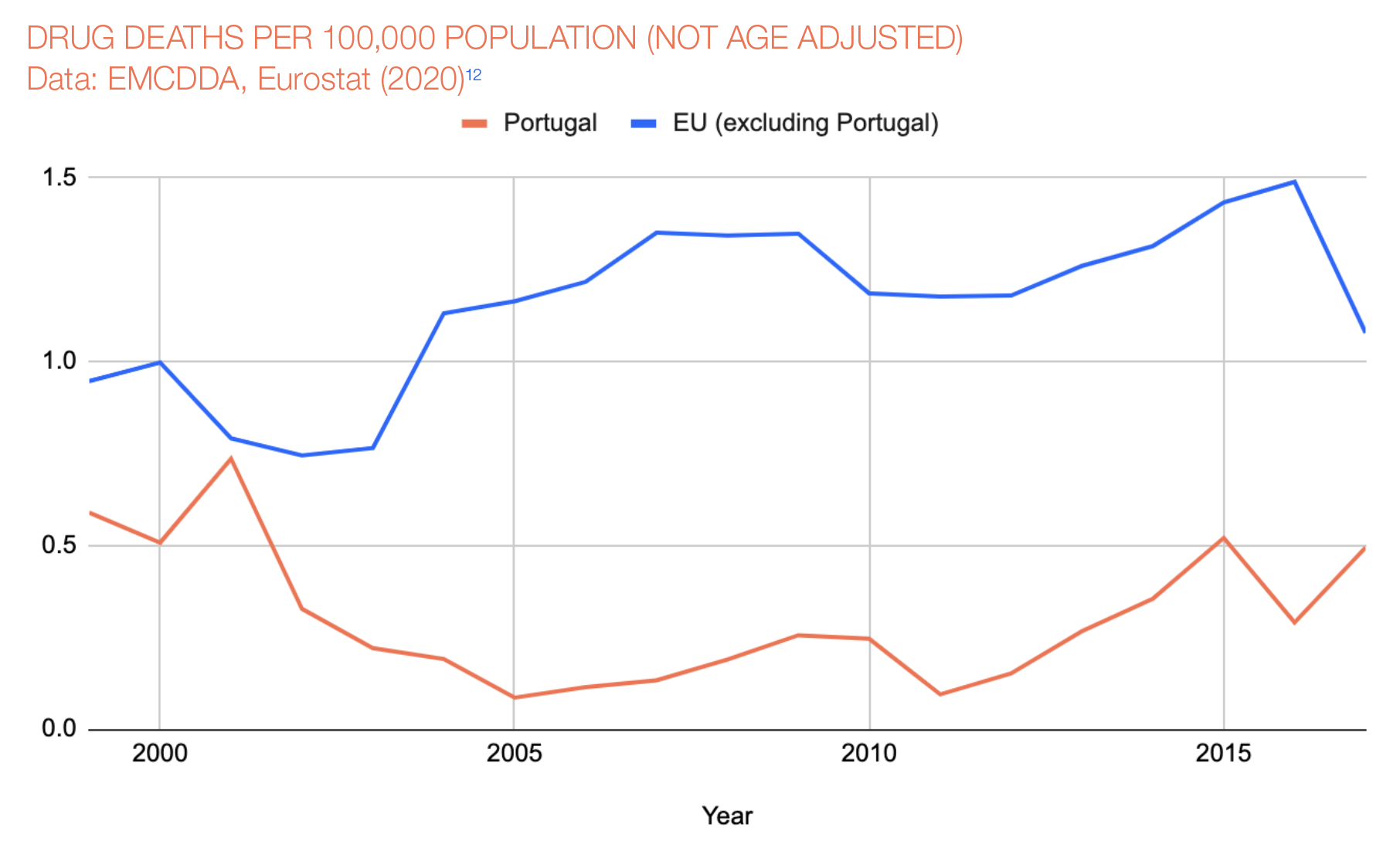
Portugal became the first country to decriminalize all drugs in 2001. Overdoses and disease transmission fell, inspiring similar approaches in Frankfurt, Amsterdam, and Zurich, where the police enforced “zero tolerance” against open-air drug scenes with the goal of moving drug use off the streets and indoors. 

“When you decriminalize drug possession, that doesn’t mean that you’re decriminalizing drug use on the streets. It doesn’t mean that you are decriminalizing disorderly behavior on the street. Those things need to go hand in hand. That’s what the European approach taught us,” says Nadelmann. “That sort of pragmatism is really what we need in the U.S.” 

Portugal’s drug czar explained to a Vancouver journalist that “decriminalization is not a silver bullet. If you decriminalize and do nothing else, things will get worse.” 

A robust treatment infrastructure and protection of public spaces made Portugal’s decriminalization sustainable. When the country decriminalized drugs, police stepped up enforcement as the policy took effect. The authorities in Lisbon dismantled shanty towns, relocated their inhabitants, and broke up an open-air drug scene known as “the supermarket of drugs.” As Zurich decriminalized, authorities took a “zero tolerance” approach towards large public gatherings of drug users, which they described as “destructive to co-existence.”

In Portland, by contrast, decriminalization coincided with the defund the police movement and a 6 percent budget reduction for the Portland Police Bureau. 

“When [the Europeans] did decriminalization, it came with a policing policy that said, ‘We’re not gonna tolerate this stuff in our parks and our streets,'” says Nadelmann. “There’s no way you can have a progressive drug policy and a decriminalization policy without taking care of that issue. The Europeans were very clear about that.”

But as decriminalization took effect in Portland, the city effectively paused street camping removals because of COVID-19, exacerbating a decades-long unsheltered homelessness problem.

Mark Stell owns a Portland coffee shop and distillery located across from a newly opened treatment center. As we talked, campfire smoke wafted into the sky from an encampment adjacent to his property.

“It’s not good for business when you have a cafe or a place where people want to come to relax and you have an unpleasant living situation right close to your building or sometimes in your doorstep,” says Stell. “You have people that are afraid to come to work at six in the morning when it’s dark out, and you have to hire two people versus one….In certain cases, you could be hiring a barista who turns into a social worker. That’s not right.”

Nadelmann says that advocates of drug decriminalization need to take these quality-of-life concerns seriously if there’s ever any hope of improving America’s drug policy after Oregon’s reversal. 

“There’s been a growing awakening on the left that we need to step back and not just pursue whatever the more radical elements of criminal justice reform were calling for, but really do a pragmatic drug policy reform, criminal justice reform policy that addresses the concerns of ordinary citizens not involved in criminal activity who want their streets to look somewhat orderly,” Nadelmann explains. 

But even if Oregon policymakers had managed to closely follow Portugal’s approach, 2021 was still awful timing for reasons outside of their control.

Two years before decriminalization, Portland’s drug market was saturated with the deadly synthetic opioid fentanyl from Mexico after the cartels learned to mass produce it. The fentanyl wave hit neighboring states just as hard and at roughly the same time.

The fentanyl epidemic caused a surge in overdose deaths in Portland starting in 2016. Overdoses soared in 2019, two years before decriminalization was implemented.

Only full commercial legalization could stop the fentanyl crisis because it would allow users to buy the drugs they’re seeking from reputable manufacturers, as has happened with cannabis, instead of a black market dominated by cartels selling extremely potent and deadly fentanyl. 

Of course, fully legalized heroin probably isn’t coming soon to Oregon or any other state after the rollback of decriminalization.

“The tragedy [of Oregon] is that [decriminalization] itself retains its validity, as we know from looking around the world,” says Nadelmann. “If Oregon had succeeded, we might have seen Washington state and California and some Northeastern states and some more and more blue cities in the red states beginning to do more on this front.”

Though major legislative changes to drug laws are likely dead on arrival for the foreseeable future, several cities, including Portland, are implementing some best practices anyway.

“What we may see is a growing embrace of pragmatic strategies based upon the principle of decriminalization without the laws actually changing,” says Nadelmann. 

I witnessed this shift in Portland firsthand, where even though the law changed, a version of decriminalization seems to be happening anyway.

Janie Gullickson oversees a new collaborative program for outreach workers, police, and emergency responders based on the Portugal model, which the city has been able to pilot even though, officially, the state reversed decriminalization.

“Essentially what happens is law enforcement just calls a dedicated cell line that we have and [outreach workers] go out,” says Gullickson. 

One outreach team that Reason shadowed was responding to a complaint about a man camped outside a local business. The team offered to escort him to a nearby shelter and begin the process of setting him up in a tiny home.

Rico Meija, an outreach coordinator, once lived on these streets himself. “I’ve been in every doorway, every bus stop,” says Meija. “A lot of people said I was beyond help, right? And I had one person that believed in me and helped me get into treatment, get in the housing and employment. I asked that one person, ‘Why are you helping me when no one else would?’ He said, ‘I believe one day you’ll be able to help.'”

Arnold, despite believing decriminalization to be an outright failure, sees this program that has developed in its aftermath as a positive development.

“The nice thing about it is, even though I might have to arrest somebody, there’s two other people next to them who clearly have addiction problems, who need some sort of intervention,” says Arnold. “And I can say, you know, you guys thought about [getting help]? Have you tried treatment?”

What Portland today illustrates is that what may be more important than officially decriminalizing drugs is a shift in perspective: If drug abuse is to be treated like a public health problem, then the public health system must be up to the challenge of providing treatment. To this end, the city is trying a new approach called “deflection.” Instead of booking a drug user who isn’t committing any other major crime, police are supposed to “deflect” the person to a treatment center.  

But Portland is still struggling to match Portugal’s success. Reason visited a deflection center while it was open for business. Nobody was there.

“Our numbers have been low because the criteria is only for possession charge,” says Anthony Jordan, who oversees the program for Multnomah County. 

It’s a $21 million program that has successfully served just a couple hundred people to date. One problem is that if a drug user has committed any other violation, such as trespassing, they’re disqualified from coming here.

To officially complete a deflection in Portland, all that a user must do is sober up in the center and take a meeting with a social worker before leaving. Arnold says that after he drops people off at a deflection center, he expects to see them back on the streets a day or so later.

“I basically drive them across the river here, ten blocks, and drop them off. And they can walk out of there,” says Arnold.

Are the deflection centers failing because they’re all carrot and no stick? Would forcing drug addicts into treatment under threat of punishment solve the problem?

Tony Vezina runs a Portland treatment center that accepts “deflected” drug users and says sometimes the threat of punishment is necessary.

“How do we best motivate people to get into treatment? Sometimes that is the criminal justice system,” says Vezina. “It’s not humane to take somebody addicted to drugs and lock them in a prison cell forever, my belief. I also don’t believe it’s humane to sit and watch somebody addicted to drugs live outside in the streets and freeze to death and say, ‘Well, that’s their choice.'”

Fernando Pena, another treatment specialist in Portland, says the government should help get those with substance use disorder off the street, but it has no right to regulate what people ingest.

“If you are in my backyard trying to break into my house, you should definitely get in trouble for that,” says Pena. “But bodily autonomy should be respected. The person should be able to ingest to whatever they would like with no consequence.”

What lessons can Portugal teach here? Portugal’s system can punish drug users for refusing treatment, but it’s rare in practice. Most who appear before the drug panel get off with a warning. Those deemed to have an addiction are referred for treatment. And a small subset of those refuse and face fines or other sanctions. 

“[The drug user] will be interviewed, ‘Like, what’s the issue? Why are you using? What’s the problem?’ And then it would be like, it sounds like you’re ready to get a job, but you just can’t find one. Let’s see if we can help you with that,” says Nadelmann. I see you’ve got these abscesses on your arm. Can I make an appointment for you with a doctor? They’ll go, ‘Oh yeah, I’ll go to see a doctor for the abscess’… and that becomes a vehicle for them beginning to take care of themselves. If it’s somebody who’s got an issue with housing, you know, and well, maybe we can help you with that, right? It’s just the little ways of helping people kind of stabilize their lives.”

Gullickson, who struggled with a 22-year meth addiction before entering a treatment program in prison, says that if someone had intervened in the way that Nadelman describes, it would have saved her years of bouncing in and out of jail.

“At the point where I started getting arrested, did that encourage me to change? No,” says Gullickson. “It was not charges or the criminal justice system…it was the lack of access to treatment, the lack of knowledge about treatment.”

Portland isn’t waiting for any changes to state drug laws to try its own sort of decriminalization. But to better emulate Portugal, it needs to establish a clearer pathway off the streets and into shelter. 

The circumstances that undermined the state’s brief experiment with decriminalization have shifted in the city’s favor. The fentanyl crisis is abating nationwide, overdoses and drug-related emergency calls are down, crime is falling, and the city’s population just ticked back up. Portland can do more to clean up its public spaces and expand treatment, which would help to dispel the notion that decriminalization makes cities unlivable.

The stakes are enormous. The half-century-long war on drugs has destroyed millions of lives. The lesson from Oregon and Portugal is that decriminalization can work, but only if you keep your city livable and safe for drug users and non-drug users alike.


Photo Credits: Alex Milan Tracy/Sipa USA/Newscom; John Marshall Mantel/ZUMAPRESS/Newscom; Danita Delimont Photography/Newscom; DPST/Newscom; Steve Eberhardt/ZUMA Press/Newscom; Jason Ryan/ZUMA Press/Newscom; Jerry Holt/TNS/Newscom; Brooklynn Kascel/Polaris/Newscom; Carlos Gonzalez/TNS/Newscom; Chris Juhn/ZUMA Press/Newscom; Sait Serkan Gurbuz/ZUMA Press/Newscom; JOHN ANGELILLO/UPI/Newscom; Stanton Sharpe/ZUMA Press/Newscom; John Rudoff/Sipa USA/Newscom; Leslie Spurlock/ZUMA Press/Newscom; Imagespace/ZUMA Press/Newscom; Mark McKenna/ZUMA Press/Newscom; Michael Nigro/ZUMA Press/Newscom; John Lamparsk/ZUMA Press/Newscom; Stephanie Keith/ZUMA Press/Newscom; Tobias Nolan/ZUMA Press/Newscom; Robin Utrecht/ANP/Newscom; imageBROKER/Gerd Michael M�ller/Newscom; Bernd von Jutrczenka/dpa/picture-alliance/Newscom; Philipp von Ditfurth/dpa/picture-alliance/Newscom; Katharine Kimball/ZUMAPRESS/Newscom; Frank Fell/robertharding/robertharding/Newscom; Luis Boza/ZUMAPRESS/Newscom; ASSOCIATED PRESS; Michael Nigro/Pacific Press/Newscom; Erik McGregor/Sipa USA/Newscom; Krista Kennell/ZUMA Press/Newscom; Eugene PD/MEGA / Newscom/GWGLA/Newscom; Polaris/Newscom; Drug Enforcement Administration/TNS/Newscom; Drug Enforcement Administration; JOHN ANGELILLO/UPI/Newscom; Justin Katigbak/Sipa USA/Newscom  


Music Credits: “Life Must Have It’s Mysteries” by Or Chausha via Artlist; “Dark Apoko” by Oren Alaloof via Artlist; “Velo” by Crazy Paris via Artlist; “Life of a Cube” by Max H via Artlist; “Lost and Found” by Theatre of Delays via Artlist; “Crystal Gaze” by Theatre of Delays via Artlist; “A Light in the Dark” by Raz Burg via Artlist; “Monochrome” by Theatre of Delays via Artlist; “Cosmos” by Theatre of Delays via Artlist; “Plastic Breath” by Tamuz Dekel via Artlist; “Machina” by Jameson Nathan Jones via Artlist; “Back to Silence” by Raz Burg via Artlist; “Exhalation” by Second Light via Artlist; “Crystal Clear” by Tiko Tiko via Artlist; “Naos” by Yotam Agam via Artlist; “The Shoulder Tap” by Tamuz Dekel via Artlist; “Dark Mysteries” by Nick Kelly via Artlist; “Aluminum” by Roie Shpigler via Artlist; “All of My Heart” by Bradbury Lane via Artlist; “The Siren” by Lia D’sau, Tom Meira Armony via Artlist; “See You Soon” by Bortex via Artlist; “Don’t Waste This Touch” by Harbor Fate via Artlist; “Spiral” by Alon Peretz via Artlist; “Desolate” by Zac Nelson; “Inner Soul” by ARYEH via Artlist


Protest Videos: Brendan Gutenschwager & Sergio Olmos

The post How Oregon's Drug Experiment Backfired appeared first on Reason.com.

from Latest – Reason.com https://ift.tt/FQkhoc9
via IFTTT

Can We Please Stop Romanticizing Pre-Smartphone Life?

Of course there are some downsides to smartphones. I’m not denying that. But all too often, critics of phones—or of any new technology—have a tendency to romanticize the past in an attempt to make our tech-enabled present look worse.

Case in point: this recent piece by Paul Greenberg in TIME magazine, which commemorates the release of Apple’s iPhone 17 by asking, “Do We Really Need Another iPhone?” Greenberg opens with an extended anecdote: He is 19 years old, stuck in Luxembourg unexpectedly, and starts chatting with another teenager at a youth hostel. They decide to go off in search of a discotheque, and wind up wandering all around the city. They never find a dance club, but they chat with a lot of strangers, get to know each other, and wind up having a nice dinner together. “We don’t become fast friends for life,” writes Greenberg. “But what we’ve accidentally found is meaningful.”

Greenberg imagines that, today, the new friend and him would simply have looked up “disco in Luxembourg. We would have evaluated the merits of this disco or that one relative to our location in the city. Perhaps we would have disagreed on which disco we found preferable and parted ways in favor of our respective choices. Whatever the case, the silly dinner afterwards would never have taken place, and my Canadian friend would have remained a stranger.”

He concludes that “the smartphone has destroyed our impetus to wander, get lost, and find ourselves.” In this age, “no longer does one simply roll the dice and go. Instead one chooses a destination and walks toward it. Along the way the route is commodified. Restaurants suggested instead of found. Parks digitally delineated instead of outlined by the contours of our promenades.” Books searched for instead of ambled upon.

OK, but here’s the thing: You can still wander, even with an iPhone. No one is stopping you. Traveling in a faraway place, or simply visiting a new area of your hometown, you can still keep your phone in your purse or pocket and stroll the streets, peeking in bakery windows, perusing bookshops you randomly discover, and stopping at a restaurant not because you’ve checked its Yelp reviews but just because you like its vibes.

I wander like this a lot when I travel. It’s lovely in the right circumstances.

But sometimes you’re in a bit of a time crunch. Sometimes you’re traveling with hangry toddlers and need to find a kid-friendly restaurant, stat. Sometimes you’re in a rural or suburban area where leisurely strolling for lunch options isn’t an option. Sometimes you or a companion have dietary restrictions and would like to make sure a restaurant has food you can eat before you go there. In these situations, pulling out a map app to view your options and looking up menus on restaurant websites is a blessing.

Sometimes stepping into little boutique stores on a whim is exactly what you want on vacation. Sometimes it’s 9 p.m. and your kid has a fever and you just need to quickly find the closest drugstore that’s still open.

The fact that we can quickly find and evaluate places from our phones has made our lives immeasurably easier and better. I am as grateful that we have this technology as I am not beholden to it. Just because I have the option to use my phone to skip the wandering doesn’t mean I always need to or will.

Of course, Greenberg seems concerned not so much with preserving his own wanderlust but with the idea that other people are relying on their phones too much. And surely some are. Some would be happier wandering more but have gotten in the habit of simply consulting Google Maps. But surely some simply have different values and preferences than Greenberg or I do.

Not everyone has the disposition or inclination to strike up conversations with strangers. Not everyone enjoys a leisurely and loose romp around a new location. Some people feel unmoored and anxious when they don’t have a concrete plan.

And this was the case before iPhones existed, too. For every couple strolling hand-in-hand through Paris with no particular destination, there was another who booked a structured tour of the city. For every solo traveler who made a new friend, there was one who stuck her nose in a book. For every 19-year-old tromping through Luxembourg in search of a discotheque, there was a middle-age man asking the hotel concierge for recommendations.

That brings us to another funny thing about Greenberg’s rant. Might part of what he’s nostalgic for just be novelty and youth?

The journalist Jane Coaston has a theory that a lot of people’s nostalgia for earlier eras is actually just yearning for a time when they were younger and less burdened. It’s not really that they miss the 1990s, per se, it’s just that they miss the lazy freedom of childhood or the ignorance of current affairs and tragedy that comes with it. It’s not really that the 1970s were some sort of golden era but that they have fond memories of high school antics, or miss the sense of endless possibility they felt at age 22.

Greenberg’s Luxembourg anecdote—the main plot point against which he disfavorably positions today’s phone-fueled ways—seems to me more like a prime example of the differences between traveling at age 19 versus at an older age. The youth hostel. The lack of a spouse or kids. The lack of work responsibilities. These were all as necessary for his adventure as his inability to consult a smartphone.

Surely, there are still 19-year-olds chatting it up in youth hostels and embarking on outings together. And if they do pull out a phone to find that discotheque instead of searching all afternoon in vain, who’s to say that their experience will be any less “meaningful”?

Greenberg imagines that, in the presence of smartphones, he and the acquaintance would have disagreed on discos and set off for different locations. But the fact that they were sympatico certainly doesn’t turn on the phone’s absence. Another new acquaintance may have just as easily gotten frustrated with the wandering after a while and called it a night. New acquaintances today may just as easily look up a place and decide to go there together. The club could be a dud, despite good reviews, and propel them to go get pizza together across the street.

Or they might have a blast at the dance club, meet more new people there, and embark with them to a magical afterparty. A few decades later, when they look back fondly on that night, perhaps they’ll see their phone and the information it provided as an essential component in helping them create such a meaningful memory.


Exoticizing Gen Z

Romanticizing is only one component of the toxic nostalgia playbook. Exoticizing, pathologizing, and projecting also tend to be afoot.

Take, for instance, this piece in The Atlantic on Gen Z courtship habits. It’s part of a larger trend of pieces designed to portray everything about the rising generation as new, exotic, and probably alarming.

“Gen Z has abandoned the old dating script,” it says. But the “old script” being offered here involves…a Meatloaf song and the concept of getting to sexual “bases”? That’s not exactly a paradigm of traditional courtship or something to mourn the loss of.

Meanwhile, the “new” Gen Z dating paradigm that writer Molly Langmuir conjures up sounds a lot like the paradigm prevalent for at least the last three decades, just dressed up in new slang terms:

In my reporting, including in conversations with about a dozen Zoomers across the country, I learned about the terms sneaky links (people you hook up with in secret), zombies (people who come back after ghosting you), and simps (guys, usually, who try too hard to get a partner). Zoomers spoke of the dangers of “catching feelings” and the imperative to keep liaisons chill at all costs, or “nonchalant,” as they put it. They discussed the numerous expressions that have arisen to describe the work that goes into maintaining simultaneous relationships, such as breadcrumbing (offering little bits of attention to keep someone interested) and cushioning (flirtations you keep on the side). I learned about so many different types of casual entanglements—not just the “talking stage” and situationships, but also flirtationships, explorationships, and the scenario that I struggled most to understand: a situationship that is exclusive but between two people who would not, under any circumstance, describe themselves as dating.

None of these things are new, even if the teens and twenty-somethings of my millennial youth would have used different terms.

Langmuir goes on:

My exchanges with Zoomers—as well as with sex educators, psychologists, researchers, and parents—made clear that anything so simple as the base system had essentially become moot. Few of those I spoke with described a typical order to the way physical intimacy or relationships evolve.

“From what I know about previous generations, in past times, you could just ask a girl to be your girlfriend, and she’d say yes or no, and that was it,” Miles Greene, an 18-year-old student at a liberal-arts college in Massachusetts whose mom I’ve known for years, told me in a tone of voice that I might use to discuss the baffling customs of the Pilgrims. “It’s so much more complicated than that now.”

To use the slang of my youth, lol—what? Speaking as an elder millennial, I can tell kids today that, no, it was not that simple in the 1990s or 2000s. I suspect at least several generations before me would say the same.

This is a perfect example of people’s tendency to romanticize the past in an effort to pathologize the present. But Gen Z’s relationships are only exotic and unhealthy when you pit them against an idealized and unrealistic version of relationships past.

Langmuir’s piece winds up coming to the seemingly obvious conclusion that Gen Z is made up of all sorts of different people who want and seek different things from relationships:

From some of the Zoomers I spoke with, I heard that they and their peers tend to eschew even the most flexible relationship labels…. But a number of other young people told me that they and others they know were in clearly defined relationships. And some intentionally seek out conventional labels.

Almost as if…they’re just like any other generational cohort before them. Crazy!


Do You Feel Like Slop?

At least Langmuir seems to have talked to members of Gen Z before trying to explain their dating habits. In a new piece on Jonathan Haidt’s Substack—provactively titled “We Are the Slop”—writer Freya India simply projects a sick psychology onto everyone around her.

“We have become the meaningless content, swiped past and scrolled through,” writes India. “Experiences, relationships, even our own children, are cheapened, packaged, churned out for others to consume. For some of us growing older has become a series of episodes to release: first the proposal, then the wedding, followed by house tours, pregnancy reveals, every milestone and update, on and on, forever. We exist to entertain each other.”

That’s certainly one way to look at it.

People who share pictures of their families, life milestones, and other activities on social media may also be driven by something much healthier: joy, and a desire for people to share in it. A wish for those they know and love to be a part of their lives, even when they are far away. A healthy impulse to document both major and minor life moments that seem special so you can look back on them fondly.

Were our grandparents’ experiences cheapened by showing slides from their vacations to their neighbors? Were our parents’ relationships with us cheapened by keeping books of babies photos displayed on the coffee table for anyone visiting to look through?

Sure, social media photos may be shared more widely, depending on how large your social networks are. But the underlying activity and impulse doesn’t seem all that different. And it feels downright disturbed to me to look at people happily sharing their engagements, pregnancies, new homes, etc., and think “ugh, look at them churning out content for me to consume.”

(I must also point out that people have been sharing intimate details and moments from their lives on the internet for more than two decades now and, arguably, are more thoughtful about what they put online now than they were when, say, Facebook first got big.)

India goes on to criticize “influencers” who really do use their lives as fodder for entertainment and commerce. The way you view that concept is probably dependent on a lot of other values, and I’m not here to argue for it being good or bad. But I do take issue with India’s assertion that “the worst part is that these influencers think their views go up because people care, because they finally matter, forgetting they have declared themselves entertainment.”

Again, pure projection. And an infantilizing assumption that influencers—who skew heavily toward women—are too dumb or naive to know what they’re doing, when the truth is that actually becoming big by branding your own life requires a lot of skill, savvy, and intentionality.

“How long would these couples last without the cameras? How would these families feel if the internet shut down, if they had to compliment and compromise and sacrifice without the validation of strangers? Would they know how? Without comments and clapping emojis? Can they live without it anymore — adulthood without applause?” asks India.

Where’s a good eyeroll emoji when you need it?

Like Greenberg, India cloaks her anti-tech rant in concern for those she imagines are harmed. But her basis for concern here is just that: her imagination. She has melodramatically conjured a scenario in which folks who share their lives online are all secretly dysfunctional and empty in order to support her thesis that we’re all “slop.”

I don’t know about you, but I don’t feel like “slop” when I proudly post photos of my kids because, like most sappy parents, I just think they’re so cute that I want my family and friends to see them. I don’t feel like I’m viewing slop when I see pictures of my cousin’s daughter at her dance competition, my best friend’s son starting high school, a long lost work friend’s wedding, or an old theater classmate’s latest work. I’m happy to have glimpses into the lives and little moments of people I care about deeply, and to see milestones from those I’ve lost touch with but about whom I still feel fondly.

If you look at the same things and only see “slop” that you imagine others are deceptively “churning” out for your entertainment while they lead lives of quiet desperation…I think that problem just may be on you.


More Sex & Tech News

• AI may be ruining Pinterest, which was built on not just the sharing of pretty images but also their attainability. From embedded:

“Where’s the bedframe from?” the Pinterest comments ask. “Where’s the quilt from?” “Does anyone know the brand that made the coffee table?”

It’s not that the table or quilt is expensive or hard to source, as these things often are when a celebrity posts a house tour. It’s that there aren’t any answers at all. These things don’t exist.

• A South Carolina bill that would use racketeering laws to go after abortion providers is getting a hearing before the state’s Medical Affairs Subcommittee today.

The American Conservative criticizes conservatives calling for internet speech restrictions in response to Charlie Kirk’s murder. “If Americans wish to avoid the dark path that Great Britain has found itself on, we must oppose actions that could lead to censorship, including reforms to Section 230,” writes Mason Letteau Stallings.

Today’s Image

My very first Facebook profile photo (ENB)

The post Can We Please Stop Romanticizing Pre-Smartphone Life? appeared first on Reason.com.

from Latest – Reason.com https://ift.tt/xLjuKCP
via IFTTT

Louisiana Issues Arrest Warrant For California Doctor Who Mailed Abortion Pills

Louisiana Issues Arrest Warrant For California Doctor Who Mailed Abortion Pills

Authored by Jill McLaughlin via The Epoch Times (emphasis ours),

Louisiana has issued a criminal arrest warrant for a California doctor suspected of mailing abortion pills to a patient in the state, in violation of state law, officials confirmed Sept. 29.

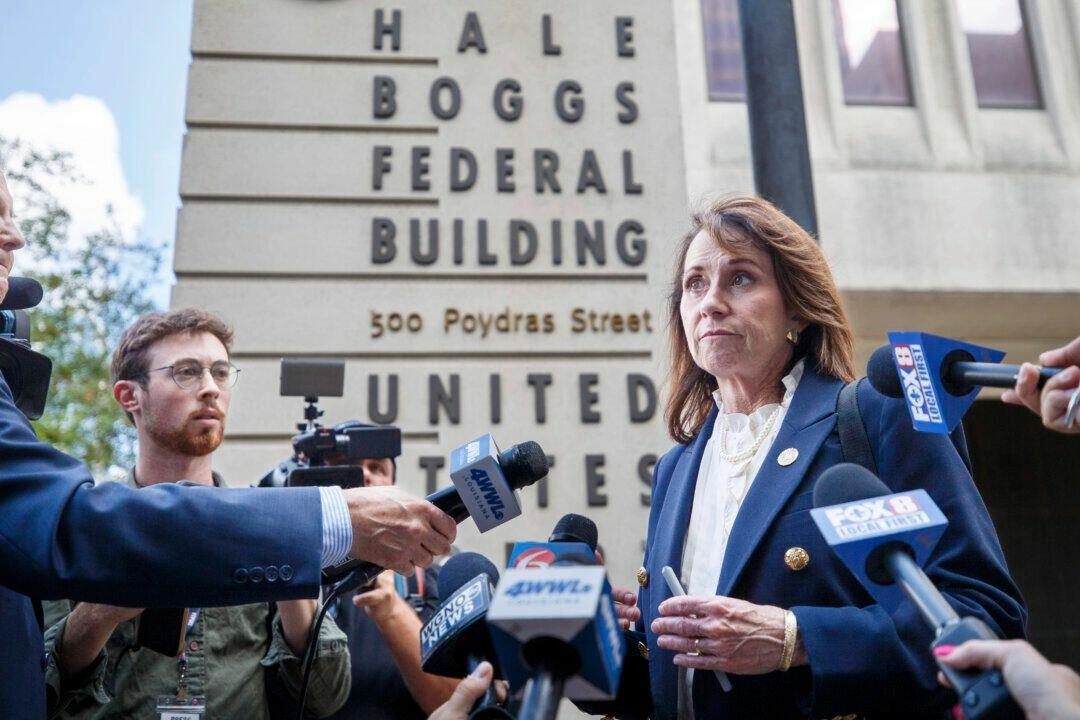
Louisiana Attorney General Liz Murrill talks with the media in front of the Hale Boggs Federal Building in New Orleans on May 19, 2025. David Grunfeld/The Times-Picayune/The New Orleans Advocate via AP, File

The state filed the arrest warrant on Sept. 19 for Dr. Remy Coeytaux, a Northern California physician, accused of violating the state’s abortion ban two years ago by providing abortion pills to a Louisiana woman.

The Louisiana arrest warrant came to light just days before California enacted new laws on Sept. 26, making the practice legal and shielding medical professionals and their attorneys from “adverse legal action.”

Louisiana Attorney General Liz Murrill issued a statement on social media on Sept. 29 vowing to hold people accountable for distributing the pills in the state.

“On multiple occasions, I have raised concerns about the unlawful distribution of these pills in our State and the harm that it does to women,” Murrill stated.

“It’s dangerous, irresponsible, unethical, and illegal to distribute these pills to strangers in violation of the criminal laws of our State, without any relationship whatsoever to the individual who may ultimately be consuming them.”

Murrill added she would enforce and defend the state laws, including suing the governors whose shield laws claim to protect doctors and other medical professionals from criminal conduct in Louisiana.

The Louisiana patient, Rosalie Markezich, said her boyfriend used her email address to order drugs from Coeytaux in 2023 and gave her $150 to send to the out-of-state doctor. The patient said she had no other contact with the doctor, according to court filings.

Markezich said she didn’t want to take the abortion pills but felt forced into it. She also said “the trauma of my chemical abortion still haunts me” and that it would have never happened if telehealth prescriptions for the drug were prohibited, according to court documents.

Markezich and Murrill have also requested to join a lawsuit that seeks to order drug regulators to bar telehealth prescriptions to mifepristone, one of two drugs taken in combination to induce abortions.

The California doctor at the center of the Louisiana case, Coeytaux, has a medical degree from Stanford University and has been practicing and teaching medicine for nearly 30 years, according to his website. Coeytaux is a solo practitioner who has no employees.

Coeytaux did not immediately return a request for comment.

The case is the latest chapter in the abortion rights issue following the Supreme Court’s decision to overturn the landmark Roe v. Wade decision, sending the issue back to states in 2022. The Dobbs ruling has prompted new abortion laws in states.

Newsom Shields Abortion Providers

California Gov. Gavin Newsom signed a new state law on Sept. 29 to shield health care providers, pharmacists, clinics, and hospitals from penalties for prescribing or dispensing mifepristone.

It also allows a pharmacist to dispense the drugs without including the patient’s name, the prescriber’s name, or the pharmacy’s name and address on the label.

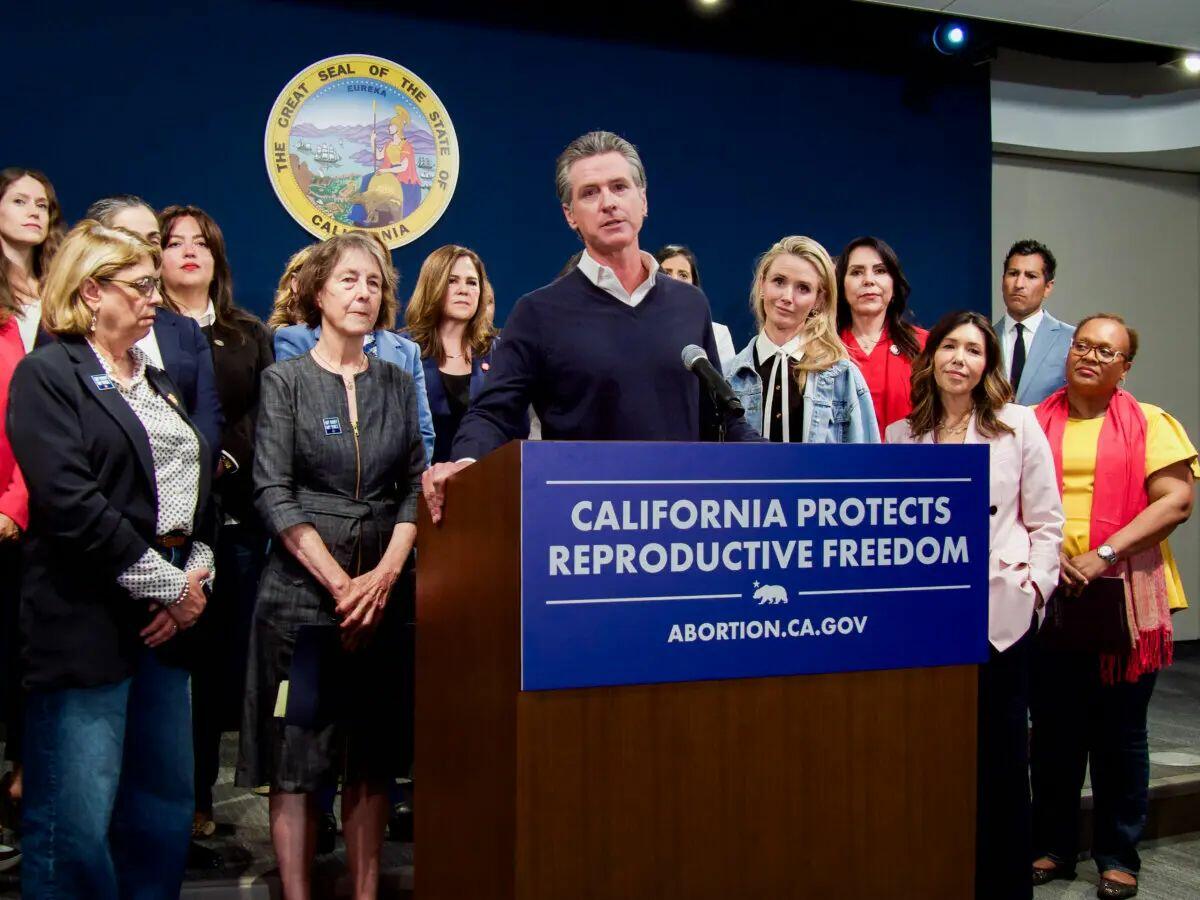
California Gov. Gavin Newsom speaks in support of Senate Bill 233, which would allow Arizona doctors to perform abortions in California, during a press conference at the Capitol in Sacramento, Calif., on April 24, 2024. Newsom signed another abortion-related bill into law on Sept. 29, 2025, authorizing doctors to prescribe abortion drugs through virtual appointments and mail the pills out of state. Travis Gillmore/The Epoch Times

Assembly Bill 260 also authorizes doctors to prescribe abortion drugs through virtual appointments and mail the pills out of state. The bill passed the Legislature on Sept. 10.

Newsom’s office did not immediately respond to Louisiana’s arrest warrant or to Murrill’s statements.

In an earlier press release, Newsom said he was proud to sign the bills.

California stands for a woman’s right to choose,” Newsom said in a statement. “I’m proud to sign these bills to protect access to essential health care and shield patients and health care providers in the face of amplified attacks on the fundamental right to reproductive freedom.”

Newsom also signed Assembly Bill 1525, which helps shield attorneys from State Bar discipline for assisting other states with access to abortion services.

The Associated Press contributed to this report.

Tyler Durden
Wed, 10/01/2025 – 10:00

via ZeroHedge News https://ift.tt/OHrF7Bs Tyler Durden

The Shutdown Is Upon Us: How Long, What’s Impacted, And What’s Next?

The Shutdown Is Upon Us: How Long, What’s Impacted, And What’s Next?

The federal government officially shut down at 12:01 a.m. this morning, the first lapse in funding since 2019.

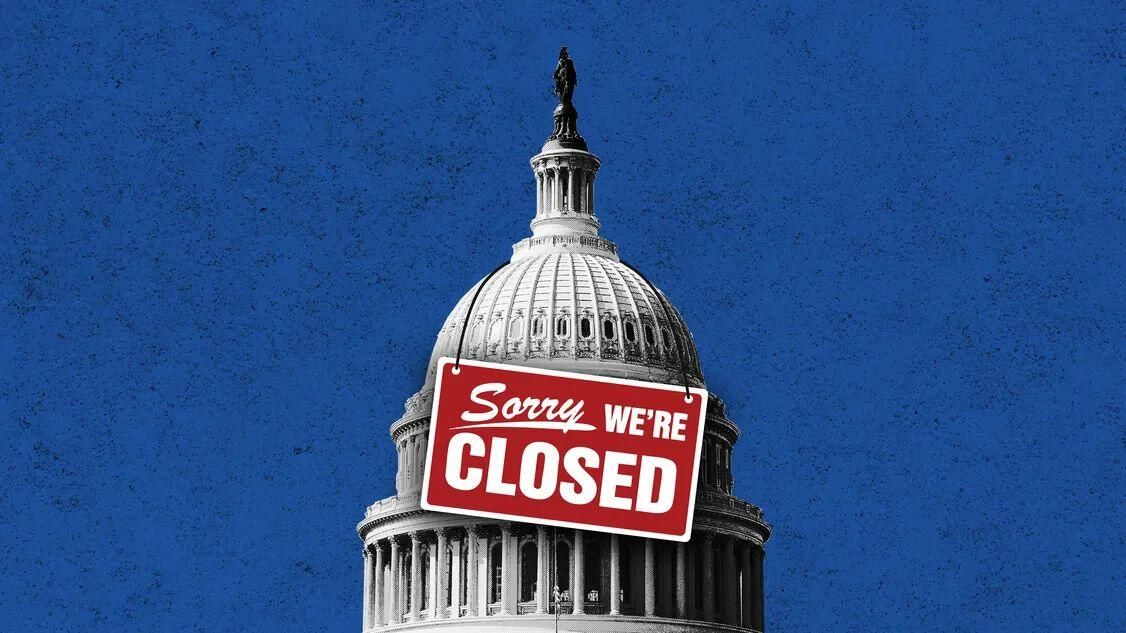
Illustration by Janet Loehrke, USA Today / Getty Images

Roughly 750,000 federal workers are furloughed without pay, with “essential” employees forced to keep working – for now, without a paycheck. Active-duty military service members could soon see missed salaries if the impasse drags on, raising real-world stakes far beyond Capitol Hill.

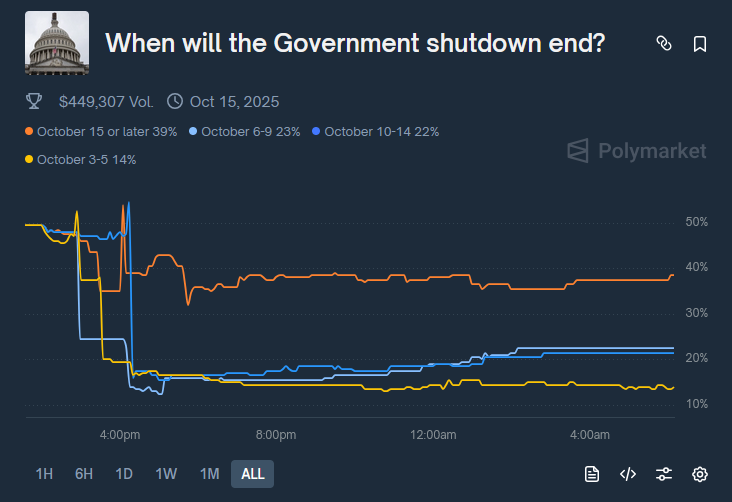
How long will it last? According to Polymarket, most people think it will last two or more weeks

History suggests shutdowns rarely succeed. Republicans’ 2013 gambit to undo Obamacare collapsed. Democrats’ 2018 standoff over DACA died out. Even the drawn-out 2018-2019 shutdown under President Trump produced little more than frustration and missed paychecks.

This time is no different. Lawmakers failed to agree on competing stopgap bills: Republicans pushed a “clean” continuing resolution into November, while Democrats tied funding to extending Obamacare subsidies and blocking cuts to Medicaid (illegals included). Both measures failed in the Senate Tuesday, leaving the government shuttered.

Democrats Spitting Mad

Senate Democrats rejected a Republican stopgap measure to fund the government at current levels through Nov. 21, insisting on an extension of enhanced Affordable Care Act subsidies (illegals and all) – and limits on the administration’s practice of withholding federal funds.

They’re in charge. They have to convene a negotiation. They haven’t done that,” Sen. Chris Murphy (D-CT) said Tuesday. “The fact that they aren’t even here in the House of Representatives is proof that they’re not serious about it.”

Trump has to actually be willing to negotiate and make a deal,” echoed Rep. James Walkinshaw (D-VA). “He wrote a book about making deals. He played a character on a TV show who taught people how to make deals. And he hasn’t really done that as president, but this is his opportunity to do that.”

Republicans counter that Democrats are holding the government hostage. “We’re not going to discuss and negotiate it while they’re holding the hostage of the federal government,” Senate Majority Leader John Thune (R-SD) said Tuesday morning on CNBC. “Release the hostage, and we will have that conversation about how we can keep these exchanges up and going.”

Red Wedding Time?

Meanwhile, President Trump and OMB Director Russ Vought are openly threatening to use the shutdown as a vehicle for sweeping government changes – from layoffs to budget cuts that would never pass Congress otherwise. “A lot of good can come from shutdowns,” Trump mused Tuesday.

Democrats call this intimidation. But if Trump follows through, the pressure on Senate moderates could mount quickly. Already, three Democrats – Sens. Catherine Cortez Masto, Angus King, and John Fetterman – have defected to back the GOP’s funding measure.

Senate Majority Leader Chuck Schumer has so far held his caucus together, but defections hint at deeper vulnerabilities. Thune is betting that the longer the shutdown drags on, the more centrist Democrats will peel away. He needs at least eight crossovers to reach 60 votes.

At a press conference Tuesday night, Schumer avoided drawing a hard line, pledging only to “fight as hard as we can for [Americans’] health care” – a softer stance than promising to hold out indefinitely.

Shutdown Impacts Across Government

  • Federal workforce: Millions furloughed or working unpaid; food inspectors and park rangers affected. Contractors unlikely to get back pay.

  • National parks & travel: Parks technically open but mostly unstaffed; law enforcement and fire suppression remain; FAA and TSA deemed essential but unpaid.

  • Student loans & education: Loan bills, Pell Grants, and FAFSA processing continue.

  • Defense & military: Over a million troops working without pay; new contracts halted; elective care at military facilities postponed; overseas operations continue.

  • Taxes: IRS funded short-term with special reserves; nearly all employees reporting for now.

  • Health care: Medicare and Medicaid payments flow, but HHS, NIH, and CDC furlough large portions of staff; biomedical research and prevention programs curtailed; FDA maintains recalls but scales back inspections.

  • Veterans Affairs: Benefits and medical appointments continue; hotlines, regional offices, and counseling programs suspended.

  • Energy & environment: Drilling and mining permitting continues; EPA enforcement inspections largely paused.

  • Food safety & nutrition: USDA meat inspectors on duty but unpaid; FDA inspections slowed; WIC nutrition program may run out of funds within days.

  • Financial regulation: SEC and CFTC reduced to skeleton crews; rulemaking and most enforcement work halted.

  • Tech regulation: FTC litigation and consumer complaint center suspended.

  • Cyber defense: DHS’s CISA furloughing two-thirds of staff; only critical cybersecurity operations remain active.

We go into greater detail on this here

The Public’s Patience Wears Thin

Beyond Washington, Americans are already feeling the sting: national parks shuttered, Social Security and Medicare services slowed, permits delayed, phones at federal agencies left unanswered. The Bureau of Labor Statistics confirmed it will withhold this week’s jobs report – data that could move markets.

Public anger has historically proven one of the most potent forces for ending shutdowns. A downturn in stocks or a wave of constituent backlash could tilt the balance faster than negotiations alone.

The Outlook: Prolonged Standoff

Federal paydays loom next week, with service members scheduled for Oct. 15. Pentagon officials suggest they could redirect funds from the $150 billion “One Big Beautiful Bill Act” pot to cover military salaries — a move that would enrage Democrats.

The most plausible way out would be Trump deciding to strike a deal — but at the moment, that outcome looks remote. Punchbowl News think that means Trump shifting course and endorsing a deal to restore funding. For now, Washington is locked in familiar gridlock – high stakes for families, a test of moderates’ resolve, and the looming risk that the shutdown lasts far longer than anyone expects.

Tyler Durden
Wed, 10/01/2025 – 09:40

via ZeroHedge News https://ift.tt/Xuzb53t Tyler Durden

ICE Arrested a U.S. Citizen—Twice—During Alabama Construction Site Raids. Now He’s Suing.

An Alabama construction worker is challenging the Trump administration’s warrantless construction site raids after he says he was arrested and detained by federal immigration agents—twice—despite being a U.S. citizen with a valid ID in his pocket.

In a federal civil rights lawsuit filed today in the Southern District of Alabama, Leo Garcia Venegas is seeking to stop “dragnet raids” that target Latinos like himself, without any probable cause besides their ethnicity. 

“It feels like there is nothing I can do to stop immigration agents from arresting me whenever they want,” Venegas said in a press release by the Institute for Justice, a public interest law firm that filed the suit on his behalf. “I just want to work in peace. The Constitution protects my ability to do that.”

Venegas and the Institute for Justice argue that Department of Homeland Security (DHS) policies allow immigration agents to illegally raid private construction sites, detain workers without reasonable suspicion, and continue detaining them even after they offer evidence of citizenship or legal status. All of this, they say, violates the Fourth Amendment’s protections against unreasonable searches and seizures.

“Armed and masked federal officers are raiding private construction sites in Alabama, detaining whoever they think looks undocumented, and ignoring proof of citizenship,” Jared McClain, an attorney for the Institute for Justice, said in the press release. “That’s unconstitutional, and this case seeks to bring that practice to an end.”

Venegas was detained twice in May and June during raids on private construction sites where he was working. In both instances, the lawsuit says, masked immigration officers entered the private sites without a warrant and began detaining workers based solely on their apparent ethnicity.

On May 21, Venegas was working on a concrete crew at a construction site in Baldwin County, Alabama, when immigration officers hopped the fence into the site. According to the suit, “The officers ran right past the white and black workers without detaining them and went straight for the Latino workers.”

The officers tackled Venegas’ brother, who was also on the crew, and Venegas began filming the scene on his cell phone. One of the officers then approached Venegas and said, “You’re making this more complicated than you want to.”

Immediately after, the officer grabbed Venegas and began wrestling him to the ground. Another construction worker also took cell phone video of the two brothers’ arrests, which shows the agent struggling with Venegas who repeatedly yells, “I’m a citizen.”

Two other officers joined in to subdue Venegas, telling him to “Get on the fucking ground.”

Watch the Institute Justice’s video on the case, which includes footage of the arrest:

According to the suit, the officers retrieved Venegas’ REAL ID from his pocket, but they called it fake, kept him handcuffed, and detained for more than an hour in the Alabama summer sun, until an officer agreed to run his social security number.

Then on June 12, Venegas was working in a nearly finished house when ICE agents cornered him in a bedroom and ordered him to come with them. Venegas was marched outside to the edge of the subdivision where he was working to have his immigration status checked. According to the lawsuit, two other U.S. citizens had been rounded up with him. Again, officers said his REAL ID could be fake and detained for 20 to 30 minutes before releasing him.

The Institute for Justice says in its lawsuit on Venegas’ behalf that this sort of behavior is “no accident.” It’s explicit DHS policy.

“Under DHS’s challenged policies, immigration officers are authorized to presume that construction workers on private property are undocumented based only on their demographic profile and occupation, and can disregard evidence to the contrary—like Leo’s telling them he’s a citizen and presenting a REAL ID.”

The lawsuit asks the court to block enforcement of the policy and award damages to Venegas, as well as a proposed class of similar plaintiffs, for violations of Fourth Amendment rights.

Venegas is one of many documented cases of U.S. citizens being violently detained and arrested during indiscriminate federal immigration sweeps. The Institute for Justice is also representing George Retes, an Army veteran and U.S. citizen. Retes says he was pepper-sprayed, dragged out of his car and thrown on the ground during a July raid on a legal marijuana company in California. Despite being a citizen, he alleges he was detained by ICE for three days, during which he says he was kept in solitary confinement, not allowed a phone call or lawyer, and never presented before a judge.

On August 20, five U.S. citizens in Southern California filed a lawsuit against the Department of Homeland Security over their arrests by immigration agents. One of the plaintiffs, Cary Lopez Alvarado, was nine months pregnant when ICE and U.S. Border Protection agents arrested and shackled her. She alleges she went into labor prematurely as a result of her wrongful arrest and assault.

Earlier this month, the Supreme Court gave its blessing to just this kind of racial profiling by immigration officers, overturning a ruling by the Ninth Circuit Court of Appeals that found the Trump’s administration was likely violating the Fourth Amendment rights of citizens by seizing them based solely on factors such as “apparent race or ethnicity.” 

Justice Brett Kavanaugh released a concurring opinion in which he waved away concerns that allowing such profiling would lead to citizens and legal residents being unduly harassed.

“As for stops of those individuals who are legally in the country, the questioning in those circumstances is typically brief,” Kavanaugh wrote, “and those individuals may promptly go free after making clear to the immigration officers that they are U. S. citizens or otherwise legally in the United States.”

Whatever world Kavanaugh is describing, it’s not the one that Venegas lives in.

“The raids continue in the neighborhoods,” Venegas says in the Institute for Justice video. “I live in fear every day that when I get to work it will happen again.”

DHS did not immediately respond to a request for comment.

The post ICE Arrested a U.S. Citizen—Twice—During Alabama Construction Site Raids. Now He's Suing. appeared first on Reason.com.

from Latest – Reason.com https://ift.tt/qTfPnoX
via IFTTT