In Minnesota, Anthony Stephen Israelson was found guilty of two misdemeanors for driving a school bus drunk. The case stemmed from a 2024 incident when he drove a school bus containing more than a dozen children, between kindergarten and 10th grade, with a blood alcohol level of 0.161, more than four times the legal limit for commercial drivers. Israelson was sentenced to 364 days in jail on each count, with all but one day suspended. He must also complete two years of supervised probation and will be subject to random drug and alcohol tests.
In Minnesota, Anthony Stephen Israelson was found guilty of two misdemeanors for driving a school bus drunk. The case stemmed from a 2024 incident when he drove a school bus containing more than a dozen children, between kindergarten and 10th grade, with a blood alcohol level of 0.161, more than four times the legal limit for commercial drivers. Israelson was sentenced to 364 days in jail on each count, with all but one day suspended. He must also complete two years of supervised probation and will be subject to random drug and alcohol tests.
China Reopens Fuel Export Spigot, Offering Relief To Asian Buyers
Beijing is reversing its curbs on refined fuel exports after halting shipments in the opening days of the U.S.-Iran conflict. This move suggests that Chinese domestic inventories are now at comfortable levels, allowing state refiners to reopen the export spigot, even as much of Asia remains gripped by a fuel shock caused by disrupted Gulf energy flows through the Hormuz chokepoint.
There was chatter earlier this week that China’s state-owned refiners were applying for government permits to resume fuel exports in May. These include China Petrochemical (Sinopec Group) and China National Petroleum Corporation.
By late in the week, Bloomberg reported that state-owned refiners had received government approval to export 500,000 tons of fuel next month.
People familiar with the upcoming shipments said the one-off quota would allow gasoline, diesel, and jet fuel to be sent to neighboring Asian countries, providing relief amid a worsening fuel crunch.
They said these shipments will be loaded onto tankers and are likely destined for Vietnam, Laos, and other nearby nations.
China’s U-turn on export curbs comes weeks after the International Monetary Fund, World Bank, and International Energy Agency urged countries to avoid panic hoarding of energy supplies, as JPMorgan analysts warned that Asia would face the most immediate impact from the Gulf energy shock.
Trump Threatens To Pull Some US Troops Out Of Germany While Lambasting ‘Ineffective’ Merz
German Chancellor Friedrich Merz has been a bit on the defensive since his earlier in the week swipe at President Trump over launching the war against Iran. The German leader had told students in a talk that the US is being “humiliated” by Iranian leaders. He had also asserted, “If I had known that it would continue like this for five or six weeks and get progressively worse, I would have told him even more emphatically.”
As we covered earlier Thursday, Merz has tried to soften the spat, after Trump responded on Truth Social earlier, “From my perspective, my personal relationship with the US President remains good,” he told reporters. “I simply had doubts from the start about what was begun with the war in Iran. That is why I have made that clear.”
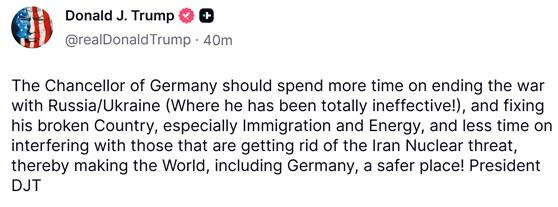
But that hasn’t quieted Trump, who again hit back again in a fresh Thursday morning Truth Social post, which emphasized that the German Chancellor should focus more on problems like the Russia-Ukraine war, where “he has been totally ineffective” – Trump said.
The US President once again reiterated that Germany is “broken” – and that this especially true on immigration and energy. He also reiterated that his Operation Epic Fury is making “the World, including German, a safer place!”
However, Merz earlier sought to place some of Germany’s economic woes precisely on the war raging in the Middle East, and ongoing Strait of Hormuz closure. His initial April 29 remarks had included the following: “In Germany and Europe we are suffering from the consequences, such as the closure of the Strait of Hormuz,” he had said.
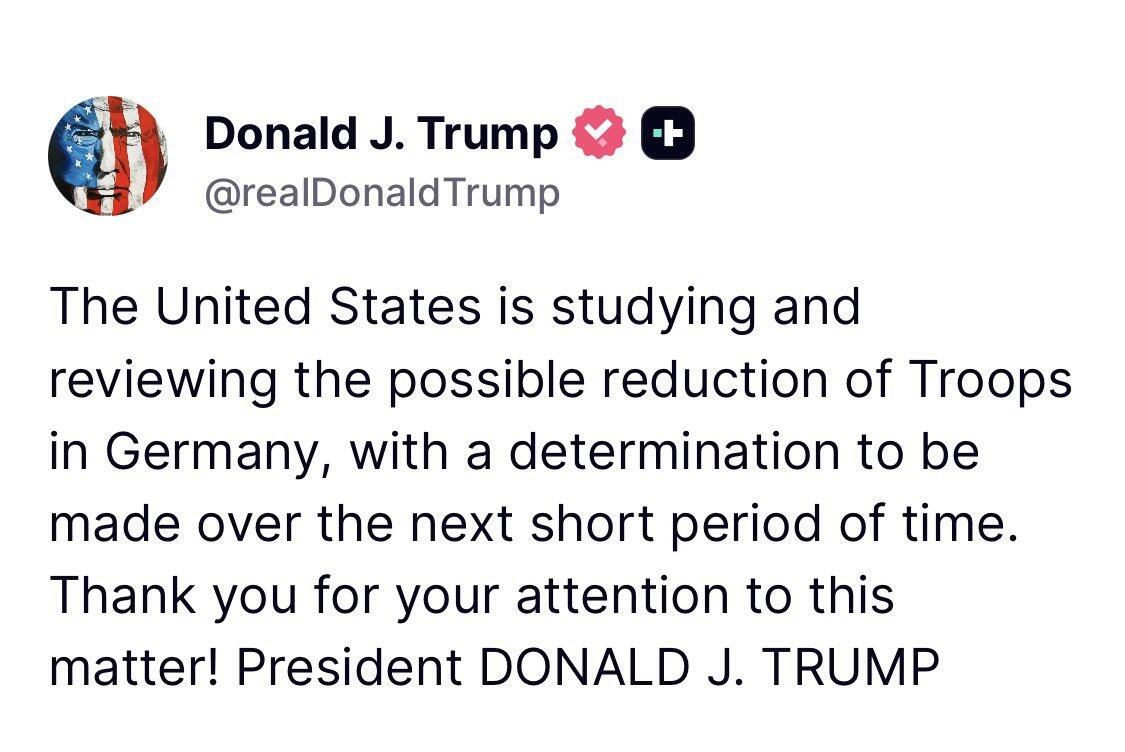
Wednesday night saw Trump issue a new, important threat, which he has been teasing as a possibility for day:
“The United States is studying and reviewing the possible reduction of Troops in Germany, with a determination to be made over the next short period of time,” Trump wrote on Truth Social.
Responsible Statecraft’s Trita Parsi is also a deep Iran war critic, but says that EU leaders are full of hypocrisy on the Iran issue, and that it needs to be called out. Parsi writes:
Merz isn’t wrong in saying he’s “disillusioned” with the US & Israel over Iran because they “claimed at the beginning that they could solve this problem within days. Now I must recognize: It is not solved.” But he is in no position to complain. He applauded the war and as a result, owns the outcome. This is typical of some EU leaders who support and help facilitate the US’s worst instincts, and then pretend they are innocent when the foreign policy adventure predictably goes wrong.
The comments underscore several European leaders’ reassessment of their relations with Trump. A tendency to smooth ties by currying favor has given way to a more sober perspective of a U.S. president who has repeatedly called into question NATO, bolstered European far-right forces and threatened to seize Greenland, a territory of Denmark.
Meanwhile Merz holds a presser in military fatigues, hilariously enough…
German Chancellor Merz demands:
Iran must come to the negotiating table.
It must stop playing for time.
It must not continue to take the entire region — and ultimately the whole world — hostage.
The military nuclear program in Iran must be ended.
Regardless, the fresh critique by a leading EU head of state is certainly going to add fuel to the fire of Trump’s ratcheting anti-EU and anti-NATO rhetoric, given their absence in helping the US get the Strait of Hormuz back open and the return to normal functioning of global energy transit once again.
Sanctions, bureaucracy, and logistics are the primary obstacles to “diversifying economic ties and correcting the existing imbalance”, but these can be surmounted through SMEs playing a greater role, more localization and procedure simplifications, and optimizing their trade corridors.
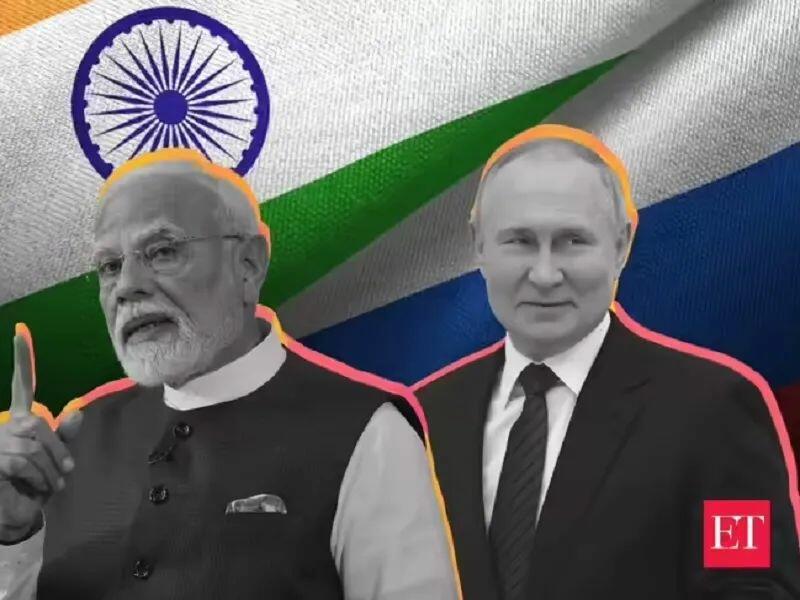
The Russian International Affairs Council (RIAC) and Gateway House, which are among their country’s top think tanks, published a joint report in late March about moving “Toward More Balanced Russia–India Economic Relations” for the second Russia-IndiaInternational Conference. It’s over 40 pages long so this piece will highlight the top takeaways and then briefly analyze them. The report began by acknowledging the challenges posed by US sanctions for reaching their goal of $100 billion in bilateral trade by 2030.
The solution that was presented, especially for the oil and financial industries, is having Indian SMEs play a much greater role due to their much less exposure (if any at all) to the US’ secondary sanctions. China’s “tea pot” model of small refineries is mentioned as an example for India’s oil industry to follow. The authors also proposed bilateral cooperation in building similar such facilities in Afghanistan, Bangladesh, Kenya, Myanmar, and Sri Lanka, for example. India would thus help Russia meet their smaller demand.
Their suggestion for expanding critical minerals cooperation is for their state-owned companies to form joint R&D initiatives to strengthen their technological self-sufficiency. As for doing the same in the broad health-related field (biotech, pharmaceuticals, etc.), it’s recommended that Indian manufacturers localize production, IP rights, etc., in Russia to better overcome bureaucratic hurdles. Russian research capabilities could also pair with Indian manufacturing capacity to expand market share in third countries.
The bureaucratic hurdles mentioned above also impede cooperation on food and textile industries, but simplifying procedures could help, especially through the creation of unified digital platforms. More industrial cooperation is possible, especially in the automotive, aviation, and railway industries, but localization is likely the prerequisite. Improving logistics across the North-South Transport Corridor and the Vladivostok-Chennai Maritime Corridor can reduce costs and thus raise incentives for scaling trade.
More technological cooperation is difficult for the multiple reasons that were enumerated in the report, not least of which is global competition, so this might prove disappointing in the future. Each’s SMEs might have better chances, but overall, this might not expand associated cooperation all that much. What’s much more promising is labor cooperation, which is already a work in progress that readers can learn more about here, basically amounting to Russia replacing Central Asian labor with Indian.
To review, sanctions, bureaucracy, and logistics are the primary obstacles to “diversifying economic ties and correcting the existing imbalance”, but these can be surmounted through SMEs playing a greater role, more localization and procedure simplifications, and optimizing their trade corridors. Although the prospects for more technological cooperation are dim, efforts nevertheless shouldn’t be abandoned due to the strategic importance of this industry, especially its AI component.
The authors conclude that Russia and India’s $100 billion trade goal by 2030 is realistic, but this requires urgently implementing the aforementioned proposals to increase 2025’s estimated $60 billion in trade by another $40 billion in the next four years, which will be very difficult to achieve and then maintain. The Third Gulf War has caused radical changes to the global energy market, Eurasian logistics, and the financial industry, however, so it’s premature to predict the odds of success till the dust finally settles.
President Donald Trump on Thursday signed a bill to extend a spying authority of Section 702 of the Foreign Intelligence Surveillance Act (FISA) for 45 days as congressional debate on the controversial measure continues.
Both chambers of Congress raced to pass the short-term measure earlier Thursday after the Senate declined to take up a House-passed bill to extend the deadline until 2029.
The House passed the “clean” extension, without reforms, which punts the deadline from April 30 to June 12, in a 261–111 vote. It was passed under a suspension of the rules, meaning it relied on Democratic support to pass. However, opposition to the measure was also bipartisan, with 26 Republicans joining 85 Democrats in casting a “No” vote.
The measure’s passage and signature into law came just hours before the critical—but contentious—power was due to expire.
The 45-day extension was proposed and passed by the Senate earlier on Thursday after it became clear that a three-year extension passed by the House the night before couldn’t pass the Senate before the midnight deadline.
Section 702 allows U.S. intelligence agencies to collect emails, phone calls, texts, and other communications of foreign nationals located outside the United States for national security purposes, such as tracking terrorism, espionage, or weapons proliferation, without obtaining an individualized warrant.
However, the data of Americans who communicate with these foreign targets can be incidentally gathered and is available to U.S. intelligence without a warrant—a “backdoor search” loophole that has come under criticism by privacy advocates.
Trump, despite his current support for a clean reauthorization of the power, has acknowledged his experience with the law in the past.
In a post on Truth Social, he described it as “the worst and most illegal abuse of FISA in [U.S.] History,” referencing disclosures that revealed that the FBI had used Section 702 of FISA to spy on Trump’s 2016 presidential campaign as part of the Crossfire Hurricane operation.
Nevertheless, Trump has praised the intelligence utility of the authority when used appropriately.
However, some lawmakers in both chambers are disinclined to agree: Bipartisan concerns about Section 702’s effects on American civil liberties, particularly Fourth Amendment protections, are as old as the legislation itself.
Despite Trump’s calls for a clean reauthorization—calls that have won the support of House Judiciary Committee Chairman Jim Jordan (R-Ohio)—many of those congressional skeptics are among Trump’s closest allies, including lawmakers like Reps. Anna Paulina Luna (R-Fla.) and Ralph Norman (R-S.C.).
On Wednesday, the lower chamber also authorized a bill that would extend Section 702 of FISA for three years, but that measure included provisions that have been opposed by Senate Democrats.
Namely, the three-year extension bill would prohibit the Federal Reserve from issuing digital currency, an asset class known as central bank digital currency.
Senate Majority Leader John Thune (R-S.D.) has long warned that such a measure would struggle in the upper chamber, and urged the House against attaching it to the reauthorization measure.
Saudi Arabia Public Investment Fund To Stop Funding LIV Golf After 2026 Season
LIV Golf is preparing to inform players and staff that its main financial backer, Saudi Arabia’s Public Investment Fund, will stop funding the league after the 2026 season, according to Golfweek. The announcement—expected midweek—would open the door for CEO Scott O’Neil to pursue new investment to keep the tour running.
Since launching in 2022 as a challenger to the PGA Tour, the circuit has reportedly burned through more than $5 billion while failing to gain meaningful U.S. viewership. Broadcast deals with The CW Network and later Fox did little to improve ratings.
Uncertainty around funding has been building. In April, O’Neil acknowledged the league is only financed through this season, saying future survival depends on securing new backers—even as he publicly maintained LIV is in its best position yet.
Golfweek writes that the timing aligns with a broader shift by PIF, led by Yasir Al-Rumayyan, toward prioritizing domestic projects over global spending.
LIV did manage to lure big names like Phil Mickelson, Dustin Johnson, Bryson DeChambeau, and Jon Rahm with lucrative deals. Still, its team-based, no-cut format struggled to resonate broadly, despite pockets of success overseas and moments like Anthony Kim’s brief resurgence.
Efforts to align with the PGA Tour—including a 2023 framework agreement that followed LIV’s antitrust lawsuit—ultimately stalled, even with involvement from Donald Trump.
Recent player movement has added to the uncertainty, with figures such as Brooks Koepka and Patrick Reed stepping away from LIV competition.
With only a handful of events remaining this season, LIV Golf now faces mounting pressure to secure fresh funding—or risk folding after 2026.
On Wednesday, the Supreme Court decided Callais. The last paragraph of the opinion stated:
The judgment of the District Court is affirmed, and thesecases are remanded for proceedings consistent with this opinion.
It is so ordered.
Well, it is not ordered right away. Under the Court’s rules, the remand does not happen immediately. In this 2020 post, I described the process by which judgments are actually entered. Conflicts over the timing of the judgments have arisen in high profile cases, including Bush v. Gore, Boumediene, Trump v. Vance, Trump v. Mazars, DHS v. Regents, Whole Woman’s Health v. Jackson, and others. Of course, after Obergefell was decided, jurisdictions outside the Sixth Circuit immediately issued marriage licenses to gay couples, even though they were bound by injunctions. Whatever, love won!
The private plaintiffs in Trump v. Callais have asked the Supreme Court to issue the judgment forthwith. Louisiana has taken no position on the request, because the issuance of the judgment is irrelevant:
The State notes that the Court’s May 15, 2024 Order also states that, “[i]n the event jurisdiction is noted or postponed, this order will remain in effect pending the sending down of the judgment of this Court.” That language can be read to conflict with the cited language above, which requires automatic termination of the Order if the lower court’s judgment is affirmed. That potential conflict, however, has no bearing here because, whether the Order is already terminated or will be terminated when this Court sends down the judgment, nothing prevents Louisiana from adopting a constitutional map and process consistent with this Court’s decision right now.
Louisiana is correct. The District Court did not issue an injunction. The Supreme Court affirmed the District Court’s judgment. Nothing prohibits Louisiana from following the Supreme Court’s decision as a precedent, even if there is no issued judgment. Moreover, once Louisiana adopts new maps in the next week or so, this entire dispute will be mooted.