European Rearmament Efforts Snuffed By Chinese Control Of Critical Materials

European Rearmament Efforts Snuffed By Chinese Control Of Critical Materials

Yesterday we reported that, in a tit-for-tat move, China announced it is targeting US rare earths firms in response to a Pentagon list of Chinese firms: this, as Rabobank noted, is largely a symbolic move, but it still underlines the tensions in this area. So does the Nikkei reporting that ‘China minerals control threatens EU rearmament, as bloc seeks new sources’: because, as Rabo’s Michael Every notes, even if you can afford a dagger, you can’t make it without rare earths, and Europe still hasn’t secured enough supply. 

Taking a closer look at the report, Nikkei writes that the European Union’s aggressive plans to boost defense capabilities are hampered by China’s export controls and sales restrictions on critical raw materials, with the bloc’s leaders now calling on countries to accelerate the diversification of their supply chains.

The European Commission last week said that it will propose a new law that will require companies in the bloc to expand their suppliers to address economic imbalances, although it did not name China.

Russia’s war in Ukraine and growing uncertainty over Washington’s security guarantees have pushed governments in Europe to increase military spending and production. But for 17 of the 34 materials classified as critical by the EU, China accounts for at least 70% of global mining or refining, a report published by Teer in May shows. Eight of those 34 materials are subject to Chinese export controls.

“China is in the process of pulling the rug out from under Europe’s rearmament efforts,” said Joris Teer, a policy analyst at the EU Institute for Security Studies (EUISS), the bloc’s agency for foreign, security and defense policy analysis.

“By just deploying this weapon, China has already increased its leverage, signaling both its capacity and willingness to squeeze supply at any moment of its choosing,” Teer wrote.

Escalating geopolitical developments and intensifying global competition for critical raw materials underline the growing need to strengthen Europe’s supply chains, said the Aerospace, Security and Defence Industries Association of Europe. The organization represents over 4,000 companies including the U.K.’s BAE Systems, France’s Thales and Germany’s Rheinmetall.

European defense manufacturers are pursuing several strategies including vertical integration, recycling, diversification and stockpiling. Rheinmetall told Nikkei Asia it had “no dependencies” and was “well prepared with regard to critical minerals.”

“Rheinmetall has stored key raw materials, enough to last for several years,” a spokesperson said. “We have implemented IT systems that enable us to centrally monitor and control raw material consumption across the group with precision.”

Rheinmetall’s FV-014 loitering munition drone on exhibition at a recent aerospace trade show in Berlin. The German multinational company is repurposing two plants that make automotive parts into weapons manufacturers

But analysts warn that stockpiling alone will not be enough.

“Stockpiling is an important buffer against immediate disruptions, but on its own it is unlikely to reduce structural damage over the long term,” said Maria Shagina, senior fellow at the International Institute for Strategic Studies. She said it would take years for alternative sources to replace either the volumes or the range of critical minerals that Beijing controls.

In 2024, the EU introduced the European Critical Raw Materials Act, aimed at rebuilding domestic supply chains for such minerals. It sets 2030 targets for domestic extraction, processing and recycling, while capping reliance on any single third-country supplier at 65%. A 3 billion-euro ($3.5 billion) fund was launched last year to accelerate strategic projects.

But the European Court of Auditors notes that the 2030 targets are nonbinding and that the bloc remains far from achieving them. Industry groups say policy inconsistencies could slow progress further.

The Cobalt Institute, representing an industry vital to jet engines, advanced batteries and defense alloys, said proposed EU rules involving chemicals risk hollowing out the sector.

“Europe is one foot in, one foot out,” said Michael Blakeney, head of government and public affairs at the London-based institute. “It is saying all the right things, but what it is doing is incoherent.”

Europe’s efforts coincide with an aggressive approach by the U.S. to secure critical mineral supply chains.

“The U.S. is deploying more capital, taking larger financial risks and in some cases acquiring equity stakes to secure and build capacity,” Shagina said. “By contrast, Europe has generally been more cautious … leaving [it] at a relative disadvantage in competing for critical minerals.”

In April, the EU signed an agreement with the U.S. to coordinate critical mineral supplies. Following initial resistance over fears it could dilute the bloc’s strategic autonomy, member states authorized the commission earlier in June to sign up to the U.S.-led Pax Silica initiative, which coordinates investment and export-control policies.

Teer urged the European bloc to use ongoing U.S.-EU-Japan negotiations as the “nucleus” of a wider coalition to make non-Chinese critical mineral production financially viable, backed by state support, price floors and procurement rules.

“Particularly important are raw material producers, or deposit holders, like Malaysia, the Democratic Republic of Congo, Brazil and Indonesia, as well as countries with vast skilled-workforce potential like India,” he wrote in the paper.

To deter further Chinese restrictions, he said the EU also should activate its anti-coercion instrument, which allows it to impose tariffs and restrictions as a response to economic coercion by countries outside of the bloc.

A European Commission spokesperson said the bloc had “long recognized the risks linked to the EU’s dependencies on critical raw materials.”

“The objective is clear: Anticipate disruptions early and reduce the EU’s vulnerabilities as we scale up our industrial and defense capacities,” the spokesperson said.

Tyler Durden
Thu, 06/25/2026 – 05:45

via ZeroHedge News https://ift.tt/4YDzCLE Tyler Durden
EU Commissioner Claims That Ukraine Is Gaining The Upper Hand On The Battlefield, In the Air, And At Sea

EU Commissioner Claims That Ukraine Is Gaining The Upper Hand On The Battlefield, In the Air, And At Sea

Via Remix News,

Ukraine is gaining the upper hand on the battlefield, in the air and at sea, while Ukrainian drones have stopped Russia’s ground advance and are causing serious disruptions to Russian logistics, EU Commissioner for Defense and Space Policy Andrius Kubilius said on Tuesday in Brussels.

In his speech launching the European defense and security summit, the commissioner pointed out that Ukrainian drones can paralyze the supply of the Russian army up to 300 kilometers from the front lines.

According to the EU commissioner, Ukraine is no longer just a beneficiary of international subsidies, but also contributes to the protection of other countries.

Kubilius said that Russian President Vladimir Putin is reacting to Ukrainian successes with increasingly desperate attacks. He cited last week’s attack on the Kyiv monastery as an example, which he called an attack on culture, religion and civilization.

According to the commissioner, Russia continues to pose a threat to Europe’s security, and Moscow may be able to test NATO’s Article 5, which establishes collective defense. At the same time, he emphasized that Ukraine’s successes do not mean the end of the war, nor do they mean that Russia is weak.

As he said, Russia is still able to produce weapons and drones in large quantities, so Europe must prepare to strengthen its own defense capabilities.

According to Kubilius, the United States is increasingly encouraging Europe to take greater responsibility for its own security. He emphasized: “Europe must be prepared for the fact that some capabilities of the American forces may be regrouped in other regions, so European defense capacities must be urgently strengthened.”

Kubilius warned that without replenishing American strategic capabilities, Europe’s defenses and deterrent power could be weakened.

“If European countries do not fill these gaps in ability, it could be an open invitation for Russia to test the West’s resolve,” he said.

He added that the necessary resources for this can be available primarily at the national level. He reminded that based on their commitments to NATO, the member states can spend a total of around €7 trillion for defense purposes over the next ten years.

At the same time, the Commissioner stressed the need for these resources to be utilized in a coordinated manner and within a European framework.

He also emphasized that the EU should integrate Ukraine within the framework of a future defense union.

“It would be difficult to understand if we Europeans did not see it as a vital interest to integrate Ukraine’s military power into the European defence system,” he said.

He also noted that the European Commission is expected to present the first proposals for the further integration of the European defense market as early as next week, which include a detailed analysis and ideas for further steps.

Kubilius added that even this year they will propose amendments to defense procurement rules and other market regulations.

Read more here…

Tyler Durden
Thu, 06/25/2026 – 05:00

via ZeroHedge News https://ift.tt/2bJZu5N Tyler Durden

India’s Imports Of Russian Oil Set For New Record High

India’s Imports Of Russian Oil Set For New Record High

India is set to import a record-high volume of Russian crude in June as the Hormuz crisis and the U.S. waivers on Russia’s barrels have pushed the world’s third-largest crude importer to gorge on Moscow’s oil again, OilPrice reported.

India has imported 2.6 million barrels per day (bpd) of Russian crude oil so far in June, according to preliminary vessel-tracking data from commodity analytics firm Kpler cited by Indian media.

So far this month, Russian crude has accounted for as much as 53.5% of all Indian oil imports, per the data.   

India’s full-month imports of Russian crude are set for a record-high of 2.35 million bpd in June for any month ever, Kpler has estimated. This would exceed the previous record of 2.2 million bpd from May 2023. 

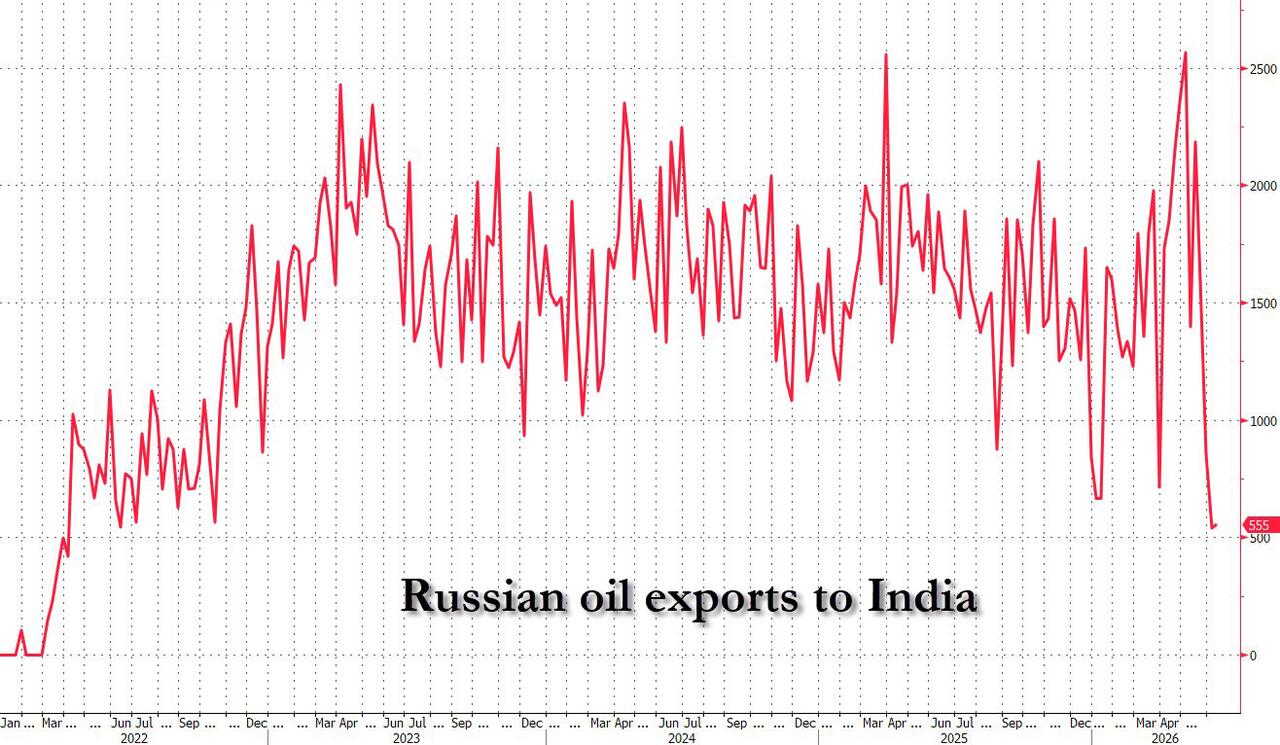
Going forward, Russian crude will remain a key source of supply for India even if the U.S. does not extend the waiver for Russian crude already loaded on tankers, analysts say. Which is odd because when viewed from the other side, the picture is a mirror image: as shown in the chart below, Russian crude oil exports to India have reportedly plunged to just 555kb/d in the last week, the lowest volume in 4 years.

In other words, there is a disconnect in the data. 

In any case, last week, as it announced the memorandum of understanding with Iran, the U.S. quietly let the waiver on Russian oil sales expire without renewing it.

“India’s imports remained strong through June, supported by continued discounts and steady refinery demand,” Sumit Ritolia, manager, modelling and refining at Kpler, told Financial Express.

“Regardless of whether the US waiver is extended, we expect India’s imports of Russian crude to remain robust, even if not at record-high levels.”

India turned en masse to Russian oil in 2022, when the U.S. and the EU imposed sanctions on Moscow due to the invasion of Ukraine. Four years later, India is a major buyer of Russia’s crude, and Russia is India’s single-largest oil supplier.

As supply from the Middle East crashes, India is also buying growing volumes of crude from West African producers Nigeria and Angola, as well as from South American producers Brazil and Venezuela.

Tyler Durden
Thu, 06/25/2026 – 04:15

via ZeroHedge News https://ift.tt/A1c8HxR Tyler Durden

London’s West End To Be Blanketed With AI Facial Recognition Cameras

London’s West End To Be Blanketed With AI Facial Recognition Cameras

Authored by Steve Watson via Modernity News,

In the latest dystopian lunge toward a total surveillance state, the London Metropolitan Police has confirmed plans to deploy static live facial recognition cameras in the West End, including Soho and areas around major theatres and retail spots, with installation targeted for the end of this year.

Six additional areas are slated for rollout in 2027. The fixed cameras, mounted on lampposts and street furniture, will operate continuously and can be repositioned based on shifting crime patterns.

Privacy campaigners warn the move creates “digital police lineups” for innocent theatregoers and shoppers in one of Britain’s busiest tourist zones, escalating a technology already used to scan millions of faces.

The expansion fits a clear pattern of UK authorities layering physical biometric surveillance onto existing efforts to shape online narratives, restrict speech, and monitor public discourse under pretexts of safety and disinformation control.

During a six-month pilot in South London earlier this year, static cameras scanned approximately 470,000 faces, resulting in over 170 arrests, and they claim recording just one false alert. Police claim that non-matches have their biometric data deleted immediately.

Met Commissioner Sir Mark Rowley described the technology as “one of the most revolutionary technology advances in policing in recent years,” adding “Public confidence in this is clear – around 80 per cent of Londoners support its use.

Rowley also stated the force wants “to build on our success by introducing this capability to the West End and Soho by December. The use of static cameras will help us continue cutting crime in high-footfall areas in central London.”

Policing Minister Sarah Jones has backed nationwide expansion with record investment. Dee Corsi of the New West End Company welcomed a potential West End pilot, saying it offers “a significant opportunity” to tackle crime and boost public confidence.

Critics see something far more intrusive. Big Brother Watch’s Silkie Carlo called the fixed-camera expansion “an alarming escalation of an intrusive technology which has already scanned the faces of millions of innocent Londoners.”

She further stated: “Forcing people to enter a digital police lineup in the capital’s busiest and most popular destinations is an affront to the idea that you should not have to identify yourself to the police if you have done nothing wrong. To see a play, you must now pay with your privacy.”

Jack Coulson, Head of Advocacy at Big Brother Watch, echoed the concern: “Legislation to regulate the police’s use of facial recognition is expected in the Autumn. Yet the police are rushing ahead with AI monitoring of the public under their own rules. We are calling on the Met to stop this experiment until, at least, Parliament has spoken. Policing by consent is a cultural inheritance we must protect. Permanent biometric surveillance of the public square is incompatible with that ideal.”

Liberty director Akiko Hart described the West End move as a “major escalation” and urged the Met to pause expansion until proper legal safeguards exist. A joint civil society push, including Article 19 and Big Brother Watch, has already written to the Home Office demanding future facial recognition laws protect privacy rather than enable unchecked state power.

Previous deployments underscore the rapid creep. Big Brother Watch highlighted live facial recognition operations in Waltham Forest and Islington in mid-June, labeling them an “enormous expansion of the surveillance state” that sets a dangerous precedent.

Earlier warnings detailed government moves to broaden the technology’s use nationwide and documented cases of innocent people wrongly targeted, including shoppers ejected from stores via facial recognition systems.

This street-level biometric dragnet does not exist in isolation. It forms part of a wider architecture of control.

The facial recognition technology is presented as essential because root problems – including crime linked to failed integration and lax border policies – remain unaddressed. London’s West End, long a symbol of British openness and culture, now risks becoming a permanent testing ground for mass biometric monitoring of ordinary citizens who have committed no offense.

Permanent AI enhanced surveillance infrastructure in public spaces undermines the principle that the state must justify intrusion, not assume it. Real security comes from competent policing, secure borders, and addressing the policy failures that create high-crime environments in the first place – not from turning every street corner into a digital checkpoint.

Your support is crucial in helping us defeat mass censorship. Please consider donating via Locals or check out our unique merch. Follow us on X @ModernityNews.

Tyler Durden
Thu, 06/25/2026 – 03:30

via ZeroHedge News https://ift.tt/U0Qrwlg Tyler Durden

Brickbat: Friendly Fire


Still image from dash camera footage of Pasadena Police officers engaging in "horseplay" with their guns. | Pasadena Police Department

Newly released dashboard camera video shows police officers in Pasadena, California, engaging in what officials called “horseplay” with loaded firearms, during which one officer accidentally shot another. The incident took place in September 2025 in the department’s parking garage as officers prepared for their shift. In the video, one officer quickly draws his gun and points it at a fellow officer seated in a patrol car. According to police, the officer in the car then drew his own weapon, which discharged, shooting through the windshield and hitting the other officer in the shoulder. Pasadena Police Chief Gene Harris said the officers’ “regretful conduct is not consistent with the expectations and service commitments of this department,” and the officer who fired the shot was fired. The wounded officer has recovered, and the incident remains under criminal and internal investigation.

The post Brickbat: Friendly Fire appeared first on Reason.com.

from Latest – Reason.com https://ift.tt/8FIlXiP
via IFTTT

Brickbat: Friendly Fire


Still image from dash camera footage of Pasadena Police officers engaging in "horseplay" with their guns. | Pasadena Police Department

Newly released dashboard camera video shows police officers in Pasadena, California, engaging in what officials called “horseplay” with loaded firearms, during which one officer accidentally shot another. The incident took place in September 2025 in the department’s parking garage as officers prepared for their shift. In the video, one officer quickly draws his gun and points it at a fellow officer seated in a patrol car. According to police, the officer in the car then drew his own weapon, which discharged, shooting through the windshield and hitting the other officer in the shoulder. Pasadena Police Chief Gene Harris said the officers’ “regretful conduct is not consistent with the expectations and service commitments of this department,” and the officer who fired the shot was fired. The wounded officer has recovered, and the incident remains under criminal and internal investigation.

The post Brickbat: Friendly Fire appeared first on Reason.com.

from Latest – Reason.com https://ift.tt/8FIlXiP
via IFTTT

Albanian PM Pooh-Poohs ‘Pink Flamingo’ Protesters Opposing Jared Kushner Resorts

Albanian PM Pooh-Poohs ‘Pink Flamingo’ Protesters Opposing Jared Kushner Resorts

After weeks of daily protests, Albanian Prime Minister Edi Rama is digging in to defend two luxury resort projects backed by Jared Kushner’s investment company that have resulted in thousands of people protesting in the streets of the capital Tirana and on the southern coast, where one of the resorts is slated to be built. 

Protesters opposed to two planned resorts in ecologically sensitive areas, in Tirana, on June 12.Photographer: Atdhe Mulla/Bloomberg

The opposition has dubbed itself the “Flamingo Revolution” due to the impact on a protected wetland home to flamingoes, seals, and sea turtle nesting sites – with protesters hoisting inflatable pink birds and signs opposing the projects.The demonstrations began late last month as site preparations began on the Zuvernec peninsula – while Kushner’s wife, Ivanka Trump, went on a podcast and discussed plans to develop the island of Sazan. 

The resort development he champions is the brainchild of Kushner and his wife, Ivanka Trump, who described falling in love with Albania a few years ago while visiting on a boat. Rama met them on that trip and found ​them to be “very nice, humble…humanly good people.”

Now, ​Kushner’s investment firm Affinity Partners is ⁠involved in the €1.4 billion ($1.6 billion) project near the Vjosa-Narta protected area, and another one on nearby Sazan Island.

Together the projects are worth up to €5 billion, Rama said. –Reuters

According to Rama, the protesters are not engaging in genuine demonstrations – rather, it’s “political theater,” he told Bloomberg on Tuesday – claiming that the protests are backed by “an enormous digital amplification ecosystem that is clearly not organic,” and has blamed Iran and others due to the fact that Albania is home to 3,000 members of an exiled Iranian opposition group, the People’s Mojahedin Organization of Iran.

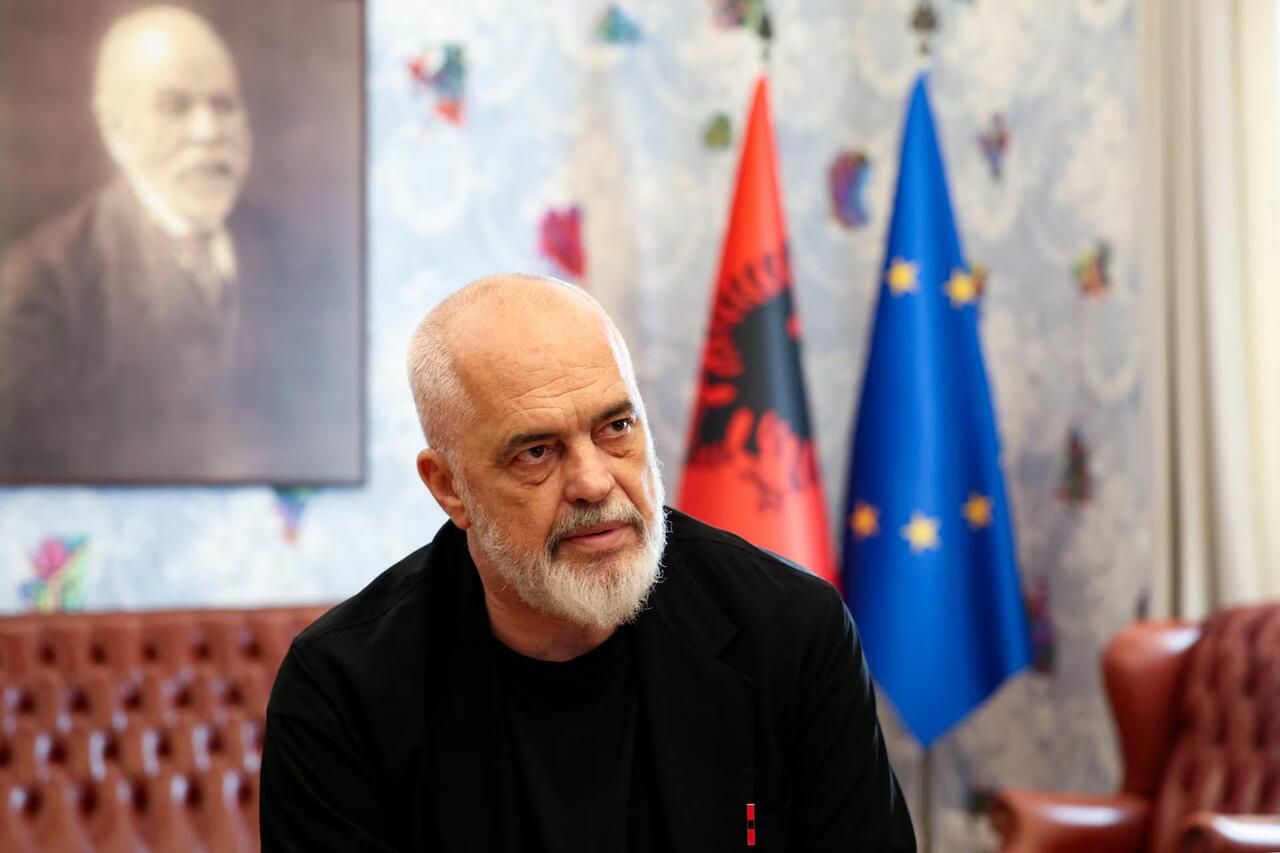
Albanian Prime Minister Edi Rama (REUTERS/Florion Goga)

“Neither a loud minority, joined by every opposition force, nor a wave of digitally amplified outrage fueled by the global fascination with the Trump name attached to what I believe is an extraordinary opportunity for Albania (and further amplified by the interference of malign foreign actors) will divert us from implementing our Albania 2030 Vision,” he told the outlet. 

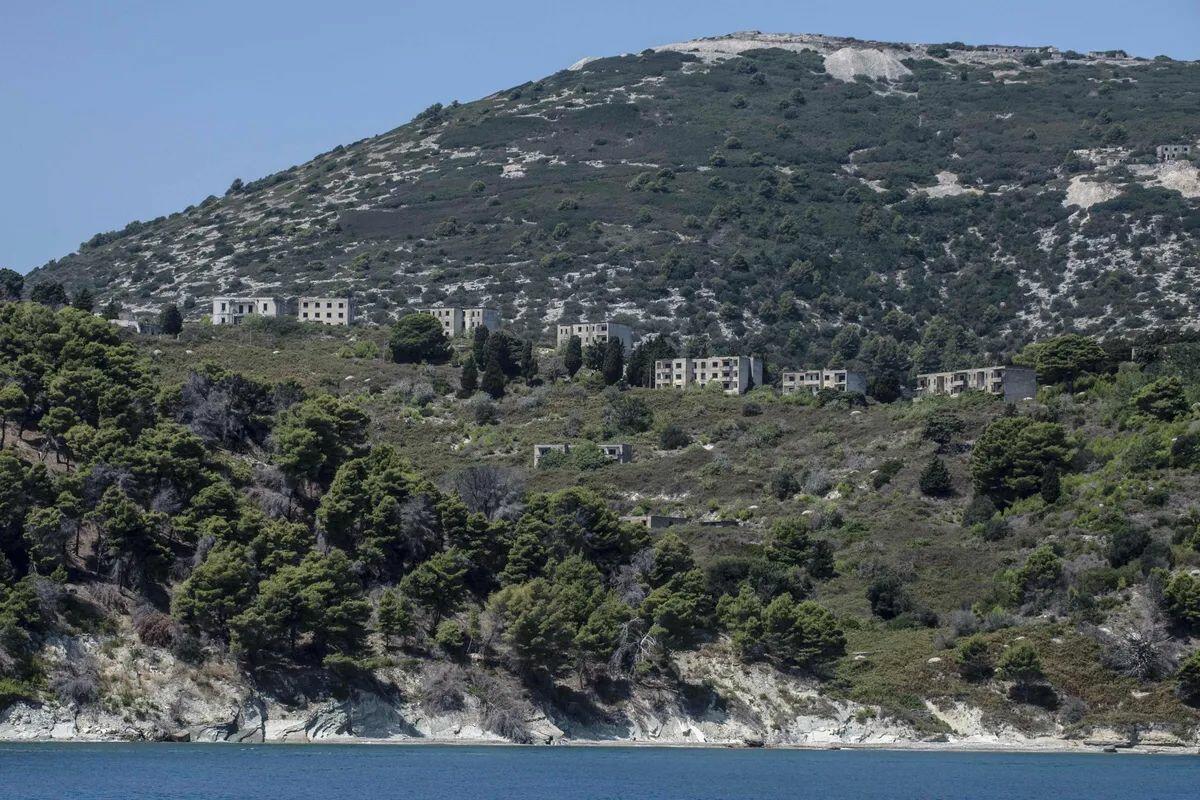
Abandoned former military housing on Sazan island, Albania.Photographer: Atdhe Mulla/Bloomberg

Our standard is clear: law, science, transparency and European obligations – not hysteria,” Rama told Bloomberg. “We are opening the country, protecting its natural assets, attracting serious investment and moving steadily toward EU membership.”

Tyler Durden
Thu, 06/25/2026 – 02:45

via ZeroHedge News https://ift.tt/2ofngp1 Tyler Durden

So, How’s Spain’s Mass Migrant Amnesty Working Out?

So, How’s Spain’s Mass Migrant Amnesty Working Out?

Authored by Aaron Hanscom via PJMedia.com,

Half a million.

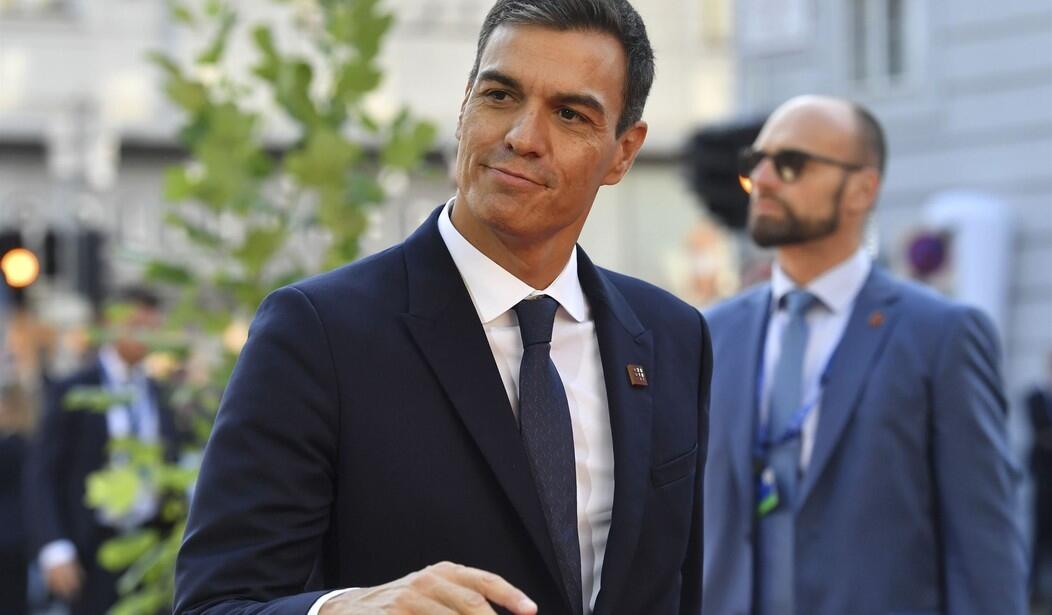
That’s the number that made headlines in April when Spanish Prime Minister Pedro Sánchez’s Socialist government approved plans to grant legal status to 500,000 illegal migrants.

But a leaked police report warned that the true number could be much higher, estimating that between 750,000 and 1 million illegal migrants living in Spain could apply for amnesty, in addition to 250,000 to 350,000 asylum seekers.

The report described the amnesty plan’s “very intense media impact, especially in Latin America” and warned of a “highly relevant pull factor,” which we will return to in a moment.

The conservative Popular Party (PP) also disputed the government’s estimates, saying the true number could be double and calling the plan an “outrage.” Sánchez, whom The Economist has called the leader of Europe’s anti-Trump resistance, anticipating such criticism, wrote in a New York Times op-ed in January that “MAGA-style leaders may say that our country can’t handle taking in so many migrants — that this is a suicidal move, the desperate act of a collapsing country.”

Well, the numbers are starting to come in and, just as Joe Biden’s weak border enforcement in the U.S. created a “pull factor” that led to average monthly border crossings of over 100,000, Sánchez’s policies are having a similar magnet effect, far exceeding his government’s estimates. 

Even though the asylum application window remains open until June 30, 900,000 applications have already been submitted, a record number for Spain. The European Conservative reports that “approximately 350,000 additional applications have been submitted since the start of June, a surge that has caught authorities off guard.” The publication notes that these numbers are much higher than the last time mass amnesty was tried in Spain, in 2005 under the Socialist government of José Luis Rodríguez Zapatero, who these days spends his time in court as the subject of a graft probe. Zapatero’s program granted 576,000 residence permits from 691,000 applications received.

Sánchez, of course, looks at every new immigrant as a potential future voter who won’t care about the mind-boggling corruption within his Spanish Socialist Workers’ Party (PSOE). As increasing numbers of Spaniards take to the streets to demand the prime minister’s resignation, Muslim migrants are among his most loyal supporters. In the video below, we meet a Muslim store owner a minute in, with a poster of Sánchez on his shop wall, who says Muslims are “100%” going to vote for  the prime minister if they become citizens. Why? Because he “stands with Iran and Palestine.” Indeed he does.

You’d be hard-pressed to find a poster of Santiago Abascal, the leader of the rising populist/conservative Vox party, in any Muslim-owned shops in Spain. Abascal, who has said that it is “inhumane to tell all of Africa and all of America that they can fit into Spain,” warned in April that mass amnesty will increase crime in the streets of Spain and accelerate the country’s housing and public healthcare crises.

And it’s not just Spanish politicians who are criticizing Sánchez’s policies.

Italian Prime Minister Giorgia Meloni told Sánchez in a closed-door meeting in Brussels last week that his amnesty plan negatively affects all EU countries. It was at that EU leaders’ meeting in Brussels that Sánchez opposed, along with French President Emmanuel Macron, plans for offshore migrant deportation hubs. Politico reports:

The disagreement comes days after the EU approved legislation allowing members to establish deportation hubs in third countries as part of a push to ensure failed asylum-seekers leave the bloc. While it’s still unclear how many capitals could take advantage of the rule change, 19 of the EU 27 signed up to a joint Danish-Italian letter, first reported by POLITICO, calling for swift action on deportations.

“Countries are now working … to implement the new possibilities, including hubs in third countries. We will personally lead the way to make sure our visions are brought to life,” the letter circulated Friday morning reads.

Spain opposes EU plans for offshore deportation hubs, arguing they raise legal and humanitarian concerns, while other countries including Italy and Denmark view the hubs as a key tool to deter irregular migration and speed up removals.

What Sánchez calls a humanitarian immigration policy, an increasing number of European politicians, including Abascal and Meloni, see as an invitation to invasion.

Watch the video below and decide for yourself:

Tyler Durden
Thu, 06/25/2026 – 02:00

via ZeroHedge News https://ift.tt/hDEVXIM Tyler Durden