Does A Shadow Docket Ruling Create “Clearly Established” Law For Purposes of Qualified Immunity

The Supreme Court’s emergency docket ruling in Mirabelli and denial of certiorari in Foote will send conflicting signals. On the one hand, the Court blocked California’s policy on the shadow docket. On the other hand, the Court allowed a similar policy from Massachusetts to go into effect.

I received an email from a lawyer indicating that his school district was maintaining their “secret transition” policy, notwithstanding Mirabelli.

A question arises. Would this school district retain qualified immunity? Does Mirabelli, as an emergency docket ruling, create “clearly established” law? I know the Supreme Court has told us that emergency docket rulings are precedential. But is the law “clearly established”? Would this sort of ruling be clearly established by the Supreme Court for purposes of AEDPA?

Perhaps it can be argued that Mirabelli did not actually establish any new law. The decision merely reaffirmed century-old precedents, Pierce v. Society of Sisters and Meyer v. Nebraska. But other emergency docket precedents arguably do establish new law. Just yesterday the Court GVR’d Smith v. Scott, fittingly enough a QI case, based on a recent per curiam opinion.

This might be a way for lower court to push back on the shadow docket–by holding these rulings do not establish clear law for purposes of QI. The Supreme Court, I suspect, would say that any ruling of the Supreme Court would suffice.

The post Does A Shadow Docket Ruling Create "Clearly Established" Law For Purposes of Qualified Immunity appeared first on Reason.com.

from Latest – Reason.com https://ift.tt/JQk4W5L
via IFTTT

Gold Vs An Erupting Financial Volcano

Gold Vs An Erupting Financial Volcano

Authored by Matthew Piepenburg via VonGreyerz.gold,

Below, we look soberly at the historical case of gold in the backdrop of current headlines and a global financial system nearing an eruption moment. 
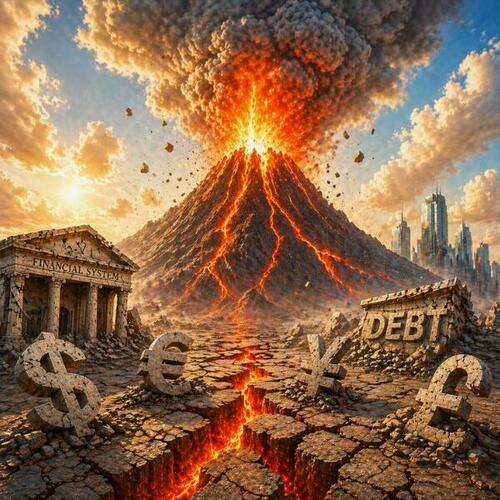
Although the catalysts of oil, war, bond dysfunction, and bloated stocks may seem modern and unique, the current case for gold is as timeless and constant as nature itself.

Volcanic Parallels…

In May of 1980, David Alexander Johnston, a volcanologist for the United States Geological Survey, was manning an observation post 10 kilometers from the percolating volcano of Mount St. Helens in the state of Washington. 

On May 18th, he would be the first to report the volcano’s sudden eruption. 

Within in minutes, however, Johnston would be killed by the volcano’s “lateral blasts.” his body was never recovered, and 56 others would also perish—along with 7,000 big game animals, 12 million fish, 200 homes, 300 kilometers of highway and 15 kilometers of railway.

Although monitoring volcanos may seem entirely removed from monitoring economic shocks, there are volcanic rumblings beneath our global oil, credit, equity and currency markets which are about to erupt. 

Like Johnston, few realize just how quickly observation can suddenly turn to extreme danger.

In fact, the current “calm before the financial eruption” feels almost surreal when one compares the hard facts of the global oil, bond and Main Street indicators against a topping stock market and a completely indecipherable “conflict narrative” coming out of DC.

To make this “eruption announcement” economically clear and soberly real as opposed to just sensational, all we need is a moment of silence to consider simple math, the rhyming cadence of history and a modicum of realism (and common sense).

Let’s start with oil.

Oil’s Warning Meters

History reminds us that the last great “oil shocks” of 1973 and 1990 had massive ripple effects on U.S. markets and Main Street economies.

What is coming, however, will be far worse.

During the oil embargo period of 1973, for example, the world experienced a 7% deficit of oil supply. This resulted in a 300% oil price surge, a 52% fall in U.S. stocks (over 2 years) and a peak inflation level of over 12%.

Seventeen years later, during the Gulf War, the world saw a similar global oil deficit (7%), a 75% spike in oil prices and a 21% fall in U.S. stocks.

Fast forward to today, however, and we see an almost surreal moment of total disregard for such warnings as well as blindness to the financial volcano growling on the horizon.

Since the last oil tanker squeezed past the Strait of Hormuz in late February, global oil usage of 100 million barrels per day has fallen by 13%, as 13 million barrels per day have been delayed by the fog of war.

This marks a global oil deficit in 2026 of nearly twice the levels seen in 1973 and 1990, yet the U.S. stock market (always the last to get the memo) is trading at nearly all-time highs as of this writing.

This Is Crazy…

Globally, oil reserves are running out, including within the U.S., whose Strategic Petroleum Reserves are at half their 400M barrel level. 

The situation is far worse in Asia, India and Africa, whose last oil deliveries from the Hormuz Strait ended days ago. 

This explains why hotels are closed in Mumbai, and fishing trawlers are out of gas off the coast of Thailand.

As for Australia, the EU and the UK, their last deliveries out of Hormuz came on April 10th. 

Now their leaders are nervously trying to limit demand while hoping for a true and lasting cease-fire for an Iranian conflict driven by a Truth-Social account rather than professional diplomacy or even a rudimentary understanding of global finance.

Even if this conflict ended right now, the delayed economic effects from these record-breaking energy deficits are and will be extraordinary. 

This is not a fable but a fact.

Oil, which fuels the world, also transports the goods which feed and move the world. 

When oil prices rise, the cost of everything rises, including the food transported on ships running on oil, and which food is grown from fertilizers made from oil. 

Within the next few weeks, we could be looking at a humanitarian food crisis in the developing economies.

Meanwhile, in the U.S., the University of Michigan’s Consumer Confidence Index is near the bottom as the S&P nears its peak—marking a total (and tragi-comical) disconnect from Main Street indicators and Wall Street mania, the likes of which we’ve never seen before.

Also never seen before in history is the surreal disconnect between the paper (Brent futures) price for oil and the actual sales (“dated Brent”) price for the commodity in real time – a gap of over $35 dollars.

This delta between real oil pricing and paper oil pricing represents a pathetic attempt by policy makers to psychologically suppress panic via the help of well – pure dishonesty.

But then again, dishonesty as a matter of policy is nothing new to broken financial regimes, a fact proven by inflation misreporting, recession denial or the latest frauds legalized on the COMEX.

(By the way, those governmental proxies front-running the fake futures oil price gambit are looking down the barrel of one heck of a short-squeeze unless this war – and spiking oil price – is not immediately resolved…)

In sum, what we are experiencing as of now is the worst oil supply deficit in history, about to humiliate a U.S. stock bubble at all-time highs, which is totally disconnected from Main Street at the same time a fertilizer/food crisis is about to erupt in the world’s most vulnerable economies.

And Then There’s the Bond Market…

But even such appalling conditions pale in comparison to what our global bond markets are telling us.

As I’ve repeated for years: “The bond market is the thing.” 

Boring? Perhaps. But bonds are absolutely critical. As sovereign bond demand tanks and hence bond yields rise, the cost of debt/borrowing rises. 

This is fatal to economies that now operate almost entirely on debt.

And there is no better measure of debt costs than the yield on 10-Year sovereign bonds, almost all of which are rising like shark fins around drowning (and debt-soaked) nations like the UK, Germany, the U.S. and Japan.

But what is even more remarkable in the global bond market is what we are seeing out of China, whose yields are falling, not rising. 

This means Chinese bonds have more demand than U.S. Treasuries, British Gilts, Japanese JGB’s and German Bunds, which also means the days of Western bond hegemony in general, and U.S. Treasury hegemony in particular, are witnessing an historical turning point, one which we have been forewarning for years

In the case of the U.S., the yield on the U.S. 10Y is creeping dangerously close toward its “Uh-Oh” recession-inducing red line of 4.6% to 4.8%.

At $40T in U.S. public debt, Uncle Sam simply cannot survive such rising yields. 

Regardless of who sits at the Federal Reserve Bank (which is neither “federal,” nor a “reserve” nor even a “bank”), trillions will need to be printed to buy America’s otherwise unloved, unwanted and weaponized IOUs.

Bessent may try a “soft default” of UST’s by illegally (yet in the name of “national security”) fixing yields lower and extending bond durations further out. 

But even such desperate measures will not stop the inevitable “mouse-clicking” of trillions in M0 Fed Balance Sheet dollars and M2 money supply expansion to save our bond markets at the expense of our currency.

In short, Uncle Sam will have no choice but to create bad money out of thin air to pay his own criminally negligent bar tab.

Even if peace were somehow declared today in the Middle East, the debt and currency damage was already fatally ill long before the conflict in Iran acted to accelerate the dying process.

Which brings us, of course, to real money vs. fake money

All Roads Lead to Gold

The now undeniable destruction of the dollar’s absolute purchasing power and the desperate yet failed measures to somehow reclaim dollar hegemony are beyond debate. 

The USA and its dollar will not end, but their hegemony is already (and will continue) declining. Regardless of whatever happens next in Iran or elsewhere, the die for U.S. debt, and hence the USD, was cast long ago.

Yes, there is so much change everywhere and every day, especially now. We all see this. 

But such blunt-speak is not anti-American. It is financial realism and simple pattern recognition, for despite all speculations, squawking pundits, changing headlines, tweets, and armchair military guessing, nothing has really changed at all…

History reminds us again and again that broken nations over their skis in failed and extended wars, extreme deficit spending and political mismanagement have always debased their currencies to temporarily save their political optics and near-term legacies.

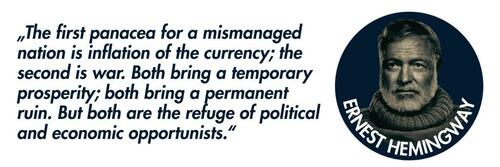
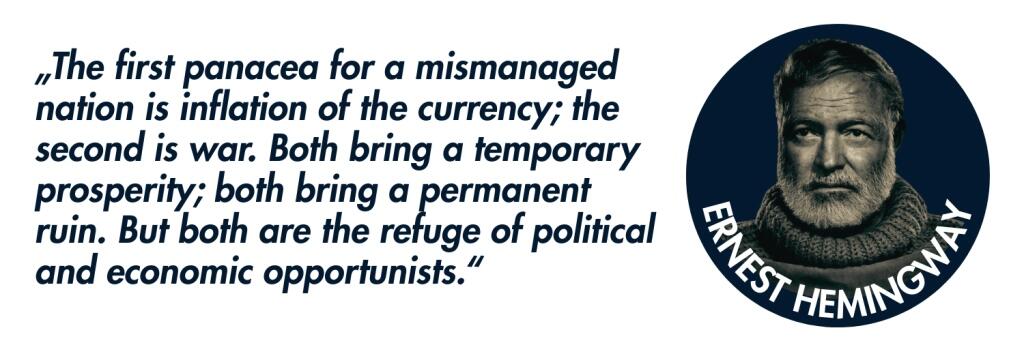
This has always meant “temporary prosperity followed by permanent ruin” created by a handful of “political and economic opportunists,” who, as Hemingway warned, take their nations toward currency destruction and war – the very scenario in which we now openly find ourselves.
As the world reserve currency slowly loses its trust, faith, credibility and purchasing power in such a classic yet historically familiar backdrop, gold, as it has done for thousands of years, will continue to honestly rise in a setting of now almost comical dishonesty.

Like David Johnston, many of us have been watching the financial debt volcano rumble in the distance. 

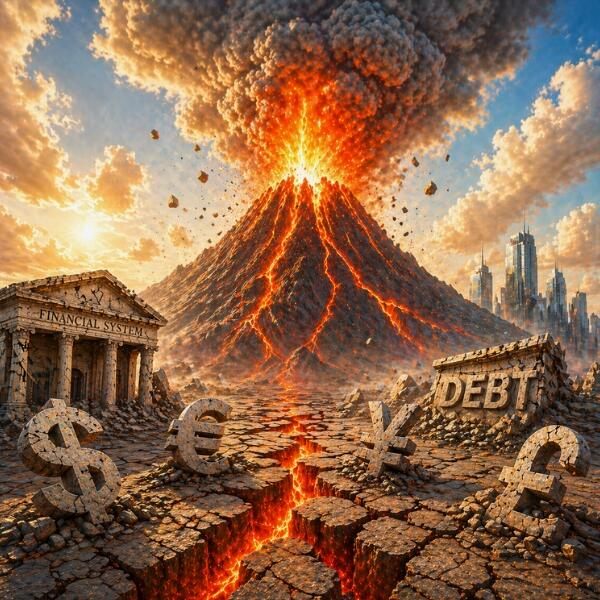
As of 2026, that volcano is now erupting. It is now up to each of us to avoid being swept away by its “lateral blasts” of paper currency destruction.

In other words, it’s up to each of us to own honest and real money to protect ourselves from the financial lava flowing our way.
Tyler Durden
Tue, 04/21/2026 – 15:00

via ZeroHedge News https://ift.tt/d4J9yHQ Tyler Durden

A Grim Diagnosis, but New Science Is Rewriting the Story of Pancreatic Cancer


A model pancreas sits on a table next to some papers and someone's clasped hands. The lower half of a standing person is seen behind the table. | Panuwat Dangsungnoen/Dreamstime

Former Sen. Ben Sasse (R–Neb.), who previously served as president of the University of Florida, revealed in late December that he had been diagnosed with Stage 4 pancreatic cancer. “Advanced pancreatic is nasty stuff; it’s a death sentence,” he observed. He’s right. Patients diagnosed at that late stage currently have a five-year survival rate of about 3 percent and often less than a year to live.

Researchers, however, have recently reported some good news about advanced treatments that significantly increase the life expectancy of patients and, in some cases, even appear to cure the illness.

In fact, Sasse is enrolled in a clinical trial for one of the medications. He is taking the anti-cancer drug daraxonrasib, developed by Revolution Medicines. The drug aims at a previously hard-to-target RAS mutation that drives tumor growth and survival in around 90 percent of pancreatic cancer cases. The company reported earlier this month that patients taking their new anti-cancer drug basically doubled their overall survival time from 6.7 to 13.2 months. The company now plans to seek Food and Drug Administration approval for the treatment.

Last week, researchers associated with the Memorial Sloan Kettering Cancer Center in New York reported their success with a new therapeutic mRNA anti-cancer vaccine. mRNA vaccines work by delivering messenger RNA to cells, instructing them to produce tumor proteins that trigger the immune system to kill cancer cells. The researchers worked with mRNA vaccine company BioNTech, along with Genentech, to develop the vaccine that targets a version of the RAS cancer-causing mutation. (BioNTech previously worked with Pfizer to develop a highly effective mRNA COVID-19 vaccine.)

The researchers surgically removed pancreatic cancer tumors from 16 early-stage patients. Patients diagnosed with Stage 1 and Stage 2 average five-year survival rates of about 43.6 percent and 16.7 percent, respectively.

The tumors were sent to BioNTech, which used them to develop personalized mRNA vaccines targeting the specific cancer-causing mutations in each patient. In eight of the 16 patients, the vaccine activated cancer-killing immune cells. Of those eight, seven patients were alive four to six years following the surgery. Patients who have had pancreatic cancer surgery live, on average, about two and a half years after diagnosis. In the Memorial Sloan Kettering clinical trial, only two of the eight patients whose immune systems didn’t respond to the vaccine are still alive. The researchers are launching a larger Phase 2 clinical trial to further test their vaccine.

Preliminary research last October reported that being vaccinated with mRNA COVID-19 vaccines actually primes the immune system to respond more fully to anti-cancer immunotherapies. Receipt of mRNA COVID-19 vaccines within 100 days of initiating cancer immunotherapy treatments significantly improved the median and three-year overall survival of cancer patients in various trials.

These heartening results stand in stark contrast to the bogus claims that mRNA vaccines are causing an epidemic of “turbo cancers.”

The post A Grim Diagnosis, but New Science Is Rewriting the Story of Pancreatic Cancer appeared first on Reason.com.

from Latest – Reason.com https://ift.tt/j6oQyxw
via IFTTT

No Protection From Gulf Shock: World’s Biggest Condom Maker Warns Of Price Hikes

No Protection From Gulf Shock: World’s Biggest Condom Maker Warns Of Price Hikes

The first-order effect of the U.S.-Iran conflict and the resulting shutdown of the Hormuz chokepoint was the disruption of global energy flows, from LNG to crude to refined products. The second-order effect was a spike in petrochemical prices and a widening shortage of key industrial inputs. Now the third-order effects are beginning to hit everyday goods, with Malaysia-based Karex, the world’s largest condom maker, warning that prices are about to explode.

Karex CEO Goh Miah Kiat spoke with Reuters in an exclusive interview about his plan to hike condom prices by 20% to 30%, and possibly more, as the war in Iran continues to disrupt supply chains and drive up critical input and shipping costs.

The situation is definitely very fragile, prices are expensive… We have no choice but to transfer the costs right now to the customers,” Goh said.

He said costs have increased for everything from synthetic rubber and nitrile used in manufacturing condoms to packaging materials and lubricants such as aluminum foil and silicone oil.

Earlier this month, Goldman analyst Georgina Fraser warned clients about petrochemical shock worsening across Asia, with textile and packaging plants emerging as the first major downstream casualties. 

The supply shock is transmitting faster and at a greater magnitude than we had anticipated,” Fraser warned in the note. 

Reuters noted, “The condom maker joins a growing list of companies, including medical glove makers, bracing for supply chain bottlenecks as the Iran war strains energy ​and petrochemical flows from the Middle East, disrupting procurement of raw materials.” 

At the same time, Kiat said condom demand has surged 30% so far this year, with shipping disruptions further exacerbating shortages. He noted that shipping times to the U.S. and Europe are now two months, up from one month previously.

“We’re seeing a lot more condoms actually sitting on vessels that have not arrived at their destination but are highly required,” Goh added. He noted that many developing countries do not have large condom supplies.

Tyler Durden
Tue, 04/21/2026 – 14:40

via ZeroHedge News https://ift.tt/9hjeKFb Tyler Durden

Retired Pastor Faces Trial Under U.K. Speech Laws for Preaching John 3:16 Near Hospital


Clive Johnston against a yellow background | Clive Johnston/The Christian Institute

A 77-year-old retired pastor will be tried in court for the second day on Wednesday after preaching a sermon near a hospital in Northern Ireland. Despite not mentioning abortion in his sermon, the retired pastor, Clive Johnston, is being accused of violating the Abortion Services (Safe Access Zones) Act (Northern Ireland), which outlaws actions aimed at “influencing” or “preventing or impeding” people seeking abortion services within 100 meters of eight abortion service providers in Northern Ireland, a barrier known as a “safe access zone.”

The sermon, which took place across the street from the Causeway Hospital in Coleraine, Northern Ireland, on July 7, 2024, included Johnston singing with a ukulele, telling his life story, and preaching John 3:16. Police body camera footage shows Johnston speaking the verse into a microphone when a policeman interrupts Johnston and tells him, “this is a safe access zone,” and he must stop preaching. He also tells Johnston’s associates that it’s illegal to film in a safe access zone and they must stop (despite the legislation not prohibiting filming in these areas). Johnston politely tells the officer he was not violating the law because he did not mention abortion in his sermon, and refuses to leave. This prompts the officer to issue a warning to Johnston that “police may remove you, and if you resist, you may be removed and liable to prosecution.”

Johnston then provides his personal information, accepts that he will receive a summons in the mail, and thanks the policemen for being “courteous.”

Johnston faces two charges under the Safe Access Zones Act and is accused of “influencing” someone seeking an abortion, even though court filings did not allege that he mentioned abortion in his sermon, nor were there any abortion-related placards or banners present, reports The Christian Post.

The grandfather of seven could face a fine of up to 2,500 pounds ($3,375). Simon Calvert, deputy director for public affairs at The Christian Institute, a nonprofit supporting Johnston in the case, said that “prosecuting someone for preaching John 3:16 near a hospital on a quiet Sunday is an outrageous restriction on freedom of religion and freedom of speech.”

In a statement to The Telegraph ahead of the trial, a U.S. State Department spokesperson said, “The United States is still monitoring many buffer zone cases in the UK, as well as other acts of censorship across Europe. The UK’s persecution of silent prayer represents not only an egregious violation of the fundamental right to free speech and religious liberty, but also a concerning departure from the shared values that ought to underpin US-UK relations.”

While Johnston is the first person to be accused of violating the Safe Access Zones Act by preaching a sermon unrelated to abortion, he is not the first person to face prosecution for religious expression near hospitals in Britain. Last year, Rose Docherty, a 75-year-old Glaswegian grandmother, faced prosecution under similar legislation in Scotland for carrying a placard outside a hospital that said: “Coercion is a crime, here to talk, only if you want.” She was detained, arrested, charged, and released on bail. Similarly, Isabel Vaughan-Spruce was criminally charged in January after being accused of praying silently in her head outside of an abortion clinic in England.

Johnston’s case essentially asks if a Christian in Britain can be guilty of “influencing” someone seeking an abortion, just because another person might be able to guess their views on the topic, even if they are speaking about something entirely unrelated. If simply quoting one of the most famous verses of the Bible can now be deemed a criminal act because of where it is said, then British citizens are in real danger of losing their fundamental freedoms.

The post Retired Pastor Faces Trial Under U.K. Speech Laws for Preaching John 3:16 Near Hospital appeared first on Reason.com.

from Latest – Reason.com https://ift.tt/EUSktCs
via IFTTT

Does A Shadow Docket Ruling Create “Clearly Established” Law For Purposes of Qualified Immunity

The Supreme Court’s emergency docket ruling in Mirabelli and denial of certiorari in Foote will send conflicting signals. On the one hand, the Court blocked California’s policy on the shadow docket. On the other hand, the Court allowed a similar policy from Massachusetts to go into effect.

I received an email from a lawyer indicating that his school district was maintaining their “secret transition” policy, notwithstanding Mirabelli.

A question arises. Would this school district retain qualified immunity? Does Mirabelli, as an emergency docket ruling, create “clearly established” law? I know the Supreme Court has told us that emergency docket rulings are precedential. But is the law “clearly established”? Would this sort of ruling be clearly established by the Supreme Court for purposes of AEDPA?

Perhaps it can be argued that Mirabelli did not actually establish any new law. The decision merely reaffirmed century-old precedents, Pierce v. Society of Sisters and Meyer v. Nebraska. But other emergency docket precedents arguably do establish new law. Just yesterday the Court GVR’d Smith v. Scott, fittingly enough a QI case, based on a recent per curiam opinion.

This might be a way for lower court to push back on the shadow docket–by holding these rulings do not establish clear law for purposes of QI. The Supreme Court, I suspect, would say that any ruling of the Supreme Court would suffice.

The post Does A Shadow Docket Ruling Create "Clearly Established" Law For Purposes of Qualified Immunity appeared first on Reason.com.

from Latest – Reason.com https://ift.tt/JQk4W5L
via IFTTT

The Trump Administration Is Worried About High Fertilizer Prices. Its Top Trade Official Lobbied for Them.


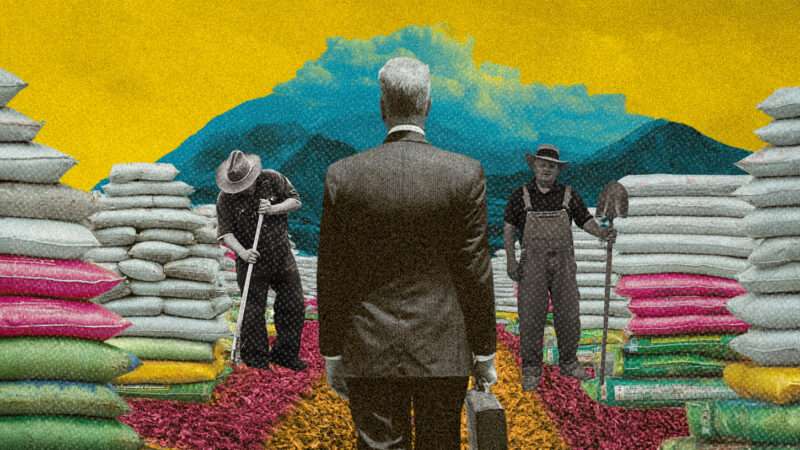
Illustration of a man in a suit, facing piles of fertilizer | Illustration: Midjourney/Yobro10/Dreamstime

With fertilizer prices spiking due to the closure of the Strait of Hormuz, a majority of American farmers now say they will have a hard time securing their needed supply this year, and President Donald Trump says he is “watching fertilizer prices” closely to prevent price gouging.

But if the president is worried about high fertilizer prices, he might want to have a conversation with his top trade official.

Before joining the Trump administration last year, U.S. Trade Representative Jamieson Greer lobbied for policies that limited fertilizer imports and drove up prices for American farmers. Greer represented the J.R. Simplot Company as it successfully persuaded the first Trump administration to impose higher tariffs on fertilizer—despite the opposition from farmers and agricultural interests, who warned that those tariffs would create higher prices and potential shortages.

That part of Greer’s career is not a secret. He testified in front of the U.S. International Trade Commission (ITC) in favor of those tariffs and later represented Simplot in court as it fended off challenges to them. His connection to Simplot also shows up on his public financial disclosure report.

Indeed, when Greer was nominated to be Trump’s trade representative, the résumé circulated to members of Congress bragged about his role in implementing those tariffs. Greer “led the J. R. Simplot Company’s successful participation in countervailing duty investigations of phosphate fertilizers from Russia and Morocco,” it read.

But it is a part of his career that deserves more scrutiny now as it is suddenly—and somewhat awkwardly—very relevant.

Agriculture Secretary Brooke Rollins said Tuesday that the fertilizer shortage is an “overarching economic pending disaster.” A Farm Bureau survey released last week showed that 70 percent of American farmers are unable to purchase as much fertilizer as they say they will need this year.

The Iran war is the acute cause of these problems—about 30 percent of the world’s supply of fertilizer passes through the Strait of Hormuz. But the crisis has been compounded by the very tariffs that Greer once helped create.

The effort to implement those tariffs began in 2017, during the first Trump administration, as The Intercept detailed in a 2022 article. Two companies, Simplot and Mosaic Co., which together control about 90 percent of the American fertilizer market, were behind the push for higher tariffs. Lobbying records show that Mosaic spent over $800,000 on lobbying each year between 2017 and 2023. (Susie Wiles, now the White House’s chief of staff, lobbied on behalf of Mosaic during that period.)

In March 2021, the U.S. International Trade Commission (ITC) determined that fertilizer imports from Morocco and Russia “materially injured” American companies and implemented tariffs that range from 16 percent to 47 percent.

A month before that decision was made, Greer testified at an ITC hearing on behalf of Simplot. Imported fertilizer, he said, had caused a “steep decline in prices” that had directly harmed Simplot’s “sales revenues and operating income.”

When asked about the potential consequences of higher tariffs, including the possibility of shortages in the future, Greer downplayed the worry.

“There has been no shortage of fertilizer for the American farmer, and there will be no such shortage,” he told the ITC. “When it comes to real supply in the market, farmers have gotten everything they need, and they will get everything they need for their acreage.”

As the Farm Bureau’s recent survey shows, that no longer seems to be true. Even when it was true, the tariffs imposed high costs. Tariffs on Moroccan fertilizer imports cost U.S. farmers an estimated $6.9 billion between 2021 and 2025, according to a report published earlier this year by the Texas A&M Agriculture and Food Policy Center.

Last month, over 50 farming and agricultural industry groups signed a letter to the U.S. International Trade Commission seeking a reprieve from the tariffs that Greer had played a role in implementing.

Those tariffs had “already prevented farmers from accessing the tools that meet their crop production needs and resulted in lower yields and negative economic impacts,” the groups wrote. Eliminating them would “help restore balance to fertilizer markets by providing immediate relief to growers facing elevated input costs and a lack of availability,” they argued.

Earlier this month, however, Simplot and Mosaic asked the ITC and the Department of Commerce to increase the tariffs on imported fertilizer.

Meanwhile, Deputy Agriculture Secretary Stephen Vaden has criticized Mosaic and Simplot for pushing prices higher. “When the price is high, it’s telling you we need more of whatever the price is high for,” he told reporters earlier this month. And Trump’s Department of Justice is reportedly considering an antitrust case against major fertilizer producers.

In short: Greer’s role in helping implement the fertilizer tariffs seems increasingly at odds with the Trump administration’s desire to reduce prices for farmers amid the war and ongoing supply chain uncertainty.

This disconnect also says some things about the Trump administration’s approach to trade policy more generally.

For one, the idea that tariffs can benefit American businesses always requires ignoring the obvious tradeoffs. Higher fertilizer prices—whether caused by a war or by tariffs—might benefit producers like Simplot, but at the cost of the many, many farmers who must pay more. Similarly, tariffs on steel or aluminum might provide some marginal benefit to domestic producers, but every manufacturer that needs those metals will be hurt. There are always more losers than winners.

Second, despite all the rhetoric about using tariffs to rebuild American manufacturing, the practical reality is that tariff policies are always dictated by lobbying and influence peddling. That means the most powerful and successful corporations have an advantage, and they use it to gain greater protection from competition while forcing downstream markets (in this case, farmers) to absorb the cost.

Greer, of course, could not have known that a future president would launch a reckless and illegal war that caused the Strait of Hormuz to be shut. He could not have known that one of the major consequences of that war would be a dramatic spike in global fertilizer prices.

Even so, in pushing for higher tariffs on imported fertilizer, Greer was weakening—rather than strengthening—a crucial supply chain underpinning America’s farms. Those tariffs forced American farmers to pay higher fertilizer prices even when there wasn’t a crisis. When a crisis did occur, they worsened it. That’s the sort of decision that ought to call into question Greer’s ability to be the Trump administration’s trade representative.

Has Greer’s view of those tariffs changed now that he’s no longer being employed as a lobbyist? If so, he has not indicated that. His office did not respond this week to a request for comment.

However, Greer will not be able to dodge questions from members of Congress. He is expected to appear in front of the House Ways and Means Committee on Wednesday and the Senate Finance Committee on Thursday.

Lawmakers should take the opportunity to press him on these issues. Does Greer believe high fertilizer prices are good for America, even if the consequences are painful for farmers? Or did he only believe that when he was being paid by a special interest to lobby for tariffs?

It has to be one or the other.

The post The Trump Administration Is Worried About High Fertilizer Prices. Its Top Trade Official Lobbied for Them. appeared first on Reason.com.

from Latest – Reason.com https://ift.tt/YXKzHPq
via IFTTT

The Latest AI Developments In 60 Seconds

The Latest AI Developments In 60 Seconds

As the tempo of AI newsflow approached the frenzied rollercoaster pace of geopolitical headlines during the biggest oil shock in decades, it’s becoming easy to get lost in all the latest developments and drama surrounding OpenAI, Anthropic, Nvidia, government blacklists, the AI circle jerk, sentinent killer robots, and so on…

To help readers keep on top of things, we are launching a brief AI news roundup, which should help you get up to speed in under 60 seconds. 

Here are the four main things you need to know: 

  • And just like that, Anthropic goes from Pentagon supply chain risk to $13B anchor tenant of AWSAmazon’s fresh $5B investment brings its total Anthropic commitment to $13B – with Anthropic pledging $100B+ in AWS cloud spend over 10 years in return, securing 5GW of compute capacity across Tranium2 through Tranium4. On the government track, NSA is reportedly deploying Anthropic’s Mythos model despite the DoD designation – a contradiction that speaks to how deeply embedded Claude has become in mission critical workflows. And perhaps the clearest signal of where employees think this is going: Anthropic’s recent tender offer fell short of the $5-6B investors had lined up – not because demand was weak, but employees choosing to hold, perhaps betting the public listing will price meaningfully higher.
     
  • OpenAI, meanwhile, is cutting… not expanding. Kevin Weil and Bill Peebles both departed as OpenAI pivots away from compute heavy side quests towards enterprise monetization and a forthcoming superapp. The Codex revamp signals the same thesis: agentic workflow ownership over model novelty. Both companies are refining narrative and product surface, and capital structure simultaneously – the ARR accounting dispute where OpenAI internally accused Anthropic of overstating revenue metrics signals the positioning war is intensifying.
     
  • But the most consequential bet of the week may not be in software at all. Jeff Bezos is close to finalizing a $10B funding round for Project Prometheus – his physical AI lab valued at $28B, with JPM and Blackrock among investors per the Financial Times. While Anthropic and OpenAI race to own the enterprise workflow layer, Bezos is making a different wager: that the next frontier of AI Value Creation is in the physical world – manufacturing, aerospace, robotics, logistics – where the training data isn’t scraped from the internet but locked inside the factory floor. Not to mention, this is the first time Bezos has held an operational role since leaving Amazon in 2021.
     
  • And zooming out, the Private Capital machine isn’t slowing. Sequoia raised $7B under new co-stewards Alfred Lin and Pat Grady, nearly double its prior $3.4B comparable fund – for late stage AI expansion. Accel followed with $5B, deploying $4B into a Leaders Fund targeting at least 20 checks averaging $200M each, explicitly naming robotics and defense alongside AI software. Taken together: $12B+ of late stage conviction in a single week, with physical AI now sitting at the center of both mandates. With Capital is concentrating, Manger Selection now matters more than vintage year timing.

Source: UBS

Tyler Durden
Tue, 04/21/2026 – 14:00

via ZeroHedge News https://ift.tt/yW9p3nY Tyler Durden

The Trump Administration Is Worried About High Fertilizer Prices. Its Top Trade Official Lobbied for Them.


Illustration of a man in a suit, facing piles of fertilizer | Illustration: Midjourney/Yobro10/Dreamstime

With fertilizer prices spiking due to the closure of the Strait of Hormuz, a majority of American farmers now say they will have a hard time securing their needed supply this year, and President Donald Trump says he is “watching fertilizer prices” closely to prevent price gouging.

But if the president is worried about high fertilizer prices, he might want to have a conversation with his top trade official.

Before joining the Trump administration last year, U.S. Trade Representative Jamieson Greer lobbied for policies that limited fertilizer imports and drove up prices for American farmers. Greer represented the J.R. Simplot Company as it successfully persuaded the first Trump administration to impose higher tariffs on fertilizer—despite the opposition from farmers and agricultural interests, who warned that those tariffs would create higher prices and potential shortages.

That part of Greer’s career is not a secret. He testified in front of the U.S. International Trade Commission (ITC) in favor of those tariffs and later represented Simplot in court as it fended off challenges to them. His connection to Simplot also shows up on his public financial disclosure report.

Indeed, when Greer was nominated to be Trump’s trade representative, the resume circulated to members of Congress bragged about his role in implementing those tariffs. Greer “led the J. R. Simplot Company’s successful participation in countervailing duty investigations of phosphate fertilizers from Russia and Morocco,” it read.

But it is a part of his career that deserves more scrutiny now as it is suddenly—and somewhat awkwardly—very relevant.

Agriculture Secretary Brooke Rollins said Tuesday that the fertilizer shortage is an “overarching economic pending disaster.” A Farm Bureau survey released last week showed that 70 percent of American farmers are unable to purchase as much fertilizer as they say they will need this year.

The Iran war is the acute cause of these problems—about 30 percent of the world’s supply of fertilizer passes through the Strait of Hormuz. But the crisis has been compounded by the very tariffs that Greer once helped create.

The effort to implement those tariffs began in 2017, during the first Trump administration, as The Intercept detailed in a 2022 article. Two companies, Simplot and Mosaic Co., which together control about 90 percent of the American fertilizer market, were behind the push for higher tariffs. Lobbying records show that Mosaic spent over $800,000 on lobbying each year between 2017 and 2023. (Susie Wiles, now the White House’s chief of staff, lobbied on behalf of Mosaic during that period.)

In March 2021, the U.S. International Trade Commission (ITC) determined that fertilizer imports from Morocco and Russia “materially injured” American companies and implemented tariffs that range from 16 percent to 47 percent.

A month before that decision was made, Greer testified at an ITC hearing on behalf of Simplot. Imported fertilizer, he said, had caused a “steep decline in prices” that had directly harmed Simplot’s “sales revenues and operating income.”

When asked about the potential consequences of higher tariffs, including the possibility of shortages in the future, Greer downplayed the worry.

“There has been no shortage of fertilizer for the American farmer, and there will be no such shortage,” he told the ITC. “When it comes to real supply in the market, farmers have gotten everything they need, and they will get everything they need for their acreage.”

As the Farm Bureau’s recent survey shows, that no longer seems to be true. Even when it was true, the tariffs imposed high costs. Tariffs on Moroccan fertilizer imports cost U.S. farmers an estimated $6.9 billion between 2021 and 2025, according to a report published earlier this year by the Texas A&M Agriculture and Food Policy Center.

Last month, over 50 farming and agricultural industry groups signed a letter to the U.S. International Trade Commission seeking a reprieve from the tariffs that Greer had played a role in implementing.

Those tariffs had “already prevented farmers from accessing the tools that meet their crop production needs and resulted in lower yields and negative economic impacts,” the groups wrote. Eliminating them would “help restore balance to fertilizer markets by providing immediate relief to growers facing elevated input costs and a lack of availability,” they argued.

Earlier this month, however, Simplot and Mosaic asked the ITC and the Department of Commerce to increase the tariffs on imported fertilizer.

Meanwhile, Deputy Agriculture Secretary Stephen Vaden has criticized Mosaic and Simplot for pushing prices higher. “When the price is high, it’s telling you we need more of whatever the price is high for,” he told reporters earlier this month. And Trump’s Department of Justice is reportedly considering an antitrust case against major fertilizer producers.

In short: Greer’s role in helping implement the fertilizer tariffs seems increasingly at odds with the Trump administration’s desire to reduce prices for farmers amid the war and ongoing supply chain uncertainty.

This disconnect also says some things about the Trump administration’s approach to trade policy more generally.

For one, the idea that tariffs can benefit American businesses always requires ignoring the obvious tradeoffs. Higher fertilizer prices—whether caused by a war or by tariffs—might benefit producers like Simplot, but at the cost of the many, many farmers who must pay more. Similarly, tariffs on steel or aluminum might provide some marginal benefit to domestic producers, but every manufacturer that needs those metals will be hurt. There are always more losers than winners.

Second, despite all the rhetoric about using tariffs to rebuild American manufacturing, the practical reality is that tariff policies are always dictated by lobbying and influence peddling. That means the most powerful and successful corporations have an advantage, and they use it to gain greater protection from competition while forcing downstream markets (in this case, farmers) to absorb the cost.

Greer, of course, could not have known that a future president would launch a reckless and illegal war that caused the Strait of Hormuz to be shut. He could not have known that one of the major consequences of that war would be a dramatic spike in global fertilizer prices.

Even so, in pushing for higher tariffs on imported fertilizer, Greer was weakening—rather than strengthening—a crucial supply chain underpinning America’s farms. Those tariffs forced American farmers to pay higher fertilizer prices even when there wasn’t a crisis. When a crisis did occur, they worsened it. That’s the sort of decision that ought to call into question Greer’s ability to be the Trump administration’s trade representative.

Has Greer’s view of those tariffs changed now that he’s no longer being employed as a lobbyist? If so, he has not indicated that. His office did not respond this week to a request for comment.

However, Greer will not be able to dodge questions from members of Congress. He is expected to appear in front of the House Ways and Means Committee on Wednesday and the Senate Finance Committee on Thursday.

Lawmakers should take the opportunity to press him on these issues. Does Greer believe high fertilizer prices are good for America, even if the consequences are painful for farmers? Or did he only believe that when he was being paid by a special interest to lobby for tariffs?

It has to be one or the other.

The post The Trump Administration Is Worried About High Fertilizer Prices. Its Top Trade Official Lobbied for Them. appeared first on Reason.com.

from Latest – Reason.com https://ift.tt/YXKzHPq
via IFTTT

California School Excludes White Kids From Segregated ‘Social Justice’ Field Trip

California School Excludes White Kids From Segregated ‘Social Justice’ Field Trip

Authored by Steve Watson via Modernity.news,

In a stunning display of racial exclusion dressed up as “equity,” a California school district barred white students from a taxpayer-funded field trip centered on “social justice.”

Albany Unified School District (AUSD) organized the overnight trip to Virginia exclusively for “young men and women of color” from Albany High School. White kids stayed home while their non-white classmates toured Historically Black Colleges and Universities (HBCUs), visited civil rights sites, and held discussions on social justice, leadership, and self-awareness.

The trip was officially approved by the board of education and cost the district $42,845. Documents obtained by the parental rights group Defending Education and shared with the Daily Caller News Foundation lay bare the full scope of this race-based program.

“This unique mentoring program encourages Albany High School young men and women of color to develop social, personal, and academic success skills,” the board document states. “Students gather in a safe, supportive, and empowering environment to voice their needs and challenges. The students engage in enriching discussions on social justice, education, leadership, mental well-being, and self-awareness. This mentoring program is transforming the lives of young men and women of color to make a significant global impact in society.”

Along with HBCU tours, participants visited the Virginia Museum of History and Culture, the Virginia Civil Rights Memorial, and the Black Heritage Trail.

This is not an isolated incident. AUSD maintains a host of other race-specific initiatives. Its 2025-2026 Local Control and Accountability Plan includes “Young Men of Color and Young Women of Color Programs” aimed at providing “social emotional supports to most underserved students” as part of a $1,257,234 budget line for mental health efforts. The district also pushes “professional development” for staff on “culturally responsive/anti-racist pedagogy” to support “student groups who are persistently and historically underserved.”

Hiring practices follow the same pattern. A 2026 superintendent report outlines goals to “Recruit and Retain a Diverse, High Quality Staff” through “equitable recruitment pipelines,” “affinity-based supports,” and a “Black Teacher Project.” The district even tracks staff demographics as a measure of success.

AUSD’s website further details a protocol for any potential ICE activity on campus, instructing staff “NOT to provide any information” and declaring the district a “safe haven” for immigrant families. It also openly states its aim of “Recruiting and retaining excellent, diverse teachers.”

The district did not respond to the Daily Caller News Foundation’s request for comment.

Paul Runko, senior director of strategic initiatives at Defending Education, condemned the approach.

“Students and teachers are best served when opportunities are based on merit and individual need, not immutable characteristics like race and ethnicity,” Runko noted.

He added, “Schools should focus their limited time and resources on challenging high-achieving students, supporting those who are struggling, and ensuring all students receive a high-quality education, rather than organizing programs and initiatives around racial categories. Great, hard-working teachers should be supported, mentored, and retained for their effectiveness in the classroom, not based on race or any other characteristic.”

The story ignited immediate backlash on X. Defending Education president Nicki Neily posted details of the affinity groups and district-funded trip, highlighting how AUSD maintains these race-based programs.

Other users quickly labeled it revived segregation. One commenter noted the broader pattern, pointing out that districts like LAUSD run identical race-exclusive trips for Black students to visit HBCUs.

Posts sharing the development described it as “no whites allowed” programming and accused the left of teaching minority children to view race through a lens of division rather than unity.

This episode exposes the core contradiction in today’s woke education machine. The same activists who lecture endlessly about dismantling “systemic racism” have no problem erecting racial barriers when it suits their narrative. In California, where open-border policies and sanctuary rules already strain public resources, school districts like Albany Unified double down on identity politics instead of delivering color-blind excellence.

Taxpayers are left footing the bill for programs that sort children by skin color, train staff in ‘anti-racist’ (racist) ideology, and prioritize demographic quotas over classroom results. Meanwhile, every student—regardless of background—loses out when schools abandon merit for grievance.

The push for “social justice” has produced the very segregation civil rights leaders once fought to end. Districts chasing racial affinity groups and exclusive trips are not healing divides; they are widening them at public expense.

Public schools exist to educate children, not to engineer racial outcomes or indulge activist fantasies. Until districts like Albany Unified face real accountability, this taxpayer-funded racial sorting will only accelerate.

Your support is crucial in helping us defeat mass censorship. Please consider donating via Locals or check out our unique merch. Follow us on X @ModernityNews.

Tyler Durden
Tue, 04/21/2026 – 13:00

via ZeroHedge News https://ift.tt/dJN37Qm Tyler Durden