Where Will The Food Riots Start?

Where Will The Food Riots Start?

Global food prices have never risen so fast and have never been so high, and as have detailed multiple times in recent months (as this is not simply a one-month, ‘blame it on Putin’ crisis), most recently here, the pieces are in place for some serious tears to form in the social fabric of many nations.

While food prices may be generally seen as an emerging market problem, they will have an effect on developed markets too, something we will see in the upcoming French election.

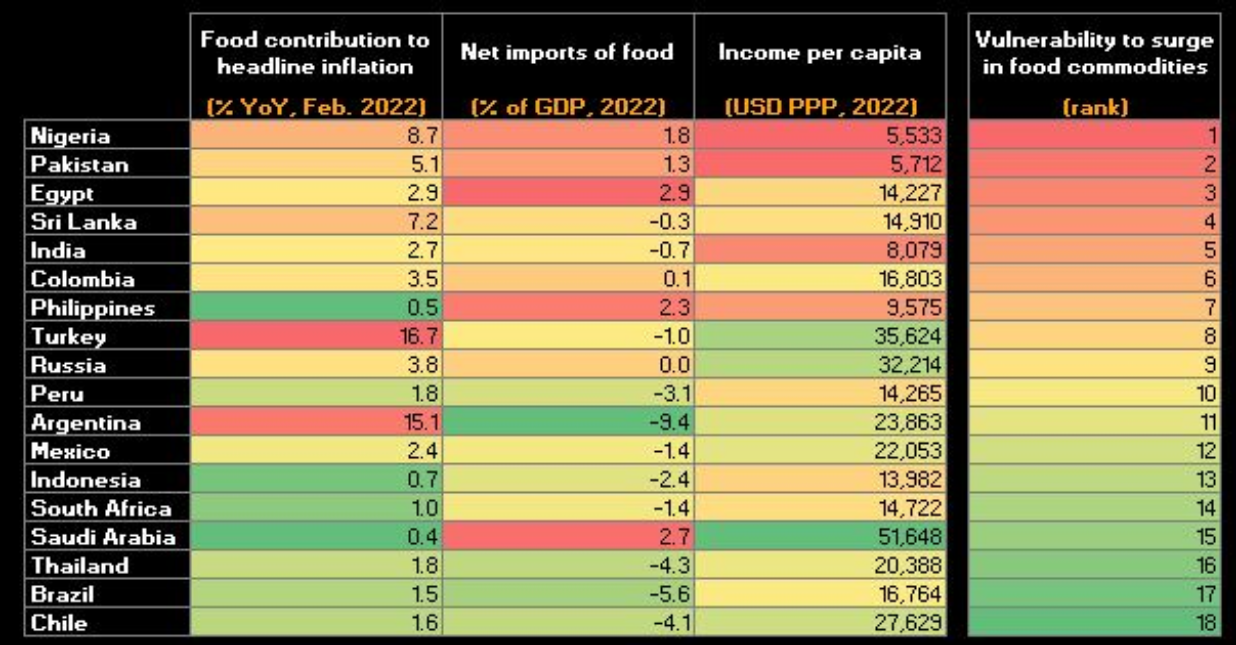
And as the following table from Bloomberg Economics shows, while Pakistan is already in the midst of a political crisis and Egypt is already coming under financial pressure (along with Peru and Sri Lanka), the surge in food prices is also adding to problems in the developed world.

Nigeria, India, Colombia, Philippines, and Turkey all bear watching, along with Russia…

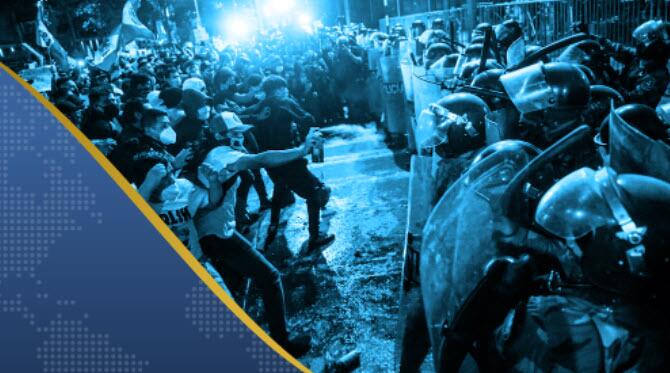
In fact, as PeakProsperity’s Chris Martenson details below, the inflation riots have begun. Peru and Sri Lanka both are experiencing violence as inflation spirals the prices of basic necessities higher and higher.

We’ve been here before, and recently.

The Arab Spring was a period of social unrest and riots in 2010 and 2011 that was triggered, in part, by spiking food costs.

As Alfred Henry Lewis said in 1906, “There are only nine meals between mankind and anarchy.”

But before pure anarchy comes, society experiences increasing unrest and the erosion of social bonds and niceties. That’s where we are now.

Food prices today are higher than they were in 2010, so the protests are not at all surprising. We can and should expect more of them.

Worse than that, however, is the prospect of actual famine and food shortages.

I expect true famine to emerge by the end of this year, after the northern harvest fails to cover the basic needs of 8+ billion people.

This is yet another reason why you should plant a garden. As if you needed one more, right?

The reason for the glum outlook is not just the loss of Ukraine exports, and probable loss of the planting season for quite a large portion of the Ukraine, but because of the desperate global shortages of fertilizers which have become utterly essential to today’s crop yields.

In this lesson, we learn that converting biologically active and supportive soil into barren dirt was a terrible idea.

By 2030, it is projected that phosphate will reach peak output and then begin its long slow decline. What’s the world plan for this? There isn’t one. Again, this is why local, regenerative farming is so critical to undertake at this time.

Watch the video:

Tyler Durden
Fri, 04/08/2022 – 20:20

via ZeroHedge News https://ift.tt/WL1THBc Tyler Durden

Trudeau Sets “Dangerous Precedent” With Tax Hikes On Canadian Banks And Insurers

Trudeau Sets “Dangerous Precedent” With Tax Hikes On Canadian Banks And Insurers

Canada’s banks and financial institutions were eager to do PM Justin Trudeau’s bidding when he called on them to financially excommunicate anybody caught supporting the “Freedom Convoy” of Canadian truckers.

Now they’re being rewarded with some of the biggest tax hikes in recent memory.

To wit, Bloomberg reports that Canadian Finance Minister Chrystia Freeland has imposed a “one-time windfall levy” on Canada’s biggest banks and insurance companies, while also permanently hiking their income-tax rate, in keeping with the Liberals’ campaign promises. The new taxes are expected to result in C$6.1 billion ($4.8 billion) in tax revenue over the past five years.

The measures will force banks and insurance companies to pay an additional C$6.1 billion ($4.8 billion) in tax over five years, according to Freeland’s budget plan released Thursday. The new taxes are virtually certain to be implemented because Prime Minister Justin Trudeau has already secured the support of a left-leaning opposition party to pass the budget law.

The government’s logic for justifying the tax hikes (much to the chagrin of the C-suite at these institutions) is that the banks benefited from the taxpayer-backed COVID bailout programs. Now, it’s time for them to pay it forward. The government said that massive, government-funded COVID support programs have helped the financial sector recover faster than other parts of the economy, and now it’s time to pay some back.

Of course, Canada’s banks can at the very least look forward to some additional revenues as rising interest rates will help boost their net interest margin.

But ultimately, it’s the borrowers who will suffer, as higher taxes will force the banks to demand even more interest on their loans, effectively creating a double-whammy that will raise the cost of everything from starting a business to buying a home.

Investors who own shares of the big Canadian banks will likely also share some of the burden as their stocks are expected to take a hit, as RBC Capital Markets analyst Darko Mihelic.

  • The windfall tax may set a “dangerous precedent that long term investors will be hard-pressed not to notice”.
  • “Banks’ earnings move with the economic cycle. By ignoring the earnings downside during a recession and punishing banks when earnings recover, an expectation may build for future cycles, ultimately harming valuations over the longer term”.

If there’s a silver lining, it’s that the even higher tax hikes that Trudeau had once threatened didn’t pan out.

While the measures are in line with what Trudeau had signaled was coming, the tax may prompt a negative share reaction for the banks on Friday, as some investors may have either ignored the issue or hoped that a flurry of lobbying from the banks would work, said Barclays analyst John Aiken.

“There was some concern, as imaginations started spiraling, that this was going to be absolutely awful,” Aiken said in an interview. “But it was within what had broadly been put out in the campaign promises.”

The windfall tax will apply to all taxable income earned last year by the banks and insurers.

The windfall tax of 15% applies to taxable income earned last year by banks and insurers in Canada over C$1 billion. That will force them to pay about C$4.1 billion, sliced into payments from 2022 to 2027, according to budget documents.

But the government did not go quite as far in increasing the banks’ income tax rate as Trudeau had threatened to during last year’s campaign. The prime minister had pledged to increase the maximum federal income rate for financial institutions to 18% from 15%.

Instead, Freeland is lifting it to 16.5% but lowering the threshold at which the new rate will apply to C$100 million from an original target of C$1 billion. That measure will mean about C$2 billion in additional taxes over five years, government estimates show.

The big question now: how will these tax hikes affect foreign investment in Canada?

Tyler Durden
Fri, 04/08/2022 – 20:00

via ZeroHedge News https://ift.tt/jvrTN9l Tyler Durden

The “Doomsday Preppers” Were Right

The “Doomsday Preppers” Were Right

Authored by Michael Snyder via The Economic Collapse blog,

For years, there was a great debate about what the future of our society would look like. 

The irrational optimists kept assuring us that we would never suffer any serious consequences for decades of incredibly foolish decisions, and they kept promising that a new golden age of peace and prosperity for humanity was just around the corner.  Meanwhile, others were warning that humanity would soon be plunging into an abyss filled with endless nightmares

Instead of a utopian new chapter in our history, we were warned that war, hunger, pestilence and relentless economic problems were on the horizon.

Prior to 2020, to a lot of people it seemed like the irrational optimists might be right after all.

Yes, there were lots of serious problems simmering in the background, but overall life seemed to be rolling along pretty good for most of the population.

But then 2020 came along, and everything started to change.

As I write this article in April 2022, war, hunger, pestilence and relentless economic problems have all materialized.  In fact, things are already so bad in Europe that rationing has now been instituted in some areas…

Russia’s invasion of Ukraine has threatened the supply of critical commodities in Europe and thrown global supply chains, which were already struggling amid COVID-19, into complete chaos.

As a result, the prices of everything from wheat to oil have soared, leading to multi-decade high inflation rates in places like Germany and Spain. The supply crunch in Europe is now so bad it’s causing governments to begin laying the groundwork for rationing, with some stores already limiting supplies.

This isn’t Africa that we are talking about.

If rationing is already taking place in Europe, how bad is it going to be for the poorer nations in the months ahead?

Well, UN Secretary-General António Guterres is telling us that “the world’s most vulnerable people and countries” are heading into a “hurricane of hunger”

UN Secretary-General António Guterres warned urgently of the global consequences of the war as early as mid-March. The breadbasket is being bombed and a “hurricane of hunger” is threatening, he stated. Given Ukraine’s great importance as a food exporter, the invasion was “also an attack on the world’s most vulnerable people and countries.”

Sadly, he is not exaggerating one bit.

As I discussed yesterday, at this point even Joe Biden is admitting that the coming food shortages are “going to be real”.

But even though global leaders are openly telling us that things are going to get really bad, most people still don’t seem very alarmed.

This greatly frustrates me, because this is not a false alarm.

There are 45 different nations that normally get “at least one-third of their wheat from Ukraine or Russia”

The world’s 45 least developed countries import at least one-third of their wheat from Ukraine or Russia, and 18 countries among them import more than 50 percent. These include Egypt, Democratic Republic of the Congo, Libya, Somalia, Sudan and Yemen. These are all countries that are already dependent on humanitarian aid and food supplies because millions of people are currently suffering from massive hunger.

How are all of those countries supposed to feed their people without that wheat?

I keep asking that question, and not a single person has been able to answer it.

Just look at the crisis that has erupted in Lebanon.  They normally get approximately 75 percent of their wheat from either Russia or Ukraine, and so far they have been unable to procure supplies from alternate sources…

Lebanon, which obtains 75 percent of its wheat from Russia and especially Ukraine, is also desperately seeking other wheat exporters, but so far without success. The government turned to the international community with a call for help. There are now fears of rationing and sharp price increases, which will hit the already hard-pressed population hard.

Meanwhile, the global bird flu plague just continues to intensify.

Here in the United States, the total death toll is now just short of 28 million

The new cases mean that across the nation, farmers have had to kill about 22 million egg-laying chickens, 1.8 million broiler chickens, 1.9 million pullet and other commercial chickens, and 1.9 million turkeys.

It has taken less than two months to go from the first confirmed case in the U.S. to nearly 28 million dead.

So what will the death toll look like six months from now?

And can you imagine what this will do to food prices?

It is being reported that the price of a dozen eggs has already risen 52 percent since the start of this new pandemic…

Egg prices are skyrocketing as a bird-flu outbreak ravages commercial chicken flocks in the U.S., with the price of a dozen large eggs spiking more than 52% in just under two months.

For much more on this crisis, please see the article that I posted yesterday entitled “20 Facts About The Emerging Global Food Shortage That Should Chill You To The Core”.  I wish that I had sufficient words to properly convey the urgency that we should all be feeling in this hour.  We are heading into a complete and total nightmare, and I wish that I could get more people to understand this.

Mike Adams is sounding the alarm too.  The following comes from an article that was published a few days ago in the Epoch Times

Food scarcity. Food vouchers. Food riots and flash mobs.

All of that’s coming—and soon, says Texas-based food scientist and “Health Ranger” podcaster Mike Adams, who sees dire events unfolding in America in the short term.

His advice: people need to get prepared now.

Of course he is right on target.

In fact, I have specifically been warning for years that all of these things were coming.

At this point, it is clear that the “great debate” is over.

The irrational optimists were wrong.  There will be no golden new era of peace and prosperity for humanity.

Instead, we have entered a “perfect storm” of pain, suffering and horror.

For many years, society laughed at the “doomsday preppers”, but they were right.

And if you plan to make it through the extremely chaotic times that are coming, I would recommend that you become a “doomsday prepper” too.

*  *  *

It is finally here! Michael’s new book entitled “7 Year Apocalypse” is now available in paperback and for the Kindle on Amazon.

Tyler Durden
Fri, 04/08/2022 – 19:40

via ZeroHedge News https://ift.tt/cVbTjzw Tyler Durden

UCLA Pulls Ad For ‘Unpaid’ Professor Job Amid Backlash

UCLA Pulls Ad For ‘Unpaid’ Professor Job Amid Backlash

Universities (and the students and faculty who populate them) like to hold themselves out as paragons of virtue. But despite the immense financial resources of elite American universities, the overwhelming majority of the instructors who teach their classes are poorly paid, and enjoy little – if any – job security, something that has become a ‘fact of life’ for academics.

But UCLA recently tried to push things to the limit, eliciting a furious backlash from academics, who felt the university was trying to exploit its workforce by attempting to hire an adjunct professor with an offer of “zero compensation”.

Unpaid internships for college students are one thing, but the job posting asked for a lot: the candidate needed to have a PhD and a strong teaching record. As the backlash worsened, the university withdrew the job posting – but not before the NYT picked up on it.

The job posting for an assistant adjunct professor at the University of California, Los Angeles, set high expectations for candidates: A Ph.D. in chemistry or biochemistry, a strong teaching record at the college level, and three to five letters of recommendation.

But there was a catch: The job would be on a “without salary basis,” as the posting phrased it. Just to be clear, it hammered home the point: “Applicants must understand there will be no compensation for this position.”

The posting last month caused an immediate uproar among academics across the country, who accused the university of exploiting already undervalued adjunct professors, and suggested this would never happen in other occupations. Under pressure, U.C.L.A. apologized and withdrew the posting.

But the unspoken secret had been fleetingly exposed: Free labor is a fact of academic life.

Unpaid, or poorly paid, positions are the biggest drivers of the ‘inequality’ that American colleges purport to oppose (even though they contribute to the phenomenon, due to a combination of academic selectivity and increasingly unaffordable tuition). As it turns out, the academics union at the University of California system has been fighting these arrangements for years.

What’s even more unfair than the low – or no – pay is that the instructors typically spend long hours reading dense academic papers and answering student questions.

The union representing contingent faculty at the University of California has been fighting the uncompensated positions for years, said Mia McIver, the president of the union, which represents about 7,000 members. “The fact that it is common does not excuse it,” she said.

The union suspects that the number of uncompensated teachers at the university is increasing, said Dr. McIver, who is also a lecturer in the U.C.L.A writing program. “As of March 2019, we had identified 26 faculty members at U.C.L.A. alone,” she said.

In the California system, the trend seemed to have begun with the financial crisis of 2008, Dr. McIver said. By 2010, she said, “We became aware of people who had been laid off and who were teaching for free in the hopes, without any commitment from the university, that if the work came back they would be hired back to teach for pay.”

Many instructors who find themselves suckered into these work-for-free arrangements apparently regret it later. One woman who taught biology class at Washington University for free told the NYT that she later regretted agreeing to do so – especially after she found that instructors in other departments were paying paid.

Liza Loza, a graduate student in molecular microbiology and microbial pathogenesis at Washington University, was excited to be asked to teach a discussion section about four years ago. She had to do a lot of preparation, spending hours reading very dense scientific papers and anticipating students’ questions.

But she saw the job as her chance to make those discussions more hospitable to women and other students who had been shut out of the hard sciences. She remembered her own experience having professors who were so intimidating that she was afraid to speak, and she wanted to set a counterexample.

She was told that the job was unpaid because it was a professional development opportunity. She says the experience was valuable. “I did get a lot out of it on my C.V., but also personally, as something that I wanted to help make better about the program,” she said.

Then last semester, in her third year of teaching the section, she found out by accident that graduate students in other departments were being paid $1,000 for the same work.

“That was for me a bright line,” she said. “It just seemed sort of straightforwardly unfair once I figured that out.”

Elite Universities have fought to keep the system in place, while at the same time seeking to distract from it by promoting their efforts to ’empower’ women and members of the LGBTQ community.

But like the old saying goes, “you can’t eat prestige”. As surging inflation makes it increasingly difficult for anybody to work for free (including white men and women who are members of the upper- and upper-middle-class), will we see a rebellion of the instructors and “contingent” faculty who keep these universities ticking?

Tyler Durden
Fri, 04/08/2022 – 19:20

via ZeroHedge News https://ift.tt/q1nLcRQ Tyler Durden

“Gary Is Just Making Up Random #s” – San Francisco Homeless Officials Caught Lying About Fabricated Data

“Gary Is Just Making Up Random #s” – San Francisco Homeless Officials Caught Lying About Fabricated Data

Authored by Michael Shellenberger via Substack,

Emails released through California Public Records Act show San Francisco Department of Public Health lied about data that had been fabricated by city contractor HealthRight360…

Hilary Kunins, Director of Behavioral Health, Department of Health (Left) Gary McCoy of HealthRight360 (center), Deborah Bourne, Deputy Director, Public Health Department (right)

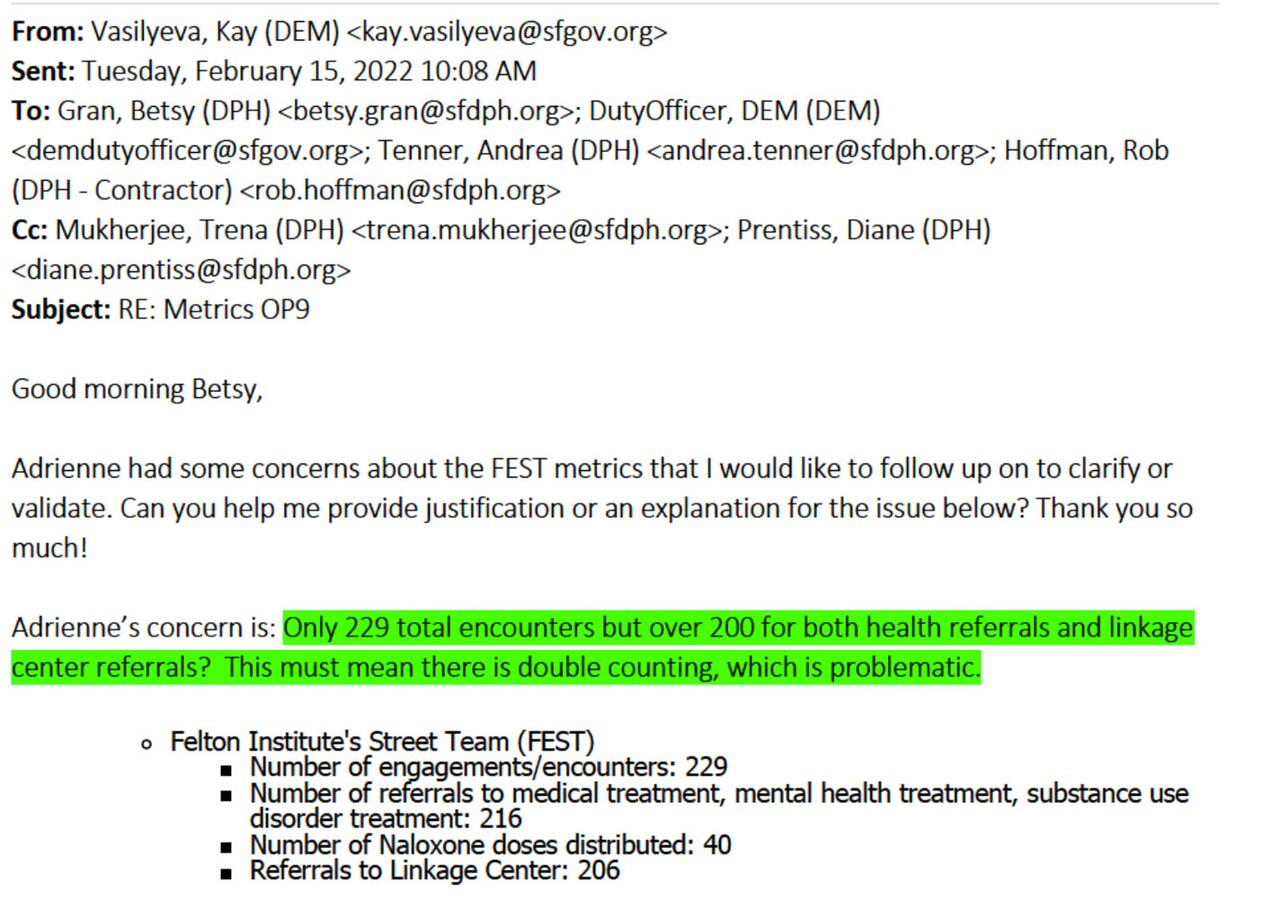
The operator of San Francisco’s supervised drug use site fabricated the number of people who the site allegedly served, according to a San Francisco Department of Public Health executive, whose emails were released as part of California’s Public Records Act.

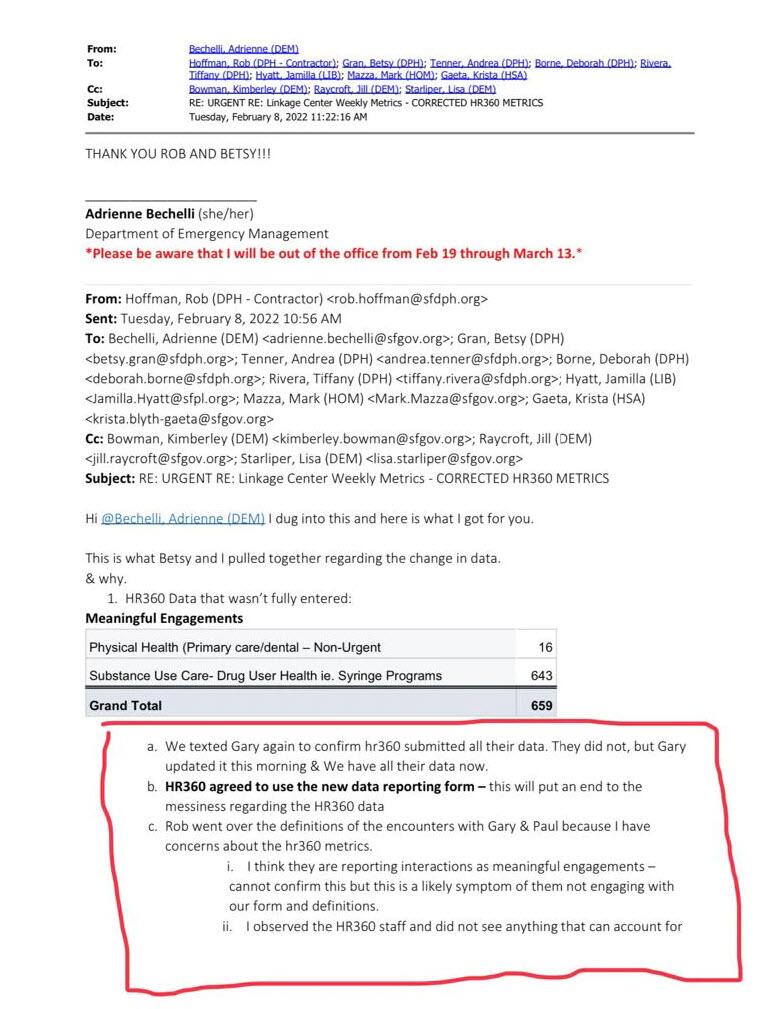
“I think Gary is just making up random #s,” wrote Dr. Rob Hoffman, Special Project Manager with the San Francisco Department of Health, in a February 8 email to other city employees including ones with the Department of Emergency Management and city homeless service agencies.

Gina McDonald, co-founder of Mothers Against Drug Deaths, filed the public records request, and was the first to report that of the 23,367 drug users who have visited the Tenderloin Linkage Center, just 18 have received drug treatment

The Gary in question is Gary McCoy, an employee of city contractor HealthRight360, which is one of the private sector operators of the Tenderloin Linkage Center, which San Francisco Mayor London Breed created last December as part of her proposed crackdown on the open drug market in United Nations Plaza in downtown San Francisco.

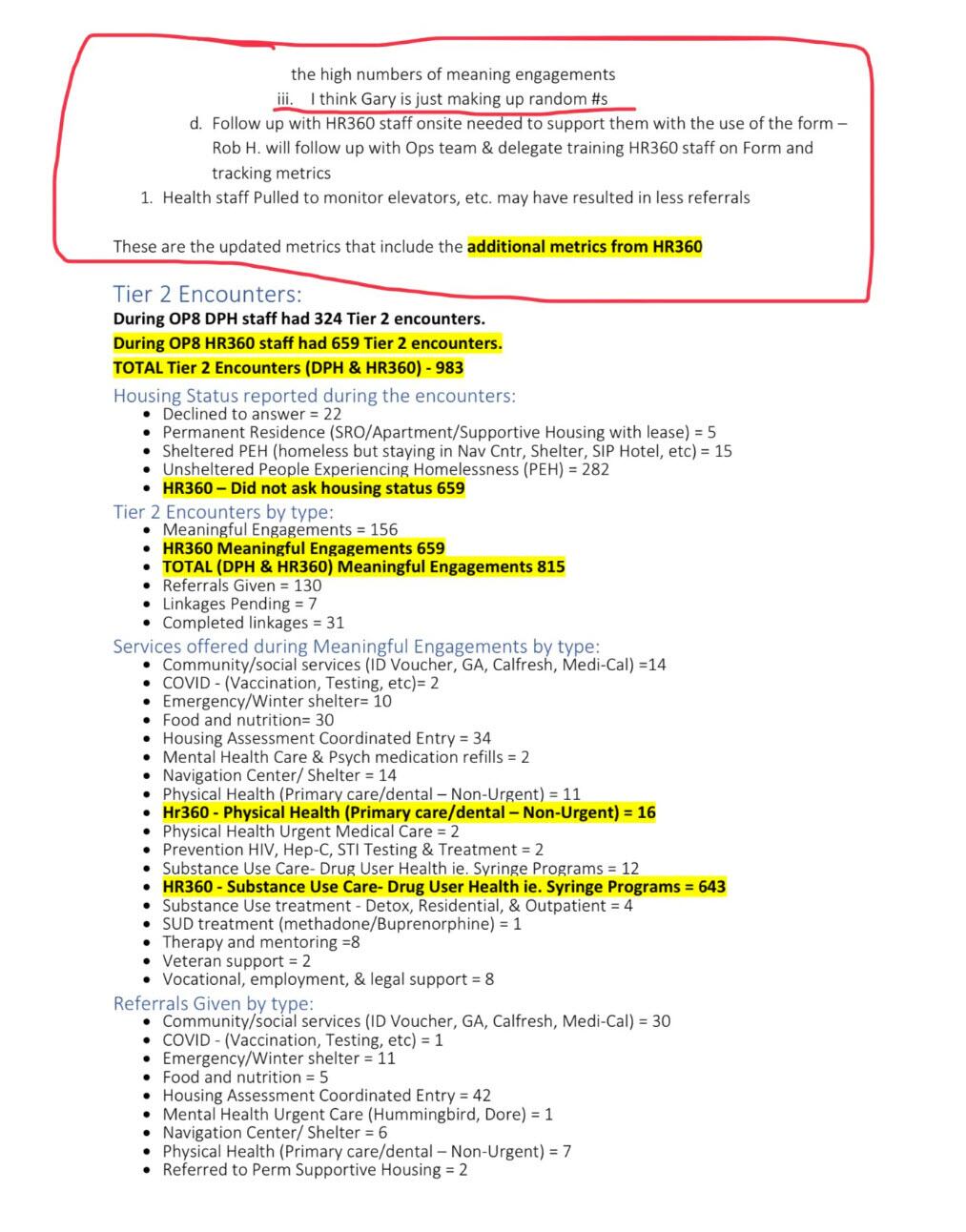
The numbers in question were for so-called “meaningful engagements” between city contractors and drug users, many of whom are homeless. Emails between city officials and Linkage Center operators show a struggle over how to measure whether or not the effort is working.

A section of the same email says Hoffman had “concerns about the hr360 metrics. I think they are reporting interactions as meaningful engagements… I observed the HR360 staff and did not see anything that can account for the high numbers of meaning engagements… I think Gary is just making up random #s.”

On February 15, an executive with the Department of Emergency Management, Kay Vasilyeva, wrote, “Adrienne had some concerns about the FEST [Felton Institute Street Team] metrics… Only 229 total encounters but over 200 for both health referrals and linkage center referrals? This must mean there is double counting, which is problematic.”

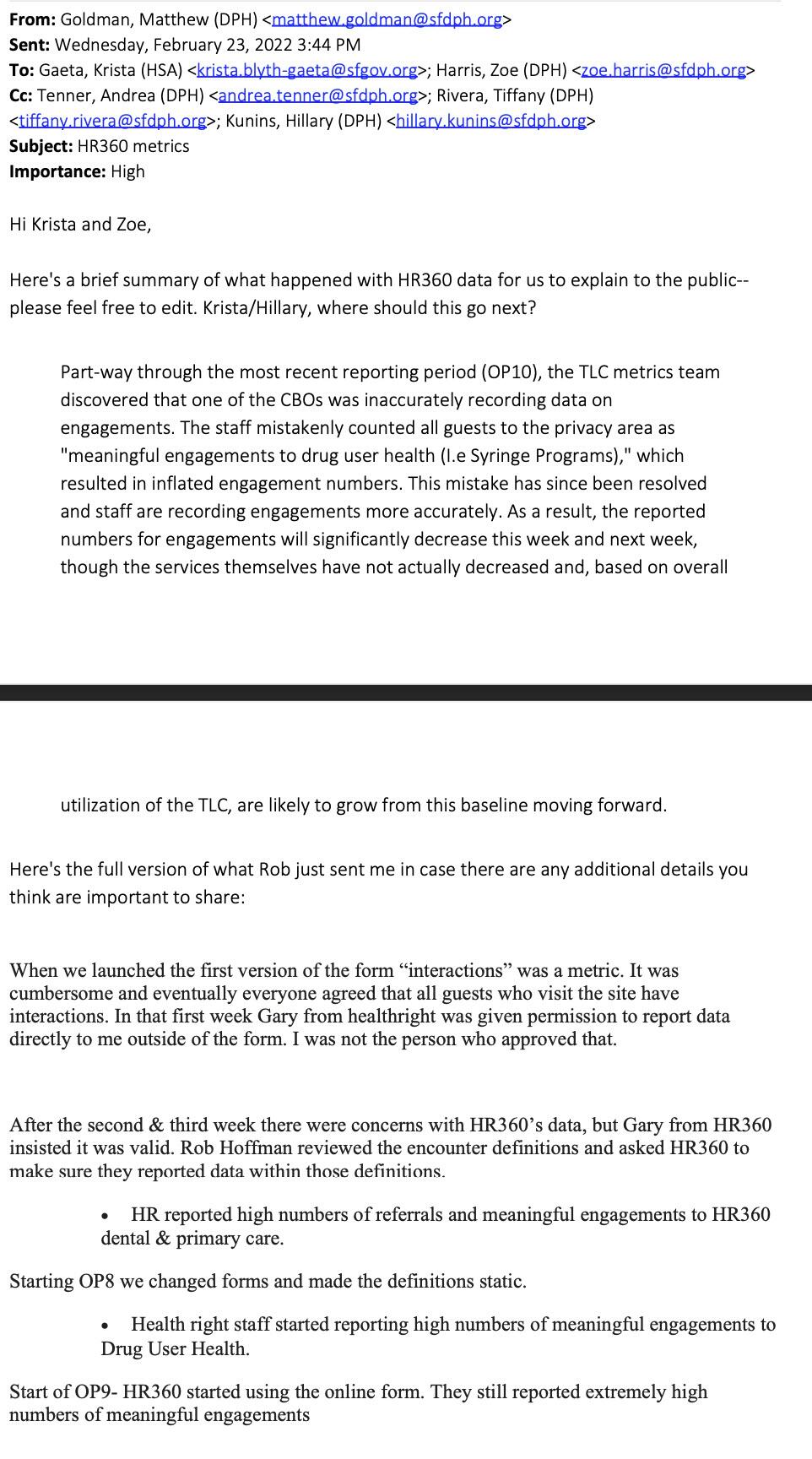
On February 23, another Department of Public Health employee, Dr. Matthew Goldman, wrote an email to colleagues saying, “After the second & third week there were concerns with HR360’s data, but Gary from HR360 insisted it was valid.”

In response to a request from a reporter with the San Francisco Standard news organization, the Director of Communications with the Department of Public Health, Alison Hawkes, misrepresented what had occurred.

In a separate email later the same day, Hawkes re-wrote a public statement written by Goldman. “Part-way through the most recent reporting period (OP10),” wrote Goldman in his draft, “the TLC metrics team discovered that one of the CBOs was inaccurately recording data on engagements.”

Hawkes re-wrote the statement to read, Part-way through the most recent reporting period (OP10) the TLC metrics team discovered that one of the providers at the site was defining engagements in a way inconsistent with other teams on the site.”

Six minutes later, Hillary Kunins replied to Hawkes saying, “thx Alison! made a few additional edits. I don’t think we should use the terms, ‘incorrect’ or ‘mistake,’ and don’t think we should refer to the ‘privacy area,’ as that has been an internal term, and not (as far as I know) a publicly used description. see below. I do think we need to define meaningful engagement – I don’t have that.”

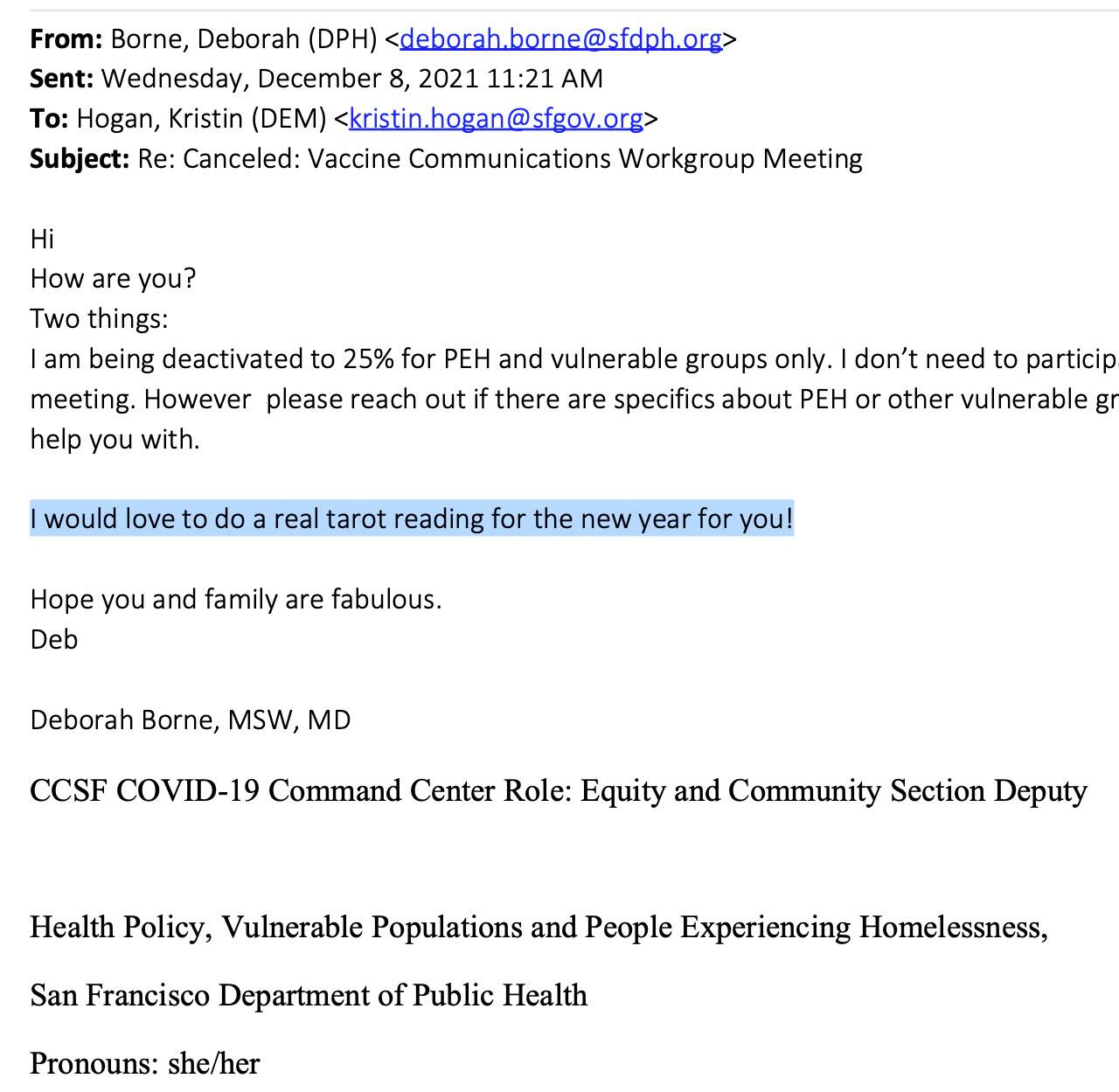
The emails offer a glimpse into the shared culture of the Department of Public Health and its contractors. One senior Department executive, Deborah Borne, wrote in an email to an employee with the Department of Emergency Management, “I would love to do a real tarot reading for the new year for you!”

*  *  *

Subscribe to Michael Shellenberger’s Substack here…

Tyler Durden
Fri, 04/08/2022 – 19:00

via ZeroHedge News https://ift.tt/0e1FCA6 Tyler Durden

Bank Of Russia Eases More Capital Controls, Allowing Euro & USD Withdraws

Bank Of Russia Eases More Capital Controls, Allowing Euro & USD Withdraws

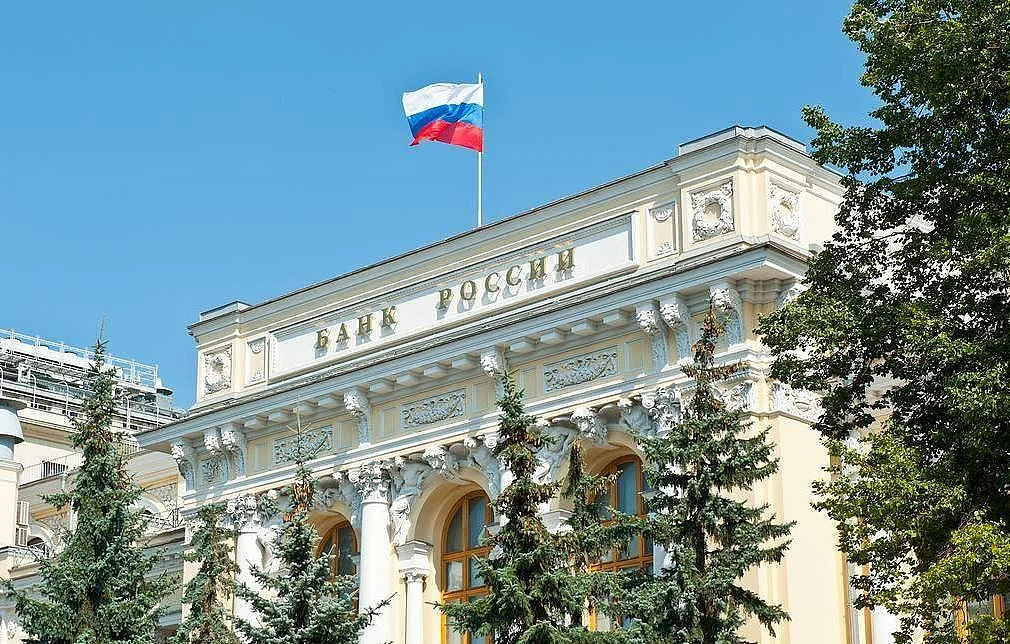
Russia’s central bank has announced Friday the easing of more capital controls following its surprise policy meeting, exactly a week after it began loosening some restrictions on the transfer of funds abroad, which authorized transfers up to $10,000 – or another currency equivalent – within a one month timeframe. 

“The Bank of Russia rolled back some capital controls, allowing banks to exchange rubles for hard currency once more and for some hard-currency account holders to withdraw euros and not just dollars,” Bloomberg reports of the fresh Bank of Russia decision.

Bank of Russia file

It’s latest among a series of signs that the Russian financial system is stabilizing. As we noted earlier in the day the biggest news out of Moscow was the central bank’s unexpected move of slashing rates by 300bps (from 20% to 17%). And was even more surprising to many is that the Ruble – previously dismissed as “rubble” by President Biden – actually strengthened further on the rate-cut, surging by end of day to just below 80/USD.

Further according to Bloomberg, “Individuals with foreign currency accounts or deposits open prior to March 9 who hadn’t used up their $10,000 limit for withdrawing cash, can receive euros as well as dollars from April 11, the central bank said in a statement.

“Banks can sell foreign currency once again from April 18, but only the foreign currency that the banks received since April 9,” the report indicates. The fresh curbs also included canceling the 12% commission on brokers’ FX purchases.

Meanwhile, the media are claiming that the strength of the ruble “may be illusory” or that Russia has exploited a “loophole” in the sanctions and used “financial alchemy” to “rescue the ruble”.

But as the FT observed yesterday (while telling their readers to “Whisper it quietly…”), “The domestic banking sector also seems to have stabilized, after bank runs in the initial days of the war,” pointing out that “The need for central bank liquidity has faded sharply and the commercial banking sector as a whole could soon end up having surplus deposits with the CBR, the IIF [Institute of International Finance] notes.”

Tyler Durden
Fri, 04/08/2022 – 18:40

via ZeroHedge News https://ift.tt/Bm0SR57 Tyler Durden

Durham Asks Court To Compel Production From Clinton Campaign, DNC

Durham Asks Court To Compel Production From Clinton Campaign, DNC

Authored by Zachary Stieber via The Epoch Times (emphasis ours),

Special counsel John Durham’s team on April 6 asked a federal judge to force Hillary Clinton’s presidential campaign and two other parties to hand over documents they claim are protected by attorney–client privilege.

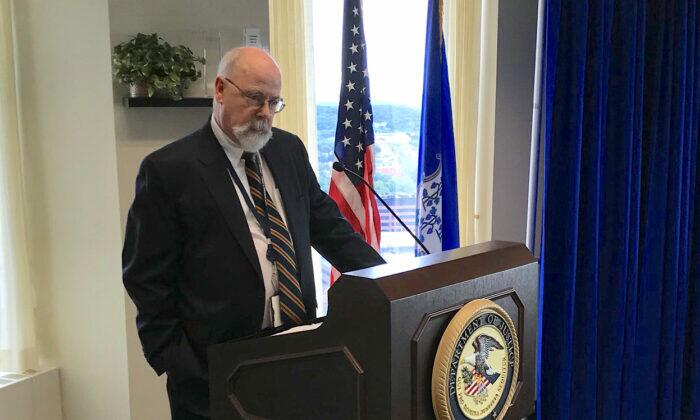
John Durham speaks at a conference in New Haven, Conn., on Sept. 20, 2018. (Courtesy of the U.S. Attorney’s Office for the District of Connecticut)

The campaign, the Democratic National Committee (DNC), and research and intelligence firm Fusion GPS appear to be withholding documents that aren’t actually protected by the privilege, Durham’s team said in the filing, entered in the case against ex-Clinton lawyer Michael Sussmann.

Of the withheld materials, almost all “appear to lack any connection to actual or expected litigation or the provision of legal advice,” prosecutors told U.S. District Judge Christopher Cooper, an Obama appointee who is overseeing the case.

In fact, of the 1,455 documents being withheld by Fusion GPS, only 18 emails and attachments are said to involve an attorney.

The Clinton campaign, the DNC, and Fusion didn’t respond to requests for comment.

The documents in question are being sought for the upcoming trial of Sussmann, who was charged with lying to the FBI for going to a bureau lawyer in 2016 and falsely stating he didn’t hand over unsubstantiated claims about then-candidate Donald Trump on behalf of a client.

The claims were compiled with funding from the campaign and the DNC by former British spy Christopher Steele and Fusion GPS, which was founded by former reporters.

Sussmann and his lawyers have been pressing the judge to dismiss the case prior to trial, arguing that the lie about not bringing the information on behalf of a client wasn’t material to the information itself.

Attorney–client privilege protects many communications between a client and their lawyer. Disclosure to third parties usually undercuts privilege claims.

In the new filing, Durham’s team pointed out that Fusion GPS co-founders Glenn Simpson and Peter Fritsch penned a book published in 2019, which means even if a valid privilege did once exist, it might have since been waived.

Prosecutors also noted that Fusion GPS operatives regularly communicated with reporters about their work, resulting in several stories before the 2020 election and a spate of others after voters hit the polls.

Further, the Clinton campaign (HFA) and the DNC have claimed privilege over communications sent between Rodney Joffe, whom Sussmann was also representing at the time, and a Fusion operative, “despite the fact that no one from either the DNC or HFA is copied on certain of these communications,” prosecutors said.

The government subpoenaed information from the parties in 2021.

Fusion GPS was paid by the Democratic entities through Perkins Coie, a law firm. The agreement was introduced as an exhibit in the case.

Many if not most of the actions taken by Fusion GPS employees “do not appear to have been a necessary part of, or even related to” Perkins Coie’s legal advice to the campaign and the DNC, Durham’s team said.

Prosecutors want to examine the communications in a private, in-camera setting “in order to resolve these issues and ensure that only legitimately privileged and/or attorney work product-protected communications and testimony be withheld from the otherwise admissible evidence and testimony that is presented to the jury at trial.”

The trial is currently set to start on May 16.

Tyler Durden
Fri, 04/08/2022 – 18:20

via ZeroHedge News https://ift.tt/UCWa03m Tyler Durden

Global Food Prices Explode Higher In March As Ukraine Supply Shock Strikes

Global Food Prices Explode Higher In March As Ukraine Supply Shock Strikes

Global food prices jumped to a new record high, soaring the fastest on record, as the conflict in Ukraine unleashed food supply shocks across the world. 

“The current conflict between Ukraine and the Russian Federation is increasing the risk of a further deterioration of the food insecurity situation at global level,” the FAO said in a recent food insecurity assessment (pdf).

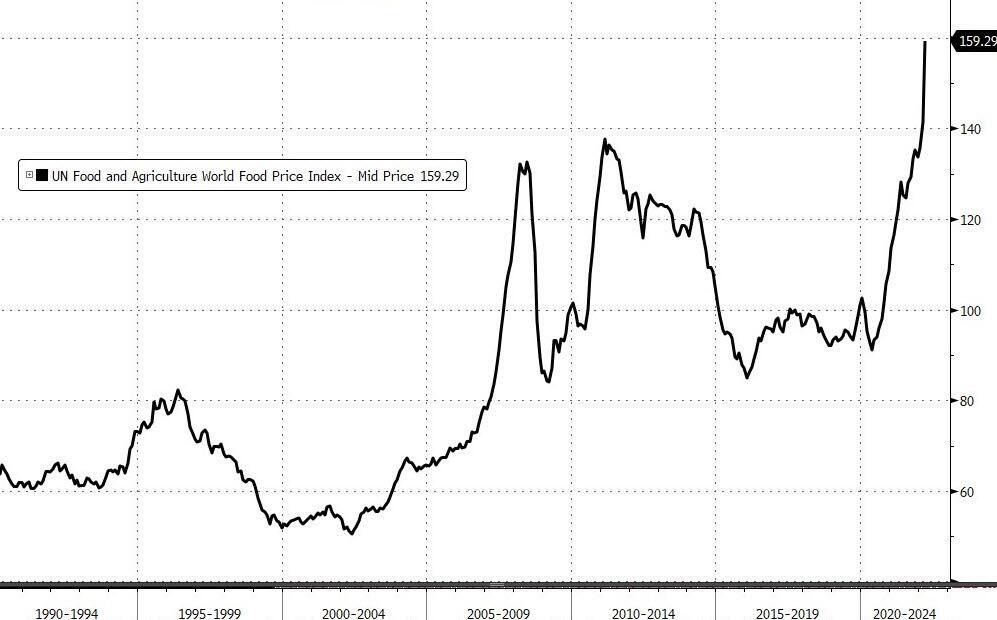
March’s food price index from the Food and Agriculture Organization of the United Nations (FAO) printed 159.3 points in March, up 19.15 points from February, when it had already reached record highs. The index was up 33.6% from the same time last year.  

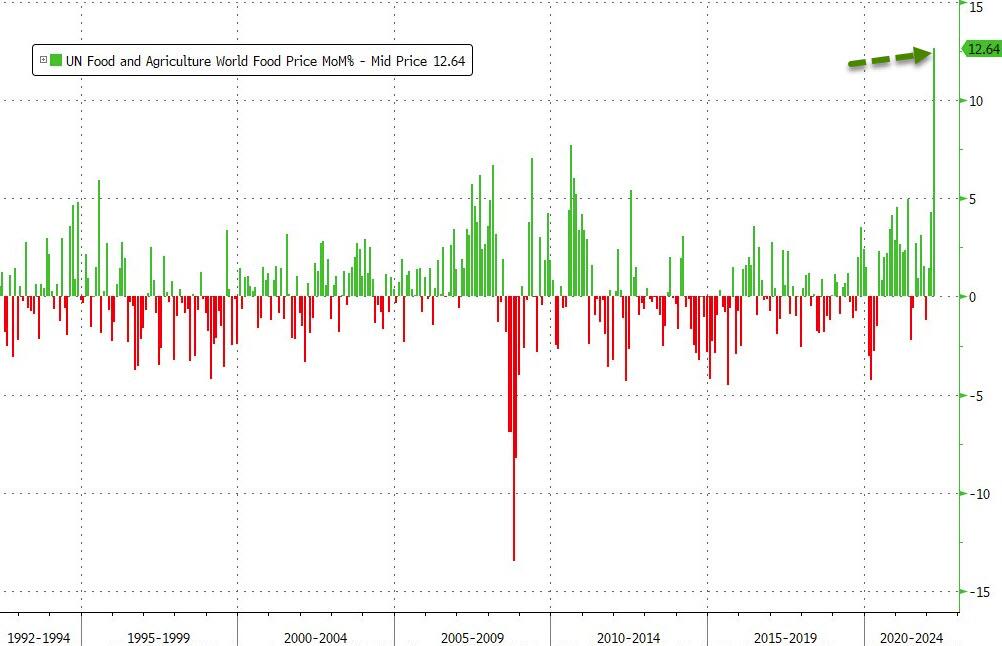
The March rise in food prices is a stunning 12.64% MoM – almost double the previous record monthly surge…

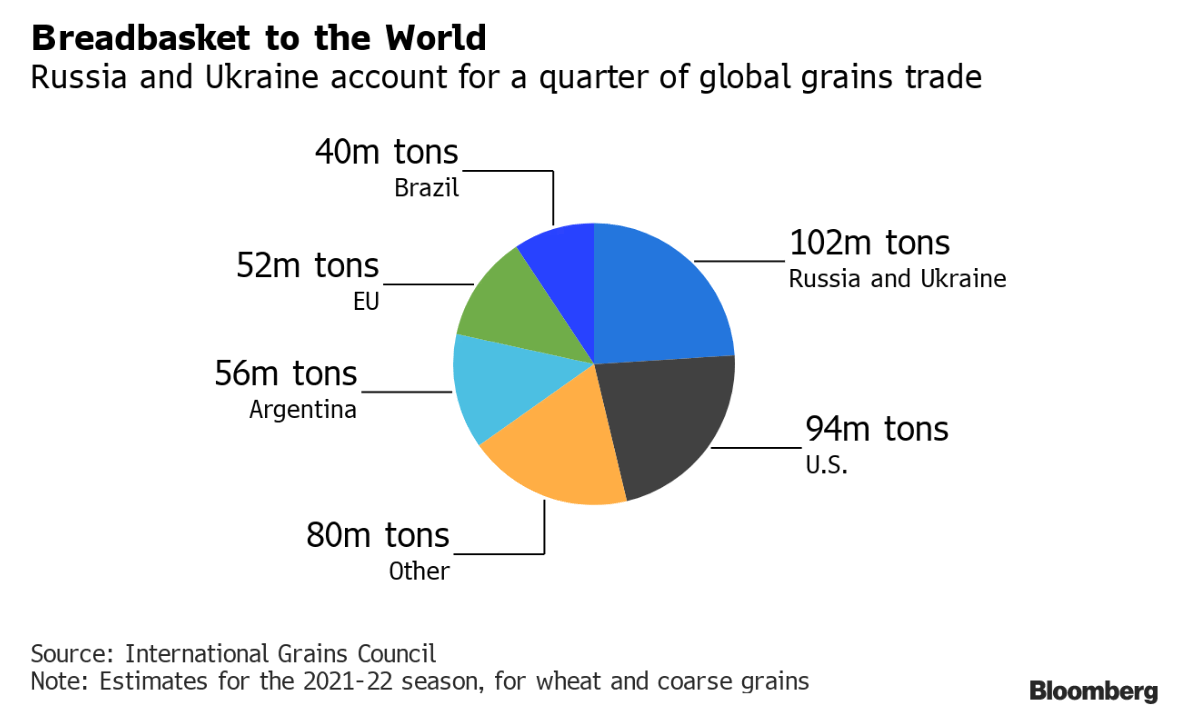
Leading the charge was the FAO Cereal Price Index, up 17.1% in March than in February, entirely driven by significant price increases in wheat and grains as a result of the Black Sea breadbasket region going offline because of the Russian invasion of Ukraine and sanctions-related supply disruptions by Western countries on Russia. The invasion has choked off more than a quarter of the global wheat trade, about a fifth of corn, and 12% of all calories traded globally. 

Another driver was FAO Vegetable Oil Price Index, up 23.2%, driven by higher prices of sunflower seed oil, of which Ukraine is the world’s leading exporter. Palm, soy, and rapeseed oil prices increased due to higher sunflower seed oil and Brent crude prices. 

It’s not just a shortage of food, but also shortages of fertilizer and skyrocketing diesel prices, the ability to farm and even perhaps produce robust harvests by the end of the Northern Hemisphere growing season could be in jeopardy, which would ultimately extend the global food crisis through 2023. 

“Looking forward to 2022-23, we’re already seeing signs that production is going to be reduced in Ukraine,” Erin Collier, an economist at the UN, told Bloomberg.

“The amount they’re able to export really depends on how much longer this conflict continues.”

The bad news is the world’s hunger problem isn’t going away and may only get worse from here…

The risks of soaring basic foods are possible inflation riots in emerging market economies. Last week, the UN pointed out millions of Middle Eastern and North African families struggle to buy even the most basic foods to keep hunger at bay. 

People’s resilience is at a breaking point. This crisis is creating shock waves in the food markets that touch every home in this region. No one is spared,” Corinne Fleischer, UN’s World Food Programme Regional Director said. 

The risk of uprisings is increasing by the week as the UN projects food prices to soar even higher. It’s important to note that food prices were already rising before the Ukrainian conflict. 

We’ve outlined the most reliant countries on Ukraine wheat, including Egypt, Indonesia, Bangladesh, Pakistan, and Turkey (the countries that could see unrest first). 

However, in South America, inflation riots have already begun as the government declared a curfew last weekend. Arab Spring 2.0 appears to be emerging, but this time it could be global, unlike a decade ago. 

Tyler Durden
Fri, 04/08/2022 – 18:00

via ZeroHedge News https://ift.tt/0tlTqw2 Tyler Durden

Daily Briefing: The U.S. Dollar Continues To Show Its Strength

Daily Briefing: The U.S. Dollar Continues To Show Its Strength

The U.S. dollar index hit 100 for the first time in two years on Friday, surging on the prospect of a more aggressive monetary tightening cycle on top of an increasingly fraught geopolitical landscape. Signs of inflation abound, even as the Federal Reserve asserts its hawkishness at every opportunity. The U.N. Food and Agriculture Organization’s food price index jumped nearly 13% in March to a new record high, with disruptions to global trade flows, specifically passage through the crucial Black Sea, fueling fears of food shortages. And prices for agricultural commodities continue to rise. U.S. equity indexes were mixed two hours before Friday’s close of regular trading, with tech stocks giving back much of what was gained on Thursday. The yield on the 10-year U.S. Treasury note touched a new three-year high. Jeremy Schwartz, Global Chief Investment Officer at WisdomTree Asset Management, joins Warren Pies on today’s Daily Briefing to discuss the U.S. dollar, supply chain disruptions, and inflation. Want to submit questions? Drop them right here on the Exchange: https://rvtv.io/3xenRmT

Tyler Durden
Fri, 04/08/2022 – 14:28

via ZeroHedge News https://ift.tt/r4fagVW Tyler Durden

David Stockman On The Coming Stock Market ‘Crash Of Biblical Proportions’

David Stockman On The Coming Stock Market ‘Crash Of Biblical Proportions’

Authored by David Stockman via InternationalMan.com,

International Man: Whether we like it or not, the reality is, the Federal Reserve has an enormous influence over the dollar and the stock market.

And right now, the Fed has an urgent and fateful decision to make.

It can keep printing trillions of dollars, let inflation skyrocket or tighten monetary policy, and watch the stock market crash.

In other words, it can sacrifice the stock market or the dollar. 

David, what do you think the Fed will do, and what are the implications?
David Stockman: Well, I think whether it wants to or not, the Fed will crash the stock market. The Fed has painted itself into a hellacious corner because it’s made such a fetish out of its 2% inflation target, especially since January 2012, when it officially adopted this quantitative target.

In fact, most of the massive money printing, which has occurred since 2012, when the economy was pretty much recovered from the Great Recession anyway, has been justified by an inflation shortfall, which wasn’t true, but that was the justification.

They were trying to raise inflation and therefore felt that they could keep quantitative easing at these huge rates, including $120 billion per month, until recently. And as a result, we’re now in a world in which inflation is heading towards double digits.

I think they’re going to have no choice but to throw on the brakes much harder than the market is expecting, much harder than they would like to do, or maybe even intend at the moment, but there’s no choice.

Now, when you have double-digit inflation, number one and second, you’re going into what’s going to be a nasty election season in which the Republicans will finally see hope for their salvation in a horrendous battle on the inflation front blaming the Democrats and Biden.

That means the Fed will not be in a position over the next 2, 3, 4 quarters to retreat on the inflation battle. Whether it wants to or not, it will have to raise interest rates even far more than are expected now.

It’s going to begin QT, quantitative tightening, or draining its $9 trillion balance sheet faster than it is talking about at the moment or what the market expects. That’s because it’s not going to be able to justify or maintain any credibility when inflation is running at the CPI level at nearly 10%.

So that’s a new ballgame.

We haven’t been in these kinds of uncharted waters for a long time, not since the 1970s, and even in the 1970s, the story was far different than it is today. So, the market will struggle with a Fed that turns out not to be their friend. It’s going to time and time again, think that the worst is over, buy the dip and make a lot of money, only to be disappointed.

I point out one final kind of analogy here.

If you go back to March 2000, when the dot-com bubble collapsed, the NASDAQ peaked at 4600, and the market dropped by 30% in the next 15 days. And after that bone-rattling drop people said it’s all over. The worst has happened, and you should buy the dip. You’re going to make a lot of money.

And over the next two years, they kept buying the dip, but over the next two years, the NASDAQ went from 4,600 to 3,300, all the way down to 800. An 80% plus decline and all that dip buying resulted in massive losses and pain.

I think we’re going to go through the same thing again.

International Man: Suppose the Fed does raise rates aggressively in the months ahead. What are the chances that they will capitulate and reverse course as soon as Wall Street starts screaming about it?

David Stockman: Well, that’s what people expect, but I think this time, they’re not going to capitulate soon and easily. In other words, the so-called Fed put is a lot lower on the S&P 500 index than people may expect or that the Wall Street bulls would like to believe. They think it might be 3,500 or something like that. I think it’s around 2000 because the Fed won’t have the maneuvering room.

Even the official inflation statistics are running high. They are understating the true inflation when you adjust for all the gimmicks they put in the CPI in the last 20 years. But when inflation on the government statistics is running at 7-10%, they’re just not going to have room to start the printing presses again.

International Man: Given the rapidly rising debt levels—corporate, personal, and for the federal government—is it even possible for the Fed to raise interest rates beyond a token amount?

David Stockman: Well, I think you can say it would be dangerous, and yes, the debt levels are really something to behold.

If you take public and private debt today, it’s $88 trillion, which is 370% of GDP. It’s off the charts compared to where a stable economy historically stood. If you go back to 1970, before Nixon pulled the plug on sound money, the ratio was 150%. In other words, we had about $1.5 trillion of total debt and a GDP of $1.0 trillion.

So now we’ve had two extra turns of debt added to the economy over the last 50 years. Two turns of additional debt amount to $50 trillion today, burdening all sectors of the economy, households, non-financial business, governments especially, and even financial institutions, than would be the case had we stuck to kind of that golden mean of 150% debt to GDP. That’s the leverage ratio of the national economy that prevailed for a century up to 1970.

So yes, there is a massive problem with this enormous debt burden. When the Fed raises interest rates, it will notch up the carry cost and service cost enormously, creating all kinds of dislocations in households that will have to pay more for their mortgages and their other debt.

As interest rates go up, all that money corporations borrowed to buy back stock and pay dividends that weren’t being earned will result in larger interest expenses and lower profits.

So the whole thing will be a pretty big mess, but that will not stop the Fed from using the only tool it has.

It has one tool. It’s like the craftsman with a hammer, and everything looks like a nail. So if the Fed wants to accomplish something, it will have to hit the nail.

So the Fed will have to raise interest rates, not just a 2% by the end of this year or 2.5%. They’re going to have to go up into the 4-6% range to slow down the economy and break the back of inflation.

I was around when Volcker took interest rates to 20% on the overnight rate to finally break the back of inflation. But, of course, that will cause a lot of damage to the economy. But I don’t think they have much choice.

In short, you’re going to have one difficult time bringing inflation under control, and the consequences of those moves will be mind-boggling and historic in terms of their negative impact.

International Man: Given everything we’ve talked about today, what can the average person do? What can they do to protect themselves and profit from what is coming next?

David Stockman: Well, I think the most important thing is to stay out of the casino.

The bond market is vastly, massively overvalued. As a result, the price of bonds will drop dramatically, and people will be shocked by how much you can lose in allegedly safe sovereign debt.

The stock market is even more dangerous, and it’s entirely because of these artificially low, ultra-low interest rates. So now we’re starting to move into the realm of reality, let’s say normalcy, as interest rates come back up. And I think they got a long way yet to go.

If you’re going to be in the stock market, be on the short side.

But if you don’t have discretionary capital or savings, and if you don’t have the stomach for what will be a very volatile ride, the best thing to do is stay in cash, even though you’re losing ground against inflation. At least bank accounts are not going to lose principle. Whereas bonds and stocks can lose 30%, 40%, 50%, 60% of their value in the next year or two as we go through this great correction.

*  *  *

The Fed has already pumped enormous distortions into the economy and inflated an “everything bubble.” The next round of money printing is likely to bring the situation to a breaking point. If you want to navigate the complicated economic and political situation that is unfolding, then you need to see this newly released video from Doug Casey and his team. In it, Doug reveals what you need to know, and how these dangerous times could impact your wealth. Click here to watch it now.
Tyler Durden
Fri, 04/08/2022 – 17:40

via ZeroHedge News https://ift.tt/iGd0LEk Tyler Durden