The Fed Is Resigned To Blowing The Biggest Bubble Ever Just To Extend The Expansion

Many have wondered if the Fed is ignorant to the problems their policy prescriptions cause, or if they’ve just resigned to walking society down the path to destruction knowingly. It increasingly looks like the latter. Indeed, the Fed may very well understand that its “lower for longer” policy is leading the economy and global markets straight into disaster. However, as the same time, the central bank – feeling trapped after 10 years of unprecedented stimulus which if undone would result in a historic crash – is backed into a corner and has no choice but to accept this growing risk, as the world’s punch drunk central bankers continue to try at all costs to keep the bloated economic “expansion” going.

Indeed, the Fed itself acknowledges this risk, because according to the minutes of the FOMC policymaking meeting from March 19 and March 20. “A few participants observed that the appropriate path for policy, insofar as it implied lower interest rates for longer periods of time, could lead to greater financial stability risks” the minutes read. 

Chairman Powell himself understands very well the risks that he is taking: he has previously pointed out publicly that the last two “expansions” ended in the dot com bubble burst and then the housing bubble burst, according to Bloomberg.
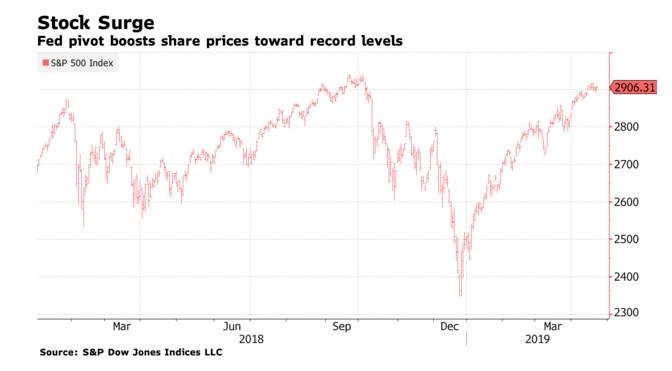
But it is the Fed’s willingness to continue down this path, despite seeing the dangers, that is disturbing. It’s a classic example of putting a Band-Aid on the problem now at the cost of the future. Holding rates down while pursuing maximum employment and 2% inflation is a policy that has proven to lead to disaster.

Tobias Adrian, a senior International Monetary Fund official said: “Easy financial conditions today are good news for downside risks in the short-term but they’re bad news in the medium term.”

The Fed’s dilemma – obvious to everyone but them – is that the neutral rate of interest (i.e. “r star”) is simply too low – something we discussed back in 2015 – so low that, in fact, that instead of keeping the economy at an equilibrium, it simply encourages more risky behavior by investors.

The neutral rate has continued to fall as a result of rising debt, an aging population and slower productivity growth. Bloomberg has been using a term called “FAST-star” instead of “R-star” to denote a rate level that ensures financial stability. A setting above it stifles risk-taking while the setting below it encourages excess. The Fed’s neutral rate – “R-star” – falls well below this suggested rate.

The dovish shift by the Fed at the end of the year last year helped prompt a massive stock market rally, even after raising rates from 2.25% to 2.5%. So far the S&P 500 index is up 16% in 2019. However, the one beating the drum the most in favor of dovish policy – President Donald Trump – continues to complain that rate increases have held back the economy.
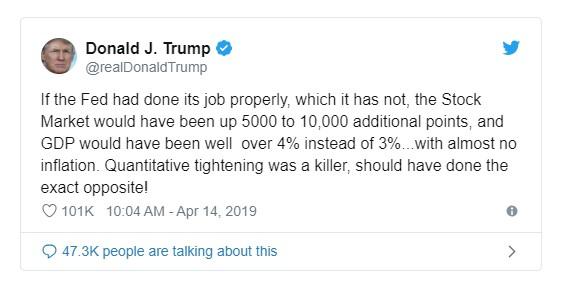
Yet some policymakers at last month’s FOMC meeting believe that risks can be offset by, drumroll, “counter-cyclical macro prudential policy tools, combined with regulatory and supervisory measures.” This is the same tool and measures that failed to spot the last two financial crises until both were well underway. Additionally, there is another problem to this thinking: even in a best case scenario, the Fed has a limited set of tools. This was even acknowledged by Fed Vice Chairman for Supervision Randal Quarles during a March 29 speech.

Meanwhile, Powell has said that he doesn’t see a high risk of financial instability at this point, a comment that may soon be proven to be as accurate as Ben Bernanke’s assertion that “subprime was contained” prior to the housing crisis. Powell instead argues that the Fed tries to keep the system safe by requiring large banks to hold excess capital and undergo stress tests.

And at some points, Fed presidents have sounded open to the idea of using higher interest rates to cull the markets a little bit. For instance, New York Fed President John Williams said in October “that the central bank’s rate increases would help reduce risk-taking in financial markets, though he added that was not their principal purpose.”

But that type of talk has faded since then.

Jonathan Wright, a professor at Johns Hopkins University and a former Fed economist said: “There doesn’t seem to be the same idea of having tighter monetary policy so as to lessen the risk of asset bubbles developing.”

In April former Treasury Secretary Lawrence Summers concluded: “There are reasons for fearing the economic consequences of very low rates. These include a greater propensity to asset bubbles and incentives to substantially increase leverage.”

Ultimately, the Fed indeed has no choice: either it inflates away the debt – which is where MMT will come in very handy in a few years as helicopter money is unleashed under the guise of “QE for the people” – or it’s game over for the status quo anyway. If it means creating the biggest asset bubble in the process, so be it.

via ZeroHedge News http://bit.ly/2UCga2P Tyler Durden

Facebook Shares Surge After Revenue Beat, FTC Charge; Zuck Sees “Privacy-Focused Future”

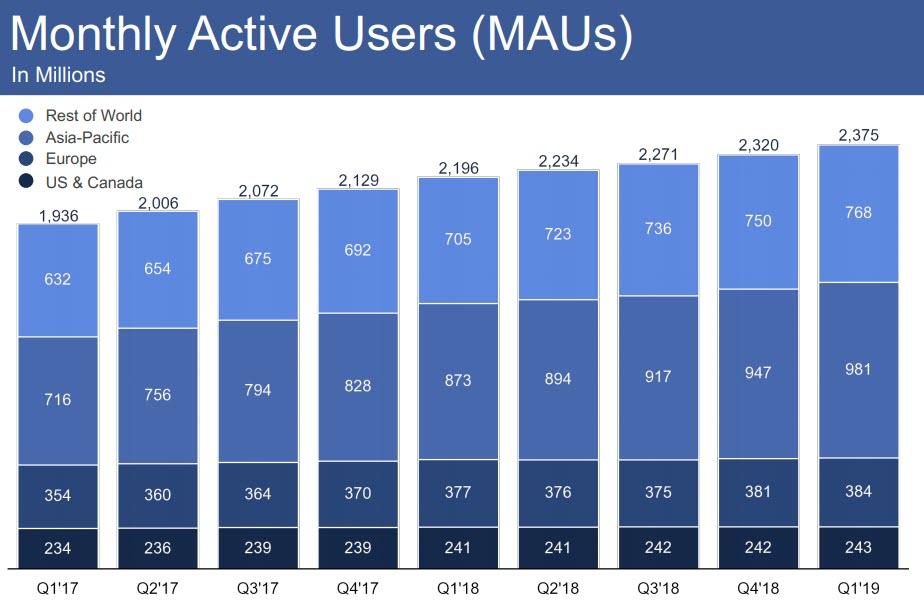
After some better-than-terrible data from Twitter and Snap, all eyes were on Facebook as it beat broad market expectations on revenue and met on user growth…

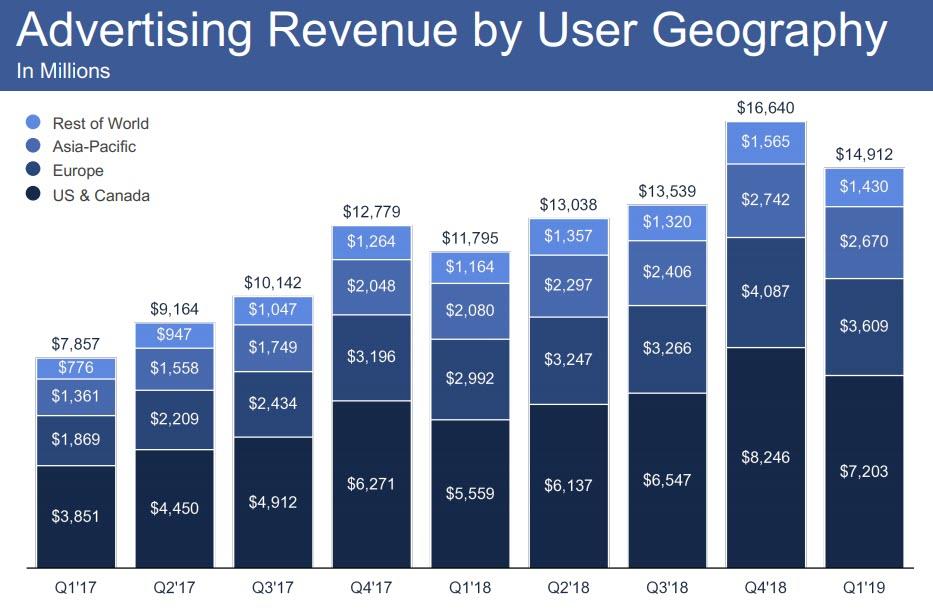
  • 1Q revenue $15.08 billion, estimate $14.97 billion (range $14.70 billion to $15.24 billion) (Bloomberg data)

  • 1Q monthly active users 2.38 billion, estimate 2.37 billion (Bloomberg News)

  • 1Q daily active users 1.56 billion, estimate 1.56 billion (BN)

Both daily active users and monthly active users increased 8% year-over-year.

Facebook’s first-quarter revenue rose a better-than-projected 26% (better than the 25% expected):

“We had a good quarter and our business and community continue to grow,” said Mark Zuckerberg, Facebook founder and CEO.

We are focused on building out our privacy-focused vision for the future of social networking, and working collaboratively to address important issues around the internet.”

Which was clear from the surge in headcount…

Facebook Headcount – Headcount was 37,773 as of March 31, 2019, an increase of 36% year-over-year

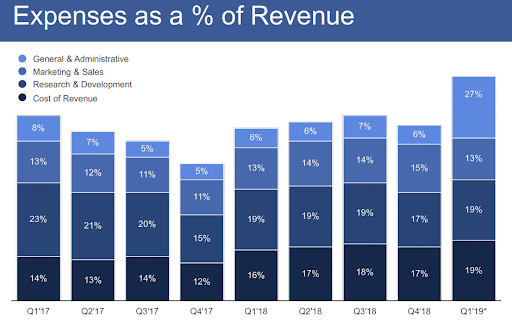
And Expenses soared…

Most notably, Facebook is confirming a $3 to $5 billion charge related to an ongoing privacy investigation by the U.S. Federal Trade Commission, which hasn’t yet been resolved

In the first quarter of 2019, we reasonably estimated a probable loss and recorded an accrual of $3.0 billion in connection with the inquiry of the FTC into our platform and user data practices, which accrual is included in accrued expenses and other current liabilities on our condensed consolidated balance sheet. We estimate that the range of loss in this matter is $3.0 billion to $5.0 billion. The matter remains unresolved, and there can be no assurance as to the timing or the terms of any final outcome.”

Excluding that cost, profit was $1.89 a share, topping the average analyst estimate of $1.62.

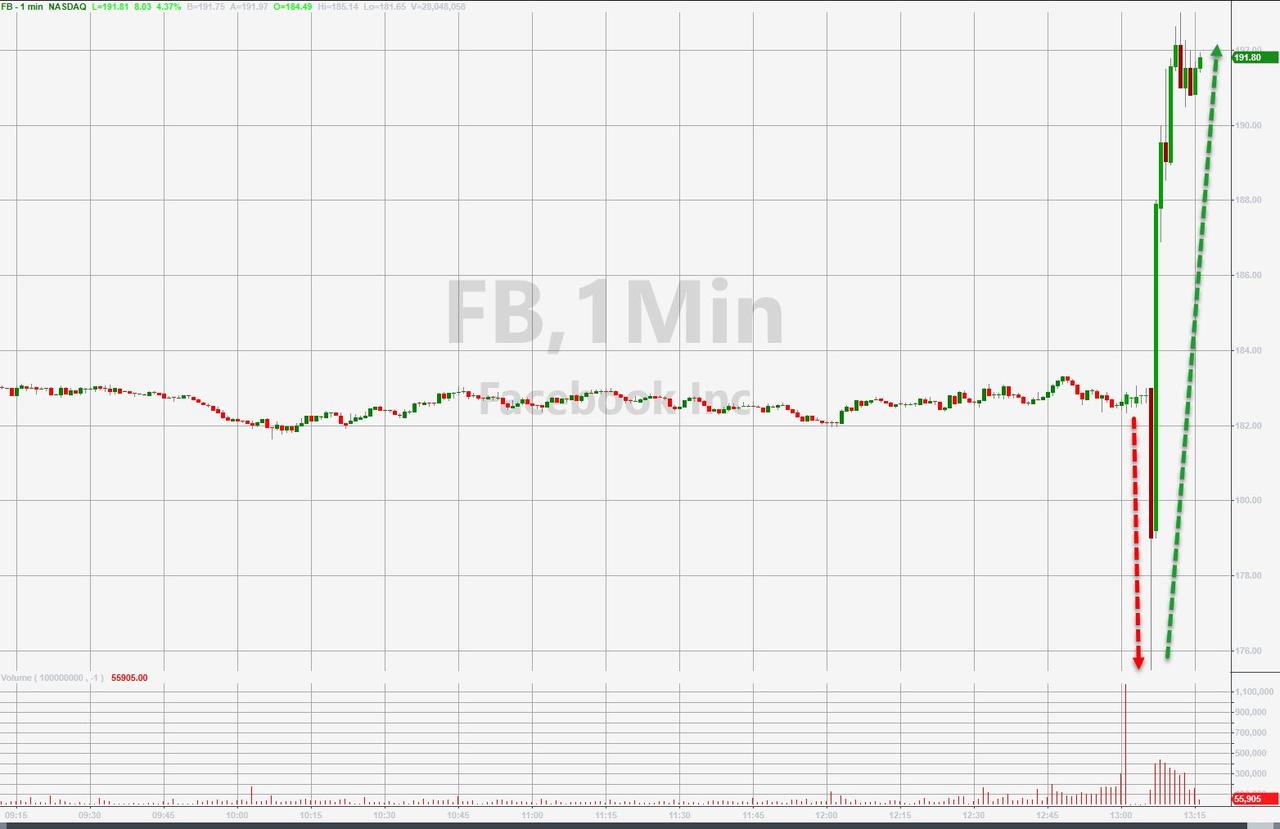
The stocks price tumbled out of the gate but quickly surged…


Facebook estimates that “more than 2.1 billion people now use Facebook, Instagram, WhatsApp, or Messenger every day on average, and around 2.7 billion people use at least one of our Family of services each month.”


via ZeroHedge News http://bit.ly/2XFm3yf Tyler Durden

EM FX Crashes As US Dollar & Bonds Soar, Stocks Snore

Earnings (dramatically weaker), macro (two-year lows), funding markets (IOER), bonds (yields tumbling), and FX (chaos) – but stocks are at record highs – so everything is awesome, right?

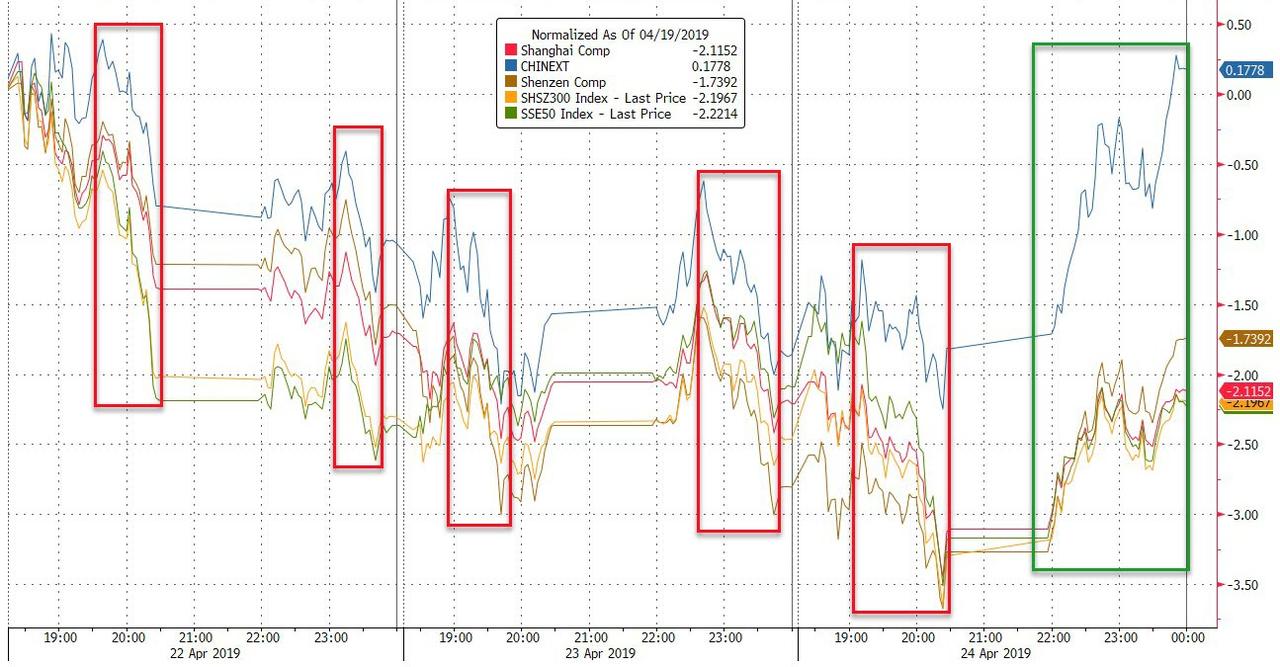
After two dismal days (and a rough morning session), The National Team steeped in to rescue Chinese stocks from their worst run this year…


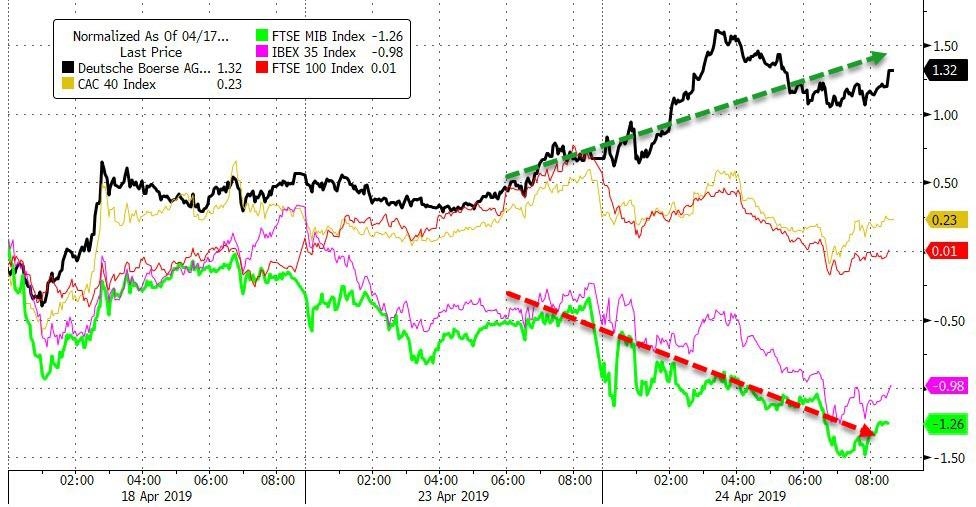
Europe continues to be mixed with Germany leading and the periphery lagging…


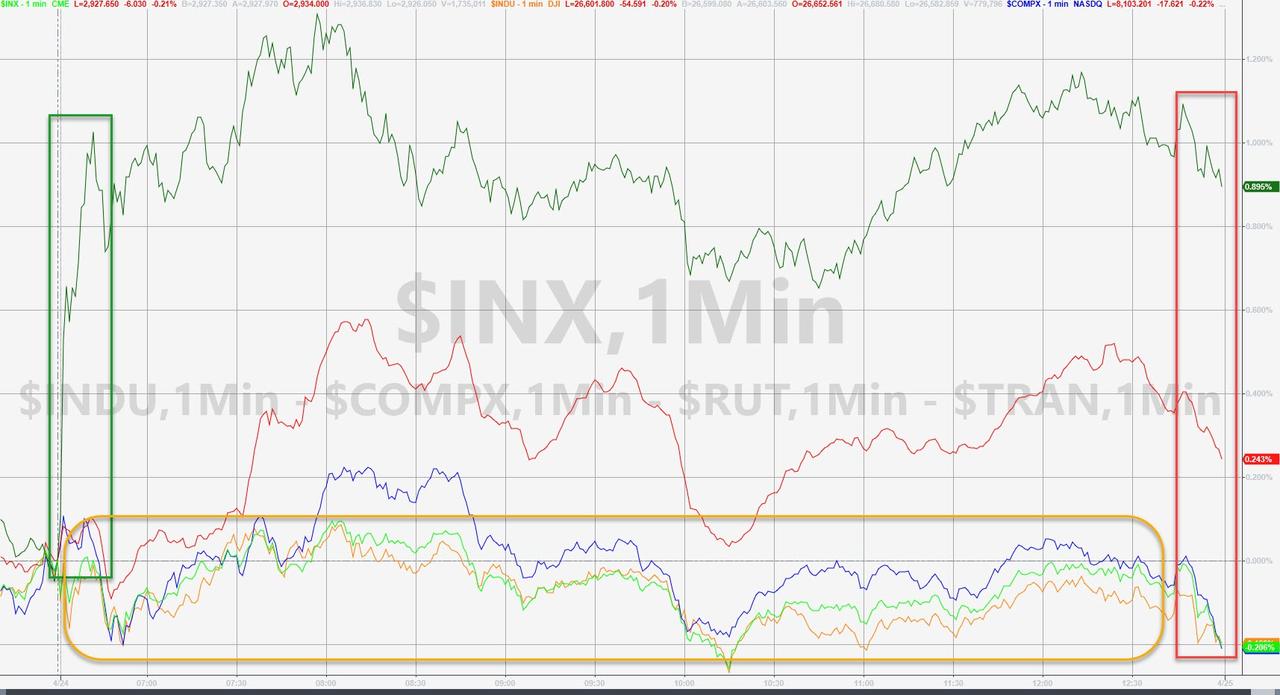
Trannies and Small Caps managed gains today (another short-squeeze) as The Dow, S&P, and Nasdaq trod water…

Nasdaq 100’s first losing day in 8 days.

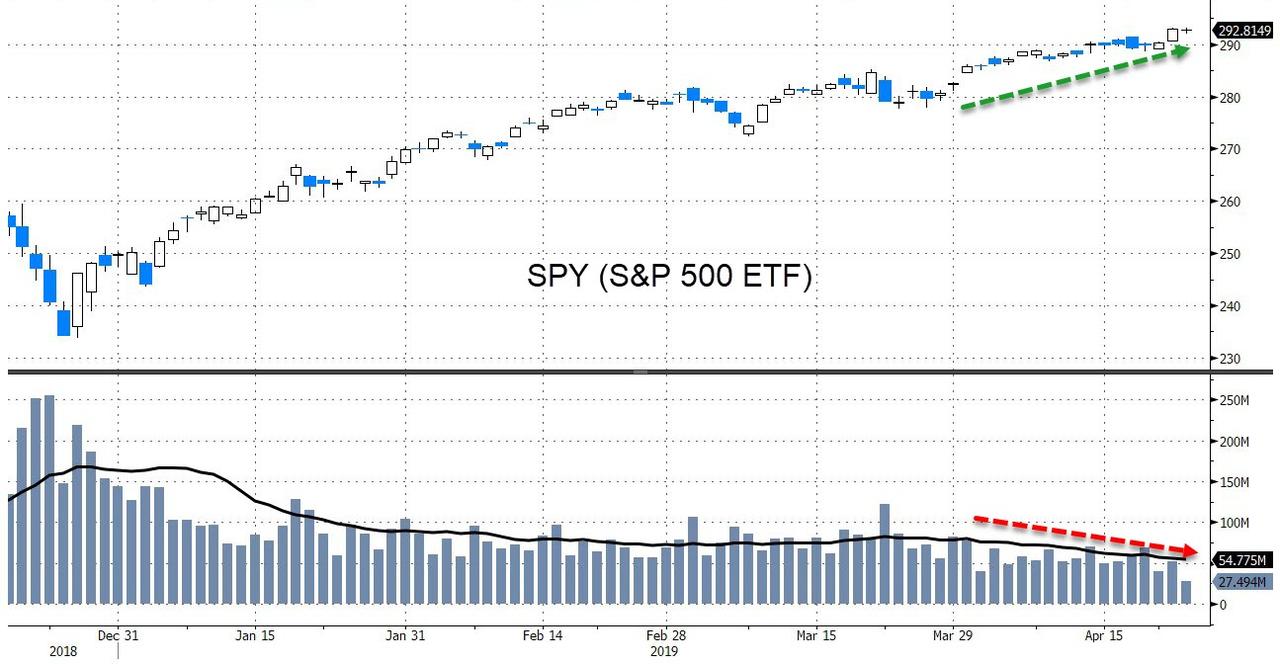
Volume remains dismal…

Today is the 78th trading day of the year, SPY volume has exceeded 100MM only 10 days so far, 13% of all days. Through 78 trading days in 2018, SPY volume exceeded 100MM 39 times, 50% of all days.


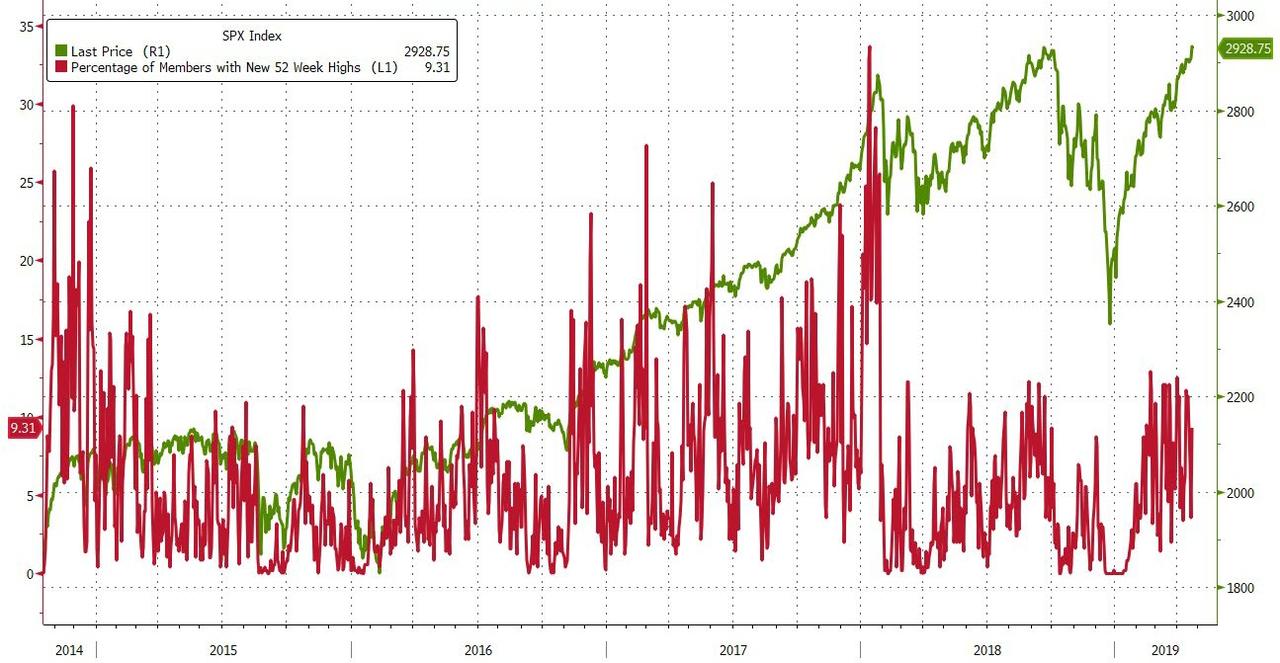
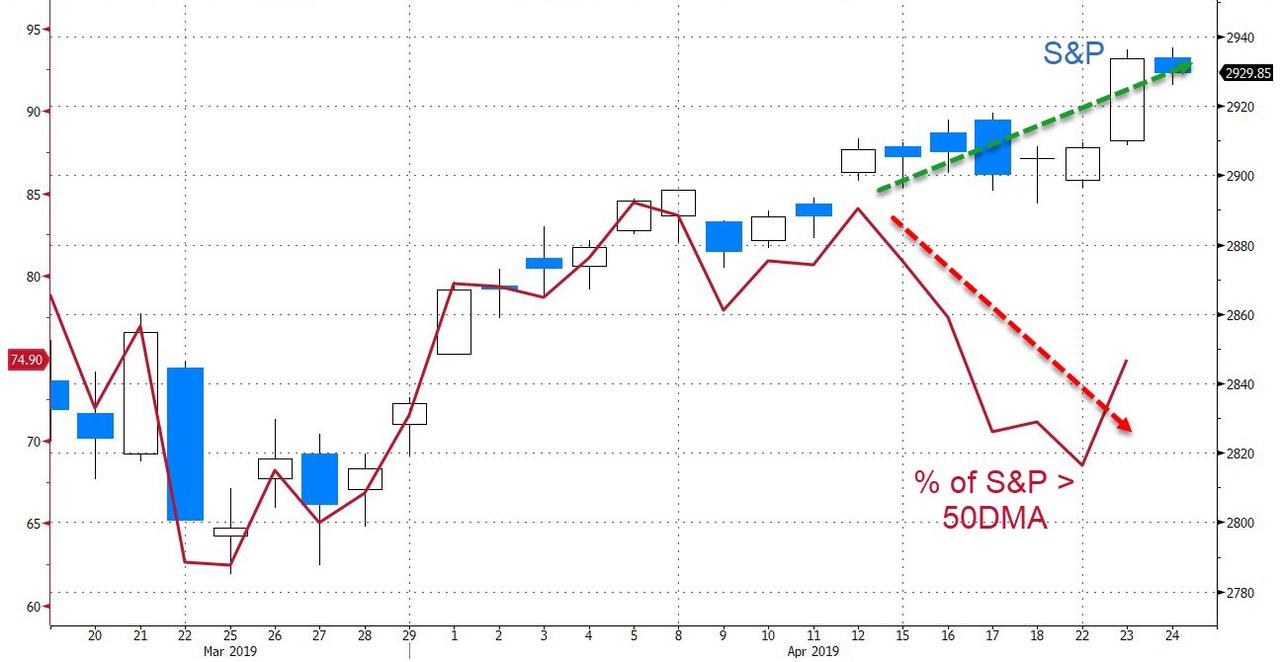
And as the S&P hovers at its record highs, it seems not many of its components are playing along…

In fact:

And breadth remains notably weak in this last panic-bid…

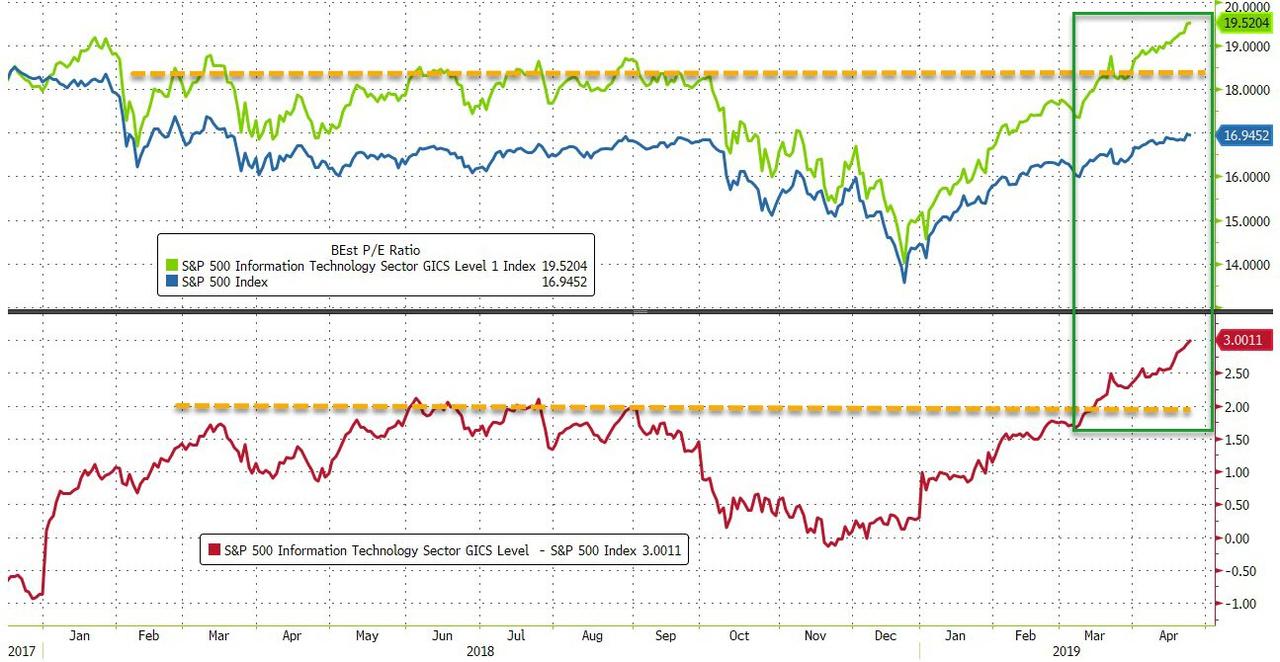
As big tech valuations soared to near record highs, decoupling from the broader market…


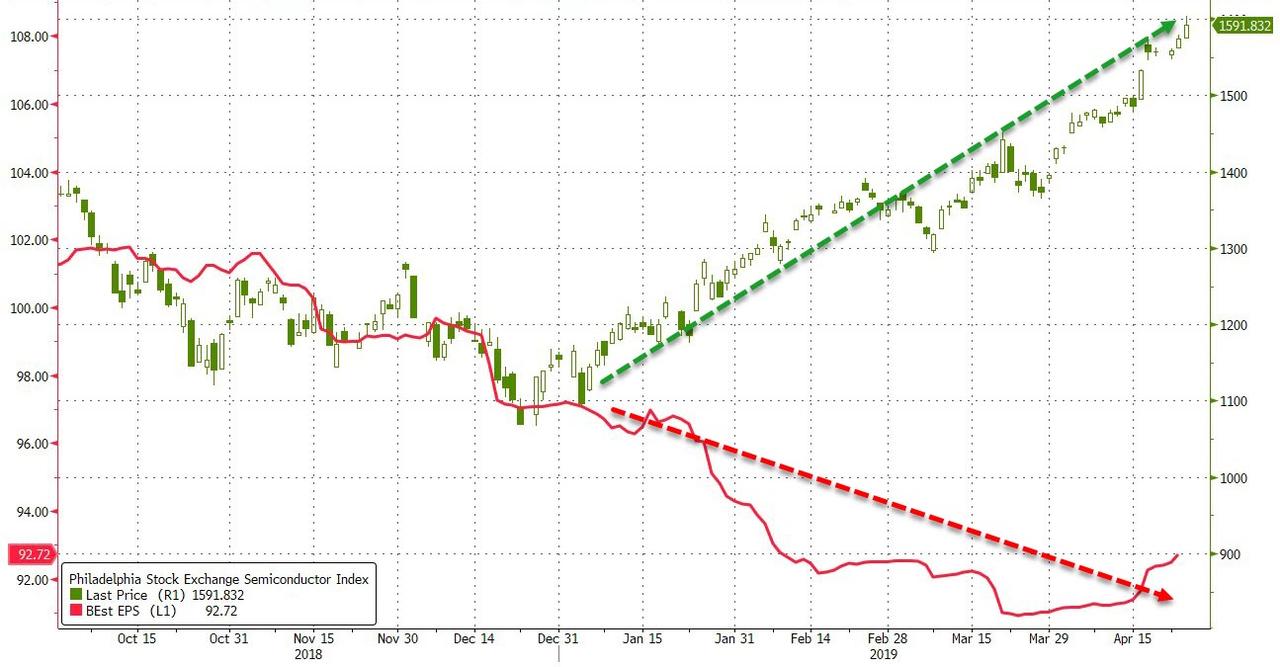
A lot of which is thanks to the surge in Semis… as their earnings expectations have collapsed…

Don’t forget: “Semis don’t sell other semis” as the algos refuse to acknowledge TXN’s warnings and bid SOX to a new record high.

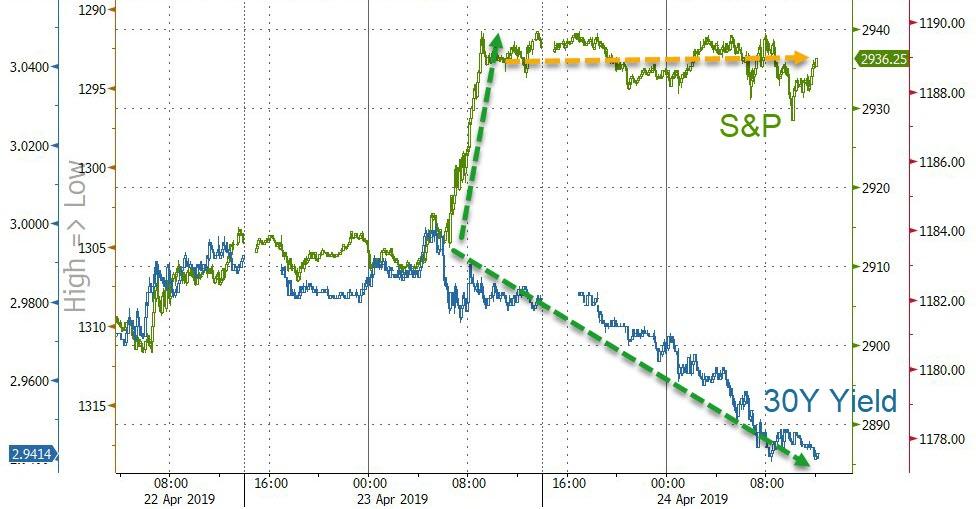
Stocks and bonds decoupled dramatically today…


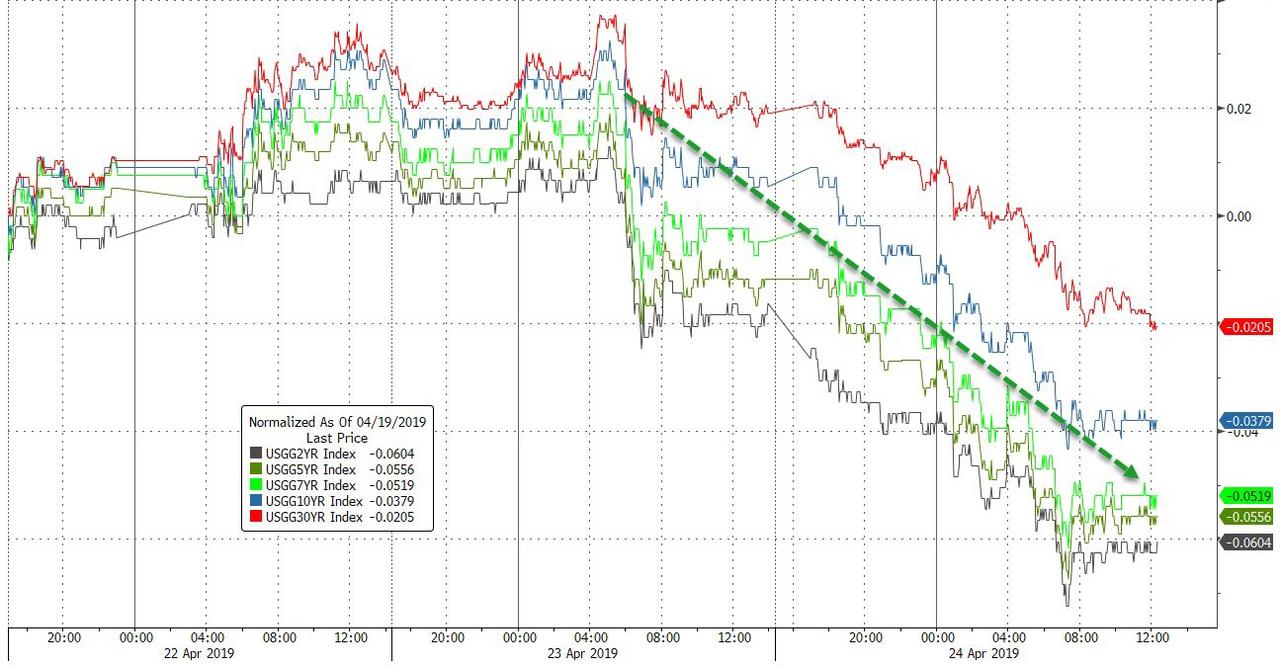
With the entire curve now lower on the week, led by the short-end…


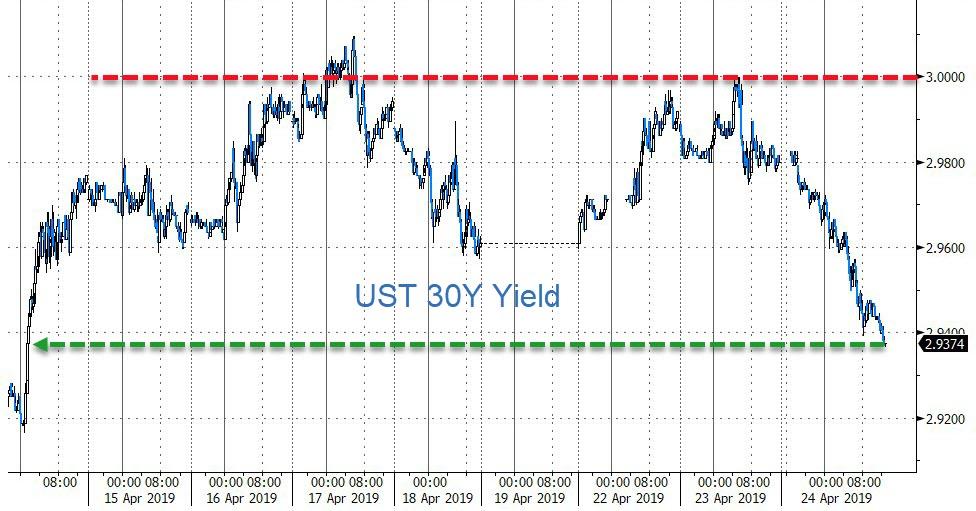
With 30Y Yield tumbling to 10-day lows after tagging 2.999% yesterday…


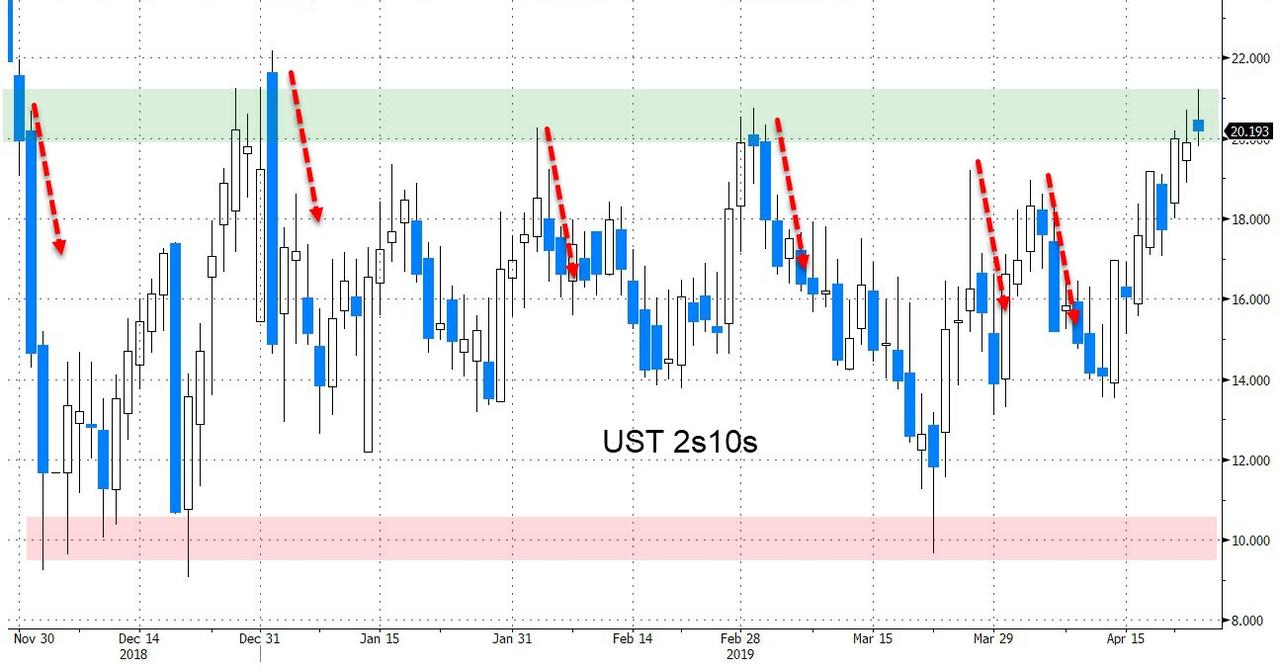
The yield curve has hit a critical resistance level once again…


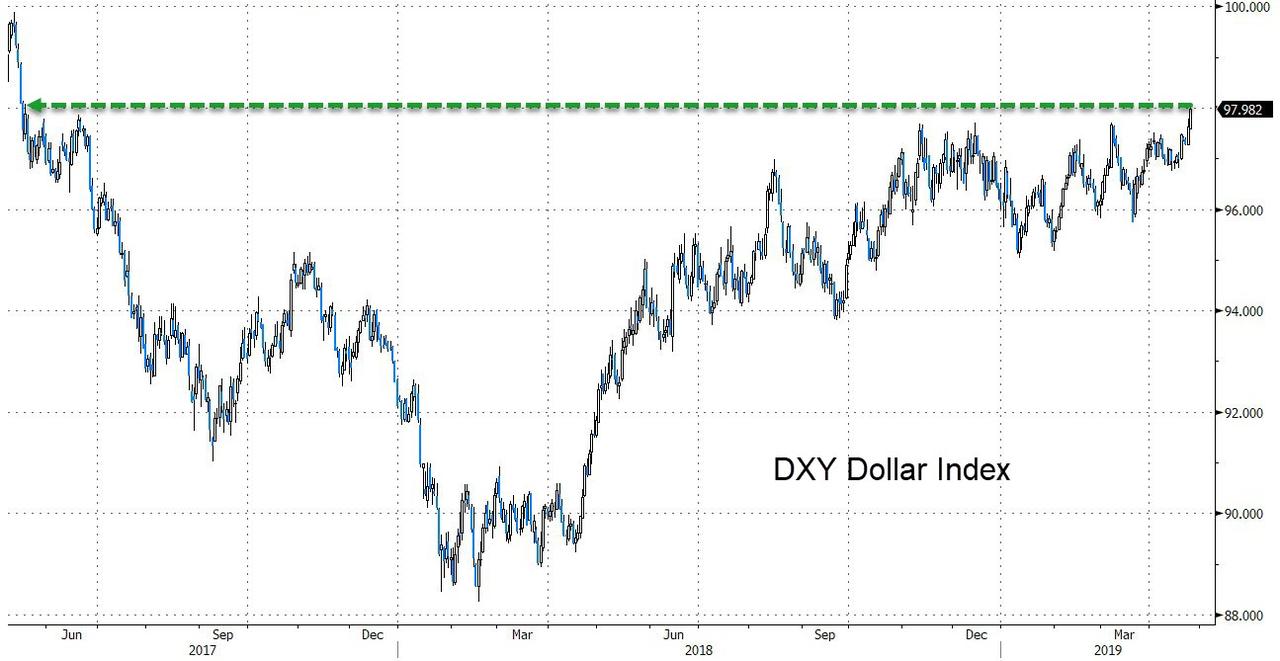
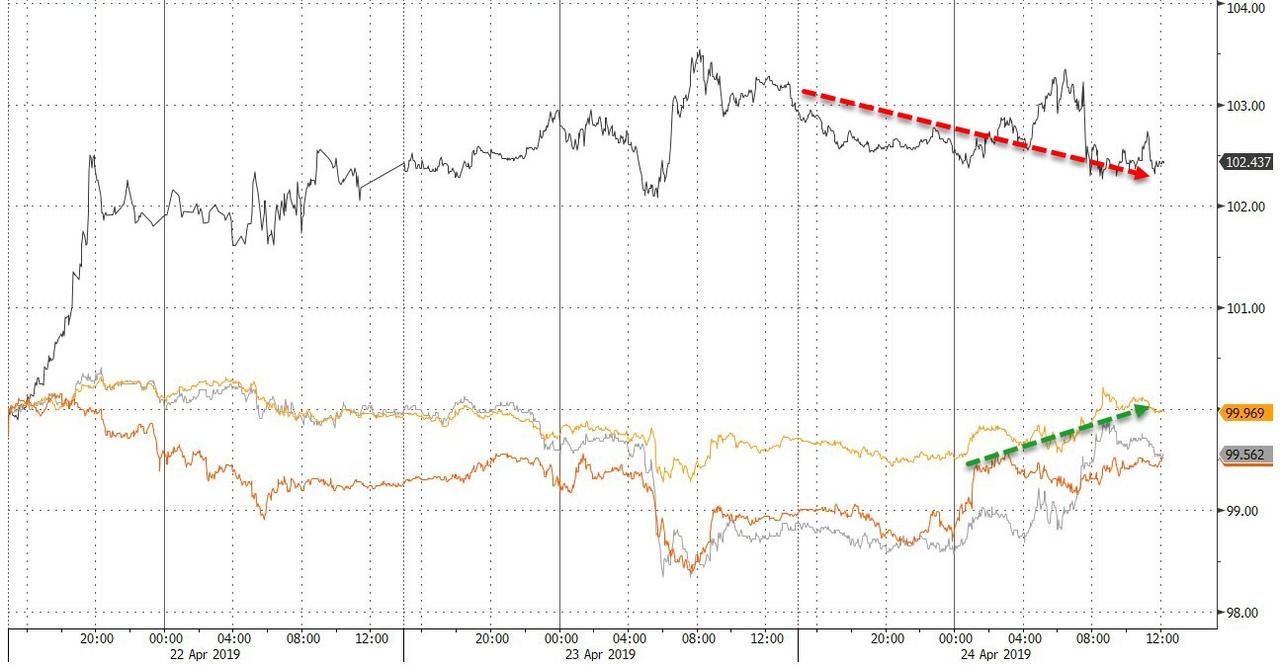
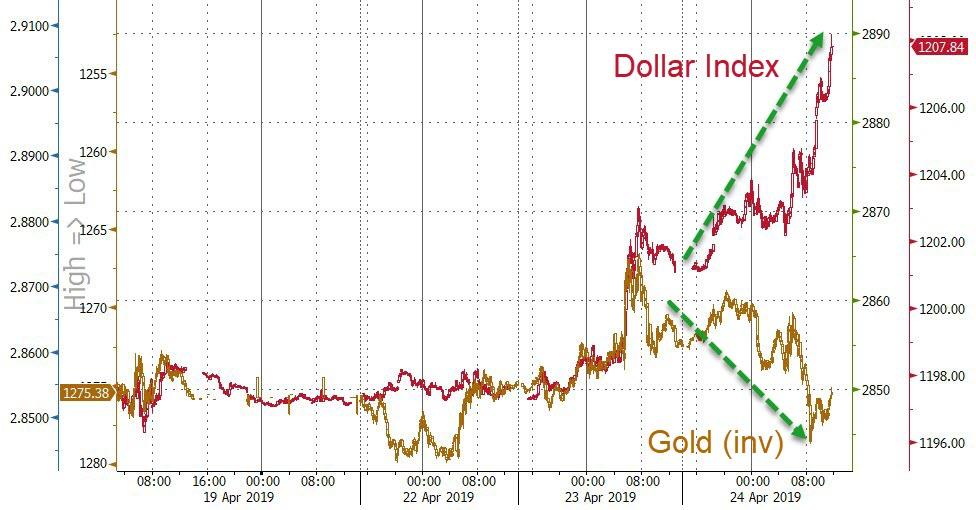
The Dollar Index extended gains today, pushing DXY to its strongest since May 2017…


After hovering around 97.00, DXY has burst higher in the last 5 days…


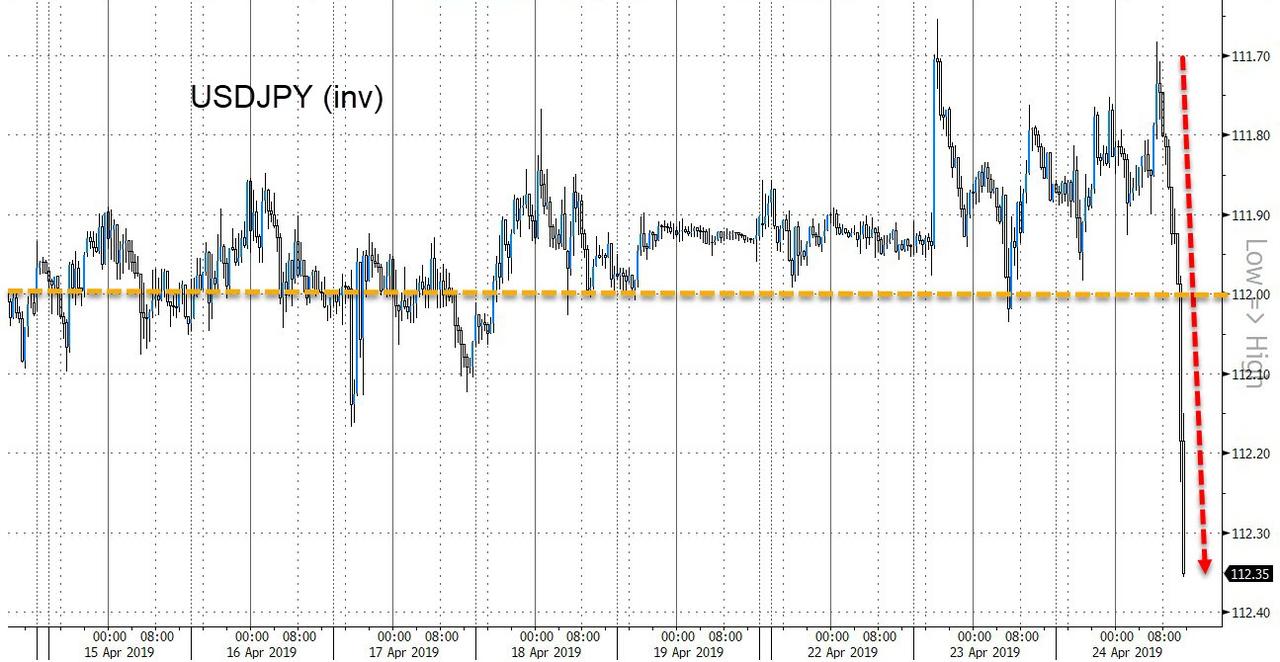
Yen tumbled below the recent 112.00 support level – to its weakest since 12/20/18..


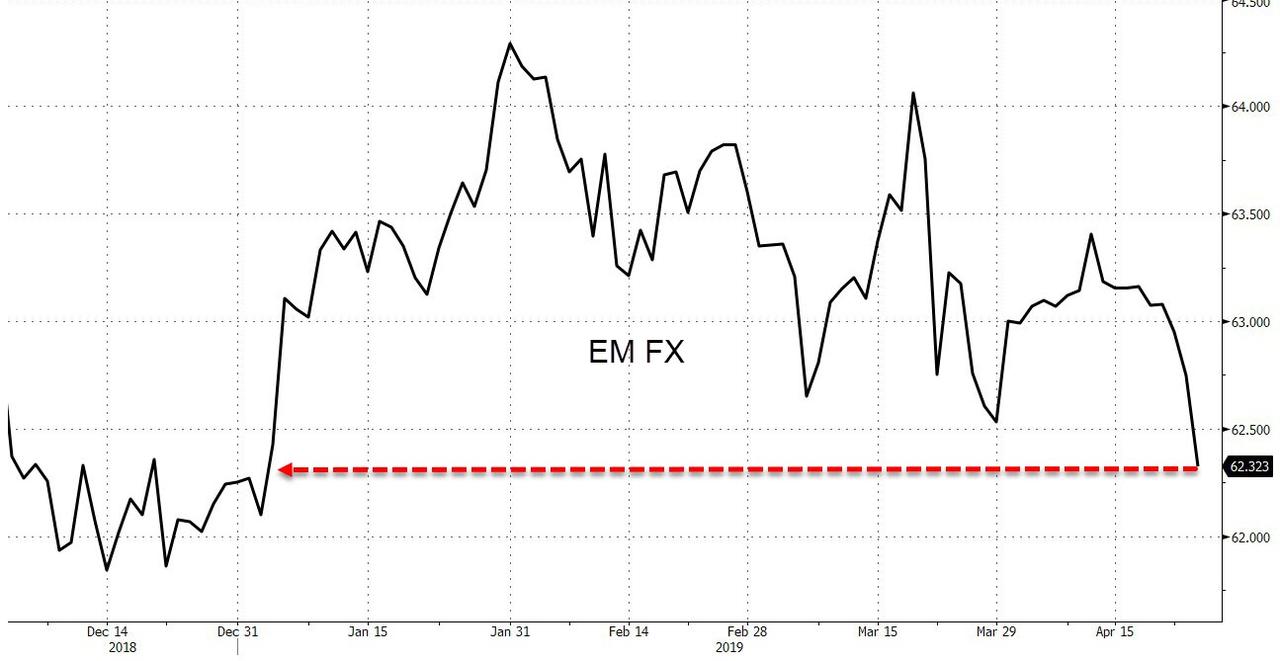
Emerging Market FX plunged to its weakest since the start of the year…


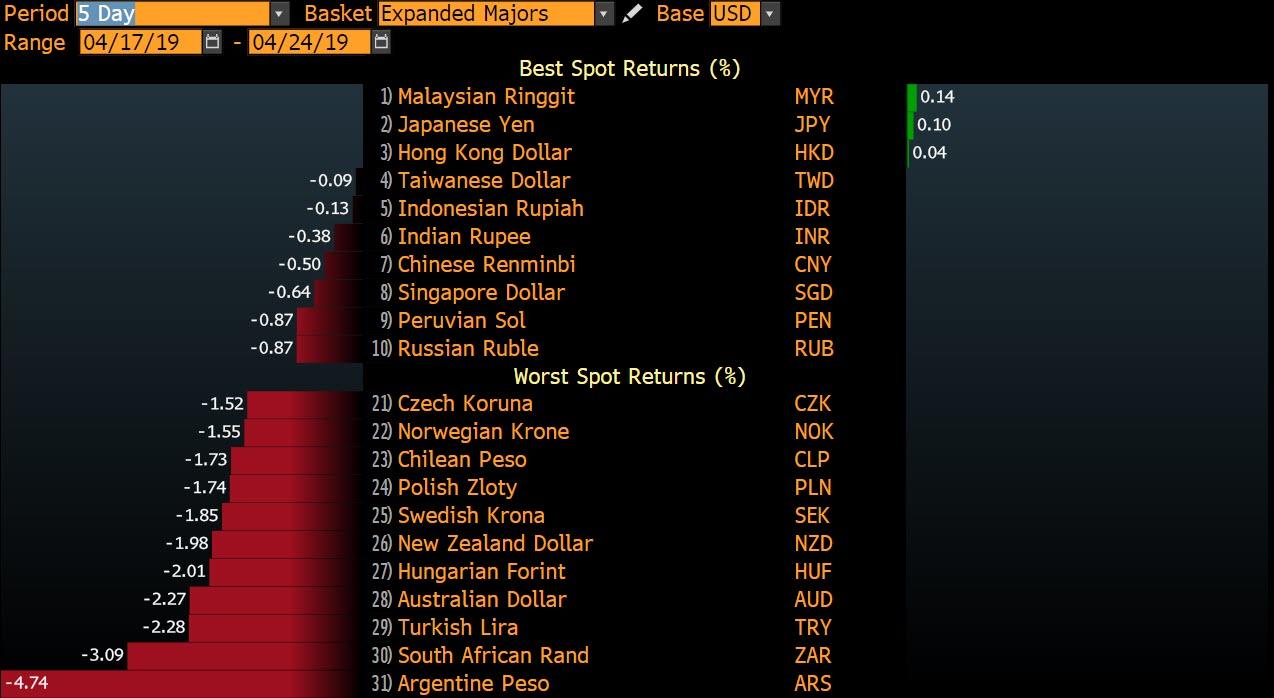
Led by Argentina, South Africa, Turkey, and – rather shockingly – Aussie Dollar…

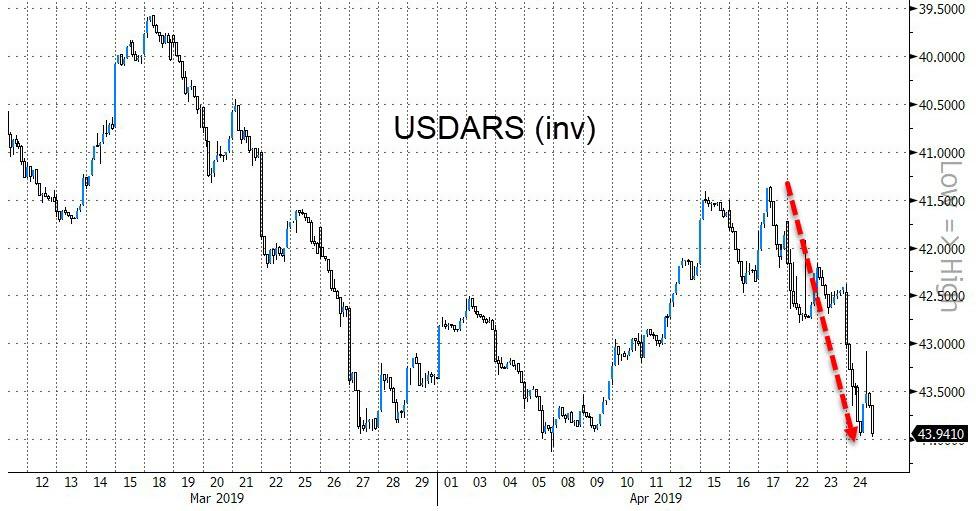
As the peso closed at a record low today…


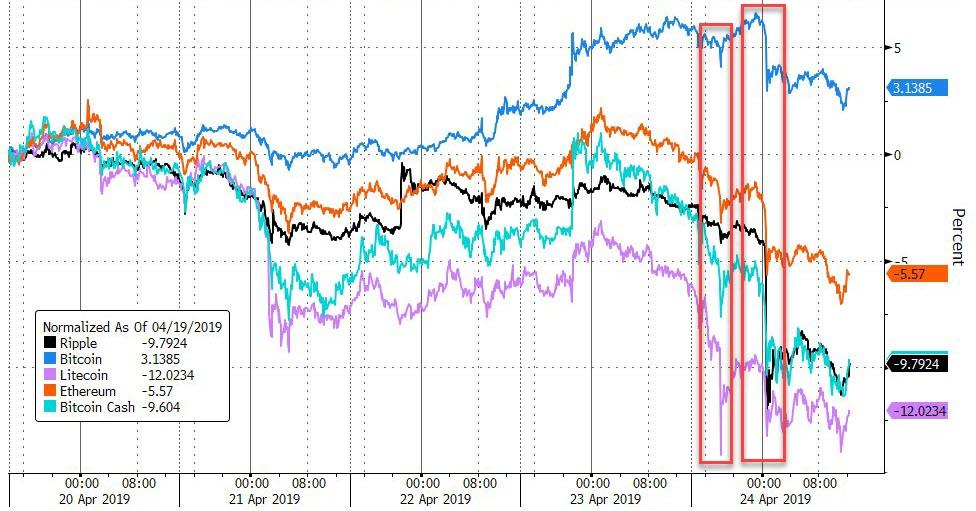
Cryptos suffered two legs down overnight and weakened in the US session…


Silver and Gold managed gains today in the face of dollar strength as WTI slipped lower on inventory data…


Despite the dollar surge, gold also rallied on the day…


Finally, we note that as stocks hit a record high, positioning in risk-off assets (TSYs, Gold, and VIX) has not bought into the rally…

Trade accordingly.

via ZeroHedge News http://bit.ly/2L1mwJP Tyler Durden
Tesla Q1 Earnings Preview: Pessimism Reigns As Demand Cliff, Capital Raise Seen Looming

Sometimes it can actually be a positive when expectations for earnings are low – it can allow a company to occasionally surprise to the upside with numbers that are less terrible than expected. And sometimes, it just means that earnings will be ugly. The latter is the case with expectations for Tesla’s report, coming after the bell today. 

Such underwhelming expectations were also the case for Tesla’s Q1 deliveries, and the company still simply missed even the most pessimistic estimates when it reported deliveries of just 63,000 total vehicles and 50,900 Model 3 vehicles in early April. Now, heading into Q1 earnings, sentiment is similar. Expectations for Q1 have been lowered sharply across the board over the last few weeks.

This has continued an air of confusion at Tesla stemming from the company’s seemingly random job cuts and business model changes since the beginning of the year. Tesla also warned of a “difficult” road ahead and lowered net income guidance during its Q1 deliveries disclosure. The main concern is that demand for the company has topped out.

Bloomberg analyst Kevin Tynan said: “Tesla’s most important measure will be of sustainable demand levels, after the company released a surge of pent-up orders in third quarter and fourth quarter before the federal tax credit halved by $3,750 on Jan. 1. Expectations for Tesla’s first-quarter earnings swung from a $217 million pretax profit at the close of 2018 to a $232 million loss after the company disclosed an 11 percent sequential production drop from fourth quarter, including a 40 percent decline in high-margin Model S and X builds.”

Additionally, the question of whether or not the company needs to raise capital becomes more prominent every day. The company desperately needs to bolster its balance sheet, according to analysts.

Roth Capital Partners analyst Craig Irwin wrote Tuesday: “First-quarter results have already been telegraphed as weak, and we expect investor focus to remain on cash and short-term deliveries. We think guide needs to point to 85,000-plus second-quarter deliveries for investors to take a neutral view on guidance. If cash is below $2.5 billion, we think investors should be more anxious about a near-term capital raise.”

Even husband of resident CNBC Tesla cheerleader Melissa Lee, Baird analyst Ben Kallo, noted the need for capital: “Investors have increasingly asked about the need for an equity raise; we continue to think Tesla should return to capital markets to strengthen the balance sheet, despite management’s stated desire to avoid issuing new equity.”

But Elon Musk – last seen feuding with a pro-Tesla blogger – has said that he didn’t want to return to the capital markets, despite his tune changing slightly during Monday’s autonomous driving event. He hinted that Tesla may need to raise money to scale its coming fleet of vehicles that are capable of self driving. Musk also said that the company would introduce 1 million robotaxi cars that won’t need humans at the wheel in 2020, an announcement that was generally laughed at.

Goldman Sachs analyst David Tamberrino wrote about the company’s autonomy day being a distraction from Tesla’s upcoming earnings: “Ultimately we think the event was a way for the company to focus investors away from the underlying demand and margin pressures the company is currently facing as they bring the Model 3 to mass market and as there has been waning Model S/X demand.”

As we said on Tuesday, if the autonomous investor day was supposed to be the pump that helped push the stock up ahead of earnings, Tesla may have actually done itself more harm than good.

Here are some additional analyst expectations, according to Bloomberg:

  • 1Q adjusted loss per share estimate $1.30 (range loss/share 64c to loss $2.60)
  • 1Q revenue estimate $4.84b ($4.40b-$5.12b)
  • 1Q adj. automotive gross margin estimate +17.8%
  • 1Q capital expenditure estimate $508.2m ($291m-$625m)
  • 2Q adj. automotive gross margin estimate +19.5%
  • 2Q capital expenditure estimate $551.4m ($250m-$650m)

via ZeroHedge News http://bit.ly/2UT4den Tyler Durden

US Gave Rogue General Haftar “Green Light” To Attack Tripoli

European officials as well as UN-backed leadership in Tripoli have both confirmed and angrily denounced President Trump’s recent sharp reversal of longstanding US policy which recognized only the UN-backed Government of National Accord (GNA) as the legitimate authority over Libya, with Fayez al-Sarraj as president. The UN, UK and others have long backed Sarraj, while the UAE, Egypt, and France have been vocal supporters of Haftar.

Late last week the White House had shocked European allies in announcing that President Trump had spoken by phone to offer support to Benghazi based commander Kalifa Haftar, at a moment his Libyan National Army (LNA) lays siege to the capital. 

The White House statement at the time said Trump “recognized Field Marshal Haftar’s significant role in fighting terrorism and securing Libya’s oil resources, and the two discussed a shared vision for Libya’s transition to a stable, democratic political system.”

A prior personal call to Haftar by US National Security Adviser John Bolton had also left Haftar with the impression that he’d had a “green light” for his ongoing offensive to secure the capital, which began April 4, and has involved shelling and air power used over civilian areas. 

EU officials have this week urged President Trump to reverse his surprise declaration of US support for Haftar’s LNA. European officials have further demanded greater clarity of the United States’ position on Libya, saying Washington’s policy confusion will only add fuel to the chaos, similar to recent contradictory US statements on Syria. 

According to The Guardian:

EU officials greeted Trump’s remarks with disbelief and a fear that the White House had accepted a joint interpretation of the war by the United Arab Emirates and Saudi Arabia that underplayed its complexity.

As Bloomberg reports further this week, the revelation of official US support to the renegade General Haftar came soon after a meeting between Trump and Egyptian President Abdel Fattah El-Sisi on April 9.

Sisi has long been known as a backer of Haftar, alongside the UAE and France. 

Since early April fighting around Tripoli between Gen. Khalifa Haftar’s advancing LNA and the UN-backed GNA has resulted in 264 deaths, according to the World Health Organization (WHO), and some 1,266 people wounded, with 21 among the deceased civilians.

Some media reports have cited as many as 300 killed in the violence. The United Nations has put the number of displaced due to Haftar’s offensive on the capital at more than 30,000 civilians.

No doubt, Trump’s support to Haftar will likely result in a protracted new civil war, given the LNA at this point is unlikely to back down, even if it stalls south of Tripoli, as some recent reports suggest. 

via ZeroHedge News http://bit.ly/2GA2twB Tyler Durden

Thousands Of Amazon Alexa Eavesdroppers Can Also Access Users’ Home Addresses

Bloomberg has it in for Amazon these days.

Two weeks after we finally got confirmation what everyone had known for so long, namely that an internal Amazon team numbering in the thousands was secretly listening in to Alexa users’ commands without their prior knowledge, Bloomberg reported that the same team also has access to location data and can easily find a customer’s home address.

Citing five (supposedly former) employees familiar with the program, Bloomberg writes that the covert “Alexa team”, which is spread across three continents, and transcribes, annotates and analyzes a portion of the voice recordings picked up by Alexa, “to help Amazon’s digital voice assistant get better at understanding and responding to commands”, also has access to Alexa users’ geographic coordinates and can easily type them into third-party mapping software and find home residences, according to the employees (who signed nondisclosure agreements barring them from speaking publicly about the program, which apparently did not prevent them from speaking off the record with Bloomberg).

And while there has yet to be any evidence that Amazon employees have attempted to track down individual users, two members of the Alexa team who seem to have grown a coscience, expressed concern that Amazon which is fast becoming the world’s biggest monopoly across virtually every industry, was granting unnecessarily broad access to customer data that would make it easy to identify a device’s owner.

“Anytime someone is collecting where you are, that means it could go to someone else who could find you when you don’t want to be found,” said Lindsey Barrett, a staff attorney and teaching fellow at Georgetown Law’s Communications and Technology Clinic, who noted that location data is more sensitive than many other categories of user information. Widespread access to location data associated with Alexa user recordings “would set up a big red flag for me.”

What is more troubling is that Amazon appears to continue to lie when its spying ways were exposed: in an April 10 statement acknowledging the Alexa auditing program, Amazon said “employees do not have direct access to information that can identify the person or account as part of this workflow.”

Now that that was disproven, Amazon issued a new statement to Bloomberg, saying that “access to internal tools is highly controlled, and is only granted to a limited number of employees who require these tools to train and improve the service by processing an extremely small sample of interactions. Our policies strictly prohibit employee access to or use of customer data for any other reason, and we have a zero tolerance policy for abuse of our systems. We regularly audit employee access to internal tools and limit access whenever and wherever possible.”

Quite a change from “employees do not have access to information that can identify the person” and in less than 2 weeks at that…

What is even more troubling is that Amazon’s Alexa Data Services team, which manages and supervises the countless recordings of human speech and other data that helps train the voice software, numbers in the thousands of employees and contractors, spread across work sites from Boston to Romania and India. And while Amazon does not explicitly identify the user whom it is recording, it also collects location data so Alexa can more accurately answer requests, for example suggesting a local restaurant or giving the weather in nearby Ashland, Oregon, instead of distant Ashland, Michigan.

Amid the recent Bloomberg reports of privacy invasion by the online retail monopoly, Amazon – perhaps anticipating a fresh Congressional kangaroo court where Jeff Bezos is grilled to explain why Amazon is the new NSA – has reportedly been restricting the level of access employees have to the system. One employee told Bloomberg that as recently as a year ago an Amazon dashboard detailing a user’s contacts displayed full phone numbers. Now, in that same panel, some digits are obscured.

After Bloomberg’s April 10 report, Amazon further limited access to data. Two of the employees said that some “data associates” who transcribe, annotate and verify audio recordings, arrived for work to find that they no longer had access to software tools they had previously used in their jobs, these people said. As of press time, their access had not been restored.

via ZeroHedge News http://bit.ly/2Dz0IPi Tyler Durden
Nobody Watches Netflix’s Original Shows, And That’s A Huge Problem

As one of the most visible market success stories of the past decade (a period during which its shares climbed +5,000%), Netflix’s staggering success has made it the most visible example of how Silicon Valley’s pixie dust can blind investors to time-tested fundamentals like, say, a company’s prospects for ever turning a profit.

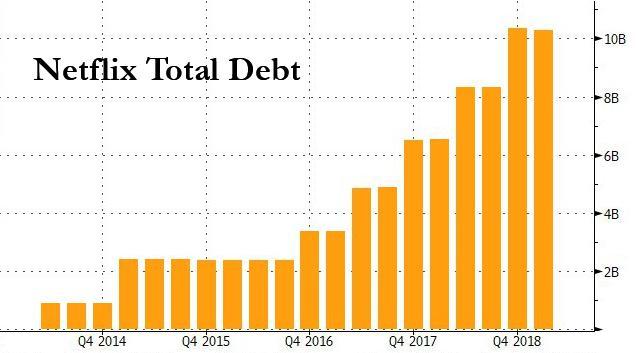
Maybe it’s due to naivety, or Buffett’s ‘invest in what you know’ maxim taken to an extreme, but investors’ unwillingness to acknowledge Netflix’s rapidly growing debt pile (soon to be  more than $12 billion following the company’s latest oversubscribed bond offering, something that has become a bi-quarterly ritual for the streaming giant)…

NFLX

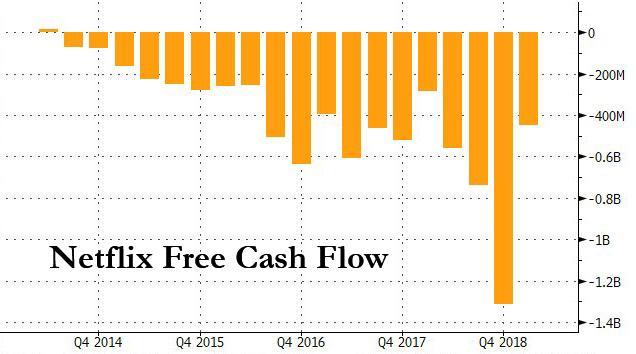
…and its 21 consecutive quarters of negative FCF…

cash

…has flummoxed the company’s detractors, including professional tech analysts (as one leaked email recently shared by Business Insider revealed).

But that could soon change. Because, for the first time, the Wall Street Journal has revealed just how dependent Netflix is on licensing deals to supply its subscribers with content they actually want to watch.

And now that many of the companies that have been licensing this content are now preparing to launch streaming services of their own, Netflix could be headed for a crisis that could soon cost it its position as the streaming market leader, at which point, we imagine, its extremely precarious balance sheet will become almost impossible to ignore.

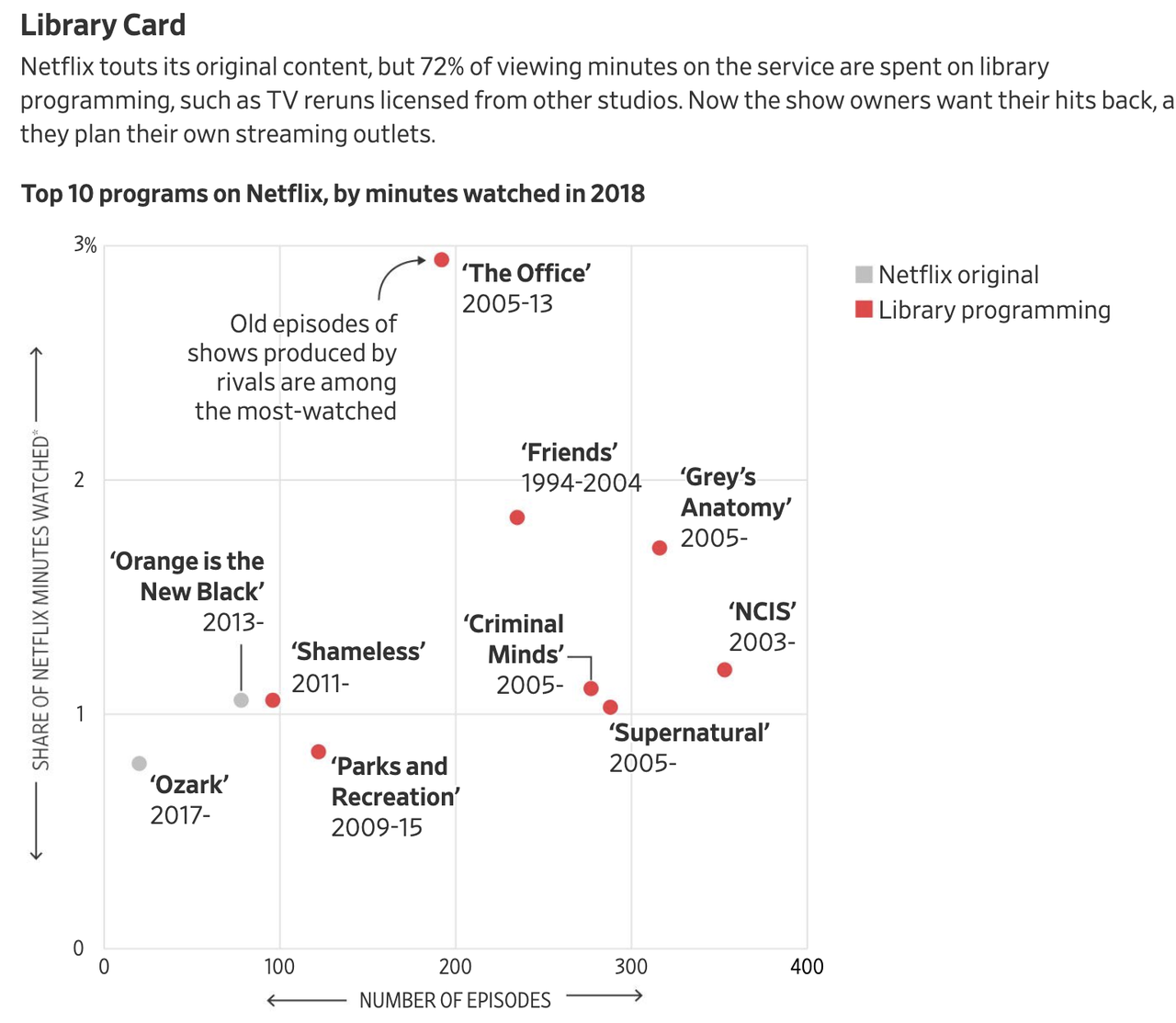
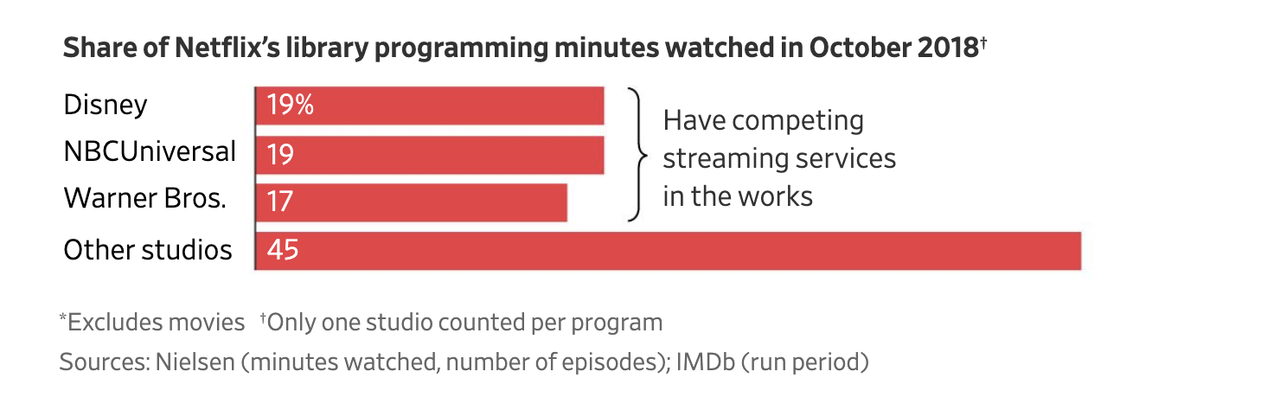
Three companies that are preparing to launch streaming platforms of their own account for 40% of viewing minutes on Netflix. And should they decide not to renew their licensing deals, Netflix could lose most, if not all, of its most popular shows.

According to WSJ, Netflix could lose its most popular show – NBC’s “The Office” – as soon as 2021. Netflix viewers watched 52 billion minutes of the Office last year, accounting for roughly 3% of Netflix’s aggregate streaming time.

NBCUniversal, which owns the show, licensed reruns of the comedy to the streaming-video giant years ago. Now NBCUniversal is launching its own streaming service, and has begun internal discussions about removing “The Office” from Netflix when the contract expires in 2021, according to people familiar with the situation.

This is about to become a recurring headache for Netflix.

Three of its biggest programming suppliers—AT&T Inc.’s WarnerMedia and Walt DisneyCo. in addition to Comcast Corp.’s NBCUniversal—are entering the streaming-video arena. After licensing content to Netflix for years, happy to cash its checks, they are looking to take their hit content back to feed their own platforms.

Netflix has an air of invincibility in the entertainment world, with a huge audience, a hefty war chest and a sizzling stock. But the moves by its Hollywood rivals are a gathering threat, raising the prospect the service could lose some of its most-watched programming or have to pay a steep price to keep it.

The three companies launching new streaming services have created TV shows and movies that make up nearly 40% of the viewing minutes on Netflix, according to data compiled and analyzed for The Wall Street Journal by Nielsen.

Netflix’s reliance on outside content is undoubtedly the company’s biggest vulnerability. Only two of its top ten most watched shows are original productions. Licensed content accounts for 70% of viewing minutes on Netflix’s platform, according to WSJ and Nielsen.

Already attuned to how vital some of this content is for Netflix, some studios are already turning the screws. WarnerMedia charged Netflix a staggering $100 million just to keep the entire library of the 90s hit sitcom “Friends” on its platform. Soon, Netflix might need to rethink its demands that it receive ‘exclusive’ rights to all the licensed content appearing in its library.

Netflix

NFLX

Of course, Netflix has been preparing for the day when external studios refuse to continue licensing their content – that’s long been its argument for pouring so much money into original programming. In 2019 alone, the company plans to spend $12 billion on original content. But the point that WSJ is trying to make is it looks like that day might arrive sooner than the company had anticipated. And furthermore, while Netflix has long argued that its original content is what drives subscriptions, the numbers revealed by WSJ appear to prove that this simply isn’t true.

Instead, Netflix’s flood of original programming could be having the opposite of its intended effect, as one Nielsen analyst argued.

Brian Fuhrer, senior vice president of product leadership at Nielsen, said sometimes viewers are overwhelmed by a sea of options. “When you open a drawer and you have all these shirts to wear, but you have this one broken-in comfortable sweatshirt, you tend to grab that,” he said. “That’s what people are doing with programming.”

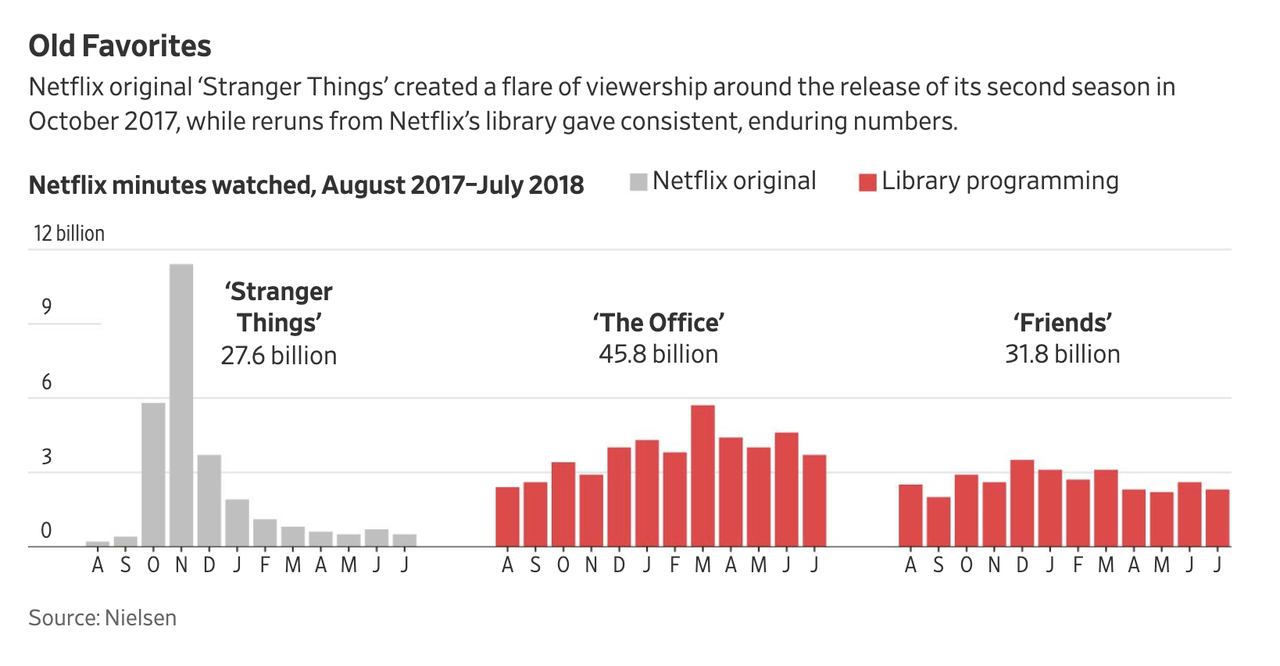
Meanwhile, younger viewers who never saw old shows such as “The Office” on regular television treat them like new programming.

And though viewership of original content tends to surge around the release of hits like ‘Stranger Things, these bumps are rarely sustained.

Strangeer

Put another way, for every smash hit like “Stranger Things” or “The Crown,” Netflix produces 20 original shows that almost nobody watches. These phenomenon was grist for one of SNL’s better sketches in recent memory.

With more streaming offerings to choose from, producing must-watch original content will be crucial for Netflix’s original survival. But unlike Disney, which has decades of experience in the content realm, and has a deep bench of popular movies and shows, the more money Netflix pours into original content, the worse every new batch of shows and films seems to get.

via ZeroHedge News http://bit.ly/2UVC3zi Tyler Durden

Big Pharma Exec Perp Walked In Handcuffs After Surrendering On Opioid Trafficking Charges

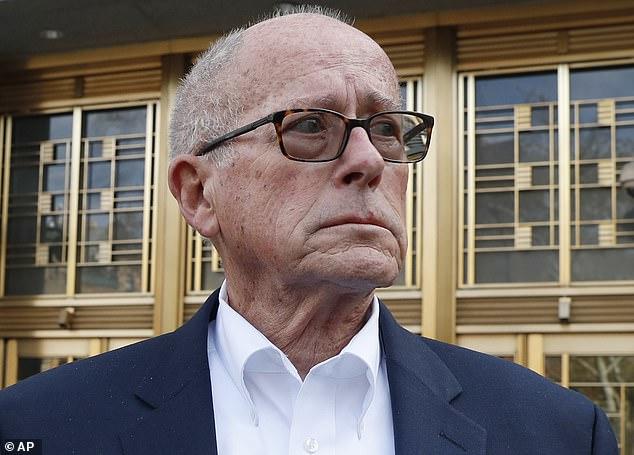
The former CEO of the nation’s sixth-largest pharmaceutical distributor was perp-walked in handcuffs on Tuesday after he was indicted on two counts of criminal conspiracy related to drug trafficking in opioids. 

75-year-old Laurence Doud III became the first pharma CEO in the United States to face prosecution linked to the opioid crisis, after he was accused along with another company executive of ignoring red flags while pushing massive hauls of powerful painkillers to pharmacies across the United States, reports ABC News. Doud faces a mandatory minimum of 10 years in prison if convicted

This prosecution is the first of its kind: executives of a pharmaceutical distributor and the distributor itself have been charged with drug trafficking, trafficking the same drugs that are fueling the opioid epidemic that is ravaging this country. Our Office will do everything in its power to combat this epidemic, from street-level dealers to the executives who illegally distribute drugs from their boardrooms,” said US Attorney Geoffrey S. Berman in a statement. 

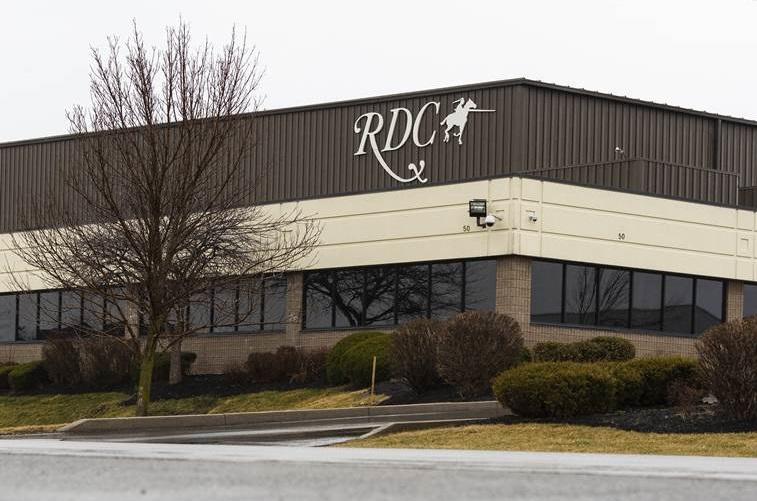
The U.S. Attorney’s Office for the Southern District of New York charged Rochester Drug Cooperative (RDC), one of the country’s largest distributors of opioids, with “knowingly and intentionally” violating federal narcotics laws “by distributing dangerous, highly addictive opioids to pharmacy customers that it knew were being sold and used illicitly,” according to a press release.

RDC was also charged with failing to properly report thousands of suspicious orders of oxycodone, fentanyl and other controlled substances to the Drug Enforcement Agency (DEA), officials said –ABC News

Doud reportedly encouraged his sales team to sign new pharmacies up as customers with virtually no oversight or background investigations – picking up competitors’ rejects as he pitched RDC as “the knight in shining armor” for independent pharmacies, according to the indictment. 

“Under the direction of Doud, RDC supplied tens of millions of oxycodone, fentanyl, and other dangerous opioids to pharmacy customers that its own compliance personnel determined, and reported to Doud, was dispensing these drugs to individuals who had no legitimate medical need for them,” reads the court document, which notes that Doud pocketed ‘millions of dollars’ as the company more than quadrupled sales of controlled substances between 2012 and 2016. 

RDC has been under investigation for years by the DEA for failing to comply with pharmaceutical reporting laws, and has previously paid to settle claims that it failed to report opioid thefts. 

During the 2012 – 2016 time period, RDS filled over 1.5 million orders for controlled substances, yet only submitted four suspicious orders to the DEA according to court filings. There were, in reality, over 2,000 suspicious orders during that time period

Also charged is RDC’s former chief of compliance, William Pietruszewski. 

RDC agreed to a $20 million penalty and entered into a deferred prosecution agreement which will allow the company to continue operations subject to three years of independent compliance monitoring. If all terms are adhered to, the company will avoid prosecution. 

“We made mistakes. RDC understands that these mistakes, directed by former management, have serious consequences,” said company spokesman Jeff Eller in a statement. 

“One element of the opioid epidemic is a dramatic increase in the volume of prescriptions for opioids and all narcotics. With that dramatic volume increase came an increase in our business, resulting in an increase in orders we should have identified as suspicious order, which we failed to report to DEA.

via ZeroHedge News http://bit.ly/2Zt648l Tyler Durden
Mish: Boeing 737 Max Unsafe To Fly, New Scathing Report By Pilot, Software Designer

Authored by Mike Shedlock via MishTalk,

A pilot with 30 years of flying experience and 40 years of design experience rips decisions made by Boeing and the FAA.

Gregory Travis, a software developer and pilot for 30 years wrote a scathing report on the limitations of the 737, and the arrogance of software developers unfit to write airplane code.

Travis provides easy to understand explanations including a test you can do by sticking your hand out the window of a car to demonstrate stall speed.

Design shortcuts meant to make a new plane seem like an old, familiar one are to blame.

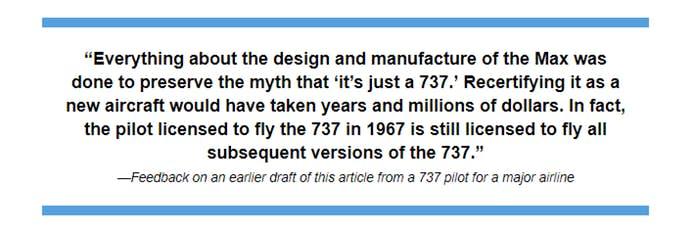
This was all about saving money. Boeing and the FAA pretend the 737-Max is the same aircraft as the original 737 that flew in 1967, over 50 years ago.

Travis was 3 years old at the time. Back then, the 737 was a smallish aircraft with smallish engines and relatively simple systems. The new 737 is large and complicated.

Boeing cut corners to save money. Cutting corners works until it fails spectacularly.

Aerodynamic and Software Malpractice

Please consider How the Boeing 737 Max Disaster Looks to a Software Developer. Emphasis is mine.

The original 737 had (by today’s standards) tiny little engines, which easily cleared the ground beneath the wings. As the 737 grew and was fitted with bigger engines, the clearance between the engines and the ground started to get a little…um, tight.

With the 737 Max, the situation became critical. The engines on the original 737 had a fan diameter (that of the intake blades on the engine) of just 100 centimeters (40 inches); those planned for the 737 Max have 176 cm. That’s a centerline difference of well over 30 cm (a foot), and you couldn’t “ovalize” the intake enough to hang the new engines beneath the wing without scraping the ground.

The solution was to extend the engine up and well in front of the wing. However, doing so also meant that the centerline of the engine’s thrust changed. Now, when the pilots applied power to the engine, the aircraft would have a significant propensity to “pitch up,” or raise its nose. This propensity to pitch up with power application thereby increased the risk that the airplane could stall when the pilots “punched it”

Worse still, because the engine nacelles were so far in front of the wing and so large, a power increase will cause them to actually produce lift, particularly at high angles of attack. So the nacelles make a bad problem worse.

I’ll say it again: In the 737 Max, the engine nacelles themselves can, at high angles of attack, work as a wing and produce lift. And the lift they produce is well ahead of the wing’s center of lift, meaning the nacelles will cause the 737 Max at a high angle of attack to go to a higher angle of attack. This is aerodynamic malpractice of the worst kind.

It violated that most ancient of aviation canons and probably violated the certification criteria of the U.S. Federal Aviation Administration. But instead of going back to the drawing board and getting the airframe hardware right, Boeing relied on something called the “Maneuvering Characteristics Augmentation System,” or MCAS.

It all comes down to money, and in this case, MCAS was the way for both Boeing and its customers to keep the money flowing in the right direction. The necessity to insist that the 737 Max was no different in flying characteristics, no different in systems, from any other 737 was the key to the 737 Max’s fleet fungibility. That’s probably also the reason why the documentation about the MCAS system was kept on the down-low.

Put in a change with too much visibility, particularly a change to the aircraft’s operating handbook or to pilot training, and someone—probably a pilot—would have piped up and said, “Hey. This doesn’t look like a 737 anymore.” And then the money would flow the wrong way.

When the flight computer trims the airplane to descend, because the MCAS system thinks it’s about to stall, a set of motors and jacks push the pilot’s control columns forward. It turns out that the Elevator Feel Computer can put a lot of force into that column—indeed, so much force that a human pilot can quickly become exhausted trying to pull the column back, trying to tell the computer that this really, really should not be happening.

MCAS is implemented in the flight management computer, even at times when the autopilot is turned off, when the pilots think they are flying the plane. In a fight between the flight management computer and human pilots over who is in charge, the computer will bite humans until they give up and (literally) die. Finally, there’s the need to keep the very existence of the MCAS system on the hush-hush lest someone say, “Hey, this isn’t your father’s 737,” and bank accounts start to suffer.

Those lines of code were no doubt created by people at the direction of managers.

In a pinch, a human pilot could just look out the windshield to confirm visually and directly that, no, the aircraft is not pitched up dangerously. That’s the ultimate check and should go directly to the pilot’s ultimate sovereignty. Unfortunately, the current implementation of MCAS denies that sovereignty. It denies the pilots the ability to respond to what’s before their own eyes.

In the MCAS system, the flight management computer is blind to any other evidence that it is wrong, including what the pilot sees with his own eyes and what he does when he desperately tries to pull back on the robotic control columns that are biting him, and his passengers, to death.

The people who wrote the code for the original MCAS system were obviously terribly far out of their league and did not know it. How can they can implement a software fix, much less give us any comfort that the rest of the flight management software is reliable?

So Boeing produced a dynamically unstable airframe, the 737 Max. That is big strike No. 1. Boeing then tried to mask the 737’s dynamic instability with a software system. Big strike No. 2. Finally, the software relied on systems known for their propensity to fail (angle-of-attack indicators) and did not appear to include even rudimentary provisions to cross-check the outputs of the angle-of-attack sensor against other sensors, or even the other angle-of-attack sensor. Big strike No. 3.

None of the above should have passed muster. It is likely that MCAS, originally added in the spirit of increasing safety, has now killed more people than it could have ever saved. It doesn’t need to be “fixed” with more complexity, more software. It needs to be removed altogether.

Numerous Bad Decisions at Every Stage

Ultimately 346 people are dead because of really bad decisions, software engineer arrogance, and Boeing’s pretense that the 737 Max is the same aircraft as 50 years ago.

It is incredible that the plane has two sensors but the system only uses one. A look out the window was enough to confirm the sensor was wrong.

Boeing also offered “cheap” versions of the aircraft without some controls. The two crashed flights were with the cheaper aircraft.

An experienced pilot with adequate training could have disengaged MACS but in one of the crashed flights, the pilot was desperately reading a manual trying to figure out how to do that.

Flight Stall Test

If you stick you hand out the window of a car and your hand is level to the ground. You have a low angle of attack. There is no lift. Tilt your hand a bit and you have lift. Your arm will rise.

When the angle of attack on the wing of an aircraft is too great the aircraft enters aerodynamic stall. The same thing happens with your hand out a car window.

At a steep enough angle your arm wants to flop down on the car door.

The MACS software overrides what a pilot can see by looking out the window.

Useless Manuals

If you need a manual to stop a plane from crashing mid-flight, the manual is useless. It’s already too late. The pilot had seconds in which to react. Yet, instead of requiring additional training, and alerting pilots of the dangers, Boeing put this stuff in a manual.

This was necessary as part of the pretense that a 737 is a 737 is a 737.

via ZeroHedge News http://bit.ly/2Dx7chM Tyler Durden
ARS Pounded As Traders Freak Out About Another Argentina Default

Three days after we listed “five reason for the weakness of the Argentina economy“, the market is officially freaking out about the country which for much of the past year has been a ward of the IMF (again), and on Wednesday, investors pounded the ARS (that would be Argentina’s currency), and pummeled the country’s debt as the looming presidential election prompted fears Argentina is heading for its third default in less than two decades.
Argentina 5 year CDS soared more than 200 bps today alone, to a lifetime high of 1140bps, sending the probability of a default over that period to more than 50%, up more than 100% from 22.7% one year ago…

… while Argentine bond spreads over Treasuries rose 84 bps, the second day of gains, to 944 basis points as 2Y bonds are exploding 350bps wider, as the aptly titled ARS, or Argentine Peso, crashes 3.5%, dropping to a fresh lifetime low.

While Argentina’s economic troubles have been widely known for a long time – and certainly since the IMF launched the biggest ever sovereign bailout in history last summer when it handed Argentina a record $56 billion credit line, hoping to succeed where it failed previously – what has sparked the latest panic is fear that President Mauricio Macri will not be re-elected as he tumbles ahead of October’s election, with the economy enduring the second recession of his presidency.

That, in turn, has opened the door to a possible return of former President Cristina Fernandez de Kirchner (aka CFK), whose policies of tax and spend are blamed by some for the country’s frequent economic crises. Of course, recent hyperinflation of 55% – which has nothing to do with CFK – has not helped ease the market’s nerves.

“It clearly seems the election is slipping away from Macri,” said Alberto Ramos, head of Latin America research at Goldman Sachs. “There’s increasingly less guarantee that policy continuity will be maintained after the election, and that makes markets nervous.”

What makes today’s selloff especially troubling is that it takes place even with the IMF’s credit line in place and Argentina sporting a relatively healthy $76.7 billion in reserves at the central bank.

Some analysts attributed Wednesday’s selloff to comments made by Juan Germano, head of Argentine polling firm Isonomia. In a radio interviewWednesday, Germano said a recent poll Isonomia conducted showed Kirchner winning in a potential runoff vote against Macri. Germano, who does polling for the government and private clients, cautioned that it was early to draw conclusions on the data.

Macri’s approval rating stabilized in April, while a runoff vote against Fernandez is too close to call, according to a separate poll published Monday by Buenos Aires-based consulting firm Elypsis. While only 28 percent have a positive image of Macri, Fernandez is seen positively by 44 percent of Argentines, the survey showed.

Yet while the Argentine CDS market appears to have already given its verdict on what the future holds, pricing in odds of just more than 1 in 2 of a default in 5 years, bond and currency traders will have more difficulty finding an equilibrium level amid growing odds of President Cristina Fernandez de Kirchner returning to the presidency.

Bloomberg notes that while the peso has depreciated significantly throughout the year, the level it may reach in case of a peronist’s win in the October election is completely clouded. The reason: during Kirchner’s term, Argentina didn’t even have a floating currency market, so any attempts to discount a CFK future appear doomed. Still that is not preventing traders from trying: “44/USD doesn’t have a Kirchner victory priced in. We have a view that 48 would be a signal for a Kirchner win,” said Brendan McKenna, a strategist at Wells Fargo. Market’s base case scenario is still a Macri’s victory even though his odds are deteriorating recently.

Alberto Ramos, head of Latin America research at Goldman Sachs, has different view. For him, investors are “already pricing in less than 50% odds for Macri” as it clearly seems the election is slipping away from President’s hands due to negative activity, according to Bloomberg.

Morgan Stanley, meanwhile, takes the other side of the trade arguing that the “base case scenario is policy continuity ahead of October 27 elections”, even though lack of clarity with short-term scenario led him to recommend staying neutral in Argentina.

To be sure, CFK is doing all she can to reclaim the presidency, and this week released an autobiographical book called “Sincerely,” further raising her profile ahead of the vote.

Summarizing the market’s violent move on Wednesday, Greg Lesko, a money manager at Deltec Asset Management in New York, said that “it’s all about inflation and Macri’s prospects in the fall. Inflation is staying stubbornly high, which hurts Macri’s chances. The election is seen as a binary.”

The biggest losers from today’s rout? Those who bought Argentina’s 100 Year bond issued in 2017, which fell 2.3 cents today to a record low…

… while the 2021 dollar bond, the first to mature after October’s election, is yielding a record high of 17.41%.

via ZeroHedge News http://bit.ly/2ZwkPqT Tyler Durden