“How Long Can This Last?” JPM Slams Powell’s Catastrophic Conference

“How Long Can This Last?” JPM Slams Powell’s Catastrophic Conference

Some very snarky slamming of Powell’s disastrous appearance yesterday by none other than the largest US bank:

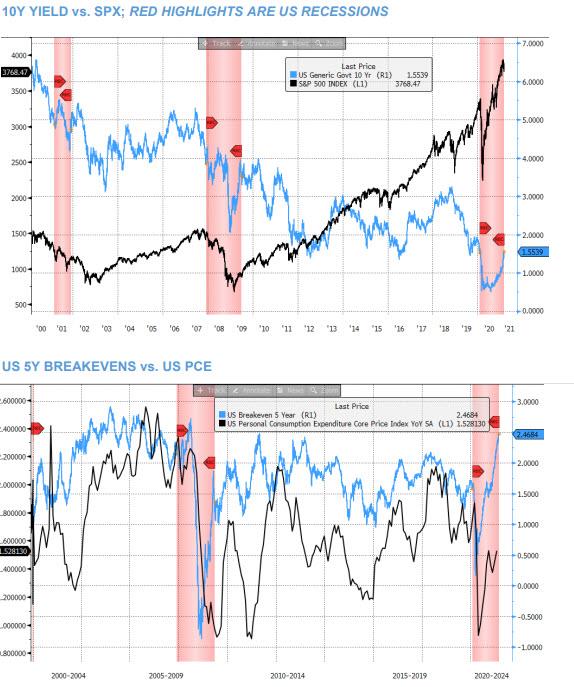
As US bond yields dominate all global markets/asset classes, we have been asked whether this is normal and how long can it last? To answer the first, we can see from the chart below that yields rise as you exit a recession. This rise in yields appears to be driven by  inflation expectations (second chart below). Then we see yields come off as inflation expectations run ahead of actual inflation.

How long can this last? Look toward the Fed’s Mar 17 meeting where we may see Powell use his words a bit more judiciously. That said, unless he sees funding markets start to seize or the housing market stall, it seems unlikely that the Fed will change its behavior.

It wasn’t just JPM. Here is BofA too:

Let’s see what JPM and BofA have to say when the Nasdaq is another 10% lower.

Tyler Durden
Fri, 03/05/2021 – 11:36

via ZeroHedge News https://ift.tt/2NYl3pU Tyler Durden

Democrats Agree To Cut Weekly Unemployment Benefits By 25%

Democrats Agree To Cut Weekly Unemployment Benefits By 25%

Senate Democrats have agreed to lower the weekly unemployment benefit from $400 to $300 per week in their COVID-19 stimulus bill, however they extended them through September, according to Politico.

In addition, the first $10,200 of unemployment benefits will be tax-free, according to the Wall Street Journal, citing an aide.

The changes, included in a new amendment readied by Sen. Tom Carper (D-DE), were hatched by a team of moderate and progressive Democrats, and will be presented during the Senate’s Friday marathon voting session on amendments. It ” also links up the expiration of unemployment benefits with the current lapse of government funding at the end of September,” according to the report.

There’s still plenty of drama ahead during the voting series, with the GOP seeking to inflict maximum political pain, starting midday Friday. The protracted ordeal, known as vote-a-rama, is widely despised by members of both parties and guaranteed to leave sleepless members running on fumes just ahead of the bill’s passage in the upper chamber, likely Saturday. But there’s no way around it.

Senate Majority Leader Chuck Schumer vowed Friday that the Senate would “power through and finish this bill, however long it takes.” –Politico

“It would be so much better if we could in a bipartisan way, but we need to get it done,” said Schumer, who added: “We’re not going to make the same mistake we made after the last economic downturn, when Congress did too little.”

The “vote-a-rama” is a ‘legislative endurance run’ which allows any member to propose an amendment followed by a drawn-out roll call vote, and is part of the reconciliation process. Once over, Senate Democrats could pass the bill as early as Saturday, with Vice President Kamala Harris serving as the tie-breaking vote. Then, the amended relief bill would go back to the House, which would need to approve the changes before it crosses President Biden’s desk.

The first amendment will be on raising the minimum wage to $15 hourly, which is set to fail.

Senate Republicans plan to make Democrats pay for leaving them out of the package, forcing votes on dozens upon dozens of amendments after Congress passed five pandemic aid bills with bipartisan support last year. Sen. Ron Johnson (R-Wis.) on Thursday already forced clerks to read the entire 628-page bill out loud on the floor, which ended at 2:04 a.m. Friday. –Politico

According to Senate Minority Leader Mitch McConnell, the Democratic package is a “poorly targeted rush job.”

“In this supposed new era of healing leadership, we’re about to watch one party ram through a partisan package on the thinnest of margins,” he said, adding: “We’re going to try to improve the bill. The millions who elected 50 Republican senators will have their voices heard loud and clear.”

Read the rest of the report here.

Tyler Durden
Fri, 03/05/2021 – 11:22

via ZeroHedge News https://ift.tt/3qjNFqD Tyler Durden

FDIC Chair Says No Need For SLR Relief

FDIC Chair Says No Need For SLR Relief

It’s almost as if the Biden administration and some of the most progressive Democrats out there, want the market to crash.

As a reminder to readers, the biggest reason why yields surged yesterday during Powell’s pow-wow is because the Fed chair refused to address the topic everyone has been obsessing over, namely what will be the fate of the SLR exemption which expires at the end of the month and which, unless renewed, will lead to dramatic balance sheet shrinkage across US banks leading to a violent deleveraging as banks are forced to dump bonds accelerating what is already a violent selloff in rates (read our full discussion on the SLR in “Why The SLR Is All That Matters For Markets Right Now“).

So, adding even more fuel to the fire, overnight Politico reported that the FDIC Chair Jelena McWilliams said it doesn’t seem like banking agencies need to extend an emergency move that made it cheaper for insured depository institutions to hold cash and U.S. government bonds on their balance sheets. The most important question rests with the Federal Reserve, she said.

That’s because capital requirements for the parent holding company, which is regulated by the Fed, are more important for determining how expensive it is for those banks to hold Treasuries, she said.”

As a further reminder, late last week, Senators Elizabeth Warren and Sherrod Brown urged U.S. regulators to reject lenders’ appeals to extend the SLR exemption. In a joint letter to the Federal Reserve, Federal Deposit Insurance Corp. and Office of the Comptroller of the Currency, the Democratic Duo argued that the banking industry is taking advantage of the coronavirus crisis to “weaken one of the most important post-crisis regulatory reforms.” Warren of Massachusetts and Ohio’s Brown, who took over the Senate Banking Committee this year, said granting the extension would be a “grave error.”

As we said in response, perhaps that would indeed be a grave error “but a bond market crash and deeply negative short-term yields would be a far more grave error, especially to the Democrats who are demanding that the Fed monetize trillions in debt in 2021 to fund Biden’s trillions in fiscal stimulus bills, something the Fed would not be able to do if the SLR exemption was not indefinitely extended.”

In other words, for whatever reason – and it certainly may be because they simply have no idea how dire the consequences would be, it now appears that there is a full-court press by the administration and Democrat politicians to not renew the SLR and unless the Fed steps in and overrides this, brace for impact as banks will have no choice but to dump tens of billions of holdings into the open market sparking the next full-blown crash as first yields soar and then all high-duration stocks, i.e., growth names, crater.

Tyler Durden
Fri, 03/05/2021 – 11:04

via ZeroHedge News https://ift.tt/3eaODDd Tyler Durden

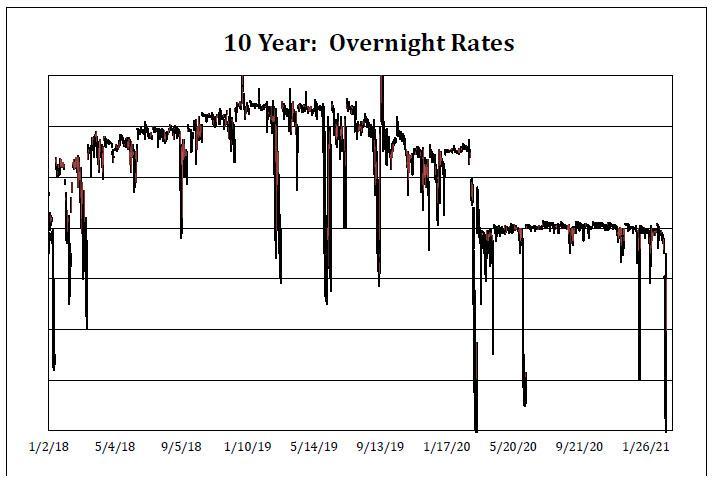
Repo Wreck: 10Y Tumbles Below Fails Charge, Trades -3.1% In Repo

Repo Wreck: 10Y Tumbles Below Fails Charge, Trades -3.1% In Repo

Last night we showed – for the second day in a row – that contrary to Powell’s protests, the situation in the repo market is going from bad to worse, as the 10Y traded as low as -4.25% in repo, deep below the fails charge of -3% meaning lenders of cash to Treasury shorts have to pay them instead of pocketing a lending fee.

This, as Curvature’s Scott Skym point out, was the lowest print since the absolute record print of -5.75% touched during the market insanity in March of 2020.

And while had hoped that the Treasury announcement that $38BN in 10Ys would be auctioned off in next week’s reopening would restore some normality to the repo market, that has failed to materialize as of Friday morning, when according to ICAP, the cost to borrow 10-year Treasuries in the repo market opened below the -3% penalty rate Friday, with the repo rate for 10-year Treasuries posted at -3.10%.

As we have repeatedly explained, and as Bloomberg comments this morning, when the interest rate on overnight cash loans backed by the newest 10-year note goes below -3%, it’s cheaper to pay the regulatory fine for failing to return the collateral on time than it is to renew the loan a sign that short selling is intense.

This is hardly news considering the relentless move higher in yields which we now know has been facilitated by wave after wave of new shorts, to the point that the 10Y may now be the most actively shorted future of all major liquid instruments.

Regardless of the cause, unless the repo stabilizes in the coming days ahead of next week’s 10Y auction – which may be the most important market event of the quarter if last week’s catastrophic 7Y is any indication – then people will have a major problem on his hands, because after failing to admit that there is a major repo problem during yesterday’s WSJ Q&A the Fed chair will lose even more credibility as he now is forced to scramble to restore order, something which he may only be able to do with an emergency announcement ahead of the March 17 FOMC.

Finally, making matters even more serious, moments ago Politico reported that FDIC Chair Jelena McWilliams said it doesn’t see need for continued SLR relief beyond March 31, adding that in her view it “doesn’t that seem as though banking agencies need to extend an emergency move that made it cheaper for insured depository institutions to hold cash and U.S. government bonds on their balance sheets.” In other words, unless Powell immediately reassures markets that the SLR will get extended, it’s about to get far worse.

Tyler Durden
Fri, 03/05/2021 – 10:52

via ZeroHedge News https://ift.tt/3uYN8xF Tyler Durden

WarnerMedia CEO Apologizes After Saying COVID Pandemic Has Been “Really Good For CNN Ratings”

WarnerMedia CEO Apologizes After Saying COVID Pandemic Has Been “Really Good For CNN Ratings”

Authored by Paul Joseph Watson via Summit News,

WarnerMedia CEO Jason Kilar apologized after celebrating the fact that the COVID-19 pandemic has been “really good for (CNN) ratings.”

Kilar made the initial remarks during the Morgan Stanley Technology, Media and Telecom Conference.

“It turns out that pandemic is a pretty big part of the news cycle, and that’s not going away anytime soon,” Kilar said.

“If you take a look at the ratings and the performance, it’s going well. And I think it’s going well because, A, the team at CNN is doing a fantastic job. And B, it turns out that the pandemic and the way that we can help inform and contextualize the pandemic, it turns out it’s really good for ratings,” he added.

WarnerMedia is the parent company of CNN.

After his comments received criticism, Kilar tried to walk them back, claiming, ” I would like nothing more than for this pandemic to be well behind us.”

Kilar’s hope that the pandemic is “not going away anytime soon” provides an insight into the agenda of networks like CNN when it comes to COVID-19 reporting.

Does CNN campaign against lockdown restrictions and mask mandates being lifted in the name of public safety, or is it more likely that a selfish motivation for maintaining high ratings is the real reason behind this editorial stance?

CNN recently enjoyed its best ever February in terms of overall viewers while also taking first place among viewers 25-54, the key demographic most valued by advertisers.

*  *  *

In the age of mass Silicon Valley censorship It is crucial that we stay in touch. I need you to sign up for my free newsletter here. Support my sponsor – Turbo Force – a supercharged boost of clean energy without the comedown. Also, I urgently need your financial support here.

Tyler Durden
Fri, 03/05/2021 – 10:41

via ZeroHedge News https://ift.tt/3sW1ygb Tyler Durden

Oil Soars Above $69 After Goldman Hikes Price Target To $80

Oil Soars Above $69 After Goldman Hikes Price Target To $80

Even as the rest of the market continues to submerge with the now traditional rug-pull at the open which sent Nasdaq tumbling after a modestly green open as Kathy Wood is apparently hell bent on liquidating all of her most liquid “growth” names to triple and quadruple down in her biggest losers, oil is surging on the back of yesterday’s latest OPEC+ surprise which has set the stage for a $100 barrel of oil as well as a Goldman oil price target upgrade.

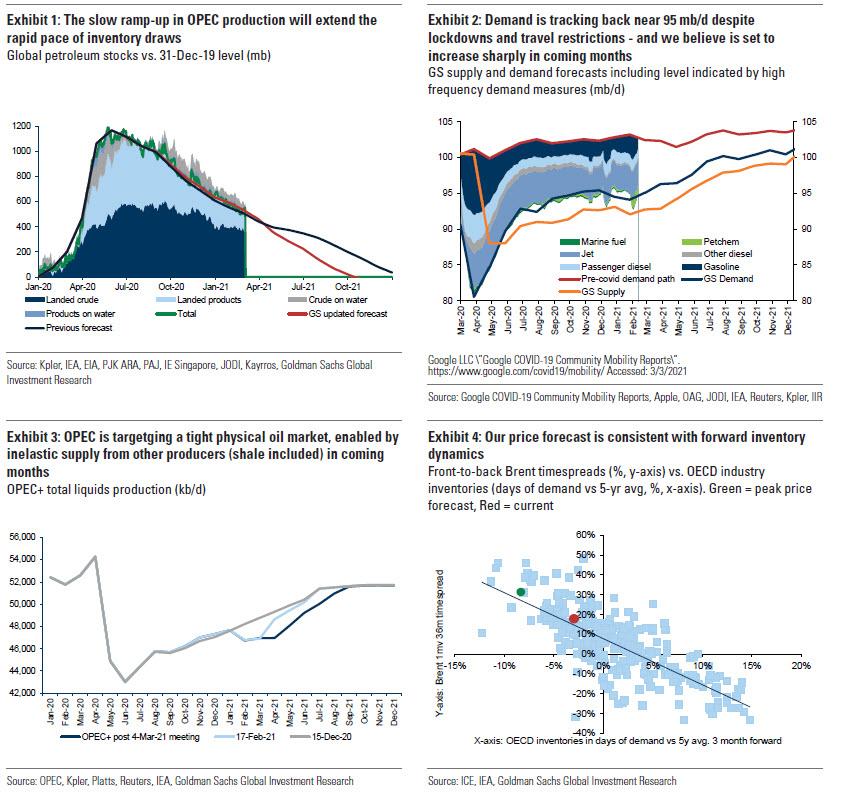
For those who missed the discussion (available to pro subs), late on Thursday Goldman’s Damien Courvalin wrote that “OPEC+  surprised once again by deciding to keep its production quotas unchanged for April, against our and consensus expectations for a  1.5mb/d hike (with only another small increase for Russia and Kazakhstan). In particular, Saudi Arabia will extend its unilateral 1 mb/d cut for one more month,guiding for an only gradual ramp-up afterwards.”

He adds that his key takeaway from the press conference is that “the discipline of shale producers is likely behind this slower increase in production” and this is consistent with Goldman’s own view that shale, Iran and non-OPEC supplies are likely to remain highly inelastic to prices until 2H21, allowing OPEC+ to quickly rebalance the oil market.

As a result, Goldman is lowering its OPEC+ production forecast by 0.9 mb/d over the next six months… which as demand rises of course means that prices will go up sharply. More on that in a minute.

Couralin then explains that OPEC’s supply strategy is working “because of its unexpectedness and suddenness.”

Today’s surprise follows Saudi’s January unexpected cut, with both working in Saudi’s favor – since January 5, oil prices are up 25% and excess inventories down 56% with Saudi’s production down only 9% and with the US oil rig count up only 20% and still 33% below the level needed to stabilize output (without DUCs).

This stands in sharp contrast to the Saudi strategy prior to 2020, when OPEC viewed itself as the central bank of the oil market, reassuring too much with predictable but never large enough cuts. According to Goldman, key will be the potential shale supply response, although the latest earnings season suggests investors are still a long ways away from rewarding growth, with the few producers who hinted at higher capex underperforming the rally in oil equity share prices.

So what does all this mean for price?

According to Goldman – which was already quite bullish on oil prices ahead of the OPEC+ summit (see “This Is The Best Inflation Hedge”: Goldman Doubles Down On Commodity Supercycle”) the bank says that it is now clear that OPEC+ is in fact pursuing a tight oil market strategy, with Goldman’s updated supply-demand balance pointing to OECD falling to their lowest level since 2014 by the end of this year.

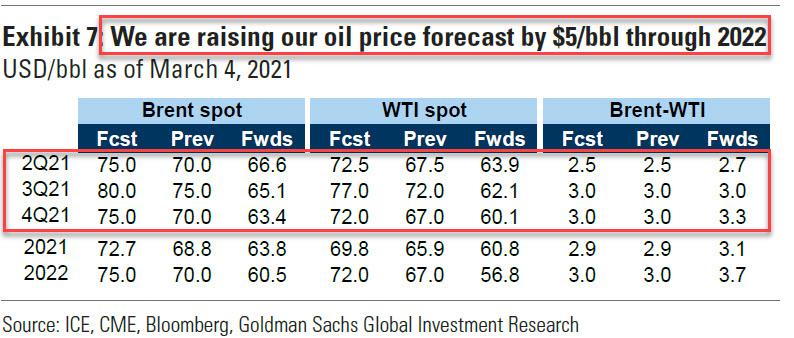
Given the bank’s revised demand forecasts remain unchanged and above consensus, OPEC’s decision led Goldman to raise its Brent forecast by $5/bbl, to $75/bbl in 2Q and $80/bbl in 3Q21: “This increase in our price forecast reflects stronger timespreads, with our updated inventory path consistent with $5/bbl additional backwardation over the next six months relative to our prior forecast.”

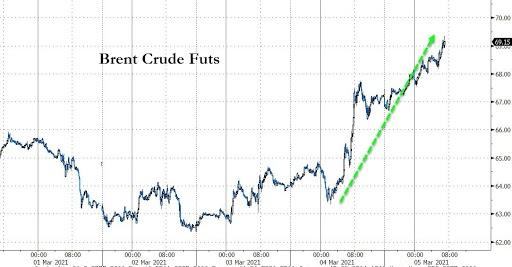
End result: Brent is approaching $70 this morning…

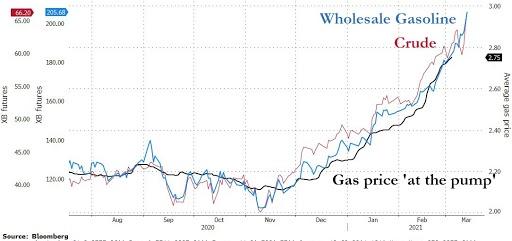
… which while great news for the like of XOM whose price rose above $60 for the first time in over a year, is also very bad news for those who still use cars instead of Uber to get from point A to point B.

Tyler Durden
Fri, 03/05/2021 – 10:25

via ZeroHedge News https://ift.tt/3eb6xFI Tyler Durden

Fed Hubris: Housing Prices Show The Fed Is Making The Same Inflation Mistake

Fed Hubris: Housing Prices Show The Fed Is Making The Same Inflation Mistake

Authored by Mike Shedlock via MishTalk,

The Fed is repeating mistakes it made in the dotcom and housing bubble decades. A series of housing-related charts will explain.

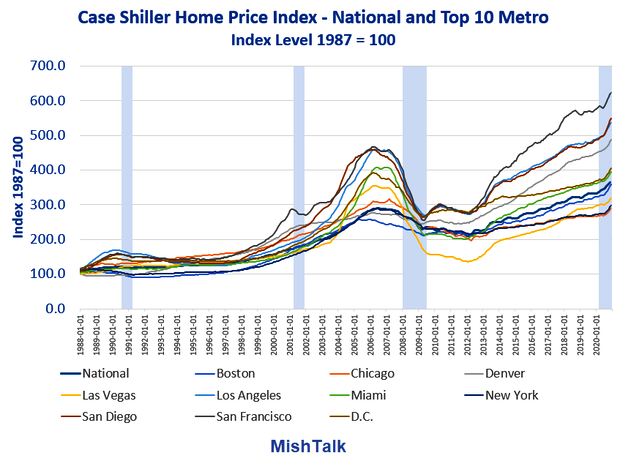
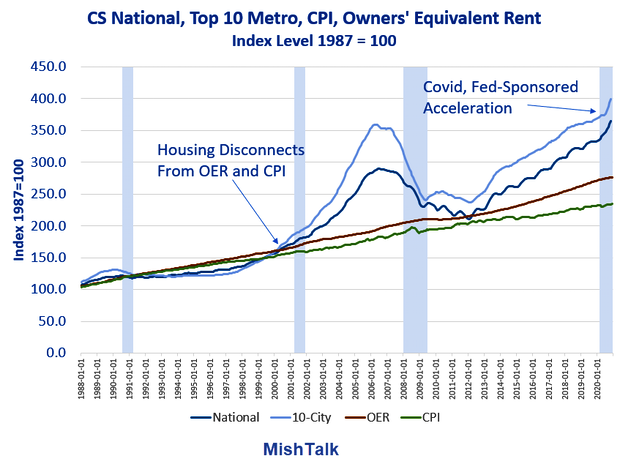
Case-Shiller Home Price Index Levels
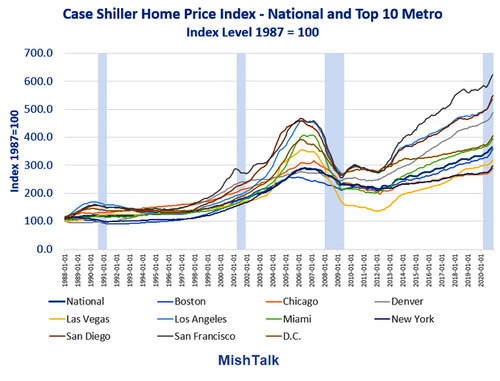
Here We Go Again

The Case-Shiller Home Price indexes (a measure of repeat sales of the same house) show that home prices are more extended now than ever before.

Those price levels are from December 2020.

Not Understanding Inflation

On February 10, Jerome Powell gave a speech on Getting Back to a Strong Labor Market

In his speech, Powell said the Fed “will likely aim to achieve inflation moderately above 2 percent for some time in the service of keeping inflation expectations well anchored at our 2 percent longer-run goal.” 

On February 24, Powell Dissed Inflation and Ignored Questions From Congress About Leverage

On March 4,  I commented Powell Confirmed Easy Money Until the Cows Come Home.

Meaning of Stable

But why 2%, not 1% or 0%? Certainly 2% is not “stable” by any reasonable definition. 

Regardless, to make up for past inflation allegedly being lower than 2% Powell repeated his pledge to let inflation run above 2%. 

Is inflation lower than 2%? As measured by the CPI, it is. But the CPI is a terrible measure of inflation.

It ignores all asset bubbles, it ignores housing prices, and it seriously underweights medical expenses.

Medical Expenses

The CPI seriously underweights medical expenses by averaging in Medicare and Medicaid. 

Healthcare services make up 17.75% of the PPI but only 6.97% of the CPI.

Ask anyone who buys their own medical insurance how fast rates are really rising.

For discussion please see Healthcare is the Biggest PPI Component With Over 3 Times Energy’s Weight

With that, let’s return our spotlight to housing. 

Housing Disconnects From Rent and the CPI

Prior to 2000, home prices, Owners’ Equivalent Rent (OER), and the Case Shiller national home price index all moved in sync.

This is important because home prices directly used to be in the CPI. Now they aren’t. Only rent is. Yet, OER is the single largest CPI component with a hefty weight of 24.05% of the entire index. 

The BLS explains this away by calling homes a capital expense not a consumer expense. 

However, that explanation ignores easily observed and measurable inflation. And it’s inflation, not alleged consumer inflation, that is important as the following charts show.

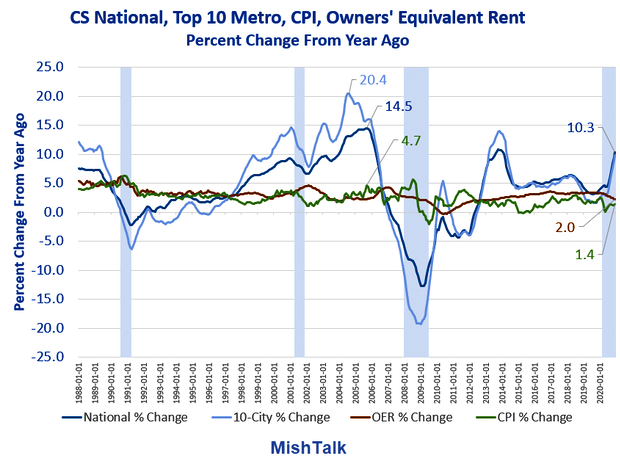
Percent Change From a Year Ago Comparison

Year-over-year, the CPI is only up 1.4%. The OER is up 2.0%, but the Case Shiller National Home Price Index (December) is up a whopping 10.3%.

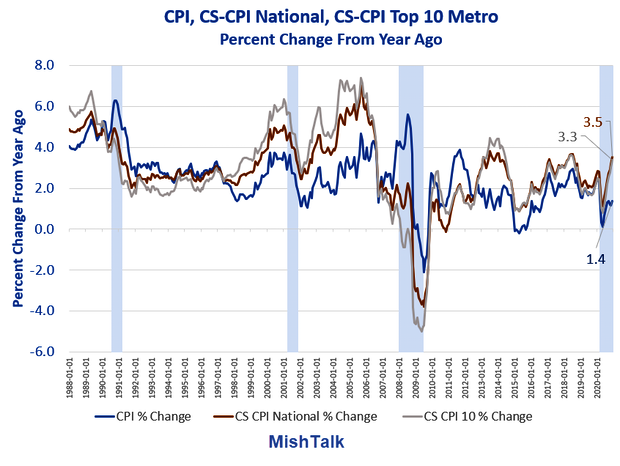
If we substitute actual home prices for OER in the CPI (as the CPI used to be calculated), the next chart shows what the CPI would look like.

I call the substitution Case-Shiller CPI (CS-CPI).

CPI, CS-CPI Year-Over-Year

The BLS says the CPI is up only 1.4% from a year ago. 

However, the CS-CPI has been running between 2% and 3% for the past three years and most of the past seven years. By this measure, the Fed has already achieved its goal

Yet, the Fed is holding rates near zero and has pledged to remain that way.

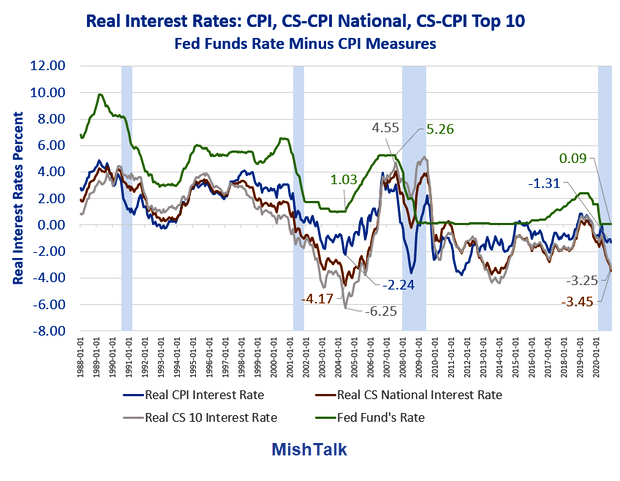
We can calculate “Real Interest Rates” by subtracting measures of inflation from the Fed Funds Rate.

Real Interest Rates

Thanks to the Fed slashing interest rates to near-zero, real interest rates are -3.45% as measured by CS-CPI but “only” -1.31% as measured by the CPI.

Third Great Fed Mistake

Brian McAuley comments This Era May Come to Be Remembered as the Federal Reserve’s Third Great Mistake

With the real interest rate at -3.45% is it any wonder speculation in stocks, junk bonds, and housing are rampant?

This is the same mistake the Fed made between 2002 and 2007 when it ignored a blooming housing bubble with dire consequences culminating in the Great Recession.

BIS Study on CPI Deflation

Note that a BIS Study finds that routine consumer price deflation is not damaging in the least.

Specifically, the BIS concludes “Deflation may actually boost output. Lower prices increase real incomes and wealth. And they may also make export goods more competitive!”

Worst of all, in their attempts to fight routine consumer price deflation, central bankers, led by the Fed, create very destructive asset bubbles that eventually collapse, setting off what they should fear – asset bubble deflations.
Tyler Durden
Fri, 03/05/2021 – 10:11

via ZeroHedge News https://ift.tt/388qmd9 Tyler Durden

Momo Meltdown Sparks Stock Slump At Cash Open; ARKK, TSLA Tanking

Momo Meltdown Sparks Stock Slump At Cash Open; ARKK, TSLA Tanking

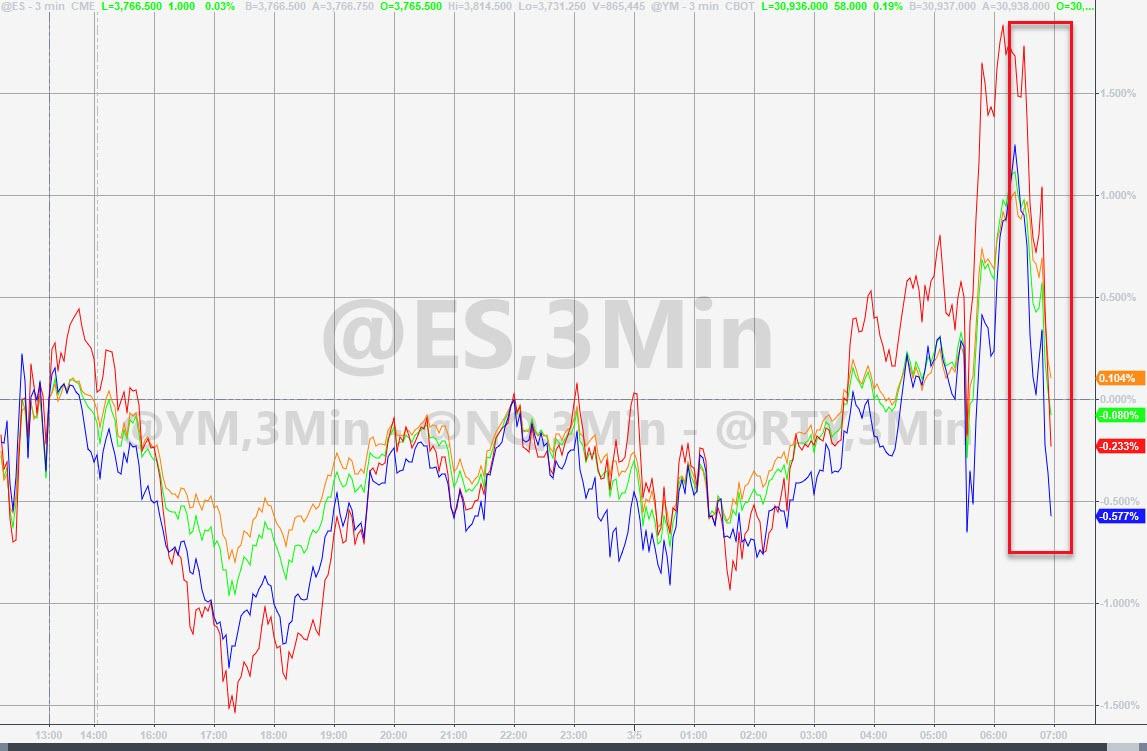
US equity markets have erased all the pre-market pumpathon gains with Nasdaq leading the way lower since the cash market open…

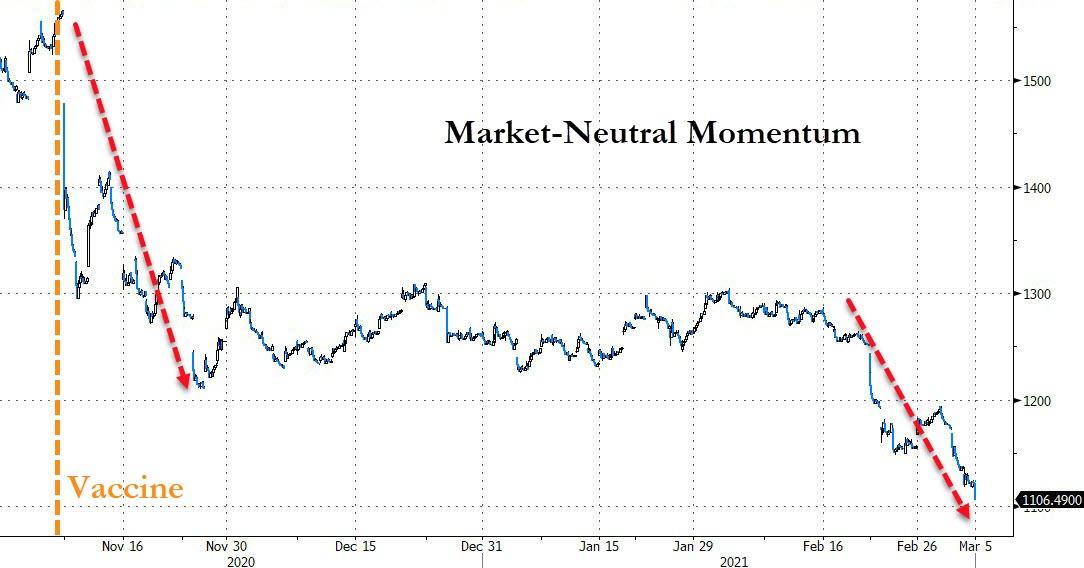
The momentum meltdown is accelerating…

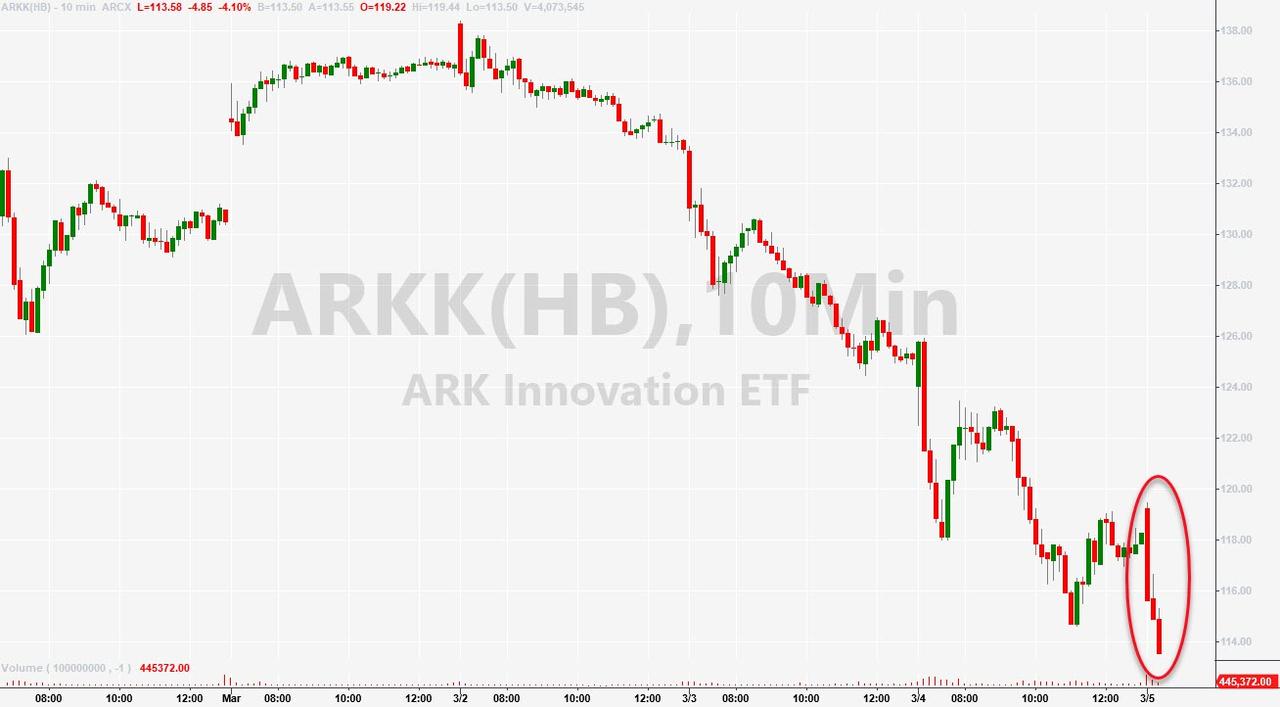
With ARKK crashing…

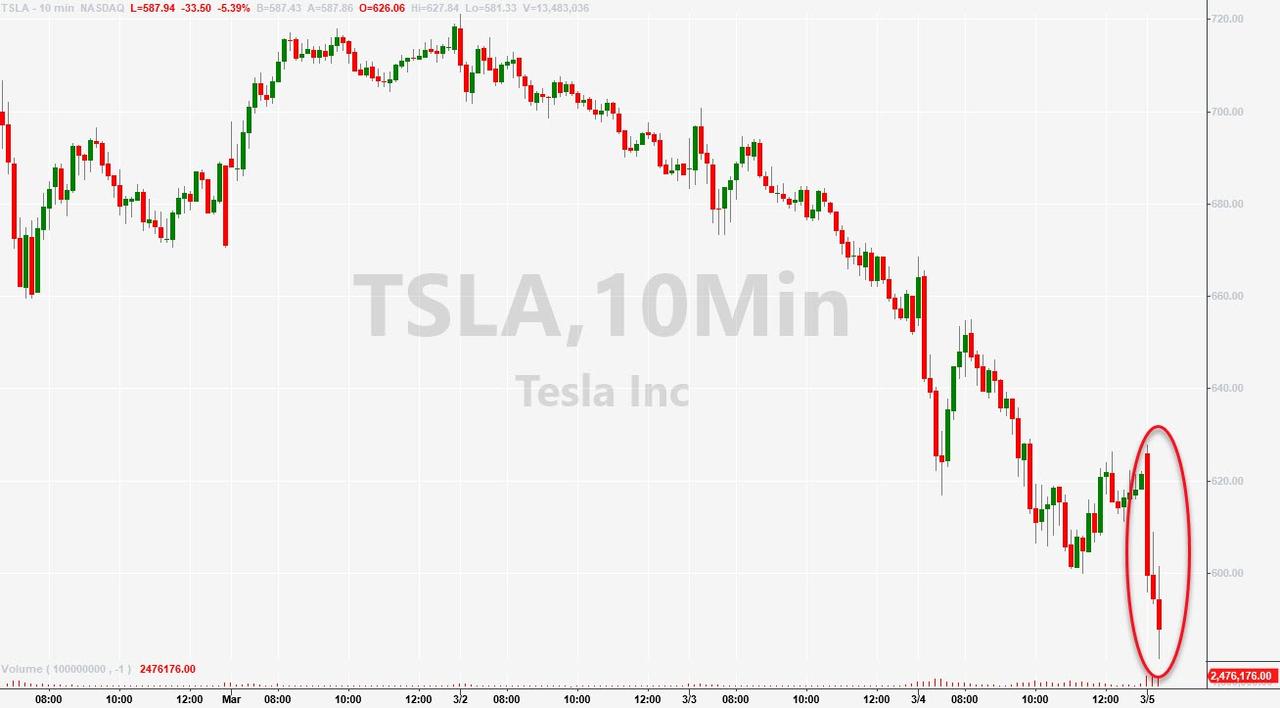
And TSLA along with it…

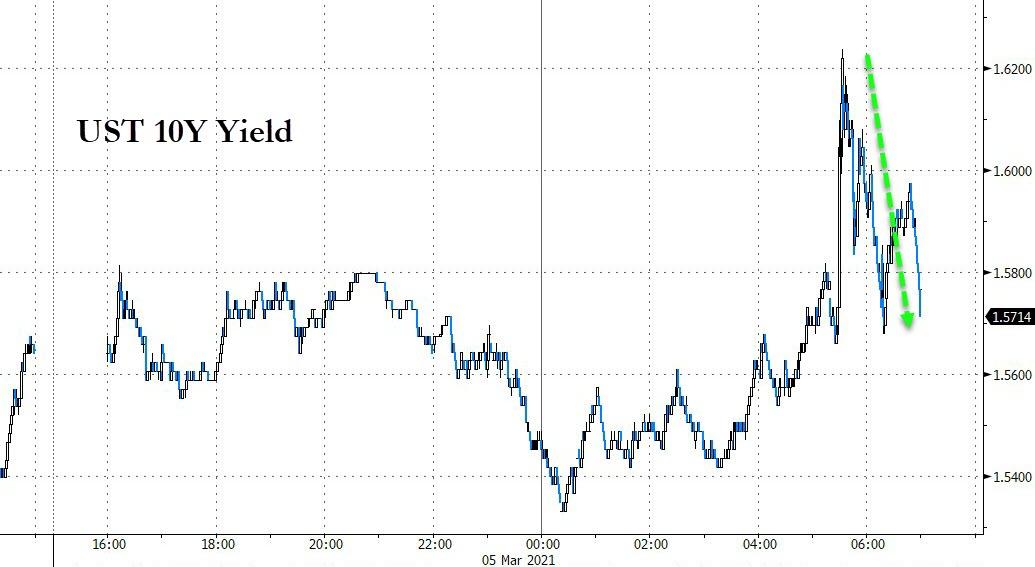
And this is not about spiking rates anymore (as bonds are bid)…

As goes ARKK, so goes America?

Tyler Durden
Fri, 03/05/2021 – 10:00

via ZeroHedge News https://ift.tt/3uUTnTj Tyler Durden

75% Of All Jobs Added In February Were Waiters And Bartenders

75% Of All Jobs Added In February Were Waiters And Bartenders

Call it payback for the December restaurant shutdowns.

It took a few minutes after the BLS reported the impressive February jobs report, which showed a whopping 379K total jobs added in February (and 465K private payrolls, or more than double the 195K expected), for traders to read between the lines and realize that there was much less than meets the eye in the latest jobs report.

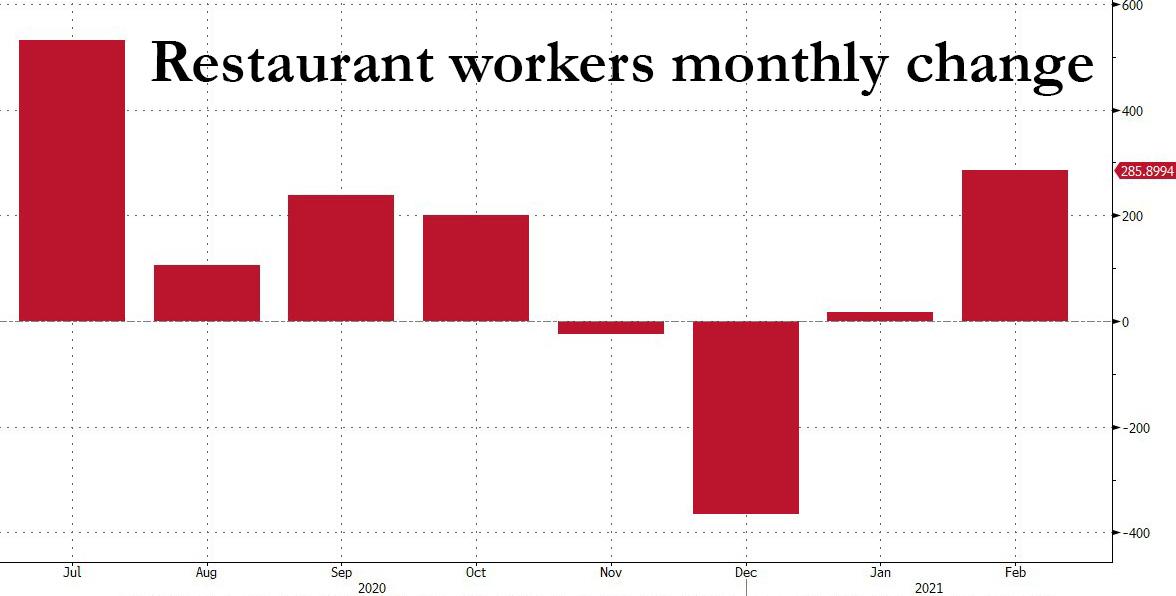
To wit: of the 379K jobs, a whopping 355K, or 93%, were in leisure and hospitality, and within this category the one and only sector that truly boomed the most under the Obama admin was on top: employees food service and drinking places, i.e. waiter and bartenders, accounted for a massive 286K jobs, or 75% of the total job gains in February. Call it payback for the December collapse in restaurant workers when nearly 400K jobs were lost amid the latest round of restaurant shutdowns.

To be sure, a rebound in restaurant jobs was to be expected. Recall that in our preview of today’s number we quoted Goldman which said that “infection rates fell and the severity of business restrictions generally eased” in February, and “reflecting this, restaurant seatings on OpenTable rebounded modestly further to -56% from -59% (yoy survey week to survey week).” It appears that the rebound was far stronger than even Goldman had expected.

Commenting on the surge in leisure jobs, South Bay research writes that “the surge in Leisiure & Hospitality payrolls reflects rising Consumer spending in the face of bad snowstorms and continued COVID restrictions. Imagine what will happen when those brakes are let off.

Imagine indeed: as Renaissance Macro analyst Neil Dutta said, “With COVID cases moderating, employment growth is picking up in high touch service industries. As the vaccination campaign goes on, we will see cases continue to drop and people going out and doing things. This will lead to a boom in the economy, service industries especially. We are going to see a seven figure jobs number at some point in the next few months. Bank on it.

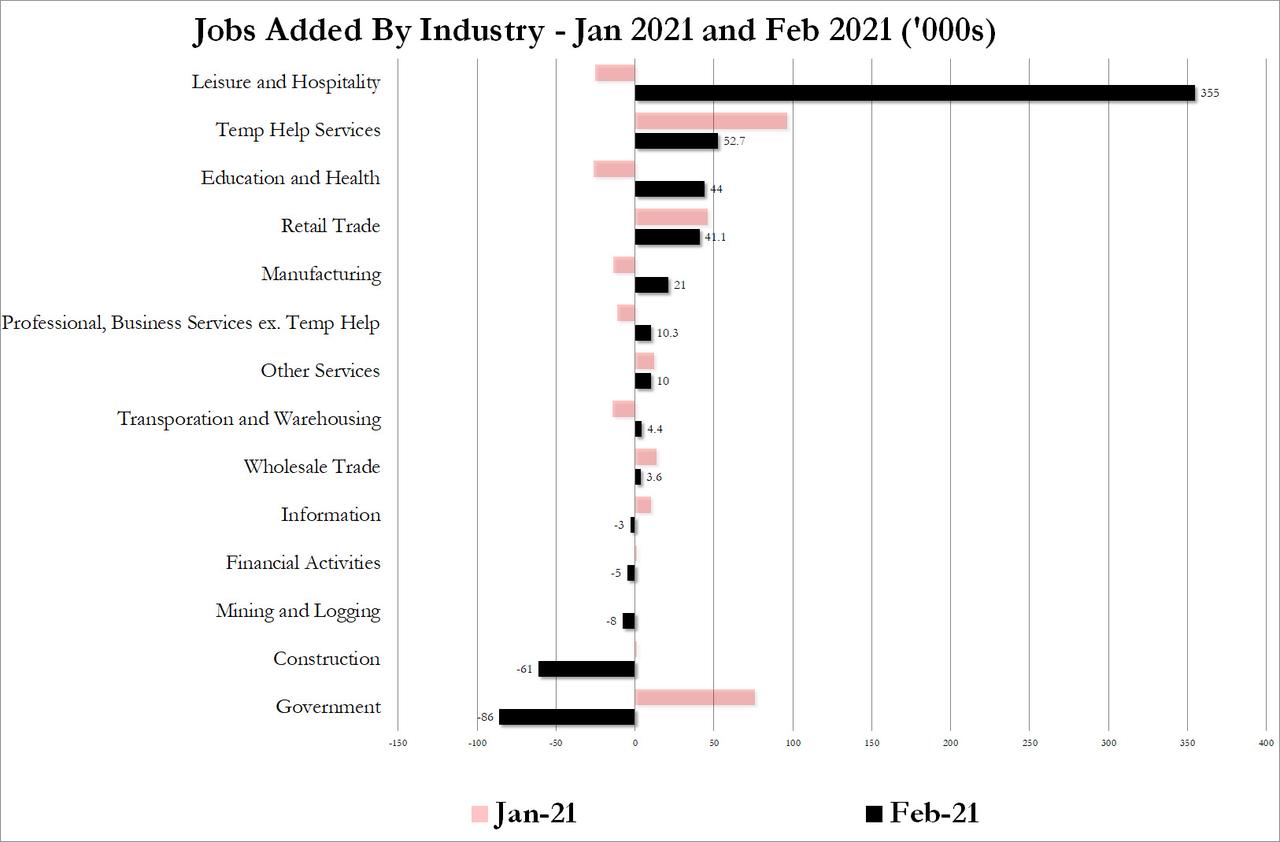
Besides waiters and bartenders, employment also rose in  accommodation (+36K) and in amusements, gambling, and recreation (+33K) as more of America reopened.

Another notable change: while there were gains in most service sectors – with the main losses concentrated in Government (-86K, driven by a plunge in local government education (-37,000) and state government education (-32,000) and Construction (-61K), temp payrolls continued to grow, adding 53K in February.

As SouthBay notes, as an indicator of Private Sector labor demand, Temporary services provide critical insight.  In particular, Temp staffing reflects near-term business activity and expectations. The Temp hiring trend downshifted in November with COVID’s 2nd wave and consequent re-imposition of lockdown.  It will rebound again when restrictions are lifted in the Spring. Another factor to consider is that the pace of recovery was bound to slow as full recovery approaches.  After collapsing 1M in March & April, Temp payrolls have rebounded 823K.

Here is a breakdown of all job sectors and how they performed in March:

  • Employment in health care and social assistance increased by 46,000 in February. Health care employment was little changed over the month (+20,000), following a large decline in the prior month (-85,000). In February, job gains in ambulatory health care services (+29,000) were partially offset by losses in nursing care facilities (-12,000). Employment in social assistance rose by 26,000, mostly in individual and family services (+18,000).
  • Retail trade added 41,000 jobs in February. Job growth was widespread in the industry, with the largest gains occurring in general merchandise stores (+14,000), health and personal care stores (+12,000), and food and beverage stores (+10,000). These gains were partially offset by a loss in clothing and clothing accessories stores (-20,000).
  • Manufacturing employment increased by 21,000 over the month, led by a gain in transportation equipment (+10,000). Employment in manufacturing is down by 561,000 over the year.
  • Employment declined in local government education (-37,000) and state government education (-32,000). For both industries, February losses partially offset gains in January. Pandemic-related employment declines in 2020 distorted the normal seasonal buildup and layoff patterns in the education sector, making it more challenging to discern the current employment trends in these industries.
  • Employment in construction fell by 61,000 in February, largely reflecting declines in nonresidential specialty trade contractors (-37,000) and heavy and civil engineering construction (-21,000). Severe winter weather across much of the country may have held down employment in construction. Employment in the industry is 308,000 below its level a year earlier.
  • Mining shed 8,000 jobs in February, with losses occurring in support activities for mining (-6,000) and in oil and gas extraction (-2,000). Mining has lost 153,000 jobs since an employment peak in January 2019, though nearly two-thirds of the loss has

And visually:

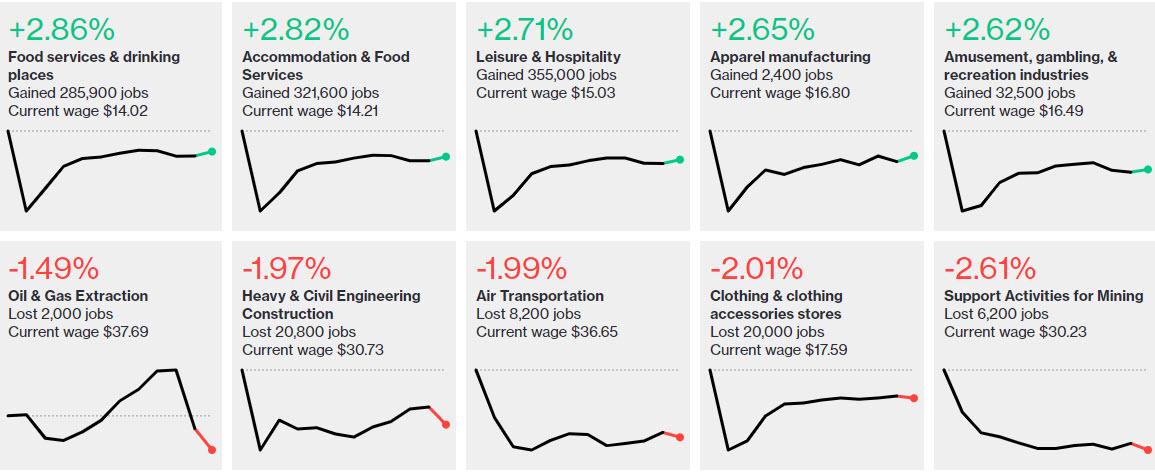
Finally, courtesy of Bloomberg, here are the industries with the highest and lowest rates of employment growth for the most recent month.


Tyler Durden
Fri, 03/05/2021 – 09:56

via ZeroHedge News https://ift.tt/2O8xiQx Tyler Durden

Dave Portnoy-Backed ETF Sees $280 Million Of Inflows Despite First-Day ‘BUZZ-kill’ 

Dave Portnoy-Backed ETF Sees $280 Million Of Inflows Despite First-Day ‘BUZZ-kill’ 

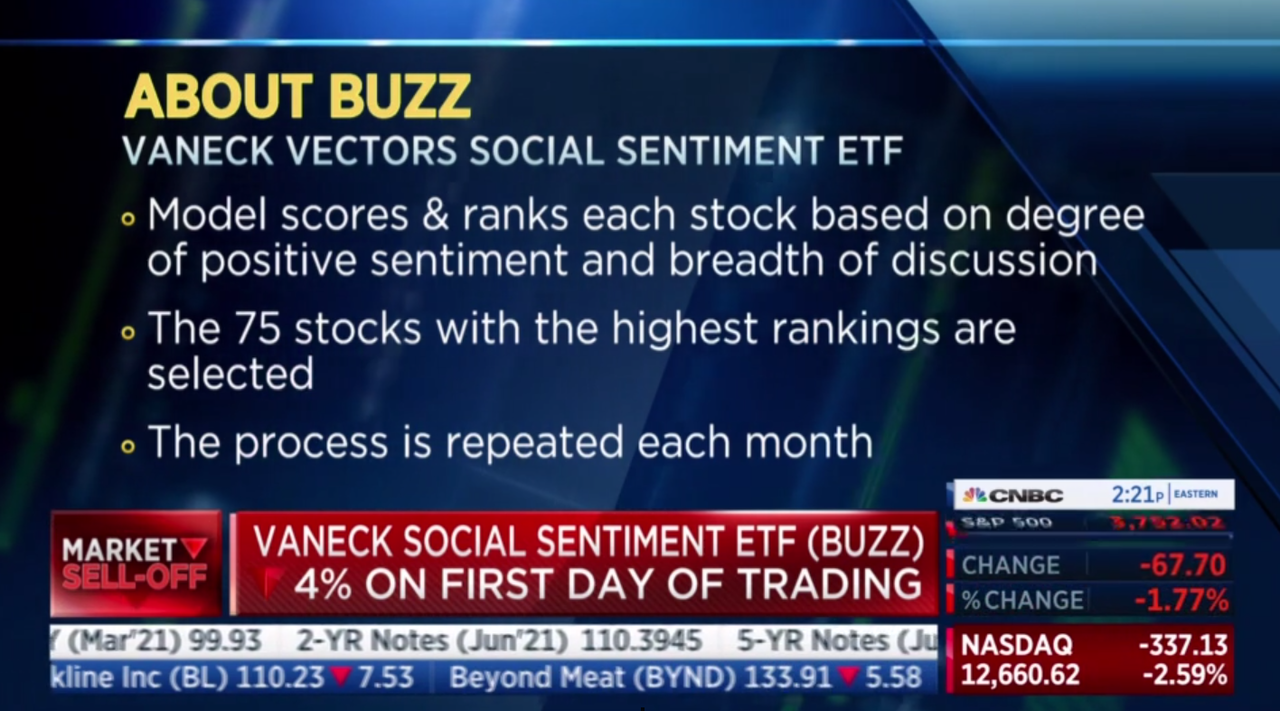
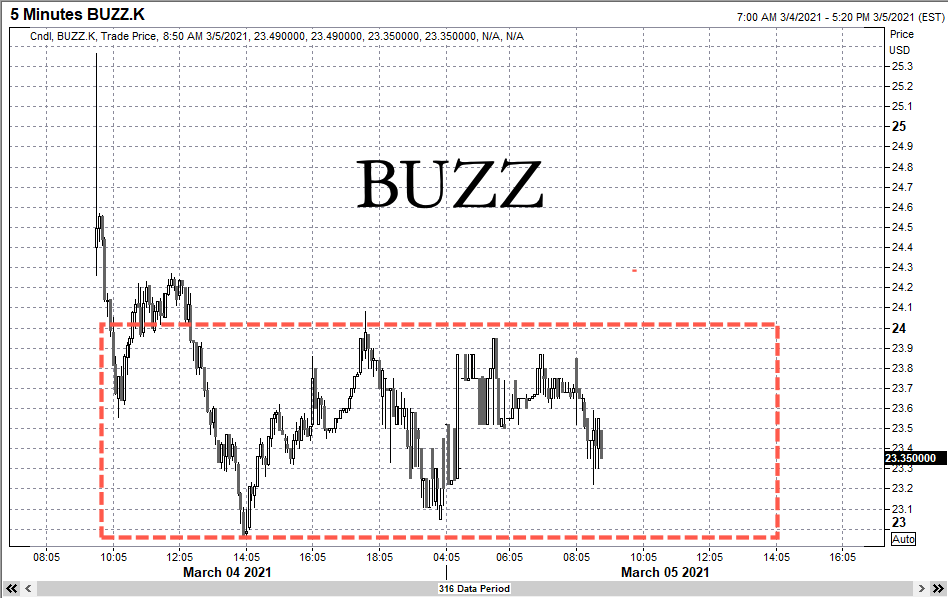
VanEck Vectors Social Sentiment ETF (BUZZ) began trading on Thursday, which was a total buzzkill, down 4%. But there was some good news, since Dave Portnoy, who founded Davey Day Trader Global (DDTG) and Barstool Sports, put his “name” behind the ETF, inflows yesterday were upwards of $280 million, according to Bloomberg data. 

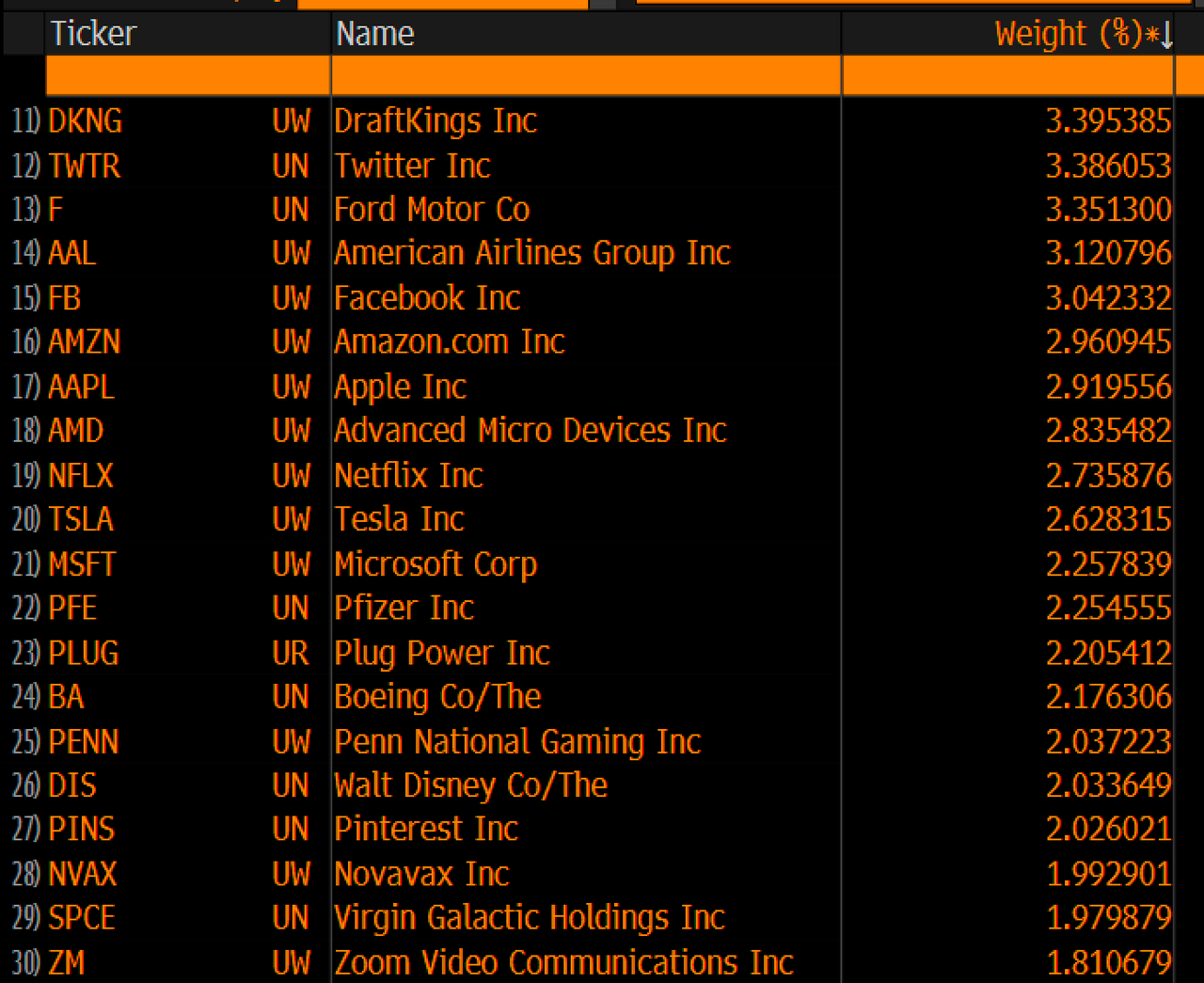
Portnoy is partial owner and director of Buzz Holdings ULC, the company that licensed the strategy to VanEck. The ETF’s holdings include Penn National Gaming (which holds a sizeable stake in Barstool Sports), DraftKings, Twitter Inc, Ford Motor Co, and Facebook Inc. 

“Although fund settlement schedules make it difficult to compare first-day inflows, BUZZ’s start probably ranks it among the 12 best debuts on record,” according to Bloomberg Intelligence. 

 Eric Balchunas, an ETF analyst for Bloomberg Intelligence, said BUZZ was the third-best ETF debut on record. 

One of the reasons behind the large inflows despite closing down prior session is that Portnoy was pumping the living daylights out the ETF on his Twitter account of 2.4 million followers. 

“Given the explosion of individual, younger retail traders, it makes sense to see a pile of volume,” said Dave Lutz, macro strategist at JonesTrading. “Whether it is the WSB crowd embracing Dave Portnoy’s marketing of the ETF, or institutions playing it to bet on the direction of the trend (or hedge) — we won’t know for a bit. I suspect it’s a bit of both.”

BUZZ remains rangebound between the $24 to $23 handles this morning. 

Tyler Durden
Fri, 03/05/2021 – 09:49

via ZeroHedge News https://ift.tt/3e8XkxT Tyler Durden