Vietnam Cashes In On China Exodus

Vietnam Cashes In On China Exodus

Tyler Durden

Tue, 09/29/2020 – 19:25

By Tim Daiss of Asia Times Financial,

As the Sino-American trade war pushes on with seemingly no end in sight, US companies continue to move their operations away from China. This offshore pivot has taken on renewed impetus due to the Covid-19 pandemic, intersecting with geopolitical fallout between Washington and Beijing, and magnified by the US presidential election only six weeks away.

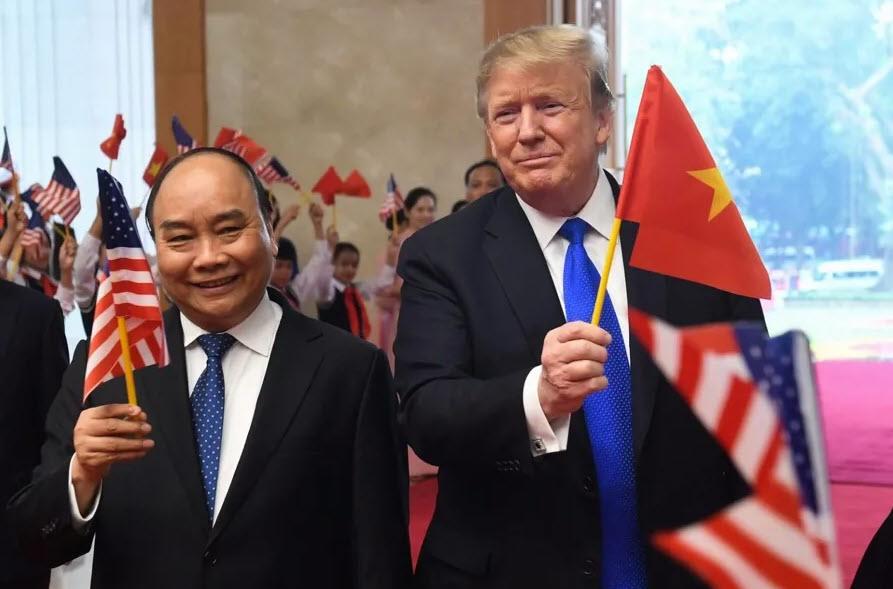
Vietnamese Prime Minister Nguyen Xuan Phuc and Trump.

Other countries are also moving operations out of China, including long-time US ally Japan. In July, Tokyo earmarked 220 billion yen ($2.2bn) as part of a record economic stimulus package to relocate its companies from China back to Japan and 23.5bn yen to move production to other countries, predominately Southeast Asia. To date, around 90 Japanese firms have joined the exodus from China, with more likely to follow, according to the Japan External Trade Organization.

A report in June by Gartner, a business and logistics advisory group, found that 33% of global supply leaders have moved, or intend to move, their supply chain operations out of China by 2023. According to Kamala Raman, a senior Gartner supply chain analyst, the development began more than two years ago when the onset of the trade war made supply chain leaders aware of the weaknesses of their globalised supply chains and also made them question the logic of heavily outsourced, concentrated and interdependent networks.

Countries in the Asia-Pacific region that have already benefited from this pivot away from China include Malaysia, India, Taiwan, Thailand and Vietnam. However, Vietnam appears to be benefiting the most due to a number of factors.

Despite their obvious political and ideological differences and history as antagonists during the Vietnam War, bi-lateral relations between Washington and Hanoi are at an all-time high. While much of those improved relations can be attributed to globalisation, a common adversary found in an increasingly assertive China has further solidified those ties.

Washington and Hanoi are also forging closer military cooperation in an effort to push back against Beijing’s hegemonic pursuits in the South China Sea, which have escalated since Xi Jinping became president of China nearly eight years ago.

Vietnam’s opportunity

Vietnam’s development over the past three decades has been momentous. Economic and political reforms put in motion in 1986 have spurred rapid economic growth, transforming what had been one of the world’s poorest nations into a lower middle-income country on the move.

To its credit, Vietnam offers friendly foreign direct investment (FDI) policies for companies that either want to move or supplement their China production strategy, as well as a strategic location, and a stable political and business environment.

Khanh Cong Le, a Ho Chi Minh City-based wind power project engineer and consultant, told ATF that Vietnam also possesses a geographical advantage over many of its competitors in the region.

“Clearly, with Vietnam bordering China to the north, it’s a condition that makes it easier to connect with supporting industry away from China,” Khahn said.

“Vietnam has a long coastline [around 3,260km] and a convenient gateway to the South China Sea to connect with markets in Pacific countries. Vietnam is also the axis connecting northeast Asia with southeast Asian countries,” he said.

Vietnam also offers a young and growing workforce, including thousands eager for new employment opportunities. More than two-thirds of Vietnam’s population is younger than 35, creating favourable demographics to fuel its rise.

However, what should be one of Vietnam’s greatest strengths, could also be one of its toughest challenges in attracting more US manufacturers, namely a lack of skilled workers and low education levels.

According to global recruitment firm Manpower, only 12% of Vietnam’s approximate 57.5 million workforce can be identified as highly skilled. The majority of the country’s labour still lives in rural areas and works in the agricultural sector.  

Vietnam’s workforce numbers, however, also limits its ability to attract more manufacturers looking to move out of China, whose workers number more than 770 million, according to World Bank data.

Consequently, opportunities from offshoring away from China will continually be shared by not only the 10 countries that make up the Association of Southeast Asian Nations (ASEAN), whose total population equals 650 million, but also India, whose labour force totals around 500 million.

Vietnam also suffers from a lack of infrastructure, while poorly built and aging roads along with congested ports, increase the time to transport goods, raises costs and reduces overall efficiency and competitiveness.

“Weak infrastructure and high transport costs have prevented Vietnamese firms from fully tapping into the logistics sector’s potential,” Tran Thanh Hai, deputy director of Vietnam’s Import-Export Department, said recently.

He added that the logistics sector in Vietnam has seen rapid development in recent years with yearly growth rates of 13% to 15%.  However, “poor roadway and aviation infrastructure has been one of biggest challenges for the sector despite improvements in recent years,” he said.

Trade imbalance sticking points

Vietnam’s trade imbalance with the US has also remained a sticking point, particularly during the Trump administration. The country’s trade with the US continued an upward trajectory for the January to July period to $46.4bn, a 10.8% increase from the same period last year, according to US Census Bureau data.

Conversely, US exports to Vietnam decreased at a 1.8% rate from January through July compared with the same period last year. The US trade deficit with Vietnam is now nearly $40bn.

As such, and due to a highly positive current account balance and because the country’s central bank has been active in terms of net foreign exchange purchases, Vietnam remains at risk of being labeled a currency manipulator by the US.

To help offset the growing trade deficit, policy makers have been courting US energy companies not only keen on importing liquefied natural gas (LNG) to meet Vietnam’s looming domestic gas supply crunch, but also attracting much needed FDI in its growing gas-to-power sector, particularly in the Mekong Delta in the south.

Over the past several weeks, a growing number of US companies have stoked new interest in Vietnam’s gas and power sector after several months of weak activity, mostly due to the coronavirus. They are racing to be included in Vietnam’s most recent National Power Development Plan, which is expected to be submitted to prime minister Nguyen Xuan Phuc by October for approval.

via ZeroHedge News https://ift.tt/3ibC0pT Tyler Durden

Which Jobs Have Been Hardest Hit By The Pandemic

Which Jobs Have Been Hardest Hit By The Pandemic

Tyler Durden

Tue, 09/29/2020 – 19:05

Heading into Friday’s payrolls report, the labor market has been enjoying a strong tailing, with the unemployment rate falling to a lower-than-expected 8.4% in August, and consensus is looking for a further decline to 8.2 % in September. In terms of non-farm payrolls, the consensus is also looking for continued job growth of +865k, but as Jim Reid cautions, “it’s worth bearing in mind that having lost over -22MM jobs in March and April, even this figure would mean that just over half of them have been recovered, still leaving nonfarm payrolls over 10MM below their peak back in February.”

Still, considering the continued gridlock over a new fiscal stimulus, if the consensus forecast of 850k NFP proves correct, it will certainly be a continuation of upward momentum with more than 51% of recent job losses recovered through September, leaving employment at 93% of February levels.

That said, there are underlying challenges as BofA writes in report published late last week looking at who is falling behind even as the labor market recovery continues. AS BofA economist Alexander Lin writes, “the pandemic affected the economy unevenly, impacting the lower-income population more than the upper-income cohorts. This has remained true in the recovery as well.”

One can see the differences using the industry level data in the nonfarm payroll figures. Leisure & hospitality remains deep in the red and is the lowest paid industry (Chart 3). There are some higher paid industries like mining & logging and information services that remain below 90% of pre-pandemic levels, but they account for much smaller shares of employment.

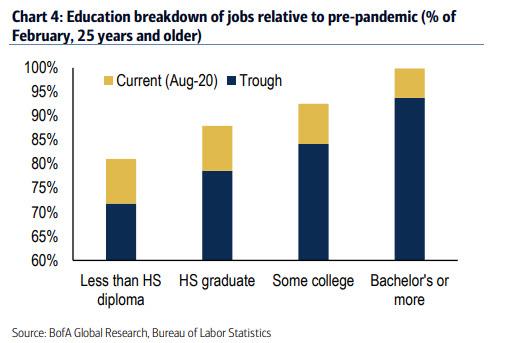
Lin then highlights that employment by education reveals an even starker gap between the high skilled and low skilled. The level of employed with a bachelor’s degree or more saw a peak-to-trough decline of around 6% but has basically fully recovered from those losses through August. On the other end of the spectrum, those with less than a HS diploma have only recovered to 81% of pre-pandemic levels.

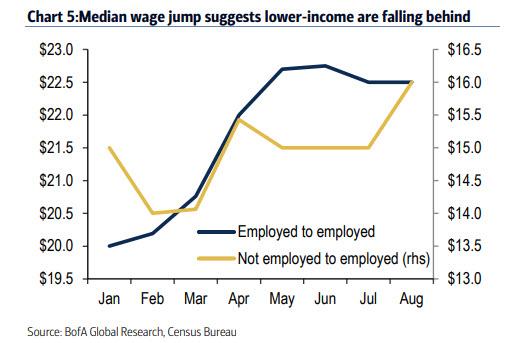
Meanwhile, the dramatic changes to the labor composition have distorted the standard wage metrics, with average hourly earnings last running at 4.7% yoy, a number which analysts expect to accelerate to 4.8% in September. The CPS micro data provide additional perspective, allowing economists to track workers from month to month and their wages over time. It also reveals that the median wage of those that remained employed throughout the pandemic increased, as did the median wage of those that were rehired, which may soon become a challenge to the Fed which is confident wages growth will remain subdued until at least 2023 per its latest Average Inflation Targeting regime.

At the same time the distribution showed similar results as the 25th and 75th percentiles also increased. This provides further evidence of low-income workers falling behind.

Unfortunately, whereas the BLS calculation of wage growth is highly skewed due to a slower rebound in hours worked, the reality is that wage pressures are likely extremely subdued according to BofA which cites a recent PEW survey (Parker et al, 24 Sep 2020) released this week which found that 32% of adults said they or someone in their household had to take a pay cut due to reduced hours or demand from the pandemic. This stat was also skewed more negatively by income, as 37% of low-income  households experienced pay cuts versus 26% of upper-income households.

Long-term problems emerging

Wages aside, with the pandemic now in its seventh month and labor market slack still elevated, many of the unemployed are transitioning into the “long-term unemployed cohort,” which covers those without a job for more than 26 weeks. To wit, starting in July, the level of unemployed 15-26 weeks spiked to 6.5 million, which is nearly double the previous record high of 3.5 million. The level of unemployed 27 weeks & over may soon follow.

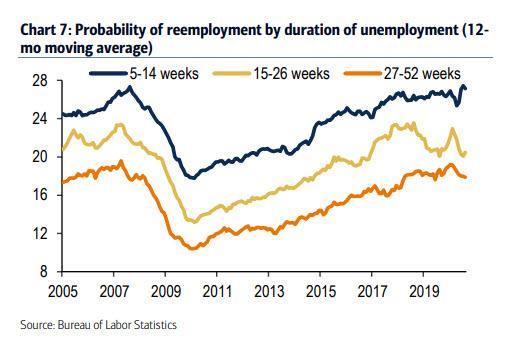
Of course, the longer one is unemployed, the lower the chances they can find another job. As BofA notes, using labor flows, the BLS calculates the probability of reemployment by duration of unemployment. The probability drops from 27% for 5-14 weeks to 20% for 15-26 weeks

It drops further to 18% for those unemployed for 26-52 weeks, with Lin warning that “longer spells of unemployment also lead to lower reemployment wages as skills and employee bargaining power erode.”

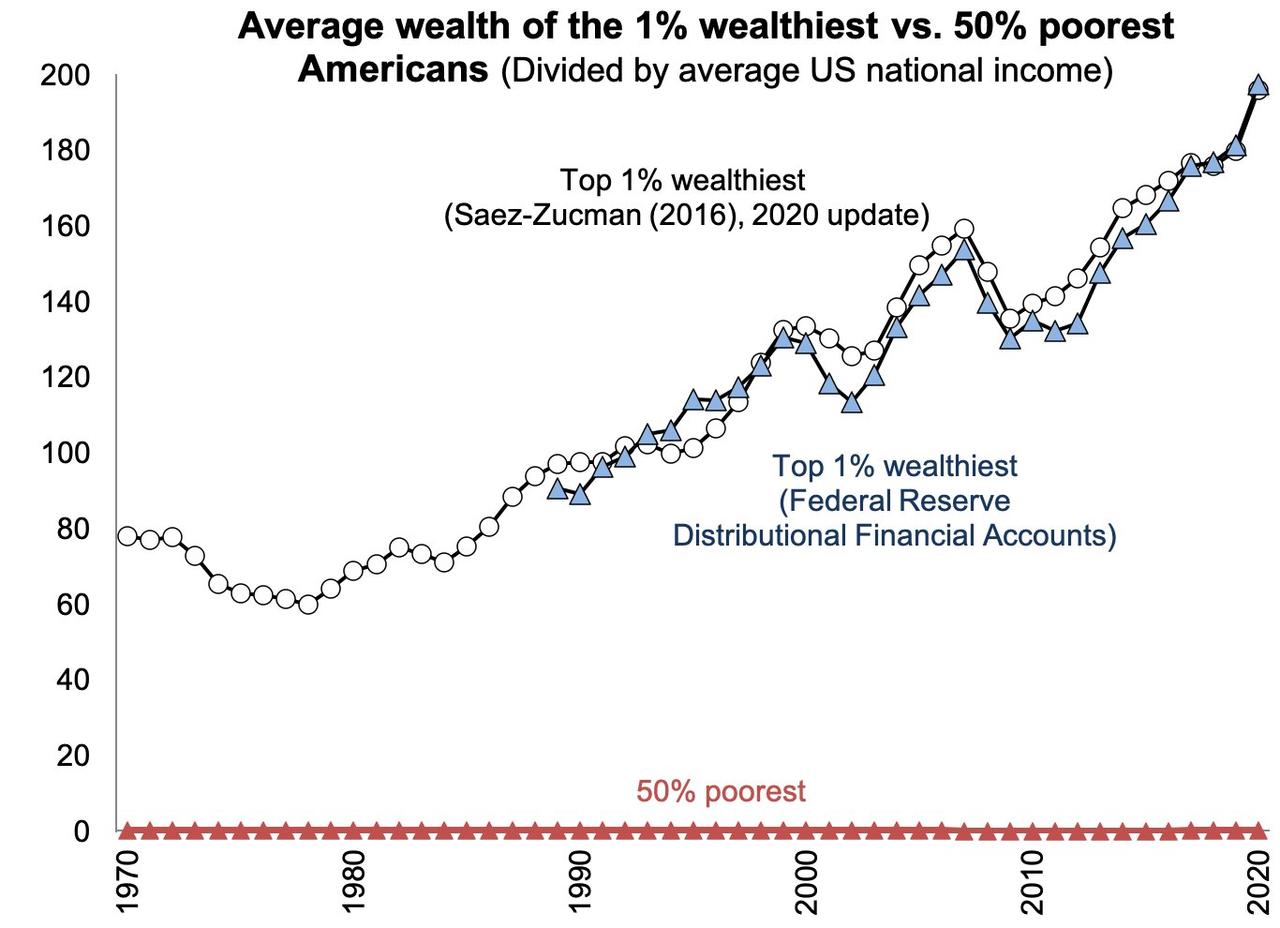
The bottom line is that with the lower-income cohort already falling behind, the odds clearly become more stacked against them over time. The end result is therefore even greater income disparity, hardly optimal for an economy where the Fed’s constant manipulation of market has already led to a historic divergence in wealth between the top 1% – which just hit a record 200 year of average income vs “only” 60 in 1978 – and the bottom 50%, whose income has not changed one bit in over 40 years.

via ZeroHedge News https://ift.tt/3id3ifp Tyler Durden

Helicopter Money And The End Of Taxes

Helicopter Money And The End Of Taxes

Tyler Durden

Tue, 09/29/2020 – 18:45

Authored by Charles Hugh Smith via OfTwoMinds blog,

Rather than right the ship, the “easy fix” is to distribute “free money”–not just to billionaires and corporations but to everyone.

The system of collecting taxes and distributing the dough is a zero-sum game: each dollar of tax revenue paid by someone and given to someone else is one dollar that the taxpayer will no longer have to save or spend. Meanwhile, the recipient received a dollar that would not have been available without taxes.

State and local governments are still bound by this zero-sum game except for infrastructure spending funded by the sale of municipal bonds. These bonds are debt and must be paid back with interest. But as a general rule, the general funds of cities, counties and states are zero-sum: they can only spend what they collect in tax receipts.

As a result, the feeding frenzy at the public trough has winners and losers: taxpayers who receive fewer benefits than they pay in taxes are the losers, and residents / enterprises who get subsidies, tax breaks, entitlements, benefits in excess of what they paid in taxes are the winners.

Zero-sum: every corporate or individual welfare queen / king that mooches off the public trough as a result of skims and scams (gaming the system, lying, lobbying, legalized looting, etc.) deprives a legitimate recipient / program of scarce tax dollars, or deprives the taxpayers of a tax cut.

The federal government has no restraint. The federal feeding trough can be refilled by deficit spending, i.e. selling Treasury bonds and blowing the proceeds on essentially limitless skims and scams.

Taxpayers naturally resent the skims and scams their hard-earned tax payments fund. Politicos are dimly aware of this resentment (dismissed as evil populism by the status quo’s apparatchiks) and so they naturally seek to defuse this threat to their own skims and scams by giving free money to everyone and not just to their super-wealthy donors (in the form of bailouts, subsidies, tax breaks, no-bid contracts, etc.)

We’ve already had a taste of free money for everyone in the $1,200 giveaway earlier this year. There was also talk of dispensing with the individuals’ share of Social Security/Medicare taxes (7.65% of earned income) for a limited time, but this created confusion because it was unclear if this was a temporary measure that would be due later or an actual freebie.

Clearly, this was a trial balloon for eliminating the Social Security/Medicare tax for low and moderate income households. Why collect $1,200 in SSA taxes and then hand the household $1,200? Why not just eliminate the tax?

Most households pay very little federal income tax as it is. The bottom 50% pay 1% of all federal income taxes, and the top 10% pay the majority of all income taxes.

Declaring the first $50,000 or $60,000 of income per taxpayer as tax-free would not reduce tax revenues by much because the bottom 90% pay such a small percentage of income taxes.

If 90% of households don’t pay federal income taxes, then they have no beef with who’s feeding at the federal trough, as it’s no longer zero-sum. There will be “free money” for everyone: corporate welfare galore, no income taxes for the bottom 90%, permanent unemployment payments for the chronically unemployed, Universal Basic Income (UBI) for everyone, even the top 10% (so they get something for free)– helicopter money without limit.

As all the extremes of wealth/income inequality unravel, calls to “tax the rich” gain favor. The problem is that the super-rich have the political power to evade taxes, so the only people who will pay more will be the tax donkeys who aren’t rich enough to hire teams of tax attorneys and buy tax breaks from desperate-for-campaign-cash politicos.

The idea of countering inequality by giving everyone free money seems painless as long as the Federal Reserve can create trillions out of thin air. And the basic idea of MMT (Modern Monetary Theory) is the Treasury can create trillions without even selling Treasury bonds that accrue interest.

As I explained in The Silent Exodus Nobody Sees: Leaving Work Forever (9/23/20), all this free money (with a token giveaway to the remaining tax donkeys) will have unintended consequences:

1. The working poor who do the economy’s hard, low-pay work will find ways to leave their life of poorly paid toil behind forever.

2. The tax donkeys will have tremendous incentives to cut their work and income down to the tax-free level. Why kill yourself to pay 50% of what you earn as taxes?

What kind of economy will we have when all the hard work becomes optional and a consequential percentage of the tax donkeys effectively “lay down their burdens”? All the “free money” will go to consumption, not production, and so the purchasing power of the “free money” will erode very rapidly.

This Is Why Inflation Will Rip Everyone’s Face Off (9/17/20)

The intrinsic unfairness of the status quo is undermining the willingness to keep contributing to it. Rather than right the ship, the “easy fix” is to distribute “free money”–not just to billionaires and corporations but to everyone.

Simply put, work no longer pays. What pays is turning companies into debt-zombies to buy back shares and milking America’s monopolies. (Contributor A.P. outlined how the system really works: Our Wile E. Coyote Economy: Nothing But Financial Engineering (6/11/20)

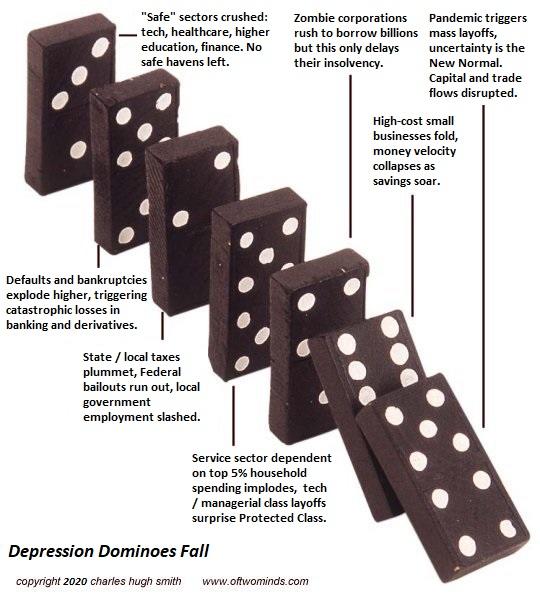
All those who believe this is a permanent, stable system will get a nice hard chair at the banquet of consequences. The dominoes are falling but distractions abound.

*  *  *

My recent books:

A Hacker’s Teleology: Sharing the Wealth of Our Shrinking Planet (Kindle $8.95, print $20, audiobook coming soon) Read the first section for free (PDF).

Will You Be Richer or Poorer?: Profit, Power, and AI in a Traumatized World
(Kindle $5, print $10, audiobook) Read the first section for free (PDF).

Pathfinding our Destiny: Preventing the Final Fall of Our Democratic Republic ($5 (Kindle), $10 (print), ( audiobook): Read the first section for free (PDF).

The Adventures of the Consulting Philosopher: The Disappearance of Drake $1.29 (Kindle), $8.95 (print); read the first chapters for free (PDF)

Money and Work Unchained $6.95 (Kindle), $15 (print) Read the first section for free (PDF).

*  *  *

If you found value in this content, please join me in seeking solutions by becoming a $1/month patron of my work via patreon.com.

via ZeroHedge News https://ift.tt/2HATjE0 Tyler Durden

“Corruption !!!” – Furious Trump Questions Why Observers Were Barred From Early Voting Sites

“Corruption !!!” – Furious Trump Questions Why Observers Were Barred From Early Voting Sites

Tyler Durden

Tue, 09/29/2020 – 18:25

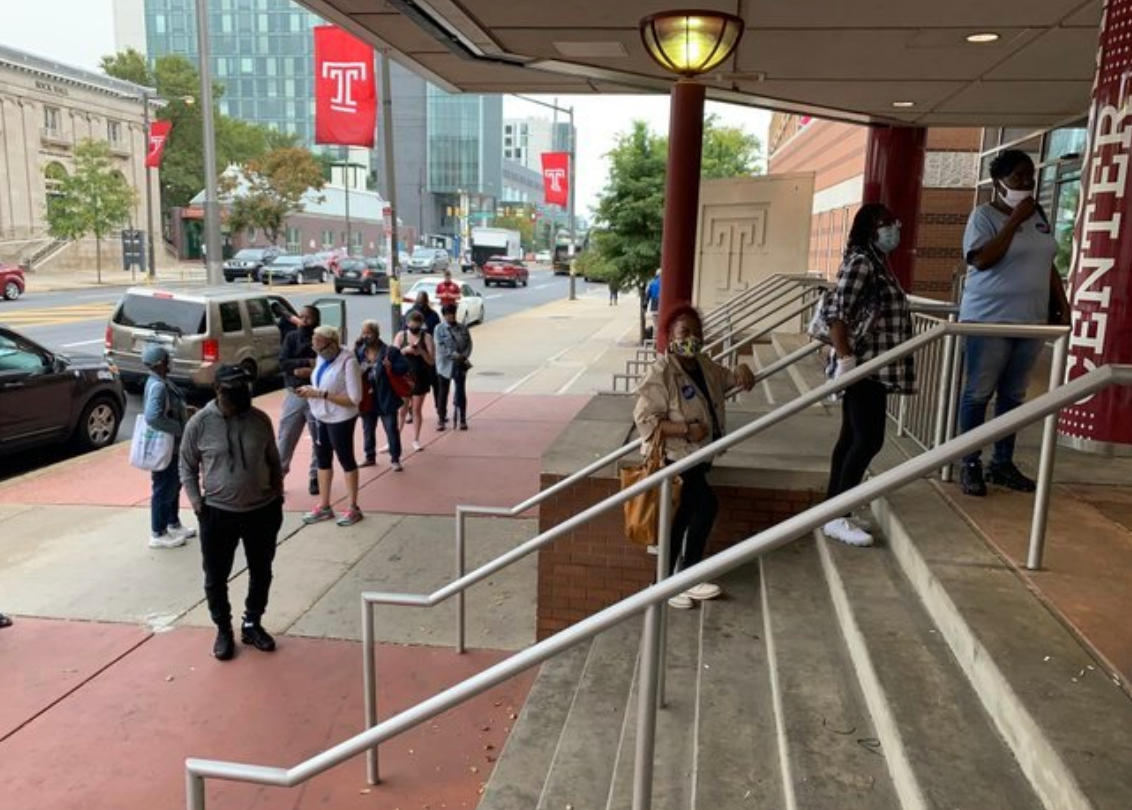
President Trump’s “fraudulent” rantings about voter fraud will likely be featured in Tuesday night’s debate against Joe Biden, which marks the first time the two men, who have traded threats to throw down with their fists on more than one occasion, will face off on stage. And while the NYT and its allies in the Democratic Party and on cable news have been pushing the scoop about Trump’s tax returns, conservative blogs are simultaneously sharing a story about GOP poll watchers being refused from “early voting stations” in Philadelphia, a city that’s dominated by Democratic politicians.

On Tuesday, the city of Brotherly Love opened 15 new satellite offices

According to the Gateway Pundit, Trump observers are being denied entry to the satellite voting locations across the city, according to Mike Roman, an election official for the Trump Campaign.

Officials told reporters that the closures were related to an issue with the city’s voter database.

Details are pretty vague at the moment, but President Trump just elevated the issue by tweeting about the story.

And he’s not the only one.

via ZeroHedge News https://ift.tt/3kVCamU Tyler Durden

Daily Briefing – September 29, 2020

Daily Briefing – September 29, 2020


Tyler Durden

Tue, 09/29/2020 – 18:10

Senior editor, Ash Bennington, joins Tony Greer, editor of the Morning Navigator, to break down recent price action in markets. Tony provides his latest thoughts about what’s happening in the energy sector and where oil is headed as we begin to close out 2020, reviews his stance on the tech rally and its sub-sectors, and offers his perspective on the financials sector. Ash and Tony also discuss market sentiment with the U.S. presidential election fanning the flames of anxiety and the risk of COVID-19 still looming. Real Vision reporter Haley Draznin looks ahead at what investors will be watching for in the first US presidential debate and its impact on continued market volatility.

via ZeroHedge News https://ift.tt/2ScJVZu Tyler Durden

Yale Economist Warns Of Looming Dollar Collapse

Yale Economist Warns Of Looming Dollar Collapse

Tyler Durden

Tue, 09/29/2020 – 18:05

Via SchiffGold.com,

Peter Schiff has been warning about a looming dollar collapse. During an appearance on Fox Business in July, Peter said the dollar isn’t just going down, it’s going to crash.

“I think the dollar is going to keep drifting down until it collapses,” Peter said. 

“And this is going to usher in a real economic crisis in America, unlike something we’ve ever seen.

Peter is not alone. In a recent article published on SCMP.com, Yale economist Stephen Roach said he expects the dollar to plunge by as much as 35% next year.

Roach lists three factors he thinks will ultimately doom the dollar.

This reflects three considerations:

  1. the rapid deterioration in macroeconomic imbalances in the United States,

  2. the ascendancy of the euro and renminbi as alternatives, and

  3. the end of the aura of American exceptionalism that has given the dollar Teflon-like resilience for most of the post-World War II era.”

Roach called the confluence of an erosion in domestic savings and the current account deficit “nothing short of staggering.”

The national savings rate has entered negative territory for the first time since the 2008 financial crisis, coming in at -1% in the second quarter. According to Roach, a temporary surge in personal savings due to the pandemic and government stimulus checks has been more than outweighed by a record expansion in the federal budget deficit.

With the federal budget deficit exploding towards 16% of gross domestic product this financial year, according to the Congressional Budget Office, the savings plunge is only a hint of what lies ahead. This will trigger a collapse in the US current-account deficit. Lacking savings and wanting to invest and grow, the US must import surplus savings and run massive external deficits to attract foreign capital.”

A current account deficit occurs when the value of the goods and services a country imports exceeds the value of its exports. We’re already seeing signs of that the current-account deficit is widening. It came in at 3.5% of GDP in Q2 – the worst since the 4.3% deficit in the fourth quarter of 2008. Not only that, the quarter to quarter decline charted the largest deterioration since recordkeeping began in 1960.

Roach noted that the Federal Reserve will exacerbate the rapidly destabilizing savings and current-account imbalances with its zero percent interest rate policies and its “average 2% inflation” targeting.  In simple terms, the Fed is committed to holding interest rates low, even if inflation gets hot.

This new bias towards monetary accommodation effectively closes off an important option – upwards adjustments to interest rates – that has long tempered currency declines in most economies. By default, that puts even more pressure on the falling dollar as the escape valve from America’s rapidly deteriorating macroeconomic imbalances. In short, the vice is tightening on a still-overvalued dollar. Domestic savings are plunging as never before, and the current-account balance is following suit. Don’t expect the Fed, focused more on supporting equity and bond markets than on leaning against inflation, to save the day. The dollar’s decline has only just begun.”

via ZeroHedge News https://ift.tt/2SadTx5 Tyler Durden

‘Rapid Strikes To Follow’: Iraqis See US Threat To Shutter Embassy As Prelude To War

‘Rapid Strikes To Follow’: Iraqis See US Threat To Shutter Embassy As Prelude To War

Tyler Durden

Tue, 09/29/2020 – 17:45

We detailed previously that the US State Department is livid over repeat rocket and mortar attacks on both the US Embassy in Baghdad and the high secure ‘Green Zone’ in which the American compound is located.

This resulted in US officials signaling at the start of this week they are mulling shuttering the embassy altogether and calling all diplomatic personnel home. Multiple reports say “preparations” for just such a retreat are underway, which strongly suggests bigger US military intervention will follow.

Not only was there weekend fire on the US embassy area, but a Monday attack on Baghdad’s international airport, which also hosts Western military advisory forces, killed five Iraqi civilians when a rocket slammed into their house on the edge of the airport.

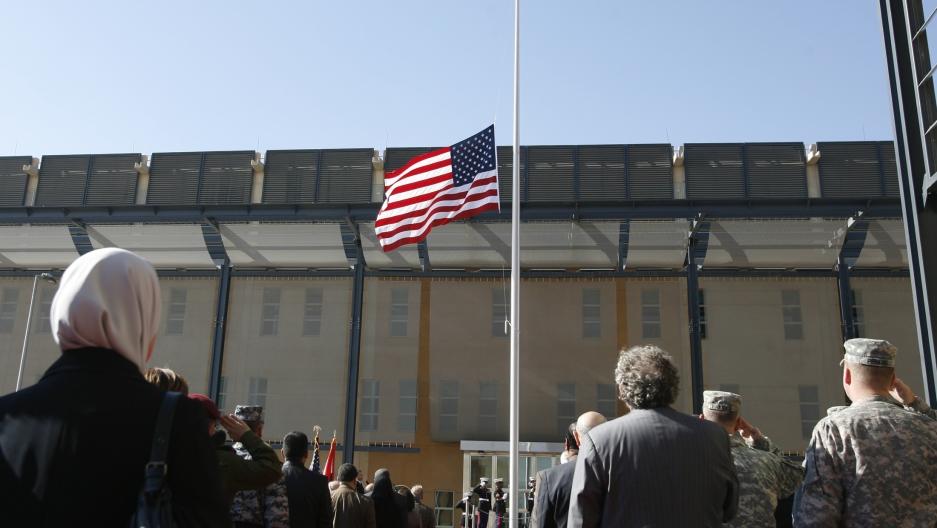
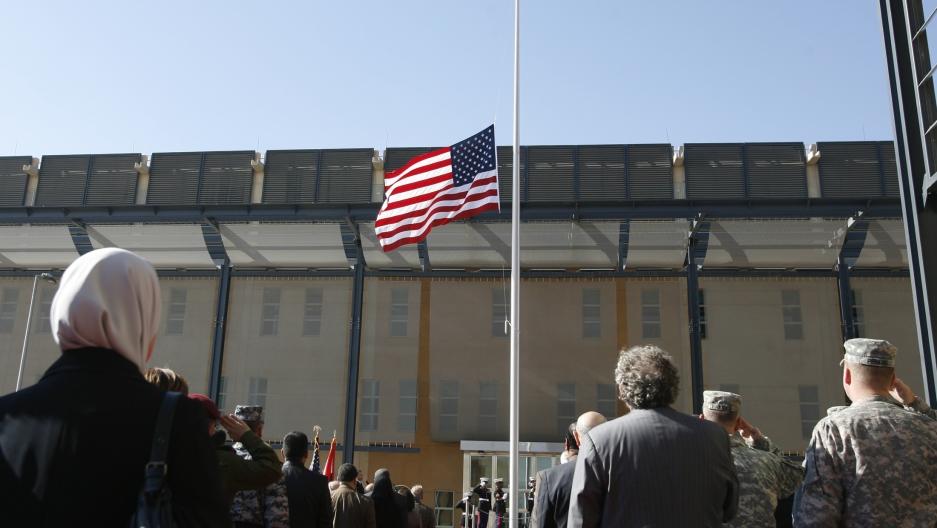
Reuters file image: past formal opening of the US embassy in Baghdad’s fortified Green Zone, Jan. 5, 2009.

Both Iraqi and American diplomats have now told Reuters that the region will interpret closure of the US Embassy as a sure sign war is coming

According to the report, it would mean a US “gloves off” approach to pro-Iranian Shia Iraqi militias which have long been blamed for the sporadic rocket attacks on Western interests, on a noticeable uptick of late:

Any move by the United States to reduce its diplomatic presence in a country where it has up to 5,000 troops would be widely seen in the region as an escalation of its confrontation with Iran, which Washington blames for missile and bomb attacks.

That in turn would open the possibility of military action, with just weeks to go before an election in which President Donald Trump has campaigned on a hard line towards Tehran and its proxies.

Indeed it could be a Trump administration “tough on Iran” foreign policy selling point, in line with the long-running maximum pressure campaign, especially given there are Iran hawks on both sides of the aisle. 

Reuters cited Western diplomatic sources to say that if the go ahead order for a full embassy withdrawal is actually given, expect swift military action to follow: “The concern among the Iraqis is that withdrawing diplomats would be followed quickly by military action against forces Washington blamed for attacks.”

But the embassy closure or especially a timetable is still anything but certain, as the report notes:

One of the Western diplomats said the U.S. administration did not “want to be limited in their options” to weaken Iran or pro-Iranian militias in Iraq. Asked whether he expected Washington to respond with economic or military measures, the diplomat replied: “Strikes.”

The U.S. State Department, asked about plans to withdraw from Iraq, said: “We never comment on the Secretary’s private diplomatic conversations with foreign leaders … Iran-backed groups launching rockets at our Embassy are a danger not only to us but to the Government of Iraq.”

Despite Katyusha rocket attacks on the embassy in the past months becoming a near weekly occurrence (as well as deployment of countermeasures), there’s rarely any casualties or material damage to the embassy. 

Typically the non-precision rockets fall in open fields, and it’s yet ultimately unknown and unproven just who or which group is behind the bulk of the attacks. 

via ZeroHedge News https://ift.tt/30laznh Tyler Durden

Is the COVID-19 Herd Immunity Threshold as Low as 15 Percent?

HerdImmunityDreamstime

Since the first case of community transmission in the U.S. of the COVID-19 coronavirus was reported seven months ago, more than 7 million Americans, that is, around 2.2 percent of our population, have been diagnosed with the disease according to the Centers for Disease Control and Prevention (CDC). However, researchers estimate that undetected COVID-19 cases are likely to be 10 times greater than diagnosed cases. The machine learning epidemic model run by Youyang Gu and his colleagues estimate that around 16 percent of Americans have already been infected with the COVID-19 coronavirus.

That could be good news if a brief preprint study published yesterday by a team of Scottish researchers that calculates a COVID-19 herd immunity threshold of 15 percent pans out. The Scottish researchers achieve their result by modifying the epidemiological model in a June study in Nature that found that non-pharmaceutical interventions, specifically lockdowns, had averted millions of COVID-19 deaths in Europe.

That Nature study estimated the initial reproduction number (Rt) for the virus to 3.8, that is, each infected person was likely to transmit the virus to 3.8 other people. The classical formula for calculating a herd immunity threshold is 1 minus 1/Rt, which, in this case, would suggest a threshold of nearly 75 percent of the population that would have to be infected or vaccinated. The article also assumed that everyone was equally likely to become infected (homogeneity) and that about 1.1 people out of every 100 infected would die (infection fatality rate or IFR) of the disease.

In their analysis, the Scottish researchers relax the assumption of homogeneity to allow for individual variation in connectivity and susceptibility and apply a more recent lower IFR estimate of 0.3 per 100 infected people. When they compare their modified model’s results with actual data on deaths from 11 European countries they find that “a value of 0.3% for the IFR give 15% for the average herd immunity threshold.” They further note that “models that allow for heterogeneity favor build-up of herd immunity rather than non-pharmaceutical interventions as the main factor underlying the early slowing and reversal of the COVID-19 epidemic in Europe. This is consistent with observations that epidemic curves in many countries reached a peak less than two months after the first few severe cases appeared.”

However, the researchers add that based on the data they are using “it is not possible to distinguish the relative contributions of heterogeneity of connectivity, heterogeneity of susceptibility, or any other process that could have generated a smooth downward trajectory in Rt over about one month in each of the 11 European countries studied.” In other words, the falling number of diagnosed COVID-19 cases in Europe during the summer resulted from the combined effects of the more socially connected being afflicted first and then becoming immune or dead; prior immunity to the coronavirus in a significant proportion of the population; and voluntary changes taken before lockdowns, such as limiting mobility, social distancing, masking, and increased hand-washing.

Interestingly, preliminary calculations by Gu and his colleagues make similar calculations to estimate what they call the “effective herd immunity threshold” for the U.S. They estimate that for the U.S. the coronavirus’ Rt was at 2.3 back in March and April, which yields a classical herd immunity threshold of around 60 percent of the population either having been infected or vaccinated. Back in August Gu’s team calculated that the effective herd immunity threshold stood now between 10 and 35 percent depending upon which state was being considered. More recently Gu and his team estimate that the Rt in the U.S. is now about 1.1 which crudely suggests a national effective herd immunity threshold of 10 percent.

While Gu and his colleagues reference the research on how population heterogeneity may affect herd immunity thresholds, they note that their effective herd immunity threshold calculations incorporate “the social distancing standards and policy interventions at a given time. This is the minimum percentage of the population immune at a certain time such that transmission slows down under those conditions. If immunity is lost [e.g., antibodies fading away] or restrictions are relaxed, then the eHIT [effective herd immunity threshold] may increase.” They add, “A removal of current restrictions and interventions, as well as a loss of immunity over time, may cause this threshold to return to its original levels of 50-80%.”

The Scottish researchers’ analysis has not yet been peer-reviewed, but here’s hoping that their herd immunity calculations prove out.

from Latest – Reason.com https://ift.tt/3iil5BQ
via IFTTT

Is the COVID-19 Herd Immunity Threshold as Low as 15 Percent?

HerdImmunityDreamstime

Since the first case of community transmission in the U.S. of the COVID-19 coronavirus was reported seven months ago, more than 7 million Americans, that is, around 2.2 percent of our population, have been diagnosed with the disease according to the Centers for Disease Control and Prevention (CDC). However, researchers estimate that undetected COVID-19 cases are likely to be 10 times greater than diagnosed cases. The machine learning epidemic model run by Youyang Gu and his colleagues estimate that around 16 percent of Americans have already been infected with the COVID-19 coronavirus.

That could be good news if a brief preprint study published yesterday by a team of Scottish researchers that calculates a COVID-19 herd immunity threshold of 15 percent pans out. The Scottish researchers achieve their result by modifying the epidemiological model in a June study in Nature that found that non-pharmaceutical interventions, specifically lockdowns, had averted millions of COVID-19 deaths in Europe.

That Nature study estimated the initial reproduction number (Rt) for the virus to 3.8, that is, each infected person was likely to transmit the virus to 3.8 other people. The classical formula for calculating a herd immunity threshold is 1 minus 1/Rt, which, in this case, would suggest a threshold of nearly 75 percent of the population that would have to be infected or vaccinated. The article also assumed that everyone was equally likely to become infected (homogeneity) and that about 1.1 people out of every 100 infected would die (infection fatality rate or IFR) of the disease.

In their analysis, the Scottish researchers relax the assumption of homogeneity to allow for individual variation in connectivity and susceptibility and apply a more recent lower IFR estimate of 0.3 per 100 infected people. When they compare their modified model’s results with actual data on deaths from 11 European countries they find that “a value of 0.3% for the IFR give 15% for the average herd immunity threshold.” They further note that “models that allow for heterogeneity favor build-up of herd immunity rather than non-pharmaceutical interventions as the main factor underlying the early slowing and reversal of the COVID-19 epidemic in Europe. This is consistent with observations that epidemic curves in many countries reached a peak less than two months after the first few severe cases appeared.”

However, the researchers add that based on the data they are using “it is not possible to distinguish the relative contributions of heterogeneity of connectivity, heterogeneity of susceptibility, or any other process that could have generated a smooth downward trajectory in Rt over about one month in each of the 11 European countries studied.” In other words, the falling number of diagnosed COVID-19 cases in Europe during the summer resulted from the combined effects of the more socially connected being afflicted first and then becoming immune or dead; prior immunity to the coronavirus in a significant proportion of the population; and voluntary changes taken before lockdowns, such as limiting mobility, social distancing, masking, and increased hand-washing.

Interestingly, preliminary calculations by Gu and his colleagues make similar calculations to estimate what they call the “effective herd immunity threshold” for the U.S. They estimate that for the U.S. the coronavirus’ Rt was at 2.3 back in March and April, which yields a classical herd immunity threshold of around 60 percent of the population either having been infected or vaccinated. Back in August Gu’s team calculated that the effective herd immunity threshold stood now between 10 and 35 percent depending upon which state was being considered. More recently Gu and his team estimate that the Rt in the U.S. is now about 1.1 which crudely suggests a national effective herd immunity threshold of 10 percent.

While Gu and his colleagues reference the research on how population heterogeneity may affect herd immunity thresholds, they note that their effective herd immunity threshold calculations incorporate “the social distancing standards and policy interventions at a given time. This is the minimum percentage of the population immune at a certain time such that transmission slows down under those conditions. If immunity is lost [e.g., antibodies fading away] or restrictions are relaxed, then the eHIT [effective herd immunity threshold] may increase.” They add, “A removal of current restrictions and interventions, as well as a loss of immunity over time, may cause this threshold to return to its original levels of 50-80%.”

The Scottish researchers’ analysis has not yet been peer-reviewed, but here’s hoping that their herd immunity calculations prove out.

from Latest – Reason.com https://ift.tt/3iil5BQ
via IFTTT

How Many Of These Questions Will Chris Wallace Ask Joe Biden?

How Many Of These Questions Will Chris Wallace Ask Joe Biden?

Tyler Durden

Tue, 09/29/2020 – 17:25

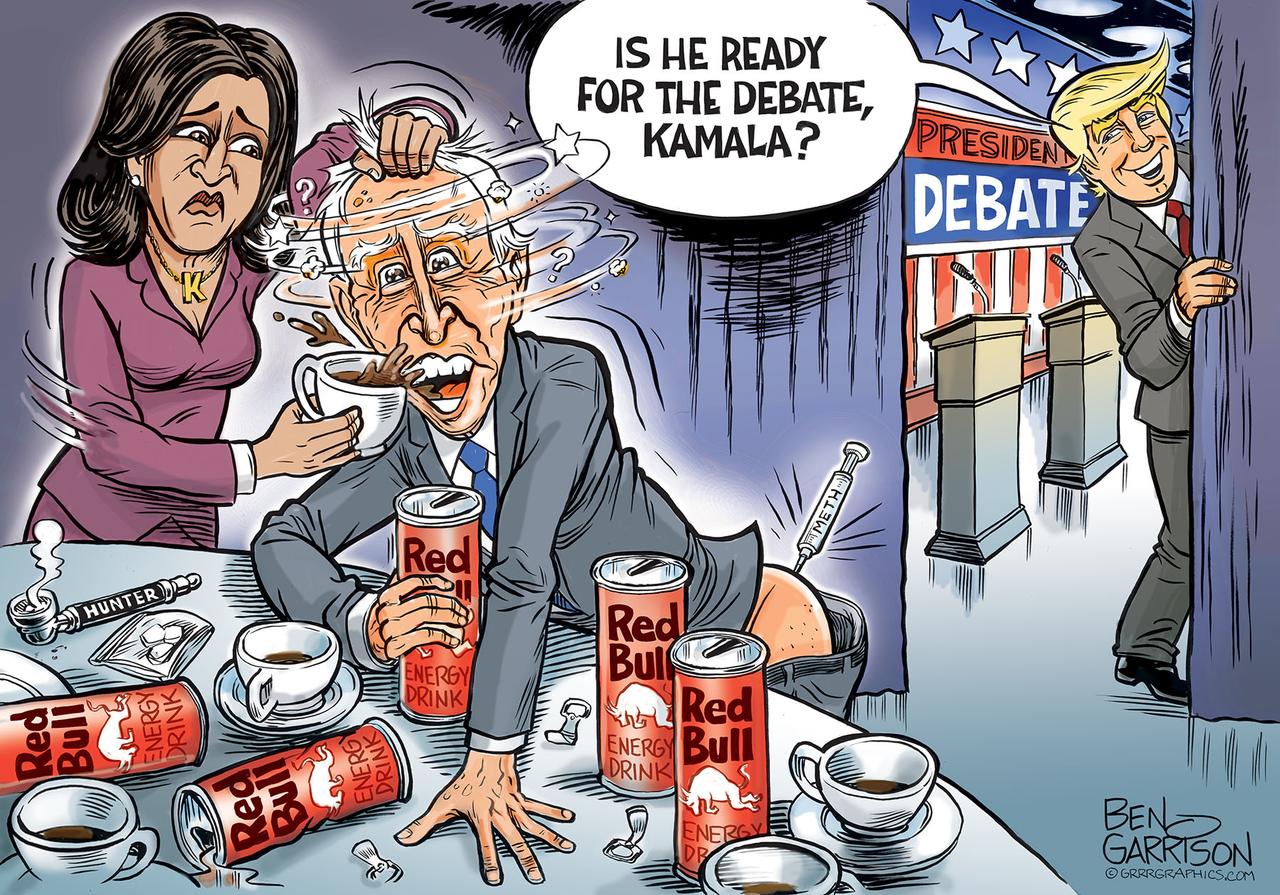
The day has finally come for the mano-a-mano first debate between Joe Biden and Donald Trump. The questions continue about whether Biden will make 90 minutes of debate after his sundowning and whether Trump can get through the debate without self-immolation.

Of course no matter what is actually said, Biden will be declared the victor by MSM but here are some questions that AmericanThinker.com’s Josh Kantrow suggests Chris Wallace ask Joe Biden…

1. Why did members of your family keep getting lucrative business opportunities overseas while you were vice president? 

2. How did your brother, Frank, secure $45,000,000 in taxpayer loans from the Obama administration for his Caribbean projects? 

3. How did a newly minted firm employing your other brother, James, receive a $1.5-billion contract to build homes in Iraq despite having no experience in construction or international development? 

4. Why did your son Hunter accompany you on your official trip to Beijing in December 2013?  What did he do on that trip?  Whom did he meet with?  What should the American public make of the fact that just ten days after this trip, your son’s boutique private equity firm secured a $1-billion investment deal from the state-owned bank of China (later expanded to $1.5 billion) despite having no prior experience in China, and why, with this deal, did the Chinese government grant your son’s firm a first-of-its-kind arrangement to operate in the the recently formed Shanghai Free-Trade Zone — a perk not granted to any of the large established financial institutions? 

5. Should the American public be concerned that your son’s private equity firm partnered with a Chinese government-owned aerospace and defense conglomerate to facilitate the purchase of an American company that produced strategically sensitive dual-use military technology that the Chinese government wanted?

6. Does your “Build Back Better” proposal contain any provisions to ensure that American taxpayer-funded technology is not bought off by Chinese state-backed enterprises working with private equity firms like your son’s?

7. Back in 2000, you voted in favor of giving permanent Normal Trade Relations (NTR) to China.  At the time, you said this would not lead to “the collapse of the American manufacturing economy” because China is “about the size of the Netherlands” and could not possibly become “our major economic competitor.”  Furthermore, you predicted that free trade with China would establish “a path toward ever greater political and economic freedom” for the people of China.  Do you stand by these statements today after 3.4 million American jobs have been lost to China and millions of China’s citizens have been imprisoned, surveilled, disappeared, and used as slave labor by an increasingly authoritarian regime enriched by 20 years of record trade imbalances from flagrant trade violations?

8. The People’s Republic of China has a bold plan called “Made in China 2025” to dominate the key technologies of the future in order to overtake the United States militarily and economically.  Do you still contend that China is “not competition for us”?

9. Why did you promote the Trans-Pacific Partnership (TPP) to financial special interest groups when research was clear that the deal would make it easier for corporations to move U.S. jobs overseas?

10. Do you believe that Xi Jinping kept his promise to Barack Obama to end cyber-espionage against the United States?  If not, what are you prepared to do about it?

11. Do you accept that the coronavirus originated in China?  Do you think China was honest with the world in its handling of the coronavirus?  Are you satisfied with China’s explanations for how it spread?  Do you believe Chinese claims about the number of cases and fatalities in China?

12. Do you think China should be held responsible in any way for its handling of the coronavirus?  If not, why not?  What, if any, repercussions should there be for China in its handling of the coronavirus?

13. Did you suggest investigating Michael Flynn under the Logan Act, as Peter Strzok’s notes suggest?

14. You said in your DNC acceptance speech that America is ready to “do the hard work of rooting out our systemic racism.”  What did you do in your 36 years as a U.S. senator and eight years as vice president to root out systemic racism?  Why didn’t it work?

15. You have called for “revolutionary institutional changes.”  What does that mean in practice?

16. You have vowed to rescind the Trump tax cuts.  Can you think of a single example of a country that recovered from a recession by raising taxes?

Perhaps Wallace should be judged on how many of these questions are asked?

via ZeroHedge News https://ift.tt/2Ga9RT4 Tyler Durden