Virginia Governor Northam, Wife Test Positive For COVID-19

Virginia Governor Northam, Wife Test Positive For COVID-19

Tyler Durden

Fri, 09/25/2020 – 10:38

Gov. Ralph Northam managed to survive a push to resign amid last year’s blackface scandal. But on Friday, the governor’s office announced that both the governor and his wife, the first lady of Virginia, had tested positive for COVID-19.

They’re hardly the first governors to test positive: Earlier this week, Missouri Gov Mike Parson, a Republican and opponent of mandatory mask rules, tested positive.

Northam, a Democratic governor of a ‘swing’ state’, said he has no symptoms. Virginia first lady Pamela Northam has “mild symptoms,” CNN said.

governor’s office said. Both will isolate over the next 10 days and the governor will continue working from home.

“As I’ve been reminding Virginians throughout this crisis, COVID-19 is very real and very contagious,” Northam said.

The Northams plan to isolate for at least the next 10 days, and the governor will continue working from home. They’re working with the state’s contact tracers to inform anybody who may have been exposed.

“As I’ve been reminding Virginians throughout this crisis, COVID-19 is very real and very contagious,” Northam said Friday. “The safety and health of our staff and close contacts is of utmost importance to Pam and me, and we are working closely with the Department of Health to ensure that everyone is well taken care of.”

“We are grateful for your thoughts and support, but the best thing you can do for us—and most importantly, for your fellow Virginians—is to take this seriously.”

Outside Virginia, Northam is perhaps best known for this photo, taken from his medical school yearbook.

The two were notified Wednesday evening that a staffer had tested positive, and tests administered a short while later came back positive.

Back in August, Ohio Gov. Mike DeWine announced that a rapid test was positive. But a short time later, DeWine said a more sensitive test came back negative. In July, Oklahoma Gov Kevin Stitt became the first governor to test positive.

via ZeroHedge News https://ift.tt/2RXRLpD Tyler Durden

“Australia Just Unveiled Something Worse”: Central Planning With No Plan

“Australia Just Unveiled Something Worse”: Central Planning With No Plan

Tyler Durden

Fri, 09/25/2020 – 10:35

By Michael Every of Rabobank

Yesterday, I was calling out for someone, anyone with the chutzpah to match Moses and point out that almost everything we are doing political-economy-wise and central-banking-ly needs to improve, both practically and morally.

Well, yesterday got a surprise 200bp rate hike in Turkey, which Piotr Matys sees as a step in the right direction (see here for more); and a 25bp rate cut in Mexico, which Christian Lawrence thinks is still not the end of the line (see here for more); and the Aussie government have really let rip too….As Bloomberg words it:

Australia’s government will loosen responsible lending laws in a bid to boost the flow of credit and help the economy recover from its first recession in almost 30 years….the government will scrap so-called responsible lending obligations for most forms of credit that it says have made banks overly cautious and stifled access to mortgages and other loans….The move is a turnaround from the findings of an inquiry into misconduct in the financial system, which called for banks to more strictly follow lending rules…

In effect, the government has heeded what became known as the ‘wagyu and shiraz’ verdict…[where the]… regulator had argued actual living expenses should be used instead of benchmarks, which have been criticized for underestimating how much people spend. As part of his ruling, Justice Nye Perram said borrowers can change their spending habits to service a mortgage: “I may eat wagyu beef everyday washed down with the finest Shiraz but, if I really want my new home, I can make do on much more modest fare.”

Lenders…will remain subject to APRA’s lending standards, but will no longer be monitored by ASIC for compliance.”

Let’s put this into a broader context. Australia is one of many neoliberal, financialised, consumer-debt saturated, housing-bubble obsessed, low-productivity, low capital investment, infrastructure-poor Western economies. It was already stuck in the linked new normal of low wage, low GDP, and low productivity growth, and the lower quality jobs that come with it, albeit probably being 10-15 years behind the US on social and political polarisation. It is also being hit hard by Covid and a closed border, and by serious trade tensions with China.

The RBA has responded with zero rates and Yield Curve Control out to three years, the latter of which is not stopping the market pricing in more rates cuts next month. The RBA has also said it will be there to support fiscal spending as needed. In short, the government has the ability to expand the fiscal deficit to a threshold determined only by the capacity of AUD to hold up.

And what is the response? To tell banks to return to a housing bubble, exacerbating problems in society, making businesses less price competitive, starving non-housing firms of attention, making the banking system even more reliant on global wholesale money markets and, as the historical track record *everywhere* shows, eventually ending up in bad loans, which will be repackaged and sit with the taxpayer. And making a mockery of the idea of prudent regulation.

THAT is where the fiscal capacity the RBA is offering is going. I long said when the RBA goes full QE, it will be to buy shonky MBS rather than for a fiscal deficit for mega infrastructure projects…and that indeed seems to be the journey we are on.

Central-bank financing of fiscal deficits admittedly takes us to the world of central planning, but here we have something worse: central planning with no plan.

Wagyu, Australia. Wagyu very much.

Of course, this is not an Australia-specific issue. Look at the scale of fiscal deficits looming in the US, UK, Europe, Japan, and even China. Nobody has any idea how these are going to be dealt with – especially not as, in the case of the UK, it becomes clear that a grim winter looms regardless of the latest step to try to keep unemployment down by subsidising the jobs that are salvageable; or as the US initial claims figures, and the Fed, confirm that the V is behind us and things are now going to get worse without further fiscal steps, pronto.

[The Fed’s Williams also stated “structural inequality stifles growth.” Well, of course it does. Try helping everyone, and especially the working class, for once and see what happens. It really, really isn’t rocket science. But of course we can’t do that. “Because markets.”]

Indeed, what we see again and again is the utter failure of the imagination of those leading to realize that the old models no longer work. So many tools are now available to them to do something new – but that means abandoning deep-rooted dogma. As such, they prefer to stick to the tried and tested. Which is like watching someone try to eat the finest wagyu steak with a teaspoon. Or soup with chopsticks.

Hilariously, AUD is slightly up on this news, albeit down from a high of 0.7410 to a low of 0.7022 this week. If the RBA is going to be buying junk MBS to prop up the economy then it won’t be holding a 7 or a 6 handle over time.

Meanwhile, in China a giant property developer is talking about potential debt defaults. The China Beige Book also underlines that while a few major cities and the SOEs closest to Beijing are seeing a strong rebound, most of the economy is still stuck in the doldrums. One would presume that the same arguments that apply to Australia will apply here: when in doubt, just blow those bubbles bigger rather than abandoning any comforting dogma. The currency outlook remains the same there in that case though.

Of course, there is some upside given that against a backdrop of trade war, Cold War, sanctions –some over allegations of major human rights abuses– and rising geopolitical tensions (China’s Global Times says it will start a “just war” if US troops ever return to Taiwan), FTSE Russell has just announced Chinese government bonds will be included into its flagship World Government Bond Index from October 2021. ‘Wagyu. Wagyu very much’ thinking at its absolute finest: but 13 months is a long, looong time in current geopolitics.

via ZeroHedge News https://ift.tt/3i14SAX Tyler Durden

Trump’s Vaccine Cheerleading Is Undermining Public Trust in the Vaccines

VaccineQuestionLeighPratherDreamstime

President Donald Trump has suggested several times that a vaccine for COVID-19 could become available before Election Day. Polls suggest that the more the president touts the hurried arrival of a COVID-19 vaccine, the more distrustful Americans become of the vaccine approval process and the less likely they are to get inoculated once one becomes available.

On Wednesday, in light of that growing unease with the speed at which COVID-19 vaccines are being developed and tested, public health officials outlined new, higher standards for ensuring that COVID-19 vaccines are safe and effective before the Food and Drug Administration (FDA) approves them for emergency use. Asked about the proposed stricter guidelines later that day, Trump replied: “That has to be approved by the White House. We may or may not approve it. That sounds like a political move.”

The president made the salient point that “if they delay [a vaccine] a week or two weeks or three weeks, that’s a lot of lives you’re talking about.” The president also declared that he has “tremendous trust in these massive companies that are so brilliantly organized, in terms of what they’ve been doing with the tests.” He specifically referenced Pfizer, Johnson & Johnson, and Moderna, the current leaders in the race to develop and deploy a COVID-19 vaccine.

However high his regard is for these companies, they are certainly worried about Americans’ trust in the vaccines they are developing. Earlier this month, to allay public fears that political pressure will rush the approval of their vaccines, nine leading pharma companies issued a pledge committing themselves to “developing and testing potential vaccines for COVID-19 in accordance with high ethical standards and sound scientific principles.” The companies specifically said that they would submit their vaccines only “after demonstrating safety and efficacy through a Phase 3 clinical study that is designed and conducted to meet requirements of expert regulatory authorities.”

During his Wednesday press conference, the president suggested that the vaccine makers have been making great progress. “They’re coming back with great numbers and statistics and tests and everything else that they have to come back with,” he said. “I don’t see any reason why [a vaccine] should be delayed further.” But none of the data from the current Phase 3 coronavirus vaccine clinical trials have yet been reported.

In mid-September Pfizer CEO Albert Bourla said on the CBS’ Face the Nation that “we have a good chance that we will know if the product works by the end of October.” Moderna CEO Stéphane Bancel told CNBC that his company is likely to have enough late-stage testing data to know whether its vaccine works or not in November. Johnson & Johnson’s chief scientist, Paul Stoffels, told Business Insider, “We hope to see an endpoint around the end of year or early next year.” In the hope that their vaccines will prove to be safe and effective, the federal government has already signed contracts worth billions of dollars with Pfizer, Moderna, and Johnson & Johnson to manufacture tens of millions of doses before the companies and regulators know if their vaccines will work.

In response to Bob Woodward’s revelation that he deliberately downplayed the seriousness of COVID-19, Trump insisted that he did so because “The fact is I’m a cheerleader for this country….We want to show confidence. We want to show strength.” But his pre-election cheerleading about COVID-19 vaccines seems to be undermining, not strengthening, Americans’ confidence in them.

from Latest – Reason.com https://ift.tt/3mRKlCv
via IFTTT

How California’s Environmental Mandates Led to Blackouts

RENEWABLES_SS

California’s rolling blackouts this summer were caused by decades of costly and poorly planned decisions to replace coal, nuclear, and gas-powered plants with solar and wind, according to some energy experts.

“It speaks to the delusion of California policymakers,” says Michael Shellenberger, the president of Environmental Progress, which advocates for greater reliance on nuclear power as a way to reduce CO2 emissions and provide reliable energy. “They really convinced themselves that they could manage all of this increased demand on renewables, which are fundamentally unreliable.” 

California banned the construction of new nuclear reactors in 1976 and has been incentivizing companies to close older plants by piling on burdensome regulations ever since.

Shellenberger says this loss has made California more susceptible to blackouts.

“It would have just provided the energy that we didn’t have,” says Shellenberger. “The nuclear plant, unlike the solar farms or wind, is reliable like 92 percent of the year.”

Policymakers also started closing natural gas plants because they produce more CO2 emissions than wind and solar, ignoring warnings that doing so would lead to energy shortages. On Wednesday, California’s Democratic governor, Gavin Newsom, signed an executive order asking the state legislature to ban fracking oil and gas, the latter of which provided a majority of the state’s energy during the recent blackouts.

Critics of solar and wind energy say that renewables provide consistent energy only under optimal weather conditions.

But the main operator of California’s grid says a lack of easily accessible backup energy, not renewables like wind and solar, were to blame for the blackouts.

“Renewables have not caused this issue. This is a resource issue, not a renewable issue,” California Independent Systems Operator CEO Stephen Berberich said in an August 18 press briefing.

Some defenders of renewable energy even say that that fossil fuels are the real culprit and that critics like Shellenberger are distorting the facts in service of their preconceived biases

The August blackout, they point out, was directly caused by the failure of a natural gas generator.

“Those fossil fuel technologies have trouble performing in the heat,” says energy analyst Amol Phadke. Phadke is the co-author of UC-Berkeley’s 2035 Report, which argues that America should transition to 90 percent carbon-free energy generation in the next 15 years.

But the natural gas generator that failed was a backup system. It had been flipped on only because the state’s energy capacity failed as the sun went down, the wind slowed, and Californians blasted their air conditioners to deal with a heat wave.

Still, Phadke insists that the real problem was a failure to adequately plan backup power.

“And in fact, I would argue that having a lot more renewable energy and storage would make the grid more robust,” says Phadke.  

One additional factor is that as California has increased its reliance on renewable energy, it has also become increasingly reliant on energy imported from neighboring states, who failed to make up for the shortfall during the heatwave.

“Those neighbors need their power plants because they’re hot, too,” says engineer and investor Mark P. Mills, a faculty fellow at Northwestern University and a senior fellow at the Manhattan Institute.

He says that California’s push to replace traditional power plants with renewables has created a shortage of what’s known as “dispatchable capacity”—generators that can be flipped on where there’s a spike in demand.

“What happened in the first blackouts is that they didn’t have this dispatchable capacity and, worse than that, there was a wind lull,” says Mills. “None of that would have happened if you’re not losing conventional capacity. And the more wind you add, the less dispatchable you have, the more likely you’ll have those events occur….It’s just simple logic.” 

Phadke thinks the solution is for California to build even more solar power plants and invest more money in giant batteries that can store power from the wind and sun during off hours.

“In the long run, if you have enough batteries to transfer that solar energy during the day into the evening hours, you are good,” says Phadke. “And the good news is that the cost of those batteries has dropped by 90 percent since 2010.”

While it’s true that the cost of both solar panels and batteries has fallen dramatically in the past decade, Mills points out that the pace of that price decline has slowed, and he says manufacturers are likely approaching the physical limitations of solar energy conversion.

“The constant babbling about batteries is an embarrassing failure of arithmetic,” says Mills. 

Mills has calculated that storing a barrel of oil’s worth of energy in a battery costs at least 100 times as much as storing the oil and that it would take 1,000 years for the world’s largest battery factory to produce enough to store two days’ worth of America’s energy needs.

“Batteries are never going to get cheaper to store energy than storing oil in a barrel,” says Mills. “Until we develop a room-temperature superconductor.” (If that happens, he says, “it changes the world.”)

Mills also points out that the intensive mining required to produce batteries has a major environmental cost and, given the regulatory environment in America, would likely increase dependence on rare-earth minerals mined in Russia and China.

“The increase in mining that the green energy path will require will be the biggest increase in mineral extraction the world has ever seen,” says Mills. “You may think that’s fine, but it’s a real cost that no one’s counting. It’s dishonest.”

But the 2035 report estimates the cost of not quickly pivoting to renewables at $1.2 trillion in health and environmental damages and 85,000 premature deaths by 2050. It recommends a combination of emissions standards, government subsidies, and tax incentives to ramp up solar, wind, and battery production as quickly as possible.

Shellenberger says that nuclear would provide the clean and abundant energy that both sides want, if only California and other states would stop creating incentives for nuclear plants to close down and would allow new ones to open up.

“Just keeping the nuclear plants online would have kept prices down significantly,” says Shellenberger. “My view is if California had a vision of being like France, 75 percent nuclear and our homes getting our cooking and heating from electricity, well, that could be a very good deal for both consumers and the natural environment, but nobody’s talking about that.” 

Mills says that the technological innovations that would be required to fulfill the environmentalists’ dreams rely, ironically, on continuing to have abundant energy now.

“If you want to go from propellers to jet engines, if you want to go from combustion to nuclear fission…if you want to store electricity as cheaply as we store oil, you need a different, whole new solution,” says Mills. “So you produce energy at the least possible cost to have as much profit to invest in basic science and invest in adaptation and resilience.”

Shellenberger says the entire nation should view California as a cautionary tale, because its energy policy is the blueprint that some Democrats in Washington, D.C., want to follow.

“So if you are concerned about the blackouts, the sixfold increase in electricity prices above the [national average], if you’re concerned about…bad management of our electrical grid that causes fires in places where we should have less fires…you should be concerned about what’s happening in California and not want it to be imposed on the rest of the U.S.” 

Produced by Zach Weissmueller; opening graphic by Lex Villena; additional graphics by Isaac Reese. 

Photo credits: Mike Blake/Reuters/Newscom; Laura Dickinson/The Tribune/ZUMA Press/Newscom; Gina M Randazzo/ZUMA Press/Newscom; Maksym Yemelyanov/agefotostock/Newscom; Carolyn Cole/TNS/Newscom; Inciweb/Inciweb/ZUMA Press/Newscom; D 137610783 © Eberdova | Dreamstime.com, ID 47955708© Martinlisner | Dreamstime.com, ID 17908577 © Fesus Robert | Dreamstime.com; Ken James/ZUMA Press/Newscom; Paul Kitagaki Jr/ZUMA Press/Newscom

Music credits: “Premonition,” “Viscous Void,” “Lonely Astronaut,” and “Fade Away,” by Evgeny Bardyuzha. “Bad Habits” and “Apparition” by Stanley Gurvich. Licensed by Artlist.

from Latest – Reason.com https://ift.tt/2Gaseqq
via IFTTT
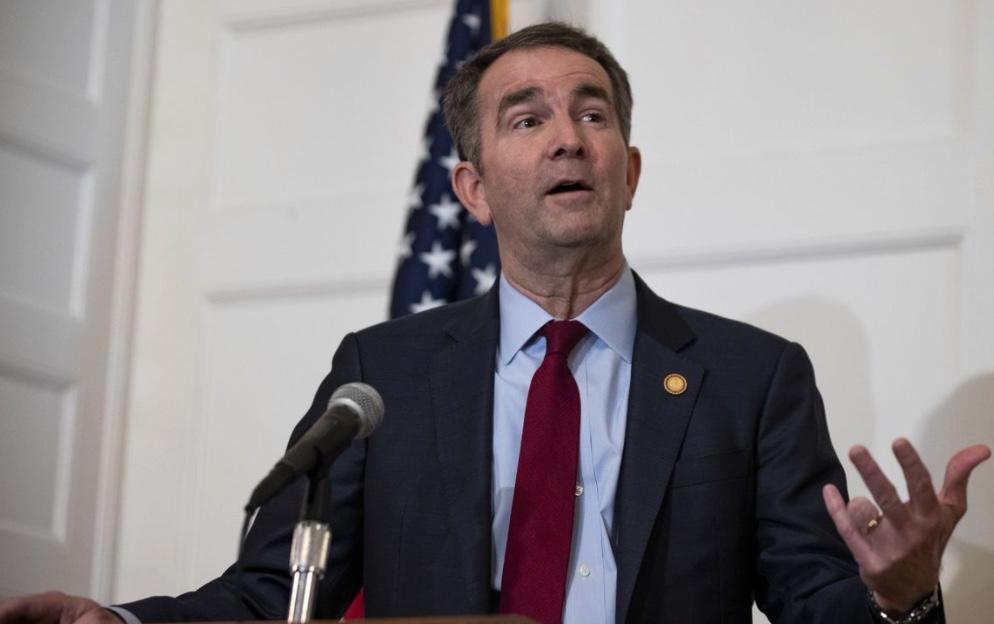

Trump’s Vaccine Cheerleading Is Undermining Public Trust in the Vaccines

VaccineQuestionLeighPratherDreamstime

President Donald Trump has suggested several times that a vaccine for COVID-19 could become available before Election Day. Polls suggest that the more the president touts the hurried arrival of a COVID-19 vaccine, the more distrustful Americans become of the vaccine approval process and the less likely they are to get inoculated once one becomes available.

On Wednesday, in light of that growing unease with the speed at which COVID-19 vaccines are being developed and tested, public health officials outlined new, higher standards for ensuring that COVID-19 vaccines are safe and effective before the Food and Drug Administration (FDA) approves them for emergency use. Asked about the proposed stricter guidelines later that day, Trump replied: “That has to be approved by the White House. We may or may not approve it. That sounds like a political move.”

The president made the salient point that “if they delay [a vaccine] a week or two weeks or three weeks, that’s a lot of lives you’re talking about.” The president also declared that he has “tremendous trust in these massive companies that are so brilliantly organized, in terms of what they’ve been doing with the tests.” He specifically referenced Pfizer, Johnson & Johnson, and Moderna, the current leaders in the race to develop and deploy a COVID-19 vaccine.

However high his regard is for these companies, they are certainly worried about Americans’ trust in the vaccines they are developing. Earlier this month, to allay public fears that political pressure will rush the approval of their vaccines, nine leading pharma companies issued a pledge committing themselves to “developing and testing potential vaccines for COVID-19 in accordance with high ethical standards and sound scientific principles.” The companies specifically said that they would submit their vaccines only “after demonstrating safety and efficacy through a Phase 3 clinical study that is designed and conducted to meet requirements of expert regulatory authorities.”

During his Wednesday press conference, the president suggested that the vaccine makers have been making great progress. “They’re coming back with great numbers and statistics and tests and everything else that they have to come back with,” he said. “I don’t see any reason why [a vaccine] should be delayed further.” But none of the data from the current Phase 3 coronavirus vaccine clinical trials have yet been reported.

In mid-September Pfizer CEO Albert Bourla said on the CBS’ Face the Nation that “we have a good chance that we will know if the product works by the end of October.” Moderna CEO Stéphane Bancel told CNBC that his company is likely to have enough late-stage testing data to know whether its vaccine works or not in November. Johnson & Johnson’s chief scientist, Paul Stoffels, told Business Insider, “We hope to see an endpoint around the end of year or early next year.” In the hope that their vaccines will prove to be safe and effective, the federal government has already signed contracts worth billions of dollars with Pfizer, Moderna, and Johnson & Johnson to manufacture tens of millions of doses before the companies and regulators know if their vaccines will work.

In response to Bob Woodward’s revelation that he deliberately downplayed the seriousness of COVID-19, Trump insisted that he did so because “The fact is I’m a cheerleader for this country….We want to show confidence. We want to show strength.” But his pre-election cheerleading about COVID-19 vaccines seems to be undermining, not strengthening, Americans’ confidence in them.

from Latest – Reason.com https://ift.tt/3mRKlCv
via IFTTT

How California’s Environmental Mandates Led to Blackouts

RENEWABLES_SS

California’s rolling blackouts this summer were caused by decades of costly and poorly planned decisions to replace coal, nuclear, and gas-powered plants with solar and wind, according to some energy experts.

“It speaks to the delusion of California policymakers,” says Michael Shellenberger, the president of Environmental Progress, which advocates for greater reliance on nuclear power as a way to reduce CO2 emissions and provide reliable energy. “They really convinced themselves that they could manage all of this increased demand on renewables, which are fundamentally unreliable.” 

California banned the construction of new nuclear reactors in 1976 and has been incentivizing companies to close older plants by piling on burdensome regulations ever since.

Shellenberger says this loss has made California more susceptible to blackouts.

“It would have just provided the energy that we didn’t have,” says Shellenberger. “The nuclear plant, unlike the solar farms or wind, is reliable like 92 percent of the year.”

Policymakers also started closing natural gas plants because they produce more CO2 emissions than wind and solar, ignoring warnings that doing so would lead to energy shortages. On Wednesday, California’s Democratic governor, Gavin Newsom, signed an executive order asking the state legislature to ban fracking oil and gas, the latter of which provided a majority of the state’s energy during the recent blackouts.

Critics of solar and wind energy say that renewables provide consistent energy only under optimal weather conditions.

But the main operator of California’s grid says a lack of easily accessible backup energy, not renewables like wind and solar, were to blame for the blackouts.

“Renewables have not caused this issue. This is a resource issue, not a renewable issue,” California Independent Systems Operator CEO Stephen Berberich said in an August 18 press briefing.

Some defenders of renewable energy even say that that fossil fuels are the real culprit and that critics like Shellenberger are distorting the facts in service of their preconceived biases

The August blackout, they point out, was directly caused by the failure of a natural gas generator.

“Those fossil fuel technologies have trouble performing in the heat,” says energy analyst Amol Phadke. Phadke is the co-author of UC-Berkeley’s 2035 Report, which argues that America should transition to 90 percent carbon-free energy generation in the next 15 years.

But the natural gas generator that failed was a backup system. It had been flipped on only because the state’s energy capacity failed as the sun went down, the wind slowed, and Californians blasted their air conditioners to deal with a heat wave.

Still, Phadke insists that the real problem was a failure to adequately plan backup power.

“And in fact, I would argue that having a lot more renewable energy and storage would make the grid more robust,” says Phadke.  

One additional factor is that as California has increased its reliance on renewable energy, it has also become increasingly reliant on energy imported from neighboring states, who failed to make up for the shortfall during the heatwave.

“Those neighbors need their power plants because they’re hot, too,” says engineer and investor Mark P. Mills, a faculty fellow at Northwestern University and a senior fellow at the Manhattan Institute.

He says that California’s push to replace traditional power plants with renewables has created a shortage of what’s known as “dispatchable capacity”—generators that can be flipped on where there’s a spike in demand.

“What happened in the first blackouts is that they didn’t have this dispatchable capacity and, worse than that, there was a wind lull,” says Mills. “None of that would have happened if you’re not losing conventional capacity. And the more wind you add, the less dispatchable you have, the more likely you’ll have those events occur….It’s just simple logic.” 

Phadke thinks the solution is for California to build even more solar power plants and invest more money in giant batteries that can store power from the wind and sun during off hours.

“In the long run, if you have enough batteries to transfer that solar energy during the day into the evening hours, you are good,” says Phadke. “And the good news is that the cost of those batteries has dropped by 90 percent since 2010.”

While it’s true that the cost of both solar panels and batteries has fallen dramatically in the past decade, Mills points out that the pace of that price decline has slowed, and he says manufacturers are likely approaching the physical limitations of solar energy conversion.

“The constant babbling about batteries is an embarrassing failure of arithmetic,” says Mills. 

Mills has calculated that storing a barrel of oil’s worth of energy in a battery costs at least 100 times as much as storing the oil and that it would take 1,000 years for the world’s largest battery factory to produce enough to store two days’ worth of America’s energy needs.

“Batteries are never going to get cheaper to store energy than storing oil in a barrel,” says Mills. “Until we develop a room-temperature superconductor.” (If that happens, he says, “it changes the world.”)

Mills also points out that the intensive mining required to produce batteries has a major environmental cost and, given the regulatory environment in America, would likely increase dependence on rare-earth minerals mined in Russia and China.

“The increase in mining that the green energy path will require will be the biggest increase in mineral extraction the world has ever seen,” says Mills. “You may think that’s fine, but it’s a real cost that no one’s counting. It’s dishonest.”

But the 2035 report estimates the cost of not quickly pivoting to renewables at $1.2 trillion in health and environmental damages and 85,000 premature deaths by 2050. It recommends a combination of emissions standards, government subsidies, and tax incentives to ramp up solar, wind, and battery production as quickly as possible.

Shellenberger says that nuclear would provide the clean and abundant energy that both sides want, if only California and other states would stop creating incentives for nuclear plants to close down and would allow new ones to open up.

“Just keeping the nuclear plants online would have kept prices down significantly,” says Shellenberger. “My view is if California had a vision of being like France, 75 percent nuclear and our homes getting our cooking and heating from electricity, well, that could be a very good deal for both consumers and the natural environment, but nobody’s talking about that.” 

Mills says that the technological innovations that would be required to fulfill the environmentalists’ dreams rely, ironically, on continuing to have abundant energy now.

“If you want to go from propellers to jet engines, if you want to go from combustion to nuclear fission…if you want to store electricity as cheaply as we store oil, you need a different, whole new solution,” says Mills. “So you produce energy at the least possible cost to have as much profit to invest in basic science and invest in adaptation and resilience.”

Shellenberger says the entire nation should view California as a cautionary tale, because its energy policy is the blueprint that some Democrats in Washington, D.C., want to follow.

“So if you are concerned about the blackouts, the sixfold increase in electricity prices above the [national average], if you’re concerned about…bad management of our electrical grid that causes fires in places where we should have less fires…you should be concerned about what’s happening in California and not want it to be imposed on the rest of the U.S.” 

Produced by Zach Weissmueller; opening graphic by Lex Villena; additional graphics by Isaac Reese. 

Photo credits: Mike Blake/Reuters/Newscom; Laura Dickinson/The Tribune/ZUMA Press/Newscom; Gina M Randazzo/ZUMA Press/Newscom; Maksym Yemelyanov/agefotostock/Newscom; Carolyn Cole/TNS/Newscom; Inciweb/Inciweb/ZUMA Press/Newscom; D 137610783 © Eberdova | Dreamstime.com, ID 47955708© Martinlisner | Dreamstime.com, ID 17908577 © Fesus Robert | Dreamstime.com; Ken James/ZUMA Press/Newscom; Paul Kitagaki Jr/ZUMA Press/Newscom

Music credits: “Premonition,” “Viscous Void,” “Lonely Astronaut,” and “Fade Away,” by Evgeny Bardyuzha. “Bad Habits” and “Apparition” by Stanley Gurvich. Licensed by Artlist.

from Latest – Reason.com https://ift.tt/2Gaseqq
via IFTTT
“Very Sorry”: Kim Jong-Un Issues Ultra Rare Apology Over Killing Of South Official

“Very Sorry”: Kim Jong-Un Issues Ultra Rare Apology Over Killing Of South Official

Tyler Durden

Fri, 09/25/2020 – 10:15

North Korean leader Kim Jong-Un has issued an extremely rare apology over the Thursday killing of a South Korean fisheries official who breached the border in the water off the coast while allegedly trying to defect. He had been shot on site by the north’s border patrol in a boat who happened upon the life jacket wearing man, his body also immediately burned on coronavirus fears.

Kim’s message was that the north was “very sorry” over the “unexpected, unfortunate incident” which was expressed in a letter to South Korean President Moon Jae-in.

“Chairman Kim Jong Un asked to convey that he feels very sorry that instead of giving aid to our compatriots in the South who is struggling with Covid epidemic, we have given President Moon and our compatriots in the South a great disappointment with this unseen misfortune in our sea,” the letter read, according to the Blue House.

Yeonpyeong Island, via CNN

However Kim did also take Seoul to task for charging Pyongyang with “atrocious acts” before formally inquiring into the matter to learn what had happened. 

It further apologized for “an incident that will clearly negatively impact inter-Korean relation” while noting the north had recently upped the intensity of its maritime patrols along the border.

The letter revealed more details about the shocking killing:

In a letter sent to South Korea’s Blue House Friday morning, North Korea said units responded to a call that an unidentified male was found floating on an object in the sea. The letter claims about 10 rounds were fired at the man after he did not comply with a soldier’s demand to identify himself and subsequent warning shots.

North Korea says only a pool of blood remained on the floating object after the shots were fired. After soldiers presumed the man to be dead, they burned the floating object on site per North Korea’s Covid-19 disease prevention measures.

The south’s defense ministry had immediately suspected the ‘shoot first’ reaction by the soldiers had more to do with North Korea’s extreme “shoot to kill” anti-coronavirus measures implemented along all border zones. “We assess it was carried out under the North’s anti-coronavirus measure,” a military official had told AFP.

Seoul defense sources had also said that “circumstances tell us that there was an intent to defect.”

But the surprise apology direct from Kim strongly suggests a new and rare softening out of Pyongyang, which could portend near future major diplomatic openings toward peace.

via ZeroHedge News https://ift.tt/3l09XeX Tyler Durden

A Topsy-Turvy Week – 5 Factors Weighing On Investor Conviction

A Topsy-Turvy Week – 5 Factors Weighing On Investor Conviction

Tyler Durden

Fri, 09/25/2020 – 10:05

Authored by Bill Blain via MorningPorridge.com,

“An excellent landing is one where you can still fly the plane the next day!”

It’s been a topsy turvy week. We’re seeing conviction under pressure as investors weigh up:

a) the likely new coronavirus path – which now points to a W shaped recessionary whammy on growth as infections rise (although deaths remain muted – suggesting a rethink is needed),

b) the renewed focus on stock fundamentals (ie spot the bubbles,

c) a sense of weaking in corporate bonds (despite record issuance in 2020),

d) a sense of danger, like how could a messy US election discombobulate sentiment, and,

e) a renewed and growing concern the market distortions caused by QE Infinity and negative real rates are ultimately unsustainable.

Unsustainable is a 2020’s buzz word everyone likes to hang their hats upon. It sums up markets pretty well. How will pension funds, insurance companies, savers and traditional investors function when returns have been repressed to zero? There are only two choices;

1) keep picking up the scraps from the central banks by looking for marginal incremental gains in bonds as rates stay low forever, or

2) go gamble in higher risk markets.

The result is the levels of risk across the whole financial system inevitably rise. 

An obvious danger is desperation – like this time it’s differentbelief in miracle companies and technologies promising to utterly change the world. The world is changing – but companies like WeWork, Wirecard and others will always suck in the desperate and gullible… That list is set to grow..

However – any crisis is also opportunity… 

Every smart investor has ideas about what opportunities the Pandemic will throw up.

As it’s a Friday I am allowed to wander off tangentially on any subject I fancy…

So… let me propose some wild ideas: 

  • Aircraft are cheap and investible, 

  • Airbus is going to rule the skies, 

  • and, the Aircraft you fly tomorrow will be determined by your children. 

Before you wonder as to my sanity, and ponder the causes of my rediscovered enthusiasm for aircraft… I am very aware we look headed back into pandemic lockdown, 1/3 of aviation assets are sitting parked and unused, and many airlines and leasing companies are clinging on by their finger-nails. We’re at the stage where airlines and aircraft owners need cash – which means everything has a price, and in aviation that price is probably much lower. 

As a French general famously said… “The outlook is dire. My front is collapsing. Excellent! Time to advance! “

Sometime soon airlines will resume flying and people are desperate to travel again. (It all depends on your definition of “soon”. For instance, In Elon Musk time “soon” can be a very long time indeed…)

Airlines are raising “secured” private debt placements backed by gates, slots and routes in double digits to tide them over till travel markets reopen. I heard an American airline doing 10.75% last week. Some are going cap-in-hand begging more subsidy, while others are paying up for sale and leasebacks on unencumbered aircraft. Lessors are desperate to shift assets – meaning they are biddable. If there is a definition of a distressed asset market – Aviation is it. 

Just be careful what you chose to buy. While freighters and air-cargo rates are going through the roof, some aircraft types are unlikely to be seen again. The last few B-747 Jumbos, like those flown by BA, Virgin and Quantas have flown into the great celestial bone-yard in the Mojave desert (or a knackers yard near Cheltenham.) Lufthansa has dumped half its A-380s and put the rest in long-term storage. A-330s, B-767 and B-757’s will score bonus extra points for plane spotters. The pandemic has triggered a massive ongoing shakeout – bargains might not be bargains. 

The Original Equipment Manufacturers (OEMs), (the plane-makers in lay-terms), share the pain. Airbus stock has plummeted more than 56% since it peaked in early Jan – just before the end of air travel as we knew it in March. Its fallen about the same as Boeing (down 55%), although Boeing has a host of other gravity-defying problems. Airbus is less damaged, but has declined more?

Why my enthusiasm for Airbus? There is a lot not too like. If a camel is a horse designed by a committee, then Airbus is what we got when Europe’s fraxious tribes decided to cooperate on plane making rather than shooting each other down. The result was a bizarre mish-mash of naked self-interest and national pride. No sane business would organise itself like that. 

Yet it worked. They are now clearly the more successful of the Airliner Duopoly. (But partly because they aren’t Boeing and didn’t build the Max.)

Airbus makes very good planes. (Unlike Boeing.. they make them well.) The problem is, they haven’t always made the right plane. The A-380 Super-Jumbo is/was a technological marvel, a flying palace, a beautiful thing to behold and fly in, but of zero practical value to all but a tiny number of airlines. Airbus, pushed by France, built the Superjumbo mainly to show they could make a better Jumbo than Boeing. 37 years after the Iconic B-747 first flew, the Airbus rival took to the air in 2007. Bravo! Just as everyone else was swapping out from Jumbos serving the hub to hub model. 

Boeing got it right – building the right plane for the point to point long-distance market – the B-787 Dreamliner. (It now turns out they have built them very badly – but hey-ho..) Airbus bet the shop on building the A-380 and has lost heavily because they built the wrong plane for a market that didn’t exist anymore.

Airbus spent over €25 bln developing the A-380. They have then lost money on every single plane built under the programme. Ouch. No wonder they have stopped making them. Few of the airlines using them will put them back into service after the pandemic. Aside from Middle East hub routes, the only use for them will be flying pilgrims to Mecca. The lessors that bought them will struggle. The investors who financed them… bad news.  

The losses will hurt Airbus, but aren’t terminal. As far as France is concerned, Airbus remains a state entity. The French persuaded the Germans that subsidies are not a problem.. although the British sold out, uncomfortable with the concept. The Americans want to ban and tariff Airbus as unfair competition – the military orders keeping Boeing aloft are definitely not a subsidy or state aid. Definitely not.. 

Regular readers will know the depth of my contempt for Boeing’s former management. They have disgraced the core concept of shareholder capitalism of ensuring the efficient allocation of capital. Instead they proved themselves greedy piglets gorging at the trough – milking the company dry. They cut corners to save money, compromised on safety, and ran the company’s reputation for safety and engineering brilliance into the ground by cutting jobs and scrimping on pay. They failed to invest in new aircraft. They had the opportunity to spend $20 bln developing a fuel efficient super clean replacement for the venerable B-737 jet – but spent $43 bln on stock buybacks instead – which they used to justify boosting executive bonuses while cutting paychecks to workers. They modified the old 737, making it unstable, called it the Max, and then blamed the pilots when 2 of them crashed killing 346 people.   

In my opinion Boeing fails every ESG – Environment, Social and Governance – test there is. Yet, to my shame as a 35 year fixed-income veteran, the bond market still funded a $10 bln issue earlier this year, sparing the company the embarrassment of grovelling for a government bailout. The still grounded Max is just one problem – it remains essentially unflyable and unfixable. No one really wants the cursed plane to fly again. They are an abomination that should be taught in every business and engineering class. No passenger will willingly fly them. Everyone hates them – especially the Boeing staff looking for somewhere to park them…

It gets worse. Morale across Boeing got so poor standards were allowed to slip. The Military found dropped spanners in the wings of their aircraft. Dreamliners are being decked and returned because of shoddy workmanship and ill-fitting shims – a direct result of bad management. 

The bottom line is Boeing doesn’t have the money to paint the office, let alone the $40 bln it would now need to completely overhaul and develop new environmentally friendly aircraft. 

Airbus has seen the opportunity. It can probably afford to spend money launching the three new Hydrogen powered aircraft it proposed earlier this week. They look brilliant. Two of them are actually achievable, according to some of my aerospace engineering contacts – they think the third lifting body model was probably added to the line up just to bait Boeing.  Airbus is saying it can achieve ZeroE flight by 2035.

Boeing took the bait and immediately responded. The head of product development, Michael Sinnett, opined it’s unlikely hydrogen planes will be entering service within 15 years. Well… he would say that.. wouldn’t he. Boeing thinks it’s doing its bit for the environment with some gentle tinkering on the noise levels on the Dreamliner. Airbus is out there with some ambition – and if they get a hydrogen plane flying, I will be delighted.

And so will your kids. Because smart airlines don’t really care what your or I think about flying. They care what tomorrow’s passengers want. Smart airlines are thinking 20-40 years ahead – and know clean flight matters. My kids (in their 20s) want environmentally friendly planes to take my grandkids on holiday. They want plastic free. They want clean power. They want change. Airbus is playing that card. Airlines know where their money comes from and who buy tickets. 

The airliner business can change faster than you think. In the 1950s, it was the UK, not America, that was seen as the source of aviation wizardry. We dropped it after the Comet crashes. Today, the Chinese are said to be decades behind in terms of aviation tech – but tell that to military pilots who’ve seen its latest fighters. China may yet surprise us. 

I’ll put my bet on Airbus. They could achieve a lot in the next 15 years – my fear is they may prove too bureaucratic and hidebound to move forward. I suspect Boeing will still be digging itself out the hole it’s dug for itself. 

Next month I’m doing a “World Tour”Ishka webinar on a panel with Cathy Pacific talking about ESG in Aviation – we will cover everything from Boeing, clean fuel and recycled carpets in the cabins. Please sign up… if it looks interesting. 

via ZeroHedge News https://ift.tt/2RYc3PN Tyler Durden

“Get Trump”: FBI Agent From Mueller Team Says Flynn Case Was Politically Motivated “Dead End” – Others Bought Misconduct Insurance

“Get Trump”: FBI Agent From Mueller Team Says Flynn Case Was Politically Motivated “Dead End” – Others Bought Misconduct Insurance

Tyler Durden

Fri, 09/25/2020 – 09:45

Thanks to Judge Emmet Sullivan refusing the DOJ’s request to drop the Michael Flynn case, a cache of explosive documents has now been released to the public revealing that at least one FBI agent on Special Counsel Robert Mueller’s team thought the case was a politically motivated “dead end,” and others bought professional liability insurance as their bosses were continuing the investigation based on “conspiracy theories.

In one case, FBI agent William J. Barnett said during a Sept. 17 interview that he believed Mueller’s prosecution of Flynn was part of an attitude to “get Trump,” and that he didn’t want to pursue the Trump-Russia collusion investigation because it was “not there” and a “dead end,” according to Fox News.

Barnett, during his interview, detailed his work at the FBI, and his assignment to the bureau’s original cases against Flynn and former Trump campaign chairman Paul Manafort. Barnett said the Flynn investigation was assigned the code name “Crossfire Razor,” which was part of the Crossfire Hurricane investigation — the bureau’s code name for the original Trump-Russia probe.

Barnett told investigators that he thought the FBI’s Trump-Russia probe was “opaque” and “with little detail concerning specific evidence of criminal events.”

Barnett thought the case theory was ‘supposition on supposition,’” the 302 stated, and added that the “predication” of the Flynn investigation was “not great,” and that it “was not clear” what the “persons opening the case wanted to ‘look for or at.’”

After six weeks of investigating, Barnett said he was “still unsure of the basis of the investigation concerning Russia and the Trump campaign working together, without a specific criminal allegation.” –Fox News

When Barnett approached agents about what they thought the ‘end game’ was with Flynn – suggesting they interview the former National Security Adviser “and the case be closed unless derogatory information was obtained,” he was cautioned not to conduct an interview, as it may tip Flynn off that he was under investigation.

“Barnett still did not see any evidence of collusion between the Trump campaign and the Russian government,” the 302 states. “Barnett was willing to follow any instructions being given by the deputy director as long as it was not a violation of the law.”

Insurance over “conspiracy theories”?

Another revelation from documents in the Flynn case comes in the form of text messages released on Thursday in which agents bought liability insurance, fearing they would be sued over an investigation into Flynn based on “conspiracy theories.”

“We all went and purchased professional liability insurance,” one analyst texted on Jan. 10, 2017 – 10 days before Trump was inaugurated, according to Just The News.

“Holy crap,” responded a colleague. “All of the analysts too?”

“Yep,” replied the first analyst. “All the folks at the Agency as well.”

“Can I ask who are the most likely litigators?” responded a colleague. “As far as potentially suing y’all.”

“Haha, who knows….I think the concern when we got it was that there was a big leak at DOJ and the NYT among others was going to do a piece,” the first analyst texted back.

The explosive messages were attached to a new filing by Flynn’s attorney Sidney Powell, who argued to the court that is considering dismissing her client’s guilty plea that the emails show “stunning government misconduct” and “wrongful prosecution.”

A hearing is scheduled for next Tuesday.

There was no case against General Flynn,” Powell wrote in the new motion. “There was no crime. The FBI and the prosecutors knew that. This American hero and his entire family have suffered for four years from public abuse, slander, libel, and all means of defamation at the hands of the very government he pledged his life to defend.” –Just The News

Thanks to Judge Sullivan’s hatred of Flynn, the world now knows how much more corrupt the Mueller investigation was.

via ZeroHedge News https://ift.tt/32YBzL8 Tyler Durden

Florida Drops Prostitution Case Against Robert Kraft, Still Pursues Charges Against the Women He Paid

polspphotos636847

Kraft gets off while Orchids of Asia workers still face 25 prostitution charges each. After nearly two years, Florida prosecutors are finally giving up on prosecuting New England Patriots owner Robert Kraft for twice paying an adult woman in Palm Beach County for a hand job. The state had little choice, since a court said the video evidence of this sex act was illegally obtained.

Florida cops had pretended to be hunting a “human trafficking” ring in order to get a warrant for the secret surveillance cameras—which ultimately showed no signs of forced work, forced sex, child labor, or illegal immigration. What they caught was licensed, adult, immigrant masseuses sometimes providing manual sexual stimulation at the end of a client’s massage.

But authorities went forward with the “trafficking” lie anyway, holding a press conference that garnered a huge amount of media coverage. Readers and viewers across the country were told that an international “sex trafficking ring” forced “girls” to have unprotected sex with 1,000 men a year and did not let them leave. Major outlets such as The New York Times, CNN, and NPR relayed the government’s account.

Palm Beach District Attorney Dave Aronberg declared that this was “modern day slavery” and that the women providing sex acts to Kraft and company were “trafficking victims.” This wasn’t a story “about lonely old men and victimless crimes,” Aronberg said; it was “about forcing women into our country for forced labor and sex.” Another local sheriff called the prostitution stings “a rescue operation.”

Nothing then, or since, has shown any of this to be the case.

And now, those “rescued” women may be the only ones still in legal trouble.

On Thursday, state prosecutors announced that they had dropped the two “soliciting another to commit prostitution” charges against Robert Kraft. The announcement comes after two Florida courts ruled that the video evidence of his alleged crime was not admissible. The court also ruled it off-limits in cases against the other men charged with soliciting prostitution at Orchids of Asia and the massage parlor workers who were facing prostitution-related felonies. Solicitation cases against at least 13 other men charged at the same time as Kraft are now listed as closed.

The video footage was all cops had on Kraft and most of the other men arrested for soliciting. But when it comes to the women involved, police do have other potential evidence, since they spent months doing things like rooting through their trash cans (with the help of a Homeland Security agent), following them around, and sending in undercover agents.

Hua Zhang, the 59-year-old owner of Orchids of Asia owner, and 41-year-old Lei Wang—one of two women whom Kraft allegedly patronized—were charged with 22 counts apiece of “soliciting another to commit prostitution,” as well as one count each of maintaining a house of prostitution, deriving support from proceeds of prostitution, and renting space to be used for prostitution. The other woman accused of servicing Kraft, 60-year-old Shen Mingbi, was charged with one count of deriving support from the proceeds of prostitution and 10 counts of soliciting another to commit prostitution.

Aronberg did not respond to Reason‘s request for more information on what would become of the charges against these women.

But cases against all three are still listed as open in Palm Beach County court records, while Kraft’s is now listed as closed. And a status check in the Zhang and Wang cases is scheduled for December 2, 2020.

On August 31—more than a year and a half after she was first charged—Zhang was granted permission to seek employment again.

Unlike the men arrested for solicitation, Zhang and Wang also had many of their assets seized.

No one in this case was ever charged with human trafficking. No victims were ever produced. Yet Zhang and Wang have had to spend the past 19 months fighting for their freedom, their reputations, their property, and their livelihoods, and it looks like they’ll have to continue fighting it.

All for touching parts of men that the state says they can’t touch for money—and while the men that paid to be touched go free.

(This is not to say that these men faced no consequences. They’ve had to fight criminal charges, fight the release of the surveillance video, and watch as the papers publish their names as people who patronize “sex slaves.” Nor should they should be punished. But the fact that they aren’t makes the continued prosecution of the women all the more egregious.)

People have been aghast at how these massage-parlor stings played out. But police departments and prosecutors’ offices around the country have been engaging in similar charades, generally with the help of Immigration and Customs Enforcement (ICE) and Homeland Security Investigations agents. Here are a few other examples I’ve covered recently:

I went on Holly Randall’s latest podcast to talk about many of these issues. Check that out here:


QUICK HITS

• Larynzo Johnson, 26, has been arrested as a suspect in Wednesday’s shooting of two Louisville police officers.

• A Louisiana police officer who said he was shot in a Sunday night ambush has admitted that he made the story up after shooting himself.

• Another poll shows President Donald Trump trailing Joe Biden in key swing states:

• The war on drugs never ends, it just takes new forms

• “The FBI and the U.S. attorney for the Middle District of Pennsylvania said Thursday that they are investigating ‘potential issues’ with nine military ballots in one county,” reports NPR. “They believe the ballots were opened improperly, though they have not filed any charges or taken official action.”

from Latest – Reason.com https://ift.tt/3j2R6zh
via IFTTT