The Shaky Case for State Bailouts 

topicseconomy

In Washington, D.C., it is common to hear that anyone who opposes the federal rescue of states experiencing budget issues due to COVID-19 must be out of his or her mind. Newspapers are running story after story about how, in the absence of such bailouts, state and local legislators are forced to slash funding for services. But if you decide to shed tears for these poor states and cities, let them be crocodile tears—as those are all this tale of woe deserves.

Consider a recent New York Times article, “With Washington Deadlocked on Aid, States Face Dire Fiscal Crisis.” The report tells us: “Alaska chopped resources for public broadcasting. New York City gutted a nascent composting program that could have kept tons of food waste out of landfills….In Maryland, the Baltimore Symphony Orchestra will lose a $1.6 million state subsidy.”

These examples not only are not dire; they represent activities that the government has no business wasting taxpayer money on. Orchestras, for instance, overwhelmingly benefit the rich. If affluent Americans want to enjoy the pleasure of live classical music, they should pay for it themselves, fully and honestly.

In addition to the funds they receive from the federal government during regular times (up to 30 percent of states’ budgets), state and local governments have already received huge sums of money from Uncle Sam during this recession. Under measures such as the Coronavirus Aid, Relief, and Economic Security (CARES) Act, they’ve hauled in $280 billion for various pandemic-related expenses and another $150 billion for more flexible “needs.” The Federal Reserve also set up a $500 billion program to facilitate short-term borrowing by state and local governments.

Washington is nonetheless being urged to fork over more cash because revenue streams for state and local governments have dried up. There is no doubt that tax revenue has taken a hit during this recession; most everyone’s revenue has. But as the Cato Institute’s Chris Edwards noted in a September blog post, conflating state and local government tax revenue paints a misleading picture of the situation.

“While state income and sales tax revenues have dipped, local governments raise 72 percent of their tax dollars from property taxes, which are rising,” Edwards writes. “Property tax revenues were up one percent in the second quarter of 2020 from the first quarter….Local tax revenues nationwide may not fall at all, as they did not fall in the last recession.”

Moreover, most analysts vastly overestimate the size of budget gaps faced by the states. Based on the Congressional Budget Office’s federal revenue projections for 2020, Edwards estimates a “a modest $70 billion reduction from calendar 2019 state tax revenues of $1.09 trillion.”

Even if they can’t get more cash, state and local officials say, their fiscal predicament could be improved if the already-distributed federal funds were not earmarked for COVID-19 expenses. To make their case, they cite an August report from the Treasury Department’s Office of Inspector General (OIG) that shows some states have spent virtually none of the federal money they received. The Times reports that New York state “has been sent about $2.9 billion that it can’t put toward other uses.” As of June 30, the OIG report says, New York state had spent just 53 percent of its federal bailout funds.

The argument for federal funding flexibility doesn’t hold water. It’s one thing for state and local governments to ask the federal government for help covering unforeseen expenditures related to the pandemic. But they should not demand that federal taxpayers pay for other state and local expenditures, especially when these governments have failed to plan appropriately for revenue shortfalls that arise in emergencies.

Governments should prepare for emergencies by cutting spending during flush times. If their rainy day funds prove to be inadequate, state and local governments should seek the needed additional funds from their own residents. If those residents truly support the spending, they should be willing to pay for it themselves.

That spending includes the lavish pensions paid to state employees. Why should I, as a resident of Virginia, pay for public employees’ retirements in badly managed states such as Kentucky? As the Times explains, Kentucky has one of the most poorly funded public-sector pension systems in the country, and now it is further delaying its payments into the system. Meanwhile, “some, like California and New Jersey, had recently committed to raising their contributions to cover past underpayments—but now can’t afford to do so.”

Supporters of federal bailouts say we should demand that states reform their pension systems after we help them. They draw an analogy to an overweight patient who shows up at the emergency room after suffering a heart attack: Doctors will treat him first and lecture him second.

Unlike doctors, who are ethically obliged to help even patients who cause their own medical distress, the federal government is not obligated to help irresponsible states in financial distress. Places like New York state or Illinois need to be bailed out during every emergency, and then they inevitably fail to address the issue during good times. Instead of pruning their budgets, they hike spending between recessions.

The shaky case for bailouts depends in part on the idea, as the Times put it, that “state spending reductions could prolong the downturn by shaking the confidence of residents, whose day-to-day lives depend heavily on state and local services.” But this claim springs from fiscal myopia. Someone, somewhere, someday must pay off all the debt that the federal government accumulates in order to postpone short-term pain for states.

In a recent paper published by the Mercatus Center, my colleague Jack Salmon and I reviewed all the published research since the last recession that looked at the impact of public debt accumulation. An overwhelming majority of these academic studies find that debt slows economic growth, only adding to the costs that will be paid by future generations. Putting aside concerns about the future, a large majority of the studies that Salmon and I summarized in a different literature review found that one dollar of government spending during the last recession returned much less than a dollar in growth, even under the best circumstances.

Worse, systematically bailing out state and local governments creates a serious moral hazard, reducing decision makers’ incentives to plan better for the next downturn. So next time you hear a sad story about states and cities that have to cut composting programs, cheer up. The lesson will serve them well.

from Latest – Reason.com https://ift.tt/37n8rhp
via IFTTT

The Shaky Case for State Bailouts 

topicseconomy

In Washington, D.C., it is common to hear that anyone who opposes the federal rescue of states experiencing budget issues due to COVID-19 must be out of his or her mind. Newspapers are running story after story about how, in the absence of such bailouts, state and local legislators are forced to slash funding for services. But if you decide to shed tears for these poor states and cities, let them be crocodile tears—as those are all this tale of woe deserves.

Consider a recent New York Times article, “With Washington Deadlocked on Aid, States Face Dire Fiscal Crisis.” The report tells us: “Alaska chopped resources for public broadcasting. New York City gutted a nascent composting program that could have kept tons of food waste out of landfills….In Maryland, the Baltimore Symphony Orchestra will lose a $1.6 million state subsidy.”

These examples not only are not dire; they represent activities that the government has no business wasting taxpayer money on. Orchestras, for instance, overwhelmingly benefit the rich. If affluent Americans want to enjoy the pleasure of live classical music, they should pay for it themselves, fully and honestly.

In addition to the funds they receive from the federal government during regular times (up to 30 percent of states’ budgets), state and local governments have already received huge sums of money from Uncle Sam during this recession. Under measures such as the Coronavirus Aid, Relief, and Economic Security (CARES) Act, they’ve hauled in $280 billion for various pandemic-related expenses and another $150 billion for more flexible “needs.” The Federal Reserve also set up a $500 billion program to facilitate short-term borrowing by state and local governments.

Washington is nonetheless being urged to fork over more cash because revenue streams for state and local governments have dried up. There is no doubt that tax revenue has taken a hit during this recession; most everyone’s revenue has. But as the Cato Institute’s Chris Edwards noted in a September blog post, conflating state and local government tax revenue paints a misleading picture of the situation.

“While state income and sales tax revenues have dipped, local governments raise 72 percent of their tax dollars from property taxes, which are rising,” Edwards writes. “Property tax revenues were up one percent in the second quarter of 2020 from the first quarter….Local tax revenues nationwide may not fall at all, as they did not fall in the last recession.”

Moreover, most analysts vastly overestimate the size of budget gaps faced by the states. Based on the Congressional Budget Office’s federal revenue projections for 2020, Edwards estimates a “a modest $70 billion reduction from calendar 2019 state tax revenues of $1.09 trillion.”

Even if they can’t get more cash, state and local officials say, their fiscal predicament could be improved if the already-distributed federal funds were not earmarked for COVID-19 expenses. To make their case, they cite an August report from the Treasury Department’s Office of Inspector General (OIG) that shows some states have spent virtually none of the federal money they received. The Times reports that New York state “has been sent about $2.9 billion that it can’t put toward other uses.” As of June 30, the OIG report says, New York state had spent just 53 percent of its federal bailout funds.

The argument for federal funding flexibility doesn’t hold water. It’s one thing for state and local governments to ask the federal government for help covering unforeseen expenditures related to the pandemic. But they should not demand that federal taxpayers pay for other state and local expenditures, especially when these governments have failed to plan appropriately for revenue shortfalls that arise in emergencies.

Governments should prepare for emergencies by cutting spending during flush times. If their rainy day funds prove to be inadequate, state and local governments should seek the needed additional funds from their own residents. If those residents truly support the spending, they should be willing to pay for it themselves.

That spending includes the lavish pensions paid to state employees. Why should I, as a resident of Virginia, pay for public employees’ retirements in badly managed states such as Kentucky? As the Times explains, Kentucky has one of the most poorly funded public-sector pension systems in the country, and now it is further delaying its payments into the system. Meanwhile, “some, like California and New Jersey, had recently committed to raising their contributions to cover past underpayments—but now can’t afford to do so.”

Supporters of federal bailouts say we should demand that states reform their pension systems after we help them. They draw an analogy to an overweight patient who shows up at the emergency room after suffering a heart attack: Doctors will treat him first and lecture him second.

Unlike doctors, who are ethically obliged to help even patients who cause their own medical distress, the federal government is not obligated to help irresponsible states in financial distress. Places like New York state or Illinois need to be bailed out during every emergency, and then they inevitably fail to address the issue during good times. Instead of pruning their budgets, they hike spending between recessions.

The shaky case for bailouts depends in part on the idea, as the Times put it, that “state spending reductions could prolong the downturn by shaking the confidence of residents, whose day-to-day lives depend heavily on state and local services.” But this claim springs from fiscal myopia. Someone, somewhere, someday must pay off all the debt that the federal government accumulates in order to postpone short-term pain for states.

In a recent paper published by the Mercatus Center, my colleague Jack Salmon and I reviewed all the published research since the last recession that looked at the impact of public debt accumulation. An overwhelming majority of these academic studies find that debt slows economic growth, only adding to the costs that will be paid by future generations. Putting aside concerns about the future, a large majority of the studies that Salmon and I summarized in a different literature review found that one dollar of government spending during the last recession returned much less than a dollar in growth, even under the best circumstances.

Worse, systematically bailing out state and local governments creates a serious moral hazard, reducing decision makers’ incentives to plan better for the next downturn. So next time you hear a sad story about states and cities that have to cut composting programs, cheer up. The lesson will serve them well.

from Latest – Reason.com https://ift.tt/37n8rhp
via IFTTT

Norway Criminalizes Hate Speech Against Transgender People… In Private Homes Or Conversations

Norway Criminalizes Hate Speech Against Transgender People… In Private Homes Or Conversations

Tyler Durden

Mon, 11/30/2020 – 05:00

Authored by Jonathan Turley,

We have previously discussed the alarming rollback on free speech rights in the West, particularly in Europe. The move to criminalize speech has led to an insatiable appetite for new limitations and broader prosecutions. Norway is an example of this headlong plunge into speech controls and crimes in the West. This week the legislature adopted (without even a vote) a new criminal law that punishes people for saying anything deemed hate speech toward transgender people in their own home or private conversations.

Minister of Justice and Public Security Monica Maeland  declared victory because speech regulation must be “adapted to the practical situations that arise.” The “practical situation” includes speaking to your own spouse or family.

Birna Rorslett, vice president of the Association of Transgender People in Norway added allowing people to speak out against transgender values or issues “has been an eyesore for trans people for many, many years.”

Such speech controls in Europe have led to a chilling effect on political and religious speech. In their homes, people will often share religious and political views that depart from majoritarian values or beliefs. This law would regulate those conversations and criminalize the expression of prohibited viewpoints.

As we recently discussed, a poll in Germany found only 18 percent of Germans feel free to express their views in public. Notably, over 31 percent of Germans did not even feel free expressing themselves in private among friends. Just 17 percent felt free to express themselves on the Internet and 35 percent said that freedom to speak is confined to the smallest of private circles.

The most chilling fact is that European-style speech controls have become a core value in the Democratic Party. Once a party that fought for free speech, it has become the party demanding Internet censorship and hate speech laws. President-Elect Joe Biden has called for speech controls and recently appointed a transition head for agency media issues that is one of the most pronounced anti-free speech figures in the United States. It is a trend that seems now to be find support in the media, which celebrated the speech of French President Emmanuel Macron before Congress where he called on the United States to follow the model of Europe on hate speech.

For free speech advocates, we need to educate the public on where this road leads in places like Norway. What is at stake is the very right that has long defined us as a nation. Once we cross the Rubicon into speech criminalization and controls, Europe has shown that it is rarely possible to work back to liberties lost.  We are moving into potentially the most anti-free speech period of American history — and possibly the most anti-free speech Administration. Many politicians are already arguing for citizens to give up their free speech rights in forums like the Internet. With the media echoing many of these anti-free speech sentiments, it will require a greater effort of those who value the First Amendment and its core place in our constitutional system.

via ZeroHedge News https://ift.tt/39pXChg Tyler Durden

Brickbat: Open Up Your Engines, Let ‘Em Roar

cars_1161x653

The government of Quebec, the second-largest province in Canada, says it will ban the sale of gasoline-powered passenger cars in 2035. The government of British Columbia has already announced it will ban the sale of gasoline-powered trucks and cars by 2040.

from Latest – Reason.com https://ift.tt/2JuBSWx
via IFTTT

EU Outrage After Hungarian Official’s Op-Ed Calling George Soros The “Liberal Hitler”

EU Outrage After Hungarian Official’s Op-Ed Calling George Soros The “Liberal Hitler”

Tyler Durden

Mon, 11/30/2020 – 04:15

Amid Hungary and Poland’s joining forces to block a controversial EU budget that conditions who gets funds based on whether they adhere to what Brussels deems as “democratic standards”, European leaders are outraged over a Hungarian official’s comparison of billionaire investor and philanthropist George Soros to Adolf Hitler and the Nazis.

Szilard Demeter, ministerial commissioner and head of the Petofi Literary Museum in Budapest, on Sunday published an op-ed in the popular news site Origo which draws on the reference. Origo is seen as staunchly pro-government to the point that it’s often accused of being state propaganda. “Europe is George Soros’ gas chamber,” Demeter wrote.

George Soros, Chairman of Soros Fund Management, via EPA

He was lashing out at Soros’ and EU technocrats’ attempts to destroy national culture in the name of ‘open borders multiculturalism’ – a constant criticism of right-wing European political movements. He charged that “Soros is the liberal Führer”.

“Poison gas flows from the capsule of a multicultural open society, which is deadly to the European way of life,” he wrote further. “George Soros is the liberal Führer. And his Liberaryan army is worshipping him in an even more servile manner than Hitler’s worshipped him, back in the day. They have learnt nothing from the twentieth century,” Demeter said according to an English translation.

Specifically he contextualized the EU budget fight in these terms after earlier this month Prime Minister Viktor Orbán told a state radio broadcaster that “Hungary can’t be blackmailed”. Hungary and Poland have jointly pledged to veto the 1.8 trillion-euro ($2.1 trillion) budget given it has political strings attached which are seen aimed fundamentally at punishing Warsaw and Budapest. 

The op-ed drew predictable outrage from European Jewish organizations as well as even the Israeli Embassy in Budapest:

The comments drew outrage from Hungary’s Jewish community, including the Unified Hungarian Jewish Congregation, which called the article “tasteless” and “unforgivable.”

“(The article) is a textbook case of the relativization of the Holocaust, and is therefore incompatible with the government’s claim of zero tolerance for anti-Semitism,” the group wrote in a statement.

And further as the AP reports there are growing demands for Demeter’s immediate removal:

The government of Israel, a close ally of Hungary, condemned Demeter’s comments. The Israeli Embassy in Budapest tweeted, “We utterly reject the use and abuse of the memory of the Holocaust for any purpose… There is no place for connecting the worst crime in human history, or its perpetrators, to any contemporary debate.”

Gordon Bajnai, Hungary’s prime minister in 2009-2010, wrote on Facebook on Sunday that if Demeter isn’t removed from his post by Monday, “Hungarians and the rest of the world will obviously consider (his) statement as the position of the Hungarian government.”

Later in the day Demeter is reported to have grudgingly retracted the article amid the storm of pushback and criticism.

But this begs the question that very few are likely to ask: given that for months and years in Western and international press Donald Trump too has been compared to Hitler and likened to a Nazi on almost a daily basis, does this fall under the category of “abuse of the memory of the Holocaust for any purpose”?

As one Twitter-er observed about the fury over the Hitler comparisons, “Democrat politicians say it everyday about Trump.”

Demeter’s comments, as extreme as they may be, are not entirely surprising given that Hungary’s Prime Minister has been feuding with Soros for years, with his government enacting legislation which pushed a university and a charity funded by the billionaire out of the country.

via ZeroHedge News https://ift.tt/3fQTvfG Tyler Durden

Brickbat: Open Up Your Engines, Let ‘Em Roar

cars_1161x653

The government of Quebec, the second-largest province in Canada, says it will ban the sale of gasoline-powered passenger cars in 2035. The government of British Columbia has already announced it will ban the sale of gasoline-powered trucks and cars by 2040.

from Latest – Reason.com https://ift.tt/2JuBSWx
via IFTTT

Dangerous Crossroads: NATO’s Attempted Infringement Of Russia’s Airspace Aand Maritime Borders

Dangerous Crossroads: NATO’s Attempted Infringement Of Russia’s Airspace Aand Maritime Borders

Tyler Durden

Mon, 11/30/2020 – 03:30

Authored by Andrew Korybko via GlobalResearch.ca,

Recent attempted infringements of Russia’s airspace and maritime borders by NATO are very dangerous instances of de-facto brinksmanship intended to provoke the Eurasian Great Power into reacting in a way that could then be manipulated as the “plausible pretext” for imposing further pressure upon it.

It seems like almost every week that Russian media reports on NATO’s attempted infringement of Russian airspace and maritime borders, but two ultra-dangerous developments occurred over the past week which signify that this trend will intensify.

  1. The Russian Navy threatened to ram the USS John McCain after it aggressively passed into the country’s territorial waters near Peter the Great Bay off Vladivostok, after which it thankfully reversed its course.

  2. The second incident involved the US launching rockets into the Black Sea from Romania that are capable of reaching Crimea in a wartime scenario.

These two events deserve to be discussed more in detail because of their significance to NATO’s grand strategy.

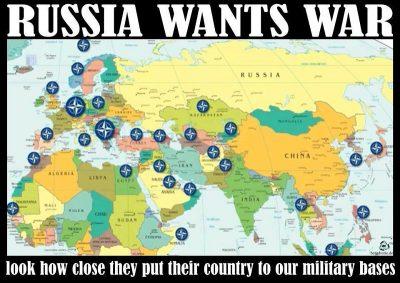
The transatlantic alliance intends to provoke the Eurasian Great Power into reacting in a way that could then be manipulated as the “plausible pretext” for imposing further pressure upon it. It amounts to de-facto brinksmanship and is therefore incredibly dangerous since both parties are nuclear powers. Furthermore, it’s the definition of unprovoked aggression since Russia doesn’t partake in symmetrical provocations against NATO. If anything, every time that it’s been dishonestly accused of such was just the country carrying out military exercises within its own borders which just so happen to abut several NATO states after the bloc extended its frontiers eastward following the end of the Old Cold War.

It’s the eastern expansion of NATO and the alliance’s recent activities in the Arctic Ocean that represent the greatest threat to peace between the two. On the eastern front, the US is once again provoking Russia in order to craft the false impression among the Japanese that Moscow is a military threat to their interests. Washington is greatly perturbed by their past couple years of technically fruitless but nevertheless highly symbolic talks over signing a peace treaty to end the Second World War and resolve what Tokyo subjectively regards as the “Northern Territories Dispute”. Moscow’s reclamation of control over the Kuril Islands following that conflict was agreed to by the Allies, but then America went back on its word in order to divide and rule the two.

Their mutual intent to enter into a rapprochement with one another could in theory occur in parallel with a similar rapprochement between Japan and China, which might altogether reduce Tokyo’s need to retain as robust of an American military presence on its islands. That in turn would weaken the US’ military posturing and therefore reduce the viability of its grand strategic designs to “contain” both multipolar countries in that theater. As regards the Arctic and Eastern European fronts, these are also part of the same “containment” policy, albeit aimed most directly against Russia and only tangentially against China’s “Polar Silk Road”.

It’s understandable that the US will continue to compete with these two rival Great Powers, but such competition must be responsibly regulated in order to avoid the unintended scenario of a war by miscalculation. It’s for that reason why the world should be alarmed by American brinksmanship against them, especially the latest developments with respect to Russia that were earlier described. All that it takes is one wrong move for everything to spiral out of control and beyond the point of no return. Regrettably, while Biden might ease some pressure on China, he’ll likely compensate by doubling down against Russia.

Trump should also take responsibility for this as well since it’s occurring during his presidency after all, even if it might possibly be in its final months if he isn’t able to thwart the Democrats’ illegal seizure of power following their large-scale defrauding of this month’s elections. He capitulated to hostile “deep state” pressure early on into this term perhaps out of the mistaken belief that “compromising” with his enemies in the permanent military, intelligence, and diplomatic bureaucracies would result in them easing their pressure upon him on other fronts, but this gamble obviously failed since it only emboldened them to pressure him even more.

It’s unfortunate that Trump was never able to actualize his intended rapprochement with Russia for the aforementioned reasons, but he could have rebelliously defied the “deep state” after this month’s fraudulent elections by reversing his currently aggressive policy against Moscow if he truly had the political will to do so. He doesn’t, though, and this might nowadays be due more to his support of the military-industrial complex than any “deep state” pressure like it initially was. After all, war is a very profitable business, and artificially amplifying the so-called “Russia threat” by provoking Moscow into various responses could pay off handsomely.

It’s therefore extremely unlikely that this dangerous trend will change anytime in the coming future. To the contrary, it’ll likely only intensify and get much worse under a possible Biden Administration. Nevertheless, Russia doesn’t lack the resolve to defend its legitimate interests and will always do what’s needed in this respect, albeit responsibly (so long as it’s realistic to react in such a way) in order to avoid falling into the Americans’ trap. The ones who should be the most worried, then, are the US’ NATO and other “allied” vassals who stand to lose the most by getting caught in any potential crossfire for facilitating American aggression.

via ZeroHedge News https://ift.tt/2HR0WXz Tyler Durden

France Passes New Law To Ban Discrimination Based On Regional Accents

France Passes New Law To Ban Discrimination Based On Regional Accents

Tyler Durden

Mon, 11/30/2020 – 02:45

France, having solved all other major problems in its country, has found an untouched area of people’s free speech for big government to weigh in on: stereotypes against regional accents.

In fact, people who make assumptions based on others’ regional accents are committing a new type of prejudice that the French are calling glottophobie. The Assemblée Nationale “has adopted legislation making linguistic discrimination an offence along with racism, sexism and other outlawed bigotry,” according to the Guardian.

The legislation was voted in 98 to 3. 

Despite the overwhelming vote, it was widely debated in the house. 

Jean Lassalle, a former presidential candidate, said of the law: “I’m not asking for charity. I’m not asking to be protected. I am who I am.”

But Justice Minister Éric Dupond-Moretti said he was “super convinced” the law was necessary. 

The law was proposed by Christophe Euzet, who called accents a “grave matter”. He commented: “At a time when visible minorities benefit from the legitimate concern of public powers, the audible minorities are the poor cousins of the social contract based on equality.”

While some arguing against the bill proudly spoke in their respective accents while debating, others “complained that many broadcasters with strong regional accents were pigeonholed into reporting on rugby matches or delivering the weather.”

Perhaps someone should notify France that in many counties, including England, the United States, Ireland and Australia, people take pride in their respective regional accents. Often times there are “stereotypes” (for example, an accent from a port town might lead one to believe a person in a fisherman) – but stereotypes can also be objectively accurate.

Either way, it’s freedom of speech that loses wholeheartedly with this overreach and waste of government resources to try and protect people from who they are and where they are from. 

via ZeroHedge News https://ift.tt/39xFCSt Tyler Durden

UK Government Running ‘Orwellian’ Unit To Block Release Of “Sensitive” Information

UK Government Running ‘Orwellian’ Unit To Block Release Of “Sensitive” Information

Tyler Durden

Mon, 11/30/2020 – 02:00

Authored by Peter Geoghegan, Jenna Corderoy, and Lucas Amin via openDemocracy.net,

The British government has been accused of running an ‘Orwellian’ unit in Michael Gove’s office that instructs Whitehall departments on how to respond to Freedom of Information requests and shares personal information about journalists, openDemocracy can reveal today.

Experts warn that the practice could be breaking the law – and openDemocracy is now working with the law firm Leigh Day on a legal bid to force Gove’s Cabinet Office to reveal full details of how its secretive ‘Clearing House’ unit operates.

Freedom of Information (FOI) requests are supposed to be ‘applicant-blind’: meaning who makes the request should not matter. But it now emerges that government departments and non-departmental public bodies have been referring ‘sensitive’ FOI requests from journalists and researchers to the Clearing House in Gove’s department in a move described by a shadow cabinet minister as “blacklisting”.

This secretive FOI unit gives advice to other departments “to protect sensitive information”, and collates lists of journalists with details about their work. These lists have included journalists from openDemocracy, The Guardian, The Times, the BBC, and many more, as well as researchers from Privacy International and Big Brother Watch and elsewhere.

The unit has also signed off on FOI responses from other Whitehall departments – effectively centralising control within Gove’s office over what information is released to the public.

Conservative MP David Davis called on government ministers to “explain to the House of Commons precisely why they continue” with a Clearing House operation that is “certainly against the spirit of that Act – and probably the letter, too.”

Labour shadow Cabinet Office minister Helen Hayes said:

This is extremely troubling. If the cabinet office is interfering in FOI requests and seeking to work around the requirements of the Act by blacklisting journalists, it is a grave threat to our values and transparency in our democracy.”

Details of the Clearing House are revealed in a new report on Freedom of Information published today by openDemocracy.

‘Art of Darkness’ finds that the UK government has granted fewer and rejected more FOI requests than ever before – with standards falling particularly sharply in the most important Whitehall departments.

The Clearing House circulates a daily list of FOI requests to up to 70 departments and public bodies that contains details of all requests that it is advising on. This list covers FOI requests about “sensitive subjects” as well as ‘round robin’ requests made to multiple government departments.

Press freedom campaigners have sharply criticised the Clearing House operation and have called for full transparency.

Michelle Stanistreet, NUJ general secretary, said:

“The existence of this clearing house in the Cabinet Office is positively Orwellian. It poses serious questions about the government’s approach to access to information, its attitude to the public’s right to know and the collation of journalists’ personal information.”

Jon Baines, a data protection expert at the law firm Mischon de Reya and chair of the National Association of Data Protection Officers, said that he was “far from assured that the operation of the Clearing House complies with data protection law.”

“Data protection law requires, as a basic principle, that personal data be processed fairly and in a transparent manner – on the evidence that I have seen, I do not feel that the Clearing House meets these requirements,” Baines added.

‘Art of Darkness’: the worst offenders

The new report published by openDemocracy paints a disturbing picture of the state of Freedom of Information in Britain.

In 2019, central UK government departments granted fewer and rejected more FOI requests than ever before. In the last five years, the Cabinet Office – as well as the Treasury, Foreign Office and Home Office – have all withheld more requests than they granted, according to the report.

The Cabinet Office – which is the government department responsible for Freedom of Information policy – has one of the worst records on access to information. Last year, Michael Gove’s department was the branch of Whitehall most likely to have its decisions referred to the Information Commissioner’s Office, which regulates information rights in the UK.

New analysis by openDemocracy also shows that some public bodies are cynically undermining requests for information by failing to respond to requests in any way – a tactic described in openDemocracy’s report as ‘stonewalling’. Decision Notices, which are issued by the Information Commissioner’s Office (ICO) about stonewalling, have increased by 70 per cent in the last five years. Again, the Cabinet Office is a repeat offender.

The study reveals that the ICO fully or partially upheld complaints about mishandled requests in 48 per cent of its Decision Notices last year: the highest proportion in five years.

Yet the ICO’s capacity to investigate complaints and enforce the Act is diminishing. The regulator has seen its budget cut by 41 per cent over the last decade, while its complaint caseload has increased by 46 per cent in the same period.

The ICO’s enforcement may also be hampered by its governance structure – under which it is accountable on FOI to the Cabinet Office. Michael Gove’s department also is involved in setting the ICO’s annual budget.

Responding to openDemocracy’s questions about the Clearing House, a government spokesperson said:

“The Cabinet Office plays an important role through the FOI Clearing House of ensuring there is a standard approach across government in the way we consider and respond to requests.

“With increasing transparency, we receive increasingly more complex requests under Freedom of Information. We must balance the public need to make information available with our duty to protect sensitive information and ensure national security.”

‘Jenna Corderoy is a journalist’

openDemocracy has had first hand experience of how the Clearing House slows down or obstructs FOI requests, and profiles journalists, on a number of different occasions.

In February 2020, openDemocracy journalist Jenna Corderoy sent an FOI request to the Ministry of Defence about meetings with short-lived special advisor Andrew Sabisky. The MoD subsequently complained internally that “due to the time spent in getting an approval from Clearing House, the FOI requestor has put in a complaint to [the FOI regulator] the ICO”.

The MoD refused the Sabisky request after 196 days, which is more than six times the normal limit for responding to an FOI request.

Separately, when Corderoy sent a Freedom of Information request to the Attorney General’s Office, staff at the office wrote in internal emails:

“Just flagging that Jenna Corderoy is a journalist” and “once the response is confirmed, I’ll just need [redacted] to sign off on this before it goes out, since Jenna Corderoy is a reporter for openDemocracy”.

Today’s findings on the operation of the Clearing House add to mounting questions about the British government’s approach to transparency and press freedom.

Earlier this year, Number 10 was heavily criticised after it barred openDemocracy from COVID press briefings. The Ministry of Defence was also subsequently accused of ‘blacklisting’ DeclassifiedUK after the department refused to provide comment to the investigative website.

Edin Omanovic, advocacy director at Privacy International said that

“the point of Freedom of Information is to access information from individual authorities themselves, not from a centralised body within the Cabinet Office. The Cabinet Office should not be interfering.”

Silke Carlo, director of Big Brother Watch said,

“We’re appalled that such important information rights have been so disrespected by the government. The centralisation of difficult FOIs, the secrecy of this list and the fact that our names have been circulated around Whitehall is seriously chilling. This is a shameful reflection on the government’s attitude towards transparency.”

Long legal battle for transparency 

openDemocracy first asked for copies of the Clearing House lists back in 2018. The Cabinet Office refused this Freedom of Information request but, 23 months later, in July 2020 the ICO finally decided that the lists – including the advice that the Cabinet Office provides on dealing with FOI requests – should be disclosed to the public.

While the Cabinet Office eventually disclosed some material from the Clearing House list, it is keeping its advice to departments secret and is appealing against the ICO’s decision.

openDemocracy, represented by the law firm Leigh Day, will now be submitting evidence to an information tribunal hearing to determine whether this information about the Clearing House should be made public.

According to ICO guidance, a public authority can only look up a requester’s identity if the request is repeated – potentially a vexatious request – or whether the cost of two or more requests made by the requester can be aggregated under FOI.

The ICO has been aware of the Clearing House’s existence for some time. In 2005, the Clearing House’s annual budget was reported to be £700,000.

The Clearing House was initially housed within the then Department for Constitutional Affairs then later moved to the Ministry of Justice. In 2015, when the Cabinet Office took responsibility for freedom of information policy, the department also took over the Clearing House, despite concerns about its operation.

The Cabinet Office has previously advertised roles to work in the Cabinet Office’s Clearing House. Specific responsibilities listed for the positions included “creating a weekly FOI tracker of new cases and releases”, and “forwarding drafts for clearance, reverting to departments with advice and negotiating redrafted responses”.

But openDemocracy’s findings – and the upcoming tribunal case – have highlighted fresh and pressing concerns, including among rights advocates who campaigned for the initial, groundbreaking Freedom of Information legislation more than 15 years ago. The Campaign for Freedom of Information’s Katherine Gundersen has said: “It’s time the clearing house was subjected to proper scrutiny.”

Meanwhile Gavin Freeguard, head of data and transparency at the Institute for Government, said that, 15 years after the Freedom of Information act came into effect, it was not right that the public was still having to fight to access information.

“With delayed responses, more requests being rejected than ever before and these reports of a Clearing House it feels like we’re having to fight for the right to information all over again,” said Freeguard.

“And all this at a time when it’s vital for politicians, the press and the public to be able to scrutinise government.”

The Cabinet Office organises quarterly engagement meetings and biannual information rights forums with other government departments. openDemocracy sent an FOI requesting materials from these meetings and forums, but the request was denied.

via ZeroHedge News https://ift.tt/39rq6HJ Tyler Durden

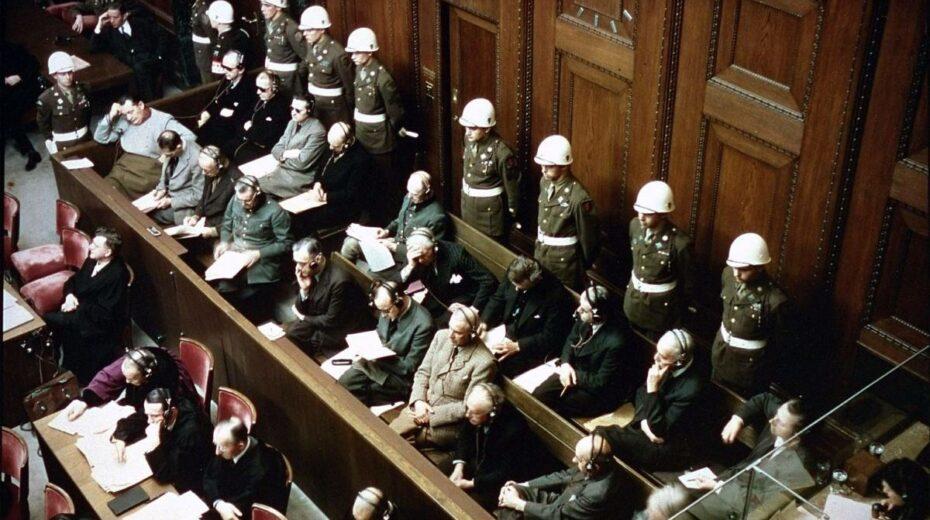
The Nuremberg Tribunal: 75 Years Later And Still The Basis For Humanity’s Survival

The Nuremberg Tribunal: 75 Years Later And Still The Basis For Humanity’s Survival

Tyler Durden

Sun, 11/29/2020 – 23:30

Authored by Matthew Ehret via The Strategic Culture Foundation,

“The wrongs which we seek to condemn and punish have been so calculated, so malignant and so devastating, that Civilization cannot tolerate their being ignored because it cannot survive their being repeated. That four great nations, flushed with victory and stung with injury, stay the hand of vengeance and voluntarily submit their captives to the judgement of law, is one of the most significant tributes that Power ever paid to reason.”

-Justice Robert Jackson, Nov. 21, 1945

It is often forgotten what sort of a battle occurred after WWII to establish the Nuremberg Trials which gave the world a revolutionary code of law which even today offers many of the remedies to the Gordian Knots blocking our way to a peaceful future. By the end of the war, many European leaders of the allied nations wished to simply put leading Nazis against a wall to face a firing squad and return to “business as usual”.

As I’ve outlined in many recent writings, it was only through the intensive efforts of U.S. President Franklin Roosevelt, and his leading allies in both the USA and Russia that a different course of action was decided upon and an official international tribunal was sanctioned that generated a total legal paradigm shift in international law that has been too easily taken for granted (due largely to the lack of effect these laws have had on post-WWII practice).

Among those revolutionary reforms included the unprecedented mandate that wars of aggression would henceforth be illegal in the eyes of the law. The tendency for those higher officials carrying out inhuman orders to escape responsibility for their actions or omissions of correct action were deemed insufficient defenses under the higher moral principle of “known or should have known”.

The underlying assumption of these Nuremberg laws are:

1) “might does not make right” despite what generations of Hobbesians and Niescheans have chosen to believe and

2) that every individual is responsible for their decisions based not on the arbitrary standards of whatever degenerate society they live in but rather upon the belief in the intrinsic powers of reason and conscience which all humans have access to and are obliged to guide our actions in life.

Nazi philosophers and crown jurists like Martin Heidegger and Carl Schmidt whose thoughts have penetrated the western zeitgeist over the past 70 years would obviously find such concepts repugnant and deplorable.

The fact that the “free world” has ignored these foundations of international law has not changed the fact that they are still true.

Today, many of those powerful unipolar ideologues who managed the disastrous Cold War and post-Cold War geopolitical environment have attempted to erase the precedents of Nuremburg with such atrocities as Soros’ International Criminal Court, and the “Responsibility to Protect” doctrine (R2P) in defense of “humanitarian wars” as seen in Bosnia, Iraq, Afghanistan, Libya, and Syria in recent years. The disturbing rise of unipolar R2P advocacy rampant among the British ruling class like Lord Mark Malloch Brown, Tony Blair and all of the Obama-era globalists surrounding Biden make Vladimir Putin and Sergey Lavrov’s recent remarks at the 75 Anniversary Moscow conference celebrating the commencement of the Nuremberg Trials that much more important.

Putin and Lavrov Celebrate the 75th Anniversary of Nuremberg Trials

At this event, Putin reminded the attendees of the importance of the historic tribunals which ran from November 21, 1945 to October – 1946, saying:

“We constantly refer to the lessons of the Nuremberg Trials; we understand their importance for defending the truths of historical memory, for making a well-founded and solid case against deliberate distortions and falsifications of World War II events, especially the shameless and deceitful attempts to rehabilitate and even glorify Nazi criminals and their accessories… It is the duty of the entire international community to safeguard the Nuremberg Trials’ decisions, because they concern the principles that underlie the values of the post-war world order and the norms of international law.”

Putin’s remarks were amplified by Sergey Lavrov who elaborated on the new legal paradigm created at Nuremberg which provides an obvious cure for the rise of WWII revisionism, sanitation of Nazism in Ukraine and beyond as well as the revival of many of the practices that made Nazism a viral threat to mankind.

“The Nuremberg Trials—an example of international criminal justice—proved that justice can be achieved with a professional approach based on broad interstate cooperation, consent and mutual respect. Clearly, the Nuremberg Tribunal’s legacy is not limited to law, but has enormous political, moral and educational value. A strong vaccination against the revival of Nazism in all its forms and manifestations was made 75 years ago. Unfortunately, the immunity to the brown plague that was developed in Nuremberg has seriously worn off in some European countries. Russia will continue to vigorously and consistently oppose any attempts to falsify history, to glorify Nazi criminals and their henchmen, and to oppose the revision of the internationally recognized outcomes of World War II, including the Nuremberg rulings.”

So What Happened at Nuremberg?

Amidst the ashes of WWII, a major battle was waged between those deep state forces that had funded fascism as a “solution to the woes of the great depression” vs those genuine patriots who understood that the very fabric of empire and its associated financial, cultural and legal paradigm had to be destroyed and replaced with a paradigm more befitting human civilization.

Among the leading representative of the patriotic forces loyal to FDR’s anti-colonial vision was a man who has been nearly lost to history named Robert H. Jackson (1892-1954). Jackson would serve as Franklin Roosevelt’s most trusted legal advisor who first made a name for himself working closely with Ferdinand Pecora in prosecuting dozens of high level Wall Street financiers and pro-fascist industrialists who orchestrated the depression of 1929 and the later coup and assassination attempts against FDR in 1933-1934. After proving himself in combat, Jackson arose to become U.S. Solicitor General (1938-1940), Attorney General (1940-41) and leading member of the Supreme Court from 1941 until his death in 1954.

Knowing that the deep state coup that ousted Vice-President Henry Wallace and imposed Anglophile tool Harry Truman onto the USA might destroy the hopes for a post-WWII order of peaceful cooperation as outlined by the United Nations Charter, Judge Jackson took the lead and organized the Nuremberg Tribunals delivering the opening speech on November 21, 1945:

One of the prime motives behind the hearings was the intention to give legal meaning and action to the universal ideals conveyed in the United Nations’ Charter. This charter encapsulated the principles that FDR and Henry Wallace outlined repeatedly in the Four Freedoms. These freedoms asserted that all humankind regardless of race, sex, creed, or nationality would: 1) have the freedom from want, 2) freedom to worship as one’s conscience dictated, 3) freedom from fear, and 4) freedom of speech. If international law could tolerate wars of aggression, or if abdication of responsibility for ones’ criminal deeds could be tolerated on the basis of “I was just following orders”, then the UN Charter could carry little weight indeed.

As Jackson wrote in his Summer 1945 report to the President justifying the creation of the Nuremberg Tribunal:

“We therefore propose to charge that a war of aggression is a crime, and that modern international law has abolished the defense that those who incite or wage it are engaged in legitimate business. Thus, may the forces of law be mobilized on the side of peace.”

During the course of the 11 month proceedings, not only were leading cabinet members, generals, lawyers and other high officials put on trial, but the deepest facets of natural law vs Nietschean “law of the strongest” was investigated with Platonic rigor as laid out in the brilliant award-winning film Judgement at Nuremberg (1960).

Due to the leadership of Justice Jackson, the treatment of INTENTION and conspiracy was made the primary focus in the pursuit of justice and cause of criminal guilt. This was not a popular approach then or today for the simple fact that our world is shaped by many top down forces that want their victims’ minds to be forever trapped in the material bottom up world of deductive/inductive logic where immaterial causal intentions and ideas can never be found. For anyone wishing to pursue this fruitful line of thinking further, I suggest reading Edgar Allan Poe’s Eureka.

When one adopts the view that intentions and conspiracies (i.e.: the effect of intentions + ideas when put into action) ARE NOT a driving force of politics and life, then we forever loose our ability to judge truthfulness in any serious manner. This was the philosophical premise of leading Nazi financier Hjalmar Schacht, whose moral relativism and cold calculating principles of economics directly justified the cheap labor camps that worked millions to death in the German war production effort. This same philosophy again found fertile soil in the post-1971 consumer society that revived the logic of cheap labor production under the age of “cheapest price is the law” globalization.

Quoting Schacht who said “Truth is any story that succeeds”, Justice Jackson quipped “I think you can score many more successes, when you want to lead someone, if you don’t tell them the truth- than if you do tell them the truth”.

Laying out the principled intention of the trial to the American people, Jackson said:

“The common sense of mankind demands that law shall not stop with the punishment of petty crimes by little people. It must also reach men who possess themselves of great power and make deliberate and concerted use of it to set in motion evils which leave no home in the world untouched….

“The case as presented by the United States will be concerned with the brains and authority in back of all the crimes. These defendants were men of a station and rank which does not soil its own hands with blood. They were men who knew how to use lesser folk as tools. We want to reach the planners and designers, the inciters and leaders….

“It is not the purpose in my part of this case to deal with the individual crimes. I am dealing with the common plan or design for crime and will not dwell upon individual offenses. My task is only to show the scale on which these crimes occurred, and to show that these are the men who were in the responsible positions and who conceived the plan and design which renders them answerable, regardless of the fact that the plan was actually executed by others….

“The Charter recognizes that one who has committed criminal acts may not take refuge in superior orders nor in the doctrine that his crimes were acts of state….

“The real complaining party at your bar is Civilization…. The refuge of the defendants can only be their hope that International Law will lag so far behind the moral sense of mankind that conduct which is crime in the moral sense must be regarded as innocent in law. Civilization asks whether law is so laggard as to be utterly helpless to deal with crimes of this magnitude by criminals of this order of importance.”

Today, the world sits once more on the brink of a new world order, and the emergence of a governing system that is shaped entirely on the same social Darwinistic/Nietschean operating system that gave rise to fascism in WWII. The same denial of universal truth that animated the minds of a Schacht, Goebbels, Heidegger or Schmidt has become hegemonic among western academia as well.

Very few statesmen have had the courage and insight to resist this unipolar anti-nation state system, but among those who have we are fortunate to have found the current leader of Russia and his allies who in many ways are playing the same historic role as the one played 75 years earlier by Justice Robert Jackson, Henry Wallace and President Roosevelt. Whether the rest of the world wakes up in time to recognize the superiority of the multipolar alliance over the regressive order of the unipolarists carrying us ominously towards World War 3 remains to be seen.

via ZeroHedge News https://ift.tt/36lBvGZ Tyler Durden