D.C. Schools Suddenly Abandon Plans To Reopen After Teachers Union Objects

dreamstime_xxl_190040447

D.C. public schools were scheduled to reopen next week, but Lucy has yanked the football away again: The district announced today that distance learning will continue for most students.

“While we planned to offer in-person learning at the start of Term 2 for select elementary school students, this timeline will need to be adjusted,” wrote Lewis Ferebee, chancellor of D.C. Public Schools, in an email to parents.

This reversal came after the Washington Teachers Union voted to oppose the reopening plan. The union also instructed teachers to take a “mental health day” on Monday and refuse to teach virtually, as a show of force.

Much like the union’s earlier efforts to thwart the city’s reopening plans—which involved dumping fake body bags in front of district headquarters and staging drive-by protests—the tactics have succeeded: Officials caved to union demands without any fight whatsoever. As a result, parents who had made arrangements to send their kids back to school just a few days from now will be thrown for yet another loop.

This same dynamic—district announces a reopening date, teachers protest, district relents, working parents suffer—is playing out in large districts across the country: Chicago, New York City, San Francisco, and others. The Fairfax Education Association, which represents public school teachers in northern Virginia, doesn’t want its members returning for in-person instruction until at least the fall of 2021.

Teachers unions claim that their goal in thwarting reopenings is to keep students and teachers safe. But we know from schools that have reopened that doing so is relatively safe; meanwhile, virtual education is a completely disaster for many kids. Unfortunately, the teachers unions’ incentives are totally at odds with what families need. Students need in-person instruction, whereas public school teachers will be paid regardless of whether they actually have to show up to work.

Imagine if public education dollars followed individual students instead of automatically lining the pockets of institutions that aren’t serving students particularly well.

from Latest – Reason.com https://ift.tt/3oYa51l
via IFTTT

“We Worry About Armed Conflict”: Investors Are Suddenly Freaking Out About Post-Election Violence

“We Worry About Armed Conflict”: Investors Are Suddenly Freaking Out About Post-Election Violence

Tyler Durden

Mon, 11/02/2020 – 14:44

Earlier we reported that amid fears of election night chaos, the White House has been put on lockdown, and that according to NBC sources, beginning tomorrow, a “non-scalable” fence will be erected to secure the WH complex, Ellipse and Lafayette Square with 250 National Guardsmen on standby.

It’s not just the White House that is freaking out about violence tomorrow. As reported earlier, stores across the country are boarding up…

… while CNN anchors who fan social unrest and encourage violent protests are shocked, shocked that rioting may take place here.

And now, it seems that Wall Street is also starting to freak out: in a note by AGF Investments’ Chief US Policy Strategist Greg Valliere, he wrote that the “threat of post-election violence has been a dominant topic in virtually every investor briefing we’ve done this fall,” but he’d “never raised the topic of violence — until now.”

Valliere said he was “stunned to see much of the city boarded up” while driving through downtown Washington over the weekend, and flagged disruptions in Portland, Ore., and elsewhere.

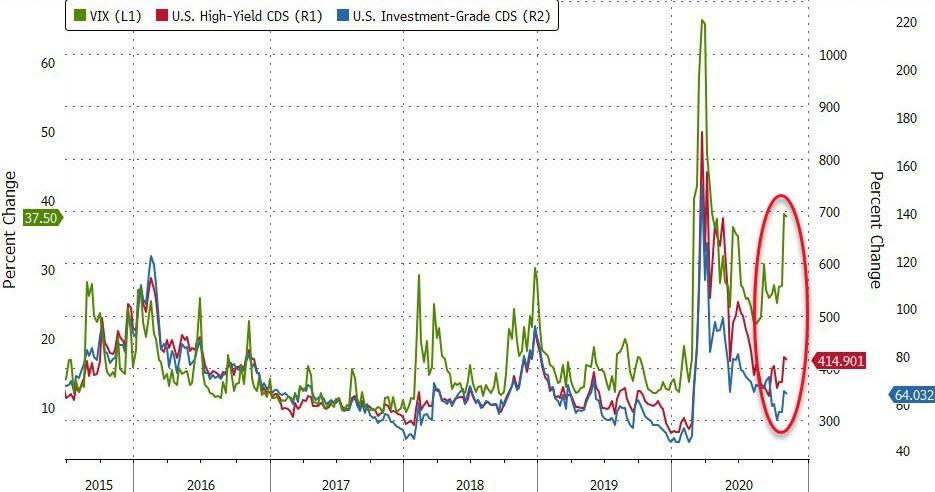
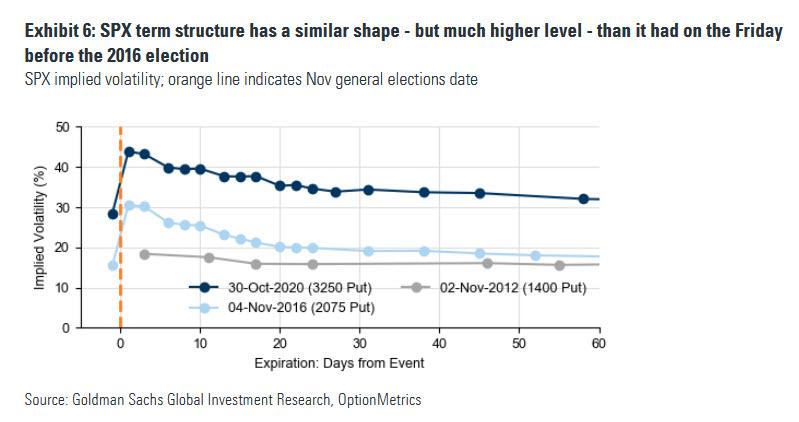
“In a country this angry – and armed to the teeth – we worry that an inconclusive election could unleash conflict,” and judging by the record pre-election VIX, which is far, far higher than where it was the day before the 2016 election, so is everyone else.

And as if in response to fears that violent conflict will break out over the next 48 hours, moments ago the National Guart was deployed in South Philadelphia.

via ZeroHedge News https://ift.tt/2HUbRPY Tyler Durden

Police Investigating ‘Trump Train’ Incident Say Victim ‘Appears To Be’ MAGA Truck

Police Investigating ‘Trump Train’ Incident Say Victim ‘Appears To Be’ MAGA Truck

Tyler Durden

Mon, 11/02/2020 – 14:30

A Biden campaign staffer driving a white SUV ‘may be at fault’ after colliding with a  Trump supporter’s truck on a Texas highway on Friday, after a ‘Trump Train’ of trucks surrounded a Biden campaign bus to ‘escort it’ out of the state, according to WFLA.

The at-fault vehicle may be the white SUV and the victim appears to be the black truck,” said the San Marcos, Texas Police Department in a statement after reviewing the crash via online videos.

Calls to the driver of the white SUV have gone unanswered and SMPD has not been contacted by the driver of the black truck. Since SMPD has not spoken to either driver at this time, additional investigation would be required to fully ascertain who was at fault,” the statement continues.

Over the weekend, the Texas Tribune reported that the FBI was investigating the incident.

“The Federal Bureau of Investigation is looking into a Friday incident in which a group of Trump supporters, driving trucks and waving Trump flags, surrounded and followed a Biden campaign bus as it drove up I-35 in Hays County, a law enforcement official confirmed to The Texas Tribune Saturday,” according to the report.

In a video of the incident, a black truck can be seen occupying the far right lane behind the Biden bus, which was weaving between lanes. A white SUV driven by a Biden campaign staffer can be seen encroaching on the truck driver’s lane when a collision occurs and the truck driver ‘pushes’ the SUV back out of their lane.

On Sunday, President Trump wrote over Twitter that the Trump caravan “did nothing wrong,” adding “Instead, the FBI & Justice should be investigating the terrorists, anarchists, and agitators of ANTIFA, who run around burning down our Democrat run cities and hurting our people!”

As the Daily Wire notes, Texas GOP Chairman Allen West similarly responded: “Where is the liberal corporate media’s concern about that real violence?” adding “It is more fake news and propaganda. Prepare to lose…stop bothering me.”

Naomi Narvaiz, a Texas Republican Party official in San Marcos, told The Texas Tribune that Trump supporters “decided we would jump on 35 to show support for our president. I didn’t see anyone being overly aggressive.” –Daily Wire

via ZeroHedge News https://ift.tt/2HYaHTN Tyler Durden

Platts: 5 Commodity Charts To Watch This Week

Platts: 5 Commodity Charts To Watch This Week

Tyler Durden

Mon, 11/02/2020 – 14:15

Via S&P Global Platts Insights blog,

A triple bill of European power and gas market trends, kicks off this edition of Commodity Tracker ahead of S&P Global Platts Analytics’ Virtual Client Seminar, London. Our news and pricing editors also look at the plight of Australian refineries, and developme nts in the met coal market amid high Chinese steel output.

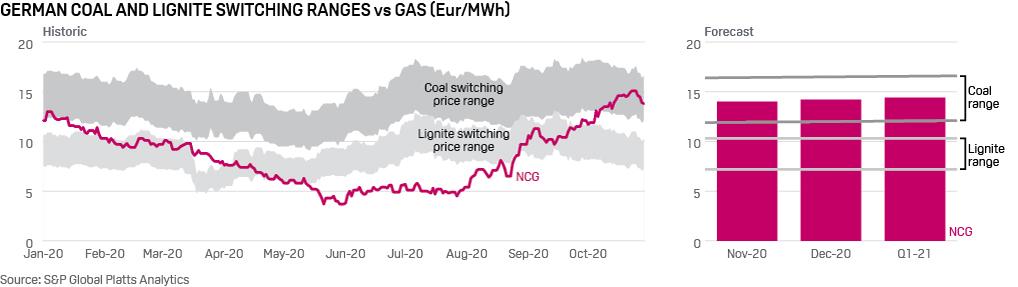
1. After lignite, coal increasingly in the money in Germany

What’s happening? Recent movements in commodity prices have consolidated the trend that emerged in September, when high gas prices brought German lignite back in the money, and have also started to shift the outlook for coal plant: the most efficient are now moving ahead of mid-level gas ones in the supply stack.

What’s next? The improved outlook for coal plants translates into a month-on-month uplift of 25% in S&P Global Platts Analytics’ forecast for coal generation across western Europe over the winter, with limited upside risk at this point given the recovery in French nuclear and above-average European hydro stocks, but material risks to the downside. The announcements of new coronavirus-related restrictions in France, Italy, Belgium and Germany at the end of the October could lead to power demand losses that are likely to affect coal dispatch more than gas or lignite, with the easing of tightness in the European coal supply fundamentals offering limited support to balance it.

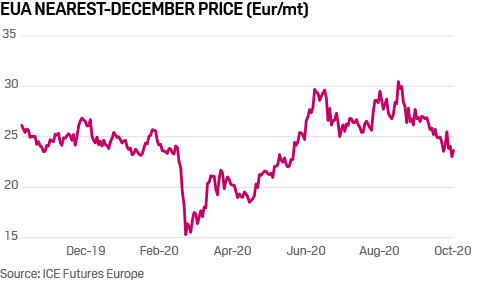
2. EU CO2 caught between short-term fundamentals, long-term reform

What’s happening? The EU carbon price fell to a four-month low of Eur22.88/mt Oct. 28. The recent weakness was driven by worries over demand due to the renewed coronavirus lockdowns across Europe, which dragged the wider energy complex lower, as well as strong carbon auction supply from governments in the fourth quarter.

What’s next? Traders will be watching closely this week to see if the lower prices attract buyers back into the market, with carbon still caught between short-term weak demand and expectations of longer-term tighter supply as Europe pushes for stronger emissions targets out to 2030. Seasonal factors could also come to the fore, with any arrival of colder winter weather likely to provide support for power, generating fuels and carbon.

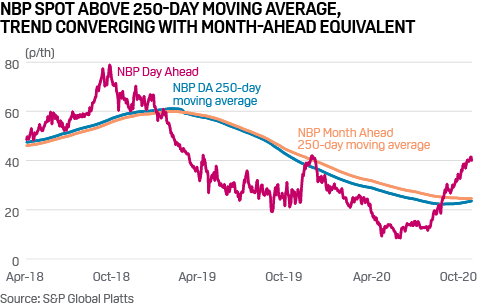
3. European gas markets eye second coronavirus wave, LNG availability

What’s happening? European spot natural gas prices hit all-time lows in the aftermath of the first wave of coronavirus, with storage availability easing intense pressure on consumption demand. According to Gas Infrastructure Europe, gas storage facilities were 70% full at the time, climbing to 95% as of late October.

What’s next? With tightened lockdowns introduced many major European economies including the UK, Germany and France, a second wave of coronavirus could again hit European gas prices, but this time without storage availability to support them. Meanwhile, LNG procurement will also be a factor to watch, with questions around the US’ ability to supply marginal demand in both Europe and Asia through the northern hemisphere winter.

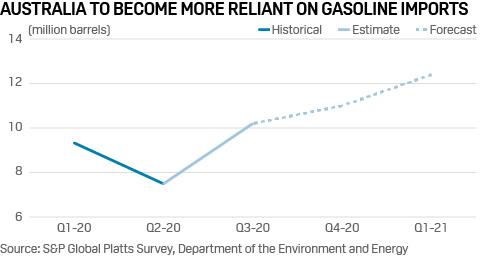
4. Australian refinery troubles to reverberate in regional trade flows

What’s happening? Australian refineries are feeling the squeeze due to long-term competition from large-scale Asian and Middle-Eastern facilities, and reduced mobility this year due to the global pandemic. BP Australia said Oct. 30 it would shut its 146,000 b/d Kwinana refinery in Western Australia and convert it into a fuel import terminal. Ampol, formerly Caltex Australia, is undertaking a “comprehensive review” of its 109,000 b/d Lytton refinery, and Viva Energy’s 120,000 b/d Geelong refinery is also under review.

What’s next? Australia is expected to become even more reliant on Asian oil products, and Asian fuel exporters including Malaysia’s Petronas, South Korea’s SK Energy and GS Caltex said they aim to boost oil product exports to consumers in Oceania. On the flipside, crude oil exports from Malaysia, could take a hit as Australian buyers of its light sweet crude grades struggle to run their refining operations. Australia’s light sweet crude imports from Malaysia, one of its major oil suppliers, is expected to tumble to around 22 million barrels for the full year, down 33% from 2019, according to Singapore-based low sulfur crude traders and Australian fuel distributors surveyed by S&P Global Platts.

5. Met coal lifts as Chinese steel output rises, outlook uncertain

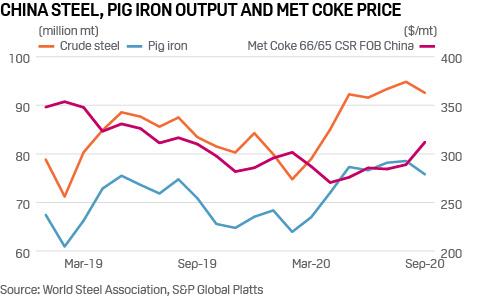
What’s happening? Chinese steel and pig iron production has risen since the second quarter of 2020 on higher demand from infrastructure and construction, supported by stimulus measures. Met coke prices in China have rebounded since April, with export pricing tracking domestic demand from steelmakers, even as demand fell outside China following coronavirus restrictions in India, Brazil and Europe.

What’s next? China’s steel output growth may have peaked in September, with expectations that further increases to rates may be limited as stimulus eases and winter limits construction. Met coke prices remain high as China may stabilize at higher rates of steel production. Chinese coke exports are unlikely to attract growing interest at current prices due to currently lower seaborne coking coal prices and potential for major producers in Colombia and Poland to increase coke supplies into the Americas, Europe and India. An uncertain outlook for steel demand and prices outside China on the lingering effects of the coronavirus may limit forward demand.

via ZeroHedge News https://ift.tt/328vL0H Tyler Durden

France Bans Turkish Ultra-Nationalist ‘Grey Wolves’ Group After Mobs Target Armenians

France Bans Turkish Ultra-Nationalist ‘Grey Wolves’ Group After Mobs Target Armenians

Tyler Durden

Mon, 11/02/2020 – 14:00

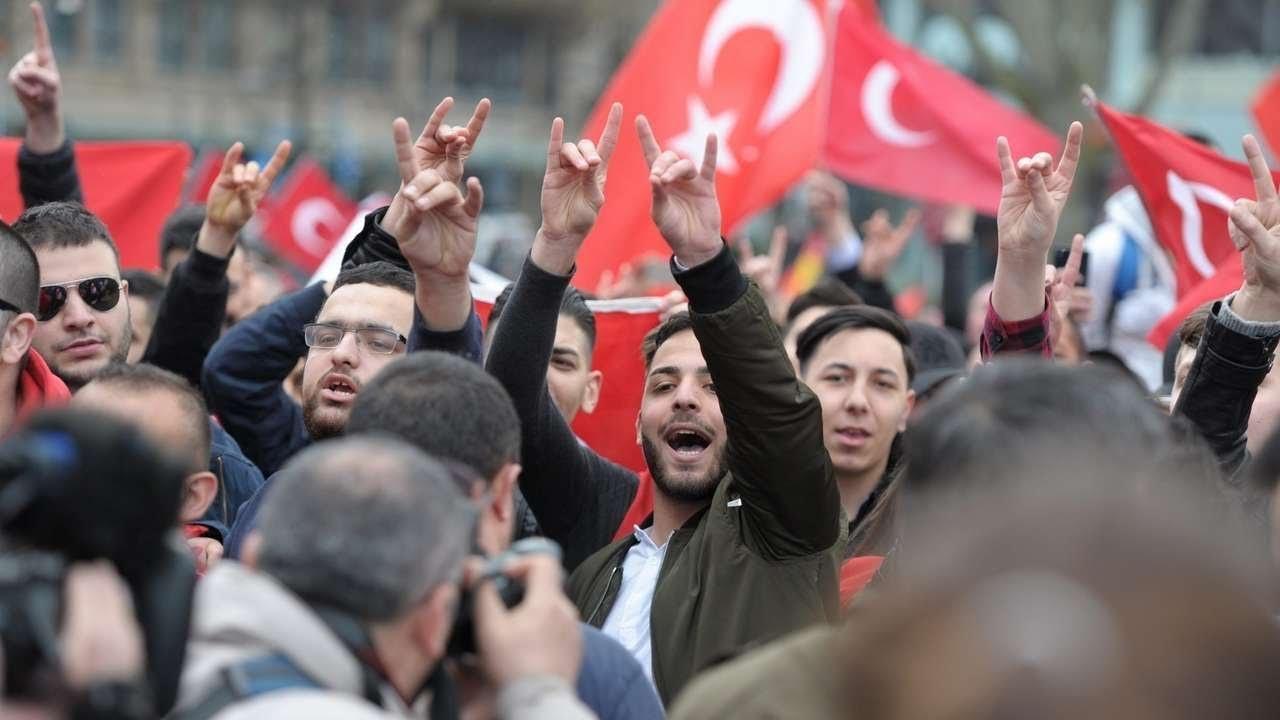
The French government on Monday announced a ban on the Turkish ultra-nationalist ‘Grey Wolves’ group – the latest in the ongoing tit-for-tat feud between Paris and Ankara which was triggered after last month’s two terrorist attacks involving gruesome beheadings and knife attacks on French citicens.

French Minister of Interior Gérald Darmanin made the official statement banning the ultra-nationalist group, according to the AFP. Darmanin called the group “particularly aggressive” and said the law banning it would be submitted to the French Cabinet on Wednesday.

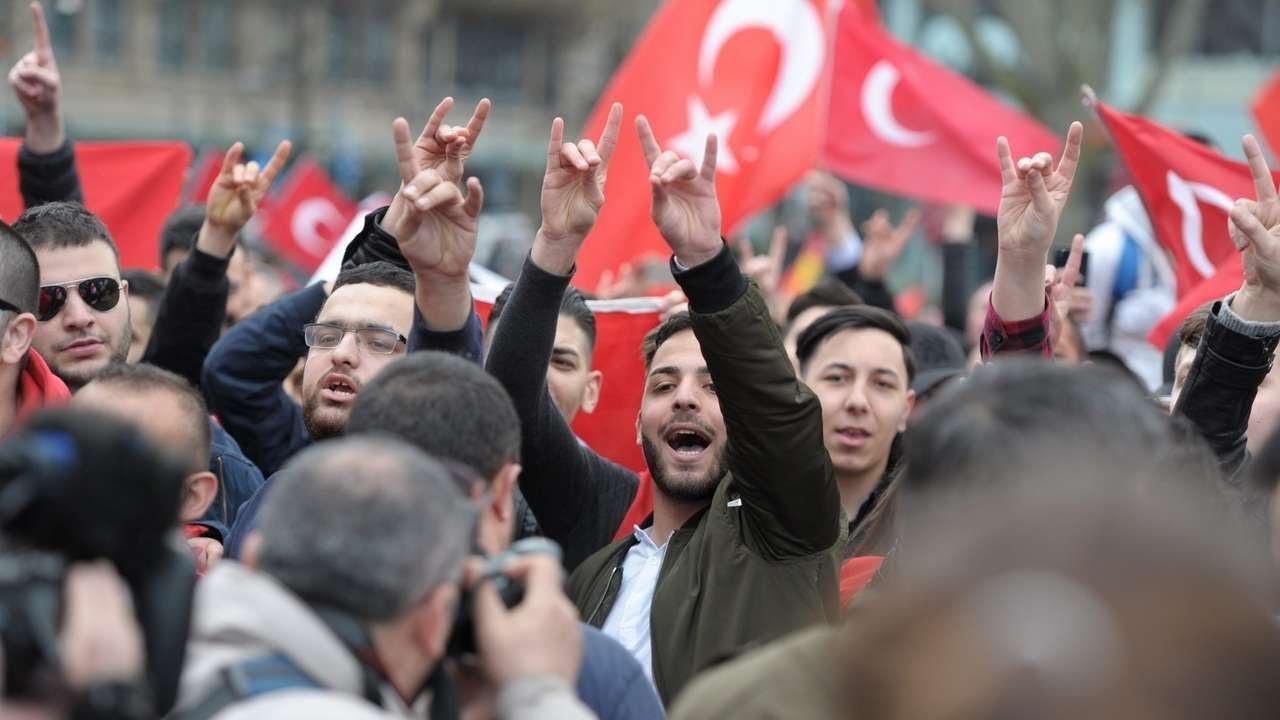
A prior Grey Wolves rally in Germany.

It comes after days ago the Grey Wolves were reportedly behind marches in two French towns where largely Turkish mobs declared they were “looking for Armenians”. Some media headlines emphasized the Turkish nationalists were “hunting” for Armenians in connection with tensions related to the ongoing war in Nagorno-Karabakh.

Vice News, for example, wrote the following of last week’s events:

A French anti-racism group and an organization representing France’s Armenian community said what they called the “hunt for Armenians” was orchestrated by the Grey Wolves, a militant Turkish ultranationalist group which is active in Western Europe and banned in a number of countries, including Austria. Footage of the marches, which took place on Wednesday night, was circulated on Twitter accounts featuring wolf emojis and references to the Turkish name of the ultranationalist organisation, Bozkurtlar.

Also over the weekend it was revealed that the Armenian Genocide Memorial and the National Armenian Memorial Centre in Décines, France were defaced with yellow spray paint, including pro-Grey Wolves messages. 

A statement last Thursday from the Coordination Council of Armenian Organizations (CCAF) in France urged the French government to outlaw the Grey Wolves, citing the safety of minority ethnicities in France. 

“French people of Armenian origin must be able to live in France in safety, without being targeted by acts of violence and racial hatred,” the CCAF said in a statement.

Turkish media has noted prior occasions where Erdogan was seen giving the hand sign used among the Grey Wolves, via Ahval

The ban will be sure to outrage Ankara given Turkish President Erdogan is seen as sympathetic to the group, which is very active in Turkey. 

Erdogan has in the past surprised onlookers by making the Grey Wolves hand sign at political rallies. Its leaders routinely make statements in praise of genocide against all non-Turkish people groups living in Turkey, and are widely accused of carrying out political killings.

via ZeroHedge News https://ift.tt/3jQflQJ Tyler Durden

“Defining Liberty,” My New PragerU Video

Here’s the text:

Here’s something we can all agree on. Liberty is a wonderful thing. The American Constitution says so, right in the Preamble: The Framers established the Constitution to “secure the Blessings of Liberty.”

So, why doesn’t that offer a clear answer to most of the constitutional questions that face America today? Aren’t lawmakers, who swear to uphold the Constitution, obliged by their oaths to vote for liberty?

The problem is that liberty, like equality or justice, is a complicated idea that means different things to different people. Consider, for instance, one simple question: Whom do we want liberty from?

Well, we want liberty from a tyrannical government. That’s why we have a Bill of Rights, and that’s why the Constitution was designed to impose powerful constraints on the federal government (and, eventually, state governments).

But we also want liberty from foreign tyrants, right? What’s the point of having a government that won’t oppress us, if it can’t protect us from foreign invaders who would oppress us even more? That’s why the Preamble also says the Constitution is set up to “provide for the common defense.”

Yet to protect ourselves against foreign tyranny, we may need to restrict domestic liberty. At the very least, the government has to impose taxes to pay for the military. Throughout American history, the government has also been seen as having the power to draft men to fight in wars; that’s certainly a restriction on individual liberty. But it’s long been seen as consistent with the Constitution.

We can see other examples, too.

The Fourth Amendment bans “unreasonable searches and seizures.” That’s a powerful protection for liberty. But it doesn’t ban all searches and seizures; reasonable ones are allowed. That’s in part so the law can better protect us from criminals intruding on our liberty.

Likewise, the Fifth Amendment provides that private property shall not “be taken for public use, without just compensation.” But that means that sometimes your property can be taken for public use with compensation, however much this limits your liberty to, say, continue living in your family house that has been condemned to make room for a highway. Sometimes liberty does yield to public benefit.

What’s more, everyone agrees that my liberty doesn’t extend to violating your rights. But where do my rights stop and yours start?

The Constitution itself doesn’t tell us, since it lists pretty much just those rights that are protected against government intrusion like the free exercise of religion. People disagree about what rights should be protected from supposed intrusion by others—for instance, by employers, or by large businesses that might try to stifle competition.

So, what do we do about this? How do we resolve all these hard questions about liberty?

First, the Framers of the Constitution explicitly protected certain liberties, such as the freedom of speech and the right to keep and bear arms.

Second, the Framers gave the courts a major role in defining the scope of those liberties.

Third, the Framers set up the structures of government—such as separation of powers—that would help protect liberty, by making sure that no single branch of government could unduly restrict liberty.

But then, fourth, they left the rest of the debate about liberty to the political process. Indeed, even the gravest violation of basic natural liberty in American history—slavery—was ultimately abolished by the political process, as well as of course by the Civil War, which was started and conducted by elected officials.

The Framers also believed that most decisions in people’s lives would not and should not be made by the government. They should be made by ordinary people: which job to take, which business to start, whom to associate with, how much to sell or buy things for, and innumerable other choices.

The American experience has been that we are, on balance, richer, safer, and freer when those decisions are made outside the government by individuals pursuing their own dreams and their own self-interest.

But when it came to most tough questions about what restrictions on liberty are necessary—outside those walled off by the Constitution—the Framers left those questions to be decided by the democratic process.

It’s my view that the government should generally impose as few restrictions as possible, whether on people’s personal lives or their economic lives. Others disagree. Should we have smaller government? Should we have bigger government? Ultimately, in the system the Framers created, these disagreements would have to be resolved by We the people.

To implement your vision of liberty, you have to win elections. And that’s exactly what the Framers intended.

I’m Eugene Volokh, professor of constitutional law at UCLA, for Prager University.

from Latest – Reason.com https://ift.tt/38hH4I3
via IFTTT

The Kids Are All Right

Ballot Box costume

The scene at Irving Park in northeast Portland at 6 p.m. on Halloween looks pretty much like any other Saturday night in the park: Kids shoot hoops on the north end, people play tennis on the south, dogs run in the center. Tonight there’s also a Day of the Dead celebration, with singing and lighting candles and little kids in costumes spinning and eating cake.

Watching from the adjoining hillside are about 60 people in costumes of their own, the all-black clothing, face masks, and helmets of black bloc, here for tonight’s “Capitalism is Spooky” rally. That every other rally and march I’ve been to has appeared livelier and better-attended than this one may be due to participation burnout; Portland is on Night 158 of continual protests, with a few days taken off during the wildfires in September. Where there’s previously been pep and sloganeering, tonight there are hillside sitters looking bored with the Day of the Dead crew, with the toddlers dancing with their moms, maybe even with other people taking over a public space when, for the past four months, those have been their domain—parks and streets and Mayor Ted Wheeler’s apartment complex—their places to make a stand, and wasn’t it time for these others to clear out? So they could get on with their important work?

Tonight’s important work, per the online flyer, includes “No Cameras. No Peace Police. Total Abolition.” But by 6:30, there are no tricks or treats, no music, and, with the exception of some guy wearing a paper mask of Andy Ngo on the back of his head, no costumes. By all lights, it is a no-fun zone. 

Would there at least maybe be a speaker, maybe mayoral candidate Sarah Iannarone, who just the day before had been endorsed by Vermont Sen. Bernie Sanders and who, as of late, has been trolling people with her communist-leaning enthusiasms? I mean, who better to talk up the evils of capitalism? And did the chubby black bloc guy drinking a Bud next to me think she’d show up? 

Bud doesn’t seem particularly interested in the question, though he does offer, “Anybody is better than Ted Wheeler, who needed to pick a lane and stick to it.” He also thinks there’s a pretty good showing tonight, “Maybe 75 people.” 

Sure, though previously there’ve been ten times as many. Then again, it’s Halloween, maybe people have plans, or kids.

“Most of these people are kids,” Bud says, looking at a few people in black bloc setting out the usual water and first aid. With the exception of one guy carrying a big red flag without insignia, there’s no color and no zip and the whole thing feels like a love affair gone flaccid. Though if we’re following script, the fireworks will start later, or the fires will. Does Bud guy think there will be marching tonight?

“Of course,” he says, though he doesn’t know where they’ll go; maybe the police station up in north Portland. What he does know is that there will be no filming, no livestreaming; that that’s been an edict since the Day of Rage on October 11, “when they pulled the statues down,” he says, before lumbering off, which is when I notice a brilliant blue sky streaked with pink cumulus clouds, and hear the Rolling Stones’ “Satisfaction” playing from the not-yet-dead Day of the Dead event.

I head to the dog run, where there are people in costume (tonight’s maybe-winner: a little girl dressed as a poop emoji) and plenty of laughing.

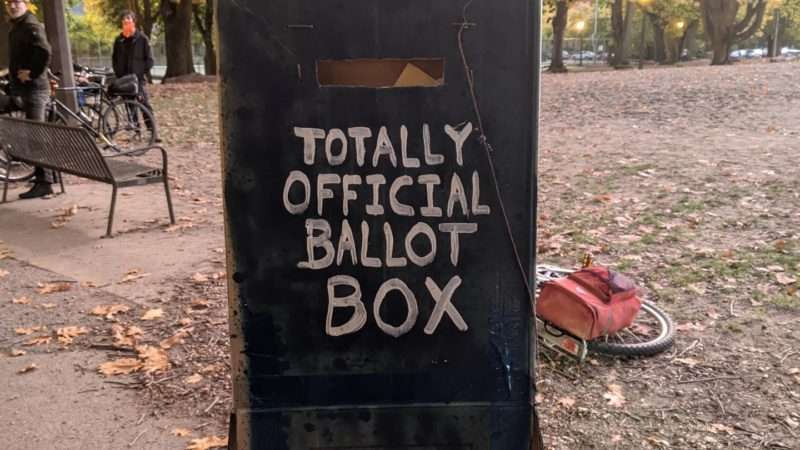
“Have you voted?” asks a guy dressed as a voting booth. I fill out a “ballot” and drop it in, then walk toward a dozen high school kids at a picnic table. Kanye West’s “Gold Digger” plays from some device; there’s the thwock thwock of the tennis, and it occurs to me that what is happening in Irving Park, a park I lived within six blocks of for 15 years, has very little to do with the people in black bloc sitting all sour on a hillside; that they are not the story the people of Portland are telling themselves.

One of the high school kids calls to me, “How’s your night going?” 

Good, good. How about them? 

“Good, I mean, it’s Halloween,” says the kid, who’s as beautiful as Taylor Hanson, as is the kid who sits beside him, who rolls a skateboard beneath his feet. Are they in tenth grade?

“Ninth,” Hanson 1. “At Central Catholic.”

Cool. My daughter went to Grant High School.

“Sick,” says Hanson 2. 

Did they see the people in black over on the hill? Do they know what’s going on?

“I saw a big flag,” says Hanson 1. “What is it?”

It’s the folks who call themselves black bloc, anarchists, antifa.

“Oh, antifa, yeah,” he says. “Are they over there?”

Yes, some event they’re calling “Capitalism is Spooky,” after which they’ll probably march somewhere and set things on fire.

“Sounds like antifa,” he says.

Have they heard about antifa and what they do?

“Yes, it’s very controversial,” says a girl in a sparkly face mask. “They do break stuff and set stuff on fire but honestly, I understand why.”

“I don’t,” says Hanson 1.

“I think protesting is one thing. But breaking shit and setting stuff on fire isn’t the best,” says Hanson 2. “I support the protests, but not the riots.”

“It’s not doing much except destroying our city,” says Hanson 1. 

“Originally, when they started doing that stuff, and having all the media cover it, was a huge step in bringing attention to it,” says Sparkle. “The continuation of it is honestly not, like, [good].”

Do their parents talk to them about this—the fires and stuff?

“My parents kind of support it but also they don’t support some of the things,” says Sparkle. “They support what they stand for but not the actions.”

“I know some people involved in it,” says a kid who looks a little like Pete Sampras. “I’m not going to say their names, but my parents know them too and are kind of… in charge of them; it’s an individual thing where like, ‘You’re old enough to be making your own decisions, but is this how you think change is going to be made?'”

Does he think this is how change is going to be made in Portland?

“I mean, I think it’s made their voices heard, but I think there are definitely other ways they could have done it than to riot,” he says. “But that’s kind of the way it went and they’re all just super angry about it. I think it’s just angry young people not liking whatever the government says.”

Young people can be angry or happy but black bloc in its current iteration seems so joyless, plus have they seen any changes yet that are positive?

“Not yet,” says Sparkle. 

Their mission seems bent on destruction, I offer.

“Isn’t that antifa?” says Hanson 1. “Plus there’s a lot of controversy going on around politics right now, so it’s difficult.”

“I mean, the election’s in three days,” says Hanson 2.

What do they think is going to happen? 

“Blue sweep,” says the lanky kid to my left, pulling on a giant spliff. 

“I hope so,” says Sparkle. “It might be another thing like 2016, where Biden takes the popular vote but Trump wins the Electoral College.”

If they were in charge of changing things in Portland, what would they do?

“I’d redistribute the wealth of the police,” says Sampras. “I don’t want to totally defund them but they don’t need their total budget. And change some of their responsibilities regarding mental health.”

“It can be looked at,” says a girl who’s not yet spoken, a petite blond in what appears to be a Dallas Cowboys cheerleader costume. “The whole idea of ACAB [All Cops Are Bastards] and abolishing the police is good, but it would be really hard to do. But something that maybe needs to be done—not so there’s no police force—is to train people for certain situations so that you don’t have people trained less than electricians and hairdressers coming into situations that require serious mental health background knowledge. It’s just not fair to basically give basic people a savior complex and expect them to handle any situation.”

“She’s way too smart,” says Hanson 1, and, when I ask if I can take their picture, looks at the joint in his hand and says, “We’re kinda good.”

Thanks so much guys, happy Halloween, thanks for talking to me.

“Thanks for talking to us,” says Hanson 1.

I walk out of the park, past the black blockers—a few more bodies now, if still no music—and think how they are not the future, and they are not the future because people do not want to be told no all the time—no pictures, no interviews, no joy unless countenanced by a crew that, from the sourpuss looks tonight, are having no fun at all. I think, too, how a bunch of semi-stoned 14-year-olds not only are adorable and generous, but are grappling with ideas about how to fix the city in ways the black bloc folks are not, maybe even in ways the mayor is not.

Instead of following the black bloc into the night, where it will turn out they break into businesses and threaten people on-camera with things like, “We know who you are,” I head home, to pass out candy to trick-or-treaters, which seems the sweetest thing I can do, considering how sweet some kids have just been to me.

from Latest – Reason.com https://ift.tt/3272xiP
via IFTTT
Sneering At Voters: One ‘Older, Female, Highly Educated’ Voter Explains Why Trump Will Win

Sneering At Voters: One ‘Older, Female, Highly Educated’ Voter Explains Why Trump Will Win

Tyler Durden

Mon, 11/02/2020 – 13:40

Authored by Yves Smith via NakedCapitalism.com,

I’m of two minds in writing this post, since anything short of Trump demonization is bizarrely treated as if it were support. And in the closing hours of the 2020 campaign, it’s managing to get even more fever-swampy out there.

One curious element, at least if you are a news junkie, is how Trump fans don’t seem deterred by his poor poll numbers or the way the new Covid wave seems primed to cut even further into his backing.

So the question then becomes is this seemingly misplaced optimism merely diehards being in their own echo chamber, about to have their fantasy fall apart Tuesday or shortly thereafter? Or might there be some factors in play that the media has missed or is underweighing in its calculations?

I know far too few Trump backers to make any generalizations, but one who called Trump’s 2016 victory early is adamant that Trump will win now, despite the polls and the press saying his odds of prevailing are close to zilch. This individual demographically would be presumed to be a huuge Biden backer: a professional with an advanced degree, high income, blue city resident, cultured, female, older.

So why does Zelda believe, despite so much evidence saying otherwise, that Trump is going to pull it off? Her arguments:

The polls are wrong.

Well yes, you’d have to have that as a first order belief to be optimistic about Trump’s odds. Yes, the polls were wrong in 2016, but by 2%, which is within their margin of error nationally, and Trump cinched the election by a margin of less than 100,000 distributed across three key states.

But why would the polls be even more wrong now, and all in the same direction? Zelda claims they are push polls, which isn’t at all convincing, if you think of the conventional definition of “push poll”. But Zelda is more referring to a phenomenon Thomas Frank observed with an earlier populist:

I call it, ‘the democracy scare of 1896’, their war on William Jennings Bryan, which is really quite incredible, this airtight consensus among the American elite that this man had to be stopped. He could not become president.

Frank elsewhere applied the concept to Trump.

A better claim is that polling has long been broken due to the death of landlines and the resulting difficulty of getting a decent sample on cell phones.

But Zelda has more specific arguments:

Anti-lockdown sentiment means the young, lower income voters, and minorities aren’t as solidly in the Biden camp as the Democratic Party assumes. By being Mr. Tougher on Covid, Biden will be viewed as favoring lockdowns.

The Democratic party assumes that young people are like the college kids of their youth, and are if anything more left leaning than they like (confirmed by “socialism” being popular with them). But educational attainment has collapsed among the young. Save for those who got into a trade, job and income prospects weren’t great pre-Covid.

Zelda argues that more of the young and middle-lower income workers, particularly minority workers, will either vote for Trump or stay home than the Dems anticipate because many are anti lockdown. Even here at NC, we get occasional claims that only old people should be restricted, when modeling shows that has comparatively little effect in containing Covid 19 spread. There are also plenty of reports of young people disregarding Covid precautions.

So some, perhaps many young people believe that Covid isn’t a serious threat to their health; other workers in fields like restaurants, hotels, gyms, salons, may feel that they are being asked to assume too much of the cost of combatting Covid. We don’t hear much from Biden about what he intends to do to help these types of enterprises and their employees.

I got a weak corroboration of Zelda’s views on a recent trip, where I spoke to cabbies in NYC as well as the wheelchair-pushers in all the airports about what they thought about the election. They were all negative about Trump and only slightly less so about Biden, often with specifics, like Biden’s backing of the crime bill. One even said that no matter who was elected, the US was on its was to becoming like Russia after the USSR fell, with the rich grabbing everything of value. Disliking both candidates isn’t a great motivator for voting, and was surprising to see in ground zero for Covid in the US.

A Bloomberg story last week : corroborated my “mother in law” research:

Senior officials on Democratic presidential nominee Joe Biden’s campaign are increasingly worried about insufficient Black and Latino voter turnout in key states like Florida and Pennsylvania.

The Associated Press tried to counter the Bloomberg story, arguing that black votes were 9% of early votes, broadly in line with their 10% vote share in 2016. But why is 2016 an encouraging benchmark? Black turnout fell in 2016 and was the largest percentage fall for any ethnic group since the early 1990s.

Some states are more solidly Republican than the Dems and pundits think. Zelda contends North Carolina goes for Trump because pollsters haven’t allowed for the fact that out of state college students will be largely voting in their parents’ home state. She also thinks Pennsylvania goes for Trump due to Biden saying he was anti-fracking and the demonstrations in Philly stoking law ‘n’ order sentiments (as well as Biden presuming that being born in Scranton somehow meant he had an advantage, leading him to under-campaign there). Zelda knows more than a bit about Ohio and also calls it for Team R. She is sure that Florida will go for Trump and pretty confident that Texas will because Biden has presumed he deserves the Latino vote. In fact, Latinos are diverse (Cubans are not the same as Dominicans or Mexicans or Puerto Ricans or Hondurans), the church-going Catholics skew Republican, and small businessmen would tend to favor Trump (see lockdowns above). That does not mean the Dems won’t get a lot of Latino votes, just not as many as they need.

Having said all of that, if Florida and Texas go for Biden, it’s game over for Trump. But if Trump has won them or looks like he probably will, we could have the very drawn out fight that everyone save the media dreads.

Despite having way more money than Trump, the Biden campaign isn’t targeting its efforts well. Trump may be running the world’s worst campaign but Biden’s is no prize either. Per above, he’s not spending enough time in states he needs to cinch like Pennsylvania and Texas. He’s running tons of ads in Alabama, a state he will never never never win.

The Biden campaign isn’t acting like winners. Why is Biden appearing in Minnesota, a state the Democrats supposedly have tied up? Why are the Democrats utterly bent out of shape about the Texas bus convoy stunt? Aren’t they clever enough to counter-troll the Republicans, like depicting them as so afraid of having a big Biden sign go through Texas that they had to send 30 cars after it?

Are the convoys evidence of a highly energized Trump base? Lambert has pointed out that the anti-Trump contingent sees this election as existential, yet seems not to consider the idea that the other side might feel that way too. We’ve had convoys springing up, apparently without any Trump campaign involvement, in Florida, Oregon, apparently two in California (one in Marin, another reported by readers in Silicon Valley), and in New Jersey. These may just be teeny outbreaks; after all, the total number of participants isn’t large. But they could be the tip of a sentiment iceberg.

Perhaps I am reading too much into pet peeves, but the smugness of the key faces of the Democratic Party, Biden, Harris, Pelosi, is simply grating. Thomas Frank provided a terrific vignette of elite self-regard in describing their almost constant self-congratualtion and grade inflation. Pelosi’s cringe-making interview with Wolf Blitzer reconfirmed how the party top brass views themselves as not caring about suffering and not even believing they should ‘splain themselves to voters:

The condescension, the contempt for ordinary people is palpable. It’s deeply offensive. And they make clear that they view themselves in a parental or managerial role, and not as equals, let alone public servants.

Worse, you can find examples of elite self-scored superiority in plenty of other venues, like this grotesquerie in The LancetPsychoanalysis in combatting mass non-adherence to medical advice. It blame the US’s high Covid rate on the sheeple refusing to listen to their betters, as in doctors. Never mind that nearly all of the early good Covid students ranging from the Czech Republic to France now have Covid infections on a per capita basis that are worse than in the US. And never mind that medicine is a medieval art, with advice and recommendations changing too often to give a lot of people comfort (and that’s before getting to medical-industry-induced death events for profit like Vioxx and the opioid epidemic).

And I am not making this up…the Lancet piece attributes the US Covid fail to mass denial, which needs to be treated by shrinks, as opposed to a lack of readily available free tests, free PPE, and income support so that people who are exposed can stay home until they get a Covid test “all clear”. In other words, a massive public policy failure is being blamed on presumed neurotics who need therapy.

This is before getting to the fact that anyone in the psychology biz has a hell of a lot of nerve recommending mass prescriptions… when propaganda, PR and marketing all came from Freud’s nephew Edward Bernays. And it is conservatives, particularly ones allied with Big Business, who have fully embraced turning “freedom” into a political trump card, and using adept phrase-making, like “entitlements” to either stigmatize or promote pet causes.

In other words, even after Clinton’s loss, the Democrats are still serving up candidates that are so convinced of their superiority that they can’t even recognize how often they sneer at voters. Maybe Trump is now so demonstrably terrible that they’ll get away with their snootiness and lack of concern for ordinary people this time around. But maybe not.

via ZeroHedge News https://ift.tt/3kUw32w Tyler Durden

“Defining Liberty,” My New PragerU Video

Here’s the text:

Here’s something we can all agree on. Liberty is a wonderful thing. The American Constitution says so, right in the Preamble: The Framers established the Constitution to “secure the Blessings of Liberty.”

So, why doesn’t that offer a clear answer to most of the constitutional questions that face America today? Aren’t lawmakers, who swear to uphold the Constitution, obliged by their oaths to vote for liberty?

The problem is that liberty, like equality or justice, is a complicated idea that means different things to different people. Consider, for instance, one simple question: Whom do we want liberty from?

Well, we want liberty from a tyrannical government. That’s why we have a Bill of Rights, and that’s why the Constitution was designed to impose powerful constraints on the federal government (and, eventually, state governments).

But we also want liberty from foreign tyrants, right? What’s the point of having a government that won’t oppress us, if it can’t protect us from foreign invaders who would oppress us even more? That’s why the Preamble also says the Constitution is set up to “provide for the common defense.”

Yet to protect ourselves against foreign tyranny, we may need to restrict domestic liberty. At the very least, the government has to impose taxes to pay for the military. Throughout American history, the government has also been seen as having the power to draft men to fight in wars; that’s certainly a restriction on individual liberty. But it’s long been seen as consistent with the Constitution.

We can see other examples, too.

The Fourth Amendment bans “unreasonable searches and seizures.” That’s a powerful protection for liberty. But it doesn’t ban all searches and seizures; reasonable ones are allowed. That’s in part so the law can better protect us from criminals intruding on our liberty.

Likewise, the Fifth Amendment provides that private property shall not “be taken for public use, without just compensation.” But that means that sometimes your property can be taken for public use with compensation, however much this limits your liberty to, say, continue living in your family house that has been condemned to make room for a highway. Sometimes liberty does yield to public benefit.

What’s more, everyone agrees that my liberty doesn’t extend to violating your rights. But where do my rights stop and yours start?

The Constitution itself doesn’t tell us, since it lists pretty much just those rights that are protected against government intrusion like the free exercise of religion. People disagree about what rights should be protected from supposed intrusion by others—for instance, by employers, or by large businesses that might try to stifle competition.

So, what do we do about this? How do we resolve all these hard questions about liberty?

First, the Framers of the Constitution explicitly protected certain liberties, such as the freedom of speech and the right to keep and bear arms.

Second, the Framers gave the courts a major role in defining the scope of those liberties.

Third, the Framers set up the structures of government—such as separation of powers—that would help protect liberty, by making sure that no single branch of government could unduly restrict liberty.

But then, fourth, they left the rest of the debate about liberty to the political process. Indeed, even the gravest violation of basic natural liberty in American history—slavery—was ultimately abolished by the political process, as well as of course by the Civil War, which was started and conducted by elected officials.

The Framers also believed that most decisions in people’s lives would not and should not be made by the government. They should be made by ordinary people: which job to take, which business to start, whom to associate with, how much to sell or buy things for, and innumerable other choices.

The American experience has been that we are, on balance, richer, safer, and freer when those decisions are made outside the government by individuals pursuing their own dreams and their own self-interest.

But when it came to most tough questions about what restrictions on liberty are necessary—outside those walled off by the Constitution—the Framers left those questions to be decided by the democratic process.

It’s my view that the government should generally impose as few restrictions as possible, whether on people’s personal lives or their economic lives. Others disagree. Should we have smaller government? Should we have bigger government? Ultimately, in the system the Framers created, these disagreements would have to be resolved by We the people.

To implement your vision of liberty, you have to win elections. And that’s exactly what the Framers intended.

I’m Eugene Volokh, professor of constitutional law at UCLA, for Prager University.

from Latest – Reason.com https://ift.tt/38hH4I3
via IFTTT

Vol Risk Premiums At Record High Ahead Of Election Day, Goldman

Vol Risk Premiums At Record High Ahead Of Election Day, Goldman

Tyler Durden

Mon, 11/02/2020 – 13:25

We noted last week that the cost of protecting downside risk in US equity markets was dramatically decoupled from the cost of protecting credit risk…


Ahead of tomorrow’s election, implied volatility has been at its highest point since June and at a near-record premium to realized volatility, despite a volatile week.

With surging virus cases raising the risk of further lockdowns and initial data on vaccine candidates expected soon, Goldman notes that the election may not even be the most important near-term driver of markets in this complex volatility environment.

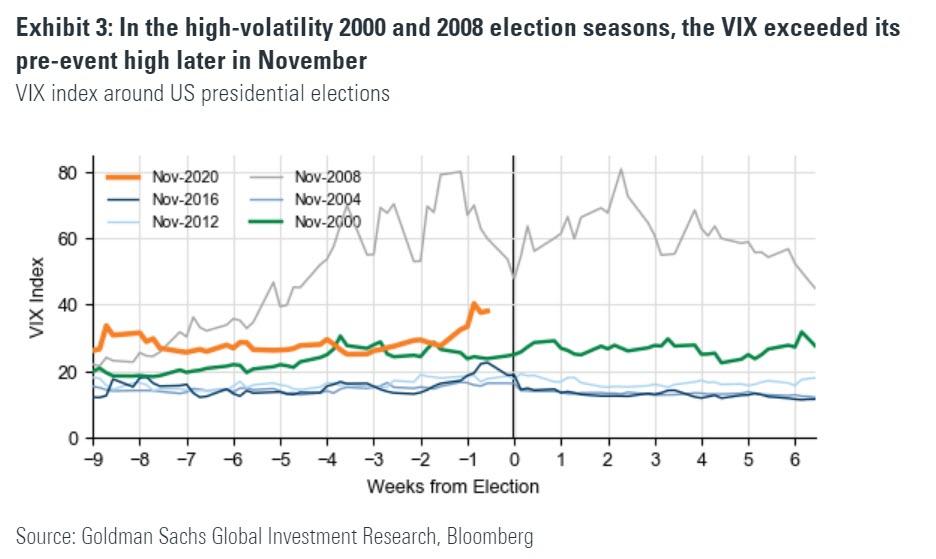
The VIX’s 80% and 15-point premiums to exponentially weighted realized vol have been rare historically, and one way these can return to normal would be for a clear election result to drive implied volatility much lower. However,

(1) close races in key states that will be accepting mail-in ballots that arrive later than Election Day, reducing the odds that results will be known this week, and

(2) the high volatility environment driven by COVID-19

…both threaten to thwart rapid post-election vol normalization.

In the high-volatility election periods of 2000 and 2008, the VIX exceeded its pre-election peak later in November.

via ZeroHedge News https://ift.tt/3jRbPp5 Tyler Durden