Non-biting male mosquitoes genetically modified to contain a self-limiting lethal gene are finally set to be released by on three islands in the Florida Keys. When the insect control company Oxitec’s male Aedes aegypti mosquitoes mate with wild females, they will pass along a gene that overproduces a protein that kills larvae before they mature into biting disease-carrying adults.
Aedes aegypti mosquitoes often carry Zika, Chikungunya, and dengue fever viruses. Last year 47 cases of locally acquired dengue fever were reported in the Florida Keys. So Oxitec’s creations could be a boon to public health.
Yet it has taken the company 10 years of fending off activist challenges and wending its way through a thicket of state and federal bureaucracies to get permission to launch this project. Some overwrought activists, referring to the 1993 movie in which cloned dinosaurs wreak havoc on an isolated island, have denounced the plan as a “Jurassic Park experiment.” But in its May 2020 risk assessment, the U.S. Environmental Protection Agency “determined that there will be no unreasonable adverse effects for humans as a result of the experimental permit to release Ae. aegypti OX5034 male mosquitoes.”
The plan is to allow about 12,000 of the modified Aedes aegypti males to hatch each week for 12 weeks from six locations: two on Cudjoe Key, one on Ramrod Key, and three on Vaca Key. That species makes up about 4 percent of the Keys’ mosquito population but is responsible for virtually all the mosquito-borne diseases transmitted to human beings there.
Prior studies in Brazil, the Cayman Islands, Malaysia, and Panama have found that the technology works, reducing the targeted disease-carrying mosquito populations by as much as 95 percent. And since the larvae hatched with the gene all die before they mature, the modified mosquitoes do not persist in the wild. Oxitec’s mosquitoes will not transform the Keys into an out-of-control Jurassic Park, but they will make a walk in the park there safer and more pleasant.
from Latest – Reason.com https://ift.tt/2QyYCJf
via IFTTT
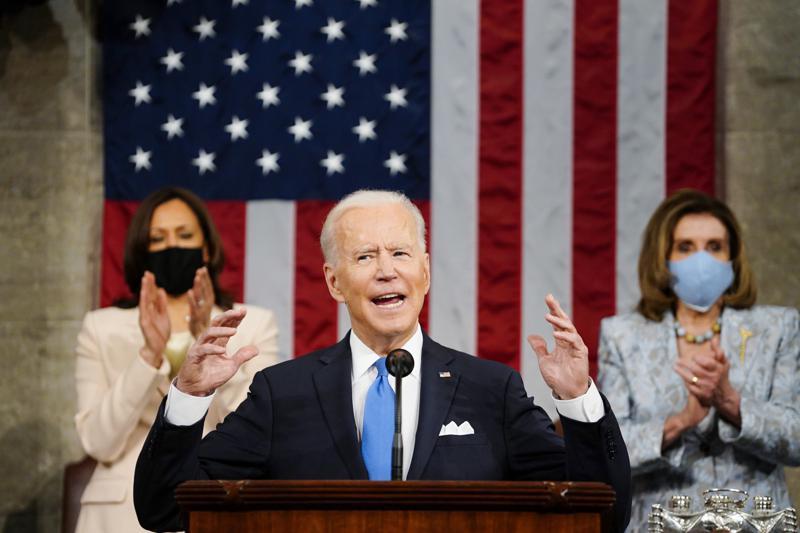
34 million fewer people watched Joe Biden’s speech last night compared to Donald Trump’s first State of the Union address.
Ratings show that 11.6 million watched Biden’s speech compared to 45.6 million who watched Trump’s first address to Congress in 2018.
The lowest number of Americans who watched a Trump State of the Union throughout his term in office was 37 million.
Biden barely managed to beat the viewership for this year’s Oscars (9.8 million), even though that set a new record low for the Academy Awards
Quick follow up: Biden’s numbers are going to rise slightly as cable news and live streaming ratings are added and will probably finalize around 15-17M, which is still less than half of Trump’s worst viewership.
Biden’s speeches and public appearances have become notorious for their poor ratings and lack of engagement, unless you’re talking about the overwhelming number of people who downvote videos on the official White House YouTube channel.
As a reminder, Biden officially received 81 million votes during the presidential election, the most a presidential candidate has ever received and over 11 million more than Barack Obama achieved in 2008.
Respondents to the announcement of the viewing figures expressed their surprise, given Biden’s overwhelming ‘popularity’ in 2020.
“Most popular president of all time,” commented one.
“Just wait, Dominion is finding more viewers as we tweet,” joked another.
“Biden’s speech to Congress was not only boring, but the chamber was mostly empty. Even the Democrats who showed up couldn’t stay awake,” remarked another.
As at most law schools, the faculty at University of Toledo leans strongly to the left. Nevertheless, in an admirable display of ideological ecumenicism, the law school faculty overwhelmingly nominated their conservative colleague, Lee Strang for the university’s second annual Inclusive Excellence Award, and the university announced that he would receive the award this year. According to the university’s chief diversity officer:
The individuals who nominated Strang for the award recognized his conservative point of view as a minority in academia and a benefit to legal debate.
One nomination read: “Professor Strang always welcomes students to present and defend their perspectives while respectfully challenging them to consider points of view contrary to their starting point. I believe the academy at its best is a place where truth claims and viewpoints can contend with one another based on their own merits and scholars from all life experiences have the opportunity to wrestle with the arguments of others as well as their own assumptions.”
Another wrote, “As much as any demographic measure of diversity, the diversity of thought and perspective is at the very heart of our identity as an academic institution.”
It is for these reasons Strang was recognized with the 2021 award.
Unfortunately, you can guess what happened next. Giving the award to Strang created an uproar among students, who started an online petition to revoke the award. In the course of doing so, students dug up an article from 2003 in which Strang argued in favor of discouraging homosexuality. Strang, for his part, noted that he no longer would make the same argument today, and that he had indeed long since successfully asked the publisher to pull the article from its website.
What Strang wrote in 2003 should be neither here nor there. He was being awarded for his commitment to “inclusive excellence” while working at Toledo, and no one has suggested that he said or did anything to make anyone feel unwelcome during his tenure at the law school.
One suspects that most of the objecting students and others were crying foul because the university actually lived up to its commitment to “inclusive excellence” by giving an award to a white man with conservative views, a professor whom his liberal colleagues found expertly facilitated classroom dialogue between people of opposing political point of views. Surely that comes within a literal definition of “inclusive excellence.”
But in fact, the common understanding of “inclusive excellence” in the university context is that concern for inclusivity is limited to designated minority groups, with the goal of making them feel comfortable; a white male Christian professor who devotes classroom times to making sure viewpoints on all sides are represented and debated not only doesn’t fit that ideal, to a significant extent he contradicts it. This is especially true if one believes, as many do, that disagree with woke orthodoxy makes people feel “unsafe” and may even constitute “violence.” And “excellence” in the common understanding, when prefaced by inclusive, does not mean a commitment to academic excellence, it means “we are excellent in our inclusivity.” This in turn precludes conservative voices who dissent from the progressive version of inclusivity described above.
So the university was faced with a choice: (1) live up to the literal, plain meaning of inclusive excellence, and defend the award to Strang because diversity of opinion is crucial to the academic enterprise, and a professor who is able to facilitate difficult, ideologically laden discussions is a boon to the university; or (2) backtrack, and suggest the award was a mistake.
Again, you can guess the rest. The university’s diversity officer in essence promised reforms to ensure that such a mistake won’t recur:
We have learned that more work is needed on our part to inform our campus community and our alumni of this recognition opportunity and to seek their nominations. Our UToledo alumni is an audience we had not actively engaged for nominations and will do so in the years ahead. In addition, we will broaden the review committee beyond the Office of Diversity and Inclusion to be sure we have diverse perspectives during the selection process for this honor.
In these first two years of the awards in 2019 and 2021, the recipients have been selected based exclusively on the nominations submitted. We are working to revise the nomination and review process to be sure we take a comprehensive approach in selecting the recipients to ensure their bodies of work represent our diversity and inclusion values.
As an institution we are committed to promoting a campus environment where every member of the UToledo community feels included and respected. I will continue to do my best to acknowledge and facilitate respectful discussions that enable us all to grow and do better.
That said, at least University of Toledo has not completely embarrassed itself. Near as I can tell, it has not announced a decision to revoke the award.
from Latest – Reason.com https://ift.tt/3e23tex
via IFTTT
Non-biting male mosquitoes genetically modified to contain a self-limiting lethal gene are finally set to be released by on three islands in the Florida Keys. When the insect control company Oxitec’s male Aedes aegypti mosquitoes mate with wild females, they will pass along a gene that overproduces a protein that kills larvae before they mature into biting disease-carrying adults.
Aedes aegypti mosquitoes often carry Zika, Chikungunya, and dengue fever viruses. Last year 47 cases of locally acquired dengue fever were reported in the Florida Keys. So Oxitec’s creations could be a boon to public health.
Yet it has taken the company 10 years of fending off activist challenges and wending its way through a thicket of state and federal bureaucracies to get permission to launch this project. Some overwrought activists, referring to the 1993 movie in which cloned dinosaurs wreak havoc on an isolated island, have denounced the plan as a “Jurassic Park experiment.” But in its May 2020 risk assessment, the U.S. Environmental Protection Agency “determined that there will be no unreasonable adverse effects for humans as a result of the experimental permit to release Ae. aegypti OX5034 male mosquitoes.”
The plan is to allow about 12,000 of the modified Aedes aegypti males to hatch each week for 12 weeks from six locations: two on Cudjoe Key, one on Ramrod Key, and three on Vaca Key. That species makes up about 4 percent of the Keys’ mosquito population but is responsible for virtually all the mosquito-borne diseases transmitted to human beings there.
Prior studies in Brazil, the Cayman Islands, Malaysia, and Panama have found that the technology works, reducing the targeted disease-carrying mosquito populations by as much as 95 percent. And since the larvae hatched with the gene all die before they mature, the modified mosquitoes do not persist in the wild. Oxitec’s mosquitoes will not transform the Keys into an out-of-control Jurassic Park, but they will make a walk in the park there safer and more pleasant.
from Latest – Reason.com https://ift.tt/2QyYCJf
via IFTTT
For the past few years, the University of Toledo has given an “Inclusive Excellence Award.” The purpose of the award is “to recognize the faculty, staff and departments on our campus who have put in the work implementing the University’s Strategic Plan for Diversity and Inclusion to make our campus a more diverse and inclusive place to study, work and grow.” This past spring, the University’s Office of Diversity and Inclusion, “reached out to the campus community for nominations this spring.” Alas, that strategy backfired. Members of the university community nominated Professor Lee Strang. Strang, a conservative white male, was given the award. And then critics petitioned to revoke the award. Thankfully, the University did not rescind the award. But the University altered the process to make it harder for people like Lee to win again in the future. The academy is entering a very precarious stage. We may soon go beyond a point of no return.
Lee Strang is the John W. Stoepler Professor at the University of Toledo College of Law. Lee is a brilliant scholar. His new book on originalism and natural law is a must-read. Moreover, Lee is one of the nicest people I have met in academia. Truly. He is warm, compassionate, and cares for you as a person. He models the highest attributes of what academics should aspire to.
Moreover, Lee is a diamond in the rough. As best as I can tell, he is the only conservative public law scholar on the faculty. In the fall of 2019, the campus Federalist Society chapter invited me to do a debate on executive power. Lee volunteered to debate me. And he played a brilliant devil’s advocate. He posed really tough questions to highlight the weaknesses of my position. In this video, Lee comes on around 35:40 mark.
In every sense, Lee brings diversity to the campus–diversity of viewpoint. He is one of the few allies that conservative law students have. At this public institution, Lee deserves every possible recognition.
An overwhelming number of people nominated Lee for the Inclusive Excellence award. One person “focused on [Lee’s] presence in the classroom where he ‘enjoys and respects a good healthy debate.'” Those who nominated Lee “recognized his conservative point of view as a minority in academia and a benefit to legal debate.” Another person wrote, “Professor Strang always welcomes students to present and defend their perspectives while respectfully challenging them to consider points of view contrary to their starting point. I believe the academy at its best is a place where truth claims and viewpoints can contend with one another based on their own merits and scholars from all life experiences have the opportunity to wrestle with the arguments of others as well as their own assumptions.” A third nomination read, “As much as any demographic measure of diversity, the diversity of thought and perspective is at the very heart of our identity as an academic institution.” You can tell that Lee is rightly cherished by the Toledo community.
Given these recommendations, the University awarded Lee the Inclusive Excellence Award on April 23. Yet, there was a backlash. He simply wasn’t diverse enough. Or to state it differently, Lee didn’t bring the right type of diversity to campus.
One anonymous student told the press that Strang’s “views are not exactly in tune with, I guess you can say, modern diversity and views most professors would hold.” This statement is a self-contradiction. If Lee shared the views “most professors” held, then his views wouldn’t be diverse. He would be conforming. Lee is diverse precisely because he doesn’t hold the same views as the majority of professors. And indeed, the University rewarded Lee for holding those views. Alas, the student gave away the game. Lee is not in tune with “modern diversity.” An undergraduate political science student offered a similar refrain: “Do you need diversity of opinion? Yes. Particularly in a learning setting. But not at the expense of other groups and other diverse communities.” Under this view, diverse ideas cannot exist if they offend diverse communities. The only way to avoid offending diverse communities is through orthodox thought. The SBA president had similar thoughts: “There are some students who are concerned Professor Strang does not represent diversity and inclusion.” And if orthodox students who share the same views agree, then Lee cannot be diverse.
Modern diversity does not mean diversity of ideas. In modern-speak, the words “diversity” have been sapped of any actual meaning. Indeed, I often think of “diversity.” as a part of speech, like a comma or a period. Every sentence must include the word “diversity” at least once. And there is a bonus to using variants of “diversity” multiple times in one sentence. Consider a typical missive: “Diversity is an essential way to bring more diverse people to our community to obtain the educational benefits of diversity.” That sentence, which I made up, conveys zero actual substance. It is nonsense. Words are being used to coverup an ideological commitment to provide benefits to certain minority groups. No more, no less. I no longer care to indulge in these pretenses. I blame Justice Powell. His inane Bakke decision has created a half-century long quixotic quest to wedge every progressive goal in the ambit of “diversity.” Diversity is like “infrastructure.” It now means everything, so it means nothing at all.
Ultimately, nearly 1,000 people signed a petition calling for Strang’s award to be rescinded. And on Monday, April 26, The Office of Diversity and Inclusion updated the press release with this disclaimer:
The intent of this award is to recognize those at UToledo who best represent our diversity and inclusion values and the feedback we’ve received on the nomination and review process is important as we continue to advance this new recognition into the future.
We have learned that more work is needed on our part to inform our campus community and our alumni of this recognition opportunity and to seek their nominations. Our UToledo alumni is an audience we had not actively engaged for nominations and will do so in the years ahead. In addition, we will broaden the review committee beyond the Office of Diversity and Inclusion to be sure we have diverse perspectives during the selection process for this honor.
In these first two years of the awards in 2019 and 2021, the recipients have been selected based exclusively on the nominations submitted. We are working to revise the nomination and review process to be sure we take a comprehensive approach in selecting the recipients to ensure their bodies of work represent our diversity and inclusion values.
Let me translate that newspeak for you. The current process allowed a white male conservative to win that award. So that process must be destroyed. A new process will be adopted to ensure that white male conservatives are not allowed to win.
Lee offered a measured statement to the press. He approached this issue with charity and grace, like he does with everything:
Now as a professor, Mr. Strang said he promotes diverse viewpoints among his students, and wants to prepare his classes of future lawyers for all of the opposing views that come up in the field.
“When I’m teaching students now, my goal is to help students be members of the legal profession,” he said. “The legal profession has all kinds of people, clients come in all different shapes and sizes. … So as a law professor, one of the things I try to do is help my students be prepared for the real life of legal practice, which includes interacting with people of all different views.”
Mr. Strang admitted he was surprised he won the award, and even pondered whether he should accept it. But he ultimately decided to accept it, arguing that diversity of thought, and in turn diversity of political opinion, are underrepresented sections of diversity on college campuses across the country.
“I thought to myself, ‘They had a selection process, people nominated me,'” Mr. Strang said. “And this is a statement about one aspect in diversity, so I thought, I’ve got to take it, because if I say no, then I’m participating in the university not being able to recognize this valuable part of diversity.
“When you look at the university’s policy, it seems to indicate that all of those are valuable parts of diversity,” Mr. Strang added, referencing the school’s mission statement on diversity, which is ‘We embrace diversity of pedagogy, religion, age, ability, sexual orientation, gender identity/expression and political affiliation.
“[At UT], like most universities, there’s not a lot of diversity of political thought, or religious views. And so I think the university was trying to say ‘That’s an underrepresented part of our university,'” he said.
We should all emulate Lee Strang. Alas the climate among students at Toledo has become increasingly hostile.
Last month, I wrote about the precarious state at Georgetown University Law Center. The fixation on “diversity, equity, and inclusion” threatens to undermine the entire academic enterprise. I explained:
“Diversity” does not mean diversity of thought. This fourth leg would mandate conformity of thought at every stage of the tenure process. Professors will no longer have the autonomy to challenge dogmas and pursue truth and knowledge as they see it. There will be lines that cannot be crossed. “Equity” does not refer to equality in the sense that people ought to be treated equally. Rather, anti-racism requires unequal treatment to address inequality. Professors who disagree with that dogma, and view anti-racism as racist, will be excoriated. And “inclusion” requires the exclusion of ideas inconsistent with diversity and equity.
Later, Georgetown Law Professor Lama Abu Odeh wrote about the Maoist cultural revolution at Georgetown, in the guise of diversity, equity, and inclusion. One anecdote stuck out:
When I protested to the faculty diversity trainer, a law professor from the West Coast, that the real minority at Georgetown Law are the conservative students who have been telling me about how isolated and beleaguered they feel, especially with the flood of emails from the administration when Trump was in office denouncing racism, without defining what it is or indeed giving a single account of a racist incident, she quipped, “They don’t have to be at Georgetown. They can go to Notre Dame!”
Perhaps you may think this great awokening is limited to elite institutions like Georgetown. Not even close. The latest episode has arose in the heart of the rust belt. And it affects one of my favorite members of the academy.
from Latest – Reason.com https://ift.tt/3ezD7Q8
via IFTTT
The Arizona legislature passed a bill yesterday that would make the state the fourth in the country to require a criminal conviction before law enforcement can take property under civil asset forfeiture.
By a vote of 29–1, the Arizona Senate passed House Bill 2810, which would require police and prosecutors to obtain a conviction in most civil forfeiture cases. The bill passed the Arizona House in February, and it now heads to Republican Gov. Doug Ducey’s desk for his signature.
Among other provisions, the legislation will also require the government to prove property was being used in connection to illegal activity, strengthen notice requirements when property is seized, and ban the use of roadside waivers that police use to get people to sign over their property.
Under typical civil asset forfeiture laws, law enforcement can seize property suspected of being connected to criminal activity, even if the owner hasn’t been charged or convicted of a crime.
But Arizona is now on the verge of joining three other states—New Mexico, Nebraska, and North Carolina—that require criminal convictions before property can be forfeited. More than half of all states have passed some form of civil asset forfeiture reform over the past decade because of civil liberties concerns.
Law enforcement groups argue that asset forfeiture helps disrupt drug trafficking and organized crime by targeting their ill-gotten proceeds.
But civil liberties advocates have been uncovering abusive cases of asset forfeiture for decades, with police seizing innocent people’s property on the flimsiest of suspicions. Groups like the Institute for Justice, a libertarian-leaning public interest law firm, say there are too few due process protections for property owners and too many perverse incentives for police, whose budgets often padded with forfeiture revenues.
“Civil forfeiture threatens everyone’s property and due process rights,” says Paul Avelar, managing attorney for the Institute for Justice’s Arizona office. “The government can take your car, your home, and your life savings without ever charging you with, much less convicting you of, a crime. HB 2810 makes important reforms to Arizona’s forfeiture laws to protect innocent property owners from government abuse.”
The Institute for Justice filed an appeal earlier this month in the Arizona Court of Appeals on behalf of Jerry Johnson, a North Carolina man fighting to get back $39,500 in cash after police in Phoenix, Arizona, seized the money from him at an airport on suspicion that it was drug money. Johnson was never charged with a crime.
Although Arizona enacted reforms in 2017 by the state legislature raising the standard of evidence in forfeiture cases, the judge in Johnson’s case ruled that because of circumstantial evidence offered by prosecutors—an old criminal record, buying a last-minute ticket with a quick turnaround, his nervous appearance in the airport, having three cell phones, and the alleged odor of marijuana on the cash—Johnson hadn’t established a legitimate interest in the cash.
“Jerry did nothing wrong by flying to Phoenix with $39,500 in cash, yet law enforcement is trying to take his money forever without ever charging him with a crime,”Avelar says. “His case is a clear example of how civil forfeiture is abusive and why reforms like HB 2810 are so desperately needed in Arizona.”
In another case, Tucson handyman Kevin McBride was stranded when police seized his Jeep using civil forfeiture laws and demanded $1,900 to return it. After the Arizona-based Goldwater Institute threatened to sue, McBride’s Jeep was returned.
from Latest – Reason.com https://ift.tt/3vAATqV
via IFTTT
Credit Suisse Board Weighs Sacking One Of Its Own As Shareholders Revolt
Credit Suisse has already fired a raft of senior-level employees (including head of risk-management Lara Warner) as CS scrambles to reform its risk-management protocols following one of the worst quarters in recent memory, where the parallel implosions of pioneering trade finance firm Greensill Capital and family office Archegos Capital Management saddled the bank with billions in losses.
But many of the bank’s shareholders feel that more heads must roll, which is why a campaign to oust the CS director tasked with overseeing the board’s risk committee is reportedly on the cusp of success.
According to the FT, Credit Suisse’s board, wary of a public confrontation at the bank’s upcoming annual meeting, is considering removing Andreas Gottschling, the head of the bank’s risk committee, by voting to remove him from the board in private.
The board is expected to meet Thursday afternoon ahead of the AGM, and the FT reports that the board members have been apprised of growing dissent. If the board finds there’s enough support to oust Gottschling, they will announce that news Thursday before the meeting on Friday.
To be sure, Gottschling still has some internal support. His backers believe that he is being scapegoated by investors eager to revive the bank’s flagging shares, which are down 25% YTD.
“There is a strong feeling that while they understand shareholders want to express dissatisfaction, they are going after the wrong person,” said a person briefed on the board’s discussions.
Still, many directors remain baffled by the decisions made within the investment bank and the bank’s prime brokerage, which extended absurd levels of credit to Archegos. Others feel that Eric Varvel, the CEO of the bank’s US operations, should be ousted instead.
Some people on the board have also lost faith in Eric Varvel, who was stripped of his role managing Credit Suisse’s $500bn asset management business after it was forced to suspend $10bn of supply-chain finance funds linked to controversial finance firm Greensill last month.
However, Varvel has retained his position as chief executive of the bank’s US operations and chair of its investment bank.
Gottschling’s opponents include US investment manager Harris Associates and Norway’s oil fund, both top-10 shareholders. The 53-year-old German has served as chair of the risk committee since 2018, earning a $1m annual fee. Notably, among the two influential proxy advisers, only Glass Lewis recommended that shareholders vote against Gottschling; its rival ISS didn’t.
For the past few years, the University of Toledo has given an “Inclusive Excellence Award.” The purpose of the award is “to recognize the faculty, staff and departments on our campus who have put in the work implementing the University’s Strategic Plan for Diversity and Inclusion to make our campus a more diverse and inclusive place to study, work and grow.” This past spring, the University’s Office of Diversity and Inclusion, “reached out to the campus community for nominations this spring.” Alas, that strategy backfired. Members of the university community nominated Professor Lee Strang. Strang, a conservative white male, was given the award. And then critics petitioned to revoke the award. Thankfully, the University did not rescind the award. But the University altered the process to make it harder for people like Lee to win again in the future. The academy is entering a very precarious stage. We may soon go beyond a point of no return.
Lee Strang is the John W. Stoepler Professor at the University of Toledo College of Law. Lee is a brilliant scholar. His new book on originalism and natural law is a must-read. Moreover, Lee is one of the nicest people I have met in academia. Truly. He is warm, compassionate, and cares for you as a person. He models the highest attributes of what academics should aspire to.
Moreover, Lee is a diamond in the rough. As best as I can tell, he is the only conservative public law scholar on the faculty. In the fall of 2019, the campus Federalist Society chapter invited me to do a debate on executive power. Lee volunteered to debate me. And he played a brilliant devil’s advocate. He posed really tough questions to highlight the weaknesses of my position. In this video, Lee comes on around 35:40 mark.
In every sense, Lee brings diversity to the campus–diversity of viewpoint. He is one of the few allies that conservative law students have. At this public institution, Lee deserves every possible recognition.
An overwhelming number of people nominated Lee for the Inclusive Excellence award. One person “focused on [Lee’s] presence in the classroom where he ‘enjoys and respects a good healthy debate.'” Those who nominated Lee “recognized his conservative point of view as a minority in academia and a benefit to legal debate.” Another person wrote, “Professor Strang always welcomes students to present and defend their perspectives while respectfully challenging them to consider points of view contrary to their starting point. I believe the academy at its best is a place where truth claims and viewpoints can contend with one another based on their own merits and scholars from all life experiences have the opportunity to wrestle with the arguments of others as well as their own assumptions.” A third nomination read, “As much as any demographic measure of diversity, the diversity of thought and perspective is at the very heart of our identity as an academic institution.” You can tell that Lee is rightly cherished by the Toledo community.
Given these recommendations, the University awarded Lee the Inclusive Excellence Award on April 23. Yet, there was a backlash. He simply wasn’t diverse enough. Or to state it differently, Lee didn’t bring the right type of diversity to campus.
One anonymous student told the press that Strang’s “views are not exactly in tune with, I guess you can say, modern diversity and views most professors would hold.” This statement is a self-contradiction. If Lee shared the views “most professors” held, then his views wouldn’t be diverse. He would be conforming. Lee is diverse precisely because he doesn’t hold the same views as the majority of professors. And indeed, the University rewarded Lee for holding those views. Alas, the student gave away the game. Lee is not in tune with “modern diversity.” An undergraduate political science student offered a similar refrain: “Do you need diversity of opinion? Yes. Particularly in a learning setting. But not at the expense of other groups and other diverse communities.” Under this view, diverse ideas cannot exist if they offend diverse communities. The only way to avoid offending diverse communities is through orthodox thought. The SBA president had similar thoughts: “There are some students who are concerned Professor Strang does not represent diversity and inclusion.” And if orthodox students who share the same views agree, then Lee cannot be diverse.
Modern diversity does not mean diversity of ideas. In modern-speak, the words “diversity” have been sapped of any actual meaning. Indeed, I often think of “diversity.” as a part of speech, like a comma or a period. Every sentence must include the word “diversity” at least once. And there is a bonus to using variants of “diversity” multiple times in one sentence. Consider a typical missive: “Diversity is an essential way to bring more diverse people to our community to obtain the educational benefits of diversity.” That sentence, which I made up, conveys zero actual substance. It is nonsense. Words are being used to coverup an ideological commitment to provide benefits to certain minority groups. No more, no less. I no longer care to indulge in these pretenses. I blame Justice Powell. His inane Bakke decision has created a half-century long quixotic quest to wedge every progressive goal in the ambit of “diversity.” Diversity is like “infrastructure.” It now means everything, so it means nothing at all.
Ultimately, nearly 1,000 people signed a petition calling for Strang’s award to be rescinded. And on Monday, April 26, The Office of Diversity and Inclusion updated the press release with this disclaimer:
The intent of this award is to recognize those at UToledo who best represent our diversity and inclusion values and the feedback we’ve received on the nomination and review process is important as we continue to advance this new recognition into the future.
We have learned that more work is needed on our part to inform our campus community and our alumni of this recognition opportunity and to seek their nominations. Our UToledo alumni is an audience we had not actively engaged for nominations and will do so in the years ahead. In addition, we will broaden the review committee beyond the Office of Diversity and Inclusion to be sure we have diverse perspectives during the selection process for this honor.
In these first two years of the awards in 2019 and 2021, the recipients have been selected based exclusively on the nominations submitted. We are working to revise the nomination and review process to be sure we take a comprehensive approach in selecting the recipients to ensure their bodies of work represent our diversity and inclusion values.
Let me translate that newspeak for you. The current process allowed a white male conservative to win that award. So that process must be destroyed. A new process will be adopted to ensure that white male conservatives are not allowed to win.
Lee offered a measured statement to the press. He approached this issue with charity and grace, like he does with everything:
Now as a professor, Mr. Strang said he promotes diverse viewpoints among his students, and wants to prepare his classes of future lawyers for all of the opposing views that come up in the field.
“When I’m teaching students now, my goal is to help students be members of the legal profession,” he said. “The legal profession has all kinds of people, clients come in all different shapes and sizes. … So as a law professor, one of the things I try to do is help my students be prepared for the real life of legal practice, which includes interacting with people of all different views.”
Mr. Strang admitted he was surprised he won the award, and even pondered whether he should accept it. But he ultimately decided to accept it, arguing that diversity of thought, and in turn diversity of political opinion, are underrepresented sections of diversity on college campuses across the country.
“I thought to myself, ‘They had a selection process, people nominated me,'” Mr. Strang said. “And this is a statement about one aspect in diversity, so I thought, I’ve got to take it, because if I say no, then I’m participating in the university not being able to recognize this valuable part of diversity.
“When you look at the university’s policy, it seems to indicate that all of those are valuable parts of diversity,” Mr. Strang added, referencing the school’s mission statement on diversity, which is ‘We embrace diversity of pedagogy, religion, age, ability, sexual orientation, gender identity/expression and political affiliation.
“[At UT], like most universities, there’s not a lot of diversity of political thought, or religious views. And so I think the university was trying to say ‘That’s an underrepresented part of our university,'” he said.
We should all emulate Lee Strang. Alas the climate among students at Toledo has become increasingly hostile.
Last month, I wrote about the precarious state at Georgetown University Law Center. The fixation on “diversity, equity, and inclusion” threatens to undermine the entire academic enterprise. I explained:
“Diversity” does not mean diversity of thought. This fourth leg would mandate conformity of thought at every stage of the tenure process. Professors will no longer have the autonomy to challenge dogmas and pursue truth and knowledge as they see it. There will be lines that cannot be crossed. “Equity” does not refer to equality in the sense that people ought to be treated equally. Rather, anti-racism requires unequal treatment to address inequality. Professors who disagree with that dogma, and view anti-racism as racist, will be excoriated. And “inclusion” requires the exclusion of ideas inconsistent with diversity and equity.
Later, Georgetown Law Professor Lama Abu Odeh wrote about the Maoist cultural revolution at Georgetown, in the guise of diversity, equity, and inclusion. One anecdote stuck out:
When I protested to the faculty diversity trainer, a law professor from the West Coast, that the real minority at Georgetown Law are the conservative students who have been telling me about how isolated and beleaguered they feel, especially with the flood of emails from the administration when Trump was in office denouncing racism, without defining what it is or indeed giving a single account of a racist incident, she quipped, “They don’t have to be at Georgetown. They can go to Notre Dame!”
Perhaps you may think this great awokening is limited to elite institutions like Georgetown. Not even close. The latest episode has arose in the heart of the rust belt. And it affects one of my favorite members of the academy.
from Latest – Reason.com https://ift.tt/3ezD7Q8
via IFTTT
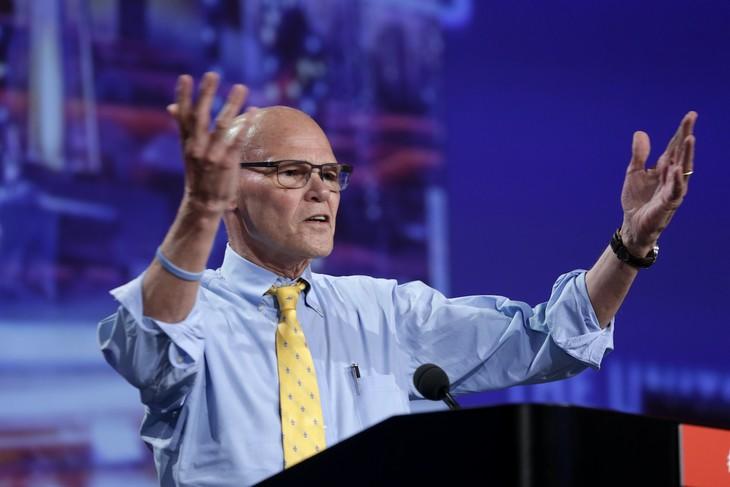
James Carville was considered a brilliant political pro in his day. He got Bill Clinton elected twice – the second time after the president was impeached.
His famous line, “It’s the economy, stupid” – along with the Ross Perot candidacy – got Clinton elected the first time. Perhaps because he’s largely been out of politics for a while, he sees the political landscape with a clarity lacking in many contemporary Democratic professionals.
Make no mistake, Carville is a Democratic partisan who enjoys nothing more than savaging the opposition. But because he can see where the Democratic Party is going more clearly than most, he’s worried.
In an interview with Vox, ostensibly about Biden’s first 100 days, Carville commits what amounts to Democratic heresy in denouncing “wokeness.”
“Wokeness is a problem,” he told me, “and we all know it.” According to Carville, Democrats are in power for now, but they also only narrowly defeated Donald Trump, “a world-historical buffoon,” and they lost congressional seats and failed to pick up state legislatures. The reason is simple: They’ve got a “messaging problem.”
That “messaging problem” is that Democratic issues and ideas do not resonate with a majority of Americans. Nor does his description of Donald Trump. It’s hard to believe 70 million people voted for a “buffoon.”
This has been the problem with the Democratic Party since before Clinton: their failure to understand how ordinary Americans think and what motivates them.
Carville: Wokeness is a problem and everyone knows it. It’s hard to talk to anybody today – and I talk to lots of people in the Democratic Party – who doesn’t say this. But they don’t want to say it out loud.
Vox Reporter Sean Illing: Why not?
Carville: Because they’ll get clobbered or canceled. And look, part of the problem is that lots of Democrats will say that we have to listen to everybody and we have to include every perspective, or that we don’t have to run a ruthless messaging campaign. Well, you kinda do. It really matters.
I always tell people that we’ve got to stop speaking Hebrew and start speaking Yiddish. We have to speak the way regular people speak, the way voters speak. It ain’t complicated. That’s how you connect and persuade. And we have to stop allowing ourselves to be defined from the outside.
All politicians, right and left, have been cowed by the mob. Corporations, non-profits, unions — every American institution has been co-opted by internet ruffians and screeching radicals.
It doesn’t help that the Democrats are seen as a party of coastal elites.
Illing: I hear versions of this argument about language and perception all the time, James. It’s an old problem. What’s the solution?
Carville: That’s why I’m doing this interview. Lots of smart people are going to read it, and hopefully they can figure out that which I can’t. But if you’re asking me, I think it’s because large parts of the country view us as an urban, coastal, arrogant party, and a lot gets passed through that filter. That’s a real thing. I don’t give a damn what anyone thinks about it — it’s a real phenomenon, and it’s damaging to the party brand.
I know from communicating with a lot of professionals that Carville is not alone in his thinking. But all are equally at sea about what to do about it. You can’t suddenly disinvent the internet. And telling some of these people to shut up is akin to professional suicide.
The mob may be a mindless group of ignorant people but there are those who know exactly what they’re doing and have been learning how to manipulate it. Rep. Ocasio-Cortez is one of them. Patrisse Cullors of Black Lives Matter is another. They have developed a terminology of victimhood to describe their “oppression” that resonates far and wide.
The Arizona legislature passed a bill yesterday that would make the state the fourth in the country to require a criminal conviction before law enforcement can take property under civil asset forfeiture.
By a vote of 29–1, the Arizona Senate passed House Bill 2810, which would require police and prosecutors to obtain a conviction in most civil forfeiture cases. The bill passed the Arizona House in February, and it now heads to Republican Gov. Doug Ducey’s desk for his signature.
Among other provisions, the legislation will also require the government to prove property was being used in connection to illegal activity, strengthen notice requirements when property is seized, and ban the use of roadside waivers that police use to get people to sign over their property.
Under typical civil asset forfeiture laws, law enforcement can seize property suspected of being connected to criminal activity, even if the owner hasn’t been charged or convicted of a crime.
But Arizona is now on the verge of joining three other states—New Mexico, Nebraska, and North Carolina—that require criminal convictions before property can be forfeited. More than half of all states have passed some form of civil asset forfeiture reform over the past decade because of civil liberties concerns.
Law enforcement groups argue that asset forfeiture helps disrupt drug trafficking and organized crime by targeting their ill-gotten proceeds.
But civil liberties advocates have been uncovering abusive cases of asset forfeiture for decades, with police seizing innocent people’s property on the flimsiest of suspicions. Groups like the Institute for Justice, a libertarian-leaning public interest law firm, say there are too few due process protections for property owners and too many perverse incentives for police, whose budgets often padded with forfeiture revenues.
“Civil forfeiture threatens everyone’s property and due process rights,” says Paul Avelar, managing attorney for the Institute for Justice’s Arizona office. “The government can take your car, your home, and your life savings without ever charging you with, much less convicting you of, a crime. HB 2810 makes important reforms to Arizona’s forfeiture laws to protect innocent property owners from government abuse.”
The Institute for Justice filed an appeal earlier this month in the Arizona Court of Appeals on behalf of Jerry Johnson, a North Carolina man fighting to get back $39,500 in cash after police in Phoenix, Arizona, seized the money from him at an airport on suspicion that it was drug money. Johnson was never charged with a crime.
Although Arizona enacted reforms in 2017 by the state legislature raising the standard of evidence in forfeiture cases, the judge in Johnson’s case ruled that because of circumstantial evidence offered by prosecutors—an old criminal record, buying a last-minute ticket with a quick turnaround, his nervous appearance in the airport, having three cell phones, and the alleged odor of marijuana on the cash—Johnson hadn’t established a legitimate interest in the cash.
“Jerry did nothing wrong by flying to Phoenix with $39,500 in cash, yet law enforcement is trying to take his money forever without ever charging him with a crime,”Avelar says. “His case is a clear example of how civil forfeiture is abusive and why reforms like HB 2810 are so desperately needed in Arizona.”
In another case, Tucson handyman Kevin McBride was stranded when police seized his Jeep using civil forfeiture laws and demanded $1,900 to return it. After the Arizona-based Goldwater Institute threatened to sue, McBride’s Jeep was returned.
from Latest – Reason.com https://ift.tt/3vAATqV
via IFTTT