Whitmer Makes Michigan First State To Tie Reopening To Vaccination Rates

Whitmer Makes Michigan First State To Tie Reopening To Vaccination Rates

Despite the federal government’s assurances that it wouldn’t require individuals to accept the COVID-19 vaccine with the force of law, states, cities and the private sector are finding new ways to “incentivize” vaccination, especially as waning demand is leaving states with growing piles of unwanted COVID-19 jabs – and the Biden Administration with egg on its face.
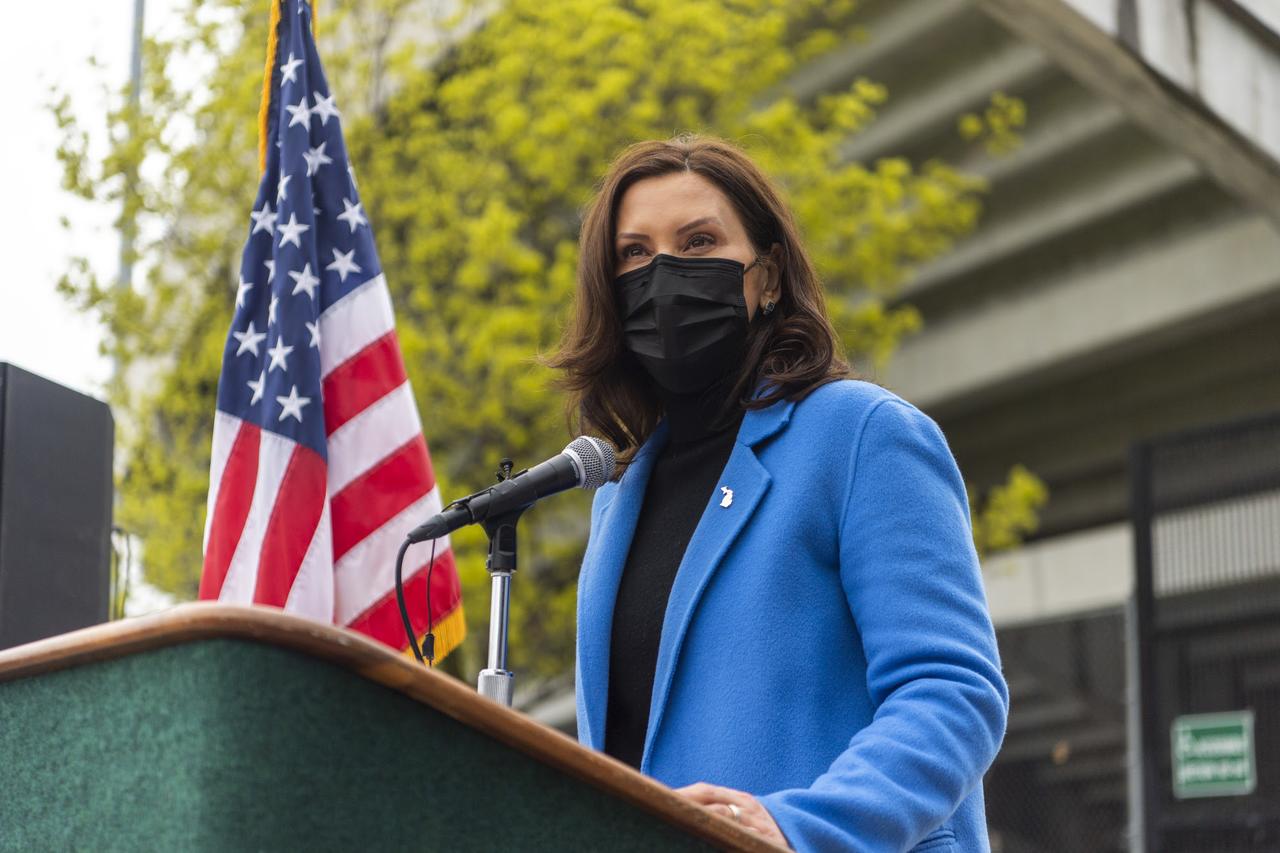
And while NYC Mayor Bill de Blasio was announcing on MSNBC’s “Morning Joe” (a show which we didn’t realize was essential viewing for his 9 million constituents) that he plans to “fully reopen” NYC on July 1, moving to take full credit for the city’s return, presumably to spite his archrival, NY Gov. Andrew Cuomo, Michigan Gov. Gretchen Whitmer was detailing a new plan to tie the pace of MIchigan’s reopening to vaccination levels.

The “MI Vacc to Normal” plan will begin easing restrictions only after 4.5MM Michiganders (55% of the state’s adult population) have received their first dose. That threshold could be reached within the next week and a half, Whitmer said, but residents and business owners will still need to wait an additional two weeks after the threshold is reached for any loosening of restrictions. 

“The MI Vacc to Normal challenge outlines steps we can take to emerge from this pandemic as we hit our vaccination targets together,” Whitmer said. “On our path to vaccinating 70% of Michiganders 16 and up, we can take steps to gradually get back to normal while keeping people safe. If you haven’t already, I encourage you to rise to the challenge and be a part of the solution so we can continue our economic recovery and have the summer we all crave.”

The second step starts two weeks after 4.9MM residents, or 60% of the adult population, receive their first dose. The administration will increase capacity limits on stadiums, gyms and banquet centers and lift the current curfew on bars and restaurants, Detroit News reported.

The third step comes two weeks after 5.3MM residents, or 65% of the adult population, gets their first dose. The administration will lift all indoor capacity requirements and relax restrictions on residential social gatherings. The fourth and final phase will begin two weeks after the 5.7MM-resident threshold, representing 70% of the adult population (roughly the level at which vaccine-induced “herd immunity” is expected to kick in), gets their first dose. Then, the state will lift its restrictions on gatherings and face mask-wearing.

Now that the CDC has decided, after a lengthy delay, that it would no longer “recommend” wearing masks while outdoors, Dr. Scott Gottlieb warned yesterday that the guidance coming from the federal government is becoming increasingly byzantine and difficult for the average citizen to understand and accept.

What’s more, what happens once studies on minors and young children clear them to receive the vaccine? Will Whitmer set new restrictions to “incentivize” young people to get their jabs as well? While Whitmer insists that the plan represents “some of the best work” that she and Democratic lawmakers have accomplished during the pandemic, by tying easing of restrictions to vaccination numbers, Whitmer risks leaving unnecessary business-killing restrictions in place longer than they need to be, placing small business owners at an even bigger disadvantage to well-heeled corporations…like Amazon.

Tyler Durden
Thu, 04/29/2021 – 14:35

via ZeroHedge News https://ift.tt/3ny6gPP Tyler Durden
The Supreme Court’s Libertarian Wing Squares The Corner

Today, the Supreme Court decided Niz-Chavez v. Garland. The Court held that the government must provide an immigrant with notice of removal in a single document, rather than in multiple documents. The Court split 6-3. Justice Gorsuch wrote the majority opinion, joined by Justices Thomas, Barrett, and the Kagan three. Justice Kavanaugh dissented, joined by the Chief Justice and Justice Alito. There was a spirited discussion about statutory interpretation between Justices Gorsuch and Kavanaugh. It reminds me of Bostock. Justice Gorsuch’s fixation on the placement of a quotation market–which Justice Kavanaugh refers to as the “quotation mark theory”–reminds me of the song Take a Break from Hamilton. Is it “My dearest Angelica” or “My dearest, Angelica”?

There are many ways to explain this split. One possible axis concerns the Court’s libertarian wing. Justice Gorsuch alludes to this impulse: the government should not get a free pass to play fast-and-loose with procedural guarantees. He writes:

Perhaps, though, what’s really going on here has nothing to do with labels like that. Perhaps there’s a simpler explanation. Perhaps when Congress adopted IIRIRA everyone understood that it required a single fully compliant document to trigger the stop-time rule. Perhaps the government has resisted the law’s demands only because they leave its officials with less flexibility than they once had. Regardless, when interpreting this or any statute, we do not aim for “literal” interpretations, but neither do we seek to indulge efforts to endow the Executive Branch with maximum bureaucratic flexibility. We simply seek the law’s ordinary meaning. 

Dare I say that Justice Gorsuch read the statutory scheme with a presumption of liberty? If one reading makes it harder for the government to harm people, and the other reading makes it easier for the government to harm people, then the former reading should be preferred. Here, the court would not give the government “maximum bureaucratic flexibility.”

Justice Gorsuch makes this point more directly in the concluding section of the opinion:

At one level, today’s dispute may seem semantic, focused on a single word, a small one at that. But words are how the law constrains power. In this case, the law’s terms ensure that, when the federal government seeks a procedural advantage against an individual, it will at least supply him with a single and reasonably comprehensive statement of the nature of the proceedings against him. If men must turn square corners when they deal with the government, it cannot be too much to expect the government to turn square corners when it deals with them.

The government should not get a free pass to deprive people of their rights. And the last emphasized sentence should ring a bell. Chief Justice Roberts used the exact same passage in DHS v. Regents:

Justice Holmes famously wrote that “[m]en must turn square corners when they deal with the Government.” Rock Island, A. & L. R. Co. v. United States , 254 U.S. 141, 143, 41 S.Ct. 55, 65 L.Ed. 188 (1920). But it is also true, particularly when so much is at stake, that “the Government should turn square corners in dealing with the people.” St. Regis Paper Co. v. United States , 368 U.S. 208, 229, 82 S.Ct. 289, 7 L.Ed.2d 240 (1961) (Black, J., dissenting). The basic rule here is clear: An agency must defend its actions based on the reasons it gave when it acted. This  is not the case for cutting corners to allow DHS to rely upon reasons absent from its original decision.

What is going on with Justice Gorsuch here? Is he trolling the Chief? Rather than citing Holmes, Black, and Roberts, Gorsuch–as he is wont to do–cites no one. There is some shade being thrown here. And the Kagan three have to go along for the ride.

In any event, the libertarian wing of the Court’s six “conservative” members have squared the corner. And I’m glad to see Justice Barrett in this triad. We will likely see these three vote together again.

One final note. Justice Gorsuch in the majority rules for the immigrant, and calls him an “alien.” Justice Sotomayor, who has objected to using this phrase before, swallows her pride and joins the majority opinion without dissent. Justice Kavanaugh, who ruled against the immigrant, once again uses the phrase “noncitizen.” Justice Alito, who has objected to this neologism, joins the dissent without complaint. Go figure.

from Latest – Reason.com https://ift.tt/3t5BFdw
via IFTTT

Biden DOJ “Actively Considering” Domestic Terrorism Law To Target White Supremacists

Biden DOJ “Actively Considering” Domestic Terrorism Law To Target White Supremacists

On Wednesday night, President Joe Biden told a Congress that “white supremacy is terrorism,” after claiming that US intelligence considers it “the most lethal terrorist threat to our homeland today.”

Hours earlier, House Intelligence Committee Chairman Rep. Adam Schiff (D-CA) set the stage for the new narrative by telling MSNBC‘s Nicol Wallace that “The predominant part of that domestic threat ” is white nationalists, adding “We can’t ignore that because of a political sensitivity that some of the folks are part of the Trump base.”

Less than 24 hours later, Bloomberg is reporting that the Biden DOJ is “actively considering” whether to seek a new law which would allow prosecutors to bring specific charges for domestic terrorists who plot and/or carry out attacks, according to a senior department official.

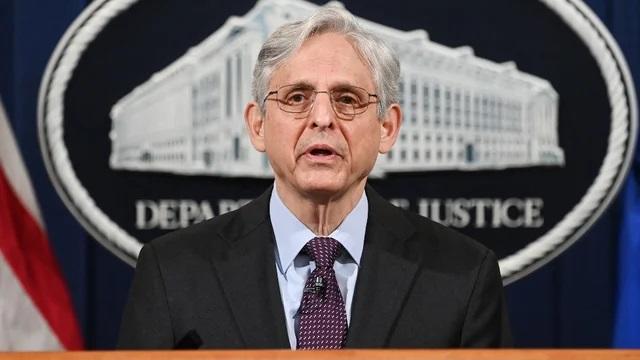
US Attorney General Merrick Garland

One of the things we’re looking at is would we need new authorities,” said deputy assistant attorney general for the department’s national security division, Brad Wiegmann, during a Thursday House hearing.

Weigmann added that while the department has been successful using existing laws to fight domestic terrorism – including bringing charges for offenses involving weapons or explosives violations, hate crimes and arson, there have been more than 430 arrests made in connection with the Jan. 6 assault on the US Capitol “carried out by extremist supporters of then-President Donald Trump” (as Bloomberg puts it).

The FBI has warned that domestic violent extremists pose a heightened threat for carrying out attacks in the U.S. in the near future, with white supremacists being the most lethal threat.

Currently, no U.S. law lets the government designate domestic extremists as terrorists or bring specific charges for domestic terrorism. That contrasts with laws to combat international terrorism, which allow the government to designate groups and bring charges for providing those groups with material support. –Bloomberg

“The question we’re really wrestling with is, are there gaps,” Weigman told a House Appropriations subcommittee. “Is there some type of conduct that we can envision that we can’t cover or would it be an otherwise benefit in having something else other than what we’re having now?”

Democratic Rep. Matt Cartwright of Pennsylvania – chairman of the subcommittee, said that: “Right-wing extremist attacks and plots have greatly outnumbered those from all other groups combined and caused more deaths as well,” adding “This is a cancer on our country.”

Which is weird, because at least 4 members of the Proud Boys were FBI informants who gave the agency information prior to the Jan. 6 ‘insurrection.’

That said, several groups have voiced their opposition to a specific domestic terrorism law – from civil liberties advocates to conservatives – who say that a new law is unnecessary, and could be used to violate the Constitutional rights of US citizens.

In March, the Biden DOJ directed US attorney’s offices across the nation to notify DC headquarters about any investigations or cases related to domestic extremism, according to Weigmann, who added that the effort is intended to provide the DOJ with the ability to identify and internally track investigations and prosecutions involving the threat.

Perhaps the DOJ can find a way to stop all those ‘white supremacists’ from murdering hundreds of young black men in Chicago, which stands at 198 year-to-date, or the dozens upon dozens of attacks on Asians by these domestic terrorists.

Tyler Durden
Thu, 04/29/2021 – 14:20

via ZeroHedge News https://ift.tt/2RelxJt Tyler Durden

The Supreme Court’s Libertarian Wing Squares The Corner

Today, the Supreme Court decided Niz-Chavez v. Garland. The Court held that the government must provide an immigrant with notice of removal in a single document, rather than in multiple documents. The Court split 6-3. Justice Gorsuch wrote the majority opinion, joined by Justices Thomas, Barrett, and the Kagan three. Justice Kavanaugh dissented, joined by the Chief Justice and Justice Alito. There was a spirited discussion about statutory interpretation between Justices Gorsuch and Kavanaugh. It reminds me of Bostock. Justice Gorsuch’s fixation on the placement of a quotation market–which Justice Kavanaugh refers to as the “quotation mark theory”–reminds me of the song Take a Break from Hamilton. Is it “My dearest Angelica” or “My dearest, Angelica”?

There are many ways to explain this split. One possible axis concerns the Court’s libertarian wing. Justice Gorsuch alludes to this impulse: the government should not get a free pass to play fast-and-loose with procedural guarantees. He writes:

Perhaps, though, what’s really going on here has nothing to do with labels like that. Perhaps there’s a simpler explanation. Perhaps when Congress adopted IIRIRA everyone understood that it required a single fully compliant document to trigger the stop-time rule. Perhaps the government has resisted the law’s demands only because they leave its officials with less flexibility than they once had. Regardless, when interpreting this or any statute, we do not aim for “literal” interpretations, but neither do we seek to indulge efforts to endow the Executive Branch with maximum bureaucratic flexibility. We simply seek the law’s ordinary meaning. 

Dare I say that Justice Gorsuch read the statutory scheme with a presumption of liberty? If one reading makes it harder for the government to harm people, and the other reading makes it easier for the government to harm people, then the former reading should be preferred. Here, the court would not give the government “maximum bureaucratic flexibility.”

Justice Gorsuch makes this point more directly in the concluding section of the opinion:

At one level, today’s dispute may seem semantic, focused on a single word, a small one at that. But words are how the law constrains power. In this case, the law’s terms ensure that, when the federal government seeks a procedural advantage against an individual, it will at least supply him with a single and reasonably comprehensive statement of the nature of the proceedings against him. If men must turn square corners when they deal with the government, it cannot be too much to expect the government to turn square corners when it deals with them.

The government should not get a free pass to deprive people of their rights. And the last emphasized sentence should ring a bell. Chief Justice Roberts used the exact same passage in DHS v. Regents:

Justice Holmes famously wrote that “[m]en must turn square corners when they deal with the Government.” Rock Island, A. & L. R. Co. v. United States , 254 U.S. 141, 143, 41 S.Ct. 55, 65 L.Ed. 188 (1920). But it is also true, particularly when so much is at stake, that “the Government should turn square corners in dealing with the people.” St. Regis Paper Co. v. United States , 368 U.S. 208, 229, 82 S.Ct. 289, 7 L.Ed.2d 240 (1961) (Black, J., dissenting). The basic rule here is clear: An agency must defend its actions based on the reasons it gave when it acted. This  is not the case for cutting corners to allow DHS to rely upon reasons absent from its original decision.

What is going on with Justice Gorsuch here? Is he trolling the Chief? Rather than citing Holmes, Black, and Roberts, Gorsuch–as he is wont to do–cites no one. There is some shade being thrown here. And the Kagan three have to go along for the ride.

In any event, the libertarian wing of the Court’s six “conservative” members have squared the corner. And I’m glad to see Justice Barrett in this triad. We will likely see these three vote together again.

One final note. Justice Gorsuch in the majority rules for the immigrant, and calls him an “alien.” Justice Sotomayor, who has objected to using this phrase before, swallows her pride and joins the majority opinion without dissent. Justice Kavanaugh, who ruled against the immigrant, once again uses the phrase “noncitizen.” Justice Alito, who has objected to this neologism, joins the dissent without complaint. Go figure.

from Latest – Reason.com https://ift.tt/3t5BFdw
via IFTTT

In Oklahoma and Texas, Parents Who Let Their Kids Play Outside Will No Longer Fear Neglect Charges


photo-1617818193486-bb16d2ccceaf

Go out and play, kids. It’s about to be legal in Oklahoma and Texas.

Both states passed “Reasonable Childhood Independence” bills on Wednesday, ensuring parents that they can let their kids walk and play outside, stay home alone, and engage in other normal childhood activities without being accused of abuse or neglect. These bills just await their governors’ signatures.

Also on Wednesday, the Nevada Assembly’s Health and Human Services committee held hearings on a similar bill that proved so popular, all the committee members ended up asking to co-sponsor it. (It had already passed the state’s senate.)

This is a triple-header for parents and kids.

Let Grow supported this legislation because we have heard from so many parents saying they want to let their kids go climb trees or run errands, but they’re afraid someone could call the police and open an investigation. So they keep the kids inside, on the couch. Now, within days in Oklahoma and Texas—and probably within weeks in Nevada—it’s Independence Day for families.

The bill, modeled on the Free-Range Parenting bill passed in Utah in 2018, had bipartisan sponsorship in Oklahoma and Nevada. In Nevada, state senator Dallas Harris, a Democrat, co-sponsored the bill. She admitted that she sometimes leaves her nine-year-old alone when she makes a quick Walmart pickup. Other assembly members said they wished the law had been in place when they were raising their kids.

The Nevada bill’s co-sponsor, Assemblywoman Alexis Hansen, said, “This is one of the most important things we could be doing to let children grow.” Her grown son, Daniel Hansen, testified in favor of the bill, in part because recently his sons, ages eight and 10, had been playing down his quiet street when a passerby called 911 to report unsupervised children.

The fire department came and escorted the children home.

It is precisely this kind of unnecessary intervention the new laws will help to curb, giving child protective authorities more time to focus on actual cases of abuse and neglect.

“The legislation in all three states focuses on clarifying the difference between real neglect and reasonable parenting decisions,” said Diane Redleaf, Let Grow’s legal consultant. “When parents leave their kids in obvious danger, that’s neglect. But when they decide their child can walk to grandma’s because mom has two jobs, the law needs to start supporting that parent.”

In Oklahoma, state Rep. Chad Caldwell, a Republican, sponsored the Reasonable Childhood Independence bill in part because as a latchkey kid, “I’d ride my bike home from school, grab a snack, and go back out again to play king of the mountain in the empty lot nearby,” he wrote in an op-ed. Those experiences gave him the confidence— and fun—he wanted today’s kids to enjoy, and his co-sponsor from across the aisle, Jacob Rosecrants, felt the same.

In Texas, Andrew Brown of the Texas Public Policy Foundation shepherded the bill. His state had been home to a couple infamous stories of child protective overreach. In 2014, Austin mom Kari Anne Roy’s six-year-old was playing within view of the house for about ten minutes when a woman marched him home and called the cops. Police officers paid Roy a visit, and a week later, child services interviewed each of her children separately. They asked the boy, 12, if he had ever done drugs, and the girl, eight, if she had seen movies with people’s private parts—something she had never even heard of.

In Houston the next year, mom Laura Browder was arrested for having her kids wait 30 feet away from her in a food court when she had a job interview there and didn’t have time to line up child care. The arrest came after she had accepted the new job.

For struggling moms, said Nevada’s Sen. Harris, this bill “provides a little more equity.” She and Rep. Hansen worried aloud that their own single moms might have been considered neglectful by today’s standards. Statistically, according to a study in the American Journal of Public Health, 37 percent of American children will be reported to child abuse hotlines over the course their childhood. That number rises to 53 percent for African-American kids.

Harris acknowledged how unusual it was to find such bipartisan agreement on a bill. She is a gay, African-American Democrat from Las Vegas. Her co-sponsor, Hansen, is a straight, white Republican from a rural area. Harris laughed when she said, “If you see Rep. Hansen and me as the sponsors of the same bill, you know it is either a really good idea or a really bad idea. We think it’s a really good idea.”

It is a really good idea, and just in time for summer.

from Latest – Reason.com https://ift.tt/2Pxymy6
via IFTTT

Romney: Biden’s “Massive” Spending Proposals Should Be Rejected

Romney: Biden’s “Massive” Spending Proposals Should Be Rejected

Authored by Jack Phillips via The Epoch Times,

Sen. Mitt Romney (R-Utah) suggested President Joe Biden’s various legislative proposals—worth trillions of dollars—need to be curbed, coming as the president is slated to address Congress on Wednesday evening.

“In his first 100 days, he’s asked for $100 trillion in spending,” Romney told reporters on Wednesday.

“To put that in context, our total federal budget that we vote on every year is $1.4 or $1.5 trillion.”

It’s not clear where Romney came up with the “$100 trillion” figure. The Epoch Times contacted his office for comment.

Overall, Biden proposed a $1.9 trillion COVID-19 stimulus bill that was passed in Congress earlier this year, Biden is expected to propose to Congress $1.8 trillion in spending on his so-called American Families Plan on Wednesday, and he proposed another more than $2 trillion infrastructure bill earlier this month.

Romney told reporters: 

“So it’s a massive amount of spending. So I think maybe if he were younger I’d say his dad needs to take away the credit card.”

Republican lawmakers have already rejected the $2.25 trillion infrastructure plan as being too large. The Democrat president is gambling that his spending plans can sway Republicans in Congress to cooperate with the White House.

To pay for the plans, Biden has proposed an overhaul of the U.S. tax system.

The American Families Plan will be funded by raising the top marginal tax rate for the wealthiest Americans to 39.6 percent from its current 37 percent. It nearly doubles the tax on investment income—known as capital gains—for Americans who earn more than $1 million. The proposed infrastructure plan is funded by corporate tax.

Other than Romney, Senate Minority Leader Mitch McConnell (R-Ky.) voiced his concern about the spending proposed by the White House.

The infrastructure plan, McConnell said in a statement Wednesday, is “another multi-trillion-dollar smorgasbord of liberal social engineering” and accused Biden of misleading Americans about where its funding would go.

“It’s being sold as a serious effort to rebuild our nation’s infrastructure. It’s a pretty brazen misdirection. At both ends of Pennsylvania Avenue, Democrats have chosen to live in an alternate universe where both the campaign promises they made and the mandate the American people delivered were completely different than what happened here on planet Earth,” he said.

White House economic adviser Brian Deese has said Biden’s proposals are part of the president’s “vision” to invest in the country. “He is welcoming and encouraging others to come forward with their ideas as well,” he told reporters on Monday.

And according to a release from the White House on Wednesday, the American Families Plan is about allowing “American families to break into the middle class, and easier to stay in the middle class.”

Tyler Durden
Thu, 04/29/2021 – 14:05

via ZeroHedge News https://ift.tt/3e8ebk5 Tyler Durden

In Oklahoma and Texas, Parents Who Let Their Kids Play Outside Will No Longer Fear Neglect Charges


photo-1617818193486-bb16d2ccceaf

Go out and play, kids. It’s about to be legal in Oklahoma and Texas.

Both states passed “Reasonable Childhood Independence” bills on Wednesday, ensuring parents that they can let their kids walk and play outside, stay home alone, and engage in other normal childhood activities without being accused of abuse or neglect. These bills just await their governors’ signatures.

Also on Wednesday, the Nevada Assembly’s Health and Human Services committee held hearings on a similar bill that proved so popular, all the committee members ended up asking to co-sponsor it. (It had already passed the state’s senate.)

This is a triple-header for parents and kids.

Let Grow supported this legislation because we have heard from so many parents saying they want to let their kids go climb trees or run errands, but they’re afraid someone could call the police and open an investigation. So they keep the kids inside, on the couch. Now, within days in Oklahoma and Texas—and probably within weeks in Nevada—it’s Independence Day for families.

The bill, modeled on the Free-Range Parenting bill passed in Utah in 2018, had bipartisan sponsorship in Oklahoma and Nevada. In Nevada, state senator Dallas Harris, a Democrat, co-sponsored the bill. She admitted that she sometimes leaves her nine-year-old alone when she makes a quick Walmart pickup. Other assembly members said they wished the law had been in place when they were raising their kids.

The Nevada bill’s co-sponsor, Assemblywoman Alexis Hansen, said, “This is one of the most important things we could be doing to let children grow.” Her grown son, Daniel Hansen, testified in favor of the bill, in part because recently his sons, ages eight and 10, had been playing down his quiet street when a passerby called 911 to report unsupervised children.

The fire department came and escorted the children home.

It is precisely this kind of unnecessary intervention the new laws will help to curb, giving child protective authorities more time to focus on actual cases of abuse and neglect.

“The legislation in all three states focuses on clarifying the difference between real neglect and reasonable parenting decisions,” said Diane Redleaf, Let Grow’s legal consultant. “When parents leave their kids in obvious danger, that’s neglect. But when they decide their child can walk to grandma’s because mom has two jobs, the law needs to start supporting that parent.”

In Oklahoma, state Rep. Chad Caldwell, a Republican, sponsored the Reasonable Childhood Independence bill in part because as a latchkey kid, “I’d ride my bike home from school, grab a snack, and go back out again to play king of the mountain in the empty lot nearby,” he wrote in an op-ed. Those experiences gave him the confidence— and fun—he wanted today’s kids to enjoy, and his co-sponsor from across the aisle, Jacob Rosecrants, felt the same.

In Texas, Andrew Brown of the Texas Public Policy Foundation shepherded the bill. His state had been home to a couple infamous stories of child protective overreach. In 2014, Austin mom Kari Anne Roy’s six-year-old was playing within view of the house for about ten minutes when a woman marched him home and called the cops. Police officers paid Roy a visit, and a week later, child services interviewed each of her children separately. They asked the boy, 12, if he had ever done drugs, and the girl, eight, if she had seen movies with people’s private parts—something she had never even heard of.

In Houston the next year, mom Laura Browder was arrested for having her kids wait 30 feet away from her in a food court when she had a job interview there and didn’t have time to line up child care. The arrest came after she had accepted the new job.

For struggling moms, said Nevada’s Sen. Harris, this bill “provides a little more equity.” She and Rep. Hansen worried aloud that their own single moms might have been considered neglectful by today’s standards. Statistically, according to a study in the American Journal of Public Health, 37 percent of American children will be reported to child abuse hotlines over the course their childhood. That number rises to 53 percent for African-American kids.

Harris acknowledged how unusual it was to find such bipartisan agreement on a bill. She is a gay, African-American Democrat from Las Vegas. Her co-sponsor, Hansen, is a straight, white Republican from a rural area. Harris laughed when she said, “If you see Rep. Hansen and me as the sponsors of the same bill, you know it is either a really good idea or a really bad idea. We think it’s a really good idea.”

It is a really good idea, and just in time for summer.

from Latest – Reason.com https://ift.tt/2Pxymy6
via IFTTT

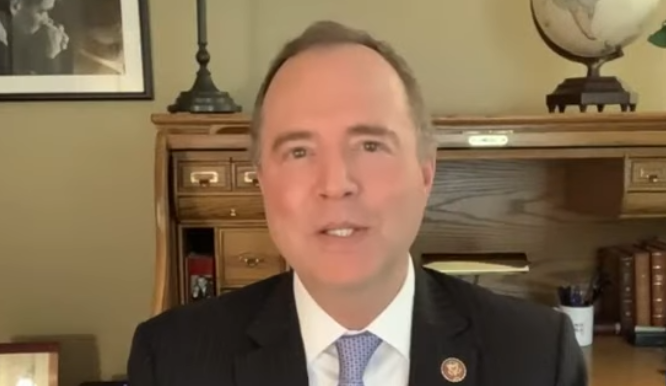
Schiff: ‘We Can’t Ignore’ That Some Of Trump’s Base Are ‘White Nationalist Domestic Terror Threat’

Schiff: ‘We Can’t Ignore’ That Some Of Trump’s Base Are ‘White Nationalist Domestic Terror Threat’

On Wednesday night, President Joe Biden went on to say during his first joint address to Congress: “We won’t ignore what our intelligence agencies have determined to be the most lethal terrorist threat to our homeland today: White supremacy is terrorism.

Hours earlier, Rep. Adam Schiff (D-CA) appeared on MSNBC‘s “Deadline,” where he telegraphed Biden’s comments – arguing that the predominant domestic threat faced by America comes from white nationalists, and that “some of the folks are part of the Trump base.”

When asked by host Nicole Wallace if working on the intelligence committee is “different now that the intel chiefs testified to the tragic new reality that the gravest threats to the country are domestic violent extremists?”

Schiff responded: “It does affect the work of our committee certainly. I think all of the domestic agencies with a portfolio with domestic terrorism have to prioritize it like FBI and DHS. We have the responsibility of overseeing the intelligence component of that. We were already doing an investigation last year into politicization of intelligence at DHS where one whistleblower was alleging that instructions were being given essentially to downplay the seriousness of the domestic terror committed by white nationalists and hype the threat of Antifa.”

He continued: “We saw that from Bill Barr and others in the leadership of the last administration. We just had a hearing on this subject. I can tell you one of the ongoing challenges is a lot of the Republican members didn’t think that our committee or the intelligence agencies, even those like the FBI and DHS with responsibility here, should be looking at this. That’s quite remarkable. You know, if we were looking at the threat of Islamic terror, the threat from within there would be no reservation about that among my GOP colleagues. But they were very uncomfortable clearly with the FBI and DHS looking at the problem of white nationalism and domestic terror.”

Wallace then said: “I was a member of the Republican Party in good standing after 9/11. I can’t fathom the Republicans having that hear no evil, see no evil do nothing about the response to 9/11. You are right. When the threat was foreign terrorism, there was not enough that they could do. There was no measure too aggressive. My question is, can you protect this country with one of the two major political parties refusing to recognize the threat?”

To which Schiff replied: “We ought to be able to find common ground that the predominant terrorism threat facing the country right now is a domestic threat. The predominant part of that domestic threat is white nationalist threat. That has international, transnational links as well. We can’t ignore that because of a political sensitivity that some of the folks are part of the Trump base. So I hope we can find common ground. We need to make sure we protect the country.”

Watch:

Tyler Durden
Thu, 04/29/2021 – 13:50

via ZeroHedge News https://ift.tt/3gPvk3q Tyler Durden

Court Notes Possible Lack of Diversity of Citizenship in Marc Rotenberg v. Politico LLC

I blogged a few weeks ago about a COVID-related libel lawsuit by former Electronic Privacy Information Center head Marc Rotenberg against Politico, LLC, and in particular noted the possible jurisdictional problem:

As I’ve suggested in my earlier posts (on the disclosure of private facts claim and the libel and false light claims), the lawsuit by Marc Rotenberg—former head of the Electronic Privacy Information Center—against Politico and Protocol is likely to be an uphill battle. This of course raises the question: Will Politico and Protocol be able to take advantage of D.C.’s anti-SLAPP statute? That statute, like others in various states,

  • allows early dismissal of lawsuits based on speech “in connection with an issue of public interest,” if the court concludes that plaintiff’s claim is legally unfounded;
  • generally suspends discovery until the motion is resolved;
  • requires expedited hearings and rulings in such cases;
  • provides for immediate appellate review; and
  • presumptively requires a losing plaintiff to pay the prevailing defendant’s attorney fees.

Anti-SLAPP statutes are bad news for plaintiffs with iffy legal claims.

But wait: Though many federal courts have held that state anti-SLAPP statutes apply in federal lawsuits based on state tort claims, others have disagreed. And the D.C. Circuit, in an opinion by then-Judge Kavanaugh, held that the D.C. anti-SLAPP statute is a procedural rule that doesn’t apply in D.C. federal district court. Rotenberg sued in that federal court, so he needn’t fear the anti-SLAPP statute, right?

Not so fast! The lawsuit is in federal court on a “diversity of citizenship” theory—the claim is that plaintiff Rotenberg is domiciled in D.C. and defendants Politico LLC and Protocol Media, LLC are headquartered and “incorporated” in Virginia. But there are also two other defendants, Robert L. Allbritton and Tim Grieve, who run Politico and Protocol. And while their addresses are listed on the Complaint as being the same as the Virginia address of Politico and Protocol Media, my quick research suggests that they might be domiciled in D.C.

And if at least one of the defendants is a D.C. domiciliary, that means that there isn’t complete diversity of citizenship between plaintiff and defendants, and thus no federal jurisdiction. The federal court would have to dismiss the case, and while Rotenberg could refile in D.C. Superior Court, the anti-SLAPP statute would apply there.

Nor can Rotenberg avoid this by refiling the lawsuit in federal court without the two individual defendants (who aren’t really necessary defendants in any event). “For diversity jurisdiction to exist, no plaintiff may share state citizenship with any defendant,” and “Unincorporated associations, including LLCs, have the citizenship of each of their members.”

Contrary to what the Complaint says, Politico LLC and Protocol Media, LLC appear not to have been “incorporated,” but to instead be, true to their names, LLCs; I checked on the Virginia State Corporation Commission’s site, which showed each as a “Limited Liability Company.” So if Allbritton, Grieve, or both are members of the LLCs, and if the member or members are D.C. residents, then the case would still be kicked out of federal court, and would have to be refiled in D.C. Superior Court.

I expect that, if my tentative research about Allbritton’s and Grieve’s D.C. residence is correct, the defendants will promptly move to dismiss on this jurisdictional ground; we should learn within a few weeks whether that indeed happens.

But it looks like Judge Tanya S. Chutkan beat the defendants to it:

Plaintiff brings this diversity action against two corporate entities and two individuals. However, the venue, jurisdiction and parties sections of the Complaint do not set forth the facts necessary to establish that this court has jurisdiction pursuant to 29 U.S.C. Section 1332. Plaintiff has not alleged the states where the individual defendants are citizens. Additionally, Defendant has not alleged where Politico LLC has its principal places of business, nor where Protocol Media, LLC is incorporated or has its principal place of business. Accordingly, by May 5, 2021 Plaintiff shall file an Amended Complaint that contains the facts necessary for this court to establish jurisdiction.

(Federal judges indeed often inquire into their possible lack of jurisdiction, even before the parties raise it.) I’ll report on what plaintiff files.

from Latest – Reason.com https://ift.tt/3t3le1q
via IFTTT

Stanford Prof: CDC Has Sown “Fear & Panic”, Paved Way For “Institutionalization Of Hypochondria”

Stanford Prof: CDC Has Sown “Fear & Panic”, Paved Way For “Institutionalization Of Hypochondria”

Authored by Sophie Mann via JustTheNews.com,

On Tuesday, the Centers for Disease Control and Prevention revised its guidance on mask-wearing, advising that Americans who are fully vaccinated may now exercise and attend small outdoor gatherings without a mask.

It’s too little, too late, argues Stanford University Professor of Medicine Jay Bhattacharya. The public health agency’s hypervigilant coronavirus response over the past 12-14 months has paved the way for what he calls “the institutionalization of hypochondria” among the American public.

“This sort of order should have come long ago,” said Bhattacharya during an interview on “Just the News AM.” 

“I think they’re being entirely too cautious by saying, ‘Okay, only if you’re vaccinated … People who have had the disease before are also immune. Why shouldn’t they be ‘allowed’ to not wear masks?” 

There has been “very little evidence of outdoor transmission of the disease to begin with,” added Bhattacharya, coauthor of the Great Barrington Declaration, a manifesto that urges an alternative COVID-19 strategy focused on protecting those at greatest risk while minimizing disruption and damage to the larger society. The statement has been signed by close to 14,000 medical and public health scientists.

“[P]ublic health authorities, including the CDC have generated an enormous amount of fear and panic around the disease,” says Bhattacharya.

“We basically have said, look at disease avoidance as the central problem in your life, no matter who you are,” he explained…


Read more here…


Tyler Durden
Thu, 04/29/2021 – 13:35

via ZeroHedge News https://ift.tt/33dmLYx Tyler Durden