California Bible Worship Group Seeks Emergency Application from SCOTUS

Yesterday, I blogged about the 9th Circuit’s decision in Tandon v. Newsom. This decision upheld California’s complete prohibition of bible worship in private homes. I’ll admit, the panel’s decision irked me. Now, I often read a judicial decision that I disagree with, but that does not make me angry. This decision made me angry. Why? Because it will waste everyone’s time. This decision would require the worshipers’ counsel to scramble an emergency application to the Supreme Court. And the California Attorney General will have to reply. The Justices will have to struggle over yet another COVID case. And one month later, at least five Justices will enjoin the policy. Or California will withdraw it at the last moment, in a game of whac-a-mole. By now, the process is old habit.

Since Justice Barrett’s confirmation, four emergency application has gone against the government. At this point, the 9th Circuit should be able to discern the Court’s approach. Instead, the Ninth Circuit acted as if the Chief’s South Bay I decision was still the controlling precedent, and used the incorrect comparator. For these reasons, I did not find it a good use of my time to even describe the decision.

Now, the Plaintiffs have filed an emergency application with the Supreme Court. And we can play the game all over again. Here is an excerpt from the brief:

This Court has issued four orders in just the past five months unequivocally holding that governments may not restrict the free exercise of religion—even in the name of fighting a pandemic—if comparable nonreligious activities are not subject to the same restrictions. Yet California—assisted by the Ninth Circuit, which has “disregard[ed] the lessons from [this] Court” and “turned a blind eye to discrimination against religious practice”—continues its rearguard action against the free (and safe) practice of religious faith. App. 32 (Bumatay, J., dissenting). Because of the State’s recalcitrance and the Ninth Circuit’s refusal to follow this Court’s “clear and, by now, redundant” precedents, this Court’s intervention is, unfortunately, once again necessary. App. 36 (Bumatay, J. dissenting). . . .

Under these rules, Pastor Wong and Karen Busch can sit for a haircut with 10 other people in a barbershop, eat in a half-full restaurant (with members of 20 different families), or ride with 15 other people on a city bus, but they cannot host three people from different households for a Bible study indoors or in their backyards. The State thus treats religious exercise far more harshly than secular activities. Notwithstanding the State’s clear discrimination against religious exercise, the Ninth Circuit applied rational basis to the Gatherings Guidance and denied Applicants’ request for an injunction pending appeal. App. 27. The Court reached that head-scratching result based on its conclusion that “in-home secular and religious gatherings are treated the same.” App. 27. But the State’s decision also to disfavor some nonreligious activity—such as in-home birthday parties or Super Bowl gatherings—does not save the State’s Gatherings Guidance from strict scrutiny, as this Court has explained, repeatedly, in Diocese of Brooklyn, South Bay II, Harvest Rock, and Gateway City Church. Instead, “regulations must place religious activities on par with the most favored class of comparable secular activities, or face strict scrutiny” App. 36 (Bumatay, J., dissenting) (citing Diocese of Brooklyn, 141 S. Ct. at 66–67). And none of those precedents suggests that the Free Exercise Clause applies only to formally established “houses of worship,” or that businesses and government services are not proper comparators to private homes with respect to the risk of infection, as the panel majority concluded. On the contrary, this “Court’s prior decisions ‘clearly dictated’ enjoining the restrictions,” but the Ninth Circuit “again fail[ed] to apply [those] precedents”—”[a]t this point, a tale as old as time.” App. 36 (Bumatay, J., dissenting).

In Gateway City Church v. Newsom, the Court said the outcome was “clearly dictated” by South Bay II. I expect a similar reversal.

Still, I think this case is both easy and hard. If people from different households are allowed to assemble to watch a movie in a theater, they should be allowed to pray together in a single house. This policy reflects the state’s utter unconcern for the Free Exercise of religion. No single faith is targeted. Rather, the state ranks religion at the bottom of its priority list, along with other insignificant commercial enterprises. Movies are important. Bible worship is not. The tougher part is singing. In South Bay II, Justice Barrett drew along Justice Kavanaugh to place the burden on the challengers to demonstrate that the government was acting unreasonably. I much preferred Justice Alito’s framework, which put the burden on the state to support their policy. Generally, with the violation of an enumerated right, the government bears the burden, and not the challenger. I’m still flummoxed that ACB made this opinion her first writing as a Supreme Court justice. Perhaps now we will have more clarity on the singing issue.

I am finalizing my article on the Free Exercise Clause and the pandemic. It should be published in the Harvard Journal of Law & Public Policy in the next two months or so. I don’t know if I will have the time to incorporate yet another COVID case.

from Latest – Reason.com https://ift.tt/2QT6PaG
via IFTTT
India’s Experiments With COVID-19

India’s Experiments With COVID-19

Authored by Jayant Bhandari via Acting-Man.com,

Shooting from the Hip

[ed. note: the tweets linked below mainly show videos from various lockdown phases]

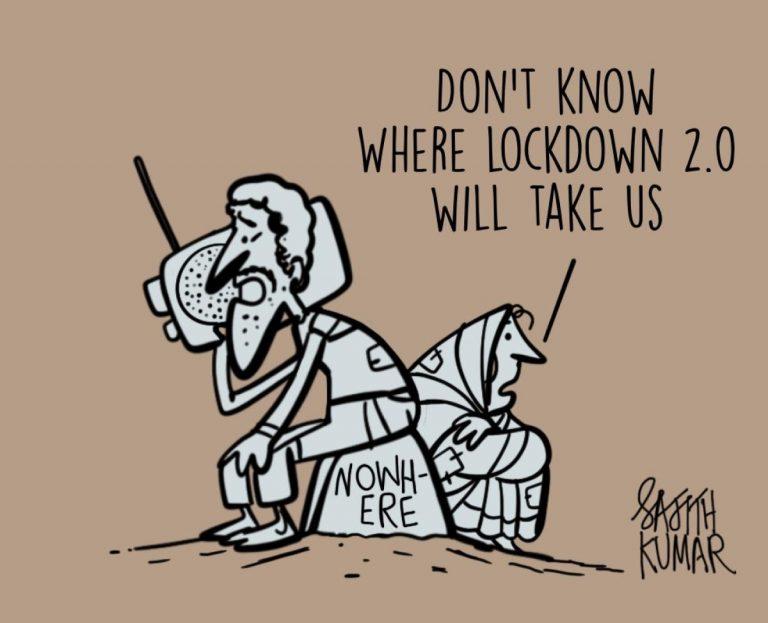
Reminiscent of his demonetization effort in 2016, on 24th March 2020, Indian Prime Minister Narendra Modi, appeared on TV and declared an immediate nationwide curfew. No one was to be allowed to leave wherever he or she happened to be. All flights, trains (after 167 years of continual operation) and road transportation came to a complete, shrieking halt.

Stranded in India… [PT]

Tens of millions of people – myself included – got stuck wherever they were.

People were not allowed to leave their homes, not even for grocery shopping, the latter of which was amended after a few days when the government realized that people needed to eat. In a country of 1.38 billion people, the initial policy was a shot from the hip, without any consultation or planning, as if prepared by primary school kids.

Those, particularly the poor, who ventured out to get food, were ruthlessly beaten by police.

In a country where 300 million people go to bed hungry on a typical day, many more were immediately sent to starvation. Tens of millions of migrant workers—perhaps as much as 100 million or more—living from hand to mouth got stuck where they could no longer afford to stay without a regular job.

If your teenage daughter had gone to another city for a night, she was to be stuck for at least two months without any recourse — if she had no money or safe place to stay, that was not Modi’s problem. I was stuck for four months before I could finally get on a repatriation flight to North America.

Hungry and thirsty, in sauna-like summer, hundreds of thousands of homeless people walked hundreds of kilometers, in many cases more than a thousand kilometers, to get to their rural homes. Hundreds of those who took a walk died.

Modi comes across a singing bowl….[PT]

No country enforced a lockdown as draconian as that imposed in India.

Crumbling Infrastructure & Teflon Modi

Indians consider it unmanly to do a proper job of anything, so nothing works properly. India lacks quality. Electrical cables hang around everywhere. Work is done flimsily. No wonder you typically lose electricity at least once a day, even in posh areas.

A complete curfew over the last 68 days had to send India’s infrastructure crumbling down.

Soon after a slight relaxation, one chemical plant in the southern city of Vishakhapatnam had a significant gas leak. Over a thousand people collapsed. Scores died. The same day, a coal-fired boiler burst, something unusual given the high safety standards associated with boilers these days. But it did in India. This had to happen where people lack an understanding of safety, and everything is left to be completed tomorrow.

After the 68 days of nation-wide curfew, restrictions were relaxed a little in parts of the country. People after that needed “internal visas” to move around within the allowed areas, albeit trains and flights were still not functioning. If you got stuck a thousand kilometers from where you were supposed to be, you still had to walk to your destination or take a costly taxi if you could get one. And taxi-drivers knew that they could get beaten up—or even killed—by the police before any questions were asked.

My squabble is not with Modi. He is a naïve, simplistic bully, characteristic of what tribal, amoral, irrational Indians would vote into power.

In an irrational society, it is impossible to know who is responsible and to untangle causes from effects. The rulers elected by irrational masses cannot take decisions or then explain those to citizens, who cannot understand or follow anyway. If a rare case ends up in court, the judge cannot decide.

In a recent case, the Supreme Court asked a rapist of a minor girl if he would marry her. In such a society, brutality and savagery are the only media for communication. Those beaten up look for another weak person—not their oppressor to avenge—to perpetuate savagery. But they will still vote for Modi. That is the karmic cycle of India, in which Modi is merely a full participant.

Economic Slump

The economy is organic. You must keep it in motion. If you stop it, there will be unknown, unseen, and unthought-of problems, particularly in India, where the leadership does not engage in complex thinking and cannot plan for the future.

India, contrary to what the World Bank and the IMF assert, was already economically stagnant before the corona-virus hit. It had to find it extremely difficult to kickstart the economy if it could be done at all.

India’s economy before and after the outbreak of COVID-19 – now there is an excuse… [PT]

The international media, mesmerized by India’s democracy and in thrall to political correctness, claimed that India brought COVID-19 under control through faithfully following mask-wearing. In reality, hardly anyone wears a mask—the rare person that wears one takes it off when talking to people.

Fast forward to today, a year later, widespread starvation and poverty have meant that the government can no longer keep people from going out. Massive desperation has set in. Beggars remind one of the 1980s. People are desperate for jobs. India has relegated at least 75 million new people to poverty. The Indian economy contracted by 10.3% in 2020 – making it one of the worst-performing in the world.

In its supreme wisdom, the government runs a minimal number of trains and buses and restricts opening hours for shops. They fail to understand that this creates horrible congestion, massive chaos, and over-crowding.

For a few months, COVID-19 did come under control, but this had nothing to do with the Indian government. Then COVID-19 started up again. The corona-virus is currently spreading exponentially in India, contesting the top slot for the most daily cases globally.

The virus ban by midnight didn’t really work out as envisaged… [PT]

While the government talks proudly of India having developed a vaccine and supplying it across the globe, it does not even have the infrastructure to vaccinate its own people who demand it.  A mere 4% of Indians have so far received their first shot. It will take many years before India can be thoroughly vaccinated. One must be thankful that COVID-19 is hopefully not a tool for Malthusian designs, but that day is destined to come.

Tyler Durden
Fri, 04/02/2021 – 18:30

via ZeroHedge News https://ift.tt/31Fu4r5 Tyler Durden

Biden Is Looking For Legal Excuse To Bailout Upper Middle Class With Student Debt Cancelation

Biden Is Looking For Legal Excuse To Bailout Upper Middle Class With Student Debt Cancelation

White House is exploring whether it has the legal authority to unilaterally cancel up to $50K of student debt per borrower as Biden comes under mounting pressure from progressive Dems to act in the name of combating “economic inequality”.

White House Chief of Staff Ron Klain said in an interview with Politico that Biden had tasked his education secretary, Miguel Cardona, to prepare a memo about the president’s legal authority to cancel student debt. NBC News described the measures as an effort to combat “the student loan crisis crippling millions of Americans”.

Nevermind that the vast majority of student debt is held by middle-class, and upper-class borrowers. But since most progressive voters are white millennials from wealthy backgrounds, progressives like AOC are simply engaging in the same blatant pandering to their base that they accuse other politicians of doing, as we have pointed out before. 

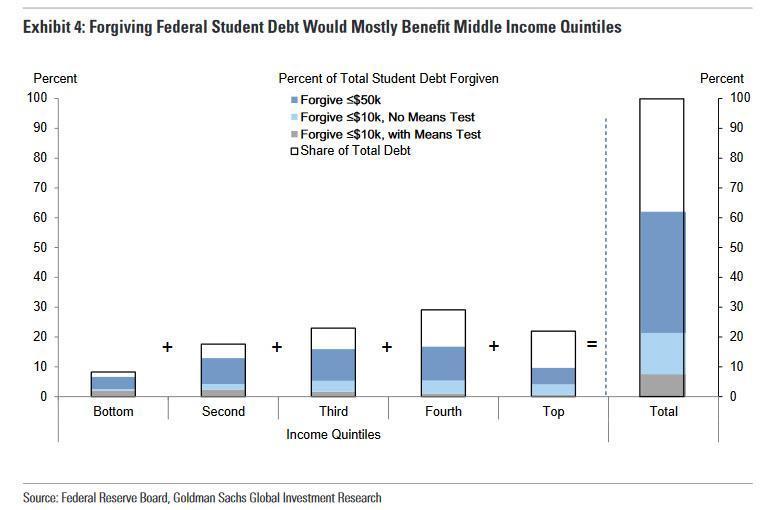
While the infrastructure plan described by President Joe Biden in Pittsburgh earlier this week would take some time to impact the general economy, Goldman Sachs analysts pointed out that forgiving $50K in loans per borrower would create an immediate economic boost. However, the benefit wouldn’t be as large, or as widespread, as some might expect. Goldman said that while a more generous loan-forgiveness program of $50K per borrower would provide a slightly bigger boost to GDP than the $10K/borrower plan, the impact per dollar spent would be smaller.

Goldman gamed out how these gains would be distributed across society, and it might come as a surprise to some progressives to see that the wealthy would enjoy the biggest boost, as the government would essentially be upping its subsidies to expensive private colleges.

Biden will reportedly decide how to proceed once he receives and reviews the memo. The president has reportedly been leaning toward an executive action that would forgive up to $10K in debt per borrower, but progressives have been pushing him to do more (part of a progressive agenda that’s centered around ending the filibuster, forgiving student debt, packing SCOTUS and passing M4A). The Bernie Sanders and Elizabeth Warren-approved plan for forgiving up to $50K in loans  got a boost after the election from Majority Leader Chuck Schumer, who has also endorsed the plan, and insisted that Biden could erase the debt “with the stroke of a pen”, and that including Congress in the decisionmaking simply isn’t necessary.

“He’ll look at that legal authority, he’ll look at the policy issues around that, and then he’ll make a decision,” Klain said. “He hasn’t made a decision on that either way. In fact, he hasn’t yet gotten the memos that he needs to start to focus on that decision.”

Biden has said he doesn’t believe he has the legal authority to forgive $50K per borrower. This has been his primary excuse for endorsing $10K in forgiveness, instead of $50K. But by tasking one of his most progressive cabinet members to come up with a legal rationale, it looks like Biden is seriously considering even more unilateral debt forgiveness.

“I understand the impact of debt, and it can be debilitating,” Biden said at a town hall event in February. “I am prepared to write off the $10,000 debt, but not $50,000 because I don’t think I have the authority to do it.”

Proponents of canceling student debt have argued that the president does have the authority to cancel student debt, and that this authority stems from the Higher Education Act of 1965, which gives the education secretary the authority to use federal authority and credit to back – and, therefore, cancel – student loans.

Readers can watch the full Politico interview with Klain below:

Tyler Durden
Fri, 04/02/2021 – 18:00

via ZeroHedge News https://ift.tt/3u9P3OW Tyler Durden

Daily Briefing: Labor Market Strength Catches the Bond Market Off-Guard as Ethereum Soars

Daily Briefing: Labor Market Strength Catches the Bond Market Off-Guard as Ethereum Soars

Real Vision senior and crypto editor Ash Bennington welcomes Real Vision editors Max Wiethe and Jack Farley to the Daily Briefing. They discuss the Nonfarm Payrolls data, which significantly exceeded expectations, and interpret what this means for the U.S. economy, stocks, and bonds. They look at the corresponding sell-off in U.S. Treasurys today and the surge in S&P 500 futures (the U.S. stock market is officially closed). Lastly, they cover the surge in Ethereum and altcoins.

Tyler Durden
Fri, 04/02/2021 – 11:30

via ZeroHedge News https://ift.tt/3sOhIZp Tyler Durden

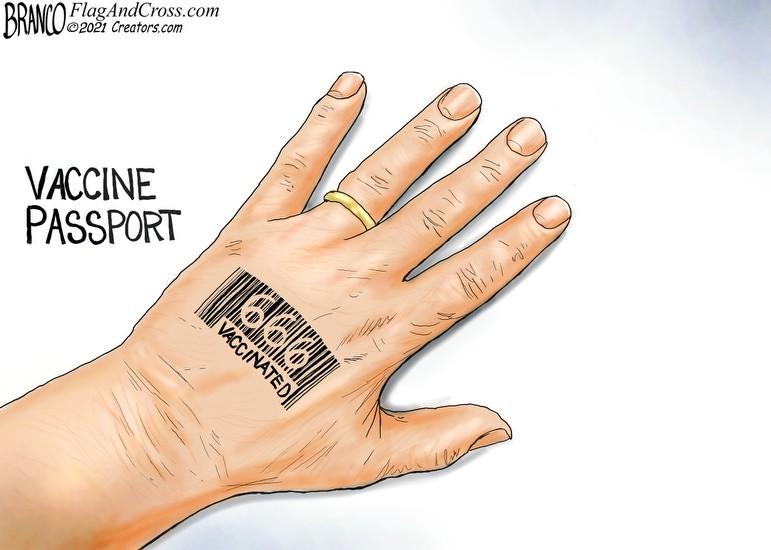
Naomi Wolf: Vaccine Passports Are The “End Of Human Liberty In The West”

Naomi Wolf: Vaccine Passports Are The “End Of Human Liberty In The West”

Authored by Victoria Taft via PJMedia.com,

The Left would like to dismiss Naomi Wolf as a heretic and conspiracy theorist now that she disagrees with their anti-liberty responses to coronavirus, but her warning about President Biden’s threatened “vaccine passports” should be heeded.

Wolf, who started a tech site that she says is meant to bring the right and left together, says the passport would divide people between haves and have nots: those who have had the COVID shot and those who have not. In her words, it “is literally the end of human liberty in the West if this plan unfolds as planned.”

Here’s what she means, in case you haven’t figure it out yourself.

Vaccine passports sound like a fine thing if you don’t know what those platforms can do. I’m CEO of a tech company, I understand what this platform does. It’s not about the vaccine, it’s not about the virus, it’s about data. And once this rolls out you don’t have a choice about being part of the system. What people have to understand is that any other functionality can be loaded onto that platform with no problem at all.

Wolf told Fox News host Steve Hilton that Big Tech companies will oversee all of your personal information and intermingle it with information that government will use to determine if you’re eligible to be able to travel and do anything else in polite society. President Biden signed an executive order in January to coordinate with other countries to track people to stop the spread of COVID.

Wolf says the move is nothing short of “catastrophic.”

They’re trying to roll it out around the world. It is so much more than a vaccine pass. I can’t stress this enough. It has the power to turn off your life. Or turn on your life. To let you engage in civil society or be marginalized. It’s catastrophic. It cannot be allowed to continue.

Wolf predicts that the vaccine passport would eventually track every aspect of your life.

And what that means is it can be merged with your PayPal account, with your digital currency. Microsoft is already talking about merging it with payment plans. Your networks can be sucked up. It geo locates you everywhere you go. Your credit history can be included. All of your medical history can be included.

In short, it’s not hard to imagine this passport turning into a version of China’s social credit scoring.

In China, if you do what the regime wants you to do, you are accorded points to allow more freedom of movement and other perks. In 2018 Vox reported on the expected rollout of the social credit system in 2020.

Under the system, both financial behaviors like “frivolous spending” and bad behaviors like lighting up in smoke-free zones can result in stiff consequences. Penalties include loss of employment and educational opportunities, as well as transportation restrictions. Those with high scores get perks, like discounts on utility bills and faster application processes to travel abroad.

Mask scolds and Karens in charge of the country’s COVID response wouldn’t dare cut you off from something you love … or would they?

Such a passport would seem to finish the job that ObamaCare started.

Wolf says it would violate the U.S. Constitution, the Americans With Disabilities Act, and HIPAA.

She says opponents need to fund a phalanx of lawyers to litigate every aspect of such a thing because if we don’t it would be the “end of civil society” in the west – unless you like a caste system, that is.

Tyler Durden
Fri, 04/02/2021 – 17:30

via ZeroHedge News https://ift.tt/3uiAcSh Tyler Durden

Police Kill Suspect Who Rammed Vehicle Into U.S. Capitol Barricade: 1 Officer Dead, 1 Wounded


rollcallpix135746

One police officer is dead and another wounded after a man drove his car into the barricade surrounding the U.S. Capitol building. The suspect, 25-year-old Noah Green, was shot and killed by police after he jumped out of his car wielding a knife.

The incident briefly placed the Capitol under lockdown, prompting much speculation that it might somehow be related to the January 6 riot, during which the building was overrun by far-right protesters. But according to early reports, Green is affiliated with the Nation of Islam and had recently posted on Facebook about various personal difficulties. It’s difficult to place the NOI on a right-left spectrum, but many followers believe in anti-Jewish and anti-white conspiracy theories. They tend toward black separatism, and it’s extremely unlikely Green has anything to do with former President Donald Trump’s “Stop the Steal” movement. For now, this appears to be an isolated incident.

The barbed wire fences that have surrounded not just the Capitol building but several city blocks were recently removed. Lest anyone think that this attack was the unfortunate result of lax security, the barricade that Green struck has actually been there for years, and was neither added nor removed during the recent changes.

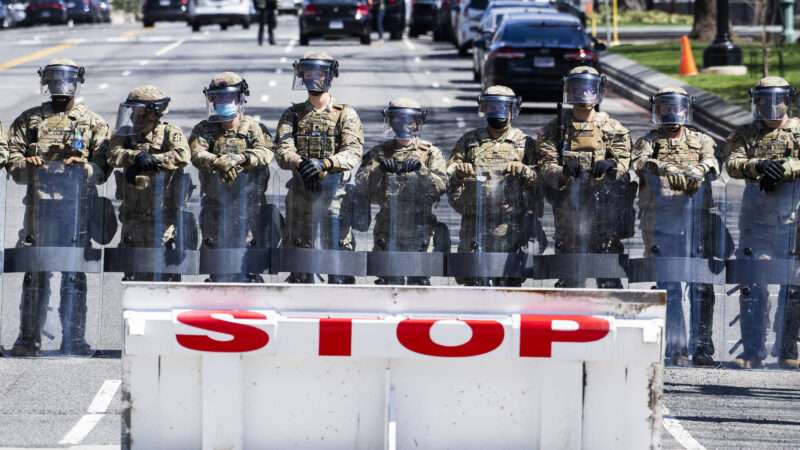
I ventured down to the Capitol; National Guard troops had already blocked off the area where the attack occurred. (The National Guard has maintained a presence in Washington, D.C., ever since the January 6 riot.) Law enforcement officers were understandably on edge, and it’s tragic that someone was killed.

It would be a shame, however, if this tragedy prompted Capitol security to bring back the fences, or delay sending home the National Guard. The massive military presence was designed to prevent the kind of all-out assault on the Capitol that unfolded on January 6—something that’s vanishingly unlikely to happen again, now that Trump has exited the scene. The preexisting barricades are sufficient to protect the Capitol from a lone, deranged driver.

from Latest – Reason.com https://ift.tt/3dwfJCQ
via IFTTT

Police Kill Suspect Who Rammed Vehicle Into U.S. Capitol Barricade: 1 Officer Dead, 1 Wounded


rollcallpix135746

One police officer is dead and another wounded after a man drove his car into the barricade surrounding the U.S. Capitol building. The suspect, 25-year-old Noah Green, was shot and killed by police after he jumped out of his car wielding a knife.

The incident briefly placed the Capitol under lockdown, prompting much speculation that it might somehow be related to the January 6 riot, during which the building was overrun by far-right protesters. But according to early reports, Green is affiliated with the Nation of Islam and had recently posted on Facebook about various personal difficulties. It’s difficult to place the NOI on a right-left spectrum, but many followers believe in anti-Jewish and anti-white conspiracy theories. They tend toward black separatism, and it’s extremely unlikely Green has anything to do with former President Donald Trump’s “Stop the Steal” movement. For now, this appears to be an isolated incident.

The barbed wire fences that have surrounded not just the Capitol building but several city blocks were recently removed. Lest anyone think that this attack was the unfortunate result of lax security, the barricade that Green struck has actually been there for years, and was neither added nor removed during the recent changes.

I ventured down to the Capitol; National Guard troops had already blocked off the area where the attack occurred. (The National Guard has maintained a presence in Washington, D.C., ever since the January 6 riot.) Law enforcement officers were understandably on edge, and it’s tragic that someone was killed.

It would be a shame, however, if this tragedy prompted Capitol security to bring back the fences, or delay sending home the National Guard. The massive military presence was designed to prevent the kind of all-out assault on the Capitol that unfolded on January 6—something that’s vanishingly unlikely to happen again, now that Trump has exited the scene. The preexisting barricades are sufficient to protect the Capitol from a lone, deranged driver.

from Latest – Reason.com https://ift.tt/3dwfJCQ
via IFTTT

New CDC Estimates Suggest COVID-19 Is Deadlier Than the Agency Previously Thought


coronavirus-CDC

The latest estimates from the Centers for Disease Control and Prevention (CDC) suggest COVID-19 is deadlier than the CDC previously thought, especially among older Americans. According to the “best estimate” in the most recent version of the CDC’s COVID-19 Pandemic Planning Scenarios, 9 percent of people 65 or older who are infected by the COVID-19 virus die from the disease. The estimated infection fatality rates (IFRs) for other age groups are much lower but still generally higher than the numbers the CDC was using prior to March 19.

The estimated IFR is 0.002 percent for people 17 or younger, 0.05 percent for 18-to-49-year-olds, and 0.6 percent for 50-to-64-year-olds. The CDC’s prior estimates used somewhat different age groups, which makes direct comparisons tricky. But the estimated IFR for the oldest age group has risen dramatically, from 5.4 percent for 70+ to 9 percent for 65+.

The new estimates are also higher for the second-oldest group (0.6 percent for 50-to-64-year-olds now vs. 0.5 percent for 50-to-69-year-olds previously) and the second-youngest group (0.05 percent for 18-to-49-year-olds vs. 0.02 percent for 20-to-49-year-olds). The new estimate for the youngest age group is lower (0.002 percent for 17 or younger vs. 0.003 percent for 19 or younger), but that may reflect the lower cutoff.

The CDC’s earlier estimates were based on a July 2020 PLOS Medicine study that used data from Hubei, China, and six regions of Europe. The Chinese numbers were reported in January and February 2020, while the European numbers were reported in March and April 2020. The new estimates are based on a systematic review and meta-analysis published by the European Journal of Epidemiology in December. The meta-analysis was based on 27 studies covering 34 locations, including a dozen each in the United States and Europe.

The CDC’s new numbers do not include an overall IFR for the United States, which a July update estimated was about 0.65 percent. That estimate presumably would be higher now.

How much higher? We can get a rough idea from the CDC’s estimates of how many people have been infected in each state (except for North and South Dakota). Those estimates are based on antibody testing of blood drawn for diagnostic tests unrelated to COVID-19 from patients across the country. Although the patients in those samples are not necessarily representative of the general population, the prevalence numbers, combined with contemporaneous COVID-19 death counts, can be used to roughly estimate IFRs.

Dividing the U.S. death toll as of February 28 by the total estimated number of infections on that date (around 65 million) suggests a nationwide IFR in the neighborhood of 0.8 percent. But that average conceals a great deal of interstate variation.

As of February 28, for example, the CDC estimated that 401,000 Connecticut residents had been infected by the coronavirus. The state’s death toll at that point suggests that Connecticut’s IFR was about 1.9 percent. In Utah, by contrast, the CDC estimated there were 874,000 infections at the end of February, which suggests an IFR of about 0.2 percent. The implied IFR is about 0.6 percent for Texas and California, about 0.8 percent for Florida, about 0.9 percent for Pennsylvania, and about 1.8 percent for New York.

Given the stark differences in COVID-19 risk between age groups, age demographics may explain some of this variation. Other possible factors include the prevalence of preexisting health conditions, the capacity and quality of local health care systems, and population density, which not only affects how fast and far the virus spreads but also may affect viral doses and therefore the severity of infections. And assuming that medical treatment of COVID-19 improved over the course of the pandemic, patients in states that had relatively late outbreaks may have fared better as a result.

from Latest – Reason.com https://ift.tt/2R0Vwxo
via IFTTT

New CDC Estimates Suggest COVID-19 Is Deadlier Than the Agency Previously Thought


coronavirus-CDC

The latest estimates from the Centers for Disease Control and Prevention (CDC) suggest COVID-19 is deadlier than the CDC previously thought, especially among older Americans. According to the “best estimate” in the most recent version of the CDC’s COVID-19 Pandemic Planning Scenarios, 9 percent of people 65 or older who are infected by the COVID-19 virus die from the disease. The estimated infection fatality rates (IFRs) for other age groups are much lower but still generally higher than the numbers the CDC was using prior to March 19.

The estimated IFR is 0.002 percent for people 17 or younger, 0.05 percent for 18-to-49-year-olds, and 0.6 percent for 50-to-64-year-olds. The CDC’s prior estimates used somewhat different age groups, which makes direct comparisons tricky. But the estimated IFR for the oldest age group has risen dramatically, from 5.4 percent for 70+ to 9 percent for 65+.

The new estimates are also higher for the second-oldest group (0.6 percent for 50-to-64-year-olds now vs. 0.5 percent for 50-to-69-year-olds previously) and the second-youngest group (0.05 percent for 18-to-49-year-olds vs. 0.02 percent for 20-to-49-year-olds). The new estimate for the youngest age group is lower (0.002 percent for 17 or younger vs. 0.003 percent for 19 or younger), but that may reflect the lower cutoff.

The CDC’s earlier estimates were based on a July 2020 PLOS Medicine study that used data from Hubei, China, and six regions of Europe. The Chinese numbers were reported in January and February 2020, while the European numbers were reported in March and April 2020. The new estimates are based on a systematic review and meta-analysis published by the European Journal of Epidemiology in December. The meta-analysis was based on 27 studies covering 34 locations, including a dozen each in the United States and Europe.

The CDC’s new numbers do not include an overall IFR for the United States, which a July update estimated was about 0.65 percent. That estimate presumably would be higher now.

How much higher? We can get a rough idea from the CDC’s estimates of how many people have been infected in each state (except for North and South Dakota). Those estimates are based on antibody testing of blood drawn for diagnostic tests unrelated to COVID-19 from patients across the country. Although the patients in those samples are not necessarily representative of the general population, the prevalence numbers, combined with contemporaneous COVID-19 death counts, can be used to roughly estimate IFRs.

Dividing the U.S. death toll as of February 28 by the total estimated number of infections on that date (around 65 million) suggests a nationwide IFR in the neighborhood of 0.8 percent. But that average conceals a great deal of interstate variation.

As of February 28, for example, the CDC estimated that 401,000 Connecticut residents had been infected by the coronavirus. The state’s death toll at that point suggests that Connecticut’s IFR was about 1.9 percent. In Utah, by contrast, the CDC estimated there were 874,000 infections at the end of February, which suggests an IFR of about 0.2 percent. The implied IFR is about 0.6 percent for Texas and California, about 0.8 percent for Florida, about 0.9 percent for Pennsylvania, and about 1.8 percent for New York.

Given the stark differences in COVID-19 risk between age groups, age demographics may explain some of this variation. Other possible factors include the prevalence of preexisting health conditions, the capacity and quality of local health care systems, and population density, which not only affects how fast and far the virus spreads but also may affect viral doses and therefore the severity of infections. And assuming that medical treatment of COVID-19 improved over the course of the pandemic, patients in states that had relatively late outbreaks may have fared better as a result.

from Latest – Reason.com https://ift.tt/2R0Vwxo
via IFTTT

Mexico, South Korea Have Longest Work Week Of World’s Economies

Mexico, South Korea Have Longest Work Week Of World’s Economies

As the plight of Goldman Sachs junior bankers has sparked a national conversation about work-life balance, and reports about Spain experimenting with a 4-day work week have prompted millions of office drones to dream about a world where 3-day weekends might arrive 4 times per month.

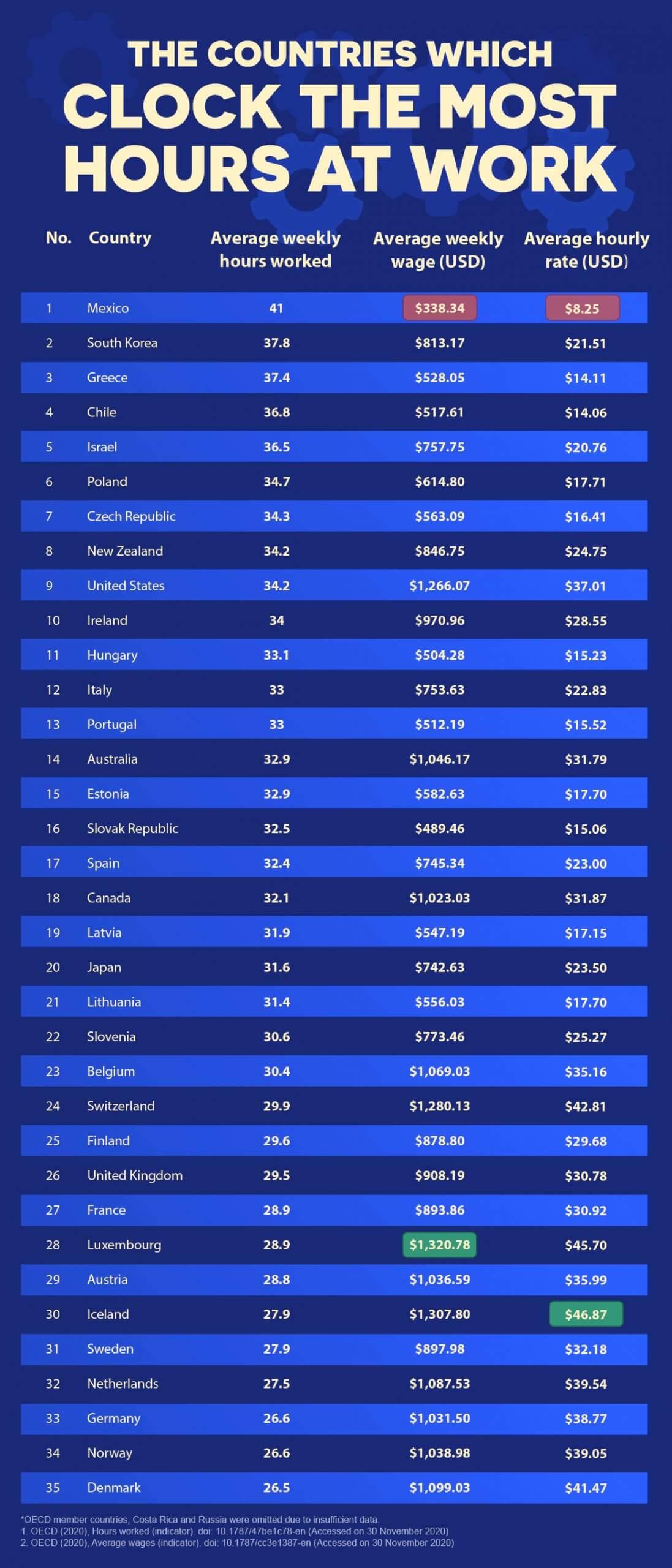
But which countries, if any, are best positioned for a transition from a 5-day to 4-day work week? Well, Matthew Keogh with the blog “Compare the Market” crunched some numbers from members of the OECD, and put together a ranking.

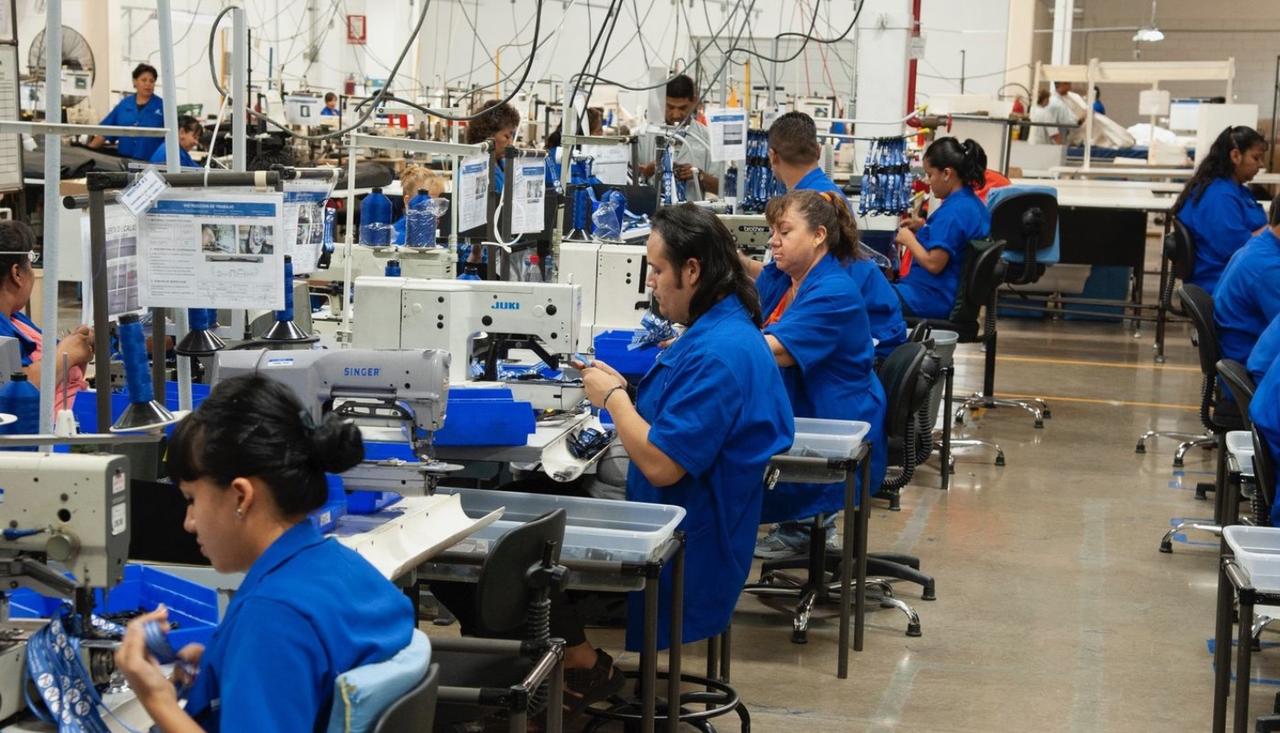
While Americans probably expect the US, Japan or Germany to take the top spot in terms of hours worked, the No.1 is actually went to Mexico, where workers put in, on average, 41 hours per week, while taking home a paltry $8.25 for the average hourly rate.

That’s compared with $21.51 for South Korea, the No. 2 in terms of average weekly hours worked (37.8 vs. 41).

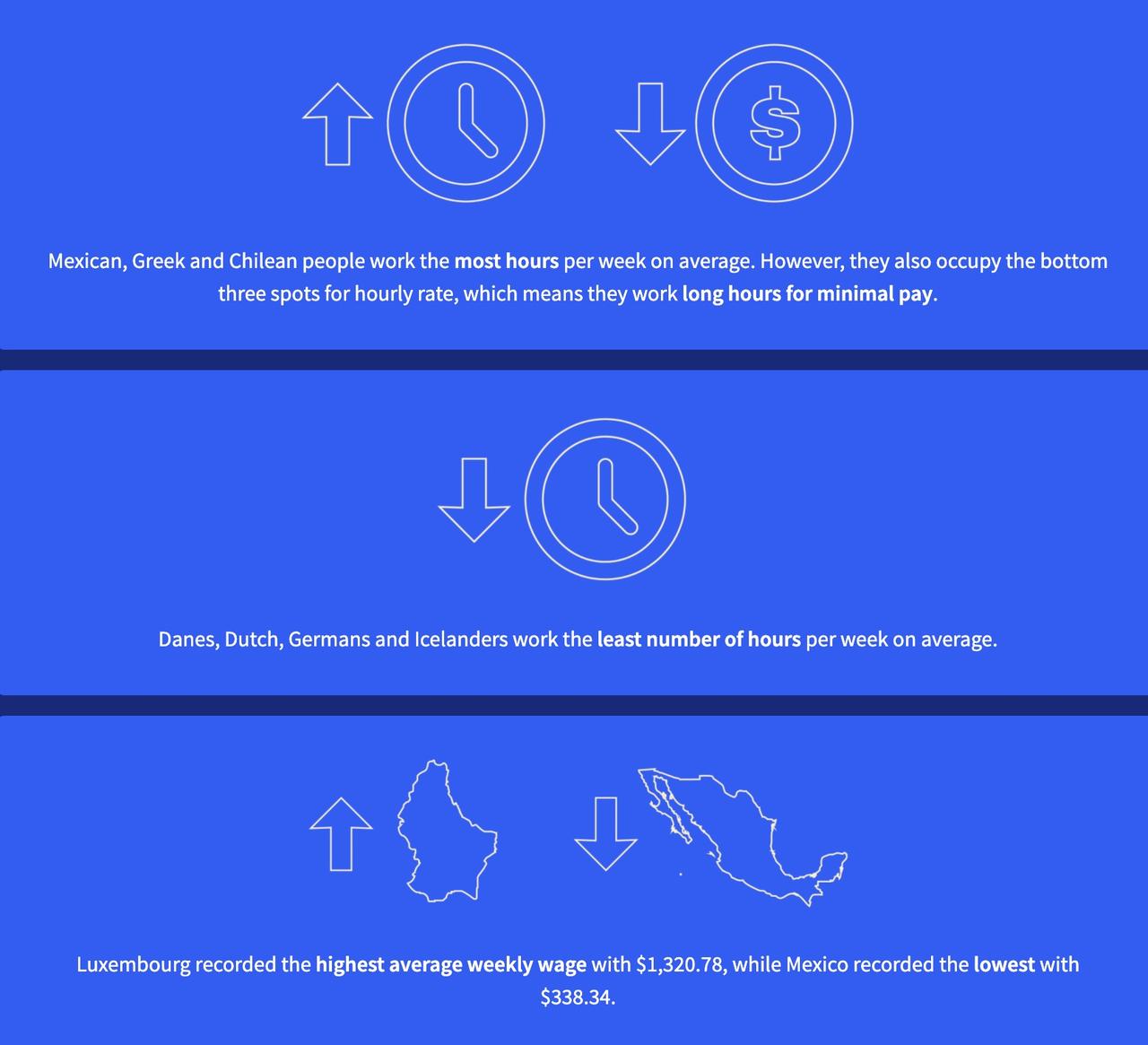
On the other hand, the countries working the fewest average weekly hours were all from Continental Europe: Denmark, Norway, Germany.

Here are a few factoids from the report.

The highest-earning countries are all European, too. This makes sense, since high average wages allow workers to put in fewer hours to make ends meet.

Iceland took the No. 1 spot in terms of highest average hourly wage ($46.87). Luxembourg came in second ($45.70), with Switzerland taking spot no. 3 ($42.81).

The lowest-earning countries are Mexico (No. 1 – $8.25), Chile (No. 2 – $14.06) and Greece (No. 3 $14.11).

Now, which countries enjoy the best work-life balance? According to the OECD’s better life index, work-life balance is based on time devoted to leisure and personal care, in relation to employees working very long hours.

  • Netherlands
  • Italy
  • Denmark
  • Spain
  • France
  • Lithuania
  • Norway
  • Belgium
  • Germany
  • Sweden

Notice how every single one of those countries is in Europe?

Tyler Durden
Fri, 04/02/2021 – 17:00

via ZeroHedge News https://ift.tt/3wpxiNg Tyler Durden