
Ketanji Brown Jackson on Race and Judging


KBJ
Judge Ketanji Brown Jackson (White House).


Racial issues have obviously played a big role in the public debate over President Biden’s nomination of Judge Ketanji Brown Jackson to the Supreme Court. That’s in part because of Biden’s campaign pledge to nominate a black woman, which has been attacked by Republicans, despite the fact that race and gender played important roles in previous nominations, such as Ronald Reagan’s campaign promise to nominate a woman (resulting in the nomination of Sandra Day O’Connor), and Trump’s promise to name a woman to replace Ruth Bader Ginsburg (leading to the nomination of Amy Coney Barrett).

Given the controversy, it’s worth noting what KBJ herself had to say about the role of race in judging, during her recent confirmation hearing for the seat she currently occupies on the US Court of Appeals for the DC Circuit:

Texas GOP Sen. John Cornyn…  asked Jackson about professional diversity and race.He said her experience as a trial judge would be a “very important qualification” and praised her “impressive” background…..

But Cornyn later said that “since our Democratic colleagues seem to be placing so much emphasis on race,” he wanted to know something else. “What role does race play, Judge Jackson, in the kind of judge you have been and the kind of judge you will be?”

Without skipping a beat, Jackson said, “I don’t think that race plays a role in the kind of judge that I have been and that I would be in the way you asked that question.”

“I’m looking at the arguments, the facts and the law, I’m methodically and intentionally setting aside personal views, any other inappropriate considerations and I would think that race would be the kind of thing that would be inappropriate to inject in my evaluation of a case,” she continued.

“I would say that my different professional background than many of the court of appeals judges, including my district court background,” she said, “would bring value.”

Cynics may think KBJ was just saying whatever she thought was necessary to get herself confirmed. But there are many ways she could have elided the question without endangering her confirmation chances, but also without flatly saying that consideration of race is “inappropriate.” For example, she could have said that a judge’s background inevitably has at least some impact on her decisions, and that is why it’s important to have diversity of all kinds on the bench. Thus, I tend to believe she sincerely meant what she said.

Regardless, many may dismiss the sentiment she expressed as hopelessly naive. Few if any judges can achieve complete detachment from “inappropriate considerations,” including the influence of their racial or ethnic background, which might lead them to empathize with some litigants more than others.

But even if such complete impartiality cannot be perfectly achieved, it’s still an ideal to strive for. And history shows we can make greater progress than many might assume.

I explained some of the reasons why in a 2009 LA Times debate with prominent constitutional law scholar Erwin Chemerinsky,  at the time of Sonia Sotomayor’s nomination to the Supreme Court. While the specific comments by President Obama that occasioned our debate are now little-remembered, the broader point I made remains relevant:

President Obama says he wants judges who have the “empathy to understand what it’s like to be poor, or African American, or gay, or disabled, or old.” But if judges who feel empathy for these groups can legitimately base decisions on it, the same goes for the considerably larger number of jurists who most easily empathize with what it’s like to be rich, or white, or straight, or able-bodied. If we weaken the norm of judicial impartiality in favor of greater emphasis on empathy, minorities and the poor are unlikely to benefit.

Some argue that judicial impartiality is a pipe dream. Indeed, empathy can never be completely eliminated as a factor in judging. But we should strive to reduce its role rather than increase it.

This not a hopelessly utopian objective. A century ago, judges and others often discriminated against Irish American and Italian American litigants. Today, such prejudice has been largely eliminated from our society and rarely affects judicial decisions. Similarly, the average white jurist today is much less likely to discriminate against African American litigants than her counterparts 40 years ago, even though racism is far from completely eliminated. Numerous judges have issued 1st Amendment rulings protecting communist, fascist and radical Islamist speech against censorship even though those judges probably have little or no empathy for advocates of these and other unpopular ideologies. That is a major improvement over the first half of the 20th century….

To say that judges shouldn’t base decisions on empathy is not to say they should ignore all “real-world” implications of their decisions. Many cases require judges to make empirical judgments…. However, judges should make such determinations by systematically considering the relevant evidence, not on the basis of any empathy they might feel for the litigants.

Reliance on empathy often actually impedes accurate evaluation of the consequences of judicial decisions. Empathy usually leads us to focus on a clearly visible, sympathetic person who has suffered some sort of readily apparent harm. But it is often difficult or impossible to feel empathy for people we never see who may be victimized by the indirect or unintended consequences of a decision. To take an example from my own field of property law, judges can easily empathize with upper middle class people who use restrictive zoning rules to maintain the attractive “character” of their communities. It is much harder to see how these laws often zone out the poor and create housing shortages. The people barred from a community by exclusionary zoning are generally invisible to judges and impossible for them to identify, much less empathize with…. Court decisions upholding the constitutionality of exclusionary zoning may have been influenced by such empathy-driven blindness, which might have led judges to ignore its broader regional implications.

The post Ketanji Brown Jackson on Race and Judging appeared first on Reason.com.

from Latest https://ift.tt/4pKGY0c
via IFTTT
Daily Briefing: When the Promise of a Quarter-Point Rate Hike Is Good News

Daily Briefing: When the Promise of a Quarter-Point Rate Hike Is Good News

The war in Eastern Europe has led to a meaningful shift in the market’s perception of what the Federal Open Market Committee will do when it meets in two weeks. Fed fund futures are still pricing in a greater than 80% chance of a rate hike. But the odds of a 50-basis-point boost to the central bank’s benchmark interest rate are now near zero after Federal Reserve Chair Jerome Powell, in testimony before the House Financial Services Committee, said he was inclined to propose and support a 25-basis-point move. Meanwhile, the civilian death toll in Ukraine surpassed 2,000, and Russian forces continue to threaten major cities, including Kyiv. Financial markets remain volatile, with U.S. equity indexes surging more than 2%, even as crude oil prices continue to climb. Darius Dale, founder and CEO of 42 Macro, joins Real Vision’s Ash Bennington to discuss recent price action in the context of his short- and medium-term strategy. Want to submit questions? Drop them right here on the Exchange: https://rvtv.io/36WMVUq

Tyler Durden
Wed, 03/02/2022 – 14:35

via ZeroHedge News https://ift.tt/gKDRkyh Tyler Durden

Ketanji Brown Jackson on Race and Judging


KBJ
Judge Ketanji Brown Jackson (White House).


Racial issues have obviously played a big role in the public debate over President Biden’s nomination of Judge Ketanji Brown Jackson to the Supreme Court. That’s in part because of Biden’s campaign pledge to nominate a black woman, which has been attacked by Republicans, despite the fact that race and gender played important roles in previous nominations, such as Ronald Reagan’s campaign promise to nominate a woman (resulting in the nomination of Sandra Day O’Connor), and Trump’s promise to name a woman to replace Ruth Bader Ginsburg (leading to the nomination of Amy Coney Barrett).

Given the controversy, it’s worth noting what KBJ herself had to say about the role of race in judging, during her recent confirmation hearing for the seat she currently occupies on the US Court of Appeals for the DC Circuit:

Texas GOP Sen. John Cornyn…  asked Jackson about professional diversity and race.He said her experience as a trial judge would be a “very important qualification” and praised her “impressive” background…..

But Cornyn later said that “since our Democratic colleagues seem to be placing so much emphasis on race,” he wanted to know something else. “What role does race play, Judge Jackson, in the kind of judge you have been and the kind of judge you will be?”

Without skipping a beat, Jackson said, “I don’t think that race plays a role in the kind of judge that I have been and that I would be in the way you asked that question.”

“I’m looking at the arguments, the facts and the law, I’m methodically and intentionally setting aside personal views, any other inappropriate considerations and I would think that race would be the kind of thing that would be inappropriate to inject in my evaluation of a case,” she continued.

“I would say that my different professional background than many of the court of appeals judges, including my district court background,” she said, “would bring value.”

Cynics may think KBJ was just saying whatever she thought was necessary to get herself confirmed. But there are many ways she could have elided the question without endangering her confirmation chances, but also without flatly saying that consideration of race is “inappropriate.” For example, she could have said that a judge’s background inevitably has at least some impact on her decisions, and that is why it’s important to have diversity of all kinds on the bench. Thus, I tend to believe she sincerely meant what she said.

Regardless, many may dismiss the sentiment she expressed as hopelessly naive. Few if any judges can achieve complete detachment from “inappropriate considerations,” including the influence of their racial or ethnic background, which might lead them to empathize with some litigants more than others.

But even if such complete impartiality cannot be perfectly achieved, it’s still an ideal to strive for. And history shows we can make greater progress than many might assume.

I explained some of the reasons why in a 2009 LA Times debate with prominent constitutional law scholar Erwin Chemerinsky,  at the time of Sonia Sotomayor’s nomination to the Supreme Court. While the specific comments by President Obama that occasioned our debate are now little-remembered, the broader point I made remains relevant:

President Obama says he wants judges who have the “empathy to understand what it’s like to be poor, or African American, or gay, or disabled, or old.” But if judges who feel empathy for these groups can legitimately base decisions on it, the same goes for the considerably larger number of jurists who most easily empathize with what it’s like to be rich, or white, or straight, or able-bodied. If we weaken the norm of judicial impartiality in favor of greater emphasis on empathy, minorities and the poor are unlikely to benefit.

Some argue that judicial impartiality is a pipe dream. Indeed, empathy can never be completely eliminated as a factor in judging. But we should strive to reduce its role rather than increase it.

This not a hopelessly utopian objective. A century ago, judges and others often discriminated against Irish American and Italian American litigants. Today, such prejudice has been largely eliminated from our society and rarely affects judicial decisions. Similarly, the average white jurist today is much less likely to discriminate against African American litigants than her counterparts 40 years ago, even though racism is far from completely eliminated. Numerous judges have issued 1st Amendment rulings protecting communist, fascist and radical Islamist speech against censorship even though those judges probably have little or no empathy for advocates of these and other unpopular ideologies. That is a major improvement over the first half of the 20th century….

To say that judges shouldn’t base decisions on empathy is not to say they should ignore all “real-world” implications of their decisions. Many cases require judges to make empirical judgments…. However, judges should make such determinations by systematically considering the relevant evidence, not on the basis of any empathy they might feel for the litigants.

Reliance on empathy often actually impedes accurate evaluation of the consequences of judicial decisions. Empathy usually leads us to focus on a clearly visible, sympathetic person who has suffered some sort of readily apparent harm. But it is often difficult or impossible to feel empathy for people we never see who may be victimized by the indirect or unintended consequences of a decision. To take an example from my own field of property law, judges can easily empathize with upper middle class people who use restrictive zoning rules to maintain the attractive “character” of their communities. It is much harder to see how these laws often zone out the poor and create housing shortages. The people barred from a community by exclusionary zoning are generally invisible to judges and impossible for them to identify, much less empathize with…. Court decisions upholding the constitutionality of exclusionary zoning may have been influenced by such empathy-driven blindness, which might have led judges to ignore its broader regional implications.

The post Ketanji Brown Jackson on Race and Judging appeared first on Reason.com.

from Latest https://ift.tt/4pKGY0c
via IFTTT
When It Comes to Climate Change, Wealth Equals Adaptation


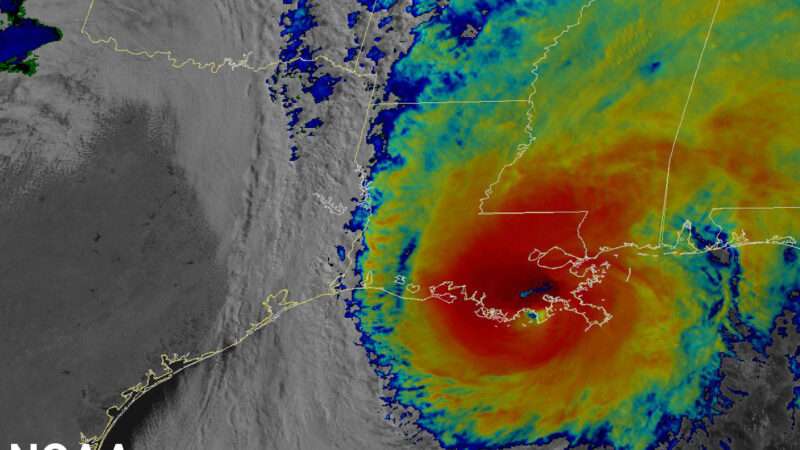
HurricaneNOAA

“Time Is Running Out to Avert A Harrowing Future, Climate Panel Warns,” ran the front page headline in The New York Times earlier this week. The Washington Post‘s front page similarly read, “Humanity has a ‘brief and rapidly closing window’ to avoid hotter, deadly future, U.N. climate report says.” Both newspapers are citing claims and data from the United Nations Intergovernmental Panel on Climate Change’s (IPCC) new report Climate Change 2022: Impact, Adaptation, and Vulnerability. United Nations Secretary-General Antonio Guterres called the report an “atlas of human suffering and a damning indictment of failed climate leadership.” He added, “Delay means death.”

Is humanity’s situation as dire as the headlines suggest?

“The cumulative scientific evidence is unequivocal: Climate change is a threat to human well-being and planetary health,” urgently cautions the IPCC Adaptation report, which is nearly 3,700 pages long and is the second part of the IPCC’s Sixth Assessment Report (AR6) on climate change and follows that agency’s Physical Science Basis report issued last August. (The third part of the AR6 report on the mitigation of climate change will be issued in April.)

Let’s be clear: man-made climate change is happening and humanity is already adapting to it and will continue to have to do so. Largely as the result of the rising atmospheric concentration of carbon dioxide from burning fossil fuels, global average temperature has increased by about 1.1°C (about 2°F) since the late 19th century. Consequently, heatwaves on land and in the oceans have become more intense and more common, downpours have become more frequent, and the rise in sea level is accelerating.

One not too startling finding of the report is that bad and worsening weather poses the biggest risks for poor people ruled over by corrupt kleptocratic elites. “Vulnerability is higher in locations with poverty, governance challenges and limited access to basic services and resources, violent conflict and high levels of climate-sensitive livelihoods (e.g., smallholder farmers, pastoralists, fishing communities),” notes the report’s Summary for Policymakers.
As an example of the vulnerability, the Summary observes that between 2010 and 2020 that deaths from flooding, droughts, and storms were 15-times higher in poorer regions than they were in economically developed areas. To get that figure the report specifically compares weather mortality in Mozambique ($450 GDP per capita), Somalia ($310), Nigeria ($2,100), Afghanistan ($509), and Haiti ($1,177) versus the U.K. ($40,284), Australia ($51,812), Canada ($43,241), and Sweden ($51,925). When bad weather meets poverty, it kills people.

However, deep in its text the IPCC report gets around to citing the remarkable 2019 study in Global Environmental Change by two European researchers that found “a clear decreasing trend in both human and economic vulnerability, with global average mortality and economic loss rates that have dropped by 6.5 and nearly 5 times, respectively, from 1980–1989 to 2007–2016.” Keep in mind that falling mortality and economic loss rates occurred as world population grew and people built lots more stuff.

The researchers additionally report that mortality and economic losses stemming from bad weather have declined faster in poor countries as they have grown richer. “This has led to a convergence in vulnerability between higher and lower income countries,” they note. Despite the fast and steep decline, vulnerability to weather hazards remains higher in poorer regions.

In his 2020 article in Technological Forecasting & Social Change, Copenhagen Consensus Center founder Bjorn Lomborg noted that the “global death risk from extreme weather has declined 99% over 100 years and global costs have declined 26% over the last 28 years.” Simply put: People around the world have already been rapidly and successfully adapting to changes in the weather.

Probably the most costly concern stemming from climate change is coastal inundation as sea level rises due to melting glaciers and thermal expansion. A 2018 study calculated that, if no efforts were made to adapt to rising seas, damages from coastal flooding would reach $14 trillion annually by 2100. Of course, people will not blithely let higher tides sweep over them and their property; they will adapt.

Estimates of how much it will cost to fend off rising seas vary considerably depending on projections of just how high the oceans will rise; how many people live near the coasts; and how much they build along the shorelines. A 2021 analysis in Climatic Change looking at best-case to worst-case temperature increases estimated that the total costs of building and maintaining seawalls, dikes, and other coastal protections ranged from 0.03 to 0.18 percent of global GDP. A 2019 World Bank analysis of best- and worst-case sea level increases calculated that the cumulative costs for coastal defense would range, in inflation-adjusted dollars between $2.9 and $18.2 trillion by 2100. Assuming a relatively modest 2 percent annual economic growth rate, annual global GDP will rise from $94 trillion now to $440 trillion by the end of this century which suggests that much richer and more technically adept generations will be able to adapt to rising seas.

“Climate change will increasingly put pressure on food production and access,” according to the Adaptation report. In fact, the report asserts, “Human-induced warming has slowed growth of agricultural productivity over the past 50 years in mid- and low-latitudes.” These claims rely chiefly on recent research that models what crop yields might have been absent climate change. In the meantime, global average cereal yields per hectare rose from 1,428 kilograms in 1961 to 4,070 kilograms in 2018, nearly a 300 percent increase. Global cereal production rose four-fold, from 744 million tons in 1961 to nearly 3 billion tons in 2018.

As the result of greatly improved agricultural productivity, the share of the world’s population suffering from undernourishment has fallen from about one-third in 1960 to around about 9 percent today. Clearly farmers around the world have, on average, been more than able to keep ahead of whatever deleterious effects that current climate change may have on their crops.

What about the future? Plant breeders are already developing crops that can withstand higher temperatures, drought, and can grow in salty soils. The application of modern biotechnology techniques such as genome editing will speed up the process of identifying and developing new crop varieties that can better cope with the vagaries of a changing climate. In addition, crop and livestock production is likely to be disrupted by novel food technologies such as alternative proteinsvat-grown meat, yeast-fermented milk, and vertical farming, which will have concomitant benefits of reducing the emissions of planet-warming greenhouse gases.

The Adaptation report further warns, “Climate-sensitive food-borne, water-borne, and vector-borne disease risks are projected to increase under all levels of warming without additional adaptation.” The report specifically cites the risk dengue fever spreading to billions more people by the end of the century.

First, of course, there will certainly be additional adaptation to disease risks. Since development of the germ theory of disease in the late 19th century, the chief “adaptations” to communicable diseases have been sanitation and vaccines. Even while implausibly spinning out scenarios of climate change-boosted epidemics, the report does acknowledge both sanitation and vaccines as “effective adaptation options.” Just taking a short snapshot of trends, the number of people dying annually of food-borne and water-borne diarrheal diseases has been cut in half since 1990. In 1990, more than 34 percent of global deaths were the result of communicable diseases. By 2019 that had dropped to 18 percent. Access to clean water and sanitation strongly tracks per capita GDP.

With respect to vector-borne illnesses, the good news is that the number of annual deaths (mostly children) from mosquito-borne malaria has been trending down for the past 15 years or so. The really good news is that a vaccine against the parasite was approved for the first time last year and others are in the works. Hailed as a “game-changer,” the new vaccine, in combination with other control measures, could reduce malaria deaths among children by 70 percent.

What about mosquito-borne dengue? Again, progress is being made toward developing a vaccine that significantly reduces the risks of hospitalization and death from contracting the virus. Research on developing even more effective dengue vaccines is ongoing. Another approach toward protecting people from vector-borne diseases would be to control the vectors. For example, mosquitoes could be genetically modified so that their populations crash or they themselves become immune to the disease organisms.

The Adaptation report offers a worst-case projection that high man-made temperature increase exceeding 5°C could result in the extinction nearly half of all land-dwelling species; in the best case where temperature is reined in at 1.5°C perhaps only 3 percent will die out.

Given the extremely poor record to mass extinction predictions, these projections should be taken with a grain of salt. Even if the extinction projections turn out to be ballpark correct, George Washington University biologist R. Alexander Pyron has argued that “both the planet and humanity can probably survive or even thrive in a world with fewer species.” He added, “Developed human societies can exist and function in harmony with diverse natural communities, even if those communities are less diverse than they were before humanity.”

On the other, happier, hand, the trends toward greater agricultural productivity, dematerialization, and urbanization suggests that humanity will be able to set aside increasing amounts of land and ocean for the natural world.

University of Colorado climate change policy researcher Roger Pielke Jr. points out that many of the headlined worst-case projections in the Adaptation report are based on highly implausible scenarios in which humanity would burn enough coal and oil to triple the amount of carbon dioxide currently in the atmosphere by the end of this century. In fact, Pielke and his colleagues argue that instead of heading toward a global average temperature of around 4°C by 2100, the world is on a more moderate track where temperatures would be around 2.2°C by 2100. Obviously, a lower temperature trajectory will make it easier for humanity to adapt to climate change.

Adaptation and the development of low-carbon energy generation technologies will both be required to address and mitigate the challenges of man-made climate change. And yes, the world is slated to get warmer, but humanity is not running out of time to avert a harrowing climate future.

Again, when bad weather meets poverty, people die. The recipe for successfully adapting to climate change is continued economic growth and technological progress.

The post When It Comes to Climate Change, Wealth Equals Adaptation appeared first on Reason.com.

from Latest https://ift.tt/o8FMkLQ
via IFTTT

Ukraine Invasion Scrambles Hedge Funds’ Outlook For Oil: Kemp

Ukraine Invasion Scrambles Hedge Funds’ Outlook For Oil: Kemp

By John Kemp, Senior Market Analyst at Reuters

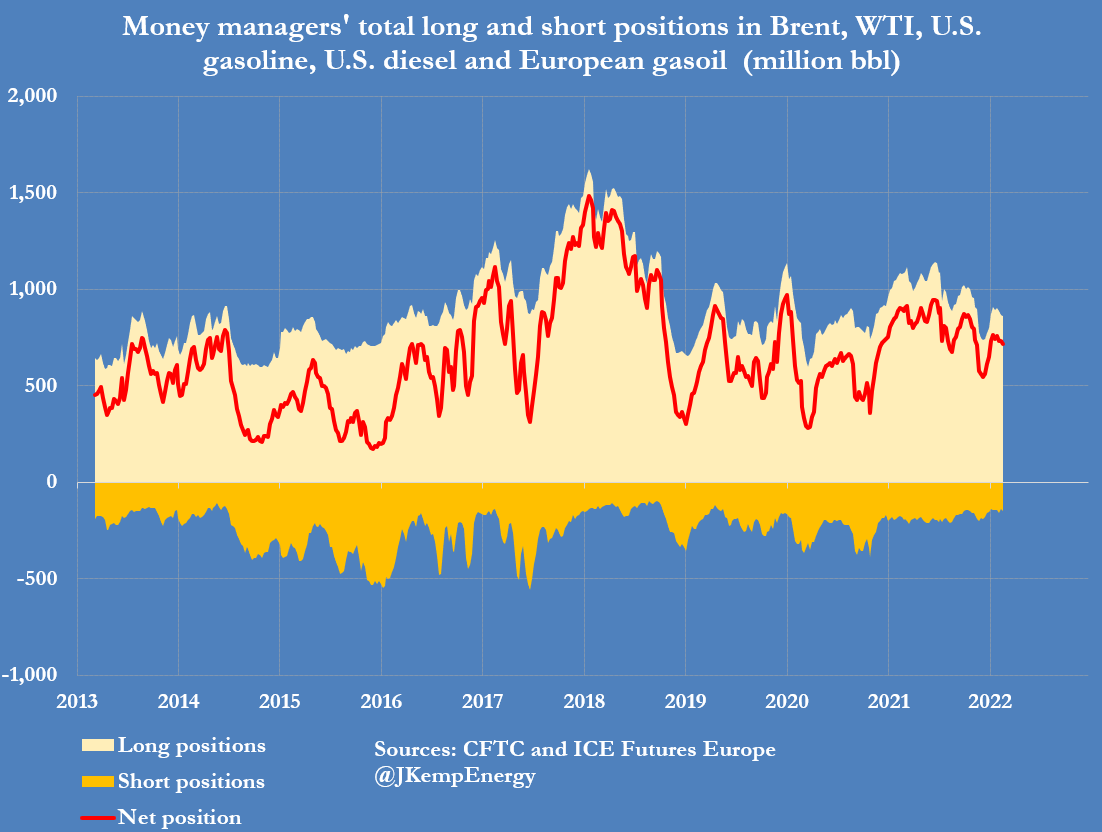
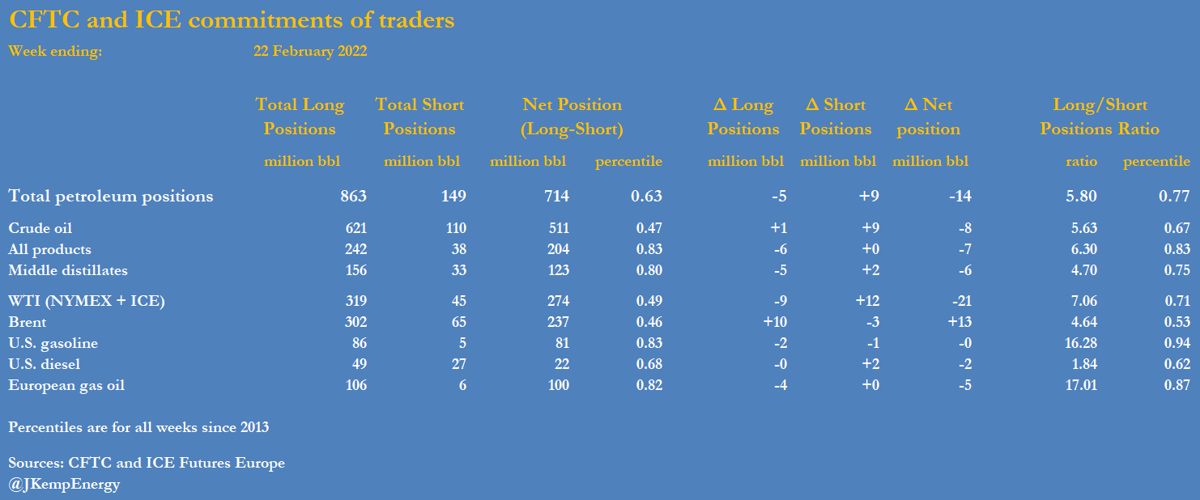
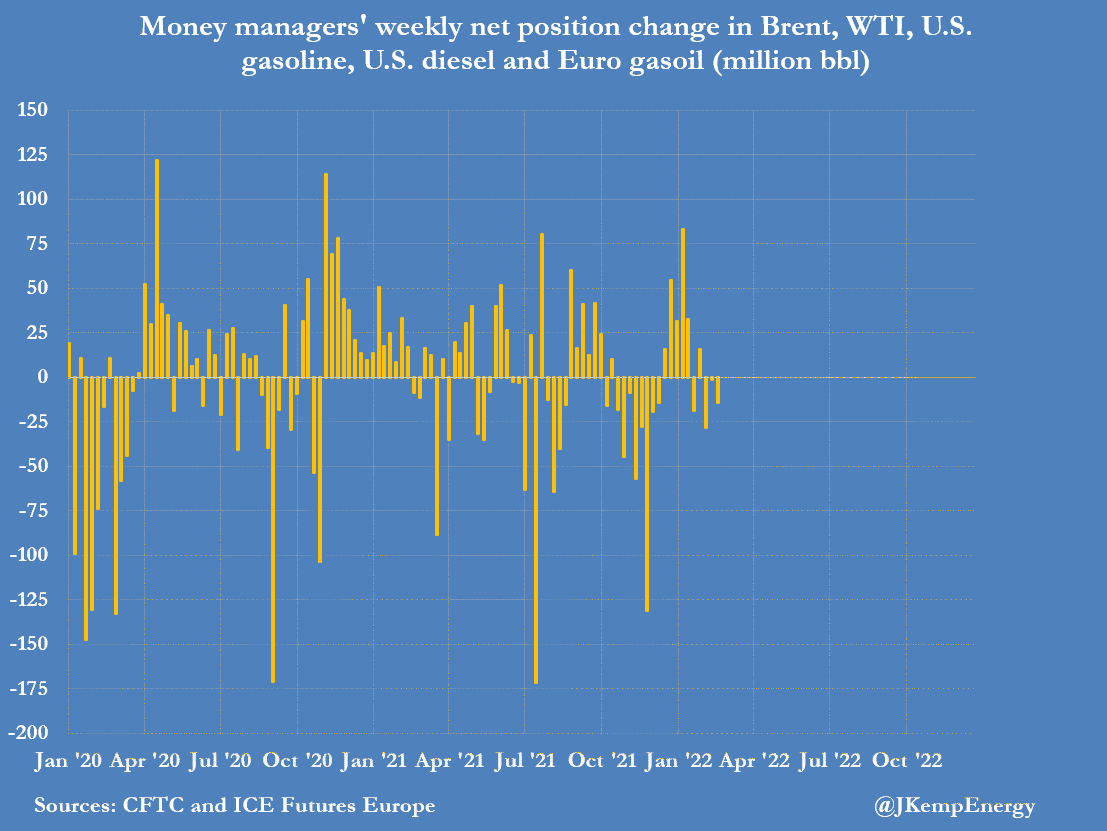
Prior to Russia’s invasion of Ukraine, investors were reducing their bullish position in crude oil and refined products, which likely explains the extreme volatility once the military operation started. Hedge funds and other money managers sold the equivalent of 14 million barrels in the six most important petroleum-related futures and options contracts in the week to Feb. 22, according to regulatory data.

Portfolio managers have been net sellers in four of the five most recent weeks…

… reducing their combined position to 714 million barrels from a recent peak of 761 million on Jan. 18.

Before the invasion, the hedge fund community was still bullish about the outlook for prices, with the combined position in the 63rd percentile for all weeks since 2013. But funds were a little less bullish than they had been in the middle of January, when the combined position was in the 70th percentile.

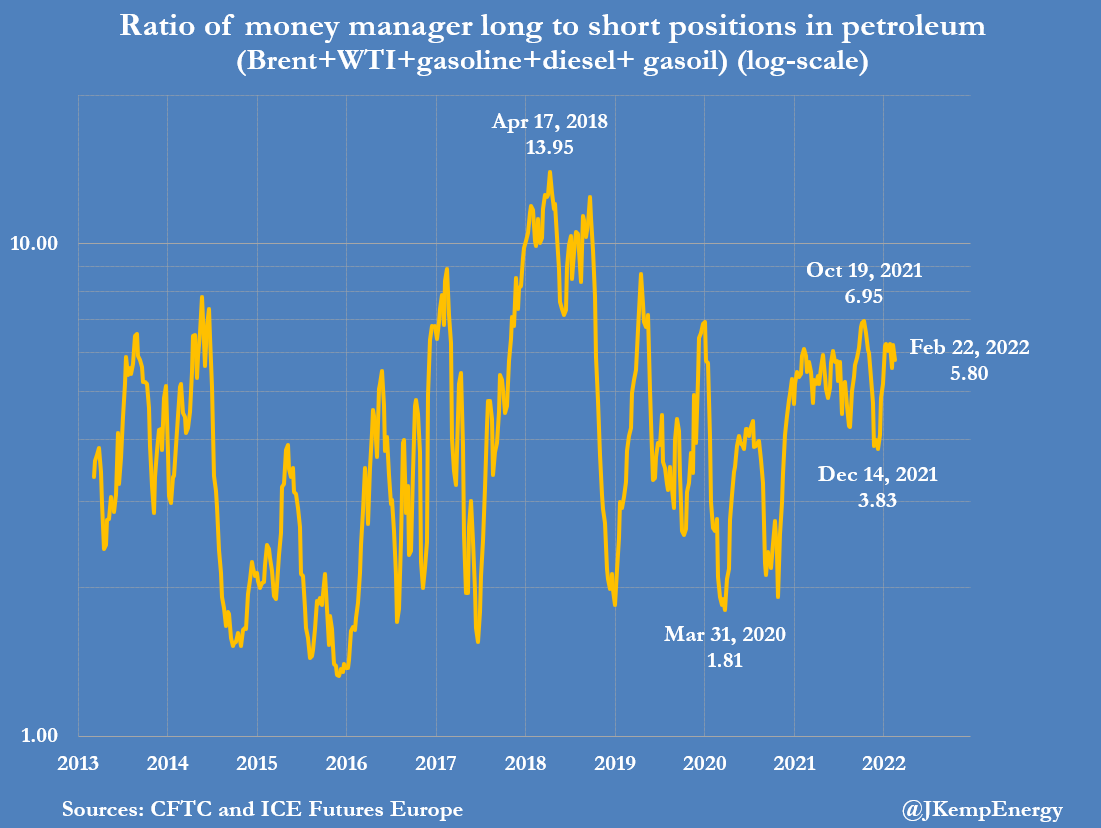
Bullish long positions outnumbered bearish short ones by a ratio of 5.80:1 (77th percentile), but the position was slightly less lopsided than the ratio of 6.24:1 (80th percentile) five weeks earlier.

Until the invasion began, investors seemed confident the intensifying conflict and sanctions would not disrupt oil exports from Russia.

Fears about inflation, the prospect of rising interest rates, and the likelihood of a nuclear deal between the United States and Iran resulting in more oil exports dominated concerns about the diplomatic situation in Ukraine.

Most fund managers were content to leave their bullish positions unchanged, but among the few who made adjustments, most were motivated by profit-taking after a months’ long rally, or anticipated a reversal in the trend.

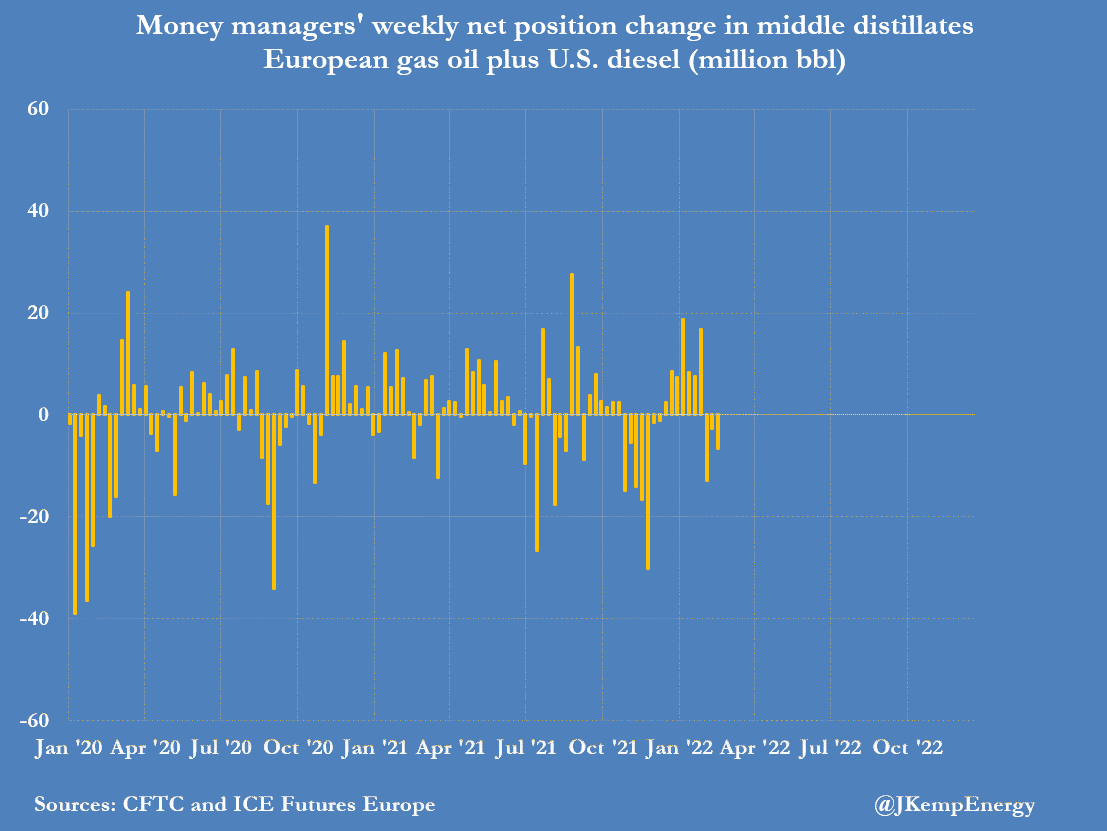
In the most recent week, funds were sellers of NYMEX and ICE WTI (-21 million barrels), U.S. diesel (-2 million) and European gas oil (-5 million), but left U.S. gasoline unchanged, and purchased Brent (+13 million).

Funds have been net sellers of U.S. diesel and European gas oil combined for the last three weeks, after being buyers for the previous seven, reflecting growing unease about the sustainability of the economic recovery.

However, since then, the focus has shifted from the economy to the intensifying diplomatic and financial conflict between Russia on the one hand and the United States and the EU on the other.

The escalating conflict has gradually taken on the characteristics of unrestricted economic warfare, with the number of trading bans, asset freezes, confiscations and forced disposals multiplying rapidly.

Oil and gas prices have started to climb as traders anticipate economic warfare will eventually disrupt energy exports from Russia, even though both the U.S. and Russian governments insist this is not their intention.

Tyler Durden
Wed, 03/02/2022 – 17:40

via ZeroHedge News https://ift.tt/vpJ9KQa Tyler Durden

When It Comes to Climate Change, Wealth Equals Adaptation


HurricaneNOAA

“Time Is Running Out to Avert A Harrowing Future, Climate Panel Warns,” ran the front page headline in The New York Times earlier this week. The Washington Post‘s front page similarly read, “Humanity has a ‘brief and rapidly closing window’ to avoid hotter, deadly future, U.N. climate report says.” Both newspapers are citing claims and data from the United Nations Intergovernmental Panel on Climate Change’s (IPCC) new report Climate Change 2022: Impact, Adaptation, and Vulnerability. United Nations Secretary-General Antonio Guterres called the report an “atlas of human suffering and a damning indictment of failed climate leadership.” He added, “Delay means death.”

Is humanity’s situation as dire as the headlines suggest?

“The cumulative scientific evidence is unequivocal: Climate change is a threat to human well-being and planetary health,” urgently cautions the IPCC Adaptation report, which is nearly 3,700 pages long and is the second part of the IPCC’s Sixth Assessment Report (AR6) on climate change and follows that agency’s Physical Science Basis report issued last August. (The third part of the AR6 report on the mitigation of climate change will be issued in April.)

Let’s be clear: man-made climate change is happening and humanity is already adapting to it and will continue to have to do so. Largely as the result of the rising atmospheric concentration of carbon dioxide from burning fossil fuels, global average temperature has increased by about 1.1°C (about 2°F) since the late 19th century. Consequently, heatwaves on land and in the oceans have become more intense and more common, downpours have become more frequent, and the rise in sea level is accelerating.

One not too startling finding of the report is that bad and worsening weather poses the biggest risks for poor people ruled over by corrupt kleptocratic elites. “Vulnerability is higher in locations with poverty, governance challenges and limited access to basic services and resources, violent conflict and high levels of climate-sensitive livelihoods (e.g., smallholder farmers, pastoralists, fishing communities),” notes the report’s Summary for Policymakers.
As an example of the vulnerability, the Summary observes that between 2010 and 2020 that deaths from flooding, droughts, and storms were 15-times higher in poorer regions than they were in economically developed areas. To get that figure the report specifically compares weather mortality in Mozambique ($450 GDP per capita), Somalia ($310), Nigeria ($2,100), Afghanistan ($509), and Haiti ($1,177) versus the U.K. ($40,284), Australia ($51,812), Canada ($43,241), and Sweden ($51,925). When bad weather meets poverty, it kills people.

However, deep in its text the IPCC report gets around to citing the remarkable 2019 study in Global Environmental Change by two European researchers that found “a clear decreasing trend in both human and economic vulnerability, with global average mortality and economic loss rates that have dropped by 6.5 and nearly 5 times, respectively, from 1980–1989 to 2007–2016.” Keep in mind that falling mortality and economic loss rates occurred as world population grew and people built lots more stuff.

The researchers additionally report that mortality and economic losses stemming from bad weather have declined faster in poor countries as they have grown richer. “This has led to a convergence in vulnerability between higher and lower income countries,” they note. Despite the fast and steep decline, vulnerability to weather hazards remains higher in poorer regions.

In his 2020 article in Technological Forecasting & Social Change, Copenhagen Consensus Center founder Bjorn Lomborg noted that the “global death risk from extreme weather has declined 99% over 100 years and global costs have declined 26% over the last 28 years.” Simply put: People around the world have already been rapidly and successfully adapting to changes in the weather.

Probably the most costly concern stemming from climate change is coastal inundation as sea level rises due to melting glaciers and thermal expansion. A 2018 study calculated that, if no efforts were made to adapt to rising seas, damages from coastal flooding would reach $14 trillion annually by 2100. Of course, people will not blithely let higher tides sweep over them and their property; they will adapt.

Estimates of how much it will cost to fend off rising seas vary considerably depending on projections of just how high the oceans will rise; how many people live near the coasts; and how much they build along the shorelines. A 2021 analysis in Climatic Change looking at best-case to worst-case temperature increases estimated that the total costs of building and maintaining seawalls, dikes, and other coastal protections ranged from 0.03 to 0.18 percent of global GDP. A 2019 World Bank analysis of best- and worst-case sea level increases calculated that the cumulative costs for coastal defense would range, in inflation-adjusted dollars between $2.9 and $18.2 trillion by 2100. Assuming a relatively modest 2 percent annual economic growth rate, annual global GDP will rise from $94 trillion now to $440 trillion by the end of this century which suggests that much richer and more technically adept generations will be able to adapt to rising seas.

“Climate change will increasingly put pressure on food production and access,” according to the Adaptation report. In fact, the report asserts, “Human-induced warming has slowed growth of agricultural productivity over the past 50 years in mid- and low-latitudes.” These claims rely chiefly on recent research that models what crop yields might have been absent climate change. In the meantime, global average cereal yields per hectare rose from 1,428 kilograms in 1961 to 4,070 kilograms in 2018, nearly a 300 percent increase. Global cereal production rose four-fold, from 744 million tons in 1961 to nearly 3 billion tons in 2018.

As the result of greatly improved agricultural productivity, the share of the world’s population suffering from undernourishment has fallen from about one-third in 1960 to around about 9 percent today. Clearly farmers around the world have, on average, been more than able to keep ahead of whatever deleterious effects that current climate change may have on their crops.

What about the future? Plant breeders are already developing crops that can withstand higher temperatures, drought, and can grow in salty soils. The application of modern biotechnology techniques such as genome editing will speed up the process of identifying and developing new crop varieties that can better cope with the vagaries of a changing climate. In addition, crop and livestock production is likely to be disrupted by novel food technologies such as alternative proteinsvat-grown meat, yeast-fermented milk, and vertical farming, which will have concomitant benefits of reducing the emissions of planet-warming greenhouse gases.

The Adaptation report further warns, “Climate-sensitive food-borne, water-borne, and vector-borne disease risks are projected to increase under all levels of warming without additional adaptation.” The report specifically cites the risk dengue fever spreading to billions more people by the end of the century.

First, of course, there will certainly be additional adaptation to disease risks. Since development of the germ theory of disease in the late 19th century, the chief “adaptations” to communicable diseases have been sanitation and vaccines. Even while implausibly spinning out scenarios of climate change-boosted epidemics, the report does acknowledge both sanitation and vaccines as “effective adaptation options.” Just taking a short snapshot of trends, the number of people dying annually of food-borne and water-borne diarrheal diseases has been cut in half since 1990. In 1990, more than 34 percent of global deaths were the result of communicable diseases. By 2019 that had dropped to 18 percent. Access to clean water and sanitation strongly tracks per capita GDP.

With respect to vector-borne illnesses, the good news is that the number of annual deaths (mostly children) from mosquito-borne malaria has been trending down for the past 15 years or so. The really good news is that a vaccine against the parasite was approved for the first time last year and others are in the works. Hailed as a “game-changer,” the new vaccine, in combination with other control measures, could reduce malaria deaths among children by 70 percent.

What about mosquito-borne dengue? Again, progress is being made toward developing a vaccine that significantly reduces the risks of hospitalization and death from contracting the virus. Research on developing even more effective dengue vaccines is ongoing. Another approach toward protecting people from vector-borne diseases would be to control the vectors. For example, mosquitoes could be genetically modified so that their populations crash or they themselves become immune to the disease organisms.

The Adaptation report offers a worst-case projection that high man-made temperature increase exceeding 5°C could result in the extinction nearly half of all land-dwelling species; in the best case where temperature is reined in at 1.5°C perhaps only 3 percent will die out.

Given the extremely poor record to mass extinction predictions, these projections should be taken with a grain of salt. Even if the extinction projections turn out to be ballpark correct, George Washington University biologist R. Alexander Pyron has argued that “both the planet and humanity can probably survive or even thrive in a world with fewer species.” He added, “Developed human societies can exist and function in harmony with diverse natural communities, even if those communities are less diverse than they were before humanity.”

On the other, happier, hand, the trends toward greater agricultural productivity, dematerialization, and urbanization suggests that humanity will be able to set aside increasing amounts of land and ocean for the natural world.

University of Colorado climate change policy researcher Roger Pielke Jr. points out that many of the headlined worst-case projections in the Adaptation report are based on highly implausible scenarios in which humanity would burn enough coal and oil to triple the amount of carbon dioxide currently in the atmosphere by the end of this century. In fact, Pielke and his colleagues argue that instead of heading toward a global average temperature of around 4°C by 2100, the world is on a more moderate track where temperatures would be around 2.2°C by 2100. Obviously, a lower temperature trajectory will make it easier for humanity to adapt to climate change.

Adaptation and the development of low-carbon energy generation technologies will both be required to address and mitigate the challenges of man-made climate change. And yes, the world is slated to get warmer, but humanity is not running out of time to avert a harrowing climate future.

Again, when bad weather meets poverty, people die. The recipe for successfully adapting to climate change is continued economic growth and technological progress.

The post When It Comes to Climate Change, Wealth Equals Adaptation appeared first on Reason.com.

from Latest https://ift.tt/o8FMkLQ
via IFTTT

NYC Schools Report Drop In Enrollment Among Wealthy, White Students During Pandemic

NYC Schools Report Drop In Enrollment Among Wealthy, White Students During Pandemic

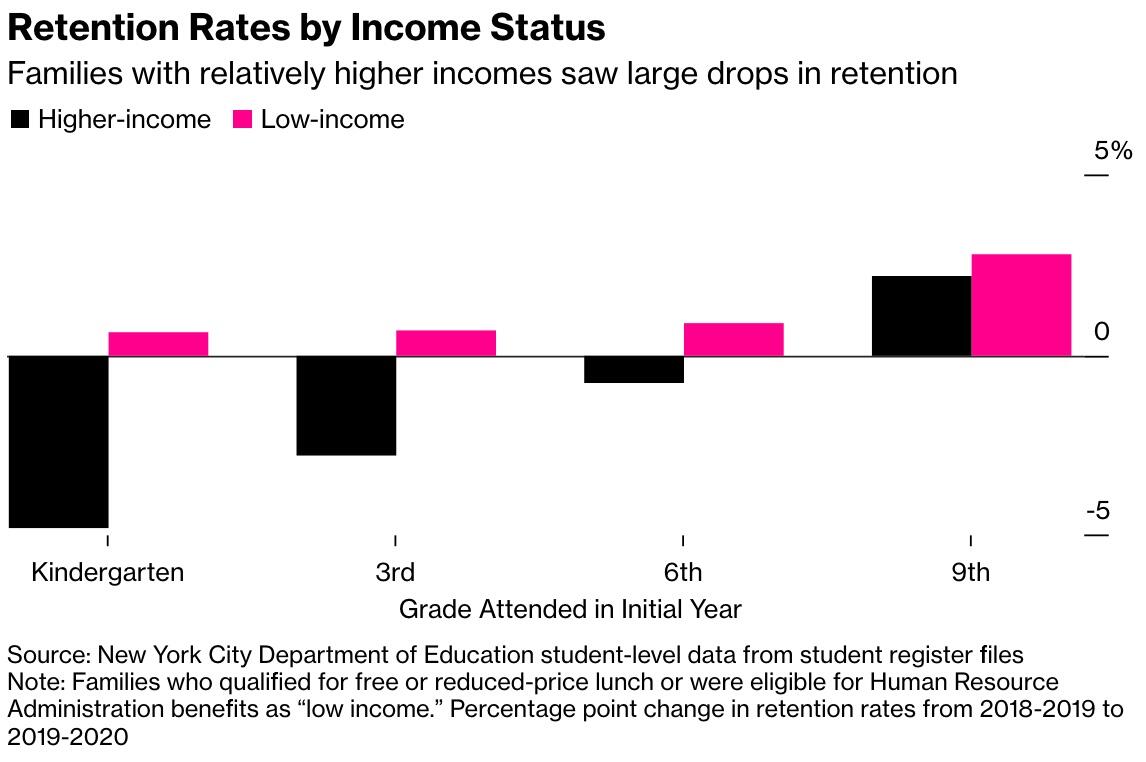
A report published Tuesday by the NYC Independent Budget Office said fewer new families enrolled in NYC’s public schools during the pandemic, reflecting a trend of “young, white and affluent” families pulling their kids from NYC’s public schools in favor of pricey private institutions.

According to Bloomberg, a range of conflicting trends kept the overall retention rate for the city’s schools – that is the number of students who return from one year to the next – in the nation’s largest district mostly unchanged in 2020-2021 from the previous year, the report released Tuesday shows.

The report showed a number of white students in pre-K through third grade who returned declined by more than 4 percentage points (meanwhile charter school retention was little-changed).

Source: Bloomberg

When approached by BBG, a spokeswoman for the city’s education department had this to say:

“The past two years were tumultuous for families nationwide, and they made the best decisions suited to their unique needs and circumstances,” said Sarah Casasnovas, a spokesperson for the city’s Education Department. “While the trends we saw in New York are no different, we are confident that families will return to classrooms as we turn the corner on COVID.”

Here are a few other facts from the report:

  • The report found COVID was responsible for the city’s inability to attract new students. New enrollees as a share of total enrollment fell in every grade, with a steep decline in students entering the ninth grade, when high school starts.
  • Retention declines were steepest among students moving from pre-K to kindergarten, and among white students, where retention fell in all grades from pre-K through eighth.
  • Declining enrollment presents a financial problem for Mayor Adams: school budgets are calculated partly via per-pupil funding formulas, as well as a social challenge as the city faces pressure to better integrate its schools along race and income lines.

For outsiders, the report offers a glimpse into how the pandemic has impacted the demographics of the city and its student body. But in reality, enrollment numbers have been falling for years.

It’s just another example of how Mayor de Blasio left the city worse off than he found it.

Tyler Durden
Wed, 03/02/2022 – 17:20

via ZeroHedge News https://ift.tt/sChr49D Tyler Durden

Will Ruger: How Libertarians Should Think About Ukraine Invasion


thumbnail2

Should the United States do more to support Ukraine in its fight against Russian invaders? Will financial sanctions against Russia work and are they moral? What does a libertarian foreign policy predicated on “realism and restraint” look like?

Today’s guest on The Reason Interview is Will Ruger, the newly appointed president of the American Institute for Economic Research (AIER), who holds a Ph.D. in politics specializing in foreign policy. He’s a veteran of the war in Afghanistan and was a prominent voice in calling for U.S. withdrawal. Ruger was nominated to be ambassador to that country late in the Trump administration (his confirmation was never brought to a vote).

He’s a proponent of what he calls “libertarian realism” when it comes to foreign policy, meaning that America’s interventions abroad should be focused on defending a narrowly defined national interest and that the use of military force should be strictly subjugated to diplomacy. Ruger is skeptical that the United States can or should play a leading role in defending Ukraine and he doesn’t think sanctions are likely to accomplish anything, especially in the short run.

We talk about all that, how NATO, the European Union, and China figure into current events, and what he plans to do as the head of AIER, one of the oldest free market think tanks in the country.

The post Will Ruger: How Libertarians Should Think About Ukraine Invasion appeared first on Reason.com.

from Latest https://ift.tt/VOe1FxE
via IFTTT

Will Ruger: How Libertarians Should Think About Ukraine Invasion


thumbnail2

Should the United States do more to support Ukraine in its fight against Russian invaders? Will financial sanctions against Russia work and are they moral? What does a libertarian foreign policy predicated on “realism and restraint” look like?

Today’s guest on The Reason Interview is Will Ruger, the newly appointed president of the American Institute for Economic Research (AIER), who holds a Ph.D. in politics specializing in foreign policy. He’s a veteran of the war in Afghanistan and was a prominent voice in calling for U.S. withdrawal. Ruger was nominated to be ambassador to that country late in the Trump administration (his confirmation was never brought to a vote).

He’s a proponent of what he calls “libertarian realism” when it comes to foreign policy, meaning that America’s interventions abroad should be focused on defending a narrowly defined national interest and that the use of military force should be strictly subjugated to diplomacy. Ruger is skeptical that the United States can or should play a leading role in defending Ukraine and he doesn’t think sanctions are likely to accomplish anything, especially in the short run.

We talk about all that, how NATO, the European Union, and China figure into current events, and what he plans to do as the head of AIER, one of the oldest free market think tanks in the country.

The post Will Ruger: How Libertarians Should Think About Ukraine Invasion appeared first on Reason.com.

from Latest https://ift.tt/VOe1FxE
via IFTTT

Several Justices Seem Dismayed at the Idea That Doctors Can Be Accidentally Guilty of Drug Trafficking


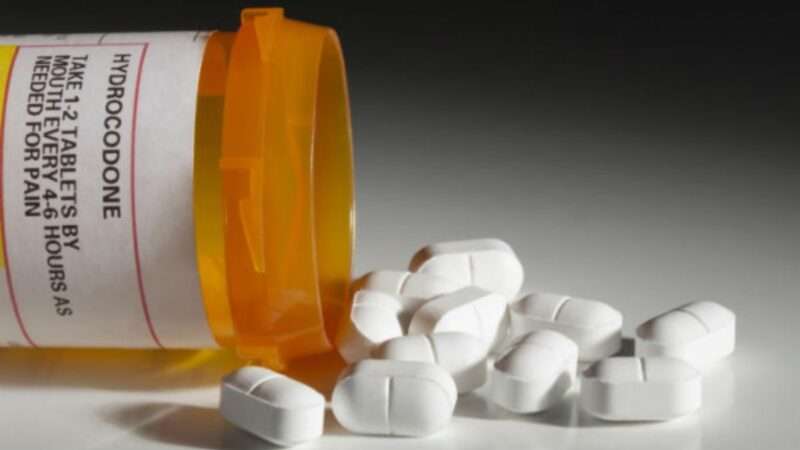
hydrocodone-tablets-Ranjav-Raghav-Flickr

Under 21 USC 841, it is a felony for “any person” to “knowingly or intentionally” distribute or dispense a controlled substance “except as authorized by this subchapter.” Yesterday the Supreme Court considered how that language from the Controlled Substances Act (CSA) applies to physicians accused of prescribing opioid pain medication “outside the usual course of professional medical practice.” That issue is important for patients as well as doctors, because the threat of criminal prosecution for deviating from what the Drug Enforcement Administration (DEA) considers medically appropriate has a chilling effect on pain treatment.

The CSA authorizes physicians with DEA registrations to prescribe controlled substances. But according to a CSA regulation, a valid prescription “must be issued for a legitimate medical purpose by an individual practitioner acting in the usual course of his professional practice.” Grammatically speaking, Justice Samuel Alito argued, the phrase “knowingly or intentionally” cannot be read as applying to deviations from that ambiguous standard. Justice Stephen Breyer disagreed.

Regardless of whether Alito or Breyer is right on that point, most of the justices seemed to agree that “the presumption of scienter”—some degree of intent or knowledge—applies when the government seeks to imprison doctors based on their prescribing practices. Even if the CSA does not explicitly require that a doctor “knowingly or intentionally” departed from accepted medical practice, Justice Neil Gorsuch noted, one could still argue that “the ‘except’ clause has to have some mens rea element to it, because it’s what distinguishes lawful from unlawful conduct.”

Even Deputy Solicitor General Eric Feigen, who was defending the federal government’s position on how the CSA should be applied to prescribers, conceded that point. Feigen argued that the proper test is whether a doctor made “an honest effort” to “practice some recognizable form of medicine.”

By contrast, the U.S. Court of Appeals for the 11th Circuit has held that a physician’s “good faith belief that he dispensed a controlled substance in the usual course of his professional practice is irrelevant” to the question of whether he violated the CSA. Based on that reading of the law, the 11th Circuit rejected the appeal of a Mobile, Alabama, pain specialist who was sentenced to 21 years in federal prison for writing opioid prescriptions that deviated from accepted practice. According to the 11th Circuit, it did not matter at all whether the defendant, Xiulu Ruan, sincerely believed that he was doing what a doctor is supposed to do.

That decision is one of two involving physicians convicted of drug trafficking that the Supreme Court is reviewing. In the other case, the U.S. Court of Appeals for the 10th Circuit likewise held that a doctor’s good faith has no bearing on the question of whether his prescriptions were written in “the usual course of professional practice,” which it said must be determined “objectively.” That case involves Casper, Wyoming, physician Shakeel Kahn, who was sentenced to 25 years in prison.

Justice Brett Kavanaugh was clearly troubled by the implications of those decisions. “The doctor may have violated that objective standard but might have legitimately thought that the standard was somewhat different,” he observed while questioning Beau Brindley, the attorney representing Kahn. “In those circumstances,” Kavanaugh said, summarizing Brindley’s argument, the doctor “should not be sent away for 20 years to prison.”

The phrase “legitimate medical purpose,” Kavanaugh added, is “very vague language in my estimation, and reasonable people can disagree.” While questioning Feigen, Kavanaugh noted that cases like these typically feature dueling expert witnesses who disagree about the propriety of the defendant’s conduct. “If you’re on the wrong side of a close call,” he asked, “you go to prison for 20 years?”

Gorsuch underlined that point. “Even though it’s an extremely close case,” he said, “that individual stands, under the government’s view, unable to shield himself behind any mens rea requirement and is subject to essentially a regulatory crime encompassing 20 years to maybe life in prison.”

Justice Clarence Thomas likewise focused on the fact that severe criminal penalties can be imposed on physicians for what amounts to a regulatory infraction: violating the conditions of their DEA registration. “If a doctor in the State of Virginia, for example, does not comply with his or her license, then you lose your license to practice medicine,” he said. “So it’s regulatory. Here, there isn’t that intermediate step—that is, that you lose your registration that allows you to prescribe certain drugs. Instead, it’s folded into the underlying criminal violation….My concern [is] that we seem to be doing two things at the same time, with some quite significant criminal penalties.”

Brindley argued that criminal liability is appropriate only when a doctor has clearly stopped practicing medicine and is instead engaged in drug trafficking. He noted that the Court addressed this distinction in Gonzales v. Oregon, a 2005 decision that rejected an attempt to revoke the DEA registrations of doctors who prescribed drugs for assisted suicide. “The statute and our case law amply support the conclusion that Congress regulates medical practice insofar as it bars doctors from using their prescription-writing powers as a means to engage in illicit drug dealing and trafficking as conventionally understood,” the Court said. “Beyond this, however, the statute manifests no intent to regulate the practice of medicine generally.”

While a doctor who fails to prescribe drugs with appropriate care may be guilty of malpractice or of violating state medical regulations, Brindley argued, he is not “engage[d] in illicit drug dealing and trafficking as conventionally understood.” The government’s position “allows conviction of doctors who misapprehend the extent of their obligations but are not drug dealing as conventionally understood,” he said. “There are myriad mechanisms for protecting patients from doctors who violate the standard of care in various ways. That is not the function of Section 841. The question under 841 is not whether a doctor was a bad doctor but whether he was a drug dealer. Thus, under 841, any good faith definition must be based solely on the sincerity of the doctor’s purpose in writing the prescription.”

That standard, Feigen warned, leaves doctors free to decide for themselves what is medically appropriate, regardless of what their colleagues think. But Brindley noted that the government can still present evidence that a doctor’s prescriptions were plainly contrary to accepted practice, which goes to the question of whether he honestly believed his decisions were sound. When “all of the objective evidence comes in” and “it says that your position is crazy,” Brindley said, “you’re going to get convicted. That’s the reality.”

Feigen described the government’s preferred test, which he called “an objective
honest effort standard” and “a form of extreme objectively grounded mens rea,” this way: “You can’t be convicted so long as you took an honest effort to prescribe for a legitimate medical purpose. And there can be reasonable mistakes about what legitimate medical purposes are.”

Gorsuch seemed skeptical: “‘An honest effort.’ See, I don’t know what that means. But I do know what ‘knowing’ and ‘intentional’ mean.”

Like Brindley, Lawrence Robbins, the attorney representing Ruan, argued that a doctor should not be convicted under 21 USC 841 “unless the government proves that her prescriptions were made without a good-faith medical purpose.” But if the Court decides that an “honest effort” standard makes more sense, Robbins said, it should recognize that such a rule likewise incorporates a subjective element, contrary to the way the government frames it.

Feigen cited the jury instruction mentioned in the 1975 case United States v. Moore, which involved a doctor who “prescribed large quantities of methadone for patients without giving them adequate physical examinations or specific instructions for its use and charged fees according to the quantity of methadone prescribed, rather than fees for medical services rendered.” In a footnote, the Court noted that the jury was told that Moore “could not be convicted if he merely made ‘an honest effort’ to prescribe for detoxification in compliance with an accepted standard of medical practice.”

Robbins said Feigen was wrong to describe that standard as objective. “The defendant said he was just trying a novel technique to solve a problem, but the jury didn’t believe him,” he said. “That says that this is a subjective question. Did he make an honest effort? He said he did because he was using some novel technique, but the jury rejected it. The jury didn’t say: ‘Well, a reasonable doctor wouldn’t do that. An objectively reasonable doctor wouldn’t do that.’ No. They said ‘we don’t believe you,’ which is exactly what juries are entitled to do when they assess the purpose or intent of a defendant.”

Chief Justice John Roberts repeatedly implied that the standards for opioid prescribing and pain treatment are clear, specific, and uncontested, likening them to speed limits. But as Robbins pointed out, there are ongoing debates about how to weigh the risks and benefits of these drugs, which puts doctors who take a position the DEA does not like at risk. “Is there a book that tells us what the right amount of medication is for a certain kind of disability?” Robbins said. “The answer is there is no such book, and that’s the whole problem.”

The post Several Justices Seem Dismayed at the Idea That Doctors Can Be Accidentally Guilty of Drug Trafficking appeared first on Reason.com.

from Latest https://ift.tt/epsPmiR
via IFTTT