“Don’t Get Too Excited” – Bill Gross Warns Investors That Surging Inflation Will Topple Stocks

“Don’t Get Too Excited” – Bill Gross Warns Investors That Surging Inflation Will Topple Stocks

Bill Gross has been retired for a few years at this point, and sometimes, it seems almost as if people forget who he once was. Once known as Wall Street’s “notorious” bond king, Gross was credited with many great plays and plenty of terrible ones as well.

But the same investor who once warned that investors had been lulled into “dreamland” by central banks and their easy monetary policy is now making the media rounds warning that those days are over, and that investors better brace for rough going ahead as interest rates are raised.

He said all that and more in his new book, the aptly titled “I’m Still Standing”, his first since his acrimonious split with his wife and subsequent downright cold-spirited spat with a neighbor.

According to Gross, yields are inching closer to the danger zone (although they declined again on Tuesday) thanks to the risk of inflation, which is spurring the Fed to act.

“Stocks and even bonds can thrive with low-to-mild future inflation,” the billionaire wrote. “But anything beyond 3% and higher” is market-threatening. “Don’t get too excited.”

US consumer prices rose 7.5% in January, the fastest pace in nearly four decades, as we reported at the time.
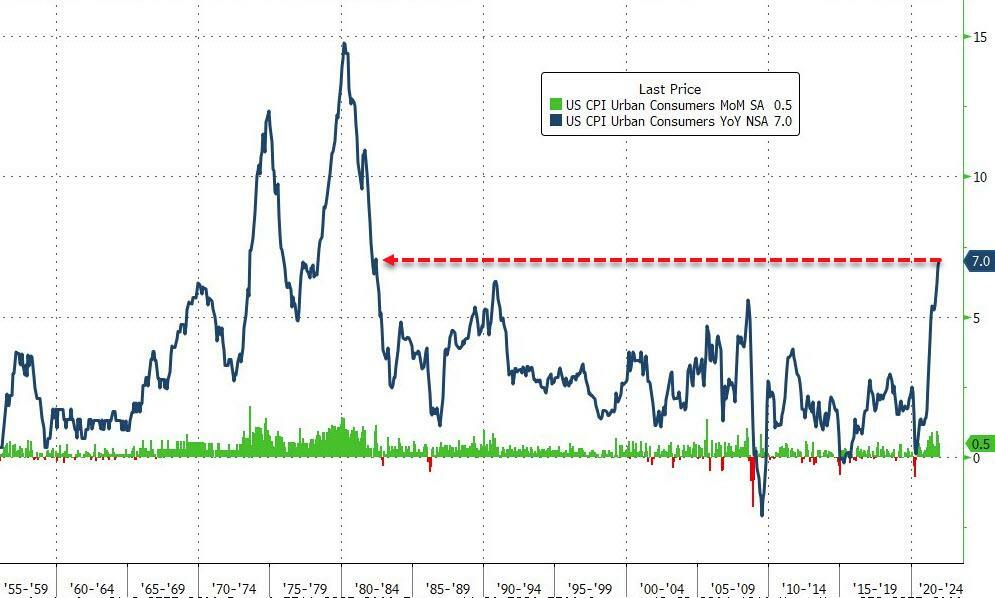
Producer prices continued to climb by record numbers in February, according to official data.

A Bloomberg index tracking a 60-40 portfolio of stocks and bonds has declined 6.7% this year, the worst such year since 2008.

Even more interesting than his market view, Gross offered some new insight into his departure from PIMCO, the California-based firm that he sold to Allianz before eventually quitting in 2014. Why did he leave? According to Gross, he was “fired” after telling one of his superiors from Allianz to “f**k off”.

Classic Gross.

He wrote that he was ousted from Pimco, at least in part, because of a confrontation he had with the chief executive officer of parent company Allianz SE. During a meeting to discuss bonuses at the money manager, Gross recalled, he told then-CEO Michael Diekmann to “f— off.”

“I wanted to show that we were in control and we were the alphas at the table,” Gross wrote. Diekmann replied that “no one speaks to me like that.”

As for his depressing turn at Janus, Gross said it was mostly motivated by ego, and a last-ditch attempt to outperform PIMCO. The problem arose from Gross taking on too much leverage at his unconstrained fund.

“Why Janus? Or why not retire silently to a family office without the complexity of financial regulations and daily interaction with five or six new employees in Newport Beach? Good question,” he wrote. “The answer is I should have, but didn’t.”

He attempted to outrace Pimco while at Janus.”My ego got the best of me there,” Gross wrote. He retired from asset management in 2019.

Gross mentioned a few other hot topics in the book excerpts seen by Bloomberg, including bitcoin, which Gross said he expects will outperform the S&P 500, and ARK’s Cathie Wood, whom Gross slammed as a “two-year wonder”.

Tyler Durden
Wed, 03/02/2022 – 14:06

via ZeroHedge News https://ift.tt/96RATsO Tyler Durden

Texas Sued As State Starts Investigating Parents of Trans Children for ‘Child Abuse’


transprotest_1161x653

The American Civil Liberties Union has filed suit in Texas to prevent government officials from investigating parents for child abuse if they seek medical treatment for their transgender children.

Last week Republican Gov. Greg Abbott, responding to a memo from Republican Attorney General Ken Paxton, ordered the state’s Department of Family and Protective Services (DFPS) to launch these investigations. Paxton argued in his memo that any sort of medical treatment of a trans minor constituted child abuse because some treatments may interfere with the child’s ability to reproduce.

However, this threat didn’t just cover gender reassignment surgery—something that normally doesn’t happen to minors anyway—but also hormonal treatments that block the impacts of puberty on a trans teen—something that doesn’t sterilize them and is reversible. The order also came with a massive threat to any government official or health worker inclined to look the other way: They could also be prosecuted if they knew a parent was pursuing medical treatment for a trans child and did not report them to the authorities.

While this might have looked like the latest loudmouthed culture war fight—the memo doesn’t change the state’s statutory definition of child abuse—the Texas DFPS has begun investigating parents of trans kids. The first target was one of their own. The New York Times reports that the DFPS put one of its own staff members on leave as the agency investigates her over the medical treatment her 16-year-old trans daughter is receiving. The agency has attempted to demand the mother (who is not identified) provide the teen’s medical records. She’s refusing, and now with the ACLU’s help, she’s suing to attempt to stop both the investigation and enforcement of Abbott’s order.

The ACLU’s lawsuit, filed Tuesday in the District Court of Travis County, Texas, after spending pages explaining the process by which this banned treatment is recommended by medical professionals, zeros in on a position libertarians can appreciate: The governor, attorney general, and the DFPS do not have the authority to do any of this under Texas’ own laws. The parent and child (both listed as Does) are joined as plaintiffs in the lawsuit by Megan Mooney, a psychologist who treats trans patients and is legally required by Texas law to report actual child abuse to the state.

Texas lawmakers considered a bill just last year, S.B. 1646, that would have amended the state’s statutory definition of “child abuse” to include medical treatments for trans youths. The bill didn’t pass. The ACLU notes that after the bill failed, Abbott went on a radio to explain that he had a “solution” to this alleged problem. That solution was for the attorney general’s office to administratively declare that this treatment could count as child abuse anyway, deliberately ignoring all the professional medical organizations who say otherwise (including the Texas Pediatric Society).

This decision, according to the ACLU, puts Abbott, Paxton, and the DFPS at odds with Texas’ Administrative Procedure Act, which controls the process by which Texas agencies implement new rules. The ACLU argues that the decision to start investigating parents of trans kids as possible abusers obviously constitutes a change of rules, but it didn’t go through the process indicated by law. In short, nobody involved in this decision has the authority to just declare any of this.

“Every major medical organization in the United States considers the treatment now effectively banned and criminalized by DFPS to be medically necessary,” the lawsuit argues. “Such a radical disregard of medical science and the medical needs of a subset of minors in Texas cannot be squared with the agency’s authority by prescribed by Statute.”

The ACLU is asking the court to stop the DFPS from using Abbot’s and Paxton’s memos as justification to investigate parents of trans kids for child abuse over medical treatment; a judgement that the policy violates the state’s Administrative Procedure Act; a declaration that Abbott and DFPS have acted outside of their constitutional authority; and potentially a permanent injunction.

Critics of helping minors transition say parents are rushing into major decisions without a full understanding of the risks. Whether that’s true, the solution is not to put politicians and the government in control of what constitutes legitimate medical treatment. We’ve just endured two years of bizarre and seemingly arbitrary COVID-19 public health rules, many of which were not supported by science. Conservatives in particular should be very aware by now that politics is a poor mechanism for determining proper medical treatment. Politicians don’t decide what medical treatments work or don’t work. They decide which ones are legal or forbidden.

The ACLU includes in their lawsuit an appeal to parents’ rights, something that Abbott claims to support:

By, in effect, cutting off the ability of parents to treat their minor adolescent children in accordance with doctor-recommended and clinically appropriate care, the agency’s new rule infringes on the Does’ parental rights. The agency’s new rule substitutes parents’ judgment as to what medical care is in the best interests of their children for the judgment of the government.

But it turns out that in this case, throwing the parents of trans teens under the bus is a big political winner, according to Abbott’s political strategist. Don’t trust politicians in general, but especially don’t trust politicians who only believe in certain parents’ rights and not others.

The post Texas Sued As State Starts Investigating Parents of Trans Children for 'Child Abuse' appeared first on Reason.com.

from Latest https://ift.tt/cCGia2R
via IFTTT

The War in Ukraine, II

I am astonished that in all the 24/7 coverage of the Russian invasion, so little attention is being paid to what to my eyes seems clearly to be a most – perhaps the most – significant development of the past few days: The utter silence, on both the Russian and the Ukrainian side, about what they talked about at their first negotiating session at the border, followed, today, by the announcement that they will be holding a second round of talks shortly.

This is exactly what you would expect to happen if there were actually serious proposals under consideration. If it was all just arm-waving and table-pounding, you’d think that one side, or both, would have said so, blaming the other side for the futility of the exercise. I take the fact that the Ukrainians have agreed to a second meeting as a very positive sign; they must think that something useful could come out of continuing the discussions, and they’re in a helluva lot better position to make that judgment than I am.

One thing is crystal clear: the Russians did not want to be in this position. When the invasion began, Putin had no intention of negotiating with Zelensky or his government. His plan – does anyone doubt this? – was to destroy Zelensky and his government, and then to get on with things. That wasn’t merely incidental to his overall objective – it was his overall objective.

But now, six days in, he’s negotiating with Zelensky.  Maybe it’s a total sham, and he’s just doing it to bide time, or for the publicity value. But the Ukrainians appear not to think it’s a sham, and I’ll trust their judgment.

What does it mean? It seems to me clear that the Russians want out. Putin has a problem he didn’t anticipate, and it is a problem that, unfortunately for him but fortunately for the civilized world, will not be and cannot be solved on the battlefield.  The problem, of course, is the new weapon the Allies have deployed – collectively, the “sanctions” – which appears to be capable of laying waste to the Russian economy and the Russian standard of living. “Bombing them back to the Stone Age,” as it were, but without the use of bombs.

And the Russians must surely see that that problem will not go away, even if they gain their objectives on the battlefield. Indeed, that may well make the problem worse; marching into and occupying Kharkiv and Kyiv, dissolving the government, imprisoning, or murdering, Zelensky and his associates, none of that is likely to further endear Putin to the world or to cause the Allies to loosen the noose.

So I continue to be optimistic that this tragedy may be coming to an end, because I think the Russians are pretty anxious for a way out, and I think – or at least I hope – that the Ukrainians can find one, some concession that they can swallow that gives Putin a way to declare victory and leave.

And in the true spirit of putting my money where my mouth is, I’ve got $50 that says that the war is over, and the Russians are on their way out of Ukraine, by the end of this month. First one to take me up on that in the Comments is in.

One advantage, incidentally, that the Allies’ new weapon has in comparison to conventional weapons of war is that its effects are, to a very substantial degree, entirely reversible. The sanctions are a kind of siege – nothing comes in, nothing goes out, if it works well; once it is called off and the gates re-open, the Russian economy can return rather quickly to something like its pre-war state.  That, one has to assume, must be part of the negotiations now underway – some guarantee that the sanctions will be lifted if/when the Russians leave. [Which could get tricky, insofar as the Ukrainians aren’t the ones imposing the sanctions]

So it’s really not like bombing Russia back to the Stone Age, whose effects would not be so easily reversed.

Not to mention that actually bombing Russia back to the Stone Age – which we do, after all, have the capacity to do – would invite a retaliation whose consequences are obviously too horrible to contemplate.

But that points to another nice feature of the new weapon we have deployed: Russia can’t turn it against us in retaliation.  It can lay siege to Kyiv, on the ground; but it can’t lay siege to the US economy, let alone all the component Allied economies, the way we can lay siege to its economy.  That’s a nice weapon to have at your disposal.


The post The War in Ukraine, II appeared first on Reason.com.

from Latest https://ift.tt/j5l9Lum
via IFTTT

The War in Ukraine, continued

I am astonished that in all the 24/7 coverage of the Russian invasion, so little attention is being paid to what to my eyes seems clearly to be a most – perhaps the most – significant development of the past few days: The utter silence, on both the Russian and the Ukrainian side, about what they talked about at their first negotiating session at the border, followed, today, by the announcement that they will be holding a second round of talks shortly.

This is exactly what you would expect to happen if there were actually serious proposals under consideration. If it was all just arm-waving and table-pounding, you’d think that one side, or both, would have said so, blaming the other side for the futility of the exercise. I take the fact that the Ukrainians have agreed to a second meeting as a very positive sign; they must think that something useful could come out of continuing the discussions, and they’re in a helluva lot better position to make that judgment than I am.

One thing is crystal clear: the Russians did not want to be in this position. When the invasion began, Putin had no intention of negotiating with Zelensky or his government. His plan – does anyone doubt this? – was to destroy Zelensky and his government, and then to get on with things. That wasn’t merely incidental to his overall objective – it was his overall objective.

But now, six days in, he’s negotiating with Zelensky.  Maybe it’s a total sham. But the Ukrainians appear not to think it’s a sham, and I’ll trust their judgment.

What does it mean? It seems to me clear that the Russians want out. Putin has a problem he didn’t anticipate, and it is a problem that, unfortunately for him but fortunately for the civilized world, will not be and cannot be solved on the battlefield.  The problem, of course, is the new weapon the Allies have deployed – collectively, the “sanctions” – which appears to be capable of laying waste to the Russian economy and the Russian standard of living. “Bombing them back to the Stone Age,” as it were, but without the use of bombs.

And the Russians must surely see that that problem will not go away, even if they gain their objectives on the battlefield. Indeed, that may well make the problem worse; marching into and occupying Kharkiv and Kyiv, dissolving the government, imprisoning, or murdering, Zelensky and his associates, none of that is likely to further endear Putin to the world or to cause the Allies to loosen the noose.

So I continue to be optimistic that this tragedy may be coming to an end, because I think the Russians are pretty anxious for a way out, and I think – or at least I hope – that the Ukrainians can find one, some concession that they can swallow that gives Putin a way to declare victory and leave.

And in the true spirit of putting my money where my mouth is, I’ve got $50 that says that the war is over, and the Russians are on their way out of Ukraine, by the end of this month. First one to take me up on that in the Comments is in.

One advantage, incidentally, that the Allies’ new weapon has in comparison to conventional weapons of war is that its effects are, to a very substantial degree, entirely reversible. The sanctions are a kind of siege – nothing comes in, nothing goes out, if it works well; once it is called off and the gates re-open, the Russian economy can return rather quickly to something like its pre-war state.  That, one has to assume, must be part of the negotiations now underway – some guarantee that the sanctions will be lifted if/when the Russians leave. [Which could get tricky, insofar as the Ukrainians aren’t the ones imposing the sanctions]

So it’s really not like bombing Russia back to the Stone Age, whose effects would not be so easily reversed.

Not to mention that actually bombing Russia back to the Stone Age – which we do, after all, have the capacity to do – would invite a retaliation whose consequences are obviously too horrible to contemplate.

But that points to another nice feature of the new weapon we have deployed: Russia can’t turn it against us in retaliation.  It can lay siege to Kyiv, on the ground; but it can’t lay siege to the US economy, let alone all the component Allied economies, the way we can lay siege to its economy.  That’s a nice weapon to have at your disposal.


The post The War in Ukraine, continued appeared first on Reason.com.

from Latest https://ift.tt/j5l9Lum
via IFTTT

EU Plans To Send Fighter Jets To Ukraine Fall Apart

EU Plans To Send Fighter Jets To Ukraine Fall Apart

Authored by Dave DeCamp via AntiWar.com,

An EU plan to send fighter jets to Ukraine appears to be falling apart as each country that was reportedly going to deliver the planes is now denying involvement.

The plan announced Monday by EU foreign policy chief Josep Borrel was meant to give Ukraine old Russian-made MiG-29 and Su-24 fighter jets, which Ukraine’s pilots are already trained to fly. Poland, Bulgaria, and Slovakia were reportedly lined up to transfer the planes, but officials from each country denied the plan. “Slovakia will not provide fighter jets to Ukraine,” the Slovak Foreign Ministry told Newsweek on Tuesday.

RAF typhoon, via EPA

Bulgarian Prime Minister Kiril Petkov said Monday that Bulgaria doesn’t have enough warplanes to guard its own airspace, let alone enough to send to Ukraine.

On Monday, Ukraine’s parliament claimed Poland planned on giving Ukraine MiG-29 fighters, but Polish Prime Minister Mateusz Morawiecki denied the plans. “Poland doesn’t have such plans,” Mateusz said on Tuesday.

An unnamed EU diplomat told Politico that some EU countries were “outraged” after Borrel announced that the bloc would be giving Ukraine warplanes since his announcement came shortly after Russia’s nuclear forces were put on high alert.

“Making such announcements on the same day that Russian President Vladimir Putin announced to put his nuclear deterrence force on ‘high alert’ risks to escalate the situation further,” the diplomat said.

While the EU isn’t sending fighter jets, the US and its European allies have been busy pledging to send new weapons to Ukraine, including Stinger anti-aircraft missiles and Javelin anti-tank missiles.

Ukraine has asked for the Western powers to establish a “no-fly zone,” but the request has been ruled out by the US and NATO since it would mean direct military confrontation with Russia.

Tyler Durden
Wed, 03/02/2022 – 13:44

via ZeroHedge News https://ift.tt/fVH98Se Tyler Durden

Motivational Speaker Loses Copyright Lawsuit Against High School

From last week’s decision by Fifth Circuit Judge Gregg Costa (joined by Judges Carolyn Dineen King and Don Willett) in Bell v. Eagle Mountain Saginaw Indep. School Dist.:

The softball team and flag corps at a public high school outside Fort Worth used their Twitter accounts to post a motivational passage [230 words, or one page from a 72-page book -EV] from sports psychologist Keith Bell’s book, Winning Isn’t Normal.

We do not know if the tweets motivated the students to perform at a higher level. We do know that the tweets resulted in Bell’s suing the school district for copyright infringement. We must decide if the tweets were a fair use of the copyright that bars this suit.

Apparently the author, Dr. Keith Bell, had filed “over 25 copyright lawsuits” “[b]etween 2006 and 2017” over “unauthorized uses of [this] passage,” mostly against “public schools or nonprofits, which published the WIN Passage on social media.” But this time he lost:

[T]he school’s tweets were fair use. This conclusion comports with the “ultimate test of fair use”: whether copyright law’s goal of promoting creativity would be better served by allowing the use than preventing it. The complaint does not suggest that the school’s use had any cognizable, adverse impact on Bell. What it does make clear is that the softball team and flag corps used Bell’s work in good faith, for no commercial gain, and for the laudable purpose of motivating students to succeed. We cannot see how the creative arts would be better served by permitting Bell’s suit to proceed. Because a successful fair-use defense “appears on the face of the complaint,” and Bell can “prove no set of facts” that would overcome it, the district court properly dismissed the case.

And the Fifth Circuit upheld the district court’s award of fees ($10,266.37) to the defendants:

Bell is not the typical copyright plaintiff seeking “a fair return for [his] creative labor.” He has a long history of suing public institutions and nonprofit organizations over de minimis uses of his work. {See e.g., Bell v. Worthington City Sch. Dist., 2020 WL 2905803, at *3 (S.D. Ohio June 2, 2020) (tweet by a high-school basketball coach); Bell v. Llano Indep. Sch. Dist., 2020 WL 5370591, at *1 (W.D. Tex. Feb. 13, 2020) (same); Bell v. Oakland Cmty. Pools Project, Inc., 2020 WL 4458890, at *1 (N.D. Cal. May 4, 2020) (tweet by a non-profit aquatics center for disadvantaged youth); Bell v. Granite Sch. Dist., No. 2:19-CV-00209-DBB (D. Utah 2019) (reading the WIN Passage at a public school’s sports awards banquet).

Taking these cases into account, the district court reasonably concluded that Bell is a serial litigant, who makes exorbitant demands for damages in hopes of extracting disproportionate settlements. This case is another in the line. The school shared a single page of Bell’s work with fewer than 1,000 online followers and immediately removed the posts upon request. Bell was unable to identify any actual financial injury associated with that use but brought suit anyway. Attorney’s fees were thus an appropriate deterrent, both with respect to Bell and other copyright holders who might consider a similar business model of litigation.

The post Motivational Speaker Loses Copyright Lawsuit Against High School appeared first on Reason.com.

from Latest https://ift.tt/dyi8A2B
via IFTTT

My New Article on “Immigration and the Economic Freedom of Natives”


Statue of Liberty 3
The Statue of Liberty.


A draft version of new article on “Immigration and the Economic Freedom of Natives” (forthcoming in a symposium in Public Affairs Quarterly) is now available on SSRN. Here is the abstract:

Much of the debate over the justice of immigration restrictions properly focuses on their impact on would-be migrants. For their part, restrictionists often focus on the potentially harmful effects of immigration on residents of receiving countries. This article cuts across this longstanding debate by focusing on ways in which immigration restrictions inflict harm on natives, specifically by undermining their economic liberty. The idea that such effects exist is far from a new one. But this article examines them in greater detail, and illustrates their truly massive scale. It covers both the libertarian “negative” view of economic freedom, and the more “positive” version advanced by left-liberal political theorists.

Part I focuses on libertarian approaches to economic freedom. It shows that migration restrictions severely restrict the negative economic liberty of natives, probably more than any other government policy enacted by liberal democracies. That is true both on libertarian views that value such freedom for its own sake, and those that assign value to it for more instrumental reasons, such as promoting human autonomy and enabling individuals to realize their personal goals and projects.

In Part II, I take up left-liberal “positive” theories of economic freedom, which primarily focus on enhancing individuals’ access to important goods and services, and enabling them to have the resources necessary to live an autonomous life. Some also focus on expanding human capacities generally, or give special emphasis to enhancing the economic prospects of the poor. Here too, migration restrictions impose severe costs on natives. To the extent migration can sometimes harm the economic prospects of natives, the issue is better dealt with by “keyhole solutions” that address specific problems by means other than restricting migration.

Finally, Part III describes how to address situations where potentially harmful side effects of migration might undermine either negative or positive economic liberty of natives, without actually restricting migration. I have addressed such issues in greater detail in previous work, and here provide only a short summary of my approach and its relevance for economic liberty issues.

I am looking for some alternative to “natives” as a concise, non-clunky way to refer to “current citizens of destination countries.” I welcome any suggestions readers might come up with. E-mail me if you have one!

The post My New Article on "Immigration and the Economic Freedom of Natives" appeared first on Reason.com.

from Latest https://ift.tt/wHudY3r
via IFTTT

The Ukrainian Embassy in D.C. is Located in William Marbury’s Home

In 1992, the Embassy of Ukraine moved to the Forrest-Marbury House in Georgetown. That building was built circa 1788. Uriah Forrest, an early mayor of Georgetown, resided there. Around 1800, William Marbury moved into the house. Yes, the same William Marbury who didn’t get his commission. Maybe John Marshall couldn’t make his way out to Georgetown in time! Marbury lived in his house during the Marbury v. Madison litigation.

If you watch some of the media coverage of the Ukrainian embassy, you can see the commemorative plaque.

I posted this photo on my blog in 2014.

It reads:

From 1800 to 1835, residence of the William Marbury of the legal case Marbury v.Madison. In 1803, through this case, the United States Supreme Court established its right to judicial review of congressional action

The second sentence is not accurate, but I appreciate the recognition of Marbury’s role.


The post The Ukrainian Embassy in D.C. is Located in William Marbury's Home appeared first on Reason.com.

from Latest https://ift.tt/4mjfc85
via IFTTT

When Ketanji Brown Jackson Represented the Cato Institute

In addition to having been an appellate judge, trial court judge, and public defender, Supreme Court nominee Ketanji Brown Jackson spent some time in private practice at Morrison & Foster. Like many lawyers, she devoted some of her time to pro bono work. One of her projects was serving as counsel of record on an amicus brief submitted in Al-Marri v. Spagone, a case concerning the military’s authority to detain individuals who were lawfully present in the country. Of particular note, this brief was submitted on behalf of the Constitutional Project, the Rutherford Institute, and the Cato Institute.

The brief argued that the military’s detention of Ali Saleh Kahlah Al-MArri was unlawful. I’ve reproduced the summary of the argument below the jump.

The government has claimed, and the fractured en banc Fourth Circuit erroneously concluded, that the President has authority to use the military to detain, without charge or trial, persons who are lawfully in the United States and who have allegedly engaged in terrorism-related conduct.

There is no such authority—not in any Act of Congress nor in the Constitution. Thus, neither the government’s claim nor the ruling below can be sustained.

A.

The government has pointed to the Authorization for Use of Military Force (AUMF), Pub. L. No. 107-40, 115 Stat. 224 (2001), as the source of congressional authorization for its use of the military for domestic detention, but that statute is silent on the issue and speaks only in general terms about use of military force. It does not satisfy the Court’s clear statement rule that requires Congress to expressly authorize the Executive’s use of military detention power in lieu of civilian criminal prosecution within the domestic sphere. This Court has never inferred such an authorization from general declarations of military force by Congress.

This Court’s conclusion in Hamdi v. Rumsfeld, 542 U.S. 507, 518 (2004), that the AUMF implicitly authorizes certain military detentions does not govern the instant case because the ruling in Hamdi applies only to the military detention of persons taken prisoner on a foreign battlefield, inside a zone of active combat. Hamdi does not extend to the military detention of individuals who are lawfully in the United States, far from the foreign battlefield.

It is the USA Patriot Act of 2001, Pub. L. No. 107-56, 115 Stat. 272, that granted the Executive authority to detain terrorism suspects present in the United States. Congress considered the Patriot Act contemporaneously with the AUMF and enacted it a few weeks later. The Patriot Act does not authorize Executive detention in the United States by use of the military without charge or trial, and the government makes no such contention.

The government’s reading of the AUMF to authorize the domestic military detention it seeks in this case would render superfluous Congress’s enactment of the more specific domestic detention provisions of the Patriot Act. The legislative history of the Patriot Act demonstrates that Congress intended the Patriot Act, not the AUMF, to provide the President with detention power over terror suspects who are in the United States lawfully. It also demonstrates that Congress considered—and declined to grant—the military detention power that the government now claims.

B.

Lacking express congressional authorization, the government has asserted that the Executive has the inherent authority under the Commander-in-Chief Clause in Article II of the Constitution to use the military to detain persons who are lawfully in the United States. But the Commander-in-Chief Clause grants no such authority. Under the Constitution, the use of military power is a shared responsibility between the Legislature and the Executive, and even the President’s broad power to wage war overseas as Commander-in-Chief requires congressional authorization.

This constitutional diffusion of government power regarding the use of the military reflects the Framers’ desire to guard against any threats to democratic government posed by standing armies controlled by a potentially tyrannical Executive. And this constitutional structure confirms the need for explicit authorization from Congress for the President to use the military to detain without charge or trial persons who are lawfully in the United States.

C.

Allowing the Executive to use the military to detain, without charge or trial, persons who are lawfully in the United States could give rise to manipulation of the civilian criminal justice system. Such manipulation threatens the constitutionally protected liberty of every person who is lawfully in the United States, including American  citizens.

The post When Ketanji Brown Jackson Represented the Cato Institute appeared first on Reason.com.

from Latest https://ift.tt/kWg2qsE
via IFTTT

Motivational Speaker Loses Copyright Lawsuit Against High School

From last week’s decision by Fifth Circuit Judge Gregg Costa (joined by Judges Carolyn Dineen King and Don Willett) in Bell v. Eagle Mountain Saginaw Indep. School Dist.:

The softball team and flag corps at a public high school outside Fort Worth used their Twitter accounts to post a motivational passage [230 words, or one page from a 72-page book -EV] from sports psychologist Keith Bell’s book, Winning Isn’t Normal.

We do not know if the tweets motivated the students to perform at a higher level. We do know that the tweets resulted in Bell’s suing the school district for copyright infringement. We must decide if the tweets were a fair use of the copyright that bars this suit.

Apparently the author, Dr. Keith Bell, had filed “over 25 copyright lawsuits” “[b]etween 2006 and 2017” over “unauthorized uses of [this] passage,” mostly against “public schools or nonprofits, which published the WIN Passage on social media.” But this time he lost:

[T]he school’s tweets were fair use. This conclusion comports with the “ultimate test of fair use”: whether copyright law’s goal of promoting creativity would be better served by allowing the use than preventing it. The complaint does not suggest that the school’s use had any cognizable, adverse impact on Bell. What it does make clear is that the softball team and flag corps used Bell’s work in good faith, for no commercial gain, and for the laudable purpose of motivating students to succeed. We cannot see how the creative arts would be better served by permitting Bell’s suit to proceed. Because a successful fair-use defense “appears on the face of the complaint,” and Bell can “prove no set of facts” that would overcome it, the district court properly dismissed the case.

And the Fifth Circuit upheld the district court’s award of fees ($10,266.37) to the defendants:

Bell is not the typical copyright plaintiff seeking “a fair return for [his] creative labor.” He has a long history of suing public institutions and nonprofit organizations over de minimis uses of his work. {See e.g., Bell v. Worthington City Sch. Dist., 2020 WL 2905803, at *3 (S.D. Ohio June 2, 2020) (tweet by a high-school basketball coach); Bell v. Llano Indep. Sch. Dist., 2020 WL 5370591, at *1 (W.D. Tex. Feb. 13, 2020) (same); Bell v. Oakland Cmty. Pools Project, Inc., 2020 WL 4458890, at *1 (N.D. Cal. May 4, 2020) (tweet by a non-profit aquatics center for disadvantaged youth); Bell v. Granite Sch. Dist., No. 2:19-CV-00209-DBB (D. Utah 2019) (reading the WIN Passage at a public school’s sports awards banquet).

Taking these cases into account, the district court reasonably concluded that Bell is a serial litigant, who makes exorbitant demands for damages in hopes of extracting disproportionate settlements. This case is another in the line. The school shared a single page of Bell’s work with fewer than 1,000 online followers and immediately removed the posts upon request. Bell was unable to identify any actual financial injury associated with that use but brought suit anyway. Attorney’s fees were thus an appropriate deterrent, both with respect to Bell and other copyright holders who might consider a similar business model of litigation.

The post Motivational Speaker Loses Copyright Lawsuit Against High School appeared first on Reason.com.

from Latest https://ift.tt/dyi8A2B
via IFTTT