US Stocks Will Underperform Global Equities Over Next Decade

US Stocks Will Underperform Global Equities Over Next Decade

Authored by Mark Cudmore, Bloomberg macro strategist,

The US stock market capitalization accounts for 44.1% of the global equities market.

That’s near the seeming limit of the past 20 years (Bloomberg data on this only goes back to September 2003) and there are structural reasons why the US share should decline over the coming years.

It’s not just that US stocks are extremely expensive when compared to most other global share markets or even their own internal history. It’s that the US slice of global market cap is very stretched relative to the US share of global GDP.

The share of global GDP stood at 25.3% as of end-2022, according to World Bank data.

That’s been on a declining trend over the past 60 years, with volatility provided by significant currency effects. It’s intuitive and unsurprising that the decline will continue.

The US has a falling share of the world population and is growing more slowly than most of the world. Consensus forecasts on Bloomberg put 2023 US growth at 1.6% versus world (including US) growth at 2.6%. Those are the most important long-term drivers, but over the shorter-term cycle of a few years, the much larger impact is due to currency changes. The dollar rose to a 20-year high in 2022.
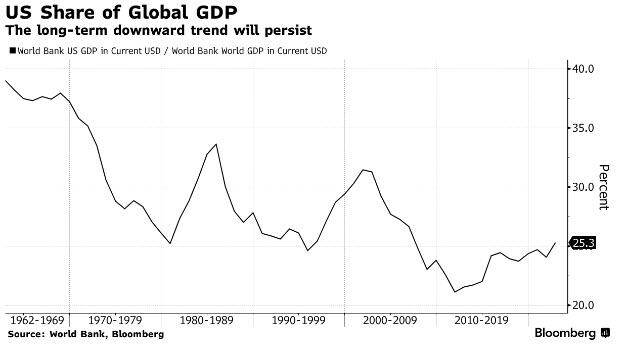
US stock market cap shouldn’t have anything close to a direct 1:1 correlation with the nation’s GDP — they are mostly multinational companies, after all — but there’s some connection.

Over the past decade, US stocks have significantly outperformed the nation’s growth to give them their expensive valuations. Now, all the dynamics are turning negative, on a relative basis, at the same time: GDP growth, share-price valuations and currency impacts.

How quickly can that ratio of global market cap shrink? In November 2010, it fell to 28.6% from a high of 46% in September 2003:
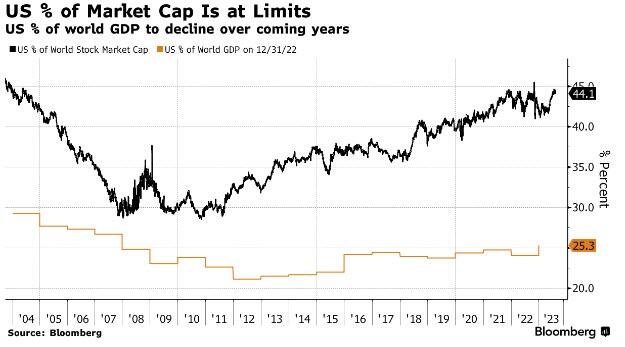
One final point is that this long-term argument makes no assumption on whether stocks are in a bull or bear market. It’s a relative valuation framework.

Tyler Durden
Tue, 08/08/2023 – 06:30

via ZeroHedge News https://ift.tt/djGSOLY Tyler Durden
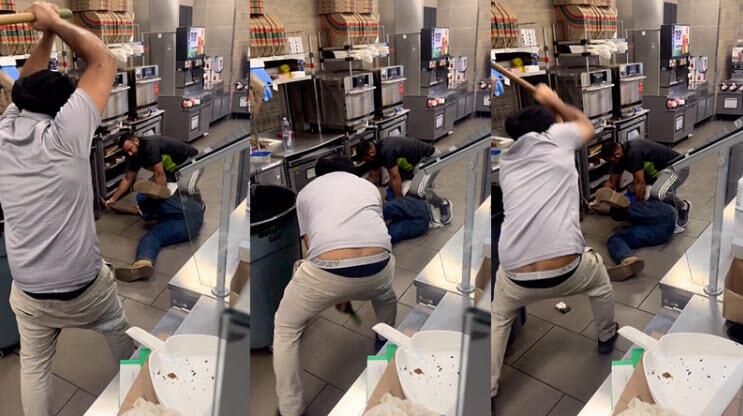
Police Investigating Shop Owner Who Took Down Armed Thief With A Stick

Police Investigating Shop Owner Who Took Down Armed Thief With A Stick

Authored by Steve Watson via Summit News,

Just when it appeared that a law abiding business owner had scored a victory against a scumbag shoplifter for once by subduing him with an almighty thrashing, the police have stepped in to criminally investigate the shopkeeper for assault.

Yes really.

KCRA.com reports that the clerk at a 7-Eleven in Stockton, Northern California, who was captured on video taking down a man threatening to pull a gun and filling up a barrel full of products is now the one under investigation by the cops.

The would be thief had visited the store three times on the evening in question, each time threatening the shop keepers and stealing from them.

On the third attempt he got what was coming to him.

As we see time and again, police don’t even bother preventing robbery anymore, and now they’re treating business owners who are forced to defend themselves as the criminals, while the assailants have somehow become the victims.

We give the last word to Andrea Widburg (at American Thinker), who remarks that when the government encourages lawlessness, as California clearly does, we are no longer witnessing mere property crimes. Instead, we are witnessing the slow death of the people whose property is under endless assault from brazen robbers who know that they cannot be touched.

For the Sikh men, the loss of a job during the shabby Biden economy has the real potential to mean the end of their lives: The end of their having a home, raising a family…heck, even feeding their family. When crime becomes the norm, everyone’s life is at stake.

I sincerely hope that the police conclude that the Sikh men used entirely proportionate force to stop a person who has slowly been killing them.

But since this is California and, as in Superman’s Bizarro Land, everything is backward in the most evil way, I fully expect the robber to get a pass because “he’s been punished enough,” while the brave Sikhs who stepped up in a law-enforcement vacuum, find themselves caught in the California “justice” system.

*  *  *

Brand new merch now available! Get it at https://www.pjwshop.com/

In the age of mass Silicon Valley censorship It is crucial that we stay in touch. We need you to sign up for our free newsletter here. Support our sponsor – Turbo Force – a supercharged boost of clean energy without the comedown.

Also, we urgently need your financial support here.

Tyler Durden
Tue, 08/08/2023 – 05:44

via ZeroHedge News https://ift.tt/ijGfqaM Tyler Durden

Prohibition Gave Us Tranq-Laced Fentanyl


topicsdrugs

The emergence of the animal tranquilizer xylazine as a fentanyl adulterant has prompted law enforcement officials to agitate for new legal restrictions and criminal penalties. That response is fundamentally misguided, because the threat it aims to address is a familiar consequence of prohibition, which creates a black market in which drug composition is highly variable and unpredictable.

Xylazine, a.k.a. “tranq,” was first identified as a drug adulterant in 2006, and today it is especially common in Puerto Rico, Philadelphia, Maryland, and Connecticut. The combination of fentanyl and xylazine poses special hazards.

Like opioids, xylazine depresses respiration, so mixing it with fentanyl can increase the risk of a fatal reaction. Unlike a fentanyl overdose, a xylazine overdose cannot be reversed by the opioid antagonist naloxone.

Xylazine also seems to increase the risk of serious and persistent skin infections and ulcers, which have always been a hazard of unsanitary injection practices. According to a 2022 article in Dermatology World Insights and Inquiries, “the presumed mechanism” is “the direct vasoconstricting effect on local blood vessels and resultant decreased skin perfusion,” which impairs healing.

In 2022, the Drug Enforcement Administration (DEA) reports, xylazine was detected in 23 percent of fentanyl powder and 7 percent of fentanyl pills analyzed by its laboratories. But before the DEA was warning us about xylazine in fentanyl, it was warning us about fentanyl in heroin, and both hazards are the result of laws that the DEA is dedicated to enforcing.

From the perspective of drug traffickers, fentanyl has several advantages over heroin. It is much more potent, which makes it easier to smuggle, and it can be produced much more cheaply and inconspicuously, since it does not require opium poppies. Xylazine has similar advantages: It is an inexpensive synthetic drug that can be produced without crops. And unlike fentanyl, it is not classified as a controlled substance, which makes it easier to obtain.

American drug users are not clamoring for xylazine in their fentanyl, any more than they were demanding fentanyl instead of heroin. The use of such adulterants is driven by the economics of prohibition. And as usual with illegal drugs, consumers do not know what they are getting. Whether it is vitamin E acetate in black market THC vapes, MDMA mixed with butylone, levamisole in cocaine, or fentanyl pressed into ersatz pain pills, prohibition reliably makes drug use more dangerous.

Much to the dismay of veterinarians, drug warriors alarmed by tranq have proposed treating xylazine as a controlled substance. As usual, they think the solution to a problem created by prohibition is more prohibition.

The post Prohibition Gave Us Tranq-Laced Fentanyl appeared first on Reason.com.

from Latest https://ift.tt/ayx7Sw3
via IFTTT

Zelensky Threatens “Russia May Be Left Without Ships” Amid Emerging Battle At Sea

Zelensky Threatens “Russia May Be Left Without Ships” Amid Emerging Battle At Sea

Last week witnessed two major Ukrainian strikes on Russian ships at sea in merely two days, which resulted in severe damage to a warship (seen listing as it was towed to port), and damage to an oil tanker known to supply fuel to Russia’s military in Syria. 

This emerging “battle at sea” also comes as Russia has stepped up major assaults of Ukrainian ports, including on the Black Sea and in the Danube, across from NATO member Romania. 

The Olenegorsky Gornyak, a Russian Navy landing ship, tugged to shore – apparently listing – after it was attacked last Friday. via Reuters

Kiev and Washington have accused President Vladimir Putin of ‘weaponizing food’ – while the Kremlin has blamed Ukraine and its NATO backers for making Black Sea transit routes dangerous, given the sea drone attacks and release of sea mines.

In new statements, President Volodymyr Zelensky has signaled there will be more attacks on Russian ships to come, which is likely to see the conflict slide further toward “unlimited war” – where any and all targets, including civilian, are taken out. 

Zelensky said in a fresh interview with the Latin American publication La Nacion that Ukraine forces will turn the ongoing blockade of Ukrainian ports back on Russia.

If Russia continues to dominate the Black Sea and block it with missiles, then Ukraine will do the same, which is a fair defense of our capabilities,” he said. And significantly, he added:

“If they continue to shoot, we don’t have many weapons, but if they continue to shoot, they may be left without ships until the end of the war. And this is what we want to show them.”

“Therefore, Ukraine will definitely respond to any attacks on the civilian population and grain corridors,” Zelensky emphasized.

He further asserted that Ukraine’s right to produce foodstuffs and export it to global markets via the Black and Azov seas will be defended. 

Romania has meanwhile pledged it will continue to assist Ukraine in exporting its grain via Romanian territory, and by alternative means, as Politico reports Monday:

Romania is working to find more ways to help transport Ukrainian grain, the country’s foreign minister said Monday, describing the security situation in the Black Sea region as “quite serious.” 

More than half of Ukrainian exports using the EU’s solidarity lanes — corridors set up to facilitate transit by road, rail and inland waterway — came through Romania. The European Commission has estimated that more than 65 percent of the grain exported via solidarity lanes in June traveled along the Danube corridor. 

Romanian Foreign Minister Luminița-Teodora Odobescu has blasted Russia’s attacks on grain silos as “really cynical” – also following Moscow’s refusal to renew the Black Sea Grain Initiative deal.

Russia is “seriously impeding Ukrainian grain exports that are a lifeline for vulnerable people in many importing countries,” which “is really exacerbating the global food crisis,” she emphasized.

Tyler Durden
Tue, 08/08/2023 – 05:45

via ZeroHedge News https://ift.tt/KaXo9ie Tyler Durden

The Real Threat Is A Market-Driven Dollar-Downgrade

The Real Threat Is A Market-Driven Dollar-Downgrade

Via SchiffGold.com,

Last week, Fitch Ratings downgraded the US’s long-term credit rating from AAA to AA+. While the downgrade won’t significantly impact the US government’s ability to borrow, it should serve as a wake-up call because there is a much bigger problem looming on the horizon: a market-driven downgrade of the US dollar.

The bond market got pummeled last week with four losing days before a rally on Friday driven by a weaker-than-expected jobs report. That rally wasn’t enough to recover all the losses, and yields finished the week above 4% across the board.

We also saw a reversion in the 5-year and 30-year yields, with the 30-year closing above the 5-year for the first time in quite a while. The 5-year and 10-year yields remain inverted, still flashing recession.

The upward movement of yields on the long end of the curve could indicate that bond traders are starting to reckon with reality, but there is still a long way to go. Generally, investors still seem to think that the Fed will be able to push price inflation back to the low levels we saw during the decade preceding the pandemic. They haven’t figured out that this easing price inflation is transitory. So, the bond market remains priced for a fantasy, although it appeared the smoke might be clearing as yields move up.

Supply and demand dynamics are also driving yields higher. In just two months since Congress reached a deal and suspended the debt ceiling for two years, the national debt has surged by a staggering $1.2 trillion. And the borrowing isn’t going to slow down anytime soon. Last week, the Treasury Department upped its projection for third-quarter debt issuance to $1.01 trillion. That’s up from the $733 billion Q3 projection it imagined in May.

Rising interest rates make a “soft landing” (tackling inflation without a recession) less likely because they are problematic for everybody. Along with the US government, corporations and consumers are buried under debt. As rates rise, it becomes more and more difficult to service that debt or to continue propping up the bubble economy with additional borrowing.

Oil prices also continued their upward climb last week. Oil is up about 30% in this most recent run. The fact that the oil chart looks bullish and the bond chart looks bearish makes sense if the underlying problem in the economy is inflation.

The Fitch Downgrade and the Bigger Problem

With the current debt ceiling fight resolved, Fitch removed the US’s Issuer Default Rating from “watch negative” to “a stable outlook.” But the end of the debt ceiling standoff wasn’t enough to alleviate fears about America’s debt trajectory.

“The repeated debt-limit political standoffs and last-minute resolutions have eroded confidence in fiscal management.”

Nevertheless, the markets generally brushed off the Fitch downgrade. And in the big scheme of things, it is irrelevant.

It doesn’t even make sense to apply a credit rating on the US government. The point of a rating is to indicate the likelihood of default. Nobody is really worried about the US government defaulting because the Federal Reserve can always create more money.

But that doesn’t mean there is no risk in buying US Treasuries. And that risk applies to any bond you buy with US dollars. It doesn’t matter how credit-worthy the issuer of the bond happens to be. In fact, the same risk applies if you take your dollars and stuff them under the mattress.

That risk is inflation.

Every day, your dollar is losing its purchasing power.

Dollar depreciation is like a default. If a government has to resort to a printing press to pay off its bills, you still get your money back when a government bond matures, but you lose purchasing power. The dollars you get back won’t buy as much stuff.

So, an honest rating of US government debt would be junk status — not because of the default risk but because of the high likelihood that it will continue to inflate away the dollar’s value.

In fact, we’re insulting to junk status. You are guaranteed to lose with a long-term US Treasury. There is no chance that you will buy a 30-year Treasury with a yield of just over 4% today and break even at the end of that term. Sure, you’ll get all of your dollars back (most likely), but those dollars won’t have anywhere near the value that they had when you loaned them out.

That raises a key question: if you’re guaranteed to lose with a bond, what should the rating be?

At some point, people need to realize that the fact the US government will have to print money in order to pay its debts is a reason not to buy Treasuries. Keep in mind, Treasuries are just future payments of US dollars. So, you should really be looking at the rating of the currency and consider what the dollar will be worth in 30 years. Will that 4% interest cover what you lose through inflation over that period of time and give you some kind of positive return?

The bottom line is the rating is meaningless. All US government debt is junk. People need to get out of all dollar-denominated debt as quickly as they can.

Tyler Durden
Tue, 08/08/2023 – 05:00

via ZeroHedge News https://ift.tt/4Hyz9sr Tyler Durden

Brickbat: Reckless Driving


Blue police lights at a vehicular accident.

Prosecutors in Seattle are reportedly mulling charges against a police officer who struck and killed a pedestrian. Kevin Dave reached speeds of up to 74 mph while responding to a high priority call, but he had his siren “chirping” instead of running continuously. He struck Jaahnavi Kandula in a crosswalk in an area where the speed limit is 20 to 25 mph. Bodycam video shows Dave after the crash saying “I fucked up.”

The post Brickbat: Reckless Driving appeared first on Reason.com.

from Latest https://ift.tt/9lf0s67
via IFTTT

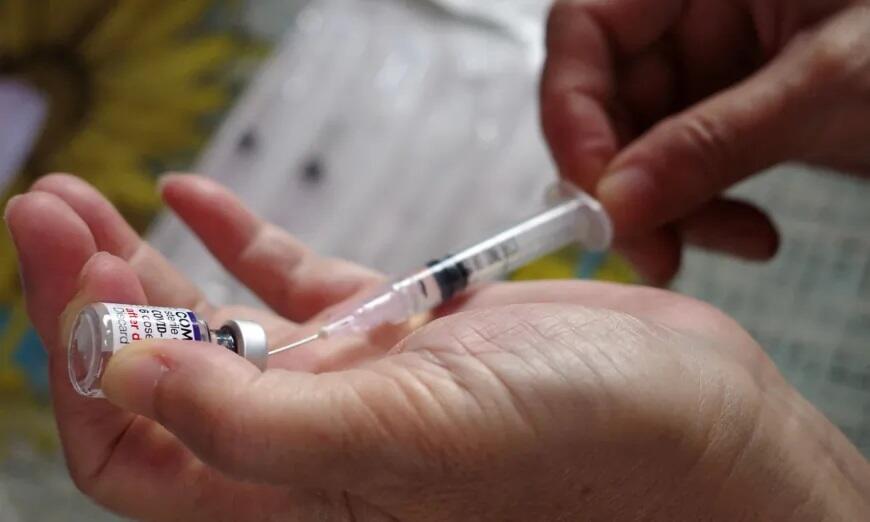
Heart-Scarring Observed In Children Months After COVID-19 Vaccination: Study

Heart-Scarring Observed In Children Months After COVID-19 Vaccination: Study

Authored by Zachary Steiber  via The Epoch Times (emphasis ours),

Some children who experienced heart inflammation after COVID-19 vaccination had scarring on their hearts months later, a new long-term study found.

Researchers followed a group of 40 patients aged 12 to 18 for up to one year after the children were diagnosed with myocarditis, or heart inflammation, following vaccination with one of the messenger RNA shots from Pfizer or Moderna. They performed a series of tests, including echocardiograms.

Cardiac magnetic resonance imaging, or cardiac MRIs, was performed on 39 of the 40 patients. Abnormal results came in for 26 of those who were imaged, including 19 who had late gadolinium enhancement, or signs of scarring.

The patients with abnormal results returned for follow-up cardiac MRIs at least five months after the initial tests and 15, or 58 percent, had residual late gadolinium enhancement (LGE). The one patient without an initial scan also had mild late gadolinium enhancement when scanned during a follow-up visit.

Persistence of LGE in a significant subset of patients with up to 1 year of follow-up was observed,” Dr. Yiu-fai Cheung, with Hong Kong Children’s Hospital, and the other researchers wrote.

They said that the implications of the persistence remain unclear, but that given it is an indicator of subclinical heart dysfunction and scarring, “there exists a potential long-term effect on exercise capacity and cardiac functional reserve during stress.”

The study was published by Circulation. Authors reported no funding or disclosures.

Dr. Peter McCullough, an American cardiologist and president of the McCullough Foundation, said that the new data is consistent with what cardiologists are seeing in clinical practice.

“Serious cases of COVID-19 vaccine induced myocarditis are not resolved by cardiac MRI at one year of followup in the majority of cases. At some point, we must assume that late gadolinium enhancement represents a scar or permanent damage,” Dr. McCullough, who was not involved in the research, told The Epoch Times via email.

“COVID-19 vaccines should be pulled from the market immediately until further notice. Large scale research programs should be commissioned immediately on subclinical and clinical COVID-19 vaccine induced myocarditis with initial aims at risk stratification and mitigation for cardiac arrest,” he added.

Dr. Anish Koka, another American cardiologist who was not involved in the study, said that the persistent LGE signifies a scar that replaced the initially inflamed heart muscle.

The good news is that the amount of scar is small. The bad news is that there is scar,” Dr. Koka wrote on X, formerly known as Twitter.

Dr. Koka said that the level of scarring indicates there would likely not be a long-term impact, but that even small levels of scarring could be a foundation for future arrhythmias, with exercise serving as a trigger.

“All these kids (even those without scar) would need exercise stress tests at 6 months to attempt to prognosticate this,” Dr. Koka said.

Pfizer and Moderna did not respond to requests for comment on the study on myocarditis, a known side effect of both of the companies’ COVID-19 vaccines.

People wait to receive a COVID-19 vaccine in Hong Kong in a file photograph. (Dale De La Rey/AFP via Getty Images)

More Evidence

Myocarditis after COVID-19 vaccination was first detected in early 2021, and an increasing number of studies have undercut claims from officials in the United States that the heart inflammation is mild and resolves without treatment.

A study from the U.S. Centers for Disease Control and Prevention (CDC), published in 2022, reported that among patients with follow-up cardiac MRIs, 54 percent had at least one abnormal finding, such as scarring.

The study relied on surveys from health care providers who examined the patients.

The providers later told the CDC that five to 13 months after the initial diagnosis, 14 percent of patients were still not cleared for all physical activity, and that multiple patients still had abnormal cardiac MRI findings. And in a separate set of surveys, many patients reported experiencing one or more symptoms beyond one year.

Read more here…

Tyler Durden
Tue, 08/08/2023 – 04:15

via ZeroHedge News https://ift.tt/uOFN9ws Tyler Durden

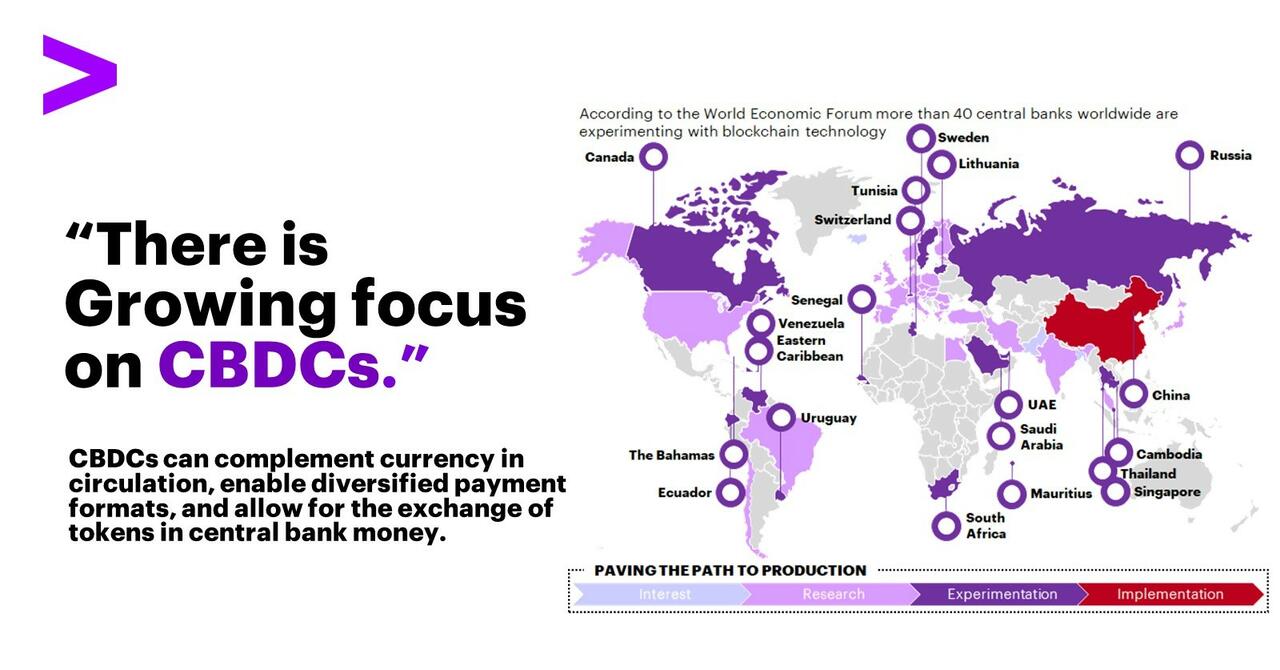
The Global Rejection Of CBDCs

The Global Rejection Of CBDCs

Authored by Ari Patinkin & John Berlau via RealClear Markets,

The Biden administration and the Federal Reserve are taking steps toward the potential roll-out of a central bank digital currency (CBDC). In attempting to do so, they are ignoring serious concerns about consumer privacy and heavy-handed government control in the U.S. and abroad.

Everywhere around the world, powerful heads of central banks and politicians are pushing central bank digital currency. Yet also around the globe – from the U.S. to Europe to Africa – more and more of the general populace are rejecting CBDCs as they learn what they would entail and experience them in practice.

A CBDC is a digital form of a national currency issued or coordinated by a nation’s central bank. Unlike paper or a private decentralized digital currency, a CBDC leaves an electronic trail of purchases and sales within a government digital ledger. Ledgers of such information are in the hands of governments that in many cases have a dark history of abuses of civil liberties. 

Proponents say CBDC would lead to faster payments that would particularly benefit lower-income individuals. Yet critics argue the mechanism for CBDCs is ripe for abuse, allowing the government to violate financial privacy and reward and punish certain behaviors by controlling access to digital money.

Measures of public reaction in the U.S. and elsewhere show that the general public – as well as a growing number their representatives in their governments – are firmly on the side of critics of CBDCs. Americans are generally skeptical of grand new government initiatives. According to a recent Pew Research poll on faith in the American government, only 20 percent of the public currently trust the government.

Beyond general mistrust of government, Americans seem to specifically distrust the government wielding its powers with a CBDC. Most people don’t see a need for it, with just 16 percent supporting a Federal Reserve-controlled digital currency, according to a recent CATO Institute poll.

Europe is facing skepticism, as well. A growing number of members of the EU Parliament are saying they  do not see any added benefit to a CBDC., Jack Schickler of CoinDesk reported in April. Markus Ferber, the economic spokesperson for the center-right European People’s Party, put it this way: “There’s one central question which hasn’t yet been credibly answered, which is what is the added value … what can I do with a digital euro that I can’t do with current payment options?”

Spanning the globe to Africa, an especially instructive lesson in the public’s reaction to the issuance of CBDC comes from that continent’s most populous country: Nigeria.

Nigeria rolled out its own CBDC, eNaira and, in the fall of 2021 and invalidated all paper banknotes, making the economy one of the first entirely cashless systems in the world. Nigerians were less than thrilled, as mass protests, boycotts, and utter rejection of the CBDC have ensued.

Even though the Nigerian Central Bank released huge incentives for citizens to adopt eNaira, according to Kunwar Khuldune Shahid of the Daily Dot, only 1.5 percent of the downloaded wallets were used once a week in 2022. According to Nicholas Anthony from the CATO Institute, the Nigerian government “removed access restrictions so that bank accounts were no longer required to use the CBDC. Then… offered discounts if people used the CBDC to pay for [taxi]cabs.” No offer has swayed the population to this day.

Nigeria’s political climate may be somewhat different from that of the U.S. and Europe, but the reasons for rejection of a CBDC carry some important similarities. A CBDC in which the government holds the ledger of the purchases and sales made with the electronic currency – whether issued by the Nigerian Central Bank or the U.S. Federal Reserve — would grant the government total surveillance power over individual transactions. If Nigerians buy and sell anything using eNaira, the digital ledger will show the government their purchases. A CBDC in the U.S. would likely work the same way

Given its poverty in comparison to the U.S. and Europe, the rejection of Nigeria’s citizens of a CBDC is a further blow to the dubious argument that issuance of CBDCs would somehow benefit the poor. Whatever benefits could be derived from the technology of the CBDC, Nigerians are concerned about their financial privacy and skeptical of government overseeing their purchases and sales. People worldwide agree that CBDCs greatly breach privacy regarding transactions between individuals.

In the U.S., lawmakers are introducing anti-CBDC legislation that should be a model for the world In the U.S. House of Representatives, Rep. Alex Mooney (R-WV) introduced the Digital Dollar Prevention Act in June, which prevents the Federal Reserve from committing to any programs involving the development of a CBDC without the express approval of Congress. While House Majority Whip Tom Emmer (R-MN) earlier introduced a bill restricting Fed issuance of CBDCs, Mooney’s bill takes it further, expressly banning “pilot programs” that could create CBDCs indirectly through public regulatory states and the private sector (which is Nigeria’s current currency distribution and maintenance method).

More must be done overall to protect civil liberties and the stability of the American free market from the destructiveness of a CBDC. We need bipartisan efforts to protect financial privacy and oppose policies that go beyond the wishes of the governed. As we have seen from the experience of Nigeria and prescient observations of ordinary Americans and Europeans, a central bank issuing a digital currency by the U.S. is unwise and would further erode existing financial freedoms.

Ari Patinkin is a research associate and John Berlau is Director of Finance Policy at the Competitive Enterprise Institute, a free-market think based in Washington, D.C.

Tyler Durden
Tue, 08/08/2023 – 03:30

via ZeroHedge News https://ift.tt/7Hb536p Tyler Durden

Ukraine Warns Of “Significant Weapons Shortage”

Ukraine Warns Of “Significant Weapons Shortage”

Ukraine’s military campaign – and recent counteroffensive – are being held back by a lack of weaponry, and allies need to provide additional supplies to effectively counter Russia, the top aide to Ukraine’s president has claimed.

“From the point of view of battlefield parity, there is indeed a significant shortage,” Mikhail Podoliak said on Friday, live on national TV.

Kiev needs more artillery shells and long-range missiles, and is experiencing a “certain shortage” of de-mining equipment, he added. The military is also having difficulties repairing damaged armor.

Podoliak repeated a long-running refrain, that the key items Ukraine still lacks are anti-aircraft systems and sophisticated fighter jets, specifically the US-made F-16.

Kiev has been asking its Western backers to provide F-16s for months, insisting that the fighters would help “win the war” against Russia. So far, however, Washington and its NATO allies have so far proven reluctant to provide the jets, with US National Security Advisor Jake Sullivan suggesting the aircraft would have only a limited impact on the battlefield due to the extensive use of air defense systems in Ukraine.

Since the start of the conflict, Ukraine has been demanding increasingly sophisticated weaponry from its backers. The Western-supplied hardware has been extensively used by Kiev in the current counteroffensive, launched in early June, which has so far been a failure, and the campaign has failed to yield any tangible results, while dozens of Western-supplied items, including Bradley infantry fighting vehicles, German Leopard 2 tanks, and Swedish CV90 armored vehicles, have ended up destroyed or captured.

Meanwhile, Moscow has urged the West to stop “pumping” Ukraine with assorted weaponry, warning that continued military aid will only prolong the conflict and inflict more destruction on Ukraine rather than change the ultimate outcome.

Tyler Durden
Tue, 08/08/2023 – 02:45

via ZeroHedge News https://ift.tt/pPmsQOJ Tyler Durden