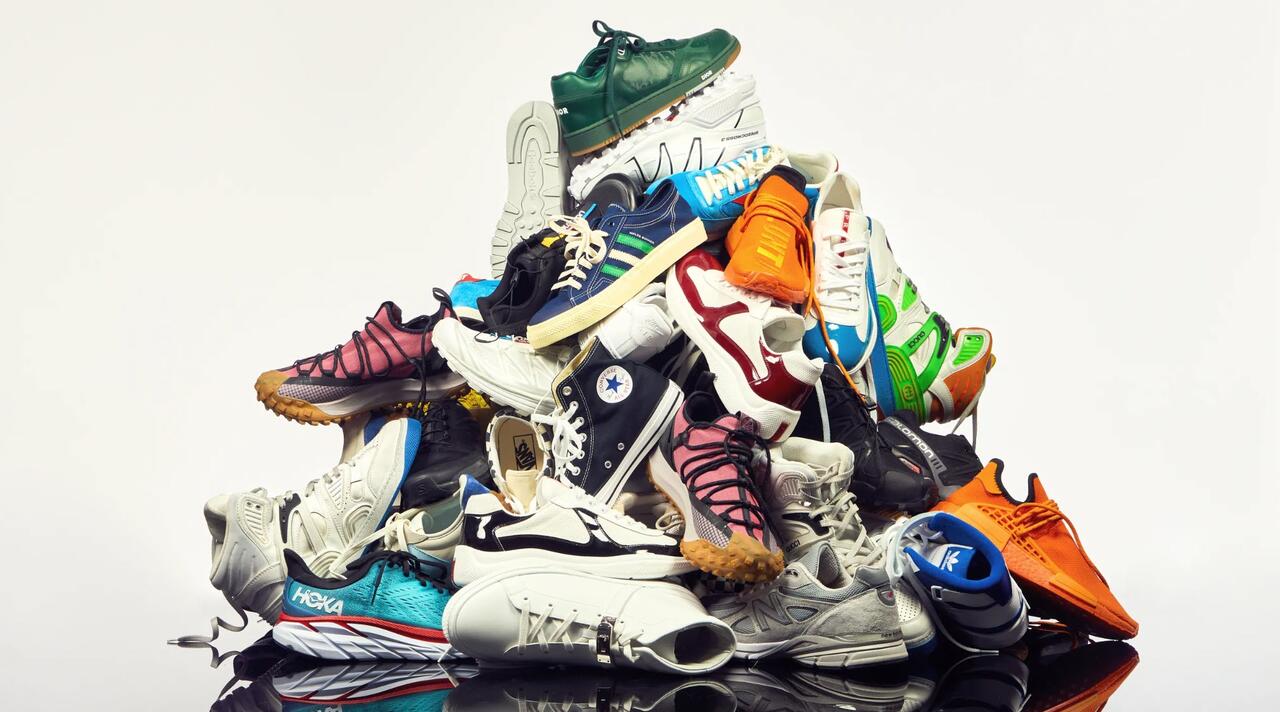
In recent decades, the world has witnessed a remarkable transformation in the perception of sneakers, transcending their utilitarian origins to become a symbol of cultural expression and fashion-forward identity.
This shift has given rise to what is now commonly known as sneaker culture.
Initially designed for athletic purposes, the introduction of signature shoe lines from brands like Adidas and Converse in the mid-20th century marked the beginning of sneakers as more than just functional footwear.
Once considered inappropriate in formal or professional environments, sneakers eventually began to break free from the confines of the gym and the street and found its way into offices and boardrooms.
According to estimates from Statista Market Insights, sneakers – excluding purely functional athletic footwear – are now a $75-billion market and expected to grow to nearly $100 billion in annual sales by 2028.
With a market share of 18 percent, Nike is the clear number one in the global sneaker landscape.
That figure underestimates Nike’s dominance in the game, however, as both the second-placed Jordan brand and Converse in seventh place are also owned by the Beaverton, Oregon-based sportswear giant.
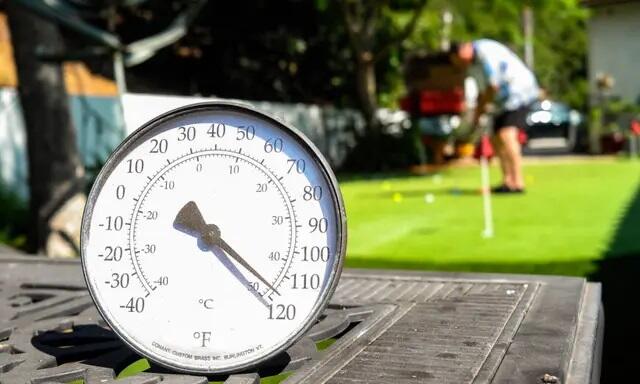
“Extreme,” “hellish,” “broiling,” and “deadly.” These words, and then some, are being used by politicians and media to describe the summer temperatures sweeping the nation.
“The hottest month just ended. We witnessed scorching heat, extreme weather events, wildfires, and severe health consequences,” said Tedros Adhanom Ghebreyesus, the director-general of the World Health Organization (WHO), on X, formerly known as Twitter.
“It’s a stark reminder of the urgent need for collective action to address climate change. Let’s use this alarming milestone to fuel our determination for bold climate action. Together, we can turn up the heat on sustainable solutions and create a cooler, more resilient world for generations to come.”
Myron Ebell, director and senior fellow at the Center for Energy & Environment, said that while June and July were hot in many locations, other places experienced below-average temperatures. Los Angeles for example, experienced its 10th coolest June on record, according to the National Oceanic and Atmospheric Administration (NOAA).
“Yes, June was hot, July was hot, globally, but not through the roof,” Mr. Ebell told The Epoch Times. “The planet is not boiling. Southern Europe has been very hot. But not everywhere is having record high temperatures.”
Phoenix, Arizona, did have a particularly hot July, with preliminary data showing an average high temperature of 114.7 degrees. The average high temperature from 1991 to 2020 was 106.5 degrees. The temperature readings are recorded at Phoenix-Sky Harbor International Airport, according to NOAA’s National Weather Service (NWS).
And Houston, Texas, experienced a 10-degree higher than average temperature in July, according to NWS data. The station located at Houston Intercontinental recorded an average daily temperature of 97.7 degrees for July.
Still, in rural Texas towns like Water Valley, the temperature swings were nowhere near extreme. The average July temperature there was 99.8 degrees, compared to its prior average of 97 degrees.
John Christy, a climatologist and professor of atmospheric science at the University of Alabama and the director of the Earth System Science Center, said for long-term temperature accuracy, rural stations with at least 100 years of records are best to follow.
“Regionally, the West has seen its largest number of hot summer records in the past 100 years, but the Ohio Valley and Upper Midwest are experiencing their fewest,” Mr. Christy told The Epoch Times.
“For the conterminous U.S. as a whole, the last 10 years have produced only an average number of records. The 1930s are still champs [for producing the most 100-plus temperature days in a year].”
NOAA’s primary method for collecting data on minimum and maximum temperatures are the Global Historical Climatology Network (GHCN) stations. These are land and surface stations across the globe measuring climate data, and are often located in areas of high population and infrastructure.
Mr. Ebell said temperature readings are affected by what’s around the thermometer, including infrastructure and people. To get a truly accurate reading on temperature, you have to examine satellite data, he said.
Recording Temperature
Areas of high population and infrastructure experience higher temperatures, which in turn influence large scale area average temperatures because most GHCNs are located where people live and work, said Roy Spencer, a climatologist, former NASA scientist, and now a principal research scientist at the University of Alabama in Huntsville. That effect, Mr. Spencer said, is called the “urban heat island.”
“As we progress to higher population stations, we find that [urban heat island] warming effect becomes larger,” Mr. Spencer reported on July 13.
Mr. Ebell agrees, “If you believe the consensus climate scientists, then the urban heat island effect doesn’t really amount to much. But, in fact, it does. And even fairly small places with asphalt will experience that effect.”
To get a more accurate reading of the Earth’s fluctuating surface temperatures in general, Mr. Spencer and Mr. Christy developed a global temperature data set from microwave data observed from satellites. They started their project in 1989 and analyzed data going back to 1979.
“With global coverage by the satellites, we could compute the true globally-averaged air temperature,” Mr. Christy told the U.S. Senate Committee on Environment and Public Works in 1997. “Two specific layers have lent themselves to accurate measurements: 1) the lower troposphere, or the lowest 7 km [4.3 miles] of air next to the surface, and 2) the layer at 17 to 21 km [10.5 miles to 13 miles], or lower stratosphere.”
In 1991, Mr. Christy and Mr. Spencer were awarded NASA’s medal for exceptional scientific achievement for their work.
And in 1996, they received a special award by the American Meteorological Society “for developing a global, precise record of earth’s temperature … fundamentally advancing our ability to monitor climate.”
Mr. Christy said that recent global satellite readings measured the hottest July in 45 years by about a quarter of a degree. He said an “early and strong El Niño” was a “major factor” in the increase. And the eruption of Hunga Tonga in 2022 sent water vapor into the stratosphere, which could be adding extra warming.
“It is hot in some places and not in others,” Mr. Christy said. “Globally, the temperatures continue to creep upward—but note that the 19th century was one of the coldest in the last 10,000 years, so we would expect Mother Nature to bounce back from that, aided a bit by the extra greenhouse gasses whose rise fundamentally indicates more and more people are experiencing longer and better lives.”
In general, since 1979, the Earth’s temperature has been increasing at a steady rate of 0.23 degrees Fahrenheit every 10 years, according to global satellite data, Mr. Spencer said on his website.
On July 27, President Joe Biden delivered a speech, in which he stated that “record temperatures—and I mean record—are now affecting more than 100 million Americans. Puerto Rico reached a 125-degree heat index last month. San Antonio hit an all-time heat index high of 117 last month.
Mr. Biden used the heat index measurement, which combines air temperature and relative humidity, rather than temperature.
In Puerto Rico, the day the heat index reached 125 degrees, the temperature was 95 degrees, according to the NWS.
San Antonio reached a 117-degree heat index in June, thanks to three days of 105-degree temperatures on June 19, 20, and 21, according to the NWS.
Mr. Biden stated that his administration views climate change as an “existential threat.”
“I don’t think anybody can deny the impact of climate change anymore,” after this summer, he said. “The number one weather-related killer is heat—600 people die annually from its effects.”
In 2022, NOAA reported that 148 people died from heat-related issues in the United States.
Worldwide, however, cold weather continues to kill more people every year than heat. Cold is responsible for 4.6 million excess deaths around the globe each year, according to the Breakthrough Institute. Heat is responsible for 500,000.
Mr. Biden said his administration plans to undertake additional steps to “make our nation more resilient in future heat waves.”
His plans include increasing inspections in “high-risk” industries like construction and agriculture, a $1 billion grant from the U.S. Forest Service to plant trees in cities, and directing the Department of Housing and Urban Development to ensure buildings are more “efficient” and “heat resistant.”
Mr. Biden said his administration has provided “a record $50 billion for climate resiliency to restore wetlands, manage wildfires, help Americans in every state withstand extreme heat.”
Mr. Christy responded to a question about the messaging of the June and July temperatures: “Every summer will see exceptionally hot temperatures somewhere. If it bleeds, it leads. A thorough look, however, at the frequency of hottest extremes indicates little relation to the gradual warming of the Earth, at least for the U.S., where we have the best observations to test these claims.”
Mr. Ebell was less diplomatic, “[Climate alarmists] want to scare us into adopting expensive, pointless policies.”
He said that the Biden administration and climate alarmists aren’t “getting what they want” because the general population doesn’t support their extreme green energy and climate crisis agenda. Consequently, they turn up the rhetoric.
“You exaggerate the effects of global warming, the scare stories about storms and hot weather, and then you downplay the cost—try to explain it’s really not going to cost anything because the government will pay for it,” Mr. Ebell said.
“This is really a kind of battle between conventional energy and renewable energy. And renewable energy isn’t commercially viable. So, people are being forced to use it, to buy it, and there are various ways to force people to do that.”
Mr. Ebell said that polls show the average American is willing to pay between $5 and $10 per month per family to support the transition to “greener” energy. But if it gets more costly than that, support dwindles. He added that people are already paying extra for energy.
Mr. Ebell said, since 2000, the world has spent approximately $6.5 trillion on transitioning away from oil, coal, and gas. The result is the world’s reliance on fossil fuels has reduced from 82 percent to 81 percent.
“[The United States’] emissions have gone down. Our use of coal has gone down. But global coal demand is at an all-time high,” Mr. Ebell said. “Chinese emissions are now higher than the United States, the European Union, the United Kingdom, Japan, Canada, and Australia combined.
Mr. Ebell said he believes climate change is real, but not in the way the Biden administration means it.
“They mean we’re moving into this new, scary world of weather and climate crisis. But that’s all fantasy,” he said.
“The weather is changing all the time, and human beings have something to do with it. We’re in a warming period—it’s warmed up a little bit—but that’s been mostly beneficial.”
“Unfairly treated,” I take it, means in context treated in ways that the law recognizes as unfair and therefore civilly actionable. Who might benefit from that?
[1.] Many people are unaware of this, but many states, counties, and cities ban even private employers from firing or otherwise disciplining their employees based on the employees’ speech or political activity. What’s covered varies widely: Some jurisdictions protect a very broad range of speech; others protect “political activity” defined broadly enough to protect a wide range of speech related to political matters; others protect only election-related speech (whether about candidates or ballot measures).
Some readers may point out correctly, that the First Amendment only protects against government action. But that doesn’t stop legislatures from providing similar protection against private action. Just as Title VII’s ban on religious discrimination by private employers in essence applies Free Exercise Clause and Equal Protection Clause principles to many private employers’ actions, so these laws apply some subset of Free Speech Clause principles to private employers’ actions.
[2.] Private employers may also be bound by express or implied contracts they enter into with employees: tenure contracts, union contracts, and other contracts promising that employees won’t be discharged except for good cause (with good cause being defined by the contract). It sounds like Musk’s offer extends to lawsuits under such contracts, if the allegation is that an employee was fired or otherwise disciplined in violation of the contract for posting or liking a Tweet.
[3.] Government employers are bound by the First Amendment, though First Amendment protection against firing by a government employer is somewhat weaker than First Amendment protection against being jailed or fined; for more details on that, see this post.
[4.] And of course to the extent Musk publicly makes good on his promise, employers covered by items 1 to 3 above might be deterred from firing or disciplining employees based on their Tweets in the first place.
It’s hard to know for sure, of course, how this will ultimately play out. There are also interesting questions about when such a gratuitous promise is enforceable (especially as to past Tweets, where the poster can’t claim reliance on the promise). And of course if Musk finds the offer too expensive or burdensome, he can revoke it, at least for posts put up after the revocation. But I just wanted to lay out some of the ways this can be applied.
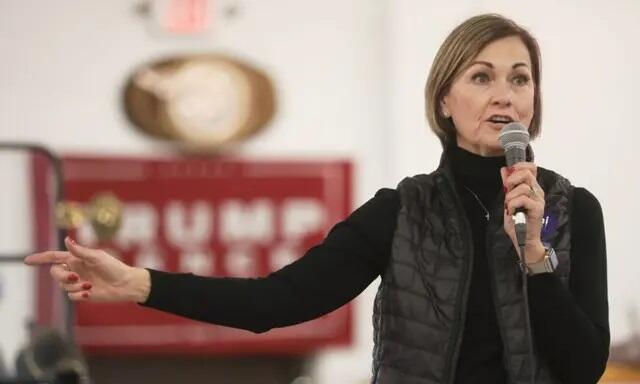
Iowa Gov. Kim Reynolds has deployed 109 Iowa National Guard troops to the U.S.–Mexico border to assist Texas in stemming the flow of illegal immigrants into the United States.
The operation, the Republican governor said on Aug. 2, will be paid for with funds allocated to the state under the American Rescue Plan Act, also known as the COVID-19 stimulus package, which she said offers flexibility in how the funds are spent.
“The Biden administration has failed to respond to the crisis at the border and, in doing so, has failed the American people—Iowans included,” Ms. Reynolds said in a statement.
“They have created one of the most significant national security and humanitarian crises of our generation and are blatantly ignoring the impact it’s having on our states, cities, and our people.
“Since the administration refuses to invest in securing the border and protecting its citizens, Texas has asked other states to help, and Iowa is ready and willing to assist.”
Texas Gov. Greg Abbott (R), another vocal critic of the Biden administration, launched Operation Lone Star in March 2021 amid the mounting flood of illegal immigrants and drugs across the border into his state.
Since then, other Republican governors have sent troops to help hold the line.
According to U.S. Customs and Border Protection, U.S. Border Patrol has encountered nearly 6 million illegal immigrants at the southern border since President Joe Biden took office—a fact that Ms. Reynolds attributes to his policies.
“On his first day in office, President Biden reversed commonsense policies that protected the U.S. southern border and American citizens,” she noted.
“Since that time, our country has experienced a historic rise in illegal immigrants and illicit drugs entering our country.
“Two years later, every state is a border state and Iowa’s unique location at the intersection of two major interstates makes it a target for human traffickers and drug cartels.”
According to the governor’s office, the National Guard soldiers began their journey south on Aug. 2. Their deployment will last through Sept. 1, during which time they will aim to deter illegal border crossings and prevent the trafficking of illegal substances through Texas.
On Aug. 31, the troops will be joined by a group of Iowa State Patrol officers from the Iowa Department of Public Safety.
That deployment, ending on Oct. 2, will support Texas State Troopers with criminal interdiction, crime prevention, traffic enforcement, and law enforcement assistance.
Operation Lone Star
According to Mr. Abbott’s office, Operation Lone Star has led to more than 397,900 illegal immigrant apprehensions and more than 31,800 criminal arrests at the border.
Additionally, Texas law enforcement has seized more than 422 million lethal doses of fentanyl in the operation.
Yet even so, the crisis continues.
Following the end of Title 42 expulsions in May, Mr. Abbott called upon his fellow governors for help addressing the anticipated influx of illegal border-crossers.
“The flood of illegal border activity invited by the Biden administration flows directly across the southern border into Texas communities, but this crisis does not stop in our state.
“In the federal government’s absence, we, as governors, must band together to combat President Biden’s ongoing border crisis and ensure the safety and security that all Americans deserve,” he wrote in a May 16 letter to all of the nation’s governors.
“Join us in the mission to defend our national sovereignty and territorial integrity and send all available law enforcement personnel and resources to the Texas-Mexico border to serve alongside our thousands of Texas National Guard soldiers and Texas Department of Public Safety troopers,” he entreated.
In response, Ms. Reynolds led 23 other Republican governors in pledging their support for Texas’s efforts.
“The federal government’s response handling the expiration of Title 42 has represented a complete failure of the Biden administration,” they said in a statement.
“While the federal government has abdicated its duties, Republican governors stand ready to protect the U.S.–Mexico border and keep families safe.”
Answering the Call
The latest deployment marks the third time since 2020 that Ms. Reynolds has sent troops to the border, but she isn’t the only Republican governor to do so this week.
On July 31, Nebraska Gov. Jim Pillen announced his intention to send 60 National Guard personnel to Texas.
Those troops also deployed on Aug. 2 and will assist with observation and reporting along the border for about a month.
“This mission is critical to the security of Nebraska as well as other states,” Mr. Pillen said in a statement.
“We need to maintain the safety of our citizenry and stem the ongoing influx of illegal drugs, weapons, and criminals into our borders.”
The governor added that federal funds would cover the cost of the deployment.
Other states that have recently dispatched troops to the border include Florida, Virginia, and South Carolina, among others.
Homeland Security Secretary Alejandro Mayorkas has rejected criticism of his handling of the border, maintaining that the Biden administration’s policies are “working.”
The International Monetary Fund has said it expects the Russian economy to grow by 1.5% this year despite the US-led Western sanctions campaign against the country, which President Biden once vowed would “turn the ruble into rubble.”
The Russian economy shrank by 2.1% last year, but it has bounced back as Russia is adjusting to the sanctions. The Wall Street Journal this week called the economic war a “stalemate,” comparing it to the situation on the battlefield in Ukraine.
The report said the sanctions initially made it harder for Russia to acquire microchips and other technical components, but Moscow then found sanctions loopholes through neighboring countries. Russia has also had no problems selling its oil as its found new markets in India and elsewhere in Asia.
The Journal cited analysts who said the sanctions will hurt Russia in the long term, but Moscow continues to forge stronger ties and significantly increase trade with China.
An alternative to the US-dominated global financial system is slowly being formed by Russia, China, and other countries targeted with US sanctions.
The US has successfully crushed the economies of smaller countries with sanctions, but the sanctions on Russia were the harshest imposed on such a large economy.
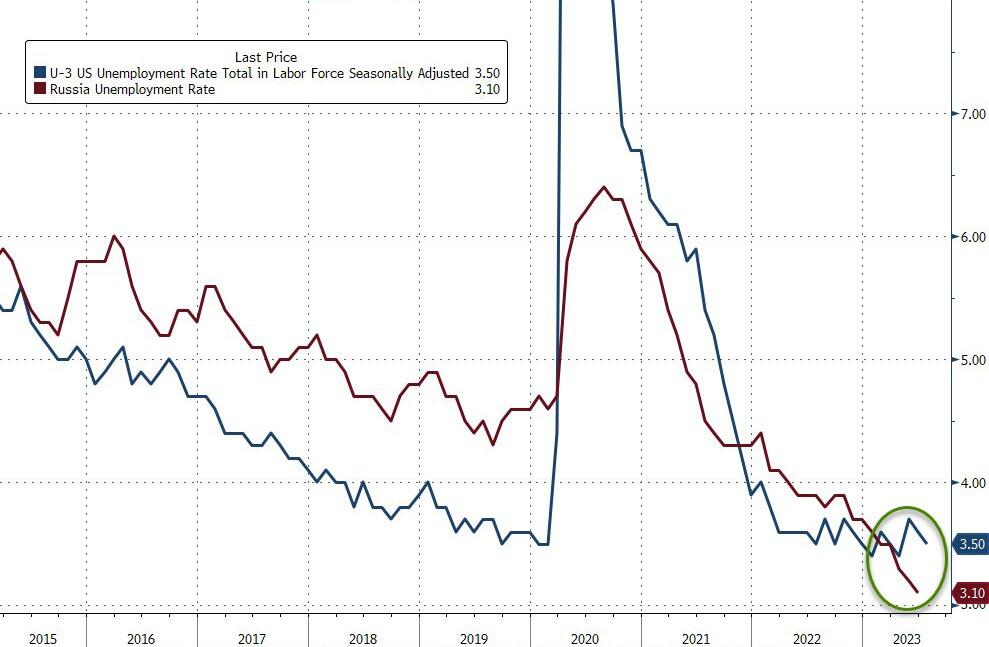
[ZH: Russia’s unemployment rate is now lower than Bidenomics has achieved…]
US sanctions on smaller nations are losing some of their power as China and Russia offer alternative markets.
For example, Iranian oil sales in 2022 exceeded those in 2016 before the US withdrew from the nuclear deal in 2018 and reimposed sanctions on the country. Most of the new Iranian oil sales have been to China.
* * *
As this trend continues, people will start asking the hard questions…
There you go: WSJ admits sanctions failed to significantly dent Russia’s economy.
Give it a few more months and they’ll admit that not only they failed but were counterproductive: damaging Europe’s economy more than Russia’s. Or was that the objective? 🤔https://t.co/UCT6Pk83DO
Elon Musk addressed the issue of scam tokens falsely claiming connections to the social media platform…
Elon Musk has stated that his social media platform X (formerly Twitter) has no plans to launch crypto tokens in response to a post regarding questionable X and Twitter-based digital currencies on Saturday, Aug. 5.
In response to a post by DogeDesigner, Musk addressed the issue of scam tokens like X (X) and TwitterDAO (TWITTER) falsely claiming connections to the social media platform.
DogeDesigner had cautioned the crypto community about being cautious with articles related to scam tokens and clarified that neither Musk nor X had ever launched a crypto token. In his reply, Musk asserted, “And we never will.“
Previously, Musk had dropped hints about integrating cryptocurrency as a payment option on X. Traders were left wondering whether he would introduce a particular crypto token or stick with his favorite – Dogecoin.
However, with the appointment of Linda Yaccarino as the new CEO, some doubts arose regarding the likelihood of a DOGE integration. Still, recent comments from Musk have revived optimistic sentiments among Dogecoin investors.
Musk recently announced his ambitious vision of transforming Twitter into an all-encompassing platform known as X, the so-called “everything app,“ officially rebranding Twitter to X in July.
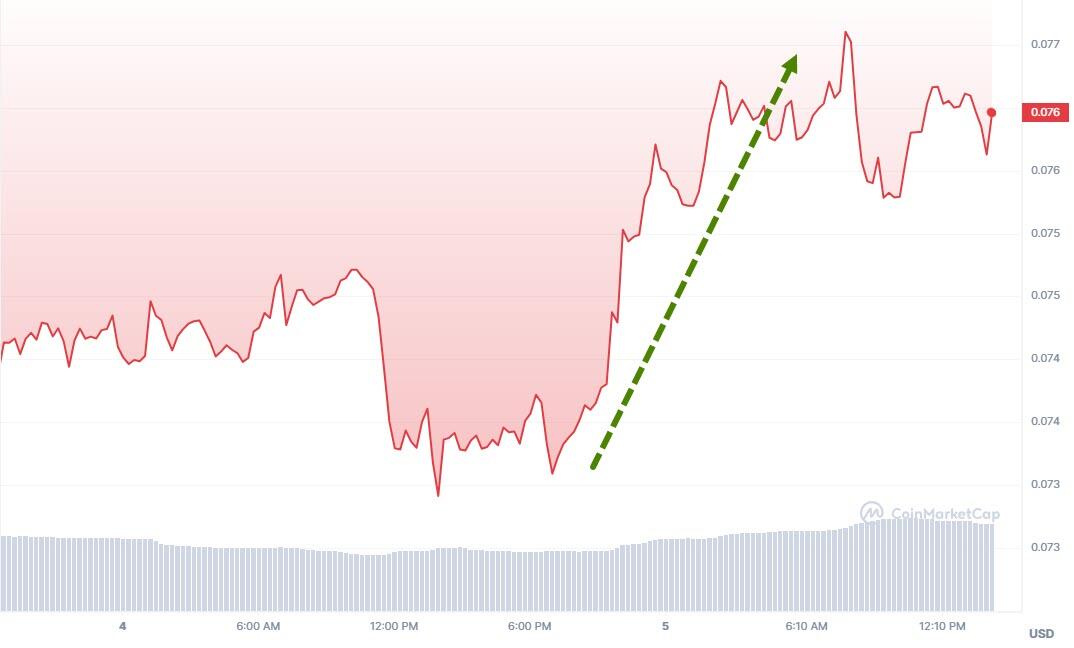
Following Musk’s confirmation that he has no intention of launching a crypto token, the price of Dogecoin experienced an increase of over 5% in a matter of hours, according to CoinMarketCap.
The Home Office is encouraging police forces across the country to make use of live facial recognition technologies for routine law enforcement. Retailers are also embracing the technology to monitor their customers.
It increasingly seems that the UK decoupled from the European Union, its rules and regulations, only for its government to take the country in a progressively more authoritarian direction. This is, of course, a generalised trend among ostensibly “liberal democracies” just about everywhere, including EU Member States, as they increasingly adopt the trappings and tactics of more authoritarian regimes, such as restricting free speech, cancelling people and weakening the rule of law. But the UK is most definitely at the leading edge of this trend. A case in point is the Home Office’s naked enthusiasm for biometric surveillance and control technologies.
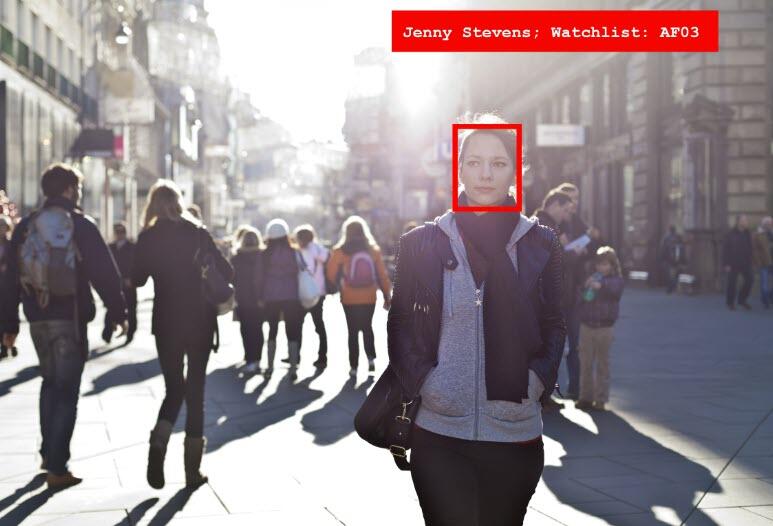
This week, for example, The Guardianrevealed that the Minister for Policing Chris Philip and other senior figures of the Home Office had held a closed-door meeting with Simon Gordon, the founder of Facewatch, a leading facial recognition retail security company, in March. The main outcome of the meeting was that the government would lobby the Information Commissioner’s Office (ICO) on the benefits of using live facial recognition (LFR) technologies in retail settings. LFR involves hooking up facial recognition cameras to databases containing photos of people. Images from the cameras can then be screened against those photos to see if they match.
The lobbying effort was apparently successful. Just weeks after reaching out to the ICO, the ICO sent a letter to Facewatch affirming that the company “has a legitimate purpose for using people’s information for the detection and prevention of crime” and that its services broadly comply with UK Data Protection laws, which the Sunak government and UK intelligence agencies are trying to gut. As the Guardian report notes, “the UK’s data protection and information bill proposes to abolish the role of the government-appointed surveillance camera commissioner along with the requirement for a surveillance camera code of practice.”
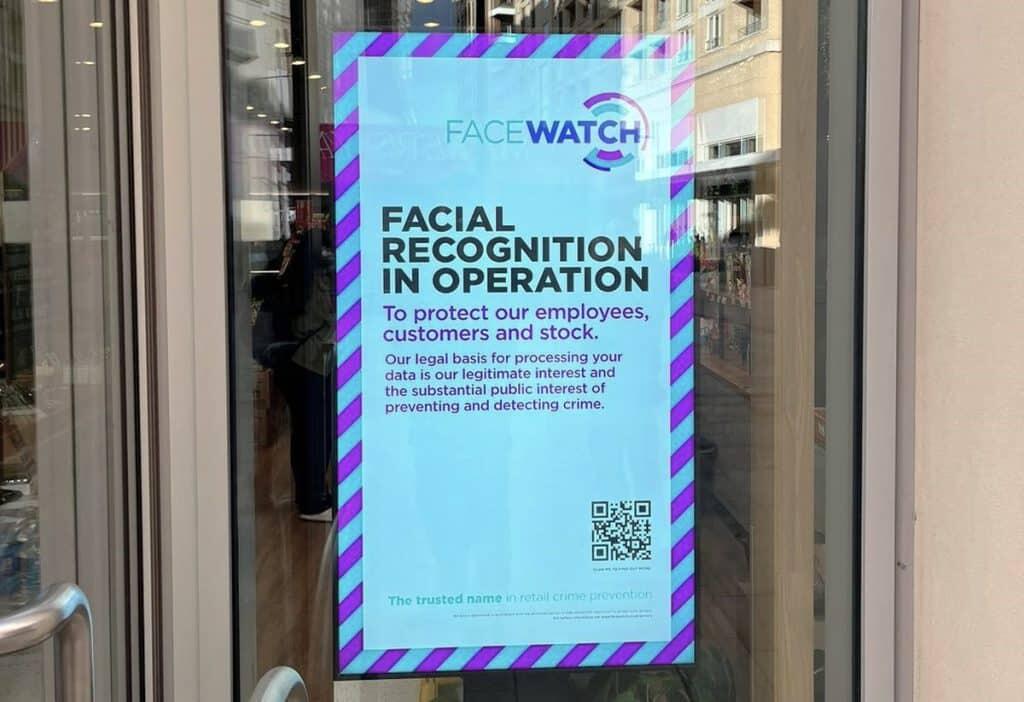
The ICO’s approval gives legal cover to a practice that is already well established. Facewatch has been scanning the faces of British shoppers in thousands of retail stores across the UK for years. The cameras scan faces as people enter a store and screens them against a database of known offenders, alerting shop assistants if a “subject of interest” has entered. Shops using the technologies have placed notices in their windows (such as the one below) informing customers that facial recognition technologies are in operation, “to protect” the shop’s “employees, customers and stock.” But it is far from clear how many shoppers actually take notice of the notices.
As examples of government outsourcing go, this is an extreme one. According to the Guardian, it is happening because of a recent explosion in shoplifting*, which in turn is due to the widespread immiseration caused by the so-called “cost of living crisis” (the modern British way of saying “runaway inflation”).* As NC readers know, runaway inflation is partly the result of corporate profiteering. So far, 400 British retailers, including some very large retail chains (Sports Direct, Spar, the Co-op), have installed Facewatch’s cameras. As the Guardian puts it, the government is “effectively sanctioning a private business to do the job that police once routinely did.”
From Covert to Overt
It is not just retailers that are making ample use of LFR technologies; so, too, is the British police. As I reported in my book Scanned, law enforcement agencies in the UK, specifically London’s Metropolitan Police Service and South Wales Police, and the US have been trialling live facial recognition (LFR) in public places for a number of years. LFR has been used in England and Wales for a number of events including protests, concerts, the Notting Hill Carnival and also on busy thoroughfares such as Oxford Street in London.
In 2019, Naked Capitalism cross-posted a piece by Open Democracy on how the new, privately owned Kings Cross complex in London had used facial recognition cameras to identify pedestrians crossing Granary Square. Argent, the developer and asset manager charged with the design and delivery of the site, then ran the data through a database supplied by the Metropolitan Police Service to check for matches. Kings Cross was just one of many parts of London where unsuspecting pedestrians were having their biometric data captured by facial recognition cameras and stored on databases.
The UK is already one of the most surveilled nations on the planet. By 2019, it was home to more than 6 million surveillance cameras – more per citizen than any other country in the world, except China, according to Silkie Carlo, director of Big Brother Watch.
Until now, the police’s use of LFR has been pretty much covert and each time information has leaked out about that use, there has been a public outcry; now, it is becoming overt. Policing Minister Chris Philip is encouraging police forces across the country to make use of LFR for routine law enforcement, as reports an article by BBC Science Focus (which, interestingly, was removed form the web but not before being preserved for posterity on the Wayback Machine):
Since police offices already wear body cameras, it would be possible to send the images they record directly to live facial recognition (LFR) systems. This would mean everyone they encounter could be instantly checked to see if they match the data of someone on a watchlist – a database of offenders wanted by the police and courts.
The Home Office’s recommendations for much broader use of LFR contradicts the findings of a recent study by Minderoo Centre for Technology and Democracy, at the University of Cambridge, which concluded that LFR should be banned from use in streets, airports and any public spaces – the very places where police believe it would be most valuable.
Unsurprisingly, consumer groups and privacy advocates are up in arms. The civil liberties and privacy campaigning organisation Big Brother Watch has organised an online petition to call on Home Secretary Suella Braverman and Metropolitan Police Commissioner Mark Rowley to stop the Met from using LFR. As of writing, the petition is on the verge of reaching its target number (45,000 signatures).
“Live facial recognition is a dystopian mass surveillance tool that turns innocent members of the public into walking ID cards,” says Mark Johnson, advocacy manager at Big Brother Watch:
Across seven months, thirteen deployments, hundreds of officer hours, and over half a million faces scanned in 2023, police have made just three arrests from their use of this intrusive and expensive mass surveillance tool… Rather than promote its use, the Government should follow other liberal democracies around the world that are legislating to ban this Orwellian technology from public spaces.
Those liberal democracies include the European Parliament which, to its credit, recently decided to ban the use of invasive mass surveillance technologies in public areas in its Artificial Intelligence Act (AI Act). However, that ban does not extend to EU borders, where police and border authorities plan to use highly invasive biometric identification technologies, such as handheld fingerprint or iris scanners, to register travellers from third countries and screen them against a multitude of national and international databases.
Reasons for Concern
UK citizens have plenty of reasons to be concerned about the proliferation of facial recognition cameras and other biometric surveillance and control systems. They represent an extreme infringement on privacy, personal freedoms and basic legal rights, including arguably the presumption of innocence. In fact, the use of LFR has been successfully challenged by British courts and civil liberty groups on the grounds that the technology can infringe on privacy, data protection laws (which, as I mentioned, the British government is trying to gut) and can be discriminatory.
Amnesty International puts it even more bluntly: AI-enabled remote biometric identification systems cannot co-exist with a codified system of human rights laws:
“There is no human rights compliant way to use remote biometric identification (RBI). No fixes, technical or otherwise, can make it compatible with human rights law. The only safeguard against RBI is an outright ban. If these systems are legalized, it will set an alarming and far-reaching precedent, leading to the proliferation of AI technologies that don’t comply with human rights in the future.”
Another common problem is that the internal workings of biometric surveillance tools, and how they collect, use, and store data, are often shrouded in secrecy, or at least opacity. They are also prone to biases and failure. This is particularly true of live facial recognition, as the BBC Science Focus article cautions:
Often the neural network trained to distinguish faces has been given biased data – typically as it is trained on more male white faces than other races and genders.
Researchers have shown that while accuracy of detecting white males is impressive, the biased training means that the AI is much less accurate when attempting to match females faces and of the faces of people of colour.
Facewatch CEO Simon Gordon claims that the current accuracy of the company’s camera technology is 99.85%. As such, he says, misidentification is rare and when it happens, the implications are “minor.” But then he would say that; he has a product to sell.
Lastly, the systems pose another major problem (and I encourage readers to chime in with others): they are AI-operated. As such, many of the decisions or actions taken by retailers, corporations, banks, central banks and local, regional or national authorities that affect us will be fully automated; no human intervention will be needed. That means that trying to get those decisions or actions reversed or overturned is likely to be a Kafkaesque nightmare that even Kafka may have struggled to foresee.
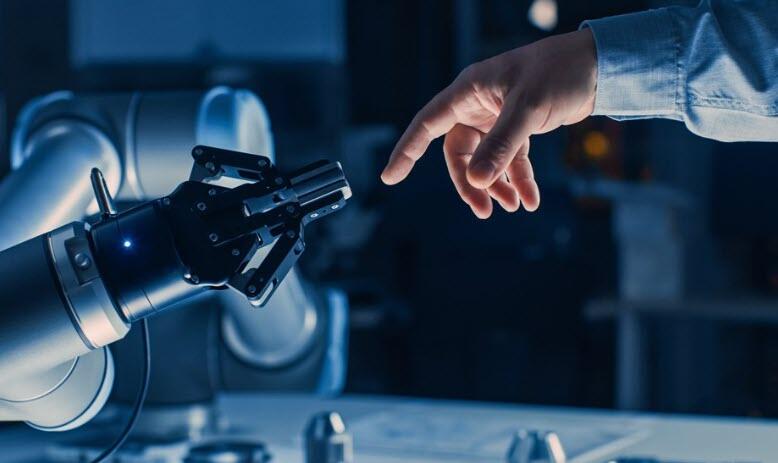
Robots have taken over a lot of work in the industrial sector but how much does the average person interact with robotic machines or AI-driven products on a daily basis?
Comparing countries, urban Chinese respondents were more likely than Americans, Germans, Brits or South Koreans to interact or have interacted with household robots or robo-advisors.
44 percent of Chinese had experience with robo-advisors, with 28 percent having used such a service in the past year. 56 percent said they owned a smart home appliance like a robot vacuum or a smart microwave.
Additionally, around 20 percent of Americans had used AI-based text tool ChatGPT as of April 2023.
Around 10-12 percent of U.S. adults had also experimented with other online AI tools, the survey found. This compared to 19 percent of Germans and 16 percent of Brits who had used ChatGPT as of April.
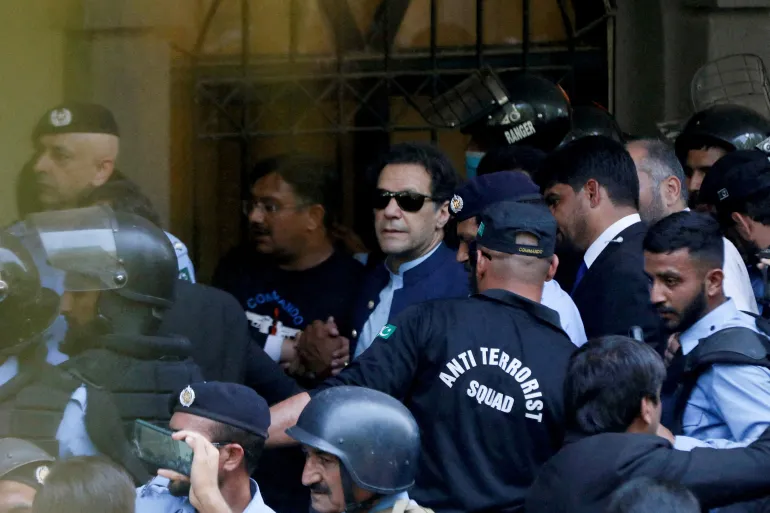
Former Pakistani prime minister Imran Khan was sentenced to three years in jail on Saturday by a court in Islamabad on charges of illegally selling state gifts. The popular opposition leader was promptly arrested from his home in Lahore after the court handed down the sentence. The court also disqualified him from politics for five years, banning his political activities.
Before being taken into custody, Khan released a video on social media saying his arrest was “expected” and calling on his supporters to protest peacefully.
“When you receive this message, I will be arrested, and I will be in prison,” said Khan. “I only have one request, one appeal for you. You must not sit quietly inside your homes. The struggle I am doing is not for my own self, it’s for my nation, for you. For the future of your children.”
“If you don’t stand up for your rights, you will live lives of slaves and slaves don’t have a life,” he added. Khan also stressed that Saturday’s verdict is “one more step in fulfilling [the] London Plan,” a term he uses to refer to an alleged plot between current army chief General Asim Munir and three-time former prime minister Nawaz Sharif, who has been in self-exile in London since 2019.
Khan’s party, Pakistan Tehreek-e-Insaf (PTI), said following his arrest that an appeal has already been filed in Pakistan’s Supreme Court over the district court order.
“The decision of the Kangaroo Court of [additional district and sessions judge Humayun Dilawar] was not yet received by anyone in the court, but the Lahore Police was already there to kidnap the PTI chairman. Chairman Imran Khan did not resist. Every process from the beginning of the case to the trial and from the trial to the abduction is illegal,” the party said in a post on its official social media account.
The 70-year-old cricketer-turned-politician stood accused of misusing his role as prime minister from 2018 to 2022 to buy and sell gifts in state possession that were received during visits abroad worth more than 140 million Pakistani rupees ($635,000).
Former Pakistani PM Imran Khan’s party called for countrywide peaceful protests. pic.twitter.com/P70dpvzDqb
The verdict includes a 100,000 rupees fine ($355). Khan’s arrest on Saturday marked the second time he has been detained this year. His arrest in May was met with violent clashes between his supporters and police across the country, which left several dead and hundreds injured. Authorities also rounded up the leadership of the PTI and over 2,000 Khan supporters.
Khan’s arrest comes just three months before crucial elections in November, where many expected him to win the largest democratic mandate ever secured by any politician in the 75-year history of Pakistan.
The former premier was ousted last year in a US-backed parliamentary coup that saw Shehbaz Sharif – a protégé of the Sharif business dynasty that has governed Pakistan for much of the previous three decades – come to power. Since his ousting, he has been arrested, charged with “terrorism,” banned from running for office, and even survived an assassination attempt.