“Joe Biden supported the genocide of the Palestinian people. The American people won’t forget. Biden, support a ceasefire now or don’t count on us in 2024.“
Play the video. It is well presented and shockingly candid.
Pro-Israel Democratic Group Releases Ad Criticizing Rashida Tlaib
A pro-Israel Democratic group released an ad in Detroit on Thursday attacking Rep. Rashida Tlaib for her calls for a cease-fire in the Israel-Hamas war and her criticism of the Israeli government.
From the far left, Tlaib has denounced Biden in scathing language for his unbending support of Israel and accused him in a video of supporting the “genocide” of Palestinians. A Palestinian American herself, Tlaib is threatening to undermine Biden with Muslim and Arab Americans who make up a crucial bloc in swing states like her own Michigan.
Phillips, from the restless middle, has gone further, launching a challenge to Biden in New Hampshire’s ornamental primary. The Minnesota centrist has called for generational change and argued that Biden cannot be counted on to beat former President Donald Trump. Evoking discontent with the economy, he has promised to “make America affordable again.”
These two Gen X Midwesterners are not coordinating their activities. The convergence of their attacks on Biden is purely coincidental.
Yet in another sense it is hardly happenstance that they are battering Biden in these terms and at this moment. Both represent versions of the Democratic Party’s Trump-era new guard: the radical progressive movement embodied by Tlaib and her fellow members of the Squad, and the anti-partisan, suburban Problem Solvers Caucus set of which Phillips is an outspoken member.
Dean Phillips On the Election
“Joe Biden is going to lose the next election.”
People have seen both Trump and Biden
Many cannot stand Trump personally
Most cannot stand Biden economically
As Balances Soar At Record Pace, Millennials Lead Credit-Card Delinquencies Higher
Just in case it wasn’t obvious, The NY Fed’s latest report on household debt confirms that the strong spending seen in Q3 was driven – drum roll please – by Americans tapping their credit cards by a record amount year-over-year.
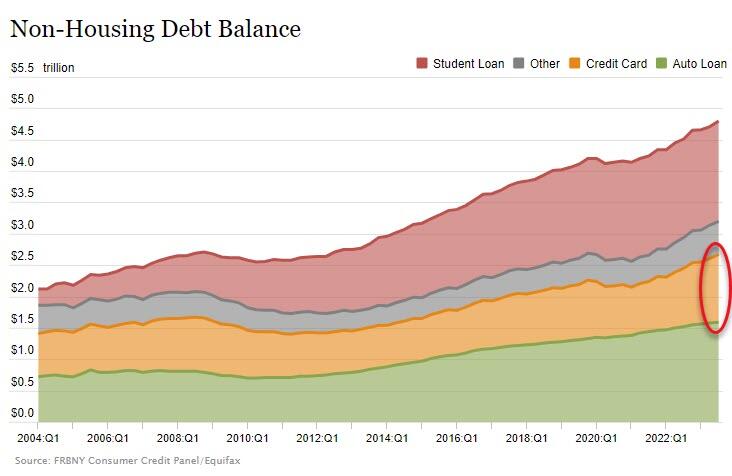
Overall, household debt increased by $228 billion last quarter, bringing the total to $17.3 trillion, which included a $48 billion rise in credit-card balances to $1.08 trillion, marking the eighth straight quarter of year-over-year increases, the report found.
Credit-card balances are now $154 billion higher than they were a year ago, the largest annual increase since the New York Fed began tracking the data in 1999, researchers said in a blog post.
No real surprise there – but certainly not the sustainable foundation of growth so many had pinned their hopes on.
However, there is a problem – aggregate delinquency rates were increased in the third quarter of 2023.
“The increase in balances is consistent with strong nominal spending and real GDP growth over the same time frame,” they said in the post.
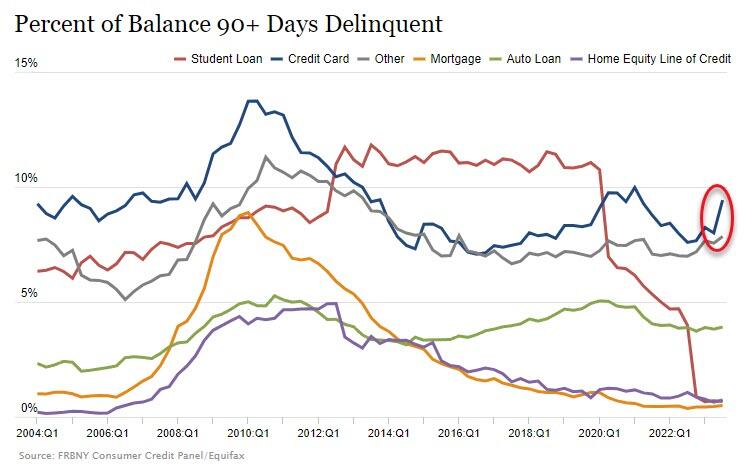
“But credit card delinquencies continue to rise from their historical lows seen during the pandemic and have now surpassed pre-pandemic levels.”
As of September, 3.0% of outstanding debt was in some stage of delinquency, with credit-card delinquencies’ jump standing out…
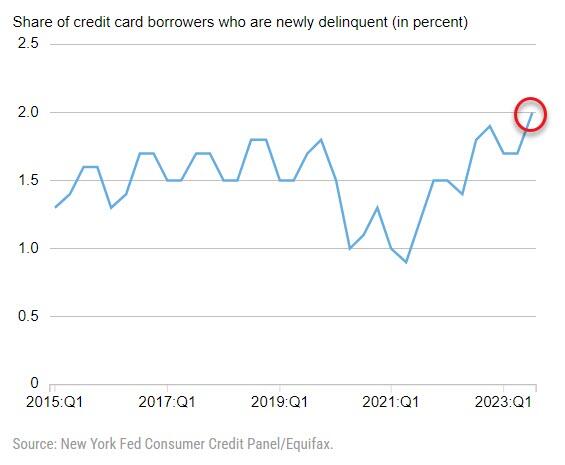
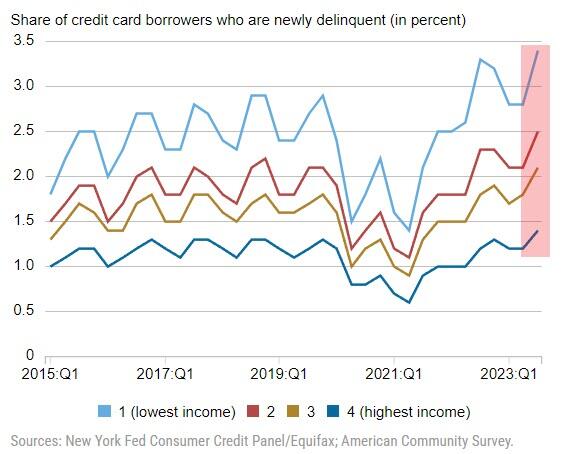
Most notably, the share of debt becoming newly delinquent is now rising for most types of debt, with the share of newly delinquent credit card users rising in Q3, and now exceeding pre-pandemic average levels…
So, who is behind this sudden surge in delinquencies?
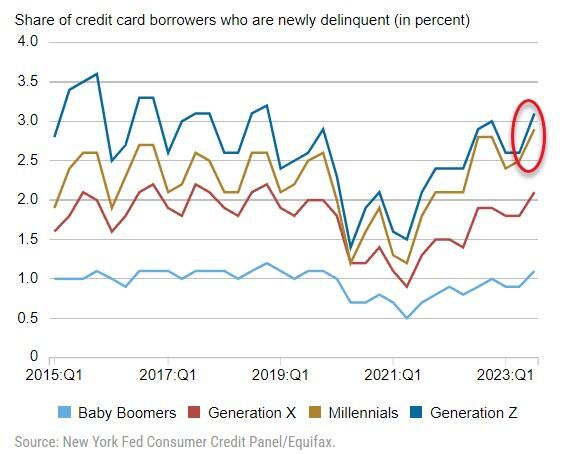
While Baby Boomers (born 1946-64), Generation X (born 1965-79), and Generation Z (born 1995-2011) credit card users have delinquency rates similar to their pre-pandemic levels and trends, Millennials (born 1980-94) credit card users began exceeding pre-pandemic delinquency levels in the middle of last year and now have transition rates 0.4 percentage point higher than in the third quarter of 2019.
Additionally, as one might expect, the lowest-income areas persistently have the highest delinquency rates, but all four quartiles are now above their pre-pandemic levels.
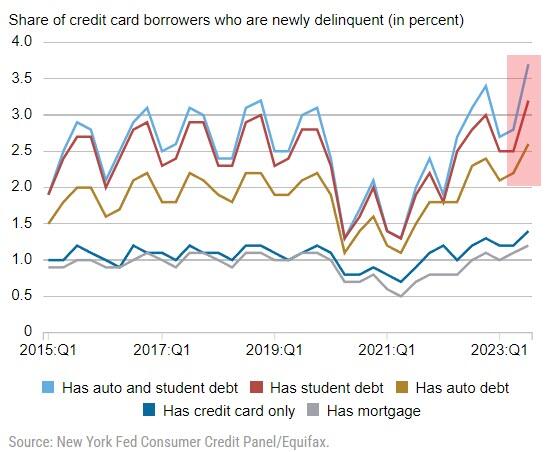
And finally, NYFed notes that borrowers with auto loans (gold line) or student loans (red line) were more likely to fall behind on their loans than before the pandemic. This was especially the case for those with student loans and auto loans (shown in light blue). This group’s transition rate into a credit card delinquency is 0.6 percentage point higher than it was prior to the pandemic. These repayment difficulties will likely continue to mount for student loan borrowers now that student loan payments have resumed.
Whether consumers can keep up with their debt payments and continue spending in the face of higher rates, growing obligations and shrinking savings, is something policymakers and economists are watching closely but given the acceleration in balances and delinquencies, we think the answer is clear.
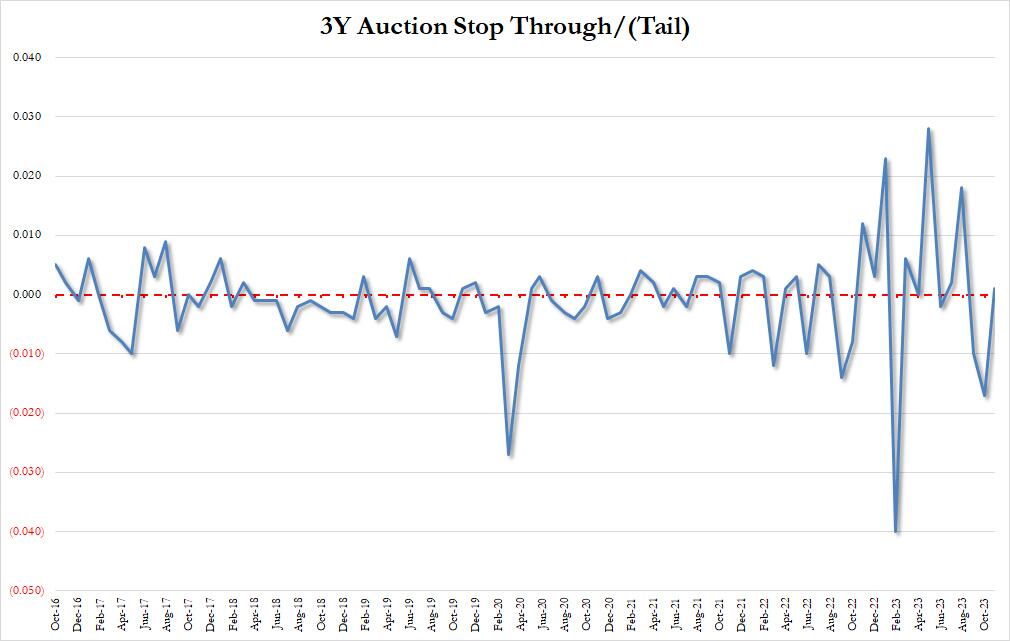
After last month’s dismal 3Y auction, which priced with one of the highest tails on record, some rates traders had a foreboding sense of deja vu ahead of today;s $48 billion sale of 3 year paper dreading a repeat of October. Luckily, it was not meant to be because after last week’s bondgasm which sent yields sharply lower across the curve, today’s 3Y auction not one came off without a hitch, but saw the highest demand since August.
Here are the details: the high yield of 4.701% was not only below last month’s near-record stop of 4.723%, it also stopped through the 4.702% When Issued by the smallest of increments, of 0.1bps. This was the first stop following two tails of which last month’s 1.7bps was especially harrowing and was the third highest in the past decade.
The bid to cover was nothing special: at 2.668 it was above last month’s 2.562 but excluding that, it was the lowest since April and well below the six-auction average of 2.787.
The internals were far better, with Indirects spiking from last month’s 56.0% to 64.6%, the highest since August, and in line with the recent average of 65.319.
Overall, this was a very impressive auction, and certainly stellar compared to last month’s dismal 3Y offering. No surprise that moments after the results, yields across the curve and especially at the 10Y tenor slid to session lows just below 4.57% as the rollercoaster in TSY yields continues.
President Biden keeps saying the economy is great.
Fed officials say the economy is expanding at a “strong pace.”
Peter Schiff isn’t buying the narrative.
He says we may already be in a recession and he made a strong case in his podcast.
Peter started with a deep dive into the October non-farm payroll report. He said threw cold water in the face of the “we have a strong labor market” narrative. Strong job reports have created the foundation for the “strong economy” narrative. Over the past several months, Peter has been dissecting these BLS reports pointing out the hidden weaknesses in the labor market. For the October report, he didn’t have to.
This time the report is weak from top to bottom. It’s not just superficially strong. It’s superficially weak and it’s even weaker when you get beneath the surface.”
The projection was for 180,000 new jobs. The reported number was 150,000. Only 99,000 of those jobs were in the private sector. Of all the jobs created, 34% were government jobs.
That is not strength. That is weakness. … How does the government pay for new hires? Out if its tax revenue, although now it’s not out of tax revenue, it’s out of new borrowing because the government is borrowing all the money to pay these workers, which is going to mean higher interest rates and more inflation.”
The unemployment rate went up to 3.9%. While this number is still relatively low, the trajectory is up. The unemployment rate has gone up by half a percent since last spring.
Meanwhile, we continue to see a huge increase in the number of people holding multiple jobs to make ends meet. In October, 390,000 people took on a second or third job.
That is a sign of weakness, not strength. The fact that people can no longer pay the bills with one job, the fact that you now need two or three jobs to cover the expenses that you used to cover with one job — that’s not a strong labor market. That’s a very weak labor market because the return on labor is collapsing. Workers can’t earn enough money to pay the rent or to pay all of their other bills.”
Peter said he thinks the economy may already be in a recession.
In fact, the official recession may have already started this quarter. And I think this jobs report is a good indication of the recession — the fact that only 99,000 private sector jobs were created.”
The Great Recession officially started in December of 2007, although nobody realized it at the time.
It was very similar to today where everybody was talking about how we had a great economy. In fact, they were using the same Goldilocks analogy back then as they’re using now. And all through the first half of 2008, it was the same old nonsense about how we had this great economy.”
Here’s our headlines report from October 2008. In what turned out to be the worst month of the Financial Crisis with a market decline of 16%, there was still not confirmation that the economy was in recession yet early on during the month… https://t.co/5R3AhzJ4zupic.twitter.com/IKXRtegmCl
It wasn’t until the end of 2008 when the financial crisis blew up that people realized there was a problem. Later, the statisticians went back and revised all of the numbers from early 2008 down.
We only found that out a year in. We were almost out of the recession by the time the government told us we were in it. So, I think the same thing is happening in the fourth quarter of 2023. I think they are going to go back and revise the numbers for this quarter. … The jobs numbers that we got are a pretty solid indicator that the recession has begun. Despite that, you’re not getting any real coverage of the report.”
In this podcast, Peter also breaks down last week’s Federal Reserve meeting and the FOMC’s decision to keep its finger on the rate hike pause button.
Tucker Carlson Interviews ‘The Most Hated Man In America’: “I’m Not Going To Bow Down To The Government”
Martin Shkreli, once dubbed “the most hated man in America,” gained notoriety for hiking the price of a life-saving drug, Daraprim, by 5,000%, a move that led to significant public backlash and a sentence of seven years in prison (Shkreli was released in May in 2022, after having served roughly five years of his original sentence).
In a candid conversation with Tucker Carlson, Shkreli suggests a connection between his and former President Trump’s legal troubles, implying a systemic bias against certain individuals:
“It doesn’t make a difference whether you’re guilty or not.”
Reflecting on his trial and the media’s portrayal of legal proceedings, the former ‘pharma bro’ explains his skepticism towards the fairness of the justice system, emphasizing:
“it’s a foregone conclusion.”
Specifically, he believes he was treated unfairly, claiming his rise to infamy was accelerated after he made a “joke” about Hillary Clinton being a “lizard person”, which then led campaign to use him as a symbol of corporate greed.
“Well, you know, I’d take it a few months before that where I was on bail and happy go lucky. I was actually getting into the software business at the time…
I was expecting to go to prison, but I didn’t expect to go for four years and I made a joke on social media about Hillary Clinton,” Shkreli stated.
Things got a little out of hand, Shkreli explains, after he posted on Facebook that he would pay for a strand of Clinton’s hair, which the judge called “a solicitation to assault in exchange for money.”
“And all of a sudden I found myself in front of a judge and they’re throwing me in prison. And yeah, I said something stupid – snide. It was joke – you know as a comedian, not all your jokes land. And I – actually one of the reasons I have a social media following is, I think some people find my stuff funny.
And you know, I tried to poke fun at power and authority and you know all kinds of people who need to be taken down a peg…
…and, you know, this joke fell flat.
It was some silly joke about Hillary Clinton’s DNA, and it got taken the wrong way by actually a New Yorker reporter – kind of flagged it.”
Shkreli explains his stance on drug pricing is grounded in the economics of pharmaceuticals for rare diseases, arguing that high prices are often necessary to sustain a company in such niche markets.
He reiterates, “to this day I never made a dollar from Daraprim,” underscoring his belief that the outrage over his actions was misplaced.
Finally, Shkreli’s highlights his broader stance of personal freedoms versus state intervention, asserting his defiant attitude towards governmental authority:
“I’m not going to bow down to the government.”
Watch the full interview below:
(3:24) Most Hated Man in America
(7:20) Hillary Clinton
(9:57) @wagieeacc Dragged Before Congress
(28:17) The Hillary Joke
(32:33) Life in Prison
(36:09) Sam Bankman-Fried
(44:35) Trump & Prison
(47:38) More Sam Bankman-Fried
Ep. 36 What happens when you give Hillary Clinton the finger? Ask Martin Shkreli. He did four and a half years in prison. That may be why Sam Bankman-Fried just asked his advice on doing time. pic.twitter.com/vMGiqDk4tR
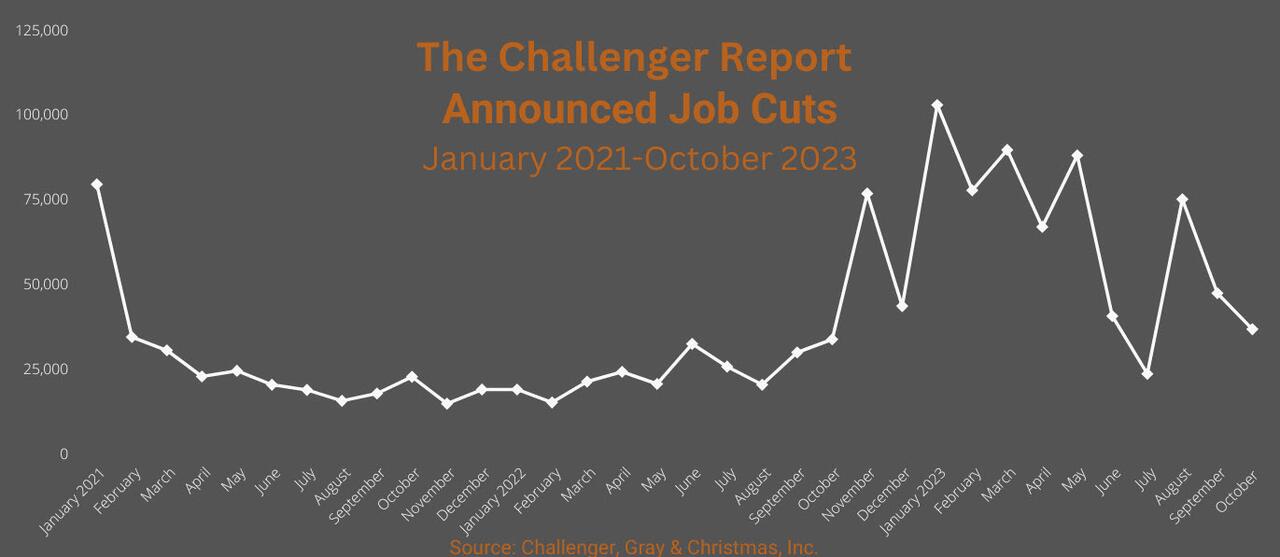
Amid the early holiday shopping season, retailers have cut 72,182 jobs through October, a 258% increase from the 20,191 jobs eliminated in 2022, according to a new report from Challenger, Gray & Christmas. This marks the most significant number of job cuts since retailers cut 179,520 jobs in October 2020.
Among the industries reducing their workforce this year, retail ranks second behind technology (158,513) and ahead of healthcare/products (54,429), warehousing (47,750) and financial services (47,094).
Amazon is planning to hire 250,000 seasonal workers this year, followed by Target (100,000), UPS (100,000), Macy’s (38,000) and Bath & Body Works (32,500), per the report.
While retailers are preparing for the busiest season of the year, the industry, alongside the overall labor force, appears to be reducing its workforce compared to a year ago. According to Challenger, Gray & Christmas’ report, U.S. employers eliminated 36,836 jobs in October, down 22% from the previous cuts announced in September but 9% higher than a year ago.
Retail hiring has been slowing in recent months, other reports suggest. According to talent acquisition technology firm iCIMS, retail hiring and job openings in September dipped 12% and 25% respectively, but job applications jumped 46% from last year.
“Job cut plans have slowed significantly since the first half of the year, and consumers have continued to spend, even in the face of high inflation. Pandemic savings and higher wages have gotten many workers through economic uncertainty,” Andy Challenger, senior vice president of Challenger, Gray & Christmas, said in a statement.
Despite the industry’s overall workforce reduction, some retailers are either tapping into their existing workforce or preparing to hire some seasonal employees. After hiring workers throughout the year, Maren Dollwet Waggoner, senior vice president of end-to-end operations people at Walmart U.S., said in a LinkedIn post that Walmart currently has the staff needed to serve customers this holiday season because it has been hiring throughout the year. Though Amazon is hiring the most seasonal staff, other major retailers, including Kohl’s, Dick’s Sporting Goods and Burlington, are hiring thousands of workers ahead of the holidays.
Fallout: GM Halts Production Of Cruise Driverless Vans
About 11 days after General Motors’ autonomous car unit, Cruise, halted all autonomous vehicle deployment across the US following several collisions and a suspension of its permit to operate robot taxis in California, Forbes revealed that Cruise CEO Kyle Vogt held an all-hands meeting Monday to halt production of its fully autonomous vans temporarily.
The fallout continues as Vogt, according to audio obtained by Forbes, told employees that suspending driverless operations nationwide was the primary reason why it must pause “production of the Origin” van.
The Origin operates fully autonomously and has no steering wheel or pedals. This halt represents a significant setback for Cruise, which has faced regulatory scrutiny following an incident where one of its vehicles dragged a woman who had been struck by another car. Furthermore, an investigative piece by The Intercept revealed Cruise’s software has “problems recognizing children.”
Vogt said Cruise has produced hundreds of Origin vehicles and “more than enough for the near-term when we are ready to ramp things back up.”
“During this pause, we’re going to use our time wisely,” he explained, noting that Cruise was actively talking with regulators about its issues.
“And so if we want to rebuild trust with these groups, we have got to make sure that we are having those discussions and they hear things from us first and not from the press,” he said, adding, “So, candidly because we’ve had some leaks about information coming out of this meeting we have got to be careful what we share from this meeting, or these efforts to rebuild trust could backfire.”
Forbes spoke with a GM spokesperson who confirmed that the company was “temporarily” pausing production of the robot vans.
“More broadly speaking, we believe autonomous vehicles will transform the way people move around the world, and the Origin is an important part of the AV journey – it’s the first scalable vehicle ever designed specifically for autonomous rides and will make transportation more accessible,” the spokesperson said.
So much for robo-taxis revolutionizing the world of transportation… Whatever happened to Tesla’s dream of robot-taxi fleets?
Russian foreign ministry spokeswoman Maria Zakharova on Tuesday said that recent remarks by Israeli Minister of Heritage Amihai Eliyahu, in which he said dropping a nuclear bomb in the Gaza Strip is “a possibility,” raised a multitude of questions.
“It raised a great number of questions. Question number one: Does this mean we are hearing an official statement acknowledging [Israel’s] possession of nuclear weapons? Accordingly, the next set of questions that everyone has is: Where are the international organizations, including the IAEA [International Atomic Energy Agency]; where are the inspectors?” Zakharova said during a televised interview.
Estimates of Israel’s nuclear stockpile range between 80 and 400 warheads, which can be delivered via aircraft, submarine-launched cruise missiles, and the Jericho series of intermediate to intercontinental-range ballistic missiles.
Its first deliverable nuclear weapon is thought to have been completed in late 1966 or early 1967, making it the sixth country in the world to have developed them.
Israel has never openly tested its nuclear weapons nor signed the Nuclear Non-Proliferation Treaty (NPT), making it the world’s only unacknowledged atomic power. The country has also never been subjected to an inspection from the UN nuclear watchdog.
Asked in an interview with Radio Kol Berama last week whether an atomic bomb should be dropped on Gaza, Israeli minister Eliyahu answered: “This is one of the possibilities.”
Eliyahu, from the Jewish supremacist Religious Zionist party, stated further that “there is no such thing as uninvolved civilians in Gaza” and that, therefore, no humanitarian aid should be allowed into the besieged enclave.
He also expressed his support for depopulating Gaza and reconquering it to reestablish Jewish settlements there. Regarding the Palestinian population, he said: “They can go to Ireland or deserts; the monsters in Gaza should find a solution by themselves.” Eliyahu added that anyone waving a Palestinian or Hamas flag “shouldn’t continue living on the face of the earth.”
Just in🚨Syria calls on the international community and the International Atomic Energy Agency to investigate Israel’s nuclear program, after Israel openly threatens to nuke Gaza. The Syrian Ministry of Foreign Affairs announced on Sunday. pic.twitter.com/YUUkBdSvvL
In response, Israeli Prime Minister Benjamin Netanyahu suspended Eliyahu from participating in cabinet meetings and dismissed his statement, calling it “not based in reality.”
Russia’s UN envoy has previously stated that, as an occupying state, Israel has “no right” to self-defense.
Since 2007, I have advocated designating May 1 as an international Victims of Communism Day. The May 1 date was not my original idea. But I have probably devoted more time and effort to it than any other commentator. In my view, May 1 is the best possible date for this purpose because it is the day that communists themselves used to celebrate their ideology, and because it is associated with communism as a global phenomenon, not with any particular communist regime. However, I have also long recognized that it might make sense to adapt another date for Victims of Communism Day, if it turns out that some other date can attract a broader consensus behind it. The best should not be the enemy of the good.
As detailed in my May 1 post from 2019, November 7 is probably the best such alternative, and in recent years it has begun to attract considerable support. Unlike May 1, this choice is unlikely to be contested by trade unionists and other devotees of the pre-Communist May 1 holiday. While I remain unpersuaded by their objections on substantive grounds, pragmatic considerations suggest that an alternative date is worth considering, if it can sidestep objections and thereby attract broader support.
The November 7 option is not without its own downsides. From an American standpoint, one obvious one is that it will sometimes fall close to election day, as is the case this year. On such occasions, a November 7 Victims of Communism Day might not attract as much attention as it deserves, because many will—understandably—be focused on electoral politics instead. Nonetheless, November 7 remains the best available alternative to May 1; or at least the best I have seen so far.
For that reason, I am—once again—doing a Victims of Communism Day post on November 7, in addition to the one I do on May 1. If November 7 continues to attract more support, I may eventually switch to that date exclusively. But, for now, I reserve the options of returning to an exclusive focus on May 1, doing annual posts on both days, or switching to some third option should a good one arise.
In addition to its growing popularity, November 7 is a worthy alternative because it is the anniversary of the day that the very first communist regime was established in Russia. All subsequent communist regimes were at least in large part inspired by it, and based many of their institutions and policies on the Soviet model.
Having explained why November 7 is worthy of consideration as an alternative date, it only remains to remind readers of the more general case for having a Victims of Communism Day. The following is adopted from this year’s May 1 Victims of Communism Day post, and some of its predecessors:
The Black Book of Communism estimates the total number of victims of communist regimes at 80 to 100 million dead, greater than that caused by all other twentieth century tyrannies combined. We appropriately have a Holocaust Memorial Day. It is equally appropriate to commemorate the victims of the twentieth century’s other great totalitarian tyranny.
Our comparative neglect of communist crimes has serious costs. Victims of Communism Day can serve the dual purpose of appropriately commemorating the millions of victims, and diminishing the likelihood that such atrocities will recur. Just as Holocaust Memorial Day and other similar events promote awareness of the dangers of racism, anti-Semitism, and radical nationalism, so Victims of Communism Day can increase awareness of the dangers of left-wing forms of totalitarianism, and government domination of the economy and civil society.
While communism is most closely associated with Russia, where the first communist regime was established, it had equally horrendous effects in other nations around the world. The highest death toll for a communist regime was not in Russia, but in China. Mao Zedong’s Great Leap Forward was likely the biggest episode of mass murder in the entire history of the world.
November 7, 2017 was the 100th anniversary of the Bolshevik seizure of power in Russia, which led to the establishment of the first-ever communist regime. On that day, I put up a post outlining some of the lessons to be learned from a century of experience with communism. The post explains why most of the horrors perpetrated by communist regimes were intrinsic elements of the system. For the most part, they cannot be ascribed to circumstantial factors, such as flawed individual leaders, peculiarities of Russian and Chinese culture, or the absence of democracy. The latter probably did make the situation worse than it might have been otherwise. But, for reasons I explained in the same post, some form of dictatorship or oligarchy is probably inevitable in a socialist economic system in which the government controls all or nearly all of the economy.
While the influence of communist ideology has declined greatly since its mid-twentieth century peak, it is far from dead. Largely unreformed communist regimes remain in power in Cuba and North Korea. In Venezuela, the Marxist government’s socialist policies have resulted in political repression, the starvation of children, and a massive refugee crisis—the biggest in the history of the Western hemisphere.
In Russia, the authoritarian regime of former KGB Colonel Vladimir Putin has embarked on a wholesale whitewashing of communism’s historical record. Putin’s brutal war on Ukraine is primarily based on Russian nationalist ideology, rather than that of the Soviet Union. Nonetheless, the failure of post-Soviet Russia to fully reckon with its oppressive Soviet past is likely one of the reasons why Putin’s regime came to power, and engaged in its own atrocities.
In China, the Communist Party remains in power (albeit after having abandoned many of its previous socialist economic policies), and has become less and less tolerant of criticism of the mass murders of the Mao era (part of a more general turn towards greater repression). The government’s brutal repression of the Uighur minority, and escalating suppression of dissent, even among Han Chinese, are just two aspects in which it seems bent on repeating some of its previous atrocities. Under the rule of Xi Jinping, the government has also increasingly reinstated socialist state control of the economy.
Here in the West, some socialists and others have attempted to whitewash the history of communism, and a few even attribute major accomplishments to the Soviet regime. Cathy Young has an excellent critique of such Soviet “nostalgia” in a 2021 Reason article.
In sum, we need Victims of Communism Day because we have never given sufficient recognition to the victims of the modern world’s most murderous ideology or come close to fully appreciating the lessons of this awful era in world history. In addition, that ideology, and variants thereof, still have a substantial number of adherents in many parts of the world, and still retains considerable intellectual respectability even among many who do not actually endorse it. Just as Holocaust Memorial Day serves as a bulwark against the reemergence of fascism, so this day of observance can help guard against the return to favor of the only ideology with an even greater number of victims.
As Shutdown Looms Next Week, House GOP Prepare Another Stopgap
House Republicans under the leadership of Speaker Mike Johnson (R-LA) are preparing yet another temporary spending band-aid (continuing resolution) in order to avert a Nov. 18 government shutdown, which they could vote on as early as this week, lawmakers said following a meeting with Johnson.
This is Johnson’s first high-stakes negotiation as speaker, following the ouster of his predecessor, Kevin McCarthy (R-CA), shortly after the House passed the last continuing resolution.
1) The laddered CR. Under this Freedom Caucus-pushed concept, the House would pass two stopgap funding packages. One would extend four relatively non-controversial spending bills until early December. The second package would extend funding for the other eight bills until mid-January.
In theory, this would force the House and Senate into a negotiation over all 12 funding bills. It’s also meant to prevent the Senate from sending an omnibus to the House ahead of the Christmas break.
Republican senators — even the most seasoned appropriators — had no idea what a “laddered CR” even was before Monday. They’re less than thrilled about it now that they know.
“It seems to me that you would just constantly be having programs and agencies stop and go, stop and go,” Sen. Susan Collins of Maine, the top GOP appropriator, told us. “And so I think that would increase the difficulty.”
2) Clean, with no supplemental. Another idea under consideration is to extend government funding until January — which Johnson pitched to Senate Republicans — but separately negotiate on the $100 billion-plus supplemental spending requests dealing with the border, Israel, Ukraine and Taiwan. This has the benefit of being a clean CR, which is easy for the Senate to accept. But leaving aside the supplemental money will be very tricky.
3) Negotiate with the Senate. One option that Johnson is floating internally — and it seems like the least likely to us — is to have House Republicans try to see if they can get a CR deal with the Senate while still working to pass individual spending bills.
* * *
Under a laddered CR, agencies that have drawn Republican animosity – such as the DOJ, would be on a longer funding timeline, while departments with more widespread support, such as Veterans Affairs, would receive a shorter deadline, Bloomberg reports.
Does it have a chance?
The Democratic reaction to the stopgap proposal will hinge on whether Republicans demand offsetting spending cuts or other policy provisions. House Caucus Chair Pete Aguilar (D-CA) wasn’t too hot on the idea.
“Sounds like they want multiple shutdowns spread out over different calendar years,” he said.
Rep. Bob Good (R-VA), a member of the Freedom Caucus, said “We’ll focus on passing our spending bills. And if we need a little bit of time on that, I think you’ll see very short spending bills with some leverage points put in there for wins for the American people.”
Johnson and party leaders will meet Tuesday morning behind closed doors to discuss options, with the intention of averting the internal dissent that tripped up Kevin McCarthy.
McCarthy in September was unable to get enough Republican votes for a stopgap that would have temporarily cut spending by 30% while making changes to immigration policies. In the face of an imminent shutdown, he allowed the House to pass a 48-day funding bill with Democratic support.
Some lawmakers said they were eager to have the House vote on a stopgap to prevent the looming shutdown. -Bloomberg
According to Rep. Lisa McClain (R-MI), “We’ve got to get on it, like now.“