The Dimon’s Advocate: JPM CEO Endorses Nikki Haley As Bill Ackman Joins ‘Biden Must Step Aside’ Club

The Dimon’s Advocate: JPM CEO Endorses Nikki Haley As Bill Ackman Joins ‘Biden Must Step Aside’ Club

Jamie Dimon is nuts for Nimarata, telling the audience at Wednesday’s NYT DealBook Summit “Even if you’re a very liberal Democrat, I urge you, help Nikki Haley too.”

“Get a choice on the Republican side that might be better than Trump,” the JPM CEO added.

The endorsement comes one day after Haley won the support of Koch-linked PAC, Americans for Prosperity Action. That said, while Florida Gov. Ron DeSantis’ campaign appears to have stalled following a precipitous drop, he’s still ahead of Haley according to an average of polls tracked by RealClear Politics

Haley obviously has a shot of surpassing DeSantis, however look at Trump way up there at the top.

The backing added to momentum the former United Nations ambassador has been building in recent weeks in her efforts to become voters’ main alternative to former President Donald Trump in the Republican primaries. Haley is now in third place, behind Trump and Florida Governor Ron DeSantis, in the RealClearPolitics average of national polls. -Bloomberg

That said, Dimon says he will work with whoever wins the 2024 election.

“I’m not taking myself off the playing field,” he said.

Haley told CNBC‘s Squawk Box that she and Dimon caught up over the phone recently about the US economy.

Ackman joins the herd

Meanwhile, billionaire investor Bill Ackman is the latest talking head to suggest that President Joe Biden needs to hang it up.

“I think Biden’s done a lot of good things. But I think his legacy will not be a good one if he is the nominee,” said Ackman, known for flip-flopping like an air sock. “I do think the right thing for Biden to do is to step aside, and to say he’s not going to run, and create the opportunity for some competition.”

Ackman says he’s ‘intrigued’ by Rep. Dean Phillips’s primary challenge for the Democratic nomination.

“You need to be at your intellectual best. And I don’t think Biden is there,” Ackman said in an upcoming episode of The David Rubenstein Show: Peer-to-Peer Conversations that will debut Dec. 6 at 9 p.m. New York time on Bloomberg Television.

“I don’t say that, you know, with any derision of the president,” he continued. “But I think he’s clearly past his physical and cognitive peak.

Ackman joins the likes of David Axelrod, Bill Kristol, and former DNC Chair Donna Brazile in suggesting that Biden should step aside.

Tyler Durden
Wed, 11/29/2023 – 18:00

via ZeroHedge News https://ift.tt/IlwVqa6 Tyler Durden

“They Can Go F**K Themselves” – Musk Unleashes On Advertising Boycott “Blackmail”

“They Can Go F**K Themselves” – Musk Unleashes On Advertising Boycott “Blackmail”

In a truth-bomb-filled interview with Andrew Ross-Sorkin, at the DealBook Conference, Elon Musk silenced a room full of liberal elites as he proclaimed that: “…if someone wants to blackmail me with advertising, they can go fuck themselves.”

Reflecting on the actions of various companies to his now-viral retweet of a so-called anti-semitic comment – specifically mention ‘Bob’ (Iger from Disney), Musk confirmed he did not want them to advertise while noting that “an advertising boycott will kill X.”

“Don’t advertise. If someone is going to try to blackmail me with advertising, blackmail me with money, go f**k yourself. Go f**k yourself. Is that clear? I hope it is.”

But, he explains, “the whole world will know those advertisers killed the company… and we’ll document it in great detail.”

Sorkin replies “those advertisers will say, ‘we didnt’ kill the company’ to which Musk cuts him off “Oh yeah, tell that to earth.. and let’s see how earth responds to that.”

With regards to the anti-semtitic tweet, Musk admits his action was:

“perhaps the most foolish thing I’ve ever done… the worst and dumbest thing I’ve ever done.”

Musk clarifies once again the thought process behind his retweet:

“What I was saying was that it’s unwise to support groups that want your annihilation,” he says.

If it encouraged anti-semites, he says:

“I am quite sorry,” adding, “I should in retrospect not have replied to that particular post.”

But, he explains, “I have no problem being hated,” and responding to questions about ‘trust’, Musk points out that his work speaks for itself – if you want to send satellites to space, SpaceX sent 80% of all mass into orbit this year; and, if you want to buy an EV, Tesla makes the best cars in the world – it doesn’t matter what you think of him.

“We make the best cars… Whether you hate me, like me or are indifferent, do you want the best car or not the best car?”

In fact, he reflects, “I’ve done more for the environment than any human,” drawing a smattering of applause before he remarked:

“…I care about doing good… and all I see is people who care more about looking good while doing evil.”

The mood of the discussion turns a little more morose as Musk discusses the “demons of his mind” that drive the storm inside his brain.

Sorkin asks if there is anyone who holds leverage over Musk… Musk succinctly responds “no”.

Simply put, this discussion brought a whole new meaning to the phrase ‘fuck you money!” as Musk says what he thinks without fear of woke retaliation.

Tyler Durden
Wed, 11/29/2023 – 17:49

via ZeroHedge News https://ift.tt/fF2ic64 Tyler Durden

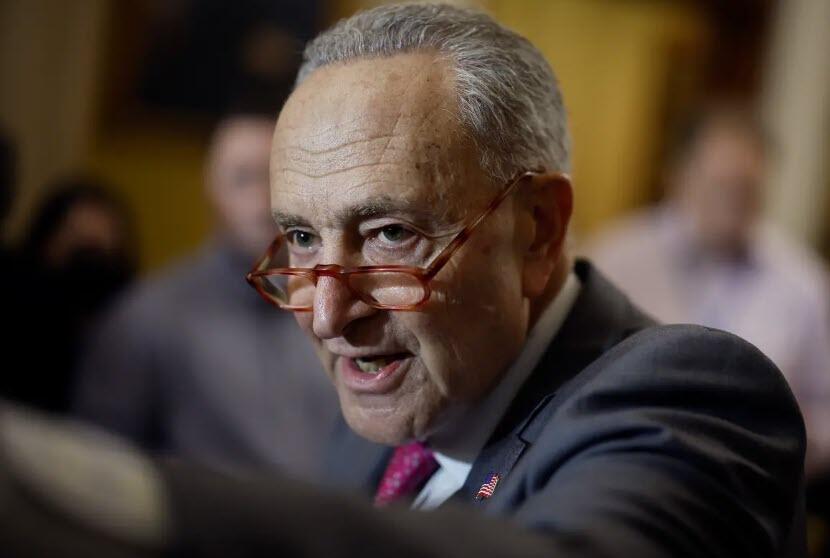
Schumer Asks Why Left Doesn’t Stand With Israel In Speech Condemning Anti-Semitism

Schumer Asks Why Left Doesn’t Stand With Israel In Speech Condemning Anti-Semitism

Authored by Jackson Richman via The Epoch Times,

In a major speech on Nov. 29 about the rise in anti-Semitism, Senate Majority Leader Chuck Schumer (D-N.Y.) criticized the left side of the ideological spectrum for not reciprocating in solidarity with the Jewish people.

Speaking on the Senate floor, Mr. Schumer, the highest-ranking Jewish official in U.S. history, noted that the Jewish people have been allies when it comes to certain causes surrounding minorities.

“Not long ago, many of us marched together for black and brown lives. We stood against anti-Asian hatred. We protested bigotry against the LGBTQ community. We fought for reproductive justice, out of the recognition that injustice against one oppressed group is injustice against all,” he said.

“But apparently, Mr. President, in the eyes of some this principle does not extend to the Jewish people,” he continued.

Mr. Schumer warned that the rise in anti-Semitism is “a five-alarm fire that must be extinguished.”

This comes amid the latest conflict between Israel and the terrorist group Hamas that started on Oct. 7, resulting in the largest single-day massacre of the Jews since the Holocaust, when 6 million Jews were exterminated.

He lamented anti-Semitism and anti-Israel sentiment in the United States ranging from college campuses to the media to Jewish businesses boycotted and vandalized.

He also cited examples of Jews being persecuted throughout history, from the Crusades to pogroms to the expulsions from countries including England and Spain.

In the United States, there was a 388 percent increase in anti-Semitic incidents between Oct. 7 and Oct. 23, according to the Anti-Defamation League. Additionally, Jews are the leading target for religious-related hate crimes in the United States, according to the FBI.

Mr. Schumer emphasized there is a difference between criticizing Israeli government policies and demonizing Israel.

“This speech is not an attempt to label most criticism of Israel and the Israeli government, generally, as anti-Semitic,” he said.

“I don’t believe that criticism is.”

Double Standard Applied to Jews

He also criticized the double standards when it comes to Israel versus other countries, such as people celebrating when a new country is founded but being against the formation of the Jewish state, which occurred in 1948. He even referenced the 1947 United Nations partition plan that would have created a Jewish state and an Arab state in what was the British mandate of Palestine—which the Jews accepted and the Arabs rejected.

“The double standard has been ever present and is at the root of anti-Semitism,” said Mr. Schumer.

“The double standard is very simple. What is good for everybody is never good for the Jew and when it comes time to assign blame for some problem, the Jew is always the first target,” he continued.

“And in recent decades, this double standard has manifested itself in the way much of the world treats Israel differently than anybody else.”

Mr. Schumer then paraphrased former Israeli Ambassador to the United Nations Abba Eban, who gave a guest lecture at Harvard University when Mr. Schumer was a student there. Mr. Schumer said he never forgot a particular moment from the ambassador’s speech, when he directly addressed a group of students who were protesting against the existence of Israel.

“Every time a people gets their statehood, you applaud it. The Nigerians, the Pakistanis, the Zambians, you applaud their getting statehood,” Mr. Schumer recalled the ambassador saying.

“There is only one people, when they gain statehood, you don’t applaud, you condemn it. And that is the Jewish people.”

Another example Mr. Schumer lamented was the blame people put on Israel when it comes to civilian deaths, but not Hamas. Mr. Schumer expressed his sympathy for the Palestinian lives lost in the conflict, though he acknowledged that Israel does have a responsibility to avoid collateral damage.

Notably, in his speech, Mr. Schumer made no mention of Iran, which backs Hamas and is the world’s leading state sponsor of anti-Semitism.

Tyler Durden
Wed, 11/29/2023 – 17:40

via ZeroHedge News https://ift.tt/ehcn28f Tyler Durden

NY Prosecutor Scrambles To Salvage Anti-Trump Case, Argues Deutsche Bank Being Happy Is ‘Irrelevant’

NY Prosecutor Scrambles To Salvage Anti-Trump Case, Argues Deutsche Bank Being Happy Is ‘Irrelevant’

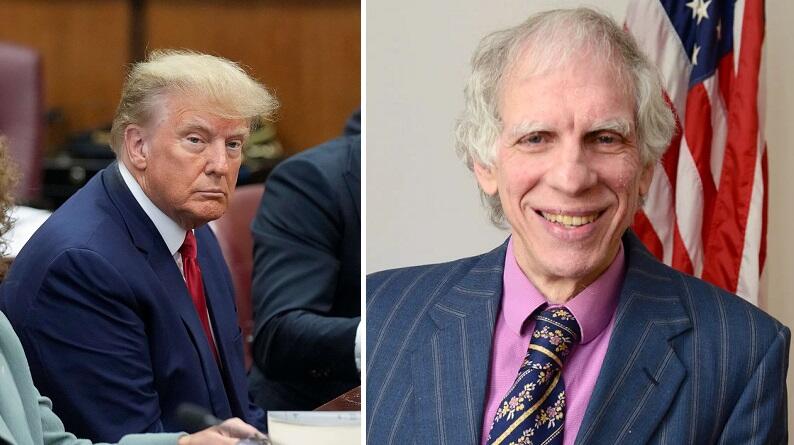
Donald Trump, NY Attorney General Letitia James (D)

Yesterday we noted that Deutsche Bank executive David Williams may have nuked New York’s case against former President Donald Trump – testifying on Tuesday that the bank has no problem with clients overstating their net worth, and that it’s “atypical, but not entirely unusual” for a bank to internally slash a client’s stated asset values by 50% and approve a loan anyway, as they did with Trump.

It gets even better…

Not only did that completely dismantle the prosecution’s core argument that the bank was harmed by Trump inflating his assets, Trump’s former private banker, Rosemary Vrablic, testified on Wednesday that the bank had aggressively pursued the real estate mogul as a ‘whale’ client.

“We are whale hunting … haven’t seen him yet,” she told bankers in a Nov. 29, 2011 email entered into evidence by Trump’s defense team and displayed on screens during the trial. “Also maybe Dad will convert like Ivanka did,” she added.

Vrablic is one of four current and former employees called to testify this week as part of Trump’s defense against claims brought last year by New York Attorney General Letitia James. The state alleges Trump inflated his net worth by as much as $3.6 billion a year to get better terms from banks and insurers, reaping $250 million in “illegal profit” over more than a decade.

While James has portrayed Deutsche Bank as a victim of Trump’s lies, the former president is seeking testimony supporting his argument that lenders were eager to do business with him and weren’t bothered by discrepancies in the value of his assets. -Bloomberg

What’s more, Trump attorney Jesus Suarez on Wednesday asked Vrablic to comment on internal documents from 2014 which described plans to build “lasting, broad private banking relationships” with a list of US clients.

Vrablic, who brokered a loan for Trump’s Doral golf course in Florida as well as properties in Chicago and Washington, testified that Trump fit the bill because “he was in the US commercial real estate market and had a successful track record.”

Internal documents further showed that the bank made $6 million from Trump loans in 2013 alone.

Again…

Cleanup, aisle 3!

In response to yesterday’s bombshell testimony, Kevin Wallace, an attorney with NY AG Letitia James’ office, told judge Arthur Engoron that it’s irrelevant whether Deutsche Bank was happy with Trump, what matters is that he lied!

“The idea that you can’t lie to a bank is pretty well established,” argued Wallace.

Engoron, unsurprisingly, suggested on Tuesday that he agrees with the state’s view on Trump.

“The mere fact that lenders were happy doesn’t mean the statute wasn’t violated,” he said, after previously holding Trump liable for fraud on the eve of the trial.

Now do election fraud, given that the vast majority of 2020 election fraud cases were dismissed by spineless judges across the country for ‘lack of standing,’ since the plaintiffs couldn’t show they were directly harmed – despite evidence that ‘statutes were violated.’

Tyler Durden
Wed, 11/29/2023 – 17:20

via ZeroHedge News https://ift.tt/G9Dnlqp Tyler Durden

Pennsylvania Strikes Another Blow Against Pro-Life Pregnancy Centers

Pennsylvania Strikes Another Blow Against Pro-Life Pregnancy Centers

Authored by Beth Brelje via The Epoch Times (emphasis ours),

Pennsylvania Attorney General Michelle A. Henry has issued a consumer advisory warning “pregnant people” seeking an abortion to be sure they do not look for medical services at pregnancy resource centers that do not provide abortions.

Maternity and infant supplies at Branches Pregnancy Resource Center in Brattleboro, Vt. Pregnancy resource centers typically offer counseling and assistance to pregnant mothers and new parents. (Branches Pregnancy Resource Center)

While many facilities in Pennsylvania offer various forms of assistance, education, and support to pregnant women, not all of them provide “medical care,” the attorney general’s office notes.

“Many facilities known as crisis pregnancy centers, or pregnancy resource centers, are not staffed by licensed medical professionals and therefore cannot provide medical care,” the Nov. 24 advisory says. “In Pennsylvania, only licensed medical professionals can provide medical care such as diagnostic ultrasounds, pre-natal screening tests, or abortion services.”

The notice advises, “Pregnant people and other consumers” searching for “reproductive health care” to be prepared to ask if the services they seek are provided at the clinic they have contacted.

Pregnancy resource centers provide emotional support, non-medical ultrasound, parenting classes for single mothers and couples, adoption resources, baby clothing, diapers and supplies, guidance for a year or two after the birth of the baby, and post-abortion counseling.

The Attorney General’s office has developed an online form where consumers can report what they believe to be misleading or false information about pregnancy-related resources and services provided in Pennsylvania. Complaints may be made anonymously.

The Epoch Times contacted the Attorney General’s office to ask if there was an incident that prompted the advisory.

This is not the first time Pennsylvania Gov. Josh Shapiro’s administration has targeted pregnancy resource centers.

In August, Mr. Shapiro, a Democrat, defunded the nonprofit Real Alternatives, which for almost 30 years has administered the life-affirming Pregnancy and Parenting Support Services program for the state, including funding for the state’s nonprofit pregnancy resource centers.

During budget planning, the line item normally planned for Real Alternatives “women’s service programs” was raised from $7.2 million to $9.2 million in the new budget.

Shortly after Mr. Shapiro signed the 2023–2024 budget on July 3, Pennsylvania Department of Human Services (DHS) Secretary Dr. Val Arkoosh announced the state’s contract with Real Alternatives will end by Dec. 31, ending its main funding source.

Real Alternatives refers women to 83 life-affirming pregnancy centers in Pennsylvania, including Catholic charities and social services agencies, pregnancy support centers, and maternity homes. Through these partners, it provides counseling services and pregnancy tests, helps to continue education, and provides adoption resources. It also offers a host of programs for unexpectedly pregnant women and new mothers, including parenting classes, housing resources, diapers, food, furniture, and other services. By design, it doesn’t provide medical services or point women to abortion.

Still Spending

Budgeting for pro-life activities has been a priority in Pennsylvania since the mid-1990s, when then-Pennsylvania Gov. Robert Casey, a pro-life Democrat, added funding to the state budget for a program providing an alternative to abortion services. Real Alternatives has held the contract for more than 27 years and in that time has served nearly 350,000 women, with 1.9 million office visits.

The newly increased budget item, $9.2 million, will still be spent on women’s service programs. The DHS has also published a request for applications (RFA) for women’s service programs.

Through the RFA, the DHS will find a provider to administer regional programs providing “a comprehensive array of essential services that cater directly to the distinctive requirements of women, pregnant women, and new mothers.”

The selected applicant must provide services and information in a manner that “is inclusive and accessible, medically accurate, comprehensive, trauma-informed, nonjudgmental, client-centered, and culturally responsible,” the RFA said. “For purposes of this RFA, comprehensive services shall exclude abortion services.”

The RFA requires applicants with experience providing services that address the unique needs of women, including pregnant and postpartum women, and women seeking testing for sexually transmitted infections.

These are some of the same services that Planned Parenthood says it offers. However, some of the parameters of the RFA are beyond what pregnancy resource centers offer. The winning applicants have not yet been announced.

Replacing State Dollars with Donations

Although the RFA excludes applicants who directly provide abortions, it does not prohibit abortion referrals.

Moreover, some of the language in the RFA—phrases such as “dismantling persistent healthcare barriers” and “broaden health care access”—is similar to that used by the abortion lobby. In one example, a recent Planned Parenthood action sheet encouraged supporters to message Mr. Shapiro urging him to “dismantle unnecessary barriers to abortion care,” to “expand access now,” and to stop funding “harmful and deceptive CPCs” (Crisis Pregnancy Centers).

“The way [the RFA] is written, it clearly allows groups that promote abortion to get funding. And there’s no alternative to abortion language,” Kevin Bagatta, Real Alternatives president and CEO, told The Epoch Times. “In our language, and in the language in the governor’s budget, as well as in the fiscal code that we have followed all these years, it says to promote childbirth rather than abortion to women with an unexpected pregnancy.”

With the contract ending Dec. 31, 2023, Real Alternatives hopes to increase donations so it won’t have to close its doors. “We need $4 million to continue the program through the fiscal year which would end June 30,” Mr. Bagatta said. “That’s a big number, but that’s 200,000 people donating $20 each to us.”

The program is not going to change, he said.

“We’re still going to lower abortion one woman at a time by providing a real alternative, which is support and love through the unexpected pregnancy, and 24 months after the birth of the baby. We’re just going to use different funds.”

The people of Pennsylvania have always supported the program, Mr. Bagatta said. “Now, we’re just going to go directly to them and ask for help.”

Donations may be made at Real Alternatives’ website, he said.

Part of a National Effort to Discredit of Pregnancy Centers

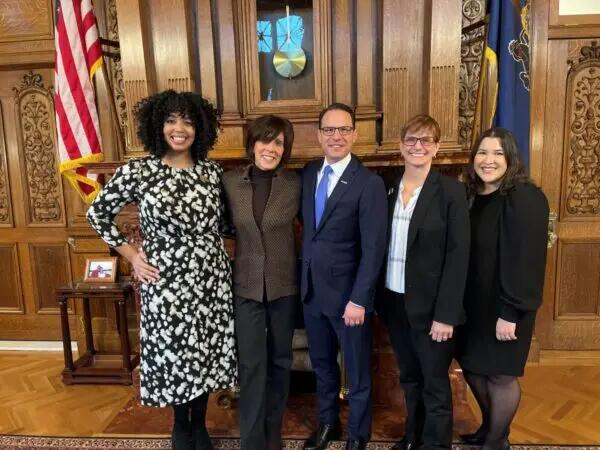
Planned Parenthood leaders met with newly sworn-in Pennsylvania Gov. Josh Shapiro on Jan. 19, 2023. Left to right: Sydney Etheredge, CEO of Planned Parenthood of Western PA; Dayle Steinberg, CEO of Planned Parenthood of Southeastern PA; Gov. Josh Shapiro; Melissa Reed, CEO Planned Parenthood Keystone; Signe Espinoza, Executive Director of Planned Parenthood PA Advocates. (Courtesy Planned Parenthood)

Critics of the move to de-emphasize pregnancy resource centers say it is a political move, not a response to a rash of bad experiences at pregnancy resource centers. Discouraging the use of pregnancy resource centers has become a tactic in the power struggle between pro-abortion and pro-lifer forces over what policies to promote to women facing unplanned pregnancies and abortion access, they say.

In August, Pennsylvania Sen. Judy Ward called the move to defund Real Alternatives “sickening” and called out Mr. Shapiro and Dr. Arkoosh for being “willing to sacrifice the needs and desires of so many women at the altar of their far-left social agenda.”

During his first week in office, Mr. Shapiro met in the governor’s office with four high-level Planned Parenthood officials, who described the meeting as working toward “improved access to care” for patients regardless of their financial situation; removing “limitations and hurdles” for providers to offer abortion; holding crisis pregnancy centers “accountable for misinformation” when they are state-funded; and waiving “onerous and unnecessary testing requirements” for clinic patients.

Planned Parenthood has been a regular campaign donor to Mr. Shapiro throughout his political career.

In January, Mr. Shapiro appointed Lindsey Mauldin as deputy chief of staff for Health and Human Services. Ms. Mauldin’s LinkedIn profile reveals almost ten years of experience working at Planned Parenthood Pennsylvania Advocates and Planned Parenthood of Southeastern Pennsylvania.

New Jersey Attorney General Matthew Platkin issued the following consumer alert in December 2022: “WARNING: Crisis Pregnancy Centers (CPCs) do NOT provide abortion care. CPCs are organizations that seek to prevent people from accessing comprehensive reproductive health care, including abortion care and contraception,” the New Jersey alert reads.

In 2022, Michigan Gov. Gretchen Whitmer, a Democrat, vetoed $1.5 million that the Republican-led state legislature had allocated for pregnancy resource centers in the state budget.

U.S. Rep. Josh Gottheimer (D-N.J.) held a press conference in front of Lighthouse Pregnancy Resource Center in Hackensack, New Jersey, on Oct. 6 and claimed the center is “brainwashing” pregnant women because it provides options other than abortion.

“We need to do everything we can do to shut down these brainwashing, cult clinics,” he told reporters. “We need to stop the fake programming they are pushing.”

Mr. Gottheimer said it was part of his effort to promote the Stop Anti-abortion Disinformation (SAD) Act to prevent so-called deceptive advertising about what happens in pregnancy centers.

The SAD Act would direct the Federal Trade Commission (FTC) to issue rules that prohibit “deceptive or misleading advertising” related to the provision of abortion services; provide the FTC the authority to enforce these rules and collect penalties from organizations in violation; and require a report to Congress on enforcement under the Act.

In some states, pro-lifers have sued over warnings or statutes banning “deceptive advertising” by pregnancy resource centers. In Connecticut, Alliance Defending Freedom ultimately dropped its legal challenge when Connecticut Attorney General William Tong revealed in litigation that he was unaware of any women being deceived by the centers.

In New Jersey, after a coalition of pregnancy resource centers filed a public information request for documentation supporting claims of deceptive marketing, it was told the request could not be fulfilled because no complaints against the centers existed.

Tyler Durden
Wed, 11/29/2023 – 17:00

via ZeroHedge News https://ift.tt/zBrjsbC Tyler Durden

The ADL Has Been Sending Top US Cops To Israeli Terrorism Seminars Blamed For ‘Militarizing’ Police

The ADL Has Been Sending Top US Cops To Israeli Terrorism Seminars Blamed For ‘Militarizing’ Police

With the Anti-Defamation League making recent headlines over a (seemingly de-escalated) ongoing public spat with X owner Elon Musk…

…many have highlighted the ADL’s nearly two-decade sponsorship of a program which sends US law enforcement officials to Israel for various training seminars which several organizations have blamed for the ‘militarization’ of US police.

This is also set against the backdrop of the post-9/11 ‘war on terror’ era trend of local police departments gaining access military gear and equipment. Heavy armored vehicles like MRAPs have now become a fixture of even small town police departments.

“A lot of the policing that folks are observing and being talked to about in these trips is policing that happens in a nondemocratic context,” Alex Vitale, a sociology professor at Brooklyn College and author of a forthcoming book on global policing, told The Intercept in 2017.

“The kinds of training police are given in Israel is actually part of the problem because it encourages a warrior mindset in police and exposes them to practices that would be unconstitutional in the U.S.,” he told the outlet earlier this year.

The FBI has also participated in the program, which was launched by former FBI official Steven Pomerantz.

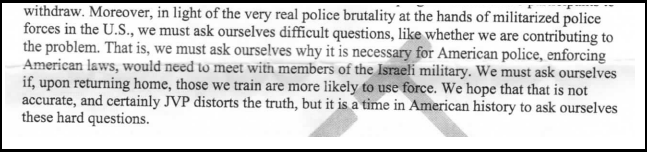
In the summer of 2020 as the George Floyd BLM protests raged across the United States and ‘defund the police‘ became a national refrain which liberal cities across the country actually instituted (with much regret), ADL senior VP of programs, George Selim, and another top ADL official, internally questioned the group’s support of the Israeli training program.

“In light of the very real police brutality at the hands of militarized police forces in the US, we must ask ourselves difficult questions, like whether we are contributing to the problem,” wrote the officials in a June 9, 2020 memo to CEO Jonathan Greenblatt which suggests ending the program. “That is, we must ask ourselves why it is necessary for American police, enforcing American laws, would need to meet with members of the Israeli military. We must ask ourselves if, upon returning home, those we train are more likely to use force.”

According to Amnesty International in 2016,

When the U.S. Department of Justice published a report opens in a new tab Aug. 10 that documented “widespread constitutional violations, discriminatory enforcement, and culture of retaliation” within the Baltimore Police Department (BPD), there was rightly a general reaction of outrage.

But what hasn’t received as much attention is where Baltimore police received training on crowd control, use of force and surveillance: Israel’s national police, military and intelligence services.

Baltimore law enforcement officials, along with hundreds of others from Florida opens in a new tab, New Jersey opens in a new tab, Pennsylvania, California opens in a new tab, Arizona opens in a new tab, Connecticut, New York opens in a new tab, Massachusetts, North CarolinaGeorgia opens in a new tab, Washington state opens in a new tab as well as the DC Capitol police have all traveled to Israel for training. Thousands of others have received training from Israeli officials here in the U.S.

Critics have dubbed the practice the “Deadly Exchange.”

Durham bans it

In 2018, five years after former Durham, North Carolina Chief of Police Cerelyn Davis attended a 2013 training session with the Israel National Police, the North Carolina city banned the exchange program. Davis, now the chief of Memphis PD, seemed “to have changed her tune” according to The Intercept.

By the time she became chief in Durham, Davis seems to have changed her tune on such programs. The apparent coolness on the police-Israeli relationships came following pressure from local activists and a national campaign to end U.S.-Israel police exchanges.

In 2018, Durham became the first city in the U.S. to ban police trainings and exchanges involving Israel’s military. At the time, Davis wrote in a memo that she had “no intention to participate or initiate an exchange with Israel,” which prompted two Israeli volunteer police officers to sue her and the Durham police department for discrimination.

Davis’s predecessor, Larry Godwin, also trained in Israel as part of a  Homeland Security International Conference.

ADL And ‘The Architect’ Hit Back

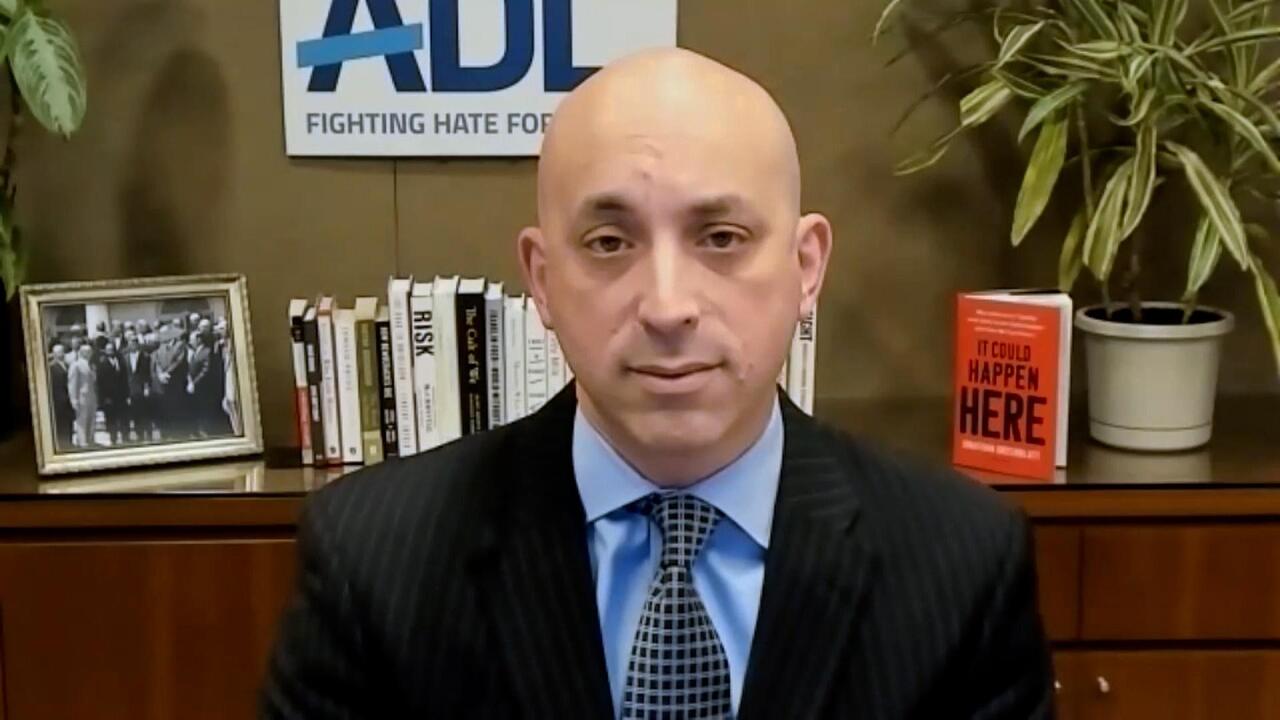
ADL CEO Jonathan Greenblatt

While the ADL has oddly scrubbed the exchange program’s main page from their website (now archived here), the organization has defended the program in response to previous questions, writing:

There has been systematic racism in the U.S. for centuries, and it exists within our law enforcement and criminal justice systems. These problems were not imported to the U.S.

Blaming Israel for these grave and serious issues only serves as a distraction from legitimate problems that we as a nation need to confront.

This charge has been propagated by ideological critics of Israel who seek to inject alleged Israeli – and at times American Jewish – complicity into issues of American societal injustice. Those who make this spurious argument have focused more on tarring Israel than promoting real solutions to confronting and transforming systemic American inequities and abuses.

The self-proclaimed ‘architect’ of the US-Israel police exchange noted above, Steven Pomerantz – who heads the Jewish Institute for National Security of America (JINSA), a Washington DC Think Tank, wrote in a lengthy June 19, 2020 statement (10 days after ADL officials raised the notion of the organization’s complicity in police violence) that the training courses don’t involve ‘field training,’ work on “building trust with minority communities,” and therefore couldn’t possibly translate to reports of increased police brutality in the US.

The letter then pivots to how “Israel’s unfortunately extensive experience in the counterterrorism field” can benefit US police.

“Importantly, both American and Israeli police agencies operate under similar conditions, with judicial and public oversight and an aggressive free press,” writes Pomerantz. “There is value in learning how Israel fights terrorism while preserving its democratic institutions and the individual rights of citizens — challenges facing all democratic societies.”

Meanwhile, the American Jewish Committee has criticized the ‘deadly exchange’ as a ‘trope’ which ‘directly compares U.S. police actions against Black Americans with the Israeli Defense Forces’ (IDF) treatment of Palestinians.”

Users of this trope argue Israeli and U.S. law enforcement exchange security practices and ideologies to purposely target people of color. This false equivalence appeared in demonstrations in the summer of 2020 when protesters chanted “Israel, we know you, you murder children, too” -AJC

The AJC says that “Accusing Israel or Zionists of complicity in the murder of Black people is malicious, perpetuates antisemitism, and blames Jews for societal ills.”

Tyler Durden
Wed, 11/29/2023 – 16:40

via ZeroHedge News https://ift.tt/vkx9erl Tyler Durden

5th Circuit Seeks Comment on Proposed AI Rule

The U.S. Court of Appeals for the Fifth Circuit is soliciting comments on a proposed change. Rule 32.3 would now restrict the use of generative AI (with changes in red):

32.3. Certificate of Compliance. See Form 6 in the Appendix of Forms to the Fed. R. App. P. Additionally, counsel and unrepresented filers must further certify that no generative artificial intelligence program was used in drafting the document presented for filing, or to the extent such a program was used, all generated text, including all citations and legal analysis, has been reviewed for accuracy and approved by a human. A material misrepresentation in the certificate of compliance may result in striking the document and sanctions against the person signing the document.

The new certificate of compliance would require the lawyer to check one of two boxes:

3. This document complies with the AI usage reporting requirement of 5th Cir. R. 32.3 because:

 no generative artificial intelligence program was used in the drafting of this document, or

 a generative artificial intelligence program was used in the drafting of this document and all generated text, including all citations and legal analysis, has been reviewed for accuracy and approved by a human.

I think this proposal strikes a good balance. Lawyers are not barred from using generative AI, but they have to attest that they used this technology. And you can be certain that briefs with the AI box checked will be reviewed more carefully. Indeed, I would be eager to see an empirical study performed about the briefs that check the second box. Clients may also want to see this information–they may have thoughts about lawyers who bill their time to use generative AI.

The post 5th Circuit Seeks Comment on Proposed AI Rule appeared first on Reason.com.

from Latest https://ift.tt/Xfy3mrG
via IFTTT

Federal Agencies Neglect Anti-Asian Discrimination in Education


Thomas Jefferson School | NA
The Thomas Jefferson High School for Science and Technology. Fairfax, Virginia, defendant in a lawsuit claiming discrimination against Asians. (NA)


My wife, Alison Somin (an attorney with the Pacific Legal Foundation, and former special assistant at the US Commission on Civil Rights) has an article about anti-Asian discrimination in education, and how federal agencies have mostly ignored it:

Discrimination against Asian-American students in admissions at selective universities has been an open secret for decades. An entire cottage industry even coached ambitious applicants on how to be less Asian. Data produced in litigation showed that for applicants with academic credentials in the top 10 percent of Harvard’s pool, the odds of admission were 56.1 percent for African Americans, 31.3 percent for Hispanics, and 15.3 percent for whites, but only 12.6 percent for Asian Americans. In emails uncovered in the parallel lawsuit against the University of North Carolina, admissions officers were candid about preferring applicants of other races over Asian Americans. One representative exchange: “perfect 2400 SAT All 5 on AP one B in 11th” “Brown?!” “Heck no. Asian.”

Yet the federal agencies charged with enforcing civil rights laws prohibiting this discrimination largely have done nothing in response. These agencies could have issued guidance emphasizing that such discrimination is forbidden or pursued targeted investigations against universities widely suspected of discrimination. But they have not….

Selective public magnet schools also discriminate against Asian Americans. The Fairfax County School Board restructured its admissions process to lower the number of Asian Americans at Thomas Jefferson High School, a top science and technology magnet program. The Board did not hide its intent: litigation produced private text messages, stating “there has been an anti [A]sian feel underlying some of this, hate to say it lol” and that Asian students were “discriminated against in this process.” They lamented that “Asians hate us.”

Represented by my firm, Pacific Legal Foundation, a parent group called the Coalition for TJ fought back, claiming that the changes violated the Constitution. Their case is currently pending a writ of certiorari at the Supreme Court.

School officials in Boston, New York City, and Montgomery County, Maryland, have similarly revised admissions procedures to lower the numbers of Asian American students in magnet schools there. In Boston, school officials were even caught mocking Asian American surnames on a hot microphone. In each of these cities, parent groups have sued, represented by Pacific Legal Foundation. These cases are pending in the federal appellate courts.

Again, federal civil rights agencies could have opened targeted investigations into anti-Asian discrimination in any of these school districts. They could have issued guidance letters reminding school boards of their legal obligations. They have not. In Coalition for TJ v. Fairfax County School Board, the Department of Justice even filed an amicus brief in the Fourth Circuit supporting the discriminating school district. It is difficult to imagine a similarly indifferent federal response if school officials spoke about members of any other racial group the way Fairfax County and Boston officials talked about Asian-American students.

What can be done to address this problem? As Alison suggests, a valuable first step would be for federal officials to deal with anti-Asian discrimination in education the same way they would with any other discrimination targeting racial minorities. The Supreme Court’s recent decision in SFFA v. Harvard is the first Supreme Court ruling to take account of anti-Asian discrimination in higher education, and will make it easier to pursue remedies against it.

In previous writings about this issue, I and others have compared today’s anti-Asian discrimination in education with anti-Semitic discrimination practiced by many elite educational institutions in the early to mid twentieth century. Recent outbreaks of anti-Semitism on campus in the wake of the Israel-Hamas war further highlight parallels between the two cases.

The distinctive left-wing version of anti-Semitism—focusing on the economic role of Jews—has some obvious parallels with left-wing rationales for anti-Asian discrimination. Both groups are stigmatized for their relatively high levels of success in education and business. Far-leftists tend to look on such success with suspicion, and this ideology has disproportionate sway in many educational institutions. On top of that, any group with a disproportionately high representation at elite schools (relative to their percentage of the population) makes it harder to achieve the goal of proportionate representation of all ethnic groups, an objective dear to hearts of many left-wing university officials.

The political right has its own awful history of both anti-Semitism and anti-Asian bigotry. But that in no way justifies the left-wing variants of these phenomena or vice versa.

As Alison notes, she is co-counsel for the plaintiffs in the Coalition for TJ case. I previously wrote about that case here and here.

Skeptics and conspiracy theorists (thought not Volokh Conspiracy theorists!) may discount what I say on this topic because my wife is involved. But, for what it’s worth, my interest in both anti-Asian discrimination in education and the more general issue of the use of “facially neutral” policies for discriminatory purposes long predates Alison’s work on the TJ case. I first became interested in these problems when I attended a high school with a large number of Asian students, in the late 1980s and early 90s (graduating in 1991). Classmates were worried about discrimination in elite-university admissions even back then.

The post Federal Agencies Neglect Anti-Asian Discrimination in Education appeared first on Reason.com.

from Latest https://ift.tt/xLnB6kT
via IFTTT

A Los Angeles Jail Let a Woman Die of Withdrawal, Then a Coroner Allowed Her Body To Decompose


Woman's shadow | Illustration: Lex Villena; Vitaliy Mitrofanenko

Amanda Bews was arrested last September after shoplifting from a Los Angeles-area liquor store. Within two days, she would be found unresponsive in a jail cell, dead from apparent alcohol and drug withdrawal. 

According to a lawsuit filed this month, that wasn’t the only way jail employees mishandled Bews’ case. Not only did jail employees fail to treat Bews, despite numerous medical records stating she would need withdrawal medications, but once she had died, the jail mishandled her remains, leading to major decomposition that Bews’ mother said made her daughter look “mummified” 

After her arrest on September 7, Bews was first taken to a local hospital before booking, due to her admission of extremely heavy alcohol use and recent heroin use. According to the lawsuit, Bews told staff about her substance history and her drinking “just prior” to her arrest. Her arrest records state that she was a “prolonged heavy drinking.”

When medical staff released her, they gave law enforcement medical documents that “would have included Amanda’s history of alcohol dependence and heavy recent use,” according to the lawsuit.

“In her ED Summary Report, the ‘disposition’ is listed as ‘TO ACUTE CARE FACILITY,’ indicating that Amanda should have received acute care (meaning consistent monitoring and inpatient treatment) at the jail she would be booked into,” the complaint reads.

However, Bews didn’t get this necessary treatment. Instead, she was placed into a shared cell during the afternoon of September 8th. Just after midnight on the 9th, the complaint says that staff cleared Bews “for detox and required no medications,” and they “stopped treating Amanda for detoxification and withdrawal.”

At 4:30 a.m., Bews was found unresponsive. Staff gave her a dose of Narcan, but she was pronounced dead at 5:29 a.m. According to an autopsy, the levels of drugs and alcohol in Bews’ system were indicative of withdrawal and there was vomit in her airways.

“On information and belief, deputies also did not check on Amanda during this time, as her condition would have obviously deteriorated. Or, if deputies had, they failed to summon medical care during this time despite her deterioration.”

After Bews’ death, the lawsuit states that both the county medical examiner and Chapel of the Light, a private funeral home hired by the county, mishandled Bews’ remains, leading to considerable decomposition of her body.

The coroners “failed to use the standard of care a reasonably careful person working at a medical examiner’s office would use to handle human remains prior to transfer to their loved ones’ family members. A reasonably careful employee of a medical examiner’s office would at minimum properly refrigerate the remains,” according to the complaint.

“Upon completion of the autopsy and transfer of the remains to Chapel of the Light, Amanda’s remains had deteriorated significantly,” the suit reads. “The County transferred custody of the remains to Chapel of the Light, but Chapel of the Light allowed Amanda’s remains to further deteriorate.”

According to The Los Angeles Times, photos of Bews show “A side-shot of a face so bloated with death it’s gone flat. A close-up of skin, one patch bloodied and another so decayed it’s turned gelatinous. Part of the nose is missing, and the features are bloated beyond recognition.”

“I couldn’t believe it was my baby,” Melinda Bettencourt, Bews’ mother, told the Times

In all, the suit claims that the defendant’s actions violated Bews’ Fourteenth Amendment due process rights, as well as a failure to provide needed medical care and negligence. 

“While Amanda was in their custody and care, Defendants had adequate time to reflect and reason prior to acting or failing to act. Because Amanda’s health deteriorated over the span of more than a day, actual deliberation was practical,” the suit claims. “Yet, Defendants’ actions and omissions constituted objective deliberate indifference to Amanda’s medical needs and unsafe conditions of confinement.”

The post A Los Angeles Jail Let a Woman Die of Withdrawal, Then a Coroner Allowed Her Body To Decompose appeared first on Reason.com.

from Latest https://ift.tt/WvOZygm
via IFTTT

Night Of The Living Ed: Zombie Public Schools, Drained Of Pandemic Lifeblood, Haunt The Land

Night Of The Living Ed: Zombie Public Schools, Drained Of Pandemic Lifeblood, Haunt The Land

Authored by Vince Bielski via RealClear Wire,

Call them “zombie” schools.

A significant but unknown number of public schools across the U.S., particularly in big cities, have lost so many students in the last half-decade that many of their classrooms sit empty. Gone is the loud clatter of students bursting through crowded hallways and slamming lockers.

The harm from these half-empty schools is inflicted directly on all students in a district. Without enough per-pupil state funding to cover their costs, they require financial subsidies to remain open, forcing district-wide cutbacks in academic programs.

I visited one school that takes up an entire city block but there were only five classrooms used, plus a library, a computer room, and an afterschool room,” said Sam Davis, a member of the Board of Education in Oakland, California. “As our budget officer said, if you don’t have enough students for two teams to play kickball, there are a lot of other academic activities that are not going to be sustainable either.”

But nothing in public education is more controversial and difficult than closing a neighborhood school. The protests that recently flared up in cities like Oakland and Denver over proposals to shut low-enrollment schools, which also tend to be the worst academic performers in districts, are just a prelude of the reckoning to come, according to interviews with school leaders, researchers, educators, and charter officials.

The permanent closure of schools slowed drastically during the pandemic, even though many urban districts suffered a major exodus of students, with double-digit losses in New York City and Los Angeles. Many hollowed-out districts have temporarily sidestepped the tempest of shutting schools because Congress provided them with a historic windfall of pandemic-related funding and wide latitude in spending it, said Georgetown Professor Marguerite Roza, who directs the Edunomics Lab.

But the $190 billion lifeline – called the Elementary and Secondary School Emergency Relief Fund – ends next September. So school leaders are facing mounting pressure to shrink their oversized districts, setting up the next battleground over public schools.

“Many districts have too many schools, not enough kids, and are propping them up with federal relief funds,” Roza said. “And they haven’t laid the groundwork for closures when the funding goes away. Imagine the anger and protests when families learn suddenly that their schools are on the list to close.”

With aid flowing during the pandemic, districts shut an average of 810 schools a year in 2021 and 2022, according to the National Center for Education Statistics. That’s far less than the 1,350 average from 2011 to 2020, a difference that underscores the magnitude of the problem of zombie schools. 

Why Schools Are Hard to Close

In the business and nonprofit sectors, wasteful spending is typically reined in by downsizing operations into fewer buildings and personnel. But public schools often find protection from the calls for efficiency. The first wave of pandemic-era proposals to shut schools in several districts has been countered by a formidable coalition of local advocates, forcing school boards to backpedal on their consolidation plans.

Families are leading the protests at school board meetings. Some have sentimental ties to neighborhood schools that go back generations, and others cite transportation issues in switching to another location that’s further from home. Teachers unions have joined the fight in Oakland and other cities, arguing that closures pose unfair labor practices. And racial justice advocates have succeeded in reframing the issue as a matter of equality rather than wasteful spending since nearly all the schools to be closed serve mostly black and Latino kids.

Districts like Seattle that aim to shutter schools often cite reasons that are out of their control. The birth rate has been dropping since 2007, according to federal data, chipping away at enrollment. Families are also leaving cities like Los Angeles and Chicago because of the rising cost of living and concerns over crime and homelessness. San Francisco, for instance, lost 7.5% of its population between 2020 and 2022, according to the census.

But public schools share in the blame. With test scores on the Nation’s Report Card in decline since 2012, families have been quitting traditional schools in search of a better education and a safer environment at charters, micro, and home schools. Charter enrollment, for instance, grew 7% from 2020 to 2022, while district schools lost 3.5% of students, according to the National Alliance of Public Charter Schools.

School districts can’t do anything about the birth rate. But many of them do control the fate of charters. In Los Angeles and other cities facing closures, school boards that formerly encouraged the expansion of charters have grown hostile toward them and blocked their expansion, in part to preserve their own enrollment.

How Zombie Schools Hurt Education

Some districts are now devising proposals to close under-enrolled facilities because of the financial burden they create.

Even a school at half capacity needs a principal, support and food service staff, custodians, and sometimes a nurse, librarian, and counselor. Education is highly labor-intensive, with compensation comprising at least 85% of a school’s expenses, Georgetown’s Roza says.

Since zombie schools don’t cover their own expenses, superintendents have to pull resources from other schools and programs to subsidize them. Funding for art, music, special education, and advanced placement classes may be cut, affecting students throughout the district.

“In the end, districts have to spread resources too thinly, across too many buildings, and nobody gets served well,” Roza says.

In Denver, Superintendent Alex Marrero detailed the financial benefit of shutting schools in a memo to families last year. In proposing to close 10 out of about 155 traditional and innovation schools – one of which had only 93 students – Marrero said the cost to the district to subsidize them was $5 million annually. That money was pulled from healthier schools and programs.

But if the 10 skeletal schools were closed, the superintendent added, the district could hire an additional 50 full-time employees to benefit students.

The financial logic of school closures has won the day in some districts. Indianapolis announced it was shutting six schools in May to promote the efficient use of taxpayer funding and higher student achievement. St. Louis said it would lock the gates on eight schools, some of them half-empty, two years ago.

The city of Jackson, Miss., may approve a sweeping closure plan in December. The superintendent is calling for the elimination of more than a quarter of its 55 district schools after community outcries scuttled plans over the years to close under-enrolled facilities.

“The closures are long overdue and I think they will happen,” says Rachel Canter, executive director of Mississippi First, a nonpartisan education policy group. “The reality is that the population has declined so much that Jackson cannot support the number of schools it has and provide a quality education.”

Opponents Prevail in Oakland

But in many cities, schools that are almost empty shells are protected from closing. Consider the heated battle in Oakland.

The performance of the Oakland school district, which is two-thirds Latino and black, is among the worst in California: Just 25% of students meet or exceed math standards, and only 33% reach this bar in English.

The poor results have contributed to a steady drop in enrollment to about 34,000 last year from more than 50,000 two decades ago. Many students left for charters, which now educate about a quarter of students in Oakland.

To improve performance, the district had set up a number of small schools with about 400 kids. That provided enough funding for a couple of teachers at each grade, as well as art and music programs, to create a rich learning environment. That’s now mostly gone.

Several of our campuses have dwindled to what I call micro schools that are each under 250 students, with only one class at every grade level and without much enrichment,” said Davis, the school board member. “We no longer have that robust environment for teachers or students.”

The urgency for Oakland to close schools, in addition to buildings it shut years ago, is underscored by the state takeover of the district in 2003 to prevent bankruptcy. The district is still paying off the bailout loan, so wasting money on under-enrolled schools could prompt another intervention by its Alameda County overseer.

To stave off more financial trouble, the board approved a plan in 2022 to shut or merge 11 schools, beginning with two that year. The savings would give the district a chance to reinvigorate the remaining schools with more teachers and programs.

But weeks of community demonstrations and a hunger strike by a group of protestors culminated in the election of new board members who opposed school closures. Two of the winners were backed by the Oakland Education Association teachers’ union.

In January, the new board hastily overturned the earlier vote on closures, saving five schools from shuttering without considering the financial impact in apparent violation of its own policy.

Sasha Ritzie-Hernandez, who has numerous relatives attending Oakland schools, helped rally thousands of protesters to keep them open. She says the schools targeted by the board were disproportionally black and low-income and questioned whether the savings would actually benefit students or get absorbed in what she considers a bloated district bureaucracy.

“I oppose closing schools,” said Ritzie-Hernandez, who lost a race for an open board seat in November. “Families in Oakland didn’t feel like they were involved in the decision-making process, so we mobilized parents to the board meetings because there was not robust community engagement.”

The decision to keep the schools open adds at least $5 million a year to the district’s budget, forcing the board to consider across-the-board cuts to its 78 schools, which could only add to their struggles.

Up Next: Denver

The Denver school district is now in the throes of a closures fight after enrollment has suffered from a declining birth rate and gentrification.

While Latinos make up the biggest group of students, their families are having fewer children. At the same time, rising housing costs are pushing lower-income families out of the city, and young couples without kids are moving in. The district is becoming whiter and smaller.

Enrollment peaked in 2019 at about 94,000 students and has fallen each year to 89,000 in 2022, according to the district. It projects it will lose thousands more students in the next few years.

When birth rates fall, elementary schools are emptied first. At the beginning of the year, the Board of Education expected that 15 district-run elementary and middle schools would have fewer than 215 students. Two elementary schools would have fewer than 120 students and not enough incoming kindergarteners to form a viable class.

After more than a year of gathering community feedback and analysis by an advisory committee, Superintendent Marrero, in the fall of 2022, recommended closing 10 of the 15 schools with fewer than 215 students. Nine of them were predominately Latino and black.

In the racial politics of Denver, the plan drew swift blowback from families and some members of the school board, which was entirely backed by the influential Denver Classroom Teachers Association. Vice President Auon’tai Anderson declared in the media that the closure plan was a “tactic of white supremacy culture” – despite the fact that it was developed by a Latino superintendent.

Bowing to pressure, several weeks later, Marrero was expected to cut the list in half to five schools, targeting those that required the largest subsidies. Instead, he chopped the list to just two schools.

Still, that wasn’t good enough. The school board rejected the slimmed-down plan, saying more input from the community was needed. A few months later, in early 2023, as the financial burden of zombie schools sank in, the board finally acted, closing just three of them.

What will happen to the rest of the under-enrolled schools is anyone’s guess. This month, Denver voters signaled they wanted a more moderate school board, electing three new members – none of them backed by the teachers union – to the seven-person panel. One new member is the former CEO of a charter network in Colorado who has expressed support for closing under-enrolled schools.

If Denver shutters more schools, it will likely happen slowly over many years, says William Anderson, a former public school teacher in the city who’s now on the faculty at the University of Denver.

“Maybe they close three next year, and see if it’s working the way they expected, and then they tweak the process before closing three more,” he says.

Charters on the Firing Line

As a subplot in the battle over vacated schools, districts in Oakland and Denver have rejected several requests by charters to expand. While that may help protect a district’s funding, it’s not good for families looking for better options for educating their children.

Charters, which are publicly funded but privately managed, have been particularly effective in accelerating the academic growth of low-income students, outperforming traditional schools by a significant margin, according to a 2023 study by the Center for Research on Education Outcomes (CREDO) at Stanford.

This is true in Denver, according to a separate CREDO study of the city, where charters make up about a quarter of all public schools. DSST, a charter network in Denver with waiting lists for many of its schools, stands out. It won national acclaim for the outstanding academic results of its disadvantaged students, 80% of whom are Latino or black. All of its graduates have been admitted to college since 2008, according to its website.

Yet DSST’s expansion in Denver has come to an abrupt halt. It last started a school in 2021, and that required the charter to appeal to the state after the school board sought to delay the opening for years. Since 2020, the Denver board has received three requests for new charter schools and rejected all of them, citing the potential difficulties they would have in recruiting students and other reasons, according to board memos.

“The local school board has been controlled by members who are hostile to authorizing new charter schools,” says Todd Ziebarth, senior vice president for state advocacy at the National Alliance for Public Charter Schools. “While Colorado’s law does create an appeals process, the time-consuming nature of it can serve as a deterrent to growth.”

In Oakland, the school board has rejected two charter proposals it has received since 2020: a new school was denied because it didn’t have a sound educational program, and an expansion was shot down because of the financial impact on the district from losing more students to the charter, said Davis, the board member.

Even Yu Ming, the top performing K-8 public school in Alameda County, which includes Oakland, encountered resistance in its request to grow its enrollment in the city. Students in the Mandarin immersion charter—30% of whom are low-income—performed about three times better than Oakland students on a 2022 state test, an extraordinary margin. Although Yu Ming has a waiting list, the Oakland board passed a resolution to compel the county, which controls the charter, to allow it to expand into a neighboring city.

The problem is that if we expand enrollment at charter schools, including the highly successful ones, that contributes to the decreasing enrollment in the district and leads to us closing more neighborhood schools, which is very painful,” Davis said.

But the benefit to students who would have enrolled in an expanded charter like Yu Ming could be significant. One of the most effective ways to deal with the chronic academic problems of low-income students is simply to put them in a better school. That alone makes a big difference, according to a CREDO study of school closures in 26 states.

The research showed that students – particularly blacks and Latinos – who transferred to superior schools made greater academic gains than their peers who remained in poorly performing schools. But a little less than half of the displaced students were moved to higher quality schools, which are in short supply in many cities.

Margaret Raymond, the CREDO director, says local boards closing facilities should also focus on finding ways to transfer students to better schools, including charters, even if districts take a financial hit.

“The lesson is that choosing the worst schools to close is probably a good thing, but that’s only half the exercise,” Raymond said. “Districts also have to figure out how to marshal those kids into settings where they have a chance of recovering academically.”


Tyler Durden
Wed, 11/29/2023 – 16:20

via ZeroHedge News https://ift.tt/gqmcpx0 Tyler Durden