Google Tumbles After Ad Revenue, Operating Income Miss

Google Tumbles After Ad Revenue, Operating Income Miss

As noted in our preview, JPM’s head of TMT trading said that GOOGLe is “probably the most controversial name of the group through our recent preview dinners/lunches” as it is “deemed a much lower quality play on AI” while UBS added that investors have “viewed Alphabet apathetically using it as a funding short for other mega caps.”  Indeed, from a  positioning/sentiment standpoint, GOOGL was the lowest of the mega-cap group at just 7.

Commenting ahead of earnings, Evelyn Mitchell-Wolf, an analyst at Insider Intelligence said that “it’s been a full year since ChatGPT burst onto the scene, putting Google on red alert to defend its core search advertising business,” and added that “on the heels of a landmark antitrust trial centered on that very business, Google Search performance should be yet unscathed.”

Echoing the sentiment, Mandeep Singh, an analyst at Bloomberg intelligence wrote that “expectations have come down for growth in its Cloud segment with the trend of optimization at enterprise customers hurting its growth more than rivals such as Microsoft Azure” adding that “Google has recently announced fee cuts to lure customers to its Cloud.”

Cutting to the chase, the big question into Alphabet’s earnings was what, if any, progress they had made on monetizing the AI promise without cannibalizing the company’s main moneymaker – search advertising; and just how much capex they blew on NVDA chips to feed the LLM-processing beast.

So how did Alphabet do? Well, judging by the plunge in its stock after hours, not that hot.

  • EPS $1.64, beating the est. $1.59
  • Revenue $86.31 billion, beating the est of $85.36 billion
    • Revenue ex-TAC $72.324, beating exp. $70.974 billion
    • Google advertising revenue $65.52 billion, missing exp. $65.8 billion
    • Google Search revenue $48.02 billion, missing exp. of $48.15 billion
    • YouTube ads revenue $9.20 billion, beating exp. $9.16 billion
    • Google Services revenue $76.31 billion, beating exp. $75.97 billion
    • Google Cloud revenue $9.19 billion, beating exp. $8.95 billion
    • Other Bets revenue $657 million, beating exp. $298.6 million
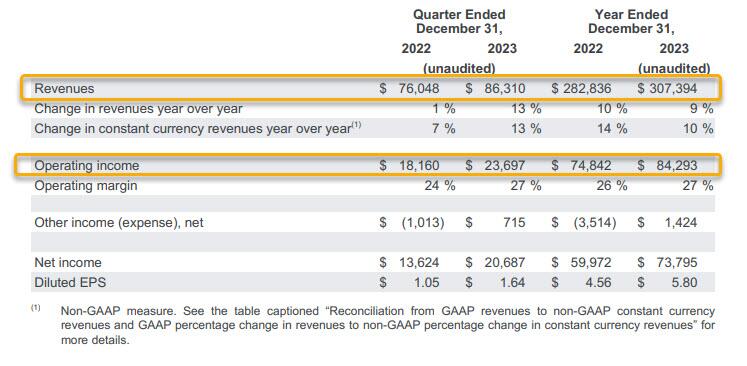
The good news: Google beat on Cloud revenue, which came in at $9.192BN, beating estimates of $8.95BN. The bad news: it missed on Advertising, which came in at $65.5BN, below the $65.8BN expected (up from $59.0BN a year ago). And as everyone knows, when an economic slowdown hits, ad spending is the first to go…
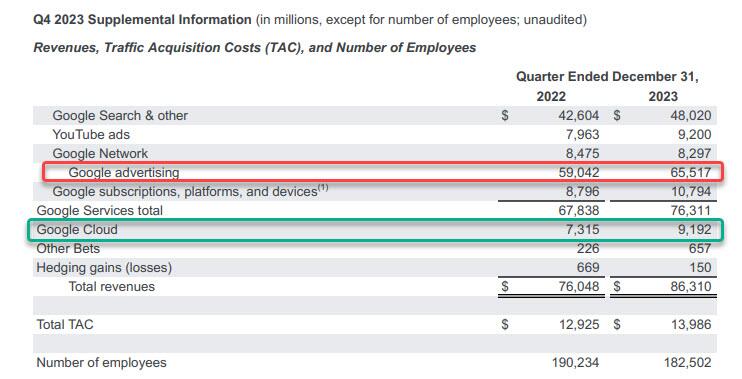
Looking below the line, we find more of a mixed picture.

  • Total operating income $23.70 billion, missing estimate $23.82 billion
  • Google Services operating income $26.73 billion, beating estimates of $25.75 billion
  • Google Cloud operating income $864 million, beating estimates of $427.4 million
  • Other Bets operating loss $863 million, beating the estimated loss of $1.26 billion
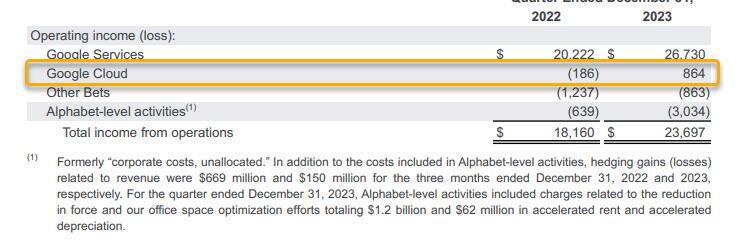
In total, Google’s operating margin of 27%, missed estimates of 27.7%. Finally, capex of $11.02 billion was more than $1 billion higher than the estimate $9.82 billion. That means less cash for buybacks.

Oh, and for those counting, the number of employees was roughly flat in Q4 at 182,502 up from 182,381 in Q3, when the number of employees slid from 186,779 in Q2.

The disappointing results come at a time of broader uncertainty for Google’s search engine, which has dominated the global internet for years and is the subject of a major antitrust case. Its leading position is threatened by new competition as the rise of generative AI has enabled companies like Microsoft and OpenAI to deliver programs that answer users’ questions in a more conversational fashion, like the wildly popular chatbot ChatGPT.

Google has scramble to incorporate the (largely useless) technology into its own products, and last month released its most powerful large language model, called Gemini. But Alphabet has been dogged by concerns that it’s been to slow to capitalize on the shift in the market and has been playing catch up to Microsoft in the AI race.

Commenting on the quarter, CFO Ruth Porat said that “we ended 2023 with very strong fourth quarter financial results, with Q4 consolidated revenues of $86 billion, up 13% year over year. We remain committed to our work to durably re-engineer our cost base as we invest to support our growth opportunities.”

As CEO Sundar Pichai plows resources into AI and other big priorities, executives have scrutinized operations to identify places where they can make cuts. Earlier this year, the company eliminated hundreds of employees in areas including hardware, engineering, and the moonshot technology lab X. More rounds of layoffs may follow this year, Pichai has said.

And while we wait to see how many time CEO Sundar Pichai will mention AI and try to capitalize on the stupidity of headline scanning AI algos, it’s hardly surprising that he too was quite laudatory of his company’s numbers, saying that he was “pleased with the ongoing strength in Search and the growing contribution from YouTube and Cloud. Each of these is already benefiting from our AI investments and innovation. As we enter the Gemini era, the best is yet to come.”

Well, there are at least two mentions… only this time the magic is gone and while Sunday may be pleased, the market isn’t and the stock is sliding about 4% after hours, the second consecutive quarter when GOOGL stock has dumped on earnings.
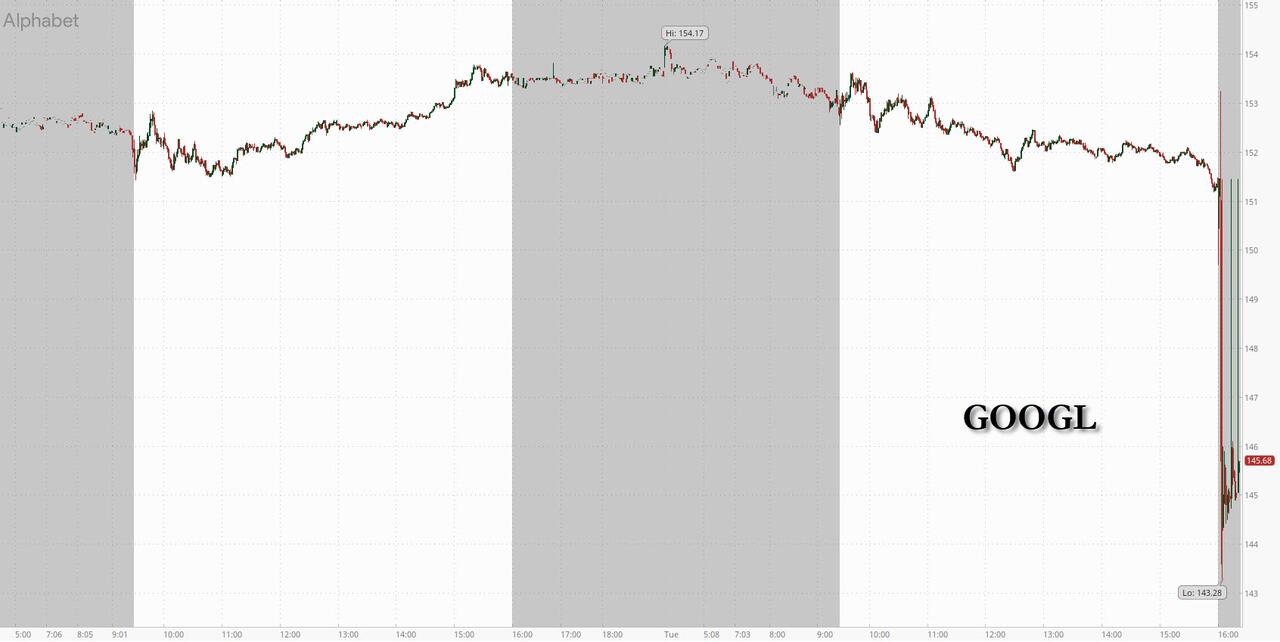
The stock may have a long way to drop from here if the AI myth ends up being just another chatbot bust: Wall Street has had high extremely expectations for Alphabet’s efforts in AI, pushing the stock up almost 60% over the past 12 months, valuing the company at nearly $2 trillion. But now investors are looking for a sense of when the technology will actually start moving the needle for earnings and revenue. For now, the answer remains elusive.

Tyler Durden
Tue, 01/30/2024 – 16:28

via ZeroHedge News https://ift.tt/qAh7TmQ Tyler Durden
MSFT Shares Unimpresssed By Big Top- & Bottom-Line Beat

MSFT Shares Unimpresssed By Big Top- & Bottom-Line Beat

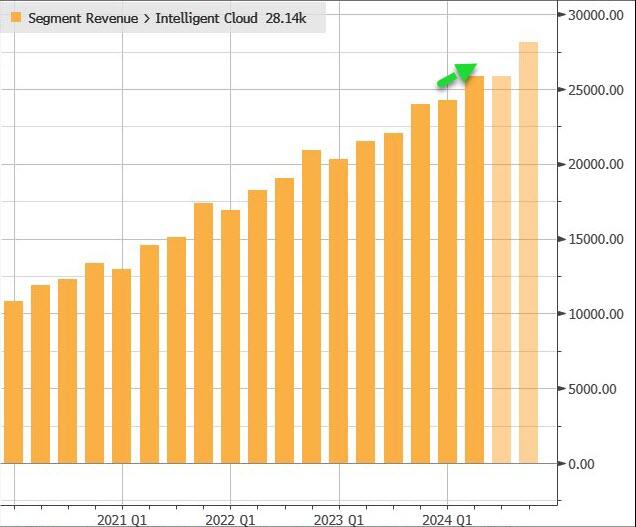
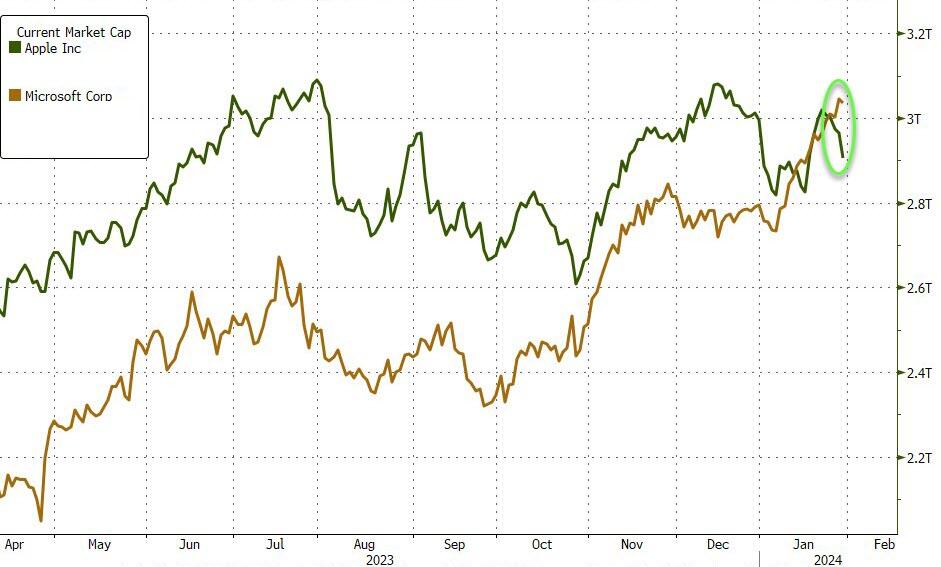
With Microsoft standing alone above the $3 trillion market-cap level (after AAPL’s recent weakness), all eyes are on tonight’s earnings for any signs of an inflection in the AI-exuberance.

Source: Bloomberg

And sure enough, at the headline level at least, it’s all-good with MSFT beating top- and bottom-line (by a big margin)

  • Revenue $62.02 billion, +18% y/y, estimate $61.14 billion

  • EPS $2.93 vs. $2.20 y/y, estimate $2.78

Under the hood, all segments beat expectations:

  • More Personal Computing revenue $16.89 billion, estimate $16.8 billion

  • Productivity and Business Processes revenue $19.25 billion, estimate $19.03 billion

…with the heavily AI-exposed intelligent cloud unit once again the highlight:

  • Microsoft Cloud revenue $33.7 billion, estimate $32.21 billion

  • Intelligent Cloud revenue $25.88 billion, estimate $25.29 billion

Satya seems pleased, and so he should with operating income up 33% YoY at $27.03 billion:

“We’ve moved from talking about AI to applying AI at scale,” said Satya Nadella, chairman and chief executive officer of Microsoft.

“By infusing AI across every layer of our tech stack, we’re winning new customers and helping drive new benefits and productivity gains across every sector.”

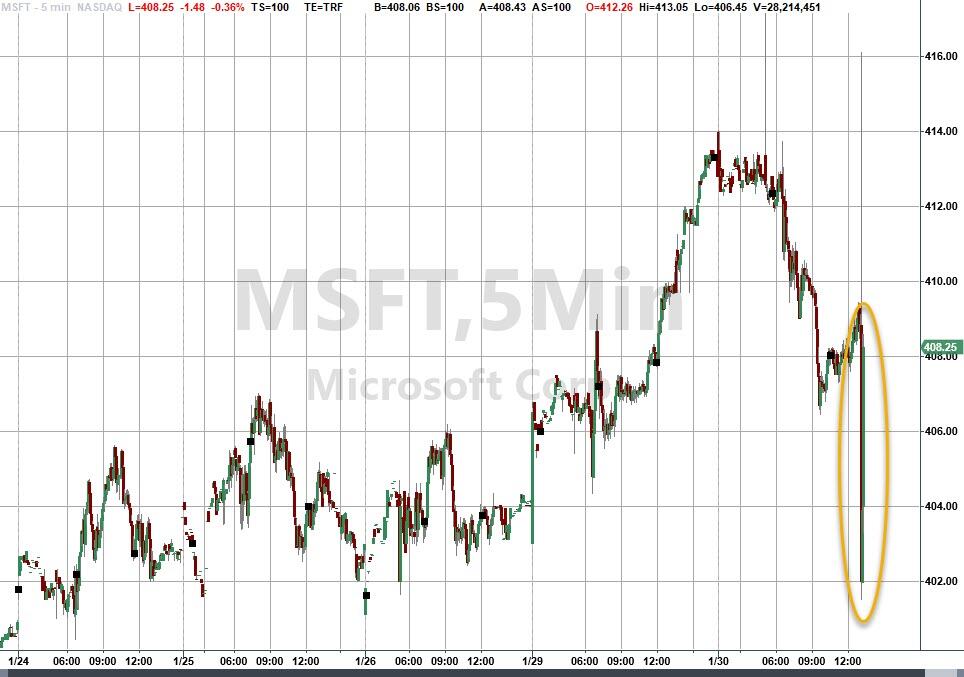
But, MSFT shares dumped initially than rebounded back to unchanged from the close (down on the day)…

…is it all priced in?

Tyler Durden

Tue, 01/30/2024 – 16:15

via ZeroHedge News https://ift.tt/5EtyBCO Tyler Durden

Yields JOLTed Higher, Stocks Lower Ahead Of Fed/Treasury

Yields JOLTed Higher, Stocks Lower Ahead Of Fed/Treasury

Higher-than-expected job openings from the JOLTS survey lifted bond yields (optimistically) today but the real story was in the quits – which dropped to pre-pandemic levels (suggesting “workers’ willingness of ability to leave jobs” is considerably lower (i.e. labor market not strong). You can decide which is more ‘real’.

Home price appreciation slowed, according to Case-Shiller; but consumer confidence ripped with ‘current conditions’ hitting the highest since pre-COVID-lockdowns.

The short-end underperformed with notable bear flattening in the curve. The long-end actually rallied on the day (30Y -4bps)…

Source: Bloomberg

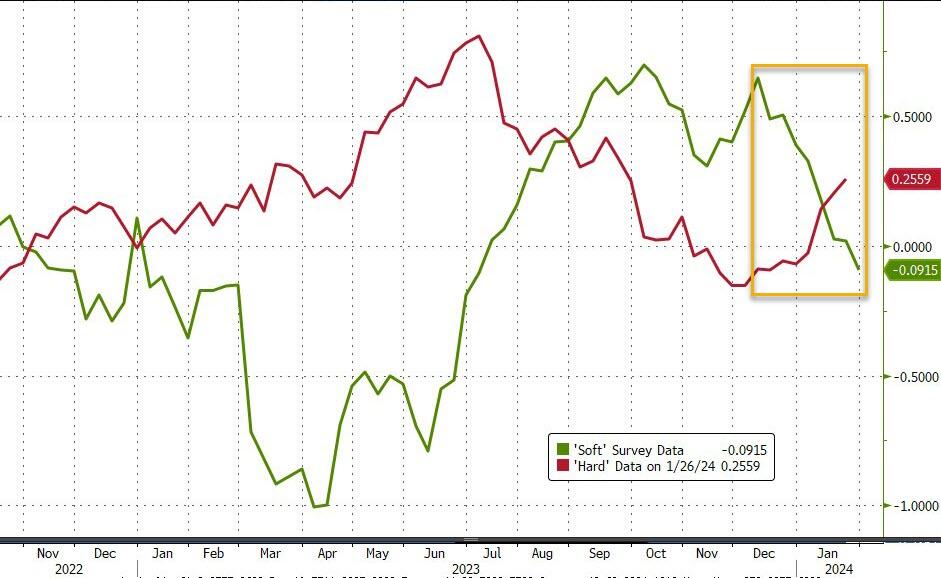
In the meantime, ‘soft’ survey data continues to trend lower as ‘hard’ economic data is reignited…

Source: Bloomberg

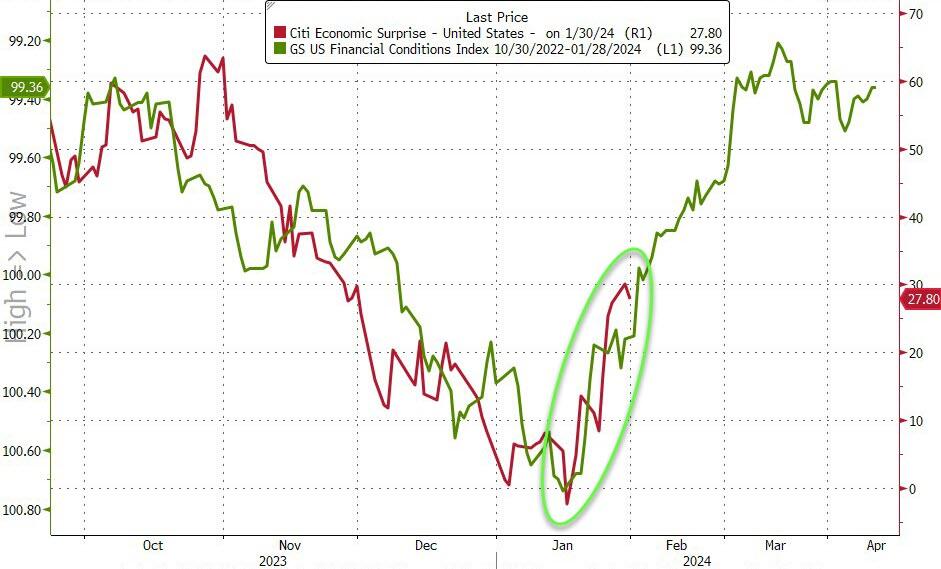
… by the massive loosening of financial conditions…

Source: Bloomberg

But most notably, this is where the week gets really exciting with tonight’s GOOG/MSFT earnings, tomorrow’s Treasury AQR details, then FOCM and so on.

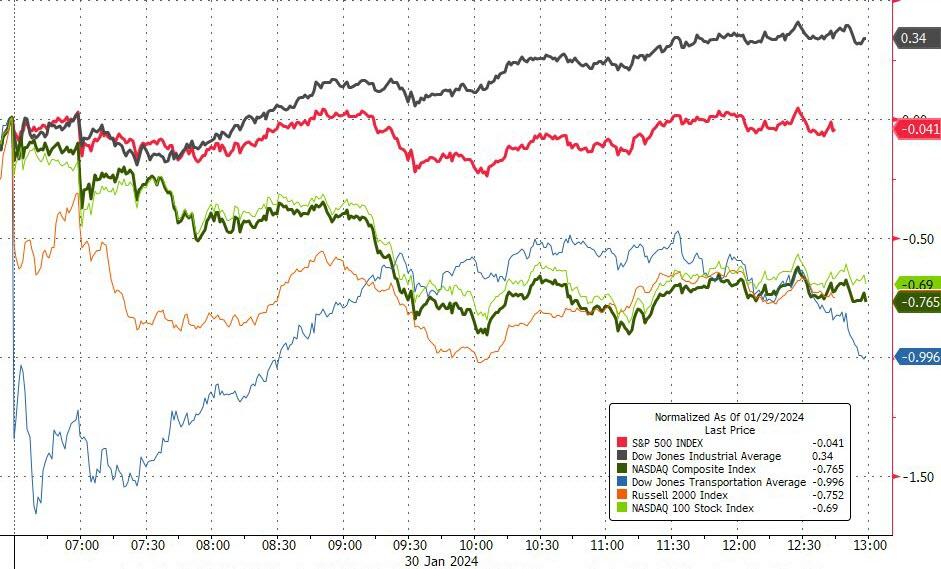
The Dow managed gains on the day with the S&P 500 unchanged while Nasdaq and Small Caps in the red

Source: Bloomberg

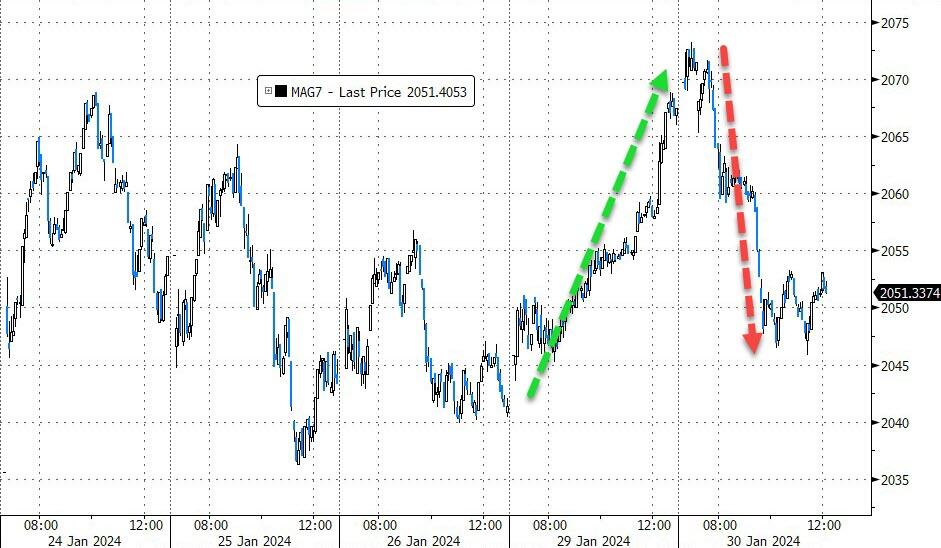
…as MAG7 stocks faded (on AAPL shipment anxiety), erasing all of yesterday’s gains…

Source: Bloomberg

The vol market is pricing some ‘uncertainty’ in the next few days then a return to the usual…

Source: Bloomberg

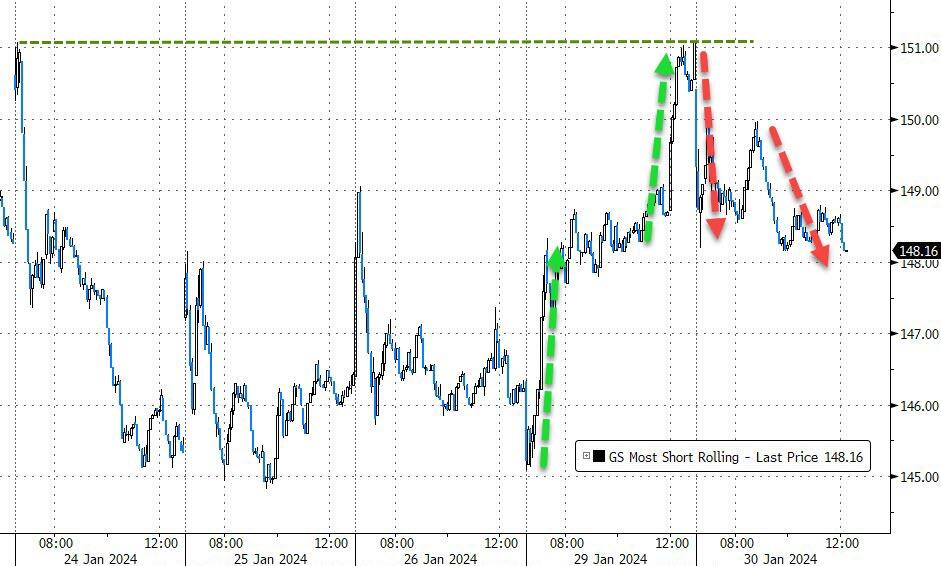
Yesterday’s manic meltup squeeze was erased in ‘most shorted’ stocks after it tagged last week’s high stops…

Source: Bloomberg

Bitcoin extended yesterday’s gains, holding around $43,500, but Ethereum surged back above $2350…

Source: Bloomberg

…after the smallest GBTC outflow since ‘day one’ of the ETFs (and highest net inflow in two weeks)…

Source: Bloomberg

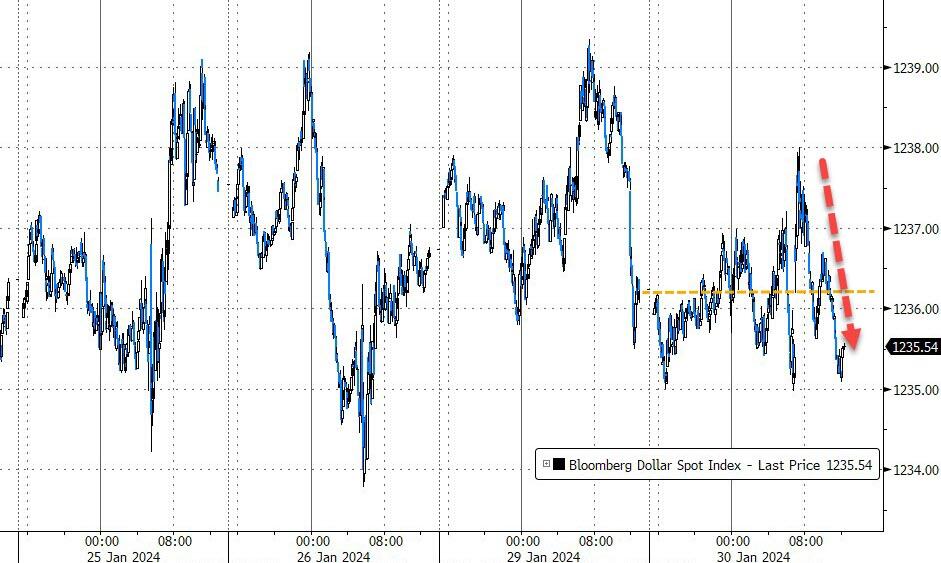
The dollar ended marginally lower on the day but was mostly directionless…

Source: Bloomberg

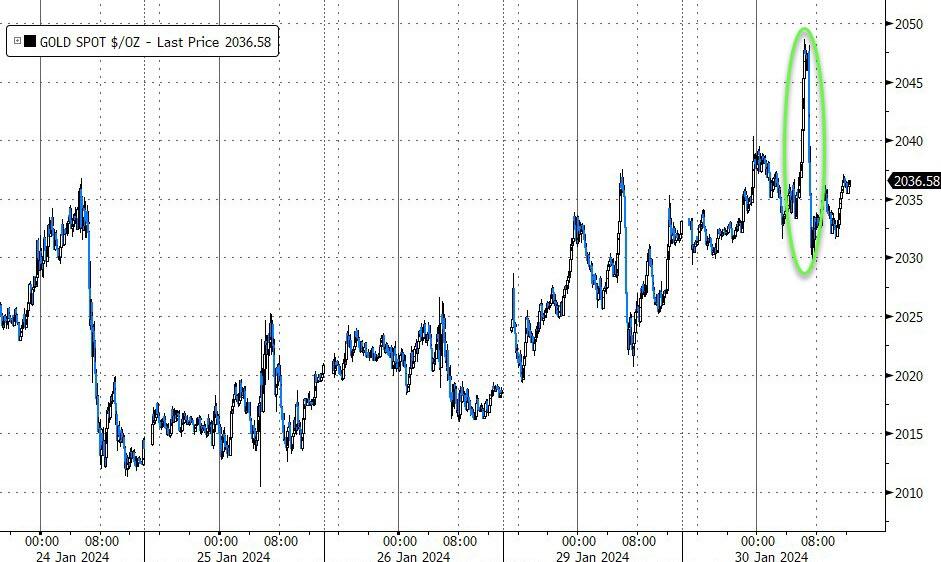
Gold (spot) surged up towards $2050 as the cash equity market opened this morning, only to fall back down to a modest gain after JOLTS…

Source: Bloomberg

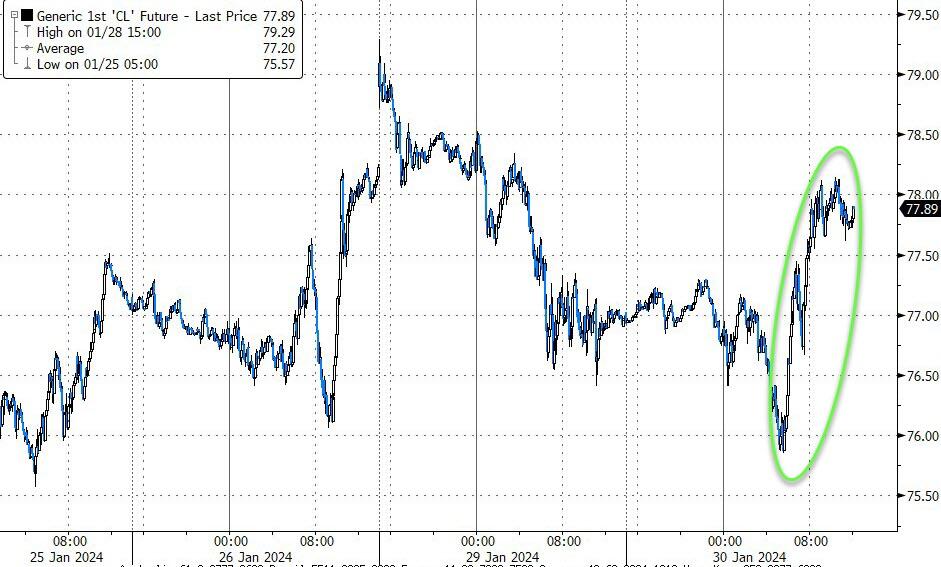
Oil prices ended higher with WTI bouncing off $76.00 up to $78…

Source: Bloomberg

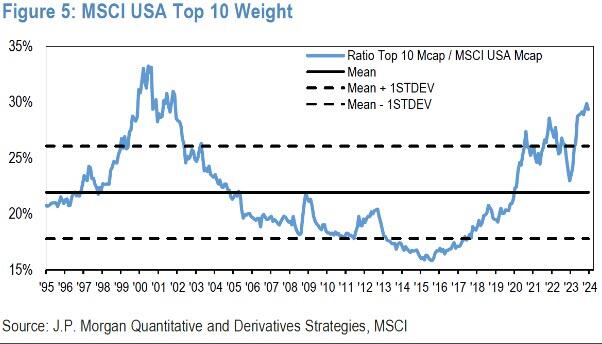
Finally, it’s the same this time…

Source: Bloomberg

Just ask JPMorgan…

Tyler Durden
Tue, 01/30/2024 – 16:00

via ZeroHedge News https://ift.tt/CM4cV2x Tyler Durden

Can The Fed Cut Rates With Financial Conditions So Easy?

Can The Fed Cut Rates With Financial Conditions So Easy?

Via Global Macro Monitor,

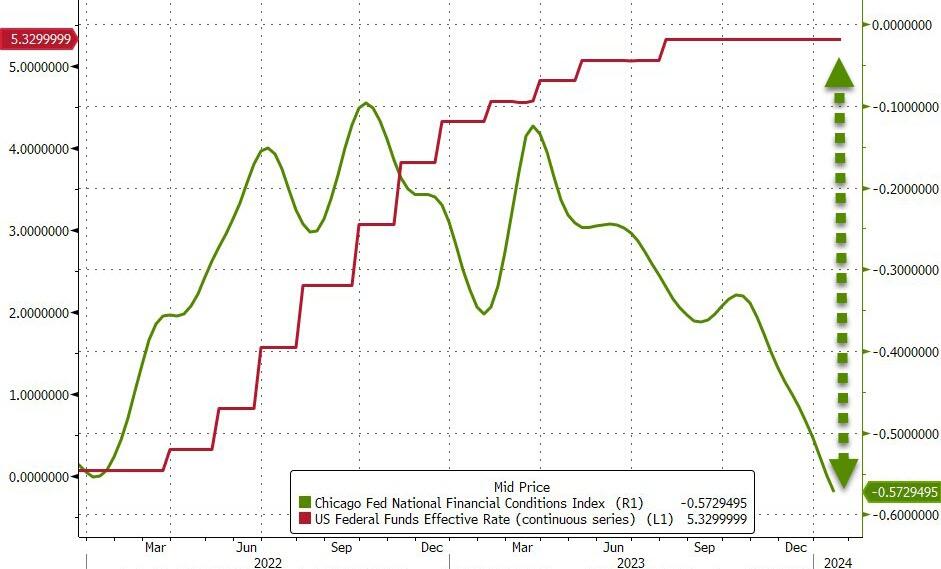
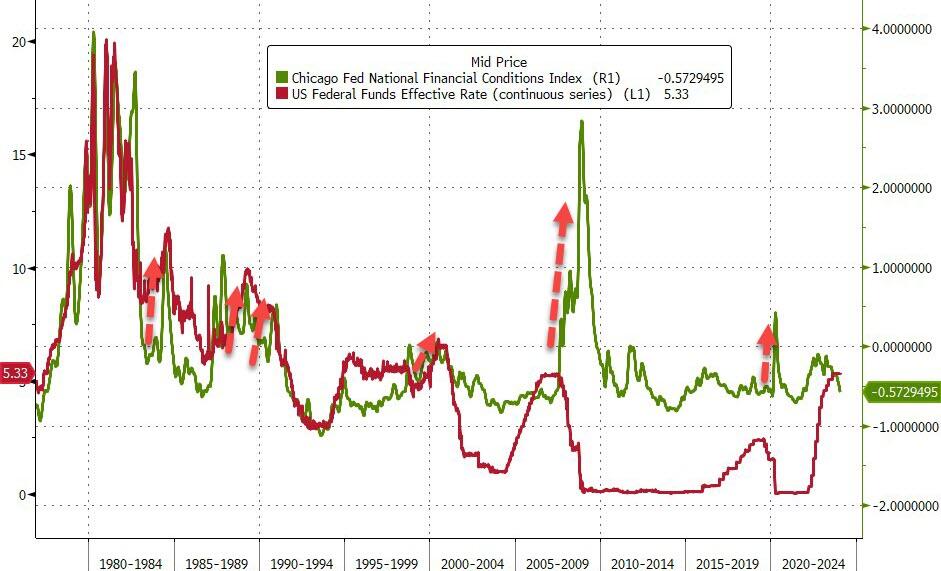
The Fed’s attempt to tighten monetary policy is being cannibalized by the private sector’s accelerated easing of financial conditions through market-based financial instruments.  The following chart is simply stunning.   

Since the Fed began its monetary tightening campaign in March 2022, lifting rates from zero to 5 percent, overall national financial conditions have eased significantly, as measured by the Chicago Fed’s National Financial Conditions Index (NFCI)

The NFCI  is an index of a weighted average of 105 market financial indicators that cover a wide spectrum of the financial system, including the money markets, debt and equity markets, and the traditional and “shadow” banking systems. 

Our quick “blink” review of the NFCI, going back to early 1970s shows the Fed doesn’t start cutting rates until there is a spike in the NFCI, which, given the weights in the index, usually occur with an adverse credit event.

We believe this will be a major issue debated at the Tuesday/Wednesday FOMC meeting between the doves and the hawks, and will most likely result in some hawkish rhetoric coming from Mr. Powell’s post-meeting presser. 

Seat belts?  

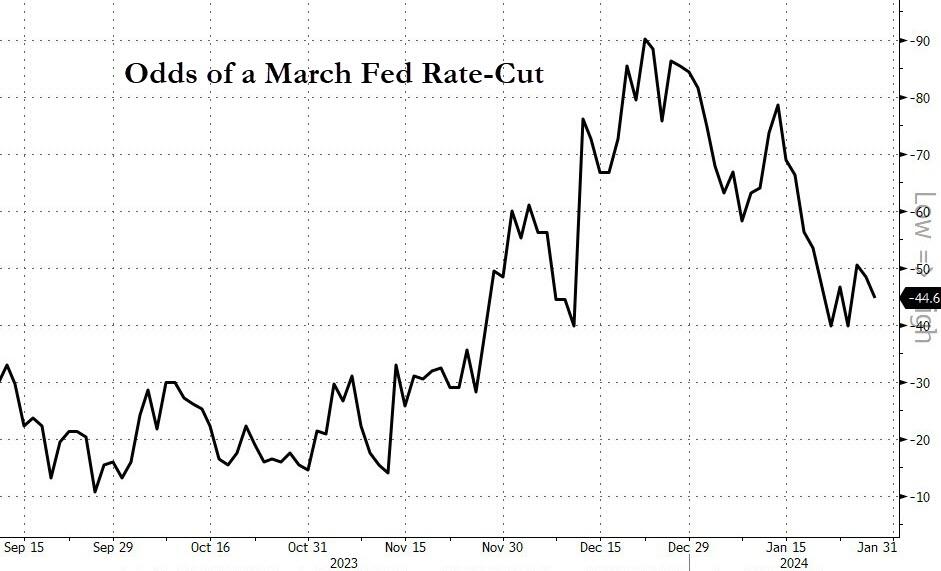
Mr. Market is pricing close to a 50 probability of an interest rate cut in March

Zero chance, in our opinion,  if the markets continue on the merry way.

As always, we reserve the right to be wrong, as we often are.  

Stay frosty, folks. 

Tyler Durden
Tue, 01/30/2024 – 15:25

via ZeroHedge News https://ift.tt/aZ8x1Ty Tyler Durden

Fire Engulfs Massive Chicken Plant In Texas

Fire Engulfs Massive Chicken Plant In Texas

Recall the surge of headlines in 2022 about mysterious fires at food processing plants.

At the same time, rogue elites, part of the World Economic Forum cult – pushed sinister narratives of how the working poor class must abandon “animal protein” for “insects” because the current food supply chain was contributing to climate change. Yet these elites, flying across the world in private jets and sailing on diesel-powered megayachts, is kosher?

The question many have for 2024: Will a series of mysterious fires erupt at food plants across the US while radical WEF elites continue their info campaign to ‘reset’ the food supply chain? 

According to BBC News, the first big fire of the year was reported at a large chicken farm in a rural part of Northeast Brazos County in Texas. 

The blaze at Feather Crest Farms, located near Fickey Road east of Kurten, was reported shortly after 5 p.m. local time. Authorities stated on Monday night that it might take several days to extinguish the fire completely.

Last year, Tucker Carlson interviewed Dutch political activist Eva Vlaardingerbroek, who said, “I think that the push for insect eating is just a compliance test because our politicians know that when they control the food, they control the people.” 

It’s odd that WEF routinely advocates the urgent need to reset the food supply chain while commercial farms mysteriously ignite. 

Tyler Durden
Tue, 01/30/2024 – 15:05

via ZeroHedge News https://ift.tt/Xho2OkA Tyler Durden

Alabama Killed an Inmate With an Experimental Execution Method. Ohio Could Be Next.


Gurney against a map of Ohio. | Illustration: Lex Villena

After Alabama’s grisly nitrogen hypoxia execution of inmate Kenneth Eugene Smith last week, it looks like another state may adopt the method in a bid to resume executing inmates after lethal injection drugs have become nearly impossible to obtain. 

The bill, not yet named, was introduced in Ohio’s House of Representatives on Tuesday, and state Attorney General Dave Yost has already given his support. It would allow inmates to choose between lethal injection and nitrogen hypoxia but would require nitrogen when lethal injection drugs aren’t available. 

The latter is the exact situation Ohio has found itself in during recent years. The state hasn’t killed a death row inmate since 2018, and Republican Gov. Mike DeWine went so far in 2020 as to say that lethal injection was “impossible from a practical point of view today” due to difficulty finding drugs.

But death by nitrogen hypoxia still brings major concerns for inmate suffering. The method, which involves placing a tight-fitting mask over the inmate’s face and slowly replacing oxygen with nitrogen, causing death by suffocation, is experimental. Smith, who was pronounced dead after about 15 minutes of being forced to breathe only nitrogen last Thursday, is believed to be the first person in the world executed in this way. While Alabama prison officials claimed that the execution went as planned, witnesses reported that Smith “struggled against his restraints” and “shook and writhed on a gurney.”

The details of Smith’s death haven’t held back Ohio Republicans, who seem to view the execution method as a useful way to end the state’s six-year execution moratorium.

“There must be accountability for offenders convicted of the most heinous crimes and prisoners who continue to flout the law behind bars,” Yost said in a Tuesday press release. “The pursuit of justice is a journey, and closure remains elusive for victims’ families until a sentence is fully executed. Ensuring that the consequences align with the severity of an offense is essential to providing solace to grieving relatives.”

Rep. Brian Stewart (R–Ashville), who introduced the bill, echoed Yost’s comments, arguing, “As long as capital punishment remains the law in Ohio, the law should be followed.” Stewart added that “providing an additional method for carrying out capital punishments is necessary to ensure Ohio can continue to impose these sentences in response to the most heinous crimes committed in our state.”

For opponents of the death penalty, many of whom have viewed the increasing difficulty of sourcing lethal injection drugs as a sign that the practice may be waning in the United States, the introduction of nitrogen hypoxia executions is troubling news. If states follow Alabama’s lead and begin executing their death row inmates by suffocation rather than hard-to-source drugs, it’s possible that executions could rise in the coming years.

The post Alabama Killed an Inmate With an Experimental Execution Method. Ohio Could Be Next. appeared first on Reason.com.

from Latest https://ift.tt/zvbnRA4
via IFTTT

Portland Requires Homeowners Get Permits To Remove Trees Knocked on Their Homes by Winter Storm


A fallen tree rests on top of someone's home | Joe Sohm/Dreamstime.com

If you need more evidence that America has become a “permission-slip” society, look no further than the City of Portland, Oregon, requiring homeowners to get permits to remove trees that’ve fallen on their houses during recent winter storms.

Portland alt-weekly Willamette Week published a story last week about Joel and Sarah Bonds, who had a large Douglas Fir in the backyard squash their house after it became weighed down with ice. The tree barely missed the Bonds’ young daughter and cat.

As it turns out, the couple were not unaware of the danger posed by the tree. In 2021, they’d applied for a necessary city permit to cut down the tree and another in their backyard. The city’s Urban Forestry division turned them down, citing the trees’ apparent health and the damage their removal would do to the “neighborhood character.”

That decision rankles the Bonds now. Making them even more mad is the fact that the city is requiring them to obtain a $100 retroactive removal permit for the one tree that fell on their house and plant a new one in its place at their own expense.

A Forestry Department employee also advised them to hire an arborist to chop down the second, still-standing tree, but that they should take care to document the work in case they’d need to apply for another removal permit. According to the Willamette Week story, the couple could risk daily $1,000 fines for removing the tree without a permit.

The Bonds aren’t the only homeowners being required to get retroactive removal permits for trees knocked down by the weather. This fact has provoked local outrage and calls for a change in policy.

A recent Oregonian editorial argues that the city should suspend the need to get retroactive removal permits for weather-downed trees, noting that neighboring cities in the area are not requiring such permits. One lawyer who spoke to the paper argued that the city code doesn’t obviously apply to trees felled by bad weather.

The city maintains that the removal permits are required by the city code and that city council action is needed to waive those permitting requirements.

The whole episode is an illustration of how property rights have been turned on their head in America’s cities. The city regulates tree removal to protect surrounding property owners’ interest in the shade and character of the neighborhood. Homeowners’ interests in doing what they please on their land are of secondary concern, even though they have to bear all costs and liabilities associated with keeping these trees on their properties.

The post Portland Requires Homeowners Get Permits To Remove Trees Knocked on Their Homes by Winter Storm appeared first on Reason.com.

from Latest https://ift.tt/jwzDVB9
via IFTTT

Florida’s Youth Social Media Ban Is an Affront to Freedom


Outlined figures of children stand against an orange glowing map | Lex Villena

From book bans to anti-ESG legislation, when it comes to dabbling in its citizens’ private lives, Florida’s legislature knows no bounds. The latest intrusion of choice is now aimed at social media.

On January 24, the Florida House passed House Bill 1 (HB1) to ban kids 16 and under from using social media. If HB1 becomes law, social media platforms would be forced to implement prescriptive age verification methods for all users (including adults) and carry disclaimers that their products may be harmful.

Proponents of the bill have framed HB1 as a necessary measure intended to “protect” children from the negative impacts of these “addictive” technologies. Frequently cited are claims that adolescents are subject to cyberbullying and sexual predation on these platforms. Of particular concern is the role that excessive social media use plays on teenagers’ mental health.

However, several studies have shown that these claims are unfounded and, at best, speculative. A study published in 2021 in the journal Clinical Psychological Science found that increased technology use among adolescents is not linked to a decline in mental well-being. More recently, another study published by the Oxford Internet Institute found no association between widespread Facebook adoption and psychological harm. In fact, findings from the Oxford study suggested the opposite—that Facebook membership was linked to positive mental well-being. This makes sense, as Facebook is a social media forum that connects friends and family, and therefore, nurtures relationships. Moreover, such platforms have served as a vital source of social support for teenagers deprived of human connection during the COVID-19 era.

Blaming social media for mental health issues isn’t new. Any time new forms of entertainment and social technologies are introduced, society’s natural response is to react with a mixture of nervous apprehension followed by gradual acceptance of the unfamiliar technology.

Consider the ubiquitous “dime novel” of the 20th century (named for its cheap price). When these sensational and wildly sought-after paperbacks first became popular, many cultural commentators believed they were thought to elicit “promiscuous behavior” and moral depravity among their audience. Social critics fretted that these adventure and romance-ridden novels were leading to so-called “reading mania” and “reading rage.” These fears were so widely embedded in the collective psyche that Johann Wolfgang von Goethe’s The Sorrows of Young Werther was even blamed for a spate of suicides during its time.

The thought that an “epidemic of reading” could ever be considered a social ill nowadays seems absurd. However, to people back then, these were real and legitimate concerns. Sociologist Frank Furedi aptly described “penny dreadfuls,” as they were called in the United Kingdom, as the media’s “first moral panic.”

Similarly, when video games peaked in popularity in the 1980s, they were blamed for an increase in real-world violence and acts of aggression—even mass shootings. Nowadays, most people consider this argument null. However, these myths are difficult to eradicate among the general population once they take hold. 

Other forms of social entertainment that have been unfairly targeted and subject to the “violence” scapegoat narrative include the radio dramas of the 1940s, comic books and television, and music lyrics.

Unfortunately, this same phenomenon is now taking place in the Sunshine State. Well-meaning politicians “concerned” with declining mental health among teenagers blame social media and seek to censor platforms like Facebook and Instagram. Even if it is true that such platforms adversely affect mental health, the decision to prevent teenagers from engaging with these technologies is still one that ought to rest with the parents, not the government.

While there has been a rise in mental health problems across the U.S., social media is not to blame, but rather insufficient access to mental health services. According to the National Council for Mental Wellbeing, scant access to care is the primary cause of the mental health crisis. Barriers like high cost and paltry insurance coverage, as well as limited options and long waits, hinder access to proper treatment. More than 40 percent of candidates polled in a study named cost and poor insurance coverage as the top barrier for obtaining the help they need. Instead of banning platforms that connect people socially, politicians should consider reforming mental health policy.

It is true that adolescents do not have the same capacities to engage in rational decision-making as full-grown adults. But that is precisely why parents should have the ultimate say when it comes to deciding what ideas and information their children can access.

The Florida legislature is forgetting its original purpose of protecting the rights and freedoms of its citizens and unlawfully engaging in constitutional overreach with the passage of HB1. The government doesn’t try to prevent teenagers from indulging in every single harmful behavior (like eating unhealthy fast food) just because of some negative consequences. That would be considered serious governmental overreach. Florida’s creeping descent into paternalism should be viewed in the same light.

HB1 is poised to reach the Governor’s desk in the coming month. Implementation of a similar law in Utah is going poorly, and up against significant court challenges. For the sake of the First Amendment and free speech writ large, Florida should stop trying to carry out a blanket and unconstitutional ban on Floridians’ freedom.

The post Florida's Youth Social Media Ban Is an Affront to Freedom appeared first on Reason.com.

from Latest https://ift.tt/1dYeiSA
via IFTTT

Nike Sued Him for Making 400 Pairs of a Reimagined Air Jordan 1


Naady | Adani Samat

“Naadier Riles, the founder of Global Heartbreak, is not an independent creator when it comes to footwear—he is a bootlegger,” is the opening line of a lawsuit filed in the U.S. District Court of New Jersey last week by Nike, the world’s largest sneaker manufacturer. It’s suing Riles, a 26-year-old clothing designer who works out of his apartment in North Brunswick, New Jersey. Known professionally as Naady, he’s accused of copyright infringement for selling re-imagined versions of the Air Jordan 1 model. 

Nike accused Naady’s company of causing it “to suffer irreparable injury to its business,” claiming that it “will suffer substantial loss of goodwill and reputation unless and until Global Heartbreak is permanently enjoined from the wrongful acts complained of herein.”

Global Heartbreak has produced 400 pairs of Naady’s designs over the years, not all of which have been sold; Nike sells approximately 100 pairs of sneakers every four seconds, or 780 million annually.

The lawsuit was “surprising,” says Brendan Dunne, editor of the top online sneaker magazine, Sole Collector, since Global Heartbreak’s operation is tiny. “I guess nothing is off the table,” he told Reason.

Naady’s sneaker design replaces the iconic Nike Swoosh with a broken heart pierced by a needle and uses different colors and details, though the shape and mold of the shoe are clearly taken from the Air Jordan 1. 

Nike and its law firm, Arnold & Porter, didn’t respond to Reason’s interview requests, but the complaint states the company has a zero-tolerance policy when protecting its intellectual property. “Nike cannot allow bad actors such as [Riles]…to confuse consumers by building a business on the back of Nike’s most famous trademarks, undermining the value of those trademarks and the message they convey.”

This latest lawsuit is part of a recent, more litigious strategy by the sneakers giant. Trademarks are typically reserved for words, symbols, or logos used to identify a brand, such as the Swoosh or the phrase “Just Do It”; Nike has started filing trademarks based on the shape and structure of its products. Its most high-profile lawsuit is against the trendsetting Japanese fashion brand A Bathing Ape, or BAPE for short, which had been selling its sneakers for 20 years before Nike accused it of trademark infringement. The company, which operates its own chain and has far more resources than Global Heartbreak, continues to push for the dismissal of Nike’s lawsuit, and in the meantime, its sneakers have remained on the market. Smaller designers targeted by Nike have often signed out-of-court settlements, similar to the one offered to Naady, that prevent them from further sale of their shoes.

NYU Law Professor Christopher Sprigman, co-author of The Knockoff Economy: How Imitation Sparks Innovation, told Reason that the derivative designs of the sort sold by Global Heartbreak—known as “trade dress”—are both legal and essential to the creative process. “Copying is what helps set the trend that comes next,” he says. “So the fashion cycle runs and the fashion industry’s successive waves of innovation depend on copying.” 

Sprigman appeared in a recent ReasonTV video titled, Why is Nike Stomping On Independent Creators?, which featured Naady’s sneakers. After Nike’s attorneys watched the video, they sent Naady a cease-and-desist.

Initially, he planned to comply, telling Reason that he’d eat the loss on his unsold shoes and focus on sales of his other merchandise. According to Naady, three weeks later, Nike offered him a confidential settlement, offering 90 days to sell off his inventory, as long as he complied with a list of demands that included publicly posting a statement saying that he was infringing on Nike’s intellectual property. Naady balked at that demand; he says that after he couldn’t get Nike’s lawyers on the phone, he turned to Instagram.

“I’m not signing shit until I get a better agreement from @nike,” Naady wrote in a post featuring a crossed-out version of Nike’s offered settlement. “Ima keep talking until I get a better offer until then suck dick.” He also shared a video of himself setting a pair of his sneakers on fire.

Nike lawyers included a screenshot of Naady’s post in their lawsuit.

“It is what it is,” Naady told Reason. “I guess I’ll take the hit for everybody that had to shut the fuck up. Maybe this is what I had to do to get noticed.” 

“The amount of money Nike’s potentially losing to Global Heartbreak is, of course, minuscule,” says Dunne. “It’s just like, how small do you have to be for Nike not to care?” 

The post Nike Sued Him for Making 400 Pairs of a Reimagined Air Jordan 1 appeared first on Reason.com.

from Latest https://ift.tt/yTAWk9u
via IFTTT

Debunking Antitrust Assumptions: More Concentration in an Industry Doesn’t Necessarily Mean Higher Prices


Black and white headshot of Joe Biden against a red and white background | Illustration: Lex Villena; Gage Skidmore

Some ideas that animate government regulators achieve what seems like universal belief purely due to the volume of repetition. For example, many proponents of antitrust regulation believe increased concentration will increase consumer prices, even though evidence does not solidly back this up.

The theory behind why concentration in a market would lead to increased prices is so ubiquitous most people could probably recite some version of it by memory. It goes something like this: A firm without enough competitors can more or less raise prices at will; with few alternatives, consumers just have to accept the price gouging and pay up.

That claim, espoused by regulators and policy makers, can often be found alongside a similar claim about profit. The White House went so far as to say, “In an economy without adequate competition, prices and corporate profits rise, while workers’ wages decrease.” That tired old song has also been sung by The New York Times and the Economic Policy Institute. Most recently, this claim has led many to insist that the primary driver of the inflation we have been suffering is corporate profits, or “greedflation.”

Former Clinton administration Secretary of Labor Robert Reich and others have so much faith in the “greedflation” explanation that they insist the recent inflation is caused by increased concentration over the last few decades. Underlying the claim about concentration and prices is a claim about concentration and profits, which is the cost consumers pay minus the cost of production to industry. According to greedflation logic, corporate profits indicate that concentration is leading to higher consumer prices.

The problem for proponents of this theory is that studies on corporate profits and concentration are often flawed, or sometimes even find an inverse relationship to their “concentration=inflation” narrative. Out of the studies that find relationships between markups (which are essentially another way of measuring profits) and concentration, the methodology is often flawed, focusing too much on assumptions about market structure.

The Information Technology and Innovation Foundation (ITIF) ran a series of studies on myths about monopolies, one of which focused on the claim that concentration leads to increased profits. This became particularly relevant as inflation climbed and economists searched for causes.

The ITIF study examining the relationship between profits and concentration found that nonfinancial domestic profits as a share of gross domestic product (GDP) decreased when former Secretary of Labor Reich claimed concentration had increased. Profit shares are lower today than during the 1960s when antitrust regulators were far more proactive against mergers and acquisitions. Though profits are hard to measure over entire markets, the study did not find any relationship between them and the concentration in the market.

The evidence, then, does not indicate that profits, prices, and concentration have a concrete relationship. And the theory behind why they would runs into trouble when you look at the real-world practices of some feared bigger companies. In practice, accused “monopolists” such as Amazon are not often attacked for inflating prices but for harming competition by deflating prices. That’s because, in reality, large firms often have the lowest prices and markups.

The claim that consumer prices increase with concentration is far from settled fact. Yet it still has been used to block mergers under the structural presumption that they will create higher profits and prices on goods and thus harm consumers. Misinformation on the relationship between concentration and profits deprives consumers of the most efficient market, so such claims should be reexamined by antitrust policy makers in light of existing evidence.

The post Debunking Antitrust Assumptions: More Concentration in an Industry Doesn't Necessarily Mean Higher Prices appeared first on Reason.com.

from Latest https://ift.tt/zQVGC6B
via IFTTT