Chief Justice Burger Set the Stage for the Originalist Revolution

My co-blogger Josh Blackman has an interesting post, observing that the current Roberts Court has largely left Warren Court precedents in place, while often undoing Burger Court precedents. Blackman’s argument is well-made. But in concluding his post, Blackman diverts into an unnecessary attack on Chief Justice Burger. Blackman suggests it was Chief Justice Burger who was “driving those trains” that went off the tracks. As a former law clerk for “The Chief” (as we called him), I’m biased. But I believe Blackman’s criticisms of The Chief miss their mark. Blackman fails to adequately consider the situation that The Chief all too often himself in—one vote on a nine-Justice court that was often inclined to reaffirm and even expand dubious Warren Court precedents. And, if he had joined or written dissenting opinions, the result would often have been that the case assignment would have then moved from him (as the senior, Chief Justice) to a very liberal justice, with an even worse decision likely emerging. Working within these considerable constraints, The Chief took important steps to help to set the stage for the later originalist revolution.
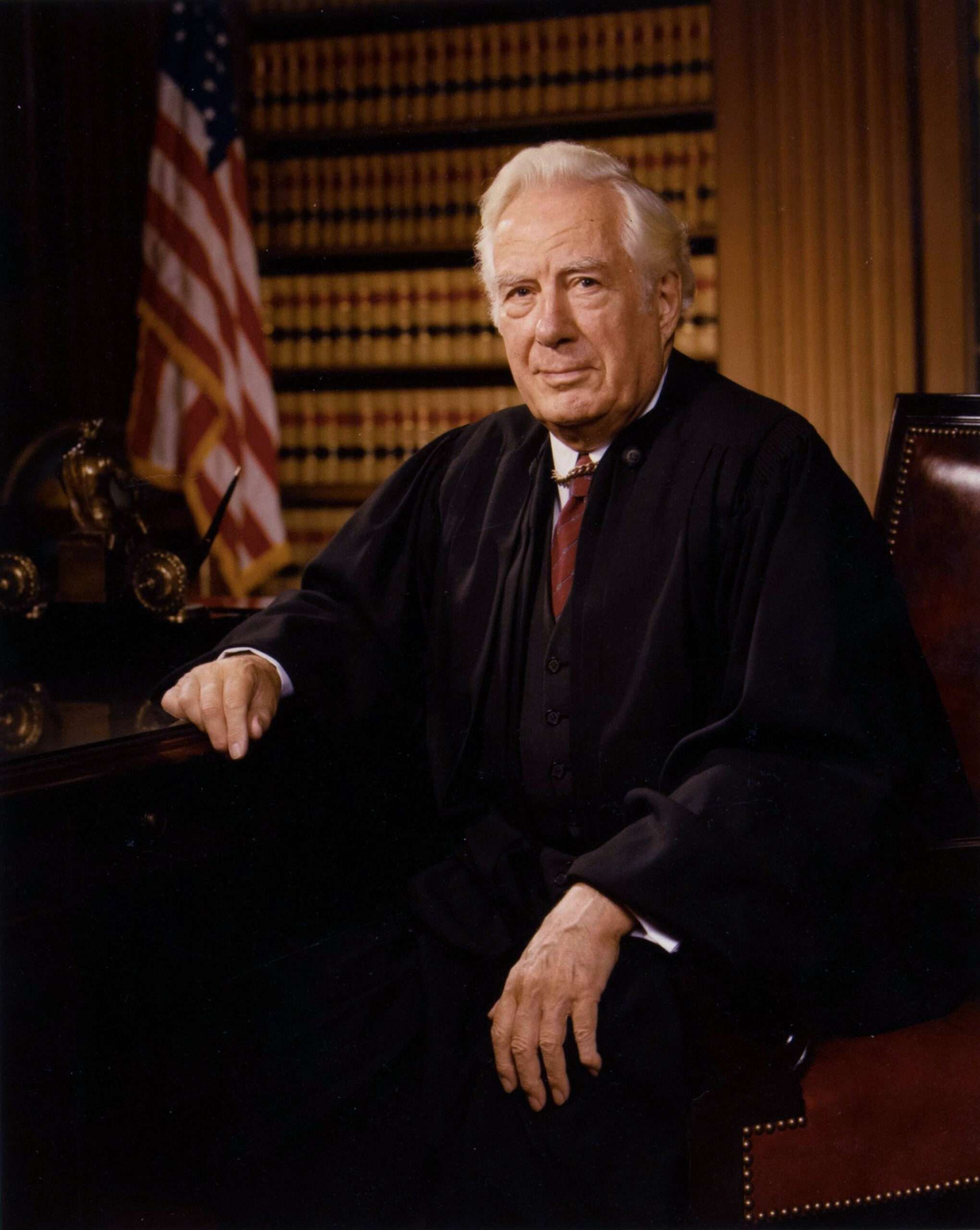
Blackman launches his attack by looking at nine decisions of the Burger Court that have since been reversed. For convenient reference, I reproduce Blackman’s list below:

  1. Roe v. Wade (1973), reversed by Dobbs v. Jackson Women’s Health Organization (2022).
  2. Board of Regents of California v. Bakke (1978), which largely upheld the use of affirmative action policies. This decision was (basically) reversed by Students for Fair Admissions v. Harvard (2024).
  3. Lemon v. Kurtzman (1971) prohibited any “entanglement” between church and state.  Kennedy v. Bremerton School District (2022) effectively overruled the Lemon test.
  4. Abood v. Detroit Board of Education (1977) upheld the power of public sector unions to mandate certain dues from employees. Janus v. AFSCME (2018) overruled Abood.
  5. Chevron v. NRDC (1984) ruled that courts should defer to administrative agencies when a statute is “ambiguous.” Loper Bright v. Raimondo (2024) overruled Chevron deference.
  6.  Apodaca v. Oregon (1972) allowed non-unanimous juries. It was overruled by Ramos v. Louisiana (2020).
  7. Nevada v. Hall (1979) held that states lack sovereign immunity from private lawsuits filed against them in the courts of another state. It was overruled by Franchise Tax Board of California (2019).
  8. Williamson County Planning v. Hamilton Bank (1985) limited access to federal courts for plaintiffs raising Takings Clause claims. It was overruled by Knick v. Township of Scott (2019).
  9. Davis v. Bandemer (1986) held that claims of partisan gerrymandering were justiciable in federal court. It was overruled by Rucho v. Common Cause (2019).

After recounting these nine cases, Blackman writes that “I’ve heard it said that Chief Justice Burger could have done more on the Court if he had more conservative votes. I’m not so sure. Burger was in the majority of most of the overruled cases. … Justice Rehnquist, appointed around the same time, was often the lone voice of reason.”

So let’s look at this set of nine cases, with Blackman’s argument in mind.

For this post, I consider what I understand to be Blackman’s position—that The Chief should have driven the Supreme Court train in more conservative direction. Of course, that is not how The Chief would have resolved the case-specific issues before him in each particular case. But looking at these nine cases (as a reasonable sample of significant cases the Burger Court decided) reveals The Chief doing the best he could in difficult circumstances:

  1. Roe v. Wade – The vote count in Roe was 7-2 to recognize a penumbral constitutional right to an abortion. The Chief could have dissented, making the vote 6-3—and sending control over assignment of the opinion to Justice William O. Douglas. That approach likely would have led to an even more sweeping opinion. Instead, The Chief gave the opinion to his friend, Justice Harry Blackmun. It has been reported that The Chief was surprised by the broad opinion that resulted, as he expected a narrower, medically-focused decision. And The Chief wrote a concurring opinion in Roe that tried to limit the majority decision’s scope: “I do not read the Court’s holdings today as having the sweeping consequences attributed to them by the dissenting Justices …. Plainly, the Court today rejects any claim that the Constitution requires abortions on demand.” Years later, on June 11, 1986 (just six days before announcing his retirement), The Chief would directly dissent from Roe. In Thornburg v. American College of Obstetricians and Gynecologist, The Chief lamented how the limitations sketched out in his Roe concurrence were ignored and called for the Court to “reexamine Roe.” The Chief’s call would, of course, ultimately bear fruit in Dobbs.
  2. Bakke (1972) – Here the Supreme Court largely upheld affirmative action policies. But this was by a 5-4 vote, with Justice Powell’s plurality the controlling decision. The Chief was part of the four-vote main (and partial) dissent written by Justice Stevens, joining Justice Rehnquist and Justice Stewart. Justice Stevens (joined by The Chief) argued that “[t]he meaning of the Title VI ban on exclusion is crystal clear: Race cannot be the basis of excluding anyone from a federally funded program.” Here again, The Chief’s view  of the proper result would ultimately become the majority view (under the Equal Protection Clause of the Constitution) in Students for Fair Admissions.
  3. Lemon v. Kurtzman (1971) – The Court vote to invalidate a Rhode Island statute providing aid to nonpublic schools was 8-0. The Chief could have been the lone dissenter. But that would have handed control of the opinion to Justice Hugo Black. Black joined Justice William O. Douglas in a sweeping concurring opinion rejecting any public aid to parochial schools—an approach that would might have become the majority opinion if The Chief had dissented. Moreover, although I’m not an expert on the doctrine, my understanding is that much of the problem with the Lemon test stemmed from the later endorsement-of-religion offshoot that was grafted onto the test after The Chief left the Court. A full assessment of The Chief’s religious freedom jurisprudence would also need to consider his other important opinions, when he had more votes supporting religious claimants. In the next term, for example, The Chief wrote Wisconsin v. Yoder. Writing for six Justices, The Chief ruled that Amish parents’ fundamental right to free exercise of religion outweighed the state’s interest in educating their children. The Chief’s opinion in Yoder continues to be influential to this day. Just last Term, the Court relied heavily on Yoder in its decision in Mahmoud v. Taylor. Writing for the majority, Justice Alito concluded that the burden on religion in that case (involving a public school’s refusal to allow parents to opt their children out of LGBTQ+ inclusive storybooks) was of the “same character” as burden on religion  in Yoder.  Similarly, in 1983 case—Marsh v. Chambers—The Chief wrote for six Justices that government funding for legislative chaplains was constitutional, relying on the “unique history” of the United States. This was a proto-originalist decision that helped to lay the groundwork for future decisions focusing on original meaning.
  4. Abood (1977) – the vote count here was 9-0. A lone dissent by The Chief would have handed control of the Court’s opinion to Justice Brennan. Instead, The Chief assigned the opinion to Justice Stewart, and joined Justice Powell’s concurrence only in the judgment. (Justice Rehnquist, it should be noted, concurred and joined the majority opinion.)
  5. Chevron (1984) – the vote count here was 6-0. So a dissent by The Chief would not have changed the outcome. The Chief assigned the opinion to Justice Stevens. (Justice Rehnquist was recused.) The case is now mostly remembered for the deference paid to executive branch agency interpretations of the law. But the result in the case was to overturn a D.C. Circuit victory for the environmental group, the Natural Resources Defense Council. And Chevron only took shape and began to be used frequently after the 1987 Term (when The Chief had left the Court), as Professor Thomas Merrill has documented in a thorough article on the doctrine.
  6. Apodaca (1972) – Justice White upheld non-unanimous juries, in a plurality opinion joined by The Chief, Justice Blackman, and Justice Rehnquist. Apodaca was later overruled in Ramos (2020), over the strong dissent of Justice Alito, joined by Chief Justice Roberts, and (in large part) Justice Kagan. While Ramos might be viewed as a victory for originalism, I find much power in Justice Alito’s dissent criticizing “a badly fractured majority cast[ing] aside an important and long-established decision with little regard for the enormous reliance the decision has engendered.”
  7. Nevada v. Hall (1979) – The Chief joined dissents by Justice Blackmun and Justice Rehnquist, which Justice Thomas later tracked in overruling Hall.
  8. Williamson County (1985) – the vote count here was 7-1. The Chief handed the opinion over to Justice Blackmun, and joined it (along with Justice Rehnquist). The decision was overruled 34 years later in Knick. But the grounds Knick recited for overruling were “unanticipated consequences” that had revealed that the decision’s requirements were “unworkable in practice.”
  9. Davis v. Bandemer (1986) – this case involved a fractured decision, in which all the Justices concurred in part. The Chief concurred in the judgment with a short opinion (a “snapper” in his terms) emphasizing that partisan gerrymandering was not something that federal courts could readily redress. And he also joined Justice O’Connor’s opinion concurring only in the judgment, along with Justice Rehnquist. The Chief’s view would later be adopted in Rucho v. Common Cause, when Chief Justice Roberts held that “partisan gerrymandering claims present political questions beyond the reach of the federal courts.”

Looking at these nine cases, I don’t find much support for Josh Blackman’s assertion that The Chief could have done more. For example, when Justice Rehnquist was on the Court with The Chief, the only time in these nine cases that The Chief differed from what Blackman calls the “lone voice of reason” was in Roe. But there The Chief’s concurring vote kept the opinion away from Justice Douglas. And The Chief wrote what might be described as a “damage control” concurrence.

It remains an interesting issue whether a Chief Justice, convinced that the majority is wrong, should write a dissent that is the “voice of reason” or try to shape the majority in other ways. (For an illustration of how Chief Justice Rehnquist would later handle such a situation, take a look at his majority decision in Dickerson v. United States, reaffirming Miranda but on the narrowest possible ground.) In any event, as noted above, The Chief would later urge reexamination of Roe—providing strong criticism of Roe since he had originally  concurred in the decision.

I had the privilege of clerking for The Chief during his last Term on the Court, OT85. That Term, on ideologically charged cases, The Chief needed to secure not only the vote of Justice Rehnquist, but also three other justices. That meant lining up Justice White (appointed by JFK), Justice Powell (an institutionalist who had served as the past president for the ABA), and Justice O’Connor (famously known for her case-by-case approach and seemingly unprincipled balancing tests). That was no easy task. And, if The Chief lost one of those three justices to a fairly solid voting block of liberal justices (Justices Brennan, Marshall, Blackman, and Stevens), that handed off the case assignment to Justice Brennan.

Criticisms of The Chief for not doing more to advance originalist jurisprudence also fail to account for state of constitutional jurisprudence—and constitutional litigation—when The Chief served. The modern originalist approach was launched by Attorney General Ed Meese’s in his famous speech on original intent to the ABA on July 9, 1985—around the time The Chief was preparing to retire from the Court. (For an enthralling account of Meese’s efforts to advance originalism, I highly recommend co-blogger Steven Calabresi and Gary Lawson’s recent book, The Meese Revolution: The Making of a Constitutional Moment (2025).) Meese’s proposed theory of “original intent” was cogently refined by then-Judge Antonin Scalia in an address to Justice Department, which explained that the appropriate approach was to determine the Constitution’s “original public meaning.” As Calabresi and Lawson recount, Scalia delivered this important speech on Saturday, June 14, 1986—two days before Scalia was interviewed by President Reagan for the Supreme Court vacancy about to be created by The Chief’s retirement. Given that originalist theory was so little formed at the time, The Chief (and his colleagues) rarely received sophisticated originalist briefing in important cases.

Blackman recognizes the importance of Chief Justice Burger’s sense of timing on his retirement. The Chief’s retirement in the summer of 1986 allowed President Reagan to promote William Rehnquist to Chief Justice, and to appoint Antonin Scalia to the Supreme Court. Following the 1986 election, the Democrats regained control of the Senate. And when Justice Powell resigned in 1987, the Democrats were able to “bork” President Reagan’s preferred choice to fill the vacancy—setting the stage for compromise candidate Justice Kennedy, whose many weaknesses Blackman and others have recounted. If Justice Powell had followed The Chief’s lead, Supreme Court history might have been much different.

In sum, a fair reading of this history is that The Chief set the stage for the later originalist revolution, even if he lacked the tools—and the votes—to lead the revolution himself.

Correction: I corrected an inaccurate reference to Justice Brennan being the next senior-most Justice in Roe to Justice Douglas.

The post Chief Justice Burger Set the Stage for the Originalist Revolution appeared first on Reason.com.

from Latest – Reason.com https://ift.tt/4XAkacZ
via IFTTT
The brutal math behind AI: it’s either you or Zuckerberg

Back in the mid-90s, the world was abuzz with a new technology called the Internet.

Technically the Defense Department had invented it back in the late 1960s. But by the mid-90s, Internet use was growing at an an astonishing rate among American consumers, triggering an major need for more digital infrastructure.

So in March 1997, a company called Global Crossing was born. Their entire reason for existence was to build the backbone of the Internet— thousands of miles of cables and fiber optic lines to carry all of our bits and bytes at the speed of light.

Global Crossing was easily able to raise billions from eager investors who understood that the Internet was the future; they believed that Internet usage would explode, and that, eventually, Global Crossing would generate substantial returns on its massive infrastructure investments.

They were right. Partially. Internet usage exploded. Unfortunately the part about generating substantial returns on their massive infrastructure investments… never happened.

In fact, within a few years, Global Crossing was losing billions. They had spent everything on cables and fiber optics, but they were never able to generate enough revenue to recoup their investment.

So in January 2002, less than five years after its founding, Global Crossing filed for bankruptcy.

What was left of the company was eventually sold for just $250 million during bankruptcy proceedings, representing a 99.5% loss in value from its $47 billion peak.

And most of Global Crossing’s investors suffered extraordinary losses.

Coincidentally, though, consumers ended up benefiting. Global Crossing did provide a valuable service to Internet users. They just weren’t able to make enough money from that service to remain a viable business.

So ultimately Global Crossing was a transfer of wealth from investors to consumers. Deep-pocketed, overly enthusiastic investment funds essentially subsidized all the digital infrastructure for Internet users.

(And as an early Internet user from the 90s, I appreciate them doing that!)

This type of outcome wasn’t an isolated incident. In fact it’s fairly common.

Remember WeWork? Customers were able to enjoy cheap office space at below-market rents (not to mention free tequila), courtesy of big investors like SoftBank and Goldman Sachs.

Uber was a similar story—customers enjoyed cheap rides at below-market rates thanks to investors who kept funding the company’s enormous losses.

Again, this not unusual. In a burgeoning industry, investors often get so excited about some new technology or idea that they end up subsidizing it in the name of developing the market.

They throw insane amounts of money at something, even when there’s not really a valid business or revenue model behind it.

And it’s becoming pretty clear we’re starting to see this again with AI.

Even Jeff Bezos acknowledged it over the weekend. At a technology conference in Italy, he said that while the social benefits of AI will be huge, the investment side is starting to feel a lot like the dot-com bubble. Perhaps that’s why he recently cashed out billions of dollars of Amazon stock.

Plus Sam Altman of OpenAI said back in August that investors are too “overexcited” about AI.

Ironically he’s a big part of that bubble. OpenAI is leading the charge, spending absurd amounts of money on data centers.

And they’re not alone. Every few weeks it seems there’s another tech company announcing that they’re going to build the biggest data center— Meta, xAI, etc.

They even give these projects lofty names like Stargate and Colossus—sexy sci-fi branding to match the eye-watering price tags that go into the hundreds of billions.

But when you sit back and actually look at the numbers, the math just doesn’t work.

$500 billion for Stargate? Come on. What a money pit.

A big chunk of that capital— well north of $150 billion— will be earmarked for chips and other digital components. And, sure, that’s great for semiconductor companies… not to mention their suppliers, certain commodity producers, and even utility companies.

But the tech companies themselves will likely lose a lot of money.

Look at OpenAI. They’re reportedly pulling in $12 billion in annual revenue. That’s a lot. But they also have enormous costs—electricity, cooling, maintenance, payroll.

Altman himself has said that users politely saying “please” and “thank you” to ChatGPT costs the company tens of millions of dollars in extra electricity. So if they’re really, really lucky, they’ll have a few billion dollars left over in operating cash flow.

A few billion dollars is a pretty tiny return on a $500 billion investment. What’s more, that ~$150 billion in chip costs is not a one-time thing.

Remember, those chips will be obsolete in five years. Tops. Probably more like 3-4.

So they’ll need to replace those chips (and hence spend ANOTHER $150 billion) in a few more years. This means that, on average, OpenAI’s annual capital expenditure, just on chips, is at least $30 billion. Per YEAR. For a company that only makes $12 billion in revenue, and (maybe) a few billion in Operating Cash Flow— if they’re even cash flow positive at all.

You can start to see how the math simply doesn’t add up… and why, at least for now, these investors are essentially subsidizing AI for consumers around the world.

The only way the investors can actually recoup their costs—let alone generate a return on all that data center money—is if AI revenue expands rapidly, i.e. 50x growth in a very short period of time.

Is that possible? Of course it’s possible. But it’s hardly a slam dunk.

Most consumer right now don’t pay for AI. Or if they do it’s small dollars ($8/month).

What the AI evangelists are hoping for is that the big revenue will come from major companies— large corporate clients who replace expensive, salaried human beings with $299/month AI subscriptions.

Theoretically those mass layoffs could generate enough revenue for AI investors to eek out a modest return on investment.

McKinsey estimates that there would need to be $1 trillion to $1.5 trillion in AI revenue by 2030 (up from about $30 billion today) in order to justify all the data center investment.

But that amount of revenue would require laying off over 400 million people worldwide— more than twice the size of the entire US labor force— and replacing them with AI subscriptions.

There are other possibilities, of course. Maybe a global productivity boom is able to unlock enough economic growth that the AI investments ultimately pay for themselves. I hope so. But given all the anti-AI regulation in various governments (I’m talking about you Europe!) I’m not holding my breath.

It’s also possible that these big tech companies and AI investors take a huge bath and lose hundreds of billions of dollars. And this scenario would carry adverse consequences for pension funds, retirement programs, etc. who are invested in these big tech companies.

At a minimum, while it’s pretty clear that AI is obvious the future (no to mention the present…), the financial outcome carries a lot of risk and uncertainty. So definitely take the evangelism with a grain of salt.

Source

from Schiff Sovereign https://ift.tt/Dg3bZPL
via IFTTT

Chief Justice Burger Set the Stage for the Originalist Revolution

My co-blogger Josh Blackman has an interesting post, observing that the current Roberts Court has largely left Warren Court precedents in place, while often undoing Burger Court precedents. Blackman’s argument is well-made. But in concluding his post, Blackman diverts into an unnecessary attack on Chief Justice Burger. Blackman suggests it was Chief Justice Burger who was “driving those trains” that went off the tracks. As a former law clerk for “The Chief” (as we called him), I’m biased. But I believe Blackman’s criticisms of The Chief miss their mark. Blackman fails to adequately consider the situation that The Chief all too often himself in—one vote on a nine-Justice court that was often inclined to reaffirm and even expand dubious Warren Court precedents. And, if he had joined or written dissenting opinions, the result would often have been that the case assignment would have then moved from him (as the senior, Chief Justice) to a very liberal justice, with an even worse decision likely emerging. Working within these considerable constraints, The Chief took important steps to help to set the stage for the later originalist revolution.

Blackman launches his attack by looking at nine decisions of the Burger Court that have since been reversed. For convenient reference, I reproduce Blackman’s list below:

  1. Roe v. Wade (1973), reversed by Dobbs v. Jackson Women’s Health Organization (2022).
  2. Board of Regents of California v. Bakke (1978), which largely upheld the use of affirmative action policies. This decision was (basically) reversed by Students for Fair Admissions v. Harvard (2024).
  3. Lemon v. Kurtzman (1971) prohibited any “entanglement” between church and state.  Kennedy v. Bremerton School District (2022) effectively overruled the Lemon test.
  4. Abood v. Detroit Board of Education (1977) upheld the power of public sector unions to mandate certain dues from employees. Janus v. AFSCME (2018) overruled Abood.
  5. Chevron v. NRDC (1984) ruled that courts should defer to administrative agencies when a statute is “ambiguous.” Loper Bright v. Raimondo (2024) overruled Chevron deference.
  6.  Apodaca v. Oregon (1972) allowed non-unanimous juries. It was overruled by Ramos v. Louisiana (2020).
  7. Nevada v. Hall (1979) held that states lack sovereign immunity from private lawsuits filed against them in the courts of another state. It was overruled by Franchise Tax Board of California (2019).
  8. Williamson County Planning v. Hamilton Bank (1985) limited access to federal courts for plaintiffs raising Takings Clause claims. It was overruled by Knick v. Township of Scott (2019).
  9. Davis v. Bandemer (1986) held that claims of partisan gerrymandering were justiciable in federal court. It was overruled by Rucho v. Common Cause (2019).

After recounting these nine cases, Blackman writes that “I’ve heard it said that Chief Justice Burger could have done more on the Court if he had more conservative votes. I’m not so sure. Burger was in the majority of most of the overruled cases. … Justice Rehnquist, appointed around the same time, was often the lone voice of reason.”

So let’s look at this set of nine cases, with Blackman’s argument in mind.

For this post, I consider what I understand to be Blackman’s position—that The Chief should have driven the Supreme Court train in more conservative direction. Of course, that is not how The Chief would have resolved the case-specific issues before him in each particular case. But looking at these nine cases (as a reasonable sample of significant cases the Burger Court decided) reveals The Chief doing the best he could in difficult circumstances:

  1. Roe v. Wade – The vote count in Roe was 7-2 to recognize a penumbral constitutional right to an abortion. The Chief could have dissented, making the vote 6-3—and sending control over assignment of the opinion to Justice William O. Douglas. That approach likely would have led to an even more sweeping opinion. Instead, The Chief gave the opinion to his friend, Justice Harry Blackmun. It has been reported that The Chief was surprised by the broad opinion that resulted, as he expected a narrower, medically-focused decision. And The Chief wrote a concurring opinion in Roe that tried to limit the majority decision’s scope: “I do not read the Court’s holdings today as having the sweeping consequences attributed to them by the dissenting Justices …. Plainly, the Court today rejects any claim that the Constitution requires abortions on demand.” Years later, on June 11, 1986 (just six days before announcing his retirement), The Chief would directly dissent from Roe. In Thornburg v. American College of Obstetricians and Gynecologist, The Chief lamented how the limitations sketched out in his Roe concurrence were ignored and called for the Court to “reexamine Roe.” The Chief’s call would, of course, ultimately bear fruit in Dobbs.
  2. Bakke (1972) – Here the Supreme Court largely upheld affirmative action policies. But this was by a 5-4 vote, with Justice Powell’s plurality the controlling decision. The Chief was part of the four-vote main (and partial) dissent written by Justice Stevens, joining Justice Rehnquist and Justice Stewart. Justice Stevens (joined by The Chief) argued that “[t]he meaning of the Title VI ban on exclusion is crystal clear: Race cannot be the basis of excluding anyone from a federally funded program.” Here again, The Chief’s view  of the proper result would ultimately become the majority view (under the Equal Protection Clause of the Constitution) in Students for Fair Admissions.
  3. Lemon v. Kurtzman (1971) – The Court vote to invalidate a Rhode Island statute providing aid to nonpublic schools was 8-0. The Chief could have been the lone dissenter. But that would have handed control of the opinion to Justice Hugo Black. Black joined Justice William O. Douglas in a sweeping concurring opinion rejecting any public aid to parochial schools—an approach that would might have become the majority opinion if The Chief had dissented. Moreover, although I’m not an expert on the doctrine, my understanding is that much of the problem with the Lemon test stemmed from the later endorsement-of-religion offshoot that was grafted onto the test after The Chief left the Court. A full assessment of The Chief’s religious freedom jurisprudence would also need to consider his other important opinions, when he had more votes supporting religious claimants. In the next term, for example, The Chief wrote Wisconsin v. Yoder. Writing for six Justices, The Chief ruled that Amish parents’ fundamental right to free exercise of religion outweighed the state’s interest in educating their children. The Chief’s opinion in Yoder continues to be influential to this day. Just last Term, the Court relied heavily on Yoder in its decision in Mahmoud v. Taylor. Writing for the majority, Justice Alito concluded that the burden on religion in that case (involving a public school’s refusal to allow parents to opt their children out of LGBTQ+ inclusive storybooks) was of the “same character” as burden on religion  in Yoder.  Similarly, in 1983 case—Marsh v. Chambers—The Chief wrote for six Justices that government funding for legislative chaplains was constitutional, relying on the “unique history” of the United States. This was a proto-originalist decision that helped to lay the groundwork for future decisions focusing on original meaning.
  4. Abood (1977) – the vote count here was 9-0. A lone dissent by The Chief would have handed control of the Court’s opinion to Justice Brennan. Instead, The Chief assigned the opinion to Justice Stewart, and joined Justice Powell’s concurrence only in the judgment. (Justice Rehnquist, it should be noted, concurred and joined the majority opinion.)
  5. Chevron (1984) – the vote count here was 6-0. So a dissent by The Chief would not have changed the outcome. The Chief assigned the opinion to Justice Stevens. (Justice Rehnquist was recused.) The case is now mostly remembered for the deference paid to executive branch agency interpretations of the law. But the result in the case was to overturn a D.C. Circuit victory for the environmental group, the Natural Resources Defense Council. And Chevron only took shape and began to be used frequently after the 1987 Term (when The Chief had left the Court), as Professor Thomas Merrill has documented in a thorough article on the doctrine.
  6. Apodaca (1972) – Justice White upheld non-unanimous juries, in a plurality opinion joined by The Chief, Justice Blackman, and Justice Rehnquist. Apodaca was later overruled in Ramos (2020), over the strong dissent of Justice Alito, joined by Chief Justice Roberts, and (in large part) Justice Kagan. While Ramos might be viewed as a victory for originalism, I find much power in Justice Alito’s dissent criticizing “a badly fractured majority cast[ing] aside an important and long-established decision with little regard for the enormous reliance the decision has engendered.”
  7. Nevada v. Hall (1979) – The Chief joined dissents by Justice Blackmun and Justice Rehnquist, which Justice Thomas later tracked in overruling Hall.
  8. Williamson County (1985) – the vote count here was 7-1. The Chief handed the opinion over to Justice Blackmun, and joined it (along with Justice Rehnquist). The decision was overruled 34 years later in Knick. But the grounds Knick recited for overruling were “unanticipated consequences” that had revealed that the decision’s requirements were “unworkable in practice.”
  9. Davis v. Bandemer (1986) – this case involved a fractured decision, in which all the Justices concurred in part. The Chief concurred in the judgment with a short opinion (a “snapper” in his terms) emphasizing that partisan gerrymandering was not something that federal courts could readily redress. And he also joined Justice O’Connor’s opinion concurring only in the judgment, along with Justice Rehnquist. The Chief’s view would later be adopted in Rucho v. Common Cause, when Chief Justice Roberts held that “partisan gerrymandering claims present political questions beyond the reach of the federal courts.”

Looking at these nine cases, I don’t find much support for Josh Blackman’s assertion that The Chief could have done more. For example, when Justice Rehnquist was on the Court with The Chief, the only time in these nine cases that The Chief differed from what Blackman calls the “lone voice of reason” was in Roe. But there The Chief’s concurring vote kept the opinion away from Justice Brennan. And The Chief wrote what might be described as a “damage control” concurrence.

It remains an interesting issue whether a Chief Justice, convinced that the majority is wrong, should write a dissent that is the “voice of reason” or try to shape the majority in other ways. (For an illustration of how Chief Justice Rehnquist would later handle such a situation, take a look at his majority decision in Dickerson v. United States, reaffirming Miranda but on the narrowest possible ground.) In any event, as noted above, The Chief would later urge reexamination of Roe—providing strong criticism of Roe since he had originally  concurred in the decision.

I had the privilege of clerking for The Chief during his last Term on the Court, OT85. That Term, on ideologically charged cases, The Chief needed to secure not only the vote of Justice Rehnquist, but also three other justices. That meant lining up Justice White (appointed by JFK), Justice Powell (an institutionalist who had served as the past president for the ABA), and Justice O’Connor (famously known for her case-by-case approach and seemingly unprincipled balancing tests). That was no easy task. And, if The Chief lost one of those three justices to a fairly solid voting block of liberal justices (Justices Brennan, Marshall, Blackman, and Stevens), that handed off the case assignment to Justice Brennan.

Criticisms of The Chief for not doing more to advance originalist jurisprudence also fail to account for state of constitutional jurisprudence—and constitutional litigation—when The Chief served. The modern originalist approach was launched by Attorney General Ed Meese’s in his famous speech on original intent to the ABA on July 9, 1985—around the time The Chief was preparing to retire from the Court. (For an enthralling account of Meese’s efforts to advance originalism, I highly recommend co-blogger Steven Calabresi and Gary Lawson’s recent book, The Meese Revolution: The Making of a Constitutional Moment (2025).) Meese’s proposed theory of “original intent” was cogently refined by then-Judge Antonin Scalia in an address to Justice Department, which explained that the appropriate approach was to determine the Constitution’s “original public meaning.” As Calabresi and Lawson recount, Scalia delivered this important speech on Saturday, June 14, 1986—two days before Scalia was interviewed by President Reagan for the Supreme Court vacancy about to be created by The Chief’s retirement. Given that originalist theory was so little formed at the time, The Chief (and his colleagues) rarely received sophisticated originalist briefing in important cases.

Blackman recognizes the importance of Chief Justice Burger’s sense of timing on his retirement. The Chief’s retirement in the summer of 1986 allowed President Reagan to promote William Rehnquist to Chief Justice, and to appoint Antonin Scalia to the Supreme Court. Following the 1986 election, the Democrats regained control of the Senate. And when Justice Powell resigned in 1987, the Democrats were able to “bork” President Reagan’s preferred choice to fill the vacancy—setting the stage for compromise candidate Justice Kennedy, whose many weaknesses Blackman and others have recounted. If Justice Powell had followed The Chief’s lead, Supreme Court history might have been much different.

In sum, a fair reading of this history is that The Chief set the stage for the later originalist revolution, even if he lacked the tools—and the votes—to lead the revolution himself.

The post Chief Justice Burger Set the Stage for the Originalist Revolution appeared first on Reason.com.

from Latest – Reason.com https://ift.tt/4XAkacZ
via IFTTT
Illinois Sues Trump Admin to Halt National Guard Deployment; FBI Arrests Border Patrol Ramming Suspects

Illinois Sues Trump Admin to Halt National Guard Deployment; FBI Arrests Border Patrol Ramming Suspects

By Matthew Vadum of Epoch Times

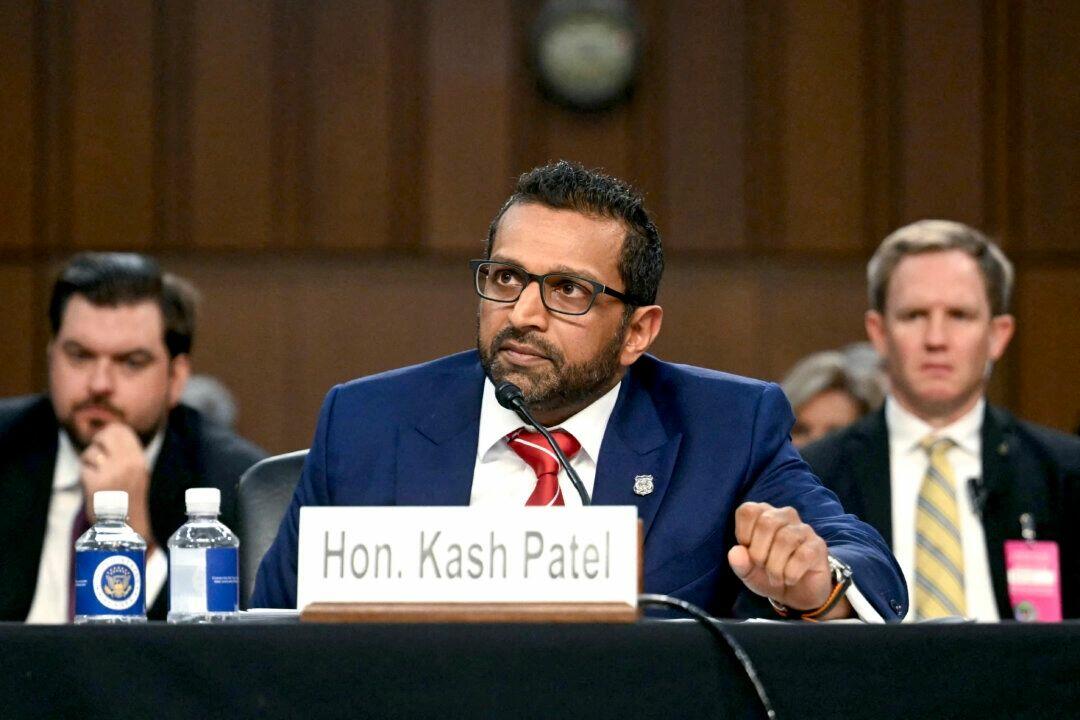
The state of Illinois filed a lawsuit against the Trump administration on Oct. 6 in a bid to halt the federal government from deploying National Guard troops to Chicago.

The state is arguing in the new legal complaint filed in federal district court in Illinois that the federal government has no legal authority to intervene in the state’s law enforcement efforts.

“The American people, regardless of where they reside, should not live under the threat of occupation by the United States military, particularly not simply because their city or state leadership has fallen out of a president’s favor. To guard against this, foundational principles of American law limit the president’s authority to involve the military in domestic affairs. Those bedrock principles are in peril,” the lawsuit states.

Illinois Gov. JB Pritzker said on Oct. 5 that President Donald Trump was directing 400 Texas National Guard members to Illinois, Oregon, and other states amid federal immigration enforcement operations.

Pritzker described the deployment as “Trump’s Invasion.”

“There is no reason a President should send military troops into a sovereign state without their knowledge, consent, or cooperation,” the governor said.

FBI Arrests Vehicle Ramming Suspects

Meanwhile, the FBI arrested two people who allegedly drove vehicles into federal officials near Chicago, FBI Director Kash Patel announced on Sunday evening.

In a statement on X, the FBI director said that two individuals “have been charged for assaulting federal officers with a deadly or dangerous weapon.”

“Attack our law enforcement, and this FBI will find you and bring you to justice,” he wrote.

FBI Director Kash Patel testifies during a Senate Judiciary Committee hearing on “Oversight of the Federal Bureau of Investigation” on Capitol Hill in Washington on Sept. 16, 2025. Jim Watson/AFP via Getty Images

While Patel did not name the suspects who were arrested, the U.S. Attorney’s Office for the Northern District of Illinois said in court documents that Marimar Martinez, 30, and Anthony Ian Santos Ruiz, 21, were “charged in federal court with using their vehicles to assault, impede, and interfere with the work of federal agents in Chicago.”

“After striking the agents’ vehicle, the defendants’ vehicles boxed in the agents’ vehicle,” the office said in its documents, adding that the “agent was unable to move his vehicle and exited the car, at which point he fired approximately five shots from his service weapon at Martinez.”

Martinez, who was allegedly armed with a semiautomatic weapon, drove off, but paramedics found her at a repair shop about a mile away from the scene, according to the office. An ambulance took her to a hospital, where her gunshot wounds were treated.

According to the criminal complaint released by the Justice Department, three Border Patrol agents were carrying out an operation in Oak Lawn, Illinois—a suburb of Chicago—and were followed by Ruiz and Martinez.

The two are accused of pursuing the federal agents’ vehicles and running stop signs and lights, and causing an agent to lose control of a government vehicle after they allegedly rammed their vehicle into it.

After the government vehicle stopped, the agents emerged before Martinez allegedly drove the vehicle at the agents, causing one to fire shots at her, the complaint stated.

The Department of Homeland Security (DHS) said in a statement on Oct. 4 that it was forced to deploy special operations in Chicago.

The DHS accused Martinez and Ruiz of being “domestic terrorists” after the incident.

“The scene became increasingly violent as more domestic terrorists gathered and began throwing smoke, gas, rocks, and bottles at DHS law enforcement. Another domestic terrorist was arrested for assaulting CBP at the scene,” the agency said, accusing local Illinois officials of refusing to “allow local police to help secure the scene.”

On Sunday, Illinois Gov. JB Pritzker, who has been critical of the Trump administration’s immigration enforcement operations in Chicago, said the White House will be deploying 300 National Guard members to his state.

The National Guard, he added, is being sourced from Texas.

Texas Gov. Greg Abbott confirmed this in a post on X.

“No officials from the federal government called me directly to discuss or coordinate,” Pritzker said in a statement.

“We must now start calling this what it is: Trump’s Invasion. It started with federal agents, it will soon include deploying federalized members of the Illinois National Guard against our wishes, and it will now involve sending in another state’s military troops.”

The Epoch Times contacted the FBI and an attorney representing Martinez for comment. It was not immediately clear whether Ruiz had legal representation.

Tyler Durden
Mon, 10/06/2025 – 11:35

via ZeroHedge News https://ift.tt/oNSMIwX Tyler Durden

Wall Street Slaughtered On Its Consensus Yen Long As Traders Position for Much More Losses Versus Dollar

Wall Street Slaughtered On Its Consensus Yen Long As Traders Position for Much More Losses Versus Dollar

After this weekend’s victory of Japan’s first soon-to-be-female Prime Minister, Sanae Takaichi – which came as a shock to everyone with Goldman saying that “virtually no one—including media, political analysts, opposition parties, and even LDP insiders—had expected this result” – no one perhaps… except our readers whom we told she will be the next Japanese prime minister one month ago – Bloomberg reports that short-term yen sentiment underwent its biggest bearish repricing since late July as the currency hits a two-month low in the spot market.

As BBG FX strategist Vassilis Karamanis writes, pro-stimulus lawmaker Sanae Takaichi’s near-certain elevation as Japan’s next prime minister took traders by surprise, and options show a rush to own downside exposure in the yen, despite its already steep decline which sent it to the lowest level since early August and, prior to that, since February.

Indeed, the one-week risk reversals in USDJPY rally to 44bps, calls over puts, after trading by 22bps in favor of the yen earlier. This is the third most bearish reading in the past three years.

As Karamanis notes, it’s a common picture across the pair’s vol skew which shifts higher across tenors this morning. The largest move is seen on the two-week tenor where risk reversals are heading for their strongest close in favor of the greenback since Sept. 2022

Understandably, all of Wall Street has been wrongfooted on the move: recall not long ago we showed that the most consensus trade across all of Wall Street’s trading desks was to be short the dollar (and hence long various G7 pairs like the Yen). 

And sure enough, all those banks made a long yen trade the centerpiece of their USD hate and loathing… until last night, when bank after bank were stopped out. 

Here is Deutsche Bank’s George Saravelos, who from biggest dollar bull became one of the biggest dollar bears on Wall Street, and now his clients are not too happy with that reversal. From his note published overnight:

We went long JPY in our FX Blueprint but are now getting out following the LDP election outcome this weekend. Sanae Takaichi’s surprise victory reintroduces too much uncertainty around Japan’s policy priorities and the timing of the BoJ hiking cycle. 

There is agreement that inflation is a problem in Japan, but uncertainty is now going up again on how it will be dealt with. We have written at length about the growing political recognition of inflation as a problem – one which has contributed to LDP’s losses in recent elections. Takaichi has acknowledged the need to prioritize measures to counter inflation and has avoided repeating comments from 2024 that the BoJ would be unwise to hike. But her stance on addressing inflation still looks different from traditional policy prescriptions. We note she has: (1) argued that inflation in Japan is more cost-push than demand-pull; (2) emphasized fiscal relief over monetary policy to address price pressures and not ruled out cuts to the consumption tax; (3) noted that the government and BoJ should work closely together; (4) floated a plan to broaden the coalition, which could bring in more dovishly inclined parties like the DPP. The JPY has struggled to capitalize on the Fed repricing story in recent months, and we have argued BoJ hikes would be an important catalyst to watch for. The increased uncertainty around the timing of the next hike leads us to retreat to neutral position on the JPY.

We are turning neutral the JPY awaiting greater clarity. We still see the case for eventual BoJ tightening, a decline in USD hedging costs, extreme undervaluation, and repatriation into Japanese assets as being important drivers of a medium-term JPY view. But these positive catalysts seem to be lacking right now given the political surprise. And without them, fighting the negative carry of being long JPY is too hard. We will be actively watching the shape of the Cabinet, coalition and policy priorities to guide our JPY view from here.

Here is Goldman’s FX strategist Michael Cahill closing out his short USDJPY trade at a 230 pip loss (full note here).

Sanae Takaichi’s surprise victory in the LDP leadership election and the little premium priced into FX going into the event leaves scope for a quick reset higher in USD/JPY of +1.5-2% in the early trading hours, with elevated two-way risk thereafter as markets assess the likely policy path ahead.

In our economists’ base case, we expect only modest changes to the fiscal stance and no change to our modal path for the BoJ. This argues that much of the new fiscal risk premium should fade, similar to the market’s eventual assessment following the Upper House election and PM Ishida’s subsequent resignation. However, with Takaichi in power, and some of these things likely to take at least a few months to become clear, we expect the market impact to also be more durable this time.

For some time, we have been making the case that global risk sentiment should be more important than domestic developments for the direction of the Yen, and that is still the case. However, it seems likely that domestic developments will add another headwind to Yen performance. We see upside risks to our USD/JPY forecasts and are closing our trade recommendation to go short USD/JPY (initiated at 147.69).

Going down the list: UBS, Citi, MS, etc… everyone. And so the penguins turn. All else equal we would have said this is the time to close out on our long-standing yen short position which is now drowning in positive carry, but we are confident the currency will keep falling until at least 160 before the BOJ steps in. After all, Japan’s exports are plunging and the economy is on the verge of another recession which means there is just one way to kickstart it: crush the currency and send stocks soaring, aka old faithful. 

Tyler Durden
Mon, 10/06/2025 – 11:12

via ZeroHedge News https://ift.tt/gIliOkF Tyler Durden

Supreme Court Rejects Ghislaine Maxwell’s Appeal For Sex Trafficking Minors

Supreme Court Rejects Ghislaine Maxwell’s Appeal For Sex Trafficking Minors

The Supreme Court on Monday refused to hear Ghislaine Maxwell’s appeal to overturn her 2022 conviction for sex trafficking minors with Jeffrey Epstein.

Maxwell, who was sentenced to 20 years in federal prison, had sought to overturn her conviction on the grounds that she was unlawfully prosecuted. She filed her appeal three days after meeting with a top Trump DOJ official tapped to re-examine the Epstein case. 

Now it’s down to a Trump pardon – after the President said in late July that he hadn’t considered, but won’t rule out, a pardon for his former Palm Beach associate. 

Trump supporters have suggested that Maxwell, a British former socialite and daughter of alleged Mossad spy Robert Maxwell (Ghislaine has denied Epstein was running a honeypot operation to entrap elites) – could be the key to exposing a list of powerful Epstein clients. Then, when Trump started acting all weird about it – calling the list a ‘Democrat hoax’ – a fracture formed within MAGA, as supporters were counting on Trump to release ‘the list,’ not act like he’s on it. 

Maxwell’s legal team is crestfallen.

“We’re, of course, deeply disappointed that the Supreme Court declined to hear Ghislaine Maxwell’s case,” her attorney, David Oscar Markus, said in a statement provided to Axios. “But this fight isn’t over.”

“Serious legal and factual issues remain,” he said, “and we will continue to pursue every avenue available to ensure that justice is done.”

Maxwell claimed in her appeal that she was wrongly prosecuted because she’s covered by a 2007 sweetheart non-prosecution deal negotiated with the US Attorney’s Office in the Southern District of Florida. According to said agreement, the US “agrees that it will not institute any criminal charges against any potential co-conspirators of Epstein, including but not limited to” four other suspects. 

Maxwell was not listed as one of those suspects, however her lawyers claim she didn’t need to be. 

The DOJ, meanwhile, has argued that the former US Attorney who negotiated the deal, Alex Acosta, didn’t have the authority to bind federal districts – including the Southern District of New York, where Maxwell was tried and convicted.

Tyler Durden
Mon, 10/06/2025 – 10:54

via ZeroHedge News https://ift.tt/JpknPFN Tyler Durden

“Freedom” Shirts Reportedly Banned In Kansas Elementary Public School

“Freedom” Shirts Reportedly Banned In Kansas Elementary Public School

Authored by Jonathan Turley,

An elementary school in Kansas has raised a novel question under the First Amendment: whether the freedom of speech includes the right to use the word “freedom.” According to some media reports, Arbor Creek Elementary Principal Melissa Snell stopped the wearing of shirts reading “Freedom,” which have become popular after the assassination of Charlie Kirk. The move is clearly a violation under the First Amendment, in my view.

Libs of TikTok posted an email exchange between Arbor Creek Elementary Principal Melissa Snell and an (unnamed) individual in which Snell confirmed the ban. The email stated: “I just want to make sure that you have told your staff to not wear those ‘Freedom’ shirts to school anymore. Thank you.”

Snell allegedly responded: “Yes, I have. Was there someone in particular that you are referring to? If you don’t mind me asking.”

Our crackerjack investigatory unit at Res Ipsa was able to find that person for Snell from what appears to be video of students of Arbor Creek:

Notably, the Olathe Public Schools district itself sells “We All Belong Together” shirts via its Department of Culture and Belonging. However, “Freedom” shirts were banned, at least temporarily.

Deputy Superintendent Lachelle Sigg wrote to the school community that the district “remain[s] committed to […] honoring all first amendment rights and ensuring that personal expression does not disrupt the educational setting.”

If so, that commitment is more rhetorical than actual.

Superintendent Brent Yeager confirmed the emails that Libs of TikTok had posted earlier in the week, but suggested that it was temporary as Snell “reviewed district practices.”

I fail to see why Snell had to suspend the wearing of such shirts pending review. This is clearly a content-based limitation on speech.

In Tinker v. Des Moines Independent Community School District (1969), the Supreme Court upheld the right of students to wear armbands protesting the Vietnam War, famously writing, “It can hardly be argued that either students or teachers shed their constitutional rights to freedom of speech or expression at the schoolhouse gate.”

This does not involve the type of “lewd,” “vulgar,” “indecent,” or “plainly offensive” speech discussed in cases such as Bethel School District v. Fraser (1986). It is a statement of solidarity between the freedom of speech, a statement made more poignant and urgent with the murder of Kirk for exercising that right.

It is also not a celebration of unlawful conduct, as in Morse v. Frederick (2007), as opposed to the exercise of our most “Indispensable Right.”

It is a good thing that Joseph Cinqué did not try to enroll at Arbor Creek Elementary:

*  *  *

Jonathan Turley is the Shapiro Professor of Public Interest Law at George Washington University. He is the author of the bestselling book “The Indispensable Right: Free Speech in an Age of Rage.”

Tyler Durden
Mon, 10/06/2025 – 10:40

via ZeroHedge News https://ift.tt/DJHv6pU Tyler Durden

“Religious Arbitration, Family Law, and Constitutional Limits”

I was one of the panelists on this program, and much enjoyed it. (It’s framed around some controversies in Texas, but we’re talking about much bigger questions.) You’ll see that I pretty sharply disagree with the other panelists—my remarks start at around 38:50—but that’s what makes it fun. Here’s the summary from the producers:

In recent months, Texas Governor Greg Abbott announced a ban on “Sharia law and Sharia compounds” in the state, citing longstanding principles that U.S. and Texas law take precedence over conflicting foreign law. This position is reflected in the 2017 American Laws for American Courts statute and in an Attorney General opinion affirming that contracts violating Texas public policy cannot be enforced.

These commitments were tested in a North Texas family law case, where an Islamic prenuptial agreement called for disputes to be resolved under religious law. The Texas Supreme Court ultimately stayed the arbitration order and ordered review of the original arbitration agreement for “validity and enforceability.”

Other recent developments – including video accounts of a Houston imam calling for boycotts of certain businesses and reports of a proposed Muslim-exclusive residential community (“EPIC”) – have prompted legislative responses such as HB 4211, which requires property transfer disclosures and ensures disputes are adjudicated under Texas and U.S. law.

How should courts weigh religious arbitration against constitutional and statutory protections? What legal tools exist to address disputes that implicate cultural or religious norms? How can Americans both respect religious diversity and uphold constitutional imperatives?

The post "Religious Arbitration, Family Law, and Constitutional Limits" appeared first on Reason.com.

from Latest – Reason.com https://ift.tt/PTLNl0b
via IFTTT

Whoops—Ohio Accidentally Excludes Most Major Porn Platforms From Anti-Porn Law


Woman on smartphone pulling up Pornhub | AnneLyse Lecuyer/ZUMAPRESS/Newscom

Remember when people used to say “Epic FAIL”? I’m sorry, but there’s no other way to describe Ohio’s new age verification law, which took effect on September 30.

A variation on a mandate that’s been sweeping U.S. statehouses, this law requires online platforms offering “material harmful to juveniles”—by which authorities mean porn—to check photo IDs or use “transactional data” (such as mortgage, education, and employment records) to verify that all visitors are adults.

But lawmakers have written the law in such a way that it excludes most major porn publishing platforms.

“This is why you don’t rush [age verification] bills into an omnibus,” commented the Free Speech Coalition’s Mike Stabile on Bluesky.

Ohio Republican lawmakers introduced a standalone age verification bill back in February, but it languished in a House committee. A similar bill introduced in 2024 also failed to advance out of committee.

The version that wound up passing this year did so as part of the state’s omnibus budget legislation (House Bill 96). This massive measure—more than 3,000 pages—includes a provision that any organization that “disseminates, provides, exhibits, or presents any material or performance that is obscene or harmful to juveniles on the internet” must verify that anyone attempting to view that material is at least 18 years old.

The bill also states that such organizations must “utilize a geofence system maintained and monitored by a licensed location-based technology provider to dynamically monitor the geolocation of persons.”

Existing Ohio law defines material harmful to juveniles as “any material or performance describing or representing nudity, sexual conduct, sexual excitement, or sado-masochistic abuse” that “appeals to the prurient interest of juveniles in sex,” is “patently offensive to prevailing standards in the adult community as a whole with respect to what is suitable for juveniles,” and “lacks serious literary, artistic, political, and scientific value for juveniles.”

Under the new law, online distributors of “material harmful to juveniles” that don’t comply with the age check requirement could face civil actions initiated by Ohio’s attorney general.

Supporters of the law portrayed it as a way to stop young Ohioans from being able to access online porn entirely. But the biggest purveyors of online porn—including Pornhub and similar platforms, which allow users to upload as well as view content—seem to be exempt from the law.

Among the organizations exempted from age verification requirements are providers of “an interactive computer service,” which is defined by Ohio lawmakers as having the same meaning as it does under federal law.

The federal law that defines “interactive computer service”—Section 230 of the Communications Decency Act—says it “means any information service, system, or access software provider that provides or enables computer access by multiple users to a computer server, including specifically a service or system that provides access to the Internet and such systems operated or services offered by libraries or educational institutions.”

That’s a bit of a mouthful, but we have decades of jurisprudence parsing that definition. And it basically means any platform where third parties can create accounts and can generate content, from social media sites to dating apps, message boards, classified ads, search engines, comment sections, and much more.

Platforms like Pornhub unambiguously fall within this category.

In fact, Pornhub is not blocking Ohio users as it has in most other states with age verification laws for online porn, because its parent company, Aylo, does not believe the law applies to it.

“As a provider of an ‘interactive computer service’ as defined under Section 230 of the Communications Decency Act, it is our understanding that we are not subject to the obligations under section 1349.10 of the Ohio Revised Code regarding mandated age verification for the ‘interactive computer services’ we provide, such as Pornhub,” Aylo told Mashable.

I’m assuming that the exclusion of Pornhub was not intentional, given the way this law’s supporters talked about it as a shield against Ohio minors being able to see any sexually oriented material online. One of the law’s biggest proponents, state Rep. Josh Williams (R–Sylvania), has talked about how it would not ensnare social media platforms even though they may contain porn, so perhaps the exclusion of interactive computer services was intended for that purpose. But most major web-porn access points, including OnlyFans and webcamming platforms, also fall under the definition of interactive computer service.

I doubt this will be the end of the story. Perhaps Ohio lawmakers will amend the exceptions—although that may prove a bit difficult to do on its own, since the state was having trouble moving forward with a standalone age verification law. Or perhaps the Ohio Attorney General will be foolish enough to challenge the idea that Pornhub is an “interactive computer service.”

For now, though, we can add this to ever-crowded annals of “lawmakers trying to regulate tech and the internet without understanding tech and the internet.”


More Sex & Tech News

Why women should be tech optimists: Jerusalem Demsas on self-driving cars, e-bikes, and how to pitch women on new technology. “Technology isn’t just about pushing the frontier. It’s about making people’s lives better,” she writes.

Generic abortion pill gets green light from federal authorities: The U.S. Food and Drug administration has approved another generic version of mifepristone.

Self-driving cars are “a miracle drug,” writes Derek Thompson. “So, why are so many progressive cities trying to prohibit Waymo cars, as if they were fentanyl on wheels?” Thompson continues:

Timothy Lee writes that a number of Democratic-leaning states “are considering proposals to restrict or ban the deployment of driverless vehicles.” In a recent hearing before the Boston City Council, City Councilor Julia Mejia declared her “strong opposition” to Waymo cars; City Councilor Benjamin Weber found it “concerning to hear that the company was making a detailed map of our city streets without having a community process beforehand” (sorry, what?); and City Councilor Erin Murphy announced legislation requiring that a “human safety operator is physically present” in all driverless cars, which would make the current offering from Waymo technically illegal.

Feel the irony: Partisans blocking a healthy, life-saving technological invention due to fanatical precautions about unintended effects. These Democrats are the mirror image of vaccine-skeptic conservatives who stand athwart progress yelling stop in the realm of therapeutics. If anti-vax Republicans are turning into the party that hates medical progress for tribal reasons (e.g., a toxically conspiratorial attitude toward everything), anti-Waymo Democrats are in danger of becoming the party that hates software progress for their own clichéd reasons (e.g., a toxically cautionary approach to any change involving the physical environment).

ICE is watching you post: Federal contracting records show that “immigration authorities are moving to dramatically expand their social media surveillance, with plans to hire nearly 30 contractors to sift through posts, photos, and messages—raw material to be transformed into intelligence for deportation raids and arrests,” reports Wired. “The initiative is still at the request-for-information stage, a step agencies use to gauge interest from contractors before an official bidding process. But draft planning documents show the scheme is ambitious: [Immigration and Customs Enforcement] wants a contractor capable of staffing the centers around the clock, constantly processing cases on tight deadlines, and supplying the agency with the latest and greatest subscription-based surveillance software.”

Today’s Image

Yellow Springs, Ohio | 2025 (ENB/Reason)

The post Whoops—Ohio Accidentally Excludes Most Major Porn Platforms From Anti-Porn Law appeared first on Reason.com.

from Latest – Reason.com https://ift.tt/8XjOkG1
via IFTTT

“Religious Arbitration, Family Law, and Constitutional Limits”

I was one of the panelists on this program, and much enjoyed it. (It’s framed around some controversies in Texas, but we’re talking about much bigger questions.) You’ll see that I pretty sharply disagree with the other panelists—my remarks start at around 38:50—but that’s what makes it fun. Here’s the summary from the producers:

In recent months, Texas Governor Greg Abbott announced a ban on “Sharia law and Sharia compounds” in the state, citing longstanding principles that U.S. and Texas law take precedence over conflicting foreign law. This position is reflected in the 2017 American Laws for American Courts statute and in an Attorney General opinion affirming that contracts violating Texas public policy cannot be enforced.

These commitments were tested in a North Texas family law case, where an Islamic prenuptial agreement called for disputes to be resolved under religious law. The Texas Supreme Court ultimately stayed the arbitration order and ordered review of the original arbitration agreement for “validity and enforceability.”

Other recent developments – including video accounts of a Houston imam calling for boycotts of certain businesses and reports of a proposed Muslim-exclusive residential community (“EPIC”) – have prompted legislative responses such as HB 4211, which requires property transfer disclosures and ensures disputes are adjudicated under Texas and U.S. law.

How should courts weigh religious arbitration against constitutional and statutory protections? What legal tools exist to address disputes that implicate cultural or religious norms? How can Americans both respect religious diversity and uphold constitutional imperatives?

The post "Religious Arbitration, Family Law, and Constitutional Limits" appeared first on Reason.com.

from Latest – Reason.com https://ift.tt/PTLNl0b
via IFTTT