Whoops—Ohio Accidentally Excludes Most Major Porn Platforms From Anti-Porn Law


Woman on smartphone pulling up Pornhub | AnneLyse Lecuyer/ZUMAPRESS/Newscom

Remember when people used to say “Epic FAIL”? I’m sorry, but there’s no other way to describe Ohio’s new age verification law, which took effect on September 30.

A variation on a mandate that’s been sweeping U.S. statehouses, this law requires online platforms offering “material harmful to juveniles”—by which authorities mean porn—to check photo IDs or use “transactional data” (such as mortgage, education, and employment records) to verify that all visitors are adults.

But lawmakers have written the law in such a way that it excludes most major porn publishing platforms.

“This is why you don’t rush [age verification] bills into an omnibus,” commented the Free Speech Coalition’s Mike Stabile on Bluesky.

Ohio Republican lawmakers introduced a standalone age verification bill back in February, but it languished in a House committee. A similar bill introduced in 2024 also failed to advance out of committee.

The version that wound up passing this year did so as part of the state’s omnibus budget legislation (House Bill 96). This massive measure—more than 3,000 pages—includes a provision that any organization that “disseminates, provides, exhibits, or presents any material or performance that is obscene or harmful to juveniles on the internet” must verify that anyone attempting to view that material is at least 18 years old.

The bill also states that such organizations must “utilize a geofence system maintained and monitored by a licensed location-based technology provider to dynamically monitor the geolocation of persons.”

Existing Ohio law defines material harmful to juveniles as “any material or performance describing or representing nudity, sexual conduct, sexual excitement, or sado-masochistic abuse” that “appeals to the prurient interest of juveniles in sex,” is “patently offensive to prevailing standards in the adult community as a whole with respect to what is suitable for juveniles,” and “lacks serious literary, artistic, political, and scientific value for juveniles.”

Under the new law, online distributors of “material harmful to juveniles” that don’t comply with the age check requirement could face civil actions initiated by Ohio’s attorney general.

Supporters of the law portrayed it as a way to stop young Ohioans from being able to access online porn entirely. But the biggest purveyors of online porn—including Pornhub and similar platforms, which allow users to upload as well as view content—seem to be exempt from the law.

Among the organizations exempted from age verification requirements are providers of “an interactive computer service,” which is defined by Ohio lawmakers as having the same meaning as it does under federal law.

The federal law that defines “interactive computer service”—Section 230 of the Communications Decency Act—says it “means any information service, system, or access software provider that provides or enables computer access by multiple users to a computer server, including specifically a service or system that provides access to the Internet and such systems operated or services offered by libraries or educational institutions.”

That’s a bit of a mouthful, but we have decades of jurisprudence parsing that definition. And it basically means any platform where third parties can create accounts and can generate content, from social media sites to dating apps, message boards, classified ads, search engines, comment sections, and much more.

Platforms like Pornhub unambiguously fall within this category.

In fact, Pornhub is not blocking Ohio users as it has in most other states with age verification laws for online porn, because its parent company, Aylo, does not believe the law applies to it.

“As a provider of an ‘interactive computer service’ as defined under Section 230 of the Communications Decency Act, it is our understanding that we are not subject to the obligations under section 1349.10 of the Ohio Revised Code regarding mandated age verification for the ‘interactive computer services’ we provide, such as Pornhub,” Aylo told Mashable.

I’m assuming that the exclusion of Pornhub was not intentional, given the way this law’s supporters talked about it as a shield against Ohio minors being able to see any sexually oriented material online. One of the law’s biggest proponents, state Rep. Josh Williams (R–Sylvania), has talked about how it would not ensnare social media platforms even though they may contain porn, so perhaps the exclusion of interactive computer services was intended for that purpose. But most major web-porn access points, including OnlyFans and webcamming platforms, also fall under the definition of interactive computer service.

I doubt this will be the end of the story. Perhaps Ohio lawmakers will amend the exceptions—although that may prove a bit difficult to do on its own, since the state was having trouble moving forward with a standalone age verification law. Or perhaps the Ohio Attorney General will be foolish enough to challenge the idea that Pornhub is an “interactive computer service.”

For now, though, we can add this to ever-crowded annals of “lawmakers trying to regulate tech and the internet without understanding tech and the internet.”


More Sex & Tech News

Why women should be tech optimists: Jerusalem Demsas on self-driving cars, e-bikes, and how to pitch women on new technology. “Technology isn’t just about pushing the frontier. It’s about making people’s lives better,” she writes.

Generic abortion pill gets green light from federal authorities: The U.S. Food and Drug administration has approved another generic version of mifepristone.

Self-driving cars are “a miracle drug,” writes Derek Thompson. “So, why are so many progressive cities trying to prohibit Waymo cars, as if they were fentanyl on wheels?” Thompson continues:

Timothy Lee writes that a number of Democratic-leaning states “are considering proposals to restrict or ban the deployment of driverless vehicles.” In a recent hearing before the Boston City Council, City Councilor Julia Mejia declared her “strong opposition” to Waymo cars; City Councilor Benjamin Weber found it “concerning to hear that the company was making a detailed map of our city streets without having a community process beforehand” (sorry, what?); and City Councilor Erin Murphy announced legislation requiring that a “human safety operator is physically present” in all driverless cars, which would make the current offering from Waymo technically illegal.

Feel the irony: Partisans blocking a healthy, life-saving technological invention due to fanatical precautions about unintended effects. These Democrats are the mirror image of vaccine-skeptic conservatives who stand athwart progress yelling stop in the realm of therapeutics. If anti-vax Republicans are turning into the party that hates medical progress for tribal reasons (e.g., a toxically conspiratorial attitude toward everything), anti-Waymo Democrats are in danger of becoming the party that hates software progress for their own clichéd reasons (e.g., a toxically cautionary approach to any change involving the physical environment).

ICE is watching you post: Federal contracting records show that “immigration authorities are moving to dramatically expand their social media surveillance, with plans to hire nearly 30 contractors to sift through posts, photos, and messages—raw material to be transformed into intelligence for deportation raids and arrests,” reports Wired. “The initiative is still at the request-for-information stage, a step agencies use to gauge interest from contractors before an official bidding process. But draft planning documents show the scheme is ambitious: [Immigration and Customs Enforcement] wants a contractor capable of staffing the centers around the clock, constantly processing cases on tight deadlines, and supplying the agency with the latest and greatest subscription-based surveillance software.”

Today’s Image

Yellow Springs, Ohio | 2025 (ENB/Reason)

The post Whoops—Ohio Accidentally Excludes Most Major Porn Platforms From Anti-Porn Law appeared first on Reason.com.

from Latest – Reason.com https://ift.tt/8XjOkG1
via IFTTT

WaPo Admits Internal DC Police Scandal Over Manipulated Crime Stats

WaPo Admits Internal DC Police Scandal Over Manipulated Crime Stats

Five weeks ago, White House Deputy Chief of Staff Stephen Miller announced that there was an ongoing DOJ investigation into whether Washington D.C. officials manipulated crime statistics – calling it a “massive scandal.” 

Specifically, Miller said:

There’s even accusations that murders and homicides were reported as accidents.

See 55 second mark:

One day after Miller’s late-August announcement, National Police Association spox Betsy Smith told ABC4 News in a little-noticed report that “Commanders and supervisors were having the initial responding officers write the report differently than what they were called to, or different than what they physically saw on the scene.

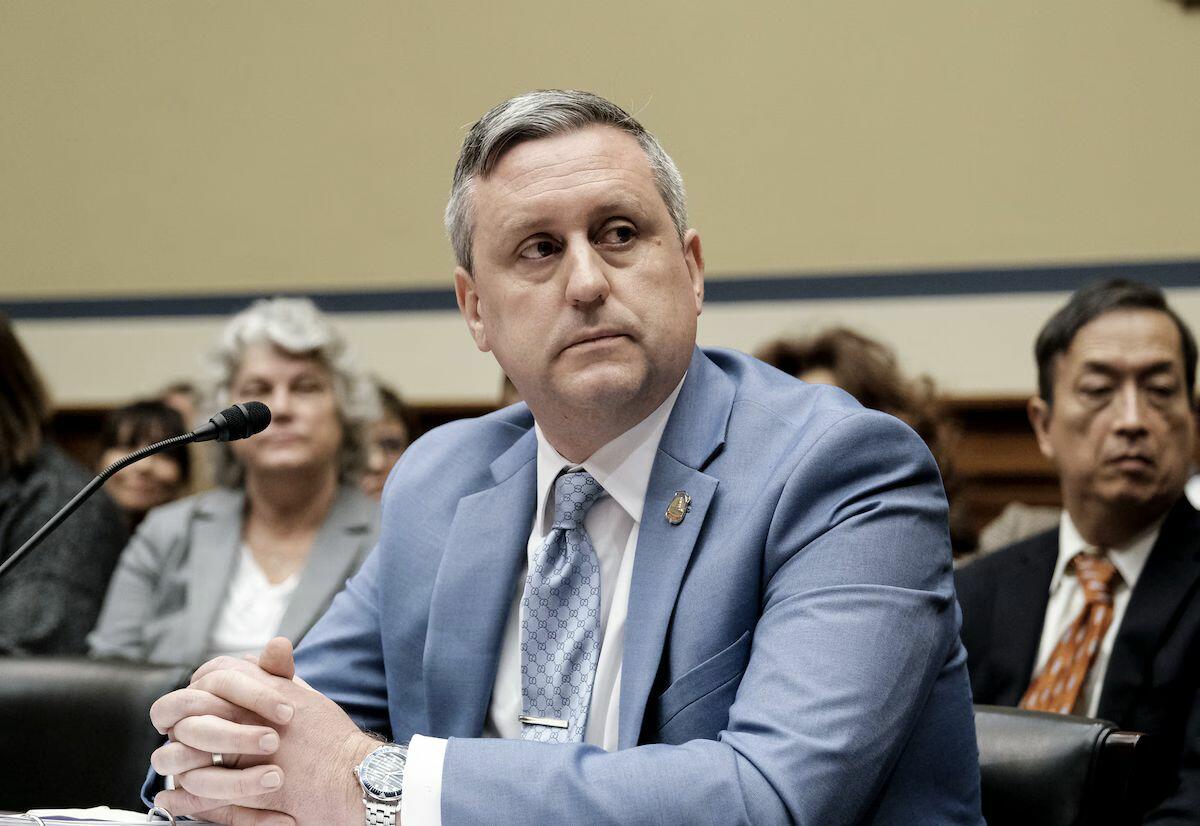
And while the DC Police Department has been run by Democrats for decades – frustrated cops have been talking to the DOJ and have receipts, presented with a bow by D.C. Police Union Chairman Greggory Pemberton. Read on… 

Greggory Pemberton, chairman of the D.C. Police Union (Photo: Michael A. McCoy via The Washington Post)

On Sunday, the Washington Post revealed internal accusations that “managers were recording serious crimes as more minor ones to make their police districts appear safer or avoid the ire of top department brass” – and that officers and supervisors ‘clashed’ over “whether an offense was a robbery or a theft, or whether a weapon used in an assault qualified as potentially deadly.”

The frustrated officers “kept lists, documenting cases where they believed a higher-up improperly classified a crime as a lesser offense,” with one noting 150 such instances in March of 2024 alone in which staff in the Southeast D.C. police district believed offenses were in appropriately classified. 

The police department is playing fast and loose with how they report their data so that they can report favorably to the citizens about crime, and I don’t think it’s fair to the city,” said Pemberton – who’s been assisting the Trump administration and Congressional Republicans with ‘information compiled by officers.’

So, a group of pissed off cops within the DC police department have been fighting with superiors and keeping notes over misclassified crimes, and kept notes. Now they’re working with the feds to blow the lid. Or as WaPo puts it – “found a receptive audience.”

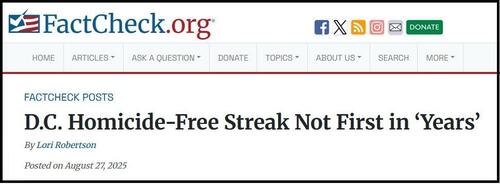
We’re sure the galaxy brains over at FactCheck.org are getting right on that correction after saying President Trump ‘wrongly’ claimed that his DC crackdown resulted in 11 days with no murders, the “first time that’s taken place in years.” They of course make no mention of the DOJ / Congressional investigation Miller announced two days earlier. 

And of course, a July report by NBC Washington that MPD District 3 Commander Michael Pulliam was suspended and placed under investigation for allegedly manipulating crime data – however Stephen Miller said it was being done “on a widespread basis” – so more than just that sacrificial lamb.

WaPo Spin

Of course this Sunday night report is all about frontrunning the DOJ release – and narrative control. Such as that it could have simply been an initial lack of evidence – writing that “Criminologists say [zh: wait for it] classifying crimes is an often subjective and evolving process: Incidents can be redefined as investigators uncover more evidence, and disagreements don’t necessarily point to corruption.” And who’s the one criminologist they cited? “Alexis Piquero, a criminologist at the University of Miami who led the Bureau of Justice Statistics during the Biden administration,” who “cautioned against jumping to conclusions that D.C. police were purposefully concealing violent crimes.”

Right, yes. 

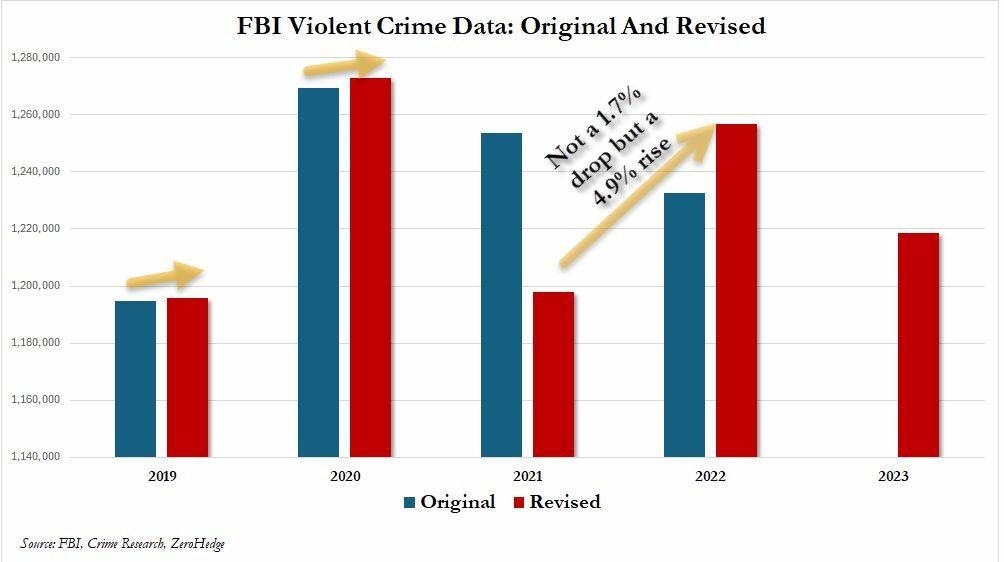
Recall that during the 2024 election, Democrats insisted that crime had fallen under the Biden administration, contrary to your lying eyes. They smugly pointed to FBI crime stats published in 2023 by Biden’s FBI – showing that the nation’s violent crime rate had fallen in 2022 by 1.7%. Leftist pundits and academics alike used it for a collective ‘ackchyually’ whenever Trump and his allies would point out the rampant crime gripping Democrat-run cities.

Then, in the home stretch of the election when Trump was clearly ahead (and before Kash Patel could go ‘Ah-ha!’), the 2022 figures were revised – revealing that crime had actually increased by 4.5% in 2022. This textbook Ministry of Truth ‘correction’ was uncovered by John Lott Jr. and published Oct. 16

Amazing…

Tyler Durden
Mon, 10/06/2025 – 10:20

via ZeroHedge News https://ift.tt/CpG2swL Tyler Durden

The Cold, Hard Airport-Floor Truth

The Cold, Hard Airport-Floor Truth

By Michael Every of Rabobank

There is some irony that this Global Daily author, who has written about geopolitical events such as drone incursions into Europe regularly, was trapped in Munich airport on Friday night by what were reportedly military reconnaissance drones; had to sleep on the floor with 3,500 stranded souls like a scene from a zombie movie; was rerouted via other destinations so the door-to-door journey was 42 hours; and had his suitcase lost by the airline on the way out AND on the way back. However, it underlines anyone thinking current life is ‘normal’ is living in a bubble.

Europe, for all its talk, seemingly has no way of dealing with these drones. Whose are they? We don’t know. Why are they not being shot down when spotted – a lack of ammo or a lack of will? We don’t know. Given that the plan for an EU ‘drone wall’ was shot down immediately as unworkable –which it is given the scale of territory involved– what is workable and allows people to work? Logically, without a plan we can expect more flights to be disrupted, with a growing economic impact.

Meanwhile, the world around us is in equal flux – but with some plans, both good and bad.

President Trump told CNN that Hamas faces “complete obliteration” if it refuses to cede power in Gaza, saying he’ll “soon know” if the group is serious about peace. Negotiators meet in Egypt today, so fingers crossed. Trump also reportedly Israeli PM Netanyahu to “take the win” and not to always be “so f***ing negative.” Either more massive violence or a sudden peace looms there – and both could prove transformative. Europe is merely an observer either way.  

There are unsubstantiated reports that China is providing Russia with satellite information to allow it to make missile strikes in Ukraine. Would that be a red line for Europe, or do European red lines there echo those of its policy over drone incursions?

The recent 100,000 SIM card plot to disrupt telecoms in New York around the UN general assembly was even larger than thought, says the US ABC, as it included New Jersey. Despite this being something which only a state would be capable of doing, and which only a few states would have even attempted, it isn’t being mentioned much by the media, either in the US or Europe.

Latin America remains on edge as the US Monroe Doctrine returns in force to push back against entrenched Russian, Iranian, Hamas/Hezbollah, and Chinese influence and whispers are that a move against Venezuela looms. Europe thinks an FTA with Mercosur is some kind of answer.

In Africa, ‘Trump’s peace hopes for Rwanda-Congo face threats’, says The Hill. Other locations also look concerning.

In domestic politics, the FT reports “enormous fear” given Trump’s threats against Soros and the non-profits sector, while a judge temporarily blocked the president from sending National Guard troops to Oregon.

In France, as he appoints new government ministers, PM Lecornu “tries to save skin by ruling out use of constitutional backdoor”, according to Politico; that’s as EU Commission President Von der Leyen faces another EU parliament confidence vote debate today.

In the UK, the government is considering banning repeat public protests; foreigners will be banned from claiming benefits, says the opposition Tory party, following the lead of Reform UK and Trump; yet Reform is seen likely to raise Kent council tax after its cost-cutting drive faltered, says the FT, showing there may be no way to cut spending in the UK, like the US, with the looming November national budget all about how much taxes rise, and on whom.

Japan’s first female PM, Sanae Takaichi, has already seen equities soar and 40-year bond yields do the same. She is seen as an Abe- or Trump-like figure, but with inflation now back, the BOJ slowly hiking, and the Yen nearly double the level vs the US dollar that it was when Abe launched his ‘three arrows’ well over a decade ago — and the US unhappy about currency devaluations– to say nothing about Japan’s domestic political dynamic, what is the plan?

In geoeconomics, it’s clearly protectionism and barter to avoid the weaponization of the US-centric financial system. For example, ‘China hawks grow queasy over Trump’s push for deals with Beijing’, says Bloomberg; ‘“Worse than Trump’s tariffs”: EU steel protections poised to pummel British industry’, adds Politico; ‘Chinese cars for Iranian metals: how sanctions revived barter trade’, notes Bloomberg; and ‘How China secretly pays Iran for oil and avoids US sanctions’, from the WSJ shows a “Hidden arrangement secured by prominent Chinese insurer connects Tehran with its biggest customer”.

Put that all together and we see that ‘America is now one big bet on AI’ (FT) as “It’s seen as the magic fix for every threat to the US economy.” Indeed, ‘Elon Musk Gambles Billions in Memphis to Catch Up on AI’, says WSJ, where “the city is divided over the massive power and water demands.” China is obviously all in in its own way. Naturally, the ‘EU pushes new AI strategy to reduce tech reliance on US and China’ (FT), with a plan for “digital sovereignty” – just without any of its own AI giants or the cheap energy needed to power it, and alongside rearmament and other acronymic wish-lists.

As a senior Wall Street figure just noted current AI mania only had bubble-like qualities, one might say what we currently have instead is merely ‘sparkling malinvestment’. Yet looked at politically, AI is a double-or-quits bet on a way to get us out of our current structural morass — while destabilizing society in the process, warn some. And looked at geopolitically, it’s about the military: get military AI working properly and all bets are off. In fact, if one were deeply cynical one could argue regulators are happy to overlook wild market pricing at the moment in the pursuit of a private sector driven Manhattan Project.

Trying to some things up, Foreign Affairs magazine just published ‘Reading Schmitt in Beijing’, which argues the US drift away from both neoliberalism and liberalism mirrors its focus on China. Indeed, and that’s something I’d predicted as far back in late 2017: clearly think tanks and academics aren’t about their speed of thought.

Markets, once they finally get the gist of something, act much faster. For example, the main FT headline at the time of writing was all about gold: ‘‘Gold-plated Fomo’ powers bullion’s record-breaking rally’, as “Price has rocketed nearly 50% this year, its best performance since 1979, as institutional investors pile in”. Bitcoin is also back a fresh record high. I wonder why – and it isn’t all about “rate cuts!”, even if they do play a role in it.

Really, there’s nothing like a forced night’s sleep on a cold, hard airport floor to sharpen your focus on how the world actually works right now. If you still aren’t seeing it yourself, I suspect you may also get to experience it, or its equivalent, in the not-too-distant future.

Pack a spare blanket and toothbrush.  

Tyler Durden
Mon, 10/06/2025 – 10:00

via ZeroHedge News https://ift.tt/ymVUAJx Tyler Durden

Top Supreme Court Cases To Watch As Justices Reconvene

Top Supreme Court Cases To Watch As Justices Reconvene

Authored by Sam Dorman and Stacy Robinson via The Epoch Times,

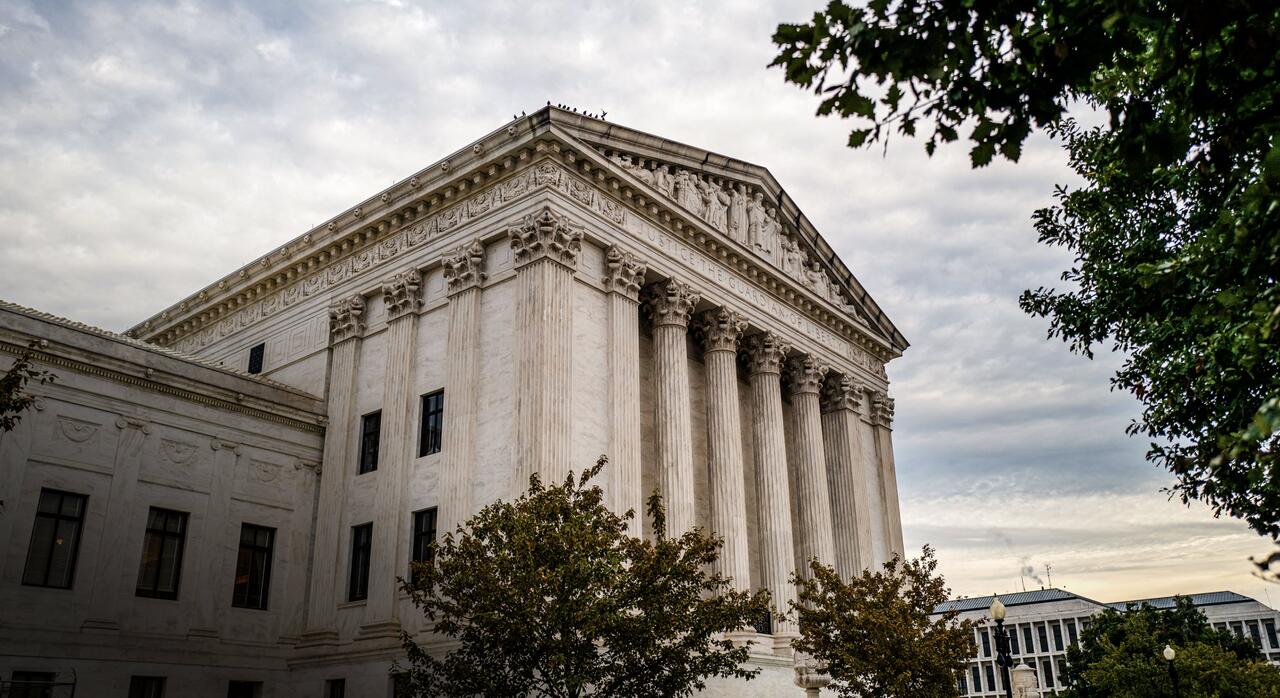
The Supreme Court is set to return on Oct. 6 for its 2025–2026 term, in which it will consider a series of cases that could affect major constitutional issues and impact President Donald Trump’s agenda.
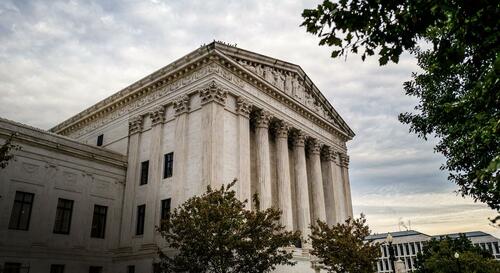
The high court is expected to hear challenges to Trump’s policies and has already decided to hear arguments over Trump’s tariffs and attempts to fire high-level officials.

The Supreme Court will also consider whether states can ban men from playing in women’s sports, whether a ban on so-called conversion therapy violates free speech rights, and a variety of election-related cases that could affect the balance of political power in the United States.

Here are the top cases so far this term and what is at stake in each.

1. Trump’s Tariffs

In perhaps the most anticipated case this term, the high court will decide on the legality of a large swath of Trump’s tariffs.

Trump invoked an emergency powers law to impose reciprocal tariffs on almost all countries, as well as levies on Canada, Mexico, and China over the trafficking of fentanyl into the United States.

Several federal courts have ruled that those tariffs went beyond what the law allowed.

Under the Constitution, Congress has the power to impose tariffs, and it can delegate this authority to the president.

The Trump administration argues that the law, called the International Emergency Economic Powers Act, authorizes the president to impose tariffs through a provision that grants the president the power to regulate importation.

However, the U.S. Court of Appeals for the Federal Circuit has pointed out that that section of the law does not explicitly use the term “tariffs.”

It blocked the tariffs, but has paused the effects of its ruling until after the Supreme Court issues its judgment.

The Supreme Court has set a consolidated oral argument for Nov. 5 in Learning Resources Inc. v. Trump and Trump v. V.O.S. Selections.

A truck carrying a shipping container at Port Newark Container Terminal in Newark, N.J., on April 10, 2025. President Donald Trump invoked an emergency powers law to impose reciprocal tariffs on almost all countries. Samira Bouaou/The Epoch Times

2. Removal of High-Level Bureaucrats

Through a series of high-profile firings, Trump has led the federal court system to revisit a 90-year-old Supreme Court precedent. The 1935 decision in Humphrey’s Executor v. United States held that Congress can set limits on the president’s ability to remove certain officials.

So far, lower courts have pointed to this decision as a basis for reversing Trump’s firings. Many of the lower court decisions have reached the Supreme Court’s emergency docket in recent months.

Although the justices have weighed in on some of those cases, they have not offered a final ruling on how far Congress can go in limiting Trump’s removal power.

That is expected to change soon, as the Supreme Court recently agreed to hear a case, Trump v. Slaughter, challenging Trump’s firing of a member of the Federal Trade Commission, Rebecca Slaughter.

That agency was also the subject of the decision in Humphrey’s Executor, which the Supreme Court has said it may be open to overruling.

In 1935, the court said Congress could restrict the president’s removal of Federal Trade Commission board members because they served a “quasi-legislative” or “quasi-judicial” role.

While the exact definitions of “executive” and “quasi-legislative” power remain uncertain, those questions will likely be central to the Supreme Court’s eventual decision.

The Supreme Court also said on Oct. 1 that it would hear oral arguments in January over Trump’s attempt to fire Federal Reserve Board of Governors member Lisa Cook.

Trump sent Cook a letter on Aug. 25 stating that he was removing her “for cause,” citing “sufficient reason” to believe that she had made false statements on one or more mortgage agreements. He invoked the Federal Reserve Act, which states that the president can remove a member of the board “for cause.”

Cook has argued that Trump did not cite a legally recognized “cause” and that his interpretation of the law would “destroy the Federal Reserve’s historic independence.” She has also denied the allegation of fraud.

Federal Reserve Board of Governors member Lisa Cook attends the Federal Reserve Bank of Kansas City’s 2025 Jackson Hole Economic Symposium in Jackson Hole, Wyo., on Aug. 23, 2025. Trump invoked the Federal Reserve Act to remove Cook “for cause,” citing “sufficient reason” to believe that she had made false statements on one or more mortgage agreements. Jim Urquhart/File Photo/Reuters

3. Girls Athletics

In recent years, red states have advanced legislation to ban boys’ participation in girls’ sports. Two of those states, Idaho and West Virginia, are expected to appear before the Supreme Court this term to defend the legality of their policies on that issue.

The Supreme Court agreed to hear the cases after issuing another landmark decision in United States v. Skrmetti, which holds that states can ban hormone therapy or gender-altering surgeries for minors without violating the equal protection clause of the 14th Amendment.

The high court is expected to address that same constitutional provision in the sports cases Little v. Hecox and West Virginia v. B.P.J.

In both cases, students are arguing that the state laws discriminate based on “transgender status” and therefore violate the Constitution.

Beyond that issue, the Supreme Court is expected to look at whether West Virginia’s ban violates a federal law known as Title IX of the Civil Rights Act.

That decades-old law bans sex-based discrimination by educational institutions that receive federal funding.

An appeals court said in 2023 that West Virginia violated Title IX.

The Trump administration, in a friend-of-the-court brief, said that the state’s policies are legally sound.

The plaintiff in the Idaho case, a college senior, has reversed course and stated an intention to not participate in women’s sports. The student has suggested that the case is therefore moot, or irrelevant, before the court.

It is unclear whether that particular case will now proceed to oral argument.

The court has not yet set a date for the hearing.
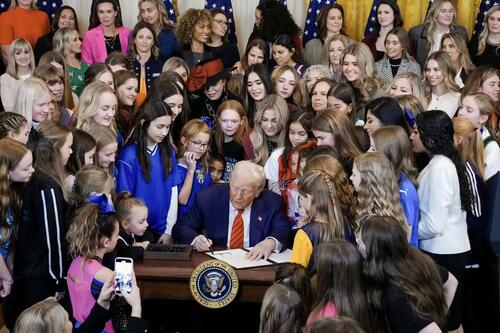
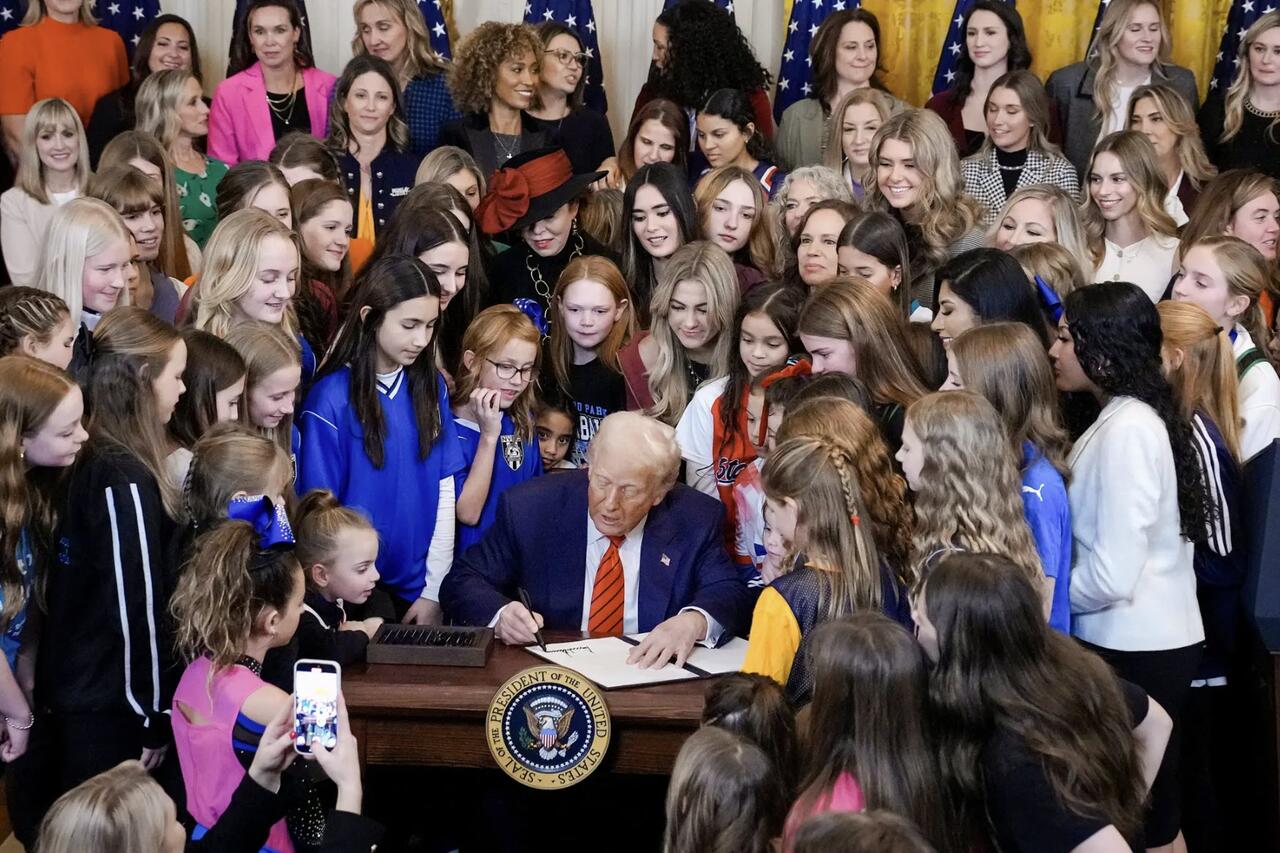
President Donald Trump, joined by female athletes, signs the “No Men in Women’s Sports” executive order in the White House on Feb. 5, 2025. Andrew Harnik/Getty Images

4. Redistricting

After Louisiana redrew its congressional district map in 2022, a group of private citizens, along with civil rights groups, sued.

The map only contained one mostly-black district, even though that group of voters represents one-third of the state’s population.

The plaintiffs argued that this was done to dilute black voting power in Louisiana and that it violated the Voting Rights Act of 1964.

That legislation prohibits laws or policies that “deny or abridge the right of any citizen of the United States to vote on account of race or color.”

The groups won in district court.

The judge ordered the state to draw the lines again and add another mostly-black district. Louisiana did so in 2024.

A group of non-black voters then sued, arguing that the redrawing based on race discriminated against non-minority voters.

The Supreme Court heard arguments in the case in March but declined to issue a ruling.

Instead, the court wanted more briefs and arguments from both sides about whether creating a second mostly-minority district violated the equal protection clause of the 14th Amendment or the 15th Amendment.

The 15th Amendment prohibits voter discrimination based on “race, color, or previous condition of servitude.”

The outcome may have implications for the 2026 midterm elections. Republicans currently hold a slim majority in the House of Representatives, and Democrats are looking to retake that chamber.

In 2022, Republicans won five out of Louisiana’s six congressional seats.

In 2024, after the new map was introduced, the GOP won four of those seats and Democrats won two.

That case will be argued again on Oct. 15.

Customers eat as they watch the election results at the Louisiana Pizza Kitchen in New Orleans on Nov. 5, 2024. In 2024, after the new Louisiana congressional district map was introduced, the GOP won four of the state’s six congressional seats, one fewer than in 2022. Sandy Huffaker/AFP via Getty Images

5. Pregnancy Center’s Donor Lists

First Choice Women’s Resource Centers provides free counseling to parents experiencing unplanned pregnancies but does not perform abortions or give abortion referrals.

In late 2023, New Jersey Attorney General Matt Platkin accused the pregnancy center of violating the state’s Consumer Fraud Act by hiding its pro-life stance from clients but openly promoting it to its donor base.

He also accused the group of “misinformation” because it claimed to be able to reverse chemical abortions in certain circumstances.

Platkin subpoenaed First Choice’s donor records, but the organization resisted.

Donors have a right to anonymity, it stated, and should be protected from political retaliation.

First Choice filed suit to block the subpoena, alleging that New Jersey was violating its First Amendment rights, since the investigation was politically motivated.

It also argued that the subpoena violated its Fourth Amendment rights against unreasonable search and seizure.

What followed was a complex series of court battles, which reached the Supreme Court in May 2024.

The court then declined to halt the subpoena.

The case continued in the lower courts, and in June, the high court revisited the matter and agreed to hear arguments this fall.

6. ‘Conversion Therapy’ Ban

Colorado instituted a ban on LGBT “conversion therapy” for minors in 2019.

The law prohibits licensed therapists from attempting to “change an individual’s sexual orientation, including efforts to change behaviors or gender expressions or to eliminate or reduce sexual or romantic attraction or feelings toward individuals of the same sex.”

Colorado therapist Kaley Chiles, who works with youth seeking to deal with unwanted same-sex attraction or gender dysphoria, pushed back with a federal lawsuit against the state in 2022.
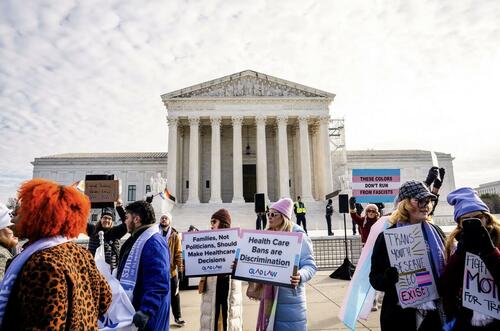
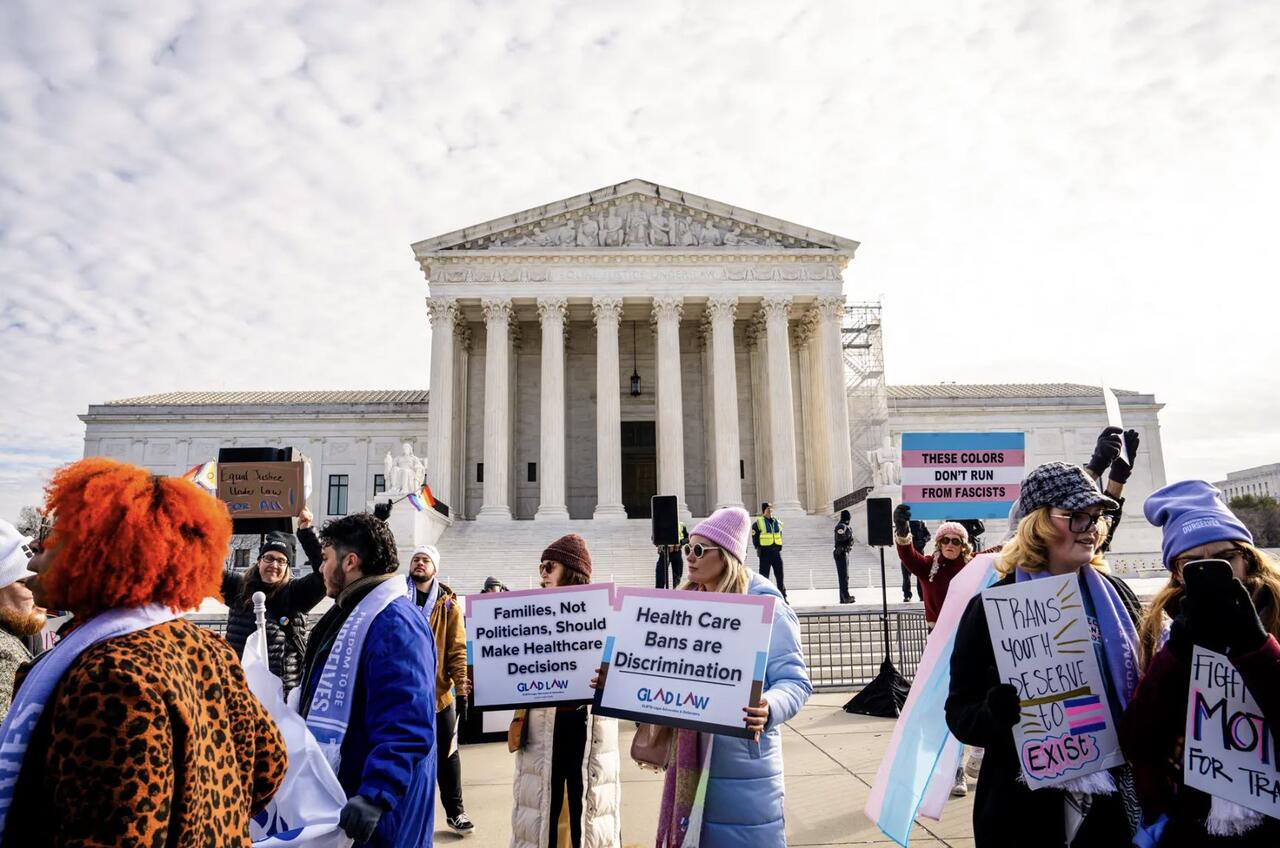
Protesters gather in front of the Supreme Court as the court hears a case over banning gender procedures for minors, in Washington on Dec. 4, 2024. Madalina Vasiliu/The Epoch Times

The suit alleges that the law is a clear violation of Chiles’s First Amendment free speech rights.

District Judge Charlotte Sweeney of the U.S. District Court for the District of Colorado denied Chiles’s request to overturn the law in December that year.

Sweeney wrote that the law does not directly regulate Chiles’s speech; rather, it regulates her conduct as a state-licensed therapist.

Any infringement on her speech rights is “incidental,” according to the judge.

An appeals court later upheld that decision.

Colorado is one of 27 states, along with the District of Columbia and Puerto Rico, that have restricted or banned conversion therapy for minors.

If the Supreme Court sides with Chiles, it may trigger suits against those laws.

Oral arguments are set for Oct. 7.

7. Hawaii’s Gun Restrictions

The court will take up a major gun case this term, considering the constitutionality of a Hawaii law that bans firearms on private property, unless the property owner has consented.

The case cites the 2022 Supreme Court decision in New York State Rifle & Pistol Association v. Bruen, which states that firearm restrictions need to be consistent with the nation’s “history and tradition.”

Hawaii’s law states that if concealed carry permit holders want to take guns onto private property, including stores, restaurants, and hotels, they need permission, either verbally or through a sign.

The U.S. Court of Appeals for the Ninth Circuit upheld the restrictions in 2024. A group of Hawaiians, along with the Hawaii Firearms Coalition, told the Supreme Court that the Ninth Circuit’s decision analyzed U.S. history, specifically previous laws, in the wrong way.

The Trump administration similarly argued that the law fell foul of the 2022 ruling.

“Because most property owners do not post signs either allowing or forbidding guns, Hawaii’s default rule functions as a near-complete ban on public carry,” Solicitor General D. John Sauer wrote in a court filing.

Hawaii has responded by defending the Ninth Circuit’s ruling, arguing that the Second Amendment does not override a property owner’s right.

“The rule can be upheld for the independent reason that it represents a valid governmental effort to vindicate property owners’ fundamental right to exclude by enacting a default rule that comports with the community’s reasonable expectations,” a brief from the state reads.

The case, Wolford v. Lopez, has not yet been scheduled for oral argument.

8. Death Penalty and IQ

In November 1997, Joseph Clifton Smith and an accomplice murdered Durk Van Dam in Mobile County, Alabama, bludgeoning him to death for $140, his shoes, and some tools.

Smith was convicted, and a jury decided that he should be executed.

But in 2002, the Supreme Court ruled in another case that mentally disabled convicts could not be executed because their mental capabilities reduce their culpability and ability to assist lawyers in trial.

Following that ruling, Smith appealed his case.

He had taken multiple IQ tests with scores ranging from 72 to 78.

In Alabama, the threshold for intellectual disability is an IQ score of less than 70.

However, since Smith’s lowest test had an error range of plus or minus three points, a psychiatrist testified that his IQ could be as low as 69, which would put him in the range to avoid execution.

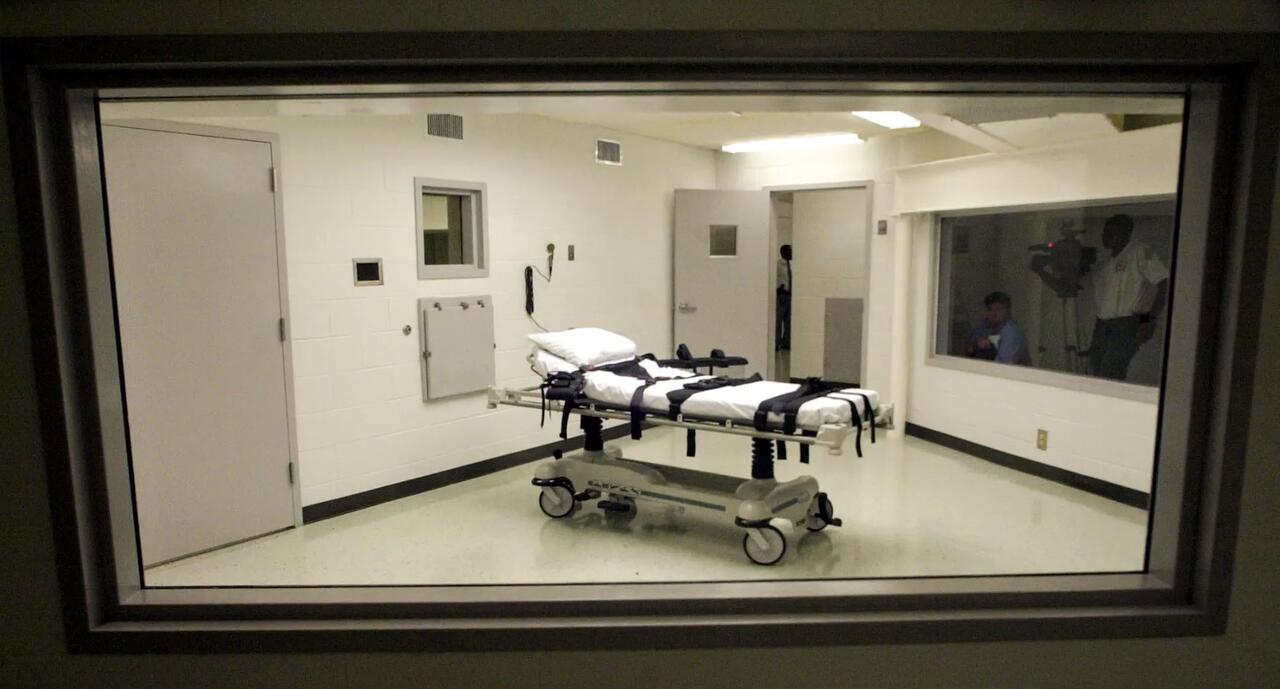
Alabama’s lethal injection chamber at Holman Correctional Facility in Atmore, Ala., on Oct. 7, 2002. Dave Martin/AP Photo

A district judge and an appeals court agreed with this reasoning, ruling that Smith could not be executed.

Alabama challenged those rulings, arguing that the courts should have taken the full range of IQ scores into account instead of the error margin of the lowest score.

Arguments were originally set for November, but were removed from the calendar in mid-September.

The court has not yet rescheduled.

9. Campaign Spending

The controversy over money in politics is returning to the Supreme Court this term in a case regarding to what extent political parties and candidates can coordinate their spending.

Decades ago, Congress passed a law called the Federal Election Campaign Act, which imposes limits on this type of spending.

Coordinated expenditures include such activities as making payments for political consultants, renting venues for rallies, and spending money on political advertising.

In 2022, then-Senate candidate JD Vance, then-Rep. Steve Chabot (R-Ohio), and two Republican committees brought a lawsuit questioning whether those limits violated the First Amendment.

When an appeals court reviewed the case in 2024, it was sympathetic to the Republicans’ arguments but said its hands were tied because of a previous Supreme Court decision that backed the idea that Congress could regulate coordinated expenditures without violating the First Amendment.

Republicans argue that the 2001 decision in Federal Election Commission v. Colorado Republican Federal Campaign Committee left some room for challenges based on the First Amendment.

They also contend that the government lacked a legitimate basis for imposing the limits.

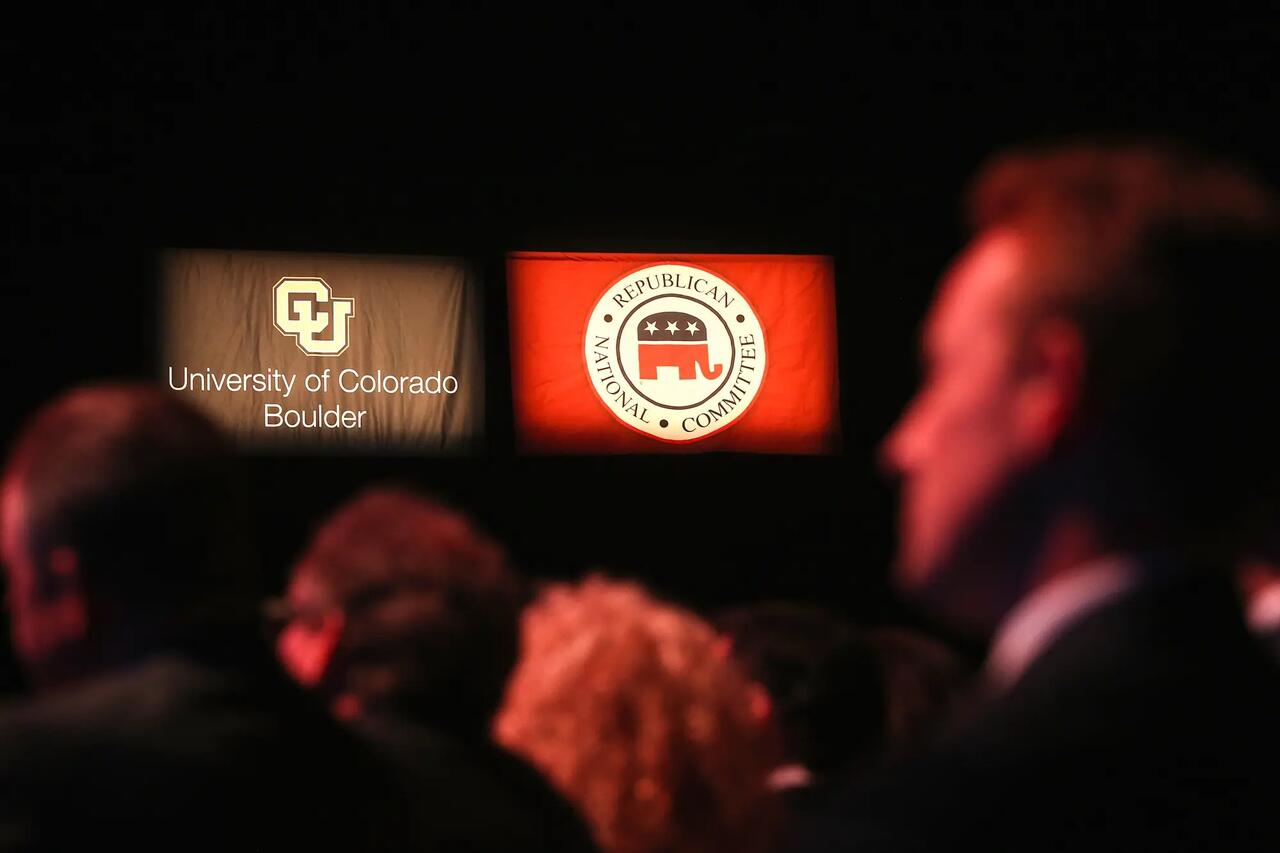
Audience members watch the CNBC Republican Presidential Debate at the University of Colorado’s Events Center in Boulder, Colo., on Oct. 28, 2015. The Federal Election Campaign Act, which imposes limits on coordinated expenditures by political parties and candidates, was challenged in 2022 by a lawsuit questioning whether those limits violated the First Amendment. Justin Sullivan/Getty Images

The Federal Election Commission, which the Republicans are suing, has similarly criticized the law, so the Supreme Court has appointed another attorney to defend the lower court decision.

Oral arguments in the case, National Republican Senatorial Committee v. Federal Election Commission, have not yet been set.

10. Defense Contractor Liability

On Nov. 3, the Supreme Court is expected to consider whether defense contractors can be sued for liability over terrorist attacks in foreign countries. The case is Hencely v. Fluor Corp.

An Afghanistan veteran named Winston Hencely was critically injured in a 2016 suicide bombing. The terrorist attack occurred on a U.S. military base and was committed by the Afghan employee of a contractor who worked on the base.

An Army investigation found that the contractor, Fluor Corp., failed to properly supervise the bomber.

Hencely lost on the appeals level because of the court’s interpretation of the Federal Tort Claims Act, which generally shields the government from liability under certain circumstances.

One of those circumstances applies to the U.S. military during times of war.

Although Fluor Corp. was a contractor, the U.S. Court of Appeals for the Fourth Circuit held that the law’s protection for the federal government should be extended to companies such as Fluor.

U.S. Army soldiers retrieve their duffel bags after they return home from a nine-month deployment to Afghanistan at Fort Drum, N.Y., on Dec. 10, 2020. The Supreme Court is expected to consider whether defense contractors can be sued for liability over terrorist attacks in foreign countries. John Moore/Getty Images

11. Other Trump Cases

Besides the cases on Trump’s tariffs and his firing of officials, the Supreme Court may decide to weigh in on other challenges to the administration’s policies as they move up through the court system.

Many of the disputes have already reached the high court on its emergency docket, which lets the court temporarily allow or block executive actions while the case works its way through the lower courts.

As it has approached the 2025–2026 term, the Supreme Court has sent many cases back to lower courts, often allowing Trump to proceed with a particular action or policy.

For instance, it has allowed the Pentagon’s policy banning military troops with gender dysphoria, the administration’s withholding of billions of dollars in foreign aid, and deportations to third countries.

Several other cases are pending, including those challenging Trump’s plan to restrict birthright citizenship.

The Supreme Court ruled last term on procedural aspects of blocks to that policy but has yet to address underlying constitutional issues.

That could change, as the Trump administration asked the court on Sept. 26 to address whether Trump’s executive order seeking to restrict birthright citizenship is unconstitutional.

Combined, these cases present questions about the scope of executive authority and the nation’s separation of powers.


Tyler Durden
Mon, 10/06/2025 – 09:20

via ZeroHedge News https://ift.tt/L6kURwG Tyler Durden

Futures Jump On Latest Burst Of AI Euphoria Amid Global Political Turmoil

Futures Jump On Latest Burst Of AI Euphoria Amid Global Political Turmoil

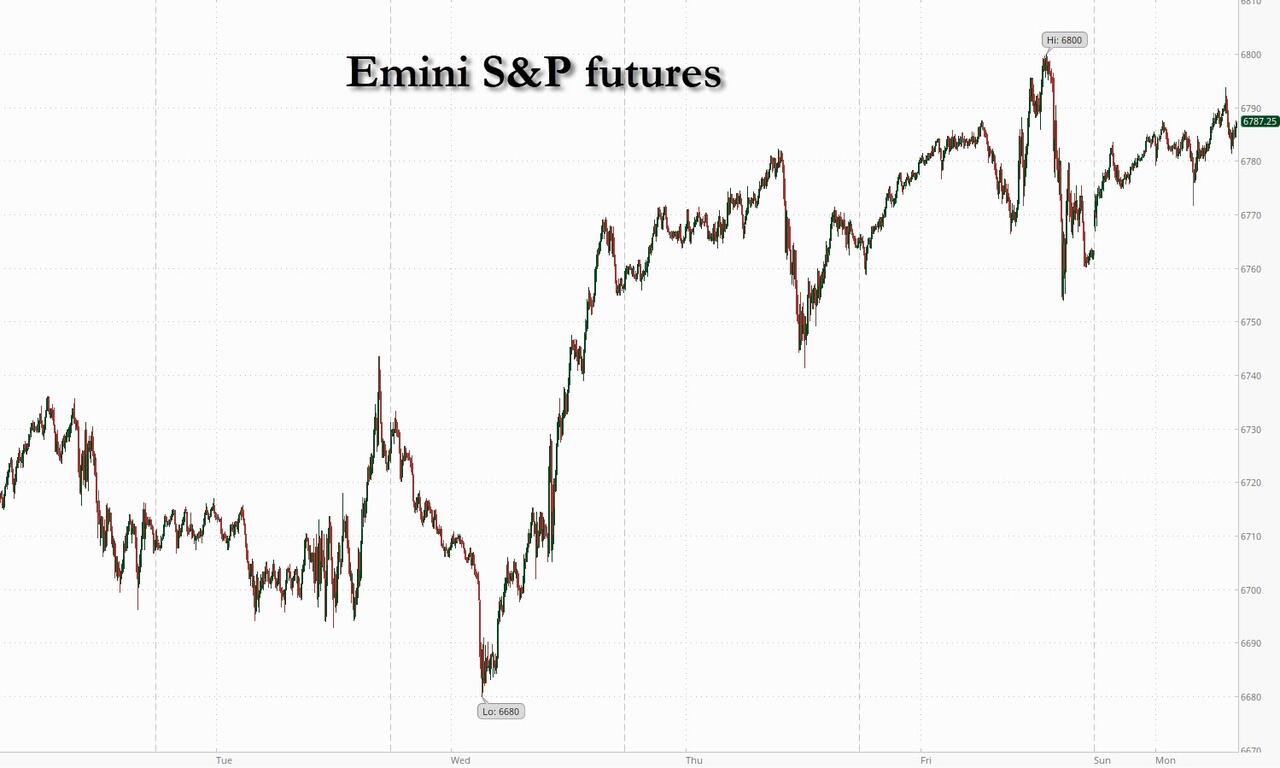
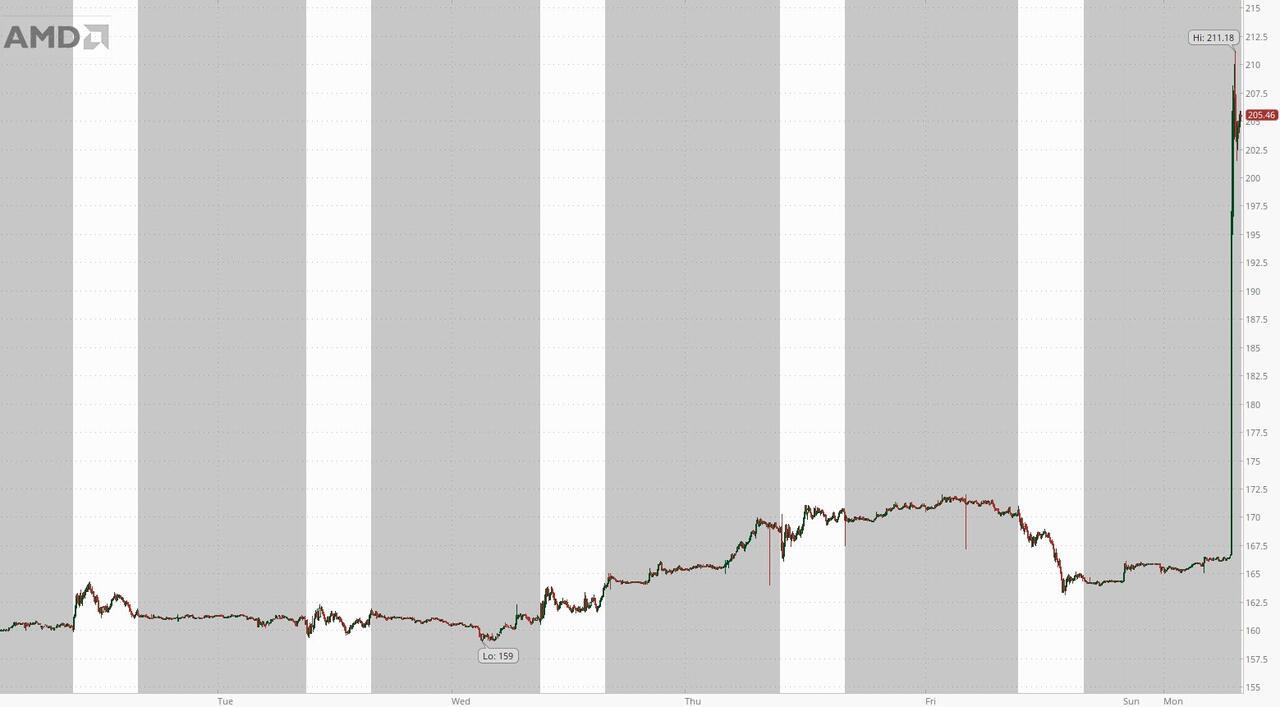
Stock futures are higher again as traders stay positive on the upcoming US earnings season, ignore the government shutdown (though federal unions are suing to prevent the furloughs from being converted into RIFs) and get a boost from the latest political shock in Japan where pro-stimulus Sanae Takaichi was picked as the next PM (shocking markets and sending the Nikkei soaring and the yen crashing) as well as the latest chip deal out of Nvidia and AMD.  As of 8:00am ET, S&P futures are up 0.3%, on pace for a new record high after the index gained more than 1% last week, with Nasdaq futs up 0.8% boosted by a 20% gain in AMD which soared after signing a chip deal with OpenAI that could generate tens of billions of dollars in new revenue. Tesla rose after teasing a product announcement. Comerica surged after Fifth Third Bancorp agreed to buy the financial services firm in a $10.9 billion deal. There was international drama: a surprise win for pro-stimulus lawmaker Sanae Takaichi in a ruling party leadership vote sent the yen and long-term bonds tumbling and equities surging to all-time highs; Japanese banking stocks underperformed. Meanwhile major European markets are all lower with France sliding more than 1% after French PM Sebastien Lecornu resigned, just a day after President Emmanuel Macron named a new cabinet that was broadly criticized. following the surprise resignation of its PM. In FX, the USD was poised for its strongest day since late Aug as USDJPY soared more than +2% and EURUSD tumbled -65bp after the French PM resigned after just 3 weeks. The yield curve is twisting steeper around the 2Y. In commodities, all 3 complexes are higher with WTI, natgas, and precious metals outperforming. The US economic calendar slate is blank for Monday, with all eyes on the govt shutdown in DC. The calendar this week is light due to the shutdown, with focus shifting to a long list of Fed speakers. Policymakers last week gave commentary around service inflation, a big contribution to stubbornly high CPI readings. Read more in our weekly review.

In premarket trading, Mag 7 stocks are mostly higher (Tesla +2%, Nvidia -2.2%, Alphabet +0.3%, Microsoft +0.6%, Apple +0.5%, Amazon +0.6%, Meta +0.3%) 

  • Advanced Micro Devices (AMD) rises 23% after inking a deal with OpenAI to roll out AI infrastructure in a pact the chipmaker said could generate tens of billions of dollars in new revenue.
  • Comerica Inc. (CMA) climbs 12% after Fifth Third Bancorp agreed to buy the bank for about $10.9 billion in stock.
  • Cryptocurrency-exposed stocks are rallying after Bitcoin set another all-time high over the weekend, surpassing $125,000 early on Sunday.
  • Critical Metals (CRML) shares surge 75% after Reuters reports Trump administration officials have discussed taking a stake in the metal mining company.
  • Firefly Aerospace (FLY) rises 8% after the space and defense technology company said it entered into a definitive agreement to acquire SciTec for about $855 million in cash and stock.
  • Intellia Therapeutics (NTLA) climbs 5% after Citizens upgraded the drug developer to market outperform, citing a stronger outlook for the company’s lead asset.
  • Micron Technology (MU) is up 3.4% as Morgan Stanley upgrades to overweight, saying the chipmaker is headed for multiple quarters of double-digit price increases.

In corporate news, Nvidia’s major server production partner, Hon Hai Precision, reported 11% growth in quarterly sales, signaling healthy demand for chips and servers needed to develop AI. Boeing is said to be guiding suppliers that 737 Max output could reach a 42-jet monthly tempo as early as October, and laying the groundwork for more manufacturing ramp-ups next year.

Tech stocks led gains in premarket trading. AMD soared more than 20% after signing a deal with OpenAI to roll out AI infrastructure in a pact the chipmaker said could generate tens of billions of dollars in new revenue. The two signed a definitive agreement for OpenAI to deploy 6 gigawatts of AMD graphics processing units over multiple years, the companies said Monday in a statement. AMD also gave OpenAI a warrant for as many as 160 million shares which will vest as milestones are achieved. Those targets require AMD’s stock price to continue to increase in value and future exercise points include a tranche tied to a share price of $600. AMD shares closed Friday at $164.67. AMD shares jumped as much as 28% to $211.18 in early trading, which would represent their biggest intraday gain in more than nine years if the rally holds when markets open. Nvidia erased earlier gains and was down 1.4%.

US companies are set to enjoy a better-than-expected earnings season as a robust economy and a solid outlook for artificial intelligence have left estimates looking too low, according to Goldman Sachs strategists. The team led by David Kostin also expect the Mag 7 group of technology heavyweights to beat expectations.

A number of private-sector indicators out last week pointed to a sluggish US labor market and moderation in demand, without raising alarm bells on the outlook for economic growth. That’s left traders confident the Fed will deliver another quarter-point cut in October, allowing them to look past the US government shutdown and the threat of firing federal workers.

“The base-case scenario remains one of slow but steady growth, continued disinflation, and a gradual rate-cutting cycle by the Fed toward year-end,” said Linh Tran, a market analyst at XS.com. “Against this backdrop, the S&P 500 is expected to maintain a measured upward trajectory, supported by improving corporate earnings, stable valuations, and persistent institutional inflows.”

There doesn’t seem to be an imminent end to the funding impasse in sight, and escalation is possible if Trump follows through on his threat to fire — rather than furlough — federal workers. Unions made an emergency request on Saturday night asking a US judge to immediately block any mass firings by the administration during the shutdown while they press a legal challenge.

In other assets, political turmoil and fiscal concerns in numerous countries are leading to a so-called “debasement trade,” boosting Bitcoin and gold to all-time highs while major currencies drop. Oil gained after OPEC+ agreed on Sunday to raise production by a modest amount, staving off fears of a super-sized increase.

Elsewhere, European stocks dipped, with France’s CAC 40 benchmark plunging as much as 2.1% after the sudden resignation of Prime Minister Lecornu raised the likelihood of snap legislative elections.  Bonds fell and the euro weakened. French lenders Societe Generale SA, Credit Agricole SA and BNP Paribas SA led declines in the Stoxx Europe 600 index as the nation’s 10-year yield jumped. Prime Minister Sebastien Lecornu resigned just a day after President Emmanuel Macron named a new cabinet, deepening the country’s political crisis.  Here are some of the biggest European movers today:

  • Abivax shares gain as much as 4.7% following updated safety data for its medicine to treat a chronic inflammatory bowel disease
  • Hannover Re shares rise as much as 2.8% after the reinsurer modified its dividend policy
  • Redcare Pharmacy shares jump as much as 15%, the most since March 11, after the company reported prescription sales in Germany
  • Aker BP shares rise as much as 3.5% after the oil and gas company reported quarterly production above expectations
  • Nikon shares rise as much as 5.9%, the most in more than two weeks, after disclosing that EssilorLuxottica SA has increased its shareholding
  • Galderma shares advance as much as 1.6% before paring their gains after being upgraded to buy from hold by Vontobel
  • Groupe SEB shares slide as much as 25%, to the lowest intraday since 2013, after the firm cut its full-year sales forecast
  • Aston Martin shares drop as much as 11%, the most since April, after the company cut its volume guidance for the fiscal year
  • QinetiQ shares fall as much as 7.9% after Kepler Cheuvreux downgraded its view on the British defense company to hold from buy
  • Mondi shares drop as much as 16%, the most in almost 17 years, after the company warned challenging conditions are set to continue

Lecornu’s departure comes after his two predecessors were felled by the same problem: having to pass a budget through a fractured parliament that included unpopular spending cuts and tax increases needed to rein in the largest deficit in the euro area. That’s raising uncertainty about the outlook for the region’s second-largest economy.

“Alongside this political uncertainty/crisis, one can expect an economic one (sentiment is likely to deteriorate) given the uncertainty surrounding the wide budget deficit,” said Stephane Ekolo, a strategist at TFS Derivatives. “Banks and financials overall are likely in this uncertainty to be under pressure.”

Earlier in the session, Asian stocks rose, headed for a sixth-straight daily gain, led by Japan after a surprise leadership victory for pro-stimulus lawmaker Sanae Takaichi. That offset losses in Hong Kong, while a number of markets were shut. The MSCI Asia Pacific Index climbed as much as 0.4%, poised for a new all-time high. Japan’s Nikkei 225 jumped as much as 4.6% to a record, with exporters getting a boost from a weaker yen. Chinese tech stocks slumped in Hong Kong after big recent gains. Volumes were thin amid holidays in mainland China, Taiwan and South Korea. Poised to become Japan’s next prime minister after winning the ruling LDP’s leadership election, Takaichi is seen as positive for stocks due to her pro-growth plans and opposition to Bank of Japan tightening. Shares of defense firms including Mitsubishi Heavy and tech companies such as Advantest gained Monday on speculation they’ll benefit from government spending.  Elsewhere in Asia, investors are awaiting central bank decisions later this week in New Zealand, Thailand and the Philippines. China’s markets will reopen Thursday following the Golden Week holiday.

In FX, the Bloomberg Dollar Spot Index rose as much as 0.6%, on track for its best daily performance since late July; USDJPY jumped as much as 2% to a two-month high of 150.44; the yen fell against all its major peers on speculation Takaichi’s victory in the ruling LDP’s leadership election on the weekend makes further BOJ hikes less likely. The EURUSD tumbled -65bp after the French PM resigned after just 3 weeks.

In rates, Treasuries hold curve-steepening losses that accumulated overnight amid a spike in Japanese long-end yields after Sanae Takaichi’s surprise victory to lead the ruling party. The result stoked concerns that her pro-stimulus stance will lead to increased debt issuance. French bonds also sold off after President Emmanuel Macron’s appointment of a continuity cabinet drew backlash. In the US, equities continue to look past the US government shutdown in its sixth day and the threat of firing federal workers. In the US, yields are 1bp-4.5bp cheaper across tenors with the 10-year around 4.16%; France bonds underperform bunds and Treasuries after Sebastien Lecornu resigned Monday, a day after Macron named a new cabinet. Treasury auctions resume Tuesday with $58 billion 3-year notes, followed by $39 billion 10-year and $22 billion 30-year reopenings Wednesday and Thursday

In commoditis, spot gold is up $55 after notching another record high. Bitcoin climbs 1% after surpassing its previous record on Sunday. WTI crude futures rise 1.7% after OPEC+ agreed to raise production by a modest amount.

The US economic calendar slate, though blank for Monday, remains subject to delays from the ongoing government shutdown. Fed speaker slate includes Kansas City Fed’s Schmid at 5pm, speaking on the economic outlook and monetary policy. The calendar this week is light due to the shutdown, with focus shifting to a long list of Fed speakers. Policymakers last week gave commentary around service inflation, a big contribution to stubbornly high CPI readings.

Market Snapshot

  • S&P 500 mini +0.3%
  • Nasdaq 100 mini +0.7%
  • Russell 2000 mini +0.4%
  • Stoxx Europe 600 -0.3%
  • DAX little changed, CAC 40 -1.7%
  • 10-year Treasury yield +3 basis points at 4.15%
  • VIX +0.2 points at 16.84
  • Bloomberg Dollar Index +0.5% at 1207.25
  • euro -0.7% at $1.1664
  • WTI crude +1.6% at $61.87/barrel

Top Overnight news

  • Sanae Takaichi is poised to become Japan’s first female prime minister after the country’s ruling party elected her as its leader. The yen and long-term bonds fell while the Nikkei 225 jumped to a record. BBG
  • France’s new Prime Minister Sebastien Lecornu and his government resigned on Monday, hours after Lecornu announced his cabinet line-up, in a major deepening of France’s political crisis that drove stocks and the euro sharply lower. RTRS
  • With Sanae Takaichi set to become Japan’s prime minister, advancing expansionist economic policies, chances have risen that the central bank will avoid raising interest rates this month, though the pause may not last if it batters the yen. BBG
  • President Trump said Democrats are causing the shutdown and possible layoffs, while NEC Director Hassett separately commented that mass layoffs of federal workers will begin if President Trump sees that shutdown talks are going nowhere.
  • Israel and Hamas begin mediated talks in Egypt today. A key sign of progress will be whether Hamas frees all the roughly 20 of its live hostages in return for Israel releasing about 2,000 Palestinian prisoners. BBG
  • House Republican leaders told members that they plan to stay away from Washington, D.C. during the government shutdown but are ready to get back to work as soon as Senate Democrats reopen the government.
  • AMD inked a deal with OpenAI to roll out AI infrastructure in a pact the chipmaker said could generate tens of billions of dollars in new revenue. AMD shares +22% premkt. BBG
  • Trump called for big US homebuilders to start building homes and said they’re sitting on 2 mln empty lots, while he is asking Fannie Mae and Freddie Mac to get big homebuilders going and help restore the ‘American Dream’.
  • Trump authorised the deployment of 300 National Guard troops to Illinois despite the objections of state officials, including Governor Pritzker.
  • A Judge temporarily blocked the Trump administration from sending California National Guard troops to Portland, Oregon, and blocked the administration from sending Texas or other states’ National Guard to Oregon. It was also reported that California Governor Newsom will sue the Trump administration for sending California National Guard personnel to Oregon.
  • On the US gov’t shutdown, Punchbowl surmises that as it stands “There’s no deal in sight to end the crisis”. “The notion of Senate Minority Leader Chuck Schumer folding at this point seems very unlikely. Yet if you’re Schumer, you’re watching very closely how a handful of Democratic senators are posturing themselves as the shutdown impacts begin to accumulate”. “One Democratic senator told us that some colleagues who want to fold could justify doing so by pointing to the fact that the GOP stopgap funding bill gives Democrats another leverage point in just six weeks. However, this argument would cut against the party’s messaging…” with reference to the Obamacare expiry.
  • U.S. sanctions make it nearly impossible to pay Iran for its oil. China has figured out how to do it anyway, in an arrangement that has largely been secret. The hidden funding conduit has deepened economic ties between the two U.S. rivals in defiance of Washington’s efforts to isolate Iran. WSJ
  • During President Trump’s second term, China hawks in Washington fear that Trump is going soft. As Trump pursues a trade pact with the US’s biggest economic and strategic rival, advocates of a tougher China policy fear they’re being sidelined inside the administration as the tech industry’s influence grows — alongside the president’s appetite for what he’s called “a big deal.” BBG
  • OpenAI’s Sam Altman approached TSMC, Foxconn, Samsung and SK Hynix to help secure supplies for computing capacity, the WSJ reported. BBG
  • The White House is holding off from layoffs at least until today, economic adviser Kevin Hassett told CNN, to see if Democrats cave when the Senate is due to vote on a stopgap bill. BBG

Trade/Tariffs

  • EU is pushing a new AI strategy to cut its tech reliance on the US and China, according to FT.
  • Japan will expand the scope of anti-dumping duties to include indirect exports via third countries as China’s overproduction continues to hurt domestic industries, according to Nikkei.
  • Mexican President Sheinbaum said she will present advances in made-in-Mexico tech EV, semiconductors, satellite and drone projects in the coming weeks, while she is confident, they will reach favourable agreements with the US and all nations worldwide regarding trade relations.

A more detailed look at global markets courtesy of Newsquawk

APAC stocks began the week mixed amid several holiday closures throughout the week and the ongoing US government shutdown, while Japanese markets rallied on hopes of fiscal loosening and a delay to BoJ policy normalisation following Sanae Takaichi’s LDP leadership victory, which sets her on course to become Japan’s first female PM. ASX 200 failed to sustain early marginal gains and retreated to back beneath the 9,000 level as losses in tech, healthcare, and the consumer sectors offset the strength in the commodity-related industries. Nikkei 225 rallied to fresh record highs above the 48,000 level as the JPY weakened amid expectations of fiscal support and a potential delay to BoJ policy normalisation after the LDP leadership election victory by Abe-protege Takaichi. Hang Seng declined amid the absence of mainland participants for most of the week due to the National Day ‘Golden Week’ holiday and with underperformance in casino stocks following the recent flooding from Typhoon Matmo.

Top Asian News

  • Chinese Foreign Minister Wang Yi will visit Italy and hold the 12th joint meeting of the China-Italy government committee, and will visit Switzerland for a 4th round of the China-Switzerland foreign ministers-level strategic dialogue.
  • NVIDIA’s (NVDA) major server production partner Hon Hai (2317 TT) reported quarterly sales rose 11% to TWD 2.06tln which reportedly signals healthy demand for AI infrastructure, according to Bloomberg.
  • Indonesia revoked its TikTok licence suspension after the social media platform submitted data that the Indonesian government requested, according to Bloomberg.
  • Japan and the US are arranging a US President Trump-PM summit for October 28, via Kyodo

European bourses (-0.2%) opened mostly and modestly in the red, but then took a leg lower following news that French PM Lecornu resigned – this downside has since pared a touch. The CAC 40 currently trades towards session lows and down by around 1.9%. At present, it is unclear why the PM decided to resign, but it comes after recent cabinet appointments received criticism from opposing parties. The outgoing PM is currently on the wires, and we remain attentive for any reasoning for his decision – thereafter, the spotlight shifts to Macron to see if he a) decides to appoint a new PM, b) calls legislative elections, c) resigns – though in the past he has made it clear that he intends to see out his term. The National Rally said, “Macron must now choose: dissolution or resignation”, via France 24. European sectors hold a negative bias, with only a handful of industries managing to hold in the green. Energy tops the pile, with names boosted by strength in underlying oil prices. Telecoms follows in second spot, with Technology completing the top three. For the latter, ASML (+1.4%) received a PT upgrade at HSBC, now sees EUR 1,018 (prev. 809, currently 893). To the downside, French banks have slipped on the heightening political instability.

Top European News

  • French PM Lecornu has resigned, presented his resignation to President Macron.
  • French far-right National Rally (RN) Bardella says they are very close to position of voting out government.
  • Roland Lescure is set to be named the new French Finance Minister and Bruno Le Maire is set to be appointed as the new French Defence Minister, according to BFM Television.
  • French National Rally leader Bardella said the new PM Lecornu cabinet fails to break with the past, while a French socialist party official said the party will vote against the new government if there is no change in policies.
  • French Socialist Party (PS) leader Faure says there’s a feeling of consternation following the new governments appointment; cannot see how the PS would not be in position to vote against the government.
  • Czech billionaire Andrej Babis’s populist ANO party won the parliamentary election, although it failed to achieve an overall majority with just under 35% of the vote to win 80 seats in the 200-seat lower house, while he is seeking an agreement with two smaller groups, which are the populist Motorists and the anti-migration Freedom and Direct Democracy (SPD).
  • The UK economy could be on shakier ground than initially assumed amid a “chunky” revision to ONS data has increased doubts about how much households have been saving, according to The Times.
  • ECB’s de Guindos says inflation risks are balanced; consumption has growth less than expected.
  • ECB’s Lane reiterates a “data-dependent and meeting-by-meeting approach to determining the appropriate monetary policy stance, with no-precommitment to a particular rate path”. “In particular, our interest rate decisions will be based on our assessment of the inflation outlook and the risks surrounding it, in light of the incoming economic and financial data, as well as the dynamics of underlying inflation and the strength of monetary policy transmission.”
  • ECB’s Pereira says that policy is entering a period of greater normalcy

LDP Election

  • Japan’s ruling LDP elected Sanae Takaichi as its leader, who is set to become Japan’s first female PM.
  • Japan’s newly elected LDP President Takaichi said they need speedy support for weak small- and medium-sized companies to help with wage growth, while she added that support is also needed for the farm sector, and urgent help is needed for the medical and nursing care sectors. Takaichi said one policy option is to increase subsidies to local governments and that she wants to submit a bill to abolish the extra gasoline tax and lower diesel fuel costs during the next parliament. Takaichi also said she won’t rule out lowering the consumption tax as an option and that they will honour the bilateral agreement made with the US. Furthermore, she noted that the government and BoJ need to be aligned on economic policy, while she added they will closely communicate with the BoJ until demand-led economic growth is achieved and wants to carefully consider whether the current government-BoJ accord is most appropriate.
  • Credit Agricole Chief Japan Economist Aida, who is widely considered as a close advisor to LDP’s Takaichi, said in a note on Saturday that Takaichi will likely tolerate another 25bps BoJ rate hike by January next year if the economy is in firm shape. Such a move would be on condition that the BoJ maintains relatively loose monetary policy with no further rate hikes likely until 2027.

FX

  • DXY has started the week very much on the front foot after last week’s losses, which were driven by a combination of uncertainty surrounding the government shutdown and softening labour market metrics. There hasn’t been a great deal of change in the US macro narrative with the US government still shut and the Trump administration stating that mass layoffs of federal workers will begin if President Trump sees that talks are going nowhere. Instead, today’s upside in the USD is driven more by the weakness in the JPY and EUR. DXY has ventured as high as 98.39 with the next upside target coming via the 26th September peak at 98.53.
  • EUR/USD has slipped onto a 1.16 handle and below its 50DMA at 1.1680 as French political risk returns with a vengeance. Over the weekend, appointments to French PM Lecornu’s cabinet were met with stark objections from opposition parties with National Rally leader Bardella stating that the cabinet failed to break with the past. Earlier today, the Socialist Party leaders stated he couldn’t see how his party would not be in a position to vote against the government, given that the appointments failed to show a clear change in direction for the government. The political uncertainty saw the GE/FR spread hit its widest level since January with the move subsequently exacerbated (to 87bps) by the recent decision by Lecornu to resign. The next downside target for EUR/USD comes via the 25th September low at 1.1645.
  • JPY is the standout laggard across the majors following the LDP leadership election win by Abe-protege Sanae Takaichi. Her victory has been viewed as a combination of looser fiscal policy and delayed BoJ rate hikes, which have triggered a notable steepening of the Japanese curve. Accordingly, markets have scaled back BoJ rate hike bets with money markets pricing around a 75% likelihood that the central bank will remain on hold in the October 30th meeting and just a 48% chance of a 25bps hike by December vs. 68% probability on Friday. Interestingly, Credit Agricole Chief Japan Economist Aida, who is widely considered as a close advisor to LDP’s Takaichi, said in a note on Saturday that Takaichi will likely “tolerate” another 25bps BoJ rate hike by January next year if the economy is in firm shape. 150.43 is the high watermark for USD/JPY thus far with the next upside target coming via the 1st August high at 150.91.
  • GBP is softer vs. the USD but firmer vs. the EUR. It remains the case that aside from ongoing angst in the run-up to the November 26th budget, incremental macro drivers for the UK are lacking, and this could remain the case with the domestic data slate light this week. Over the weekend, The Times reported that the UK economy could be on shakier ground than initially assumed amid a “chunky” revision to ONS data, which has increased doubts about how much households have been saving. Cable has slipped below Friday’s 1.3429 trough but is holding above the 2nd October low at 1.3400.
  • Both antipodeans are softer vs. the USD but to a lesser extent than most peers. For NZD, focus this week is on Wednesday’s RBNZ rate decision, which is set to see a reduction in the OCR.

Fixed Income

  • 10yr JGB futures surged at the opening of trade, lifting from 135.88 to a 136.53 session high. In reaction to the appointment of Takaichi as LDP leader, with the market reacting to her preference towards looser fiscal and monetary policy. Thereafter, the 10yr JGB pulled back and reverted to below Friday’s close, hitting a 135.72 low with downside of just over 15 ticks at most on the session. A move that occurred as the Japanese curve, led by the ultra-long end, began to steepen as markets took the view that Takaichi’s appointment will delay BoJ tightening and policy normalisation, but not indefinitely.
  • OATs were under pressure from the start of trade given the weekend updates by President Macron and PM Lecornu. Specifically, they announced a cabinet that was regarded as being a continuation of recent attempts, with Lescure set to be the new Finance Minister and Le Maire as Defence Minister. Since, PM Lecornu has presented his resignation to President Macron. A resignation that sent OATs to a 120.61 low with downside of just under a full point at worst. As such, the OAT-Bund 10yr yield spread widened to a 88.2bps peak for the session, notching a fresh YTD best and approaching the 90bps 2024 high.
  • USTs are under modest pressure this morning but within recent ranges. Down to a 112-13+ base, just above last week’s 112-08+ trough. For the most part, the debt market is focussed on above updates initially from Japan but since from France. Ahead, the US docket is a light one on account of the ongoing shutdown, though the Conference Board will still be releasing its Employment Trends Index; a figure that declined in August to 106.41, from a downwardly revised 107.13 in July, to its lowest level since early 2021.
  • Bunds began the morning under modest pressure, reflecting the price action seen across the fixed income space in light of the pronounced turnaround seen in JGBs by then. Thereafter, the complex derived a bit of a haven bid on the resignation of French PM Lecornu, lifting to a 128.76 peak with gains of nine ticks at best. However, this proved fleeting, and Bunds have since reverted back to pre-Lecornu levels of c. 128.46.
  • Gilts are lagging Bunds and USTs but faring better than OATs. Gapped lower by 22 ticks and then slipped 23 more to a 90.51 low just before the French PM resigned, then seeing some, relative, allure over the next 20/30 minutes before falling back towards session lows. Pressure for the UK comes as we count down to the Autumn Budget. Updates over the weekend include a report in The Times that the domestic economy could be on shakier ground than initially assumed, as a “chunky” revision to ONS data has increased doubts about how much households have been saving. Next up, BoE’s Bailey.

Commodities

  • Crude benchmarks have pared back some of last week’s losses following OPEC+ meeting where the group agreed to raise production by 137k, which is seen as a modest hike compared to the 500k bpd hike reported last week. Benchmarks gapped higher and extended to a peak of USD 62.04/bbl and USD 65.71/bbl in WTI and Brent respectively before oscillating in a c. USD 0.60/bbl range.
  • Spot gold continues to extend new ATHs, reaching USD 3950/oz, as growing fiscal concerns in major economies and political concerns in the US add to the momentum of the “debasement trade”. Thus far, XAU has reached a peak of USD 3950/oz before pulling back to USD 3940/oz. Markets await updates on the US government shutdown.
  • Base metals briefly extended on last week’s gains before reversing lower amid lack of newsflow, with China still away on holiday. 3M LME Copper extended to USD 10.8k/t early in the APAC session before dipping to a low of USD 10.34k/t. Base metals are being weighed on as Indonesia continues to crack down on illegal mining, with the country handing over six seized tin smelters to state miner PT Timah.
  • Eight OPEC+ members agreed to raise oil production by 137k bpd in November, citing a steady economic outlook and current healthy market fundamentals, while they will meet next on November 2nd.
  • Qatar set the November marine crude Official Selling Price at Oman/Dubai plus USD 2.00/bbl and land crude OSP at Oman/Dubai plus USD 2.05/bbl.
  • Shell (SHEL LN) said US President Trump’s attacks on wind projects harm investment in the US and the decision to halt fully permitted offshore wind energy projects is very damaging to investment, according to FT.
  • Saudi Arabia sets new November Arab light Crude oil OSP to NW Europe at plus USD 1.35/bbl to ice Brent settlement via Aramco. They’ve also set the November crude oil OSP to the USA at plus USD 3.70/bbl.
  • Goldman Sachs open a trade recommendation to short Dec 2026 LME Aluminium contract Currently trading at USD 2650/t, 17% above Dec 2026 price forecast.
  • Goldman Sachs lifts 2026 copper forecast to USD 10.5/t from USD 10k/t. Believes that copper prices are likely to remain above USD 10k following the Grasberg outage. Expects global copper market to move into deficit by the end of the decade and this should lift copper prices to beyond USD 11k/t from 2028.
  • UBS says oil demand has likely peaked for 2025, should gradually fall in the months ahead. Expects Brent to remain in a USD 60-70/bbl band. While the OPEC+ production increase was 137k BPD for November, estimate the actual volume of additions will be only 60-70k BPD.
  • Chevron (CVX) says that the Co. will be making operational adjustments to support the continued safe and reliable operation of the facility.

Geopolitics: Middle East

  • Israel and Hamas are set to begin mediated negotiations on Monday in Egypt after US President Trump hailed Hamas’s offer to release all hostages, according to Bloomberg.
  • Israeli government spokeswoman confirmed negotiations for the release of hostages are expected to begin on Monday and stated there is no ceasefire in place in Gaza, but there has been a temporary halt in certain bombings, while she added the military can continue to act in Gaza for defensive purposes.
  • Israeli military spokesperson issued a warning for residents of Gaza City on Saturday morning and called on them to avoid returning north, while the spokesperson added that Gaza City remains a dangerous combat zone. It was separately reported by an Al Arabiya correspondent that violent explosions were heard in the Gaza Strip on Sunday.
  • US President Trump posted that after negotiations, Israel has agreed to an initial withdrawal line which has been shown to, and shared with Hamas, while he added that when Hamas confirms, a ceasefire will be immediately effective and a hostages and prisoner exchange will begin.
  • US President Trump posted that there have been very positive discussions with Hamas and countries from all over the World (Arab, Muslim, and everyone else) this weekend, to release the hostages and end the war in Gaza but, more importantly, finally have long sought peace in the Middle East. Trump added that these talks have been very successful and are proceeding rapidly, while the technical teams will again meet Monday, in Egypt, to work through and clarify the final details, while he was told that the first phase should be completed this week, and he is asking everyone to move fast.
  • US President told CNN that Hamas will face ‘complete obliteration’ if it refuses to cede power in Gaza and noted that Israeli PM Netanyahu is on board with ending the bombing in Gaza.
  • US Secretary of State Rubio said that meetings are taking place on the Israel-Hamas deal and that Hamas agreed in principle to what happens after the war, while he responded ‘not yet’ and that some work remains to be done when asked if this is the end of the war in Gaza. Rubio suggested the second phase of discussing disarmament and demobilisation will be difficult and stated they will know very quickly if Hamas is serious. Furthermore, he said they are the closest they have been in a very long time to having no hostages held by Hamas, but added that no one can say it is a 100% guarantee.

Geopolitics: Russia-Ukraine

  • US President Trump said Russian President Putin’s offer last month to voluntarily maintain limits on deployed nuclear weapons sounds like a good idea.
  • Russian President Putin warned that the possible supply of Tomahawk missiles to Ukraine will ruin the Russia-US relationship.
  • Russia conducted a massive airstrike against targets across Ukraine using missiles and drones which killed at least five people and injured several others, according to Bloomberg. Furthermore, Russia’s Defence Ministry said Russian forces captured Kuzminovka in Ukraine’s Donetsk region and carried out a massive strike on Ukrainian military-industrial enterprises, as well as gas and energy infrastructure facilities.
  • Ukrainian President Zelensky said on Sunday morning that Russia launched over 50 missiles and almost 500 drones in an overnight attack on Ukraine.
  • Ukraine’s Energy Minister said the Russian overnight air attack damaged energy infrastructure in Ukraine’s Zaporizhzhia, Sumy and Chernihiv regions. It was also reported that a Russian strike hit a passenger train in Ukraine’s Sumy region, causing casualties.
  • Russia’s Kremlin says US President Trump’s language on nuclear limits provide some ground for optimism.
  • Russia’s Kremlin says that there is no reason to blame Russia for the drone sightings in Europe.

Geopolitics: Other

  • US President Trump’s administration directed US diplomats to lobby against a UN resolution calling for Washington to lift its embargo on Cuba, while the US will tell countries that Cuba is actively supporting Russia’s invasion of Ukraine, according to a diplomatic cable cited by Reuters.
  • US President Trump said the US hit another boat on Saturday off Venezuela and that the US will have to start looking at drug trafficking by land. In relevant news, US Defense Secretary Hegseth said he has every authorisation needed for Caribbean strikes against vessels allegedly carrying illegal drugs off the coast of Venezuela.
  • North Korean leader Kim said Pyongyang allocated strategic assets to respond to the buildup of US military forces in Korea, while he also said they will develop additional military measures, according to KCNA.

d

Tyler Durden
Mon, 10/06/2025 – 08:33

via ZeroHedge News https://ift.tt/E8QyOBM Tyler Durden

Sending in the Guard


Federal agents with civilians | Peter Tsai/TNS/Newscom

Trump administration ordered the National Guard into Chicago: On Saturday morning, on the Southwest Side of Chicago in Brighton Park, two people driving cars reportedly attempted either to assault federal Border Patrol agents or to otherwise impede their work. The agents shot at one of the motorists—30-year-old Marimar Martinez, a U.S. citizen who was armed at the time—who drove herself to the hospital, was treated, and recovered.

A criminal complaint, as The New York Times summarizes it, asserts that “three Border Patrol agents who were conducting an operation in Oak Lawn, Ill., were followed by Ms. Martinez and [21-year-old Anthony Ian Santos] Ruiz. They pursued the agents’ cars, running red lights and stop signs as they did so, and eventually crossed the city line into Chicago.” The two motorists then allegedly “drove into one of the federal agents’ cars, causing the agent to lose control of the vehicle….Once the agents’ car had stopped and the agents had stepped out of it, Ms. Martinez drove her car directly at one of the agents, the complaint said, prompting him to fire five shots at her.” The Department of Homeland Security claims that Martinez was “armed with a semiautomatic weapon,z]” which has not been corroborated elsewhere.

President Donald Trump pointed to such clashes as his justification for deploying 300 National Guardsmen to Chicago over the weekend. “Amidst ongoing violent riots and lawlessness, that local leaders like [Illinois Gov. JB] Pritzker have refused to step in to quell, President Trump has authorized 300 national guardsmen to protect federal officers and assets,” said White House spokeswoman Abigail Jackson.

“It is absolutely outrageous and un-American to demand a Governor send military troops within our own borders and against our will,” Pritzker replied in a statement, adding that Defense Department officials told him to “call up your troops, or we will.”

This has “never been about safety,” said Pritzker. “This is about control.” Or maybe it’s about optics, and conveying a sense of enough-is-enough when it comes to violence by protesters.

The presence of federal agents has not improved matters. Teports emerged from Chicago over the course of the weekend indicating that federal agents—believed to be from Immigration and Customs Enforcement (ICE) and/or the Border Patrol—were shooting chemical irritants, stun grenades, and teargas at protesters (and, accidentally, at cops).

The arrival of more feds might not improve matters much. “National Guard members in Illinois would work under Title 10 of federal law,” reports The Washington Post, “prohibiting them from carrying out law enforcement duties. The mission would probably focus more narrowly on protecting federal law enforcement personnel and facilities, the officials said. It was not clear Saturday whether Guard members would carry firearms.”

“Over the past month, the Trump administration has surged federal agents into Chicago to make hundreds of arrests for immigration-related offenses,” adds the Post. “The operations have strained relations with the community and prompted continual protests outside an ICE detention center in Broadview, a Chicago suburb.”

Meanwhile, federal judges are blocking Trump’s attempts to send the National Guard into Portland, where similar skirmishes are playing out.


Scenes from New York: “Once last-resort care for midnight fevers, weekend sports injuries and car-wreck victims, the emergency room has become the doctor’s office for millions of people,” reports The New York Times in a piece covering what might have happened to 20-year-old Sam Terblanche, a Columbia student who visited the Mount Sinai Morningside emergency room twice before being discharged and dying in his dorm room.Patients come in with stomach pain, chest pain and cough; head injuries, overdoses and nonspecific complaints; depression, hypertension and hunger.”

“The first job of any emergency physician…is to identify and treat patients in need of resuscitation,” an E.R. doctor named Reuben Strayer explained to the Times. “Far more difficult to determine,” the paper adds, “is which patients are in imminent danger. This requires a rigorous, focused and nuanced assessment of every patient who is neither obviously dying nor obviously well. ‘You can take vital signs and if their vitals are reassuring and they look OK, the vast majority of them are OK. But not all of them,’ Strayer told me. The patient who looks well but is in danger is both a physician’s urgent concern and a needle in a haystack—and ‘the more “well” patients who use the E.D. as their primary care, the harder it becomes to find these needles,’ he said.” There is something profoundly broken with our health care system if people are routinely using the emergency room as a means of getting care for non-urgent conditions, which makes it harder for people in true emergencies to get the care they need.

More concisely:


QUICK HITS

  • “A federal judge has concluded that the Department of Justice’s prosecution of Kilmar Abrego Garcia on human smuggling charges may be an illegal retaliation after he successfully sued the Trump administration over his deportation to El Salvador,” reports the Associated Press. U.S. District Court Judge Waverly Crenshaw “said Abrego Garcia had shown that there is ‘some evidence that the prosecution against him may be vindictive.’ That evidence included statements by various Trump administration officials and the timeline of the charges being filed.”
  • “Sebastien Lecornu unexpectedly resigned as France’s prime minister on Monday, blaming the intransigence of the groups in the country’s fractured parliament and deepening a national political crisis,” reports Bloomberg. “His resignation came less than 24 hours after President Emmanuel Macron named a new cabinet stacked with centrist loyalists, ignoring threats from opposition parties not to appoint a continuity government. That plan immediately backfired.” At issue: France has a huge deficit and needs to either raise taxes or cut spending.
  • Temporary Protected Status recipients continue to be caught in legal limbo:

  • This year’s United Nations Climate Change Conference, also known as COP30, is being held in Belem, Brazil—on the edge of the Amazon—where high hotel prices are forcing countries’ governments to consider housing their delegations in converted love motels and in cruise ships to make ends meet (or so they say). It’s classic environmentalistbrain: a total inability to grasp second-order impacts. Of course Belem doesn’t have great capacity to host a conference of this size! The love-motel coopting was a predictable outcome.
  • Bluesky users try to get someone who doesn’t use Bluesky banned from the platform by…threatening a boycott for a product they don’t pay for. You truly can’t make this up. I will shed no tears if this platform must go the way of the dodo:

The post Sending in the Guard appeared first on Reason.com.

from Latest – Reason.com https://ift.tt/YawyeSN
via IFTTT

Did DA’s Office Retaliate Against Prosecutor, When She Was Serving as Juror, for Voting to Acquit Defendant?

That’s the issue in Hagan v. Funk, decided last Monday by Chief Judge William L. Campbell, Jr. (M.D. Tenn.); here are the allegations from the Complaint:

Plaintiff was employed as a prosecutor for the Office of the District Attorney General of the 20th Judicial District of Tennessee (“DA’s Office”) when she received a jury summons. The DA’s Office has an employee manual with a policy governing jury duty. The policy states:

Jury service is a responsibility of good citizenship, and all employees are expected to honor subpoenas for jury duty in any court. It is the office policy that employees serve rather than seek to be excused or exempted. Jury service is both a privilege and an obligation. Our court system is founded upon the right to a jury trial, and all citizens should participate in order to insure [sic] that this right is meaningful. Because jury service requires sacrifice, many citizens try to avoid this obligation. Our office should set a good example by our willingness to serve, and we should be positive about our justice system and encourage all citizens to take part.

Every employee is to notify their respective supervisor immediately upon the receipt of a jury notice so that arrangements can be made to cover the employee’s office assignments. Attorneys should also bring the matter to the attention of the judge of their court where appropriate. On each day at the conclusion of jury service, the employee shall return to work at the office, unless it is after office hours. All jury fees belong to the employee and will not affect an employee’s pay.

Upon receiving the jury summons, Plaintiff notified her supervisor as well as Defendant. Plaintiff appeared for jury service on July 15, 2024, for the case State of Tennessee v. Karlos Reynolds, 2023-B-1023. Plaintiff was juror number nine. Based on this number, she would presumptively serve on the jury unless either the Court removed her for cause or one of the parties used a peremptory challenge to remove her.

During voir dire, the trial court judge identified Plaintiff as “a lawyer in the court system” and Plaintiff stated that she knew “everyone here.” During specific questioning by the prosecutor, Plaintiff stated, “I am employed as an Assistant District Attorney. So you all are my colleagues.” Following voir dire, the prosecutor stated that Plaintiff should be struck for cause because she “works for Glenn Funk.” Judge Chappell ruled that Plaintiff should remain on the jury because “she said she could be fair, and I don’t think simply her employment with the Prosecutor’s Office makes her unfit.”

Each side used only two of its nine allotted peremptory strikes; none of the strikes was used to remove Plaintiff. Plaintiff then served as a member of the jury where she was selected as foreperson. The jury deliberated for less than one hour before returning a not guilty verdict on all counts.

Later that week, Plaintiff met with Defendant and two Deputy District Attorneys. Defendant berated Plaintiff for her jury service, expressed outrage that she was foreperson, and accused her of being unethical. Defendant specifically took issue with the jury’s returning a verdict of “not guilty,” stating that the “not guilty” verdict could strain her relationship with law enforcement officers at the Metro Nashville Police Department. Defendant told Plaintiff that she could not work as an attorney and needed to be “on leave.” On Monday, July 22, 2024, Plaintiff was formally placed on leave and told not to come to the office….

Plaintiff claims Defendant demoted her, reassigned her to non-attorney work, removed her from courtroom work, placed her on leave, and berated her in front of her superiors and colleagues in retaliation for her for serving on a jury and for voting “not guilty” during her jury service….

The court allowed plaintiff’s First Amendment claim to go forward, though note that the court just held that plaintiff had adequately pled the claim—the actual facts remain to be determined:

“Generally, the First Amendment protects a public employee’s speech if: (1) the speech was on a matter of public concern, Connick v. Myers (1983); (2) the speech was not made pursuant to the employee’s official duties, Garcetti v. Ceballos (2006); and, assuming the employee can satisfy the first two elements, (3) the employee’s interest in speaking on a matter of public concern outweighs the employer’s interest ‘in promoting the efficiency of the public services it performs through its employees,’ Pickering v. Bd. of Educ. (1968).”

Plaintiff claims Defendant retaliated against her based on her speech as a prospective juror during voir dire and as a juror in rendering a verdict of guilty in a criminal case for which her employer was the prosecutor. Defendant concedes that “an ADA is entitled to First Amendment protection in answering questions as a public employee empaneled in a jury pool and as a juror rendering a verdict.” He argues, however, that Plaintiff’s speech during her jury service was not protected speech because her interest in speaking does not outweigh Defendant’s interest in managing its offices to ensure its “employees’ official communications are accurate, demonstrate sound judgment, and promote the employer’s mission.”

Defendant’s argument encompasses the second and third prongs of the test for protected speech. First, Defendant asserts that Plaintiff’s speech in court as a private citizen summoned for jury duty was an “official communication” by an employee of the District Attorney’s office. Even if there were a reasoned basis for this assertion (and the Court can think of none), a determination that Plaintiff’s speech in connection with her jury service was pursuant to her official duties as an employee of the District Attorney’s office would require the Court to construe the allegations in the complaint in a light most favorable to the Defendant, which is plainly not the standard on a motion to dismiss. Moreover, in making this assertion, Defendant fails to address the fact specific inquiry for determining whether speech is spoken as a private citizen or as an employee.

Defendant’s next argument is that Plaintiff’s interests in speaking on the matter of her juror qualifications and rendering a verdict do not outweigh the interests of the District Attorney’s office in promoting the legal and ethical conduct of its employees. This argument is also inappropriate on a motion to dismiss. Not only would it require the Court to construe the allegations in the Complaint in a light favorable to the Defendant, consideration of Defendant’s asserted interests in limiting employee speech on these matters necessitates factual determinations and considerations of matters outside the pleadings not appropriate at this stage in the litigation.

Perhaps recognizing that a motion to dismiss is not the proper vehicle for the Court to weigh the relative speech interests of the employer and employee, Defendant asks the Court to find as a matter of law that “an ADA is not protected by the First Amendment from her employer’s scrutiny for failing to inform the court of the inherent conflict of interest created by her jury service when called to jury service in a criminal proceeding in the county in which she has sworn an oath of office to be an ADA.” In support, Defendant points to the following authority: (1) Tennessee Rules of Professional Conduct concerning conflicts of interest with regard to representation of clients and disruption of a tribunal (T.R.P.C. 1.7(a)(2) and 3.5); (2) a decision from the Tennessee Court of Criminal Appeals which has since been overruled regarding disqualification of government attorneys in criminal matters (State v. Grooms, 2020 WL 9171956, at (Tenn. Ct. App. Nov. 25, 2020), overruled by State v. Eady, 685 S.W.3d 689 (Tenn. 2024)); and (3) Justice [O’Connor’s] concurring opinion in Smith v. Phillips, 455 U.S. 209, 222 (1982), suggesting that if it is revealed post-trial that a juror is “an actual employee of the prosecuting agency” the Sixth Amendment right to an impartial jury would not allow a verdict to stand.

The Court declines to make such sweeping pronouncement concerning the relative speech interests of all district attorney employers vis-à-vis all assistant district attorneys in their employ. Not only is such a ruling not directly supported by the cited authority, as stated above, balancing these interests in the specific context of this case is not appropriate at the motion to dismiss stage, and making these fact specific determinations as to district attorneys and their employees writ large is unlikely ever to be appropriate.

{Throughout the motion to dismiss, Defendant either ignores or mischaracterizes the allegations in the complaint as stating that Plaintiff failed to notify the state trial court of her “conflict of interest” before serving on the jury when the complaint and trial transcript of the criminal court proceeding which is attached to the complaint clearly state that Plaintiff informed the trial court of her employment and that the trial judge considered whether it would be appropriate for Plaintiff to serve as a juror. This approach by Defendant is troubling, to say the least.} …

And the court also allowed plaintiff’s claim to go forward for violation of Tenn. Code Ann. § 22-4-106(d), which provides, in relevant part:

(1) No employer shall discharge or in any manner discriminate against an employee for serving on jury duty if the employee, prior to taking time off, gives the required notice pursuant to subsection (a).

(2)(A) Any employee who is discharged, demoted or suspended because the employee has taken time off to serve on jury duty is entitled to reinstatement and reimbursement for lost wages and work benefits caused by such acts of the employer….

Plaintiff is represented by Christopher W. Smith, David Randolph Smith, and Dominick Randolph Smith of David Randolph Smith & Associates.

The post Did DA's Office Retaliate Against Prosecutor, When She Was Serving as Juror, for Voting to Acquit Defendant? appeared first on Reason.com.

from Latest – Reason.com https://ift.tt/bA2CiBI
via IFTTT

The First Amendment and Restrictions on Gathering Information by Drone

From Sixth Circuit Judge John Bush’s very interesting opinion Friday respecting denial of rehearing en banc in Yoder v. Bowen:

This case involves an as-applied challenge to a Michigan law (the drone statute) that makes it illegal to “us[e] an unmanned vehicle or unmanned device that uses aerodynamic forces to achieve flight”—i.e., a drone—while “tak[ing] game or fish.” Drone Deer Recovery, a plaintiff here, offers a service where it tracks downed animals using drones and then posts the location of the animals’ carcasses online so hunters can more easily find their kill. The plaintiffs allege that the drone statute violates their First Amendment rights because it (1) is a content-based speech restriction, (2) violates the speech-inputs doctrine, and (3) unconstitutionally restricts their ability to engage in inherently expressive conduct. The panel rejected all three arguments and determined that the statute survived intermediate scrutiny.

{We have referred to a type of protected speech as “speech inputs,” but it goes by different names in different jurisdictions. The Tenth Circuit, for example, has referred to it as “the protected creation of speech,” and the Supreme Court has referred to it as “[s]peech in aid of” protected speech.}

I write separately because I have concerns about the panel’s reasoning related to the speech-inputs doctrine. The Supreme Court has indicated that “heightened scrutiny”— something more than O’Brien intermediate scrutiny—applies when the government seeks to ban the means to create speech. See Sorrell v. IMS Health Inc. (2011) (noting that a Vermont statute banning the sale of certain pharmaceutical data effectively banned certain entities from speaking with physicians and pharmaceutical companies and was therefore subject to “heightened scrutiny”).

For example, if a State enacted a statute banning the ownership of pens and paper, the statute would likely violate the First Amendment under the speech-inputs doctrine because it would restrict the ability to express thoughts through handwriting. Here, drone-obtained information may be analogous to pens and paper because it provides what the plaintiffs allege is a critical input needed for Drone Deer Recovery’s speech to hunters. But the panel declined to apply Sorrell‘s more rigorous level of review.

The panel’s error may be understandable given the confused state of the speech-inputs doctrine following Sorrell. After all, that case is far from a model of clarity. The words “heightened scrutiny” have sometimes been considered synonymous with “intermediate scrutiny.” But Sorrell also tells us that the statute at issue in that case “enact[ed] content- and speaker-based restrictions on the sale, disclosure, and use of prescriber-identifying information.” Content-based speech restrictions are normally subject to strict scrutiny. Meanwhile, Sorrell did not find the statute’s content-based speech restriction to be dispositive and proceeds to apply Central Hudson‘s commercial speech test, which is an entirely different inquiry from strict or intermediate scrutiny….

Sorrell is also unclear in the degree to which a speech input needs to be restricted before the doctrine comes into play. On the one hand, it seems like banning all pens and paper would easily violate the doctrine because that would outlaw the handwritten word. By contrast, a restriction on the use of a specific chemical in printer ink might not because printer ink still remains readily available. But Sorrell does not give us any direction on how to distinguish between the two types of regulation.

And, as a third point of confusion, the Supreme Court has never clarified how exclusively dedicated to creating speech the input must be before it receives some level of scrutiny under the First Amendment. When technology may be employed for purposes other than the generation of speech, those other uses perhaps may attenuate the level of protection for speech associated with use of the technology. Is a drone a speech input? Is a microchip inside the drone that is vital to its functioning?

Sorrell leaves more questions than answers, and the panel only added to the confusion. The panel determined that drones are not speech inputs, and then applied intermediate scrutiny anyway. But if the drones are not speech inputs, then it’s unclear why any level of scrutiny would apply

The panel seeks to distinguish this case from speech-inputs precedents because Drone Deer Recovery’s speech is not political. But the alleged wrong from prohibiting drone usage does not depend on whether the speech is political. Rather, the constitutional violation from banning a speech input arises when the restriction effectively abolishes the speech altogether. It is one thing to say that business-related speech, once expressed, may have less First Amendment protection than political speech; it is quite another thing to deprive the speaker of the means for expressing its speech in the first place….

In Sorrell, the Supreme Court held that a Vermont statute “restrict[ing] the sale, disclosure, and use of pharmacy records that reveal the prescribing practices of individual doctors” was unconstitutional because it “imposed a restriction on access to information” that could be used “in aid of pharmaceutical marketing”—i.e., it limited access to a critical speech input for pharmaceutical marketing. That case involved a statute completely divorced from politics, yet the Court still applied the speech-inputs doctrine…. So the panel was mistaken to the extent that it sought to distinguish Sorrell based on the non-political nature of Drone Deer Recovery’s speech.

{As an aside, I struggle to see how the panel’s distinction between political speech and non-political speech would matter here, given that the drone statute seems to regulate political speech as well. The drone statute would appear to apply equally to political speech. For example, the law would also foil the speech of animal rights activists who want to track down felled game and use it to protest animal cruelty—a quintessential form of political speech.}

The panel also attempted to distinguish Sorrell because the law in that case was not content neutral, given that the Sorrell statute allowed prescribing information to be used for some purposes but not others. But the drone statute similarly restricts a speech input based on the content of its use. The law forbids employing drones to obtain and deliver the location of felled game. But the law allows drones to deliver any other kind of information. For example, the statute apparently does not prohibit using drones to obtain and deliver data about the number and types of trees, the location of trails, etc. The drone statute thus regulates the speech input based on the content of speech for which the information will be employed. This is a content-based regulation much like in Sorrell.

We thus must apply Sorrell to this case. But what is the standard that Sorrell requires us to apply? I believe, based on the speech-inputs doctrine, it may be a higher level of review than the panel applied.

The panel’s rejection of the speech-inputs doctrine may portend a split between our circuit and the Fourth and Ninth Circuits. In an opinion that came down after the plaintiffs petitioned for rehearing en banc, the Ninth Circuit concluded that an ordinance banning observing sideshows (a form of reckless driving in an intersection) was unconstitutional because it inhibits “the process of creating a form of pure speech.” Garcia v. Cnty. of Alameda (9th Cir. Sept. 4, 2025). The court explained that, even though observing a sideshow might be a restriction on conduct, it was entitled to First Amendment protection because it regulated “a predicate for … recording of those events,” meaning that it essentially outlawed a speech-input. {The Supreme Court has held that newsgathering is protected under the First Amendment.} Meanwhile, the Fourth Circuit has held that a statute banning organizations from planting moles (i.e., undercover spies) in farms and slaughterhouses bans a speech input because it “prevents an undercover employee from publishing a critical article based on any notes she takes of documents or policies laid out in a breakroom.”

The statutes in Garcia and PETA are a bit afield of the facts of this case, but the panel’s reasoning may be difficult to square with those cases. If observing employees in a slaughterhouse or watching reckless drivers in an intersection are speech inputs governed by Sorrell, then it would appear that observing animals via a drone would also be such a speech input. To be sure, the panel might say PETA involved political speech because the plaintiff was an animal rights advocacy group. But the plaintiff in Garcia was a transportation reporter, and there is no indication from that case that he was engaged in political speech.

If this case began and ended as a hunting-with-drones precedent, it perhaps would not be worth delving so deeply into the panel’s rationale for its decision. But I worry that the panel’s opinion may be interpreted to diminish First Amendment protection more broadly, including for academics and journalists.

Consider how the panel’s reasoning could be employed to diminish academic freedom. Many academic studies rely on recorded interviews. A State could theoretically enact a statute banning the recording of interviews between a healthcare provider and a patient. This prohibition would make it unlawful, for example, to use recorded interviews in a study examining whether psychologists can convince children to remember traumatic events that did not happen. Such a study could radically change the way we consider witness testimony in many criminal trials. And yet, employing reasoning similar to the panel’s rationale here, a State’s transparent attempt to stifle that research could be subject to mere O’Brien intermediate scrutiny because (1) a psychology paper is not political speech, and (2) the statute only restricts employment of a particular technology (a recording device) that can be analogized to the drone usage in this case.

The potential effects of the panel’s reasoning could be similarly problematic for journalists. Consider a statute that bans audio or video recorded interviews altogether. If a journalist wanted to document, for example, eyewitness accounts of athletes who gambled on their own games, this statute would effectively ban that form of journalism that relates to a non-political topic. And yet, even though journalism (muckraking in particular) is one of the First Amendment’s central concerns, a statute restricting these journalists’ recordings would be subject only to O’Brien intermediate scrutiny simply because (1) the interview does not involve political speech and (2) the law did not ban the interview itself but only particular ways of recording the interview. Using the rationale advanced to defend the drone statute—that the drone statute only bans a particular technology to gather information but leaves in place traditional methods for tracking killed prey—one could argue that banning video and audio recordings of interviews is acceptable because the journalist can still use the traditional pen-and-paper method to memorialize those interviews.

These two hypotheticals cover academic research and journalism—areas that are supposed to receive the highest levels of First Amendment protection, even when they do not implicate political speech. See, e.g., Fla. Star v. B.J.F., 491 U.S. 524, 541 (1989) (applying strict scrutiny to statute limiting a journalist’s ability to publish the name of a sexual assault victim); Keyishian v. Bd. of Regents (1967) (“Our Nation is deeply committed to safeguarding academic freedom, which is of transcendent value to all of us and not merely to the teachers concerned. That freedom is therefore a special concern of the First Amendment.”). And yet, under the panel’s reasoning, they may receive only O’Brien intermediate scrutiny—with significant consequences, indeed.

That said, although I have concerns about the panel’s opinion, I do not think that this case is a viable candidate for rehearing en banc. The panel’s reasoning stems from a difficult-to-interpret Supreme Court opinion, and we are powerless to modify the directives from a controlling Supreme Court opinion in any way. So all that is left to do is wait for further guidance from the Supreme Court.

I cannot blame the panel opinion for its attempt to sort through confusing Supreme Court precedent. After all, Sorrell appears to call for O’Brien intermediate scrutiny, strict scrutiny, and Central Hudson scrutiny, all at the same time. Thus, three people could theoretically argue in favor of each separate standard of review, and Sorrell would provide equally strong support for each position. But I am still concerned that the panel’s reasoning in this case might cause problems down the road. Ultimately, I hope that the Supreme Court will give plenary consideration to this case or one like it to clarify the parameters of the speech-inputs doctrine.

The post The First Amendment and Restrictions on Gathering Information by Drone appeared first on Reason.com.

from Latest – Reason.com https://ift.tt/9DUAZKx
via IFTTT

Second Amendment Violated by Seizure of Firearms License from Alleged Domestic Violence Victim

From Tuesday’s opinion by Judge Aida Delgado-Colón (D.P.R.) in Ramos-Cruz v. P.R., granting summary judgment to plaintiff on her Second Amendment claim:

The Court draws the following factual findings from the parties’ admissions on the record and those statements of proposed facts submitted by plaintiff that comply with L. Civ. R. 56….

On November 19, 2022, after an argument with her husband, plaintiff left her residence in Ceiba and went to Luquillo where she called the police to make a report against him for domestic violence. At the Luquillo Police Station, PRPB [Puerto Rico Police Bureau] agents seized plaintiff’s firearms license [a seizure that apparently made it illegal for her to acquire new guns -EV]. The agents then travelled to plaintiff’s house, where her father-in-law was present, and proceeded to enter the home, where they seized her weapons and ammunition. This was done without her permission and without a court order, pursuant to Article 2.13 of [Puerto Rico Weapons Act]. The next day, on November 20, 2022, an ex parte temporary restraining order was entered in plaintiff’s favor and against her husband….

Article 2.13… reads, in relevant part, as follows:

Any law enforcement officer shall temporarily seize the license, firearms, and/or ammunition of a citizen if he has grounds to believe that the firearms license holder has used or shall use said firearms and ammunition unlawfully to harm other persons; for uttering threats to commit a crime; for stating the intention to commit suicide; for repeatedly demonstrating negligence or carelessness in handling the firearm; when it is believed that the firearms license holder has a mental illness, is considered to be a habitual drunkard, or is addicted to controlled substances; or in any other situation of grave risk or danger that warrants the seizure.

The record before the Court shows that none of the enumerated exceptions applied to plaintiff’s situation when she sought assistance from the PRPB. Rather, the PRPB effectuated the seizure pursuant to the last, broadly worded clause: “in any other situation of grave risk or danger that warrants the seizure.” …

Defendant argues that Rahimi stands for the proposition that “dangerousness” is a proper basis on which to disarm an individual. The statute at issue in that case was 18 U.S.C. § 922(g)(8), which bars a person from possessing a firearm … when a court, after the subject is given notice and an opportunity to be heard, makes the finding of “dangerousness” or explicitly proscribes the use of force…. [But] Article 2.13 allows a police officer to make the determination of dangerousness prior to any judicial process and based on his or her subjective appreciation of a situation’s dangerousness….

The summary judgment record (such as it is) suggests that plaintiff was dispossessed of her firearm and firearms license solely because she (i) she was a firearms owner, and (ii) sought the government’s protection against her husband in a domestic violence dispute. According to the uncontested material facts on record, which the Court reads in the light most favorable to the non-movant defendants, plaintiff is a citizen of the United States, employed as a private security officer, and had legally obtained and possessed a firearms license, firearms, and ammunition. She exercised her right to seek a protective order against her husband as an alleged victim of domestic violence under Puerto Rico law.

After taking her complaint and being informed of the presence of firearms in the house, the PRPB went to the residence to detain her husband and seized several firearms. The PRPB also seized and retained plaintiff’s weapons license. No warrant was ever issued for the seizure of either. Even after plaintiff withdrew her domestic violence complaint against her husband and repeatedly requested the return of her firearms and weapons license, she was refused. {Strikingly, after having also seized the alleged aggressor’s firearms, the PRPB promptly returned them to him.} The PRPB retained both her firearms and license until on or about October 15, 2024, when they were returned to plaintiff. This happened a month and a half after she commenced the present action against defendants, on August 31, 2024.

As the record stands, plaintiff’s only relevant characteristic is being a purported victim of domestic violence who seeks a protective order. Rahimi involved the exact opposite situation: the disarmament applied to the person against whom a domestic violence restraining order has been issued. The Supreme Court found that the surety and going armed laws justified disarming a person “who poses a credible threat to the physical safety of another,” and a person against whom a domestic violence restraining order has been issued is such a person. It stretches logic to find that the putative victim of domestic abuse can be disarmed under the same standard.

{Of course, a person who exercises his or her right to keep and bear a firearm for self-defense purposes may be thought of, in the abstract, as posing a credible threat of physical harm against his or her aggressor. But that defies the logic behind the Second Amendment—the use of firearms in self-defense is at the core of the constitutional right. It would be unreasonable to justify disarmament under this premise.}

When interpreted holistically, Article 2.13 suggests that its residual “grave risk or danger” clause only means to refer to situations like the ones immediately listed before it. That is, applying the ejusdem generis canon of statutory construction, “grave risk or danger” should be interpreted to extend to situations similar to when “the firearms license holder has used or shall use said firearms and ammunition unlawfully to harm other persons; for uttering threats to commit a crime; for stating the intention to commit suicide; for repeatedly demonstrating negligence or carelessness in handling the firearm; when it is believed that the firearms license holder has a mental illness, is considered to be a habitual drunkard, or is addicted to controlled substances ….”

All these instances evince a risk of danger to the person, to others, or to the community at large. Therefore, any circumstance posing a “grave risk or danger” should be comparable to the listed ones, if not already encompassed by these. To say that an alleged domestic abuse victim with a firearm presents a situation of comparable risk or danger to a drunk, a drug addict, or a mentally ill individual with a gun is, to put it mildly, unreasonable.

In sum, Rahimi would likely justify upholding Puerto Rico laws disarming persons against whom an accusation of domestic violence has been made. See, e.g., P.R. Laws. Ann. t. 8, § 621 (temporarily disarming a person against whom a court issues a restraining order). However, it is a stretch to say that because Rahimi validated a federal disarmament statute based on a person’s dangerousness to others, the broad, subjective criteria provided for in Article 2.13 … is ipso facto constitutional….

Osvaldo Sandoval-Báez (Legitima Defensa PR) and Jose M Prieto Carballo (JPC Law Office) represent plaintiff.

The post Second Amendment Violated by Seizure of Firearms License from Alleged Domestic Violence Victim appeared first on Reason.com.

from Latest – Reason.com https://ift.tt/GNOwTi3
via IFTTT

Oyez! Oyez! Oyez! The October Term 2025 of FantasySCOTUS is now in session

I am honored to open up the 17th Season of FantasySCOTUS. I launched the site back in 2009 when I was still clerking. Now, more than decade later, thousands of Court watchers have made their predictions. Sign up today at FantasySCOTUS.net to predict the outcome of all the blockbusters this term.
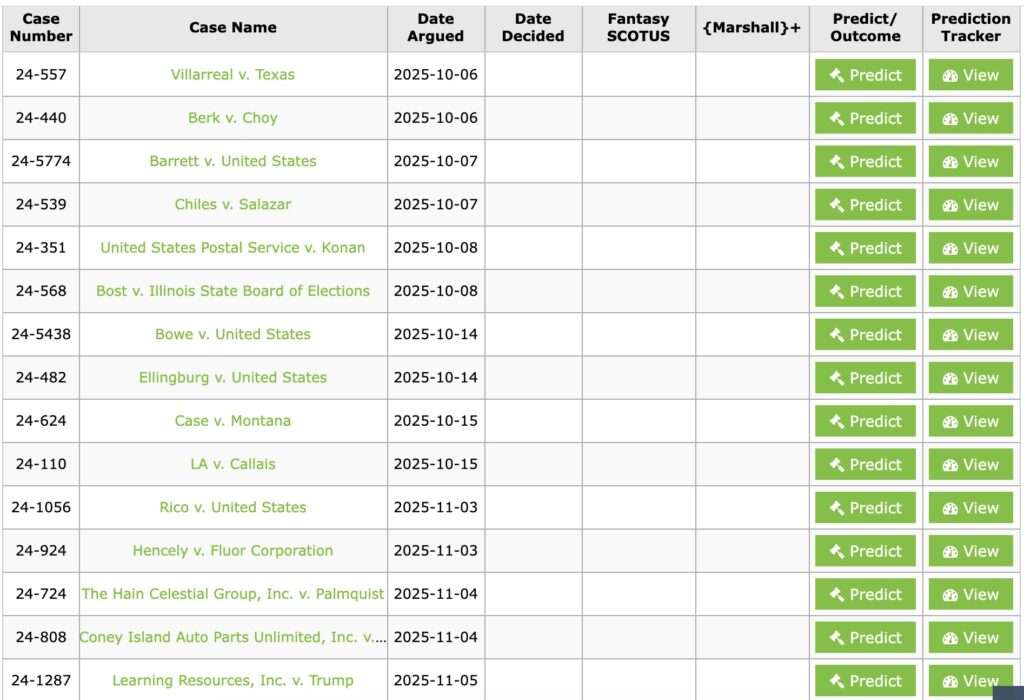
The post Oyez! Oyez! Oyez! The October Term 2025 of FantasySCOTUS is now in session appeared first on Reason.com.

from Latest – Reason.com https://ift.tt/8xIAF2o
via IFTTT