Gordon S. Wood Weighs in on Akhil Reed Amar’s Born Equal: Remaking America’s Constitution, 1840-1920

On September 16, Yale Law professor Akhil Reed Amar published Born Equal: Remaking America’s Constitution, 1840-1920, the second volume of an in-progress three-volume history of America’s constitutional project from 1760 to the present day. The first volume, The Words That Made Us: America’s Constitutional Conversation, 1760-1840, was published in 2021. I much liked both volumes (more on that below), and I’m delighted to report that America’s greatest historian of the Founding era, Gordon S. Wood, has recently publicly praised them as well.

Wood wrote a detailed review of Born Equal that he read aloud at a September 19 Yale Law School conference on originalism that I organized; Wood labeled Born Equal “wonderful” and went on to say that,

[I]t is the most extraordinary kind of history that I have read…. [Akhil] has paid tribute to the power of equality in our political and constitutional lives as no other historian ever has.

The complete transcript of Wood’s glowing remarks may be found here, and may well be published in more polished form in the months ahead.

Kirkus Reviews awarded Born Equal a rare and much-coveted Kirkus Star and The Wall Street Journal ran a rave review by Adam J. White. The New York Times review by Jeff Shesol was generally favorable, but criticized Akhil’s staunch defense of originalism. Read Born Equal and decide for yourself!

As I mentioned, I liked both volumes very much. Back in 2021 I described The Words That Made Us as:

[A] masterpiece [that] reveals Akhil Amar to be the greatest constitutional historian of his generation. He brilliantly shows, for example, how George Washington got everything he wanted at the Philadelphia Constitutional Convention, while geniuses like Madison, Hamilton, Wilson, and Franklin all came up short. This book will be the canonical account of the birth of our Constitution and our early years as a nation for decades to come.

And here is what I said about Born Equal:

Akhil Reed Amar is the most accomplished scholar of his age cohort in both law and history because he writes superb books like Born Equal, which will change the minds of everyone across the political spectrum from Federalist Society members to Bernie Sanders leftists. The history told in this book goes to the very core of what it means to be an American citizen and to understanding our Constitution. Amar knows, that for all our faults, the United States is, as President Ronald Reagan called it, “A Shining City on a Hill.” This book brilliantly proves that Ronald Reagan was right! Born Equal is one of the most important books ever written.

Akhil and I have been close friends for decades, and we have co-taught an originalism seminar at Yale Law School for many years. I’m glad that others share my view as well.


The post Gordon S. Wood Weighs in on <i>Akhil Reed Amar's Born Equal: Remaking America's Constitution, 1840-1920</i> appeared first on Reason.com.

from Latest – Reason.com https://ift.tt/U79S1oP
via IFTTT

Is Nuclear The Key To Powering The Data Center Boom

Is Nuclear The Key To Powering The Data Center Boom

Nainish Gupta is director of renewable energy certificate portfolio and regulatory compliance at POWWR.

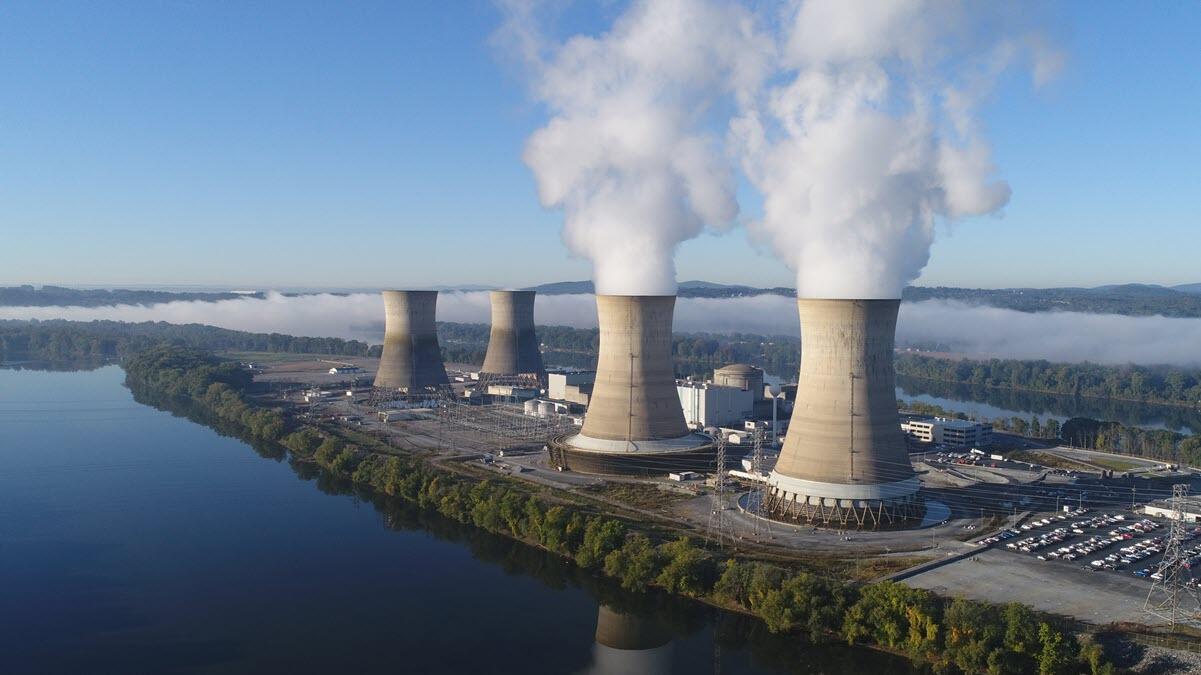
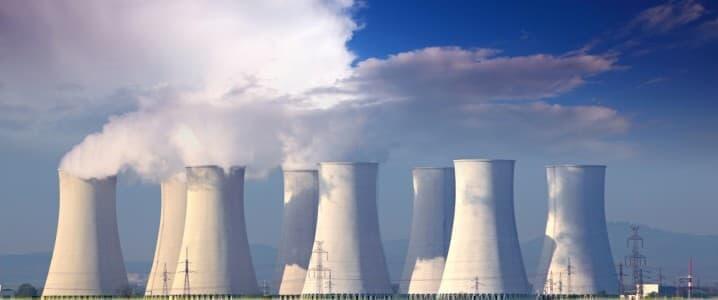
The Three Mile Island nuclear power plant on the outskirts of Harrisburg, Pennsylvania, is the site of the worst commercial nuclear accident in U.S. history. The 1979 calamity, which released radioactive material into the environment, cast nuclear energy as a dangerous endeavor that few organizations pursued. Now, after years of plants shutting down, nuclear energy is experiencing a renaissance.

Three Mile Island will be restarted in 2027 as the Crane Clean Energy Center, in part to power data centers after a power purchase agreement with Microsoft. Meta also saved a nuclear plant in Illinois that was in danger of closing after signing a 1.1 GW deal. These two major deals signal a growing trend of hyperscalers embracing nuclear power and driving forward expansive new growth.

Three Mile Island

While nuclear offers stable power with low-carbon emissions, the potential for it to truly reshape the energy market and fulfill the promise of a renaissance requires overcoming complex operational, financial and workforce challenges.

Data centers driving the demand

Recent policy support from the Trump administration has accelerated nuclear development at a new speed, but the increased investment has been on the horizon for years. In 2023, under the Biden administration, the U.S. joined more than 20 other countries in a pledge to triple global nuclear energy capacity by 2050 to reach climate goals. Countries have been trying to figure out how to feed a surging demand for energy across the world without hurting the environment, and they’ve turned to nuclear power to fulfill that need.

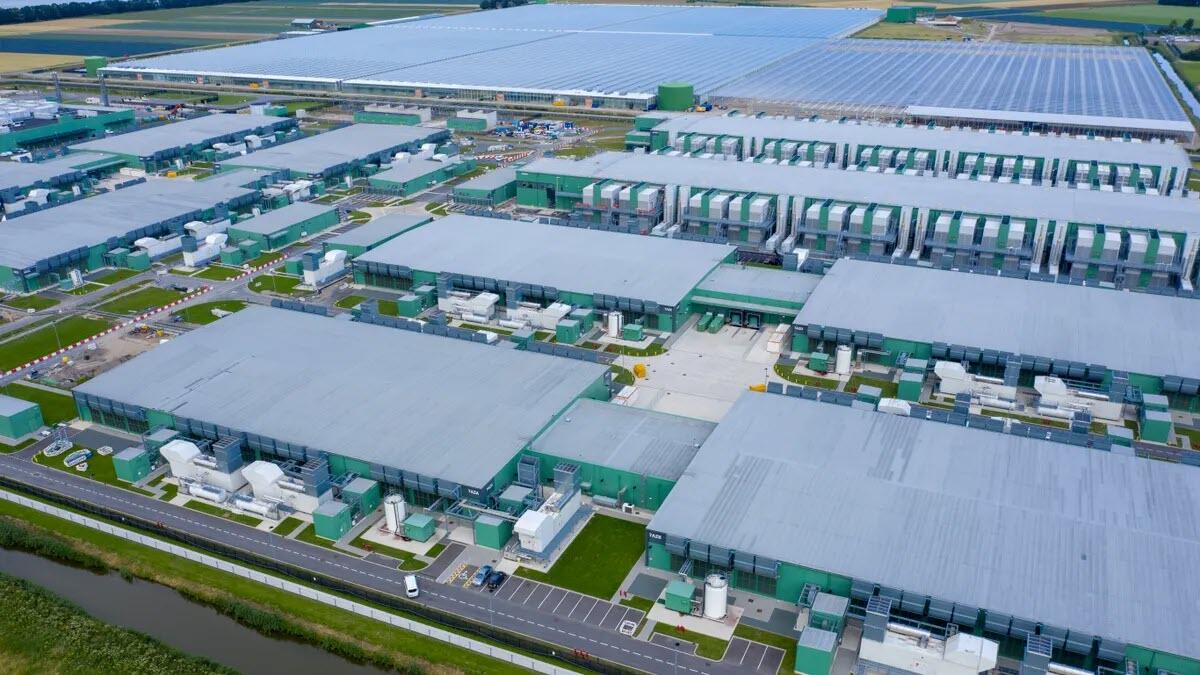
But what’s different about the surge we’re seeing now is the sheer pace at which companies want to get these plants up and running again. They’re trying to keep up with demand to power the data centers needed to support the explosive growth in artificial intelligence and cloud computing. According to Goldman Sachs, AI alone will drive a 165% increase in power demand for data centers in the next five years.

The demand for this power has created a unique dynamic where tech companies are willing to invest hundreds of millions of dollars in upgrading nuclear facilities that have been offline for years in exchange for long-term power purchase agreements. Unlike traditional utility customers, these companies can sign decades-long contracts that justify the substantial upfront investments required to bring aging nuclear infrastructure back online.

The realities of bringing plants back online

There are 94 operating nuclear reactors in the United States and 18 reactors that are retired or are in the process of retiring. Almost half of the retired/retiring reactors are currently undergoing Nuclear Regulatory Commission evaluation to restart. The rest are older and would be too costly to touch. But even so, the ones that could be restarted have been mothballed for years and require hundreds of millions of dollars in upgrades and a lengthy project timeline to be powered up again.

Think about any building that has been boarded up for at least five years. No matter the condition, repairs, upgrades, and inspections are needed. That need is exacerbated at a highly specialized and sensitive building like a nuclear power plant. Decommissioned facilities need to restore operating licenses, meet regulatory compliance standards, and fix a major vulnerability: the lack of modern cybersecurity standards.

The environment we’re in now of sophisticated cyber threats is a whole new world compared to when some of these older plants last operated. Cyberattacks on U.S. utilities reportedly jumped 70% last year. Major upgrades need to be put in place so the plants aren’t left vulnerable to bad actors.

Another bottleneck is the supply chain. The capacity to produce uranium rods was scaled back during nuclear’s decline, and rebuilding this manufacturing infrastructure will take time. These are not components that can be quickly sourced from existing inventory; they require specialized facilities and rigorous quality controls.

An equally daunting challenge is human capital. Most experienced nuclear power plant operators retired when facilities shut down over the past decade, taking all of that institutional knowledge with them. Training new operators won’t happen overnight. These are highly specialized positions requiring extensive certification and experience with complex safety protocols. The situation is further complicated by competition from other sectors offering better incentives for nuclear engineers, making it difficult for utilities to attract and retain talent.

Why a broader energy mix still matters

Once the industry gets past these obstacles, even the most optimistic nuclear scenarios cannot eliminate the need for a diverse energy portfolio. Though some natural gas and renewable power projects back off during this time, we’ve also seen continued growth. In Texas, the state’s energy fund just approved its first loan to fund a 122-megawatt natural gas power plant that is projected to begin operations by 2027.

A surge of investment in nuclear power does not mean that it will take over all other resources. Different technologies serve different purposes for grid operations. Nuclear provides excellent baseload power, but grids also need flexible generation that can ramp up and down quickly to match demand fluctuations. Solar and wind, despite their intermittency challenges, remain cost-effective for many applications and will continue to play essential roles in the energy mix.

Even where nuclear development is feasible, the long lead time for a plant to become operational means that other technologies must fill the gap during the years-long transition period. Energy security requires multiple sources operating in concert rather than betting everything on a single technology.

Reshaping the energy market and future financing

Data centers have handed nuclear something it’s rarely had: customers willing to pay upfront for guaranteed power over the long haul. Instead of hoping subsidies stick around, companies are putting money behind their need for reliable electricity. It creates a financing model built on genuine market demand. If this proves successful, it could shape the future financing of projects from industries beyond tech companies.

With this demand bolstering the industry, the major concern is that projects to restart nuclear plants will be sped up to keep pace. But they cannot be rushed. Success will require policy support, sustained investment in workforce development, reinforcing the supply chain, and patience to deal with inevitable delays and cost overruns that characterize major infrastructure projects.

The real test will come in the next decade as these ambitious projects move from announcements to actual construction and operation. Nuclear’s capabilities remain promising, but rushing toward unrealistic timelines could undermine the very renaissance it seeks to achieve.

Tyler Durden
Sun, 10/05/2025 – 14:00

via ZeroHedge News https://ift.tt/4YwSR6I Tyler Durden

Oil Prices Set To Jump After OPEC+ Raises Output By Far Less Than Expected

Oil Prices Set To Jump After OPEC+ Raises Output By Far Less Than Expected

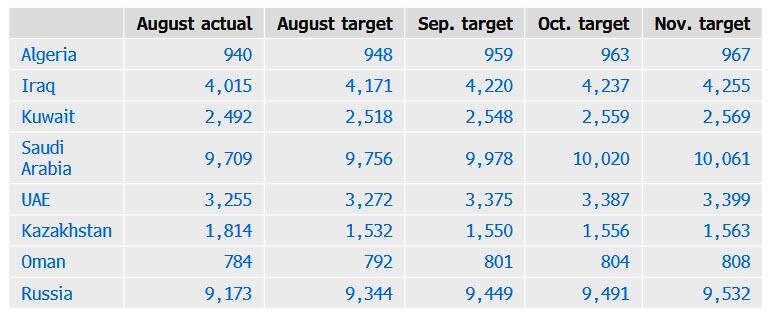
OPEC+ will raise oil output from November by 137,000 barrels per day, it said on Sunday, opting for the same fairly modest monthly increase as in October and far less than the 500k+ speculated by the Bloomberg “source” who continues to be short oil and appears to buy every dip. 

The group consisting of the Organization of the Petroleum Exporting Countries plus Russia and some smaller producers has increased its oil output targets by more than 2.7 million bpd this year – equating to about 2.5% of global demand – as it continues the return of 1.65 million barrels a day they cut in April 2023.

The process of unwinding the April 2023 cuts began last month, when they raised their collective target by an initial 137,000 barrels a day with effect from October. The month before they had completed the return of 2.2 million barrels of output, cut in November 2023, a year ahead of schedule. The eight countries will continue to meet monthly, with the next gathering scheduled for Nov. 2.

Following Sunday’s meeting, the new production targets for the eight countries for November are shown in the table below in thousands of barrels a day alongside their limits for August, September and October and their actual production in August, as reported by OPEC’s secondary sources.

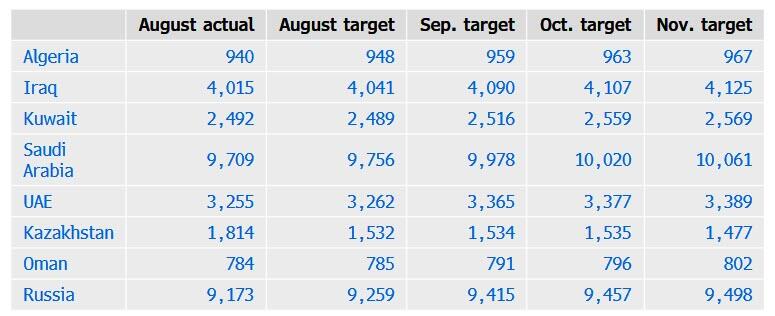
The table above does not reflect additional cuts to compensate for earlier over-production that have been made by several countries. Those compensation cuts, most recently revised on Oct. 1, reduce the effective output targets to those shown below.

Brent prices fell below $65 per barrel on Friday, as most analysts predict a supply glut in the fourth quarter and in 2026 due to slower demand and rising U.S. supply. Prices are trading below this year’s peaks of $82 per barrel but above $60 per barrel seen in May.

In the run-up to the meeting, Russia and Saudi Arabia, the two biggest producers in the OPEC+ group, had different views, Reuters sources said.

Russia was advocating for a modest output increase, the same as in October, to avoid pressuring oil prices and because it would struggle to raise output owing to sanctions over its war in Ukraine, two sources said this week. Saudi Arabia would have preferred double, triple or even quadruple that figure – 274,000 bpd, 411,000 bpd or 548,000 bpd respectively – because it allegedly has spare capacity and wants to regain market share more quickly.

OPEC views the global economic outlook as steady and market fundamentals as healthy because of low oil inventories, it said in a statement on Sunday.

Scott Shelton at TP ICAP Group told Reuters that oil prices may rise on Monday by up to $1 per barrel as the November production increase turned out to be modest.

Jorge Leon at Rystad Energy said: “OPEC+ stepped carefully after witnessing how nervous the market had become … The group is walking a tightrope between maintaining stability and clawing back market share in a surplus environment.”

OPEC+ output cuts had peaked in March, amounting to 5.85 million bpd in total. The cuts were made up of three elements: voluntary cuts of 2.2 million bpd, 1.65 million bpd by eight members and a further 2 million bpd by the whole group.

The eight producers plan to fully unwind one element of those cuts – 2.2 million bpd – by the end of September. For  October, they started removing the second layer of 1.65 million bpd with the increase of 137,000 bpd. The eight producers will meet again on Nov. 2.

Tyler Durden
Sun, 10/05/2025 – 13:25

via ZeroHedge News https://ift.tt/Sea5iN0 Tyler Durden

Stablecoin Market Boom To $300B Is ‘Rocket Fuel’ For Crypto Rally

Stablecoin Market Boom To $300B Is ‘Rocket Fuel’ For Crypto Rally

Authored by Zoltan Vardai via CoinTelegraph.com,

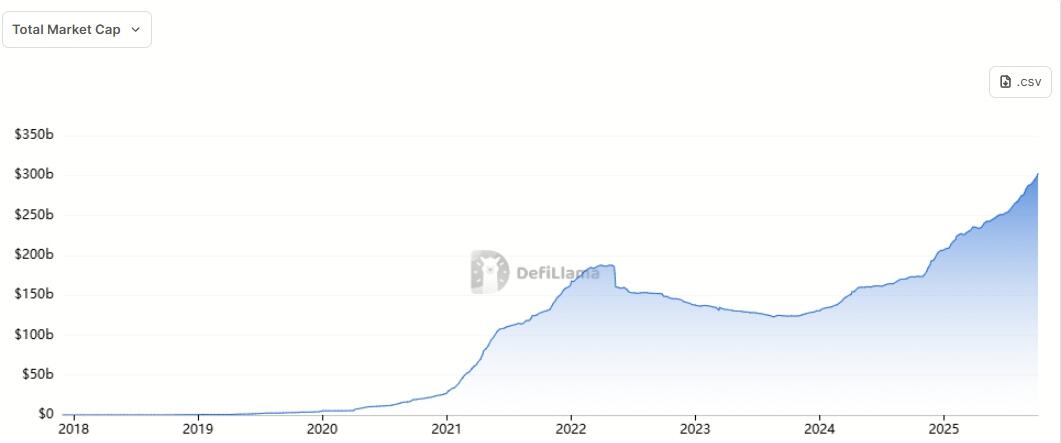
The record $300 billion stablecoin market capitalization may signal that more investor capital is flowing onchain, which could act as “rocket fuel” for cryptocurrency valuations, according to market analysts.

The total stablecoin supply has reached a new record of over $300 billion on Friday, marking a 46.8% year-to-date growth rate that may outpace the previous year’s stablecoin market growth, Cointelegraph reported.

The record comes at the start of October, historically the second-best month for Bitcoin, reinforcing investor optimism around a potential “Uptober” rally.

“Stablecoin supply may have crossed 300 billion dollars, but this is not capital waiting on the sidelines. It is moving through markets with purpose,” according to Andrei Grachev, founding partner at synthetic dollar protocol Falcon Finance.

“Transfer volumes are in the trillions each month. Velocity metrics show constant activity across networks,” Grachev told Cointelegraph. “They are being used—not just held. This is capital at work, not capital on hold.” 

“Stablecoins are settling trades, funding positions, and giving users dollar access where banks fall short,” he added. 

Source: DeFiLlama.com

Crypto investments are risky and highly volatile. Tax may apply. Understand the risks here

Stablecoins have several use cases beyond investment, including in payments, remittances, merchant payments and as a means of saving. A growing supply may also indicate more stablecoin usage for daily payments or institutional settlements.

$300 billion stablecoin supply may be “rocket fuel” for crypto

The $300 billion milestone may signal a “rebound in digital assets” along with the growing integration of stablecoins in global finance, according to Ricardo Santos, the chief technical officer at stablecoin-based fintech payment company Mansa Finance.

The stablecoin supply’s “expansion is often interpreted as a sign of fresh dollar-equivalent liquidity that can quickly rotate into Bitcoin, Ethereum or altcoins,” he told Cointelegraph. “In this sense, the $300 billion threshold looks like rocket fuel for the next market cycle.”

Santos pointed to stablecoin adoption in countries such as Nigeria, Turkey and Argentina, where residents use US dollar-pegged tokens as “de facto dollars” for everyday transactions.

Stablecoins are also being integrated into payment systems by global financial players such as Visa, further embedding them into mainstream financial infrastructure.

Source: Lookonchain

During the past month, Circle minted $8 billion worth of USDC on the Solana network alone, with $750 million minted on Thursday, according to blockchain data platform Lookonchain’s X post.

“Capital doesn’t stay idle for long,” according to technical analyst and popular crypto trader Kyle Doops, who expects the record stablecoin supply to start flowing into the cryptocurrency market.

Tyler Durden
Sun, 10/05/2025 – 12:50

via ZeroHedge News https://ift.tt/r7w0VUA Tyler Durden

Dating App Fatigue Emerges 

Dating App Fatigue Emerges 

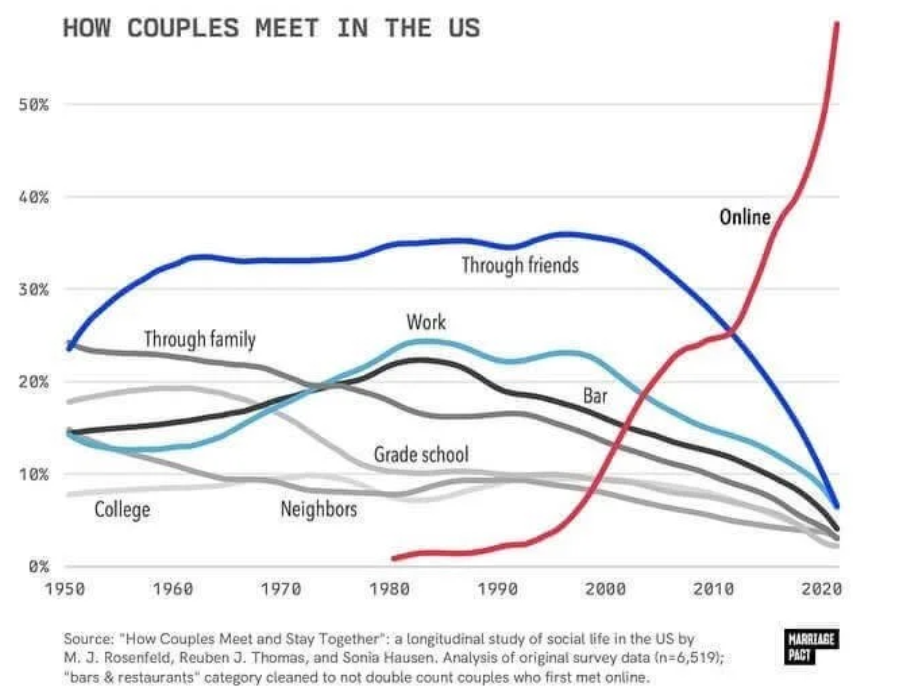
For half a century, how couples met in America was primarily shaped by family and friend networks, communities, churches, colleges, and workplaces – you know, just the traditional fabric of Western society. However, the advent of the internet and the rise of Big Tech, with its closely guarded algorithms (and now AI bots), have dramatically reshaped modern romance. Yet, new data from Goldman suggests that how couples meet, whether online or through dating apps, may have reached a major inflection point.

The three-decade trend is clear: traditional networks, whether through friends, bars, or other social circles, haven’t dominated how couples meet since the late 1990s. The internet changed everything. But the question now is, how sustainable is the trend of finding your partner on a dating app?

This brings us to a report published by a team of Goldman analysts led by Eric Sheridan, who provided clients with everything they need to know about dating app companies tracked by GS ahead of the third quarter earnings season.

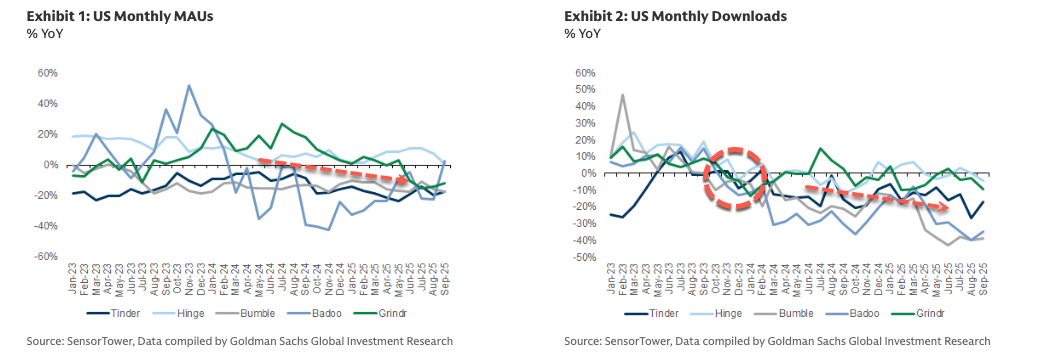
We won’t focus on Sheridan’s downgrade of Bumble from “Buy” to “Neutral” or the key investor discussions surrounding Match Group and Grindr. Instead, the focus is on new SensorTower data cited by the analyst, which shows that monthly active users and download growth across major dating apps have been stuck in a funk

The highlights of the data (US only) include:

  • Monthly Active Users: During July-September, Hinge posted MAU growth of +6% YoY, while all other tracked dating apps declined.

  • Downloads: Download trends during the quarter remained negative, with Bumble app downloads -39% YoY (driven in part by lower marketing spend).

The question now is: what’s changed in how people perceive meeting a significant other online? Could it be a growing trust issue that meeting a random stranger on the internet feels increasingly risky, given the occasional horror stories? Perhaps people are rediscovering the real value of meeting through friends or social circles, where some level of vetting naturally occurs. Whatever the reason behind the apparent slowdown in online dating momentum, younger generations may be quietly shifting back to the basics.

Tyler Durden
Sun, 10/05/2025 – 09:55

via ZeroHedge News https://ift.tt/0jFqxv6 Tyler Durden

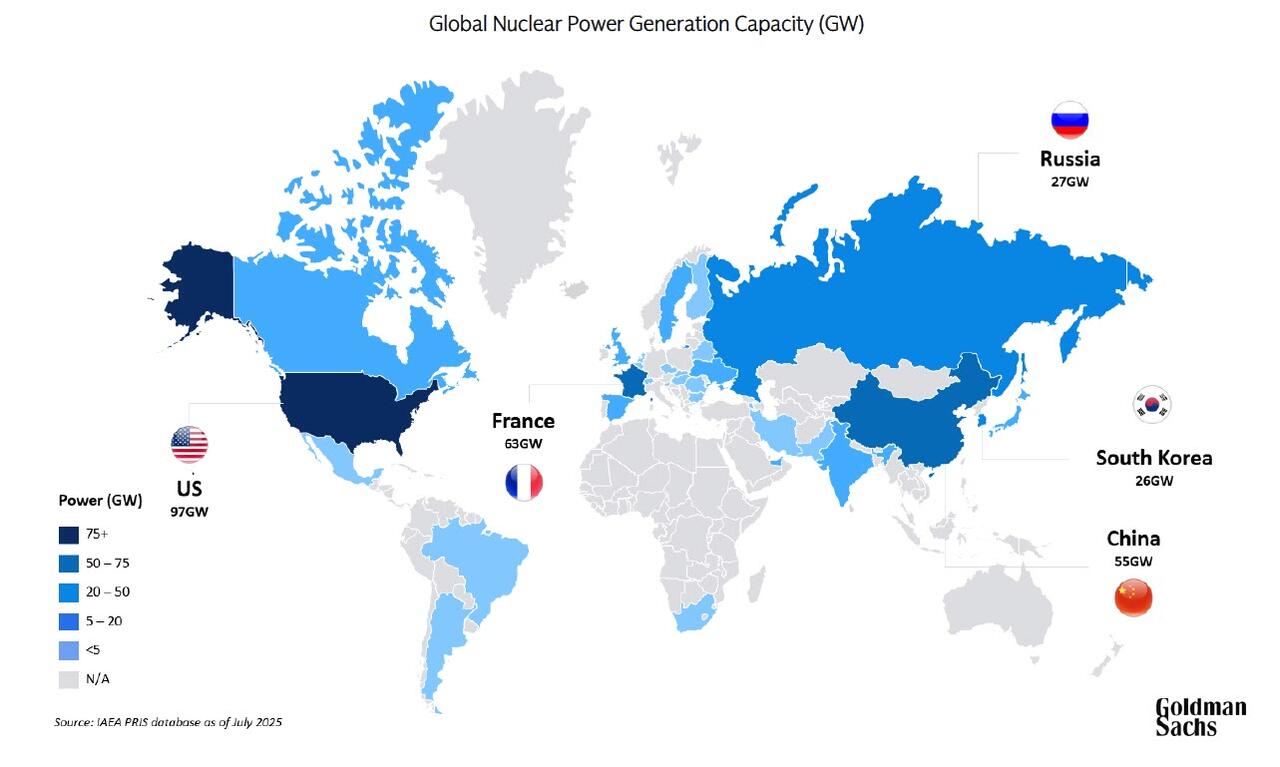
Can Private Investment Unlock A New Nuclear Energy Era

Can Private Investment Unlock A New Nuclear Energy Era

Submitted by OilPrice.com,

As several governments aim to battle climate change by shifting away from fossil fuels and pursuing a green transition, many are revisiting a long-overlooked energy source – nuclear power.

Nuclear power was at the top of many countries’ energy agenda for several decades before a few notable nuclear disasters shifted the public perception of the clean energy source, and several governments halted development for years. Now, as studies show that nuclear power is one of the safest forms of energy, so long as strict oversight mechanisms are in place, we are seeing a revival in the clean energy source. However, one of the major constraints to development is the high cost of project development.

Nuclear power plants are relatively cheap to run, but the cost of developing a new plant and reactor is extremely high, costing several billion dollars to set up. Many governments are funding the development of nuclear energy facilities through public-private partnerships to alleviate the financial burden on the state. In addition, private investors are often more willing to fund nuclear projects that have the political and financial backing of the government as a reassurance.

Over the last year, several tech companies have signed agreements with nuclear companies to gain access to a vast amount of nuclear power once projects come online, as they aim to find a cleaner way to power advanced technologies, such as data centres and artificial intelligence (AI). The widescale deployment of these technologies is expected to drive up the world’s energy demand significantly over the coming decades, and governments are increasingly shifting the burden to tech companies to find clean energy sources to power their operations instead of relying on the existing grid.

In September, representatives from some of the world’s biggest uranium and nuclear energy firms, as well as nuclear experts and investors, met for the annual World Nuclear Association (WNA) symposium to discuss the potential for nuclear investments, with investments in the nuclear value chain expected to increase to $2.2 trillion by 2050 from $1.5 trillion in 2024, according to Morgan Stanley.

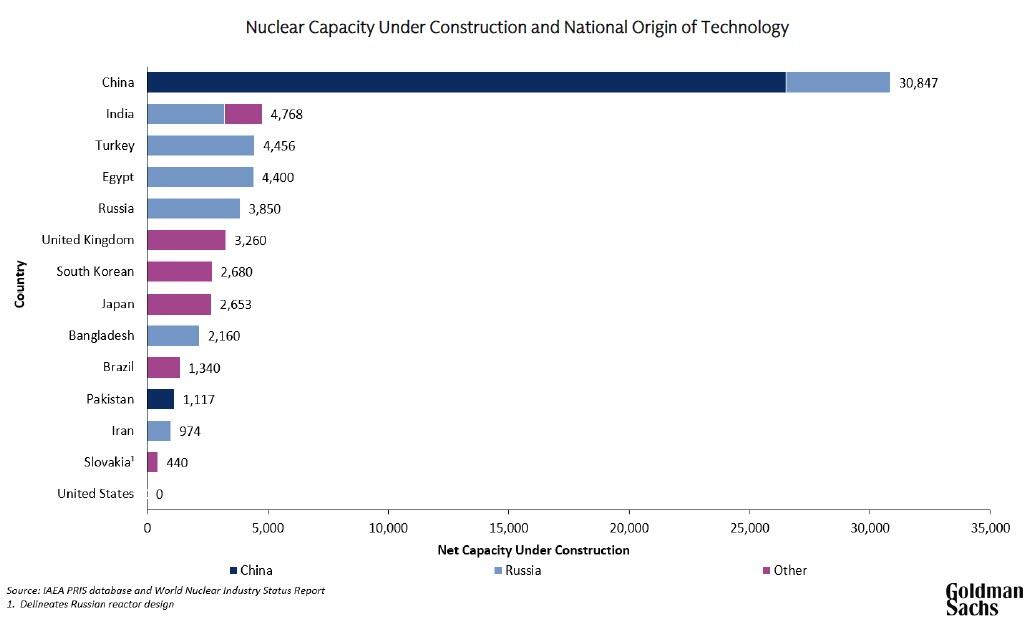
Many investors are hesitant to invest in nuclear power due to the uncertainties involved in project development. The construction of new nuclear plants and reactors is extremely complex, and projects can often run over budget and take years longer than anticipated to develop, as seen with EDF’s Sizewell C nuclear power plant in the U.K. The cost of developing Sizewell C has almost doubled to $51.9 billion since it was first proposed, which will result in higher bills for consumers. This is largely due to the lack of nuclear power construction in recent decades, which has driven up the costs of new project development, compared to countries such as China, where projects are generally delivered on time and within budget.

One investor, Arfa Karani, emphasised the change in the nuclear power investment environment in recent years. She explained how the U.K. government has adopted a more hands-on approach to supporting nuclear power and related tech startups in securing investors. “The regulation has to figure itself out. It’s no longer a question of where do we get the capital from? …because now suddenly it’s become a matter of national security and global power and global dominance,” Karani said. “All the insolvable problems suddenly become solvable, which is very exciting for nuclear,” she added.

The International Energy Agency’s (IEA) 2025 publication “The Path to a New Era for Nuclear Energy” explores the new policies, projects, investments, and technological advances driving the development of new nuclear power. The report shows that, in a rapid growth scenario, annual investment would need to double to $120 billion by 2030. This means that the rollout of new nuclear projects cannot rely exclusively on public finances. The IEA highlights the importance of bringing down financing costs and attracting private capital to the nuclear power sector. 

The IEA’s Executive Director Fatih Birol stressed that “governments and industry must still overcome some significant hurdles on the path to a new era for nuclear energy, starting with delivering new projects on time and on budget – but also in terms of financing and supply chains.”

The IEA also suggests that the introduction of small modular reactors (SMRs) could help reduce costs and that with the right support, SMR installations could reach 80 GW by 2040, accounting for 10 percent of overall nuclear capacity globally. However, the report states that the success of the technology and speed of adoption will hinge on the industry’s ability to bring down costs by 2040 to a similar level to those of large-scale hydropower and offshore wind projects.

With support from several state governments, we can expect to see a wide-scale rollout of nuclear power capacity in the coming decades. However, the extent of the capacity growth will depend largely on how much private funding governments can attract to the nuclear power market through the introduction of favourable policies and regulations, as well as public funding into new projects. 

Tyler Durden
Sun, 10/05/2025 – 09:20

via ZeroHedge News https://ift.tt/TA7V6In Tyler Durden

Tennessee Alcohol Wholesalers Are Grabbing Control of the State’s Hemp Market


A hemp plant | Juan Aunion/Newscom

Few things are more difficult to eradicate in our system of modern governance than a government-sanctioned monopoly or oligopoly. A recently passed bill in Tennessee, which will allow the state’s alcohol wholesalers to take over hemp distribution in the state, shows that these monopolies are not only difficult to eliminate but also often attempt to expand their reach.    

The new law sets up a distribution system for hemp—which was legalized at the federal level in the 2018 Farm Bill—that mirrors the notorious three-tier system for alcohol distribution, which requires producers, wholesalers, and retailers to be legally separate entities. The three-tier system restricts producers and suppliers from selling directly to their customers and mandates that they work through a wholesaler to reach the market. This allows wholesalers to operate as functional monopolies or oligopolies in certain parts of states where only one or two wholesalers operate.

The law, which takes effect on January 1, 2026, also requires all wholesalers and retailers of hemp products to maintain a physical presence within the state. Out-of-state hemp suppliers will be prohibited from engaging in direct-to-consumer shipping to customers in Tennessee, and instead will be forced to work through the state’s wholesaler and retailer tiers. While in-state Tennessee hemp suppliers cannot ship their products to Tennesseans either, they are able to sell on-site directly to their customers, providing a workaround to avoid the three-tier system.

Cornbread Hemp, a Kentucky hemp supplier that recorded $1 million in Tennessee-based sales last year, is challenging the new law in federal court. Cornbread Hemp argues that Tennessee’s law unconstitutionally discriminates against out-of-state competitors in favor of in-state businesses, which is a violation of the Constitution’s Dormant Commerce Clause.

Supreme Court observers will recognize how closely the case mirrors Tennessee Wine and Spirits Retailers Association v. Thomas (2019). In the case, the majority struck down Tennessee’s requirement that applicants for alcohol wholesaling or retailing licenses must have resided in the state for over two years, finding it to be unconstitutional discrimination against out-of-state economic interests.

Tennessee’s constitutional rationale for residency requirements in the hemp context is even weaker than with alcohol. The main constitutional defense in support of residency requirements for alcohol is that the 21st Amendment, which repealed Prohibition, devolved alcohol regulation back down to the state and local level. States, therefore, argue that the Constitution’s recognition of state power in the alcohol arena should inoculate residency clauses from Dormant Commerce Clause challenges. While some lower courts have continued to buy this argument, the Supreme Court has refused to go along in recent decades.

As liquor attorney Sean O’Leary notes, the 21st Amendment allows a discriminatory state law in the alcohol context to face a lower level of constitutional scrutiny than a non-alcohol law. The argument essentially boils down to: Alcohol is uniquely treated under the U.S. Constitution. Hemp has no corollary to the 21st Amendment, meaning a discriminatory hemp law will face a higher level of constitutional scrutiny.

Now alcohol wholesalers—already a government-sanctioned oligopoly or monopoly in many locales—are trying to expand their control beyond alcohol. The new law makes this power grab particularly blatant, since it moves hemp from under the purview of the Tennessee Department of Agriculture to the state Alcoholic Beverage Commission.

In fact, this change was made “at the behest of the wholesaler lobby,” O’Leary notes. “The wholesaler’s goal is to mandate a three-tier system where they get a piece of the action.” He predicts that, given the power of the alcohol wholesaler lobby in state capitals across America, more state legislatures will be following Tennessee’s lead.

The post Tennessee Alcohol Wholesalers Are Grabbing Control of the State's Hemp Market appeared first on Reason.com.

from Latest – Reason.com https://ift.tt/TIasHOU
via IFTTT

Lindy-Hopping Nazis and Golems With Guns: The Return of Thomas Pynchon


Cover of 'Shadow Ticket' by Thomas Pynchon | Penguin Press

Shadow Ticket: A Novel, by Thomas Pynchon, Penguin Press, 293 pages, $30

My favorite story about Thomas Pynchon, which may or may not be completely true: When Timothy Leary found himself in the hole at Sandstone Federal Prison, the defrocked Harvard doc asked a guard for something to read and the screw tossed a copy of Gravity’s Rainbow into the cell. Would a random prison guard really have that book at the ready? Beats me, but I love the image of someone trapped in a tiny room with Pynchon’s difficult, funny, endlessly digressive novel as his only escape hatch. There’s a photo floating around the internet of Leary’s marked-up copy of the book (sometimes misidentified as Neil Armstrong’s copy, which makes a different sort of crazy sense). Leary’s notes certainly look like things you might scrawl if you’re being driven mad simultaneously by solitary confinement and by Pynchon’s sprawling universe.

There is often a scent of madness around Thomas Pynchon’s fan base, and I say that as someone who has been one of those fans for around 40 years. The man has a reputation in some quarters as an unapproachable writer rarely read outside the academy, but the Pynchon cultists I encounter are more likely to be eccentric autodidacts prone to building elaborately strange mental models of the world. I have run across but cannot find again a small online subculture whose devotees combined the tenets of Marxism-Leninism with esoteric conspiracy theories about elite occultist pedophile rings; they regarded almost every prominent countercultural figure with suspicion but seemed to revere Pynchon as a prophet. They were the purest form of Pynchon fans: the kind who could be Pynchon characters. I imagine him dropping them into a novel as an aside, maybe in the middle of a list of terror cells or of rival gangs of mathematicians.

But now a door has materialized between the author and the mainstream. Paul Thomas Anderson’s impressive film One Battle After Another, based very loosely on Pynchon’s 1990 book Vineland, hit No. 1 at the U.S. box office in late September, giving the writer an opportunity to pick up new readers. Almost immediately afterward, a fresh product appeared for those newcomers to buy: Pynchon’s ninth novel, an acid noir titled Shadow Ticket. This one offers the writer in a relatively accessible mode. There are no dense passages that stretch on for pages, no detours into literal rocket science, no homoerotic encounters with Malcolm X. It’s short, it’s funny, and its core plot—private eye chases runaway dame—is familiar enough to give a cautious reader something to cling to as the book gets stranger.

It does get plenty strange. It is one thing to say the novel is about a strikebreaker turned detective in 1930s Milwaukee who gets hired to track down a cheese heiress and finds himself traveling through central Europe against a backdrop of rising fascism. But that bare-bones sketch won’t prepare you for a story that also includes a dog piloting an autogyro, an unsurrendered Austro-Hungarian submarine lurking about Lake Michigan, a bowling alley where Nazi dancers Lindy-hop to a swing version of the “Horst Wessel Song,” and a golem whose left arm doubles as “a modified ZB-26 Czech light machine gun.” This is the sort of book that casually invokes “a secret Indian reservation, mentioned only once in a rider to a phantom treaty kept in a deep vault under a distant mountain belonging to the U.S. Interior Department and unrevealed even to those guarding it.” It has vast conspiracies, encounters with the supernatural, and a development near the end that reveals we’ve tumbled into an alternate historical timeline.

For all that, the book is not some Permanently Wacky Zone that is never anything but absurd and strange. Gravity’s Rainbow isn’t all aerial pie fights and octopus attacks, after all; it has sequences, like an Advent service in wartime Kent, that are genuinely moving. While nothing in Shadow Ticket is as affecting as that Christmas Eve scene, the book has an emotional core to it. Among the characters traversing its surreal labyrinths, you’ll find some three-dimensional beings capable of disappointment and love.

And just as Gravity’s Rainbow deals with serious political ideas, so too does Shadow Ticket. Its 1930s setting makes that inevitable: Fascists are lurking in Europe (and Wisconsin), the persecution of Jews is starting to pick up, and the left isn’t exactly incapable of authoritarian ugliness either. (Besides an inevitable allusion to Stalin, the book periodically brings up Béla Kun’s short-lived 1919 communist dictatorship in Hungary, which is damned here not just for its own predations but for teaching lessons in persecution to the paramilitary antisemites who came along later. The Tankie Esotericists might not care for those parts.) There are no tedious efforts to make everything match up one-to-one with contemporary politics, but there are certainly moments when the fiction feels familiar. At one point, a man grumbles that “there used to be more time to make a getaway. Now they’re flashing everybody’s mug shot all around the world in the blink of an eye, pretty soon there’s no place to run to anymore…”

Not that this is a totally surveilled society. The book’s characters are forever finding refuge in the folds of the map, from that secret Indian reservation to that unsurrendered submarine. (The latter resurfaces later, far from the Great Lakes, rescuing people from death squads.) Nor is it just the congenial characters who seek refuge. A cheese syndicate becomes “more global and sinister in scope” by “avoiding central headquarters, instead choosing a more distributed model, free-zone hopping, setting up shop in short-lived entities emerging from the World War and the Russian Revolution, preferring mixed populations, disputed territories, histories of plebiscites and provisional government, currencies printed on inexpensive stock in fugitive inks.”

One of those places is Fiume, a then-Italian, now-Croatian city that briefly became independent when the poet-soldier Gabriele D’Annunzio seized it after World War I. During that autonomous interval, Pynchon reports, the place “had a reputation as a party town, fun-seekers converging from all over, whoopee of many persuasions, wide open to nudists, vegetarians, coke snorters, tricksters, pirates and runners of contraband, orgy-goers, fighters of after-dark hand-grenade duels, astounders of the bourgeoisie.” In his 1991 tract T.A.Z., the anarchist writer Hakim Bey described Fiume in similar terms, presenting it as an anti-authoritarian festival that briefly blipped onto and off of the map. I’d wager that Pynchon, whose books are peppered with anarchists, has read that. But Pynchon also surely knows that D’Annunzio had an authoritarian side, inventing public rituals that would later be adopted almost wholesale by Benito Mussolini. In our world, as in Pynchon’s, even an apparently free zone can feed into something antithetical to freedom.

Shadow Ticket is eminently quotable, and I could probably lay down another couple thousand words relaying good lines (“If you happen to be a spy, one big selling point about Vienna is there are no laws against spying, as long as the spying isn’t on Austria”) or describing amusing scenes (when “the Al Capone of cheese” meets the actual Al Capone, he asks what Capone is the Al Capone of). But at some point I’d just be retyping the book, and who needs that? Better to go straight to the source.

And to savor it. Pynchon is 88 years old, and this might be the last novel he’ll publish in his lifetime. Though who knows? The man was working on Mason & Dixon while he was also writing Vineland. Maybe he doubled up this time too, and Shadow Ticket is an aperitif for another 10-course psychedelic feast—the sort of book you’d like to have handy in solitary confinement or a space capsule.

The post Lindy-Hopping Nazis and Golems With Guns: The Return of Thomas Pynchon appeared first on Reason.com.

from Latest – Reason.com https://ift.tt/zfQEtk1
via IFTTT

Saudi Arabia’s Spending Spree Meets Oil Price Reality

Saudi Arabia’s Spending Spree Meets Oil Price Reality

Submitted by Julianne Geiger of OilPrice.com,

Saudi Arabia’s grand Vision 2030 ambitions may be colliding with a colder fiscal reality.

Fitch Ratings warned Friday that Riyadh faces rising financial risks as oil prices soften and government spending balloons, threatening the kingdom’s plans for fiscal consolidation.

The numbers tell the story: Saudi Arabia now expects a budget deficit equal to 5.3% of GDP in 2025—nearly double its original 2.3% forecast—before narrowing to 3.3% in 2026.

The deterioration comes largely from weaker oil income, Fitch said, with non-oil revenues holding up but not enough to offset the gap. The rating agency pointed to revenue shortfalls and overspending as the main culprits, noting the massive capital outlays required by megaprojects like NEOM.

This week’s pre-budget statement from Riyadh signaled a shift toward tighter fiscal discipline, but Fitch noted the tension between Saudi’s promises of restraint and its reliance on the Public Investment Fund’s trillion-dollar Vision 2030 agenda.

That tension is only magnified by sliding crude prices, with Brent down more than 7% this week on speculation of further OPEC+ supply hikes.

Those hikes are themselves controversial. Reuters sources have floated that Saudi Arabia wants much larger quota increases than Russia, moves that could win back market share but put additional pressure on oil prices. OPEC has already lashed out at the newswire, dismissing reports of a half-million-barrel increase as “wholly inaccurate.” Yet the clash illustrates the stakes: Saudi Arabia’s fiscal health depends on a stable oil market, but its production strategy is geared toward defending long-term relevance, even if that risks lower near-term prices.

Fitch said fiscal tightening would ultimately come through modest spending cuts, stable oil revenues, and continued growth in non-oil income. But the kingdom’s vulnerability to oil price swings remains obvious. Vision 2030 may be designed to break the dependence on crude—but for now, Saudi Arabia’s books are still hostage to it.

Tyler Durden
Sun, 10/05/2025 – 08:10

via ZeroHedge News https://ift.tt/3hLAMKQ Tyler Durden