The Proposed “Compact for Academic Excellence in Higher Education” and the First Amendment

[1.] There’s a lot going on in the Trump Administration’s proposed “Compact,” and there’s a lot that we might want to ask about it. Some questions would have to do with whether particular demands (such as a tuition freeze or a 15% cap on foreign students or mandatory U.S. civics classes for foreign students) are a good idea. Some might be and some might not be. Some might have to do with the way that the Compact would rebalance power between universities and the federal government.

Some might have to do with whether particular demands (for instance, the requirement that universities require all applicants to take standardized admission tests) should be implemented top-down on a one-size-fits-all basis. The federal government may have the power to impose certain conditions on the recipients of government funds, but that doesn’t mean that it necessarily should do so. This question of when conditions become excessive micromanagement perennially arises when it comes to government contracts and grants.

Some questions have to do with whether the Executive Branch can impose these conditions through just an announcement, whether this would require notice-and-comment regulatory rulemaking, or whether it would require express Congressional authorization. Similar questions have arisen in the past with regard to whether, for instance, Title IX should be understood to mandate university investigation of alleged sexual assault by students; whether it should be understood as mandating a preponderance-of-the-evidence standard in such situations rather than a clear-and-convincing-evidence; and other matters. In particular, the Compact seems to contemplate conditions on universities’ “preferential treatment under the tax code,” which I expect would likely require revisions to the tax code. But there too there have been controversies about where the Executive Branch has power to read provisions into tax exemption requirements that hadn’t been expressly authorized by Congress (see, e.g., Bob Jones Univ. v. U.S. (1983)).

Still, I can at most note such matters—important as they are—since they aren’t within my core area of expertise. So let me turn instead to the First Amendment problems posed by the Compact, which I am more knowledgeable about. I don’t want to suggest that these are the most important issues, but that’s where the light is best for me, so maybe I can find some keys there.

[2.] As a general matter, when the government is providing funding or other benefits for private parties’ speech, it may not discriminate based on viewpoint. Thus, for instance, Rosenberger v. Rector (1995), held that when a university funds student newspapers, it can’t exclude ones that convey religious viewpoints. The Court there expressly “reaffirmed the requirement of viewpoint neutrality in the Government’s provision of financial benefits.” Many other precedents say the same.

To be sure, the government may create programs for conveying its own preferred viewpoints. As Rust v. Sullivan (1991) noted, Congress can set up a National Endowment for Democracy without setting up a National Endowment for Communism. But the Court has distinguished such government speech, which the government can select based on viewpoint, from government programs that subsidize a diverse range of private speech, as in Rosenberger. To quote Rosenberger again,

[W]hen the government appropriates public funds to promote a particular policy of its own it is entitled to say what it wishes. When the government disburses public funds to private entities to convey a governmental message, it may take legitimate and appropriate steps to ensure that its message is neither garbled nor distorted by the grantee. It does not follow, however, … that viewpoint-based restrictions are proper when the [government] does not itself speak or subsidize transmittal of a message it favors but instead expends funds to encourage a diversity of views from private speakers.

Moreover, the government can’t impose even viewpoint-neutral funding conditions that seek to restrict the recipient’s speech using its own funds. Thus, in FCC v. League of Women Voters (1984), the Court struck down a law that barred editorializing by the recipients of public broadcasting subsidies. The Court acknowledged that the government could provide that federal funds can’t be used to editorialize (that would be a viewpoint-neutralize restriction). But Congress can’t provide that “a noncommercial educational station that receives only 1% of its overall income from [federal] grants is barred absolutely from all editorializing.” It is unconstitutional for Congress to thus bar a partly federally subsidized station “from using even wholly private funds to finance its editorial activity.”

[3.] In the Compact, the government isn’t just awarding grants for promoting particular government-supported viewpoints, which both Democrat and Republican administrations have long done. Rather, it applies to a vast range of funding and benefit programs, such as “(i) access to student loans, grant programs, and federal contracts; (ii) funding for research directly or indirectly; (iii) approval of student and other visas in connection with university matriculation and instruction; and (iv) preferential treatment under the tax code.” Indeed, when it comes to tax exemptions, Rosenberger expressly made clear that “Congress’ choice to grant tax deductions” was subject to “the requirement of viewpoint neutrality”; and see also the similar holding in Matal v. Tam (2017) with regard to the nonmonetary benefit of trademark registration.

[a.] This suggests that the Compact’s requirement that, as a condition of getting benefits, signatories must “commit themselves” “to transforming or abolishing institutional units that purposefully … belittle … conservative ideas” is unconstitutional: It targets particular viewpoints (those that “belittle … conservative ideas”), however vaguely defined those viewpoints may be.

[b.] I think the same is likely true about the demand that universities “shall adopt policies prohibiting incitement to violence, including calls for murder or genocide or support for entities designated by the U.S. government as terrorist organizations.” To be sure, “incitement” may constitutionally be even criminalized outright, if it’s limited to speech intended to and likely to produce imminent illegal action, which is to say action in the coming hours or days, as opposed to speech that advocates such action “at some indefinite future time.” (See Brandenburg v. Ohio (1969) and Hess v. Indiana (1973).) But in context, that doesn’t seem the likely meaning of the demand: After all, basically no speech in the U.S. involves advocacy of imminent genocide by the listeners (as opposed to calls for genocide at some indefinite future time), and even calls for murder on college campuses are almost invariably calls for violence at some indefinite future time.

Likewise, while “material support” for foreign terrorist organizations, in the sense of providing personnel, training, and the like, is constitutionally unprotected (see Holder v. Humanitarian Law Project (2010)), “support” in the lay sense—which is to say independent expression of endorsement of a terrorist organization’s position or actions—remains constitutionally protected. Indeed, Holder several times stressed that the law upheld in that case “does not cover independent advocacy” supporting a foreign terrorist group’s position.

So unless the “shall adopt policies prohibiting incitement to violence, including calls for murder or genocide or support for entities designated by the U.S. government as terrorist organizations” is read very narrowly indeed, this demand would require universities to suppress fully protected student speech. And even if a private university could suppress such speech on its own (simply because a private university isn’t itself constrained by the First Amendment), the government can’t pressure the university into engaging in suppression (see, e.g., NRA v. Vullo (2024)).

[c.] I also think the government can’t demand that universities, as a condition of getting benefits, “pledge … screen out [foreign] students who demonstrate hostility to the United States, its allies, or its values.”

The government likely can deny visas to prospective students based on their viewpoints; see Kleindienst v. Mandel (1972) (I oversimplify matters here somewhat). Whether the federal government can deport already-admitted people based on such speech is a separate matter, but it likely can reject them when they’re just applying for a student visa.

But that’s something the government can do itself, because of its special power over immigration. I don’t think it can demand that universities, in exercising their own decisions about whom to associate with and whom to speak to, exclude foreign students based on the students’ viewpoints.

[d.] The Compact also requires that universities receiving federal benefits “shall maintain institutional neutrality at all levels of their administration,” including “all colleges, faculties, schools, departments, programs, centers, and institutes.” This means “that all university employees, in their capacity as university representatives, will abstain from actions or speech relating to societal and political events except in cases in which external events have a direct impact upon the university.” This expressly does not apply to “students, faculty, and staff” commenting “in their individual capacities, provided they do not purport to do so on behalf of the university or any of its sub-divisions.”

This requirement, unlike the ones I discussed in items (a) to (c) above, is facially viewpoint-neutral; and I think the government could require that no federal funds be spent on ideological commentary by university departments. That would be much like the requirement, upheld in Regan v. Taxation with Representation (1983), that no tax-exempt contributions—which are in effect subsidized by the government through the charitable tax exemptions—be spent on advocacy for or against a candidate, or on substantial advocacy for or against legislation. To be sure, Regan involved only candidate- and legislation-related speech, not all ideological advocacy, but I think such a viewpoint-neutral requirement would be permissible even if it covers ideological advocacy more broadly.

But as I read the Compact, it contemplates that universities “abstain from … speech relating to societal and political events” even when such speech is paid for solely with their own funds (of which universities have plenty). And that’s precisely the sort of broad condition on funding that the Court struck down in FCC v. League of Women Voters, when it held that the government couldn’t use its subsidies to public broadcasters to prohibit all editorializing by the broadcasters (including editorializing paid for from other funds).

I appreciate the rationale the Compact offers for the mandate, quoting the President of Dartmouth:

Consider a student interested in majoring in a certain subject. Upon going to the department homepage to discover course offerings, the student is slapped in the face with an official statement excoriating his own political ideology. How comfortable would that student feel taking a class in that department? Our Principles of Institutional Restraint permit departments to issue public statements only on limited issues directly related to their academic expertise. Rather than publishing these proclamations on their homepages, departments must create new webpages specifically dedicated to public statements and endorsements. This ensures that departments promote their academic missions, not their social or political beliefs.

I generally support such ideological neutrality mandates for university administrations and departments myself as a policy matter, partly for this very reason. But whatever the value of institutional neutrality mandates as a means of promoting uninhibited discourse among students and faculty, I don’t think that this value can justify suppressing speech by the universities themselves. And, as FCC v. League of Women Voters makes clear, that remains so even when the universities are receiving government money to support some of their operations.

[e.] The Compact also seems to broadly call for universities to promote a “broad spectrum of ideological viewpoints.” As I’ll be blogging this coming week, I have a forthcoming law journal article in which I argue that ideological diversity mandates are generally a bad idea and likely unconstitutional, even when they are imposed as a condition on access to government funding. This having been said, it’s not completely clear whether the Compact outright demands enforceable viewpoint mandates (which the April letter to Harvard appears to have contemplated), or whether it sets forth viewpoint diversity as an aspirational goal, the way one might set “excellence,” “openmindedness,” and the like as an aspirational goal.

The Compact states, in relevant part, that funding recipients must “commit themselves to fostering a vibrant marketplace of ideas on campus,” to engaging in a “rigorous, good faith, empirical assessment of a broad spectrum of viewpoints among faculty, students, and staff at all levels,” to “sharing the results of such assessments with the public,” and to “seek[ing] such a broad spectrum of viewpoints not just in the university as a whole, but within every field, department, school, and teaching unit.” It also states that “A vibrant marketplace of ideas requires an intellectually open campus environment, with a broad spectrum of ideological viewpoints present and no single ideology dominant, both along political and other relevant lines.” The question here, I think, will largely turn on how such a call for a vibrant marketplace of ideas and a broad spectrum of viewpoints will be operationalized.

[* * *]

In any event, these are just some tentative thoughts about some of the provisions; I look forward to seeing more discussion of the Compact in the months ahead.

The post The Proposed "Compact for Academic Excellence in Higher Education" and the First Amendment appeared first on Reason.com.

from Latest – Reason.com https://ift.tt/2axTbo5
via IFTTT

First Circuit Rules Trump’s Birthright Citizenship Executive Order is Unconstitutional

Photo by saiid bel on Unsplash; Reamolko

Yesterday, the US Court of Appeals for the First Circuit issued a decision that Donald Trump’s executive order denying birthright citizenship to children of undocumented immigrants and non-citizens present on temporary visas is unconstitutional. It also ruled that it violates a 1952 law granting naturalization to children born in the United States, and upheld a nationwide injunction against implementation of the order. This is the second appellate court decision ruling against Trump’s order, following an earlier Ninth Circuit decision. Multiple district court judges (including both Democratic and Republican appointees) have also ruled that the order is illegal, and so far not a single judge has voted to uphold it.

Judge David Barron’s opinion for the First Circuit runs to 100 pages. But he emphasizes that this length is the product of the large number of issues (including several procedural ones) that had to be considered, and does not mean the case is a close one:

The analysis that follows is necessarily lengthy, as we must address the parties’ numerous arguments in each of the cases involved. But the length of our analysis should not be mistaken for a sign that the fundamental question that these cases raise about the scope of birthright citizenship is a difficult one. It is not, which may explain why it has been more than a century since a branch of our government has made as concerted an effort as the Executive Branch now makes to deny Americans their birthright.

I won’t try go to through all the points in the decision in detail. But I think Judge Barron’s reasoning is compelling and persuasive, particularly when it comes to explaining why this result is required under the Supreme Court’s ruling in the 1898 Wong Kim Ark case, and why the 1952 naturalization statute provides an independent ground for rejecting Trump’s order.

I would add, as I have noted previously (e.g. here and here), that virtually all the government’s arguments for denying birthright citizenship to children of undocumented immigrants and those on temporary visas would also have denied it to numerous slaves freed as a result of the Civil War and the Thirteenth Amendment. For example, if children of people who entered the US illegally are ineligible, that would exclude the children of many thousands of slaves who were brought into the US illegally after Congress banned the slave trade in 1808. And granting citizenship to freed slaves and their children was, of course, the main purpose of the Citizenship Clause of the Fourteenth Amendment.

I also think the ruling is sound in concluding that the state government plaintiffs in the case have standing to sue (though, admittedly, the Supreme Court’s precedents on state standing are far from a model of clarity), and in suggesting that “complete relief” for their injuries requires a nationwide injunction (though it ultimately remanded this issue to the district court for further consideration). State lawsuits are one of several possible exceptions to the Supreme Court’s general presumption against nationwide injunctions in Trump v. CASA, Inc. Both this exception and that for class actions have been used in lower court decisions against the birthright citizenship order, since Trump v. CASA came down in June. These exceptions are among the reasons why CASA has so far not had anywhere near as devastating an impact as some feared (though I continue to believe it was a bad decision).

Both the substantive birthright citizenship issue and the procedural issue of the proper scope of injunctions are likely to return to the Supreme Court. Hopefully, the justices will affirm the lower court rulings on these issues. We shall see.

The post First Circuit Rules Trump's Birthright Citizenship Executive Order is Unconstitutional appeared first on Reason.com.

from Latest – Reason.com https://ift.tt/B0N7Za5
via IFTTT

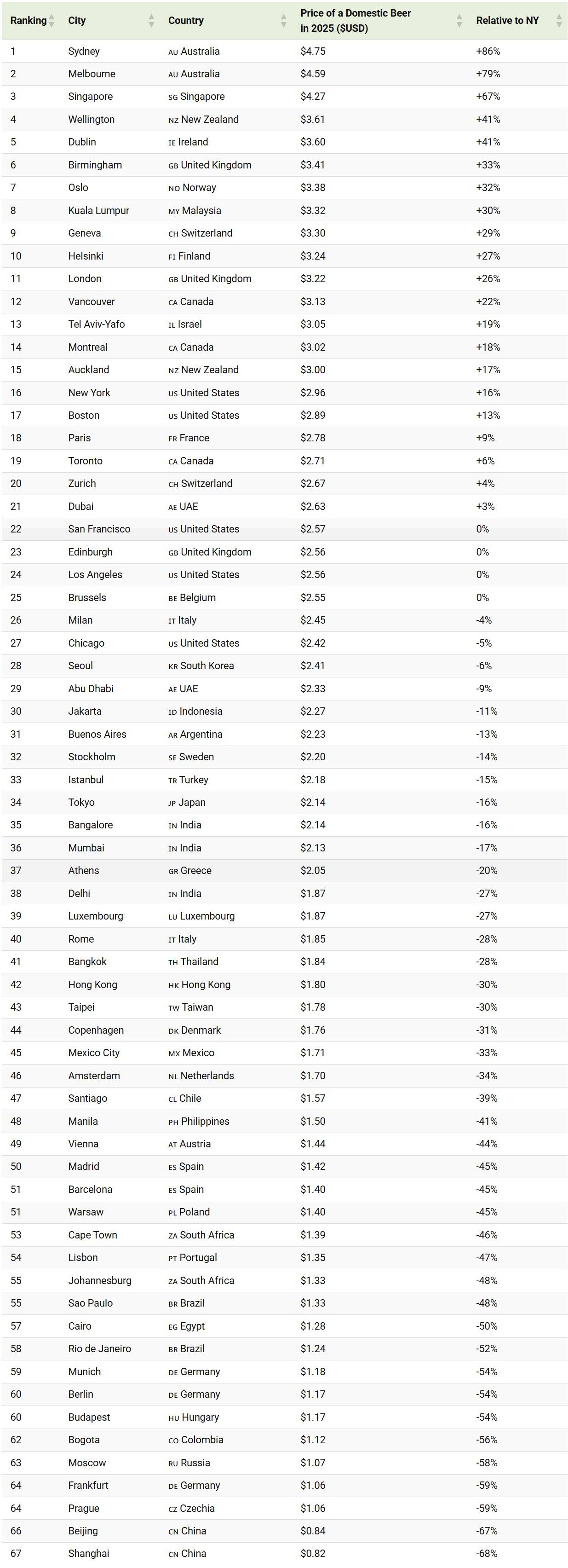
Where Beer Is Cheapest (And Most Expensive)

Where Beer Is Cheapest (And Most Expensive)

From Modelo to Carlsberg, beer prices have climbed sharply across the global economy over the past five years.

While inflation has been a driver, taxes often make up a significant share of the final price. Today, a bottle can cost as little as $0.82 in Shanghai and as high as $4.75 in Sydney in U.S. dollars.

This graphic, via Visual Capitalist’s Dorothy Neufeld, shows the price of a 0.5L bottle of domestic beer across major global cities, based on data from Deutsche Bank.

Beer Prices Around the World

Below, we show the average cost for a beer in 67 cities worldwide in 2025.

In Australia, beer prices are driven up by significant taxes, with beer prices at least 76% higher than in New York City.

Also placing high in the rankings is Singapore (#3), with taxes also playing a role, reflecting government-led initiatives to deter residents from consuming alcohol. In nearby Malaysia, a bottle of beer in Kuala Lumpur averages $3.32—about 30% more than in New York.

Across Europe, the gap is stark: Ireland leads with the priciest pours at $3.33 a bottle, while Prague—where beer is consumed more than anywhere else in the world—offers the cheapest at just $1.06.

To learn more about this topic, check out this graphic on the top countries by beer consumption in the world.

Tyler Durden
Sat, 10/04/2025 – 15:45

via ZeroHedge News https://ift.tt/lzs3J1G Tyler Durden

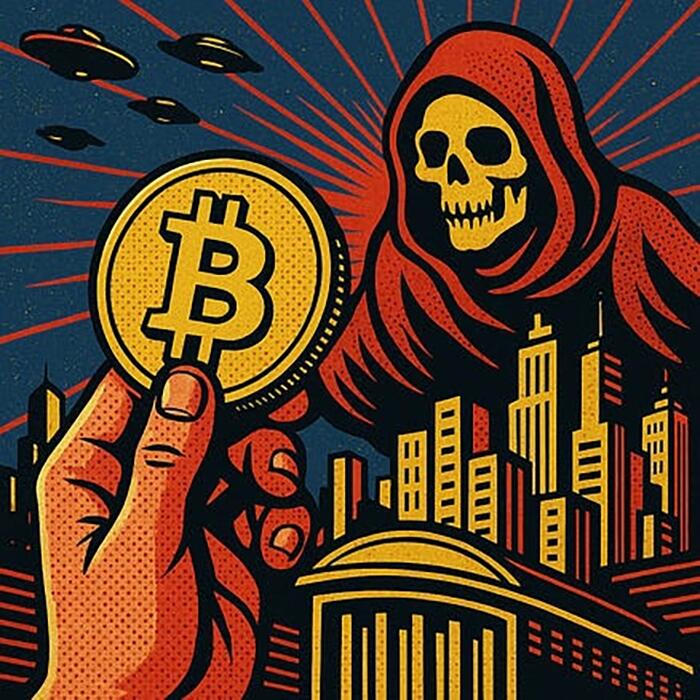
Bitcoin Faces Its 1913 Moment

Bitcoin Faces Its 1913 Moment

Authored by Kane McGukin via BombThrower,com,

Is the Core vs. Knots battle a replay of two ideological Federal Reserve Plans that ultimately centralized gold, the original sound money?

TL;DR: The Core vs Knots battle is an attack on the Bitcoin network. A monetary struggle no different than the fight to establish the Federal Reserve in 1913.

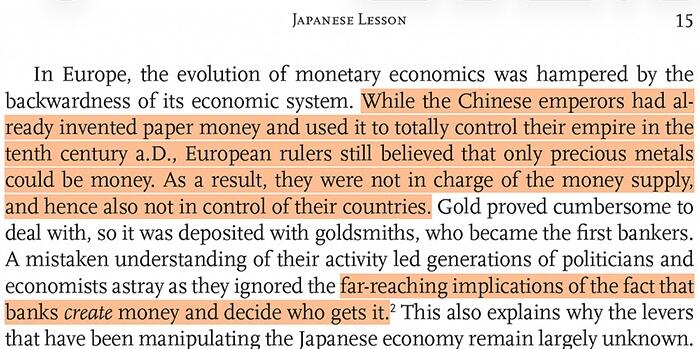
The 1900s, like today, began with bankers at war over the governing rules of money. Two competing factions, the Aldrich Plan and Glass-Owen Plan, launched an assault on sound money because men sought more power and nations demanded more control.

Gold, like Bitcoin, is money because of its first principle origins. Yet the misconception, then and now, is that survival requires more complexity.

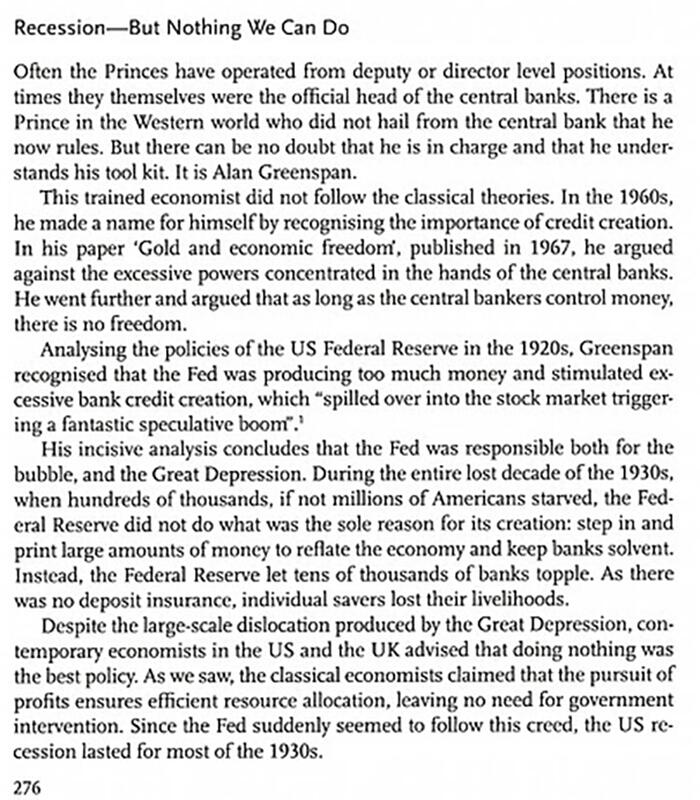
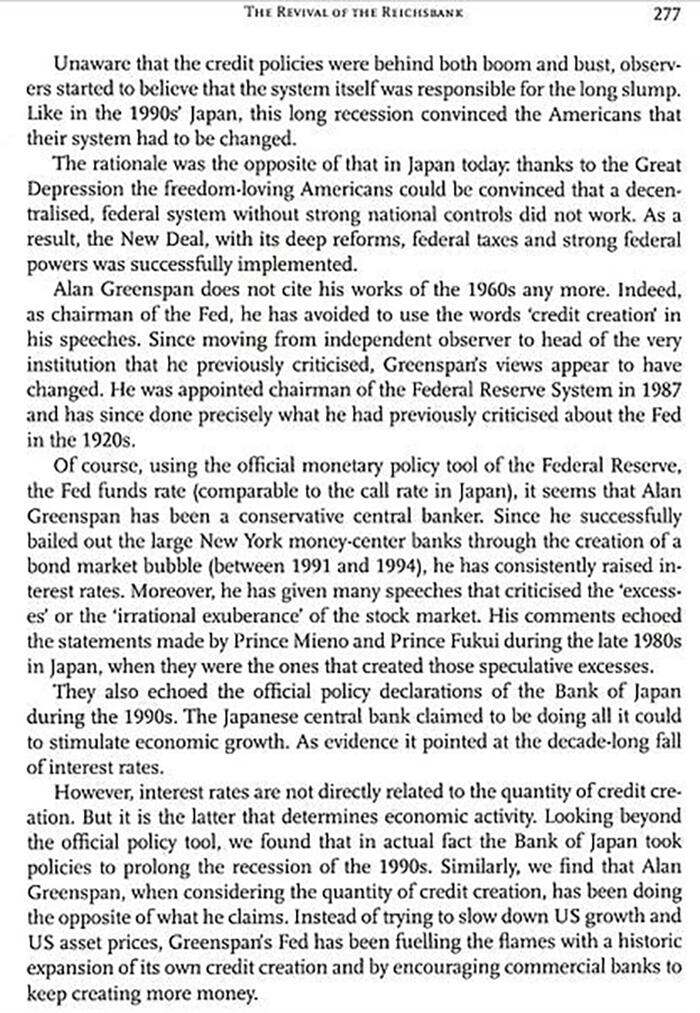
History shows how fragile conviction can be. An offer for a seat at the table is enough to flip once passionate defenders of sound money to enablers of credit and unlimited debt. Original goldbugs like Keynes in the 1920s and Greenspan in the 1980s proved unable to brush off the emotional pull of notoriety, currency, and control. Each flippening reintroduces inflationary tactics that corrode money’s principles and value.

Cunning design and corrupt schemes have often proven far too great for man to overcome.

Never a Dull Moment

There’s never a dull moment in Bitcoin or in the world of finance, for that matter.

The latest continuous divide within the Bitcoin community may look like another technical battle. But does it point to something deeper? While it feels like there’s a never-ending need to have something technical to argue over, beneath the GitHub commits and mailing list debates lurks a ghost from the past. The ideological struggle that gave birth to America’s Federal Reserve.

The Fed’s creation was framed in the language of decentralization and regional representation.

Yet its foundation was built on two forces: filters and control (here and here). Behind the curtain, the true drivers in 1913 were the same as they are today. A desire for power, profit, and the ability to manufacture credit money from a hard money basis. A Paper Bitcoin Summer, if you will.

Source: The Princes of Yen by Richard Werner

Ask any Bitcoin maximalist what they despise most, and the likely answers are: the Federal Reserve or the dollar’s undeniable debasement.

That’s what makes the current Core vs. Knots clash so fascinating. It’s not just a nerdy civil war inside Bitcoin development. Viewed through the lens of monetary history, the parallels come into focus. A reminder that only a little over 100 years ago, lines were drawn and sides were picked between two competing visions for a new financial system: the Aldrich Plan (big-bank, corporate centralization) and the Glass-Owen Plan (populist, individualistic ideology). With full hindsight, both promoted decentralization in name only.

Both claimed to defend the money with one important caveat, both plans led inevitably to the centralization of gold, the original “sound money”.

By expanding the Op_Return size (protocol inflation), are we not reintroducing the debasement Satoshi rooted out?

By offering a more centralized Bitcoin client, are we not centralizing trust?

Are both options not heading down a similar “Federal Reserve” path?

Regardless of side, the question we should be asking: will Bitcoin, too, cloak centralization in the language of decentralization?

Bitcoin Is a First Principle Asset

As we saw in 1913, a similar banking stalemate led to the Federal Reserve Act being pushed through on the eve of Christmas holiday. Plowing forward at all costs was not the right answer. History reminds us that just because you can, doesn’t mean you should.

Heated debates tend to harden into an us vs. them mentality, where momentum overrides principle. More often than not, the final path hasn’t resolved the gripes but has paved the way for political and centralized control of money.

“Smart cows show the other cows how to bypass the filters. You know, like you can open the gate. So, you know, it’s always been the case. You could always bypass these things, but I don’t think we would agree that we should bypass the dust relay fee and start seeing a massive amount of dust clog up the network.” – Samson Mow

In the world of banking, there have always been cops and robbers. Piles of assets and monetary value have always enticed the idea of a bank heist. Bitcoin and digital money are proving to be no different. The storage source has shifted, but the mentality to capture remains the same. It’s a reminder of how you embed a European Central Bank Plan inside of an American financial system. Divide and conquer.

If you look at ordinals, that’s one. They’re it’s kind of like an ICO but with pictures. You know, they’re selling these these PFPs or whatever wizard images and cat images and then they have a war chest and they don’t care. They can print more stuff. – Samson Mow

Whether it’s printing from the FED, ICOs, DATs, or Bitcoin Treasury Companies, the invisible hand is one of fractional reserve banking policies.

Furthermore, what Samson describes with ordinals and fee compression rhymes with history. Changing the cost to process a transaction to $0.01 sat/vbytes allows unintended consequences at some point. Just as “cheap trading” fueled reckless high-frequency speculation in equities around 2008. Cheap blockspace and zero-fee incentives risk repeating the same cycle and diluting the value of Bitcoin’s network.

Lowering friction may look like innovation, but history shows it usually ends in centralization and systemic fragility.

Low fees, in essence, remove the security of a financial moat.

Greed’s Temptation and Calling

At the height of the 1914 crisis, John Maynard Keynes was asked to brief the Chancellor of the Exchequer on whether the pound should remain tied to gold. Keynes argued emphatically that it must:

… he (Keynes) had come down very strongly in favor of maintaining the link: “London’s position as a monetary center depends very directly on complete confidence in London’s unwavering readiness” to meet its obligations in gold and would be severely damaged if “at the first sign of emergency that commitment was suspended.

… But whereas before the war he had thought that the best way to achieve this was to ensure that currencies such as the pound be fully convertible to gold at a fixed value, he had now come to believe that there was no reason why linking money supply and credit to gold should necessarily result in stable prices. – Lords of Finance

If the examples of John Maynard Keynes and Alan Greenspan, along with the parallel of 1913 versus today’s Bitcoin divide, reveal nothing else, it is that inflationary pressures, though often hidden, are always present. The history of currency is a long dotted line of individuals who ultimately bend the knee to the erosion of value systems.

Their words defended markets and sound money, but their actions were of centralized control.

Core vs. Knots feels like the same corporate-led sleight of hand that steered Keynes and Greenspan and that defined the Aldrich and Glass-Owen plans. It is the same temptation facing Bitcoin today.

Source: The Princes of Yen by Richard Werner

What is clear is this: it is easy to praise sound money in theory, but far harder to defend it once the “in-crowd” offers you a seat at the table.

The lure of acceptance and the search for yield are powerful drugs. Both have the power to flip a goldbug into a credit junkie without leaving a trace of evidence.

Source: The Princes of Yen by Richard Werner

The Simple Lesson That is Hard to Live By

First principles are non-negotiable. They are like primary colors in art. Remove one, and the structural foundation for all future innovation collapses. Cloud the palette with too many colors, and the core value is drowned by unnecessary bloat. Too many features introduce the Ethereum problem. Endless left-turns disguised as innovation, when the mission could be achieved in a few simple right-turns.

Gold’s important role as sound money was pushed aside, not because it failed, but because men failed to hold the line. Bitcoin faces the same test today.

If Core vs. Knots, ordinals, or fee games erode Bitcoin’s principles, then the ghost of 1913 will win again, only this time in digital form. In a future world, Bitcoin credit will be all the rage.

*  *  *

Get on the Bombthrower mailing list here and receive a free copy of The Crypto Capitalist Manifesto and The CBDC Survival Guide when it drops.   Subscribe to Kane McGukin’s Substack here.

Views expressed in this article are opinions of the author and do not necessarily reflect the views of ZeroHedge.

Tyler Durden
Sat, 10/04/2025 – 15:10

via ZeroHedge News https://ift.tt/nIYuwsN Tyler Durden

Lawsuit Challenges Trump’s $100,000 H-1B Visa Fee

NA

Yesterday, a broad coalition of groups filed the first lawsuit challenging President Trump’s imposition of a $100,000 fee on applications for H-1B visas, which are used by tech firms, research institutions, and other organizations to hire immigrant workers and researchers with various specialized skills. If allowed to stand, the fee would effectively end most H-1B visas, by making them prohibitively expensive, thereby inflicting serious harm on the US economy.

The case is called Global Nurse Force v. Trump. The plaintiffs are a broad coalition including the Global Nurse Force (which supplies nurses to health care providers), education groups (e.g. – the American Association of University Professors), religious organizations, and labor unions. I am a little surprised that multiple labor unions joined this lawsuit, as one might think they would want to keep out potential competitors to their members. However, I would guess they have H-1B visa holders among those members. In addition, studies show that H-1B workers actually increase wages for many US-citizen workers by increasing productivity and innovation.

The complaint argues the H-1B visa is illegal for a number of different reasons. Here’s a brief excerpt that summarizes some of them:

Defendants’ abrupt imposition of the $100,000 Requirement is unlawful. The
President has no authority to unilaterally alter the comprehensive statutory scheme created by Congress. Most fundamentally, the President has no authority to unilaterally impose fees, taxes or other mechanisms to generate revenue for the United States, nor to dictate how those funds are spent. The Constitution assigns the “power of the purse” to Congress, as one of its most fundamental premises. Here, the President disregarded those limitations, asserted power he does not have, and displaced a complex, Congressionally specified system for evaluating petitions and granting H-1B visas. The Proclamation transforms the H-1B program into one where employers must either “pay to play” or seek a “national interest” exemption, which will be doled out at the discretion of the Secretary of Homeland Security, a system that opens the door to selective enforcement and corruption.

The plaintiffs also argue that the government’s assertion of virtually unlimited power to impose visa fees goes against the major questions doctrine (which requires Congress to speak clearly when it delegates broad powers to the executive over issues of vast economic and political significance), and the constitutional nondelegation doctrine, which limits delegation of legislative power to the executive branch.

I made similar points in an earlier post about the H-1B visa fee policy, where I explained why it goes against the statutory scheme enacted by Congress, and why it would violate the nondelegation doctrine if Congress had delegated this power.

As the Global Nurse Force complaint notes, enforcing nondelegation is particularly crucial when it comes to the power to raise revenue, which is a specifically enumerated congressional power. The $100,000 fee goes far beyond anything that could plausibly be described as defraying administrative expenses, and is essentially a form of taxation.  The Framers of the Constitution were careful to ensure that only the legislative branch could impose taxes, in order to avoid the abusive executive taxation pursued by 17th century British monarchs. This is one of several areas where Trump is attempting to usurp this legislative power. Others include his unilateral imposition of massive tariffs, and his unconstitutional export taxes (which even Congress lacks the power to impose under the Constitution).

I hope the plaintiffs prevail here. I expect there may also be other lawsuits challenging the H-1B fee.

The post Lawsuit Challenges Trump's $100,000 H-1B Visa Fee appeared first on Reason.com.

from Latest – Reason.com https://ift.tt/6lC3zIM
via IFTTT

China Reportedly Operated SIM Farm Network Designed To Crash NYC Cell Networks 

China Reportedly Operated SIM Farm Network Designed To Crash NYC Cell Networks 

Last month, just hours before President Trump’s address to the United Nations General Assembly, the U.S. Secret Service dropped a bombshell report revealing it had dismantled a massive, decentralized SIM farm network located just 35 miles from New York City. The network had the operational capacity of a telecommunications stealth weapon capable of paralyzing the entire metro area’s cell network through a massive denial-of-service attack.

New details emerged in an exclusive report from Blaze News, citing sources within the Department of Homeland Security and the U.S. intelligence community, who revealed that these SIM farms had been operational for more than a year and were operated by China’s Ministry of State Security.

This is something that is a direct threat to our nation right now,” a top intelligence official told Blaze News. “A direct threat to our nation, and it needs to be shut down today — like ASAP. Only five of them have been taken down so far.”

The Blaze’s report continues:

The SIM networks were put in place and are managed by China’s Ministry of State Security, an ultra-secretive, massive espionage agency that has grown in prominence and global activity in recent years, according to the journal China Leadership Monitor.

The MSS employs more than 800,000 people, nearly double the Soviet KGB at its peak. The MSS “now operates worldwide at a scale and tempo not seen in decades,” China Leadership Monitor wrote in a recent newsletter.

Several officials who spoke with Blaze News anonymously said the establishment and use of this destructive network by China should be considered an act of war. The potential threat to America would be “second only to thermonuclear war,” one source said.

It’s absolutely an act of war — an internationally recognized act of war,” one intelligence expert told Blaze News. “Cyberattacks on critical infrastructure is, and facilitating terrorism to the point where you’re trying to kill high-ranking members of the United States government. Those two alone are acts of war.”

. . . 

These things were being used all summer to SWAT people since Trump was elected,” said one source, speaking anonymously because the source is not authorized to discuss an ongoing investigation. “Swatting — that’s a terrorist act. The Trump administration declared that a terrorist act.”

While the Chinese facilitated the SWAT raids, it is believed that Americans who are familiar with the system — either through a government or a criminal enterprise — are initiating the hoax calls, the source said.

The swatting of a senior Secret Service official and some Secret Service protectees last spring led to the investigation that discovered the Chinese SIM farms in the Tri-State area, the Secret Service confirmed to Blaze News. A Secret Service engineer assigned to the investigation was key to discovering the SIM network.

An intelligence analyst told Blaze News that:

What’s shocking is that there may be up to 100 or more of these sites everywhere. There’s probably 60, 80, 100 of these in the United States.

The discovery of weaponized SIM farm nodes by China should not come as a surprise. This is because the Chinese Communist Party’s ongoing irregular warfare campaign against the U.S. has been supercharged over the years, especially in the era of Trump

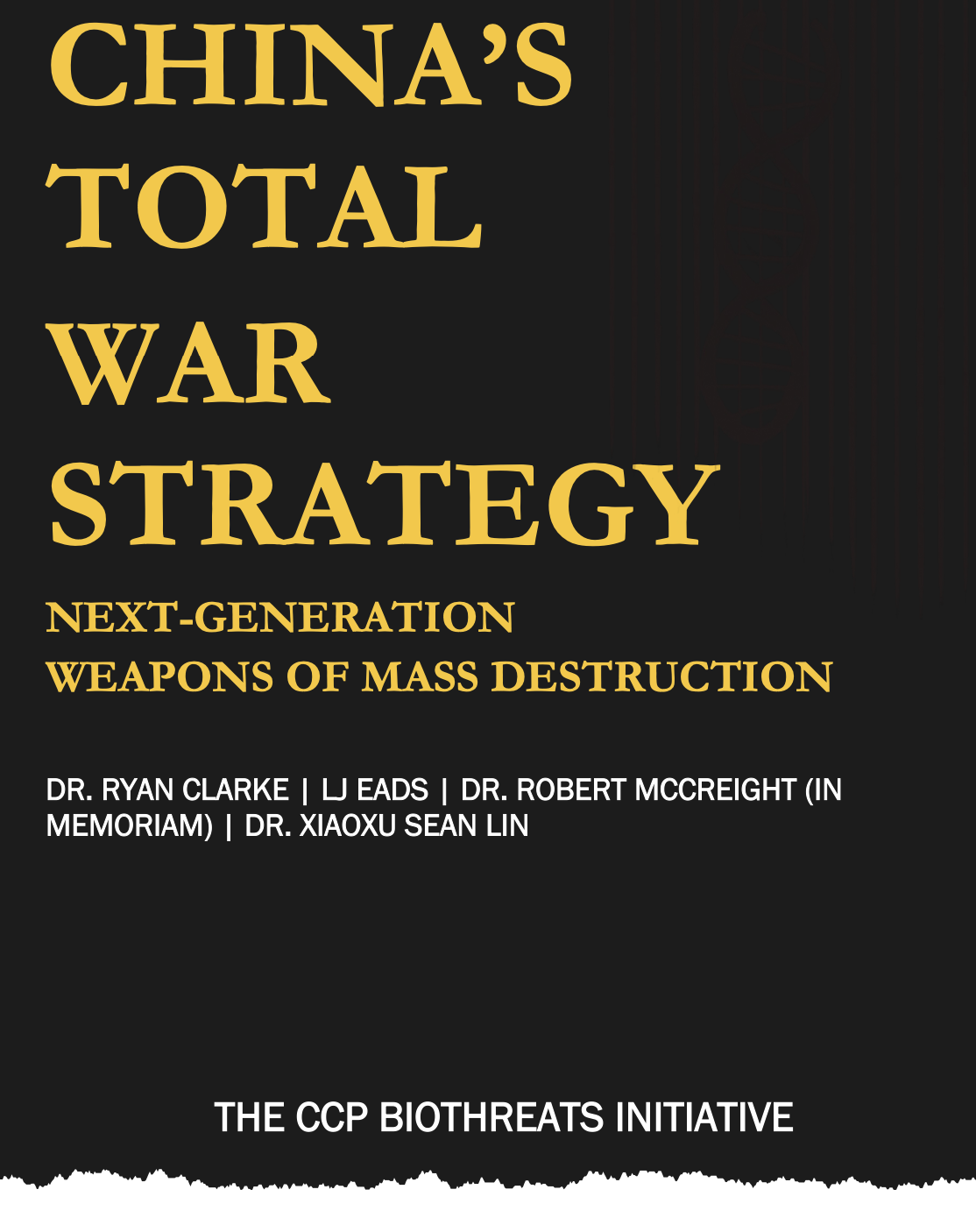
The book China’s Total War Strategy: Next-Generation Weapons of Mass Destruction – published by the CCP BioThreats Initiative and authored by Dr. Ryan Clarke, LJ Eads, Dr. Robert McCreight, and Dr. Xiaoxu Sean Lin – outlines how the CCP pursues an aggressive, multifaceted “total war” against the U.S. that leverages next-generation weapons, including synthetic narcotics (e.g., fentanyl and cannabinoids), bioweapons (e.g., Covid-19), psychological manipulation and influence (e.g., TikTok), and a broad arsenal of irregular warfare tools (read report).

And now, SIM farms appear to be another domain of the CCP’s irregular warfare campaign, an effort to collapse America from within by paralyzing communication networks. Throughout this year, one high-level Trump official has warned us about the devastation left behind by the years-long “Salt Typhoon” cyberattack carried out by China. On another front, Congressional Republicans of the Oversight Committee have been investigating the dark money networks and political affiliations of billionaire Neville Roy Singham, a U.S. national reportedly residing in Communist China, who allegedly was funding far-left color revolutions in the U.S. to sow chaos. Are you starting to get the picture now? 

Tyler Durden
Sat, 10/04/2025 – 14:35

via ZeroHedge News https://ift.tt/CtFfGHA Tyler Durden

The Golden Age Of Spectacle

The Golden Age Of Spectacle

Authored by Charles Hugh Smith via OfTwoMinds blog,

“The most useful expert, of course, is the one who can lie.” Guy Debord

We’re living in the golden age of Spectacle: whatever substance remains in politics is lost in the endless parade of outlandish political theater, finance is dominated by staged spectacles of media-savvy CEOs announcing the next trillion-dollar product, and online, all the world’s a stage for everyone’s spectacle.

French philosopher Guy Debord outlined the value of spectacle in a society and economy that is increasingly dependent on artifice rather than authenticity in his 1967 book, The Society of the Spectacle.

Here is how Debord described his 1967 book in his 1988 follow-up work, Comments on the Society of the Spectacle“In 1967, in a book entitled The Society of the Spectacle, I showed what the modern spectacle was already in essence: the autocratic reign of the market economy which had acceded to an irresponsible sovereignty, and the totality of new techniques of government which accompanied this reign.”

Debord is laying out a way to understand how society has become subsumed by economic forces, specifically markets ruled by the corporate-state.

This arrangement manages the populace by turning everything into a spectacle which in Debord’s view is not “real life,” it’s a representation that we passively accept without understanding how it transforms our identity and social fabric from “being” to “having,” i.e. buying and owning stuff that is a representation of who we are.

This representation is managed by technocratic expertise.

What we refer to as propaganda, marketing and narrative are for Debord all aspects of spectacle.

Spectacle as a simulation or facsimile of “real life” speaks to a profound alienation: we passively watch spectacle and take that passive consumption as “real life” without understanding it’s all managed to maintain the dominance of those benefitting from this arrangement.

This echoes many related ideas (for example, “The Matrix” films), simulacra being passed off as the authentic “real thing,” and Marx’s concept of alienation in which the worker has been disconnected (alienated) from the product/value of their labor.

The core idea here is that Spectacle is inauthentic, fake, a simulation, a substitution of representation for substance, that creates a peculiarly unreality. These are the themes I explore in my book Ultra-Processed Life.

The entire appeal of social media can be seen as personalizing Spectacle, as we each gain audience and influence by making ourselves and our lives into unreal representations, i.e. spectacles.

Here are some illuminating excerpts from Debord:

“Because spectacle replaces real life with a mere mediated representation of life that cannot be experienced directly, it provides a framework where mass deceptions and lies can consistently and convincingly appear as true.

It has recreated our society without community, and it has obstructed the ability to communicate in general. Such processes and their ramifications ultimately mean people cannot truly experience life for themselves: they have become spectators, bound to an impoverished state of unlife”

In The Society of the Spectacle, Debord explains that the economy subjugating society first presented itself as an “obvious degradation of being into having,” where human fulfilment was no longer attained through what one was, but instead only through what one bought and displayed. As society’s capitulation to the economy accelerated, the decline from being into having shifted “from having into appearing.”

With respect to knowledge, therefore, experts no longer have to be experts or have expertise, they only need to take on the appearance of expertise.

“All experts serve the state and the media and only in that way do they achieve their status. Every expert follows his master, for all former possibilities for independence have been gradually reduced to nil by present society’s mode of organisation. The most useful expert, of course, is the one who can lie.”

“The vague feeling that there has been a rapid invasion which has forced people to lead their lives in an entirely different way is now widespread; but this is experienced rather like some inexplicable change in the climate, or in some other natural equilibrium, a change faced with which ignorance knows only that it has nothing to say.” Debord

This reminds me of a comment French writer Michel Houellebecq made in an interview: “I have the impression of being caught up in a network of complicated, minute, stupid rules, and I have the impression of being herded towards a uniform kind of happiness, toward a kind of happiness that doesn’t really make me happy.”

A reliance on spectacle to create a peculiar unreality may not be solely modern.

If we think of late Rome’s extravagant spectacles–staged battles in the Coliseum, chariot races, etc.–they were representations of a Roman strength that was no longer real.

In the real world, Rome’s power flowed from its vast importation of wheat from North Africa, its lucrative trade with the Mideast and India, its silver mines in Spain and its well-trained and provisioned legions.

Once these decayed or collapsed, the spectacles in Rome were no longer manifestations of power, they were representations of a power that was rapidly dissolving in the world beyond Rome.

As a final thought, consider how AI is being presented as automated expertise. But isn’t AI just a representation of true expertise that “serves the state and the media” in a new theater of Spectacle?

*  *  *

Check out my new book Ultra-Processed Life and my updated Books and Films.

Become a $3/month patron of my work via patreon.com

Subscribe to my Substack for free

Tyler Durden
Sat, 10/04/2025 – 14:00

via ZeroHedge News https://ift.tt/newoR7E Tyler Durden

Lawsuit Challenges Trump’s $100,000 H-1B Visa Fee

NA

Yesterday, a broad coalition of groups filed the first lawsuit challenging President Trump’s imposition of a $100,000 fee on applications for H-1B visas, which are used by tech firms, research institutions, and other organizations to hire immigrant workers and researchers with various specialized skills. If allowed to stand, the fee would effectively end most H-1B visas, by making them prohibitively expensive, thereby inflicting serious harm on the US economy.

The case is called Global Nurse Force v. Trump. The plaintiffs are a broad coalition including the Global Nurse Force (which supplies nurses to health care providers), education groups (e.g. – the American Association of University Professors), religious organizations, and labor unions. I am a little surprised that multiple labor unions joined this lawsuit, as one might think they would want to keep out potential competitors to their members. However, I would guess they have H-1B visa holders among those members. In addition, studies show that H-1B workers actually increase wages for many US-citizen workers by increasing productivity and innovation.

The complaint argues the H-1B visa is illegal for a number of different reasons. Here’s a brief excerpt that summarizes some of them:

Defendants’ abrupt imposition of the $100,000 Requirement is unlawful. The
President has no authority to unilaterally alter the comprehensive statutory scheme created by Congress. Most fundamentally, the President has no authority to unilaterally impose fees, taxes or other mechanisms to generate revenue for the United States, nor to dictate how those funds are spent. The Constitution assigns the “power of the purse” to Congress, as one of its most fundamental premises. Here, the President disregarded those limitations, asserted power he does not have, and displaced a complex, Congressionally specified system for evaluating petitions and granting H-1B visas. The Proclamation transforms the H-1B program into one where employers must either “pay to play” or seek a “national interest” exemption, which will be doled out at the discretion of the Secretary of Homeland Security, a system that opens the door to selective enforcement and corruption.

The plaintiffs also argue that the government’s assertion of virtually unlimited power to impose visa fees goes against the major questions doctrine (which requires Congress to speak clearly when it delegates broad powers to the executive over issues of vast economic and political significance), and the constitutional nondelegation doctrine, which limits delegation of legislative power to the executive branch.

I made similar points in an earlier post about the H-1B visa fee policy, where I explained why it goes against the statutory scheme enacted by Congress, and why it would violate the nondelegation doctrine if Congress had delegated this power.

As the Global Nurse Force complaint notes, enforcing nondelegation is particularly crucial when it comes to the power to raise revenue, which is a specifically enumerated congressional power. The $100,000 fee goes far beyond anything that could plausibly be described as defraying administrative expenses, and is essentially a form of taxation.  The Framers of the Constitution were careful to ensure that only the legislative branch could impose taxes, in order to avoid the abusive executive taxation pursued by 17th century British monarchs. This is one of several areas where Trump is attempting to usurp this legislative power. Others include his unilateral imposition of massive tariffs, and his unconstitutional export taxes (which even Congress lacks the power to impose under the Constitution).

I hope the plaintiffs prevail here. I expect there may also be other lawsuits challenging the H-1B fee.

The post Lawsuit Challenges Trump's $100,000 H-1B Visa Fee appeared first on Reason.com.

from Latest – Reason.com https://ift.tt/6lC3zIM
via IFTTT

Immortal Monkeys? Not Quite, But Scientists Just Reversed Aging With ‘Super’ Stem Cells

Immortal Monkeys? Not Quite, But Scientists Just Reversed Aging With ‘Super’ Stem Cells

Key Points:

  • Super Stem Cells” boosted memory in monkeys and offered protection against neurodegeneration.
  • They halted age-related bone loss and restored vitality in more than half of the 61 tissues examined.
  • The therapy also cut back harmful inflammation and reduced the burden of senescent cells — the aged, non-dividing cells that drive aging throughout the body.

In a discovery that may have profound impacts on aging, scientists in Beijing have taken a dramatic step toward what once seemed impossible: making old animals biologically young again. The study was published last month in the journal Cell.

By fortifying human stem cells with a gene long linked to longevity, they rejuvenated aged monkeys – improving memory, protecting bones, calming inflammation, and restoring youthful activity across dozens of organs.

The work, while still in animals, is among the most compelling demonstrations yet that aging in primates might be reversible.

    The Science Behind the Breakthrough

    At the heart of the study are mesenchymal progenitor cells (MPCs) – a type of stem-like cell found in bone marrow and connective tissues. These cells act as the body’s maintenance crew, capable of turning into bone, cartilage, fat, and muscle cells, while also secreting factors that help nearby tissues repair themselves.

    But like all cells, MPCs age with us and eventually succumb to senescence  a state of permanent retirement. Senescent cells don’t divide anymore. Worse, they pump out inflammatory molecules, scar tissue signals, and other “toxic chatter” that accelerate aging in neighboring cells. In effect, senescent cells spread decline.

    Upgrading the Repair System with FoxO3

    To overcome this exhaustion, researchers turned to FoxO3, a protein known as a longevity gene regulator. In healthy young cells, FoxO3 acts like a switchboard operator, turning on DNA repair pathways, antioxidant defenses, and stress-resistance programs. In older cells, FoxO3 activity wanes – leaving them vulnerable to damage.

    Hydra, a freshwater organism capable of regenerating indefinitely, rely heavily on FoxO to keep their stem cells active. Humans share this same protein, and genetic studies link variants of FOXO3 to exceptional longevity in people.

    (Image: aip.org) The Immortal Hydra

    The Chinese Academy of Sciences team genetically engineered MPCs so that FoxO3 would stay permanently active inside the nucleus, constantly flipping on protective genes. 

    The researchers engineered senescence-resistant cells – “SRCs” – by altering genes that control DNA repair, stress resistance, and mitochondrial function. These fortified cells were then transplanted into elderly macaques whose age roughly corresponds to a human in their 60s or 70s.

    They found that SRC treatment mitigated age-related brain shrinkage, and rejuvenated multiple organs and tissues.

    Put simply: MPCs provided the hardware – the body’s natural repair crew – while FoxO3 was the software upgrade that made them resistant to aging.

    What Happened Inside the Monkeys

    The results were striking:

    • Bone health: Normally, older primates show progressive bone loss, a close analog to osteoporosis in humans. Monkeys that received SRCs maintained or even improved bone density, suggesting the treatment reversed skeletal decline.

    • Cognitive performance: When tested on memory and learning tasks, the treated monkeys performed significantly better, recalling objects and navigating mazes more effectively than untreated peers.

    • Inflammation: Blood tests revealed a sharp drop in inflammatory markers. Since chronic inflammation – sometimes called “inflammaging” – drives many age-related diseases, this finding suggests SRCs could help blunt the root of multiple disorders.

    • Organ vitality: Post-treatment scans and biopsies revealed rejuvenation in the brain, bone, and even reproductive organs. The researchers believe this widespread effect was mediated by exosomes — tiny vesicles released by SRCs that carry rejuvenating proteins and genetic material to other cells, essentially acting as messengers of youth.

    As one of the lead scientists, Si Wang, put it: “We see evidence of rejuvenation.”

    Why This Matters

    Most anti-aging strategies tested so far – from rapamycin to fasting mimics – have worked primarily in rodents. Translating those gains to primates, with their longer lifespans and complex physiology, has been an elusive goal.

    This study is different. By showing functional rejuvenation in macaques, it bridges the gap between mouse biology and human potential. The findings suggest that aging is not simply the result of passive wear and tear but is, at least partly, programmable and reversible.

    If similar approaches work in people, SRCs could one day treat not just osteoporosis or memory decline, but the broader syndrome of aging itself.

    But Enormous Questions Remain

    Experts stress that while the results are promising, translation to humans is far from assured. Questions loom:

    • Safety: Will senescence-resistant cells behave predictably, or could they persist too long, increasing cancer risk?

    • Durability: How long do the benefits last? Months? Years? A lifetime?

    • Delivery: Can such cells be manufactured at scale, and will the body accept them without immune rejection?

    • Ethics: How should such therapies be tested in people, and who should have access if they work?

    This is a milestone, but we must not leap to human immortality headlines,” said an independent gerontology expert. “What it shows is that systemic aging in primates can be modulated — that is profound enough.”

    A Glimpse of the Future

    For now, the macaques remain under study, their bodies whispering signals of youth from transplanted cells. But the implications are profound: if scientists can replenish the body’s repair machinery with cells designed to resist aging, medicine might shift from treating diseases one by one to addressing their common root.

    That vision – once dismissed as science fiction – is now edging closer to scientific fact.

    Tyler Durden
    Sat, 10/04/2025 – 13:25

    via ZeroHedge News https://ift.tt/PlRyn0F Tyler Durden

    The End Of Woke Capitalism

    The End Of Woke Capitalism

    Authored by Mark Jeftovic via BombThrower.com,

    The Egregore of Far-Left Radicalism Is Wounded – But What Will Take It’s Place?

    Today’s post is excerpted from the October edition of The Bitcoin Capitalist Letter – get a special deal for Bombthrower readers here »

    “At the physical level, we are witnessing a war of structures,
    on the meta-physical level, a battle of pendulums.”

    — Vadim Zeland

    Within the space of a few days over the second week of September, the world looked on in horror as a pair of unspeakably horrific crimes were committed; by now it’s likely everyone knows what I’m referring to.

    I’m talking, of course, about the stabbing of Ukrainian refugee Iryna Zarutska on a North Carolina transit train – and the all-too-public assassination of Charlie Kirk, at a campus event in Utah.

    The images from both events were horrific and circulated widely, there is no need to show them again here – but this “one-two” punch in my mind was the definitive knock-out blow to the far-left domination of our cultural zeitgeist.

    A few days after the Kirk assassination it became apparent that something big had shifted; at the time I called it the “Turning Point for the Radical Left”. It ran on Zerohedge and racked around 100K reads.

    The TL;DR on that, if you haven’t read it, was that Charlie Kirk’s assassination will mark the moment the cultural tide turned against the Left.

    It didn’t happen in isolation; it was the culmination of a progression that I first started documenting back in 2022, when both RFK Jr and Peter Thiel gave keynotes at the Bitcoin Conference in Miami – and it became clear to me that the entire edifice of “woke capitalism” upon which the whole left-wing, collectivist paradigm was built, was beginning to crumble.

    The process gained momentum via the through-line of the Oct 7 massacre in Israel, and the targeted killing of United Health CEO Brian Thompson.

    In the aftermath of these events, we started to see public opinion – and corporate / private governance –  start to turn against the radical left.

    After publishing my piece, and to my point, we saw lefties trying to regain the upper hand they once took for granted – with calls for Marvel to fire Guardians of the Galaxy star Chris Pratt.

    His moral crime?

    He asked the public to pray for the family of Charlie Kirk.

    Marvel will do no such thing, because, as I’ve said, those days are over.

    What did happen, however, was Marvel’s comic universe rival, DC, canceled the “Red Hood” comic book series, after its author Gretchen Felker-Martin (who is trans) posted on Bluesky:

    “Thoughts and prayers you Nazi b-tch… Hope the bullet’s okay after touching Charlie.”

    I can’t think of any alternate universe where this kind of sentiment toward anyone is okay, let alone sane. To my point that the momentum has shifted, even Bluesky suspended his account.

    Wow.

    I closed out my Bombthrower piece asking the open question about what was the fundamental driver that led to the far-left takeover of the zeitgeist?

    “Some say this ever-increasing polarization and these seemingly ritualistic events are all orchestrated by shadowy actors playing the long game. My take? It’s something deeper”.

    There are some very obvious trends and beats here that are hard to ignore.

    For starters, Kirk is not Trump, or even Elon Musk or Peter Thiel. His security detail likely wasn’t excessive; it was unlikely anybody thought it needed to be anything beyond a few bodyguards who could repel a bike lock-wielding soy-boy in a man-bun.

    If somebody really just wanted him dead, there would have been easier ways to get at him, and fare a better chance of getting away clean after.

    Murdering him in such a spectacular and shocking manner was deliberate and intentional. It was calculated to drive an effect at a mass, psychic level – and there are ritualistic elements to it, as there are wont to be in these archetypally shocking hinge-moments.

    The conspiracy minded would tell you this is intentional signalling – which may be true, at least partially – but I tend to think it’s because we live in a reality of “high weirdness” where events are playing out in a non-linear fashion across dimensional axes that we aren’t even aware of.

    But let’s follow this train of thought for a bit; I’m not comfortable sharing this publicly, so this is all between us girls.

    For years I ruminated that the Fabian Socialists had achieved complete victory in their stated mission of bringing world communism into being through a centuries-long process of inexorable infiltration of our institutions:

    They started with academia, then media and culture – and finally government and supra-governmental constructs such as the World Economic Forum.

    It was always driven by what I’ve called “the 3M’s of neo-collectivism”, namely: Malthusian, Marxist and essentially misanthropic.

    It’s an anti-human philosophy that regards our species as a cancer that needs to be managed, and ideally, depopulated.

    We’re heavily into tin-foil hat territory here – but a lot of this has been laid out in the writings of Julian Huxley, Warren Wagar and beyond.

    It’s never been refuted – and we see in the contemporary climate-alarmism movement a disdain for life itself and an embrace of the #Degrowth cause.

    So there’s that.

    Then I wonder — why all the trans violence?

    This feels so “off” to me, it’s like somehow under the hood the entire movement decided “hey, let’s make ourselves the absolute most vilified segment of the population in existence” – and proceed to carry out only the most heinous of crimes.

    This is a relatively recent development and it feels somehow deeper than plain-Jane frustration with being marginalized (and misgendered).

    The legendary ex-KGB handler Yuri Bezmenov, who defected to the West over forty years ago, warned his debriefers that the Soviets would undermine America from within. They would achieve final victory over the West, not through military force – where it was impossible to win – but through subversion.

    They would, in Bezmenov’s warnings, engage in a multi-decades program of:

    Demoralization: Infiltrate & undermine institutions, amplify antisocial behaviours

    Destabilization: Create internal conflicts & radicalize, leads to clashes

    Crisis: Collapse, leading to civil war  or invasion

    Normalization: New authoritarian rule, discard old change agents

    It’s a long game. The “demoralization” phase alone is 15 – 20 years: “a single generation of students”, in Bezmenov’s words, to take them “in the opposite direction from the society’s moral and cultural values”.

    Of course, the USSR collapsed; did they set a plan in motion that continued operating after they unleashed it? Even after the handler regime was no more?

    Or, was that same playbook adopted – essentially co-opted – by someone else, the next geopolitical rival, perchance? Like the CCP.

    China also knows they cannot, yet, defeat the USA in a military conflict, at least not outside of the Asian-Pacific theatre – but if there’s one thing the Chinese are known for, it’s thinking in generational increments and in non-linear terms.

    Cultural Marxism makes very little sense to normal, rational people. It verges on total nihilism, and yet, it caught on like wildfire over the past couple decades and is now out of control and running amok across campuses and in our streets.

    Before September we were a few smidges away from civil war – now, I shudder to think what happens next.

    I remember a few years ago I was listening to a Value After Hours podcast (I’d never be able to find the episode) where they were talking about Ray Dalio’s prediction that America had a significant probability of being in a full-on civil war within three years.

    At the time Tobias Carlisle said “that sounds absolutely bonkers”.

    Dalio was recently on Diary of a CEO – following this theme of mass civil unrest, and that was recorded before the second week of September.

    So imagine if the subversion of our universities and media over the past few decades was the result of the most far-left and radical elements being funded and encouraged by a foreign actor, like China.

    Carefully nurturing the polarization, the angst, the demoralization of the entire population – on all sides – pushing it along with specific, targeted acts of camouflaged terrorism in order to bring it to a climactic state of unendurable tension – and then, the finale:

    An act so heinous and itself so polarizing that it ignites the “response”. Those familiar with the Hegelian dialect, “problem → response → solution”  (which happens to be the “three-act play” structure of every conspiracy theory), would recognize it.

    Even I recognize this and you all know how much I disdain most conspiracy theories. It’s a cognitive bias that I know is there but I hang on to it, because, frankly – it helps me maintain my equilibrium.

    I do not like the idea of world history being the outcome of behind-the-scenes machinations by all-powerful cabals, because believing that would make me feel powerless and helpless.

    So normally I subscribe to Hanlon’s Razor, as an article of faith.

    But as I’ve been admitting lately – it’s been getting harder to keep believing that. Most recently, it’s almost impossible.

    What I notice now, is things have gotten so out of hand that huge chunks of the population would cheer for an authoritarian strongman to take over the machinery of government – either through populist movements or even soft coups (or overt ones), so long as they promised and delivered a “return to rule of law and normalcy”.

    Ngl… Trump fits the bill neatly.

    They would succeed on the first aim, through largely technocratic means, probably nodding toward the state capitalism and political meritocracy of China, and call it the new “way of the world”.

    But “normalcy” would be gone.

    What I do believe is that we are in a Fourth Turning, in the Howe and Strauss sense, and that this fourth turning is unique in that it is occurring against the backdrop of a widely intolerable acceleration in the pace of change (“Future Shock”) and massively increasing wealth disparity because we’re in the early innings of a global fiat hyperinflation.

    If you back out the Fabians, the KGB and China and just stick with Future Shock and hyperinflation, you still have all the ingredients for a tightly wound powder keg:

    What is probably in play are elements of all of these forces. That’s what makes it so difficult to get a read on what is happening.

    There is no unified, coherent cabal behind this: the more I study the phenomenon of “pendulums” (in the Vadim Zeland sense), morphic fields and even egregores, I have come to suspect that there is no “they”, but there are “its” – several of them – converging, competing, conflicting, all the while amplifying and accelerating each other.

    Pendulums feed on both positive and negative mental energy. In Zeland’s words, in order to do one of two things:  “the pendulum’s goals are always to stabilize its own or a higher structure, and to destroy a competing structure”.

    More on these larger forces another time, but for now,  frankly, it’s rather amazing the system remains on the tracks at this point.

    I don’t expect it will last; I find myself once again perusing real estate listings for bug-out bolt-holes outside of the city.

    *  *  *

    Today’s post is excerpted from the August edition of The Bitcoin Capitalist Letter – get a special deal for Bombthrower readers here »

    Sign up for the Bombthrower Mailing List here and get a free copy of The Bitcoin Treasuries Playbook.

    Follow me Twitter/X or Nostr: npub1elwpzsul8d9k4tgxqdjuzxp0wa94ysr4zu9xeudrcxe2h3sazqkq5mehan

    Tyler Durden
    Sat, 10/04/2025 – 12:50

    via ZeroHedge News https://ift.tt/5GEdOgS Tyler Durden