Defending the Summary Execution of Suspected Drug Smugglers, Trump Declares an ‘Armed Conflict’


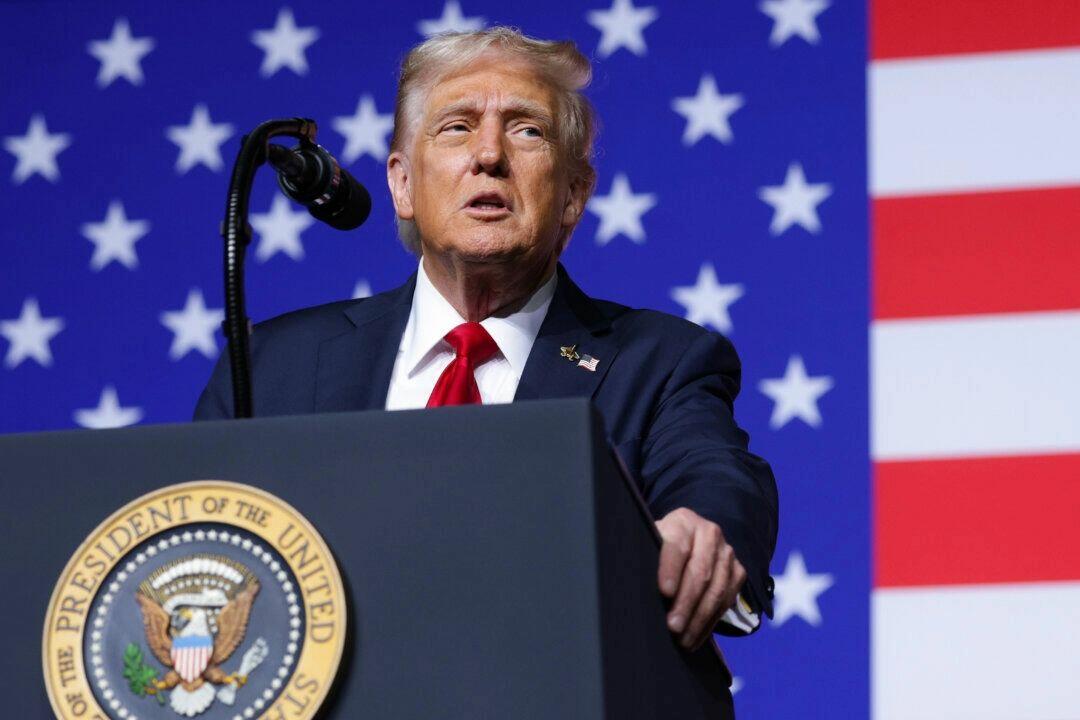
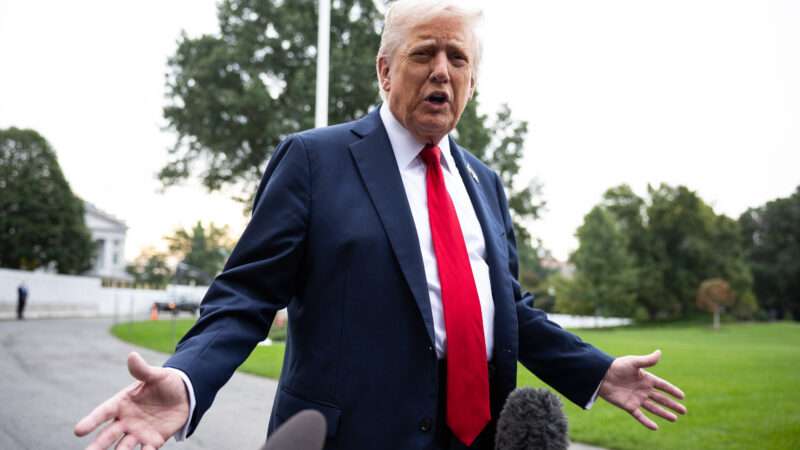
President Donald Trump speaks to reporters on the South Lawn of the White House | CNP/AdMedia/Sipa/Newscom

This week, President Donald Trump sought to justify his new policy of summarily executing suspected drug smugglers by declaring that his targets are “unlawful combatants” in an “armed conflict” with the United States. But that terminology, which Trump deployed in a notice to Congress, does not change the reality that he has authorized the military murder of criminal suspects who pose no immediate threat of violence.

So far, Trump has ordered three attacks on speedboats in the Caribbean Sea that he said were carrying illegal drugs, killing a total of 17 people. The first attack was a September 2 drone strike that killed 11 people on a boat that reportedly “appeared to have turned around before the attack started because the people onboard had apparently spotted a military aircraft stalking it.” On September 15, U.S. forces blew up another speedboat in the Caribbean, killing three people whom Trump described as “confirmed narcoterrorists from Venezuela.” Four days later, Trump announced a third attack that he said killed three people “affiliated with a Designated Terrorist Organization” who were “conducting narcotrafficking.”

Contrary to Trump’s implication, that designation does not turn murder into self-defense. “The State Department designation merely triggers the government’s ability to implement asset controls and other economic sanctions under the International Emergency Economic Powers Act (IEEPA), the Immigration and Nationality Act (INA) and other statutes,” Georgetown law professor Marty Lederman noted after the first attack on a suspected drug boat. “It has nothing to do with authorizing [the Defense Department] to engage in targeted killings…which is why the U.S. military doesn’t go around killing members of all designated Foreign Terrorist Organizations.”

According to White House spokeswoman Anna Kelly, Trump’s literalization of the war on drugs is fully consistent with international law. “The president acted in line with the law of armed conflict to protect our country from those trying to bring deadly poison to our shores,” she told The New York Times this week. “He is delivering on his promise to take on the cartels and eliminate these national security threats from murdering more Americans.”

That framing is logically, morally, and legally nonsensical. The truth is that Americans like to consume psychoactive substances that legislators have deemed intolerable, and criminal organizations are happy to profit from that demand. The fact that Americans who use illegal drugs sometimes die as a result—a hazard magnified by the prohibition policy that Trump is so eager to enforce—does not transform the people who supply those drugs into murderers.

If it did, alcohol producers and distributors, who supply a product implicated in an estimated 178,000 deaths a year in the United States, would likewise be guilty of murder. And by Trump’s logic, they would be subject to the death penalty based on nothing more than the allegation that they were involved in the alcohol trade.

There is obviously something wrong with an argument that would justify the execution of brewers, vintners, distillers, liquor store owners, and bartenders based on their complicity in alcohol-related deaths. Even during national alcohol prohibition, the government did not treat bootleggers as murderers, even when they were smuggling booze into the United States, which according to Trump’s reasoning posed a deadly threat to “national security.”

The current drug prohibition regime is more severe in several respects, but it still deploys the death penalty only in rare cases. Federal law authorizes the execution of people who commit murder in the course of drug trafficking. It also notionally allows the death penalty for drug trafficking involving very large quantities: at least twice the amounts that trigger a mandatory life sentence, which are in turn 300 times the amounts that trigger a mandatory 10-year sentence.

Those death-penalty thresholds include 600 grams of LSD, three kilograms of methamphetamine, six kilograms of PCP, 60 kilograms of heroin, 300 kilograms of cocaine, and 60,000 kilograms of marijuana. But no death penalties have been imposed under these provisions, and it is not clear whether they would be constitutional.

In the 2008 case Kennedy v. Louisiana, the Supreme Court held that the Eighth Amendment’s ban on “cruel and unusual punishment” precludes execution except for “crimes that take the life of the victim.” But the Court added that it was not addressing “crimes defining and punishing treason, espionage, terrorism, and drug kingpin activity, which are offenses against the State.”

Trump has made no secret of his desire to execute drug dealers, and he thinks he has found a legal way of doing that without seeking new legislation or going to the trouble of arresting and trying suspects. The trick, he thinks, is to equate drug smuggling with violent aggression, define drug interdiction as an “armed conflict,” and treat suspected drug smugglers as “unlawful combatants” who can be killed at will, regardless of whether they are actually engaged in violence.

The Bush and Obama administrations tried something similar with alleged terrorists, which provoked considerable debate about the scope of the government’s asserted license to kill, especially as it pertained to U.S. citizens on U.S. soil. But in that case, Congress had authorized military action against Al Qaeda and its allies, and the targets were accused of plotting literal attacks on Americans.

In this case, by contrast, there is no such congressional authorization, and Trump deemed his targets worthy of assassination simply because they allegedly were trying to supply Americans with politically disfavored intoxicants. Calling them “narcoterrorists,” as the Trump administration habitually does, cannot supply a moral or legal justification for killing them in cold blood without anything resembling due process.

Drug cartels “illegally and directly cause the deaths of tens of thousands of American citizens each year,” Trump’s notice to Congress says. The president, therefore, has “determined” that drug cartels are “nonstate armed groups” whose actions “constitute an armed attack against the United States,” the notice adds. “Based upon the cumulative effects of these hostile acts against the citizens and interests of the United States and friendly foreign nations, the president determined that the United States is in a noninternational armed conflict with these designated terrorist organizations.”

Geoffrey Corn, formerly the U.S. Army’s senior adviser on the law of war, told the Times that Trump has not established the “hostilities” required for an “armed conflict” against the United States because (as the Times dryly puts it) “selling a dangerous product is different from an armed attack.” In Corn’s view, “This is not stretching the envelope. This is shredding it. This is tearing it apart.”

Former State Department lawyer Brian Finucane is “not surprised that the administration may have settled on such a theory to legally backfill their operations.” But among other problems with that theory, he said, “it is far from clear that whoever they are targeting is an organized armed group such that the U.S. could be in a [noninternational armed conflict] with it.”

Cardozo Law School professor Gabor Rona calls Trump’s policy “utterly unprecedented.” If the people whose deaths Trump ordered “were running illicit drugs destined for the United States, the proper—and entirely feasible and precedented—response would have been interdiction, arrest, and trial,” Rona writes. “The Trump administration’s summary execution/targeted killing of suspected drug dealers, by contrast, is utterly without precedent in international law. In fact, there is precedent for considering such attacks, when committed on a widespread or systematic basis, to be a crime against humanity. Former Philippine President Rodrigo Duterte is currently facing charges in the International Criminal Court for exactly that reason.”

Trump, however, is a big fan of Duterte, who likened himself to Adolf Hitler while urging the murder of drug offenders. During his first term, Trump bragged about his “great relationship” with Duterte, who he said was doing “a great job” in tackling substance abuse. Now Trump seems bent on copying Duterte’s bloodthirsty example.

The post Defending the Summary Execution of Suspected Drug Smugglers, Trump Declares an 'Armed Conflict' appeared first on Reason.com.

from Latest – Reason.com https://ift.tt/D21ZNRg
via IFTTT

Apple Removed ICEBlock From App Store Under DOJ Pressure


10-3-25-v2-a | Illustration: Eddie Marshall | Midjourney

Under pressure from the Department of Justice (DOJ), Apple removed crowdsourcing apps used to alert users about federal immigration activity in their area from the company’s app store on Thursday. The developer of ICEBlock—one of the apps removed—is determined to fight for the app, which he says is protected speech under the First Amendment. 

At the direction of United States Attorney General Pam Bondi, the DOJ asked Apple to remove ICEBlock, which the Trump administration claims puts Immigration and Customs Enforcement (ICE) agents in danger by allowing users to anonymously report officers’ presence. “ICEBlock is designed to put ICE agents at risk just for doing their jobs, and violence against law enforcement is an intolerable red line that cannot be crossed,” Bondi told Fox News in a statement. 

Joshua Aaron, ICEblock’s software developer, told CNN that he launched the platform to fight back against President Donald Trump’s immigration crackdown and help users avoid interactions with ICE. But controversy was stoked in early July after Homeland Security Secretary Kristi Noem said her agency was “working with the Department of Justice” to potentially prosecute CNN for reporting on the app and “actively encouraging people to avoid law enforcement.” 

Controversy flared again after FBI Director Kash Patel released details in September that Joshua Jahn, who is suspected of opening fire at an ICE facility in Dallas last month, used apps that “tracked the presence of ICE agents.” Although Patel didn’t name ICEBlock, the well-known app was painted as a danger to federal agents. 

But Aaron has steadfastly defended the app as protected speech, akin to flagging police speed traps. “ICEBlock is no different from crowd sourcing speed traps, which every notable mapping application, including Apple’s own Maps app, implements as part of its core services,” he told 404 Media following the app’s removal. “This is protected speech…we are determined to fight this with everything we have.” It is unclear at this time how Aaron plans to challenge Apple’s ruling. 

In the email Aaron received announcing the app’s removal, reviewed by 404, Apple said that upon re-evaluation, the ICEBlock violated guidelines “because its purpose is to provide location information about law enforcement officers that can be used to harm such officers individually or as a group”—based on “information provided to Apple by law enforcement.” 

The First Amendment protects ICEBlock in the same way it protects apps like Google Maps and Waze, and prohibits the federal government from infringing on the app’s development and use. However, Apple is a private company and not limited in the same way. Needless to say, the DOJ’s indirect interference on ICEBlock—and its 1.1 million users—through private companies like Apple is deeply troubling. 

“I am incredibly disappointed by Apple’s actions today,” Aaron told 404. “Capitulating to an authoritarian regime is never the right move.”

The post Apple Removed ICEBlock From App Store Under DOJ Pressure appeared first on Reason.com.

from Latest – Reason.com https://ift.tt/1noC6JS
via IFTTT

Missouri Judge Backs City’s Eminent Domain Redevelopment Plan


Brentwood, Missouri storefronts | Institute For Justice

In September, a Missouri judge upheld the city of Brentwood’s plan to seize businesses along the Manchester Road Corridor, siding with the city’s $436 million redevelopment scheme and its decision to label the area “blighted.” Judge Kristine Allen Kerr ruled in the case of Feather-Craft et al v. Brentwood that the blight determination of the Corridor is “fairly debatable”—a legal standard that makes it harder for property owners to challenge government takings—and disagreed that the city made its blight determination “arbitrarily and capriciously.” This ruling could clear the way for the seizure of several businesses along the Corridor.

The Institute for Justice (I.J.) filed a lawsuit in December 2023 on behalf of four businesses that were designated as blighted by the city. The suit alleged that city leaders violated Missouri law with both the blight designation and their intent to use eminent domain to condemn their properties.

Bob Belden, the lead I.J. attorney on the case, believes the court failed to apply the correct standard of review by using the “fairly debatable” standard, which placed the burden on the plaintiffs to “demonstrate that the reasonableness of the City’s action is not even fairly debatable.” 

“We argued to the trial court that the Missouri legislature was saying, ‘this isn’t the kind of standard or review that is supposed to be applied in these cases to protect property rights in a meaningful way,'” says Belden. “You’re supposed to look at what the legislature actually considered and how [the law] was actually made.”

Ultimately, the court chose to “defer to the legislative determination of blight,” even “where evidence contrary to the legislative determination appears stronger than the evidence supporting it.” According to the ruling, “so long as substantial evidence exists on both sides,” the question of whether an area is blighted can be considered “fairly debatable.”

In 2018, Brentwood hired PGAV Planners, an urban planning firm, to conduct a blight study on the Manchester Road Corridor. PGAV concluded that the Corridor was “blighted” based on its location in the city’s floodplain and “other blighting factors present.” 

During the trial, Mayor David Dimmitt testified about the issue of flooding facing the area, despite an $80 million flood mitigation project along Manchester Road that he deemed successful in 2022. The court determined that the 2022 project “did reduce the likelihood of flood damage,” but “did not fully resolve the flooding problems and their future risks.”

Amy Stanford, owner of Time for Dinner, a family-oriented meal prep business that’s been in Brentwood for over two decades, calls the court’s ruling “absurd.” 

“Unfortunately, for more than two years, the neighborhood has been under the threat of eminent domain, which has made it difficult for businesses to invest or expand,” Stanford says. In fact, several new businesses that have applied to open here were not approved by the city of Brentwood. That lack of support and uncertainty has only added to the appearance of blight that the city now cites as justification for redevelopment.”

Brentwood city officials did not respond to Reason‘s request for comment.

Belden says his clients are “looking forward to keeping the fight up on appeal.” He says they plan to ask the Missouri Supreme Court to take the case under Article V, Section 10 provision of Missouri law based on the “general interest or importance of a question involved in the case, or for the purpose of reexamining the existing law.”

The post Missouri Judge Backs City's Eminent Domain Redevelopment Plan appeared first on Reason.com.

from Latest – Reason.com https://ift.tt/Zm2YWkx
via IFTTT

Apple Removed ICEBlock From App Store Under DOJ Pressure


10-3-25-v2-a | Illustration: Eddie Marshall | Midjourney

Under pressure from the Department of Justice (DOJ), Apple removed crowdsourcing apps used to alert users about federal immigration activity in their area from the company’s app store on Thursday. The developer of ICEBlock—one of the apps removed—is determined to fight for the app, which he says is protected speech under the First Amendment. 

At the direction of United States Attorney General Pam Bondi, the DOJ asked Apple to remove ICEBlock, which the Trump administration claims puts Immigration and Customs Enforcement (ICE) agents in danger by allowing users to anonymously report officers’ presence. “ICEBlock is designed to put ICE agents at risk just for doing their jobs, and violence against law enforcement is an intolerable red line that cannot be crossed,” Bondi told Fox News in a statement. 

Joshua Aaron, ICEblock’s software developer, told CNN that he launched the platform to fight back against President Donald Trump’s immigration crackdown and help users avoid interactions with ICE. But controversy was stoked in early July after Homeland Security Secretary Kristi Noem said her agency was “working with the Department of Justice” to potentially prosecute CNN for reporting on the app and “actively encouraging people to avoid law enforcement.” 

Controversy flared again after FBI Director Kash Patel released details in September that Joshua Jahn, who is suspected of opening fire at an ICE facility in Dallas last month, used apps that “tracked the presence of ICE agents.” Although Patel didn’t name ICEBlock, the well-known app was painted as a danger to federal agents. 

But Aaron has steadfastly defended the app as protected speech, akin to flagging police speed traps. “ICEBlock is no different from crowd sourcing speed traps, which every notable mapping application, including Apple’s own Maps app, implements as part of its core services,” he told 404 Media following the app’s removal. “This is protected speech…we are determined to fight this with everything we have.” It is unclear at this time how Aaron plans to challenge Apple’s ruling. 

In the email Aaron received announcing the app’s removal, reviewed by 404, Apple said that upon re-evaluation, the ICEBlock violated guidelines “because its purpose is to provide location information about law enforcement officers that can be used to harm such officers individually or as a group”—based on “information provided to Apple by law enforcement.” 

The First Amendment protects ICEBlock in the same way it protects apps like Google Maps and Waze, and prohibits the federal government from infringing on the app’s development and use. However, Apple is a private company and not limited in the same way. Needless to say, the DOJ’s indirect interference on ICEBlock—and its 1.1 million users—through private companies like Apple is deeply troubling. 

“I am incredibly disappointed by Apple’s actions today,” Aaron told 404. “Capitulating to an authoritarian regime is never the right move.”

The post Apple Removed ICEBlock From App Store Under DOJ Pressure appeared first on Reason.com.

from Latest – Reason.com https://ift.tt/1noC6JS
via IFTTT

Trump Sets Sunday Deadline For Hamas To Accept Peace Deal

Trump Sets Sunday Deadline For Hamas To Accept Peace Deal

Authored by Jackson Richman via The Epoch Times (emphasis ours),

President Donald Trump has given Hamas until Oct. 5 to accept a deal to end the war between the terrorist group and Israel and release all the hostages. Trump announced the deadline in a post on Truth Social on Oct. 3.

President Donald Trump speaks to senior military leaders at Marine Corps Base Quantico in Quantico, Va., on Sept. 30, 2025. Alex Wong/Getty Images

An Agreement must be reached with Hamas by Sunday Evening at SIX (6) P.M., Washington, D.C. time. Every Country has signed on! If this LAST CHANCE agreement is not reached, all HELL, like no one has ever seen before, will break out against Hamas. THERE WILL BE PEACE IN THE MIDDLE EAST ONE WAY OR THE OTHER,” Trump wrote in his post.

Hamas has been a ruthless and violent threat, for many years, in the Middle East! They have killed (and made lives unbearably miserable), culminating with the October 7th MASSACRE, in Israel, babies, woman, children, old people, and many young men and women, boys and girls, getting ready to celebrate their future lives together. As retribution for the October 7th attack on civilization, more than 25,000 Hamas ‘soldiers’ have already been killed. Most of the rest are surrounded and MILITARILY TRAPPED, just waiting for me to give the word, ‘GO,’ for their lives to be quickly extinguished. As for the rest, we know where and who you are, and you will be hunted down, and killed.”

Trump also called on Palestinians to go to safe parts of Gaza.

“I am asking that all innocent Palestinians immediately leave this area of potentially great future death for safer parts of Gaza. Everyone will be well cared for by those that are waiting to help,” Trump said, adding that his warning is “one last chance.”

Israel has accepted a 20-point plan put forward by the United States to end the war.

The plan includes deradicalizing Gaza and making it a terror-free zone; redeveloping Gaza; releasing alive and deceased hostages within 72 hours of Israel agreeing to the plan; immediately ending the war; Israel releasing 250 life-sentenced prisoners and 1,700 Gazans who were detained after the Oct. 7, 2023, attack on Israel by Hamas; and sending humanitarian aid into Gaza.

Gaza would be governed by a technocratic and apolitical Palestinian committee subject to oversight by a “Board of Peace” chaired by Trump and comprising heads of state as well as former British Prime Minister Tony Blair.

Also, under the plan, no one would be forced to leave Gaza.

Additionally, Hamas would have no role in Gaza and its administration, and all terrorist infrastructure would be destroyed.

An International Stabilization Force would be deployed to Gaza to “train and provide support to vetted Palestinian police forces in Gaza, and consult with Jordan and Egypt, who have extensive experience in this field,” according to the plan.

Tyler Durden
Fri, 10/03/2025 – 13:40

via ZeroHedge News https://ift.tt/rHQmyT8 Tyler Durden

USA Rare Earth Shares Spike More Than 18% On News Of Talks With Trump Administration

USA Rare Earth Shares Spike More Than 18% On News Of Talks With Trump Administration

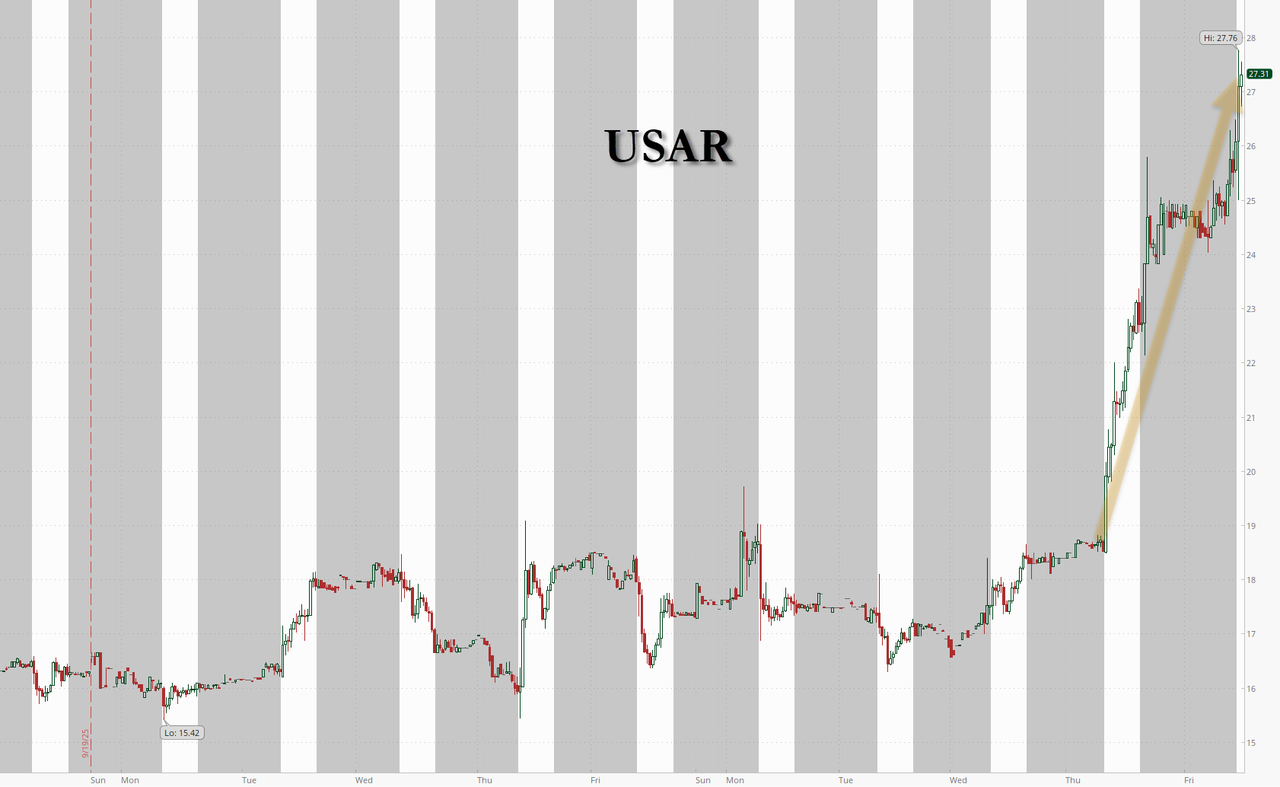
USA Rare Earth shares rose more than 18% to a record high Friday after CEO Barbara Humpton said the company was in “close discussions with the White House” during a CNBC interview. We have highlighted the name multiple times when discussing potential rare earth companies that the Trump administration could take interest in. We also noted MP Materials months ago before the company’s nearly 400% ascent. 

Humpton’s remarks follow the Trump administration’s 5% stakes in Lithium Americas and its Thacker Pass joint venture with General Motors earlier this week. In March, Trump invoked emergency powers to boost U.S. mineral output after China halted rare earth exports, underscoring the need for domestic supply.

Recall, just hours ago we noted that as part of America’s Industrial Policy transformation, The Trump administration is pressing companies across nearly 30 industries to strike deals that advance national and economic security goals.

Officials are offering tariff relief, revenue guarantees, and even government equity stakes in exchange for concessions. The rapid pace of negotiations is aimed at securing political wins for President Donald Trump before the 2026 midterm elections, sources said. 

Commerce Secretary Howard Lutnick has emerged as the administration’s lead dealmaker, overseeing government stakes in Intel and Nippon Steel’s purchase of U.S. Steel. “If we’re going to give you the money, we want a piece of the action,” Lutnick said in August. He is building out a Wall Street-heavy team under a new U.S. Investment Accelerator, seeded in part with $550 billion from Japan as part of its trade commitments.

The International Development Finance Corporation, originally tasked with overseas projects, is also central to the strategy. A June proposal before Congress would expand its mandate and increase its firepower to $250 billion, creating an equity fund to support critical supply chains, energy, minerals, and infrastructure.

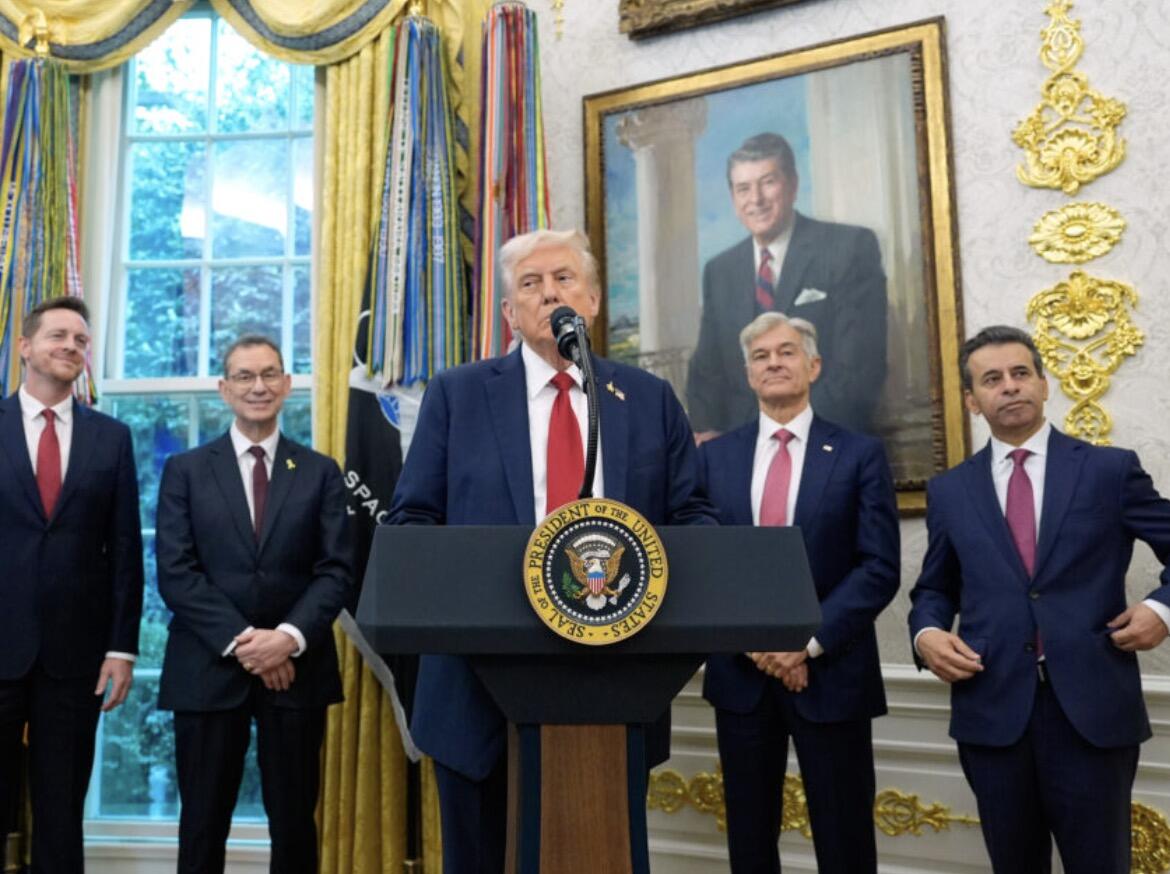
Reuters reports that the administration’s outreach spans semiconductors, AI, shipbuilding, critical minerals, energy, and pharmaceuticals. On Tuesday, Trump announced a White House deal with Pfizer to cut drug prices in exchange for tariff relief, declaring: “The United States is done subsidizing healthcare of the rest of the world.”

Companies are learning the optics are as important as the agreements. Eli Lilly was pressed by the administration after announcing new U.S. plants without including Trump. “As an American company, Lilly is committed to expanding manufacturing capacity in the U.S.,” a spokesperson said. Pfizer and AstraZeneca declined comment.

And we continue to watch the nuclear space closely, where we have speculated that names like Centrus Energy (LEU) could be in line for attention from the adminstration. 

Tyler Durden
Fri, 10/03/2025 – 13:20

via ZeroHedge News https://ift.tt/2xbp5ml Tyler Durden

Boeing 777X Commercial Debut Pushed To 2027, Billions In Charges Loom

Boeing 777X Commercial Debut Pushed To 2027, Billions In Charges Loom

Boeing’s 777X widebody jet is not expected to enter commercial service until early 2027, one full year later than planned, or about seven years behind schedule. One Jefferies analyst now expects Boeing to take a massive charge due to the delay, adding yet another headache for the struggling planemaker. The fresh setback comes one week after reports suggested the FAA was easing restrictions on 737 Max deliveries. 

Bloomberg, citing sources familiar with Boeing and major airlines, reported that the 777X will not be delivered to Deutsche Lufthansa AG and Emirates in 2026, with the latest plans pushing entry into service to 2027.

Deutsche Lufthansa AG, the launch customer for the widebody aircraft, is already laying the groundwork for a fresh setback. The German airline isn’t including the 777X in its fleet plans until 2027, said one of the people, who asked not to be identified because the matter is confidential. Officials at Emirates, the 777X’s biggest customer, have also grown more cautious as it looks at entry into service possibly not before 2027. -BBG

The potential commercial delay for the 777X prompted Jefferies analyst Sheila Kahyaoglu to forecast that Boeing could take a charge as large as $4 billion due to the delays. 

That includes the lost cash Boeing would have collected in 2026 from delivering 18 of the widebody jets, along with customer concessions and other related costs. Of the many challenges that the planemaker currently faces, “I’m sure it’s a big priority because it’s going to be a big cash drain for them,” Kahyaoglu said of the 777X certification delays.

Separately, RBC analyst Ken Herbert expects the 777X’s entry into service to begin sometime in the second half of 2027. He forecasts a $2.5 billion charge due to the delay.

Last month, Boeing CEO Kelly Ortberg revealed to investors at a Morgan Stanley conference that the 777X certification process was falling behind schedule.

Emirates (the largest customer), Qatar Airways, Lufthansa, Etihad Airways, Cathay Pacific, All Nippon Airways, and British Airways are among the customers awaiting delivery. This new jet is the successor to its out-of-production 747 jumbo.

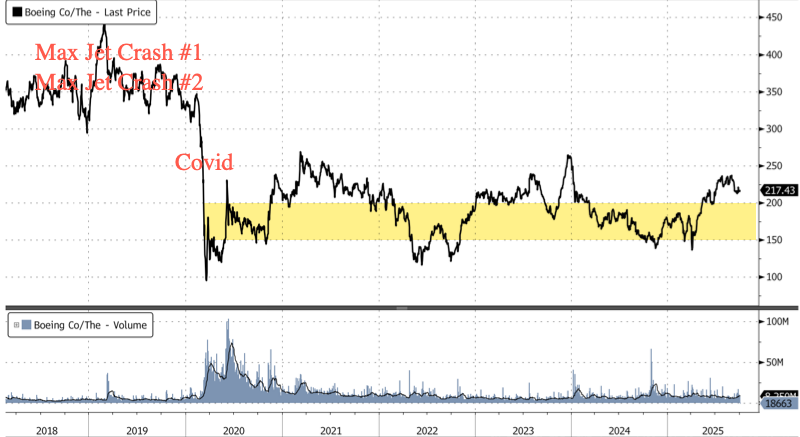
Boeing shares are flat in premarket trading in New York. For the year, shares are up 23% (as of Thursday’s close) and have been locked in a half-decade lateral pattern since the twin Max jet crashes and the Covid pandemic.

Related:

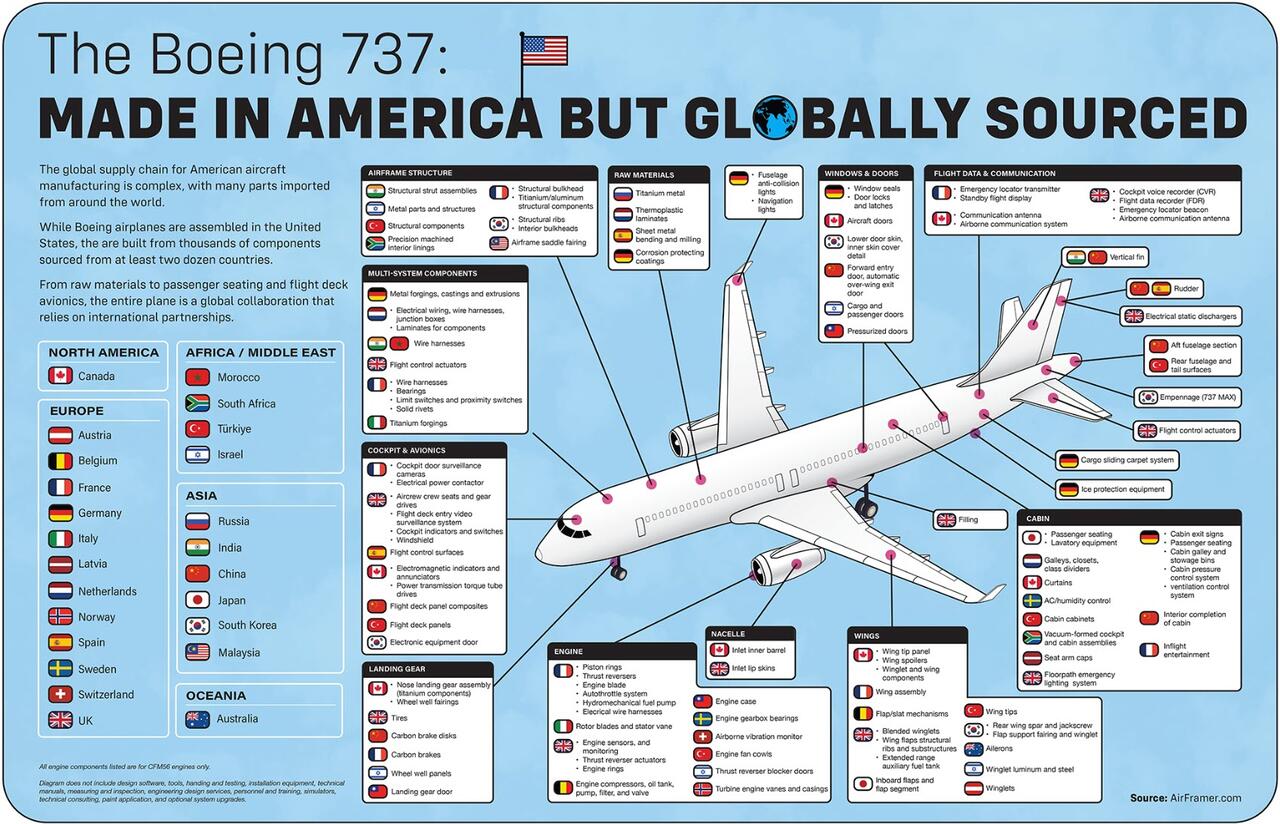
For the Trump administration, 737 Max’s global supply chain is a significant problem. 

Time to re-shore. Read the report.

Tyler Durden
Fri, 10/03/2025 – 12:40

via ZeroHedge News https://ift.tt/DN7LlGw Tyler Durden

Nation-State Bitcoin Adoption To Enter ‘Suddenly’ Phase Soon

Nation-State Bitcoin Adoption To Enter ‘Suddenly’ Phase Soon

Authored by Ciaran Lyons via CoinTelegraph.com,

An increasing number of countries are preparing to ramp up Bitcoin adoption after moving past the initial skepticism, according to Jan3 founder Samson Mow.

“I think we’re on the tail end of gradually, and we’re at the beginning phases of suddenly,” Mow told Danny Knowles on the What Bitcoin Did podcast published on YouTube on Saturday.

“These things happen very quickly,” Mow said, referring to the potential for more countries to adopt a Strategic Bitcoin Reserve.

“It’s like literally gradually then suddenly,” he said, adding:

“I think it is simply a matter of time before we see a massive run-up, and we see a massive nation-state FOMO, you know, panic.”

Mow emphasized that while US President Donald Trump has signed an executive order to establish a Strategic Bitcoin Reserve, the US still hasn’t started buying. 

US is “pushing forward” with Bitcoin plan

However, he pointed out the nation is “pushing forward” with budget-neutral Bitcoin acquisition and the Bitcoin Act.

Galaxy Digital’s head of firmwide research, Alex Thorn, recently said there is a high likelihood that the US government will form the highly anticipated Strategic Bitcoin Reserve by the end of this year.

Samson Mow spoke to Danny Knowles on the What Bitcoin Did podcast. Source: What Bitcoin Did

While the US still leads all governments in total Bitcoin holdings, Mow told Cointelegraph Magazine in June that the US “has to start” acquiring Bitcoin this year.

“The risk is that the US is front-run by Pakistan,” he explained. At the time of publication, the US government holds 198,012 Bitcoin, according to Bitbo data. 

Mow anticipates significant Bitcoin moves from the Latin American region, which he says is one of the areas he is most bullish on.

Nation-state Bitcoin adoption has been a widely discussed talking point in the crypto industry this year.

Fidelity Digital Assets said in a research paper in January that it anticipates “more nation-states, central banks, sovereign wealth funds, and government treasuries will look to establish strategic positions in Bitcoin.”

Bitcoin’s price hasn’t had a “massive run-up” yet

Meanwhile, Mow pointed out that Bitcoin’s price hasn’t played out how many market participants thought it would for 2025.

“We should have had a bull run already,” he said, “like a massive run up,” he added.

Bitcoin is trading at almost $122,000 at the time of publication 

“So I think this cycle, if you want to call it a cycle, is delayed; it might push into next year,” he said. Several other market participants have echoed a similar sentiment in recent times. On July 26, Bitwise chief investment officer Matt Hougan said, “I bet 2026 is an up year.” 

“I broadly think we’re in for a good few years,” Hougan said. Bitcoin is trading at $109,400 at the time of publication, down 1.97% over the past 30 days, according to CoinMarketCap.

Mow’s and Hougan’s comments come as the industry continues to debate whether Bitcoin’s usual four-year cycle is still relevant now that ETFs and institutional demand are in play.

It was only in June that Mow said the $1 million Bitcoin price tag “is a given at this point, maybe this year, maybe next year.”

Tyler Durden
Fri, 10/03/2025 – 12:20

via ZeroHedge News https://ift.tt/Fx7CNK3 Tyler Durden

Missouri Judge Backs City’s Eminent Domain Redevelopment Plan


Brentwood, Missouri storefronts | Institute For Justice

In September, a Missouri judge upheld the city of Brentwood’s plan to seize businesses along the Manchester Road Corridor, siding with the city’s $436 million redevelopment scheme and its decision to label the area “blighted.” Judge Kristine Allen Kerr ruled in the case of Feather-Craft et al v. Brentwood that the blight determination of the Corridor is “fairly debatable”—a legal standard that makes it harder for property owners to challenge government takings—and disagreed that the city made its blight determination “arbitrarily and capriciously.” This ruling could clear the way for the seizure of several businesses along the Corridor.

The Institute for Justice (I.J.) filed a lawsuit in December 2023 on behalf of four businesses that were designated as blighted by the city. The suit alleged that city leaders violated Missouri law with both the blight designation and their intent to use eminent domain to condemn their properties.

Bob Belden, the lead I.J. attorney on the case, believes the court failed to apply the correct standard of review by using the “fairly debatable” standard, which placed the burden on the plaintiffs to “demonstrate that the reasonableness of the City’s action is not even fairly debatable.” 

“We argued to the trial court that the Missouri legislature was saying, ‘this isn’t the kind of standard or review that is supposed to be applied in these cases to protect property rights in a meaningful way,'” says Belden. “You’re supposed to look at what the legislature actually considered and how [the law] was actually made.”

Ultimately, the court chose to “defer to the legislative determination of blight,” even “where evidence contrary to the legislative determination appears stronger than the evidence supporting it.” According to the ruling, “so long as substantial evidence exists on both sides,” the question of whether an area is blighted can be considered “fairly debatable.”

In 2018, Brentwood hired PGAV Planners, an urban planning firm, to conduct a blight study on the Manchester Road Corridor. PGAV concluded that the Corridor was “blighted” based on its location in the city’s floodplain and “other blighting factors present.” 

During the trial, Mayor David Dimmitt testified about the issue of flooding facing the area, despite an $80 million flood mitigation project along Manchester Road that he deemed successful in 2022. The court determined that the 2022 project “did reduce the likelihood of flood damage,” but “did not fully resolve the flooding problems and their future risks.”

Amy Stanford, owner of Time for Dinner, a family-oriented meal prep business that’s been in Brentwood for over two decades, calls the court’s ruling “absurd.” 

“Unfortunately, for more than two years, the neighborhood has been under the threat of eminent domain, which has made it difficult for businesses to invest or expand,” Stanford says. In fact, several new businesses that have applied to open here were not approved by the city of Brentwood. That lack of support and uncertainty has only added to the appearance of blight that the city now cites as justification for redevelopment.”

Brentwood city officials did not respond to Reason‘s request for comment.

Belden says his clients are “looking forward to keeping the fight up on appeal.” He says they plan to ask the Missouri Supreme Court to take the case under Article V, Section 10 provision of Missouri law based on the “general interest or importance of a question involved in the case, or for the purpose of reexamining the existing law.”

The post Missouri Judge Backs City's Eminent Domain Redevelopment Plan appeared first on Reason.com.

from Latest – Reason.com https://ift.tt/Zm2YWkx
via IFTTT

Justice Barrett on Common Good Constitutionalism

National Review has posted the first half of Dan McLaughlin’s interview with Justice Amy Coney Barrett about her new book and other matters. The interview covers a range of topics, including originalism and the interim orders docket, among other things.  This bit on originalism and “common good constitutionalism” seemed to be of particular interest.

NR: . . . We have now four Gen X justices, [the others being] Justices Gorsuch, Kavanaugh, and Jackson. Our generation is actually the first generation to have come of age as lawyers with Scalia opinions, the Federalist Society, and originalism and textualism as serious arguments in the law schools. I had Justice Scalia come to one of my classes once, and debate one of our professors. So, we came of age with that — do you see any difference in the perspective of the four younger justices?

JUSTICE BARRETT: Well, I can only speak for myself, but I think, I guess the difference between when I was in law school and now, in the law just generally, is that originalism has gone from the kind of theory that was often in dissent to now it is a theory held by a majority of justices on the Court. And so, I think when I was a law student and when I was a young lawyer, and frankly, even when I was first a law professor, and I was thinking about originalism, it was a way of critiquing a lot of decisions. But if you’re building up, you know, if you’re employing it from a position of, hey, this isn’t in the dissent, and this isn’t a critique, I think it’s just a little bit of a different thing. And so I think that now we’re at a point where it’s probably third-generation originalism.

If you think of first generation as Bork and original intent, and then second generation as Scalia and original public meaning. And I think now it’s third generation originalism. I guess I would say, I’m using that to describe debates about, what do you do when the original meaning is evident but not determinative of the meaning? This is, I think, the history and tradition debate that’s going on.

I guess I will add one other thing. I think that when originalism in its early iterations, certainly in the first generation and somewhat in the second generation, was very focused on judicial restraint. And that was in part because it was criticizing a method of interpretation that felt a little bit more like the Wild West or more results-oriented. And I think that — this was evident in Justice Scalia’s work, as he went on — it’s really not a theory of restraint, even though it’s a side benefit that if you consider yourself bound by the text, you have an external constraint operating on you. But it’s really a theory of law. And I think that’s how Justice Scalia regarded it.

But I do think that language of “you should be an originalist, because otherwise you might be a runaway judge,” has never really kind of fully gone out of dialogue around originalism.

NR: We’re now in a position where there are critics of originalism from the right — people who say: It’s too legally positivist. It doesn’t consider enough of the common good to achieve everything that the right wants to do. How do you think about or respond to those kind of critiques?

JUSTICE BARRETT: I don’t like this common good constitutionalism movement.

It feels to me like it’s just results-oriented, and I think that it has all of the defects that originalists critiqued when originalism first became a self-conscious theory in the 1980s. I resist the idea that originalism wasn’t around until Scalia, that originalism wasn’t around until the ’80s, because if you go back and look even at [John] Marshall opinions, and go back to the Founding they were looking at, you know, what did the Framers intend? They might not have always used the language of meaning rather than intent, but originalism, Keith Whittington talks about this. I mean, originalism was always a part of the Court’s jurisprudence. But just like that little caveat, I just think that common good constitutionalism is just kind of results-oriented jurisprudence from the right.

I was also interested in this little bit about King v. Burwell.

NR: . . . In the book you talk, you actually get into some reasonably recent cases, hot button cases. . . .You have some, I could say, careful criticism, or at least reference to prior criticism of the King v. Burwell case, which I would note, is a case that the Court seems to have gone out of its way not to cite as a precedent since then.

JUSTICE BARRETT: [Laughs]

NR: It’s a little unusual for a sitting justice to be talking about things that are fairly recent and hot. Is that something that you made a conscious choice, that you wanted to get people to understand how the Court thinks, even about recent cases?

JUSTICE BARRETT: So, I was very careful to only discuss — the only reason why I discussed King v. Burwell in a critical way is because I was already on the record as a law professor having criticized it. So, I didn’t criticize any other precedent. I took all the Court’s precedents as I found it. So I didn’t criticize, for example, when I described substantive due process doctrine, I wasn’t talking about it like I might have from scratch: “Should this be privileges or immunities clause, you know, etc.” So, the only areas that I did criticize existing precedent were things where I was already on the record.

The whole interview is interesting. Part two will be posted over the weekend.

The post Justice Barrett on Common Good Constitutionalism appeared first on Reason.com.

from Latest – Reason.com https://ift.tt/RNau5Il
via IFTTT