Trump’s Planned Farm Bailout Should Require Congressional Approval


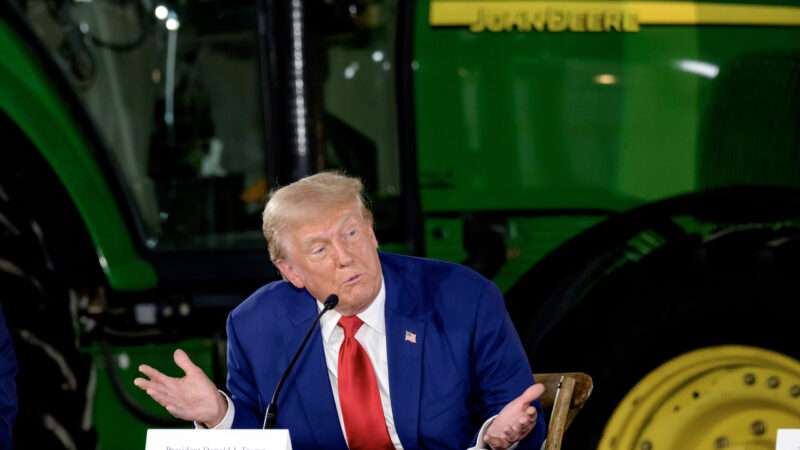
President Trump at an event with a farming tractor in the background | ARCHIE CARPENTER/UPI/Newscom

By hiking tariffs on nearly all imports to the United States earlier this year, President Donald Trump effectively imposed one of the largest tax hikes in American history—and did so without congressional approval.

Now, the Trump administration is reportedly preparing to spend some of the revenue from those tax increases—also without congressional approval.

The White House is preparing a bailout for farmers harmed by the trade war. The exact contours of the package remain unclear for now, but Politico and The Wall Street Journal both report that the administration is eying at least $10 billion in aid. We’ll know more early next week, as Treasury Secretary Scott Bessent says an announcement of “substantial support” is expected on Tuesday.

This much seems clear: tariffs paid by American importers will be used to fund some of the bailout.

That’s likely to happen, in part, because the slush fund that Trump tapped to bail out farmers during his first term is running dry. That fund—the Commodity Credit Corporation, a New Deal-era program within the Department of Agriculture—has just $4 billion in it, according to Politico. Meanwhile, the government has collected about $150 billion in tariff revenue during the first eight months of the year.

It also seems likely because that’s what Trump keeps saying he wants to do. “We’re going to take some of that tariff money that we made, we’re going to give it to our farmers,” he said last month.

Regardless of how it is funded, a farm bailout would be a wasteful and counterproductive bit of policy—and one that could inspire other tariff-hurt industries to start looking for their own handouts. If the bailout is funded with the tariff revenue (without congressional approval), then it would also be another attack on the separation of powers that are fundamental to our constitutional system of government.

It is Congress that has the sole authority to lay and collect taxes, per Article I of the Constitution. It is also Congress that has the sole authority to determine how tax dollars are spent. If the Trump administration wants to use some of that $150 billion to bail out farmers, it must ask Congress to approve that spending—ideally as part of a budget bill, but even a one-off emergency or supplemental bill would be better than having the executive branch make this decision on its own.

There is one other complication that should stop the administration from unilaterally spending the tariff revenue, even if the White House decides to ignore the constitutional argument.

If the Supreme Court rules that Trump’s tariffs are unlawful—as lower courts already have—then it is possible that the federal government would have to refund all that money to the people and businesses that paid the tariffs in the first place.

If that money has been given away to farmers, then taxpayers will be on the hook to refund the tariff payments—the same American taxpayers who are already paying higher prices because of the tariffs. That’s literally adding insult to injury.

There is, of course, an easy way out of this mess. If the Trump administration wants to spare farmers the consequences of the trade war, it doesn’t need a messy, possibly unconstitutional bailout. It just needs to end the tariffs.

The post Trump's Planned Farm Bailout Should Require Congressional Approval appeared first on Reason.com.

from Latest – Reason.com https://ift.tt/iWkGjae
via IFTTT

Justice Barrett on Common Good Constitutionalism

National Review has posted the first half of Dan McLaughlin’s interview with Justice Amy Coney Barrett about her new book and other matters. The interview covers a range of topics, including originalism and the interim orders docket, among other things.  This bit on originalism and “common good constitutionalism” seemed to be of particular interest.

NR: . . . We have now four Gen X justices, [the others being] Justices Gorsuch, Kavanaugh, and Jackson. Our generation is actually the first generation to have come of age as lawyers with Scalia opinions, the Federalist Society, and originalism and textualism as serious arguments in the law schools. I had Justice Scalia come to one of my classes once, and debate one of our professors. So, we came of age with that — do you see any difference in the perspective of the four younger justices?

JUSTICE BARRETT: Well, I can only speak for myself, but I think, I guess the difference between when I was in law school and now, in the law just generally, is that originalism has gone from the kind of theory that was often in dissent to now it is a theory held by a majority of justices on the Court. And so, I think when I was a law student and when I was a young lawyer, and frankly, even when I was first a law professor, and I was thinking about originalism, it was a way of critiquing a lot of decisions. But if you’re building up, you know, if you’re employing it from a position of, hey, this isn’t in the dissent, and this isn’t a critique, I think it’s just a little bit of a different thing. And so I think that now we’re at a point where it’s probably third-generation originalism.

If you think of first generation as Bork and original intent, and then second generation as Scalia and original public meaning. And I think now it’s third generation originalism. I guess I would say, I’m using that to describe debates about, what do you do when the original meaning is evident but not determinative of the meaning? This is, I think, the history and tradition debate that’s going on.

I guess I will add one other thing. I think that when originalism in its early iterations, certainly in the first generation and somewhat in the second generation, was very focused on judicial restraint. And that was in part because it was criticizing a method of interpretation that felt a little bit more like the Wild West or more results-oriented. And I think that — this was evident in Justice Scalia’s work, as he went on — it’s really not a theory of restraint, even though it’s a side benefit that if you consider yourself bound by the text, you have an external constraint operating on you. But it’s really a theory of law. And I think that’s how Justice Scalia regarded it.

But I do think that language of “you should be an originalist, because otherwise you might be a runaway judge,” has never really kind of fully gone out of dialogue around originalism.

NR: We’re now in a position where there are critics of originalism from the right — people who say: It’s too legally positivist. It doesn’t consider enough of the common good to achieve everything that the right wants to do. How do you think about or respond to those kind of critiques?

JUSTICE BARRETT: I don’t like this common good constitutionalism movement.

It feels to me like it’s just results-oriented, and I think that it has all of the defects that originalists critiqued when originalism first became a self-conscious theory in the 1980s. I resist the idea that originalism wasn’t around until Scalia, that originalism wasn’t around until the ’80s, because if you go back and look even at [John] Marshall opinions, and go back to the Founding they were looking at, you know, what did the Framers intend? They might not have always used the language of meaning rather than intent, but originalism, Keith Whittington talks about this. I mean, originalism was always a part of the Court’s jurisprudence. But just like that little caveat, I just think that common good constitutionalism is just kind of results-oriented jurisprudence from the right.

I was also interested in this little bit about King v. Burwell.

NR: . . . In the book you talk, you actually get into some reasonably recent cases, hot button cases. . . .You have some, I could say, careful criticism, or at least reference to prior criticism of the King v. Burwell case, which I would note, is a case that the Court seems to have gone out of its way not to cite as a precedent since then.

JUSTICE BARRETT: [Laughs]

NR: It’s a little unusual for a sitting justice to be talking about things that are fairly recent and hot. Is that something that you made a conscious choice, that you wanted to get people to understand how the Court thinks, even about recent cases?

JUSTICE BARRETT: So, I was very careful to only discuss — the only reason why I discussed King v. Burwell in a critical way is because I was already on the record as a law professor having criticized it. So, I didn’t criticize any other precedent. I took all the Court’s precedents as I found it. So I didn’t criticize, for example, when I described substantive due process doctrine, I wasn’t talking about it like I might have from scratch: “Should this be privileges or immunities clause, you know, etc.” So, the only areas that I did criticize existing precedent were things where I was already on the record.

The whole interview is interesting. Part two will be posted over the weekend.

The post Justice Barrett on Common Good Constitutionalism appeared first on Reason.com.

from Latest – Reason.com https://ift.tt/RNau5Il
via IFTTT

Trump’s Planned Farm Bailout Should Require Congressional Approval


President Trump at an event with a farming tractor in the background | ARCHIE CARPENTER/UPI/Newscom

By hiking tariffs on nearly all imports to the United States earlier this year, President Donald Trump effectively imposed one of the largest tax hikes in American history—and did so without congressional approval.

Now, the Trump administration is reportedly preparing to spend some of the revenue from those tax increases—also without congressional approval.

The White House is preparing a bailout for farmers harmed by the trade war. The exact contours of the package remain unclear for now, but Politico and The Wall Street Journal both report that the administration is eying at least $10 billion in aid. We’ll know more early next week, as Treasury Secretary Scott Bessent says an announcement of “substantial support” is expected on Tuesday.

This much seems clear: tariffs paid by American importers will be used to fund some of the bailout.

That’s likely to happen, in part, because the slush fund that Trump tapped to bail out farmers during his first term is running dry. That fund—the Commodity Credit Corporation, a New Deal-era program within the Department of Agriculture—has just $4 billion in it, according to Politico. Meanwhile, the government has collected about $150 billion in tariff revenue during the first eight months of the year.

It also seems likely because that’s what Trump keeps saying he wants to do. “We’re going to take some of that tariff money that we made, we’re going to give it to our farmers,” he said last month.

Regardless of how it is funded, a farm bailout would be a wasteful and counterproductive bit of policy—and one that could inspire other tariff-hurt industries to start looking for their own handouts. If the bailout is funded with the tariff revenue (without congressional approval), then it would also be another attack on the separation of powers that are fundamental to our constitutional system of government.

It is Congress that has the sole authority to lay and collect taxes, per Article I of the Constitution. It is also Congress that has the sole authority to determine how tax dollars are spent. If the Trump administration wants to use some of that $150 billion to bail out farmers, it must ask Congress to approve that spending—ideally as part of a budget bill, but even a one-off emergency or supplemental bill would be better than having the executive branch make this decision on its own.

There is one other complication that should stop the administration from unilaterally spending the tariff revenue, even if the White House decides to ignore the constitutional argument.

If the Supreme Court rules that Trump’s tariffs are unlawful—as lower courts already have—then it is possible that the federal government would have to refund all that money to the people and businesses that paid the tariffs in the first place.

If that money has been given away to farmers, then taxpayers will be on the hook to refund the tariff payments—the same American taxpayers who are already paying higher prices because of the tariffs. That’s literally adding insult to injury.

There is, of course, an easy way out of this mess. If the Trump administration wants to spare farmers the consequences of the trade war, it doesn’t need a messy, possibly unconstitutional bailout. It just needs to end the tariffs.

The post Trump's Planned Farm Bailout Should Require Congressional Approval appeared first on Reason.com.

from Latest – Reason.com https://ift.tt/iWkGjae
via IFTTT

“Steel Is Real”: No Steel Production Means No Military Power, No Industrial Backbone, No Sovereignty

“Steel Is Real”: No Steel Production Means No Military Power, No Industrial Backbone, No Sovereignty

By Stefan Koopman, Senior Macro Strategist at Rabobank

Steel Is Real

Steel is real” isn’t just a mantra for moustached, espresso-sipping cycling purists who swear by the ride quality of classic steel frames over flashier materials like carbon or titanium. It’s also a hard truth in geopolitics and economics. As we’ve argued over and over: no steel production capacity means no military power, no industrial backbone, no leverage in the great game – and by extension, no sovereignty. Whether you’re building tanks, turbines or yes, even bicycles, steel and other basic industries remain the foundation.

This broader rethink of industrial strategy comes as Europe faces mounting geopolitical pressure. Our latest Monthly Outlook dives deeper into the shifting global landscape, where hybrid warfare, supply chain weaponization, and economic statecraft are rapidly replacing traditional policy tools. From Russian aerial incursions and drone strikes on refineries to the US weaponizing supply chains and swap lines, the lines between markets and military strategy are blurring fast.

Of course, it doesn’t always deliver the right results. Treasury Secretary Bessent told CNBC that substantial financial support for US soybean farmers will be announced Tuesday, lamenting that Beijing has completely stopped buying US soybeans since May, shifting instead to Brazil and (also) US bailed-out Argentina (oops!). The move echoes the $32bn bailout of the sector during Trump’s first term, with fresh tariff revenues earmarked in some sort of money-go-round. In our view, this announcement suggests a near-term breakthrough in US-China agricultural trade should not be expected. For more on the beans and other ag markets, please see our latest ACMR Monthly Outlook.

Brent crude dipped to a 4-month low of USD 64/bbl before recovering to USD 64.80, as OPEC+ signals it may vote this weekend for further supply increases in November. With 2.2m bpd already restored this year and rising output from Brazil and Guyana, oversupply concerns are mounting. China’s strategic stockpiling has so far helped cushion prices, but market sentiment remains bearish for Q4 2025 and into 2026. We agree supply will exceed demand, though not to the extent suggested by consensus. A key source of price support is US production, which is already stalling near 13.4m bpd at current prices. We forecast Brent to average USD 61 in Q1 2025, then USD 58–60 through 2026.

Markets remain largely unfazed by the ongoing US government shutdown, with equities grinding higher, Treasuries stable, and the dollar firming against major peers. Gold briefly hit a record before easing. The prevailing view is that the shutdown has limited macro or monetary policy implications. However, risks are building beneath the surface. President Trump is now openly backing the Project 2025 blueprint and weighing permanent federal job cuts, with budget director Russ Vought pushing for dramatic downsizing. While markets are sanguine – believing this is just part of a game of chicken in US Congress – such cuts could trigger a reflexive process: news of permanent layoffs may dampen consumer confidence and spending, prompting the private sector to retrench further. With job growth already stalling, this feedback loop could accelerate a downturn more quickly than expected.

On that note, the September Challenger report showed hiring intentions at just 117k, down sharply from 403k a year ago. Retailers and transport firms, in particular, appear cautious ahead of the holiday season. At the same time, planned job cuts also declined, pointing to a labor market with low hiring and firing, echoing the JOLTS report and Powell’s recent remarks. Separately, new kid in town, Revelio Labs, reported a 60k increase in employment for September, led by gains in education, health services, and retail trade. Leisure and hospitality, along with business services, saw declines. This contrasts sharply with ADP’s estimate of a 32k drop. Until we hear from the BLS, it’s unclear whether the US added or lost jobs last month – and even then, revisions may leave us guessing for another year. In this labor market, the only certainty is uncertainty.

Tyler Durden
Fri, 10/03/2025 – 11:40

via ZeroHedge News https://ift.tt/PWMr52U Tyler Durden

Ukrainian Drones Hit Oil Refinery, Chemical Plant 1500km Deep Into Russia

Ukrainian Drones Hit Oil Refinery, Chemical Plant 1500km Deep Into Russia

Despite fresh warnings from President Vladimir Putin issued the day prior at the Valdai summit in Sochi, Ukrainian drones have once again targeted two major industrial facilities deep inside Russia overnight – an oil refinery in the Orenburg region and a chemical plant in the Perm region – regional officials announced Friday.

The Orsknefteorgsintez oil refinery was struck and suffered damage in the first attack, which lies near the border with Kazakhstan. Videos circulating on social media showed a drone crashing within the refinery grounds, followed by thick black smoke rising above the site. Watch:

Regional Governor Yevgeny Solntsev stated that no one was injured and claimed that operations at the refinery were not disrupted, however.

Orsknefteorgsintez is one of Russia’s top oil refineries, with a capacity of 6.6 million tons per year and producing around 30 petroleum products including gasoline, diesel, jet fuel, and bitumen, regional reports say.

In Perm, the Azot chemical plant was also attacked, resulting in a disruption of operations there, after eyewitnesses widely reported two loud blasts. At least three drones may have been involved in the strike. Azot is part of billionaire Dmitry Mazepin’s Uralchem holding.

The plant reportedly manufactures products such as ammonium nitrate, nitric acid, sodium nitrate, and urea – and is also said to be Russia’s only producer of higher aliphatic amines and crystalline sodium nitrite.

These were significant long-range attacks given that both sites lie approximately 930 miles (or some 1500km) from the Ukrainian border, which means Kiev continues to prove itself capable of hitting critical infrastructure very deep inside Russia.

“President Trump recently signed off on allowing intelligence agencies and the Pentagon to aid Kyiv with the strikes. U.S. officials are asking North Atlantic Treaty Organization allies to provide similar support, these people said,” WSJ reported this week, marking the first such instance of Trump openly greenlighting Ukrainian strikes on Russia with long-range missiles.

So Russia’s refinery woes could get worse, but the question of providing Tomahawks still remains an open one, and the Kremlin has said it would be “surprised” if the White House allowed such a serious escalation. Still, J.D. Vance early this week said the administration is seriously looking at the European request.

Distance to Orsk refinery, near Kazakhstan border

“The expanded intelligence-sharing with Kyiv is the latest sign that Trump is deepening support for Ukraine as his efforts to advance peace talks have stalled,” WSJ also noted.

International estimates are that thus far during the war Ukraine has struck a whopping 21 out of Russia’s 38 refineries, some of them more than once, which has proven costly – also as sanctions have made it hard to find parts for quick repairs.

Tyler Durden
Fri, 10/03/2025 – 11:20

via ZeroHedge News https://ift.tt/JOgIBwY Tyler Durden

Apple Takes Down Apps Used To Report Sightings Of ICE Agents

Apple Takes Down Apps Used To Report Sightings Of ICE Agents

Authored by Victoria Friedman via The Epoch Times,

Apple on Oct. 2 said it removed from its store apps that can be used to report sightings of Immigration and Customs Enforcement (ICE) agents.

The apps, such as ICEBlock, work by alerting users when ICE agents are in the area. Trump administration officials have said that such apps could increase the risk of attacks on U.S. agents.

“Based on information we’ve received from law enforcement about the safety risks associated with ICEBlock, we have removed it and similar apps from the App Store,” Apple said in a statement.

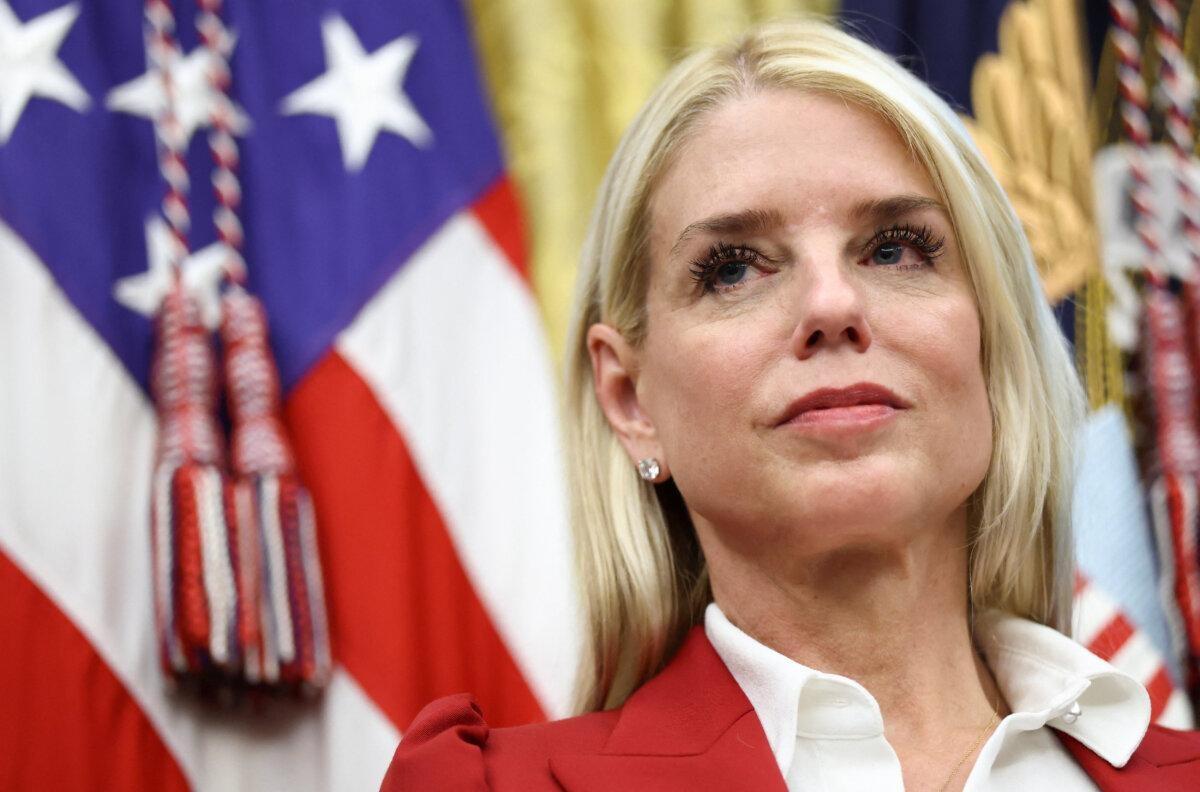
Fox Business first reported ICEBlock’s removal on Oct. 2, quoting U.S. Attorney General Pam Bondi, who said in a statement to the news outlet, “We reached out to Apple today demanding they remove the ICEBlock app from their App Store—and Apple did so.”

“ICEBlock is designed to put ICE agents at risk just for doing their jobs, and violence against law enforcement is an intolerable red line that cannot be crossed,” Bondi added. “This Department of Justice will continue making every effort to protect our brave federal law enforcement officers, who risk their lives every day to keep Americans safe.”

The Epoch Times contacted ICEBlock for comment, but did not receive a response by the time of publication.

ICE Facility Shooting

The controversy over ICE agent tracking apps intensified after a fatal shooting on Sept. 24 at an ICE facility in Dallas, Texas.

An ICE office and transport vehicle were shot at by alleged shooter Joshua Jahn, killing one detainee and critically injuring two others, one of whom later died. No ICE agents were injured. Jahn later died of an apparent self-inflicted gunshot wound after the attack.

Jahn “used the ICE tracking apps,” according to Marcos Charles, acting executive associate director for ICE Enforcement and Removal Operations.

Charles said those developing such apps ought to understand the potential threats they pose to officers.

“It’s no different than giving a hitman the location of their intended target, and this is exactly what we saw happen in Dallas yesterday,” he said.

U.S. Attorney General Pam Bondi at the White House on Sept. 25, 2025. Kevin Lamarque/Reuters

ICEBlock

CNN reported on the ICEBlock app on June 30. During an appearance on conservative commentator Benny Johnson’s show, border czar Tom Homan criticized CNN for covering the app, calling it “disgusting.”

“I can’t believe we live in a world where the men and women in law enforcement are the bad guys,” he said. “It’s already a dangerous job.”

Homan suggested that CNN was complicit in putting federal law enforcement officers at risk.

“This is horrendous that a national media outlet would be out there trying to forecast law enforcement operations,” he said. “I think DOJ needs to look at this. They’re crossing that line. We need to send a strong message that we need to protect the law enforcement officers.”

On July 1, during a visit to a detention center for illegal immigrants in Ochopee, Florida, reporters asked President Donald Trump and Homeland Security Secretary Kristi Noem about Homan’s remarks that CNN should potentially face prosecution for covering the app.

“We’re working with the Department of Justice to see if we can prosecute them for that because what they’re doing is actively encouraging people to avoid law enforcement activities, operations, and we’re going to actually go after them and prosecute them,” Noem said. “What they’re doing, we believe, is illegal.”

When asked about Homan’s call for prosecuting CNN, Trump responded, “OK with me.”

Later that day, the Department of Homeland Security (DHS) accused the network of “contributing to our brave ICE officers now facing a 500 [percent] increase in assaults,” in a statement on X.

“@Sec_Noem has been clear: If you obstruct or assault our law enforcement, we will hunt you down and you will be prosecuted to the fullest extent of the law,” the DHS added.

U.S. Immigration and Customs Enforcement agents make an arrest during an early morning operation in Park Ridge, Ill., on Sept. 19, 2025. Erin Hooley/AP Photo

In response, CNN’s communication team defended its reporting on the ICEBlock app.

“This is an app that is publicly available to any iPhone user who wants to download it,” CNN’s communications team said in a July 1 statement on X. “There is nothing illegal about reporting the existence of this or any other app, nor does such reporting constitute promotion or other endorsement of the app by CNN.”

Tyler Durden
Fri, 10/03/2025 – 10:20

via ZeroHedge News https://ift.tt/URP1SAY Tyler Durden

Service Sector Surveys Show Slowdown In September Despite Rebound In Employment

Service Sector Surveys Show Slowdown In September Despite Rebound In Employment

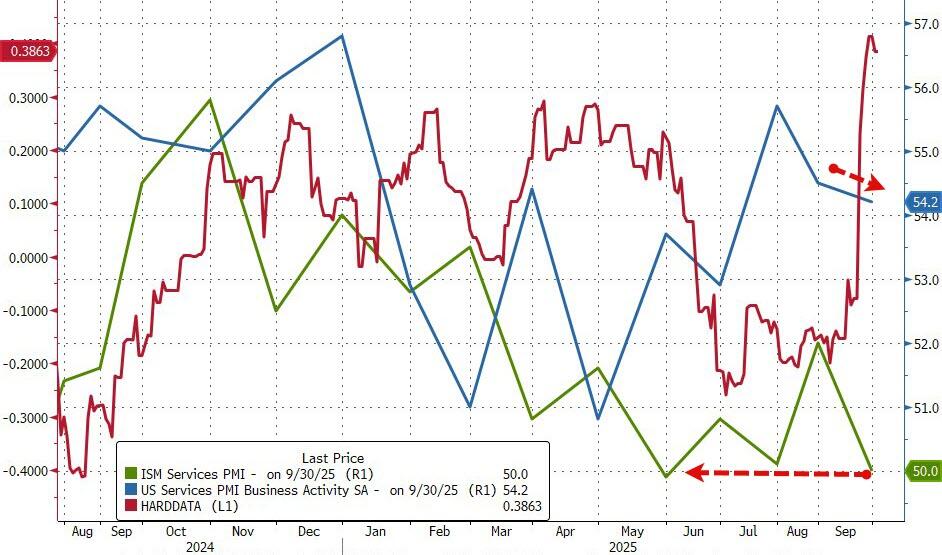
With the market desperate for any visibility into the economy – due to data being cutoff during the shutdown – this morning’s soft survey data on the services sector could have a larger impact on stocks and bonds than normal.

With ‘hard’ data surging higher, S&P Global’s US Services PMI rose from 53.9 preliminary to 54.2 final in September (but that is down from the 54.5 final print for August). The ISM Services PMI also fell MoM from 52.0 to 50.0 (worse than the 51.7 expected) – that is the weakest since May

Source: Bloomberg

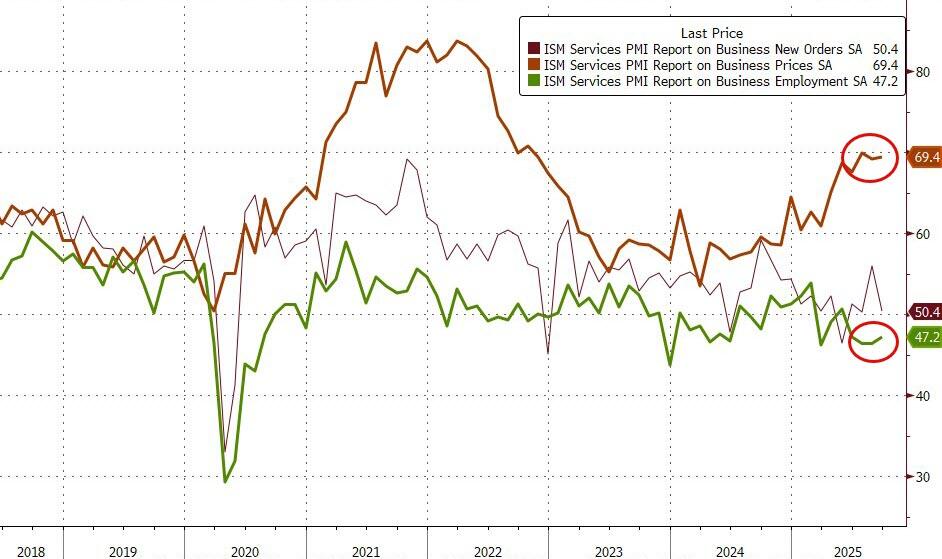
Under the hood of the ISM survey we saw prices sticky at highs, employment weak (but a small improvement) and orders slowdown…

Source: Bloomberg

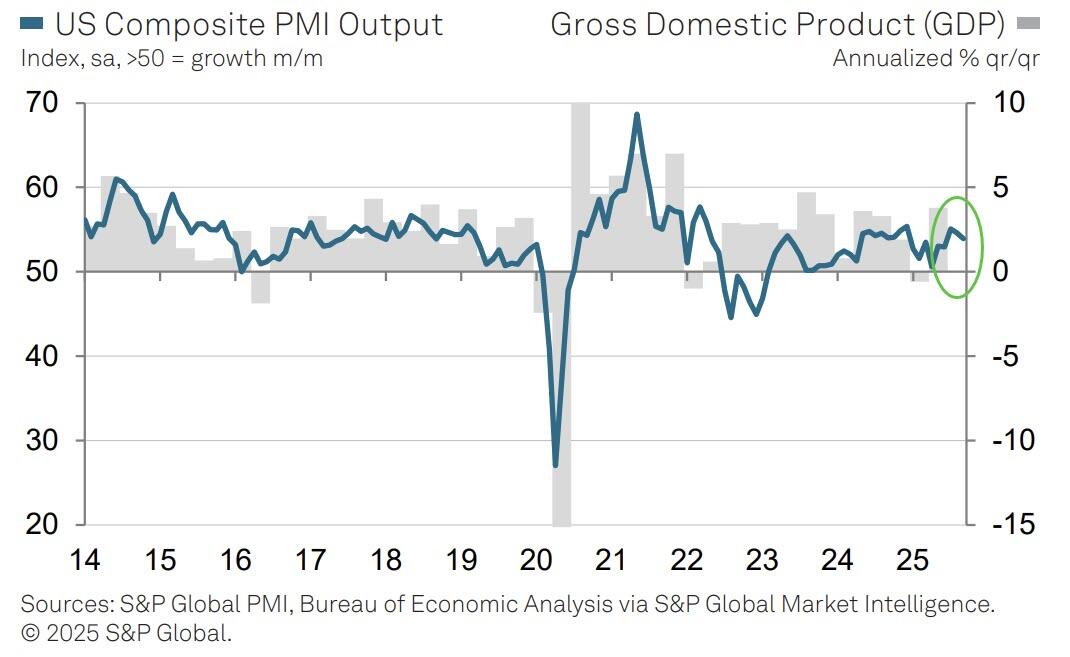
The S&P Global US Composite PMI recorded 53.9 in September. That was down from 54.6 in August and represented the slowest growth for three months.

Both sectors covered by the survey recorded weaker output expansions in line with slower gains in new business. Employment meanwhile barely rose, but confidence in the outlook strengthened noticeably. Cost pressures remained elevated, although inflation softened to a five-month low. A similar trend was seen for output charges.

“Service sector growth softened slightly in September but remained strong enough to round off an impressive performance over the third quarter a whole,” according to Chris Williamson, Chief Business Economist at S&P Global Market Intelligence

“Combined with sustained growth in the manufacturing sector, the expansion of service sector activity is indicative of robust third quarter annualized GDP growth of around 2.5%.”

The recessions shows no signs of appearing:

Growth is being fueled principally by rising financial services and tech sector activity, though we are also seeing more signs of improving demand for consumer-facing services such as leisure and recreation, likely linked in part to lower interest rates.

Lower borrowing costs have also fed through to a broadbased improvement in business optimism about the outlook for the next 12 months.

But jobs remain a worry:

“Disappointingly, the improvement in business optimism failed to spur more jobs growth, with hiring almost stalling in a sign of further labor market malaise as companies often focused on running more efficiently amid uncertain trading conditions.

As do (tariff-driven) price hikes…

“A further ongoing source of concern from the surveys are heightened cost pressures which survey respondents have attributed to tariffs. Input costs rose sharply again in September as import levies were seen to have again fed through from goods to services.

However, rates charged for services rose at the slowest rate for five months in a welcome sign that some of these tariff price pressures in supply chains are starting to moderate.”

So choose your own adventure – employment data remains in contraction but did improve modestly. The message overall appears to be that there remains ‘less’ firing, but even less hiring.

Tyler Durden
Fri, 10/03/2025 – 10:08

via ZeroHedge News https://ift.tt/GgHku4D Tyler Durden

The Roberts Court at 20: Looking Back and Looking Forward

On Monday, I had the honor to participate in a Federalist Society press briefing on “The Roberts Court at 20: Looking Back and Looking Forward” at the National Press Club. Other participants included Kannon Shanmugam of Paul Weiss, Benjamin Mizer of Arnold & Porter, Stephanie Barclay of Georgetown, and Xiao Wang of the University of Virginia. CBS News’ Jan Crawford moderated. Video is below.

The post The Roberts Court at 20: Looking Back and Looking Forward appeared first on Reason.com.

from Latest – Reason.com https://ift.tt/bKs9FCI
via IFTTT

Why, sadly, it may be too late for Britain to reverse course

It was 1821 when British statesman John Wilson Croker declared that “the sun never sets on the British Empire.” Croker wasn’t the first to say it, but as a lifelong naval administrator and imperial cheerleader, he gave that phrase real political weight.

And at the time it was no exaggeration. Britain’s power spanned every hemisphere. Its navy ruled the seas. Its financiers and currency ruled global trade. And its courts provided the template for modern law.

The British Empire was the indisputable center of global civilization.

But no empire lasts forever, and by the mid-20th century, America had replaced Britain as the world’s superpower.

World War II had ravaged Europe, and the British economy was in serious crisis. Sky-high debt, the destruction of its manufacturing base. And, perhaps worst of all, a major labor shortage. Too many men had been lost in combat, and there weren’t enough workers to get the economy back on its feet.

So in its efforts to boost production and get the economy moving again, the British government created incentives for foreigners to move to the UK.

Britain desperately needed workers, and people from all over the world came to start a new life and fill the postwar labor shortage.

But this immigration policy— what began as a pragmatic solution to an economic crisis in 1945— eventually became utter insanity.

Waves of arrivals from Uganda and Somalia were pouring in under humanitarian pretexts in the late 20th century and early 2000s.

The floodgates really opened in 2015 when David Cameron’s government pledged to resettle 20,000 Syrian refugees.

But why stop there? As instability in Afghanistan, Sudan, and the wider Middle East escalated, asylum claims in the UK grew every year.

Then came the small boat crossings of the English Channel—tens of thousands of people, from Syria, Afghanistan, Iran, and Eritrea, arriving illegally on Britain’s southern coast.

The result is staggering. In 2022, net migration reached an all-time high of 764,000 people.

That’s over 1% of the entire population of the United Kingdom. In ONE year. Plus they just keep coming… and multiplying at an astonishing rate. That makes it an almost impossible problem to solve.

Immigration alone is not inherently a problem— even mass migration— as the US can attest.

Between 1880 and 1920, roughly 20 million immigrants poured into the United States—Italians, Irish, Germans, Poles, and Jews from Eastern Europe. With a US population of just 76 million in 1900, that wave amounted to over one-quarter of the entire country in a single generation.

The difference, of course, is that there were no special benefits; early American immigrants didn’t receive taxpayer-funded housing or cash handouts. They came to work hard and make a better life for themselves.

Plus America’s early immigrants assimilated— often enthusiastically. They came to America to become American. It helped that most of them came from places that shared the same Judeo-Christian values.

And that is clearly not the case in Britain today.

Rather than love and appreciate their host country, Britain’s modern immigrants are actively resisting assimilation and forming their own breakaway societies on British soil.

The result is neighborhoods where English is rarely spoken and where parallel systems of law operate—including sharia councils which enforce Islamic law on British soil.

The British government loves to pretend that this policy of ‘multiculturalism’ somehow makes the country better off. But anyone paying attention knows this is simply not true.

A study by the Born in Bradford project found that 55% of the Pakistani community in Britain is married to their first cousin, resulting in vastly higher risk of inbreeding, stillbirth, lower IQ, and various recessive disorders (like cystic fibrosis or sickle-cell anemia).

Yet the the National Health Service is more concerned about Islamophobia than actual health. Which is why, last month, the NHS published guidance about the “potential benefits” of marrying your first cousin, “such as stronger extended family support systems and economic advantages.”

It stressed the importance of not “stigmatizing” cultural traditions.

This is what passes as medical science in multicultural Britain.

Oh… and did I mention the violence?

Just yesterday, a terrorist attacked a synagogue, killing and maiming Jews commemorating Yom Kippur. Strangely, police seem far more concerned about arresting people over Islamophobia and dank memes.

Bear in mind it was only a few weeks ago that British police threatened to arrest a man for being “openly Jewish” while walking past a pro-Palestine rally.

In another recent incident, police arrested a man who shouted “we love bacon” near a mosque.

Another woman was detained by police because she told Islamic street preachers that she wasn’t interested in the Quran.

And, also recently, when a British man burned a Quran on the streets as a form of protest, a nearby Muslim tried to stab him several times. It was the book-burner who faced charges, while the man with the knife walked free.

Meanwhile, it was perfectly fine for a motorcade of vehicles draped with Palestinian flags to drive through Jewish neighborhoods of North London, blasting abuse through loudspeakers, such as “F*** the Jews, rape their daughters,” alongside chants of “Free Palestine.”

Even children are not exempt. In one recent case, police officers— one Muslim woman wearing a hijab— forced their way into a family’s home to seize a child’s phone. Her crime? The child  had merely looked at an “offensive” meme.

Britons now walk on eggshells to avoid provoking jihadists—so much so that police in London arrest people in the street for even the slightest insult to Islam.

Meanwhile, immigrants commit crimes with impunity.

A migrant was filmed recently strolling into a London café, stealing food, and punching a waitress half his size in the face before casually walking away.

There are too many examples to list. Every day new videos emerge of immigrants wreaking havoc across the UK.

Yet at the highest levels of power, leaders of the UK are bowing to the migrant Left.

Aside from the NHS deciding to embrace marrying your first cousin, even Prime Minister Keir Starmer led his party to reject a national inquiry into organized “groomer gangs” of Pakistani Muslim immigrants who had been raping young teen girls for years.

Why? Because he said an investigation was, “the bandwagon of the far right.”

If you call out this destruction of British culture, you are arrested, or labeled racist, xenophobic, Islamophobic, or “far right.”

The hilarious part is that, not only do the migrants resist assimilating, they absolutely despise the local Brits who support them.

At one of London’s endless pro-Palestine marches in 2024, a group of “Queers for Palestine” activists came to join the fray.

But a hijab-wearing woman wasn’t having any of it. And she turned to the Queers for Palestine idiots, with their rainbow flags, and chased them away shouting “Shame on you! Shame on all of you!”

The spectacle was almost comic, proving that Lefist activists have pledged solidarity with people who openly despise them.

On Monday, I wrote about America’s long history of ideological division—how every generation has been torn apart by some cultural conflict. But America always recovers and moves forward.

That cycle has repeated so many times in the United States that I am confident the US will move past its current culture wars. (It’s also why I’m far more concerned about America’s economic challenges).

But the UK is in a much worse position. It has been radically transformed by throwing open the doors to people who despise western civilization. They do not embrace their host nation, they despise it. And they seek to remake it into the dysfunctional mess from whence they came.

Britain has opened the gates to people who want to destroy their way of life. And, from a historical perspective, this never turns out well.

To counter the threat of the Huns in the late 300s, countless Goths were invited to cross the Danube and settle in Roman territory. The Goths eventually betrayed the Romans’ trust and sacked the city of Rome in 410.

From the Aztecs and the Spanish to the Song Dynasty and the Jurchen, caring for your invaders is a one-way road to ruin.

This isn’t a cyclical ideological battle that the country will one day grow out of.

This is an irreversible cultural invasion that threatens Britain’s existence… and why I believe, sadly, it may be too late for the UK to reverse course.

Source

from Schiff Sovereign https://ift.tt/9OAZjr3
via IFTTT
The Roberts Court at 20: Looking Back and Looking Forward

On Monday, I had the honor to participate in a Federalist Society press briefing on “The Roberts Court at 20: Looking Back and Looking Forward” at the National Press Club. Other participants included Kannon Shanmugam of Paul Weiss, Benjamin Mizer of Arnold & Porter, Stephanie Barclay of Georgetown, and Xiao Wang of the University of Virginia. CBS News’ Jan Crawford moderated. Video is below.

The post The Roberts Court at 20: Looking Back and Looking Forward appeared first on Reason.com.

from Latest – Reason.com https://ift.tt/bKs9FCI
via IFTTT