Zohran Mamdani’s $5 Billion Corporate Tax Hike Threatens NYC’s Status as the World’s Financial Capital


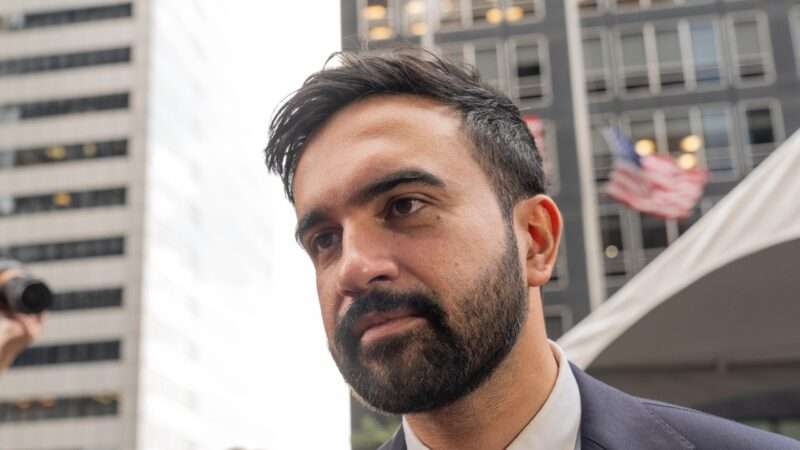
Zohran Mamdani photographed from below diagonal angle, with tall buildings behind him and a small American flag waving in the wind. | Lev Radin/ZUMAPRESS/Newscom

Zohran Mamdani has put forth many bold—and expensive—proposals in his New York City mayoral bid, including childcare for all, government-run grocery stores, and free buses. He’s planning to pay for these proposals with various tax hikes, including a large jump in the city’s corporate tax rate from 7.5 percent to 11.5 percent. He claims this will bring in $5 billion, and says New York City’s economy can “afford to support a stronger public sector.”

Unfortunately, raising the corporate tax rate could also hinder the job market, cause corporations to relocate, and decrease long-term government revenue, potentially damaging New York’s status as the financial capital of the world.

Corporations hit with higher tax rates would seek ways to cut costs, possibly harming workers through either layoffs or lower wages. Particularly in New York City, where corporations employ hundreds of thousands of workers, even modest cost cutting measures are bound to negatively impact the nearly 5 million local workers. In the United Kingdom, for example, around one in six British companies cut hiring in the fourth quarter of 2024 in anticipation of tax hikes that took place in April 2025. If New York employees aren’t directly laid off, they could face lower wages in the long run. Approximately 28 percent of the cost of higher corporate taxes is taken on by workers in the form of lower wages, further exemplifying the harsh effect that corporate tax hikes have on workers. Corporate tax hikes are generally never a good idea—even more so in a weak labor market where the national unemployment rate is the highest since the pandemic and job growth has consistently underperformed in the past few months.

Some corporations will also deem the tax hikes as too imposing to pay altogether, forcing them into relocation to another city, state, or even country where they can operate with lower costs. Already, the exodus of banks from Wall Street to corporate tax havens, such as Elliot Management’s relocation to Florida, has cost the city millions in managed assets. New York City simply cannot afford to watch other businesses follow. Already, New York has an estimated budget gap of $4.22 billion in 2026, and a massive $8.83 billion gap is projected for 2027.

Consider the possible damages. The U.S. Chamber of Commerce recently estimated the economic effects of a mere one percentage point increase in the federal corporate income tax rate from 21 percent to 22 percent. That increase would cost New York’s 10th congressional district, home to the Financial District and southwest Brooklyn, approximately $1.3 billion over 10 years. The rest of the city would be harmed too, of course—yet Mamdani proposes an even more drastic increase of four percentage points. “Businesses have only three options to pay for higher taxes: raise prices; reduce costs; or lower returns to investors,” as the authors of the U.S. Chamber of Commerce report wrote. “In reality, they do all three.” The fourth option, one even more feasible if a tax hike only hits New York City, is that businesses will flee.

New York City’s economy cannot afford higher corporate taxes. All of America benefits from the city’s status as the financial center of the world. Mamdani’s proposed tax policies would threaten that reign.

The post Zohran Mamdani's $5 Billion Corporate Tax Hike Threatens NYC's Status as the World's Financial Capital appeared first on Reason.com.

from Latest – Reason.com https://ift.tt/bFZ0Eo9
via IFTTT

Trump’s Tariff Chaos Crushes Board Game Makers: ‘The U.S. Is Our Least Trustworthy Trading Partner’


Board game cards and pieces with a red dollar background | Images courtsey Cephalofair Games; Illustration: Eddie Marshall | Midjourney

Price Johnson isn’t a fan of games of chance.

Unfortunately, his gaming business is now caught in a high-stakes contest where the outcome feels entirely out of his hands.

Cephalofair Games, where Johnson works as COO, prides itself on making games that limit randomness and reward players for making strategic decisions and planning ahead. The company’s most successful game, the award-winning Gloomhaven, is a dungeon-crawling adventure that, unlike most, doesn’t rely on dice to determine outcomes.

“We’ve eliminated a lot of the luck elements that exist in games like Dungeons and Dragons and in other role-playing games,” he says. “In our games, strategy is everything.”

Now, it won’t be tumbling dice, but the nine justices at the U.S. Supreme Court who will determine the fate of Cephalofair Games—and many other American businesses—when they hear a case next week challenging the legality of tariffs imposed by President Donald Trump. That’s not exactly like risking it all on one roll, but you can forgive Johnson for feeling like it is. The outcome of the case will set the conditions for the future of U.S. trade policy: stability or chaos.

“If the Supreme Court decides one person, the president, is allowed to flip the switch on tariffs overnight, every day, any day they want, that is going to create such a volatile and unstable and untrustworthy market,” Johnson predicts. “We can’t build a business around that. We can’t plan for that.”

Board game makers have been hit particularly hard by Trump’s tariffs, which have raised the cost of importing just about everything. Cephalofair is based in California, but like many other businesses in the industry, Johnson’s company relies on contractors in China and Vietnam to make the tokens, pawns, cards, and other physical elements of its games.

Manufacturing all those parts in the U.S. is not possible if game companies want their products to be competitively priced. With high tariffs in place, the costs compound quickly. Nathan McNair, the co-owner of Pandasaurus Games, broke down the math in a post on his company’s website. The added cost of the tariffs makes every step more complicated, from design to sales, and can even change what games a company chooses to make in the first place. “This has not just squeezed our margin; this has substantially increased our risk,” he concluded.

Trump’s tariffs have already stung Cephalofair in several ways. The company has paid more than $144,000 in tariff-related costs this year, Johnson says, and has had to furlough some employees. The staff that remain, including him, have taken pay cuts. Given the uncertainty in their supply chains, Cephalofair has paused the development of some new games, which means less work for dozens of contractors—artists, designers, writers, testers, and so on. For games that were already in production when the tariffs hit, Cephalofair asked buyers to pay a fee to help cover the new import taxes. Other production runs have been delayed as Johnson and his colleagues roll the dice on the hope that the tariffs will be struck down or otherwise lowered.

“The U.S. is our least trustworthy trading partner right now—and I say that as an American,” Johnson told Reason. “I can’t trust what the policy is going to be tomorrow, let alone next week.”

Case in point: When I spoke to Johnson on Wednesday afternoon, he was worried about a tariff increase that was supposed to hit this weekend, just days before Trump’s tariff authority goes before the Supreme Court. Earlier this month, Trump threatened to raise the baseline tariff on imports from China to 130 percent, from 30 percent, starting on November 1.

If that tariff rate becomes reality, “that is effectively an absolute embargo,” Johnson said. “We are not going to pay more to bring our product in than it costs to make it.”

On Thursday night, as he returned from a meeting with Chinese President Xi Jinping in South Korea, Trump told reporters that the U.S. would now be lowering tariffs on imports from China. The details remain vague—Trump said he agreed to reduce some existing tariffs by 10 percentage points—and it would appear the 130 percent tariff threat is now off the table. China, in return, agreed not to suspend exports of rare earth minerals.

From Trump’s perspective, surely, the threat of 130 percent tariffs was simply a negotiating position staked out in advance of his meeting with Xi and never meant as a serious policy. But that approach, which the president has deployed repeatedly this year, is causing huge headaches and material losses for businesses like Johnson’s, which can’t afford to risk the possibility of being hit with a massive tariff bill just because a shipment arrives at the wrong time.

Instead, those businesses will do what Johnson has done: Delay orders, slow production, and hope more stability emerges.

As a legal matter, the Supreme Court is being asked to determine the extent of the emergency executive powers that Trump has seized to impose tariffs. But the practical implications of this case spill out across all parts of the economy. In reality, the justices are being asked to decide whether the president should be allowed to disrupt supply chains for thousands of American businesses at a whim—even for reasons as silly as television advertisements that he dislikes.

That’s really a policy question, one that’s better left to Congress. Even though Congress has been unwilling to stand up to Trump’s tariffs so far, there are small indications that could be changing. This week, the Senate passed resolutions terminating Trump’s tariffs on imports from Canada and Brazil, and another that would end his so-called “reciprocal tariffs” on many other imports.

Johnson is hoping the Supreme Court strikes down Trump’s tariff authority, but he also knows this mess won’t really be resolved until the legislative branch reasserts its proper authority over trade.

“There’s clearly no plan with this administration,” he says. “And that’s why I believe that power over tariffs and power over taxation, that’s supposed to be with our local elected representatives. We should have someone that we could go to and appeal to, whether they listen to us or not, we can say, ‘hey, I’m down the street. This is my business. Please represent us.'”

The post Trump's Tariff Chaos Crushes Board Game Makers: 'The U.S. Is Our Least Trustworthy Trading Partner' appeared first on Reason.com.

from Latest – Reason.com https://ift.tt/QIJMRdB
via IFTTT

The Long Road Home


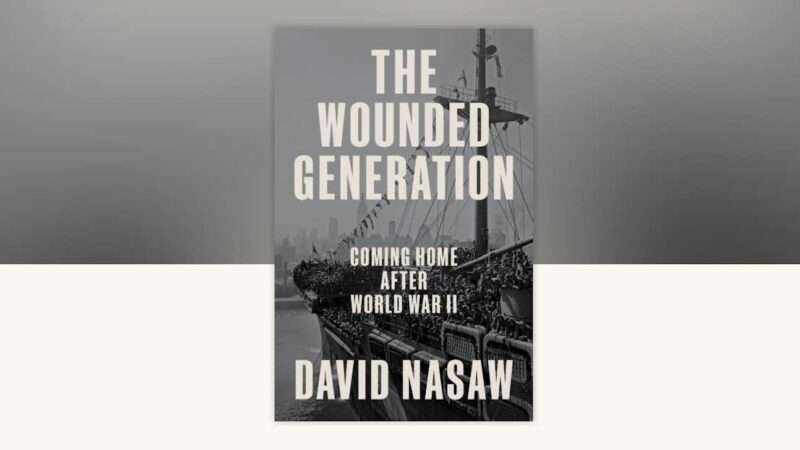
"The Wounded Generation" book cover, authored by David Nasaw | Penguin Random House

The Wounded Generation: Coming Home After World War II, by David Nasaw, Penguin Random House, 496 pages, $35

“There wasn’t any band there; there wasn’t anybody greeting me except the girl that I had [written] to while I was overseas. That was my homecoming.” That poignant moment recounted by World War II veteran Clinton Riddle is one of the many vignettes that populate David Nasaw’s new book, The Wounded Generation: Coming Home After World War II.

Nasaw, an emeritus professor of history at the City University of New York, marshals such experiences to argue that, beyond the ticker-tape parades, millions of men like Riddle filtered home to little fanfare. After returning to America, many struggled with alcohol addiction, marital problems, unemployment, crowded housing, and psychological issues that medical authorities didn’t fully understand. Nasaw’s book is a corrective to the simplistic narrative of stoicism, unity, and triumph that dominates conventional narratives of “the greatest generation.” It isn’t a work of revisionism so much as an act of recovery, one that elevates voices of pain and disquiet that were understood in the years after the war but faded from popular memory in the decades thereafter.

While the book bills itself as a history of veterans’ lives after the conflict, Nasaw adroitly begins his narrative in the thick of the fighting, tying the experiences of returning veterans to their experiences abroad. Beyond the scarring practice of combat, Nasaw illustrates a military culture awash in alcohol abuse and philandering, not to mention soldiers’ nagging concerns about spousal infidelity back home. He continues his narrative through the immediate postwar period, with two final chapters covering the individual and institutional legacies of the war.

Nasaw’s goal is to incorporate the toll on returning veterans and those who they left behind into our understanding today of the Second World War. His book joins a body of work on war and memory that corrects the one-dimensional narrative of the “good war” and restores the complexity and humanity of the Americans who fought it. As he skillfully shows, victory came at a steep cost for those who managed to survive the fighting. The romantic image of the war was largely a post hoc construction, championed not by those who did the fighting but by later generations well-removed from the burdens of the conflict.

* * *

Nasaw challenges some romantic images of postwar policy too, though not from a particularly libertarian direction. He is critical, for example, of the G.I. Bill, the federal entitlement program that afforded tuition and other forms of financial support to send returning veterans to school. Its “democratization of higher education,” he argues, was “revolutionary in establishing a new social welfare state for veterans”—but also “conservative in protecting class, gender, and racial status quos.” As a concession to Southern Democrats, the system was implemented by state and local authorities; as a result, he argues, it left female, gay, and black vets behind.

The broader suite of veterans’ readjustment programs—not just the G.I. Bill but home buying assistance and other efforts—were, the author argues, a missed opportunity for more comprehensive social welfare. Nasaw notes that during the late stages of the war, President Franklin Delano Roosevelt proposed a “second Bill of Rights” that would have extended government assistance to the full progressive shopping list of employment, housing, food, medical care, old age pensions, and so on. Social programs for veterans, he suggests, became a proxy fight over the New Deal, with a conservative coalition of Midwestern Republicans and Southern Democrats who wanted to put FDR’s domestic agenda on ice.

In Nasaw’s retelling, that coalition served as an effective roadblock, thereby undermining Roosevelt’s “aspirational” and “transformative” vision that “would have leveled the playing fields providing rich and poor, Black and White, veteran and citizen with new economic rights.” Libertarian-minded readers will shake their heads in disagreement at the idea that what the country needed was more government redistribution. But you’ll note that even here, Nasaw is challenging the liberal narrative in which the war was an unalloyed progressive force for American society.

* * *

The book shines brightest in its handling of the individual burdens shouldered by veterans and their families: heavy smoking, heavy drinking, infidelity, and, of course, the experience of combat. Behind the images of relief and the euphoria of victory, individual vets struggled to readjust, to find housing, and to reconnect with their loved ones, helping fuel a postwar divorce boom. Nasaw argues that vices and the social dynamics around them—compounded by psychological maladies, which we would now call PTSD—haunted and hamstrung veterans returning to civilian life.

On the specific matter of post-traumatic stress disorder, Nasaw offers many gripping accounts of individuals who struggled to leave the war behind them. Beyond those anecdotes, he illustrates the evolving medical comprehension of the phenomenon previously known as “battle fatigue” or “shell shock.” Psychiatrists, informed by the Freudian thinking of the day, diagnosed lingering war trauma as stemming from internal unresolved childhood suffering and not the obvious external experience of grisly combat.

Relatedly, military and veterans’ affairs doctors misunderstood and therefore misdiagnosed combat ailments now known as “traumatic brain injury.” Soldiers who endured concussive blasts from friendly and enemy fire, and who complained for years of related conditions, were diagnosed with “emotional unrest” that would resolve with the passage of time. Finding little official support, veterans often turned inward and self-medicated with alcohol and overwork.

It is in this area where Nasaw makes his most significant scholarly contributions—and offers his most gripping material on veterans’ personal struggles. His final chapter, “Aftermaths,” argues that the passage of time did not necessarily improve veterans’ mental health but often in fact made it worse. Major, jarring life events, such as retirement or the death of a spouse, could cause lingering traumas to return. Studies from the late 1970s and early ’80s found that alcoholism remained a consistent problem for WWII veterans, leading to a “mortality [that] was significantly higher.”

When greater medical recognition of veterans’ issues came along, it arrived, ironically, at the same time as a widespread desire to sweep them under the rug. Drawing on the earlier work of writers such as Studs Terkel and John Bodnar, Nasaw argues that the romanticized narrative of the “good war” fought by the “greatest generation” demanded that said generation’s lingering traumas be “disremembered.” That “good war” narrative, he shows, gained traction as the nation was “hungry for heroes after the Vietnam debacle and primed to celebrate victory after the fall of the Soviet Union.”

Modern demands for an uplifting World War II narrative mean the real, painful experiences of its veterans are often overlooked. Nasaw cites Marine veteran Eugene Sledge: “Over fifty years later, I look back on the war as though it were some giant killing machine into which we were thrown to endure fear to the brink of insanity.” By restoring these stories to the center, Nasaw shows that veterans were far more than “stick-figure avatars of progress” and that their wartime service was not merely a “character-building, maturing experience.”

According to the Department of Veterans Affairs, approximately 45,000 of the original 16 million World War II veterans are still with us today. As the last of those survivors fade away, The Wounded Generation reminds us that the horrors of war linger long after the shooting stops—it loiters in the minds, marriages, and memories of those who fought them. If even the “greatest generation” struggled after the guns fell silent, their long road home ought to give us pause before we send future generations abroad to fight wars, “good” or not.

The post The Long Road Home appeared first on Reason.com.

from Latest – Reason.com https://ift.tt/xkRaUC9
via IFTTT
House Oversight Committee Says Biden Autopen Pardons Are Null And Void

House Oversight Committee Says Biden Autopen Pardons Are Null And Void

A GOP led House Oversight Committee has submitted a report to Attorney General Pam Bondi asserting that former president Joe Biden’s “cognitive decline” was so severe he may not have been aware of pardons he allegedly signed by autopen. 

Republicans argue that the proper course is to err on the side of caution given evidence of Biden’s decaying mental condition – Even if the President was made aware of the sweeping documents rather than his aides using his autopen signature to falsify the pardons, it is likely that he still had no understanding of what the documents actually contained. 

Conservatives on the committee advise Bondi that the 4,245 presidential pardons and commutations issued by the Democrat, 82, should therefore be placed under review and could be considered invalid.  Republican Senator Josh Hawley chimed in on the issue, expressing deep concerns over some of the Biden signatures, including commuted sentences for multiple criminals who victimized children.

The report has been published only a month after one of former President Joe Biden’s top aides – Jeff Zients, told the House Oversight Committee that an aide with his email credentials was green lighting some of the most controversial ‘autopen’ pardons, that Hunter Biden – who received an insane pardon himself – was involved in the pardon discussions, and that Joe Biden’s brain was pea soup.

Hunter received a “full and unconditional” pardon for his crimes in early December, just under two months before Joe left office.  Biden approved nearly 2,500 commutations on Jan. 17, days before leaving the White House, (and issued over 4,200 in total over his term) – the most of any US president, and the most ever in a single day.

If Bondi moves forward with the investigation into the autopen scandal, it could open up a flurry of prosecutions including cases against Hunter Biden.

The panel “deems void President Biden’s executive actions that were signed using the Autopen, and the committee determines that action by the Department of Justice is warranted to address the legal consequences of that determination,” it said in its letter to Bondi, published Tuesday.

The Biden family is also subject to renewed investigation over ongoing suspicions that they misused their political positions to collect bribes from foreign officials in exchange for favors (influence peddling).  Biden did not pardon himself before leaving office, likely because of presidential immunity for “official acts” as determined by the Supreme Court in 2024.

Biden’s presidency was rife with disinformation and a number of constitutional violations, from lies about Biden’s mental health to lies about his administration’s involvement in mass censorship.  His office then wrapped itself, its aides and it’s allies in pardons upon exiting the White House as a means to avoid any future culpability.  It would be a travesty (for him and his family) if those pardons turned out to be null and void.

Tyler Durden
Fri, 10/31/2025 – 12:40

via ZeroHedge News https://ift.tt/1kxqHgy Tyler Durden

Trick-Or-Treat Around The World

Trick-Or-Treat Around The World

Trick-or-treating has been associated with Halloween celebrations in the U.S. and Canada since the early 1900s, but, as Statista’s Katharina Buchholz shows in the infographic below, traditions of children going door to door in a quest for treats exist in many parts of the world, with one European custom being widely recognized as the precursor of the North American tradition.

Infographic: Trick-or-Treat Around the World | Statista

You will find more infographics at Statista

As far back as the Middle Ages, people in the British Isles dressed up for holidays and went from door to door performing scenes in order to receive a thank-you in the form of food and drink.

The tradition is preserved today in Scotland and Ireland under the name guising and features dressed-up children rather than theater displays. The origin of Halloween, celebrated on October 31, also goes back to Celtic traditions, more specifically the Samhain festival, which marked the beginning of winter and a time when fairies and spirits needed to be appeased.

 Like many Christian holidays, All Saints’ Day (November 1) and its eve, All Hallows’ Day, coincide with the pagan festival and trick-or-treating is done in Portugal on the first day of November.

All Saints’ Day also has a big significance in Mexico (celebrated as Day of the Dead there) but U.S. Halloween traditions have also been adopted, most heavily in the Northern and Central parts of the country, where the custom is named calaverita (litte skull) after the sugar skulls which are gifted for the festival.

But scary dress and trick-or-treating antics are not tied to a single date: Scandinavian children engage in them around Easter, while those in Northern Germany and Southern Denmark pick New Year’s Eve. In Southern Germany, Austria Switzerland, the Netherlands and Flanders in Belgium, treats are given out not for threats, but for songs, which children perform on November 11 (St. Martin’s Day). Caroling for sweets is also performed during Ramadan in Central Asia. This is where trick-or-treating blends into Christmas caroling, which is sometimes also rewarded with food offerings, for example in Eastern Europe.

The practice is associated most closely with England and the United States, but involves adults as well as children and more commonly the collection of money, for example for charity.

Tyler Durden
Fri, 10/31/2025 – 12:05

via ZeroHedge News https://ift.tt/X25bxD9 Tyler Durden

88-Year-Old Congresswoman Is Exposed For Having 7 No-Show Jobs

88-Year-Old Congresswoman Is Exposed For Having 7 No-Show Jobs

Authored by José Niño via Headline USA,

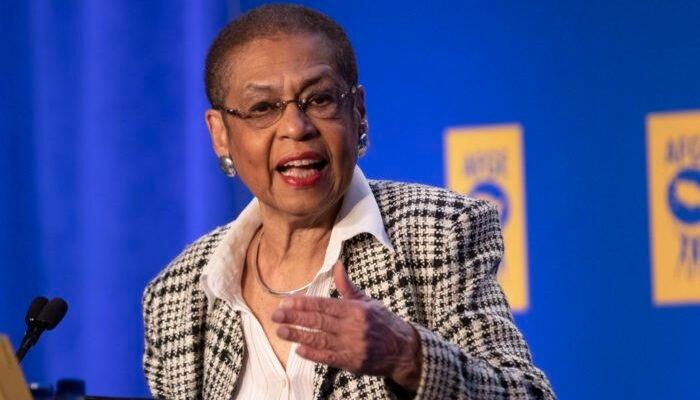
Eleanor Holmes Norton, Washington D.C.’s 88-year-old congressional delegate, claims to sit on multiple boards at prestigious institutions, but investigations reveal she hasn’t been active with them in years. Some of these positions no longer even exist according to a report by Luke Goldstein and Dan Boguslaw. 

According to her latest financial disclosure, Norton lists positions on roughly half a dozen boards. However, when contacted, three organizations reported no recent contact with her, while two confirmed their boards had been dissolved years ago.

These revelations follow a troubling NBC4 report that obtained a police document detailing how scammers posing as HVAC repairmen defrauded Norton of $4,400 for services never performed. The report also noted that Norton has a caretaker with power of attorney who reported the fraud.

Norton, once a prominent civil rights leader who participated in the 1963 March on Washington, now appears to have outdated information on her ethics forms, suggesting her staff may be resubmitting portions automatically without updates.

Goldstein and Boguslaw observed that the boards Norton lists include the executive committee of the Yale Law School Association, the board of trustees for Antioch College, the lawyers committee for civil rights, and advisory boards at Georgetown’s Women’s Law & Public Policy Fellowship Program, American University’s Women and Politics Institute, and the Sewall Belmont House.

Repeated inquiries to these organizations yielded concerning responses. Norton was a founding member of Georgetown’s Women’s Law & Public Policy Fellowship Program and regularly hosted fellows for Capitol Hill lunches. However, according to a spokesperson, she hasn’t done so since 2019.

American University’s response was even more revealing: “The Women & Politics Institute no longer has an advisory board,” they wrote, per Goldstein and Boguslaw’s report. 

Similarly, representatives for the Sewall-Belmont House explained that ownership transferred to the National Park Service in 2016, and the Park Service has no record of an advisory board or Norton’s current involvement with the site.

Two congressional sources confirmed Norton is largely absent from committee meetings and planning sessions. During the Trump administration’s deployment of trfcioops to Washington D.C., Norton was nearly invisible except for a generic condemnation statement.

Republican-led hearings on D.C. crime and public safety should have been Norton’s opportunity to defend her constituents, but she struggled through a prepared statement. Sources close to city council reported her “halting” performance immediately sparked discussions about organizing efforts to push her toward retirement.

Two city council members have since announced primary challenges: Robert White, the current at-large council member, and Brooke Pinto, the Ward 2 council member.

Despite these challenges, Norton has told reporters she intends to run for re-election at age 90, though her staff maintains she hasn’t decided.

Democratic Party leadership has remained silent on the situation, declining to intervene while Washington D.C. faces ongoing challenges with minimal representation.

Tyler Durden
Fri, 10/31/2025 – 11:45

via ZeroHedge News https://ift.tt/9NnhTRm Tyler Durden

Vance Calls For Slowing Down Legal Immigration At Turning Point USA Event

Vance Calls For Slowing Down Legal Immigration At Turning Point USA Event

Authored by Victoria Friedman via The Epoch Times (emphasis ours),

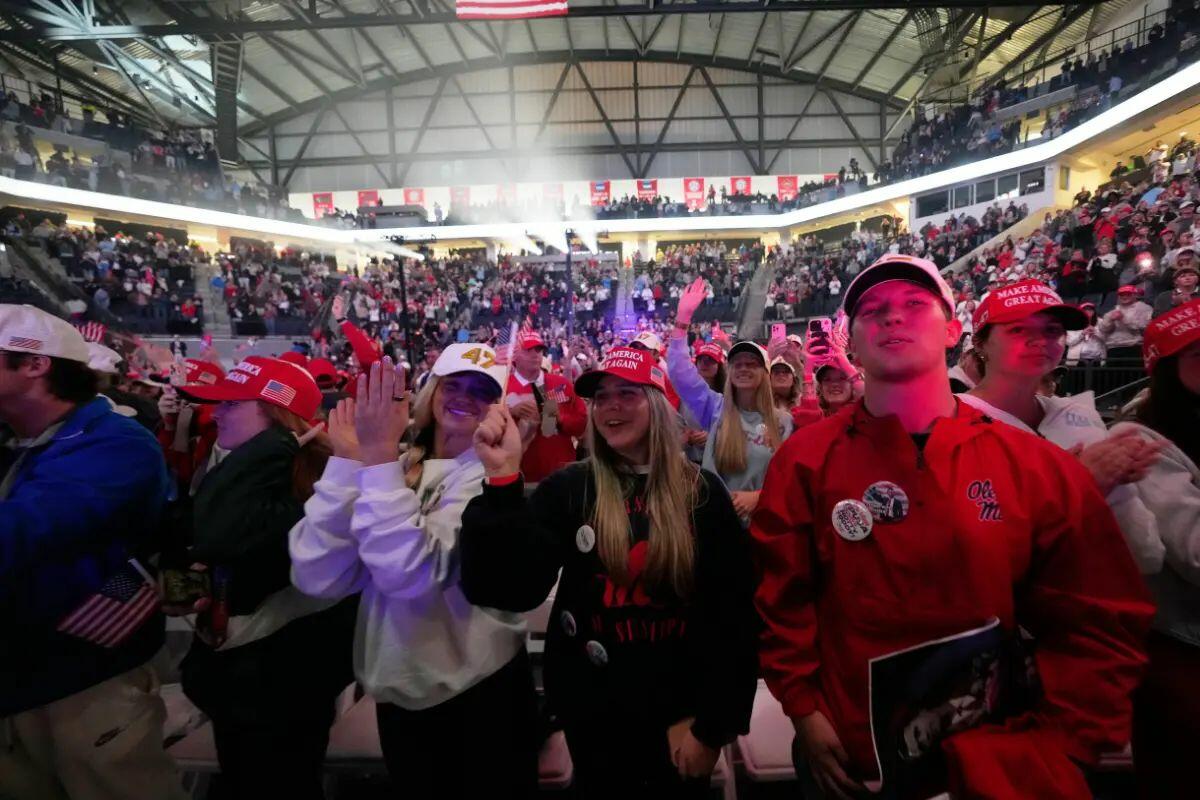
Vice President JD Vance on Oct. 29 said that the rate of legal immigration should be slowed down, saying too many people have been allowed into the United States, undercutting American wages and challenging social cohesion.

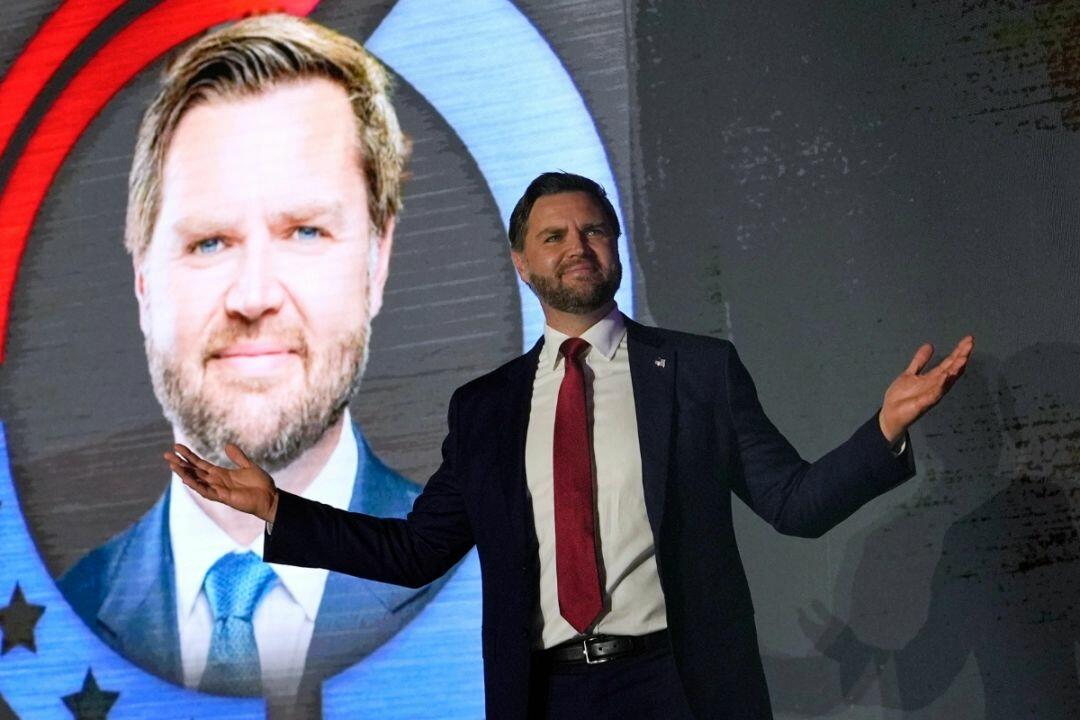
Vice President JD Vance takes the stage during a “This Is the Turning Point” campus tour event at the University of Mississippi, in Oxford, Miss., on Oct. 29, 2025. Gerald Herbert/AP Photo

“Right now, we have let in too many immigrants into the United States of America. That is just a fundamental reality, now,” the vice president said.

Vance made the remarks while taking questions from students after delivering a speech at the University of Mississippi during a Turning Point USA event, stepping into the role of debater, which had been performed by the organization’s late founder, Charlie Kirk.

I think the evidence is pretty clear that a lot of those immigrants are actually undercutting the wages of American workers,” he said, adding that was one of the reasons that President Donald Trump and others in his administration have encouraged H-1B visa reform.

He said that while some immigrants can enrich the United States, “we have got to get our overall numbers way, way down; too many people have come into the United States.”

Touching on the issue of immigration outpacing assimilation, he said: “You’ve got to allow your own society to cohere a little bit, to build a sense of common identity for all the newcomers to assimilate … into American culture. Until you do that, you’ve got to be careful about any additional immigration, in my view.”

Pressed by one woman who questioned his position, Vance said that while he respects that there are people who have legally entered the United States and contribute to the country, it does not mean the United States should commit to immigration policies that could permit millions more to come in the future.

Common American Community

There are “too many people who want to come to the United States of America, and my job as vice president is not to look out for the interests of the whole world. It’s to look out for the people of the United States,” he said.

The vice president did not specify a target number for legal immigration, saying it would depend on the circumstances and on providing enough space for newcomers to settle and integrate into American society.

“What is the exact number of immigrants America should accept in the future? Right now, the answer is far less than we’ve been accepting,” Vance said.

We have got to become a common community again, and you can’t do that when you have such high numbers of immigration, which is one of the reasons why we have the immigration policy we do.”

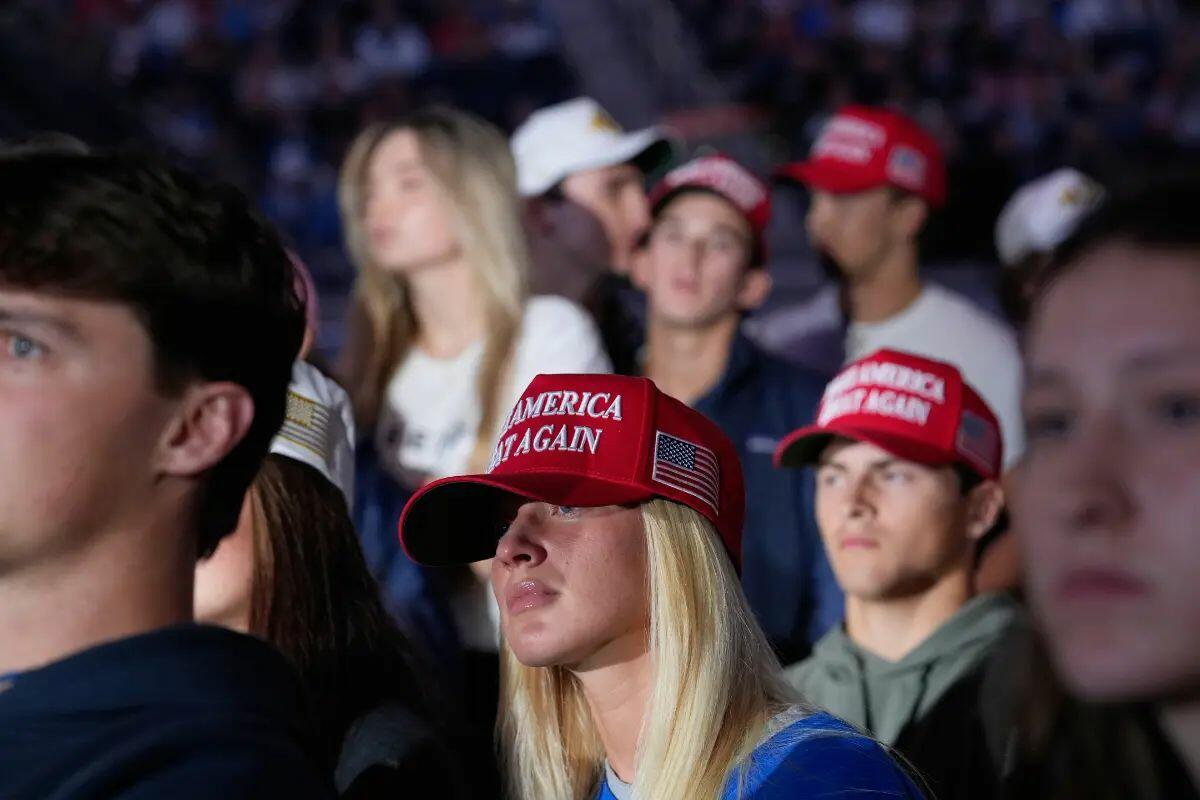
Attendees listen as Vice President JD Vance speaks during a “This Is the Turning Point” campus tour event at the University of Mississippi, in Oxford, Miss., on Oct. 29, 2025. Gerald Herbert/AP Photo

Vance was introduced on stage by Charlie Kirk’s widow, Erika Kirk, who has taken a leading role at Turning Point USA as its CEO.

In his speech before taking questions, Vance reflected on the advice that Charlie Kirk had given to young people, including his urging for them to get married, find a vocation, and build a family.

“That was the advice that he gave on campuses. But that’s not just about you. That’s also about our country and about our government, because while you have the freedom to live life as you so choose, I have got a responsibility as your vice president to make the American dream as accessible as possible,” Vance said.

Attendees cheer during a “This Is the Turning Point” campus tour event at the University of Mississippi, in Oxford, Miss., on Oct. 29, 2025. Gerald Herbert/AP Photo

“This is why we care about all the things that we care about. Why do I care so much about having a secure border in the United States of America?

It’s because I believe that when you let in a flood of illegal immigration, what it does is it drives down the wages of young people and makes housing unaffordable for the entire American population. That’s why we closed down the border.”

Vance added: “The left will say our immigration policy is about hating immigration, hating immigrants. We don’t hate anybody. We love our fellow citizens, and because we want them to have the American dream, we shut that border down the very first day that Donald J. Trump was the president of the United States.”

Tyler Durden
Fri, 10/31/2025 – 11:05

via ZeroHedge News https://ift.tt/7carVDJ Tyler Durden

Gov’t Shutdown Chaos: Air-Traffic Controller Shortages Snarl Airports As Paychecks Go Blank; Airline CEOs Urge Dems To Back GOP-Led Clean CR 

Gov’t Shutdown Chaos: Air-Traffic Controller Shortages Snarl Airports As Paychecks Go Blank; Airline CEOs Urge Dems To Back GOP-Led Clean CR 

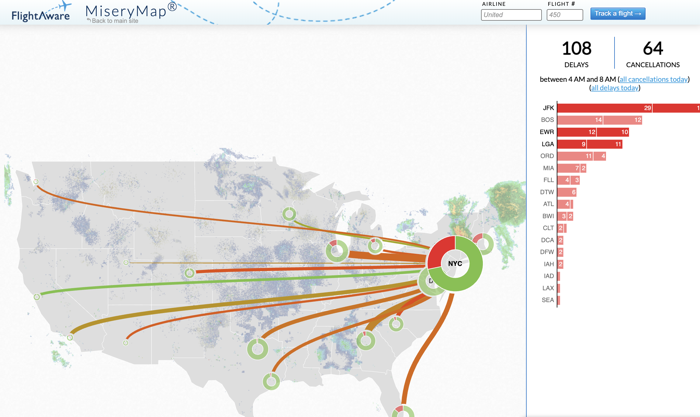
The fallout from the government shutdown worsened on Thursday afternoon and into late evening at several major airports, as staffing shortages among air traffic controllers led to delays for travelers. Air-traffic controllers missed their first paycheck this week. At the same time, the heads of major U.S. airlines blasted Democrats and sided with Republicans in urging passage of a clean continuing resolution (CR) to reopen the government and avert potential travel chaos nationwide ahead of the holiday season.

Late Thursday, staffing shortages caused major travel disruptions at several airports, including Orlando International Airport, where departures were delayed an average of 2.7 hours. 

Here’s where air travel was impacted the most on Thursday (courtesy of NBC News):

  • The FAA issued a ground delay for Orlando from 10 p.m. to 3 a.m. ET, delaying inbound flights by an average of 2.7 hours. Earlier, the FAA had temporarily suspended landings entirely due to a lack of certified air-traffic controllers.

  • The situation later improved after an “increase in staffing” at the F11 Central Florida Tracon, though delays persisted. 

  • Ronald Reagan Washington National Airport also faced 90-minute ground delays Thursday afternoon through early Friday, while Los Angeles International Airport suffered similar disruptions earlier in the week.

On Thursday, 14,000 air traffic controllers received their first zero-dollar paycheck as the government shutdown entered its 30th day. Earlier in the day, Delta Air Lines demanded that Congress reopen the government and warned that missing paychecks “only increases the stress on these essential workers, many of whom are already working mandatory overtime to keep our skies safe and secure.”

Later in the day, airline heads urged Democrats to back the Republican-led clean CR. Those airline bosses include:

  • United CEO Scott Kirby, speaking from the White House alongside Vice President J.D. Vance and Transportation Secretary Sean Duffy, called for passage of a “clean CR”—the House GOP’s stopgap funding bill that would reopen the government without new spending measures.

  • American, Delta, and Southwest joined United in supporting an immediate extension of current spending levels, warning that the situation was untenable as air-traffic controllers and TSA staff continue to work without pay.

  • Southwest spokesperson Lynn Lunsford said the public “expects and deserves to travel in a system where safety and security employees are paid in a timely fashion.”

Besides airlines, the American Federation of Government Employees, representing hundreds of thousands of federal workers, also urged Democrats to back the GOP spending bill. The holdup for Democrats is that they refuse to get on board with the clean CR to reopen the government unless illegal aliens (future voter base) receive taxpayer-funded benefits…

House Speaker Mike Johnson (R-La.) recently noted that Democrats are demanding $1.5 trillion in spending, including,

  • $200 billion in taxpayer-funded benefits for illegal aliens

  • $358 billion in COVID-era Obamacare subsidies

  • $500 million to Fake News outlets

  • $5 billion for wasteful foreign projects like $3.9 million for LGBTQI+ democracy grants

. . . 

Tyler Durden
Fri, 10/31/2025 – 10:45

via ZeroHedge News https://ift.tt/UyGfVWA Tyler Durden

Britain’s Prince Andrew Taken Down by Epstein and Chinese Spy Scandals


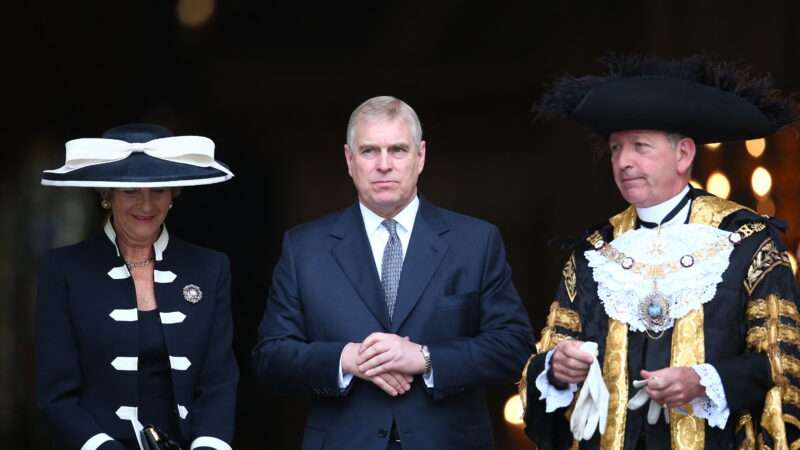
Prince Andrew (center) at a memorial service in St. Paul's Cathedral, London, UK. 7 July 2015. | JRAA/ZDS/WENN/Newscom

It’s not every day that a royal becomes a commoner. But Buckingham Palace announced on Thursday that Andrew, formerly known as Prince Andrew, would now be an ordinary citizen known as Andrew Mountbatten Windsor. He will also lose his taxpayer-funded digs at the Royal Lodge and move to a private home. The palace’s press release added that Windsor “continues to deny the allegations against him.”

The allegations in question have to do with Windsor’s ties to two different foreigners: American pedophile Jeffrey Epstein, who died in 2019, and Chinese businessman Yang Tengbo, whom the British government accuses of espionage. After Windsor was accused of participating in Epstein’s sexual abuses and gave an interview that made things look even worse for him, the prince reportedly turned toward Yang for a potential fresh start in China.

However, the British government banned Yang from Britain in 2023 on the grounds that he committed “covert and deceptive activity” on behalf of the Chinese government. Yang, who denies those allegations, sued the British government and lost in 2024, leading to a series of revelations about Windsor’s Chinese outreach. 

Reporting by Reason revealed that Windsor had been in contact with Epstein much later than he admitted, and that he had been trying to work with Beijing on sensitive matters earlier than believed. In leaked emails, Epstein told one of his business partners that Windsor had told him about an idea to start a “personel [sic] protection co in beijing” in 2015.

Those emails made it to the front page of the Sunday Times, the British newspaper of record, which noted that Windsor had claimed to cut off contact with Epstein in 2010. The Times independently verified many details from the emails. Another newspaper, The Express, called the story the “nail in the coffin” for Windsor’s attempts to stay in the palace.

Yet that wouldn’t be the last compromising story to come out about the former prince. The Telegraph revealed that Windsor had met three times in 2018 and 2019 with Cai Qi, a Chinese official accused of running a spy ring in Britain. Two different newspapers obtained an email from Windsor to Epstein in 2011 stating that “we are in this together” and “we’ll play some more soon!!!!”

The BBC reported that Windsor had hosted Epstein at a party in the Royal Lodge in 2006, two months after Florida authorities issued a warrant for Epstein’s arrest. Windsor’s other guests included Epstein accomplice Ghislaine Maxwell and Harvey Weinstein, an American movie producer convicted of sexual assault in a separate scandal that kicked off the #MeToo movement.

The woman who accused Windsor of sex abuse, Virginia Giuffre, died in April 2025. But her memoir, which includes many graphic details about her encounter with Windsor, was published posthumously this month.

The series of leaks and revelations turned into a major headache for King Charles III. Two weeks ago, Windsor announced that Andrew was giving up some of his titles after a “discussion with the king,” although he would remain Prince Andrew. On Monday, a heckler confronted King Charles about the royal family’s “cover up.” A few days later, the king began a “formal process” to remove the prince.

“This normal girl from a normal family has taken down a prince. We are so proud of her,” Giuffre’s brother, Sky Roberts, told the BBC. “The U.S. government hold the key to the larger scope of the Jeffrey Epstein case. The U.K. is setting an example for what the US should be doing right now,” he added.

The post Britain's Prince Andrew Taken Down by Epstein and Chinese Spy Scandals appeared first on Reason.com.

from Latest – Reason.com https://ift.tt/jfvOLUh
via IFTTT

Zohran Mamdani’s $5 Billion Corporate Tax Hike Threatens NYC’s Status as the World’s Financial Capital


Zohran Mamdani photographed from below diagonal angle, with tall buildings behind him and a small American flag waving in the wind. | Lev Radin/ZUMAPRESS/Newscom

Zohran Mamdani has put forth many bold—and expensive—proposals in his New York City mayoral bid, including childcare for all, government-run grocery stores, and free buses. He’s planning to pay for these proposals with various tax hikes, including a large jump in the city’s corporate tax rate from 7.5 percent to 11.5 percent. He claims this will bring in $5 billion, and says New York City’s economy can “afford to support a stronger public sector.”

Unfortunately, raising the corporate tax rate could also hinder the job market, cause corporations to relocate, and decrease long-term government revenue, potentially damaging New York’s status as the financial capital of the world.

Corporations hit with higher tax rates would seek ways to cut costs, possibly harming workers through either layoffs or lower wages. Particularly in New York City, where corporations employ hundreds of thousands of workers, even modest cost cutting measures are bound to negatively impact the nearly 5 million local workers. In the United Kingdom, for example, around one in six British companies cut hiring in the fourth quarter of 2024 in anticipation of tax hikes that took place in April 2025. If New York employees aren’t directly laid off, they could face lower wages in the long run. Approximately 28 percent of the cost of higher corporate taxes is taken on by workers in the form of lower wages, further exemplifying the harsh effect that corporate tax hikes have on workers. Corporate tax hikes are generally never a good idea—even more so in a weak labor market where the national unemployment rate is the highest since the pandemic and job growth has consistently underperformed in the past few months.

Some corporations will also deem the tax hikes as too imposing to pay altogether, forcing them into relocation to another city, state, or even country where they can operate with lower costs. Already, the exodus of banks from Wall Street to corporate tax havens, such as Elliot Management’s relocation to Florida, has cost the city millions in managed assets. New York City simply cannot afford to watch other businesses follow. Already, New York has an estimated budget gap of $4.22 billion in 2026, and a massive $8.83 billion gap is projected for 2027.

Consider the possible damages. The U.S. Chamber of Commerce recently estimated the economic effects of a mere one percentage point increase in the federal corporate income tax rate from 21 percent to 22 percent. That increase would cost New York’s 10th congressional district, home to the Financial District and southwest Brooklyn, approximately $1.3 billion over 10 years. The rest of the city would be harmed too, of course—yet Mamdani proposes an even more drastic increase of four percentage points. “Businesses have only three options to pay for higher taxes: raise prices; reduce costs; or lower returns to investors,” as the authors of the U.S. Chamber of Commerce report wrote. “In reality, they do all three.” The fourth option, one even more feasible if a tax hike only hits New York City, is that businesses will flee.

New York City’s economy cannot afford higher corporate taxes. All of America benefits from the city’s status as the financial center of the world. Mamdani’s proposed tax policies would threaten that reign.

The post Zohran Mamdani's $5 Billion Corporate Tax Hike Threatens NYC's Status as the World's Financial Capital appeared first on Reason.com.

from Latest – Reason.com https://ift.tt/bFZ0Eo9
via IFTTT